Russian knowledge of Soviet-era energy systems has helped it to target Ukraine’s heating and homes

Source: The Conversation – UK – By Pauline Sophie Heinrichs, Lecturer in War Studies, Climate and Energy Security, King’s College London

In the middle of Ukraine’s fiercest winter of the war, many Ukrainians are unable to prepare hot meals or are unable to heat their homes while temperatures have dipped as low as -20C in the past few weeks. Harsher weather is forecast.

Russia has once again targeted Ukraine with sustained attacks on power stations, energy grids and heating nodes affecting electricity, as well as heating systems and water pumps.

Following the Russian strikes on January 20, around 5,600 apartment buildings in Kyiv were left without heating and almost half of Kyiv was believed to be without heat and power, affecting around one million people. The situation is so dire that the city has set up “heating tents” to help people stay warm in the freezing temperatures. Other cities have also been attacked.

Ukraine’s president Volodymyr Zelensky declared the situation an energy emergency.

One factor is that as a legacy of Ukraine’s membership of the Soviet Union, Russia probably holds deeper knowledge about Ukraine’s centralised energy systems than an outside nation would generally have.

For decades Ukraine’s energy system was linked to Russia and Belarus as part of a centralised grid, and was “tightly connected to Russia’s energy architecture”. While this did not mean Ukraine was dependent on Russia for its energy supply, it did mean that Russia played the central role in coordinating frequency and balancing supply and demand across the whole network.

Some Ukrainian officials have argued that the nature of these attacks suggests that Russian knowledge of Soviet-era energy systems has helped it to target Ukraine’s energy centres.

There’s another big factor for the Ukrainian authorities to struggle with.

While Ukraine’s authorities were quick to restore heating in around 1,600 buildings, an estimated 4,000 remained without heating on January 21. The challenge in Ukraine is more severe than it might be in other countries because of the centralised systems for water, sewage and heating used by its urban neighbourhoods, known as district heating.

What is district heating?

Ukraine still relies heavily on Soviet-era thermal heating systems using mostly gas. The percentage of households that rely on district heating varies by region and city, with a particularly high percentage of these buildings, mostly built in the 1960s, in densely populated urban cities including Kyiv.

Thermal power plants usually heat water which is then piped around districts and to individual pumping stations. It is then distributed to apartment buildings. But if the pipes are full of water and power for heating is off, the pipes can burst if the water freezes. Right now, with temperatures spiralling downwards this is a major threat.

Russian attacks on Ukraine leave thousands without heating in middle of winter.

Each district heating system can serve tens of thousands of citizens across multiple buildings and, when powered with renewable energy, they can be significantly more efficient, cost-effective and low-carbon than individual boilers. District heating systems depend much more on fixed physical infrastructure, including large pipes and pumping stations, to circulate hot water.

But centralised infrastructure is inherently vulnerable to physical attack. Damage to a major transmission pipe or the loss of a key pumping station can disable heating across entire neighbourhoods, particularly during winter.

Russia has damaged around 8.5GW of Ukraine’s power generation since October 2025, or around 15% of pre-war capacity. With the amount available nearly matching the amount generated there’s little room to redistribute energy within the system.

Whatever the system’s weaknesses may be, no energy system in the world is built to sustain continued bombardment.

Ukraine relies on nuclear power

Ukraine’s energy system is also largely dependent on nuclear power. Around half of Ukraine’s electricity is nuclear-powered, with coal-fired power plants making 23% and gas-fired plants 9%. In all cases these are features of a highly centralised energy system.

Patterns of attacks indicate that Russian forces monitor where repairs are under way and then hit the same sites again once they are restored. This has compounded repair costs and prolonged the loss of critical services. Kyiv’s mayor Vitali Klitschko said that the situation was difficult because most of those buildings that were being reconnected for the second time were damaged as part of a previous attack on January 9.

Russia uses “double-tap” strikes, where a second attack follows closely after the first. This often endangers emergency services and repair crews rushing to restore heat and electricity. Such tactics force officials to balance the urgent need to fix infrastructure with the risk to workers and civilians.

Even before the war, there were weaknesses in Ukraine’s energy and power networks. Old water systems and heating devices — and often entire buildings — need to be reconstructed.

However, Ukraine had already started to reduce technical reliance on Russia before the war. The dependency on the post-Soviet system changed in March 2022, when Ukraine’s grid was integrated with the European Network of Transmission System Operators for Electricity, (Entso-E), a Europe-wide association of national electricity transmission system operators.

These attacks have had significant consequences on hospitals, transport systems, and vulnerable people in their homes. This devastating cycle of repeat strikes in the middle of an incredibly cold winter has intensified Russia’s energy terror.

The Conversation

Pauline Sophie Heinrichs does not work for, consult, own shares in or receive funding from any company or organisation that would benefit from this article, and has disclosed no relevant affiliations beyond their academic appointment.

ref. Russian knowledge of Soviet-era energy systems has helped it to target Ukraine’s heating and homes – https://theconversation.com/russian-knowledge-of-soviet-era-energy-systems-has-helped-it-to-target-ukraines-heating-and-homes-274052
The rise of Reza Pahlavi: Iranian opposition leader or opportunist?

Source: The Conversation – Global Perspectives – By Eric Lob, Associate Professor of Politics and International Relations, Florida International University

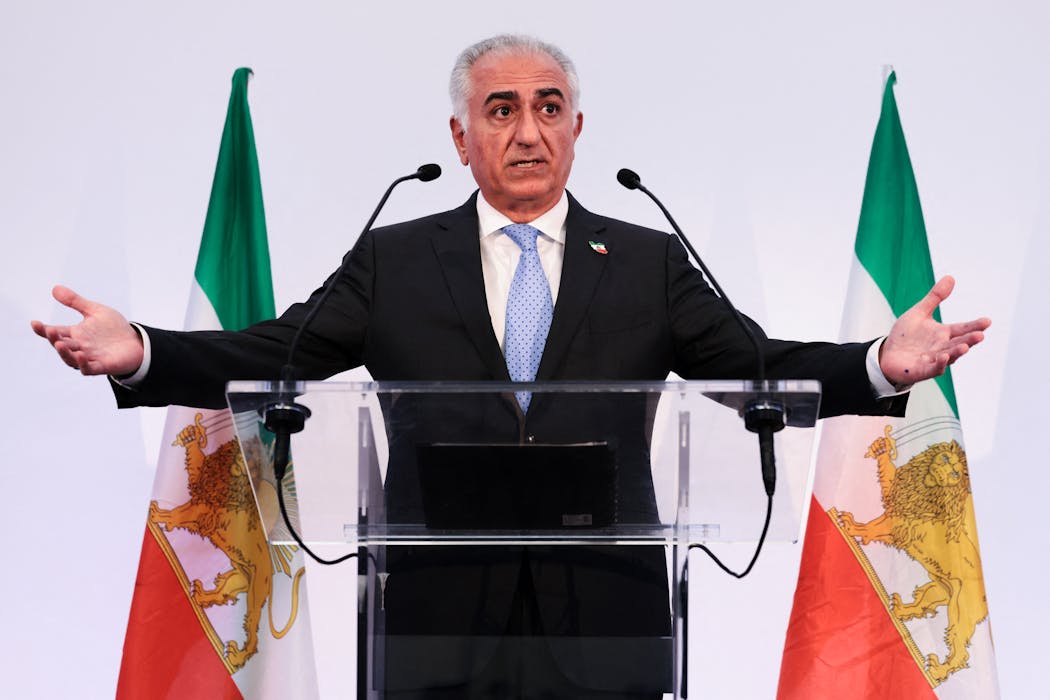
Reza Pahlavi, Iranian opposition leader and son of the last shah of Iran. Joel Saget/AFP via Getty Images

During the protests that ripped through Iran in January, one person who gained attention was Reza Pahlavi. Pahlavi, who lives in Los Angeles, is the son of the late shah of Iran, who ruthlessly ruled the country before being deposed during the Iranian Revolution in 1979.

Pahlavi emerged during the recent upheaval as a prominent political dissident in exile who encouraged and inspired Iranians to demonstrate. It remained unclear, however, what level of popular support he commanded inside Iran, not to mention whether he was, in fact, dedicated to democracy as the descendant of a monarch.

While some Iranians perceived Pahlavi as an opposition leader, others considered him an opportunistic figure with monarchical designs and a mixed track record.

Crown prince to political dissident

Born in Tehran in 1960, Reza Pahlavi was the eldest son of the shah, Mohammad Reza Pahlavi, and his wife, Queen Farah Diba, making him the crown prince.

From 1941 to 1979, the shah ruled Iran with an iron fist. With funding and training from France, the United States and Israel, he established and deployed a secret police force, the SAVAK, that subjected political opponents to surveillance, imprisonment, torture and execution.

As popular discontent against the shah grew in 1974-75, Amnesty International estimated there were between 25,000 and 100,000 political prisoners in Iran.

Although the shah stated during the 1979 revolution that he would rather flee the country than fire on protesters, his security forces killed approximately 500 to 3,000 Iranians – though those figures are lower than those killed in the latest Iran protests.

In 1980, the shah admitted to mistakes, including acknowledging that his regime had tortured Iranians.

CBS Evening News anchor Walter Cronkite reports on Jan. 16, 1979, that a “tearful” Shah and his family had left Iran “on a vacation from which he may never return.”

The shah and his family fled Iran in 1979, and the Islamic Republic subsequently was established. After the shah died in 1980, Reza Pahlavi declared himself the next shah and started his political activism against the Islamic Republic from abroad.

More recently, he attempted to organize and unify a divided opposition composed of ethnic and religious groups, leftists, rightists, centrists, republicans and, of course, monarchists. In the process, Pahlavi also aspired to raise his public profile.

From 2013 to 2017, he served as co-founder and spokesperson of the Iran National Council, an umbrella organization of opposition groups, headquartered in Paris. It reportedly suffered defections from some groups, which stifled its ability to accomplish much. In February 2019, Pahlavi helped establish the Phoenix Project of Iran, a think tank in Washington, D.C., dedicated to regime change and a transition plan in Iran.

During the 2022-23 Woman, Life, Freedom protests, sparked by the death of the young Iranian woman Mahsa Amini while in the custody of the morality police, Pahlavi called for rallies against the Iranian government in the United States, Canada and other countries. Leading opposition figures spoke at these rallies, and thousands of people participated.

That same year, some high-profile activists and celebrities, including some his father had imprisoned, endorsed Pahlavi as a leader or figure who could unite the opposition.

Presence and politics

In April 2023, Pahlavi made his first official visit to Israel, where he was hosted by Intelligence Minister Gila Gamliel and met with Prime Minister Benjamin Netanyahu. The visit was condemned by Iranians, from regime supporters to anti-government activists, who were opposed to monarchy and unsympathetic to Israel.

After Pahlavi’s participation in the February 2025 Munich security conference was nixed, he and his supporters gathered in the city that month and in the summer to unify the political opposition and plan a post-regime transition. For Pahlavi, the meetings may have been simply a face-saving measure after the security conference snub.

As a political dissident, Pahlavi continually called for a popular uprising, regime change and a secular and democratic state. At the same time, he did not rule out the return of the monarchy, albeit a constitutional one, based on a national referendum and constituent assembly.

In an attempt to appease other opposition groups and some anti-monarchy Iranian citizens, Pahlavi occasionally insisted he was “not a political leader” and was “not personally seeking political office” in Iran if the regime fell.

On the foreign policy front – and following in his father’s footsteps – Pahlavi has advocated for Iran to align itself with the United States and Israel.

Protesters holding enlarged photos of Reza Pahlavi as they stand on a street, some of them wearing flags around their shoulders.
Iranian protesters hold a photograph of Reza Pahlavi during a Free Iran rally in London on Jan. 18, 2026.
Dinendra Haria/SOPA Images/LightRocket via Getty Images

Unclear support, mixed record

As Pahlavi became more politically active abroad, questions surfaced about his viability as an opposition leader in Iran.

Discounting a 2023 poll conducted by a pro-Pahlavi institute indicating he was widely popular in Iran, it remained difficult to determine his support in Iranian society.

In a 2022 poll conducted by an independent, nonprofit research foundation with 158,000 respondents in Iran, Pahlavi received the highest percentage – 32.8% – among 34 candidates listed to serve on a transitional solidarity council, should the regime collapse.

At the same time, Pahlavi apparently lacked a serious monarchist movement and a strong connection with local opposition leaders and activists in Iran. He purportedly had little, if any, support among reformist or liberal groups in the country.

The lack of clarity concerning support for Pahlavi in Iran explained the hesitation of U.S. officials, including President Donald Trump, to engage with him. That did not deter Pahlavi from attempting to persuade them to abandon diplomatic talks and negotiations with the Islamic Republic over its nuclear program.

Despite the debates outside Iran about Pahlavi’s support within the country, pro-monarchy slogans increasingly appeared in Iranian social media postings and anti-government protests, including those in 2017-18, 2019-20, and 2022-23.

During the 2019-20 protests, the security forces arrested members of monarchist groups around the country and acknowledged their rising popularity and ability to infiltrate the government. Some reformist intellectuals suggested that monarchist slogans were merely a means for Iranian youth and other citizens to channel their anger and frustration at the authorities rather than expressions of true support for Pahlavi.

The slogans also reinforced the regime’s efforts to delegitimize the protests by portraying them as a plot by external and internal enemies, including the monarchists, to destabilize the country.

A young boy standing in front of a line of boys in military uniforms.
Crown Prince Reza Pahlavi of Iran inspects a ‘guard of honour’ composed of young boys in uniform in Tehran, Iran, on Sept. 19, 1963.
Keystone Hulton Archive/Getty Images.

Throughout the 12-day war in June 2025 between Iran and Israel, which claimed the lives of 1,190 Iranian civilians and injured and displaced thousands more, Pahlavi publicly lamented the destruction of Iran’s military infrastructure that his father had initially built and the price its people paid for a war he blamed on Supreme Leader Ayatollah Ali Khamenei and the regime.

At the same time, he was criticized by prominent political prisoners and other Iranian activists and citizens for betraying his country by supporting the Israeli strikes and failing to condemn them.

After the war, Israeli investigative journalists uncovered an influence operation conducted and funded by Israeli public and private entities to promote – among Persian-speaking audiences on social media – Pahlavi as a potential leader in a post-Islamic Republic Iran. The disinformation campaign created cynicism and controversy concerning Pahlavi’s true popularity inside the country and his tacit connection with Israel before and during the war.

Latest protests and future prospects

During the most recent protests, Pahlavi expressed support for protesters and encouraged them to demonstrate at certain times in the evening. The timing of the protests and demonstrations was intended to increase turnout by accommodating people’s work schedules and to maximize media coverage by aligning with news cycles.

Thousands of protesters turned out in the streets at those times, with some chanting anti-government slogans and others pro-monarchy ones.

His role in the protests was reduced after the regime cut off the internet and telecommunications between the people of Iran and the outside world, as well as among activists inside the country.

While some people praised Pahlavi for inspiring protesters, others asked whether he was responsible for sending them to detention and possible death, as some believed Trump was for similarly encouraging the protesters.

For the last 15 years, Pahlavi has intensified his efforts to unify the political opposition and gain greater exposure, culminating in him emerging as a central figure in the latest protests.

Yet there remain questions about whether he is viable as an opposition leader or is simply an opportunist.

His message about a democratic future for Iran has been largely consistent. However, his father’s repressive and imperial legacy, combined with his own royal pedigree and American and Israeli proximity, prevent him from finding favor with Iranians who oppose monarchy and prioritize sovereignty.

Now, the prospect of Iranians across the country rallying around Pahlavi remains as much of an open question as whether they will succeed in creating the conditions for his return by toppling the regime.

The Conversation

Eric Lob is affiliated with the Carnegie Endowment for International Peace.

ref. The rise of Reza Pahlavi: Iranian opposition leader or opportunist? – https://theconversation.com/the-rise-of-reza-pahlavi-iranian-opposition-leader-or-opportunist-273423

The big higher education question in 2026 ought to be: what are we preparing young people for?

Source: The Conversation – UK – By Lucy Gill-Simmen, Associate Dean (Education & Student Experience) Faculty of Business & Law, Royal Holloway, University of London

The UK’s proposed post-16 education and skills policy promises a nation “where nobody is left behind”. The country’s modern industrial strategy 2025 talks of a workforce ready for a decade of growth, green jobs and artificial intelligence. It is the language of momentum and modernity, but beneath the optimism of these papers and policies lies unease.

We have a plan for skills, but do we still have a philosophy of education? The refrain that “nobody gets left behind” only holds meaning if we first know where we are going.

Education is not merely about producing employable subjects, but cultivating human beings capable of judgement, imagination and democratic participation. Without that moral compass, our forward motion risks becoming little more than acceleration without direction.

In 1949, Albert Einstein lamented: “It is nothing short of a miracle that modern methods of instruction have not yet entirely strangled the holy curiosity of inquiry.”

More than seven decades later, it feels prophetic. Across higher education in the UK, a quiet malaise has taken hold. Universities have become fluent in the language of metrics, policies and dashboards, while students have become fluent in anxiety and debt.

We speak earnestly of agility and alignment, yet without clear direction. Once the moral and intellectual conscience of society, the British university risks becoming something far more ordinary: an institution of conformity, competing for the same diminishing pool of students and, in doing so, becoming indistinguishable from its peers.

This creeping homogenisation reflects the global commercialisation of higher education, where institutions mirror market logics (such as supply and demand) rather than challenge them, often at the expense of curiosity, critical thinking and imagination.

US educational reformer John Dewey described education as “life itself”. Brazilian educator Paulo Freire warned that schooling without liberation (meaning here agency and active learning rather than passively absorbing information) becomes “the banking of facts”, while the feminist author and academic known as bell hooks viewed education as “the practice of freedom”.

These were not romantic slogans; they were blueprints for survival. These people understood that education is not training – it is a process of becoming. Yet today, the language of learning has been colonised by a language of logistics.

Students are “learners”, teachers “deliverers”, and curiosity has no place in key performance indicators. The university system is increasingly one of transaction and we are building a system that can measure everything except meaning.

Opportunity in a crisis

The world is moving faster than the curriculum. Recently leaked documents suggest Amazon could replace up to 600,000 workers with robots – a glimpse of a labour market where efficiency outruns employment. If automation can transform one of the world’s largest employers, then the question for higher education is urgent: what are we preparing young people for?

The answer cannot be “the jobs of tomorrow”, because those jobs may not exist. The task now is to educate for adaptability, imagination and moral judgment, the qualities no algorithm can replace. As the historian and philosopher Hannah Arendt wrote in 1961: “Education is the point at which we decide whether we love the world enough to assume responsibility for it.” This is the work before us.

The government has correctly diagnosed a skills shortage. But its policy misses a meaning shortage. We need not only employable graduates but capable citizens – people able to reason ethically, collaborate across cultures and invent purpose where automation erases routine.

Higher education must recover its voice as the space where society asks its most difficult questions. What is progress for? What is prosperity without dignity? What does it mean to flourish or even to matter in an age of intelligent machines? These are not rhetorical questions – they are the foundation of survival strategies for a civilisation on the cusp of reinvention.

The courage to begin again

Universities across the world are banging the drum of transformation, insisting that doing things differently is the way forward. But how many actually are doung things differently? For all the rhetoric of innovation, much of the sector remains bound by inherited models of teaching and governance.

Into this inertia steps a new generation of institutions reimagining what a university can be. The “challenger university” model exemplified by Minerva University in the US and the London Interdisciplinary School in the UK, has begun to disrupt long-held assumptions about place, teaching and purpose.

These universities treat the world itself as a campus, fusing digital delivery, experiential learning and global immersion to craft education around curiosity rather than compliance.

Traditional universities are slowly following suit, rolling out accelerated degrees and hybrid formats with experiential learning embedded in their cities. At Royal Holloway Business School, the BSc Business and Management (London Accelerated) degree was built from this conviction. It is faster – two years all in instead of three – but not shallower.

London itself becomes the campus as students collaborate with businesses and design projects that connect innovation to ethics. They learn to work with artificial intelligence as a creative partner, not a threat.

This is not a course in survival; it is a course in significance. It teaches that employability follows from imagination, and that imagination begins with purpose. At its heart lies the courage of moral imagination: the willingness to envision not only alternative futures, but better ones.

Higher education stands at a fork in the road. One path leads deeper into optimisation: faster courses, tighter metrics, closer alignment to industry. The other path leads back to truth, curiosity and moral imagination. The first path is safe but soulless. The second is uncertain but alive.

And perhaps that is what this moment demands: to make education full of wonder again. When acceleration becomes an end in itself, education becomes soulless; when it is used to support inquiry, reflection and ethical engagement, it can do the opposite.

Universities must not only expand access but redefine ambition. They must teach not just for the labour market but for the human market – the realm of creativity, empathy and responsibility that automation cannot touch.

So yes, let us commit to no one being left behind. But let us also dare to ask: towards what? Towards compliance or consciousness? Towards growth or grace and fulfilment? If we want education to matter again, we must stop treating it as the servant of policy and start recognising it as the architect of possibility.

The Conversation

Lucy Gill-Simmen does not work for, consult, own shares in or receive funding from any company or organisation that would benefit from this article, and has disclosed no relevant affiliations beyond their academic appointment.

ref. The big higher education question in 2026 ought to be: what are we preparing young people for? – https://theconversation.com/the-big-higher-education-question-in-2026-ought-to-be-what-are-we-preparing-young-people-for-270208

Robert Burns and Mary, Queen of Scots: how the poet shaped the enduring cultural legacy of the executed monarch

Source: The Conversation – UK – By Kate Kane, PhD Candidate in Scottish Literature, University of Glasgow

Wikimedia and National Galleries of Scotland, CC BY-NC

Internationally synonymous with Scottish identity, Robert Burns is Scotland’s national bard, a status he has achieved through his popularity since his death in 1796. He wrote some of the country’s most famous poems, including the satirical ode, Address to a Haggis and the rousing Scots Wha Hae. His most well-known work, the emotive Auld Lang Syne, is belted out the world over every New Year’s Eve.

On the 25th of January each year, Scots celebrate his life with good food (including the haggis he declared “Chieftain o’ the Puddin-race”) and recitations of his poetry. This Burns Night, I urge you to read one of the Bard’s lesser-known works from 1790, Lament of Mary, Queen of Scots, on the Approach of Spring.

A figure who also looms large in the Scottish cultural imagination, Mary, Queen of Scots was executed in 1587 for plotting against her cousin, the English queen, Elizabeth I. Following her execution and the death of Elizabeth, Mary’s son James was crowned king of both countries in 1603, meaning Mary is often viewed as the last distinctively Scottish monarch.

Mary’s legacy has long been contested. In her lifetime, she was depicted as either a papist jezebel, a “monstrous” female ruler, or a Catholic martyr.

Since her death, a slew of writers, including Burns, have written fictional versions of the Queen of Scots according to their own beliefs about her cultural significance. However, Burns’ poem, written 200 years after her execution, played a large part in shaping her legacy.

Mary was the subject of heated debate among Scottish men in the 18th century. Figures such as the philosopher David Hume labelled Mary “a whore” who had “murdered her husband”.

Hume was using the same smears weaponised by Mary’s contemporary political enemies to control her public reputation. The Scottish lords at the time implicated the queen in the murder of her second husband, Lord Darnley. Her marriage to the man accused of Darnely’s killing just months after his death seemed to support perceptions of her guilt. They denounced her as a murderer and adulteress, and she was forced to abdicate in 1567.

Burns’ representation of the “amiable but unfortunate” Mary is, by contrast, sympathetic. His lament first appeared in a letter in 1790 to his friend the heiress Francis Dunlop. He went on to describe the work, in another letter, this time to Lady Winifred Maxwell Constable in 1791, as “a tribute to the memory of our greatly injured, lovely Scottish Queen”.

Burns’ sympathy for the queen was probably influenced by the popular defence of her written by his friend William Tytler. Challenging accounts from the likes of Hume, Tytler critically re-examined the evidence used to condemn Mary for her second husband’s death.

Burns’s portrayal of Mary was also influenced by his Jacobite sympathies – he believed that the exiled Stuart dynasty, represented by Mary, should be restored to the British throne. A burgeoning romantic literary tradition, oriented around natural imagery and individualistic emotional expression, also informed his representation of the Queen.

Written in Mary’s voice as she awaits execution, Burns’ Mary contrasts her youthful happiness as “the Queen o’ bonie France” (she became Queen of France through her first marriage in 1558 to the French dauphin, Francis II) with her current imprisonment in “foreign bands” in England. She decries “mony [many] a traitor” in Scotland and wishes “kinder stars” for her son James.

The Lamentation of Mary Stuart, Queen of Scots by the female poet Anne Hunter (1742-1821) may also have influenced Burns’ depiction of the queen. Published around 1780, it bears marked similarities to Burns’ later lament.

Hunter and Burns both write as Mary in the first-person, describe Elizabeth I as a “false woman”, use nature-based imagery, and conclude with Mary’s defiant belief that she will live on after her death. Unfortunately, the likely influence of Hunter’s work on the bard has largely been forgotten, as her poem was often published anonymously.

With his lament, Burns cemented Mary’s status as a tragic figure ripe for romantic literary representation. Burns’ work inspired the romantic poet William Wordsworth to write three poems about the queen of “weeping captivity” in the early 1800s – one remarkably similar lament and two works that also appropriated her voice.

With Burns’s Mary declaring Elizabeth to be a lesser woman as “the weeping blood in woman’s breast / Was never known to thee”, he also helped to create an enduring trope that presents womanly, incompetent Mary as having been the victim and opposite of cold and shrewd (unwomanly) Elizabeth.

This idea has been perpetuated in works from Walter Scott’s The Abbot (1820) to Phillipa Gregory’s The Other Queen (2008). Liz Lochhead’s 1987 play Mary Queen of Scots Got Her Head Chopped Off is the most significant work to date to take issue with this portrayal of the queens as two “mean girls locked in a catfight to the death”.

Both Mary and Burns were poets, both of their corpses were exhumed in attempts to redefine their cultural reputations, and both are now profitable attractions for Scotland’s tourism and heritage industries.

As Burns Night comes around again and Mary’s last letter goes on display for the first time in Perth, now is the time to read Lament of Mary, Queen of Scots, on the Approach of Spring and remember two figures whose lives and mythologies have shaped Scotland greatly.

This article features references to books that have been included for editorial reasons, and may contain links to bookshop.org. If you click on one of the links and go on to buy something from bookshop.org The Conversation UK may earn a commission.


Looking for something good? Cut through the noise with a carefully curated selection of the latest releases, live events and exhibitions, straight to your inbox every fortnight, on Fridays. Sign up here.


The Conversation

Kate Kane receives funding from the Arts and Humanities Research Council via the Scottish Graduate School for Arts and Humanities.

ref. Robert Burns and Mary, Queen of Scots: how the poet shaped the enduring cultural legacy of the executed monarch – https://theconversation.com/robert-burns-and-mary-queen-of-scots-how-the-poet-shaped-the-enduring-cultural-legacy-of-the-executed-monarch-273950

Why Greenland plays an outsized role in climate change science

Source: The Conversation – UK – By Will de Freitas, Environment + Energy Editor, The Conversation

How high will the sea eventually rise? Much depends on Greenland. muratart / shutterstock

This roundup of The Conversation’s climate coverage was first published in our award-winning weekly climate action newsletter, Imagine.

“Observing Greenland from a helicopter,” one scientist wrote last year, “the main problem is one of comprehending scale. I thought we were skimming low over the waves of a fjord, before … realising what I suspected were floating shards of ice were in fact icebergs the size of office blocks. I thought we were hovering high in the sky over a featureless icy plane below, before bumping down gently onto ice only a few metres below us.”

This is the view described by Durham glaciologist Tom Chudley, when writing about his research showing the Greenland ice sheet isn’t just melting – it’s falling apart. Chudley and his colleagues found crevasses are growing fast, channelling meltwater deep into the ice sheet, accelerating its slide into the ocean.

And as the ice cracks, so does the geopolitical status quo.

aerial shot of greenland interior
Fingerprint ridges or office block crevasses?
JSCorbella / shutterstock

Many world maps make Greenland seem even bigger than it actually is. The “Mercator projection” implies it’s almost the size of Africa, when in reality it is “only” about as big as the Democratic Republic of the Congo.

Over my time in this job, I have noticed Greenland having a similarly outsized role in climate science. In recent years, The Conversation has published stories, among many others, on melting ice, climate-changing microbes, fast-adapting polar bears, Chudley’s creaking crevasses, the race to map the world’s most spectacular and remote fjords, and a skyscraper-sized tsunami that vibrated through the entire planet and no one saw. All relied on scientists – often in big international teams – having access to Greenland.


Read more:
The Greenland ice sheet is falling apart – new study


Access denied?

But the political stability that allows these scientists to work there is also under threat. In a piece explaining why Greenland is indispensable to global climate science, Martin Siegert, a glaciologist who heads the University of Exeter’s Cornwall campus, points out that Antarctica has been governed for decades by an international treaty that ensures it remains a place of peace and science. Greenland has no such protection.

“Its openness to research”, writes Siegert, “therefore depends not on international law, but on Greenland’s continued political stability and openness – all of which may be threatened by US control.”

The stakes are high: if Greenland’s colossal ice sheet fully melted, it would “raise sea level globally by about seven metres (the height of a two storey house)”.


Read more:
Why Greenland is indispensable to global climate science


polar bear peeks from behind ice
An occupational hazard.
Jane Rix / shutterstock

Why the sudden urge to take over Greenland, anyway?

Many assume America’s ambitions are ultimately about oil or other minerals. But Lukas Slothuus, who researches fossil fuel production at the University of Sussex, takes a more sceptical view on the supposed economic jackpot.

Logistical nightmares

Greenland does have vast natural resources, he says, but they won’t necessarily translate into huge profits. That’s because the logistics are so tough. Slothuus notes that: “Outside its capital Nuuk, there is almost no road infrastructure in Greenland and limited deep-water ports for large tankers and container ships.”

He contrasts this with other potential mining operations around the world, which can “exploit public infrastructure such as roads, ports, power generation, housing and specialist workers to make their operations profitable”. Greenland has none of this. That means “huge capital investment would be required to extract the first truckload of minerals and the first barrel of oil”.

This is one reason why Siegert believes “economics dictates” Greenland’s resources will “most likely be used to power the green transition rather than prolong the fossil fuel era”. The sheer cost of extraction means the commercial focus is on “critical minerals”: high-value materials used in renewable technologies from wind turbines to electric car batteries.

As Slothuus puts it, oil from Greenland is “implausible even in the event of a full US takeover”.

“There are many reasons why the Trump administration might want to dominate the Arctic, not least to gain relative power over Russia and China. But natural resource extraction is unlikely to feature centrally.”


Read more:
Why Greenland’s vast natural resources won’t necessarily translate into huge profits


This hasn’t stopped the superpowers, of course. And in the medium-term, Greenland looks set to host a massive military build up – whether or not the US takes over.

That’s according to Caroline Kennedy-Pipe, a professor of war studies at Loughborough University. She says Greenland is in a strategic position that will only become more important as climate change opens up new shipping lanes, enabling further conflict in the far north. “The Arctic in general,” she writes, “will become a showcase for the latest military technology the US has in its armouries.”


Read more:
Whether or not US acquires Greenland, the island will be at the centre of a massive military build-up in the Arctic


I’m not aware of any research on the climate impact of a military showcase on or around a pristine ice sheet. But as our glaciologist in the helicopter warned us, the ice is already fragile enough.


To contact The Conversation’s environment team, please email imagine@theconversation.com. We’d love to hear your feedback, ideas and suggestions and we read every email, thank you.


Don’t have time to read about climate change as much as you’d like?

Get a weekly roundup in your inbox instead. Every Wednesday, The Conversation’s environment editor writes Imagine, a short email that goes a little deeper into just one climate issue. Join the 45,000+ readers who’ve subscribed so far.


The Conversation

ref. Why Greenland plays an outsized role in climate change science – https://theconversation.com/why-greenland-plays-an-outsized-role-in-climate-change-science-274053

Trump’s Board of Peace launches into a warring world

Source: The Conversation – UK – By Jonathan Este, Senior International Affairs Editor, Associate Editor, The Conversation

This newsletter was first published in The Conversation UK’s World Affairs Briefing email. Sign up to receive weekly analysis of the latest developments in international relations, direct to your inbox.


Fears that Donald Trump’s newly minted “Board of Peace” might supplant the United Nations appear to have been premature. The US president has touted his brainchild as “an international organization” that aims to “secure enduring peace in areas affected or threatened by conflict”. This, of course, is a mission that is central to the UN’s raison d’etre.

But António Guterres, the UN’s secretary-general, is unlikely to lose much sleep over Trump’s new vehicle for global governance. Just 19 countries have signed up of the 60 invited, ranging from Argentina to Uzbekistan. From Europe, just Hungary and Bulgaria have joined. None of the major European powers were represented, neither were Russia or China.

The board’s charter amounts to what must be one of the more bizarre documents doing the diplomatic round at the moment. Despite being set up and given a mandate by the UN security council as a vehicle to oversee the future governance and rebuilding of Gaza, you’d search in vain in the charter for mentions of the embattled Palestinian territory.

Instead it confers on the US president some extraordinary powers as chairman of the board. He can dictate who is eligible to join (just not, as we have seen, who actually joins). He will occupy the chair for as long as he wishes and has the power to choose his successor. He will choose when to meet and what to discuss. In the event of a decision before member states being tied, he gets a casting vote.

Membership is for three years, and can be turned into a permanent seat for a fee of US$1 billion (£740 million). Funds will be controlled by the executive board, selected by the chairman, with a chief executive officer, nominated by the chairman. The chairman also has the power to remove or renew the tenure of members of the executive board.

It is, writes Stefan Wolff, like a “privatised UN with one shareholder: the US president”. And it comes a week after Trump pulled the US out of 31 UN organisations, including the peace-building commission and the peace-building fund, as well as office of the special representative for children in armed conflict. Perhaps we’ll see the Board of
Peace taking these roles on?

More likely, it would seem, is that the transactional ethos which appears to run through Trump’s foreign policy endeavours will persist in the Board of Peace’s efforts to solve today’s international crises. Jared Kushner and Steve Witkoff have both been appointed to the executive board (alongside, among others, Tony Blair). Kushner presented the plan for the next phase of the Gaza plan, which will focus on decommissioning Hamas.


Read more:
Donald Trump’s ‘board of peace’ looks like a privatised UN with one shareholder: the US president


The launch of the Board of Peace took place on the sidelines of the World Economic Forum at Davos, a gathering which had appeared to have lost traction in recent years, but which has this week been the epicentre of global diplomacy. This has largely been thanks to Trump’s threat to acquire Greenland from Denmark by fair means or foul. Given that Denmark (and the Greenlanders themselves) have resolutely insisted that the island is not for sale, fair means appear to have been ruled out and there was much consternation about what foul might mean and whether it would involve military action.

Trump addressed the gathering on Wednesday, rowing back on his earlier threat to take Greenland by force. But it what was still clear that most leaders are coming to terms with the disintegration of the world order put in place in the aftermath of the second world war and the dawn of a new era dominated by great powers acting purely in their own interests. Or as Stephen Miller, Trump’s ideologue in chief puts it, a world “that is governed by strength, that is governed by force, that is governed by power”.

It’s hard to see how America’s erstwhile close allies can resist this, writes Robert Dover. Dover, an expert in international affairs at the University of Hull, with a focus on security and intelligence, sees just how intimately entwined the US and the rest of Nato are, particularly in terms of intelligence sharing and military cooperation.

Still, he writes: “There is a dawning realisation that the US might be Europe’s adversary, not ally.” Or, as Canadian prime minister Mark Carney put it in his speech on January 20: “We are in the midst of a rupture, not a transition.” It’s up to the rest of the world to decide how to face up to the new reality.


Read more:
Trump at Davos marks the start of a new era in world affairs


Carney’s speech, with its quotations from Václav Havel and Thucydides, has been much praised. (Take a look at this piece from Thucydides expert Neville Morley for a detailed look on what the ancient historian really meant by the line referenced by Carney.) One journalist even put it up there with Churchill’s iron curtain speech after the second world war.

There was, writes Mark Shanahan, professor of political engagement at the University of Surrey, one venue and two speeches but Carney’s “left Donald Trump in the dust”. It was clear-sighted, determined, reasonable and fact-based. Trump, meanwhile, served up 70 minutes that had it not been for the teleprompter you could have taken for stream of consciousness, including the usual jibes against friend and foe alike and a medley of his own greatest hits, many of them imaginary.

Shanahan contrasts the style and substance of the two leaders, concluding that: “One leader donned the cloak of statesmanship at Davos this week. It wasn’t Donald Trump.”


Read more:
One venue, two speeches – how Mark Carney left Donald Trump in the dust in Davos


Trump 2.0: one year in

So busy a week has it been that we’ve hardly had time to stop and notice that it marked a year since Donald Trump was inaugurated for his second term, promising to “preserve, protect and defend the Constitution of the United States”.

He rode to victory in November 2024 thanks to a broad coalition with its core comprising what have become known as Maga voters – for his slogan that he will “make America great again”. Prominent among those voters were farmers and small business owners in rural communities across the heartland of America: rust-belt and rural communities drawn to his promise of economic regeneration.

But a year own there are signs that these people are becoming increasingly disillusioned, writes Inderjeet Parmar, an expert in US politics at City St George’s, University of London. The mass deportations of migrants has deprived farmers of vital labour while Trump’s regime of tariffs has increased costs for struggling families. With the midterms looming this November, the Republican party will be anxious that these crucial votes might not materialise.


Read more:
Signs that Trump’s economic policies are alienating his rural Maga base


Tariffs have been at the heart of Trumpian economic policy over the first year of his second term. Economists Prachi Agarwal, Jodie Keane and Maximiliano Mendez-Parra of independent research organisation ODI Global assess who are the winners from Trump’s tariff regime and who have lost out.


Read more:
After a year of Trump, who are the winners and losers from US tariffs?


Sign up to receive our weekly World Affairs Briefing newsletter from The Conversation UK. Every Thursday we’ll bring you expert analysis of the big stories in international relations.


The Conversation

ref. Trump’s Board of Peace launches into a warring world – https://theconversation.com/trumps-board-of-peace-launches-into-a-warring-world-274147

Academy Awards 2026: How ‘Hamnet’ will help me lead Shakespeare classes about ‘Hamlet’s’ Ophelia

Source: The Conversation – Canada – By Paul Yachnin, Tomlinson Professor of Shakespeare Studies, McGill University

In ‘Hamnet,’ Shakespeare’s wife, Agnes, (Jessie Buckley) is a healer. (Agata Grzybowska/2025 Focus Features LLC)

When I teach Shakespeare’s play, Hamlet, many students love the character Ophelia, and so do I. But the play seems to silence her just when readers need to know more about how she sees the world and her place in it — especially the young women in my classes.

After all, as Shakespeare critics have noted, Ophelia is a young woman who is bossed around by her brother and her father and slut-shamed and violently rejected by Hamlet — the prince who said he loved her.

Over the centuries, Ophelia appears frequently in popular western culture — recently in the Taylor Swift song of the same name, just as Ophelia imagery is referenced on Swift’s Life of a Showgirl album cover.


Read more:
The pre-Raphaelite muse who inspired Taylor Swift’s The Fate of Ophelia


Hamlet‘s Ophelia goes mad in the wake of her father’s murder. She ends up falling into a brook and drowning, according to the weirdly poetic account delivered by Queen Gertrude:

“There is a willow grows aslant a brook,

That shows his hoar leaves in the glassy stream;

There with fantastic garlands did she come

Of crow-flowers, nettles, daisies, and long purples …”

Finally, Maggie O’Farrell’s novel Hamnet, and the Hamnet movie that she wrote with director Chloé Zhao — now nominated for eight Academy Awards — have given me something important to share about Ophelia the next time I teach Hamlet.

Trailer for ‘Hamnet.’

Hamnet imagines origins of ‘Hamlet’

Hamnet, novel and movie, tells a compelling story about the origins of the play Hamlet in Shakespeare’s life as O’Farrell and Zhao imagine it, focused on the passionate relationship between Shakespeare and his wife and the tragedy of their son Hamnet’s death from plague at age 11.


Read more:
After the plague, Shakespeare imagined a world saved from poison, slander and the evil eye


The film draws on sparse historical details, such as the name of Shakespeare’s wife Agnes (aka Anne Hathaway) and the known death of one of their children.

The film shows us the shattering grief they felt — and envisions Hamlet as a gift of remembrance for the dead Hamnet, a gift that seems strong enough to begin to heal the broken love between Agnes and William.

But in the book and the movie, the potential healing a work of art can catalyze has roots eleswhere: Agnes’s art of natural healing. From her late mother, a woman said by the locals to have been a “forest witch,” Agnes learned how to gather the flowers and herbs that grow in the forests near Stratford and how to concoct them into medicines able to heal the sick and broken bodies of her neighbours.

Regardless of the historical plausibility of Hamnet, could it possibly tell us something about Hamlet that we don’t already know?

In my analysis as a Shakespeare scholar, the film can open up a new way of seeing, loving and standing up for Ophelia, precisely by seeing Ophelia in dialogue with Hamnet’s Agnes.

Face to face with Ophelia

To understand that story, let’s consider that the theatre Shakespeare and his company made in London around the turn of the 16th century is
what I am calling a “thinking machine.”

This idea emerges from collaborative interdisciplinary research I’m doing that brings Shakespeare into conversation about social, environmental and political upheaval and explores the convergence of art, science, technology and human experience.

Why a machine? Like large language models (LLMs) today that train on huge archives of digital data, Shakespeare’s play-making didn’t just draw on previous plays, but also on literary, political and legal language, street talk, sermons, songs — the whole textual and spoken ecosystem of his time and the textual works of earlier ages.

However, unlike LLMs, which use predictive logic to generate what word should follow what word to generate a text, Shakespeare’s plays are human-made mechanisms with meanings that grow larger over time and more complex by way of the creative, networked intelligence of actors and many other interpreters.

Hamlet, itself drawing on a vast trove of literary and cultural works, has generated a multitude of different performances, different critical accounts and thousands of other works of art. The works Hamlet has inspired have also been able to loop back and bring to light aspects of the play that have passed unremarked in earlier interpretations.

Ophelia as healer

Eighteenth and 19th-century Germans, for example, took up Hamlet as a play about their own struggles toward nationhood. Ferdinand Freiligrath wrote a poem “Hamlet” (1844) with the line “Deutschland ist Hamlet.”

Painting of a dreamy looking woman beside water.
John William Waterhouse 1894 painting ‘Ophelia.’
(Wikimedia)

That new way of thinking about the play took root across many European nations. It even ended up giving voice to 20th-century Québecois aspirations toward nationhood in Hubert Aquin’s novel Prochain Épisode.

Hamnet, like other interpretations of Shakespeare’s work, can help advance our understanding of Ophelia, a character who has been at the centre of much feminist scholarship across fields for at least the past 40 years and has been a central concern in theatrical, literary and visual art for far longer.

Image of a woman looking up from a greeny blue setting suggesting water in a jeweled bustier.
Taylor Swift’s ‘The Life of a Showgirl’ album cover references earlier artistic depictions of Ophelia.
(Wikimedia)

Maggie O’Farrell’s Agnes, brought to life on-screen by Zhao in Hamnet, can begin to bring forward stronger readings of the role of Ophelia.

Building on earlier readings that amplify studies of corruption and governance, we might consider how Ophelia, like Zhao’s Agnes, also sets out to be a healer, but a healer of souls and of the nation itself.

In the play’s Act 4, Opelia’s “mad” talk, heard by ordinary people in the streets, is already stirring the people up against the corrupt monarchy.

Fighting moral disease

The “mad” Ophelia uses herbs and flowers to get at the moral disease that has infected Denmark. Like Hamlet, she is bent on bringing healthy nationhood back to Claudius’s “rotten” state.

The flowers and herbs she offers to the king and queen and to her brother Laertes, or simply imagines she is offering, include, among others, rosemary “for remembrance,” pansies “for thoughts,” and rue, “herb of grace.” They are medicinal drivers of reflection and repentance and offer rich opportunities for symbolic analysis.

But the king and queen don’t heed what the poor “mad” girl has to say, and the play ends with spectacular show of killing and dying. Both Ophelia and Hamlet fail to save Denmark from corruption and death. It is a tragedy, after all.

Let’s consider then that Gertrude’s weird poetic narrative about how Ophelia died was only the first attempt to tell her story.

It falls to me, my students and you to tell it more truthfully for our time — and Hamnet offers a pathway forward.

The Conversation

Paul Yachnin receives funding from the Social Sciences and Humanities Research Council of Canada.

ref. Academy Awards 2026: How ‘Hamnet’ will help me lead Shakespeare classes about ‘Hamlet’s’ Ophelia – https://theconversation.com/academy-awards-2026-how-hamnet-will-help-me-lead-shakespeare-classes-about-hamlets-ophelia-273444

Why do onions and chips keep washing up on England’s south coast? Here’s the science

Source: The Conversation – UK – By Simon Boxall, Senior Lecturer in Ocean and Earth Science, University of Southampton

Over Christmas, vegetables, bananas and insulation foam washed up on beaches along England’s south-east coast. They were from 16 containers spilled by the cargo ship Baltic Klipper in rough seas. In the new year, a further 24 containers fell from two vessels during Storm Goretti, with chips and onions among the goods appearing on the Sussex shoreline.

For most people this is a nuisance – or perhaps a bit of fun. For oceanographers like me, who study tides and currents, it is also an accidental experiment – a rare chance to watch the ocean move things around in real time. Think of it as a very large message in a bottle.

In reality, cargo has been falling off ships since traders first went to sea. What has changed is that, in the modern world, most goods are transported in standardised containers. Apart from oil, gas, vehicles, bulk grain, aggregates – and people – pretty much everything is moved this way.

More than 250 million containers are shipped around the world each year, and it is likely that over 80% of goods in your home travelled at some point in a container by sea.

Losses are rare. Industry group the World Shipping Council estimates that over the past ten years an average of 1,274 containers a year have been lost globally, out of hundreds of millions transported. This figure does vary: in 2020 a single huge ship the ONE Apus lost around 1,800 containers of its 14,000 load in a Pacific storm, while in 2024 global losses were estimated at just 576.

Ducks go global

Some losses make the news in unexpected ways. In January 1992, 12 containers washed off the Ever Laurel in the North Pacific. One of these contained 28,800 bath toys – plastic beavers, frogs, turtles and ducks – which spilled into the ocean and washed up on beaches around the Pacific over the next decade or more.

Curt Ebbesmeyer and James Ingraham, oceanographers from Seattle, tracked these so-called “friendly floatees” around the world and used them to improve scientific models of ocean circulation. In more recent years I’ve looked at the progress of these floatees into the Arctic and beyond.

Annotated world map
How the friendly floatees made their way around the world.
NordNordWest / wiki, CC BY-SA

Not all cargoes are this benign or useful. In January 2007, the MSC Napoli was hit by a major storm in the Channel and lost 114 containers, 80 of which washed up on beaches around Branscombe in Devon. Containers of wine, BMW motorbikes and perfumes drew locals to scour the beach for prizes but there were also far more sinister containers of explosives, weed killers, fertilisers and acid.

Both the cargoes and the containers themselves pose serious risks. Chemicals can destroy habitats, while containers can sometimes lurk one or two metres below the surface, kept semi-buoyant by trapped air, making them difficult to detect and capable of causing serious damage in a collision.

Designed for speed – not 100% security

Modern container ships are designed for speed and efficiency in port. A single 400-metre vessel can carry up to 25,000 containers, many towering high above deck like a block of flats. The containers interlock and are secured using industry standard fixings – one reasons cranes are able to rapidly move them around a port. In severe storms, however, the forces involved can exceed what the fixings are designed to withstand, and containers can be dislodged, particularly those at the edge.

huge container ship
These ships are built to be loaded and unloaded very quickly.
MagioreStock / shutterstock

It is almost impossible to secure cargo 100% safely. To do so would mean smaller ships, with cargo held internally, reversing decades of efficiency gains. That would mean far more ships required to move the same volume of goods, higher costs for consumers, great fuel use per tonne of goods, and a higher overall risk of accidents. It would also clog up ports around the world.

The English Channel is one of the busiest shipping lanes in the world and is regularly battered by storms. Southampton, the UK’s second busiest container port, is also one of only a few worldwide that can accommodate the largest container ships. It is therefore no surprise that container losses are often visible along England’s south coast.

Looking ahead, the risks are unlikely to diminish. Climate change is intensifying storms as oceans warm, while international trade continues to grow and ships become ever larger.

The ship owners – usually through their insurance companies – are responsible for cleaning up spills, but the system only works if the losses are reported. Until now, containers lost at sea have often gone unreported or their contents have been barely documented.

However, from January 1 2026, new international rules introduced by the World Shipping Council working with the International Maritime Organisation (the UN Agency responsible for shipping) will require ship owners to report all cargo losses and their contents. While this may not prevent containers being lose at sea, it should improve tracking, recovery and accountability.

If you see a container on a beach, resist the temptation to see it as an early Christmas present. You should report it immediately to the coastguard – scavenging wrecks can count as theft. In the UK, who owns what washes up is decided by a single civil servant with the grand title of the Receiver of Wreck. Critically, that container may contain a far less pleasant cargo that could ruin your Christmases for years to come.

The Conversation

Simon Boxall does not work for, consult, own shares in or receive funding from any company or organisation that would benefit from this article, and has disclosed no relevant affiliations beyond their academic appointment.

ref. Why do onions and chips keep washing up on England’s south coast? Here’s the science – https://theconversation.com/why-do-onions-and-chips-keep-washing-up-on-englands-south-coast-heres-the-science-274095

Brain device for ADHD shows no benefit in major UK trial

Source: The Conversation – UK – By Katya Rubia, Professor of Cognitive Neuroscience, King’s College London

Child sleeping with the Monarch TNS device Astrid Perez

Diagnoses of attention deficit hyperactivity disorder (ADHD) are rising rapidly in the UK. More children and teenagers than ever are being referred for assessment and support, and families are often facing long waits and limited options once a diagnosis is made. Schools, health services and parents are all under growing pressure to find treatments that genuinely help children manage their difficulties with attention, impulsivity and activity levels.

At the same time, there is no shortage of new ideas being promoted as solutions. Some are supported by evidence, while others sound promising but rest on much shakier foundations. One of the challenges for families is working out which treatments are truly effective and which are driven more by hope than by solid proof.

For many children with ADHD, stimulant medication such as methylphenidate is known to be highly effective. Decades of research show that these medicines can reduce core symptoms and help children function better at home and at school. For some families, medication can make a life-changing difference.

Even so, medication is not an easy choice for everyone. Many parents and young people worry about side-effects, stigma or the idea of taking medication long term. These concerns are understandable and often lead families to look for alternatives that feel more natural or less medical.

Against this backdrop, brain stimulation devices have increasingly been promoted as a drug-free option for ADHD. These devices deliver very mild electrical stimulation to specific nerves or parts of the brain. They are generally considered safe, with side-effects that tend to be mild and short-lived, such as skin irritation or tingling. Safety, however, is not the same as effectiveness.

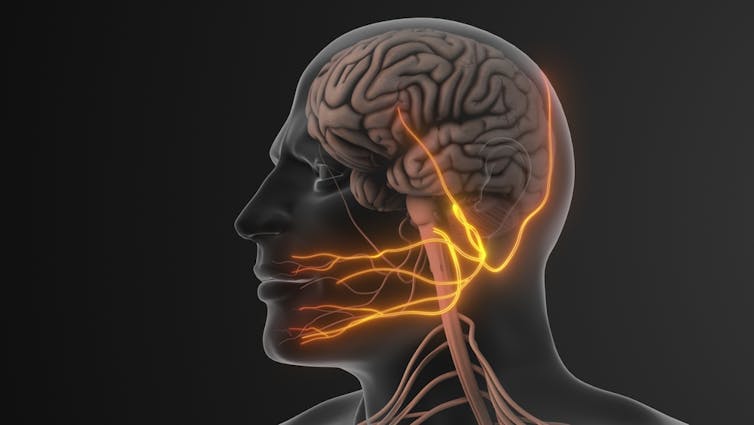
One of the most widely discussed of these technologies is trigeminal nerve stimulation (TNS). The trigeminal nerve is the largest nerve in the face and carries signals to the brain. Devices using this approach are worn on the forehead and deliver gentle electrical pulses, usually during sleep. The idea is that stimulating this nerve might influence brain systems involved in attention and self-control.

A graphic showing the trigeminal nerve.
The trigeminal nerve, in yellow.
JitendraJadhav/Shutterstock.com

This technology became the only medical device cleared by the US Food and Drug Administration for ADHD in children in 2019. For many families seeking non-medication options, regulatory clearance can suggest effectiveness, even when the supporting evidence is limited.

What is less widely understood is that this decision was based on very limited evidence. The main study supporting clearance involved just 62 children. While the study reported improvements in ADHD symptoms, it had major weaknesses. In particular, the children who were meant to act as a comparison group received no stimulation at all.

This matters because expectations can strongly influence how people experience and report symptoms, especially when a treatment involves advanced technology. If children or parents can easily tell whether a device is switched on, beliefs about whether it “should” work can affect how improvements are noticed or reported, even if the device itself has no real effect.

Despite these limitations, FDA clearance helped legitimise the device and fuelled interest around the world. TNS began to be marketed in private clinics, including in the UK, often at significant cost to families.

Some families bought the device abroad or through private providers, hoping it would offer benefits without medication. Meanwhile, the UK’s National Institute for Health and Care Excellence has taken a more cautious stance, saying that stronger evidence is needed before such devices could be recommended within the NHS.

It was clear that better evidence was needed to answer a simple question that matters deeply to families: does TNS actually help children with ADHD?

Testing the claim

Our new study was designed to find out. We carried out a large, independent UK clinical trial of TNS, recruiting 150 children and teenagers with ADHD in London and Southampton. This made it substantially larger than the studies that had come before. Crucially, our study was designed so that expectations were carefully controlled.

Children in both groups wore identical-looking devices, and both groups felt sensations from the device. This meant that neither families nor participants could easily tell whether they were receiving real stimulation or a placebo version. This kind of design allowed us to test whether TNS itself had any effect beyond expectation alone.

Our findings were clear. We found no evidence that trigeminal nerve stimulation improved ADHD symptoms. Children who received active stimulation did no better than those who received the placebo device. There were no improvements in attention, behaviour, anxiety, mood or sleep.

These results challenge the earlier study that led to regulatory clearance in the US. They also highlight why large, carefully designed trials are so important, particularly for treatments that generate excitement and hope. Without strong controls, it is easy to mistake expectation for effectiveness.

Technology-based brain treatments are especially vulnerable to this problem. When families are told that a device can “correct” or “normalise” brain activity linked to ADHD, expectations can understandably run high. Without rigorous testing, this can lead to the benefits being overstated and families being misled.

For families in the UK, the message from our research is an important one. TNS appears to be safe, but safety alone is not enough. A treatment that does not work offers no real benefit and may divert time, money and energy away from approaches that are known to help.

Our findings also serve as a reminder that official approval or marketing claims do not always mean a treatment is effective. Clearance can sometimes reflect that a device is safe to sell, not that it has been proven to work well.

ADHD can be a serious and lifelong condition for many children and young people. As diagnoses continue to rise, so too does the responsibility to ensure that families are offered support and treatments guided by robust evidence – not hype, hope or premature conclusions.

_The Conversation asked NeuroSigma, the maker of the TNS device mentioned in this article, to comment on the issues raised in this article. A company spokesperson said the study design mentioned in this article may have limited the ability to detect treatment effects. In particular, they noted that the primary outcome measure relied on parent-reported assessments rather than clinician-rated ADHD scales. NeuroSigma maintains that clinician assessments are more reliable and less prone to bias, and says it is therefore unsurprised by the study’s findings.

NeuroSigma also highlighted an ongoing, larger double-blind randomised controlled trial led by researchers at UCLA, involving 225 children and using clinician-rated outcomes alongside biomarker data. The company says it expects results from this study later this year and believes they will confirm both the safety and effectiveness of eTNS therapy.

The Conversation

This project was funded by the Efficacy and Mechanism Evaluation (EME) Programme (NIHR130077), a Medical Research Council (MRC) and National Institute of Health and Care Research (NIHR) partnership. The design, management, analysis and reporting of the study are independent of the funder and the device manufacturer. Katya Rubia is also supported by the NIHR Biomedical Research Centre at South London and Maudsley NHS foundation Trust and King’s College London (NIHR BRC Maudsley) and by NIHR grant (NIHR203684), Medical Research Council (MRC) (APP32868), Medical Research Foundation (MRF-176-0002-RG-FLOH-C0929) and Rosetrees Foundation (3442198). The views expressed in this publication are those of the authors and not necessarily those of the MRC, NIHR or the Department of Health and Social Care or any of the other funding bodies.

Aldo Alberto Conti does not work for, consult, own shares in or receive funding from any company or organisation that would benefit from this article, and has disclosed no relevant affiliations beyond their academic appointment.

ref. Brain device for ADHD shows no benefit in major UK trial – https://theconversation.com/brain-device-for-adhd-shows-no-benefit-in-major-uk-trial-273628

Why failure is a necessary ingredient for success – especially in the era of AI

Source: The Conversation – UK – By Thusha Rajendran, Professor of Psychology, The National Robotarium, Heriot-Watt University

On the arm of Swiss tennis player Stan Wawrinka is tattooed a quote by Samuel Beckett: “Ever tried. Ever failed. No matter. Try again. Fail again. Fail better.”

This excerpt from novella Worstward Ho seems motivational and suggests that perseverance is needed for success. However, the word failure carries a weight with it, especially if used as a label, as if it were an essential part of someone.

Yet, in evolution, the creative arts, engineering and education, failure is a process – without which success is not achievable.

“Error” might actually be a better term than failure, because error generates variation. And this variation is important in understanding the uniqueness of human creativity.

Generative AI can create fashion models, award-winning art and actors. But generative AI lacks the artist’s drive, their ability to reflect and know the significance about why and for whom the art is being created.

If we consider creativity as a process, then in order to create new and novel art, errors, mistakes, dead ends are required. In short, failure.

Generative AI also cannot understanding concepts such as aesthetic failure (when musicians use failure as a catalyst for improvisation), or have the desire to connect with an audience in a live performance. Creation can be outsourced but human creativity and the impulse to connect cannot.

Perfectionism is an illusion

Learning from mistakes in not a new idea in teaching, but with the rise of generative AI the temptation for both students and educators might to see generative AI as a way to eradicate failure, a guarantee of high grades at school and university.

However, this risks not providing students with the experiences they will need to be lifelong learners. British psychiatrist and cyberneticist W. Ross Ashby wrote: “The whole function of the brain is summed up in: error correction.”

Here, the key to understanding the brain is not in the error, but the process of correcting the error. Similarly, in his book To Engineer Is Human: The Role of Failure in Successful Design, the engineer Henry Petroski argues that failure is vital to the advancement of engineering and design, because it drives process.

Not that anyone deliberately designs bridges to collapse, but the knowledge of how to put things right comes from understanding why things went wrong. Petroski also argues that prolonged success leads to failure, but this is because of complacency.

In deciding what we want from AI, complacency (not failure) is our biggest enemy. Across many domains failure is not just necessary, but vital for success.

For example, a research study has found that both AI models and human dermatologists perform worse on images of dark skin tones and uncommon diseases when presented with a set of diverse skin images. This highlights the problems of a lack of exposure to variations in skin types and rare skin diseases in both AI trained datasets and humans.

Driverless vehicles have issues with merging into traffic and halting because they do not have a mental representation of the intentions of other road users.

By contrast, humans understand driving as a social, interactional and transactional endeavour – as much as a technical one – and, so, find ways to negotiate, to yield and say thank you.

Appreciating this a powerful counter narrative to perfectionism in all its guises. The most seductive of which is perhaps the promise of an AI-created utopia.

The question is whose vision of paradise is this and what are we forsaking by not questioning it. What we do risk losing by not striving, by not making (or accepting mistakes), of seeing beauty in imperfection?

The fallacy is that we have no agency, that technology cannot be imbued with moral ambition. However, history shows us that humans can and do shape technologies. For example, the printing press was repurposed from publishing books to printing newspapers – thereby creating the means and a mechanism for a free press.

So, there is no such thing as technological inevitability. We can decide what the relationship between humans and AI will look like – through consumer choice, the ballot box and legislation – and with it all the groundbreaking, creative and beautiful mistakes it will bring.

The Conversation

Thusha Rajendran does not work for, consult, own shares in or receive funding from any company or organisation that would benefit from this article, and has disclosed no relevant affiliations beyond their academic appointment.

ref. Why failure is a necessary ingredient for success – especially in the era of AI – https://theconversation.com/why-failure-is-a-necessary-ingredient-for-success-especially-in-the-era-of-ai-272820