Why AI shouldn’t be used even to decide ‘simple’ court cases

Source: The Conversation – UK – By Raisul Islam Sourav, PhD Candidate in Legal Analytics, University of Galway

Phonlamai Photo/Shutterstock

In just a few years, generative artificial intelligence (gen AI) has brought about significant changes in many industries from healthcare to education, entertainment to finance, and even law.

The use of gen AI in court verdicts poses significant risks to justice. Erroneous outcomes generated from “hallucinated” information, discriminatory decisions and lack of transparency are all concerns when this technology is introduced to courtrooms.

But already a number of judges around the world have used it in decision-making and judgment writing. This is why some jurisdictions, including the UK, have issued guidelines for judges regarding AI use.


Read more:
‘Hallucinated’ cases are affecting lawyers’ careers – they need to be trained to use AI


Broadly, the guidelines suggest judges might use AI as a tool to conduct preparatory works such as drafting summaries of long documents, translating legal documents, identifying legal precedents or enhancing readability of documents. They recommend against the application of it for core judicial functions, including decision-making.

Recently, some senior judicial leaders have opined that AI might be used to decide “low-stakes” or less-complex cases with adequate precautions, such as keeping a human judge in the loop.

In a November 2024 speech, the UK’s second most senior judge, Geoffrey Vos, spoke of a “spectrum” of legal decisions that AI might soon make, or help make.

Vos said the use of AI for “broadly mechanical decisions, like those about the amount of a pension or benefits, or the calculation of personal injury damages and loss of earnings” would likely save money and time. But he called for discussion on whether such use would violate essential human rights.

A year later, Vos again called for “serious debate” about what rights humans should have protected in this context. And he urged that AI be “used responsibly, effectively and safely in legal systems and processes”.


AI has long been discussed as a threat to jobs and livelihoods. But what’s the reality? In this new series, we explore the impact it is already having on different occupations – and how people really feel about their AI assistants.


A number of jurisdictions are testing or using AI in such “mechanical” cases already. Estonia uses a semi-automated small-claims system in civil proceedings for monetary claims up to €7,000 (£6,100), with human clerks overseeing the process.

Frankfurt District Court in Germany has tested an AI system named Frauke to deal with air passenger rights lawsuits. Frauke analyses earlier cases and rulings to create pre-configured draft judgments. Judges assemble final verdicts from these texts following their ruling, significantly reducing the time spent drafting.

Taiwan piloted an AI-powered tool to assist courts by producing ruling notices for Driving Under Influence cases, or aiding and abetting in fraud cases. The AI system generates a complete draft ruling including the facts, legal reasoning, citations and final verdict. The judge reviews this draft and, upon approval, can issue it as the official judgment, with or without modifcations.

It is evident from these examples that the key motivation to replace human judges in a certain category of cases is efficiency. As a result, a few other jurisdictions are also exploring the scope of integrating gen AI to adjudicate certain litigation without human judges.

The cost of using gen AI as judge

Courts are overburdened, and technology like gen AI promises consistency and efficiency. But it would mark a significant change of centuries-old practice. And it risks undermining what some legal scholars argue is a fundamental principle of justice: the right to be judged by a human being.

Court adjudication is not only about reaching a decision. It is about a holistic and fair process that includes the right to be heard – presenting defence, weighing competing narratives, and exercising judgment in light of law and equity.

Algorithmic tools, no matter how advanced, do not hear or “understand” even their own output, let alone human values or changing social contexts. Gen AI cannot recognise suffering, credibility, remorse or vulnerability like a human. That alone makes it unfit to sit in a judge’s seat.

Judge's gavel on a table with several people sitting around
Some legal scholars argue the right to be judged by a human is a fundamental principle of justice.
Korawat photo shoot/Shutterstock

Categorising cases as simple or complex may look pragmatic, but it is both legally and morally dangerous. What counts as a “simple, routine or mechanical” case is itself a human decision. Legal disputes over compensation or benefits may appear straightforward on paper, yet carry significant consequences for the person bringing the case.

Allocating such cases as appropriate for algorithmic adjudication risks creating a two-tier justice system – in which one group of citizens gets to present their case before a human judge, while others are handled by machines. Only the former, I would argue, are exercising their right to a fair hearing and trial before an independent and impartial tribunal, as protected under Article 6 of the European Convention on Human Rights.

Additionally, the efficiency argument may become illusory. Algorithmic systems like gen AI require continuous human oversight, auditing and rectification. Hallucination or mistakes, whether from flawed design or biased training data, can completely negate the claimed benefits.

Public trust matters in all legal systems. If people lose trust in automated decisions, appeals will increase – adding to the existing backlog of cases.

Emerging technology such as gen AI may be suitable to manage court administration and reducing clerical burdens. But substituting human judges, even in supposedly low-stakes cases, undermines basic principles of justice. Efficiency should not come at the expense of the values the justice system exists to protect.

The Conversation

Raisul Islam Sourav does not work for, consult, own shares in or receive funding from any company or organisation that would benefit from this article, and has disclosed no relevant affiliations beyond their academic appointment.

ref. Why AI shouldn’t be used even to decide ‘simple’ court cases – https://theconversation.com/why-ai-shouldnt-be-used-even-to-decide-simple-court-cases-273535

Why organisations pick the wrong leaders

Source: The Conversation – UK – By Imran Mir, PhD Candidate in Education, University of Glasgow

Pressmaster/Shutterstock

Plenty of people have worked under a manager who appears confident, articulate and highly visible – yet they struggle to lead their team effectively. Team members can become disengaged, decision-making slows and performance declines. But despite this, the same people always seem to progress through the hierarchy.

Unfortunately, this is not unusual. In many organisations, leadership potential is assessed using signals that are easy to observe. These could be confidence, charisma or communication style – rather than the traits that actually produce effective teams.

This creates a persistent problem. Organisations promote people who look like leaders rather than those who demonstrate the capabilities required to lead.

Promotion decisions are often made under conditions of uncertainty. Bosses will not always have the right information to be able to predict a candidate’s leadership ability. This is why they fall back on visible cues.

These cues are generally based on how someone performs in meetings, how well they present their ideas, or how comfortable they appear when speaking to senior management or stakeholders. Those who show self-confidence and authority while communicating tend to be perceived as ready for leadership.

But these signals can be misleading. In my ongoing doctoral research on inclusive leadership, I have found that effective leadership is less about visibility and more about how leaders support and develop their teams.

Studies have found that people who show dominance and confidence can be perceived by management as more capable and ready for leadership, despite objective measures of performance which do not always support this judgement.

Other research has even shown that traits such as narcissism can increase the likelihood of someone becoming a leader – even though these qualities do not predict leadership effectiveness.

When evaluating leaders, managers have been found to confuse confidence with competence. Large studies on personality and leadership show that people with traits like extroversion are more likely to become leaders. But again, these traits are not always strong predictors that someone will be effective in the job.

The qualities that matter more

While confidence and visibility are essential attributes in leadership, they are not core drivers of success. Research shows other capabilities can matter more. These include sound judgement, the ability to help others develop, emotional intelligence and the capacity to build an environment where employees feel valued. This might mean staff feeling free to share ideas or raise concerns, for example.

Teams perform more effectively when employees feel valued in their workplace. And an openness to sharing ideas and admitting mistakes without fear are also essential factors in building strong teams.

Studies of emotional intelligence suggest that leaders who demonstrate empathy and interpersonal awareness are often better able to build trust and keep their team performing at a high level. The true measure of leadership has been shown to be reflected in team performance and outcomes, rather than a leader’s personal charisma or visibility.

three colleagues standing close together looking at a tablet and smiling
Good leaders encourage collaboration over self-promotion.
adriaticfoto/Shutterstock

Yet these capabilities can be hard to measure during the promotion process. They develop gradually through experience and are often demonstrated through everyday interactions, rather than visible moments like presentations or meetings. As a result, organisations may overlook people who have strong leadership potential – simply because their contributions are less visible.

Promoting the wrong leaders can have significant consequences. When employers reward visibility over capability, they risk creating a culture where self-promotion is prioritised over collaboration. Teams will be more reluctant to challenge decisions or give fresh perspectives, especially if leaders appear confident but are not open to feedback.

Over time this can weaken decision-making, reduce employees’ engagement and ultimately increase staff turnover. Large meta-analysis also shows strong links between a manager’s behaviour, their employees’ engagement and business outcomes (measured in things like productivity and customer satisfaction).

Promotion systems that favour confidence and visibility can also affect diversity within leadership teams. People who communicate differently or who are less inclined to talk up their achievements could be overlooked even if they demonstrate strong leadership skills. This can result in leadership teams that lack diversity in thinking and experience, as similar traits and communication styles are repeatedly rewarded.

If organisations want to improve, they must look past the most visible signals of leadership potential. Instead, they could focus on evidence of how people support and develop their teams before they reach leadership level, by looking at things like how they mentor colleagues, create a cohesive teamwork culture or respond to challenges with other workers.

Organisations can gather broader feedback on potential leaders from peers or team-based assessments. This allows them to create a more accurate picture of how someone leads in practice.

And leadership development programmes can help organisations learn how to identify people who demonstrate strong skills but who do not necessarily fit those traditional leadership stereotypes.

Modern workplaces are becoming more complex, with remote working and the rapid adoption of AI changing how employees are organised and managed. Leaders must be able to adapt through these challenges, while managing diverse teams. In these environments, the ability to listen, collaborate and support staff can be far more important than simply projecting confidence.

The Conversation

Imran Mir does not work for, consult, own shares in or receive funding from any company or organisation that would benefit from this article, and has disclosed no relevant affiliations beyond their academic appointment.

ref. Why organisations pick the wrong leaders – https://theconversation.com/why-organisations-pick-the-wrong-leaders-278446

Donald Trump’s profane and menacing threats against Iran expose the unhinged language of war

Source: The Conversation – Canada – By Henry Giroux, Chaired professor for Scholarship in the Public Interest in the Department of English and Cultural Studies, McMaster University

The language of war has long wrapped itself in the rhetoric of courage and the honour of vengeance, drawing on moral and religious appeals to make violence appear necessary, even just.

Today, that language has returned. As war stretches across Gaza and Lebanon, Ukraine and Iran, the words used to justify it are as brutal, self-assured and distant as ever from the suffering they conceal.

A glaring example are the social media posts of United States President Donald Trump, who has in recent days threatened to bomb Iran “back to the Stone Ages” and called Iranians “crazy bastards” in a demand that they open the Strait of Hormuz.

He also warned “a whole civilization will die tonight” as his deadline for the reopening of the strait loomed.

The ongoing and cascading conflict with Iran, in fact, has been portrayed by Israel and the U.S. as an existential struggle between good and evil.

This is not the messaging of strategy or international law — it’s the renewed language of the Crusades, driven by ideological fervour and staged as a performance of power in which, in Trump’s world view, “might makes right.”

Biblical references

The tone is even more pronounced within segments of Trump’s political orbit, where the conflict is interpreted through apocalyptic and biblical narratives.

References to divine purpose and destiny, including Trump’s claim that he was “saved by God,” draw on a broader evangelical language that frames political conflict in theological terms.

In this environment, war is no longer a tragic necessity but a sacred obligation. This reflects a dangerous fusion of militarism, religious fundamentalism, spectacle and authoritarian politics that is redefining how military power is justified, experienced and normalized.

Religious fundamentalism doesn’t just accompany this violence; it sanctifies it. It functions as an alibi for power, cloaking destruction in the language of destiny while rendering its victims invisible. It turns domination into virtue and makes the machinery of death appear necessary, even divinely ordained.

War as sacred

This isn’t unintentional. It signals a shift in which war becomes a sacred imperative. Trump’s inner circle and his supporters often invoke scripture and religious imagery to cast violence as part of a divine plan. Some of them, like Sen. Lindsey Graham, have described the ongoing war in Iran as a civilizational or even religious war.

Pete Hegeseth, Trump’s defense secretary, expresses this world view most chillingly. He has declared that the mission of the U.S. military is “to unleash death and destruction from the sky all day long,” and has called for “maximum lethality, not tepid legality” as its guiding principle.

This reveals a policy of stripping war of restraint or law and openly aiming for annihilation. Hegseth has also invoked Crusader imagery and claimed that Trump has been ordained by God to wield military power. In his 2020 book American Crusade, Hegseth writes that those who value western civilization, freedom and equal justice should “thank a crusader.”

Domestic militarism

The same language that sanctifies violence abroad, like in Gaza and Ukraine, is similar to Trump’s calls for aggression at home — against protesters, immigrants and political enemies.

He has targeted political opponents, including James Comey and Letitia James, revoked visas for international students protesting Israel’s war in Gaza, and dismissed critics, including his Democratic opponent in the 2024 presidential election, Kamala Harris, as “radical left lunatics.”

Retribution and regarding opponents as mortal enemies are treated as justified, even necessary, blurring the lines between war-making and domestic repression.

In this environment, it’s easy for the lines between politics and theology to dissolve as well, weakening ethical restraint and defining conflict as sanctioned, even righteous, violence.

Beyond simply justifying war, the U.S. is once again framing itself as a white Christian nation, which normalizes exclusion, disposability, historical erasure and racialized violence.

Nonetheless, this fusion of faith and force is not universally accepted. As Pope Leo XIV said in his first Palm Sunday address, God is the “king of peace,” rejecting any claim that war can be divinely sanctioned.

War as entertainment

The religious framing of the war in Iran is converging with another shift: the transformation of war into spectacle.

Under Trump, violence is not only being justified; it’s being staged, estheticized and consumed, as White House promotional videos blend action-movie imagery with real footage of Iran bombings. This renders the war a stylized performance designed to excite, entertain and showcase technological power.

In this spectacle, human suffering recedes. Targets become co-ordinates, destruction appears cinematic and violence is stripped of its moral weight. What remains is the seductive image of power — war emptied of judgment.

When these efforts fuse with religious fundamentalism, the consequences can be profound. The theatrics of destruction become a sacred drama and the capacity to kill is defined as evidence of both national strength and divine purpose.

Under such conditions, war is no longer constrained by law, reason or democratic accountability. It is propelled by belief, emotion and spectacle.

Trump provides the script as his rhetoric intensifies this convergence. His suggestion that war might end when he “feels it in his bones” or his remark about bombing Iran “just for fun” shows how ignorance can become governance.

Making fascism possible

The human costs of the war in Iran are devastating. Bombing campaigns have inflicted widespread destruction across the country, with civilian casualties mounting steadily. Yet this death toll is increasingly obscured by the spectacle of war itself, reduced to background noise beneath the American celebration of military power.

The economic costs of the war to Americans are also staggering, estimated at roughly $1 billion per day, resources that could support social needs. Yet in a culture steeped in militarism, concentrated power and inequality, such considerations recede.

History offers stark warnings about such moments. The horrors of the past — from the Holocaust to the Vietnam War, the Rwandan genocide, the Pinochet dictatorship and the Iraq war — reveal how societies can be mobilized through propaganda, fear and the erosion of critical thought.


Read more:
War sent America off the rails 19 years ago. Could another one bring it back?


They remind us what happens when violence is normalized, power is unchecked and human life is stripped of its value. Those conditions are visible again. But authoritarianism can only endure in a culture that enables it — where war, both at home and abroad, becomes a permanent feature of social life.

What’s at stake is not only the violence unleashed abroad but the political culture it legitimizes at home. When war is staged as entertainment and justified as a moral duty, its human costs disappear from view.

A society that embraces cruelty as virtue, ignorance as governance and violence as destiny risks losing its capacity for judgment. Under such conditions, democracy does not simply erode. It is obliterated, giving way to forces that make fascism possible.

The Conversation

Henry Giroux does not work for, consult, own shares in or receive funding from any company or organisation that would benefit from this article, and has disclosed no relevant affiliations beyond their academic appointment.

ref. Donald Trump’s profane and menacing threats against Iran expose the unhinged language of war – https://theconversation.com/donald-trumps-profane-and-menacing-threats-against-iran-expose-the-unhinged-language-of-war-279801

Planting trees to remove carbon can harm the environment – or protect it: study highlights trade-offs

Source: The Conversation – Africa – By Ruben Prütz, Postdoctoral Researcher, Potsdam Institute for Climate Impact Research

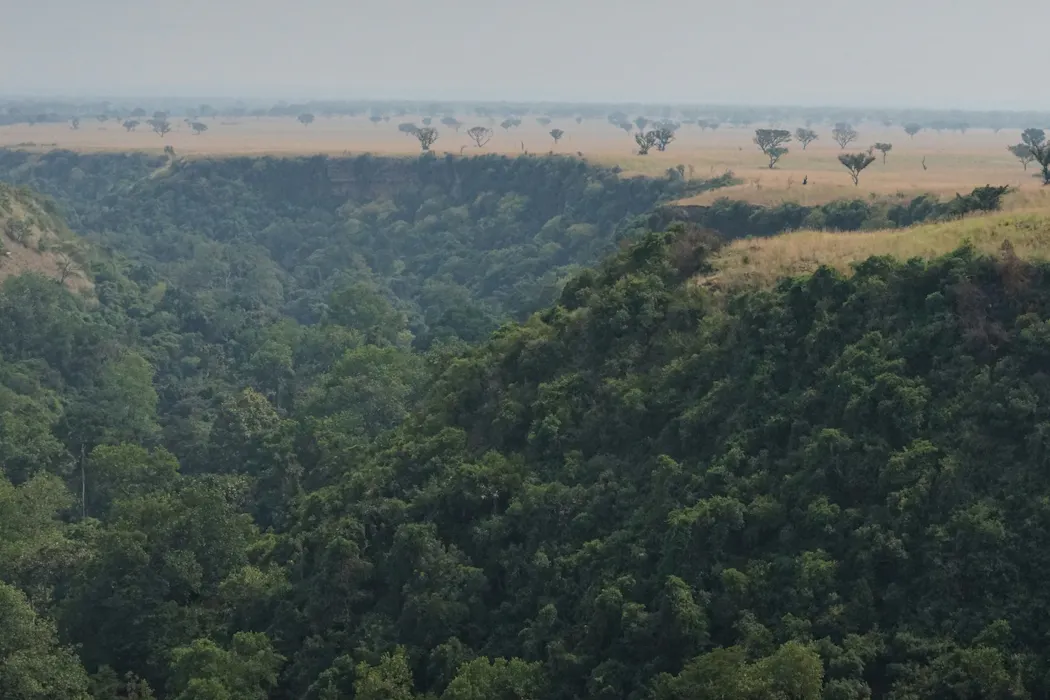
Forest, Uganda. Julie Ricard, Unsplash, CC BY

Global efforts to limit climate change require deep cuts to carbon emissions. However, global emissions are still growing. Currently, we emit roughly 42 billion tonnes of carbon dioxide from fossil fuel use and land use changes every year.

To achieve the targets of the Paris Agreement, which included a long-term commitment to limit global warming to 1.5°C, it will also be necessary to do more than cut emissions. What is also needed is large-scale removal of carbon dioxide from the atmosphere. Any delay in emission reductions increases our reliance on future carbon removal. Yet, carbon removal does not come without trade-offs.

Some strategies to remove carbon are very land intensive. Examples include planting trees, or growing crops that can be used as alternative sources for energy production. This would have to be done at massive scale – across millions of square kilometres of land. In turn, this could have serious biodiversity implications if not carefully managed.

In a recent study, our team of climate scientists set out to better understand the dynamics between future climate action and the protection of biodiversity. Our aim was to identify potential conflicts – but also synergies – between carbon removal and biodiversity conservation goals.

We analysed widely used decarbonisation scenarios. Scientists use these to figure out how our energy, economy and land use patterns should change to achieve ambitious climate targets. We wanted to gain deeper insights into how much – and where – land is allocated for carbon removal strategies in such scenarios, and how that might affect biodiversity conservation.

We combined scenario-based global maps of future land use for carbon removal (like planting trees or energy crops) with biodiversity maps and assessed the extent to which these overlap.

We found that, in many places of overlap, carbon removal strategies may conflict with biodiversity conservation. For example, in pristine ecosystems such as savannas and grasslands, which do not normally have much forest cover, planting trees and energy crops can harm habitats.

But our study also showed how careful choices about locating land-intensive carbon removal strategies may avoid negative impacts. There could even be benefits for biodiversity.

Our findings could inform plans for how to achieve ambitious climate action as well as biodiversity conservation.

Important biodiversity areas

The world has been losing biodiversity at a rate of 2%-6% per decade over the last 30-50 years. Intense resource extraction, climate change, environmental pollution and invasive species are some of the drivers. Biodiversity is critical for pollinating food crops and regulating water and nutrient cycles.

To address this crisis, the 2022 landmark biodiversity conservation agreement, the Kunming-Montreal Global Biodiversity Framework, set out a target to

bring the loss of areas of high biodiversity importance … close to zero by 2030.

But the framework does not clearly define areas of high biodiversity importance. In our study, we set a focus on so-called climate refugia, which are critical areas for biodiversity. These climate refugia areas were defined by a team of biodiversity experts as part of the Wallace Initiative. Specifically, climate refugia are areas where climate change occurs relatively slowly. In these locations, animal, plant and fungal species are protected from harm – at least to some degree.

We also looked at biodiversity hotspots. These are areas that have very high levels of different and rare species. Both climate refugia and biodiversity hotspots require special policy attention to avoid human disturbances and to curb global biodiversity loss.

Carbon removal in biodiversity areas

Our analysis took in various scenarios, ranging from current policy plans to highly ambitious ways to limit long-term global warming to 1.5°C. It showed that land-intensive carbon removal strategies would take place in up to 13% of global climate refugia areas. The overlap between carbon removal and biodiversity areas is not a problem in every case, but we identified several areas where it would likely be harmful for ecosystems.


Read more:
Zimbabwe’s forest and energy projects reveal the downside of carbon credits


One example is western Africa. Here, several of the scenarios show overlap between important biodiversity areas and future production of energy crops – crops grown to produce energy and capture carbon, such as miscanthus or switchgrass.

The Global Biodiversity Framework aims to prevent harmful changes in land use (for example, changes from a biodiverse natural area to a single-crop area). But this restriction could make it more difficult to allocate enough land for carbon removal to meet ambitious climate targets.

Our study shows that if this target is strictly enforced, more than 50% of the land set aside for carbon removal in the assessed scenarios would become unavailable. Other land would have to be used instead, potentially abandoned cropland. Or less land-intensive strategies to remove carbon would be needed.

Towards biodiversity-sensitive planning

Careful planning and site selection for carbon removal are key. Our study shows several biodiversity areas in which carbon removal strategies may bring ecosystem benefits.


Read more:
Mozambique forest stores huge amounts of carbon: laser technique puts new value on miombo woodlands


For example, forest restoration (to remove carbon) in degraded areas could create green corridors, reconnecting fragmented habitats. That would be good for biodiversity. Carbon removal strategies may also reduce the warming-related loss of biodiversity areas. That would help preserve important habitats.


Read more:
DRC’s plan for the world’s largest tropical forest reserve would be good for the planet: can it succeed?


But carbon removal interventions must be carefully tailored to the local context.

Ultimately, rapid and deep emission reductions are our best chance to limit global warming, reduce the need for carbon removal and lower the related risks to biodiversity.

The Conversation

Ruben Prütz received funding from the European Union’s Horizon Europe research and innovation programme under grant agreement no. 101081521 (UPTAKE).

Gaurav Ganti received funding from the European Union’s Horizon Europe research and innovation program under grant agreement nos. 101081521 and 101081369.

Joeri Rogelj received funding from the European Research and Innovation programme, which partially funded involvement in this research.

Sabine Fuss received funding from the European Union’s Horizon Europe research and innovation programme under grant agreement no. 101081521 (UPTAKE).

ref. Planting trees to remove carbon can harm the environment – or protect it: study highlights trade-offs – https://theconversation.com/planting-trees-to-remove-carbon-can-harm-the-environment-or-protect-it-study-highlights-trade-offs-276335

Seizure of 2,000 ants at Nairobi airport highlights the hidden scale of insect trafficking

Source: The Conversation – Africa – By Elliot Doornbos, Senior Lecturer of Criminology, Nottingham Trent University

Last year Kenya Wildlife Service warned of a growing demand for garden ants in Europe and Asia, where some people view them as exotic pets. An attempt to smuggle over 2,000 garden ants out of the country’s main international airport made the news in 2026. Echoing this, in 2025, four men were sentenced for attempting to smuggle more than 5,000 ants out of the country.

The defendants in the 2025 case pleaded guilty to the illegal possession and trafficking of live wildlife species, an offence under the Wildlife Conservation and Management Act (2013). They got a choice of paying a fine of US$7,700 or serving 12 months in prison.

Globally, although wildlife trafficking is mostly associated with larger animals such as elephants, rhino and tigers, a broad array of species are traded. The illicit trade in invertebrates is one part of this, including insects, other arthropods such as spiders and scorpions, and myriapods, for example centipedes.

The scale of the illegal trade is difficult to calculate due to limited wildlife crime statistics globally, enforcement challenges and the often hidden nature of wildlife trafficking as a whole. Some estimates have placed the legal market for insect consumption specifically at around US$17.9 billion by 2033. This offers some indication of the popularity of insects.

For me as an academic in wildlife crime, the Kenyan seizures help to demonstrate not only the existing demand for these species but also the similarities these markets share with broader wildlife trafficking networks, including their enforcement challenge.

The global scope of the challenge

There is limited data on the global problem. But existing seizure records highlight dynamics within insect-trafficking markets. These encompass a wide range of species, trends and motivations.

While insects are traded legally for reasons such as research, pet markets or human consumption, these patterns are often mirrored in illicit trade. One prominent driver is the exotic pet market.

The seized Kenyan ants were reportedly intended for sale as pets. Similar motivations have been noted with other trafficked insects, such as the demand for rhino beetles in Japan and praying mantises in Italy.

More broadly, the exotic pet trade has consistently been recognised as a key driver of wildlife trafficking. Reptiles and birds are key targets. There are parallels between insect trafficking and wildlife trafficking more generally.

Alongside the demand in species, the smuggling techniques used in insect trafficking reflect methods seen in other wildlife trafficking markets.

One case involved a trafficker attempting to smuggle centipedes, bullet ants and tarantulas out of Peru in plastic bags strapped around his body. In another instance praying mantis eggs were disguised as children’s toys and rhino beetles as snacks. These methods echo wider cases of wildlife being concealed using novel and diverse approaches.

Alongside this, several cases involve insects being trafficked in large quantities. This technique has been used with small fauna such as birds and reptiles, where smugglers transport high numbers with the expectation that some will die but profits can still be made from the survivors.

Enforcement authorities face the complication that a legal market exists for certain species. This can potentially allow traffickers to launder protected species alongside legal ones, a technique that parallels other wildlife trafficking markets. This further complicates enforcement with relevant authorities needing to have awareness of species specific policies and training around species identification.

Protection for insects

Globally the protection of insect species varies. Whereas most jurisdictions have legislation which protects wildlife, the trade and level of protection is often shaped by their conservation status – the risk of extinction for the species. This is similarly observed in how the trade in wildlife is regulated. Levels of criminalisation for wildlife trafficking often vary based on the species, attitudes towards them and country legalisation.

Research has pointed to one challenge in relation to insects being the potential lack of clarity regarding international regulations governing their trade. There are also uncertainties about the legal requirements for transporting and selling insects.

Informing national policies, the international trade in fauna and flora is regulated by Convention on International Trade in Endangered Species (CITES), which has 185 signatory countries. CITES classifies international trade under three categories:

  • Appendix I all but bans the trade outside exceptional circumstances

  • Appendix II means regulated trade can take place

  • Appendix III relates to species not currently recognised as being threatened by trade but for which some countries have regulations in place.

However, research shows that enforcing wildlife protections presents an array of challenges. Studies indicate that CITES and related enforcement efforts are not fully effective. Furthermore, wildlife crime is not always seen as an enforcement priority or given the resources it needs. This may hinder efforts to protect insects from trafficking.

Overall, these high profile cases and continued media discussion can help to recognise insects as victims of wildlife trafficking. This has the potential to build public support for underrepresented wildlife crime issues and encourage the development of further measures to reduce species harm.

The Conversation

Elliot Doornbos does not work for, consult, own shares in or receive funding from any company or organisation that would benefit from this article, and has disclosed no relevant affiliations beyond their academic appointment.

ref. Seizure of 2,000 ants at Nairobi airport highlights the hidden scale of insect trafficking – https://theconversation.com/seizure-of-2-000-ants-at-nairobi-airport-highlights-the-hidden-scale-of-insect-trafficking-279571

AI is reengineering drug discovery by speeding up testing and scanning petabytes of data for connections between diseases

Source: The Conversation – USA – By Jeffrey Skolnick, Regents’ Professor; Mary and Maisie Gibson Chair & GRA Eminent Scholar in Computational Systems Biology, Georgia Institute of Technology

In December, The Conversation hosted a webinar on AI’s revolutionary role in drug discovery and development.

Science and technology editor Eric Smalley interviewed Jeffrey Skolnick, eminent scholar in computational systems biology at Georgia Institute of Technology, and Benjamin P. Brown, assistant professor of pharmacology at Vanderbilt University.

Skolnick has developed AI-based approaches to predict protein structure and function that may help with drug discovery and finding off-label uses of existing drugs. Brown’s lab works on creating new computer models that make drug discovery faster and more reliable. Below is a condensed and edited version of the interview.

Let’s start with the big picture. How is AI changing biomedical research and drug discovery, and what is the potential we are talking about?

Skolnick: The upside, potentially, is very large. One of the frustrating things about drug discovery is that, in spite of the fact that the people doing it are extraordinarily intelligent and have done an extraordinarily good job, the success rate is very low. About 1 in 5 drugs will have negative health effects that outweigh its benefits. Of the ones that pass, roughly half don’t work.

In drug development, there are several key issues: Can you predict which target is driving a particular disease? Once this target is identified, how can you guarantee the drug is going to work and isn’t simultaneously going to kill you?

These are outstanding problems in drug discovery in which AI can play an important, though not 100% guaranteed, role. Unlike us, AI can look at basically all available knowledge. On a good day it makes strong and true connections called “insights,” and on a bad day it does what is called “hallucinating” and sees things that are weak and probably false.

Eric Smalley interviews Jeffrey Skolnick and Benjamin P. Brown.

At the end of the day, many diseases do not have a cure. Most diseases are maintained, such as high cholesterol or autoimmune conditions. A treatment for cancer might buy you five years, and now you’re in Stage 4 and you’ve exhausted all the standard care drugs. AI can play a role to suggest alternatives where there are none.

Let’s give some basic definitions here. When we use the word drug, we’re talking about a wide range of therapies. Can you explain the range – we’ve got small molecule drugs, biologics, gene therapies, cell therapies.

Brown: We have fairly large molecules in our bodies called proteins. They are like machines that carry out specific functions and interact with one another. Oftentimes, when we’re trying to treat disease, we’re trying to alter functions of specific proteins. Many drugs, like aspirin and Tylenol, are small molecules that can fit into a protein and change its function. Fundamentally, drugs don’t have to just interact with proteins, but this is a major way in which our current repertoire of medications work.

There are also proteins that act like drugs, such as antibodies. When you receive a vaccine for a virus, your body is basically given instructions on how to develop antibodies. These antibodies will target some part of that virus. Your body is creating these big molecules, much bigger than aspirin, to go and interact with foreign proteins in a different way. Gene therapy is a larger step beyond that.

So these modalities – molecule, protein, antibody or gene – are very different types of molecules. They have different scales and rules, so the way you approach designing and discovering them various widely.

Can you briefly explain artificial neural networks, and what the “deep” in deep learning means?

Skolnick: AlphaFold, developed by DeepMind, involved understanding how neural networks worked. They built a network with a lot of inputs, which are stimuli, and outputs with different weights, similar to how your brain actually works. These simple connections, or neurons, have reinforcement learning.

They also created sophisticated neural networks, such as transformers, which do specific things like a special-purpose tool that can learn, and they added a mechanism called “attention,” which amplifies critical details. Super neural networks with transformers is what we call deep learning. These now have literally billions, if not trillions, of parameters.

Essentially, these machines can learn higher order correlations between events, meaning the patterns of conditional interactions that depend on the properties of multiple things simultaneously. In these higher order correlations, AI has the potential to see previously unknown things that are embedded in petabytes (a unit of data equivalent to half of the contents of all U.S. academic research libraries of biological data.

AlphaFold, which predicts three-dimensional, bioactive forms of a protein, has millions of sequences and a couple of hundred thousand structures. It can tell you, based on a particular pattern, what small molecule to design that sticks to a protein to induce some kind of structural shift.

How is this technology being used in biomedical research to understand molecular dynamics or, essentially, the biological processes involved in health and disease?

Brown: In 2013, there was a Nobel Prize for molecular dynamics simulations, computational tools that help you understand the motions of molecules as they move according to physics. There’s a huge body of scientific research built around those ideas.

AI and deep learning are large right now, but it’s worth mentioning that for the last decade and a half, people have been using much smaller machine learning algorithms to help design drugs. A lot of the ideas, such as [using machine learning for virtual screening], are not new and have been in practice for a while.

With AlphaFold’s technologies to help people design proteins and predict their structure, we’ve changed how we think about a lot of these problems. We have this new repertoire of approaches to build ideas around and to start thinking about drug discovery.

From 20 years ago to now, what has today’s AI technology done in terms of scale of change in this process?

Skolnick: A lot of diseases, like cancers, are caused by a collection of malfunctioning proteins. AI now allows us to start to think conceptually about how these diseases are organized and related to each other.

Diseases tend to co-occur. For example, if you have hyperthyroidism, you’re very likely to develop Alzheimer’s. Kind of weird, right? We can look at pieces, but AI can look at all the information, integrate the collective behavior and then identify common drivers. This allows you to construct disease interrelationships which offer the possibility of broad spectrum treatments that could treat whole collections of diseases rather than narrow-spectrum treatments.

Relatedly, AI also can help us understand disease trajectories. Diseases that tend to co-occur often present themselves consecutively. You have disease 1, it gives you disease 2, then gives you disease 3. This suggests that if you go back to the root with disease 1, you may be able to stop a whole bunch of stuff. You can’t analyze millions of trajectories and millions of data without a tool, so you couldn’t do this before.

This holds a lot of promise, but one also must be careful not to overpromise. It will help, it will accelerate, but it is not a substitute yet for real experiments, real clinical validation and trials.

The Conversation

Jeffrey Skolnick receives funding from the National Institute of Health and the Ovarian Cancer Institute.

Benjamin P. Brown receives funding from the National Institutes of Health.

ref. AI is reengineering drug discovery by speeding up testing and scanning petabytes of data for connections between diseases – https://theconversation.com/ai-is-reengineering-drug-discovery-by-speeding-up-testing-and-scanning-petabytes-of-data-for-connections-between-diseases-274693

A women’s ‘push-up hack’ is trending on social media – an anatomist explains why it works

Source: The Conversation – UK – By Adam Taylor, Professor of Anatomy, Lancaster University

Those who have tried the viral ‘hack’ say it does make push-ups easier to do. Microgen/ Shutterstock

Push-ups can be a challenge for the best of us. But many women struggle to do them, even after months of training in the gym.

So when a so-called “women’s push-up hack” started trending on social media, it’s hardly surprising that some of these videos went viral.

The hack involves making a simple tweak to the position of the hands. Instead of having the hands pointing forward in line with the body, it’s said that women should instead position their hands sideways, so their fingers are facing away from their body.

Anatomy can explain why this change to hand position can help women perform push-ups more easily. It has to do with a part of the body that you might not expect: the pelvis.

The pelvis affects the position of the arm relative to the body. In women, the angle where the forearm and upper arm connect at the elbow (known as the carry angle), relative to the pelvis, is around 15 degrees on average in women and around 10 degrees on average in men. The carry angle is greater in women in order to provide extra clearance of the pelvis when moving.

The carry angle doesn’t just impact how the bones of the upper limb connect to each other and to the torso. It also affects the direction in which the muscles contract.

This is why women may find it more difficult to do push-ups in the conventional way. By having the hands slightly further apart and turning them slightly outwards, it allows a woman’s muscles and bones to follow their more natural movement patterns.

Women also have more flexible ligaments and tendons, which means their joints often have a greater range of motion. This can cause joints to become more strained or experience more pain if the biomechanics of a movement don’t line up correctly.

The torso, which attaches the top of the shoulder to the arm, is 12.4% larger in men than women. This also contributes to biomechanical differences, such as centre of gravity and which muscles are most efficient during certain exercises.

Push-ups aren’t the only exercise women may want to adapt to accommodate their anatomy, either. It may also be worth changing the way you perform other arm exercises – particularly those where the arm is elevated above the head.

Women are more likely to injure their shoulders from overuse or repetitive injuries. This is because women’s shoulder joints are smaller and more mobile than men, meaning they have a greater range of motion.

But as the shoulder is a highly mobile joint, with that extra mobility comes instability. This means the shoulder relies heavily on the rotator cuff muscles to hold the joint in place.

Further exacerbating this is the fact that women have less muscle mass, a differently-shaped contact point between the bones of the shoulder joint and shorter, thinner clavicles.

All these anatomical differences combined lead to a higher risk of injury for women in exercises that involve internal rotation of the shoulder or overhead exercises. This includes shoulder presses, tricep dips, lateral raises, upright rows and overhead presses.

Skull crushers (a tricep exercise that involves laying on a bench and slowly lowering a barbell towards your head), neutral or thumbs-up lateral raises and seated dumbbell presses offer safer shoulder options.

A woman performs a seated dumbbell press in the gym.
Seated dumbbell presses may be safer for the shoulders.
MDV Edwards/ Shutterstock

If dips are your exercise of choice, keeping the torso perpendicular to the ground can reduce strain on the shoulder.

You can also trying using angled bars instead of parallel bars. Since angled bars tilt towards each other slightly, this allows for a more natural wrist position, rather than having the bars parallel so the thumbs point straight forward.

Exercise and anatomy

The pelvis can also affect how lower body exercises are performed.

Each of the two halves of the pelvis are formed from three individual bones that fuse together during growth. In women, the pelvis is about 25% wider than men to accommodate a foetus passing through during birth. This difference impacts the position of the lower limb.

The wider pelvis in women results in a greater Q angle – short for quadriceps angle. The Q angle is formed by the lines that intersect each other running between the patella (knee cap) and pelvis, and the patella and tibia (shin bone).

The alignment of the Q angle affects how the leg muscles facilitate movement. As such, women may need to take care when performing exercises such as squats, lunges, deadlifts and box jumps, as the combination of these anatomical differences and technique could potentially increase risk of injury.

In general, women are eight times more likely to have an anterior cruciate ligament injury (ACL) than men and the Q angle is one of the risk factors in this. So exercises that place significant load through the joints may require some modifications.

The wider pelvis may also cause the knees to bend inwards towards each other, known as caving. This can significantly increase risk of injury when landing from jumping exercises or squatting. Rotating the feet around 30 degrees outwards when performing these exercises can reduce caving by up to 50% and reduce risk of knee injuries.

When squatting, ensure that the pelvis is level (parallel to the ground) at all times and that the knees do not cave inwards towards each other. The knees should not also go to far forward over the toes and the foot should remain in contact with the ground at all times. Some women may also find a slightly wider stance, with feet marginally wider than shoulder-width apart, is beneficial given their wider pelvis.

Minor tweaks to accommodate the anatomical differences may mean that women reduce their risk of injury and increase the efficiency of their workout.

The Conversation

Adam Taylor does not work for, consult, own shares in or receive funding from any company or organisation that would benefit from this article, and has disclosed no relevant affiliations beyond their academic appointment.

ref. A women’s ‘push-up hack’ is trending on social media – an anatomist explains why it works – https://theconversation.com/a-womens-push-up-hack-is-trending-on-social-media-an-anatomist-explains-why-it-works-278363

Earthrise to Earthset: how the planet’s climate has changed since the photo that inspired the environmental movement

Source: The Conversation – UK – By Nick Dunstone, Climate Science Fellow, Met Office Hadley Centre

Earthrise. The view of the rising Earth as photographed by the Apollo 8 astronauts on December 24 1968 as they came from behind the Moon after the fourth nearside orbit. Nasa/William Anders

A new Earthset image has been captured by the crew of Artemis II, 58 years since the iconic Earthrise photograph taken by the crew of Apollo 8. Over these past six decades, the climate has changed dramatically.

“Oh my God, look at that picture over there! There’s the Earth comin’ up. Wow, is that pretty.” That was Nasa astronaut Bill Anders’ reaction to seeing the Earth appearing to rise above the lunar horizon as their Apollo 8 spacecraft came around the Moon on Christmas Eve 1968.

Theirs were the first human eyes to see our planet at such a distance and from another celestial body. As fellow astronaut Jim Lovell said a few hours later: “The Earth from here is a grand oasis in the big vastness of space.”

That original Earthrise image is widely credited with helping to set the mainstream environmental movement in motion. Although I wasn’t born when the Apollo 8 photo was taken, a framed print of it hangs above my desk as a reminder of the beauty and fragility of our planet.

view of Earth from the moon
‘Earthset’ is the new photo from the far side of the Moon, captured on April 6 2026 by the crew of Artemis 2 as Earth dips behind the lunar horizon.
Nasa

For me as a climate scientist, these photos, taken 58 years apart, inspire me to reflect on how the Earth’s climate has changed in the interim.

The concentration of carbon dioxide (and other greenhouse gases) in our atmosphere has rapidly increased as a result of over half a century of continued and spreading industrial development, driven primarily by burning fossil fuels.

This is clearly illustrated by the Keeling curve – a graph that plots the continuous record of atmospheric CO₂ from Mauna Loa Observatory in Hawaii (started by Charles Keeling in 1958).


Read more:
Mauna Loa Observatory captured the reality of climate change. The US plans to shut it down


This curve shows a steep and steady increase from approximately 320 parts per million (ppm) in 1968 to about 430ppm in 2026. This increase of over one-third in the total carbon dioxide in our atmosphere shows little sign of slowing down.

That additional blanket of greenhouse gases has increased the surface temperature of our planet. Data from the World Meteorological Organization shows how the global mean temperature record (the average temperature of the Earth’s surface) has risen by approximately 1.2°C since the Apollo 8 Earthrise photo was taken. This represents most of the warming that has happened since the early industrial period in the mid-19th century.

While an average global temperature increase of 1.2°C may not sound large, it means that regional hot extremes and new records are now much more likely. For example, my team’s recent research has shown that a 40°C day in the UK (first recorded on July 19 2022) is now over 20 times more likely than it was in the 1960s.

The global average temperature has surged in the past three years – most probably driven by a combination of internal climate variability and human-made emissions (including strong reductions in industrial aerosol particle emissions that largely act to cool the planet). In 2023, temperatures jumped from the previous record of 1.29°C (set in 2016) to 1.45°C above the early-industrial 1850-1900 baseline.

This record was then immediately broken in 2024 – the first year to temporarily exceed 1.5°C. Going beyond that boundary in a single year doesn’t mean we have breached the 1.5°C target set by the 2015 Paris climate agreement, which is generally accepted to refer to a 20-year average. However, it does highlight how rapidly we are now approaching that level of warming.


Read more:
Record January heat suggests La Niña may be losing its ability to keep global warming in check


Temperatures in both years were partly boosted by warmer conditions in the tropical Pacific due to El Niño, a climate phenomenon that affects weather patterns globally. Last year, after El Niño had subsided, was slightly cooler at 1.43°C. However, current forecasts give a high probability for another El Niño developing during the second half of 2026. If this materialises, we could easily exceed 1.5°C again.

A key question is whether global warming is accelerating. This is difficult to detect directly from the surface temperature record. However, a recent study found a significant acceleration after accounting for the “noise” of year-to-year variability.

The view from above

Climate science isn’t just about measuring changes in temperature.

One of the legacies of the 1960s space race was the subsequent launch of many satellite observation platforms that have transformed our ability to monitor, understand and predict changes to the global climate.

We now have continuous monitoring of many key components of Earth’s climate system, including sea surface temperature, sea level, and the extent of polar sea ice, glaciers and land surface changes. Unfortunately, many of these reveal worrying trends, such as more frequent heatwaves on land and sea, loss of Arctic sea-ice, melting glaciers and sea-level rise.

One of the most concerning recent trends comes from a set of satellite instruments called the Nasa Ceres, which have measured changes in the Earth’s energy imbalance (EEI) since 2000. EEI is the difference between the amount of solar energy absorbed by the planet and the thermal energy radiated back into space.

The Ceres data shows a strong upward trend, indicating a growing rate of accumulation of energy, consistent with an acceleration in global heating.

Looking ahead, I hope that by the time astronauts take the first Earthrise photo from Mars (perhaps in the late 2030s), we are heading towards net-zero carbon emissions and more stable global temperatures.

Achieving net zero is this century’s Moonshot. The prize is minimising the severity of the worst climate consequences of global heating – leaving our children and future generations a sustainable “grand oasis” here on Earth.

The Conversation

Nick Dunstone does not work for, consult, own shares in or receive funding from any company or organisation that would benefit from this article, and has disclosed no relevant affiliations beyond their academic appointment.

ref. Earthrise to Earthset: how the planet’s climate has changed since the photo that inspired the environmental movement – https://theconversation.com/earthrise-to-earthset-how-the-planets-climate-has-changed-since-the-photo-that-inspired-the-environmental-movement-279818

Ireland’s Easter Rising: archives reveal hardship faced by the families of those killed in 1916

Source: The Conversation – UK – By Lindsey Earner-Byrne, Professor of Contemporary Irish History, Trinity College Dublin

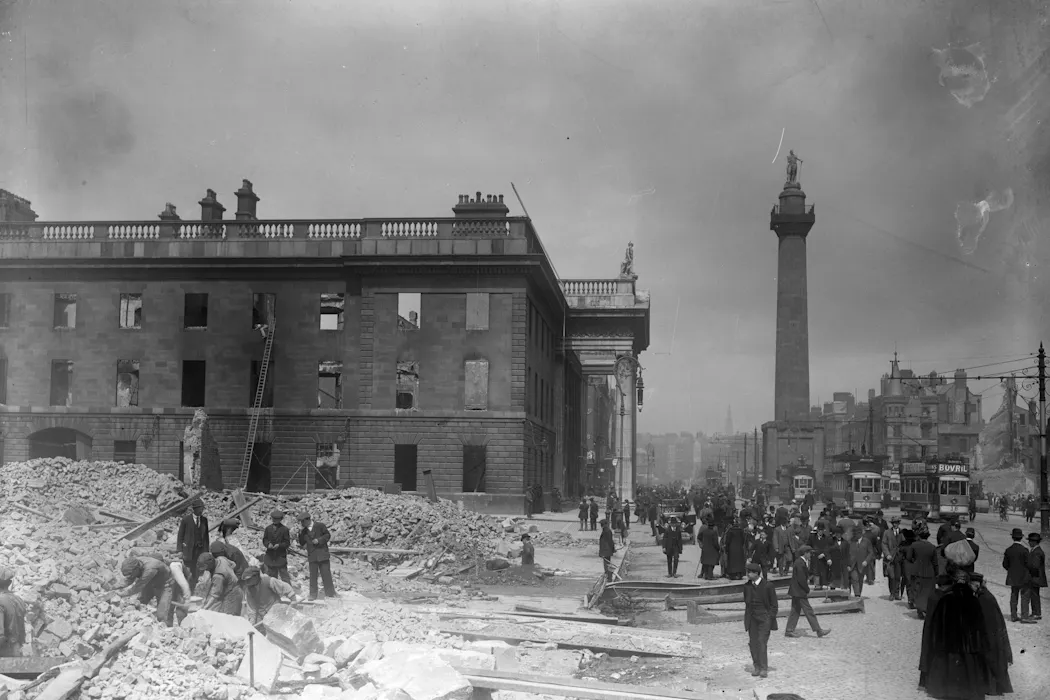
The General Post Office building on Sackville Street in Dublin served as the HQ for the leaders of the Easter Rising. Wikimedia/National Library of Ireland, CC BY

On November 26, 1923, a woman named Anne McCormack applied for a military dependent’s pension on the grounds of her husband, James McCormack’s death. He had been a soldier in the Irish citizen army, under the socialist and revolutionary leader, James Connolly. This group was committed to the establishment of a workers’ republic. Its members participated in the week-long armed insurrection of 1916 known as the Easter Rising.

James McCormack was shot in the head on the second day of the rising, April 26, 1916. Records held in the Military Service Pensions Archive show he died where he fell on Moore Lane, close to the General Post Office, the epicentre of the rising.

For many years following the establishment of the Irish state (today’s Republic of Ireland) in 1922, the focus of Irish historians, not to mention the general public, was on those, like James McCormack, who died for Ireland. Annual commemorations of the 1916 rising were focused on those executed by the British or killed in the fighting. But little attention was paid to those, like Annie, who survived.

Hundreds of thousands of people had their lives thrown off course as a result of personal injury, bereavement and trauma, while others had their material fortunes irreversibly altered. Since 2007, my research and that of many historians has revealed the high price of “living for Ireland”. Through publicly funded digitisation projects, for example the 1901 and 1911 censes, researchers have had access to details of births, deaths, marriage registrations and, more recently, military service pension files. This has enabled us to flesh out the lives of those who lived through and beyond the tumultuous Irish revolutionary period of 1916 to 1923.

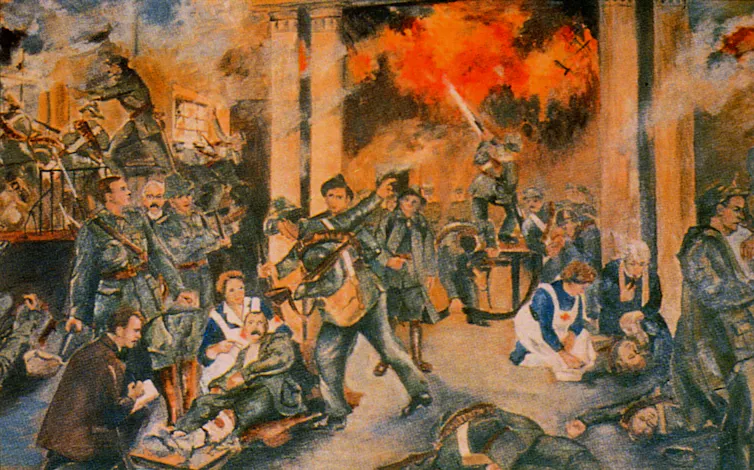
An colour illustration of a fiery war scene featuring soliders and nurses with a city on fire in the background.
The Birth of the Irish Republic by Walter Paget.
Walter Paget/Wikimedia, CC BY-SA

Living impact

The pensions archive shows the impact of the revolution on the everyday life of people who survived it and went on to build a new state. It contains over 250,000 files relating the lives of over 80,000 individuals who applied for pensions as combatants or surviving dependants.

According to the McCormacks’ digitised marriage certificate, found in the Irish Genealogy online archive Annie, as she was known, married James only eight years before she was widowed with three young children. Records show that Patrick Drinan, a member of the newly established police force in Ireland, An Garda Síochána
informed the Irish Army that since 1916 Mrs McCormack was “in poor circumstances financially. She had three children to support out of her earnings which average roughly about 12/- per week.”

Drinan noted that Annie’s father, who like many elders, lived with his daughter, was in receipt of old age pension – the great financial boon introduced in 1908. The policeman also explained that Annie had been awarded £500 in compensation, in 1917, for the loss of her husband, by “the National Aid Fund”. This is probably a reference to the Irish National Aid Association and Volunteer’s Dependants’ Fund.

The association distributed funds entrusted to it by the leaders of the rising to support the families of those killed or executed. Annie’s husband had been earning £1 week at the time of his death, which was at the higher end of a worker’s salary. The sum she received from the fund points to the depth of the McCormacks’ Republican credentials. The widows of executed leaders of the rising received an investment of £1,500 and one-off grants of between £250 and £350.

Entrenched inequality

My research has looked at the inherent inequality of the male-breadwinner model of Irish society at the time, and how losses incurred during the revolution left female-headed households, often widows, in extremely vulnerable positions.

Annie was one of the relatively lucky ones. She was awarded a pension of £90 for the duration of her widowhood, along with £24 per child, until they reached the age of 18.

Despite this, her pension file documents how she struggled to keep her sons supplied with the schoolbooks required to complete their education. It is significant that she sought to give them the kind of education that would spare them a life of labouring like their father and grandfather had. A relatively small proportion of the Irish population managed secondary education prior to the late 1960s, when it became free, yet Annie kept her sons (for a while at least) in the prestigious Jesuit Belvedere College in Dublin.

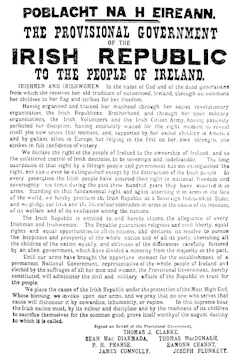
An archival document of the official proclamation of the Irish Republic by the provisional government in 1916.
Easter Proclamation of 1916.
Wikimedia

Balancing the books was an exhausting process for Annie. Throughout 1927 her health deteriorated. This likely explains why she failed to notice that the army continued to pay her eldest son’s allowance three months after he turned 18.

On February 29, 1928, the Army Finance Office wrote to inform Annie that it had overpaid £5 1s 6d (£5.075) in relation to her eldest son. The sum had been deducted from her allowance.

Annie’s last action was to write to the army to explain how much distress and difficulty this deduction had caused her. On December 1, 1928 she died at the age of 45 from tuberculosis, then endemic in Ireland

Her death certificate reduced her to the widow of a labourer. This is testimony to a life of difficult living conditions, poor nutrition and stress. The Ireland her husband James died for did not turn out to be the workers’ republic that the Irish Citizen Army had fought for, nor did the land of equal opportunities promised in the 1916 Proclamation of Independence transpire.

There are two subsequent letters in Annie’s file that reveal the enduring legacy of loss. In 1936, her youngest son wrote to ask for help finding a job. And nearly two decades later, in 1953, her eldest son wrote to remind the state of how losing his parents had reshaped his life: “My father James McCormack … was killed in action 1916 CA for which my mother receaved (sic) a pension until she died in 1927. I was 18 years of age then, and had to support two younger brothers 16 years and 14 years respectfully as her pension died with her. I was the only support or home, and got no help of any kind.”

The Conversation

Lindsey Earner-Byrne is affiliated with Trinity College Dublin and a member of the board of the Irish Manuscript Commission since 2021

ref. Ireland’s Easter Rising: archives reveal hardship faced by the families of those killed in 1916 – https://theconversation.com/irelands-easter-rising-archives-reveal-hardship-faced-by-the-families-of-those-killed-in-1916-279872

Why the war in Iran will make your UK mortgage more expensive

Source: The Conversation – UK – By Alper Kara, Head of Department of Economics, Finance & Accounting, Brunel University of London

The war in Iran is affecting the cost of living around the world. In the UK, it is leading to higher energy prices, weaker economic growth and a more expensive future.

It may seem odd that fighting in the Middle East could have such a profound affect on household finances in the East Midlands (and everywhere else in the UK). But since the conflict began on February 28 2026, banks and building societies have withdrawn over 1,500 mortgage products from the UK market.

For many borrowers, especially first-time buyers and those coming off fixed-rate deals, the prospect of cheaper borrowing has quickly faded.

Mortgage rates have started to rise again, with two-year fixed rates increasing from around 4.8% to about 5.5%. For a borrower with a £200,000 mortgage over 25 years, this would mean an increase of £90 in monthly payments, adding close to £1,000 a year to household costs.

So how exactly does a war in the Middle East feed through to the cost of borrowing in the UK?

The biggest effect comes from energy. The conflict is directly affecting oil production in a region that accounts for roughly one-third of the world’s supply (and 20% of its liquid natural gas).

Energy costs affect almost everything, from transport and food to manufacturing and building materials – not to mention household heating and electricity bills.

But the impact is not limited to energy prices. The Iran war has also disrupted global fertiliser supplies, with prices rising sharply due to supply bottlenecks in the Middle East – a major global hub of fertiliser production and exports. Higher fertiliser prices increase the cost of producing food.

As a result of these kinds of rising costs, UK inflation is now expected to reach around 4% this year, up from a previous estimate of 2.5%.

This is a big problem for the Bank of England, which wants to keep the rate of inflation under control at around 2%. When energy prices rise and push inflation higher, the Bank is less able to cut interest rates. It may even have to increase them.

Another problem for borrowers in the UK is the effect on government bond markets.

UK government bonds (commonly known as “gilts”) are a form of government debt. Investors effectively lend money to the government, which pays it back with interest (the yield). Because these yields act as a benchmark for borrowing costs across the financial system, an increase in gilt yields raises commercial banks’ funding costs, which are then passed on through higher mortgage rates.

In recent weeks, UK gilt yields have climbed sharply as investors have revised up their expectations for inflation and interest rates.

For the Bank of England, rising gilt yields signal that financial conditions are tightening and inflation risks may be building, making it less likely that interest rates will be cut any time soon.

Before the conflict, financial markets were expecting a gradual decline in interest rates during 2026. Now, they are pricing in an increase in the Bank’s base rate by the end of 2026.

For mortgage borrowers, this shift is critical. When banks and other lenders set their mortgage rates, they take into account where they expect interest rates to be in the future.

UK vulnerability

While these global economic forces are affecting many countries, the UK is particularly exposed – in part because its economy was already growing very slowly.

The UK is also heavily exposed to global energy markets. It imports around 44% of its energy, particularly natural gas, making it more vulnerable to global price shocks. So, when international energy prices rise, the impact feeds through more quickly into domestic inflation.

This effect is less pronounced in more energy self-sufficient economies such as the US and Norway, which are major energy producers. In contrast, expectations of UK economic growth have been downgraded sharply, reflecting both its reliance on energy imports and underlying economic fragility.

For many households, the combined effect is significant. If financial markets expect the Bank of England to raise interest rates further, mortgage rates are also likely to increase, as lenders price in these expectations when setting new deals.

On top of that, a weaker economy will also affect incomes. Even before the Iran war, slower economic growth was feeding through into slower wage rises, with signs of declining employment and reduced business activity. The Iran war is likely to intensify these pressures further.

Looking ahead, UK households are likely to face an unsettling combination of higher mortgage costs, weaker income growth and reduced job opportunities. At the same time, they continue to face persistent cost-of-living pressures from increasing energy and food prices.

Together, these pressures are likely to result in a sustained squeeze on disposable income. There is growing expectation that the energy crisis will last for some time. But even if the conflict ends tomorrow, its economic impact will persist.

The Conversation

Alper Kara does not work for, consult, own shares in or receive funding from any company or organisation that would benefit from this article, and has disclosed no relevant affiliations beyond their academic appointment.

ref. Why the war in Iran will make your UK mortgage more expensive – https://theconversation.com/why-the-war-in-iran-will-make-your-uk-mortgage-more-expensive-279411