Massive eye drop recall reflects ongoing issues with manufacturing and FDA inspection

Source: The Conversation – USA (3) – By C. Michael White, Distinguished Professor of Pharmacy Practice, University of Connecticut
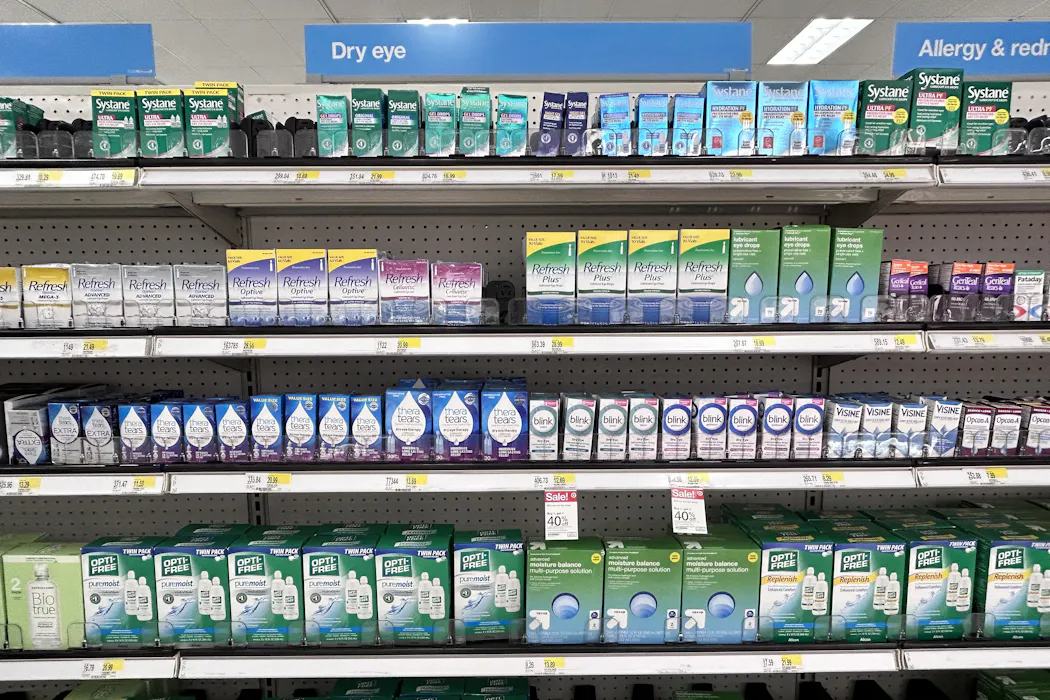
Using nonsterile eye drops can cause severe eye infections. Lindsey Nicholson/UCG/Universal Images Group via Getty Images

A California company has recalled more than 3.1 million bottles of lubricating eye drops because it had not properly tested – and thus could not prove – whether the products were sterile.

These products are sold under several names at major retailers across the country. The company, K.C. Pharmaceuticals, initiated the recall on March 3, 2026.

I am a clinical pharmacologist and pharmacist who has assessed risks of poor-quality manufacturing practices and lax oversight for prescription drugs, eye drops, dietary supplements and nutritional products in the United States for many years. This recall is very large, potentially affecting over a million people. Using nonsterile eye drops that harbor bacteria and fungus can cause eye infections, which can become severe because the immune system has a hard time accessing the eyeball and fighting the microbes.

This is not the first time that a major recall has occurred in the eye drop market – and it is the second time since 2023 that the Food and Drug Administration has become aware of sterility issues at K.C. Pharmaceuticals.

Multiple products affected

Eight products are being recalled: Dry Eye Relief Eye Drops, Artificial Tears Sterile Lubricant Eye Drops, Sterile Eye Drops Original Formula, Sterile Eye Drops Redness Lubricant, Eye Drops Advanced Relief, Ultra Lubricating Eye Drops, Sterile Eye Drops AC and Sterile Eye Drops Soothing Tears.

These products are sold under different company names, including Top Care, Best Choice, Good Sense, Rugby, Leader, Good Neighbor Pharmacy, Quality Choice, Valu Merchandisers, Geri Care, Walgreens, CVS and Kroger.

Their expiration dates range from April 30, 2026, to Oct. 31, 2026. They were sold at stores including Walgreens, CVS, Rite Aid, Kroger, Harris Teeter, Dollar General, Circle K and Publix.

If you purchased an eye drop product since April 2025, check to see whether the name matches any of these. If it does, go to the FDA site, where you can see the exact lot numbers and expiration dates for those products.

As of early April, no infections from the recalled eye drops have been reported.

How to tell whether your eye drops were recalled

You can determine whether your eye drop product is part of the recall by looking at two columns in the table. Column 2 of the table lists the names of the products, with one name per row. Column 5 provides the specific lot numbers of the affected products and their expiration dates. For example, recalled Sterile Eye Drops AC products – row 1, column 2 – have the lot number AC24E01 with an expiration date of May 31, 2026, listed in row 1, column 5.

If the product you purchased has the same name but a different lot number or expiration date than the ones listed on the FDA website, it is not subject to this recall and you can safely keep using it. If you find your product has been recalled, stop using it and bring it back to the store for a refund.

The FDA has not received reports of any infections as of early April. However, if after using one of these recalled products you experience redness in your eyes, eyelids stuck together, unusual eye discharge such as goo or pus, vision changes, eyelid swelling or eye pain itchiness or irritation, these symptoms could be due to an eye infection.

If you experience these symptoms, seek medical attention – and also, if possible, report your symptoms to the FDA.

A history of eye drop sterility issues

The FDA has many important public health roles: approving new drugs and medical devices; overseeing the manufacturing quality of prescription and over-the-counter drugs, dietary supplement and food products; and protecting the public from counterfeit medications.

With its limited personnel, the agency focuses its time on areas where the risks are greater. This means manufacturers of more dangerous products, or product types that were previously found to have issues, are inspected more frequently.

The FDA had inspected over-the-counter eye drop manufacturers only a few times before 2023, when cases of rare eye infections due to a drug-resistant Pseudomonas bacteria strain started occurring.

In total, 81 people from 18 states developed severe eye infections during the 2023 outbreak. Fourteen people experienced vision loss because of the product, an additional four people had their eyeballs removed and four people died.

The agency identified two products as the culprits: Global Pharma’s EzriCare Artificial Tears and Delsem Pharma’s Artificial Tears and Eye Ointment.

Later in 2023, the FDA issued recalls for Dr. Berne’s, LightEyez Limited, Pharmedica LLC and Kilitch Healthcare eye drop products for sterility issues. Kilitch Healthcare had serious quality lapses, in which the facility was filthy, employees were barefoot on the manufacturing floor and the company fraudulently passed products that failed sterility tests.

Repeated manufacturing problem

At the time, the FDA also inspected K.C. Pharmaceuticals and issued the company a warning letter. The FDA was concerned that the manufacturer failed to establish and follow appropriate written procedures designed to prevent microbiological contamination.

Although the agency did not request a recall, it did ask that the company immediately change its protocols and consult outside experts to prevent these issues from recurring.

The current massive recall of K.C. Pharmaceuticals’ eye drop products suggests lingering quality control issues in the manufacturer’s Pomona, California, plant that need to be urgently addressed. If the company had heeded the FDA’s recommendations, it would have detected the nonsterility issue before so many batches of the products were manufactured.

The Conversation

C. Michael White does not work for, consult, own shares in or receive funding from any company or organization that would benefit from this article, and has disclosed no relevant affiliations beyond their academic appointment.

ref. Massive eye drop recall reflects ongoing issues with manufacturing and FDA inspection – https://theconversation.com/massive-eye-drop-recall-reflects-ongoing-issues-with-manufacturing-and-fda-inspection-279971
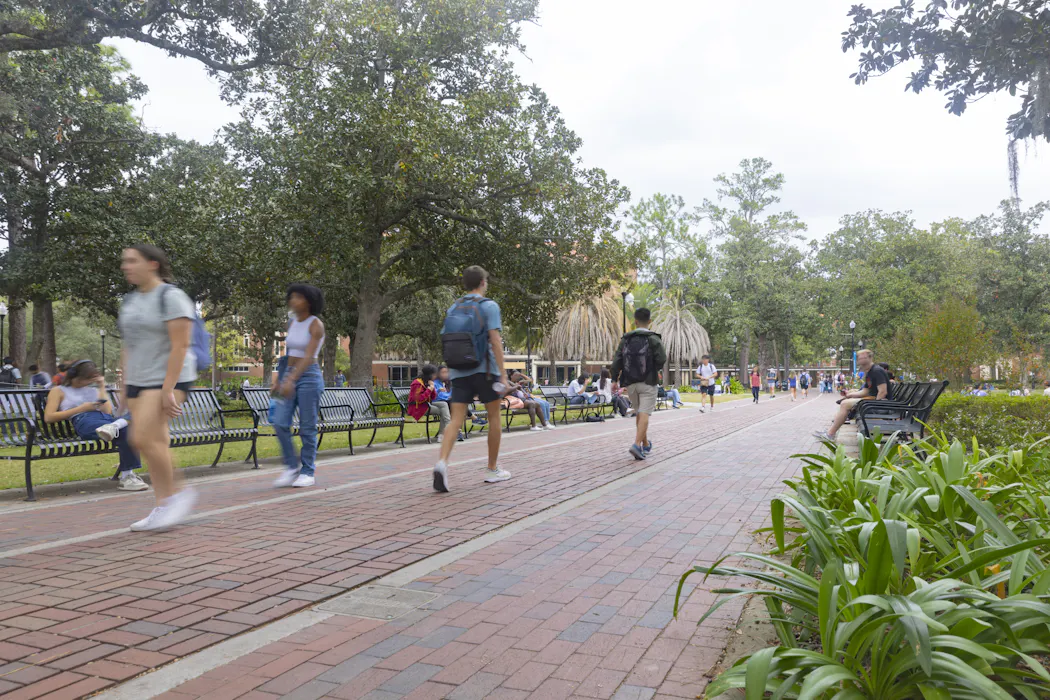
We teach at a Florida university that agreed to cooperate with ICE – and we worry that it is making our students feel less safe

Source: The Conversation – USA (2) – By Anindya Kundu, Assistant Professor of Educational Leadership, Florida International University

The University of Florida in Gainesville is one of the universities that signed a memo agreeing to cooperate with ICE. Mireya Acierto

Since March 2025, at least 15 Florida public universities and colleges, including the University of Florida and Florida State College at Jacksonville, have signed memorandums of agreement for their campus police departments to collaborate with U.S. Immigration and Customs Enforcement.

These partnerships authorize ICE agents to expand the role of campus police officers so they can receive training and “perform certain functions of an immigration officer.”

The agreements give campus police officers the federal authority to question students who are believed to be immigrants about their legal right to be in the country. Campus police officers can arrest students if the officers have “reason to believe the alien to be arrested is in the United States in violation of law.” Campus police can also check federal immigration databases to see students’ immigration status.

The list of universities in the state that have signed on to these agreements includes leading research universities such as Florida Atlantic University and Florida International University in Miami, or FIU, where we work as professors of education. We are unaware of any school in the Florida state university system that has publicly said they will not sign an agreement.

In the past few decades, the U.S. government has classified universities as “sensitive” spaces that are protected from aggressive immigration enforcement. This means that schools, like churches and hospitals, have until recently been generally considered off-limits for immigration enforcement officers.

In January 2025, President Donald Trump revoked these long-standing Department of Homeland Security protections.

A shift on campus

As scholars, we study relationships between schools and democracy, from how students learn languages to how students and educators can become leaders.

As professors, we teach many students who are immigrants or are from foreign countries who come to the U.S. for their studies, as well as many who are children of immigrants.

As a result of these new initiatives, we are seeing and personally experiencing an intensifying climate of uncertainty and anxiety on our campus. These policies are worsening many of our students’ sense of belonging.

Understanding the changes

Trump’s approach to immigration enforcement is supported by the federal 287(g) program, a 1996 amendment to the Immigration and Nationality Act of 1952. This amendment to the wide-ranging immigration law lets ICE delegate certain federal enforcement activities to local state police.

In February 2025, Florida Gov. Ron DeSantis directed state universities to enter into 287(g) partnerships with ICE and to “deputize” university police officers to enforce federal immigration laws on school campuses.

ICE does not have blanket access to student records, which remain protected under federal privacy law. But 287(g) agreements create new pathways for information to flow through campus police encounters, effectively lowering the barrier between university data and federal immigration enforcement.

There are no official reports of FIU or other Florida university campus police officers arresting students because of their immigration status. A few college students, though, have been detained off-campus by local police agencies and then turned over to ICE.

FIU’s communications team wrote in a statement to The Conversation: “Last year FIU Police signed a 287(g) memorandum of agreement with U.S. Immigration and Customs Enforcement, as have other state university, local and state law enforcement agencies in Florida. The 287(g) memorandum of agreement for Florida International University is readily available from ICE.gov.”

“Since signing the agreement, there have been no immigration-related enforcement actions on our campuses,” FIU’s statement continued.

Florida Atlantic University did not respond to a request for comment.

In January 2026, an immigration activist recorded FIU’s chief of police saying at a FIU meeting that if ICE requests campus police’s help, they would comply.

As FIU faculty members, we have not received any explicit guidance on what to do if an ICE agent comes to campus, or if a campus police officer tries to arrest someone for immigration reasons in our classrooms.

FIU President Jeanette Nuñez said in 2025 that there was “much confusion, much angst, and much misinformation” about the agreement.

Other universities have emphasized the need to comply with state directives.

Some Florida university officials have said that campus police will not target students or conduct raids as part of their routine cooperation with federal authorities.

Heightened stress and anxiety

As educators, our work has shifted over this past academic year from providing instruction to focusing more on mentoring our students as whole people. Our students are questioning how much their university supports them.

Daily, we observe how Trump’s immigration policies, including travel bans the U.S. has placed on certain countries, heighten stress for all of our students, regardless of their immigration status. Our international and immigrant students have told us they are fearful of the government’s increased surveillance.

One graduate student shared that he was hesitant to leave his dorm room and participate in any campus activities for fear of possible arrest because of his immigration status.

Another student said he would not leave the U.S. to visit his mother who was sick with cancer for fear he would not be let back into the country. His mother has since passed without his presence.

Many students, including one international doctoral student and father to young children, are unable to return to their homeland and visit their relatives or conduct research due to current travel bans placed upon 75 countries in Africa, Latin America, the Caribbean and the Middle East.

These new policies have also prompted student and faculty protests at our university and other public universities across Florida.

Some Florida Atlantic University students in Boca Raton staged a walkout on Feb. 25, 2026, to protest the school’s agreement with ICE.

Florida State University students called on administrators in February 2026 to set up a “sanctuary campus,” which would limit FSU partnerships with ICE.

We are trying to create more opportunities for open dialogue and for sharing students’ emotions and experiences related to these policies. We are also helping students find resources, including legal aid, that could help them or their peers if they have a negative encounter with ICE or campus police.

Refuge or risk

Universities, especially in conservative states such as Florida, may continue to market themselves as places of inclusion, mobility and global belonging. This is true even as schools cut diversity, equity and inclusion programs and as some students experience heightened surveillance, visa cancellations, detention or deportation.

One of our FIU graduate students recently explained how these policies are affecting their day-to-day life.

“I just want to finish my studies as soon as possible and go back to my country. I feel unwelcome and unsafe on campus. I don’t want to join campus activities anymore because students can be targeted there,” the student said. “I no longer trust campus police officers and won’t ask them for help, even if I need it. I am afraid I will be profiled even though I am here legally.”

When campus police are folded into federal immigration work, we believe that universities cannot claim they offer more refuge than risk.

The Conversation

Ryan W. Pontier receives funding from the U.S. Department of Education. He is affiliated with P.S. 305 in Miami.

Anindya Kundu does not work for, consult, own shares in or receive funding from any company or organization that would benefit from this article, and has disclosed no relevant affiliations beyond their academic appointment.

ref. We teach at a Florida university that agreed to cooperate with ICE – and we worry that it is making our students feel less safe – https://theconversation.com/we-teach-at-a-florida-university-that-agreed-to-cooperate-with-ice-and-we-worry-that-it-is-making-our-students-feel-less-safe-277911

Hosting the NFL draft is less about weekend beer sales and more about long-term brand value

Source: The Conversation – USA (2) – By Tim Derdenger, Associate Professor of Marketing, Carnegie Mellon University

By selecting Pittsburgh for the draft, the NFL signals that the city is a premier destination. Justin K. Aller/Getty Images Sport

When the NFL draft arrives in Pittsburgh in April 2026, city officials are sure to tout projected economic impact figures. They will likely point to the US$73 million generated by Green Bay, Wisconsin, and the surrounding area in 2025, the $213 million generated by Detroit in 2024, or the $164 million by Kansas City the year prior.

I’m a sports marketing researcher who studies the economics of celebrity endorsements, and I view these short-term, direct economic impact numbers with skepticism.

The reality is that local residents often stay home to avoid the chaos of mega-events. Economists have long understood the “displacement effect” that happens when an influx of fans crowd out regular tourism and local spending, essentially replacing existing economic activity rather than adding to it.

If Pittsburgh measures NFL draft success strictly by hotel bookings and weekend beer sales, it has missed the point. Because the draft moves from city to city each year, the true return on investment isn’t found in a temporary spike in local revenues. It is found in brand equity – the long-term increase in a city’s “market value” and reputation.

The impact of endorsements

For three days, the NFL will act as a massive celebrity endorser for Pittsburgh. Because attention is a scarce and valuable commodity, that institutional endorsement holds a value that can far exceed any immediate cash injection.

In marketing, researchers frequently analyze the signaling power of endorsements. “Signaling” in this context is the shift from Pittsburgh saying, “Trust us, we’re great” to a massive global brand, the NFL, saying, “We trust them, and you should too.”

For example, my research into the golf industry quantified the immense impact Tiger Woods’ endorsement had on the sale of Nike golf balls. When Woods switched from Titleist, Nike sold an additional 119 million golf balls over a 10-year period, adding $105 million to its bottom line.

Woods’ endorsement served as a market-wide signal of quality and legitimacy, elevating the brand’s premium status. This led to an increase in price of 2.5%. The increase in price also sends a signal of product quality.

The NFL draft functions in a similar way for host cities.

By selecting Pittsburgh, the NFL broadcasts a signal that the city is a premier destination capable of managing a global stage. This presents a critical rebranding opportunity. Despite its decades-long transformation into a thriving hub for robotics, health care and higher education, Pittsburgh continually battles to shake off its 20th-century Rust Belt reputation in the national consciousness.

Detroit leveraged the draft in 2024 not just to host a massive party, but to also aggressively counter persistent narratives of urban decay and to highlight investments made in the city.

An overhead shot of a crowd filling an outdoor stage.
The 2024 NFL draft in Detroit helped modernize the perception of the city.
AP Photo/Carlos Osorio

The broadcast shots of a vibrant, packed downtown did far more to modernize Detroit’s image than any taxpayer-funded ad campaign ever could.

The same thing happened in Kansas City after it hosted the 2023 draft. The city added almost 25,000 residents in the year after the draft – more than in any of the previous four years.

NFL draft could shape local recruiting

Hosting the NFL draft could also prove beneficial to recruitment efforts at Pittsburgh-area colleges.

In recent years, I have analyzed how name, image and likeness policies, commonly referred to as NIL, reshape talent acquisition in college football.

In the NIL era, universities aren’t just selling an education; they are selling a direct pathway to professional success.

I believe hosting the NFL draft will likely generate a “halo effect” for regional football programs like the University of Pittsburgh, Penn State University and West Virginia University. A halo effect occurs when the prestige and glamour of a major endorsement spills over to elevate the perception of other brands that have some association.

For highly touted high school recruits who are watching the NFL draft broadcast, seeing the pathway to the pros physically located in Pittsburgh anchors the idea that this region is a center of the football universe – at least for three days.

Fans will see this play out in real time. When ESPN broadcasts from the North Shore, it won’t just talk about Penn State quarterback Drew Allar’s arm strength; it will show highlights of him developing just two hours east.

Football players and cheerleaders wearing royal blue and gold run on to a football field.
NFL draft host cities often benefit from the windfall it provides for collegiate recruiting.
AP Photo/Keith Srakocic

The impact on the University of Pittsburgh could be even more direct. The rise of linebacker Kyle Louis and running back Desmond Reid offers continued evidence of a Pitt-to-pro pipeline.

In a hypercompetitive recruiting market where every major college football program offers money, nonmonetary differentiation is key. Being in one of the NFL’s chosen cities signals that you are already in the league’s orbit.

Of course, hosting a mega-event comes with inherent risks. If logistics fail, traffic becomes unmanageable or the fan experience is poor, this high-profile endorsement backfires. The brand signal rapidly flips from “premier destination” to “not ready for prime time.”

In landing the NFL draft, Pittsburgh essentially scored a three-day commercial that will be viewed by tens of millions of Americans across the country. Now, it just has to make sure the set looks good.

The Conversation

Tim Derdenger does not work for, consult, own shares in or receive funding from any company or organization that would benefit from this article, and has disclosed no relevant affiliations beyond their academic appointment.

ref. Hosting the NFL draft is less about weekend beer sales and more about long-term brand value – https://theconversation.com/hosting-the-nfl-draft-is-less-about-weekend-beer-sales-and-more-about-long-term-brand-value-277465

Why Europe can still face a gas crisis without a gas shortage

Source: The Conversation – France – By Marzia Sesini, Research Team Leader – Molecules&Materials, European University Institute

Gas prices in Europe have risen again following disruptions to LNG supply chains linked to tensions in the Middle East.

This comes as the European Union enters the final phase of its plan to phase out Russian gas. The scale of the physical disruption is limited when compared with the loss of Russian pipeline flows in 2021 and 2022, yet the price response has been disproportionately large.

This contrast points to a change in how risk is transmitted in the European gas system. In moving away from Russian gas, the EU has reduced exposure to physical supply interruption, but it has not removed exposure to price shocks.

Marzia Sesini explains how energy security affects both prices and volumes.

The disruption of Russian gas supplies in 2021 and 2022 exposed risks associated with dependence on a single supplier and on inflexible pipeline infrastructure.

The EU response set out first in the REPowerEU Plan and then developed further in the 2025 roadmap, rests on two pillars: lower gas demand and supply diversification – principally through pivoting toward LNG. This has strengthened the resilience of physical gas supply, but arguably left the EU more exposed to price volatility in global markets.

Russian gas imports declined sharply after the 2022 energy crisis, with Russia’s share of EU gas demand falling from 39% in 2021 to 12% in 2023. In 2024, the EU still imported around 52 billion cubic metres of Russian gas, which reflects both the scale of the transformation and the difficulty of fully eliminating such a large supplier. As a result, the framework for completing the phaseout has become more stringent, with a binding phased prohibition on imports of Russian pipeline gas and LNG by November 2027.

The Commission’s updated implementation guidance, issued after the 2026 Middle East disruption, also clarifies that the phaseout now has to be managed under conditions of tight LNG supply and intensified competition for cargoes.

This point matters because the present system differs from the one that existed before 2022. Less than 10% of EU gas supply is linked to flows through the Strait of Hormuz, yet TTF prices have risen to around €60/MWh, more than double pre-crisis levels. By contrast, the Russian energy crisis involved the loss or threatened loss of around 45% of EU consumption, but average prices between the period spanning October 1 2021 – October 31 2023 were around €90/MWh, roughly triple pre-crisis levels. The difference suggests that price responses are not proportional to the scale of physical disruption.

What’s the outlook for EU energy independence?

It remains to be seen whether the Middle East crisis will be as extreme or as long as the Russian energy crisis, but this simple comparison suggests that in a global LNG market, relatively modest supply risks can produce large price effects even when aggregate supply remains sufficient. In this sense, diversification has reduced bilateral dependence and risks of acute physical disruptions without eliminating price exposure.

EU issues simplified gas rules ahead of the Russian ban

The Commission’s March 2026 guidance on implementing REPowerEU reflects this shift. It advises Member States to minimise administrative barriers to non-Russian LNG imports and accelerate authorisation procedures to avoid worsening price pressures in a period of tight supply. The same document acknowledges that the effective closure of the Strait of Hormuz has created significant shortages on the world LNG market and intense competition for cargoes. Those adjustments do not change the direction of the Russian phaseout. They show, rather, that even in a more diversified system, disruptions continue to be felt through prices instead of physical shortfall.

The timing of the current disruption is also relevant. The EU is entering its annual storage filling season, with storage levels currently at five-year lows and operators required to reach 90% capacity ahead of winter.

These obligations increase demand for spot cargoes (on-demand shipping) and strengthen the bargaining position of global suppliers. This does not imply a risk of physical shortage, but it will likely amplify price effects.

On March 26, EU lawmakers approved the EU-US trade Turnberry trade deal while attaching a set of conditions to the agreement, after previously deeming it “unbalanced.” The EU’s weak bargaining position is further evident in the context of its binding trade agreement to purchase $750 billion worth of US energy by 2028.

With Middle Eastern energy supplies shown to be vulnerable to disruption, the EU is increasingly reliant on the US. In turn, the US is using this position to seek more favourable trade conditions in other sectors.

At the same time, it has pushed for changes to EU Methane Regulations and the Corporate Sustainability Due Diligence Directive, arguing that compliance costs will affect export competitiveness.

This places pressure on the EU to reconcile its environmental and social objectives with the price and security of its energy supply.

The phaseout of Russian gas has altered the shape rather than the existence of vulnerability in the European gas system.

Exposure to a single supplier has been reduced, and the resilience of physical supply has improved. At the same time, reliance on global LNG markets has left the EU exposed to concentrated supply, transport disruptions, and market speculation.

Renewables to power EU independence

The central question is no longer only how to replace Russian gas, but how a system increasingly organised around global LNG markets transmits shocks into European prices and, through them, into industrial competitiveness, inflation, and the wider economy.

At the heart of the original REPowerEU plan was the long-term mission to transform Europe’s energy system to one based on clean, competitive, and secure local renewables.

Four years later, the 2026 Middle East energy crisis has only strengthened the case for the legitimacy and urgency of this pathway.


A weekly e-mail in English featuring expertise from scholars and researchers. It provides an introduction to the diversity of research coming out of the continent and considers some of the key issues facing European countries. Get the newsletter!


The Conversation

Les auteurs ne travaillent pas, ne conseillent pas, ne possèdent pas de parts, ne reçoivent pas de fonds d’une organisation qui pourrait tirer profit de cet article, et n’ont déclaré aucune autre affiliation que leur organisme de recherche.

ref. Why Europe can still face a gas crisis without a gas shortage – https://theconversation.com/why-europe-can-still-face-a-gas-crisis-without-a-gas-shortage-278917

1776’s Declaration of Independence inspired Washington’s troops to fight against the odds – and also helped bring in powerful allies

Source: The Conversation – USA – By Christopher Magra, Professor of American History, University of Tennessee

The Declaration of Independence did more than assert the Colonies’ independence from Britain. iStock/Getty Images Plus

A crowd gathered along the waterfront in New York City in the summer of 1776. The scene they witnessed was terrifying.

The largest expeditionary force in British history sailed into the American harbor. Over 300 ships brought 32,000 professional soldiers and Hessian mercenaries to crush a rebellion.

Nearby, Gen. George Washington’s army gathered to hear their commander read a document that would forever change the nature of their fight: the Declaration of Independence.

And contrary to how Americans now think of that document – as an inspiring declaration that detailed the grievances of Colonists against the British king and announced their independence from Great Britain – what Washington read to his army was also something else.

The Declaration of Independence was America’s first formal declaration of war. It planted a symbolic flag for Patriots to rally around. It transformed illegitimate rebels without hope of foreign aid into state-sponsored freedom fighters eligible for military alliances.

This foundational American text wasn’t just a philosophical breakup letter but a strategic move to secure vital support for the American war effort. America’s first declaration of war was a high-stakes geopolitical gamble essential to achieving independence.

A painting of many warships from the 18th century bombarding a site on land.
British warships bombard the shore of Kip’s Bay, New York, on Sept. 15, 1776.
Royal Museums Greenwich

Converting rebels into soldiers

As I and other military historians show in our forthcoming collection of essays, “America’s First War: The Military History of the Declaration of Independence,” the declaration was written within the confines of 18th-century legal standards that strictly governed diplomacy and warfare.

Thomas Jefferson, the foremost writer of the declaration, relied heavily on the Swiss jurist Emer de Vattel’s 1758 treatise “The Law of Nations.” Vattel stressed the fact that in the eyes of European courts, providing aid to rebels was a violation of sovereignty and a dangerous precedent.

Vattel argued that for foreign powers to intervene legally in conflicts, the oppressed party had to formally declare its independence and assume the status of a state. Jefferson kept Vattel’s treatise open while he was working on the Declaration of Independence to ensure he used the specific terminology required to transform the American rebellion into a just war.

By framing independence as “necessary,” Jefferson was not just waxing philosophical. He was satisfying the legal requirement set out by Vattel that all peaceful avenues for reconciliation had been exhausted, which justified war to the “Powers of the Earth.”

A formal declaration of war, approved by Congress, increased support for the American military here at home. It rallied a divided and wary population. Even as late as 1776, there were Americans who remained fence-sitters, uncertain about the risks of a total break with the British Empire.

The declaration functioned as a public rallying flag that allowed Americans to identify themselves as a legitimate, unified group. Like Thomas Paine’s widely read pamphlet “Common Sense,” the declaration educated the uncommitted on the inescapable necessity of breaking away from the British Empire:

We hold these truths to be self-evident,” the declaration reads, “that all men are created equal, that they are endowed by their Creator with certain unalienable Rights, that among these are Life, Liberty and the pursuit of Happiness.–That to secure these rights, Governments are instituted among Men, deriving their just powers from the consent of the governed, –That whenever any Form of Government becomes destructive of these ends, it is the Right of the People to alter or to abolish it, and to institute new Government, laying its foundation on such principles and organizing its powers in such form, as to them shall seem most likely to effect their Safety and Happiness.”

By framing the fight in the universal language of the preamble, Jefferson sought to inspire and unite disparate Americans through a shared vision of a better life.

In doing so, he helped transform localized resistance movements into a collective national mission. In the words of the declaration, “But when a long train of abuses and usurpations, pursuing invariably the same Object evinces a design to reduce them under absolute Despotism, it is their right, it is their duty, to throw off such Government, and to provide new Guards for their future security.”

The first page of the original draft of the Declaration of Independence with minor emendations in the hands of John Adams and Benjamin Franklin.
Jefferson Papers, Manuscript Division, Library of Congress

The declaration and the American army

This psychological shift was especially critical for the rank-and-file soldiers in the Continental Army.

That’s why, on July 9, 1776, Washington ordered the declaration to be read to his troops in New York. His aim: to provide a fresh incentive for the coming struggle.

This public address was intended to transform the nature of their service. They were no longer disloyal subjects in rebellion against a legitimate sovereign, but soldiers of a new nation defending their own homeland. Through Jefferson’s words and Washington’s address, the declaration fueled enthusiasm for a new political system and rededicated America’s soldiers to a cause that was not yet won.

Washington told the troops he hoped “this important Event will serve as a fresh incentive to every officer, and soldier, to act with Fidelity and Courage, as knowing that now the peace and safety of his Country depends (under God) solely on the success of our arms.”

America’s first declaration of war bolstered troop morale at a pivotal point in the conflict. The Continental Army was going to square off against the largest expeditionary force in British history in the summer of 1776. And Washington’s troops consisted of approximately 19,000 militiamen.

The British army had the British navy. Washington had only minimal naval support. The arrival of the first waves of Hessian mercenaries, auxiliaries for Britain, in July 1776 only deepened American resolve to seek out their own foreign military allies.

Forging alliances

The declaration helped bring about much-needed support for the American war effort among foreign governments.

The primary strategic target of the declaration was the Bourbon monarchies of France and Spain, Britain’s chief rivals. The Continental Congress understood that the fledgling United States could not withstand British military might without receiving overseas shipments of gold and gunpowder, in addition to warships, sailors and soldiers.

A lot of soldiers in colonial uniforms fighting each other.
The crucial battle of Saratoga was won by the U.S. troops, but Gen. Benedict Arnold was wounded.
Alonzo Chappel, artist; New York Public Library

Silas Deane, the Americans’ first secret envoy, arrived in Paris in July 1776 with instructions to procure equipment for an army of 30,000 men and to inquire about a formal alliance once independence was declared.

Working with the French playwright Pierre-Augustin Caron de Beaumarchais, Deane established the shell company Roderigue Hortalez and Co. to funnel secret aid from the French government to America. This clandestine supply chain eventually provided thousands of muskets, field artillery and millions of pounds of gunpowder that made possible the 1777 victory at Saratoga and France’s subsequent formal alliance.

While France provided the bulk of the naval support, Spain’s role was equally critical to the American war effort.

Following the declaration, the Continental Congress intensified its appeals to Spain. Bernardo de Gálvez, the governor of Spanish Louisiana, became a central figure in this secret war. Even before Spain formally entered the war in 1779, Gálvez channeled over $70,000 worth of medicine, weapons and uniforms up the Mississippi River to Pittsburgh and Philadelphia. This southern lifeline kept the American war effort viable in the Western theater and forced the British to maintain a defensive posture on multiple fronts.

Reframing the declaration as a strategic war measure highlights the Founding Fathers’ sophisticated understanding of power.

They recognized that each individual’s “unalienable rights” were a fantasy without the “full Power to levy War, conclude Peace, [and] contract Alliances.” Jefferson and the members of Congress understood that American freedom required support for the war effort at home and abroad.

By transforming a localized insurrection into a state-sponsored homeland defense and an international conflict, the declaration ensured that the American Revolution would not be a mere sound of one hand clapping, but a successful geopolitical struggle that brought about independence.

The Conversation

Christopher Magra does not work for, consult, own shares in or receive funding from any company or organization that would benefit from this article, and has disclosed no relevant affiliations beyond their academic appointment.

ref. 1776’s Declaration of Independence inspired Washington’s troops to fight against the odds – and also helped bring in powerful allies – https://theconversation.com/1776s-declaration-of-independence-inspired-washingtons-troops-to-fight-against-the-odds-and-also-helped-bring-in-powerful-allies-278368

US refugee policy for white South Africans is part of a century-long effort to keep some English-speaking nations white

Source: The Conversation – USA – By John Broich, Associate Professor of History, Case Western Reserve University

Newly arrived South Africans listen to U.S. Deputy Secretary of State Christopher Landau deliver welcome statements in a hangar near Washington Dulles International Airport on May 12, 2025. Chip Somodevilla/Getty Images

Whiteness appears to be an official immigration credential in the eyes of the United States government.

The Trump administration in late 2025 slashed the annual cap on refugee admissions to 7,500 for budget year 2026, down from the 125,000 cap set in 2024 by the Biden administration. That’s a historic low that will shut out thousands of global refugees from war and persecution, such as the victims of Taliban repression in Afghanistan or the Rohingya minority in Myanmar facing documented mass violence.

The new refugee cap, however, will mostly benefit white South Africans, known as Afrikaners. The State Department is building infrastructure to process 4,500 refugee applications per month from Afrikaners, a pace that would easily exceed the administration’s global cap.

The Trump administration’s justification are claims of racial persecution.

Elon Musk, born in South Africa, posted on X in March 2025 that “there is a major political party in South Africa that is actively promoting white genocide.” President Donald Trump agreed. “They’re being killed,” he said in May 2025. Casting blame on the news media, he said, “It’s a genocide that’s taking place that you people don’t want to write about.”

Tucker Carlson had spent years on Fox News pushing the claim that white South Africans were being murdered en masse. Trump had apparently been listening. The white genocide claim moved from fringe websites to cable television to the Oval Office.

As a historian who has spent years studying how racial supremacy gets weaponized as policy, I’d say these claims are worth examining carefully. The numbers don’t support the claims.

Over a year in 2023-2024, AfriForum, an Afrikaner civil rights organization, recorded 49 murders of Afrikaners. That’s .2% of the 27,621 murders across the country. As the Institute for Security Studies in Pretoria concluded, “The idea of a ‘white genocide’ taking place in South Africa is completely false.”

A white man stands next to a Black woman in a oval room.
Elon Musk listens as reporters ask President Donald Trump and South Africa President Cyril Ramaphosa questions in the Oval Office on May 21, 2025.
Chip Somodevilla/Getty Images

A useful fiction

White genocide is a contemporary rallying cry for a project that predates it by over a century: keeping English-speaking nations white. The claim persists because it’s useful. Claims of white genocide, partly rooted in the fear that nonwhite populations are growing while white ones are shrinking, has been a far-right organizing concept for decades. But that fear was called “replacement theory” well before that.

Afrikaner lobby groups have successfully embedded their cause within a transnational far-right network, projecting South Africa as a warning for the U.S. and Europe. The Afrikaner myth is supposed to be a warning: white people are already being crushed in South Africa, and the same fate awaits whites everywhere unless something is done.

This has a specific history, one I’ve traced in my latest book, “White Supremacy: A Short History.”

Some English-speaking settler colonies explicitly identified themselves as “white men’s countries.” And in the early 20th century they coordinated immigration restrictions to keep them that way through a succession of acts passed in Australia, Canada, New Zealand and the United States between 1901 and 1924.

These were pieces of a linked ideological network, as I trace in the book, with ideas and personnel circulating between countries that understood themselves as outposts of the same white civilization.

Australia passed immigration acts from 1901 onward that largely barred people from East Asia, Eastern Europe and the Pacific Islands. Attorney General Alfred Deakin justified the restrictions to Parliament in 1901 in the name of “the purity of race.”

In that same September 1901 debate, another member of the Australian House warned that Black political power in the United States offered a cautionary lesson: “The black people there have increased to such an extent, and have gained such power, that the jurists and statesmen there pause and look with fear upon them.”

Canada’s Immigration Act of 1910 gave the government authority to exclude “any race deemed unsuitable to the climate and requirements of Canada,” implementing what historians call the “White Canada” policy. The aim was to limit immigration to “healthy, white, preferably British or American agriculturalists.” By the early 1920s, most nonwhite people were categorically excluded.

New Zealand’s Immigration Restriction Amendment Act of 1920 required entry permits for anyone “not of British or Irish parentage,” establishing what contemporaries called a “white New Zealand” policy.

The United States passed its own Immigration Act in 1924 to preserve what its proponents called an “unadulterated” and “Nordic breed,” restricting immigration from southern and eastern Europe and barring most Asians entirely.

A black and white photo depicts a man outdoors speaking to a crowd.
Woodrow Wilson, who as president resegregated the federal civil service, speaks to a crowd in September 1912.
Library of Congress/Corbis/VCG via Getty Images

A shared fear

South Africa was part of this network. The career of one eugenicist, who promoted the theory that humans can be improved through selective breeding of populations, shows how it worked.

Harold Fantham, who lived from 1876 to 1937, was educated in London, taught zoology at Cambridge, then moved to South Africa in 1917. There, he took a leading role in promoting racial immigration restrictions, arguing in the South African Journal of Science in 1924 that the goal was “safeguarding our nation from racial deterioration.”

He praised the U.S.’s 1924 act for barring “idiots, feeble-minded, paupers,” and admired Germany’s compulsory sterilization laws. He became president of the South African Association for the Advancement of Science. Fantham bore his ideas across the English-speaking world, picking up American and German models along the way.

Behind all these restrictions was a shared fear: that growing numbers of nonwhite people would overwhelm white populations. Eugenicists imagined a race to make babies that whites were losing. They believed democracy itself was a liability, because more nonwhite immigrants could mean more nonwhite votes.

Woodrow Wilson, who resegregated the federal civil service after taking office in 1913, agreed. His intellectual framework was plain. As he wrote in The Atlantic in 1889, only “races purged of barbaric passions” could be entrusted with self-governance.

Whiteness as proof of citizenship

The Afrikaner program reactivates this logic. It treats whiteness as a refugee status and frames a former colonial ruling class as victims. It sits alongside a deportation campaign targeting people the president says are “poisoning the blood of our country.”

The countries that coordinated a century ago to build white nations are doing the same work again, with the same tools.

The majority of people suffering violence in South Africa are Black South Africans. They are not invited to the United States as refugees.

And while the Trump administration builds a race-based welcome for white South Africans, it’s also building a race-based enforcement apparatus.

In September 2025, in a 6-3 decision, the Supreme Court ruled in Noem v. Vasquez Perdomo that federal agents could use “apparent race or ethnicity” as a factor when stopping people to check their immigration status. Critics call the resulting detentions “Kavanaugh stops,” after Brett Kavanaugh, the justice who wrote the concurrence.

As justice Sonia Sotomayor put it in dissent, “We should not have to live in a country where the Government can seize anyone who looks Latino, speaks Spanish, and appears to work a low wage job.”

Whiteness is functioning as a credential on the streets of American cities. And white skin qualifies Afrikaners for expedited entry. Darker skin qualifies you for a stop.

The Conversation

John Broich does not work for, consult, own shares in or receive funding from any company or organization that would benefit from this article, and has disclosed no relevant affiliations beyond their academic appointment.

ref. US refugee policy for white South Africans is part of a century-long effort to keep some English-speaking nations white – https://theconversation.com/us-refugee-policy-for-white-south-africans-is-part-of-a-century-long-effort-to-keep-some-english-speaking-nations-white-277171

¡Ándale! ¡Arriba! Speedy Gonzales set to make his triumphant return to the silver screen

Source: The Conversation – USA (2) – By Jared Bahir Browsh, Assistant Teaching Professor of Critical Sports Studies, University of Colorado Boulder

The cartoon mouse was taken off the air over concerns about damaging stereotypes, only to be brought back when Hispanic American groups protested. wiredforlego/flickr, CC BY-NC

“¡Ándale! ¡Ándale! ¡Arriba! ¡Arriba!”

Meaning “hurry up, let’s go,” the trademark slogan of Speedy Gonzales was, for generations of children, the first Spanish words they learned.

But by the 1980s, ABC had pulled his cartoons due to concerns that his dress, accent and characters like his cousin, Slowpoke Rodriguez, were insensitive toward Mexicans and Mexican Americans. The Cartoon Network followed suit in 1999.

I’ve studied and written about the history of animation, including how characters have been received around the world. Though rooted in a well-intentioned effort at cultural sensitivity, taking Speedy Gonzales off the air was a step too far for many viewers. He was one of the few cartoon characters rooted in Mexican identity, and he’d become a cultural icon across all of Latin America. The ensuing uproar in the wake of his cancellation prompted the Cartoon Network to reinstate the cartoon mouse in 2002.

With Warner Bros. greenlighting a new Speedy Gonzales movie in January 2026, the character’s redemption arc appears complete.

A speedy rise to stardom

“The fastest mouse in all of Mexico” first appeared in the 1953 animated short “Cat-Tails for Two.”

He was redesigned with his iconic yellow sombrero and red kerchief when he starred in his eponymous 1955 film, which won the Oscar for Best Animated Short.

The short film features the general framework for future plots: Speedy helps members of his border community – a place inspired by Ciudad Juarez, just south of El Paso, Texas – evade the conniving Sylvester the Cat.

It opens with a town of starving mice looking longingly at the AJAX cheese factory through a fence establishing an “international border.” They try to determine who will try to outrun Sylvester, the factory’s guard. One of the mice says that his sister is friends with Speedy Gonzales. (Another pipes in that Speedy is friends with everybody’s sister, signaling Speedy as something of a Don Juan.) After they call on Speedy, he uses his speed and smarts to outrun and outwit Sylvester.

The basic premise also appears in a number of cartoons, from Tom and Jerry to Roadrunner and Wile E. Coyote: An antagonist is consistently thwarted by a clever protagonist who avoids increasingly complicated traps and attempts at capture.

Speedy Gonzales is unique, though, in that he was the first cartoon star to be from a Latin American country.

In the 1940s, with the European and Asian markets cut off due to World War II, Disney had turned to the Latin American market. The studio produced “Saludos Amigos” in 1942 and “The Three Caballeros” in 1944 to abide by President Franklin D. Roosevelt’s Good Neighbor Policy, which aimed to leverage diplomacy, trade and cultural exchange to improve relations with Latin America.

Speedy ended up appearing in 45 theatrical shorts. In 1969, Warner Bros. shut down its animation studio, but the character lived on in Saturday morning cartoon anthologies like “The Bugs Bunny Show,” which repackaged older cartoons for younger audiences.

Animation’s racial reckoning

The Cartoon Network pulled Speedy Gonzales from the air at a time when networks and studios were starting to reassess animated characters from earlier eras.

Many early cartoon characters, including Mickey Mouse, had been modeled after blackface minstrel characters. Warner Bros.‘ first star, Bosko, was originally patented as “Negro Boy.”

Since racist tropes were ubiquitous in early-20th-century animation, films and shorts like Disney’s “Dumbo,” “Mickey’s Mellerdrammer” or Warner Bros.’ “All This and Rabbit Stew” were either pulled, edited or updated to feature a content warning.

Speedy Gonzales’ cousin, Slowpoke Rodriguez, was one of the cartoon’s characters deemed culturally insensitive.

But after The Cartoon Network pulled Speedy Gonzales from the air in 1999, there was unexpected pushback from the Hispanic American community and the character’s Latin American fans. Groups like League of United Latin American Citizens, the oldest Hispanic civil rights organization in the United States, declared Speedy a cultural icon and requested that his cartoons return to the air.

Back when Speedy Gonzales was first introduced to audiences, Hollywood had been filming more movies in Mexico and at the U.S.-Mexico border. However, most of these films depicted Latinos as either incompetent or villains.

In this regard, Speedy represented something different. Though the character’s English speech and accent reflected stereotypes – and he was voiced by a white actor, Mel Blanc – the character was ultimately a clever, quick-witted and good-natured protagonist. And the Spanish dubbing of his cartoons in Latin America had removed the stereotypical accent altogether.

Let the people decide

The trajectory of Speedy Gonzales resembles that of another controversial cartoon character: Apu Nahasapeemapetilon from “The Simpsons.”

An Indian immigrant who earned his Ph.D. in computer science in his home country, Apu becomes the manager of a convenience store in the U.S.

Some critics viewed Apu’s depiction as problematic; voiced by a white actor, Hank Azaria, Apu’s exaggerated Indian-American accent and catchphrase – “Thank you, come again” – was routinely mimicked and mocked by viewers of the show. Others, however, saw Apu as the embodiment of the American Dream: He was intelligent, hardworking and morally grounded.

Cultural theorists like Jacques Derrida and Stuart Hall have written about the complexities of how audiences understand – and either resist or embrace – what they read and watch. They ultimately argue that viewers and readers often interpret media however they see fit, regardless of the creators’ intent. For example, many minority groups who are underrepresented or misrepresented in popular culture will nonetheless find their own meaning and inspiration in characters, even if those characters weren’t supposed to represent those groups in the first place.

This happened with “The Goofy Movie.” Some audiences went on to describe the 1995 film as Disney’s first “Black” animated feature, despite the fact that the characters’ race is never mentioned. There were hints, of course: Black R&B singer Tevin Campbell played the movie’s fictional pop star, Powerline, and the themes of fatherhood and generational tensions eerily echo those in the play “Fences,” written by Black playwright August Wilson.

Of course, in the case of a character like Speedy Gonzales, depictions can become more nuanced as cultural norms and sensitivities change. Jorge R. Gutiérrez is set to direct the animated feature. If his work on films like “The Book of Life” is any indication, he’ll be well-equipped to bring cultural awareness to the animated feature – even if Speedy continues to sport his big, floppy sombrero.

The Conversation

Jared Bahir Browsh does not work for, consult, own shares in or receive funding from any company or organization that would benefit from this article, and has disclosed no relevant affiliations beyond their academic appointment.

ref. ¡Ándale! ¡Arriba! Speedy Gonzales set to make his triumphant return to the silver screen – https://theconversation.com/andale-arriba-speedy-gonzales-set-to-make-his-triumphant-return-to-the-silver-screen-278753

The five best Lake District museums – recommended by a historian

Source: The Conversation – UK – By Christopher Donaldson, Lecturer in Cultural History, Lancaster University

Most people come to the Lake District seeking the great outdoors. Boating, camping and hiking are a big part of the national park’s appeal. But indoor attractions matter here, too. This is one of the wettest parts of Britain, after all, and when the rain stops play, the region’s museums offer plenty to explore.

Museums have existed in the Lake District almost as long as tourism itself. In 1781, an enterprising local guide named Peter Crosthwaite opened one in Keswick. His collection included fossils, minerals and other curiosities gathered from the surrounding fells and farther afield. The place proved a hit with visitors. More than 1,500 people called in 1783 alone.

Other museums soon followed. Another local guide, Thomas Hutton, opened a rival establishment in Keswick in 1786. Ten years later, William Todhunter started a similar attraction in Kendal. So, by the end of the 1700s, something like a small museum network had begun to bud.

Today, the Lake District boasts dozens of museums, and they’re much more than just tourist attractions. Many exist as much for their local communities. Together, they wonderful places to explore the patchwork of ideas, events and people who’ve shaped this remarkable corner of northern England.

The following five Lake District museums offer especially rewarding shelter on damp days.

1. Keswick Museum and Art Gallery

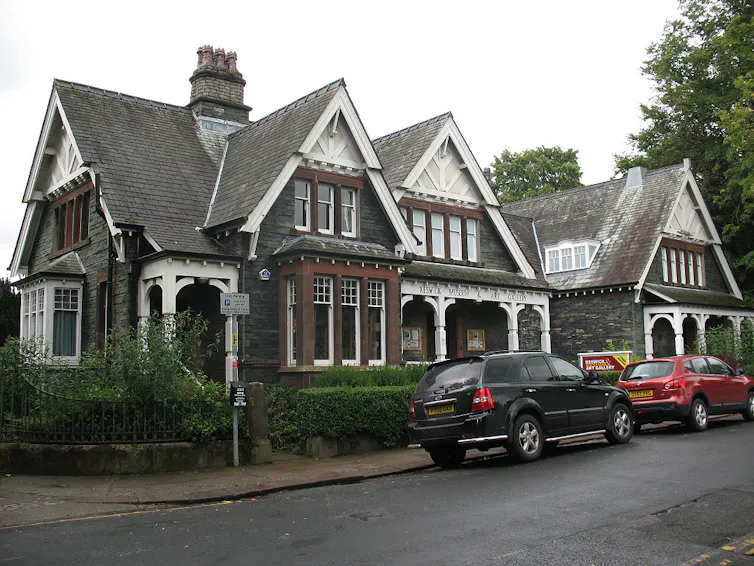
Not far from the site where Crosthwaite set up shop, you’ll find Keswick Museum and Art Gallery. Established in 1873, it reflects the Victorian belief that museums should inform, educate and entertain. Around the galleries you’ll spy everything from prehistoric tools to taxidermied animals to paintings inspired by the local landscape.

Keswick Museum and Art Gallery building
Keswick Museum and Art Gallery.
Wiki Commons, CC BY

Many of the displays explore the area’s industrial history, including the Keswick School for the Industrial Arts. There’s also plenty about the local pencil industry, which once supplied artists around the world. Collectively, the 15,000 objects the museum holds reflect life in the Keswick area, from prehistory to the present.

2. Armitt Museum and Library

Further south, in Ambleside, the Armitt Museum and Library combines museum, gallery and research library under one roof. Opened in 1912, its collections attest to the region’s long tradition of local scholarship, ranging from geology and archaeology to art and literature. It also holds items connected with Lake District luminaries like authors Alfred Wainwright and Beatrix Potter.

An introduction to The Armitt Museum and Library.

Potter’s botanical and mycological drawings form one of the collection’s highlights. Precise and closely observed, they reveal her artistic skill as well as her deep interest in local plants and fungi. The Armitt’s library also holds hundreds of rare books and manuscripts relating to the region’s history.

3. Ruskin Museum

Further west, in Coniston, you’ll find the Ruskin Museum, which also reveals the links between art, industry and landscape. The museum was founded in 1901 in memory of John Ruskin, the influential art critic, social thinker and eccentric who spent his final years nearby.

The Ruskin Museum building
The Ruskin Museum.
Wiki Commons, CC BY-SA

The museum’s most striking exhibit is the restored hydroplane, Bluebird K7. Pilot Donald Campbell attempted a world water-speed record on Coniston Water in the craft in 1967 and lost his life. Other local-interest histories figure in displays as well, revealing how the surrounding landscape was shaped by upland farming and heavy industry.

4. Wordsworth Museum

Over in Grasmere, the Wordsworth Museum explores the life and work of William and Dorothy Wordsworth, two of the region’s more notable literary residents. The museum is a stone’s throw from Dove Cottage, the handsome house where the couple lived from 1799 to 1808. During those years they wrote many of their most famous works.

Inside Dove Cottage.

The museum displays the Wordsworths’ manuscripts, letters and personal possessions. There’s also items related to the other Lake poets, including Samuel Taylor Coleridge. But it’s much more than a long read. Along with Dove Cottage, the museum brings to life the world that shaped English romanticism and some of the greatest literary works in the language.

5. Windermere Jetty Museum

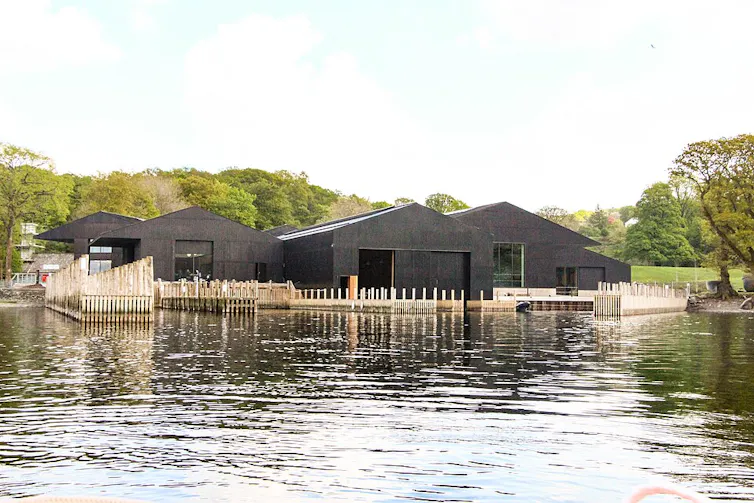
The Lake District wouldn’t be what it is without its lakes, of course. Nowhere is that better documented than at the Windermere Jetty Museum, which sits on the shores of England’s largest lake. Its collection includes historic steam launches, sailing boats and motorboats that once travelled the region’s lakes and tarns.

The Windermere Jetty Museum
The Windermere Jetty Museum.
Wiki Commons, CC BY

The place showcases much more than just old boats, though. It also highlights the skills needed to maintain them and the traditions of which they’re part. In the museum’s conservation workshop, historic boat-building techniques are still practised today and afford a unique attraction of their own.

Collectively, these museums reveal another side of the Lake District. The region is famous for its scenery, but it has also been shaped by art, literature, industry and local communities.

When the rain falls, as it so often does, stepping inside one of the Lake District’s museums affords much more than just a break from the weather. It offers another way of exploring and understanding the region’s landscape.

The Conversation

Christopher Donaldson does not work for, consult, own shares in or receive funding from any company or organisation that would benefit from this article, and has disclosed no relevant affiliations beyond their academic appointment.

ref. The five best Lake District museums – recommended by a historian – https://theconversation.com/the-five-best-lake-district-museums-recommended-by-a-historian-277791

Your brain for sale? The new frontier of neural data

Source: The Conversation – UK – By Alberto Rinaldi, Senior Lecturer in Law and AI, Department of Law, Lund University

DC Studio/Shutterstock

Your browsing history, your location, your political preferences. For years, tech companies have found ways to turn personal data into profit. Now, a new and far more intimate frontier is opening: the electrical signals produced by your brain.

This is not science fiction. Nor is it about brain implants for paralysed patients or experimental medical procedures. A fast-growing consumer market of non-invasive neurotechnology – wearable headsets, brain activity-reading headbands, focus-enhancing devices – is already here, already being sold and already collecting neural data from ordinary users. But the legal and ethical frameworks to govern it are struggling to keep up.

A landmark case from Chile shows why this matters.

In August 2023, Chile’s Supreme Court issued the world’s first ruling on commercial neurodata. The case involved Senator Guido Girardi and Emotiv Inc, a San Francisco company selling the Insight wireless headset – a consumer device marketed for focus, meditation and cognitive performance.

When Girardi began using it, he discovered that accepting the terms of service meant granting Emotiv a worldwide, irrevocable and perpetual licence over his brain data. Unless he paid for a premium account, that data would be stored in Emotiv’s cloud with no way for him to access or export his own neural records.

The Chilean Supreme Court ruled that Emotiv had violated Girardi’s constitutional right to mental integrity, concluding: “The data obtained from Insight users … overlooks the preliminary requirement to have express consent for its use for scientific research purposes. Information collected for various purposes cannot be used differently without its owner’s knowledge and approval.”

The Supreme Court ordered the company to delete Girardi’s data immediately and prohibited sale of the Insight device in Chile until its privacy policies were revised. The headsets remain on sale in other countries around the world.

Promotional video by Emotiv for its electroencephalography (EEG) brain headsets.

The ruling was a first. But the problem it exposed is global – and the legal pressure is building. In the US, Colorado and California enacted the first state-level privacy laws specifically governing neural data in 2024, and at least six other states are now moving in the same direction.

At the federal level, US senators Chuck Schumer, Maria Cantwell and Ed Markey announced plans in September 2025 to introduce the Mind Act – Congress’s first serious attempt to bring the neurotechnology industry under a dedicated regulatory framework.

A market growing faster than its rules

Emotiv is far from alone. Companies such as Muse (marketed for meditation and sleep) and Neurosity (aimed at software developers seeking focus) have built a consumer neurotechnology sector that is projected to double in value to more than US$55 billion (£42 billion) within a decade. It is attracting investment from some of the world’s wealthiest technology figures.

Alt text

Precedence Research (August 2025), CC BY-SA

These devices read electroencephalography (EEG) signals – the brain’s electrical activity – through sensors worn on the head. Some go further, using photoplethysmography (PPG) sensors to measure heart rate and physiological responses. Think of this like a fitness tracker – but instead of counting steps, it is reading signals from your nervous system and, in some cases, inferring your cognitive or emotional states from them.

When fitness trackers first appeared, few people thought carefully about where their heart rate data was going, who could access it, or what it could be used to infer. Neural data raises those same questions – at considerably higher stakes. Unlike step counts, brain signals can potentially reveal attention patterns, stress responses and emotional reactions that users themselves may not be aware of.

Where the law has not yet caught up

We research these issues as part of the interdisciplinary group at Lund University, which brings together law, neuroscience, medicine, ethics and economics.

The Emotiv case turned on Chile’s constitutional protection of mental integrity – a provision the country had specifically enshrined in 2021. Most jurisdictions have no equivalent. The question of how neural data fits into existing legal frameworks remains open.

Under the EU’s General Data Protection Regulation, brain signals could potentially qualify as biometric or health data, both of which attract stronger protections. But consumer neurotechnology, when sold as wellness products rather than medical devices, often falls into a regulatory grey area, sitting awkwardly between health law, consumer protection and data privacy rules.

What remains unresolved across most of the world are the basic questions. What are users consenting to when they accept terms of service for a neural headset? How long can that data be retained? Can it be sold to third parties, used to train AI models, or shared with advertisers and insurers?

The Emotiv case showed that, in one instance at least, a company had retained a user’s neural data for research purposes under anonymisation provisions, without that user having any meaningful awareness of what was being collected or why.

The stakes here are higher than with most forms of personal data. Neural signals are not like a credit card number that can be changed if compromised. Generated by your brain in real time, they can increasingly be used to infer things about you that you have not chosen to disclose – such as emotional responses, cognitive patterns, and other reactions you may not consciously be aware of.

Chile has showed that courts can act. Legislators in several jurisdictions are beginning to follow. The harder question is whether the frameworks being built are moving fast enough to match a market that, in the quest for competitive advantage, does not want to hang about waiting for them.

The Conversation

Alberto Rinaldi receives funding from the Swedish Research Council (2024-2027).
He has also received founding from the Marianne and Marcus Wallenberg Foundation (2022-2024).

Johan Mårtensson does not work for, consult, own shares in or receive funding from any company or organisation that would benefit from this article, and has disclosed no relevant affiliations beyond their academic appointment.

ref. Your brain for sale? The new frontier of neural data – https://theconversation.com/your-brain-for-sale-the-new-frontier-of-neural-data-279771

Voters in Wales face Senedd election amid confusion over who holds power over what

Source: The Conversation – UK – By Stephen Cushion, Professor, Cardiff School of Journalism, Media and Culture, Cardiff University

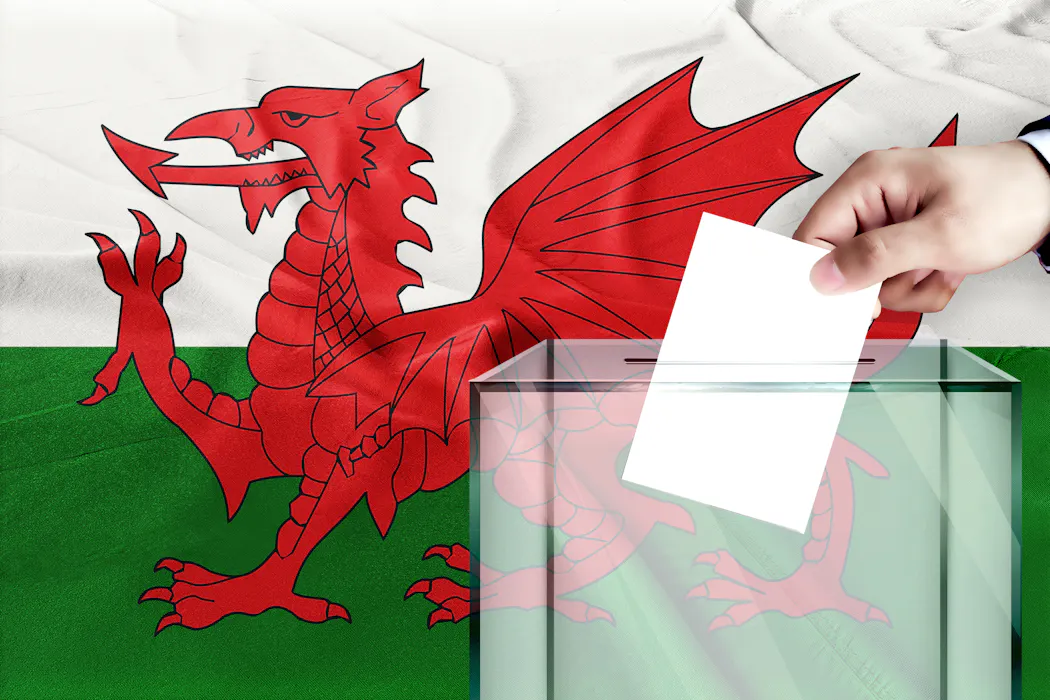
yusuf aktas/Shutterstock

Ahead of May’s Senedd (Welsh parliament) election, many people in Wales remain unclear about who is responsible for important political decisions.

Our new report suggests confusion is widespread. Our analysis included a survey of people in Wales and found that 69% did not know that policing is controlled by the UK government.

At the same time, a significant minority did not realise that health, education and transport have been devolved to Wales, despite more than 25 years of devolution. The report also found that more people rely on UK-wide news for political information than news produced in Wales.

Working with YouGov between January and February 2026, we surveyed 1,544 people across Wales. We also carried out focus groups and analysed more than 3,000 social media posts, online articles and TV news reports from major UK broadcasters.

Taken together, the findings suggest that UK‑wide news media are not doing enough to raise public knowledge and understanding of devolved politics ahead of the election.

Reporting lacks constitutional clarity

Our analysis of network news – including the BBC, ITV, Sky News, Channel 4 and Channel 5 – found that devolved politics makes up only a small part of UK-wide coverage. Stories rarely compare how policies differ across England, Wales, Scotland and Northern Ireland. And when devolved issues are covered, they often lack basic clarity about which government is responsible.

This problem is especially clear on social media. On X (formerly Twitter), 73% of posts about devolved issues did not say whether a story applied only to England, or to England and Wales in the case of legal matters. Just 13.2% mentioned England explicitly. Only 13.8% named Wales, Scotland or Northern Ireland to make clear that responsibility lay with devolved governments.

But there was also a lack of clarity in TV news, with 57.4% not stating if they were relevant to one or more of the four nations. Online news performed slightly better, but still fell short because 35.3% gave no indication of which part of the UK they referred to.

While some articles did refer to England (33.6%), our audience research suggests this is not enough. Many readers still struggled to understand how political decisions apply to Wales.

This lack of clarity has real consequences. Our survey found that many people misinterpret news stories that do not clearly explain where policies apply. When shown a BBC report about junior doctors’ strikes in December 2025, 48% believed the strikes were taking place across the UK. In reality, they applied to England only. A further 11% said they did not know either way.

A deeper lack of knowledge was revealed when stories failed to mention any government at all. When shown posts on X about housing and fracking, a majority of respondents assumed these were controlled solely by Westminster. In fact, responsibility is shared between the UK and Welsh governments.

More broadly, vague references to “the government” or to health and education secretaries often left people unsure which nation was being discussed.

There are wider gaps in political knowledge too. For example, only 47% could identify Rhun ap Iorwerth as the leader of Plaid Cymru, the most likely next first minister of Wales. Meanwhile, 58% did not know how the Senedd’s new voting system works.

Given the limited visibility of Welsh politics in UK-wide news, and the lack of clear explanations when it is covered, this confusion is perhaps not surprising. But it raises concerns about how voters will interpret political debates in the weeks ahead.

Why UK-wide news matters

For many people in Wales, UK-wide news remains the main source of political information. That makes how it reports devolved issues especially important. In our focus groups, participants consistently said they wanted simple, clear references to where a story applies. Explicit references to Wales would increase their interest and engagement.

Many participants said they lacked confidence in understanding the differences between political parties. They wanted clearer explanations of which issues are controlled in Wales, and what each party is proposing to do about them.

They also expressed frustration with the way politics is often reported. Too much attention, they felt, is given to personalities and campaign moments, and not enough to policy. Issues such as healthcare, in particular, were seen as deserving greater scrutiny.

The coming weeks will be a test not just for political parties, but for network news media. Our report highlights the need for clearer, more consistent reporting of how power is shared across the UK. Without it, voters may struggle to hold the right institutions to account.


Read more:
Wales is overhauling its democracy – here’s what’s changing


If coverage of the election is to inform rather than confuse, it must do more than report the campaign. It must also explain it. That means clearly stating which government is responsible for which policies, and showing how decisions in Wales differ from those made in Westminster or elsewhere in the UK.

After more than a quarter century of devolution, the structures of governance are well established. But public understanding has not kept pace. As voters prepare to go to the polls, closing that gap has never been more important.

The Conversation

Stephen Cushion has received funding from the BBC Trust, Ofcom, AHRC, BA, ESRC and Welsh Government.

Llion Carbis receives funding from the ESRC.

ref. Voters in Wales face Senedd election amid confusion over who holds power over what – https://theconversation.com/voters-in-wales-face-senedd-election-amid-confusion-over-who-holds-power-over-what-278594