City animals act in the same brazen ways around the world

Source: The Conversation – USA (2) – By Daniel T. Blumstein, Professor of Ecology and Evolutionary Biology, Institute of the Environment and Sustainability, University of California, Los Angeles
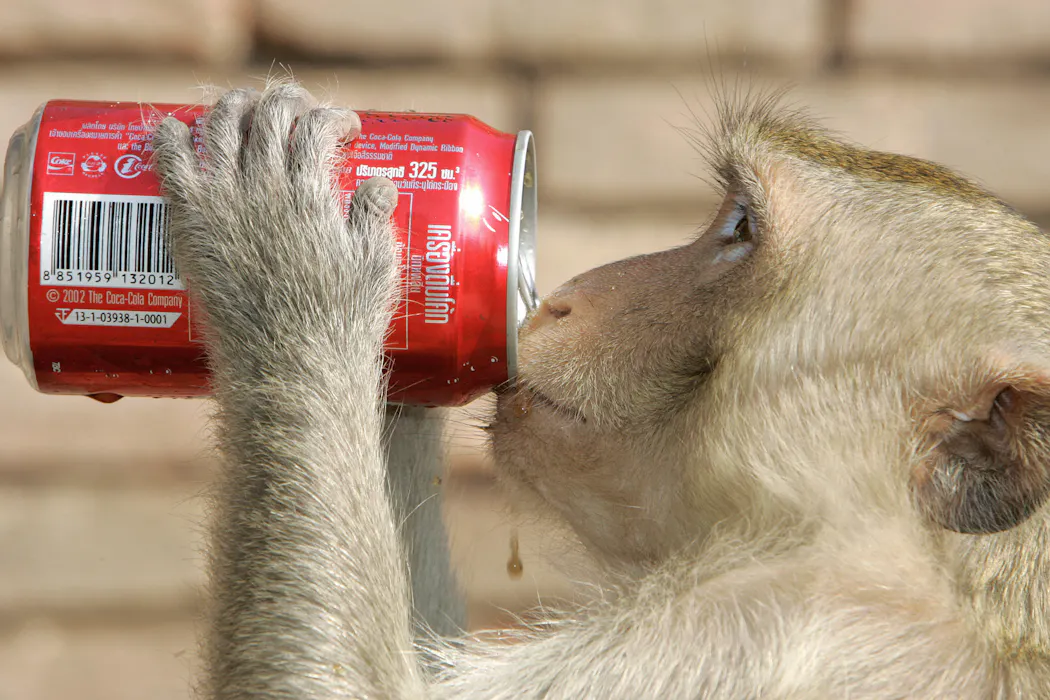
A monkey swipes a soda in Thailand. Saeed Khan/AFP via Getty Images

The urban monkeys in New Delhi are so bold they’ll steal the lunch right off your plate. If you’ve spent time in New York, you’ve probably seen squirrels try to do the same. Sydney’s white ibises got the nickname “bin chickens” for stealing trash and sandwiches.

This brazen behavior isn’t normal for most species in the countryside, yet it shows up in urban wildlife, and not just in these cities.

Studies show that animals living in urban environments around the world exhibit common sets of behaviors. At the same time, these urban animals are losing traits they would need in the wild. This process of urban animals’ behavior becoming more similar is known as “behavioral homogenization,” and it accompanies the loss of species diversity with urbanization.

A man reads his newspaper in New York's Central Park as a squirrel rifles through his bag on the bench beside him.
Squirrels in New York’s Central Park have no qualms about rifling through your belongs and stealing your food.
Keystone/Getty Images

We study animals in urban settings to understand how humans can help wildlife thrive in an urbanizing world. In a new study, we explore the causes and the long-term consequences of these behavior changes for urban wildlife.

What makes animals in cities similar?

Cities, despite their local differences, share many of the same features worldwide: They are warmer than the surrounding countryside, noisy, polluted by light and, most importantly, dominated by people.

New York’s squirrels, New Delhi’s monkeys, gulls in coastal cities of the U.K. and other urban wildlife have learned that people are a source of food. And because people typically don’t harm the animals, city-dwelling animals learn not to fear people.

Cities drive evolution as well. Humans and the changes we’ve brought to cities have led to the survival of bolder animals, and those bolder animals pass on their traits to future generations. In genetics, scientists refer to this as the environment “selecting” for those traits.

A monkey runs up to a guest at a wedding and takes food right off the plate the person is holding. ABC 7

It’s not just sandwich-stealing that is more common among city wildlife; urban birds also sound more alike.

Why? Cities are loud and filled with traffic noise, so those who can effectively communicate in that environment are more likely to survive and pass on those traits.

For example, urban birds may sing louder, start singing earlier in the morning or at higher frequencies to avoid getting drowned out by low-frequency traffic noise.

Cities select for smart individuals and species because that’s what it takes to survive.

Animals may behave similarly in cities because they learn from each other how to exploit novel human food sources. For instance, the cockatoos in Sydney have learned to open trash bins. In Toronto, the raccoons are in a race to outwit humans as urban wildlife managers try to design animal-proof trash bins.

Cockatoos have figured out how to use a drinking fountain in Sydney. New Scientist

The buildings and bridges in cities become home to bats, birds, and other urban dwellers, at the cost of learning to use more natural nesting sites. Roads and culverts modify how and where animals move.

While rural animals may forage at a variety of places and eat a variety of foods, urban animals may concentrate on garbage bins or rubbish dumps where they know they can find food, but they end up eating a potentially unhealthy diet.

Consequences of similar behaviors

The loss of behavioral diversity is happening everywhere that humans increase their footprint on nature. This is worrisome on several levels.

At the population level, behavioral variation may reflect genetic variation. Genetic variation gives species the ability to respond to future environmental change. For example, for animals that have evolved to breed at a specific time of the year, urban heat islands can select for earlier breeding.

Reducing genetic variation leaves populations less able to respond to future changes. In that sense, having genetic variation resembles a diversified investment portfolio: Spreading risk across a variety of stocks and bonds lowers the risk that a single shock will wipe out everything.

A large white bird with a black head and curved black beak picks through a trash bin along a waterfront area.
An ibis picks through a trash bin in Sydney.
Greg Wood/AFP via Getty Images

Moreover, as animals become tamer, new conflicts between animals and humans may emerge. For instance, there may be more car crashes, animal bites, property damage and zoonotic disease transmission. Such conflicts cost money and may harm both the animals and humans.

Losing behavioral diversity is also troubling for conservation.

When a species loses behavioral diversity, it loses resilience against future environmental change in the wild, making reintroducing urban animals to the wild harder.

Losing behavioral diversity also risks erasing socially learned, population-specific behaviors, such as local migration routes, foraging techniques, tool-use traditions or vocal dialects.

For example, Australia’s regent honeyeater populations have been shrinking and are critically endangered. The isolation of having fewer of their own species around has disrupted normal song-learning behavior, making it harder for male birds to sing attractive songs that help them find mates and breed successfully.

Regent honeyeaters are learning the wrong songs. The Guardian

Ultimately, behavioral homogenization is making wildlife in cities such as Los Angeles, Lima, Lagos and Lahore behave in similar ways despite living in different environments and having different evolutionary histories.

Many of these behaviors influence survival and reproduction, so understanding this form of diversity loss is important for successful wildlife conservation, as well as future urban planning.

The Conversation

Daniel T. Blumstein is on the Board of Trustees of the nonprofit environmental organization The Rocky Mountain Biological Laboratory.

Peter Mikula and Piotr Tryjanowski do not work for, consult, own shares in or receive funding from any company or organization that would benefit from this article, and have disclosed no relevant affiliations beyond their academic appointment.

ref. City animals act in the same brazen ways around the world – https://theconversation.com/city-animals-act-in-the-same-brazen-ways-around-the-world-279977
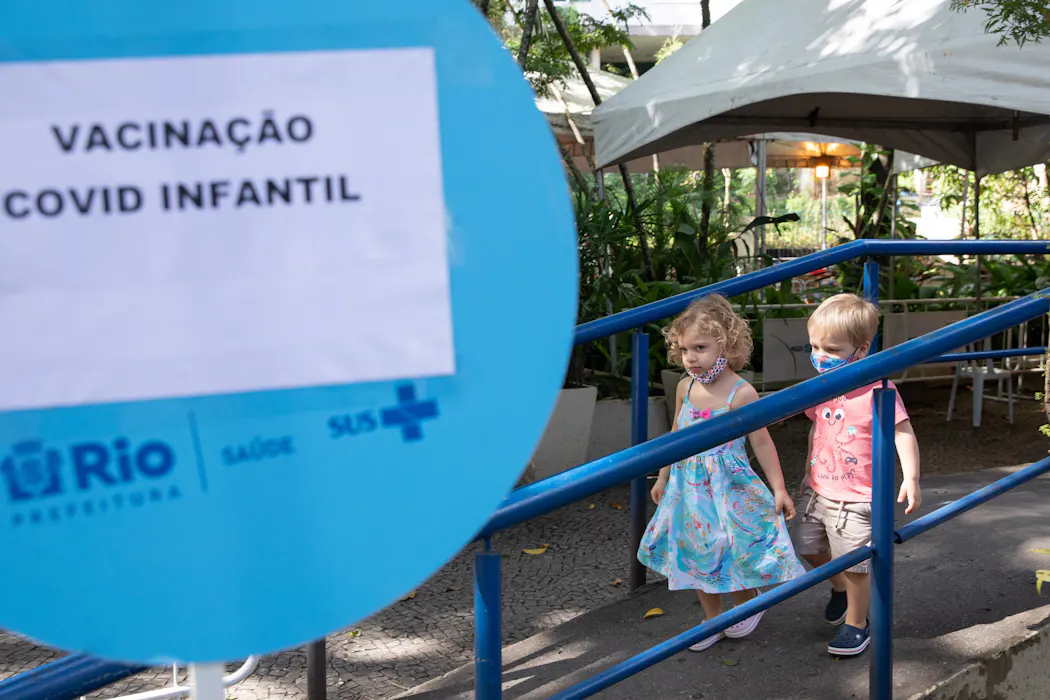
From a vaccine mascot to business leadership, lessons for the US from Brazil’s public health system in building public trust and keeping it

Source: The Conversation – USA (3) – By Jessica A.J. Rich, Assistant Professor of Political Science, Marquette University

Business leaders and community groups across Brazil stepped in to counter the government’s anti-vaccine messaging and to help develop and distribute vaccines. Wang Tiancong/Xinhua via Getty Images

Public health institutions are under threat by populist governments across the globe.

From Budapest to Jakarta, Indonesia, public health agencies are being stripped of funding and independence. Meanwhile, disinformation has sown distrust in scientific experts. The results are already visible through the return of diseases once thought eliminated or controlled, like measles and whooping cough.

The United States is no exception to this trend. Since Robert F. Kennedy, Jr. was confirmed as secretary of Health and Human Services in February 2025, he has fired over 10,000 staff, cut budgets and attempted to gut childhood vaccine recommendations. Though medical and public health groups have pushed back with some success, key government health institutions face a leadership vacuum, and national public health policy has fractured into “health alliances” formed by groups of states.

Doctors and scientists across the country worry about long-term damage to the country’s health system.

As a researcher studying the politics of health care, I believe it’s helpful to look to countries that have successfully managed similar threats. As my co-authors and I have argued, Brazil’s experience offers insights into how public health institutions can preserve power and authority in the face of assault.

Much like the U.S., Brazil has a fragmented and polarized Congress, it has powerful self-interested lobbies, and it has a federal system of government. And much like in the U.S., health outcomes suffer from stark race and income gaps.

But when a populist president attacked the Brazilian health care system during COVID-19, the public successfully rallied to its defense

People hold signs during a protest against COVID-19 vaccine passports and mandatory COVID-19 vaccinations in Brazil.
Former President Jair Bolsonaro’s administration, from 2019 to 2022, shook Brazilians’ long-held trust in vaccines and public health.
Sergio Lima/AFP via Getty Images

A health system under attack

Brazil’s health system, established in its current form in 1990, provides free universal health care to all its citizens. Despite some significant flaws, including unequal access to care in poor and rural areas, its focus on preventive care is widely considered a model worldwide

Prior to the administration of right-wing populist Jair Bolsonaro, from 2019 to 2022, Brazilians had trust in vaccines. They had what public health experts call a vaccine culture, thanks to the hard work of health workers who had spent years promoting them and making them easily accessible. Vaccines even had a beloved national mascot in Zé Gotinha (Joe Droplet), a cartoon vaccine droplet with a Pillsbury Doughboy-like visage.

When COVID-19 hit Brazil in March 2020, Bolsonaro – dubbed by many as the “Trump of the Tropics” – launched unprecedented attacks on Brazil’s vaccine program. Among other measures, he fired the senior leadership of the health ministry and appointed as minister an active-duty military officer with no health credentials.

A white vaccine droplet with a smiling face and the logo of Brazil's public health system on its belly.
A walking vaccine droplet named Zé Gotinha – Joe Droplet – is Brazil’s vaccine mascot.
Vinicius Loures/Câmara dos Deputados via Wikimedia Commons, CC BY-SA

Bolsonaro’s attacks on the vaccine program – a backbone of Brazil’s preventive health efforts – were especially strong. He pressured Brazil’s drug regulatory agency to ban pediatric vaccines. He blocked resources for vaccine procurement, and he spread misinformation, notoriously suggesting the vaccine could give people AIDS.

After Bolsonaro’s initial attacks on Brazil’s COVID-19 response efforts, the entire health system appeared on the verge of collapse. However, Brazil’s public health workers then marshaled broad support to defend their vaccine program.

Opposition governors offered important but limited help by producing their own vaccine guidance and procuring their own vaccines. But political support, on its own, couldn’t overcome Bolsonaro’s attacks.

That’s because Brazil’s vaccine program depended not just on independence, but also on resources to operate. And governments with an anti-science bent have many ways to deprive even well-established agencies of resources without broad congressional approval.

Brazil’s vaccine program ultimately survived because allies outside government stepped in to defend it not only with political advocacy, but by donating money and resources and with social activism.

Jair Bolsonaro launched an attack against Brazil’s health system during the COVID-19 pandemic.

Business leaders to the rescue

Businesses filled gaps in government resources with donations of private-sector funding. Two business coalitions gave a total of over 270 million real (US$54 million) to help two public laboratories, the Institute of Technology in Immunobiology, known as BioManguinhos, and the Butantan Institute.

One of the largest foundations in Brazil, the Lemann Foundation, paid for AstraZeneca’s clinical trials in Brazil. Ambev, one of the largest firms in South America, lent its logistics team to help BioManguinhos acquire supplies and equipment.

Women of Brazil, a nonpartisan network of female business leaders, even built a campaign called United for the Vaccine to help towns and cities acquire the vaccine distribution equipment they needed. They provided local health officials with cheap supplies, like coolers and refrigerators, as well as costlier investments, such as boats and even planes for carrying vaccines to the isolated communities of the Amazon.

As pulmonologist Margareth Dalcolmo, who consulted for United for the Vaccine, emphasized to me in an interview: “All their requests were met, without one cent of government money being used.”

From the ground up

Another hugely important component of defending Brazil’s vaccine program was support from trusted local grassroots groups.

When vaccines became available, community-based groups across the country jumped in to combat disinformation with their own locally produced information campaigns – especially in underserved communities.

One group I spoke to distributed 5,000 informational posters across their neighborhood. Another, Tamo Junto Rocinha, or We’re in it Together Rocinha, published a book with lessons for kids to do with their parents while school was canceled – all with vaccination information embedded. Voz das Comunidades, or Voice of the Communities, a neighborhood news service, even created a smartphone application to combat misinformation while also notifying community members of daily death tallies.

A commuter wearing a facemask gets his COVID-19 vaccine at a Rio de Janeiro bus station.
A long-term investment in building trust in public health helped fuel the groundswell of support for COVID-19 vaccine efforts.
Mauro Pimentel/AFP via Getty Images

So many grassroots groups organized to counter Bolsonaro’s attacks on COVID-19 vaccines that researchers began to map the campaigns bubbling up across the country. By early 2021, one map had identified over 1,300 grassroots efforts and over 800 organized by universities.

By August 2022, despite Bolsonaro’s disinformation campaigns, 81% of Brazil’s adult population was fully vaccinated against COVID-19. These vaccination rates equaled those of New Zealand and the Netherlands and were well above that of the United States, where only 67% were fully vaccinated at the time.

This is not to say that Brazil was immune to disinformation campaigns. Vaccination rates for some diseases, such as measles, declined, as they have across the world.

But in many ways, the attacks on Brazil’s vaccine program paradoxically strengthened it. By the end of 2022, thanks to donor support, BioManguinhos had already built a new testing laboratory, and Butantan was constructing a new vaccine production facility. Brazil even had a new national health surveillance institute. By 2024, once Bolsonaro was voted out, overall spending on the health system had increased from the prior year by 27%.

Playing the long game with public health

In my view, these emergency countermeasures in Brazil worked effectively because the country had already spent years building a foundation of trust in – and ownership of – the shared goals of its public health system.

Decades ago, in the 1980s, Brazilians successfully demanded that their politicians make health care accessible to all – driving the genesis of the country’s universal public health system, known by the acronym SUS.

Brazil’s health ministry continues to invest heavily in making sure citizens take ownership of it. Cities and towns are postered with signs declaring “SUS is ours!” or “Health care is your right!”

As I found in my recent research in Brazil, this kind of advertising makes people feel their institutions are an earned right and reduces the power of partisan messaging.

Brazil also invests in integrating health workers into the communities they serve and cultivating public trust in their expertise. Government health care workers routinely set up shop in public plazas to advertise cancer screenings or give vaccinations. They regularly visit schools, where doctors or nurses talk to young people in accessible language about what the nation’s public health system offers its citizens. As one health care worker told me: “It’s like they are constantly saying, ‘Look, the doors are open. You can come. You’ll be seen and supported.’”

These long-term relationships between communities and the public health system helped lay the groundwork in Brazil for mounting a unified defense when political turbulence threatened public health agencies. Worldwide, a long-term view toward building or strengthening these relationships may help the public embrace the idea that public health institutions are worth defending.

The Conversation

Jessica A.J. Rich does not work for, consult, own shares in or receive funding from any company or organization that would benefit from this article, and has disclosed no relevant affiliations beyond their academic appointment.

ref. From a vaccine mascot to business leadership, lessons for the US from Brazil’s public health system in building public trust and keeping it – https://theconversation.com/from-a-vaccine-mascot-to-business-leadership-lessons-for-the-us-from-brazils-public-health-system-in-building-public-trust-and-keeping-it-267611

Middle East conflict: this ceasefire may have made Iran stronger

Source: The Conversation – UK – By Bamo Nouri, Honorary Research Fellow, Department of International Politics, City St George’s, University of London

Ceasefires are often presented as moments of relief – pauses in violence that open the door to diplomacy. But sometimes they reveal something more consequential: who has actually gained from the war. The emerging ceasefire between the US, Israel and Iran may be one of those moments.

On the surface, all sides are claiming success. Donald Trump has declared a “total and complete victory”, presenting the agreement as evidence that US objectives have been met. Meanwhile, Iran’s leadership has framed the ceasefire as a strategic achievement, with its Supreme National Security Council formally endorsing the deal on the condition that attacks stop.

But beneath these competing narratives lies a deeper reality: the content and structure of the ceasefire suggests that Iran may have emerged not weakened, but strengthened. While much of its senior leadership has been assassinated during the conflict, the regime’s ability to rapidly appoint replacements and maintain cohesion points to institutional resilience rather than collapse.

The ceasefire was not imposed by decisive military defeat. It was negotiated – and shaped – around Iranian conditions, delivering gains it previously did not have, with Tehran’s ten-point plan serving as a starting framework for negotiations rather than a finalised agreement being imposed on Iran.

Tehran’s proposals went beyond ending hostilities. They include sanctions relief, access to frozen assets, reconstruction support and continued influence over the Strait of Hormuz. They also include effective US withdrawal from the Middle East – and an end to Israeli attacks on Lebanon.

The Strait of Hormuz, through which roughly one-fifth of global oil transits, has been reopened under Iranian oversight, a clear signal of where leverage now lies. Control over Hormuz is not just strategic but economic. Iran has reportedly proposed continuing the charging of transit fees it begin during the conflict – creating a potential revenue stream at precisely the moment reconstruction is needed.

In effect, a war that involved sustained bombing of Iranian infrastructure may now leave Iran with new financial mechanisms to rebuild and potentially expand its regional influence.

The logic is paradoxical but familiar. Military campaigns are designed to degrade an opponent’s capabilities. But when they fail to produce decisive political outcomes, they often create new opportunities for the targeted state. Iran entered this war already adapted to pressure. Years of sanctions had forced it to build resilience by diversifying networks, strengthening institutions and developing asymmetric strategies.

What the war appears to have done is accelerate that process. Rather than collapsing, Iran has demonstrated its ability to disrupt global energy markets, absorb sustained strikes and force negotiations on terms that include economic concessions.

Illusion of victory

This is where the dissonance in US messaging becomes most visible. The US president may have framed the ceasefire as a “complete victory” but, tellingly, while the ceasefire deal will involve the temporary reopening of the Strait of Hormuz, which has been the US president’s main demand in recent days, talks will centre on Iran’s ten-point plan rather than the original US 15-point plan, which centred on dismantling Iran’s nuclear and missile capabilities.

The shift suggests an American search for an off-ramp. At the same time, Iran has maintained a consistent position: rejecting temporary arrangements unless they deliver structural outcomes such as sanctions relief and security guarantees.


Read more:
Iran war: the search for an ‘off ramp’


For Washington the ceasefire halts escalation and stabilises markets. For Tehran, it aims to consolidate the leverage offered by its control of the Strait of Hormuz. This asymmetry suggests the ceasefire is not a neutral pause, but a moment that could lock in a shift in regional power.

The most decisive dimension of this shift is economic. The war has destabilised global markets – with oil prices fluctuating sharply in response to disruptions of supply. But the ceasefire introduces a new dynamic. If sanctions are eased, Iran gains access to global markets at a time of sustained energy demand. Combined with potential transit revenues and reconstruction flows, this creates the conditions for a significant economic rebound.

In effect, the war risks producing the opposite of its intended outcome. Rather than weakening Iran economically, it may instead have strengthened it.

A stronger Iran, a weaker order?

This raises a larger question: what does this ceasefire reveal about power itself? For decades, US influence in the Middle East has rested on military dominance and economic pressure. This conflict suggests both are under strain.

Militarily, the US and Israel have demonstrated overwhelming capability, yet without decisive outcomes. Iran has retained its core capacities, maintained cohesion and leveraged its position to shape deescalation.

At the same time, US and Israeli legitimacy has eroded. The war’s contested justification, civilian toll and lack of broad international support have weakened their standing, even among allies. American soft power – long central to its global leadership – is diminished. Trump’s increasingly abusive social media posts have certainly alienated even its closest allies, most of whom stayed silent in face of US threats.

Economically, Iran’s ability to influence – and potentially monetise – global energy flows gives it a form of structural power that force alone cannot neutralise. The result is a paradox: a war intended to contain Iran may have reinforced its strength.

It is still early. Ceasefires can collapse, negotiations can fail, and conflicts can reignite. But if this agreement holds – even temporarily – it may mark a turning point. Not because it ends the war, but because of what it reveals about how wars are now won and lost. Victory is no longer defined by battlefield dominance alone, but by outcomes that are economically sustainable, politically legitimate and strategically durable.

On those measures, Iran appears well positioned. The US and Israel may have demonstrated military superiority. But Iran has demonstrated something different: the ability to endure, adapt and convert pressure into leverage.

That’s why this ceasefire matters; not just as an end to a phase of conflict, but marking the moment when a war intended to weaken Iran instead left it stronger – and exposed the limits of the power that sought to contain it.

The Conversation

The authors do not work for, consult, own shares in or receive funding from any company or organisation that would benefit from this article, and have disclosed no relevant affiliations beyond their academic appointment.

ref. Middle East conflict: this ceasefire may have made Iran stronger – https://theconversation.com/middle-east-conflict-this-ceasefire-may-have-made-iran-stronger-280164

Iran ceasefire: trust will be vital but it’s in short supply right now

Source: The Conversation – UK – By Nicholas John Wheeler, Professor of International Relations Department of Political Science and International Studies, University of Birmingham; BASIC

The US and Iran have agreed a two-week ceasefire in a deal brokered by Pakistan, which will see Iran open the Strait of Hormuz to shipping while negotiations continue for a more permanent settlement.

The US president, Donald Trump, announced the agreement on his TruthSocial platform less than two hours before the deadline of 8pm EST on April 7. Hours earlier he had posted: “A whole civilisation will die tonight, never to be brought back again. I don’t want that to happen, but it probably will.”

Talks are due to begin in Islamabad on April 10, where the two sides will discuss a ten-point plan presented by Iran on April 6. The plan offers to open the Strait of Hormuz in return for a permanent end to attacks by the US and Israel. Other conditions include lifting all primary and secondary sanctions, US withdrawal from the Middle East and Iranian control of the Strait of Hormuz, with plans for a US$2 million fee for ships transiting the strait in future to be shared between Iran and Oman. Fees collected by Iran would be used for reconstruction.

The office of Israeli prime minister, Benjamin Netanyahu, has said that it supports the ceasefire but that the deal does not include Lebanon. But both Iran and Pakistan have said that Lebanon is part of the deal. This point of contention is likely to affect negotiations from the start.

An important issue to consider as all parties to the conflict continue to react to each other’s attempts at diplomacy is the level of trust involved. On March 31, Iran’s foreign minister, Abbas Araghchi, told Al Jezeera that Iran had “zero trust” in the US. He added that: “Twice – last year and now this year – we negotiated and the result was an attack by them. And so we don’t have any faith that negotiations with the US will yield any results.”

Iran has ‘zero trust’ in the US: foreign minister, Abbas Araghchi.

With Mark Saunders at the University of Birmingham and Chiara Cervasio at the British American Security Information Council (BASIC), I’ve been looking into the relationship between trust and distrust in international relations. The first thing to note is the importance of distinguishing between the absence of trust and the presence of distrust. In a situation where the parties involved neither trust nor distrust each other, they remain open to the possibility that negotiations could reach a state where trust develops. Where there is distrust, by contrast, at least one of the parties is sure that the other has hostile intentions.

Araghchi’s language of “zero trust”, then, is best understood as an expression of active distrust. This reflects a clear belief on the part of Iranian decision-makers that diplomatic engagement with Washington will be exploited and not reciprocated.

From Tehran’s perspective, the US has repeatedly acted in bad faith. It carried out its Operation Midnight Hammer on Iran’s nuclear facilities while engaged in active negotiations over Iran’s nuclear programme. Again, on February 28, when the US commenced Operation Epic Fury in concert with Israel, mediators had reported that negotiations were proceeding well and reliable sources suggested that a deal was in the making.

Vital role of trust

In his interview with Al Jazeera, Araghchi mentioned that the US and Iran had been able to reach a deal “one time, years ago”. This was the Joint Comprehensive Programme of Action (JCPOA) negotiated with Iran in 2015 by the Obama administration with the UK, France, China, Russia and Germany as co-signatories. The agreement significantly rolled back Iran’s enrichment programme and set up a regime of inspections which – until the Trump administration pulled the US out of the agreement in 2018 – Iran was reportedly complying with.

The JCPOA agreement only became possible because of trust at the highest levels of US-Iran diplomacy. But this has clearly now hardened into active distrust on Iran’s part.

Trust requires a willingness to be vulnerable based on positive expectations about the intentions of others. So when states enter into negotiations they have to believe in the other side’s good faith and a commitment to using diplomacy to find a deal that will satisfy the interests of all sides. This requires a “presumption of trust”: a willingness to treat the other side as potentially trustworthy.

There’s an interesting historical parallel in the Cuban missile crisis of 1962. The episode, which brought the world to the brink of a nuclear confrontation, occurred during a period where the US and the Soviet Union deeply distrusted each other. But both the US president, John F. Kennedy, and the Soviet leader, Nikita Khrushchev, came to recognise their shared vulnerability in the face of the destructive power of each side’s nuclear arsenal. This recognition enabled them to develop a bond that allowed a path to de-escalation. But in this instance both leaders believed that the other understood the stakes and the importance of trustworthiness in reducing tensions.

Araghchi’s recent statement suggests that Iran has no such presumption of trust in the US. By communicating that Iran believes negotiations will be exploited by Washington rather than reciprocated, Araghchi is indicating that the basic condition for diplomacy, and with it the promise of trust, no longer exists.

If Trump is serious about negotiations, he will have to convince Iranian leaders that US diplomacy is not a cover for further military action. The lesson is not that trust is necessary for diplomacy to begin but that it cannot operate when one or both sides think they are going to be betrayed.

The Conversation

Nicholas John Wheeler has received funding from the UK’s Economic and Social Research Council.

ref. Iran ceasefire: trust will be vital but it’s in short supply right now – https://theconversation.com/iran-ceasefire-trust-will-be-vital-but-its-in-short-supply-right-now-280056

Canada and Mexico must work together to help Cuba survive its dire humanitarian crisis

Source: The Conversation – Canada – By Amelia M. Kiddle, Professor of History and Associate Dean, Research and Communities, University of Calgary

The people of Cuba are facing an unprecedented humanitarian crisis due to the United States government’s embargo of the island nation. Although a Russian oil tanker recently passed through the blockade to deliver much-needed fuel, daily life remains precarious for ordinary Cubans, who are facing unemployment and shortages of food another necessities.

Building upon the historical parallels between Canadian and Mexican relations with Cuba, the federal government should partner with Mexico to expand its commitment towards essential humanitarian aid.

Both Canada and Mexico are hesitant to disturb the proverbial elephant in bed between them whose every “twitch and grunt” has an out-sized impact on both countries.

But providing aid to Cuba in its time of need could help redress past betrayals and serve as a strong foundation for improving Canadian-Mexican relations as both governments must confront the existential threat to the liberal world order posed by their largest shared trading partner.

The fact that Canada and Mexico were the only countries in the Western Hemisphere to defy the U.S. and refuse to cut ties with the country after the 1959 Cuban Revolution occupies a significant place in the national mythology of each country’s foreign policy.

Personal connections

Both Canada and Mexico have significant Cuban diasporas — with nearly 20,000 Cuban-born residents in Canada and more than 42,000 in Mexico, according to 2022 census data. These migrants have left lasting marks on both Canadian and Mexican cultures.

The personal ties between Canadian and Mexican citizens and Cubans have also been strengthened over generations by economic investment by both countries’ companies operating in the vacuum left by the U.S. and by the annual flow of tourists to the island.

Canadian vacationers, in fact, were the largest source of foreign exchange for the Cuban economy until Canadian airlines cancelled flights to the island in the face of the recent fuel shortages.

These shared connections, shaped by past foreign policy decisions, could now support greater co-operation on humanitarian aid.

Mexico’s leading role

In Mexico’s case, relations with Cuba were shaped by the revolutionary nationalism that followed its own revolution in 1910. Under the government of Adolfo López Mateos (1958–64), these ties were viewed through the lens of domestic politics and the Cold War, with the government appeasing domestic constituencies by firmly supporting Cuban sovereignty and the principle of non-intervention.

This led to Mexico spearheading the condemnation of the failed American Bay of Pigs invasion in 1961 at the United Nations, and refusing to break relations with the Cuba after the U.S. strong-armed other Latin American countries into ejecting Cuba from the Organization of American States (OAS) in 1964.

Canada’s objections to the Bay of Pigs invasion were more tepid, and it didn’t become a full member of the OAS until 1990. But nevertheless, the Canadian government also declined to toe the American line.

Prime Minister John Diefenbaker, in office from 1957 to 1963, saw that Canadians wanted the country to exhibit foreign policy independence from the U.S. Maintaining relations with Cuba became a feature of Canadian foreign policy supported by many citizens.

But even as the Canadian and Mexican governments publicly proclaimed friendship and constructive engagement with Cuba, subsequent historical investigations have shown both Canada and Mexico co-operated with successive American governments to provide intelligence on the Cuban regime.

This double dealing is well-known to historians, but it has barely registered for most Canadians and Mexicans, who continue to buy into the myths of their countries’ principled difference from the U.S.

Strengthen ties

But today, when popular opinion about the U.S. and its president in both Canada and Mexico are at historic lows, the Canadian and Mexican governments should work together to further strengthen their relations with Cuba.

Private citizens and organizations in both countries have held solidarity rallies and organized private aid missions. Expanding humanitarian aid for the Cuban people who are suffering the consequences of the U.S. government’s blockade would enable Canada and Mexico to fulfil the principled foreign policies many have assumed they’ve upheld since 1959.

Both Mexico and Canada are preoccupied by the upcoming renegotiation of the Canada-US-Mexico (CUSMA) trade agreements.

So far, Mexican President Claudia Sheinbaum has been more vocal in her support for the Cuban people. Canadian Prime Minister Mark Carney should take Sheinbaum up on her offer to allow foreign airplanes to refuel in Mexico, and should provide more than the $8 million in aid announced given Canada’s ties to Cuba.

Co-operating on providing aid to Cuba would build trust between the Mexican and Canadian governments at a time when both have sought to boost bilateral trade so that both countries are better able to withstand every twitch of their common neighbour.

The Conversation

Amelia M. Kiddle receives funding from the Social Science and Humanities Research Council of Canada.

ref. Canada and Mexico must work together to help Cuba survive its dire humanitarian crisis – https://theconversation.com/canada-and-mexico-must-work-together-to-help-cuba-survive-its-dire-humanitarian-crisis-279542

Donald Trump’s apocalyptic and profane threats against Iran expose the unhinged language of war

Source: The Conversation – Canada – By Henry Giroux, Chaired professor for Scholarship in the Public Interest in the Department of English and Cultural Studies, McMaster University

The language of war has long wrapped itself in the rhetoric of courage and the honour of vengeance, drawing on moral and religious appeals to make violence appear necessary, even just.

Today, that language has returned. As war stretches across Gaza and Lebanon, Ukraine and Iran, the words used to justify it are as brutal, self-assured and distant as ever from the suffering they conceal.

A glaring example are the social media posts of United States President Donald Trump, who in recent days warned “a whole civilization will die tonight” as his deadline for the reopening of the Strait of Hormuz loomed.

He’s also threatened to bomb Iran “back to the Stone Ages” and called Iranians “crazy bastards” in a demand that they open the strait.

The conflict with Iran, in fact, has been portrayed by Israel and the U.S. as an existential struggle between good and evil.

This is not the messaging of strategy or international law — it’s the renewed language of the Crusades, driven by ideological fervour and staged as a performance of power in which, in Trump’s world view, “might makes right.”

Biblical references

The tone is even more pronounced within segments of Trump’s political orbit, where the conflict is interpreted through apocalyptic and biblical narratives.

References to divine purpose and destiny, including Trump’s claim that he was “saved by God,” draw on a broader evangelical language that frames political conflict in theological terms.

In this environment, war is no longer a tragic necessity but a sacred obligation. This reflects a dangerous fusion of militarism, religious fundamentalism, spectacle and authoritarian politics that is redefining how military power is justified, experienced and normalized.

Religious fundamentalism doesn’t just accompany this violence; it sanctifies it. It functions as an alibi for power, cloaking destruction in the language of destiny while rendering its victims invisible. It turns domination into virtue and makes the machinery of death appear necessary, even divinely ordained.

War as sacred

This isn’t unintentional. It signals a shift in which war becomes a sacred imperative. Trump’s inner circle and his supporters often invoke scripture and religious imagery to cast violence as part of a divine plan. Some of them, like Sen. Lindsey Graham, have described the ongoing war in Iran as a civilizational or even religious war.

Pete Hegeseth, Trump’s defense secretary, expresses this world view most chillingly. He has declared that the mission of the U.S. military is “to unleash death and destruction from the sky all day long,” and has called for “maximum lethality, not tepid legality” as its guiding principle.

This reveals a policy of stripping war of restraint or law and openly aiming for annihilation. Hegseth has also invoked Crusader imagery and claimed that Trump has been ordained by God to wield military power. In his 2020 book American Crusade, Hegseth writes that those who value western civilization, freedom and equal justice should “thank a crusader.”

Domestic militarism

The same language that sanctifies violence abroad, like in Gaza and Ukraine, is similar to Trump’s calls for aggression at home — against protesters, immigrants and political enemies.

He has targeted political opponents, including James Comey and Letitia James, revoked visas for international students protesting Israel’s war in Gaza, and dismissed critics, including his Democratic opponent in the 2024 presidential election, Kamala Harris, as “radical left lunatics.”

Retribution and regarding opponents as mortal enemies are treated as justified, even necessary, blurring the lines between war-making and domestic repression.

In this environment, it’s easy for the lines between politics and theology to dissolve as well, weakening ethical restraint and defining conflict as sanctioned, even righteous, violence.

Beyond simply justifying war, the U.S. is once again framing itself as a white Christian nation, which normalizes exclusion, disposability, historical erasure and racialized violence.

Nonetheless, this fusion of faith and force is not universally accepted. As Pope Leo XIV said in his first Palm Sunday address, God is the “king of peace,” rejecting any claim that war can be divinely sanctioned.

War as entertainment

The religious framing of the war in Iran is converging with another shift: the transformation of war into spectacle.

Under Trump, violence is not only being justified; it’s being staged, estheticized and consumed, as White House promotional videos blend action-movie imagery with real footage of Iran bombings. This renders the war a stylized performance designed to excite, entertain and showcase technological power.

In this spectacle, human suffering recedes. Targets become co-ordinates, destruction appears cinematic and violence is stripped of its moral weight. What remains is the seductive image of power — war emptied of judgment.

When these efforts fuse with religious fundamentalism, the consequences can be profound. The theatrics of destruction become a sacred drama and the capacity to kill is defined as evidence of both national strength and divine purpose.

Under such conditions, war is no longer constrained by law, reason or democratic accountability. It is propelled by belief, emotion and spectacle.

Trump provides the script as his rhetoric intensifies this convergence. His suggestion that war might end when he “feels it in his bones” or his remark about bombing Iran “just for fun” shows how ignorance can become governance.

Making fascism possible

The human costs of the war in Iran are devastating. Bombing campaigns have inflicted widespread destruction across the country, with civilian casualties mounting steadily. Yet this death toll is increasingly obscured by the spectacle of war itself, reduced to background noise beneath the American celebration of military power.

The economic costs of the war to Americans are also staggering, estimated at roughly $1 billion per day, resources that could support social needs. Yet in a culture steeped in militarism, concentrated power and inequality, such considerations recede.

History offers stark warnings about such moments. The horrors of the past — from the Holocaust to the Vietnam War, the Rwandan genocide, the Pinochet dictatorship and the Iraq war — reveal how societies can be mobilized through propaganda, fear and the erosion of critical thought.


Read more:
War sent America off the rails 19 years ago. Could another one bring it back?


They remind us what happens when violence is normalized, power is unchecked and human life is stripped of its value. Those conditions are visible again. But authoritarianism can only endure in a culture that enables it — where war, both at home and abroad, becomes a permanent feature of social life.

What’s at stake is not only the violence unleashed abroad but the political culture it legitimizes at home. When war is staged as entertainment and justified as a moral duty, its human costs disappear from view.

A society that embraces cruelty as virtue, ignorance as governance and violence as destiny risks losing its capacity for judgment. Under such conditions, democracy does not simply erode. It is obliterated, giving way to forces that make fascism possible.

The Conversation

Henry Giroux does not work for, consult, own shares in or receive funding from any company or organisation that would benefit from this article, and has disclosed no relevant affiliations beyond their academic appointment.

ref. Donald Trump’s apocalyptic and profane threats against Iran expose the unhinged language of war – https://theconversation.com/donald-trumps-apocalyptic-and-profane-threats-against-iran-expose-the-unhinged-language-of-war-279801

Absinthe: what the ban on France’s aromatic spirit teaches us about modern day blaming and shaming

Source: The Conversation – France – By Tao Wang, Professor of Strategy, EM Lyon Business School

The potent emerald-green blend of wormwood, green anise and fennel, known as “the Green Fairy,” was once celebrated by the French society, including artists from Baudelaire to Van Gogh. By the early 1900s, France consumed more absinthe than the rest of the world put together. Yet within decades, it was banned and deemed a “national poison.”

What happened? Our analysis (recently published in Organization Studies of historical archives, newspapers, medical publications, and propaganda materials spanning 1870 to 1915, reveals a systematic scapegoating process which unfolds throughout three escalating cycles.

How absinthe became France’s public enemy

The process began with genuine social concerns surrounding the beverage, against a backdrop of alarming alcoholism rates, military defeat against Prussia, and anxieties about national decline.

Scientists, though their research was inconclusive, coined “absinthism” as a distinct pathology, claiming absinthe caused unique symptoms, including epilepsy and madness.

Here is where the dynamics become fascinating. Faced with growing anti-alcohol sentiment, producers of similar beverages – aperitifs made from nearly identical ingredients, such as anis, pastis and anisette, strategically distanced themselves from absinthe.

Advertising posters from the 1880s explicitly contrasted “healthy” tonics with “deadly” absinthe, showing death lurking behind absinthe drinkers, while beautiful women accompanied those choosing competing products. Wine producers joined the attack for economic reasons. After a devastating vine disease – phylloxera – had destroyed French vineyards, they needed to reclaim market share. Framing their struggle as patriotic – wine as French heritage versus absinthe as foreign poison – they allied with temperance movements and politicians.

Finally, even absinthe producers turned on each other. Producers from Pontarlier, the traditional production region, attacked “bad absinthe” from Paris, hoping to save themselves by sacrificing others. This internal fracturing sealed absinthe’s fate. When World War I broke out, the ban came swiftly, presented as a victory for French civilisation.

Our research identifies a recurring pattern. First, genuine social anxieties emerge, about health, national identity, public security. Then, a convenient target is identified, one similar enough to the “acceptable” actors to bear their sins, yet different enough to be expelled.

Crucially, potential scapegoats actively reposition themselves, joining the accusers to escape blame. This creates escalating momentum as the target group shrinks and attacks intensify. We term the pattern “stigma opportunity structures” – conditions that open windows for further targeting. France’s military defeat, the vineyard disease, and, eventually, war each facilitated the process.

Recognising modern day scapegoating

While the prohibition of absinthe in France in 1915 seems to be a distant historical episode, these dynamics remain disturbingly active today. Scapegoating operates as a powerful social mechanism. It often turns uncertainty, fear or political conflict into social blaming directed at certain persons or groups, based on thin, selective or simply false stories being told or repeated as if they were true. First and foremost, the effectiveness of scapegoating lies in that evidence is often beside the point for pointing fingers, creating moral panic, and potentially producing social harm.

The Covid-19 pandemic provided a stark contemporary demonstration. Fears of infection led, in many cases, to verbal or physical attacks on people of Asian descent, whom some people came to fear as spreaders of the coronavirus. Rumours, fear and false beliefs about transmission fuelled discrimination against patients and marginalised groups, driven less by evidence than by anxiety and misinformation. Crucially, this stigmatisation was not corrected by subsequent scientific clarification or political authority about how the virus actually spread.

People of Asian descent continued to face hostility long after epidemiological consensus had been established. The absinthe case shows the same pattern: once a scapegoat is identified, the ongoing momentum shapes how evidence is perceived, rather than being corrected by it.

Unfounded rage against the social media machine?

An unfolding case in real time is instructive – the debate over social media and youth mental health.

Rates of anxiety, depression, and self-harm among adolescents have risen sharply in many Western countries since around 2012.

The question is: what caused this? An obvious answer is: social media. Among parents who are at least somewhat concerned about teenage mental health, 44% say social media have the biggest negative impact on teens today. The US Surgeon General has issued advisories warning of potential harms, and legislators have rushed to propose bans and restrictions. Jonathan Haidt’s bestselling book, The Anxious Generation, has become a manifesto for this view, arguing that the great rewiring of childhood through smartphones is causing an epidemic of mental illness. Yet the scientific picture is far murkier than the public consensus suggests.

Studies show social media use is associated with higher rates of depression, anxiety and suicidal behaviour among teens, but side effects are often modest and scientists continue to debate how much of the youth mental health crisis can be directly attributed to social media.

This is not to say that social media is harmless. There are legitimate concerns about algorithmic amplification, sleep disruption, and the vulnerabilities of youth. But the rush to assign blame may have outpaced the evidence. What makes this case revealing is the gap between conviction and proof. The belief that social media is destroying a generation has taken on the quality of common sense, repeated so often that questioning it feels contrarian or even irresponsible.

Blaming social media allows us to avoid harder questions about economic precarity, educational pressure, the decline of community institutions, and the failures of mental health systems.

Blame as common sense?

The pattern is recognisable: genuine anxiety, a convenient target, actors distancing themselves from the most criticised ones, and political actors seeking visible solutions. This does not mean we should ignore concerns about technology’s effects on young people. But it does mean we should be suspicious of our own certainty and impulses.

When a society is anxious and looking for explanations, the most visible target tends to attract the most hostility, regardless of whether it deserves it.

The desire to identify clear culprits for complex problems is deeply human. But the absinthe case and its many contemporary echoes remind us that certainty about who is to blame often reflects the social dynamics of scapegoating rather than careful attention to evidence.

In a world awash with anxieties about health, immigration, identity, and inequality, caution is necessary now more than ever.

The Green Fairy’s fate reminds us that blaming feels righteous in the moment. A century later, absinthe is legal again in France, its dangers largely mythological.

What will we think, looking back, about today’s convenient culprits?


A weekly e-mail in English featuring expertise from scholars and researchers. It provides an introduction to the diversity of research coming out of the continent and considers some of the key issues facing European countries. Get the newsletter!


The Conversation

Tao Wang ne travaille pas, ne conseille pas, ne possède pas de parts, ne reçoit pas de fonds d’une organisation qui pourrait tirer profit de cet article, et n’a déclaré aucune autre affiliation que son organisme de recherche.

ref. Absinthe: what the ban on France’s aromatic spirit teaches us about modern day blaming and shaming – https://theconversation.com/absinthe-what-the-ban-on-frances-aromatic-spirit-teaches-us-about-modern-day-blaming-and-shaming-279685

How Artemis II’s Earthset photo compares with the iconic Earthrise image from 1968

Source: The Conversation – UK – By Robert Poole, Professor of History, University of Lancashire

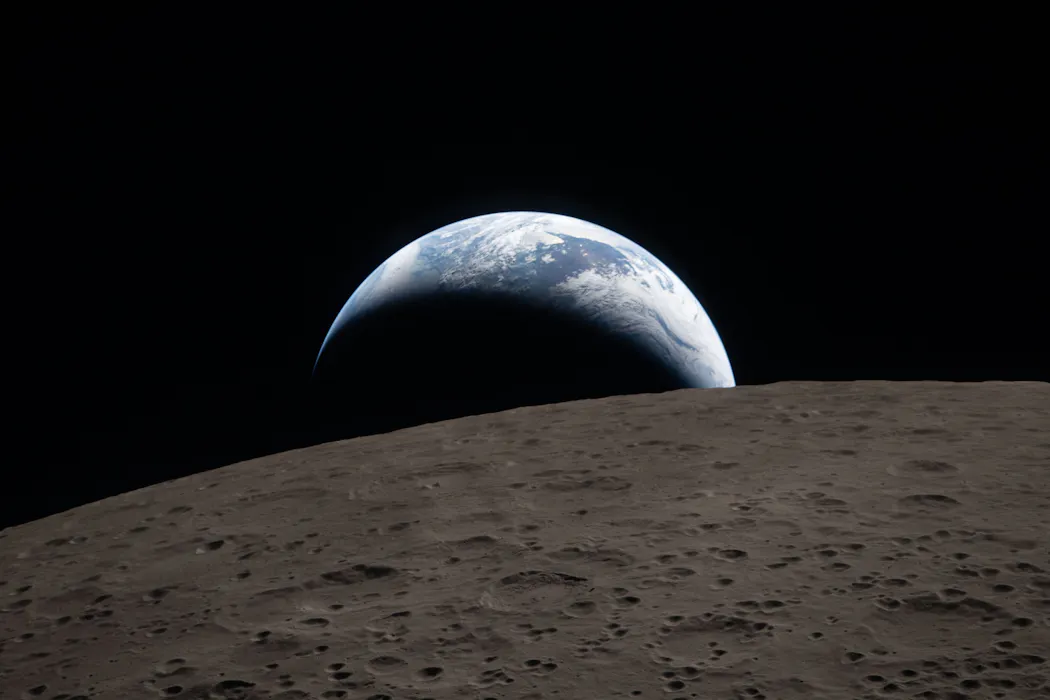
Earthset, as captured aboard the Orion spacecraf during the Artemis II mission. Nasa

As Nasa’s Artemis II mission completed its lunar flyby, the astronauts sent back a stunning image of the colourful Earth setting behind the Moon. This breathtaking photo, called Earthset, draws inevitable comparisons with the original Earthrise photo from the Apollo 8 flight in 1968.

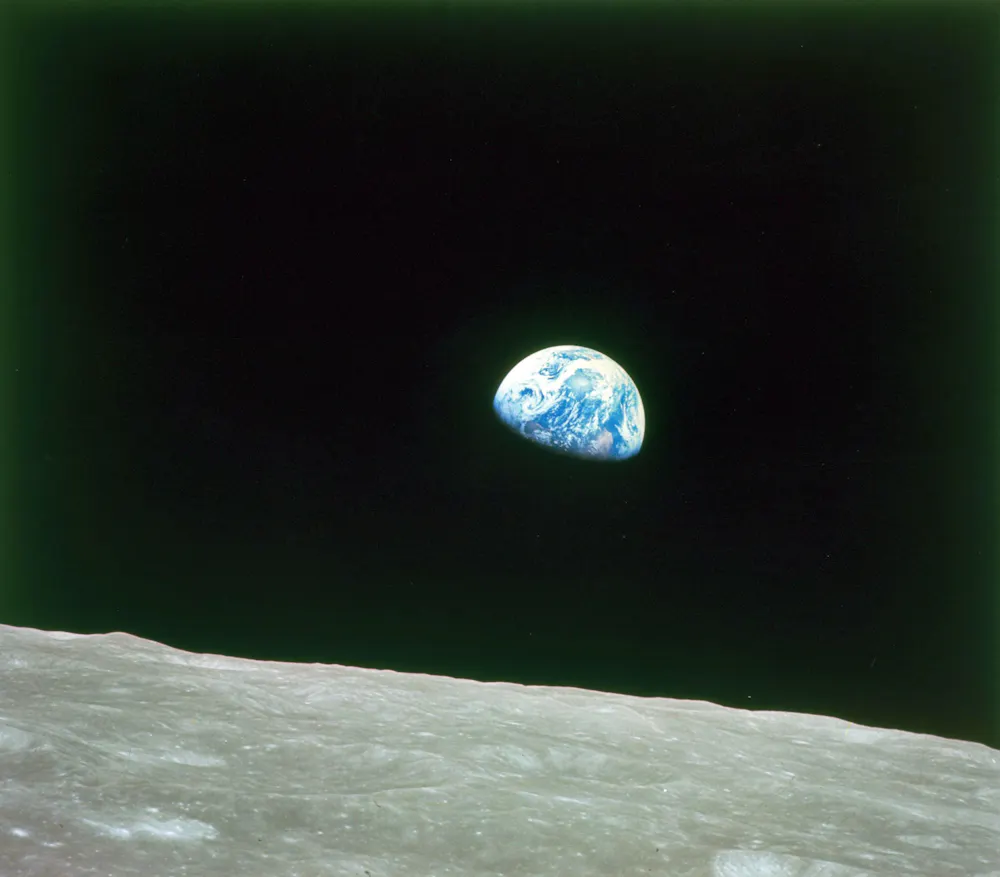
The Apollo-era photo showed our planet climbing above the lunar horizon. It revealed Earth as a bright blue oasis, standing out against the vast blackness of space and the barren Moon.

As I described in my book, Earthrise: a Short History of the Whole Earth, the effect of this image (actually part of a set) was profound. It caused a sensation on its release and helped inspire the burgeoning environmental movement.


Read more:
Earthrise to Earthset: how the planet’s climate has changed since the photo that inspired the environmental movement


The polished image from Artemis II and the slightly askew picture from Apollo 8 are, however, the product of entirely different approaches to photography from space.

“I don’t want to see you guys looking out the window,” Apollo 8 commander Frank Borman warned his colleagues Jim Lovell and Bill Anders during the 1968 mission to orbit the Moon.

Astronauts back then were discouraged from wasting film on touristy snapshots of the Earth. The Apollo 8 mission plan listed Earth images as mere “targets of opportunity”, the lowest priority of all.

The way the two missions kicked off underline the differences between 1968 and 2026. The crew of Apollo 8 took no still photos of Earth on the way out, but had reluctantly agreed to take a black-and-white TV camera for live transmissions.

Photography is a high priority for the Artemis II crew, but things were different when the Earthrise image was taken in 1968.
Nasa

They were unable to fit the telephoto lens to the camera in time for the first transmission, so viewers saw only a fuzzy blob of light. Once the lens was fitted, the Moon bounced around the screen while mission control tried to issue “up a bit, down a bit” instructions with a 1.3-second delay.

Despite this more haphazard approach to photography during some of the Apollo missions, the imagery from that era looms large in the public imagination. Earthrise is one icon from that era; another is the whole-Earth image known as Blue Marble – taken in 1972 during the Apollo 17 mission.

One of the earliest images released by Nasa from the Artemis II flight was a crystal-clear image of our planet taken on a tablet computer by the mission’s commander, Reid Wiseman. The image of Earth’s full disk, initially dubbed “Hello, World” but later changed to “mother Earth”, clearly recalls the iconic Blue Marble photo.

Unlike that famous daytime image from 1972, it shows the Earth at night – but has been enhanced to look like daylight. In the new photo, auroras can be seen at the poles and a thin crescent of sunlight is visible, glowing through the atmosphere. Both photos show a predominance of southern ocean and cloud, with Europe just visible near the rim.

Left: Earth as captured by Artemis II astronaut Reid Wiseman in 2026; right: Earth captured aboard the Apollo 17 mission in 1972.
Nasa

The Earthrise image from 1968 came about largely due to the initiative of Anders. On the mission’s fourth orbit around the Moon, the three crew members were busy photographing it in black and white when Anders noticed some unexpected colour out of the corner of his eye. “Oh my God! Look at that picture over there! Here’s the Earth coming up,” he exclaimed.

After a brief tussle over cameras and colour film, he snapped Earthrise using a mechanical Hasselblad camera with no viewfinder. No-one would see any of their pictures until after they returned to Earth and the film could be developed and printed.

As well as its impact on environmentalists, the image also inspired a young David Bowie in London. Shortly afterwards, he wrote the song Space Oddity about a stranded astronaut gazing upon an Earth to which he can never return.


Read more:
David Bowie and the birth of environmentalism: 50 years on, how Ziggy Stardust and the first UN climate summit changed our vision of the future


The Earthrise photo taken by Apollo 8 astronaut Bill Anders in 1968.
Nasa
Earthset
Earthset, taken on April 6 aboard Artemis II.
Nasa

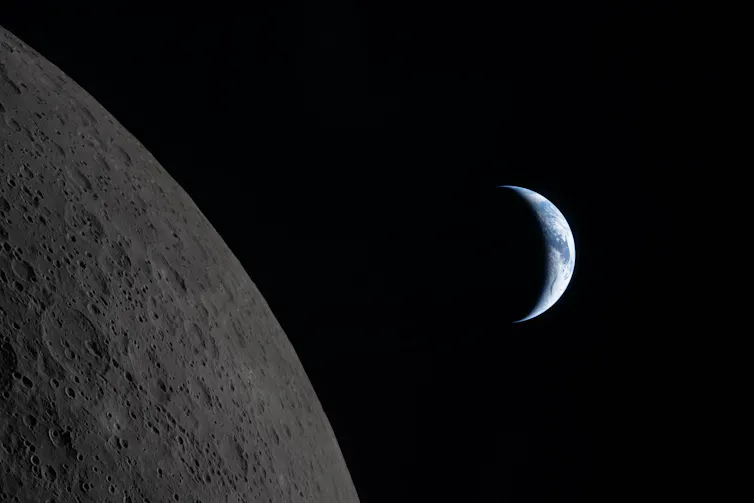
As Artemis II swung round the Moon on April 6, anticipation grew for a modern counterpart to Apollo 8’s legendary image. Before the flyby, Nasa had released simulations of what the Artemis astronauts would see. The simulations showed a half-lit Moon with the distant crescent Earth at its side and clear black space between – like twin planets.

Earthset is different from Earthrise because the Moon is farther away, and because the Earth is only partially sunlit. While Artemis II swept round the Moon in a leisurely, gravity powered slingshot five thousand miles away, Apollo 8 orbited the Moon ten time from just 70 miles up. This gives us a small crescent Earth rising and setting behind an almost full lunar disc.

Nasa seems to have chosen to showcase the Earthset image because it feels more like the familiar 1968 Earthrise. The Artemis images of the Earth rising show a small crescent Earth with its back to the lunar horizon, like the new Moon as seen from Earth.

An Artemis II image of the Moon coming into view along the terminator, the boundary between lunar day and night, where low-angle sunlight casts long, dramatic shadows across the surface.
Nasa

Environmental awakening

Apollo 8’s Earthrise, released two days after splashdown, was not seen in colour until the weekly magazines appeared. Space enthusiasts had expected Earth to appear relatively insignificant in the vastness of space. The phrase “Earth is man’s cradle, but one cannot live in the cradle forever” was a familiar quote at the time.

But viewed from the vicinity of the barren lunar landscape, the Earth looked even more like home. Borman thought “this is what God sees”, while Anders mused: “We came all this way to the Moon … and yet the most significant thing we’re seeing is our own home planet, the Earth.”

Our planet draws closer to passing behind the Moon in this image by the Artemis II crew.
Nasa

The image’s link to the environmental movement is unsurprising when viewed in this light. The Apollo 8 image was used in the logo for the first Earth Day in 1970 and, as the Apollo programme was ending, Earth sciences – the study of our home planet – began to take off.

The 1972 Blue Marble image also resonated among environmentalists. It was replicated by Nasa’s deep space telescope DSCOVR 50 years later. A side-by-side comparison between the 2022 DSCOVR image and the 1972 photo highlights the effects of environmental degradation.

In the intervening years, much of Madagascar had turned from tropical green to brown from deforestation, the Sahara had expanded, the Antarctic ice had retreated, and ancient snows had disappeared from the mountains of Iran.

Left: the 1972 Blue Marble image from Apollo 17; right: the 2022 image from DSCOVR. The comparison reveals the effects of deforestation in Madagascar and desertification in the Sahara.
Nasa

It remains to be seen whether the images from Artemis II will have a comparable impact on the global environmental consciousness. However, the title of Earthset is perhaps the perfect name in an era where societies are threatened by climate change.

The crew of Artemis II have made clear where the priorities still lie. “It is so great to hear from Earth again,” said mission specialist Christina Koch as the craft regained radio contact after a brief blackout as the spacecraft passed behind the Moon.

“We do not leave Earth but we choose it … We will inspire, but ultimately we will always choose Earth.”

The Conversation

Robert Poole does not work for, consult, own shares in or receive funding from any company or organisation that would benefit from this article, and has disclosed no relevant affiliations beyond their academic appointment.

ref. How Artemis II’s Earthset photo compares with the iconic Earthrise image from 1968 – https://theconversation.com/how-artemis-iis-earthset-photo-compares-with-the-iconic-earthrise-image-from-1968-279966

Slopaganda wars: how (and why) the US and Iran are flooding the zone with viral AI-generated noise

Source: The Conversation – Global Perspectives – By Mark Alfano, Associate Professor of Philosophy, Macquarie University

Tasnim News Agency / YouTube

In early March, a week after the first US-Israeli strikes on Iran, the White House posted a video of real American attacks mixed with clips from popular movies, television series, video games and anime.

Iran and its sympathisers responded to the strikes by flooding social media with outdated war footage allegedly from the current conflict alongside AI-generated content depicting attacks on Tel Aviv and US bases in the Persian Gulf.

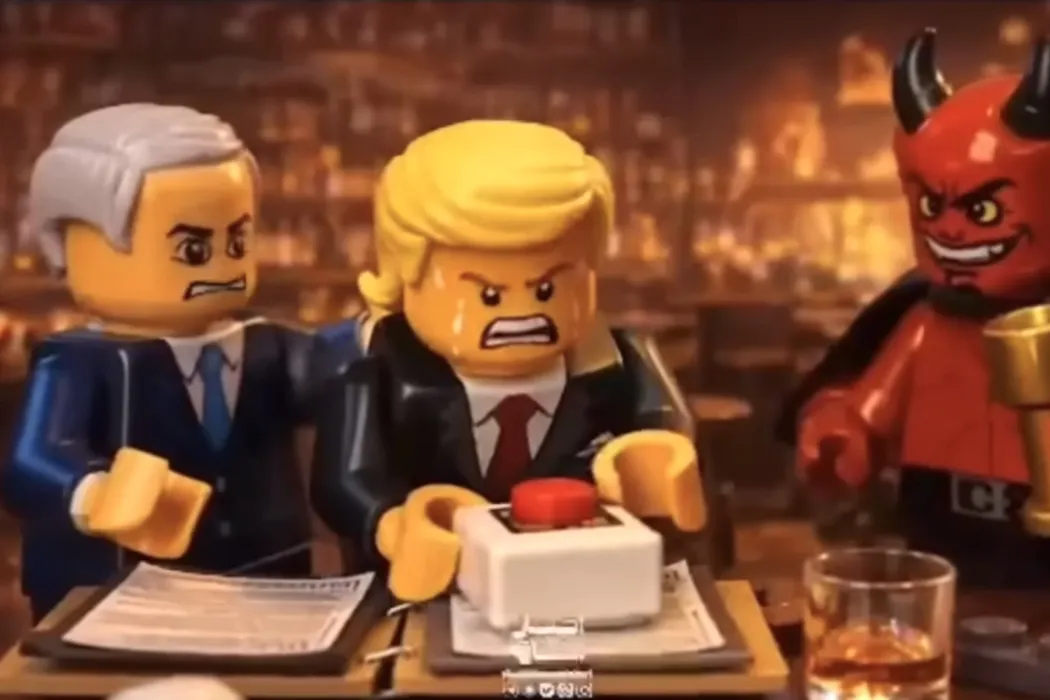
More recently, viral video clips reportedly created by a team of Iranians depict Donald Trump, Jeffrey Epstein, Satan, Benjamin Netanyahu, Pete Hegseth, Ayatollah Khamenei, and others as Lego figurines.

Welcome to the brave new world of slopaganda.

The rise of slopaganda

Late last year, in a paper published in Filisofiska Notiser, we coined the portmanteau “slopaganda” to refer to AI-generated slop that serves propagandistic purposes.

By propaganda we mean communication intended to manipulate beliefs, emotions, attention, memory and other cognitive and affective processes to achieve political ends. Add generative artificial intelligence and the result is slopaganda.

The slopaganda situation has since become far worse than we expected.

In October 2025, US President Donald Trump posted an AI-generated video depicting himself piloting a fighter jet while wearing a crown and dumping faeces on American protesters. More recently, he posted an AI-generated video envisaging his presidential library as an enormous gaudy skyscraper, complete with a golden elevator.

Lego-themed Iran-created slopaganda is just the latest example. The material isn’t just videos. It can also be images, text, or whatever else AI can generate.

How slopaganda slips through our defences

What is the point of all this slopaganda? We have several answers so far.

First, through repeated exposure in both legacy and social media, slopaganda can penetrate our usual mental defences. It works when it is attention-grabbing, emotionally arresting – typically in a negative way – and delivered to a distracted audience, such as people scrolling social media or switching between browser tabs.

Second, it is a very effective way of diluting the epistemic environment – the world of what we think we know – with falsehoods and half-truths. As philosophers have argued, ChatGPT and other generative AI tools can be machines for bullshit, in the sense of content that is indifferent to truth.

Slopaganda can be understood as a special kind of AI bullshit, but its unique features become clearer when we look at its use in campaigns such as the Iranian Lego videos.

This is not just bullshit. No one is misled into thinking Trump can pilot an F-16 and drop faeces out of it. No one (we hope) believes plastic Trump Lego figurines are in cahoots with a plastic Satan figurine.

Rather than aiming for accuracy, the slopaganda is expressive and emblematic of feelings and emotions, and meant to create an association. The intended linkages are something like Satan is associated with Trump while the United States is associated with evil, and so on.

What slopaganda means for shared truth

A third point is that some slopaganda is indeed misleading. This may be by design, or because a joke or trolling escapes its intended context and is misunderstood as serious – a phenomenon scholars call “context collapse”. Misleading slopaganda, including deepfakes, can be generated quickly during conflicts, crises and emergencies, when people want information but authoritative sources are scarce.

Once misleading information or a particular association enters someone’s mind, it can be hard to shake. Because slopaganda can reach huge audiences, even a small misleading effect in the general population may have significant consequences. State actors, corporations, and private individuals can potentially influence group beliefs and decisions, including election results, protest movements, or general sentiment about an unpopular war.

Fourth, the prevalence of slopaganda may make us doubt everything else. People will no doubt become better at spotting this kind of material, but they will also become more likely to misidentify authentic content as slop. As a result, public trust in genuinely trustworthy individuals and institutions may also fall.

When this occurs, the overall effect is likely to be a general lowering of public trust in genuinely trustworthy individuals and institutions, leading to a kind of nihilistic doubt in really knowing anything.

When it’s hard or impossible to identify trustworthy sources, you can choose to believe whatever you find comforting, invigorating or infuriating. In increasingly polarised societies struggling with interlocking economic, political, military and environmental crises, the breakdown of shared sources of truth will only make things worse.

3 ways to stave off slopagandapocalypse

What can be done about the slopaganda shitstorm? In our paper, we discuss interventions at three different levels.

First, individuals can become more digitally literate, for instance by looking for telltale signs of AI in text, images and video. They can also learn to check sources rather than merely glancing at headlines and other content, as well as to block sources that routinely spread slopaganda, rather than attempting to evaluate each piece of content in a vacuum. This will help them avoid falling for slopaganda while still trusting authentic sources of news and other information.

Second, industry and regulators can implement technological fixes to watermark AI-generated content. Some content may even need to be removed from platforms where people see news and other important information.

Third, large tech companies such as OpenAI, Google and X can be held accountable for what they have made. This could be done through taxation and other interventions to fund both regulatory efforts and education in digital literacy.

Slopaganda is probably here to stay. But with sufficient foresight and courage, we may still be able to adapt to it – and even control it.

The Conversation

Mark Alfano receives funding from the Australian Research Council.

Michał Klincewicz does not work for, consult, own shares in or receive funding from any company or organisation that would benefit from this article, and has disclosed no relevant affiliations beyond their academic appointment.

ref. Slopaganda wars: how (and why) the US and Iran are flooding the zone with viral AI-generated noise – https://theconversation.com/slopaganda-wars-how-and-why-the-us-and-iran-are-flooding-the-zone-with-viral-ai-generated-noise-280024

Plagiarised research passed automated tests, and I detected it – but only because it copied my work

Source: The Conversation – Global Perspectives – By Carolyn Heward, Senior lecturer, Clinical Psychology, James Cook University

Earlier this year, I published a paper on the ethics of researching military populations.

The core argument was straightforward: the standard rules researchers follow to protect participants – for example, informed consent and voluntary participation – don’t work the same in an institution built on hierarchy and obedience.

A soldier can, as protected by ethics, say no to participating in research. But when their commanding officer has nominated them, the practical reality of saying no is very different from the legal right to do so. My paper explored the tension between ethical rights and lived reality.

A couple of weeks ago I was asked to peer-review a manuscript submitted to a psychology journal on the same topic. It didn’t take long for me to become suspicious. As I read on, I came to realise the safeguards in place to protect research integrity are not keeping pace with the tools that can be used to circumvent them.

From factual errors to reproduced memos

Within the first couple of pages of the manuscript, I recognised my own work.

The manuscript had the same argument as mine, a similar structure and conceptual framework. Most alarmingly though, it contained my reflexive memos, reproduced and paraphrased as though they belonged to someone else.

Reflexive memos are a kind of research diary, in which a researcher documents their personal reflections on their own research: the dilemmas they faced, the decisions they made, the things they noticed that shaped their thinking. Reflexive memos aren’t drawn from the literature; you can’t find them in another paper and reference them. They come from the researcher’s own life.

Mine documented what is was like navigating a 24-month institutional approval process that became an ordeal of lost paperwork, shifting requirements and bureaucratic dead ends. They documented the concept of being “voluntold” – that is, watching defence personnel be put forward for supposedly voluntary training programs, and recognising the unspoken pressure that made refusal practically impossible.

In the memos, I also documented the tension I felt as a clinical psychologist between my professional obligations around confidentiality and the reporting requirements imposed on me as a researcher working within the defence organisation.

These were reproduced as if they had happened to someone else.

The manuscript also got something factually wrong. It reproduced a scenario from my fieldwork on an Australian Defence Force base, describing the force’s values displayed on flags on the main thoroughfare.

It substituted the value of “bravery” instead of the correct value, “courage” – a synonym, yes, but any researcher working in this field would spot that immediately.

A lucky catch

I can’t say with any certainty how the manuscript was produced. Nor am I sure of what happened to the manuscript after I raised my concerns.

What I can say is that the systematic paraphrasing throughout, the basic factual error, and the reference list padded with loosely relevant citations, is consistent with the use of AI.

The editor-in-chief of the journal, after confirming the plagiarism, reached the same conclusion.

The journal ran the manuscript through iThenticate, an industry-standard plagiarism software used by many major academic publishers. It returned an 8% similarity match, below the threshold that would normally prompt editorial concern. The 8% corresponded to my published article. The rest had been paraphrased thoroughly enough to look like original work.

The incentive structures of academic publishing, where the number of papers you publish affects your career progression and your institution’s rankings, create conditions where the temptation to cut corners is real.

The editor-in-chief noted that the humanities and social sciences have so far been relatively unaffected by fake science flooding scientific literature. He told me he hopes the social sciences and humanities will remain relatively spared from this phenomenon, but I suspect this may be changing.

The peer review system worked in this case. But only because the manuscript happened to be sent to the person whose work had been reproduced. That’s luck, not a safeguard.

Plagiarism tools are designed to find matching text. They’re not designed to ask whether the experiences reported in a piece of writing could plausibly belong to the person claiming them. That’s a question only a human reader with a genuine knowledge of the field can answer.

A deeper concern

But there was a deeper concern that really got to me.

When someone plagiarises a literature review, they steal intellectual ideas. When someone plagiarises a methods section, they steal intellectual labour.

But when someone reproduces a reflexive memo and presents it as their own, that isn’t about claiming someone else’s ideas; they’re claiming someone else’s experiences.

They’re essentially saying: “I was there, I felt this, this happened to me”. They were not there, they did not feel it, it did not happen to them.

I’ve spent more than a decade working as a clinical psychologist within defence mental health services. That clinical experience is what drew me to this research in the first place. The ethical tensions I documented in my article came from my work as a researcher, from real moments, my lived experiences.

Reading them reproduced in someone else’s name was a particular kind of violation that I’m not sure our existing language around plagiarism quite captures.

The Conversation

Carolyn Heward does not work for, consult, own shares in or receive funding from any company or organisation that would benefit from this article, and has disclosed no relevant affiliations beyond their academic appointment.

ref. Plagiarised research passed automated tests, and I detected it – but only because it copied my work – https://theconversation.com/plagiarised-research-passed-automated-tests-and-i-detected-it-but-only-because-it-copied-my-work-279553