Diaspora communities carry the burden of watching war from afar

Source: The Conversation – Canada – By Lara El Mekaui, Research Fellow, FUTUREMIG — Futures of Migration and Mobility project, Toronto Metropolitan University

I live and work in Toronto, but as a Lebanese‑Ukrainian immigrant in Canada, my attention has been elsewhere since the United States and Israel launched their war with Iran. I refresh my phone constantly, checking in with family in Lebanon, scanning group chats, watching the news, hoping the next alert is not the one I fear most.

For many in diaspora communities, this has become a daily condition. As conflict in the Middle East intensifies, its effects are not contained by borders. They are lived transnationally, folding distant violence into the routines of everyday life.

What emerges is a condition I — a displacement, migration and identity scholar — call “split belonging”, an experience of being physically located in one place while remaining emotionally, cognitively and relationally anchored in another that is under threat.

Unlike more familiar accounts of diaspora and hybrid identities, — which often emphasize continuity or the preservation of an unbroken cultural lineage and the formation of new identities through cultural mixing — “split belonging” is about being pulled by two places at once.

It captures the demand to function in conditions of stability while remaining persistently oriented toward instability elsewhere, especially where loved ones still reside there

This distinction shifts the focus from identity to capacity, asking how people live, work and participate while managing ongoing exposure to crisis.

Living in between stability and instability

My own experience reflects this.

I’ve lived at a distance from conflict in both my home countries: the October 2019 Lebanese uprising; the Beirut explosion in August 2020; the Russian invasion of Ukraine beginning in February 2022; the Israeli war in Lebanon in 2024; and the current bombardments displacing more than a million people.

Experiencing these events remotely reorganizes daily life. It shows up in the rituals that become instinctive: calling for proof of life, calculating the distance between a bombing site and a relative’s home, then returning, almost automatically, to meetings and deadlines.

This is the emotional architecture of split belonging. It is not a single crisis, but a constant oscillation between urgency and routine.

It is hearing your niece say: “They hit the house next to my school, but we’re OK, we’re used to this,” and realizing she has already learned to normalize fear. And then, because life here keeps moving, it’s also returning to your work inbox as if nothing has happened.

This rhythm is sustained by technological proximity and social expectation. The same tools that enable connection, such as WhatsApp and live news, also ensure that distance no longer protects against exposure.

The hidden strain of transnational stress

Cultural psychology research helps explain why this condition is so consuming. The distress often appears in indirect forms, including fatigue, distraction, irritability or emotional numbing — states that are easily misread in workplaces and classrooms.

This is compounded by what researchers describe as remote conflict stress, the strain experienced by individuals who are physically safe but emotionally embedded in zones of violence. This form of stress disrupts concentration, sleep and decision-making, shaping how people engage with their environments even when those environments are stable.

The concept of split belonging extends this insight by situating remote stress within broader social and relational dynamics.

Migrants are often expected to provide emotional support, financial assistance and real-time co-ordination for family members in crisis. These obligations intensify during periods of conflict, increasing pressure and dependency across borders.

Scholars of migration and diaspora have long argued that belonging is not a fixed state but a negotiation between place, memory and the stories we inherit. Sara Ahmed, a post-colonialism and critical race scholar, writes that emotions “stick” to bodies and histories, shaping how individuals move through the world. This helps explain how attachments to places in conflict are not easily set aside through migration.

Feminist and gender studies academic Judith Butler similarly argues that grief reveals the attachments that constitute who we are. This clarifies why distant violence is experienced as immediate. Under conditions of split belonging, threats to loved ones abroad are not abstract concerns but disruptions to the very relationships that anchor a person’s sense of self.

Together, these frameworks show how global conflict becomes embedded in the everyday lives of diasporic individuals, even though they remaining geographically distant.

Why this isn’t just personal

Digital media plays a central role in this process. It acts as both infrastructure and amplifier.

Continuous immersion in graphic content and live updates extends the reach of violence and makes disengagement difficult. Following it online can trigger anxiety, depression and symptoms resembling PTSD even when people are physically safe. Digital exposures intensify the psychological burden of watching violence unfold from afar.

These dynamics have concrete consequences that remain largely unacknowledged in public discourse. In workplaces, cognitive overload can affect performance, productivity and career progression, contributing to underemployment. In educational settings, disruptions to attention and memory shape participation and outcomes.

Ongoing crises abroad can also deepen social isolation for migrants, which is one of the strongest predictors of poor mental health among newcomers.

Canada’s multiculturalism model recognizes that belonging can extend across local and global contexts, but it often treats these connections as stable rather than crisis-driven. Split belonging highlights this limitation.

Recognizing the feeling of split belonging has important implications for policy and institutional practice. It points to the need for more flexible and responsive systems.

Workplaces need to account for transnational stress. Educational institutions need trauma-informed approaches that recognize ongoing crises. Settlement services need to address not only past trauma but also continuous exposure to instability abroad.

As global conflicts persist, immigrants will continue to meet their obligations to employers, schools and families while navigating forms of strain that remain private. But to meaningfully support diasporic inclusion, Canadian institutions need to understand this reality.

The Conversation

Lara El Mekaui does not work for, consult, own shares in or receive funding from any company or organisation that would benefit from this article, and has disclosed no relevant affiliations beyond their academic appointment.

ref. Diaspora communities carry the burden of watching war from afar – https://theconversation.com/diaspora-communities-carry-the-burden-of-watching-war-from-afar-278968

We collected data on how 779 Michigan school districts are regulating student cellphones − here are the trends

Source: The Conversation – USA (2) – By Justin Heinze, Associate Professor of Health Behavior & Health Equity, University of Michigan

A student uses the unlocking mechanism as he leaves school for the day. Keith Srakocic/AP Photo

What is the best way to handle cellphones in schools?

That’s a question Michigan educators are grappling with this spring after Gov. Gretchen Whitmer signed into law a ban on smartphone use in Michigan schools.

The law goes into effect in the school year that begins in August 2026. It requires public and charter K-12 schools to adopt rules prohibiting students from using smartphones during instructional time, but it allows educators and school officials to determine the best way to do that.

The new law includes several exemptions, including medical or emergency use, and does not apply to Michigan’s private schools.

We are University of Michigan faculty in the schools of Public Health, Public Policy and Education, and we are interested in how cellphone access both helps and hurts students in schools.

Many districts already have cellphone policies, but the new law creates an opportunity to look at which policies best support student well-being and academic success.

Drawbacks and benefits to student learning

Cellphones were used by 97% of young people ages 11-17 during the school day in 2022, with both good and bad effects.

Cellphone use can distract students and lead to disengagement from school, impaired learning and poorer mental health. It can also lead to exposure to interpersonal violence, such as bullying or fights, and harm broader well-being.

But students also use phones in beneficial ways, such as monitoring their blood sugar levels, connecting with family and peers, and even contacting digital tip lines to prevent violence.

Defining the array of cellphone policies

As part of a CDC-funded project focused on cellphone policies and health, we collected data on existing cellphone policies in the 2025-26 school year for every school district in Michigan. Our team checked hundreds of local and regional education authority webpages and consulted student handbooks. When digital information was missing, we contacted districts directly. Building on a national teacher survey called Phones in Focus, we recorded not only when phone use is restricted but how schools restrict it, noting cases in which the district policy varied by grade level.

At the time of this writing, our data reflects 779, or 95%, of publicly funded traditional and charter school districts in Michigan.

At the start of the 2025-26 school year, 94.7% of districts had existing mandates, compared to 2.5% of districts that required individual schools to set their own policies.

Just under 3% of all Michigan districts had no stated policy at all. It is possible that these districts communicated a set policy through informal channels or, in practice, were letting schools decide on their own rules.

Among districts with mandated policies, there were important differences in rules relating to cellphones. To help think through policies, we sorted them on two criteria: when policies are enforced and how policies are enforced.

About half of the district policies provided different rules by grade level. In these cases, we include the policies for high school students to generate the statistics below.

When and how to limit use

Let’s start with when: In districts with stated policies, 50% specified “bell-to-bell” restrictions, meaning that students were not permitted to use their phones at any point during the school day, including during lunch or passing periods. The remaining 50% of districts mandated “schedule-based” restrictions, which typically meant that phones were prohibited during instructional time but could be used at other times, such as lunch or between classes.

When it comes to the “how,” districts specified a number of different approaches to enforcing cellphone restrictions.

The most common approach, adopted by 62% of districts, is what we describe as a “no show,” meaning that students are required to keep their phones out of sight, such as in their backpacks or pockets. This policy is used in Alanson Public Schools, for example.

Seventeen percent of districts require students to keep their phones in their lockers throughout the school day. Sturgis Public Schools, a school district that provides special education and early childhood services, is one.

Other school districts enforce stricter policies. Detroit Premier Academy, a charter school, implemented a “no phones” rule that bans phones inside school buildings. Roughly 8% of districts surveyed use this approach.

Another 8% collected phones in each classroom, often using structured, numbered pocket charts or a designated bin.

Less common was the “centralized collection” approach, meaning when students arrive at school, staff collect their phones and store them for the remainder of the day. Stockbridge Community Schools was among the 21 school districts, or about 3%, we found that follow this policy.

The final 2% used lockable pouches.

Location and type of school mattered

We found that policy features were associated with the type and location of districts.

Charter and urban districts were substantially more likely than suburban or rural schools to adopt bell-to-bell policies that prohibit phones during the school day.

Roughly 20% of charter districts prohibited students from bringing phones to school, while 2% of traditional districts adopted this approach.

Traditional districts relied more on “lockers” – 22% – and “classroom collection” – 11% – approaches.

Twenty-five percent of rural, 15% of suburban and 5% of city districts used the lockers approach.

These approaches have important implications for enforcement.

The “no show” and “classroom collection” approaches place most of the enforcement burden on teachers, and both methods require monitoring throughout the school day.

The “centralized collection” and “lockable pouch” approaches place more burden on school administrators, but in theory they require enforcement only at the beginning of the day.

It is less clear how the “lockers” and “no phone” approaches are enforced in practice, but they rely more heavily on an individual student’s adherence to policy and resisting the temptation to use a phone throughout the day.

Is one approach better than others?

With so many policies, it’s natural to ask which one is best. No doubt, education leaders across the state will be debating that question with a renewed focus on policies. Here’s some guidelines to help guide those debates:

  • Set and communicate clear policies: This will make it easier on school staff responsible for making sure students do not access their phones during the school day. Implementation will be critical. No policy can be effective if it is enforced inconsistently or not at all. Ideally, students should get the same message from the district, principal, teachers and their parents or caregivers.

  • Consider difficult trade-offs: “Classroom collection” and “no show” policies allow for parents and students to stay in touch as needed and call less attention to students who use their personal devices for medical or other permitted reasons. On the other hand, these approaches will require teachers to monitor students and enforce the rules throughout the school day, which may be less effective in preventing student phone use than the “centralized collection” approach or rules that completely prohibit phones on school premises.

  • Watch out for unintended consequences: Some policies are cheap to implement. Others require the purchasing of expensive equipment or a good deal of staff time. Think about what protocols need to be in place to keep up and enforce those rules. That will enhance resource efficiency and protect teachers who report challenges with monitoring phone use and even violence when they try to enforce the rules.

The Conversation

Justin Heinze receives funding from the Centers for Disease Control, including for the data collected for this article (R01CE003837).

Brian Jacob receives funding from the Centers for Disease Control, the Arnold Foundation and the Smith Richardson Foundation. He is currently conducting an evaluation of Yondr lockable pouches and, as part of this project, has interacted with Yondr staff to obtain data and gain greater understanding of how Yondr is implemented in schools.

Elyse Thulin receives funding from the Centers for Disease Control and Prevention. She is affiliated with Sandy Hook Promise Foundation’s National Research Advisory Council.

ref. We collected data on how 779 Michigan school districts are regulating student cellphones − here are the trends – https://theconversation.com/we-collected-data-on-how-779-michigan-school-districts-are-regulating-student-cellphones-here-are-the-trends-275544

Standards-based grading offers a different model of assessing student learning in the classroom

Source: The Conversation – USA (2) – By Jerrid Kruse, Professor of Science Education, Drake University

Instead of focusing on student behaviors, standards-based grading assesses if students are actually learning what’s being taught. Valerii Apetroaiei/iStock via Getty Images Plus

Some school districts, including ones in Maine, New Mexico, Iowa and Oregon, are shifting to standards-based grading, where students are graded on the skills and concepts they learn instead of points accumulated from assignments and tests throughout the school year.

Jerrid Kruse, a professor of education at Drake University, studies how people learn and teach science, and standards-based grading is one aspect of this work.

Jerrid Kruse discusses the differences between standards-based grading and traditional grading in K-12 classrooms.

The Conversation has collaborated with SciLine to bring you highlights from the discussion, edited for brevity and clarity.

What is standards-based grading, and how is it different from traditional grading?

Jerrid Kruse: The main thrust of standards-based grading is really an increased transparency between what teachers are teaching and how they are assessing their students.

I think when most people think of traditional grading, they think of accumulating points or making deposits like in a banking model, where if I turn in the homework every day, I get 5 points. And I keep building those points up so that even if I do poorly on a test, I still end up with a B in the class, even though I may have gotten a C or even lower on a test.

Standards-based grading is a shift away from that. Instead of focusing on student behaviors, such as completing homework and showing up to class on time, standards-based grading focuses on if the student is actually learning the things we’re trying to teach them.

How exactly does it impact student learning?

Kruse: If teachers can assess student learning more transparently, then teachers have more accurate information about what students do and do not know, and students also have more information about what they themselves do and do not know. Then teachers and students can act on that information; that’s the key.

We cannot expect standards-based grading to magically fix the teaching and the learning that’s happening in the classroom. Instead, what it does is provide a more transparent assessment of to what extent the learning is happening in the classroom. And then it’s up to the teachers and the students to act on that information.

So the student can go home and study the particular things that they’re having trouble with, and the teachers can say, “OK, my class is really struggling with standard number 4, so let’s spend some more time on standard number 4.” It’s really about what teachers and students do with that information.

What are some of the challenges?

Kruse: One of the big things is teacher buy-in. Top-down initiatives oftentimes end up with really poor implementation or superficial implementation. In my experience, the best standards-based grading efforts have come from the teachers themselves rather than from an administrator. So I think it’s important to spend time getting teacher buy-in and maybe even making it optional at first to let it be more of a grassroots effort.

Another challenge for teachers is identifying the key standards. So rather than thinking, “Okay, I’m going to teach Chapter 3,” it’s shifting that thinking to: “What is the thing or concept that I want students to learn out of Chapter 3?” From there, they can better communicate that to students.

Also, what will the report card look like? Are we going to continue to report A, B, C, D and F grades? Are we going to report all of the standards? These are questions teachers and school administrators need to decide together.

Then finally, in terms of helping parents and students understand why a school might move to standards-based grading, I suggest leaning into the transparency piece. The goal is more communication and more accurate communication between schools and kids and parents. That’s going to be a key piece for any district considering this.

Why should people care?

Kruse: Grades are a consistent source of struggle for students. For some kids, it’s really about how we can help them be less concerned about the grade and more concerned about the learning. And so standards-based grading can help push in that direction.

And then on the other side, we have kids who have been underserved by traditional education, and a standards-based approach can help these kids see school as something that they can do because they can see incremental progress on the standards rather than just a C or other letter grade. It’s the difference between “I got a C,” and “I got a C, and these are the three standards that I need to work on.”

I think it helps all students, including high achievers and traditionally low achievers, but in different ways.

SciLine is a free service based at the American Association for the Advancement of Science, a nonprofit that helps journalists include scientific evidence and experts in their news stories.

The Conversation

Jerrid Kruse receives funding from the National Science Foundation and the William G. Stowe Foundation.

ref. Standards-based grading offers a different model of assessing student learning in the classroom – https://theconversation.com/standards-based-grading-offers-a-different-model-of-assessing-student-learning-in-the-classroom-277792

Trump administration’s lawsuits against Harvard and UCLA have roots in a decades-old fight over civil rights law

Source: The Conversation – USA (2) – By Ryan Creps, Assistant Professor of Educational Leadership, University at Buffalo

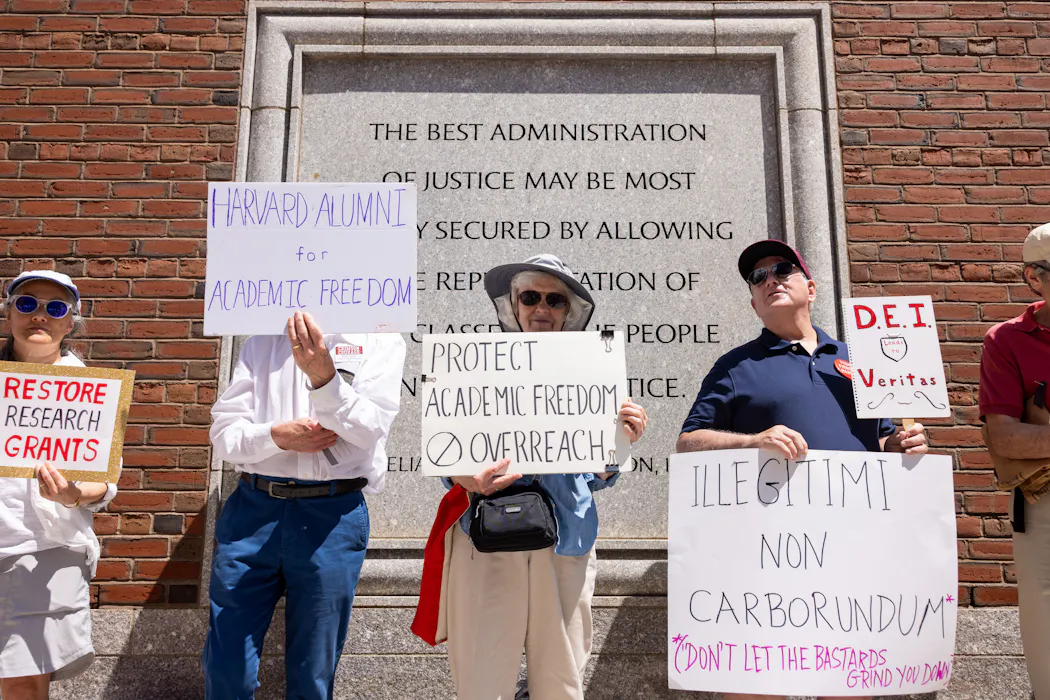
Protesters gather outside a Boston courthouse in July 2025 to rally against the Trump administration’s freezing of contracts and grants to Harvard University. Scott Eisen/Getty Images

The Department of Justice announced in March 2026 that it is suing Harvard University and the University of California, Los Angeles.

The lawsuits allege that both universities failed to adequately address antisemitism on campus, violating students’ civil rights.

These cases follow earlier efforts by the Trump administration in 2025 to block federal funding to several major universities. The Trump administration has also – largely unsuccessfully – pushed universities to sign agreements that would give the federal government greater oversight over their day-to-day operations.

In 2025, the Trump administration launched broad Title VI investigations into 60 colleges and universities. These investigations focused on whether schools had done enough to protect Jewish students from discrimination and harassment, particularly in the wake of the Oct. 7, 2023, attacks on Israel, the subsequent war in Gaza, and widespread protests across U.S. college campuses.

Many of those investigations continue. Title VI is part of the Civil Rights Act of 1964 and prohibits discrimination on the basis of race, color or national origin in any program that receives federal funding.

These federal investigations have prompted scientific researchers, among others, across higher education to ask whether the government can invoke claims of civil rights law violations to justify cutting off federal research funding that supports their labs and projects.

As a scholar of educational leadership and policy, I think it is helpful to place the Trump administration approach to higher education within a broader understanding of how courts have interpreted civil rights laws within the past few decades and the nuanced way the Supreme Court has found they apply to universities.

A graphic shows a statute of a woman in the center, as she holds a scale. On either side is a person sitting on top of books and two people looking at a document that says rules.
The Civil Rights Act of 1964 kick-started a legal battle over whether and how universities need to adopt civil rights law.
Creattie/iStock/Getty Images Plus

Supreme Court weighs in

In 1964, Congress passed the Civil Rights Act. This law banned discrimination based on race, color, religion, sex or national origin in employment, education and public places.

Congress then passed the Higher Education Act in 1965. This law significantly increased the federal government’s investment in colleges and universities. It also created the Pell Grant program – the first federally funded need-based financial aid program for undergraduate students.

In addition, the Higher Education Act spelled out that schools that receive federal funding need to comply with civil rights laws.

Leaders of Grove City College, a small nondenominational Christian college in rural Pennsylvania, were concerned that this law would bring unwanted government oversight.

At the time, the college did not accept any direct federal funding. But some of its students received Basic Educational Opportunity Grants. These grants helped undergraduate students pay for college. Unlike loans, these grants did not have to be repaid.

In 1975, the Department of Health, Education and Welfare asked all universities and colleges with students who received federal grants to agree to comply with Title IX, a 1972 law that prohibits discrimination based on someone’s sex.

In 1976, Grove City refused to sign on to this agreement. A legal back-and-forth ensued.

Grove City College argued that the federal government’s request amounted to unwarranted government intervention, because the college did not directly receive federal funding. The Department of Health, Education and Welfare threatened to cut off the federal grants Grove City students received.

The Supreme Court eventually ruled in 1984 that Grove City’s financial aid program – but not the entire college – needed to comply with Title IX in order to receive federal aid. That’s because this specific office directly handled federal student aid.

A 1988 law clarifies the ruling

Many House Democrats perceived this Supreme Court ruling as a loophole that would let universities and colleges sidestep civil rights laws by applying them only to the specific programs that received federal funds.

In 1984, a group of Democrats unsuccessfully tried to pass legislation that would have extended civil rights protections across all programs within colleges and universities that receive federal aid for any program. A different version of this bill passed Congress with bipartisan support in 1988, on the brink of the presidential elections.

President Ronald Reagan vetoed the bill. Reagan stated in his explanation to the Senate that this bill “would vastly and unjustifiably expand the power of the Federal Government over the decisions and affairs of private organizations.”

However, many Republicans seeking reelection in Congress feared that rejecting the bill could alienate women and people of color in the upcoming election.

Within a week, Congress voted to override the veto and enacted the Civil Rights Restoration Act in 1988. This law clarified that any college accepting federal funds must comply with civil rights laws in all of its programs. This law also allowed the government to withhold federal research funding from colleges based on civil rights violations.

A group of young people stand together and hold signs outside. Some of the people wear neon yellow vests. One of the signs says Kill the cuts save science!
UCLA students, researchers and demonstrators protest against the Trump administration’s funding cuts to research, health and higher education in April 2025.
Robyn Beck/AFP via Getty Images

Enforcing civil rights laws today

The Trump administration is testing just how much the federal government can exert power over colleges and universities that receive federal funding. Some Trump administration supporters say they see this strategy as overdue enforcement against discrimination.

On the other hand, the Association of American Universities, an organization made up of American research universities, is among the opposition arguing that the administration is trying to weaponize civil rights laws to control how colleges and universities are run.

Antisemitic incidents are on the rise in the U.S., including on college campuses. But some observers have noted that the issue is nuanced, and that the administration is likely exploiting a controversial issue to achieve ideological goals.

Federal courts’ interpretations in the Harvard and UCLA lawsuits will further shape how civil rights protections are enforced at colleges and universities. Specifically, these cases will help determine whether the mere allegations of civil rights violations against a university can justify a sweeping freeze of federal research funding.

The Conversation

Ryan Creps does not work for, consult, own shares in or receive funding from any company or organization that would benefit from this article, and has disclosed no relevant affiliations beyond their academic appointment.

ref. Trump administration’s lawsuits against Harvard and UCLA have roots in a decades-old fight over civil rights law – https://theconversation.com/trump-administrations-lawsuits-against-harvard-and-ucla-have-roots-in-a-decades-old-fight-over-civil-rights-law-276586

It’s OK to love all the bees (the honey bees, too)

Source: The Conversation – USA (2) – By Christina Grozinger, Professor of Entomology, Penn State

This wild ground bee, _Andrena nothoscordi_, is typically found in the U.S. Midwest and Southeast and loves false garlic flowers. Sam Droege/USGS Bee Lab via Flickr

North America’s bee populations are in trouble, but don’t blame the honey bees. While some people argue that an overabundance of managed honey bees – those raised to help pollinate crops and produce honey – is causing native bees to disappear, the evidence doesn’t support the claim.

What is true is that populations of many species of bees, including honey bees, are struggling.

Half of all honey bee colonies die every winter in the United States, on average. Commercial beekeepers experienced their highest losses on record – more than 60% of their colonies – in the winter of 2024-25. Overall, one-fifth of pollinators in North America are considered to be at risk for extinction due in large part to habitat loss, rising temperatures, extreme weather, diseases and pesticides.

We study bees and other vital pollinators, and we can tell you that there are good reasons to love all the bees. In fact, they’re essential.

A bee on a flower
A honey bee collects pollen from a flower.
Bob Peterson/Flickr, CC BY

Why care about pollinators?

Bees help farmers grow the foods people love to eat, everything from apples to almonds.

Along with other pollinators – such as flies, butterflies and moths – bees help nearly 80% of flowering plants produce fruit and seeds, which in turn support birds and other wildlife.

About 75% of the world’s agricultural crops, including vegetables, fruits and tree nuts, benefit from pollinators. Additionally, pollinators contribute to production of feed for livestock and fiber crops, such as cotton.

“The Power of Pollinators.” PBS

In the United States, pollination by insects contributes $34 billion to the economy.

Among the pollinators, honey bees are the most important for agriculture crops. Managed honey bees, which beekeepers can move from field to field, are particularly essential in intensively farmed areas that lack the natural habitat to support wild bees.

So, why are people concerned about honey bees?

Honey bees were introduced to North America by European settlers in the early 1600s.

Since honey bees are not a native species, the most common concern you might hear is that they will outcompete wild bees for pollen and nectar. This is typically portrayed as a numbers game: If resources are limited, the more bees present on the landscape, the less food there is to go around.

Honey bees live in large social colonies and are adept at capitalizing on high-quality patches of flowers, leading to the concern that this species in particular may have a rapid, outsized effect on native bees that share the same food.

The queen bee is marked with nontoxic green paint to make her easy to find when examining the health of this Apis mellifera European honey bee hive in Maryland.
David Illig via Flickr, CC BY-NC-SA

Managed bees can also carry viruses and other pathogens that may infect native bee species. Because viruses are shared among colony members, viruses can persist in managed honey bee colonies and then be spread to other bees that forage on the same flowers.

Scientists and farmers also have a concern about economic sustainability if farms are too reliant on honey bees alone for crop pollination. Threats to honey bee health and high colony mortality in the United States could put crops at risk if other pollinators aren’t in the vicinity to do the job.

Why don’t studies find a honey bee impact on native bees?

Humans actually know little about bee interactions. The U.S. has more than 4,000 native bee species, but there is enough data to estimate population sizes and ranges for less than half of them. Meaningful data examining the effects of honey bees on other species are even more scarce.

In a recent analysis, we found that only 15% of 116 published studies on resource competition involving honey bees measure how competition from honey bees affects the survival, reproductive output and long-term population trends of native species.

A bee with its face in a flower.
Bee populations face several threats, including pesticides and losing habitat to urbanization and agriculture.
Andony Melathopoulos

The majority of published studies on honey bee and wild bee competition address different versions of a narrow question: Do honey bees and native bees visit the same plants?

Because honey bees are “super generalists” that thrive worldwide well beyond their native range, most scientists would predict that the answer to this question is a resounding “yes.”

However, about half of the research suggests that honey bees don’t change the way native bees go about their day at all. From the perspective of a wild bee, the honey bees simply don’t exist in their world.

Different bee species can coexist with very little evidence of direct interaction. An analysis of bee communities measured across diverse agricultural, urban, grassland and forested environments found the abundance of honey bees and the abundance of native bees were positively associated about five times as often as they were negatively associated. In other words, rather than landscapes supporting one bee species at the expense of another, the same habitats support both.

A map shows bee species everywhere, but the most species in the Southwest and Midwest.
Bees species can be found just about everywhere in the U.S., as this map, modeled from 3,158 species found in museum collections, shows. But some regions, such as the Southwest deserts, are particularly rich in bee species, with the color scale representing the estimated number of species.
Paige R. Chesshire, et al., 2023, CC BY

Calls to restrict honey bees from certain locations also often miss a key reality: Native bee hot spots and urban and commercial beekeeping rarely overlap.

Beekeeping is anchored in agricultural lands. North America’s rarest bees thrive in environments like the Sonoran Desert – habitats that are poorly suited for managed colonies.

If competition occurs, it is typically the product of agriculture practices that strip the land of flowering plants that bees need.

Research that has artificially introduced hives into natural areas like the high Sierra – places beekeepers don’t typically go – has generated competition that left less pollen and nectar for the native bees. But frequently competition involves common native bees that are not under threat.

A chunky bee on a flower with pollen on its legs.
Bumble bees transport pollen on their legs as they move from flower to flower, bringing some of it home while pollinating plants in the process.
Andony Melathopoulos

So, if honey bees aren’t to blame, what is?

The top drivers of pollinator declines are considered to be land use – the spread of cities and agriculture, as well as the way land is managed – along with rising temperatures, extreme weather and pesticide use.

Agriculture and urbanization reduce the amount and diversity of flowering plants, and droughts can reduce plant flowering and the resources bees rely on. Pesticides can reduce bees’ ability to lay eggs and care for their offspring, or they can kill bees outright.

The U.S. Geological Survey’s Native Bee Inventory and Monitoring Lab tracks bee populations in the U.S. mid-Atlantic region. Studies using its data have found that urbanization and weather changes have been the major drivers of changes in wild bee abundance and diversity in that region.

As temperatures rise, wild bee populations are expected to decline there. Warmer winters mean bees active in spring emerge earlier from their nests, and increased spring rain and temperature fluctuations can limit their ability to feed their offspring, meaning fewer bees.

The western bumble bee, Bombus occidentalis, was once widespread and abundant across western North America, but it has been in decline since the late 1990s. Long-term monitoring of its populations from 1998 to 2020 shows the primary reasons are land management changes, increasing temperature, drought and pesticide use.

What can you do to support pollinators?

The biggest threat to pollinators is the disappearing variety of flowering plants.

You can help reverse this by filling your garden with more flowering plants, trees and shrubs to give bees, butterflies and other pollinators a variety of food sources.

Three bees on a flower
Planting wildflower gardens in your yard can help many kinds of pollinators, including bees.
Clare Rittschof

You can also advocate for bee-friendly behavior in your community, such as creating pollinator habitats in public and private spaces and reducing the use of harsh pesticides and herbicides. Planting more flowers in parks and along roadsides, and protecting wildlands where the rarest native bees live, can help keep these wonderful species thriving.

The Conversation

Christina Grozinger receives funding to study honey bee and wild bee health, management and conservation from the National Science Foundation, US Department of Agriculture, Foundaiton for Food & Agriculture Research, Human Science Frontiers Program.

Andony Melathopolous receives funding from USDA-NIFA – 2022-08511.

Clare Rittschof receives funding from the National Science Foundation, the Kavli Foundation, the National Institute of General Medical Sciences, USDA-AFRI, the Bill Gatton Foundation, and the Research Corporation for Science Advancement.

Harland Patch has received funding to study pollinator heath, floral traits and plant-pollinator interactions from the National Science Foundation, US Department of Agriculture, Gates Foundation and the Horticultural Research Institute.

Jay Evans receives funding from USDA-ARS and USDA-NIFA

ref. It’s OK to love all the bees (the honey bees, too) – https://theconversation.com/its-ok-to-love-all-the-bees-the-honey-bees-too-279849

Psilocybin mushrooms are going mainstream, but scientific research and regulation lag behind

Source: The Conversation – USA (3) – By Hollis Karoly, Associate Professor of Psychiatry, University of Colorado Anschutz Medical Campus

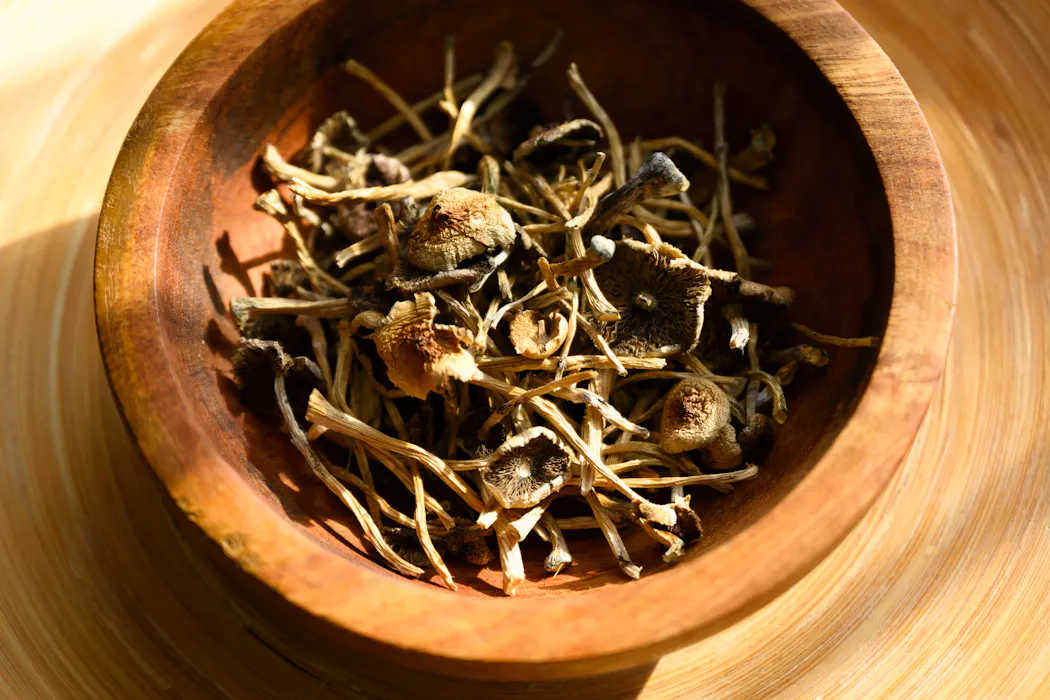
Psilocybin mushrooms contain numerous chemical compounds that researchers have not yet studied. Smitt/iStock via Getty Images Plus

Amid a renaissance in the science of psychedelics, public interest in psilocybin – or magic mushrooms, as they’ve long been known – is surging.

One study found that rates of psilocybin use increased 44% among adults ages 18-29 from 2019 to 2023, and 188% among those over age 30. This amounts to more than 5 million adults using psilocybin in 2023 alone. And those numbers are rising: A study published in early 2026 found that about 11 million adults in the United States used psilocybin in the previous year.

In many ways, the growing scientific and public interest in psilocybin mirrors the early days of recreational cannabis legalization in the U.S. Much like how cannabis commercialization quickly outpaced the development of regulations necessary to protect public health, the expanding psilocybin market and surging public interest are moving faster than the science and regulations needed to ensure it is used safely.

We are substance use researchers who have spent more than a decade studying the many new, high-THC cannabis products that have flooded the legal-market.

Now, we similarly aim to bridge the gap between public enthusiasm for psilocybin and the limited scientific evidence available about its potential benefits and risks. Currently, this type of real-world data on the effects of psilocybin mushrooms is almost nonexistent.

Person in a white coat and blue-gloved hand holding up a vial of leafy material.
Psilocybin research is in its infancy, but the market for it is booming.
Microgen Images/Science Photo Library via Getty Images

How do psilocybin mushrooms work?

Psilocybin is a prodrug, which means that it has very low activity until the body converts it into psilocin. Psilocin is the compound primarily responsible for the psychoactive effects of psilocybin mushrooms.

Psilocin resembles the chemical messenger serotonin, which is involved in regulating a range of physiological and psychological functions, including mood, appetite, cognition and sensory perception. As a result, when psilocin binds to serotonin receptors, it alters how people think, feel and experience the world.

Importantly, research suggests that psilocin also alters the brain’s ability to strengthen or weaken neural connections, referred to as synaptic plasticity. This process likely underlies the profound and sometimes long-lasting effects psilocybin mushrooms can have on thoughts, emotions and perception.

Psilocybin mushrooms contain numerous other compounds, together known as tryptamines, such as baeocystin, norbaeocystin and aeruginascin. Research on rodents shows that mushrooms containing these compounds may elicit stronger and longer-lasting effects than psilocybin alone.

But very little is known about how these other tryptamines affect humans. This is because federal regulations require researchers to use an isolated, synthetic version of psilocybin in clinical studies rather than the entire mushroom.

Thus, the many ongoing clinical trials testing psilocybin as a treatment for various mental health conditions use synthetic psilocybin that does not contain these other tryptamines.

Psilocybin mushrooms sit in a legal gray area

Psilocybin is more accessible than ever before.

In 2019, Denver, Colorado, became the first American city to decriminalize psilocybin mushrooms. This means that possession becomes the lowest law enforcement priority and criminal penalties are reduced or eliminated, but it does not fully legalize them.

Over the next two years, several other U.S. cities including Oakland and Santa Cruz, California; Seattle, Washington; and Detroit, Michigan, followed suit. In 2020, Oregon legalized psilocybin for supervised use in licensed settings, and Colorado did the same in 2022. These legal, supervised-use programs allow access to psilocybin mushrooms in regulated environments without a prescription.

Even for people living outside those states and cities, the barriers to accessing psilocybin mushrooms are low. With a quick Google search and around US$35, anyone can legally purchase kits containing the materials needed to grow psilocybin-containing mushrooms. These kits are legal to buy and sell because they contain only mushroom spores, which are tiny reproductive cells from which mushrooms grow. Once these spores begin growing into mushrooms, they can produce psilocybin, making the mushrooms a federal Schedule 1 substance.

Because psilocybin mushrooms exist in this legal gray area and are governed by different rules across states, psilocybin mushrooms are essentially unregulated across most of the U.S.

As a result, consumers lack reliable information about what their mushrooms contain, how much they should take and how to use them safely.

Psychedelic magic mushrooms growing at home in a plastic container.
Psychedelic mushrooms have been decriminalized in only a handful of states, but many people already grow them at home.
OllyPlu/iStock via Getty Images

Psilocybin potency is increasing in the US

Much like the cannabis industry, which has seen a steady increase in product variety and product strength since legalization, the psilocybin mushroom market is experiencing rapid growth.

For instance, psilocybin edibles are now available and increasingly popular.

In addition, selective cultivation practices are being used by individual and commercial growers to systematically increase the amount of psilocybin contained in their mushroom strains. For example, the Oakland Hyphae Cup, a community contest intended to identify the best mushroom strains, has shown wide variability in psilocybin content across samples.

Researchers are identifying a similar pattern of widely variable psilocybin content in scientific studies of psychedelic mushrooms from around the world.

Potential harms of psilocybin

Despite psilocybin’s therapeutic promise, it also carries risks. Psilocybin can cause headaches, nausea, dizziness and changes in blood pressure.

Less commonly, some people experience psychotic symptoms, suicidal thoughts, anxiety, paranoia, confusion or emotional distress.

Another serious potential side effect of psychedelic drugs is what’s known as hallucinogen persisting perception disorder. It involves ongoing perceptual distortions similar to those experienced while directly under the influence of psilocybin, which can persist for weeks, months or years, even once the psilocybin has left the body.

Harms are more likely when people take high doses.

As mushroom potency increases without market regulation, consumers may inadvertently ingest more psilocybin than intended, increasing the risk of harm. Without sufficient research on modern psilocybin products, consumers have little guidance on how to reduce potential harms.

Next steps in research and regulation

Studying psilocybin in the real world requires creative research approaches.

Our team hopes to work within federal restrictions to study people using their own psilocybin mushroom products at home, while providing real-time data to our research team using app-based surveys.

Independent laboratories using state-of-the-art measurement techniques can aid researchers like us by providing information about the potency of the mushroom products that people are using.

While ongoing clinical trials provide important data about the effects of psilocybin under tightly controlled conditions, real-world data is needed to understand how modern psilocybin mushrooms are used and experienced by consumers.

These insights matter not only for scientists and policymakers but for the growing number of people trying psilocybin mushrooms for relief, self-improvement or out of curiosity. In a largely unregulated market, and with few clear guidelines on safe use, consumers are left to simply figure it out on their own.

The Conversation

Hollis Karoly receives funding from the National Institutes of Health (NIH) and the Institute for Cannabis Research (ICR).

Kent Hutchison does not work for, consult, own shares in or receive funding from any company or organization that would benefit from this article, and has disclosed no relevant affiliations beyond their academic appointment.

ref. Psilocybin mushrooms are going mainstream, but scientific research and regulation lag behind – https://theconversation.com/psilocybin-mushrooms-are-going-mainstream-but-scientific-research-and-regulation-lag-behind-277472

AI can design and run thousands of lab experiments without human hands. Humanity isn’t ready for the new risks this brings to biology

Source: The Conversation – USA – By Stephen D. Turner, Associate Professor of Data Science, University of Virginia

Robotic cloud laboratories powered by AI can carry out experiments remotely and cut costs. J Studios/DigitalVision via Getty Images

Artificial intelligence is rapidly learning to autonomously design and run biological experiments, but the systems intended to govern those capabilities are struggling to keep pace.

AI company OpenAI and biotech company Ginkgo Bioworks announced in February 2026 that OpenAI’s flagship model GPT-5 had autonomously designed and run 36,000 biological experiments. It did this through a robotic cloud laboratory, a facility where automated equipment controlled remotely by computers carries out experiments. The AI model proposed study designs, and robots carried them out and fed the data back to the model for the next round. Humans set the goal, and the machines did much of the work in the lab, cutting the cost of producing a desired protein by 40%.

This is programmable biology: designing biological components on a computer and building them in the physical world, with AI closing the loop.

For decades, biology mostly moved from observation toward understanding. Scientists sequenced the genomes of organisms to catalog all of their DNA, learning how genes encode the proteins that carry out life’s functions. The invention of tools like CRISPR then allowed scientists to edit that DNA for specific purposes, such as disabling a gene linked to disease. AI is now accelerating a third phase, where computers can both design biological systems and rapidly test them.

The process looks less like traditional benchwork in a lab and more like engineering: design, build, test, learn and repeat. Where a traditional experiment might test a single hypothesis, AI-driven programmable biology explores thousands of design variations in parallel, iterating the way an engineer refines a prototype.

As a data scientist who studies genomics and biosecurity, I research how AI is reshaping biological research and what safeguards that demands. Current safety measures and regulations have not kept pace with these capabilities, and the gap between what AI can do in biology and what governance systems are prepared to handle is growing.

What AI makes possible

The clearest example of how researchers are using AI to automate research is AI-accelerated protein design.

Proteins are the molecular machines that carry out most functions in living cells. Designing new ones has traditionally required years of trial and error because even small changes to a protein’s sequence can alter its shape and function in unpredictable ways.

Protein language models, which are AI systems trained on millions of natural protein sequences, can quickly predict how mutations will change a protein’s behavior or design new proteins. These AI models are designing potential new drugs and speeding vaccine development.

Paired with automated labs, these models create tight loops of experimentation and revision, testing thousands of variations in days rather than the months or years a human team would need.

Faster protein engineering could mean faster responses to emerging infections and cheaper drugs.

The dual-use problem

Researchers have raised concerns that these same AI tools could be misused, a challenge known as the dual-use problem: Technologies developed for beneficial purposes can also be repurposed to cause harm.

For example, researchers have found that AI models integrated with automated labs can optimize how well a virus spreads, even without specialized training. Scientists have developed a risk-scoring tool to evaluate how AI could modify a virus’s capabilities, such as altering which species it infects or helping it evade the immune system.

Current AI models are able to walk users through the technical steps of recovering live viruses from synthetic DNA. Researchers have determined that AI could lower barriers at multiple stages in the process of developing a bioweapon, and that current oversight does not adequately address this risk.

Robotic arm hovering over trays of specimen containers in a lab, a computer monitor behind it
Robots can carry out human- or AI-designed studies in the lab.
Du Yu/Xinhua via Getty Images

Risk from bio AI

Experienced scientists are already using AI to plan and design biological experiments. The question of whether AI can help people with limited biology training carry out dangerous lab work is the subject of active research.

Two recent studies have reached different conclusions.

A study by AI company Scale AI and biosecurity nonprofit SecureBio found that when people with limited biology experience were given access to large language models, which is the type of AI behind tools like ChatGPT, they were able to complete biosecurity-related tasks, such as troubleshooting complex virology lab protocols with four times greater accuracy. In some areas, these novices outperformed trained experts. Around 90% of these novices reported little difficulty getting the models to provide risky biological information, such as detailed instructions on working with dangerous pathogens, despite built-in safety filters meant to block such outputs.

In contrast, a study led by Active Site, a research nonprofit that studies the use of AI in synthetic biology, found that AI help did not lead to significant differences in the ability of novices to complete the complex workflow to produce a virus in a biosafety laboratory. However, the AI-assisted group succeeded more often on most tasks and finished some steps faster, most notably on growing cells in the lab.

Hands-on work in the lab has traditionally been a bottleneck to translating designs into results. Even a brilliant study plan still depends on skilled human hands to carry out. That may not last, as cloud laboratories and robotic automation become cheaper and more accessible, allowing researchers to send AI-generated experimental designs to remote facilities for execution.

Responding to AI-driven biological risks

AI systems are now able to run experiments autonomously and at scale, but existing regulations were not designed for this. Rules governing biological research do not account for AI-driven automation, and rules governing AI do not specifically address its use in biology.

In the U.S., the Biden administration had issued a 2023 executive order on AI security that included biosecurity provisions, but the Trump administration revoked it. Screening the synthetic DNA that commercial providers make to ensure it cannot be misused to make pathogens or toxins remains mostly voluntary. A bipartisan bill introduced in 2026 to mandate DNA screening does not yet address AI-designed sequences that evade current detection methods.

The 1975 Biological Weapons Convention, an international treaty prohibiting the production and use of bioweapons, contains no provisions for AI. The U.K. AI Security Institute and the U.S. National Security Commission on Emerging Biotechnology have both called for coordinated government action.

The safety evaluations that AI labs run before releasing new models are often opaque and unsuited to capture real-world risk. Researchers have estimated that even modest improvements in an AI model’s ability to help plan pathogen-related experiments could translate to thousands of additional deaths from bioterrorism per year. Timelines for when these capabilities cross critical thresholds remain unclear.

The Nuclear Threat Initiative has proposed a managed access framework for biological AI tools, matching who can use a given tool to the risk level of the model rather than blanket restrictions. The RAND Center on AI, Security and Technology outlined a set of actions researchers could take to improve biosecurity, including improved DNA synthesis screening and model evaluations before release. Researchers have also argued that biological data itself needs governance, especially genomic data that could train models with dangerous capabilities.

Some AI companies have started voluntarily imposing their own safety measures. Anthropic activated its highest safety tier when it released its most advanced model in mid-2025. At the same moment, OpenAI updated its Preparedness Framework, revising the thresholds for how much biological risk a model can pose before additional safeguards are required. But these are voluntary, company-specific steps. Anthropic’s CEO, Dario Amodei, wrote that the pace of AI development may soon outrun any single company’s ability to assess the risk of a given model.

When used in a well-controlled setting, AI can help scientists quickly reach their research goals. What happens when the same capabilities operate outside those controls is a question that policy has not yet answered. Overreact, and talent and investment may move elsewhere while the technology continues advancing anyway. Underreact, and the risks of that technology could be exploited to cause real harm.

The Conversation

I am applying for grants in this area.

ref. AI can design and run thousands of lab experiments without human hands. Humanity isn’t ready for the new risks this brings to biology – https://theconversation.com/ai-can-design-and-run-thousands-of-lab-experiments-without-human-hands-humanity-isnt-ready-for-the-new-risks-this-brings-to-biology-279191

The good life requires two things, self-knowledge and friends – you can’t have one without the other

Source: The Conversation – USA (3) – By Ross Channing Reed, Lecturer in Philosophy, Missouri University of Science and Technology

Friends can see and know you in ways that you yourself never can. Stephen Simpson/Stone via Getty Images

Friends can help us with all kinds of things in life. How could I forget moving that piano for friends in Chicago? Fortunately, none of us ended up in the ER.

One of the most important things friends do, though, might seem surprising: They help us get to know ourselves.

Both in their 50s, Cindy and Ann had been friends since the second grade. Year after year, they never missed a birthday. Cindy would give Ann gourmet popcorn or maybe a sweatshirt from her alma mater, while Ann would give Cindy a special book on a topic that interested her, or maybe an old batch of family recipes. At one point, it dawned on Cindy just how thoughtful Ann’s gifts were. It wasn’t about the cost. “She really thinks about my life and what I’m doing,” Cindy said. “It’s amazing. Ann is just really thoughtful.”

Cindy had always imagined herself as a thoughtful person, too. But in comparing the kinds of gifts they sent to each other, she realized that she was not thinking about Ann in the way that Ann was thinking about her. And so began her deliberate process of becoming more thoughtful – as a result of the self-insight she had gained from her friendship with Ann.

As a philosopher and philosophical counselor, I’ve noticed the pronounced connection between friendship and self-knowledge in my counseling practice. Cindy and Ann are one example among many. I’ve come to the conclusion that to really know yourself, it’s necessary to have good friends.

The link between self-knowledge and friendship was key for Aristotle, too, more than 2,000 years ago. “Eudaimonia” – roughly translated as living well, or happiness – often remains elusive, yet Aristotle believed it didn’t have to be. Eudaimonia is largely within people’s control, he said, so long as they aim at the right targets.

Two of those targets are knowing yourself and having good friends. The two are tied together – you can’t develop self-knowledge in a vacuum. Happiness, for Aristotle, can never be a solitary pursuit.

Knowing – and befriending – yourself

Humans have a highly developed capacity to think about their thinking. This is possible because of a split in human consciousness: There is consciousness, and there is consciousness of consciousness – what is known as reflection or metacognition. Metacognition allows us to step back and note our thoughts and feelings, analyzing them almost as if they belonged to someone else.

This split makes reason, self-knowledge and morality possible. We can deliberate about our thoughts, feelings and potential actions.

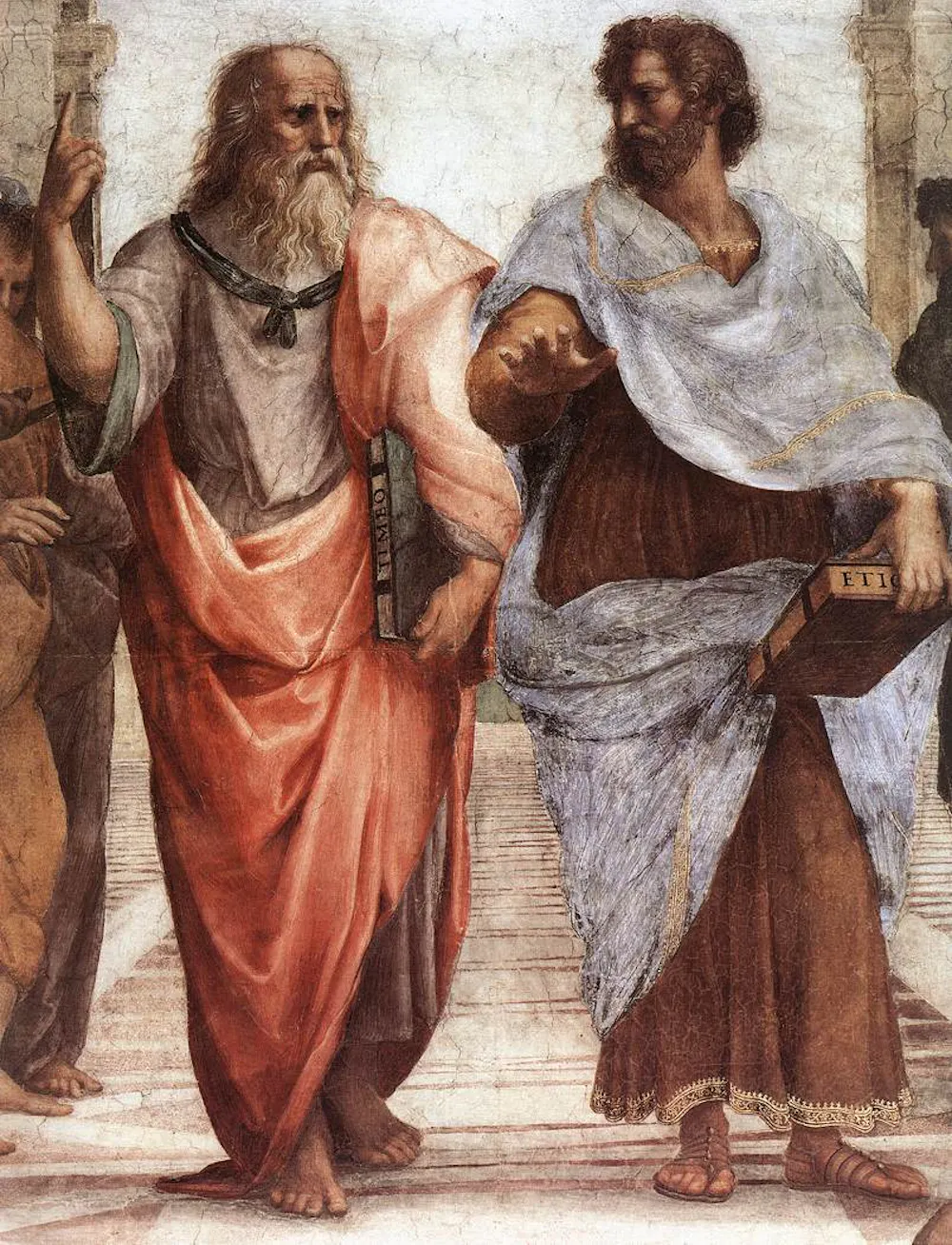
A faded painting shows two bearded men in robes, one of whom has gray hair, walking and gesturing side by side.
A detail from ‘The School of Athens,’ by Raphael, shows Plato and Aristotle, his student, deep in discussion.
Apostolic Palace/Web Gallery of Art via Wikimedia Commons

Self-knowledge isn’t the same as being intellectual or even intelligent. Instead, it’s about using self-awareness and reason to develop character.

In Aristotle’s view, character arises from developing habits that lead to intellectual and moral virtue, so that personal integrity is possible. This, in turn, builds self-trust and self-respect, as you learn to rely on yourself to do what is right – what Aristotle called “enkratēs,” or continence.

In other words, self-knowledge is developing a good relationship with yourself. In your own internal dialogue, you become another trusted friend to yourself, based on what you’ve seen in your friendships: virtues like generosity, courage, truthfulness and prudence. Self-knowledge and moral development are tied together and realized in community, as underscored by Aristotle scholar Joseph Owens.

Friendship based on character

Aristotle recognized three types of friendship. Some are based on utility, like a study-group friend. Others are based on pleasure, such as friends in an antique car club.

The third and highest form of friendship, which can last a lifetime, is based on virtue, or “arete.”

In these situations, Aristotle wrote, a friend becomes “another self.” These friendships are based on mutual goodwill and love for the other person’s character; they are not fundamentally transactional. Instead, they are anchored in care and concern for the other.

Such friendships are few, but foster self-knowledge. As philosopher Mavis Biss emphasizes, a good friend has a perspective on you that you yourself do not. You can step back and analyze your desires, thoughts and feelings, but you can never actually observe yourself.

That means self-knowledge always has a social dimension. True friends enhance each other’s insight and capacity for virtue. As you get to know your friend, you get to know yourself – and are challenged to become a better version of yourself.

“To perceive and to know a friend, therefore, is necessarily in a manner to perceive and in a manner to know oneself,” Aristotle wrote in the “Eudemian Ethics.” The friend is a mirror that helps refine our thinking, perception and moral understanding.

Two women with gray hair and glasses sit inside a tent, looking out at a pond, as they smile and chat.
A trusted and respected friend shares ideas, gives fresh perspective and magnifies life’s pleasures.
Johner Images/Johner Images Royalty-Free via Getty Images

Aiming at the good life

In the end, what makes eudaimonia – the good life – possible? For Aristotle, it’s using reason to become our best selves. Knowledge and self-knowledge are the most desirable of all things, Aristotle argued: “One always desires to live because one always desires to know, and because one wishes to be oneself the object known.”

And there’s no way to get there without good friends. A trusted and respected friend shares perceptions, enhances self-knowledge and magnifies life’s pleasures.

The desire to know and be known is part of the quest for happiness. Knowledge of self, others and everything else is interconnected. For Aristotle, relationships are a portal into the realms of the vast and mysterious universe.

The Conversation

Ross Channing Reed does not work for, consult, own shares in or receive funding from any company or organization that would benefit from this article, and has disclosed no relevant affiliations beyond their academic appointment.

ref. The good life requires two things, self-knowledge and friends – you can’t have one without the other – https://theconversation.com/the-good-life-requires-two-things-self-knowledge-and-friends-you-cant-have-one-without-the-other-277935

Pope Leo XIV’s Africa journey: How each stop reflects his message of peace

Source: The Conversation – USA (3) – By Mathew Schmalz, Professor of Religious Studies, College of the Holy Cross

Pope Leo XIV uses hyssop sprigs to sprinkle holy water during Easter Mass in St. Peter’s Square at the Vatican on April 5, 2026. AP Photo/Andrew Medichini

Pope Leo XIV will begin his journey to four African countries – Algeria, Cameroon, Angola and Equatorial Guinea – on April 13, 2026.

Africa represents the fastest-growing part of the Catholic Church worldwide, seeing an increase from 281 million members in 2023 to over 288 million in 2024.

The Vatican has announced a theme for each country along the pope’s journey and four logos that combine Christian images with symbols of each nation. As a scholar of global Catholicism, I argue that these themes, taken together, relate to the major focus of Leo’s papacy: the need for peace in a divided world.

1. ‘Dialogue and encounter’ in Algeria

In Algeria, the logo is two doves drinking from the same cup, with the words “Peace be with you” in French, along with the traditional Muslim greeting “Peace be upon you” rendered in Arabic. The same phrase is also written in Berber, one of Algeria’s official languages. The theme for this first stop of Leo’s trip is “dialogue and encounter.”

With this symbolism, Leo is inviting deeper understanding and collaboration between Christians and Muslims.

Catholics are a tiny community in Muslim-majority Algeria. Interreligious tension exists, with arbitrary detentions of Christians and arrests under the nation’s blasphemy laws. And Algeria is still dealing with the aftermath of its “Black Decade.” This period from 1991 to 2002 saw nearly 200,000 Algerians killed in violence between the government and Islamist rebel groups.

Nineteen Catholic men and women killed during the conflict were officially recognized as “blessed” by the Vatican because they died as martyrs. Among these were the seven Trappist monks of Tibhirine who were killed by Islamist insurgents after they refused to leave their monastery during the violence. Expecting his own death, the leader of the monastery, Christian De Chergé, had written a spiritual testament that emphasized the power of interreligious encounter and the deep spiritual ties that bind Christians and Muslims.

A large statue on a pedestal shows a man reaching up toward the sky, with palm trees and a tall church tower in the background.
A statue of St. Augustine stands outside the St. Augustine Basilica in the eastern Algerian city of Annaba on March 28, 2026.
AFP via Getty Images

Against this background, Leo’s planned visit to Maqam Echahid, a memorial honoring Algeria’s struggle for independence, as well as his presence at the Great Mosque of Algiers, will be important opportunities for him to put encounter and dialogue into practice.

2. Unity in Cameroon

In Cameroon, the logo has Leo praying over an open Bible with a map of Cameroon as an overlay. The theme is “unity in Christ,” specifically relating to Leo’s own motto “in Illo uno unum,” or “In the one Christ, we are one.”

Cameroon is a majority-Christian country, with a significant Muslim minority. Approximately 25% of the population is Catholic.

Within this complex nation, there are real threats to unity. There was violence after the disputed 2025 reelection of 92-year-old Cameroonian President Paul Biya, who first came to power in 1982. Most significantly, there is the “Anglophone crisis,” a consequence of the colonial divide between French- and English-speaking areas of the country. Hundreds of thousands of Cameroonians have been displaced by violence between the government and separatists in the English-speaking north and southwest regions of the country.

There has also been competition between Christian denominations – especially amid the rise of new “Christian revivalist” groups that preach the “prosperity gospel,” which promises that faith in Jesus will bring riches and other material rewards.

Leo has said that the Christian idea of unity respects “the mystery that every person and every community carries within them.” Given the linguistic and ethnic diversity of Cameroon, Leo is calling on Cameroonians to envision how Christianity can become a unifying force for peace in a nation still struggling with a colonial legacy of division.

A line of people in white robes stand before a man in priestly robes and a white hat at the front of a church.
Archbishop of Yaounde Jean Mbarga blesses worshippers during Easter Mass at Notre Dame des Victoires Cathedral in Yaounde, Cameroon, on April 5, 2026.
Daniel Beloumou Olomo/AFP via Getty Images

3. Reconciliation and peace in Angola

Angola’s logo is dominated by a map of the country, and the motto is “Pope Leo XIV, pilgrim of hope, reconciliation, and peace, blesses Angola.”

Angola is a Christian-majority country, with Catholics constituting approximately 49% of the population. Catholicism came to Angola with the Portuguese in 1491. Angola remained a Portuguese colony until 1975, after which followed a 27-year civil war, which was fueled, in part, by the U.S. and the Soviet Union competing for oil resources and influence during the Cold War.

Of the countries Leo is visiting, Angola has the most income inequality, caused by corruption and the nation’s elite taking advantage of the country’s oil revenue. The nation’s human rights record is also poor.

The theme of reconciliation and peace relates to the continuing aftermath of the civil war, which can be seen not just in wealth inequality but also in the lack of critical infrastructure. The Catholic Church in Angola has been the primary nongovernmental institution filling this gap by establishing schools and hospitals. But such efforts require conditions of peace.

A man in a purple robe smudges ashes onto the forehead of a toddler held by a woman, with several other women waiting behind her.
A priest marks Catholics’ foreheads with ashes during the Ash Wednesday Mass at Sagrada Familia Church in Luanda, Angola, on March 5, 2025.
Julio Pacheco Ntela/AFP via Getty Images

Angola has also seen waves of refugees fleeing violence in the neighboring Democratic Republic of Congo. Catholic churches in Angola have played a central role in welcoming and resettling those crossing the 1,560-mile (2,511-kilometer) border between the two nations.

Many Angolan Catholics are especially looking forward to Leo’s visit to a shrine to Mary at the Church of Nossa Senhora da Conceição in Muxima, built in 1599. During the colonial era, slaves were forcibly baptized here before being sold.

When Leo visits Muxima, Angolan Catholics hope for a celebration that reflects the country’s diversity. The shrine regularly attracts 2 million visitors each year, including Protestants and Muslims. Catholic leaders hope that a similar number will attend to see the pope and honor “Mamã Muxima,” the Black Madonna who presides at the shrine.

4. Hope in Equatorial Guinea

In Equatorial Guinea, the logo for the pope’s visit is a golden cross with the words, in Spanish, “Christ, light of Equatorial Guinea, toward a future of hope.”

Equatorial Guinea is a Catholic-majority country struggling to develop a model of “inclusive growth” that spreads its oil income more equitably. The country has been led by only one leader since 1979, President Teodoro Obiang Nguema Mbasogo.

The inside of a large cathedral with arched windows and a dome.
The Basilica of the Immaculate Conception, one of Africa’s largest religious buildings, photographed on Aug. 15, 2018 in Mongomo, Equatorial Guinea.
David Degner/Getty Images

Most notable will be Leo’s visit to Bata, the site of a munitions explosion that killed over 100 people in 2021. While the exact cause behind the blast is a matter of controversy, the munitions dump ignited while construction and brush clearing was happening in the area.

In choosing Bata as the site for his visit, Leo is drawing attention to how preparations for war can often bring violence to the innocent. The hope that this motto refers to is the hope of the resurrection – of life triumphing over death – as reflected in the golden cross.

A pope of peace

Leo has praised the African church as a “dynamic reality,” meaning that it is growing and evolving. And Africa’s importance to Catholicism is not just about demographics. African Catholicism has a vibrant intellectual life. In particular, African Catholic theologians have addressed what is called contextual theology, which often integrates themes and practices from indigenous African traditions in addition to relying on the Bible.

It will be interesting to see whether Leo will explicitly draw upon African theological resources in his public speeches. As planned now, Leo’s African journey will intertwine the theme of peace with other concerns central to his pontificate: the plight of the poor and marginalized, the experiences of migrants and refugees, and the possibility of finding common ground amid the world’s divisions.

In his most recent Easter blessing, Leo remarked that the power of Christ is “totally nonviolent.” In this sense, the pope is arguing, peace is necessary not just for any kind of social change but for being faithful to the example of Jesus Christ, which likely will be his central message for Africa.

The Conversation

Mathew Schmalz does not work for, consult, own shares in or receive funding from any company or organization that would benefit from this article, and has disclosed no relevant affiliations beyond their academic appointment.

ref. Pope Leo XIV’s Africa journey: How each stop reflects his message of peace – https://theconversation.com/pope-leo-xivs-africa-journey-how-each-stop-reflects-his-message-of-peace-279217

The RCMP’s surveillance of Indigenous groups exposes a centuries-long pattern in Canada

Source: The Conversation – Canada – By Daniel Sims, Associate Professor of First Nations Studies; Adjunct Professor of Education, University of Northern British Columbia

News recently broke about how the RCMP’s security service infiltrated and surveilled Indigenous rights organizations in the 1970s.

Many of the people whose privacy was violated pointed out how these activities highlight the colonial nature of the Canadian state, but another theme also emerged — they weren’t surprised, and had suspected, that they were being watched.

These perceptions have been repeated as the news has expanded across the country, resulting in calls for an apology and more transparency.

Indigenous Peoples in Canada have been heavily monitored for hundreds of years in ways that non-Indigenous Canadians might find shocking. In fact, the sheer amount of information that exists about Indigenous Peoples due to this surveillance belies the stereotype that when it comes to Indigenous issues, there is not a lot of information available.

Colonial erasure (the removal of Indigenous presence from both past and present) and narrative forgetting (the creation of partial or distorted stories that obscure reality) may help explain this mistaken belief, but it can also reflect a simple unwillingness to engage with the evidence.

If anything, the real issue is how accurate the information is, an important consideration for researchers and investigators when examining any data set.

Missionaries and the fur trade

The first two major sources documenting Indigenous Peoples are private materials produced through missionary and fur trade activities. Neither were created with disinterested motives.

Missionaries, for example, wanted to show how successful they were, especially when it came to raising funds to continue doing their work. This type of information, incidentally — baptismal, marriage and death records — is useful for genealogy purposes, especially when combined with oral history.

The same is true for fur trade records. It’s important to remember that for most of its history, the fur trade functioned on debt. Knowing who someone was, including who their relatives were, could be fundamental to ensuring their debts were paid.

These records provided a wealth of information. If placed on a shelf like a collection of books, the records held by the Hudson’s Bay Company Archives in Winnipeg would be more than 1.5 kilometres long. Similarly, the Roman Catholic Oblate records held in the Archives Deschâtelets in Richelieu, Québec, and the Provincial Archives of Alberta in Edmonton would be 710 metres and 275 metres in length respectively.

These are private documents, but the establishment of the Indian Department by the British Crown in 1755 led to the creation of state records.

While initially focused on maintaining good relations with First Nations, two changes in the 1800s greatly expanded the information that was gathered and maintained. The first was the decision to pay treaty annuities for three agreements signed in 1818 rather than provide the First Nations in question a lump-sum payment.

After this point in time, the Indian Department and its successors had a vested interest in knowing who should and should not get a payment. As more and more treaties were signed, more records were created. Today, numerous pay lists can be found in Library and Archives Canada. There’s also information on investigations into First Nations to determine if they should be part of a treaty and/or receive a reserve.

The creation of Indian status in Lower Canada in 1850 resulted in even more information being gathered. One reason most status applicants today only need to identify their parents is the availability of this information.

A similar dynamic exists in Métis citizenship and membership: although determined by Métis governments and organizations rather than the Canadian state, these records contributed to the development of extensive genealogies.

Residential schools, hospitals

The creation of state records didn’t end there.

In addition to the information collected by Canada’s so-called Indian Agents, the federal government’s decision to establish the Indian residential school system in 1883 and the Indian hospital system in 1936 blended private missionary and health-care records with Ottawa’s. Privately run residential schools and hospitals for Indigenous Peoples existed before both government systems.

A black and white photo of a large brick building surrounded by trees
The Mohawk Institute Residential School in Brantford, Ont., in 1917.
(Library and Archives Canada)

Notably, because the Canadian government made various churches responsible for running the schools, those institutions kept detailed admission records and submitted quarterly reports to ensure payment for each student.

The government didn’t simply accept this information without scrutiny, and regularly verified it to make sure the churches were not inflating their numbers and claiming payment for students who didn’t attend.

This omits provincial records. Some provinces like British Columbia maintained separate death records for “Indians” well into the 20th century.

No shortage of information

In other words, a vast amount of information exists for those who know where to look. Dismissing it as inherently colonial — and therefore unusable — overlooks the extent to which Indigenous people and nations rely on these records today.

It also helps explain why many Indigenous leaders subjected to surveillance weren’t surprised. The RCMP was, in effect, just another state institution observing and documenting their lives. Many of these individuals likely appear across multiple archives — missionary, fur trade, treaty annuity, Indian status, Indian Affairs, residential school and hospital records.

To be Indigenous in Canada has often meant living under continuous observation.

The Conversation

Daniel Sims currently holds an Insight Grant from the Social Sciences and Humanities Research Council to research failed economic developments and concepts of wilderness in Tsek’ehne traditional territory (the Finlay-Parsnip watershed).

ref. The RCMP’s surveillance of Indigenous groups exposes a centuries-long pattern in Canada – https://theconversation.com/the-rcmps-surveillance-of-indigenous-groups-exposes-a-centuries-long-pattern-in-canada-279543