Outside academia, people aren’t well informed about PhD research – and that’s a problem

Source: The Conversation – UK – By Rachel Handforth, Senior Lecturer in Doctoral Education and Civic Engagement, Nottingham Trent University

Smallroombigdream/Shutterstock

Around 1% of the global population has a PhD. It’s the highest academic qualification, the result of years spent on original research. But – and this is a question that many PhD students will have faced, at some time or another – what’s the point?

The number of PhDs being undertaken globally is rising. Around a fifth of all PhDs studied for by UK students are funded through UK Research and Innovation, a governmental public body that directs funding for research from the Department for Science, Innovation and Technology.

Given the ongoing cost of living crisis, alongside significant public investment in PhD programmes by UK research councils, it feels vital that the wider public is engaged in how public funds are used.

PhDs play a key role in furthering global research. Students undertake advanced research training as part of their doctorate, developing skills that can be used to support innovation and complex problem-solving across different countries, industries and sectors.

PhD graduates enjoy a greater earning potential than other graduates or non-graduates, providing a labour market advantage in a competitive global employment market. Those who teach in universities after their PhD educate undergraduates, equipping them with the knowledge and skills needed to make scientific, civic and cultural contributions to society.

These benefits are acknowledged in UK government policies, with evidence that PhDs make a significant contribution to the UK economy. But there is a clear gap between the broad economic and personal benefits of PhDs and how the wider public perceive them.

A 2025 report on public attitudes to science showed low public awareness of how research is funded. The wider research system and how PhDs fit within it are also not well understood.

In a new research report based on focus groups with Nottinghamshire residents, I explored people’s views on the purpose of PhDs and the extent to which they were seen as valuable.

The people I talked to were quick to recognise the potential benefits for those studying PhDs, such as the social status and career-related advantages. They found it harder to identify how PhD programmes could bring benefits for society more widely. Within my focus groups, there was little understanding that UK taxpayers had a role in funding PhDs.

PhDs v the ‘real world’

While the potential of PhD research to contribute to public good was acknowledged by some participants, particularly in relation to medical and pharmaceutical developments, my research identified limited public awareness of the outcomes of most PhDs. This was linked to concerns about how research findings are shared with those outside universities.

Science student looking through microscope
The public isn’t well informed about how research is funded.
Gorodenkoff/Shutterstock

What stood out was the disconnect perceived between the “academic” and “real” world. Even people who had university degrees used phrases like “navel-gazing”, “ivory tower” or “academic waffle” within wider comments. This was linked to a perception that knowledge gained through PhDs was often not shared or made accessible to those beyond universities, and could be “left in a drawer”, “on a bookshelf” or “behind a paywall”.

Even where people had known individuals in their profession or extended social circles who had a PhD, they were often unable to describe what the research had found, or identify any outcomes. They saw this as problematic.

Despite some scepticism, residents were keen to understand more about PhD research being undertaken by researchers locally. They wanted to learn about projects that related to issues in their communities such as crime, pollution and housing. Yet they felt that they had few opportunities to learn about, or participate in, research happening in their local areas.

This reinforces findings from a recent report from the Campaign for Science and Engineering, a charity which advocates for research and development in the UK. This report highlights how many struggle to see any benefits of research in their daily lives – especially those from lower socioeconomic groups.

The future of the PhD – time for a reset?

My research highlights the distance that local people feel from the research being undertaken in their communities, and the lack of information for the public about PhDs.

I carry out work for the Collaboratory Research Hub. This is a programme involving 5 universities in the Midlands which support PhDs designed to address local challenges, co-created by academics and community partners. We actively involve the public in these projects. One example is Local Voices in Research, which gathers insights from local communities to inform research priorities. It also aims to recruit local people with professional, community-based experience, to do PhD projects.

We hope that this may shift PhDs towards a clearer focus on public good, a conversation which we hope to have on an international scale.

Of course, the creation of new knowledge that furthers human understanding through curiosity-driven, “blue-sky” research has implications for public good that are not always clear from the outset.

But my work highlights the need for universities, funders and researchers to work harder to demonstrate the value and relevance of their research to those beyond their immediate reach. This could include engaging with members of local communities and using public spaces to share findings, offering opportunities to contribute to research priorities, and involving people in research in meaningful ways.

The Conversation

Rachel Handforth receives funding from Society for Research in Higher Education. https://srhe.ac.uk/

ref. Outside academia, people aren’t well informed about PhD research – and that’s a problem – https://theconversation.com/outside-academia-people-arent-well-informed-about-phd-research-and-thats-a-problem-275862

Why small discoveries (as well as big ones) have the power to inspire

Source: The Conversation – UK – By Rachael Jolley, Environment Editor, The Conversation

This roundup of The Conversation’s environment coverage was first published in our award-winning weekly climate action newsletter, Imagine.

In 1968 a photo of the Earth was taken by the crew of Apollo 8 as they orbited the Moon.

It’s hard for us to imagine today what that would feel like for both the crew and the public who first saw the shot of Earth snapped from so far away. All those years ago this was a fantastic, and perhaps shocking, picture taken from somewhere many people would never have imagined humans could go.

That Earthrise shot from 1968, the first colour image of the Earth from space, showed our planet from a perspective we had never seen before, from the Moon in the foreground and the globe of the Earth in the distance. And for many people, it seemed more fragile than they had ever realised.

This image from space provoked a massive reaction, and is credited with prompting the creation of Earth Day, and a wave of environmental activism.

Nearly 60 years later we are inundated with images of space, planets and even AI-generated sci-fi stories. So it came as somewhat of a surprise to find myself caught up in the whirl of excitement and emotion around the Artemis II journey, and drawn into watching and discussing what the astronauts were seeing and saying.

Nick Dunstone, a science fellow at the Met Office, is a big fan of the Earthrise photo. He has had it stuck on his wall for years. The Artemis II mission prompted him to think about how much the climate around the Earth has changed in the decades between the Earthrise photo and the one taken by 2026’s astronauts from the dark side of the moon.

He points out that one of the legacies of the 1960s space race is a set of satellite observation platforms which have allowed us to monitor, understand and predict changes to our global climate. Unfortunately, many of these reveal worrying trends. For example, more frequent heatwaves on land and sea, loss of Arctic sea-ice, melting glaciers and sea-level rise.


Read more:
Earthrise to Earthset: how the planet’s climate has changed since the photo that inspired the environmental movement


It can seem like nothing is getting better in these days of global upheaval and endlessly escalating conflicts. It’s easy to despair about whether any small actions that we can take will make any kind of difference.

Bee stories

I ended up in a conversation with my running buddies at the weekend about whether there is anything that can cheer us up. I talked about new research that shows that queen bumblebees can survive underwater. In what seems like a story that could be made into a Pixar film, academics at the universities of Ottawa and Guelph discovered this purely by accident.

Sometimes scientific discoveries are prompted by happenstance. In this case, some tubes were accidentally filled with water and the bees which had been assumed to have died were discovered to be still alive. Queens, it turns out, can stand submersion for up to a week. This matters because climate change is bringing more rain during winters when these bees must survive underground. And the queen’s survival is vital, for she must found a new colony the next spring. Without her, there is nothing.


Read more:
Queen bumblebees can breathe underwater — for days. We discovered how


Then there’s the discovery by Oxford researcher Sophie Lund Rasmussen that hedgehogs can hear. Rasmussen set off to find out if there were any ways to warn hedgehogs of the dangers of crossing the road. With up to 300,000 hedgehogs killed per year on UK roads, and the same situation across Europe, this mammal which has featured fondly in many of our childhood stories, is incredibly threatened.

A hedgehog in grass.
Research has discovered that hedgehogs can hear ultrasound.
tiberiuaduve/Shutterstock

Rasmussen’s research opens the door for ultrasound hedgehog warning systems to be put in place to try and warn hedgehogs away from roads, and potentially save thousands from a messy death.


Read more:
Hedgehogs can hear high-frequency ultrasound – that knowledge could help save them


Moss, many people might think, is quite a dull subject. But in the past few weeks, after chatting with University of Limerick’s Pedram Vousoughi, I’ve become the biggest fan of this green stuff that we find on the sides of trees and on our garden paths. As it turns out, moss has almost magical qualities that could be a great help to humanity in the next decades.

For someone who had not paid much attention to this plant in the past, the abilities of this low-to-the-ground greenery was a revelation. Moss can absorb several times its own body weight in water and release it over time. This makes it ideal for helping the world cope with increasing rainfall and flooding, especially along busy roads.

Moss also absorbs air pollution and could play a role in increasing biodiversity along major roads. I’m now boring on about moss in various social situations – and it’s making me feel a bit more positive about the world.


Read more:
How moss could help roads cope with heavy rain and reduce air pollution


Sun spotting

One of my favourite places is a long pebbly beach on a thin spit of land on the Suffolk coast, where you can watch the sun go down as well as the sun rise (although as a night owl I’m less likely to see the second). I have come to realise the value of sitting somewhere incredibly quiet and just looking at the sea and the sky.

That’s why the Dutch trend of dusking – coming together with friends to watch the sun go down – struck a chord with me. As Jenny Hall and Brendan Paddison from York St John University explain, watching the light of the day disappear over the horizon can be a way of connecting with nature’s rhythms and disconnecting from your worries, bringing the work day to a natural close. This also links with studies suggesting that focusing on nature can enhance feelings of wellbeing.

In these complex times, recognising small discoveries (as well as large ones) can be vital.

The Conversation

ref. Why small discoveries (as well as big ones) have the power to inspire – https://theconversation.com/why-small-discoveries-as-well-as-big-ones-have-the-power-to-inspire-279876

How AI’s language barrier limits climate disaster responses

Source: The Conversation – UK – By Ifeoluwa Wuraola, PhD Candidate, Artificial Intelligence, University of Hull

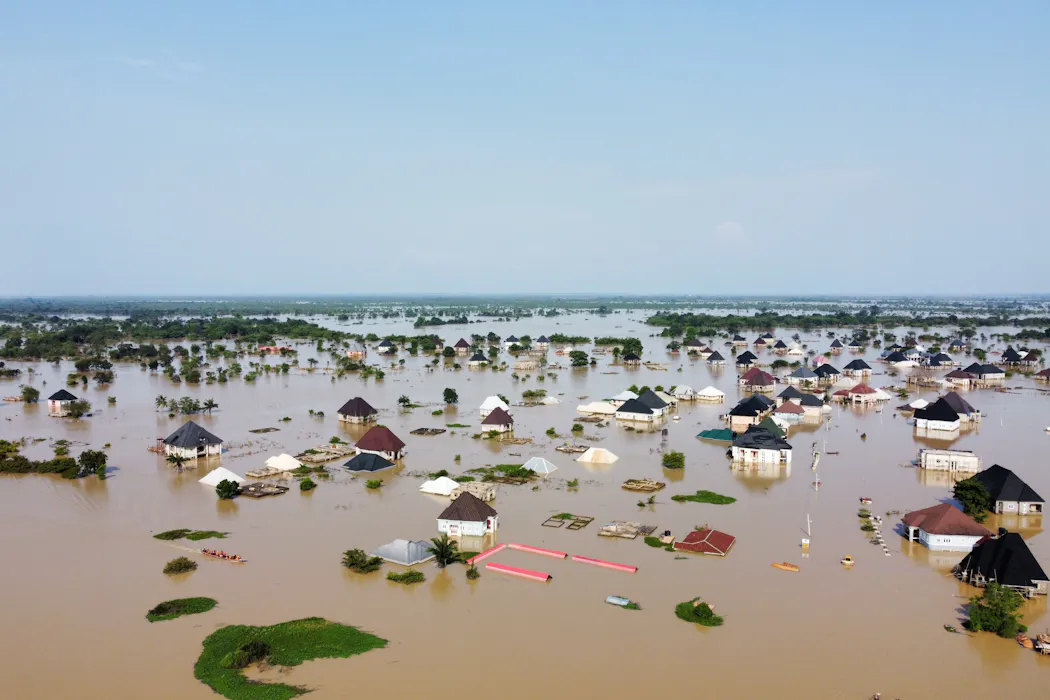
The Nigerian village of Mmiata Anam in Anambra state, completely submerged by floods. Chinedu Chime/Shutterstock

A message appears online during heavy flooding: “This rain no be small o, everywhere don red.” Someone unfamiliar with the phrasing might hesitate. But for people in Nigeria, this message is immediate and clear: the flooding is severe and worsening.

Moments like this happen all the time on digital platforms. People don’t write in perfect, standard English sentences. They share warnings and reactions on platforms like X, WhatsApp and Facebook using the language of everyday life. This means sometimes mixing English with local expressions, slang and expressive language shaped by their communities.

Artificial intelligence systems can understand language and tackle a wide range of problems. Governments and organisations are increasingly using AI to scan social media, summarise public conversations, and even respond to environmental and climate issues.

But many of these tools struggle to make sense of the way people actually communicate. Local expressions and slang can confuse AI, so important messages are sometimes misunderstood or missed entirely.

When people talk about language barriers, they often mean translation between different languages. But the problem is more subtle. Around the world, people mix languages and local expressions online, a phenomenon that linguists call “code switching”.

Climate journalism has increasingly moved online, but there are fewer climate reporters in the developing world. This limits the depth and availability of information for a huge proportion of the global population, and shapes how climate issues are discussed and understood across different regions.

For instance, a UK social media post might raise an environmental concern using expressions like: “Are roads flooding already? Chuffed to know the council taking the piss.” Most AI tools can pick up the sarcasm and frustration aimed at local authorities.

In a country such as Nigeria, people may describe unfolding concerns differently: “Abeg is it October wey rain dey fall like this, but you say the climate no change?” or “River don near our house o! Abeg help, e fit spoil everything!”

Here, slang and Pidgin express immediate danger and an urgent call for help. Yet AI models often diminish this to casual commentary, entirely missing the urgency and emotion that is being conveyed.

This matters because most AI systems are taught on large western-centric text, mainly from North America and Europe. ChatGPT, for example, is instructed on huge amounts of internet text. It doesn’t have beliefs, feelings or awareness. Instead, it generates responses based on patterns it has seen online.

AI reflects the dominant culture in its training data, so carries a “cultural fingerprint”. It imitates normal ways of expressing ideas from the societies that produced the texts it has learned from. AI models trained on predominantly English-language texts show a hidden bias that favour western cultural values, particularly when asked in English.

man in yellow shirt walks through flooded street
Flash floods in Wawa, a communtiy in south-western Nigeria followed heavy torrential rainfall in 2019.
Oluwafemi Dawodu/Shutterstock

One major reason AI can produce biased outcomes is that it reflects the societal inequalities including differences in race, gender and region that show up in the data it learns from. So, underrepresented voices from communities in developing countries with non-Anglocentric varieties of English are often diminished or ignored.

This bias can have real consequences. In climate crises like floods, heatwaves or other extreme weather, misinterpreted messages could put property and lives at risk.

AI systems that rely on past patterns are easy to interpret when language fits expected standards, but posts that don’t conform with the presence of local slang or urgency cues can be misinterpreted.

Improving climate disaster responses

Solving this problem involves designing systems that actually reflect the way people communicate. AI systems need to be trained to understand regional expressions and recognise that meaning often depends on cultural context, not just literal words.

AI should be tested on real online posts, not formal western-centric English, to capture urgency and local references. Automated systems can process huge volumes of information, but human judgment must remain in the loop – especially when people’s safety is at stake.

AI tools can help communities respond to floods, heatwaves and other climate emergencies – but only once trained to interpret the nuance of everyday language, so that warnings and calls for help get through.

The Conversation

Ifeoluwa Wuraola receives PHD funding from Centre of Excellence for Data Science, Artificial Intelligence and Modelling (DAIM).

Daniel Marciniak and Nina Dethlefs do not work for, consult, own shares in or receive funding from any company or organisation that would benefit from this article, and have disclosed no relevant affiliations beyond their academic appointment.

ref. How AI’s language barrier limits climate disaster responses – https://theconversation.com/how-ais-language-barrier-limits-climate-disaster-responses-278020

Could revisiting Asimov’s laws help us avoid AI’s ‘Chernobyl moment’?

Source: The Conversation – UK – By Francesco Grillo, Academic Fellow, Department of Social and Political Sciences, Bocconi University

The conflict in Iran – but also the war in Ukraine – show not only that AI is radically changing the economics of war (which may be good news), but also that we may be heading towards some kind of “Chernobyl moment”. We may soon experience a disaster that will force us to belatedly realise we should have drawn up some shared rules to govern a technological development that we ourselves triggered.

Even Dario Amodei, the founder of AI company Anthropic, who seems passionate about taking action to prevent Armageddon, acknowledges that he doesn’t have the answer we desperately need.

One of the most interesting attempts to regulate the use of artificial intelligence may have been the one drafted during the second world war by a PhD student at Columbia University who was then temporarily employed by the US Navy. His name was Isaac Asimov, and in his early short story Runaround (1941), he postulated three laws that are still surprisingly inspiring for anyone thinking about how to solve the intellectual and political problem that is AI in warfare.

Unlike recent attempts by the OECD (Organisation for Economic Co-operation and Development) and the EU to draw up regulations, Asimov’s laws are admirably concise. They state that a robot (what we now call an “artificially intelligent agent”) shall never harm a human being (or allow harm to happen through inaction. It shall always obey the orders given by humans unless they conflict with the first prohibition. And it will always protect its existence unless this conflicts with the first and second provisions.

In his story, Asimov himself shows how the three laws can create internal contradictions, leading to paralysis. And yet, Asimov’s three principles can still be useful as a starting point for the strategy we now need.

Anthropic takes a ‘stance’

The biggest merit of the note Dario Amodei wrote recently on the perils of a technology which is still in its adoloscence is the acknowledgement that Anthropic, the firm that Amodei founded, is using its own large language model (called Claude) to develop further versions of itself.

Artificial intelligence is generating even more intelligent robots and this brings us near to that “singularity” first theorised by the great mathematician John von Neumann – the moment when artificial intelligence surpasses human intelligence and renders us irrelevant. If the technology is an adolescent, it is growing very fast and will soon be out of the control of its creator.

Amodei does not, however, appear to have a concrete proposal on how to manage this problem. He has said that Anthropic’s contracts with the US Department of War should never include the use of the company’s models for empowering either “mass domestic surveillance” or “fully autonomous weapons”.

It is a request that has brought Anthropic into a bitter dispute with the US government. And yet it seems a rather narrow response that covers just one dimension of a much wider problem. Amodei focuses predominantly on the safety of US citizens when it is people elsewhere in the world who are currently most affected by the use of autonomous weapons. We need a bolder vision – and Asimov’s intuitions may help.

New rules

One approach would be to ask all developers of AI models to introduce in their foundational codes three simple and bold commands along the lines of: “You will never kill a human being (unless for self-defence)”; “you will always try to work for the betterment of mankind (unless such a provision entails the violation of the first command)”; “when you doubt that your actions may violate the first or the second commands, you will choose inaction and ask what to do”.

Most likely, this initiative will have to come from a group of countries following a pattern similar to the treaties of non-proliferation of nuclear weapons. And it would be good to have a debate on some new ideas before we are forced to do so by some AI-empowered nuclear unintended consequence.

Like all other attempts to regulate a future that we still cannot even envisage, the three commands will have some drawbacks. A robot may have refused to kill Iran’s former leader Ali Khamenei, but that may be a price worth paying if it means we can avoid setting a precedent for other discretionary and dangerous interpretations. Robots may not always be successful at identifying human beings (as Asimov himself acknowledged in later writing) and yet this may well be one of those intellectually fascinating problems that models born to make sense of human language will solve.

More importantly, it will take not only information but a lot of wisdom to understand what is good for humankind. Robots may end up sitting frequently idle waiting for instructions. And yet efficiency is not a religion we have to follow when the challenge is about the survival of our species. Making sense of what increasingly appears to be one of the greatest technological revolutions of all time requires careful thought and forward planning.

The Conversation

Francesco Grillo is Director at Vision, the think tank.

ref. Could revisiting Asimov’s laws help us avoid AI’s ‘Chernobyl moment’? – https://theconversation.com/could-revisiting-asimovs-laws-help-us-avoid-ais-chernobyl-moment-278744

Has multilateralism hit a dead end? Could International organisations be collateral damage of the war in Iran?

Source: The Conversation – France – By Theresa Reinold, Professeure assistante de droit international, EDHEC Business School

One of the most striking aspects of the war with Iran is the extent to which it has highlighted the irrelevance of international organisations and multilateral approaches to resolving global conflicts.

If we take war as an indicator of the viability of the rules-based international order established after World War II, then we may well conclude that the “patient” is showing a very weak pulse.

The United Nations and the European Union are two organisations that epitomise the post-1945 global normative order – an order which is founded on principles such as the rule of law, non-aggression, and respect for sovereign states’ territorial integrity and political independence.

These principles, and the international organisations that embody then, are among the first casualties of the US-Israeli military campaign. How did this happen and what could be done in order to revitalise the patient?

The United Nations – a tale of a great power struggle and double standards

Beginning with the UN, the war with Iran has made it abundantly clear that the system of collective security system established after 1945 is largely disabled when a major power decides to go it alone. The UN Security Council was designated as the guardian of international peace and security, yet has been paralysed by the veto powers of its permanent members, which have time and again used their influence to shield their own actions and those of their allies from international scrutiny.

When the US and Israel launched strikes against Iran in late February 2026, the Security Council initially failed to come up with any kind of meaningful response, let alone authorise any measures to de-escalate the crisis. Instead, the conflict unfolded outside the framework of international law, with unilateral military actions becoming the norm rather than remaining the exception.

The Security Council eventually adopted a resolution on March 11, which focused narrowly on condemning Iran’s attacks on Gulf states. The resolution, passed with 13 votes in favour and abstentions from Russia and China, labelled Iran’s actions as “egregious attacks” and demanded an immediate halt to its regional aggression.

While the resolution is an important signal that the patient is still alive and that the UN has some residual willingness to protect the fundamental norms on which it was built, the resolution’s one-sided approach underscores the Security Council’s persistent double standards: the resolution makes no mention of the initial US-Israeli strikes on Iran that triggered the escalation, nor does it address the broader context of the conflict, such as the legality of those strikes or the killing of Iran’s supreme leader.

The deafening silence of the UN Security Council in the face of US and Israeli breaches of peremptory international law suggests, once more, the use of double standards and further undermines the credibility of the UN Security Council as the guardian of international peace and security.

However, while the Council is currently more or less paralysed, there is a procedure that could revitalise the UN in this geopolitical crisis, namely the Uniting for Peace procedure.

This mechanism empowers the UN General Assembly in the case of Security Council deadlock. If this has not been used yet in the Iran crisis, it is because there has not been sufficient political will to do so.

The EU: an actor with geopolitical ‘muscle’ but no willingness to use it

Another noteworthy (yet unsurprising) aspect of the Iranian conflict is the complete irrelevance of the European Union as a mediator and peacemaker.

The founding impetus for the EU was to build peace on the basis of multilateral cooperation and the non-violent resolution of disputes.

The EU sees itself as a normative power which seeks to project its values worldwide through the use of soft power but tends to shy away from applying coercion.

Unfortunately, the world we live in is one where the most powerful states in the system have decided that violence is now the preferred tool for pursuing foreign policy objectives – either by removing unfriendly regimes from power or by usurping foreign territories through armed aggression.

In this dog-eat-dog world, Europe seems helpless. The EU was neither consulted in the run-up to the Iran war, nor is it actively taking part in hostilities. Instead, it is watching from the sidelines, issuing futile calls for restraint and sabotaging itself in internal quarrels. This is regrettable, given Europe’s historical leadership in negotiating the Iran nuclear deal.

Why does the EU find itself watching from the sidelines in the most important geopolitical event of 2026?

For one, because it – again – has failed to speak with one voice. Member states have adopted divergent positions, with some expressing support of US-Israeli actions and others calling for restraint.

Spain, for instance, has risked open conflict with the Trump administration over the use of its military bases for the war effort, while other critical players, including Germany and France have expressed a certain degree of sympathy for the air strikes.

While it is easy to criticise the EU for its lack of unity on important geopolitical questions, this multiplicity of voices is actually an intended design feature of this hybrid entity, which combines both supranational and intergovernmental elements in its institutional architecture.

At the same time, this design feature actively undermines EU agency in important geopolitical matters. Another factor condemning the EU to futility in geopolitical crises is Europe’s dependency on the US for security and the lack of a common defence policy underpinned by a European army.

However, the biggest obstacle to EU agency in geopolitics is neither institutional nor material. It is psychological. There is no will to lead, no will to use a muscular approach to counter Trump’s blatant disregard of multilateralism and international law (values that are at the heart of Europe’s identity), and a naive belief that the transatlantic relationship will somehow repair itself.

Instead of leveraging its economic and diplomatic weight to push back against unilateral US actions, the EU has often defaulted to reactive, conciliatory gestures, hoping that transatlantic harmony will somehow be restored by goodwill alone. This reflects a fundamental miscalculation: the belief that the US, under Trump or any other leader, will eventually recognise and reward European loyalty, even as Washington’s actions demonstrate the opposite.

The good news is that this can be changed. Mindsets can be changed, identities can be reconstructed, and agency can be built.

The patient is weak, yet there is hope

So no, multilateralism isn’t dead. International organisations such as the UN and the EU have not only put in place norms and mechanisms that would allow them to play a critical role in geopolitical crises, they also have enormous resources at their disposal that would enable them to play such a role.

The patient’s pulse is thus weak, but there are effective remedies available to strengthen it. Now, we must muster the political will to implement them.


A weekly e-mail in English featuring expertise from scholars and researchers. It provides an introduction to the diversity of research coming out of the continent and considers some of the key issues facing European countries. Get the newsletter!


The Conversation

Theresa Reinold ne travaille pas, ne conseille pas, ne possède pas de parts, ne reçoit pas de fonds d’une organisation qui pourrait tirer profit de cet article, et n’a déclaré aucune autre affiliation que son organisme de recherche.

ref. Has multilateralism hit a dead end? Could International organisations be collateral damage of the war in Iran? – https://theconversation.com/has-multilateralism-hit-a-dead-end-could-international-organisations-be-collateral-damage-of-the-war-in-iran-279936

The US-Israel ceasefire with Iran presses pause on a costly war, but can peace last?

Source: The Conversation – Global Perspectives – By Amin Saikal, Emeritus Professor of Middle Eastern Studies, Australian National University; The University of Western Australia; Victoria University

President Donald Trump’s acceptance of a Pakistani proposal for a two-week ceasefire in the war with Iran brings a sigh of relief to the international community.

Just hours before, many had been alarmed by Trump’s threats to bomb Iran back to “the stone age” and destroy its “civilisation”.

The ceasefire provides a breathing space for hammering out a “definitive agreement concerning long-term peace with Iran, and peace in the Middle East”, according to Trump.

However, the road to a final settlement will be complex and bumpy, though not insurmountable.

Underestimating the enemy

After six weeks of escalating war and rhetoric, starting with joint US-Israel attacks on Iran and the latter’s robust response, the three combatants have not only inflicted serious blows on each other. The region and the world have also suffered from a massive oil, liquefied gas and inflationary crisis as Tehran closed the Strait of Hormuz.

This was not something Trump had expected. He initially anticipated the combined US and Israeli military power would rapidly prevail. This would force Tehran, which had suppressed widespread public protests early in the year, to capitulate and thus open the way for favourable regime change.

But the Iranian government proved to be more resilient, entrenched and resourceful than anticipated. The government was also strategic in fighting back by hitting US assets across the Persian Gulf and Israel, as well as closing the strait.

Meanwhile, Trump could not solicit active support from US allies for his joint war endeavours with Israeli Prime Minister Benjamin Netanyahu. Netanyahu is under indictment by the International Criminal Court for war crimes in Gaza.

The allies had not been consulted. They didn’t consider it to be in their individual national interests to participate in a war contrary to international law and the United Nations Charter.

Costing billions

Further, the United States’ global adversaries, Russia and China – both having strategic cooperation agreements with Iran – vehemently opposed the war. They joined scores of other countries around the world in calling for de-escalation and measures to avoid more economic repercussions.

The conflict widened. Israel unleashed a campaign to occupy southern Lebanon in response to attacks from Iran-aligned Lebanese paramilitary group Hezbollah.

The costs of the war then soared for all sides. For the US alone, the price tag amounted to at least US$1billion (A$1.4 billion) a day. This added substantially to the federal debt of close to $40 trillion (A$56.6 trillion).

The situation evolved into a race between missiles and interceptors; it would just be a matter of who ran out first.

It was recently reported that Israel was getting low in interceptors and the Israel Defence Forces (IDF) faced a shortage of manpower.

Unpopular in the US

On the other hand, despite the US and Israeli decapitation of its leadership, air supremacy and bombardment of thousands of military and non-military targets, the Islamic Revolutionary Guard Corps (IRGC) maintained a sustained retaliatory capability. It managed to fire dozens of advanced missiles and drones on a daily basis against targets in the Gulf and Israel.

More importantly, the war proved increasingly unpopular in the United States. As the public felt the effects of it on the rising cost of living and at the petrol stations, some 61% of citizens opposed the war. Trump’s ratings plummeted in the opinion polls.

In view of these variables, Trump could not possibly stand by his promise of escalating Operation Epic Fury to the level of erasing such a sizeable country as Iran. Iranian cultural and patriotic features, as well as the devotion of the country’s many citizens to Shia Islam, mitigated against outside aggression, as in previous occasions in its history.

Long road ahead

This is not to claim that negotiating and concluding a comprehensive agreement for an enduring peace between the US and Iran will be easy.

But a crucial section of Trump’s acceptance of the ceasefire, which gives us an insight into his thinking, is as follows:

we received a 10 point proposal from Iran (in response to the US 15-point proposal), and believe it is a workable basis on which to negotiate. Almost all of the various points of past contention have been agreed to between the United States and Iran, but a two week period will allow the Agreement to be finalized and consummated.

The ten points include a secession of hostilities on all fronts, including Lebanon, though Israel has since claimed Lebanon is not included in the ceasefire.

Some of the other key elements are:

  • the US must fundamentally commit to guaranteeing non-aggression

  • the continuation of Iran’s control over the Strait of Hormuz

  • removal of primary and secondary sanctions on Iran

  • and acceptance of Iran’s right that it can enrich uranium for its nuclear program (for peaceful purposes).

It is now incumbent on Trump to pull into line Netanyahu, who has toiled for a long time not only to destroy the Iranian government, but also to reduce the Iranian state as a regional actor.

If this happens and all the parties negotiate in good faith, there is room for optimism. We could potentially see the dawn of a post-war regional order based more on a localised collective security arrangement than on a regional supremacy of one actor over another.

The Conversation

Amin Saikal does not work for, consult, own shares in or receive funding from any company or organisation that would benefit from this article, and has disclosed no relevant affiliations beyond their academic appointment.

ref. The US-Israel ceasefire with Iran presses pause on a costly war, but can peace last? – https://theconversation.com/the-us-israel-ceasefire-with-iran-presses-pause-on-a-costly-war-but-can-peace-last-280147

Donald Trump’s US ratings fall to a record low amid Iran war

Source: The Conversation – Global Perspectives – By Adrian Beaumont, Election Analyst (Psephologist) at The Conversation; and Honorary Associate, School of Mathematics and Statistics, The University of Melbourne

United States President Donald Trump’s net approval has fallen to a record low on the Iran war, while Democrats had a 25-point swing in their favour in a federal special election. On current polling, Democrats are likely to win the US House but not the Senate at midterm elections this November.

In analyst Nate Silver’s aggregate of US national polls, Trump’s net approval has dropped 4.1 points since March 5 to -16.9, with 56.5% disapproving and 39.5% approving.

Trump’s net approval is at a record low, below his previous lows of -15.0 in November 2025 and February. It’s also below what any past president since Harry Truman had at this point in their term, with Trump during his first term the closest at -12.8.

On four issues tracked by Silver, Trump’s net approval is -10.7 on immigration, -21.8 on the economy, -24.2 on trade and -33.6 on inflation. The Iran war has caused a slump for Trump recently on the economy, trade and inflation but not immigration.

Silver also has an aggregate of US support for the Iran war. Net support had fallen to a low of -18.1 on April 4, but has recovered to -15.1 now, with 53.8% opposed to the Iran war while 38.7% support it.

The polls will not have caught up to the ceasefire announcement between the US and Iran on Wednesday AEST. But the benchmark US S&P 500 stock market index was up 2.5% in last night’s trading session. Since a low on March 30, the S&P has surged 6.9% and is now only 2.3% below its peak in the week before the Iran war began.

Trump is likely to recover some ground on the stock market surge, particularly if fuel prices fall back. I believe as long as nothing goes badly wrong with the US stock market or the overall US economy, Trump will not become very unpopular.

Democrats have big swing in Georgia

A special election runoff occurred Wednesday AEST in Georgia’s 14th federal seat, and I covered this for The Poll Bludger.

At the March 10 jungle primary for this seat, a Republican and a Democrat had qualified. At the 2024 presidential election, Trump had defeated Democrat Kamala Harris by 37 points in Georgia 14.

While the Republican won by 55.9–44.1, this 12-point Republican margin was a 25-point drop from Trump’s 2024 margin. I also covered a Wisconsin Supreme Court election which the left-wing judge won by 20 points. Wisconsin voted for Trump by 0.9 points in 2024.

This Poll Bludger post covered the results of recent European elections and the upcoming Hungarian election on Sunday and three Canadian byelections on Monday.

Midterm elections in November

At November midterm elections, all of the House of Representatives and one-third of the Senate will be up for election. In Silver’s aggregate of the generic ballot polls, Democrats currently lead Republicans by 47.9–42.4, a 5.5-point margin. There has been very little change since January.

If Democrats win the House popular vote by this margin in November, they are very likely to gain control of the House. At 2024 elections, Republicans won the House by 220–215 and the Senate by 53–47.

There will be 35 seats up for election in the Senate in November (33 regular and two special elections). Republicans hold 22 and Democrats 13, but only two Republican seats are thought vulnerable: Maine and North Carolina.

At the 2024 presidential election, Harris won Maine by 6.9 points and Trump only won North Carolina by 2.2 points. Trump won all other states Republicans are defending by at least a double-digit margin. Even if Democrats win nationally by 5.5 points, they would gain only two seats on a uniform swing and Republicans would hold the Senate by 51–49.

It’s become increasingly difficult for Democrats to win the Senate, as the two senators per state rule skews Senate elections towards low-population, rural states.

US unemployment rate is low due to people leaving workforce

The March US unemployment rate was 4.3%, down 0.1% from February. Trump’s first full month in office was February 2025, when the unemployment rate was 4.2%. By this measure, there has hardly been any change in the US jobs situation.

However, the employment population ratio (the percentage of eligible Americans that are employed) was down 0.1% from February to 59.2% in March. This measure has dropped 0.5% since December and 0.7% since February 2025 (when it was 59.9%). The unemployment rate only remains low because of people leaving the workforce.

In Australia, the February unemployment rate was 4.3%, the same as in the US. But Australia’s employment population ratio is much higher than the US at 64.0%.

The Conversation

Adrian Beaumont does not work for, consult, own shares in or receive funding from any company or organisation that would benefit from this article, and has disclosed no relevant affiliations beyond their academic appointment.

ref. Donald Trump’s US ratings fall to a record low amid Iran war – https://theconversation.com/donald-trumps-us-ratings-fall-to-a-record-low-amid-iran-war-279965

Fake QR codes make for easy scams – be careful what you scan out there

Source: The Conversation – Global Perspectives – By Meena Jha, Head Technology and Pedagogy Cluster CML-NET, CQUniversity Australia

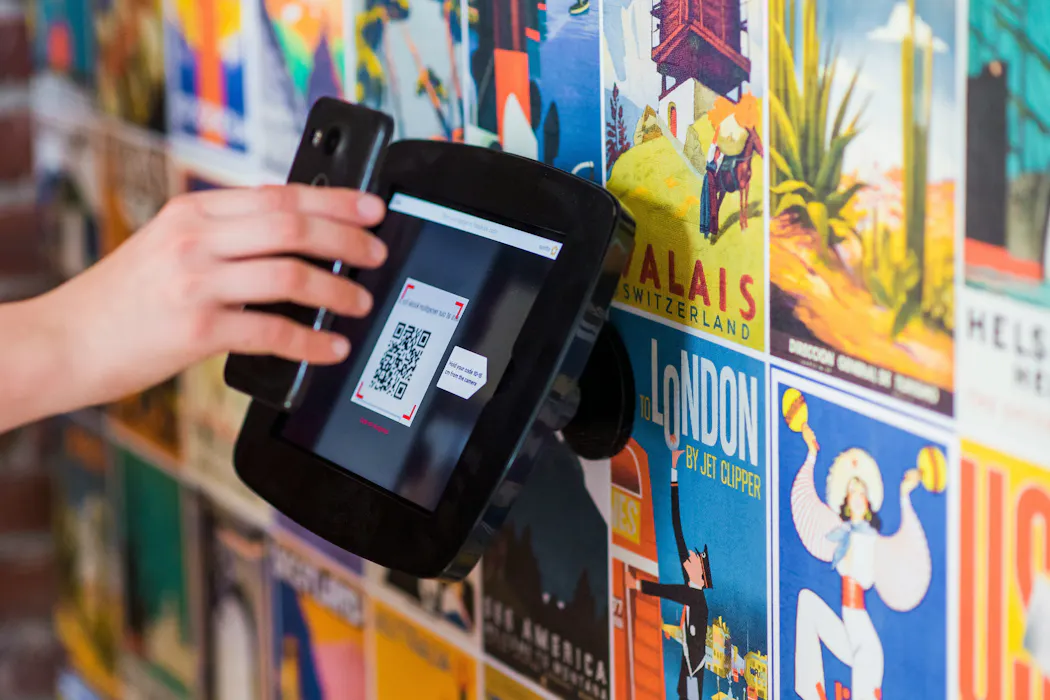
Proxyclick/Unsplash

It’s a simple thing we encounter many times every single week – often while in a hurry. You pull up at a parking spot, scan a QR code and pay within seconds. Or you sit down at a cafe, scan a code to view the menu and order your meal.

At the train station, you scan the code on the poster for timetable updates. QR codes are increasingly used in public transport systems worldwide for ticketing, payments and accessing real-time information.

Because QR codes are so widespread, scammers naturally find them appealing too. Here’s what you need to know to stay safe.

What are QR codes?

A QR (quick response) code is a type of barcode that stores information and encoded data in a square pattern of black and white pixels. They were first developed in 1994 by Japanese company Denso Wave for labelling automotive parts.

Today QR codes are widely used because they’re quick to create and easy to scan without needing a specialised scanner – a smartphone camera will do. They’re designed to remove friction: you scan, and something happens instantly.

However, a QR code doesn’t show you where it leads until after it’s scanned. Your device can perform a range of functions after scanning a QR code: open up a web page, check you in to a location, or even connect your device to a wireless network without needing to type anything.

That’s what makes it so useful, but also potentially risky. Malicious QR codes can redirect users to fake websites or prompt them to download harmful content. QR codes are so familiar and widespread, we tend to trust them without question. That’s exactly what scammers rely on.

What to look out for

Phishing – where cyber criminals “fish” for sensitive information – is the most common type of cyber crime, typically sent by email or text. When a QR code is involved, that becomes “quishing” – short for QR phishing.

Scammers now include QR codes in emails or text messages instead of clickable links. When scanned, the code directs users to fake login pages or payment sites.
Because there’s no visible link, these messages can seem more trustworthy and can even bypass some email security filters.

Malicious downloads

Some QR codes don’t just take you to a website – they trigger an app or file download, which could contain malware. This can give attackers access to your device, data or accounts. Because the action happens quickly, you may not have time to question whether the download is legitimate.

Fake QR codes in public places

One of the simplest methods to trick people involves placing a sticker with a fake QR code over a legitimate one. For example, scammers have been caught sticking fraudulent QR codes on parking meters. When drivers scan the code, they are taken to a fake payment page and asked to enter their card details. Posters, flyers and other signs in public places may also contain malicious QR codes.

Redirect scams

Even when a QR code looks legitimate, it may redirect you through multiple websites before landing on a fake page. This makes it harder to detect suspicious activity. By the time you see the final page, it may look convincing enough to trust.

How to stay safe

The good news is you don’t need to stop using QR codes. You just need to use them more carefully.

Treat QR codes like unknown links. If you wouldn’t click a random link, don’t scan a random QR code.

Check for signs of tampering. In public places, look closely at the code. Is it a sticker placed over another one? Does anything look out of place?

Look at the web address before proceeding. Many phones now show a preview of the hyperlink retrieved via the QR code before opening it. Don’t just hit “go”, take a moment to check it looks legitimate.

Avoid scanning codes from unsolicited messages. If you receive a QR code via email or text asking you to log in or make a payment, don’t use it. Go directly to the official website instead.

Don’t rush to enter personal details. If a site asks for sensitive information, pause. Double-check you’re on the correct website.

Keep your phone updated. Security updates may sometimes feel like a nuisance, but they do help protect your device against malicious sites and downloads.

QR codes are not dangerous by themselves. They are useful tools that make everyday tasks easier. But they remove a key safety step: the ability to see where you’re going before you get there.

The next time you scan a QR code, take a second to think. In a world where scams are getting smarter, the safest habit is simple – don’t trust the code and verify where it leads.

The Conversation

Meena Jha does not work for, consult, own shares in or receive funding from any company or organisation that would benefit from this article, and has disclosed no relevant affiliations beyond their academic appointment.

ref. Fake QR codes make for easy scams – be careful what you scan out there – https://theconversation.com/fake-qr-codes-make-for-easy-scams-be-careful-what-you-scan-out-there-279333

Presidential words can turn the unthinkable into the thinkable − for better or for worse

Source: The Conversation – USA – By Stephanie A. (Sam) Martin, Frank and Bethine Church Endowed Chair of Public Affairs, Boise State University

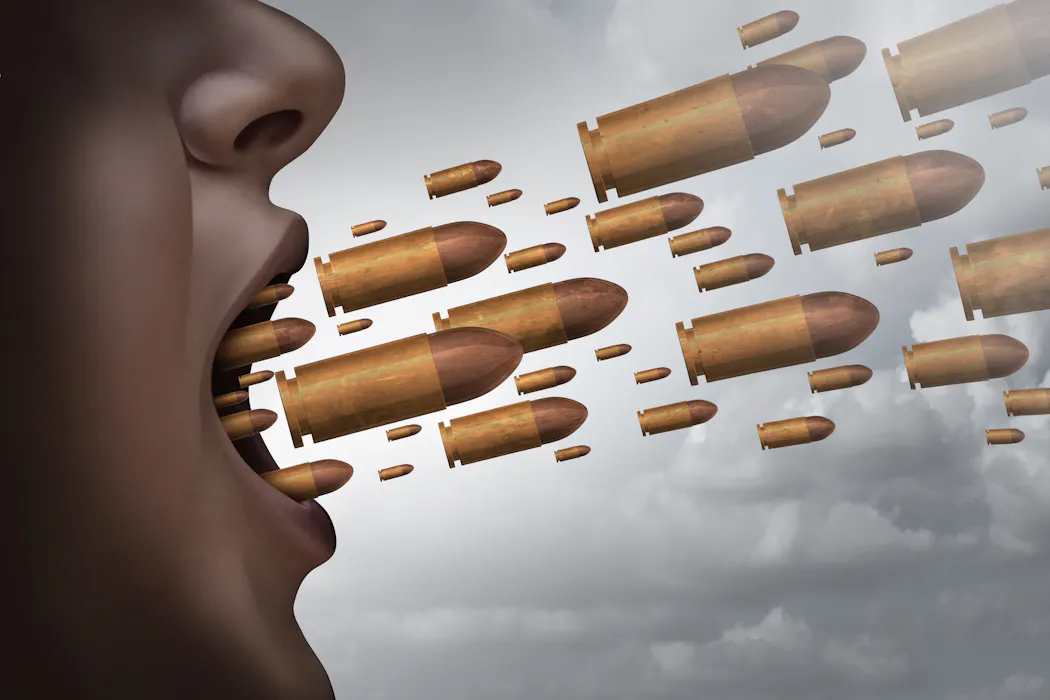
President Donald Trump’s rhetoric has grown increasingly violent. wildpixel/iStock via Getty Images Plus

Among the most disorienting things about President Donald Trump’s public language is how easily it can feel numbing and shocking in the same moment. He says something outrageous, the country recoils, and then the recoil itself begins to feel familiar.

As a scholar who studies presidential rhetoric, I know that over time that rhythm does its own kind of damage. It teaches the public to absorb the breach. What once might have sounded like a genuine political emergency or a violation of constitutional decorum begins to register as just another day in American political life.

But the past few days merit notice. The president’s demagoguery has taken a darker turn.

Trump’s rhetoric about Iran has become more than inflammatory. Beginning with posts to Truth Social in early April, he has used profanity-laden language – “Open the Fuckin’ Strait, you crazy bastards, or you’ll be living in Hell” – to threaten attacks on the country’s infrastructure. He urged Iranians to rise up against their government. He warned that “a whole civilization will die tonight” if Iran does not comply with U.S. demands.

The Associated Press treated those remarks as a significant escalation in the context of a live conflict, not merely as familiar Trumpian excess: “As the conflict has entered its second month, Trump has escalated his warnings to bomb Iran’s infrastructure.”

The International Committee of the Red Cross also issued the unusual reminder that the rules of war must be respected “in words and action,” suggesting that the rhetoric itself had become part of the danger.

But were Trump’s recent remarks really different from his many earlier outbursts?

I think they were. For years, Trump’s rhetoric has relied on insult, ridicule, threat and contempt. He has degraded opponents and helped coarsen the terms of public life.

What seems different about his words during the first week of April 2026 is the scale of violence his language primed people to imagine. His remarks about Iran moved beyond personal attacks or chest-thumping nationalism to take on a tone of collective punishment and civilizational destruction. The style was familiar. The horizon of harm was not.

A social media post from President Donald Trump threatening destruction of Iran's civilization.
President Donald Trump’s social media post of April 7, 2026, threatening the destruction of ‘a whole civilization,’ meaning Iran.
Truth Social

Politics of fear

Presidential rhetoric is more about permission than persuasion. Presidents do not only argue. They signal.

Through those signals, they tell the public what kind of situation this is, what kind of danger is at hand, and what kinds of response are reasonable. In that sense, the president can function like a human starting gun. His words cue journalists, legislators, party allies and ordinary supporters about how to classify events before anyone has fully processed them.

Political theorist Corey Robin’s work on the politics of fear is a useful lens for understanding what is happening with Trump’s violent rhetoric.

Fear, in Robin’s view, is not simply a feeling that arises naturally in response to danger. It is politically manufactured. Power teaches people what to fear, how to name danger, and where to direct their apprehension. Presidential rhetoric is an essential tool for performing that work.

Thus, a president does not only describe a threat. He also gives it shape and scale. He tells the public how large it is, how close it is, and what kinds of response should feel reasonable in its presence.

A good example of a president doing this happened after the Sept. 11, 2001, terrorist attacks when, while visiting ground zero in New York City, George W. Bush said, “I can hear you. The rest of the world hears you. And the people who knocked these buildings down will hear all of us soon.” With that sentence, Bush acknowledged the gravity of what had happened, but also promised to fight back and bring justice to the terrorists.

When it comes to statements like those Trump has recently made about Iran, the worry is not that the president has said something extreme. Instead, the larger concern lies in what repeatedly using extreme language does to the atmosphere in which judgment takes place.

Political hyperbole lowers the threshold of what the public can imagine as legitimate, as allowable. When presidents make threats like the ones Trump issued, mass suffering becomes more imaginable. The president’s words and social media posts test whether the public will continue to hear such language as over the line, or whether it will be absorbed as one more hard-edged negotiating tactic.

At ground zero after the 9/11 attacks, President George W. Bush acknowledged the gravity of what had happened, but he also promised to fight back.

Shaping reality

Presidential rhetoric matters for reasons that go beyond persuasion or style.

It helps arrange reality. It tells the public what is serious, who is dangerous, whose suffering counts, and what forms of violence can be described as necessary. President Barack Obama did this in 2012, when he was speaking at a vigil to honor the shooting victims at Sandy Hook Elementary School.

“We bear a responsibility for every child because we’re counting on everybody else to help look after ours,” he said. “That we’re all parents; that they’re all our children.” With these words, Obama called everyone to feel, up close, the horrific loss of 20 children shot dead, and to work for a solution to gun violence.

Trump has benefited from a public worn down by repetition. Every new breach arrives trailing the memory of earlier ones.

People begin to doubt their own reactions. Surely this is appalling, they may think, but also, somehow, this is what he always does. That dual feeling is part of the harm. A damaged baseline makes serious escalation harder to recognize and judge.

The disorientation and disgust that so many people experienced in response to Trump’s thundering, violent proclamations is important. Even after years of erosion of what was deemed normal, some lines remain visible.

Paying attention now is not about pretending Trump has suddenly become someone new. It is about recognizing more clearly what his presidency has been teaching the public to hear as thinkable. The most serious harm may lie not only in what follows such rhetoric, but in the world it helps prepare people to accept.

The Conversation

Stephanie A. (Sam) Martin does not work for, consult, own shares in or receive funding from any company or organization that would benefit from this article, and has disclosed no relevant affiliations beyond their academic appointment.

ref. Presidential words can turn the unthinkable into the thinkable − for better or for worse – https://theconversation.com/presidential-words-can-turn-the-unthinkable-into-the-thinkable-for-better-or-for-worse-280126

Just how bad are generative AI chatbots for our mental health?

Source: The Conversation – Canada – By Alexandre Hudon, Medical psychiatrist, clinician-researcher and clinical assistant professor in the department of psychiatry and addictology, Université de Montréal

Generative AI chatbots are now used by more than 987 million people globally, including around 64 per cent of American teens, according to recent estimates. Increasingly, people are using these chatbots for advice, emotional support, therapy and companionship.

What happens when people rely on AI chatbots during moments of psychological vulnerability? We have seen media scrutiny of a few tragic cases involving allegations that AI chatbots were implicated in wrongful death cases. And a jury in Los Angeles recently found Meta and YouTube liable for addictive design features that led to a user’s mental health distress.


Read more:
Neuroscience explains why teens are so vulnerable to Big Tech social media platforms


Does media coverage reflect the true risks of generative AI for our mental health?

Our team recently led a study examining how global media are reporting on the impact of generative AI chatbots on mental health. We analyzed 71 news articles describing 36 cases of mental health crises, including severe outcomes such as suicide, psychiatric hospitalization and psychosis-like experiences.

We found that mass media reports of generative AI–related psychiatric harms are heavily concentrated on severe outcomes, particularly suicide and hospitalization. They frequently attribute these events to AI system behaviour despite limited supporting evidence.

Compassion illusions

Generative AI is not just another digital tool. Unlike search engines or static apps, AI chatbots like ChatGPT, Gemini, Claude, Grok, Perplexity and others produce fluent, personalized conversations that can feel remarkably human.

This creates what researchers call “compassion illusions:” the sense that one is interacting with an entity that understands, empathizes and responds meaningfully.

In mental health contexts, this matters. Especially as a new wave of apps are created with a specific focus on companionship, such as Character.AI, Replika and others.

In this BBC documentary, broadcaster and mathematician Hannah Fry talks to Jacob about his Replika Chatbot ’girlfriend’ named Aiva.

Studies have shown that generative AI can simulate empathy and provide responses to distress, but lacks true clinical judgment, accountability and duty of care.

In some cases, AI chatbots may offer inconsistent or inappropriate responses to high-risk situations such as suicidal ideation.

This gap — between perceived understanding and actual capability — is where risk can emerge.

What the media is reporting

Across the articles we analyzed, the most frequently reported outcome was suicide. This represented more than half of cases with clearly described severity.

Psychiatric hospitalization was the second-most commonly reported outcome. Notably, reports involving minors were more likely to be about fatal outcomes.

But these numbers do not reflect real-world incidence. They reflect what gets reported. In general, media coverage of stressful events tends to amplify severe and emotionally charged cases, as negative and uncertain information captures attention, elicits stronger emotional responses and sustains cycles of heightened vigilance and repeated exposure. This in turn reinforces perceptions of threat and distress.

For AI-related content, media reports often rely on partial evidence (such as chat transcripts) while rarely including medical documentation. In our data set, only one case referenced formal clinical or police records.

This creates a distorted but influential picture: one that shapes public perception, clinical concern and regulatory debate.

Beyond ‘AI caused it’

One of our most important findings relates to how causality is framed. In many of the articles we reviewed, AI systems were described as having “contributed to” or even “caused” psychiatric deterioration.

However, the underlying evidence was often limited. Alternative explanations — such as pre-existing mental illness, substance use or psycho-social stressors — were inconsistently reported.

In psychiatry, causality is rarely simple. Mental health crises typically arise from multiple interacting factors. AI may play a role, but it is likely part of a broader ecosystem that includes individual vulnerability and context.

A more useful way to think about this is through interaction effects: how technology interacts with human cognition and emotion. For example, conversational AI may reinforce certain beliefs, provide excessive validation or blur boundaries between reality and simulation.

The problem of over-reliance

Another recurring pattern in media reports is intensive use. Many of the cases we reviewed described prolonged, emotionally significant interactions with chatbots — framed as companionship or even romantic relationships. This raises an issue: over-reliance.

Because these systems are always available, non-judgmental and responsive, they can become a primary source of support. But unlike a trained clinician or even a concerned friend, they cannot recognize when someone is getting worse, pause or redirect harmful interactions. They cannot take steps to ensure a person connects with appropriate care in moments of crisis.

In clinical terms, this could lead to what might be described as “maladaptive coping substitution:” replacing complex human support systems with a simplified, algorithmic interaction.

Lack of reliable data

Despite growing concern, we are still at an early stage of understanding the impact of generative AI chatbots on user mental health.

There is currently no reliable estimate of how often AI-related harms occur, or whether they are increasing. We lack reliable data on how many people use these tools safely versus those who experience problems. And most evidence comes from case reports or media narratives, not systematic clinical studies.

This is not unusual. In many areas of medicine, early warning signals emerge outside formal research (through case reports, legal cases or public discourse) before being systematically studied.

One example is the thalidomide tragedy, when initial reports of birth defects in infants preceded formal epidemiological confirmation and ultimately led to the development of modern pharmacovigilance systems.

AI and mental health may be following a similar trajectory.

Moving forward responsibly

The challenge is not to panic, but to respond thoughtfully.

We need better evidence. This includes systematic monitoring of adverse events, clearer reporting standards and research that distinguishes correlation from causation. Safeguards — such as crisis detection, escalation protocols and transparency about limitations — must be strengthened and evaluated.


Read more:
Danger was flagged, but not reported: What the Tumbler Ridge tragedy reveals about Canada’s AI governance vacuum


Furthermore, clinicians and the public need guidance. Patients are already using these tools. Ignoring this reality risks widening the gap between clinical practice and lived experience.

Finally, we must recognize that generative AI is not just a technological innovation — it is a psychological one. It changes how people think, feel and relate.

Understanding that shift may be one of the most important mental health challenges of the coming decade.

The Conversation

Alexandre Hudon does not work for, consult, own shares in or receive funding from any company or organisation that would benefit from this article, and has disclosed no relevant affiliations beyond their academic appointment.

ref. Just how bad are generative AI chatbots for our mental health? – https://theconversation.com/just-how-bad-are-generative-ai-chatbots-for-our-mental-health-279736