Artemis II moonshot reflects a spacefaring vision present in Jules Verne’s 19th-century novel

Source: The Conversation – USA (2) – By Anastasia Klimchynskaya, Assistant Professor of English, Illinois Wesleyan University

The ‘Earthset’ photo from the Artemis II crew’s lunar flyby in April 2026. NASA

With the launch of NASA’s Artemis II mission on April 1, 2026, human beings have finally returned to the Moon for the first time in 50 years – since the age of Apollo.

When Apollo 11 first landed on the lunar surface, the astronauts portrayed their accomplishment as the realization of a science fictional dream. In a televised broadcast during their return, Neil Armstrong explicitly evoked Jules Verne’s 1865 novel “From the Earth to the Moon,” calling his spaceship and crew a “modern-day Columbia” – a direct reference to the spaceship Verne imagined taking off in from Florida and landing in the Pacific Ocean.

Discourse around science fiction coming true often focuses on the gadgets and technologies it predicted. But as sci-fi author Frederik Pohl reputedly said, it’s not about imagining the car, but the traffic jam.

As a literature professor who has studied science fiction for a decade and editor of a forthcoming edition of Verne’s novel annotated for the spacefaring age, I find that what makes Verne’s 1865 novel prescient is that a century before the Moon landing, he understood that a moonshot would not be an act of pure and abstract science. It would exist within a political, social and economic context.

An original copy of 'From the Earth to the Moon'
‘From the Earth to the Moon’ by Jules Verne describes a fictional Moon mission and its political, economic and environmental ramifications.
Patrice Cartier/Hans Lucas/AFP via Getty Images

In his novel, the moonshot is proposed by the Baltimore Gun Club in the months after the U.S. Civil War, and Verne tells the story of how they make this colossal undertaking happen. Writing before even the age of powered flight, he foresaw that a project to send a small handful of carefully selected, exceptional individuals beyond Earth would have ripple effects throughout the entire world.

And with four astronauts having just circled the Moon as part of the Artemis II mission, the similarities between Verne’s vision and America’s current Moon-oriented dreams are striking – and revealing of the realities of the spacefaring age.

The Space Launch System rocket lifting off the launchpad
NASA’s Artemis II crew lifts off from the Kennedy Space Center’s Launch Pad 39-B on April 1, 2026.
AP Photo/John Raoux

A nationalist and international project

In Verne’s novel, the moonshot is explicitly proposed as a nationalist project, even as it also becomes a pinnacle of human achievement that unifies the world. The speech in which it is proposed is one full of celebrations of American engineers, scientists and generals who have come before, and Americanness is key to its realization.

At one moment, it becomes clear that the launch must occur near the equator to minimize the distance to the Moon. Since this is an American endeavor, however, the protagonists are adamant that it must launch from the United States, and the Gun Club briefly considers invading Mexico to make this happen before remembering that Florida and Texas are both suitable.

An illustration of a spacecraft shooting off the ground in a plume of smoke and flame
The dramatic spacecraft launch in ‘From the Earth to the Moon’ had widespread environmental effects.
Henri de Montaut − National Library of Poland

Later, a Frenchman, Michel Ardan, telegraphs that he’d like to make the trip to the Moon. He’s welcomed and celebrated but allowed on the voyage only after he’s made an honorary citizen of the United States.

At the same time, the moonshot reaches the entire world. Every soul on the planet follows the news of it via telegraph, and it receives widespread support on the principle that “it was both the right and the duty of the entire Earth to intervene in the affairs of its satellite.” The world’s nations come together to raise funds for it and breathlessly await the launch.

Comparisons to the space race are obvious: During the 1960s, the Moon was another battleground in the Cold War, an ideological battle to answer the question of which system – communism or capitalism and democracy – can meet the challenge of putting a human being on the Moon first. Yet it was, and still is, also celebrated as a triumph of humananity’s willpower, ingenuity and bravery.

Artemis II is animated by this same tension between nationalism and a unifying vision of humanity. In the moments before launch, Canadian astronaut Jeremy Hansen told NASA and the world, “We are going for all humanity.” The fact that a Canadian astronaut has joined an American crew, too, is a departure from Cold War days.

Throughout the Artemis II mission, the astronauts and NASA’s ground control team repeatedly evoked the idea of a humanity united across international boundaries. After performing the translunar injection burn that committed Orion to its lunar trajectory, astronaut Christina Koch stated, “We will always choose Earth. We will always choose each other,” to which NASA’s Mission Control responded: “Integrity from Earth, our single system, fragile and interconnected, we copy. Those that can are looking back.”

And yet, Artemis II is an important step in a modern-day space race, this time with the United States and China as opponents. The Artemis program is actively trying to return Americans to the Moon before China gets there. NASA Administrator Jared Isaacman has been unequivocal that the United States doing so first is crucial to continuing to prove American excellence on the world stage and therefore maintaining its economic and soft power.

Planetary colonization

In Verne’s novel, the original motivation for going to the Moon is, in the words of the character Barbicane, to become “the Columbuses of this new world.” Though they call their project a scientific experiment, the characters see the Moon as a territory to be claimed, which will become the newest American state.

This perspective sees the natural world and the cosmos as another frontier to be conquered, and it echoes the imperial and colonial practices of Verne’s time, which saw populated places such as Africa and the American West as blank slates to claim.

Visions such as Verne’s influenced most of the engineers and scientists that made human spaceflight possible, such as Robert Goddard and Konstantin Tsiolkovsky, who believed that humanity’s destiny is in the stars.

This perspective, too, has been part of the rhetoric around Artemis II. While this mission has extensive scientific objectives – for the first time, there’s a science desk at Mission Control – NASA has also repeatedly billed this mission as a momentous achievement because it took human beings farther from Earth than any human being has ever traveled.

If space is “the final frontier,” to borrow a phrase from “Star Trek,” then Artemis II is historic because it has taken American astronauts farther into that frontier.

Environmental effects

In Verne’s novel, Tampa, Florida, is chosen as “Moon City,” from which the moonbound projectile will be launched. It is a profound economic boon for the city, just as real cities in Florida, Texas and elsewhere experienced economic and population growth in the 20th century due to the Apollo program.

Yet the moonshot also has a devastating and negative effect in the book: The force of the detonation that launches the three explorers to the Moon razes the city and even causes a powerful storm that spreads to the Atlantic Ocean and sinks ships.

Today’s space industry, too, offers many economic boons, with companies such as SpaceX and Blue Origin employing thousands. But it also often has similarly harmful effects.

A rocket lifting off into the air, with a plume of smoke beneath it. In the foreground is a copse of trees.
SpaceX’s Starbase facility has raised environmental concerns, as rocket launches that don’t go as planned can pollute the surrounding landscape.
AP Photo/Eric Gay

For example, SpaceX’s Texas Starbase – the primary facility for developing its Starship, which is intended to help NASA land humans on the Moon – has had detrimental effects on the surrounding landscape and population. Test launches that don’t go as planned rain down shrapnel and debris, endangering people and damaging fragile ecosystems. Noise, water and air pollution are equally inconveniences to the local residents and a threat to many endangered species in the area.

The prescience of a work of science fiction such as Verne’s lies not in the technologies he dreamed up but in the way he thought through their consequences and repercussions.

The Conversation

Anastasia Klimchynskaya does not work for, consult, own shares in or receive funding from any company or organization that would benefit from this article, and has disclosed no relevant affiliations beyond their academic appointment.

ref. Artemis II moonshot reflects a spacefaring vision present in Jules Verne’s 19th-century novel – https://theconversation.com/artemis-ii-moonshot-reflects-a-spacefaring-vision-present-in-jules-vernes-19th-century-novel-280252
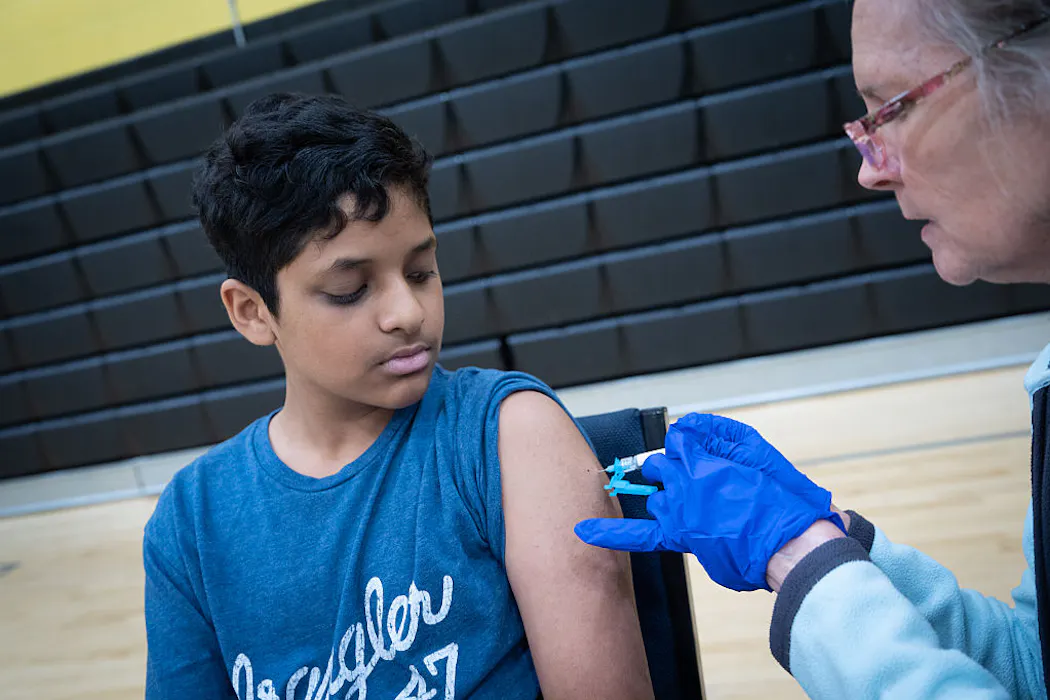
What declining vaccination rates mean for families in Allegheny County – where 1 in 3 kindergarten classrooms lack herd immunity for measles

Source: The Conversation – USA (3) – By Kar-Hai Chu, Associate Professor of Public Health, University of Pittsburgh

Unvaccinated individuals face 140 times higher risk of contracting measles. Sarah L. Voisin/The Washington Post via Getty Images

As the risk of measles remains an ongoing concern, herd immunity in Allegheny County, Pennsylvania, is already slipping. According to data obtained via The Washington Post in January 2026, 1 in 3 Allegheny County kindergartners were in a classroom too far below adequate vaccination coverage to stop a measles outbreak during the 2023-24 school year.

A professor from the University of Pittsburgh’s School of Public Health, Kar-Hai Chu, and a research program supervisor, Maggie Slavin, answered our questions about declining measles, mumps and rubella vaccination rates and what it means for the future of public health.

Private and parochial/religious schools in Allegheny County fall below the herd immunity threshold, while public schools tend not to. What explains that gap, and should it concern us?

Research shows the disparity between vaccination coverage in private and parochial/religious versus public schools is that private and parochial/religious schools tend to have higher rates of exemptions to vaccinations for moral and religious beliefs.

Local vaccination rates in Allegheny County schools are declining and are below the necessary level of vaccination coverage to stop the spread of measles: 95%. Between the 2023-24 and 2024-25 school years, public schools displayed an overall decline in coverage, whereas private and parochial/religious increased coverage between the two years, yet have greater variation in coverage across schools. Regardless of school type, children should have complete and updated vaccinations to protect themselves and the community. Even small dips in vaccination rates can lead to the spread of disease.

What are combination vaccines and how long have they been used?

Combination vaccines are single injections that protect against multiple, preventable diseases and have been used since the 1940s. They represent one of public health’s most successful interventions. Common examples include DTaP – for diphtheria, tetanus and pertussis – and MMR, for measles, mumps and rubella. The MMR vaccine has been licensed since 1971 and helped eliminate measles from the U.S. by 2000. It reduced cases by 80% within a decade of its introduction to society.

Why are some government officials calling to split these vaccines?

The U.S. officials calling to split combination vaccines cite unsubstantiated claims linking them to autism and concerns about too many vaccinations administered at once.

These claims contradict decades of scientific evidence that demonstrates the safety and efficacy of combination vaccines.

A panel of adults sit around a long table drenched in a blue tablecloth.
In June 2025, Health and Human Services Secretary Robert F. Kennedy Jr. dismissed all members of the CDC’s Advisory Committee on Immunization Practices.
Elijah Nouvelage/Stringer Collection via Getty News Images

Who determines vaccination recommendations in the US?

Since 1964, the Advisory Committee on Immunization Practices has provided evidence-based vaccination recommendations. The committee consists of volunteer medical and public health experts appointed by the secretary of Health and Human Services for staggered, four-year terms. These experts review scientific evidence throughout the year and update recommendations accordingly. States maintain authority to implement these recommendations as they see fit. Vaccination recommendations have been politicized under the current administration and are currently in a sort of limbo.

In June 2025, HHS Secretary Robert F. Kennedy Jr., who has a history of promoting anti-vaccination dissinformation, took the unprecedented step of firing all 17 committee members and appointing 12 new members with questionable qualifications and conflicts of interest. This could be considered a fundamental disruption to the evidence-based process that has protected public health for over 60 years.

The Pennsylvania Department of Health and Gov. Josh Shapiro have stated that they continue to endorse evidence-based vaccination guidelines from leading national medical associations, such as the American Academy of Pediatrics, American Academy of Family Physicians and American College of Obstetricians and Gynecologists.

What are the real-world consequences of vaccine misinformation and disinformation?

An example consequence is now visible: Measles is spreading again in the U.S. In 2025, there were 2,255 confirmed cases, which is nearly double the 2019 peak of 1,274 cases.

While there haven’t been any confirmed cases of measles in Allegheny County in 2026, there were confirmed measles cases in Lancaster County on Feb. 3, according to the Pennsylvania Department of Health, which determined the individuals were not vaccinated.

Another visible consequence of vaccination misinformation and disinformation is that unvaccinated people face 140 times higher risk of contracting measles. Over 90% of 2025 cases in the U.S. occurred in people who were unvaccinated or had unknown vaccine status.

Signs point toward measles testing near an emergency department.
The MMR vaccine was licensed in 1971 and helped eliminate measles from the U.S. by 2000.
Jan Sonnenmair/Stringer Collection via Getty News Images

When government officials become sources of misinformation, the threat multiplies exponentially. The World Health Organization identifies vaccine hesitancy as one of the biggest threats to global health.

What can be done to protect evidence-based vaccination policy?

The American Academy of Pediatrics emphasizes that state-level policies may offer greater responsiveness to local needs while maintaining evidence-based standards.

Stronger state policies play a key role in ensuring vaccine access. In Louisiana, for example, framing vaccination as a way to keep your neighbors safe has been used as an effective way to appeal to local communities. In South Dakota, advocates are reaching business owners by emphasizing the economic benefits of immunization. The state of Oregon created a financing model that allows providers and clinics to access vaccines with no upfront costs, then they reimburse the state once they have been paid by insurers.

People can support organizations that prioritize scientific evidence over anecdotes, demand transparency in policymaking and understand the difference between legitimate scientific debate and coordinated misinformation. These are crucial steps in protecting vaccine policies. The 2026 American Academy of Pediatrics guidelines have been deemed trustworthy by 12 health care organizations that represent over a million pediatric medical professionals.

The Conversation

Kar-Hai Chu receives funding from the NIH.

Maggie Slavin does not work for, consult, own shares in or receive funding from any company or organization that would benefit from this article, and has disclosed no relevant affiliations beyond their academic appointment.

ref. What declining vaccination rates mean for families in Allegheny County – where 1 in 3 kindergarten classrooms lack herd immunity for measles – https://theconversation.com/what-declining-vaccination-rates-mean-for-families-in-allegheny-county-where-1-in-3-kindergarten-classrooms-lack-herd-immunity-for-measles-277469

Greece’s new laws crack down on art fakes and forgeries – an expert in the market for shady art explains why they might backfire

Source: The Conversation – UK – By Anja Shortland, Professor in Political Economy, King’s College London

The art market is riddled with fakes and forgeries. Yet in most countries, those trading in genuine masterpieces are left to their own devices when it comes to monitoring art sales – creating their own ways to flag problematic objects and verify the authenticity of others.

New art laws in Greece, however, suggest the country is taking the business of art legislation more seriously.

In-depth scrutiny can be extremely lucrative for sellers of art. A reputation for selling only the highest-quality art attracts both moneyed collectors and art investors, with competitive bidding driving prices into the stratosphere.

High commissions pay for entire departments of specialists in major auction houses, as well as connoisseurs, academic researchers and companies offering forensic, art historic and legal advice.

Online marketplaces often adopt a radically different approach to selling art: little or no scrutiny, vague claims of authenticity, and a clear norm of “caveat emptor” (buyer beware).

Anyone buying in this market benefits from low prices for attractive objects, but buyers should not expect them to pass scrutiny in terms of authenticity or legitimacy.

Once you start looking closely, the art market turns out to be segmented into several distinct sub-markets, each with its own rules of play that assure a certain minimum quality. Each institutionalised level of due diligence generates greater buyer trust, and justifies a price premium over the lightly monitored cheap and cheerful objects traded as “collectibles” on internet platforms.


Read more:
Selling stolen art is tricky, so why even bother heisting it? An expert explains


The new art laws in Greece suggest the state may be interested in tidying up the unregulated chaos of this market. It has specifically criminalised the creation and intended distribution of fakes and forgeries for the art and collectibles market, and their misrepresentation as higher value objects to potential buyers.

For those convicted, there is a sliding scale of penalties, depending on the volume and value of the intended fraud. Objects deemed fakes or forgeries may be impounded and destroyed.

Forgeries are big business in the mid-market, which deals in artworks priced from a few hundred to tens of thousands of pounds. In 2024, Italian police forces dismantled a trans-European network producing and distributing sophisticated replicas of the works of Banksy, Gustav Klimt, Andy Warhol and Picasso with an estimated market value of €200 million (£174 million).

In 2025, German police seized forged Rembrandt, Frida Kahlo and Picasso paintings intended for sale for millions of Euros. They arrested ten people including an elderly man who provided the seller with fake authentication services.

Rembrandt’s The Sampling Officials of the Amsterdam Drapers’ Guild
Rembrandt’s The Sampling Officials of the Amsterdam Drapers’ Guild (1662) is one of the paintings that was allegedly replicated in Germany.
Wikimedia

Given the depth of knowledge in the art market, the reliance on a single “expert” report in many cases suggests there could be a degree of cooperation between forgers, buyers and the distributors of their works.

The new Greek law names and targets all aspects of this value chain. It allows the police to intervene and seize objects even before a sale has taken place. Intended fraud – for example, advertising a forged painting as a genuine masterpiece – is sufficient to merit an investigation.

It is, though, highly unlikely that the Greek police will proactively search for fakes and forgeries. The expertise to identify fraud is held in the art world, and police will continue to rely on tip-offs from experts.

Forgeries mostly come to the attention of genuine experts when a fraud victim tries to resell or donate an artwork to a museum – usually many years after acquiring it. For the scammed collector, the best way forward is to return the object to the seller for a refund. As they have a reputation to protect, dealers are often surprisingly amenable to hushing up the problem.

However, the art world is a close and gossipy community, so information of several suspicious objects from the same source spreads. The re-examination of other artworks connected to that seller sometimes turns up more problems. If the seller is unresponsive to peer pressure, a consensus may emerge that they should be put out of business. It is often only at this point that the police are approached.

The new laws in Greece establish a sound basis for the trial and conviction of egregious fraudsters. They have already been used against the business of a well-known art dealer in Athens, whose stock is alleged to have included hundreds of fakes and forgeries. The dealer now faces charges on multiple offences – including embezzlement, fraud and money laundering, all of which are denied.

The sliding scale of penalties – including lengthy prison terms and significant fines – will probably change the behaviour of dealers and auctioneers who may have laughed off previous sanctions, tempted by excellent profit margins.

In Greece, at least, it is now less attractive to sell fishy objects, and riskier to do so repeatedly. The threat of destroying identified forgeries may backfire, however.

While withdrawing forgeries from circulation protects subsequent buyers, it can also make it less likely that owners choose to investigate or report issues of authenticity. So, the positive short-term effects of this well-intended package of laws may eventually turn negative, as it discourages information about fraud to come to light.

The Conversation

Anja Shortland does not work for, consult, own shares in or receive funding from any company or organisation that would benefit from this article, and has disclosed no relevant affiliations beyond their academic appointment.

ref. Greece’s new laws crack down on art fakes and forgeries – an expert in the market for shady art explains why they might backfire – https://theconversation.com/greeces-new-laws-crack-down-on-art-fakes-and-forgeries-an-expert-in-the-market-for-shady-art-explains-why-they-might-backfire-280386

US ceasefire with Iran: What’s next? A former diplomat explains 3 possible scenarios

Source: The Conversation – USA – By Donald Heflin, Executive Director of the Edward R. Murrow Center and Senior Fellow of Diplomatic Practice, The Fletcher School, Tufts University

Iranians hold national flags in Tehran’s Revolution Square on April 8, 2026, after the United States and Iran agreed to a two-week ceasefire. Atta Kenare/AFP via Getty Images

President Donald Trump on April 7, 2026, announced a ceasefire between the United States and Iran, after more than a month of war marked by U.S. and Israeli strikes against Iranian military leadership, Iranian retaliation against regional oil infrastructure and a global energy crisis.

As a former U.S. diplomat, I have found there are three ways that warring parties arrive at a ceasefire.

The first scenario happens when one party tires of war and asks for peace, as Hamas, the militant Palestinian organization, did when it pushed for a ceasefire with Israel in late 2023 and early 2024. But this strategy reveals weakness to the other side and thus seldom works. Israel ignored Hamas and continued the war in Gaza until October 2025.

Warring nations also reach ceasefires when a powerful third country insists the two parties stop fighting due to risks to world peace and regional stability. In the modern era, the U.S. has done this several times in the Mideast when it has leveraged influence over key players, such as Israel and Egypt. But with the Iran war, there is no country in a good position to do this.

The current U.S.-Iran ceasefire is a good example of the third way that agreements to stop fighting can happen. Both countries were tired of the costs and the ongoing risks of the war, and they sent signals to that effect.

Pakistan, which deserves praise for stepping in, picked up on this and offered to serve as an intermediary. For at least two weeks, assuming the ceasefire holds, the U.S., Iran and Israel can lick their wounds and consider their next moves, as they work out whether the conflict between Israel and Hezbollah is covered by the ceasefire.

US and Israel’s war with Iran

Why were the United States and Iran ready for a ceasefire?

For the U.S. and Israel, the war didn’t go as planned. There was no true regime change in Iran and no uprising of its people.

Iran closed the Strait of Hormuz, a key maritime channel between the Persian Gulf and the Gulf of Oman, and maintained its ability to shoot down warplanes and attack its neighbors, including Israel, Saudi Arabia, the United Arab Emirates and Kuwait.

For Iran, the war has cost the lives of thousands of its citizens and dozens of its leaders. It has also ruined key infrastructure, and it had the potential to get much worse.

A large ship passes through a strait.
A vessel passes through the Strait of Hormuz following the announcement of a two-week ceasefire between the United States and Iran.
Shady Alassar/Anadolu via Getty Images

Key ceasefire demands

That’s how we got here. Now, where could the war go next?

One possibility is that the ceasefire lasts only two weeks, is shaky throughout – as seen with Israel’s bombing of Lebanon after the ceasefire was declared – and war resumes.

The world already knows what that looks like, with its impact on the global economy and the soaring financial costs to the U.S. military.

Another scenario is that the ceasefire is extended, either clearly or just de facto, with zero to minimal U.S. attacks or Iranian missile or drone launches. This is quite possible.

The third and best outcome would be if the two parties are able to use these two weeks, plus some extensions, to hammer out the key points of a peace deal.

What could this involve?

The two key U.S.-Israel demands are that Iran give up its nuclear weapons development and stop backing Hamas and Hezbollah, the Shiite militia with extensive influence in Lebanon.

At this point, I believe the Iranians should realize that nuclear weapons are not their best deterrence, and that their attempts to obtain them have led only to their isolation. Their true deterrence is their ability to close the Strait of Hormuz and choke off 20% of the world’s energy supply. For that, they need only drones and small speed boats.

Iran’s support of Hezbollah, which has contributed to the ruin of a once prosperous and democratic Lebanon since it launched military operations inside the country in 1982, is a liability to them as well.

Smoke rises from a city center.
Smoke billows from Beirut’s southern suburb, a stronghold of pro-Iranian Hezbollah, after a wave of airstrikes by Israel on April 8, 2026.
Marwan Naamani/picture alliance via Getty Images

Iran’s missile attacks during this war have made it clear that they would be able to deliver nuclear weapons if they had them. And their drone and missile strikes on their Muslim neighbors, including Qatar and Saudi Arabia, are only creating new enemies.

But what would the Iranians want in return?

First and foremost, an end to attacks by other countries attempting to topple their regime. Second, and just as important, a permanent lifting of sanctions so long as they end their support for terrorist groups and surrender their uranium. Unfortunately, such an agreement would do nothing for pro-human rights groups in Iran.

A lack of trust

All parties would need to be committed to working out the many details for a ceasefire to last. Pakistan would need to stay the course as an honest broker and not get discouraged. The governments involved would need to be able to persuade their people that such a deal is acceptable.

Sound impossible? It’s been done many times in history. Think of how intractable the conflicts in Northern Ireland or between Israel and Egypt once seemed. The key element is for both sides to fear a resumption of war more than they do the consequences of a compromise peace.

A major problem is the lack of trust on both sides. The U.S. has seen Iran go back on promises before. Israel was traumatized by Hamas attacks in 2023. And Iran can’t keep up with Trump’s constantly changing signals and his bombing Iran while negotiating with the government there.

But if the ceasefire holds and negotiations are successful, the world could see an Iran that, at least, is no longer a menace to its neighbors. And Iran would see itself being readmitted to the world economy, which it desperately needs.

If it doesn’t work, and we go back to how things were before the ceasefire, we’ll be back to the U.S. and Israel raining down hard-to-replace munitions on Iran, and Iran lashing out with drones and missile attacks against a dozen countries, with the world economy taking a beating.

The Conversation

Donald Heflin does not work for, consult, own shares in or receive funding from any company or organization that would benefit from this article, and has disclosed no relevant affiliations beyond their academic appointment.

ref. US ceasefire with Iran: What’s next? A former diplomat explains 3 possible scenarios – https://theconversation.com/us-ceasefire-with-iran-whats-next-a-former-diplomat-explains-3-possible-scenarios-280232

As Nasa’s Artemis II Moon mission ends, a new adventure for humanity beckons

Source: The Conversation – UK – By Ed Macaulay, Lecturer in Physics and Data Science, Queen Mary University of London

The Artemis II mission to the Moon is a voyage unlike any other in more than half a century. As the first crewed lunar flight since 1972, Artemis II marks the beginning of a new chapter in our relationship with the Moon.

Nasa’s goal is to establish a sustained human presence on the Moon. As the Artemis II ten-day journey concludes, it will be remembered as a profound moment in the history of human spaceflight. Stunning photos and video downlinked to Earth have provided a human perspective on this historic encounter with our celestial neighbour. The experience has rekindled the optimistic spirit of the Apollo era for a new generation.

The mission did not orbit the Moon. Instead, the Orion spacecraft carried the astronauts on a gravity guided loop around Earth’s natural satellite. During their flight, the crew – Reid Wiseman, Victor Glover, Christina Koch and Jeremy Hansen – travelled further into space than any previous human mission.

They reached a maximum distance of 252,756 miles from Earth, exceeding a distance record set by Apollo 13. Afterwards, mission specialist Jeremy Hansen challenged the next generation of explorers “to make sure this record is not long-lived”.

Nasa’s Artemis II mission launches from Kennedy Space Center (C-Span).

This challenge underscores the current focus of human space exploration. After decades sending its astronauts to low Earth orbit, the US space agency is looking outward again, not just to the Moon, but also Mars.

The mission began with a textbook launch of the Orion spacecraft on the Space Launch System (SLS) rocket from Kennedy Space Center in Florida. After a day in Earth orbit, Orion’s main engine performed a nearly six minute burn, known as the translunar injection (TLI), to send the capsule on its lunar trajectory.

As Orion headed to the Moon, commander Reid Wiseman captured a stunning view of our home planet. The beautiful image, dubbed Hello, World, shows Earth at night, illuminated only by reflected sunlight from the Moon.

Hello, World: Reid Wiseman captured this night-time picture of Earth on April 2, after Orion completed its translunar injection burn.
Nasa / Reid Wiseman

The mesmerising green light of auroras at the poles and the arc of zodiacal light (a faint glow of sunlight scattered by interplanetary dust) highlighted how thin Earth’s atmosphere is.

The image immediately drew comparisons with the iconic Blue Marble photograph taken during the Apollo 17 lunar mission in 1972; the last time humans viewed the entirety of Earth with their own eyes.

Lunar flyby

On the morning of April 6, as the lunar flyby approached, mission control played the crew a special message from astronaut Jim Lovell, recorded before his death in 2025. Lovell is a link to Nasa’s trailblazing past, having flown on both the Apollo 8 mission, the first to reach the Moon, and Apollo 13.

“Welcome to my old neighborhood!” Lovell said. “When Frank Borman, Bill Anders, and I (flew) on Apollo 8, we got humanity’s first up-close look at the Moon… I’m proud to pass that torch on to you.”

His words must have inspired the four astronauts as they began scientific observations of 30 key sites on the lunar surface. These included impact craters and volcanic features on the Moon’s near side and its far side – the face pointed away from the Earth.

The astronauts found the time to name a crater after Reid Wiseman’s wife Carroll, who died of cancer in 2020. In a touching moment, Jeremy Hansen was overwhelmed with emotion as he informed mission control of their suggestion.

Artemis II crew names a lunar crater after commander’s late wife (Video from Space).

Discovering Earth

As Orion travelled behind the Moon, the crew witnessed the blue crescent of Earth setting below the lunar horizon. A photograph, named Earthset, has already become a classic space image. It recalls the legendary Earthrise photograph taken by astronaut Bill Anders during Apollo 8 in 1968.

Earthrise was a defining picture of the Apollo era – credited with inspiring the environmental movement in the 1970s. As Bill Anders commented: “We came all this way to explore the Moon, and the most important thing is that we discovered the Earth.”

Earthset
This view of Earth setting was captured from Orion on April 6 2026, as the Orion spacecraft flew around the Moon.
Nasa

Anders may have been one of the first astronauts to articulate the “overview effect”. This affects some astronauts while viewing Earth from space. They describe being awestruck by our planet’s beauty and fragility. An enhanced sense of connection to humanity is often reported, as well as a profound feeling of responsibility for the environment.

After Orion emerged from behind the Moon, the crew was treated to a spectacular hour-long solar eclipse. As a mostly darkened Moon blocked out our parent star, the astronauts photographed the Sun’s faint atmosphere, the corona, which was made visible by the eclipse.

They also witnessed flashes of light from meteoroids (small space rocks) impacting the Moon – to the visible delight of scientists at mission control in Houston. Researchers want to understand the dynamics of these impact events, as well as the risk they could pose to future missions.

Eclipse
The Moon is seen here backlit by the Sun during a solar eclipse on April 6, 2026. The Orion spacecraft can be seen in the foreground, on the left.
Nasa

In his message, Lovell had reminded the astronauts to enjoy the view during their busy flyby. The astronauts later described the strong emotions they felt. Christina Koch said: “I just had an overwhelming sense of being moved by looking at the Moon. It lasted just a second or two… but something just threw me in suddenly to the lunar landscape and it became real.”

Victor Glover added: “I went straight where Christina went, and I was walking around down there on the surface, climbing and off-roading on that amazing terrain.”

Artemis II has shared the astronauts’ sense of wonder with people around the world. Those who have followed the mission will be left with a new appreciation of humankind’s place in the cosmos. The incredible images and human moments offered an unprecedented window into a voyage of pure exploration.

Earlier this year, Nasa’s administrator Jared Isaacman announced a bold new vision for the agency’s Artemis lunar programme, including an increased launch frequency for the SLS rocket and concrete plans for a permanent Moon base.

That vision of the future is off to an extraordinary start. For humanity, a new adventure is just beginning.

The Conversation

Ed Macaulay does not work for, consult, own shares in or receive funding from any company or organisation that would benefit from this article, and has disclosed no relevant affiliations beyond their academic appointment.

ref. As Nasa’s Artemis II Moon mission ends, a new adventure for humanity beckons – https://theconversation.com/as-nasas-artemis-ii-moon-mission-ends-a-new-adventure-for-humanity-beckons-280238

The UK could make migrants wait up to 20 years before becoming settled – making it one of the longest waits in the world

Source: The Conversation – UK – By Matilde Rosina, Assistant Professor in Global Challenges, Brunel University of London

Savvapanf Photo/Shutterstock

The UK government is planning to make it significantly harder for migrants to obtain permanent residence. If the proposals go ahead, the UK would become more restrictive than most other high-income democracies. In the case of refugees it would create a situation that is arguably without precedent among peer countries.

The UK’s home secretary, Shabana Mahmood, intends to double the qualifying period for indefinite leave to remain (ILR) (the UK’s form of permanent residence) from five to ten years for most migrants, and increase it up to 20 for some.

Eligibility requirements would also tighten. Migrants would need a clean criminal record (removing the previous 12-month sentence threshold), a higher English language standard and earnings above £12,570 per year for at least three years. This will disproportionately affect those least likely to be in full-time employment, including dependants of people on work visas, family visa holders and refugees.

The ten-year baseline for settlement would then be adjusted up or down based on individual circumstances. High-skilled workers, including NHS nurses and doctors, or those earning above £125,140, for instance, could qualify after five or three years respectively. Those on family visas (such as those married to a British citizen) or who are judged to be making efforts at “integration” such as by volunteering in the community could qualify after five to seven years. Those who have claimed benefits would have to wait up to 20 years, while for those who have entered the country illegally or overstayed their visa would have to wait up to 30 years to settle.


Read more:
Labour’s plan for migrants to ‘earn’ permanent residency turns belonging into an endless exam


For low-skilled workers, the qualifying period would start at 15 years. For refugees it would be 20, with no reductions available unless the person works or studies. In this case, their status would convert to a Protection Work and Study visa, subject to review every 30 months.

The government has cited the increasing number of people granted settlement as one of the drivers behind the reforms. This figure has been rising since 2017, reaching 163,000 in the year ending June 2025. The Home Office projects this figure will increase significantly over the next five years.

The reforms are also framed as a response to irregular migration. The government has cited the Danish model as inspiration, arguing that the longer timeframe will “strongly discourage” entry without documents and reduce the “pull factors” attracting people to the UK. However, research suggests that deterrence-based policies like this are a weak tool for reducing immigration: decisions to migrate are driven primarily by conditions in countries of origin, not by entitlements in destination countries.


Read more:
Is the Rwanda plan acting as a deterrent? Here’s what the evidence says about this approach


The Home Office has claimed these amendments do not require legislation, meaning they do not need to be put to a parliamentary vote. But opponents have signalled the intention to force a symbolic vote to make their views clear. Much of the concern has to do with the plans to apply the changes retrospectively.

An international outlier

These proposals would make the UK an outlier compared to other major economies. In the EU, the closest equivalent to ILR is the long-term resident status for third country nationals. This requires people to live in the EU on a valid visa for at least five years, and confers long-term residence with limited conditions. This exists alongside national schemes, such as Italy’s Permesso di Soggiorno UE per soggiornanti di lungo periodo and Germany’s Niederlassungserlaubnis that follow a similar approach.

Denmark and Ireland are the only two EU member states that opted out of the EU-level scheme. These countries have special arrangements for immigration and asylum policy (just like the UK did, before Brexit). They set their thresholds at eight and five years respectively, with Denmark’s reducible to four in some cases.

The UK government claims that making refugee status temporary and increasing the time for permanent residency contributed to asylum applications reaching a 40-year low in Denmark in 2025. However, this drop coincided with broader EU-wide trends in asylum flows, making it difficult to attribute the decline to domestic policy changes alone.

Among Anglophone countries, the picture is similar. The US green card confers permanent residence without a formal minimum years requirement. Though in practice, the vast majority of employment-based applicants previously held a temporary visa. Canada has no blanket time requirements, and refugees admitted through resettlement schemes can obtain permanent residency immediately.

Raising the standard qualifying period for permanent residence to ten years would make the UK more restrictive than most other comparable democracies in Europe and North America, and one of the strictest globally. Extending it to 20 years for refugees would make the UK’s approach unprecedented among peer countries.

These new requirements are closer to those of some of the hardest countries to achieve permanent residency such as Qatar and Japan, which require 20 and ten years respectively, for most cases.

An NHS sign outside of a a chemist's.
Evidence shows ‘pull factors’ such as healthcare benefits are not primary drivers of migration.
David G40/Shutterstock

Research suggests that migration policies which make migrants’ status temporary make them less likely to integrate. In particular, a study on Denmark found that making permanent residence harder to obtain for refugees reduced the chances of them being employed. People who believed they could not meet the new requirements became discouraged and disengaged from the labour market – the opposite of what the government wanted.

The UK’s proposed changes risk producing a similar dynamic, trapping people into what has been described as an “extended limbo”. Given these risks, the government should be careful in treating this approach as an end in itself when it comes to increased immigration.

The Conversation

Matilde Rosina does not work for, consult, own shares in or receive funding from any company or organisation that would benefit from this article, and has disclosed no relevant affiliations beyond their academic appointment.

ref. The UK could make migrants wait up to 20 years before becoming settled – making it one of the longest waits in the world – https://theconversation.com/the-uk-could-make-migrants-wait-up-to-20-years-before-becoming-settled-making-it-one-of-the-longest-waits-in-the-world-279036

Steroid injections for joint pain: everything you need to know about using them

Source: The Conversation – UK – By Sarah Golding, Postgraduate MSK Lecturer, School of Sport, Rehabilitation and Exercise Sciences, University of Essex

Steroid injections offer a rapid, effective way of reducing joint pain. crystal light/ Shutterstock

Osteoarthritis affects around 600 million people globally. It causes pain, stiffness and reduced joint function – most commonly in the knees, hands and hips.

There’s currently no cure for osteoarthritis. Many people manage the condition through exercise, maintaining a healthy weight, using walking aids and medications.

Commonly used medications include anti-inflammatories and opioids. While these help some, they also carry downsides – including significant side-effects, particularly in over-60s, and risk of addiction from long-term opioid use.

Joint replacement surgery can be very effective for relieving pain and improving mobility, but waiting lists in the last two years hit an all time high, due to increasing demands and reduced capacity since the COVID pandemic.

Surgery also carries risks such as infection, blood clots and nerve damage. Joint replacement surgery is typically suitable for those with advanced stage osteoarthritis.

So how else can osteoarthritis be treated?

Corticosteroid injections, commonly known as steroid injections or cortisone, have been used for joint pain for more than 70 years. They offer a rapid, effective way of reducing pain.

Corticosteroids are anti-inflammatory drugs able to reduce inflammation and pain associated with osteoarthritis. Injecting corticosteroid directly into the joint means it has maximum effect where needed, while minimising effects on the rest of the body.

The effects of steroid injections can last for months, reducing the need for surgery and reliance on prescription drugs. Those most likely to benefit from steroid injections have persistent pain which disrupts sleep and function, and who find other medications unsuitable or ineffective.

But as effective as steroid injections can be, their effects will vary from person to person. They may not be as effective in severe cases of osteoarthritis, as they only reduce inflammation and cannot repair damaged or lost cartilage.

Steroid injections may also risk accelerating arthritis or causing bone problems in some people, particularly if used in high doses or too often. Routine use in early stages of osteoarthritis is therefore generally avoided. This is because steroid injections can damage cartilage and bone cells which may further weaken and damage the joint.

Steroid injections may also not be suitable for people already taking high doses of steroids for other health problems (such as rheumatoid arthritis or asthma), and those who have a weakened immune system or are otherwise unwell. Taking too much artificial steroid affects the body’s production of natural steroid, which is essential for our metabolism.

Steroid injections may increase risk of infection following surgery if an injection has been given beforehand. For this reason, the majority of surgeons a minimum of three months between your last injection before surgery.

Although side-effects from steroid injections are fortunately rare, people need to be aware of these to make an informed decision about treatment. These can include: infection, allergic reaction, bleeding, bruising, skin colour changes, temporary flare in pain, bone and joint changes and increased blood sugar levels in those with diabetes.

A female doctor or nurse wearing blue scrubs injects a needle into a patient's knee. The patient is seated on the examination table.
Steroid injections should only be performed every three to four months.
aslysun/ Shutterstock

It’s advised that injections aren’t performed more than every three to four months to reduce risk of side-effects and accelerating the arthritis. With hip injections there is need to be more cautious due to risks of cartilage and bone damage from even just one injection .

Managing joint health

Depending on the country, you may be able to have a steroid injection done by your GP, a nurse or a physiotherapist.

Within the UK, first contact physiotherapists working in primary care are accessible in the same way the GP is, many are trained and can offer early access to steroid injections. Injections may be provided within a GP surgery, however hip and spine injections are usually guided by ultrasound or X-ray imaging, which may only be available within a hospital.

Since injections can temporarily reduce osteoarthritis pain, this provides a window of opportunity within which to start exercising. Exercise is important for managing osteoarthritis, as it can strengthen joint-supporting muscles and reduce pain. Physical activity can even be beneficial for those planning to undergo joint replacement surgery as it can improve pain, function and length of hospital stay after surgery.

After injection, it’s recommended people initially rest for a few days, but then gradually increase the amount of exercise they undertake. A physiotherapist can advise on the best types of exercise you can do to help manage your osteoarthritis.

Addressing other contributing factors is essential for managing osteoarthritis, as well. There’s strong evidence linking various metabolic factors to osteoarthritis – such as obesity, diabetes, high cholesterol and high blood pressure. These factors increase inflammation within the body, which affects cartilage in joints. Losing weight where needed is also hugely beneficial in reducing strain on joints.

For those who may not want to use steroid injections, there are other options.

Hyaluronic acid injections, for instance. These help our natural joint lubrication, called synovial fluid. In osteoarthritis, synovial fluid has less viscosity and levels are reduced. Hyaluronic acid is also believed to work as an anti-inflammatory.

Similar to steroid injections, they can reduce pain and increase movement and function. They may be more beneficial to people with earlier stage osteoarthritis and may theoretically have fewer negative effects to cartilage. There may also be value in combining the two types of injection.

Hyaluronic acid has a similar safety profile to corticosteroid, with few reported side-effects. It may, however, take up to 12 weeks for effects to show – though the benefits can last up to six months.

Accessibility is limited in the UK, hyaluronic acid is not currently recommended within NICE guidelines, primarily due to cost effectiveness, so may only be available to those privately funding their care.

Joint injections are not a cure for osteoarthritis. They can have variable effects, and work best combined with other management approaches (such as weight loss and exercise). But with long wait times for surgery, they may offer a valuable way to reduce pain and manage the condition.

The Conversation

Sarah Golding works for the University of Essex, who provide teaching for healthcare professionals on injection therapy.

ref. Steroid injections for joint pain: everything you need to know about using them – https://theconversation.com/steroid-injections-for-joint-pain-everything-you-need-to-know-about-using-them-279491

Cubans living abroad now hold the key to their country’s uncertain future

Source: The Conversation – UK – By Amalendu Misra, Professor of International Politics, Lancaster University

Since the early days of Cuba’s 1950s revolution – which overthrew the US-backed dictatorship of Fulgencio Batista and replaced it with a socialist government led by Fidel Castro – the Cuban diaspora have played a large role in determining the island nation’s economic and political landscape.

The first wave of predominantly wealthy, white Cuban emigrants have for decades campaigned for a watertight embargo against their homeland. Many fled immediately after the revolution succeeded in 1959, primarily to the US, and have largely refused to visit their homeland on principle.

More recent Cuban emigrants who have left the island (again overwhelmingly to the US) since the economic crisis of the 1990s, are generally less affluent and have less political clout. They have forged cross-border links with friends and family members who remain on the island. Through the remittances they send back, these people are now a vital source of foreign currency for Cuba.

The regime in Havana has traditionally maintained a disdainful attitude towards the Cuban diaspora. In the early waves of migration, Cuba’s government officially referred to those who emigrated as gusanos (worms) – traitors aiming to overthrow the government. Expat investment in Cuba was subsequently banned.

But following recent negotiations with the US, this policy posture has changed significantly. After decades of restricting its relationship with the diaspora, the Cuban government announced in March 2026 that it would allow Cuban emigrants residing in places like the US to return to the country, invest in the private sector and own businesses.

In an interview with NBC News on March 16, Cuba’s minister of foreign trade and investment, Oscar Pérez-Oliva Fraga, said: “Cuba is open to having a fluid commercial relationship with US companies and also with Cubans residing in the United States and their descendants.”

Washington’s blessings

The policy change comes as Cuba desperately attempts to rescue its devastated economy. A slew of economic and fuel embargoes imposed by the US government since Donald Trump returned to the White House in January 2025 have led to a severe crisis in the country.

Many Cubans are struggling to find food, medicine and other essential goods, while severe energy shortages are causing periods of complete blackout across the nation. The situation has become so dire that, for the first time in six decades, sporadic protests have broken out against the Cuban government.

In one of these protests, people in the central city of Morón ransacked a Communist Party headquarters. Videos on social media showed a group of people approaching the building with flaming objects, shouting “freedom, freedom” as they threw them inside.

The current state of affairs in Cuba has presented the US with an opportunity to orchestrate regime change – something it has sought for years. And proclamations by Trump and his secretary of state, Marco Rubio, suggest this may well be the US government’s intention.

In comments made to reporters in March, Trump said he believes he will have “the honour of taking Cuba”. He added: “Whether I free [Cuba], take it – I could do anything I want with it. You want to know the truth? They’re a very weakened nation right now.”

Rubio, who is the son of Cuban emigrants and has traditionally been hawkish about delivering regime change in Cuba, then declared: “Who’s going to invest billions of dollars in a communist country run by incompetent communists? … Giving people economic and political freedom is important, but they come hand in hand. They come together.”

Despite this rhetoric, many in Washington remain cautious about triggering an outright collapse of the regime. State collapse would almost certainly lead to an increase in the flow of Cuban refugees to the US – something the Trump administration wants to avoid.

While weakened, the regime in Havana remains in place. The extended Castro family still wields considerable power and influence in the country. The men leading the talks with the US, Fraga and Raúl Rodríguez, are two of Fidel Castro’s great-nephews.

Cuba’s president, Miguel Díaz-Canel, has said he will not resign under US pressure. He told NBC News on April 9 that “the concept of revolutionaries giving up and stepping down [is] not part of our vocabulary”.

Russia’s deputy foreign minister, Sergei Ryabkov, later said that Moscow, a longstanding ally of the regime in Havana, had no intention of abandoning Cuba.

Despite publicly calling for fundamental reform to the power structure in Havana, Washington’s approach towards Cuba seems primarily aimed at using its leverage to encourage the regime to make concessions that diminish the island’s value to US adversaries.

The US government has encouraged Havana to open its doors to expat investment before. Under the presidency of Barack Obama, who is credited with reestablishing diplomatic relations with Havana in 2009 after half a century of diplomatic blockades, the flow of people and remittances between the US and Cuba expanded.

This warming of relations created some opportunities for increased investment in Cuba, both by US citizens and Cuban emigrants. But the Cuban government maintained significant restrictions on large investments by Cubans living abroad, which hindered the full potential of foreign investment.

Fast forward to today, and the far more desperate economic and political situation in Cuba has made the regime in Havana more open to the demands of the US to restructure its governance. At this juncture, Cuba’s diaspora can be a much-needed catalyst for change in their home country.

The Conversation

Amalendu Misra is a recipient of British Academy and Nuffield Foundation Fellowships.

ref. Cubans living abroad now hold the key to their country’s uncertain future – https://theconversation.com/cubans-living-abroad-now-hold-the-key-to-their-countrys-uncertain-future-279695

How reforms under Patrice Talon have reshaped the electoral competition in Benin

Source: The Conversation – Africa (2) – By Narcisse Martial Yèdji, Sociologue politiste et enseignant-chercheur, University d’Abomey-Calavi de Bénin

Benin voters will head to the polls on April 12, 2026 to elect their next president. This election comes at a time when Benin’s political landscape has been profoundly transformed by reforms to the party system and the electoral code. They have created new power balances and deliberately tightened the eligibility requirements for the presidency. Political sociologist Narcisse M. Yèdji spoke with The Conversation Africa on the issue. He explains how these changes have narrowed the range of choices, reshaped power dynamics, and made voter turnout a key factor for the election’s legitimisation.


How have party system reforms in recent years reshaped power dynamics for this presidential election?

Upon taking office, Patrice Talon launched a series of reforms, overhauling the country’s economic, administrative, and political structures.

Reforming the party system and the electoral code became a central priority. Presented as a way to streamline and professionalise politics, these reforms, in fact, redefined the rules of electoral competition.

Two key mechanisms stand out ahead of he April 12 presidential election – the overhaul of the political landscape and introduction of the endorsement system (parrainage).

The law on political parties revised in 2018 just before the 2019 legislative elections made it much harder for parties to gain legal recognition.

A new requirement demanded wider territorial presence. Previously a party needed 120 founding members spread across municipalities. It jumped to 1,155 covering 77 municipalities in 2018. This led to a sharp drop in the number of legally recognized parties.

On the eve of the 2021 presidential elections, the country had only 14 officially recognized political parties, compared to more than 200 before the reform.

This cleanup largely benefited the two major pro government parties: the Union progressiste (Progressive Union) and the Bloc républicain (Republican Bloc). They absorbed smaller parties through mergers and defections. The opposition was left weakened with only a few remaining parties, including the The Democrats, the main opposition party, lingering on the margins of the two major political blocs.

This reshaping of the party system has created a real power imbalance. It benefits the two-headed bloc supporting the president. Their members have privileged access to the state’s political, administrative, and institutional resources.

Presented as an modernisation of the party system, this reform has nevertheless led to the exclusion of major historic parties and groups— particularly those in the opposition — from political competition.

The 2019 constitutional amendment and the subsequent changes to the electoral code introduced a second structuring mechanism: the endorsement system for presidential candidates.

Today, to run for president (now as a president and vice-president ticket) candidates must secure a minimum number of endorsements from local elected officials and/or MPs. The threshold, initially, set at 10% (16 endorsements) was raised to 15% in 2024, (28 endorsements), making it harder to enter the race.

Since the parties close to the president dominate Parliament and local governments, they control these endorsements and hold the keys to entry. Officially justified as a way to filter out less credible candidates, this mechanism has been criticized for limiting political inclusiveness. The opposition struggles to secure the required endorsements.

Overall these reforms have significantly changed the competition for the presidency. The lopsided two-party system combined with pre-filtering via endorsements has tilted the playing field in favour of the presidential bloc. This has been further strengthened by the defections from influential opposition figures.

As a result of these massive defections, the election on April 12 comes down to just two presidential tickets: the majority’s ticket and the one put forward by the president of Force Cauris pour un Bénin émergent (Cowry forces for an Emerging Benin
)
, a moderate opposition party with limited resources.

To what extent could voter turnout influence the legitimacy and outcome of the election?

The upcoming presidential election comes at a unique socio-political moment given the dynamics observed in Benin since 1990. Traditionally, the end of a term brings redistribution of political power, without necessarily predicting the final outcome.

But today, the electoral game appears more tightly controlled and less open, making the outcome more predictable. With the political field narrowed to two pairs of candidates, and without the participation of the main opposition party, Les Démocrates, the presidential race seems to be perceived by a big chunk of voters as flawed. This perception is likely to influence voters’ attitudes.

Voter turnout becomes a key issue. Turnout dropped to 26.47% for the presdiential election in 2021 and 27.12% for the legislative elections in 2019 compared to 65.92% for the 2015 legislative elections.

A further drop in voter turnout could erode the elected president’s legitimacy, regardless of legal validation. It may spark symbolic forms of protest (expressed through discourse and position, but not collective action like marches or riots).

With such limited real competition, the election’s results are quite predictable. Turnout will serve as an indicator of how much trust citizens still place in their electoral process. This situation could strengthen the incumbent government institutionally. But it may also deepen civic disengagement.

Is voter choice primarily driven by the goverment’s track record?

Talon’s term of office has had mixed reviews. The regime has both critics and supporters. Some observers believe that a large portion of the population views its actions favourably, particularly in economic terms. This suggests that its track record will objectively play a role in the 12 April elections. In this context, it could help to consolidate a loyal electorate, particularly among social groups that have benefited from the reforms or view them favourably.

Those who see Talon’s term as a failure face a harder choice due to lack of real alternatives. Talon’s record exists. It influences some voters. But it does not define the election. The limited political offer, controlled by the outgoing government restricts voter options way before the election.

At the same time, civic disengagement is growing. [Recent data] show declining citizen’s participation. Low turnout becomes a form of political act. It reduces the weight of the government’s track record in the voting decision. This reflects competing logics: institutional constraints that limit choices, plus low turnout driven by distrust.

Ultimately, the outgoing administration’s track appears to be a secondary factor in this election. Interesting, Patrice Talon hinted at this in 2016 during the presidential runoff debate:

What ensures a president’s effective reelection — what guarantees re-election — is not their performance, nor their results. It’s how he controls the key players. How he keeps everyone in line. How he ensures no one is capable of standing up to him, of being a real competitor. When you have no competitor, however bad you may be, you will be re-elected.

What indicators should be watched on election night?

Despite its unique characteristics, turnout will be a key indicator. Turnout in the regional strongholds of candidates and key opposition figures, as well as in strategic urban centers (Cotonou, Porto-Novo, Parakou, Abomey-Calavi) will provide early signs of how the vote is going.

But beyond than the election’s outcome, turnout will mainly reflect the legitimacy of Patrice Talon’s power, his electoral reforms, the current election and the result that will follow.

This may be one of the key factors in understanding how citizens and the political class relate to the next president, and broadly, how they relate to politics itself in the years ahead.

The Conversation

Narcisse Martial Yèdji does not work for, consult, own shares in or receive funding from any company or organisation that would benefit from this article, and has disclosed no relevant affiliations beyond their academic appointment.

ref. How reforms under Patrice Talon have reshaped the electoral competition in Benin – https://theconversation.com/how-reforms-under-patrice-talon-have-reshaped-the-electoral-competition-in-benin-280333

South Africa’s farmers aren’t yet replacing chemical fertilisers with sustainable alternatives – this is why

Source: The Conversation – UK – By Mokgadi Miranda Hlongwane, Lecturer, Department of Chemistry, Tshwane University of Technology

Green bean plants in one of the small-scale farms in Phiring village, South Africa. Mokgadi Hlongwane, CC BY-NC-ND

The growing use of toxic agricultural chemicals including fertilisers is also driving a scaling up of sustainable agrochemical alternatives.

In South Africa, I’ve been exploring why small-scale farmers resist switching to these more cost-effective and environmentally friendly solutions, such as “biological fertilisers”. Rural small-scale farmers are hesitant about these non-toxic bacterial alternatives because they aren’t readily available or widely understood.

One such biological fertiliser is made from rhizobia. This bacteria converts atmospheric nitrogen into a nutritional form that can be absorbed easily by the roots of plants known as legumes. This process is called “nitrogen fixing”.

Biological fertilisers harness the power of these nitrogen-fixing bacteria to enhance the growth of legume crops such as bambara nuts, common bean and soybean, by making soil nutrients more available. Legumes are cost-effective and protein-rich crops.

My PhD research showed how rhizobia improves the growth of cancer bush, a multipurpose plant native to South Africa. Rhizobia also enhances the therapeutic effect of medicinal plants such as cancer bush, which is traditionally used as an anti-inflammatory treatment or to boost the immune system.

Some rhizobia tolerate extreme environmental conditions and can enhance plant growth even during drought. Rhizobia also improve soil health, increase microbial diversity and nutrients.

Unlike chemical fertilisers which easily wash away when it rains, rhizobia-based biological fertilisers persist in the soil for a long time. This means repeat applications aren’t often required.

Growing up in rural South Africa, I saw how small-scale farmers were hugely dependent on chemical fertilisers. Today, many of these farmers today are aware of the negative effects of synthetic chemical fertilisers. Yet they continue to use them.

Chemical fertilisers reduce soil fertility and pollute the environment. Synthetic agricultural chemicals like these can cause eutrophication – when nutrients such as phosphorus and nitrogen overload streams and rivers, causing excessive algal growth. This depletes oxygen in the water and poisons aquatic life.

In contrast, Rhizobia-based fertiliser technology is cost-effective, non-toxic and sustainable. But even with hundreds of these fertilisers now on the market, their adoption among small-scale farmers remains very low.

Reasons for reluctance

To understand why farmers resist adopting sustainable alternatives, I spent a day in Phiring, a village in Limpopo Province, South Africa. This farming community still relies heavily on financial support from the government to pay for agricultural supplies such as fertilisers.

I spoke to 15 farmers about their cultivation practices and perceptions of both rhizobia-based and chemical fertilisers. Restricted access to biological fertilisers and limited knowledge about their correct application discouraged them from switching. Most farmers wanted to know where to buy biological fertilisers and how best to use them.

One farmer noticed that his farm had a low crop yield compared to more recently established farms. The soil on his land had probably deteriorated due to extendsive use of chemical fertilisers over a decade.

Some farmers wrongly assumed that crops treated with biological fertilisers would grow slowly, rot quickly and have a low crop yield. As a result, they had not tried these alternatives to chemical fertilisers.

Convenience and access

This challenge is compounded by the abundant supply of chemical fertilisers. The Comprehensive Agricultural Support Programme is an initiative from the Department of Agriculture, Forestry and Fisheries that supports small-scale farmers across South Africa. It provides vast amounts of chemical fertilisers for free.

Research on the low uptake of climate‑smart agriculture technologies identifies limited funding, low awareness and poor access to agricultural inputs as key barriers. Providing biological fertilisers through the same government programme would significantly increase adoption.

The farmers told me that their choice of cultivation practices is influenced both by convenience and access. Most farmers learn from their peers and seldom follow the instructions from the fertiliser manufacturers, so are likely to over- or underdose.

They rarely conduct soil analysis. This makes it difficult to select fertilisers that are suitable for their land, soil conditions or crop. In these cases, soil health further deteriorates and crop productivity declines.

The farmers I spoke to acknowledged their lack of knowledge about fertiliser applications, cultivation systems and available alternatives.

When legume crops are treated with rhizobia fertilisers, the increased nutrients and microbial diversity in the soil can also benefit non-legumes such as maize and wheat. this can happen through intercropping (simultaneously planting non-legume with legumes) or rotational cropping (planting legumes in one season and another crop in the same field the next).

There is huge potential for farmers to gain by switching from conventional agrochemicals to rhizobia-based fertilisers – but first, the financial constraints and misconceptions must be addressed.

The Conversation

Mokgadi Miranda Hlongwane receives funding from the South African National Research Foundation and the Elsevier Foundation.

ref. South Africa’s farmers aren’t yet replacing chemical fertilisers with sustainable alternatives – this is why – https://theconversation.com/south-africas-farmers-arent-yet-replacing-chemical-fertilisers-with-sustainable-alternatives-this-is-why-278144