District school boards have become political hotbeds for book bans and more – here’s what they actually do

Source: The Conversation – USA (2) – By Carrie Sampson, Assistant Professor in the Division of Educational Leadership and Innovation, Arizona State University
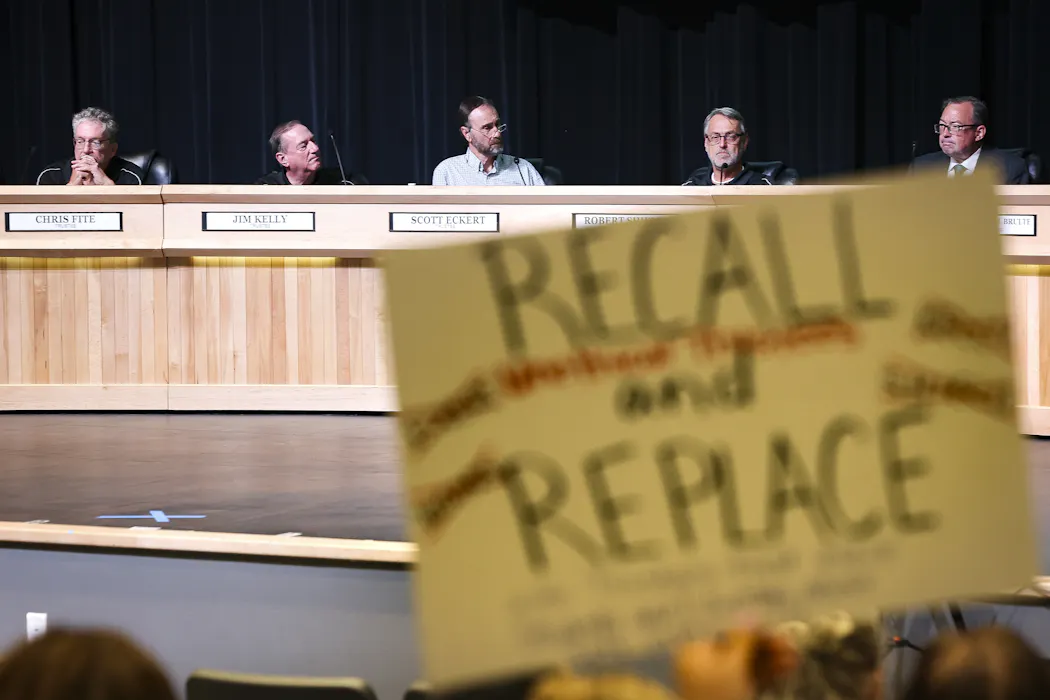
People hold signs during a Grossmont Union High School District board meeting in El Cajon, Calif., in July 2025. Meg McLaughlin/The San Diego Union-Tribune via Getty Images

Election races for local school boards have become hotly contested in many states as they have become forums for debates over gender-identity discussions, immigrant students and even prayer at school events.

Liberal candidates largely swept school board elections on April 7, 2026, in politically contentious districts in Wisconsin, Missouri, Alaska and Oklahoma, where book bans, gender identity and prayer during school events were on the table.

Amy Lieberman, the education editor at The Conversation U.S., spoke with Carrie Sampson, a scholar of educational leadership and policy with an emphasis on school boards, to understand what school board members do and why these local elections carry weight for many parents, teachers and students.

A large group of people are seen seated in a room with a projector, facing toward a row of people seated side by side at a table.
Parents attend a school district board meeting in Placentia, Calif., in February 2026, as board members considered a resolution supporting Immigration and Customs Enforcement.
Leonard Ortiz/MediaNews Group/Orange County Register via Getty Images

What are district school boards?

School boards are the governing organization for local school districts. There are typically anywhere from five to 21 members of a school board in a district. On average, there are seven to nine members on a school board.

Overall, there are approximately 13,000 school districts and about 90,000 local school board members in the United States.

School board members are typically elected, but sometimes they are appointed by mayors or other local or state officials. They are representatives of their local communities, as well as trustees who make governing decisions about school district budgets, hiring and other issues like a school district’s educational priorities.

School board elections typically have relatively low voter turnout. Research shows that nearly 40% of school board elections go uncontested.

The majority of school board members are unpaid, but some receive a small stipend for their work. A handful of school boards, like in Los Angeles, for example, receive a relatively large salary.

What does a school board member’s day-to-day work look like?

School boards typically meet twice a month, often to deliberate over issues such as budget or policy decisions.

One of a school board’s major jobs in most districts is hiring and firing a district superintendent, who effectively acts as the CEO of the district.

In terms of fiscal decisions, a school district administrator often presents what budget allocations should be for schools, and a school board votes to approve or disapprove that.

Most school boards create agendas and vote on a range of issues that are not particularly controversial, like whether the district will adopt an after-school program.

Why does a school board’s work matter?

School boards can make some critical decisions that impact the lives of students, parents and teachers. Many school districts are dealing with issues around school closures. Ultimately, school boards decide whether they are going to close a school in a district.

Many school districts are experiencing declining student enrollment, in part because of birth rate declines. People also have more and more school options to pick from, be it private schools, charter schools or homeschooling.

Within the past few years, school boards have also gained a lot of attention about whether they should ban particular books from districts, and whether they should ban or approve certain curriculum.

What other controversial issues have they taken on in the past few years?

Years before COVID-19, school boards in some conservative communities took on questions about which bathroom transgender students in public schools should use. Another big issue is whether schools should allow transgender students to participate on gendered sports teams.

During the pandemic, a rising number of communities began to see school boards as critical decision-makers. School boards were often making decisions about whether to close or reopen schools. They were also voting on requirements related to mask mandates or vaccines. Even people who didn’t live in certain school districts showed up at board meetings to advocate for certain COVID policies.

During the Black Lives Matter protest movement in 2020, some conservative communities started to speak out against critical race theory and their fear that it was being taught in K-12 schools. Most teachers don’t actually instruct on critical race theory.

Around this time, two major school advocacy organizations emerged nationwide: Moms for Liberty and Defending Education, formerly known as Parents Defending Education. These groups tried to elect conservative school board members to take on issues like book bans – and in some cases did so successfully.

My colleague Gabriela Lopez and I wrote a research paper in 2024 about people’s attempts to recall school board members. In 2021, we found, there was an all-time high of 545 school board members who faced recall, mostly because of mask mandates and other COVID-related issues.

Another trend was that police arrested or charged at least 59 people due to unrest at school board meetings from May 2021 through November 2022.

People stand along a metal barricade and one woman holds a sign that says 'End masks now.' A boy next to her holds a small American flag.
A woman holds a placard protesting mask mandates in schools outside a meeting of the Volusia County School Board in DeLand, Fla., in September 2021.
Paul Hennessy/SOPA Images/LightRocket via Getty Images

Are school boards taking on more controversial issues than they used to?

Every era has a point at which these controversial issues come to the school board level.

School boards made critical decisions around school desegregation in the 1950s through the 1970s. My research with colleagues on this topic shows that while many districts were legally mandated to desegregate schools, it was often school boards that voted on how these schools would be desegregated. Some school boards voted on policies that placed the burden on Black children and their families. One school board in Virginia even temporarily closed the schools completely to avoid desegregation.

Twenty to 30 years ago, many school boards faced tension over whether and how schools should teach sex ed.

Today, a lot of the political controversy about school boards is more widely known, for a few reasons. First, more communities have access to school board meetings, since many are video recorded. Second, social media has amplified what school boards do. There are also more outside organizations, such as local chapters of Moms for Liberty, that have been involved with school boards.

School boards taking on controversial issues are more likely to be in suburban and racially diverse school districts, compared to their rural or urban counterparts.

A report in 2024 found that the cost of conflict among school boards nationwide in 2023-24 was nearly $3.2 billion, when considering the amount of turnover or security needed for school board meetings.

The Conversation

Carrie Sampson does not work for, consult, own shares in or receive funding from any company or organization that would benefit from this article, and has disclosed no relevant affiliations beyond their academic appointment.

ref. District school boards have become political hotbeds for book bans and more – here’s what they actually do – https://theconversation.com/district-school-boards-have-become-political-hotbeds-for-book-bans-and-more-heres-what-they-actually-do-279953

Cannabis legalization spurs innovation, but not always in ways that benefit patients or public health

Source: The Conversation – USA (2) – By Lucy Xiaolu Wang, Assistant Professor of Resource Economics, UMass Amherst

Even after legalization, researchers face significant barriers to studying cannabis. Visoot Uthairam/Moment via Getty Images

Innovation in health care saves lives. But not all health innovations have enough evidence to actually benefit patients.

Barriers to innovation are often higher in illicit or restricted markets, including cannabis, stem cells and cryptocurrencies. Researchers face higher costs, limited access to raw materials and data, and stricter regulations.

Cannabis illustrates a particularly confusing tension between regulatory restrictions on one hand and research and innovation on the other.

While the U.S. federal government still classifies cannabis as having “no accepted medical use,” many states have legalized it for medical or recreational use. Meanwhile, the Department of Health and Human Services obtained a cannabis-related patent in 2003 covering potential medical uses of cannabis compounds for protecting the brain from damage or degeneration. The patent was exclusively licensed for commercialization.

Research and innovation on cannabis can take many forms. Clinical trials may study cannabis products as medical treatments, the effects of cannabis on its users, or factors related to abuse and dependence. Meanwhile, cannabis-related patents can be filed for wide-ranging purposes, such as chemical formulations, methods for production or new consumer products like edibles, beverages or vaporizers.

But do these innovations actually benefit consumers and patients?

Hand wearing nitrile glove touching a cannabis plant
The complex legal landscape of cannabis makes research and regulation difficult.
James MacDonald/Bloomberg

We are economists studying how institutional changes affect innovation in different markets. Our recently published research found that legalization of recreational cannabis use appears to spur innovation, but primarily in ways that expand commercial opportunities rather than scientific understanding or health benefits for patients.

Cannabis’ evolving legality in the US

Cannabis is a plant that contains chemical compounds called cannabinoids. One such compound, tetrahydrocannabinol, or THC, produces psychoactive effects, while another compound called cannabidiol, or CBD, is often used to relieve anxiety and pain. However, there has been insufficient evidence on how effective cannabis products are in treating medical conditions, as well as a lack of consistent medical and dosing guidance.

At the federal level in the U.S., cannabis has been classified as a Schedule I drug for over a half-century. This classification indicates that the federal government considers cannabis to have a high potential for abuse and no accepted medical use.

As a Schedule I drug, there are significant restrictions on cannabis research. Researchers who seek to conduct cannabis-related clinical trials must obtain approval from both the Food and Drug Administration and the Drug Enforcement Administration, a process that can take over a year. They are also limited to using select varieties of cannabis obtained from federally authorized cannabis suppliers, and are generally prohibited from studying products available in state-authorized markets.

Cannabis interacts with the brain’s endocannabinoid system.

There are ongoing pushes to relax these restrictions. Meanwhile, cannabis has been legalized to varying extents in many states. California became the first state to pass a medical cannabis law in 1996, allowing qualified patients to grow, possess and use cannabis for medical purposes. Many states followed suit in the late 1990s and early 2000s. As of June 2025, 40 states allow medical cannabis use.

A number of states also allow recreational or nonmedical cannabis use among adults, which is regulated in similar ways to alcohol. Colorado and Washington enacted the first recreational cannabis laws in 2012, and there are 24 states that permit adults to use cannabis recreationally as of January 2026.

Altogether, the legal landscape for cannabis in the U.S. has varied considerably across states and over time. States with more permissive laws can lower the costs of medical research and product development with cannabis, even if federal drug scheduling continues to restrict access. For instance, one group of Washington State University researchers asked participants to independently purchase and smoke cannabis from a legal dispensary before returning to their lab for study.

State legalization and cannabis innovation

To systematically examine how state legalization affects cannabis-related innovation, we compiled and analyzed datasets tracking cannabis-related clinical trials and patent applications.

We distinguished different types of cannabis-related innovation. Specifically, we categorized cannabis-related clinical trials based on whether they focused on its potential as a treatment, its usage and effects, or its role in drug abuse. Similarly, we categorized cannabis-related patents based on whether they focused on chemical compounds, medical uses, methods or products.

We also assessed public health concerns across three measures: patents explicitly involving THC; patents with a high risk of misuse; and patents targeting consumers directly, such as high-potency formulations, edibles or vaporizers.

Then, we compared changes in cannabis-related innovation over time in states that legalized cannabis earlier with those in states that did so later or not at all. We measured innovation by counting the number of cannabis-related clinical trials and patent filings. We distinguished between medical and recreational legalization to assess how different policies affect innovation.

Overall, we found that when states legalize cannabis for recreational use, cannabis-related patents increase – but mostly in commercial-oriented areas rather than health-focused ones. Patents were concentrated in market-oriented innovations like cultivation equipment and consumer products, rather than in clinical or science-based research. We also found some evidence that these innovations may raise public health concerns.

Legalization did not result in meaningful increases in clinical trials. This suggests that barriers to cannabis-related clinical research – such as limited access to research-grade cannabis, limited funding and stigma around working with a federally controlled substance – remain substantial.

Gaps between research and product

As 420 – signifying April 20, a day celebrating cannabis culture – approaches each year, public attention turns toward the legal status of cannabis.

The legal landscape has evolved rapidly over the past few decades, and further changes are in the pipeline. Both the Biden and second Trump administrations have made efforts to reclassify cannabis as a Schedule III substance, which would indicate that it has an accepted medical use and low-to-moderate potential for dependence.

These reevaluations of the legality of cannabis come at a critical time. There has been an explosion of recreational cannabis products in recent years, including increasingly potent strains and a wider variety of ways to use cannabis. Meanwhile, critical research on the health and safety of cannabis use has lagged due to heavy restrictions accompanying Schedule I status.

This gap between medical research and product innovation can have significant public health consequences. The 2019 to 2020 outbreak of lung injuries related to e-cigarette or vape use was linked partly to the use of unregulated or illicit cannabis vaping products. These harms highlight the risks of allowing product innovation for controlled substances to outpace scientific understanding.

Policies that significantly reduce obstacles to clinical research can in turn help close the widening gap between cannabis markets and addressing their public health implications.

The Conversation

Lucy Xiaolu Wang receives funding from the Institute for Humane Studies through a small research grant and the SERN Applied Microeconomics Workshop.

Nathan W. Chan does not work for, consult, own shares in or receive funding from any company or organization that would benefit from this article, and has disclosed no relevant affiliations beyond their academic appointment.

ref. Cannabis legalization spurs innovation, but not always in ways that benefit patients or public health – https://theconversation.com/cannabis-legalization-spurs-innovation-but-not-always-in-ways-that-benefit-patients-or-public-health-277422

‘Bouncing back’ is a myth – resilience means integrating hard experiences into your life story, not ignoring them

Source: The Conversation – USA (3) – By Keith M. Bellizzi, Professor of Human Development and Family Sciences, University of Connecticut

Into each life some rain must fall. Anastasiia Voloshko/Moment via Getty Images

When Maria looked at herself in the mirror for the first time after her mastectomy, she stood very still.

One hand rested on the bathroom counter. The other hovered near the flat space where her breast had been. The scar was raw and angry. The loss was quiet but enormous. Her body felt foreign.

In moments like these, people are often urged to be resilient – which can feel like being told to show no weakness, to push through no matter what. Or they imagine resilience as bouncing back: returning somehow unscathed to be the person you were before.

But standing in that bathroom, Maria knew there was no going back. And toughness wouldn’t change what had happened. The real question was how she could move forward, carrying this experience into her new reality.

Maria’s story, one I came to know personally, is far from unique. Loss, trauma and illness often bring the same wrenching questions of identity and the painful uncertainty of what comes next.

I’ve spent more than two decades studying resilience, particularly among individuals and families navigating these kinds of life-changing events. I am also a four-time cancer survivor and author of a new book, “Falling Forward: The New Science of Resilience and Personal Transformation.” If there is one myth I wish society would retire, it’s the idea that resilience means “toughness” or “bouncing back.”

woman wearing hat seated in wheelchair looks outside
Resilience doesn’t rely on relentless positivity in the face of traumatic challenges.
pocketlight/iStock via Getty Images Plus

Rethinking resilience based on research

Moments like Maria’s reveal something important: The way people tend to talk about resilience often doesn’t match how people actually live through adversity.

In popular culture, resilience is often equated with grit, toughness or relentless positivity. People celebrate the warrior, the fighter, the triumphant survivor.

But across research, clinical practice and lived experience, resilience is something far more nuanced, raw and human.

It’s not a personality trait that some people simply have and others lack. Decades of research show resilience is a dynamic process. It’s shaped by the small, everyday decisions and adjustments individuals make as they adapt to significant adversity while maintaining, or gradually regaining, their psychological and physical footing over time.

And importantly, resilience does not mean the absence of distress.

Research on people facing serious life disruptions shows that distress and resilience often coexist. For example, in my study of adolescent and young adult cancer survivors, participants reported being upset about finances, body image and disrupted life plans, while simultaneously highlighting positive changes, such as strengthened relationships and a greater sense of purpose.

Resilience, in other words, is not about erasing pain and suffering. It is about learning how to integrate difficult experiences into a life that continues forward.

How resilience really works

At one point, Maria told me she had started avoiding mirrors, intimacy, even conversations that made others uncomfortable.

“Well, you’re strong,” people would tell her. “Just stay positive. This too shall pass.”

But strength, she said, felt like a performance.

What ultimately shifted for Maria was not an increase in toughness. It was permission to grieve.

She began speaking openly about the loss of her breast; not just as a medical procedure but as a symbolic loss tied to identity, sexuality and womanhood. She joined a support group. She allowed herself to feel anger alongside gratitude for survival.

This kind of emotional processing turns out to be central to resilience.

My colleagues and I have found that people who actively process loss, rather than suppress it, demonstrate better long-term adjustment. Tamping down negative feelings may provide short-term relief, but over time it is associated with greater stress on your body and more difficulty adapting.

In other words, resilience is not about sealing the wound and pretending it no longer aches. It is about learning how to carry the wound without letting it consume your entire story.

Neuroscience supports this integration model. When people engage in meaning-making – reflecting on their experiences and incorporating them into a coherent life narrative – brain networks associated with emotional regulation and cognitive flexibility become more active. The brain, quite literally, reorganizes as you adapt to new realities.

Maria described the change simply.

“I don’t like what happened,” she told me. “But I’m not at war with my body anymore.”

That is resilience.

Arms in sweater with hand writing in a journal
Acknowledging what’s been lost can be part of the process of resilience.
Grace Cary/Moment via Getty Images

Practices that help build resilience

If resilience is about integration rather than toughness and bouncing back, how can you cultivate it? Research across psychology, neuroscience and chronic illness points to several evidence-based strategies:

  • Allow emotional complexity: Resilient people are not relentlessly positive. They allow space for the full range of emotions, such as gratitude and grief, hope and fear. Paying attention to your feelings through strategies such as reflective writing or psychotherapy have been linked to improved psychological adaptation.

  • Build a coherent narrative: Human beings are storytellers. Trauma can shatter one’s sense of self, but constructing a narrative that acknowledges loss while identifying continuity and growth supports adaptation. The goal is not to spin suffering into silver linings, but to situate it within a broader life story. For example, someone might say, “Cancer derailed my plans and changed my body, but it also clarified what matters to me and how I want to move forward.”

  • Lean into connection: Isolation magnifies suffering. Social support is one of the strongest predictors of how well people are able to cope and move forward after illness or trauma. For Maria, connection with other women who had had mastectomies normalized her experience and reduced shame.

  • Practice deliberate pauses: Intentionally give yourself some time to breathe. Mindfulness and contemplative solitude can strengthen your ability to regulate emotions and recover from stress. Pausing allows experience to be processed rather than avoided.

  • Expand identity: Illness, loss and trauma reshape how you think of yourself. Rather than clinging to who you were, resilience often involves expanding who you are becoming. Research on post-traumatic growth shows that people often report deeper relationships, clarified priorities and renewed purpose – not because trauma was good, but because it forced reevaluation. Maria no longer describes herself simply as a breast cancer patient. She is a survivor, yes, but also an advocate, a mentor, a woman whose sense of femininity is self-defined rather than dictated by her anatomy.

Moving forward

We are living in a time of widespread burnout and rising mental health challenges, where cultural pressure to appear strong often leaves people silently struggling. An insistence on grit and relentless optimism can backfire, making people feel inadequate when they inevitably feel pain.

Resilience is not about returning to who you were before illness, loss or trauma. It is about becoming someone new: someone who carries the scar, remembers the loss and still chooses to engage with life.

Maria still pauses when she sees her reflection. But she no longer turns away.

“This is my body,” she told me recently. “This is my story.”

Resilience is not forged in the denial of vulnerability, but in its acceptance. Not in bouncing back, but in integrating what has happened into who you are becoming.

And that, I believe, is where real strength lives.

The Conversation

Keith M. Bellizzi receives funding from the National Cancer Institute and the Connecticut Breast Health Initiative.

ref. ‘Bouncing back’ is a myth – resilience means integrating hard experiences into your life story, not ignoring them – https://theconversation.com/bouncing-back-is-a-myth-resilience-means-integrating-hard-experiences-into-your-life-story-not-ignoring-them-275069

25 million people lost Medicaid after the COVID-19 pandemic — and state policies shaped who stayed covered

Source: The Conversation – USA (3) – By Aparna Soni, Associate Professor of Health Policy and Management, Indiana University

Medicaid enrollment surged during the COVID-19 pandemic. SDI Productions/E+ via Getty Images

During the COVID-19 pandemic, the number of people covered by Medicaid rose month after month – an unusual pattern for the government’s
insurance program for people with low incomes and disabilities.

Why? A policy of continuous coverage during the pandemic essentially halted Medicaid disenrollment to make it easier for people to stay insured during the public health emergency. By early 2023, enrollment had reached an all-time high of more than 94 million people.

Then the trend abruptly reversed.

Between April 2023 – when states began resuming eligibility checks that had been paused during the pandemic – and mid-2025, more than 25 million people were disenrolled from Medicaid. The process became known as the “Great Unwinding.”

As a health economist who studies the effects of public policy on insurance coverage and health outcomes, I’ve been following these enrollment shifts closely. Now that the unwinding has mostly played out, Medicaid enrollment data reveal a fragmented, state-by-state picture. Coverage losses were not evenly distributed, reflecting differences in how states carried out eligibility checks and how much administrative burden they placed on eligible people trying to stay enrolled.

That patchwork of state policies still matters now. Under the 2025 budget law, widely referred to as the One Big Beautiful Bill Act, as of Jan. 1, 2027, states will have to enforce new Medicaid work rules and more frequently check eligibility for many adults who gained coverage during the expansion. So the same administrative differences exposed by the rollback of Medicaid coverage after the pandemic are likely to play a role again in who keeps their coverage and who loses it.

Pandemic enrollment jump

Before the pandemic, Medicaid and the Children’s Health Insurance Program, which provides coverage for children in families with modest incomes, together covered about 71 million Americans.

At its peak in 2023, during the COVID-19 pandemic, Medicaid enrollment reached more than 94 million people.

Normally, people must regularly renew their eligibility for these programs by confirming their income and household information. States remove people who no longer qualify or who fail to complete paperwork.

During the pandemic, however, those routine disenrollments largely stopped as part of the March 2020 Families First Coronavirus Response Act, which included a provision requiring states to keep most people continuously enrolled in Medicaid in exchange for additional federal funding. At the same time, job losses and income declines made more Americans eligible for Medicaid.

Together, those factors caused Medicaid enrollment to surge. Enrollment increased by roughly 23 million people during the COVID-19 pandemic, reaching about 94.1 million by 2023.

While the national uninsured rate fell to a record low of 8% during the pandemic, the increase in Medicaid enrollment did not translate one-for-one into fewer uninsured people. Some of those who gained Medicaid coverage had previously been insured through employer-sponsored plans, reflecting shifts in coverage as well as new coverage gains.

The ‘Great Unwinding’

The pandemic era’s continuous coverage policy was always meant to be temporary. Congress ended it in late 2022, allowing states to restart eligibility reviews beginning April 1, 2023.

That process required tens of millions of people to confirm they were still eligible or else lose their Medicaid coverage.

By the time most states finished the process, more than 25 million people had been disenrolled, while about 56 million had their coverage renewed.

One striking feature of the unwinding is that the majority – 69% of people who lost coverage – did so not because they were formally determined to be ineligible but because of administrative reasons, such as failure to return renewal forms or outdated contact information. These are known as “procedural disenrollments.”

Administrative hurdles during the unwinding disrupted continuity of coverage and, in turn, access to care. Racial and ethnic minorities and those with greater health needs were most affected.

State policy shapes coverage losses

As the number of people covered by Medicaid plunged, many states adopted policies to reduce unnecessary coverage loss. These administrative choices ultimately influenced how many eligible people remained covered.

The most common and most effective administrative tool was ex parte – or automatic – renewals. Instead of requiring beneficiaries to submit paperwork, states used existing government data such as tax records or participation in other assistance programs to automatically verify eligibility.

Six months into the unwinding process, more than half of Medicaid renewals were being completed automatically. States that relied more heavily on ex parte renewals had lower disenrollment rates.

States also experimented with other approaches, including extending deadlines for renewal paperwork, adding more staff to answer phones and help people complete renewals, and running outreach campaigns reminding people to update contact information.

Where Medicaid enrollment stands now

The most recent data shows that Medicaid enrollment has largely stabilized after several years of dramatic change. As of December 2025, the most recent month for which data is available, total enrollment stands at roughly 76 million – above prepandemic levels of about 71 million but below the pandemic peak of 94.1 million.

The unwinding offers a clear picture of how Medicaid functions when its rules change. During the pandemic, continuous coverage policies largely eliminated the usual cycle of people moving in and out of the program. When those policies ended, that churn returned – often driven not by changes in eligibility but by how renewal processes were implemented.

Looking ahead, the same state-by-state differences in policies that helped or hindered people’s ability to maintain Medicaid enrollment as pandemic coverage wound down are likely to matter again. Under the 2025 budget law, states must begin checking eligibility for many adults every six months instead of once a year. States must also enforce new work requirements for many adults starting in 2027.

The law also delayed some federal changes that were supposed to make Medicaid enrollment and renewal easier. So even when the rules come from Washington, who keeps their coverage may still depend heavily on how much paperwork, automation and hands-on help each state builds into the process.

Together, these trends suggest that future enrollment levels will be shaped by both expanding and constraining forces. These forces will have real consequences for the millions of people who rely on Medicaid – not just for coverage, but for consistent access to care, medications and financial protection during periods of instability.

The Conversation

Aparna Soni receives funding from the American Lung Association, the Centers for Disease Control & Prevention, the National Institutes of Health, the Indiana Department of Health, Eli Lilly & Corporation, the Indiana Business Health Collaborative, and the Upjohn Institute.

ref. 25 million people lost Medicaid after the COVID-19 pandemic — and state policies shaped who stayed covered – https://theconversation.com/25-million-people-lost-medicaid-after-the-covid-19-pandemic-and-state-policies-shaped-who-stayed-covered-277599

The enduring legacy of medieval Christian depictions of Islam in today’s political discourse

Source: The Conversation – USA (3) – By Anna Piela, Visiting Scholar in Religious Studies and Gender, Northwestern University

A stained-glass window in the Cathedral of Brussels depicting the ‘Siege of Jerusalem’ by the Crusaders in the 11th century. Jorisvo/iStock / Getty Images Plus

The war with Iran is not just a geopolitical conflict. We see religious rhetoric used to cast strategic interests as a moral or sacred matter.

U.S. House Speaker Mike Johnson described Iran’s majority faith tradition, Shiite Islam, as a “misguided religion” while discussing the ongoing U.S. strikes against Iran on March 4, 2026. A complaint made to the Military Religious Freedom Foundation alleged that same month that an unnamed military commander had said that “President Trump has been anointed by Jesus to light the signal fire in Iran to cause Armageddon and mark his return to Earth.” In the Book of Revelation, Armageddon represents the final battle between good and evil, associated with the second coming of Jesus Christ.

Soon after the U.S. attack on Iran, right-wing pastor Andrew Sedra commented that “Trump is going after the head of the snake, which is Islam.” He added that “God is using President Trump in a prophetic moment of time to execute judgment on evil and wicked civilizations.”

In part, such religious rhetoric draws on older narratives about Islam in Christian thought. In medieval times, Islam was often portrayed as a violent and extremist faith. Over the past few decades, many American politicians and Christian clergy have disparaged Islam and its believers. My research shows that these earlier portrayals remain recognizable in the rhetoric today.

Hostile depictions

Early Christian theologians began to designate Islam as a theological rival soon after its emergence in 610 C.E. In the eighth century, the monk John of Damascus described Islam as a “heresy” in his work “The ‘Heresy of the Ishmaelites.’” This is widely considered the earliest documented critique of Islamic doctrine.

In his 2002 book, “Saracens: Islam in the Medieval European Imagination,” historian John Tolan writes that medieval Christian writers disseminated “crude insults to the Prophet, gross caricatures of Muslim ritual [and] deliberate deformation of passages of the Koran.” They portrayed Muslims as “libidinous, gluttonous semi-human barbarians,” he adds.

Tolan and other historians show how these hostile depictions developed in time in monasteries and royal courts. In popular culture, epic poems called “chansons de geste” glorified Christian heroes vanquishing Muslim foes.

Notably, medieval Muslim theologians also produced cutting critiques of Christian doctrines such as the Trinity, which they viewed as polytheistic. However, these writings circulated largely within scholarly circles. In Christian Europe, however, anti-Muslim writings were often used to justify the Crusades. Pope Urban II urged in 1095 that Holy Land be wrested from those who inhabited it and brought under Christian control.

A painting shows a pope wearing a crown, standing alongside two other figures.
Pope Urban II depicted at a consecration ceremony in a 12th-century manuscript.
Bibliothèque nationale de France

Similarly, the Second, Third and Fourth Crusades were preceded by papal letters that depicted Muslims as enemies of the faith and called on Christians to reclaim Palestine.

The eventual military failure of the Crusades posed a new theological problem to Christian thinkers.

Medieval Christians believed history reflected God’s judgment. As a result, they struggled to explain the military success of Muslim armies in theological terms, since such victories in the Holy Land would imply divine favor for Muslims. In order to reconcile this, some medieval Christians developed the idea that the defeats were a punishment for Christian sin.

Accordingly, medieval epic poems and art often depicted Muslims as near-demonic, bloodthirsty figures wearing turbans and strange robes.

Christian missionary narratives

In later centuries, these anti-Muslim depictions were reworked to justify colonialism. Scholar Edward Said famously critiqued early modern narratives about people and cultures from the Middle East and Arab world in his foundational 1978 work, “Orientalism.”

He argued that Orientalist stereotypes reduced diverse peoples to a set of mostly negative traits: barbaric, violent, incomprehensible, but also lazy, gullible and mysterious. While not held by all Christians, these ideas circulated broadly within Christian and Western intellectual traditions, shaping durable representations of Muslims in literature, art, theology and politics.

Scholar Deepa Kumar, who recognized this tension, wrote that “while ordinary people can and do resist dominant ideas, those who rule the society tend to set the terms of discussion.”

Anti-Muslim tropes were reflected in Christian missionary narratives. In the 19th century, figures such as David Livingstone promoted what later came to be known as the “three C’s” of colonial expansion: Christianity, commerce and civilization, all portrayed as benefiting the colonized peoples.

Over time, these ideas became part of a broader moral justification for European imperial expansion, framing colonial rule as a civilizing mission. As part of this effort, missionaries often contrasted the moral authority of Christianity with Islam, which they portrayed as a morally stagnant and simplistic.

Islamophobia today

While these hostile themes have been adapted over centuries to fit new contexts, they are recognizable in political and media rhetoric today. This rhetoric shapes popular understandings of Islam in troubling ways.

Many men stand in rows, praying with their heads bowed.
Muslim men pray at a mosque in Jersey City, N.J., on Dec. 7, 2015.
Jewel Samad/AFP via Getty Images

In a survey of American Baptist clergy conducted for my 2026 book, “Confronting Islamophobia in the Church,” with co-author and Baptist pastor Michael Woolf, I found that many pastors describe Islam and Muslims as inherently violent, blasphemous, oppressive toward women, or incompatible with Western society. These pastors have adapted old Christian tropes to contemporary moral language. Theological accusations of Islamic “heresy” have morphed into concerns about apparent Muslim violence and women’s oppression.

A 2019 study found that 9 in 10 pastors believe that they influence what their congregants think about social issues, suggesting that religious prejudice, including Islamophobia, can be reinforced in church contexts. Indeed, historians of American evangelicalism such as Kristin Kobez du Mez note that Islam has been often portrayed in evangelical church contexts as violent and opposed to Christian values. In her 2020 bestselling book, “Jesus and John Wayne,” she cites a 2002 poll that found that 77% of evangelical leaders held an overall unfavorable view of Islam, and 70% agreed that Islam was “a religion of violence.”

At the same time, Muslim groups like Council on American-Islamic Relations and national interfaith coalitions such as Shoulder to Shoulder Campaign have worked with Christians to challenge these portrayals and promote more nuanced understandings of Islam. For example, Shoulder to Shoulder Campaign delivers anti-Islamophobia training to pastors and congregations – Faith over Fear – around the country.

Researchers have linked incendiary rhetoric about Muslims to spikes in discrimination and hate crimes in Europe and North America. A study by the Center for the Study of Organized Hate found a significant surge in anti-Muslim hate speech in the first week of the war in Iran. When politicians describe Islam as the enemy and the West as a civilizing force, they risk turning distant wars into everyday hostility toward American Muslim communities.

The Conversation

Anna Piela previously received funding from the National Science Center in Poland, the American Academy of Religion, and the Interfaith Alliance. Currently she is not receiving any funding.

ref. The enduring legacy of medieval Christian depictions of Islam in today’s political discourse – https://theconversation.com/the-enduring-legacy-of-medieval-christian-depictions-of-islam-in-todays-political-discourse-272036

Does ‘federated unlearning’ in AI improve data privacy, or create a new cybersecurity risk?

Source: The Conversation – Canada – By Abbas Yazdinejad, Assistant Professor, Department of Computer Science, University of Regina

As the capacity of artificial intelligence (AI) increases at an exponential rate, so do concerns about the privacy of user data.

Increasingly, organizations around the world are adopting something called federated unlearning that enables AI training without centralizing sensitive data. This allows hospitals, banks and government agencies to collaborate while keeping data local — an approach that’s regarded as a major advance in privacy.

Federated unlearning promises that user data can be removed from a trained AI system. A hospital, for example, could ask its AI system to forget a patient’s data.

In the European Union, this is defined as the “right to be forgotten.” Similar data deletion rights exist globally, though with different legal strengths and technical interpretations.

But what if the request to forget is not itself trustworthy? Our research shows that while federated unlearning appears to be a natural extension of data rights, it also introduces new hidden security risks that undermine trust in our digital world.


Read more:
Silent cyber threats: How shadow AI could undermine Canada’s digital health defences


New stealth vulnerabilities

During a process of federated unlearning, participants train local models on personal data, then send updates for those models to a central server. The server aggregates these updates to learn a single, shared system, which allows models to benefit from both the scale and scope of data.

Researchers already know these federated systems can become affected by data poisoning attacks where attackers bias the data they use to train their local model to alter the shared model’s performance.

Poisoning attacks can create stealth vulnerabilities, also known as “backdoors,” that only activate under specific conditions.

Federated unlearning introduces a new and subtle dimension to this threat.

An attacker could first inject harmful patterns into the model. Later, they could submit a request to remove their data. If the unlearning process is imperfect — as many current methods are — the visible traces of the attack may disappear, while the hidden effects remain.

A new security blind spot

This issue creates a new kind of cross-sectoral national security vulnerability that is easy to overlook.

In one hypothetical scenario, repeated unlearning requests could gradually degrade a model’s performance — a slow, hard-to-detect disruption. Unlike traditional cyberattacks, this would not cause the immediate failure of a model, but would erode its reliability over time.

In another case, carefully timed data removal could bias outcomes. A financial risk model, for instance, could be subtly shifted by removing certain data contributions at key moments.

These risks are amplified by the very nature of federated systems. Because data remains distributed, there is often limited visibility into how individual contributions affect the final model.

What emerges is a security blind spot — a mechanism designed to enhance privacy that may also weaken system integrity.

Why current solutions fall short

Many federated unlearning techniques are designed with efficiency in mind. Instead of retraining a model from scratch — which can be costly — the techniques attempt to approximate the removal of data influence. While practical, this approach has limits.

Emerging evidence shows that machine learning models can retain complex patterns even after attempts to remove data and, in adversarial settings, harmful effects may persist even after “unlearning.”

At the same time, there are few safeguards to verify whether an unlearning request itself is legitimate. This gap is not only technical, but also structural, and can lead to multiple security vulnerabilities.

Unlearning is a security problem

Federated unlearning is often framed as a privacy feature. This framing is incomplete. In practice, removing data from a model changes its behaviour — sometimes in unpredictable ways. This makes unlearning a security-sensitive operation, and not just a data management tool.

Like other critical system actions, federated unlearning should be subject to verification, auditing and monitoring. These additional actions could include:

  • Validating the origin of unlearning requests.
  • Tracking how model behaviour changes after data removal.
  • Detecting repeat or suspicious requests.
  • Designing methods that ensure complete removal of harmful influence.

A critical moment for AI governance

AI systems are increasingly used in decisions affecting people’s lives — from medical diagnoses to financial approvals. Here, privacy and reliability both matter.

Federated unlearning sits at this intersection. It aims to protect data rights, but may introduce risks not widely understood. If ignored, systems which are designed to enhance trust could become undermined.

Canada is at an important juncture in shaping how AI systems are governed. Policies around data deletion, accountability and transparency are evolving rapidly.

Federated unlearning will likely become part of this landscape. As it’s adopted, it must be treated with the same level of scrutiny as other security-critical mechanisms.

The challenge is no longer to just make AI forget data. It is to ensure that, in the process of forgetting, we are not allowing something more dangerous to remain.

The Conversation

Abbas Yazdinejad is an Assistant Professor at the University of Regina and a Balsillie Scholar at the Balsillie School of International Affairs. He does not work for, consult for, own shares in, or receive funding from any company or organisation that would benefit from this article.

Ann Fitz-Gerald does not work for, consult, own shares in or receive funding from any company or organisation that would benefit from this article, and has disclosed no relevant affiliations beyond their academic appointment.

ref. Does ‘federated unlearning’ in AI improve data privacy, or create a new cybersecurity risk? – https://theconversation.com/does-federated-unlearning-in-ai-improve-data-privacy-or-create-a-new-cybersecurity-risk-279640

Beyond the rubble: the hidden, lasting damage that explosions cause inside human bodies

Source: The Conversation – UK – By Adam Taylor, Professor of Anatomy, Lancaster University

When missiles and drones strike populated areas, the images that follow tend to show destroyed buildings and burning streets. What they rarely capture is what happens inside the bodies of those nearby, including people who walk away apparently unharmed.

The injuries caused by modern explosive munitions are wide-ranging, often hidden, and can develop hours or days after the initial blast. Understanding them matters, not least because many of those affected in conflict zones are civilians, without the protective equipment that gives soldiers some defence against the worst effects.

The blast wave

The first thing to hit the body is invisible. Every explosion sends out a pressure wave travelling at enormous speed – up to 9,000 metres per second – that passes through tissue, organs and bone in an instant.

The body’s air-filled structures are most vulnerable. In the lungs, the wave compresses and then rapidly decompresses delicate tissue, causing bruising, tearing and internal bleeding. This “blast lung” can fatally disrupt the lungs’ ability to exchange oxygen and may kill within minutes.

The ears are similarly exposed. Even relatively small explosions – involving less than 80kg of explosive material – can damage the eardrum and the sensory nerves responsible for hearing. One study found that being within ten metres of a detonation makes hearing loss eight times more likely. In around one in three blast-related ear injuries in military personnel, the nerve damage is permanent.

The brain is particularly susceptible. Consisting of around 80% water, it is highly sensitive to pressure changes, and in built environments the blast wave bounces off walls and surfaces, converging from multiple directions at once. Evidence from Iraq and Afghanistan suggests that almost half of military personnel exposed to blasts suffered some form of brain injury – the leading cause of disability and death in those conflicts. Civilians face even greater risk, lacking helmets and body armour.

Symptoms range from concussion and disorientation – the “shell shock” of earlier wars – through to diffuse axonal injury, where the brain’s internal wiring is stretched and torn, and bleeding or swelling within the skull. Some effects are immediate; others emerge over hours or days as blood vessels in the brain narrow in response to the pressure, restricting blood flow to critical areas.

The eyes – fluid-filled and exposed – are also at risk. Blast injuries to the eye frequently have poor outcomes and can include ruptured globes, traumatic cataracts and a range of other serious damage. The heart and aorta can also be affected, in some cases causing a fatal cardiac event, while changes in heart rate, breathing and blood pressure may follow even in those not directly struck.

Abdominal organs are not spared. The small intestine, spleen and liver are the most commonly injured, though symptoms may not appear until well after the explosion.

Flying debris and the blast wind

Those who survive the initial pressure wave face further hazards almost immediately. Fragments of building materials, glass and metal become high-velocity projectiles, causing lacerations and penetrating injuries. This is followed by the blast wind – a powerful rush of air that can exceed hurricane force and hurl people against walls, vehicles and rubble.

The resulting injuries are similar to those seen in high-speed road traffic collisions: fractures, bruising, traumatic brain injury and, in severe cases, traumatic amputation.

Those who are then buried under collapsed structures face crush injuries, asphyxiation, and the risk that muscle breakdown from sustained compression will damage the kidneys or trigger cardiac complications.

The hidden toll

What makes explosive injuries particularly difficult to assess, and to treat, is that their full extent is often not immediately apparent. A person who appears to have escaped serious harm may be carrying internal injuries that only become life-threatening hours later.

In conflict zones, where hospitals are frequently overwhelmed and access to care is limited, this delay can be fatal. The visible destruction captured in satellite images and news footage represents only part of the picture. For many survivors, the damage is invisible, and the consequences can last a lifetime.

The Conversation

Adam Taylor does not work for, consult, own shares in or receive funding from any company or organisation that would benefit from this article, and has disclosed no relevant affiliations beyond their academic appointment.

ref. Beyond the rubble: the hidden, lasting damage that explosions cause inside human bodies – https://theconversation.com/beyond-the-rubble-the-hidden-lasting-damage-that-explosions-cause-inside-human-bodies-279233

The conflict in the Middle East has provided a true test of the resilience of the global economy

Source: The Conversation – UK – By Adi Imsirovic, Lecturer in Energy Systems, University of Oxford

William Barton/Shutterstock

The world economy survived the shocks of the Ukraine-Russia conflict, which has had limited impact on economic growth. But the escalation of hostilities in the Middle East has transformed what had been, until early 2026, a surprisingly benign outlook into a far more uncertain one. It has created the ultimate test for how resilient the world economy really is.

Amid stalled ceasefire negotiations, the US president, Donald Trump, has threatened a blockade of vessels transiting through Iranian ports in the strait of Hormuz. This sent oil prices back up over US$100 (£74) a barrel. Meanwhile the current ceasefire is looking very shaky.

The key economic factor in this conflict is straightforward: the near-halting of shipments through the strait and the closure of energy infrastructure.

These elements have disrupted roughly one-fifth of global oil production and nearly another 20% of the world’s trade in liquefied natural gas (LNG). With little spare capacity elsewhere, the result has been a sharp and rapid surge in energy prices.

Forecasts of price surges for benchmark oils

This is a classic energy price shock. The consequences for the world economy are predictable in direction but uncertain in magnitude. The latest interim economic outlook from the Organisation for Economic Co-operation and Development (OECD) projects global GDP growth at 2.9% in 2026. This is almost unchanged from its forecast before the war started.

But the OECD report also highlights the conflict’s expected consequences: energy exporters gain from improved terms of trade, while importers – including most of Europe, Japan, Korea, and much of emerging Asia – face a squeeze on real incomes.

For example, US growth has been revised up by 0.3 percentage points (to 2%) while growth in the euro area and the UK have been revised down by 0.4 and 0.5 percentage points respectively.

When it comes to inflation, exporters and importers face similar cost increases. Inflation is expected to increase everywhere, with headline inflation in the group of G20 countries predicted to rise by 1.2 percentage points to 4%. The European Central Bank (ECB) has made similar predictions for growth and inflation.

But these estimates are based on specific (and possibly optimistic) assumptions about energy prices. In their baseline scenarios, energy prices are expected to peak below US$100 per barrel this quarter and begin falling gradually from the middle of the year – as priced in by oil futures markets.

And what about less benign scenarios such as a resumption of the conflict or Trump’s threatened blockade limiting traffic in the strait of Hormuz? Energy prices could stay higher for longer and would be unlikely to be eased by a temporary ceasefire.

The here and now

The most immediate impact of the war on the global economy has been a sharp shortage of distillate fuels, particularly gasoil and jet fuel. This disruption comes at a time of seasonally high demand, driven by agricultural planting and the approach of peak holiday travel, when air traffic typically rises.

Gulf oil producers are key suppliers of these fuels to Asian markets, leaving countries such as South Korea, Singapore, Taiwan and Australia especially vulnerable to supply constraints.

Compounding the problem, crude oil from the Gulf is particularly suited to producing jet fuel and diesel, and cannot easily be replaced by refining alternative grades of oil. As a result, distillate prices in affected markets have surged dramatically, in some cases rising by as much as 200%.

Further blockage of the strait will starve the global market of at least 10% of its demand. This would result in a “demand destruction” (the curtailment of demand for road and air travel in particular) that can only be achieved through raised prices.

If the war in Iran were to go on just for another couple of months, prices for Brent could reach US$120 per barrel. Six months of conflict could see prices exceed US$200 a barrel. This is because supply losses are cumulative – as commercial and strategic reserves are depleted, the supply risk increases.

Oil price projections if the hostilities continue

The ECB’s March 2026 projections for the euro area incorporate some of these scenarios. For example, in what it calls an adverse scenario where oil prices peak at US$120 and decline slowly, economic growth in the euro area becomes negative for 2026.

And in its most pessimistic scenario, oil prices shoot even higher (US$140), which results in a deeper recession and inflation reaching more than 6%.

The last two scenarios are the perfect example of the stagflationary world that policymakers dread: contracting output and high inflation. In this environment, the levers that they have at their disposal are severely constrained.

Central banks face a classic dilemma: raising interest rates to contain inflation risks slowing growth even more. But cutting them to encourage spending and faster growth risks increasing prices at precisely the wrong moment. The ECB’s data-dependent, meeting-by-meeting approach is the right posture, but it offers no easy exits.

Fiscal policy faces its own challenges. Governments will be tempted to protect households and firms from higher energy costs, as they did after the 2022 energy crisis. Some targeted support for the most vulnerable would be legitimate and necessary, but broad subsidies that suppress energy prices send the wrong signal.

Countries that import energy have become poorer, and policies that negate this fact will only sustain energy demand at a time when the opposite approach is required. Put simply, everyone needs to be more efficient or use less energy. And let’s not forget that governments, because of high levels of debt, now have even less fiscal room to support the economy through this crisis. With no clear path out of the hostilities, the resilience of the global economy is facing a very tough test.

The Conversation

The authors do not work for, consult, own shares in or receive funding from any company or organisation that would benefit from this article, and have disclosed no relevant affiliations beyond their academic appointment.

ref. The conflict in the Middle East has provided a true test of the resilience of the global economy – https://theconversation.com/the-conflict-in-the-middle-east-has-provided-a-true-test-of-the-resilience-of-the-global-economy-280385

What neurodivergent people really think about the words used to describe them

Source: The Conversation – UK – By Amy Pearson, Assistant Professor in Psychology, Durham University

Vitalii Vodolazskyi/Shutterstock

Labels like autism, attention deficit hyperactivity disorder (ADHD) and dyslexia are not new. But the way we understand them is changing.

In recent years, researchers have increasingly worked with neurodivergent people rather than simply studying them from the outside. That change has brought better access to diagnosis, more inclusive approaches in schools and workplaces and a growing challenge to the idea that neurological difference is something to be fixed.

Language sits at the heart of that change. But getting it right can feel daunting. Should we say “a person with autism” or “an autistic person”? Are medical terms respectful, or do they quietly reinforce stigma? And who gets to decide these things anyway?

For years, professionals were encouraged to use person-first language – phrases such as “person with autism” – to emphasise humanity over diagnosis. But research published in 2016 upended that assumption. Autistic people themselves, it turned out, largely preferred identity-first language: “autistic person”.

That finding has been repeated many times since. Until our recent study, however, very little was known about whether the same preferences applied across the wider neurodivergent community. So, our research team – all neurodivergent – set out to discover just that.


Read more:
What autistic people – and those with ADHD and dyslexia – really think about the word ‘neurodiversity’


In our new study, we surveyed more than 900 neurodivergent adults across the UK about their terminology preferences. Participants identified with a range of diagnoses, including autism, ADHD, dyslexia, dyspraxia, dyscalculia, Tourette syndrome and stuttering. For each, we presented a list of commonly used terms.

Some were identity first, such as “dyslexic”. Others were person first, such as “person with dyslexia”. We asked people to rate how likeable and how offensive they found each term. Crucially, we also asked why. Those open-text responses revealed far more than a simple preference list.

What we found

Overall, most groups preferred identity-first language. Terms like “autistic people” or “dyslexic people” were seen as more likeable and less offensive. There were important exceptions. People with Tourette syndrome and people who stutter tended to prefer person-first terms.

And when we looked more closely, the picture became more complicated still. Some groups – particularly people with ADHD – felt that none of the available terms really fit. Many said existing labels were vague or failed to capture the full reality of their lives. “Attention deficit”, for example, was seen as too narrow. People described ADHD as affecting far more than focus, shaping energy, emotions, creativity and daily functioning in ways the term barely hints at.

Outline of a head with coloured paper fanning out of the top.
shutterstock.
Vitalii Vodolazskyi/Shutterstock

In other words, the issue was not just how language was structured, but whether it worked at all.

Across diagnoses, people spoke powerfully about how certain words made them feel. Words such as “disorder” were widely disliked. Many felt they implied something broken or defective, rather than acknowledging that difficulties often arise because society is not designed with neurodivergent people in mind. Several participants said these terms reinforced stereotypes and shaped how others treated them.

Respect, identity and disagreement

Participants were also clear about one thing: people should be allowed to describe themselves in the way that feels right to them. Even among autistic participants – a group with a well-established preference for identity-first language – many stressed that others should be free to choose person-first terms if that reflected their own identity.

Community infighting over “correct” language was seen as unhelpful. Several people pointed out that neurodivergent communities face far bigger challenges than internal policing of words, including discrimination, exclusion and lack of support.

At the same time, participants drew a clear line between self-description and professional language. They felt that teachers, doctors, researchers and journalists should follow group-level community preferences when speaking in general terms – and be open to correction when they get it wrong. Who is using the language, and in what context, mattered enormously.


Read more:
Why it’s time to rethink the notion of an autism ‘spectrum’


What emerged most clearly from our study was that debates about language are rarely just about words. They are about power. About who gets to define whom. And about whether neurodivergent people are seen as fully human, with authority over their own lives and identities. Participants were often less concerned with perfect terminology than with intent, respect and action.

Terminology discussions are not just about language, but about the dehumanisation and associated stigma of people considered “disordered” or “abnormal”. Language shapes action. How we treat people is shaped by whether we see them as being worthy of the same dignity and respect that we afford to those we see as fully human. As such, self-determination, autonomy and respect sit at the centre of such language debates.

We recommend listening to neurodivergent people to find out about their preferences and using the words that they prefer, instead of solely being led by traditions which have developed without the input of the communities we are referring to. When it comes to dignity and respect, actions speak louder than words. People want to feel respected and accepted for who they are, regardless of the labels people use to describe their differences.

The Conversation

Aimee Grant receives funding from the Wellcome Trust and UKRI.

Monique Botha receives funding from the Leverhulme trust, Royal Society of Edinburgh. The Carnegie trust, and the Economic and social research council. I am also an advisory member of the Donaldson’s Trust.

Amy Pearson does not work for, consult, own shares in or receive funding from any company or organisation that would benefit from this article, and has disclosed no relevant affiliations beyond their academic appointment.

ref. What neurodivergent people really think about the words used to describe them – https://theconversation.com/what-neurodivergent-people-really-think-about-the-words-used-to-describe-them-271784

School is an important place for teens to learn about gender equality – but research overlooks it

Source: The Conversation – UK – By Natalia López-Hornickel, Postdoctoral researcher, Department of Education, University of Bath

antoniodiaz/Shutterstock

In adolescence, beliefs about fairness, equality and social roles are still taking shape. This includes teens’ views about gender – whether they support gender equality and their beliefs about gender roles in society.

Someone’s “gender attitudes” are how disposed they are to support gender equality. When this support is negative, we refer to it as sexism. Sexism is connected with gender inequality across societies, creating imbalances in parliamentary seats, salary gaps, and lack of access to professional and managerial jobs for women. This means that young people’s beliefs about gender matter. More traditional views are linked to risky and sometimes violent behaviour among boys.

But my recent study with colleagues shows that research on teenagers’ views about gender may be missing a key aspect. We found that over 24 years of international research, few quantitative studies – meaning studies that analyse numerical data to identify patterns and associations across groups – have directly examined the impact of schools on young people’s views about gender. Instead, they focused on other factors, such as parents’ views and if they were passed to their children.

But during the teenage years, when young people are still figuring out who they are, the influence of peers – such as their classmates – becomes stronger. Schools are central spaces where everyday experiences, such as classroom discussions and conversations with friends, can shape how young people understand and evaluate gender roles. Young people spend a large part of their daily lives in school: learning, debating, forming friendships and imagining their futures.

Only 9% of the articles we analysed focused on school factors, such as peer or classmate influence, school climate and teacher interactions, and their influence on views of gender equality. An even smaller proportion of studies examined the role of peer relationships specifically in the formation of gender attitudes.

This imbalance limits our understanding of how gender attitudes form. If we overlook the institutional settings in which young people encounter ideas, norms and authority beyond the family, we risk missing an important part of how views on gender equality develop.

Family is the primary socialisation space for young people – where they learn, from the earliest age, about relationships and social norms. However, families often have very different educational backgrounds, finances and exposure to public affairs, especially in unequal societies. This makes schools one of the few places where young people encounter diverse perspectives.

Why school is important

Schools provide opportunities to learn about democracy and promote critical thinking among students. My colleagues and I have carried out research exploring education in Latin America, looking at how schools can counter authoritarian views – the support of a strong central government that suppresses individual freedoms. Support of authoritarianism is linked to negative views of gender equality.

Group of teens talking
School can allow teenagers to debate and explore ideas critically.
SynthEx/Shutterstock

When teachers encourage open discussion in the classroom, students are exposed to different perspectives, which can challenge their views, reduce tolerance for corruption and weaken support for authoritarian ideas. Similarly, when civic knowledge is actively taught, students are more likely to support egalitarian views about gender. These kind of views can include, for instance, that women and men should both be able to hold high positions in politics, and that they should be paid equally.

This means that schools are not neutral spaces. Classroom dynamics can promote critical thinking. Conversely, they can become a breeding ground for the spread of authoritarian ideas if they reinforce stereotypes and hierarchical views, often amplified by peer dynamics.

In that sense, classrooms are vital spaces for educational systems that want to promote equality and democratic values. Therefore, when they are not considered in research, we risk a lack of evidence to structure rigorous policy debates, ultimately relying on assumptions.

We’re currently seeing a a worldwide backlash against gender equality. Millennials and gen Z are more likely to agree than older generations that promoting women’s equality has gone so far that “we are discriminating against men”.

Education is frequently suggested as part of the solution. Yet the evidence on how schools shape gender attitudes remains limited. In that sense, strengthening research on institutional influences is necessary for informed policy.

Young people spend thousands of hours in classrooms during the years when their views about society take shape. Ignoring this environment means overlooking one of the few institutions that reaches nearly everyone. If education is to play a real role in advancing gender equality, schools must be studied as carefully as families.

The Conversation

Natalia López-Hornickel received funding from South West Doctoral Training Partnership (SWDTP) to develop her doctoral studies.

ref. School is an important place for teens to learn about gender equality – but research overlooks it – https://theconversation.com/school-is-an-important-place-for-teens-to-learn-about-gender-equality-but-research-overlooks-it-276299