‘Los tres mosqueteros’: cómo la obra de Alejandro Dumas influye en nuestra percepción de la historia de Francia

Source: The Conversation – (in Spanish) – By Philippe Ilial, Professeur de Lettres-Histoire. Chargé de cours en Histoire Moderne. Chercheur associé au CMMC, Université Côte d’Azur

La trilogía compuesta por Los tres mosqueteros (1844), Veinte años después (1845) y El vizconde de Bragelonne (1850) se desarrolla en la Francia del siglo XVII, un periodo tumultuoso marcado por las intrigas cortesanas, los conflictos políticos y las guerras.

Alexandre Dumas padre (1802-1870) transforma esta época en un escenario épico en el que los mosqueteros, figuras de lealtad y heroísmo, encarnan valores como la valentía, la amistad y la fidelidad.

Estas obras entretuvieron, pero también alimentaron la percepción de la historia francesa de los lectores y, más tarde, los espectadores, tan pronto como Hollywood se apoderó del tema. Entre la fidelidad histórica y la libertad creativa, las novelas han marcado profundamente el imaginario cultural colectivo.

Entre la fidelidad histórica y la libertad creativa

Dumas utiliza la historia como telón de fondo, un lienzo sobre el que borda tramas a menudo complejas. Para escribir Los tres mosqueteros, se basa en documentos como Las Memorias de Monsieur d’Artagnan, redactadas por Courtilz de Sandras en 1700, un polígrafo y antiguo mosquetero, una fuente que le permite impregnarse de los acontecimientos y personajes de la época. Sin embargo, Dumas no se preocupa por la precisión histórica en sentido estricto. Es novelista y opta por sacrificar el rigor en favor de la vivacidad de su relato, como demuestra la cronología muy libre de algunos acontecimientos o la invención de personajes que nunca existieron.

El enfoque de Dumas se sitúa a medio camino entre la novela histórica y la de aventuras. Algunos hechos son auténticos, como la rivalidad entre el cardenal Richelieu y el duque de Buckingham en el asedio de La Rochelle, punto álgido de la oposición entre Francia y Inglaterra en apoyo de los protestantes. Pero el autor se permite añadir elementos ficticios para cautivar mejor al lector, sin olvidar que la obra está concebida ante todo como una serie literaria (publicada en el periódico La Presse a partir de 1844). Prefiere dramatizar los hechos en lugar de relatarlos con exactitud. Insiste, por ejemplo, en las rivalidades y los duelos, cuando el famoso asedio de la ciudad es ante todo un acontecimiento militar.

Esta parcialidad demuestra su ambición: dotar a la historia de una dimensión novelesca en la que la acción, el suspense y la emoción priman sobre la veracidad de los acontecimientos. Por lo tanto, su trilogía no debe considerarse en absoluto un libro de historia.

Personajes reales como Richelieu, Luis XIII o Ana de Austria son los protagonistas de la trilogía. Dumas los adapta a su trama, creando caracteres más grandes que la vida. Richelieu, por ejemplo, se convierte en un símbolo de la manipulación política y las intrigas secretas, mucho más maquiavélico en la novela que lo que fue en realidad. D’Artagnan, Athos, Porthos y Aramis, aunque inspirados en mosqueteros que tal vez existieron, también están construidos como arquetipos del honor, el coraje y la amistad.

Dumas construye sus personajes como mitos, encarnaciones de virtudes o vicios. En este sentido, contribuye a una percepción de la historia en la que el heroísmo prevalece sobre la realidad. Aunque complejos, los antagonistas se reducen a una dimensión casi “monomaníaca” y se convierten en estereotipos como el del villano, el conspirador, el espía…

Retrato del escritor francés Alexandre Dumas (1802-1870)
Alexandre Dumas padre (1802-1870) por Nadar (1855).
Wikicommons

Los saltos temporales entre Los tres mosqueteros y Veinte años después o El vizconde de Bragelonne permiten a Dumas abordar épocas distintas manteniendo la continuidad narrativa. Las novelas abarcan así varias décadas de la historia francesa y dan al lector una impresión de continuidad lógica. Pero esta libertad narrativa conduce a una visión lineal y simplificada de la historia.

Una Francia heroica

A través de sus mosqueteros, Dumas construye una visión heroica y favorecedora de la historia de Francia. D’Artagnan y sus compañeros representan el espíritu francés, capaz de resistir conspiraciones y conflictos para defender los ideales de justicia y lealtad. Con sus aventuras, Dumas también transmite una forma de patriotismo: muestra personajes que, a pesar de las disputas y las luchas de poder, siguen apegados a su país y a su rey.

Dumas inventa y difunde una versión accesible y novelada de lo que ocurrió en realidad. Esta popularización se amplió con las numerosas adaptaciones cinematográficas que convirtieron a los tres mosqueteros en personajes mundialmente reconocidos. Desde Douglas Fairbanks, que interpretó a D’Artagnan en 1921, hasta Gene Kelly en 1948, la trilogía de Dumas cuenta hoy en día con más de 50 adaptaciones cinematográficas.

Tráiler de la última adaptación francesa de Los Tres Mosqueteros.

Su éxito ha familiarizado al gran público con este periodo de la historia. Sin embargo, esta popularización ha simplificado considerablemente la percepción sobre acontecimientos como los movimientos insurreccionales de la Fronde o las intrigas de Richelieu, pasando por alto la complejidad real de estos episodios históricos para promocionar un mito nacional como la rivalidad entre Richelieu y Buckingham.

El objetivo principal de Dumas seguía siendo entretener y apasionar a sus lectores, no darles una clase de historia. Pero precisamente porque la historia es omnipresente, tanto como marco como fuente de intrigas y personajes, el receptor tiene la impresión de que todo es verdad.

Dumas se permitió numerosos anacronismos, al tiempo que se tomó grandes libertades con los hechos históricos, como la historia de amor adúltera entre Ana de Austria y Buckingham, que nunca existió. Estas inexactitudes son elecciones narrativas que sirven a la trama. Algunos hechos se condensan o se desplazan para acentuar las tensiones dramáticas, como la sobrerrepresentación de Richelieu en ciertos momentos. Si bien estas libertades han sido criticadas por historiadores, no han impedido que el público se sumerja en las aventuras de los mosqueteros.

Esos arquetipos ideales

Los personajes de D’Artagnan, Athos, Porthos y Aramis se han convertido en figuras emblemáticas del patrimonio cultural francés. Encarnan ideales nobles como la valentía, la camaradería y el sentido del honor, lo que los convierte en héroes atemporales. Dumas creó arquetipos que trascienden la literatura y se han convertido en símbolos del imaginario colectivo.

En el momento de su publicación, en el siglo XIX, las aventuras de los mosqueteros se hacían eco de las preocupaciones sociales de la época, un periodo de agitación política y social para Francia (revoluciones de 1830 y 1848, entre otras). La lealtad de los mosqueteros hacia su rey, incluso a pesar de sus diferencias personales, puede interpretarse como una reflexión sobre el patriotismo y la fidelidad al Estado en un contexto posrevolucionario.

Por último, la trilogía de Los tres mosqueteros ha ejercido una influencia duradera en el género de la novela histórica, no solo en Francia, sino también a nivel internacional. Dumas supo crear una forma de literatura en la que la historia se convierte en una aventura apasionante sin ser un simple pretexto. En cierto modo, fundó un modelo que sería retomado y adaptado por numerosos autores, como Paul Féval y su obra El Jorobado.

Aún hoy, este enfoque influye en las novelas, e incluso en los medios audiovisuales como el cine y la televisión. La trilogía de Los tres mosqueteros sigue siendo una referencia ineludible para cualquiera que quiera mezclar la historia con la ficción.

The Conversation

Philippe Ilial es profesor de secundaria y de la Universidad Côte-d’Azur, además de redactor jefe de varias revistas de divulgación histórica.

ref. ‘Los tres mosqueteros’: cómo la obra de Alejandro Dumas influye en nuestra percepción de la historia de Francia – https://theconversation.com/los-tres-mosqueteros-como-la-obra-de-alejandro-dumas-influye-en-nuestra-percepcion-de-la-historia-de-francia-260954

Ley Genius: Estados Unidos va a intentar regular las criptomonedas, pero eso no las va a librar del riesgo

Source: The Conversation – (in Spanish) – By Sergi Basco, Profesor Agregado de Economia, Universitat de Barcelona

Aijiro/Ahutterstock

El sector de las criptomonedas ha visto como una gran victoria la aprobación en el Senado estadounidense de la GENIUS Act (Guiding and Establishing National Innovation for U.S. Stablecoins Act, Ley GENIUS), a mediados de junio de este año. Con esta ley, Estados Unidos pretende regular un tipo de criptomoneda conocida como stablecoin (cuyos precios están vinculados a una moneda física). Pero un análisis más detallado revela que podría ayudar a provocar un nuevo colapso económico.

Descentralización: la base de las criptomonedas

Para entender la Ley GENIUS vamos a remontarnos a los primeros días de las criptodivisas. Estas surgieron como una moneda descentralizada cuya oferta, y por tanto su valor, no serían determinados ni por la Reserva Federal ni por el Banco Central Europeo, sino por un sistema informático complejo y globalizado.

La primera criptodivisa, y la más prominente, fue el bitcoin (2009). La idea era que sería un valor similar al oro, que se podría minar para proporcionar un suministro (casi) constante, ofreciendo un retorno a la era del patrón oro, cuando el valor de cualquier moneda se determinaba por el valor del oro y no por el de las economías nacionales.

Eso fue entonces. Hoy en día, la forma más benigna de definir las criptodivisas es como un casino. De hecho, la gente invierte en criptos precisamente porque no es estable y fiable como el oro, sino que su valor es volátil y puede dar lugar a enormes rendimientos de la inversión (pero también a grandes pérdidas).

Dado que a menudo los factores que determinan su precio no están claros, la inversión en criptomonedas es, esencialmente, una tirada de dados. Obtener beneficios con ellas puede ser tan probable como ganar a la ruleta.


Leer más:
Los jóvenes y la atracción por las criptodivisas


La credibilidad de las criptomonedas

La industria de las criptomonedas comprendió que esa alta volatilidad (e imprevisibilidad) era un obstáculo para atraer a los inversores más cautelosos. Para aparentar estabilidad, las empresas empezaron a crear stablecoins: criptomonedas cuyos precios están vinculados a una divisa.

Así, imaginemos que una empresa llamada “T” crea su propia criptomoneda, llamada “t-coin”, y la vincula al dólar estadounidense a un tipo de cambio de 1:1. Si compro una t-coin su precio será el mismo que el del dólar, y sé que podré volver a la empresa T, cambiar mi criptomoneda y obtener 1 USD. Pero si la empresa no puede proporcionarme ese dólar, tanto la moneda como la empresa se hundirán y los inversores que compraron t-coins perderán su dinero.

Este tipo de colapso no es, ni mucho menos, hipotético. En Corea del Sur, en 2022, la stablecoin Terra, indexada al dólar estadounidense, cayó en picado desencadenando un cataclismo que, de la noche a la mañana, eliminó alrededor de 60 000 millones de dólares de los mercados internacionales de criptomonedas.

¿Criptomonedas seguras?

Hace varios años viví la experiencia de visitar un casino de Las Vegas. Al entrar cambié dólares por fichas (tokens), que utilicé en lugar de dinero dentro del casino. Si terminaba la noche con alguna ficha sobrante podía volver a cambiarla por la misma cantidad de dólares que me había costado. Una stablecoin es esencialmente lo mismo, pero con tokens electrónicos en lugar de fichas de casino.

Con la Ley GENIUS en el Senado de EE. UU., grandes empresas como Amazon y Walmart ya están planeando emitir sus propias stablecoin para que las utilicen sus clientes. Pero la idea de que las empresas tengan su propia moneda plantea serias dudas. ¿Se podrán utilizar los tokens de Amazon para pagar en Walmart (o viceversa)? ¿Será el valor de los tokens de Walmart el mismo si los uso para pagar en Amazon? Si cada gran empresa de EE. UU. decide crear su propio token, ¿qué token utilizar para cada transacción?

Dado que la Ley GENIUS regulará las stablecoins, la gente puede creer que todas son igual de seguras. Sin embargo, esto es imposible de garantizar y tampoco se sabe cómo aprovecharán las empresas sus stablecoins en su propio beneficio.

Volvamos al casino: durante mi visita, no me preocupaba que al ir a cambiar mis tokens a dólares el establecimiento no fuera a cumplir su parte del trato. Sin embargo, imaginemos que me llevo las fichas, vuelvo al casino la noche siguiente y me encuentro con que ha cerrado o no tiene suficientes dólares para pagarme. Ahí está el problema.


Leer más:
Las criptodivisas buscaban estabilidad y encontraron oro y dólares


¿La próxima crisis financiera?

El mundo ha sufrido varias crisis monetarias en las que un país, en lugar de una empresa, emite una moneda vinculada a su economía. Argentina es un ejemplo clásico. De 1991 a 2002, su banco central estableció un tipo de cambio de un peso por un dólar. Este tipo de cambio, artificial e impuesto, distorsionó las relaciones comerciales con otras economías no dolarizadas y acabó produciendo una enorme crisis que empeoró cuando finalmente se eliminó la paridad peso/dólar.

Ahora imaginemos que en EE. UU. una empresa muy grande emite 100 000 millones de stablecoins y los vincula al dólar. La empresa tiene éxito y cuenta con suficientes activos (incluidos bonos o letras del Tesoro estadounidense) para garantizar el valor de la moneda. Sigue emitiendo más stablecoins pero, entonces, sus finanzas empeoran.

Esto desencadenaría una reacción en cadena. En algún momento, los inversores se darían cuenta de que la empresa ha emitido más stablecoins que el valor de los bonos del Tesoro estadounidense que afirma tener. Empezarían a devolver los stablecoins, lo que llevaría a la empresa a vender sus bonos para calmar (probablemente sin éxito) a los nerviosos inversores.

Los efectos no tardarían en propagarse. Una venta masiva de bonos estadounidenses reduciría el precio de los propios bonos, provocando un repunte de los tipos de interés en Estados Unidos. Un aumento repentino, inesperado y drástico de los tipos de interés estadounidenses podría traducirse fácilmente en una crisis financiera mundial, pues los bancos y los gobiernos de todo el mundo se enfrentarían de repente a la crisis de solvencia estadounidense.

La regulación no es garantía

Obviamente, esto no tiene por qué ocurrir. Con la nueva legislación, las empresas que emitan stablecoins estarán reguladas, y los reguladores se asegurarán de que tengan suficientes reservas para cumplir sus promesas si los inversores entran en pánico.

Sin embargo, los reguladores financieros no son infalibles. Hace sólo unos años, en 2023, no se dieron cuenta de que el Silicon Valley Bank tenía demasiados activos en riesgo. Este descuido provocó finalmente el colapso del banco.

Por tanto, no es difícil imaginar una situación en la que varias empresas puedan emitir irresponsablemente demasiadas stablecoins. Si esto ocurre, las consecuencias podrían ser nefastas, no sólo para Estados Unidos sino para toda la economía mundial.

The Conversation

Sergi Basco no recibe salario, ni ejerce labores de consultoría, ni posee acciones, ni recibe financiación de ninguna compañía u organización que pueda obtener beneficio de este artículo, y ha declarado carecer de vínculos relevantes más allá del cargo académico citado.

ref. Ley Genius: Estados Unidos va a intentar regular las criptomonedas, pero eso no las va a librar del riesgo – https://theconversation.com/ley-genius-estados-unidos-va-a-intentar-regular-las-criptomonedas-pero-eso-no-las-va-a-librar-del-riesgo-260903

Detenidas en el tiempo: en España, las mujeres siguen cobrando peores pensiones que los hombres

Source: The Conversation – (in Spanish) – By Carmen Grau Pineda, Profesora Titular de Derecho del Trabajo y de la Seguridad Social, Universidad de Las Palmas de Gran Canaria

Dragana Gordic/Shutterstock

Cinco años después de alertar sobre la necesidad de aplicar una mirada de género al sistema de pensiones, la brecha entre hombres y mujeres sigue siendo muy significativa en España.

Según datos de junio de 2025 de la Seguridad Social, las mujeres cobran, de media, 532 euros menos al mes en pensiones contributivas de jubilación.

Aunque la diferencia ha bajado –del 34 % de 2020 al 30 % actual–, sigue siendo una de las más altas de Europa. Y lo más preocupante es que, como las mujeres viven más años tras jubilarse, reciben pensiones más bajas durante más tiempo.

Cuidar penaliza

La raíz del problema está en que el sistema de pensiones se basa en las trayectorias laborales. Y las de las mujeres, históricamente, han sido más irregulares: trabajos a tiempo parcial, interrupciones por cuidado de hijos o familiares, menor estabilidad laboral. Todos estos factores se traducen en menos años cotizados y menores bases de cotización. Es decir, en pensiones más bajas.

Aunque se han logrado avances en igualdad legal, la realidad es que muchas desigualdades siguen presentes y no basta con tener las mismas leyes para todos si, en la práctica, las mujeres parten de una situación distinta a la de los hombres.

Y esto se aplica también al lenguaje jurídico: escribir leyes con un tono neutral no garantiza la igualdad si no se tienen en cuenta las diferencias estructurales entre hombres y mujeres. Por ejemplo, una norma que trate por igual a quien tiene una carrera laboral larga y estable, y a quien la ha tenido interrumpida por cuidar a otras personas penaliza, sobre todo, a las mujeres.


Leer más:
Claudia Goldin: la píldora y su influencia en la participación de la mujer en el trabajo


Tres medidas clave

En los últimos años se han puesto en marcha algunas medidas que buscan reducir esta brecha. Son lo que se conoce como “acciones positivas” –directas o indirectas– y tienen como objetivo incidir directamente sobre el cálculo de las pensiones para compensar las desigualdades de género.

Estas acciones directas han tenido un impacto positivo, aunque limitado. Han contribuido a reducir ligeramente la brecha, pero no lo suficiente como para reducirla a cifras próximas al 5 %, nivel considerado como tolerable. Las tres más relevantes son:

  1. Las ficciones de cotización: se trata de medidas que reconocen como cotizados ciertos periodos en los que no se ha trabajado, siempre que estén vinculados al cuidado de hijos o familiares. Se trata, por tanto, de una medida que impacta en el cálculo de la pensión. Por ejemplo, se consideran cotizados los 112 días posteriores al parto si no se disfrutó del permiso de maternidad, o periodos de hasta tres años de excedencia para cuidar a hijos o familiares. Estas medidas permiten que esos periodos cuenten para calcular la pensión, lo que beneficia especialmente a las mujeres, que son quienes más asumen estas responsabilidades.

  2. La integración de lagunas: de nuevo, se trata de una medida que impacta en el cálculo de la pensión. Cuando hay meses sin cotizar, esta medida permite rellenarlos con bases mínimas para que no afecten demasiado a la pensión final. Desde enero de 2026, las mujeres podrán cubrir el 100 % de la base mínima los primeros 60 meses sin cotización y con el 80 % los siguientes 20. Esta mejora no requiere haber sido madre y reconoce que las mujeres, en general, sufren más interrupciones en su vida laboral. Para los hombres, estas mejoras solo se aplican si se prueba un perjuicio profesional tras el nacimiento de un hijo.

  3. El complemento para reducir la brecha de género: introducido en 2021 y reformado en 2023, este complemento se añade a la pensión de las personas con hijos que han visto afectada su carrera profesional. Está pensado especialmente para mujeres, que lo reciben de forma preferente. Los hombres solo pueden acceder a él si demuestran una pérdida profesional significativa y que su pensión es inferior a la de la madre del hijo en común. De este modo, solo uno de los progenitores puede ser beneficiario del complemento en un determinado momento, lo que excluye la titularidad simultánea pero no la titularidad sucesiva: primero uno y después otro. El importe es fijo y acrecienta el monto total de la pensión, con un importe, para el año 2025, de 35,90 euros por descendiente).

Un complemento en entredicho

El complemento para reducir la brecha de género ha sido criticado por el Tribunal de Justicia de la Unión Europea (TJUE), que, en dos ocasiones –2019 y 2025– lo ha considerado incompatible con la Directiva 79/7, de 19 de diciembre de 1978 (relativa a la aplicación progresiva del principio de igualdad de trato entre hombres y mujeres en materia de seguridad social) por ser de titularidad “privilegiadamente” femenina.

El Alto Tribunal europeo considera que, al favorecer a las mujeres sin base objetiva suficiente, no se respeta el principio de igualdad. Persiste así en el “mito del varón pensionista discriminado”.

De hecho, en su último pronunciamiento al respecto, controvertido pero esperado, el TJUE evidencia que las acciones positivas exigen un diseño legal extremadamente equilibrado y sujeto al derecho antidiscriminatorio europeo.

Medidas a corto y medio plazo

A corto plazo es importante ajustar el complemento por brecha de género para evitar conflictos legales y un uso ineficiente de los recursos. También habría que mantener su enfoque principal: compensar a quien más ha visto afectada su carrera por tener hijos, algo que sigue ocurriendo más entre las mujeres.

A medio plazo sería conveniente reconsiderar si la estrategia más eficiente es la de seguir aplicando medidas positivas directas, que chocan con el derecho antidiscriminatorio europeo. O si es mejor cambiar de rumbo y optar por acciones positivas indirectas (como favorecer la conciliación y la corresponsabilidad en el cuidado, y la presencia de mujeres en espacios tradicionalmente masculinos) que, a la larga, impactan sobre las bases de cotización, fundamentales en el cálculo de la pensión.

The Conversation

Carmen Grau Pineda no recibe salario, ni ejerce labores de consultoría, ni posee acciones, ni recibe financiación de ninguna compañía u organización que pueda obtener beneficio de este artículo, y ha declarado carecer de vínculos relevantes más allá del cargo académico citado.

ref. Detenidas en el tiempo: en España, las mujeres siguen cobrando peores pensiones que los hombres – https://theconversation.com/detenidas-en-el-tiempo-en-espana-las-mujeres-siguen-cobrando-peores-pensiones-que-los-hombres-260753

Por qué movernos nos ayuda a borrar los malos recuerdos

Source: The Conversation – (in Spanish) – By Óscar Elía Zudaire, Profesor de Psicología, Universidad Europea

Kostikova Natalia/Shutterstock

“Dale duro al gym y no le des más vueltas, tío”.

Esa frase, a medio camino entre el meme y el consejo bienintencionado, tiene más trasfondo científico del que parece. Detrás de los batidos de proteínas y los selfies en el espejo hay una base científica sorprendentemente sólida: entrenar puede ayudarnos a olvidar malos recuerdos. Y no, no se trata de broscience (algo así como la ciencia de los devotos de los gimnasios), esto es neurociencia de verdad.

Nuevas neuronas al rescate

En lo más profundo de nuestro cerebro, en el hipocampo –una estructura cerebral clave para la memoria–, está la zona subgranular del giro dentado, donde se generan continuamente nuevas neuronas. Este proceso, llamado neurogénesis adulta, es uno de los pocos ejemplos de nacimiento de células nerviosas que perdura durante nuestra vida.

Las neuronas “recién nacidas” se integrarán en los circuitos cerebrales ya existentes formando nuevas conexiones sinápticas. Y es ahí donde viene lo interesante: estas nuevas neuronas y el nuevo “cableado” añadido a nuestro cerebro, además de ayudarnos a aprender, desestabiliza los recuerdos que ya no necesitamos.

En otras palabras, el cerebro está continuamente renovando sus conexiones, y esta reconexión hace que podamos olvidar ciertas cosas.

Un grupo de científicos ha demostrado en ratones que aumentando la neurogénesis en esa zona del hipocampo después de una experiencia traumática, el recuerdo de dicha vivencia y los síntomas de estrés postraumático asociados a ella se reducen. Los animales de laboratorio dejan de responder exageradamente a situaciones ante las que no deberían reaccionar, muestran menos síntomas de ansiedad y extinguen mejor los recuerdos asociados al miedo. Cuantas más neuronas nuevas, menos recuerdos traumáticos y menos conductas de estrés.

Ejercicio regenerador

¿Y cómo podemos aumentar la neurogénesis? Con ejercicio. Con cardio, con pesas o simplemente moviéndonos y manteniéndonos activos. Ya son varios los estudios que indican que la actividad física favorece la formación de nuevas neuronas en adultos. El ejercicio aeróbico moderado (como caminar a buen ritmo, correr o montar en bici) parece ser especialmente eficaz, aunque el entrenamiento de fuerza también puede aportar beneficios.

Este efecto se produce gracias a varias moléculas liberadas durante la actividad física, como el BDNF (factor neurotrófico derivado del cerebro), que actúa como “fertilizante” para las neuronas, favoreciendo su crecimiento y conexión. Otras sustancias, como la irisina, el IGF-1 o las betaendorfinas, también están implicadas en ese proceso regenerador. Además de crear nuevas neuronas, el ejercicio mejora la plasticidad cerebral, es decir, la capacidad del cerebro para adaptarse y cambiar.

Para saber más sobre cómo funciona este proceso, un equipo de investigación simuló eventos de neurogénesis en una red neuronal entrenada para reconocer objetos. Al introducir nuevas neuronas (es decir, renovando algunas conexiones), la red funcionó mejor, y pudo generalizar el conocimiento a nuevas imágenes. Es posible que nuestro cerebro utilice la neurogénesis del mismo modo: previniendo la sobrecarga cognitiva, rompiendo con viejos patrones y haciendo hueco para los nuevos.

Antes de que la mala experiencia se grabe para siempre

¡Pero no hay que esperar demasiado! Otro estudio encontró que esta forma sana de olvidar, promovida por la neurogénesis, solo funciona mientras los recuerdos todavía dependan del hipocampo. Si esperamos demasiado y ese recuerdo traumático se “distribuye” por todo el cerebro, será menos susceptible a los cambios en la plasticidad del hipocampo y dará igual el ejercicio que hagamos: nos seguirá doliendo.

En resumen: hacer ejercicio no solo hace que nos sintamos mejor, puede ayudarnos a que nuestro cerebro se resetee. No solo enterrando viejas memorias, sino ayudando a olvidarlas desde un punto de vista biológico. Todo parece indicar que el cerebro necesita esa neurogénesis para ayudarnos a olvidar, adaptarnos y seguir hacia adelante.

Así que, al menos esta vez, tu amigo del gimnasio, ese gymbro, tenía razón.

The Conversation

Óscar Elía Zudaire no recibe salario, ni ejerce labores de consultoría, ni posee acciones, ni recibe financiación de ninguna compañía u organización que pueda obtener beneficio de este artículo, y ha declarado carecer de vínculos relevantes más allá del cargo académico citado.

ref. Por qué movernos nos ayuda a borrar los malos recuerdos – https://theconversation.com/por-que-movernos-nos-ayuda-a-borrar-los-malos-recuerdos-258309

Disasters don’t disappear when the storm ends – cascading hazards, from landslides to floods, are upending risk models

Source: The Conversation – USA (2) – By Brian J. Yanites, Associate Professor of Earth and Atmospheric Science. Robert Shrock Professor of Surficial and Sedimentary Geology, Indiana University

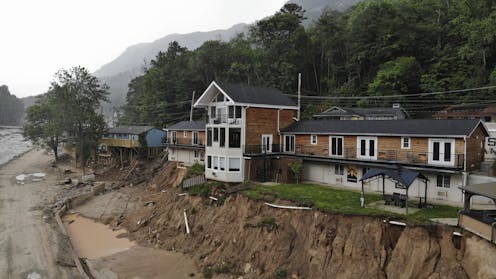
The Carter Lodge hangs precariously over the flood-scoured bank of the Broad River in Chimney Rock Village, N.C., on May 13, 2025, eight months after Hurricane Helene. AP Photo/Allen G. Breed

Hurricane Helene lasted only a few days in September 2024, but it altered the landscape of the Southeastern U.S. in profound ways that will affect the hazards local residents face far into the future.

Mudslides buried roads and reshaped river channels. Uprooted trees left soil on hillslopes exposed to the elements. Sediment that washed into rivers changed how water flows through the landscape, leaving some areas more prone to flooding and erosion.

Helene was a powerful reminder that natural hazards don’t disappear when the skies clear – they evolve.

These transformations are part of what scientists call cascading hazards. They occur when one natural event alters the landscape in ways that lead to future hazards. A landslide triggered by a storm might clog a river, leading to downstream flooding months or years later. A wildfire can alter the soil and vegetation, setting the stage for debris flows with the next rainstorm.

Two satellite maps of the same location. One shows changes to the river, loss of trees and landslides.
Satellite images before (top) and after Hurricane Helene (bottom) show how the storm altered landscape near Pensacola, N.C., in the Blue Ridge Mountains.
Google Earth, CC BY

I study these disasters as a geomorphologist. In a new paper in the journal Science, I and a team of scientists from 18 universities and the U.S. Geological Survey explain why hazard models – used to help communities prepare for disasters – can’t just rely on the past. Instead, they need to be nimble enough to forecast how hazards evolve in real time.

The science behind cascading hazards

Cascading hazards aren’t random. They emerge from physical processes that operate continuously across the landscape – sediment movement, weathering, erosion. Together, the atmosphere, biosphere and the earth are constantly reshaping the conditions that cause natural disasters.

For instance, earthquakes fracture rock and shake loose soil. Even if landslides don’t occur during the quake itself, the ground may be weakened, leaving it primed for failure during later rainstorms.

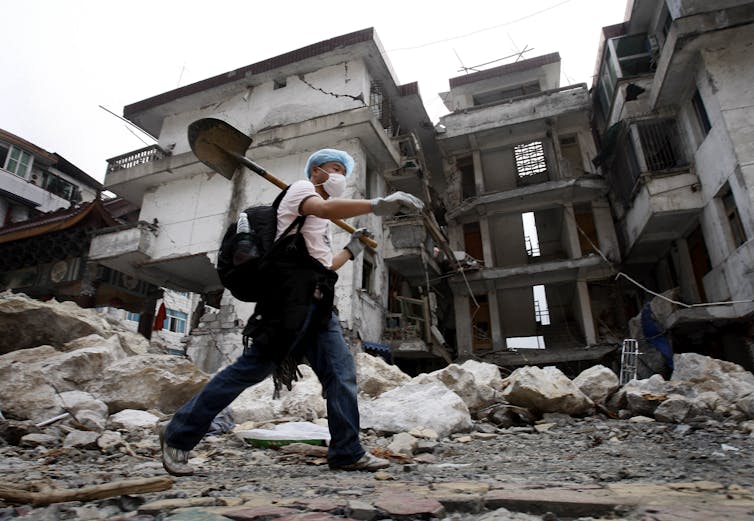
That’s exactly what happened after the 2008 earthquake in Sichuan Province, China, which led to a surge in debris flows long after the initial seismic event.

A volunteer carrying a shovel over his shoulder walks past boulders and a severely damaged building.
A strong aftershock after a 7.8 magnitude earthquake in Sichuan province, China, in May 2008 triggered more landslides in central China.
AP Photo/Andy Wong

Earth’s surface retains a “memory” of these events. Sediment disturbed in an earthquake, wildfire or severe storm will move downslope over years or even decades, reshaping the landscape as it goes.

The 1950 Assam earthquake in India is a striking example: It triggered thousands of landslides. The sediment from these landslides gradually moved through the river system, eventually causing flooding and changing river channels in Bangladesh some 20 years later.

An intensifying threat in a changing world

These risks present challenges for everything from emergency planning to home insurance. After repeated wildfire-mudslide combinations in California, some insurers pulled out of the state entirely, citing mounting risks and rising costs among the reasons.

Cascading hazards are not new, but their impact is intensifying.

Climate change is increasing the frequency and severity of wildfires, storms and extreme rainfall. At the same time, urban development continues to expand into steep, hazard-prone terrain, exposing more people and infrastructure to evolving risks.

The rising risk of interconnected climate disasters like these is overwhelming systems built for isolated events.

Yet climate change is only part of the equation. Earth processes – such as earthquakes and volcanic eruptions – also trigger cascading hazards, often with long-lasting effects.

Mount St. Helens is a powerful example: More than four decades after its eruption in 1980, the U.S. Army Corps of Engineers continues to manage ash and sediment from the eruption to keep it from filling river channels in ways that could increase the flood risk in downstream communities.

Rethinking risk and building resilience

Traditionally, insurance companies and disaster managers have estimated hazard risk by looking at past events.

But when the landscape has changed, the past may no longer be a reliable guide to the future. To address this, computer models based on the physics of how these events work are needed to help forecast hazard evolution in real time, much like weather models update with new atmospheric data.

An aerial view of a river with evidence of a landslide. Broken trees look like toothpicks scattered about, and the river flow is partially blocked.
A March 2024 landslide in the Oregon Coast Range wiped out trees in its path.
Brian Yanites, June 2025
An aerial view of a river with evidence of a landslide. Broken trees look like toothpicks scattered about, and the river flow is partially blocked.
A drone image of the same March 2024 landslide in the Oregon Coast Range shows where it temporarily dammed the river below.
Brian Yanites, June 2025

Thanks to advances in Earth observation technology, such as satellite imagery, drone and lidar, which is similar to radar but uses light, scientists can now track how hillslopes, rivers and vegetation change after disasters. These observations can feed into geomorphic models that simulate how loosened sediment moves and where hazards are likely to emerge next.

Researchers are already coupling weather forecasts with post-wildfire debris flow models. Other models simulate how sediment pulses travel through river networks.

Cascading hazards reveal that Earth’s surface is not a passive backdrop, but an active, evolving system. Each event reshapes the stage for the next.

Understanding these connections is critical for building resilience so communities can withstand future storms, earthquakes and the problems created by debris flows. Better forecasts can inform building codes, guide infrastructure design and improve how risk is priced and managed. They can help communities anticipate long-term threats and adapt before the next disaster strikes.

Most importantly, they challenge everyone to think beyond the immediate aftermath of a disaster – and to recognize the slow, quiet transformations that build toward the next.

The Conversation

Brian J. Yanites receives funding from the National Science Foundation.

ref. Disasters don’t disappear when the storm ends – cascading hazards, from landslides to floods, are upending risk models – https://theconversation.com/disasters-dont-disappear-when-the-storm-ends-cascading-hazards-from-landslides-to-floods-are-upending-risk-models-259502

Qui fait la culture ? Le modèle français à l’épreuve des tensions budgétaires

Source: The Conversation – France (in French) – By Fabrice Raffin, Maître de Conférence à l’Université de Picardie Jules Verne et chercheur au laboratoire Habiter le Monde, Université de Picardie Jules Verne (UPJV)

La programmation du festival des arts de rue de Ramonville, organisé par l’association Arto, près de Toulouse, a dû être réduite d’un tiers en 2025 du fait des coupes budgétaires. Mathieu Lacout, CC BY-ND

Réductions budgétaires et logiques de concurrence mettent sous tension les différents acteurs de la culture publique. Une recomposition silencieuse du modèle français serait-elle en cours ?


Depuis un an, les coupes budgétaires annoncées par l’État et les collectivités territoriales bouleversent l’écosystème culturel français. Ces réductions sont plus complexes à appréhender qu’elles n’en ont l’air. Il demeure qu’elles ont un effet structurel majeur : elles mettent en tension les différents acteurs du secteur culturel public, dont l’équilibre reposait sur des soutiens croisés (État, régions, départements, villes). De plus, elles ravivent d’anciennes lignes de fracture entre ces acteurs de la culture inégalement dotés, renvoient à des conceptions différentes de la culture, et interrogent plus largement la pertinence du modèle français d’action culturelle fondé sur l’intervention publique.

Quatre grandes familles de professionnels face à la crise

La crise actuelle révèle avec acuité la coexistence, au sein du monde de la culture subventionnée, de quatre grandes familles d’acteurs aux logiques différentes – et parfois concurrentielles.

Un premier type d’acteur est constitué des structures les plus historiquement installées : théâtres nationaux, centres dramatiques, scènes nationales, opéras, musées nationaux, conservatoires. Elles concentrent environ 75 % des crédits d’intervention du ministère de la Culture affectés au spectacle vivant et bénéficient d’une multisubvention stable et pluriannuelle. Ce sont aussi elles qui disposent d’un personnel permanent (direction, technique, administration), et qui structurent l’agenda culturel national. Mais leur centralité symbolique et économique est aujourd’hui questionnée : ces structures restent souvent centrées sur une offre culturelle relevant des Beaux-Arts, de la création contemporaine, du patrimoine artistique. Actrices de la culture légitime, inscrites dans une logique de démocratisation culturelle et centrées sur des questions artistiques, elles apparaissent parfois éloignées des pratiques et des attentes de la population. De plus, leur gouvernance verticale fait parfois obstacle à l’expérimentation ou à l’inclusion.


Du lundi au vendredi + le dimanche, recevez gratuitement les analyses et décryptages de nos experts pour un autre regard sur l’actualité. Abonnez-vous dès aujourd’hui !


Compagnies indépendantes et collectifs artistiques

Les compagnies indépendantes et collectifs artistiques constituent un deuxième groupe d’acteurs qui apparaît de plus en plus dépendant du premier. Ils sont essentiellement financés sur projets, via appels à candidatures, aides à la création ou conventionnements limités dans le temps. Ces équipes sont au cœur de la création contemporaine, mais subissent de plein fouet les logiques de sous-traitance qui les assignent à un rôle d’exécutants, contraints de s’adapter aux conditions imposées par les institutions détentrices des lieux, des moyens et de la visibilité. Près de 80 % des compagnies n’ont aucun lieu de diffusion en propre, ce qui les oblige à négocier en permanence avec les institutions pour diffuser leur travail. Le Syndicat des Cirques et Compagnies de Création (SCC) a d’ailleurs rejeté, en février 2025, la « Charte des relations entre équipes artistiques et lieux » proposée par le Syndeac, l’une des principales organisations professionnelles du secteur culturel public, estimant que le texte renforçait cette logique de sous-traitance.

Secteur associatif et citoyen

Le tiers secteur culturel (associatif et citoyen) regroupe lui les initiatives culturelles locales citoyennes, souvent portées par des associations, des tiers-lieux, des collectifs d’habitants ou des structures hybrides. Ces acteurs incarnent une vision décentrée de la culture, centrée sur l’animation des territoires, les droits culturels, et la co-construction de l’offre avec les habitants. Loin des canons de la culture classique des grandes institutions, elles apparaissent plus en phase avec les pratiques culturelles réelles des Français et les dynamiques locales : pratiques amatrices, participation, ancrage dans les réseaux locaux. Si la logique artistique et la création peuvent irriguer ces initiatives, elles sont avant tout orientée vers l’animation, l’événementiel, l’expression et la créativité des habitants. Les coupes budgétaires fragilisent en priorité ces structures, car elles dépendent le plus des financements croisés et ne disposent ni de réserves ni de financements d’État direct. En mai 2025, le collectif MCAC (Mobilisation et Coopération Arts et Culture) mettait ainsi en avant dans une lettre ouverte à la ministre de la Culture que près d’une structure sur deux a subi des coupes de la part d’au moins deux niveaux de collectivités, menaçant la pérennité d’écosystèmes locaux entiers.

Le clown Typhus Bronx devant une foule au festival de Ramonville en septembre 2024
Le clown Typhus Bronx au festival des arts de rue de Ramonville en 2024. Organisé par une association, le festival a vu sa programmation diminuer d’un tiers en 2025 en raison des coupes budgétaires.
Mathieu Lacout, CC BY-ND

Les agents territoriaux

Enfin, un quatrième groupe d’acteurs, moins visibles, regroupe les agents territoriaux chargés de la mise en œuvre concrète des politiques culturelles au sein des collectivités locales : chargés de mission, médiateurs culturels, responsables des affaires culturelles dans les mairies, départements ou régions. Au fil des lois de décentralisation, les collectivités territoriales ont acquis un rôle majeur dans la gestion et le développement culturel. Elles ont ainsi pris en charge des compétences clés comme le soutien à la création artistique, la diffusion, l’éducation artistique et culturelle, la médiation culturelle, ou encore animent des projets d’inclusion sociale. Leur action repose souvent sur des partenariats avec des structures associatives, des établissements scolaires ou des institutions artistiques. Lorsque les budgets culturels sont revus à la baisse – ou coupés comme dans la Région Pays de la Loire – les conséquences sont immédiates : suppression de projets éducatifs, gel des subventions aux associations partenaires, fermeture temporaire ou définitive d’équipements culturels, etc. Ne sachant plus comment maintenir leur action sans moyens, ces agents expriment depuis quelques mois un profond sentiment de découragement, voire de désespoir.

Concurrentes plutôt qu’irréconciliables ?

Il serait excessif de dire que ces familles d’acteurs sont « irréconciliables » : des coopérations existent, des passerelles aussi. Mais la réduction de moyens observable depuis septembre 2025 les met en compétition directe pour l’accès aux subventions, aux lieux, à la reconnaissance institutionnelle. Cette mise en concurrence accentue les asymétries, renforce le pouvoir des structures les mieux dotées, et tend à marginaliser les formes plus fragiles et expérimentales.

Dans ce contexte, les débats sur la gouvernance, sur les droits culturels ou sur la légitimité des modèles économiques prennent une tournure conflictuelle. Le rejet de la Charte du Syndeac par le SCC, mentionné plus haut, en est un symptôme : derrière un désaccord sur les conditions de travail, se cache une fracture sur la définition même du pacte culturel républicain. Le SCC revendique ici une parole singulière, celle de « ceux qui font », en opposition à « ceux qui ont ». Plus qu’un désaccord financier ou professionnel, c’est un désaccord sur les fondements mêmes du pacte culturel. Qui décide ? Qui produit le sens ? Qui est légitime pour parler au nom de « la culture » ?

La poursuite du désengagement budgétaire, même marginal, risque ainsi de déséquilibrer durablement le modèle français de soutien à la culture. Elle renforce les logiques de sélection, de concentration des moyens, et affaiblit les formes culturelles les plus proches des publics éloignés de l’offre institutionnelle.

The Conversation

Fabrice Raffin ne travaille pas, ne conseille pas, ne possède pas de parts, ne reçoit pas de fonds d’une organisation qui pourrait tirer profit de cet article, et n’a déclaré aucune autre affiliation que son organisme de recherche.

ref. Qui fait la culture ? Le modèle français à l’épreuve des tensions budgétaires – https://theconversation.com/qui-fait-la-culture-le-modele-francais-a-lepreuve-des-tensions-budgetaires-260359

Lemurs can help save Madagascan forests, but first we need to protect them

Source: The Conversation – Canada – By Colombe Nirina Sehenomalala, PhD candidate, Anthropology, Université de Montréal

Most people’s encounters with lemurs have occurred through their representations in popular children’s media, like Zoboomafoo or Madagascar. However, most people don’t know that lemurs play an important role in forest renewal and that they’re currently in grave danger from climate change.

In my home country of Madagascar, there is an amazing array of creatures that are not found anywhere else in the world. Madagascar is a biodiversity hotspot, and approximately 90 per cent of plant and animal species on this island are endemic.

Among them are lemurs, a group of primates that are not only the flagship symbols of the island’s fauna, but also one of the key players in the health and stability of Madagascar’s ecosystems because they do the very important work of dispersing seeds.

I am a primatologist who researches the interactions between infant-and-mother lemur dyads in wild. Their bond is a reminder of what we stand to lose, as it shows care, learning and viability. When forests disappear, so does this fragile bond, and a whole way of life we can never replace.

Lemurs’ habitats and survival are increasingly being threatened by human activities such as deforestation, forest resource exploitation and hunting. There is an urgent need for conservation projects that involve local communities in preserving Madagascar’s unique biodiversity.

a bent over branch in a rainforest
A lemur trap encountered in the field during our research.
(C.N. Sehenomalala), CC BY

Charismatic animals

Due to their charisma, media attention and their biological significance, lemurs attract tourists and researchers to Madagascar. The viability of lemurs is essential to the island’s future, both economically but especially in terms of protecting biodiversity. As they eat fruits from trees like ebony, mammea and wild coffee and then scatter seeds through their droppings, they help new plants grow.

Among the 105 lemur species of Madagascar, Propithecus candidus, commonly known as the silky sifaka, is one of the most endangered species. Only around 250 of them are currently living in the wild.

As their name implies, silky sifakas have visually striking long white hair, and they can only be found in the misty, mountainous rainforests of northeastern Madagascar.

Silky sifakas are primarily active during the daytime, and can travel very quickly through the trees by vertically clinging to them and leaping from tree to tree using their powerful legs. They have highly specialized diets consisting of leaves, flowers and fruits like Diospyros pervilleana, a native ebony species from Madagascar.

A BBC Nature documentary clip on silky sifakas.

Observing mothers and infants

I have spent 10 years studying and following lemurs daily. During my fieldwork in northeastern Madagascar, I closely observed how deforestation and habitat fragmentation affect silky sifaka females and their young.

I studied these females during their lactation season in three different forest contexts: Marojejy National Park (a mostly untouched primary rainforest), Makira Natural Park (a mix of old-growth and re-generating forest) and Anjanaharibe-Sud Special Reserve (known as COMATSA-Sud, a primary forest with heavily degraded areas).

At each forest, the forest canopy, which provides both shelter and food for the lemurs, measured above 10 metres at all sites, but was semi-open, which is a sign of habitat degradation. A semi-open canopy allows more light to permeate the forest canopy, but it also exposes animals to predators and decreases the quantity of high-quality food.

Mothers’ movements and behaviours

One clear difference between the three sites is how mother–infant pairs move and use space. In Marojejy, where the forest is more continuous even if the canopy is partly open, mothers and babies stay within fairly fixed areas, following the same paths and resting spots.

But in places like Makira and COMATSA-Sud, where the forest is broken up into separate patches, mothers have to travel farther and more unpredictably, moving between these isolated patches. This extra travelling causes them to burn more energy and face higher risks from predators and hunters.

These differences show that fragmentation doesn’t just affect food availability, but also changes how these lemurs move and survive.

Forest fragmentation affects lemurs’ social behaviour and grouping patterns to deal with low food availability. It also impacts their health and development; a poor diet causes malnourishment in the lemurs.

a white lemur feeds another one
Lemurs are social animals, but scarce resources can cause competitive behaviours to emerge.
(Simponafotsy/Wikimedia Commons), CC BY

Poor nutritional quality

While the food availability for silky sifakas in northeastern Madagascar during the lactation season is relatively abundant, it is of low nutritional quality.

This leads to increased stress and competition as dominant lactating females, desperate to feed their infants, attack subordinates to accumulate more nutrients to produce higher quality milk.

As offspring start to feed on non-milk foods, the poor nutritional quality of available plants after weaning can lead to poor health and stunted growth.

Engaging the community

The decline of lemur populations, particularly silky sifakas, shows the need for urgent conservation action. Continued monitoring — as well as sustained support and funding for Malagasy scientists — is crucial for long-term lemur and biodiversity conservation.

When it comes to the effects of human activity, this decline — habitat fragmentation, global climate change and deforestation — is the result of large-scale activites such as extraction, tourism and state infrastructural development.

Education and awareness campaigns are crucial, both in Madagascar and internationally, to inform people about lemurs’ habitat needs and what can be done to prevent their extinction.

Conservation will never be successful without building an appreciation of the environmental, cultural and economic value of lemurs and the forests they inhabit.

The Conversation

The authors do not work for, consult, own shares in or receive funding from any company or organisation that would benefit from this article, and have disclosed no relevant affiliations beyond their academic appointment.

ref. Lemurs can help save Madagascan forests, but first we need to protect them – https://theconversation.com/lemurs-can-help-save-madagascan-forests-but-first-we-need-to-protect-them-256300

Canada’s proposed east-west energy corridors should prioritize clean energy

Source: The Conversation – Canada – By Andy Hira, Professor of Political Science, Simon Fraser University

Canadian Prime Minister Mark Carney has made establishing east-west energy corridors a priority for Canada. He suggested that such corridors would include new oil and natural gas pipelines, designed to reduce dependence on the United States.

Energy and Natural Resources Minister Tim Hodgson has gone even further in pushing for subsidization of carbon capture and storage projects that would effectively underwrite the long-term continuation of the fossil fuel industry at taxpayer expense.

While there might be short-term political reasons for backing fossil fuels, such an approach goes against Canada’s long-term interests. Prioritizing fossil fuels undermines the country’s commitments to reduce emissions and takes away the investment needed for it to realize its potential to become a green energy superpower.

Creating energy corridors is in the national interest, and would allow Canada to take full advantage of its abundant and diverse energy and mineral resources. The government also needs to be involved, as the corridors are interprovincial and will require substantial investment. However, the government has limited resources and so Canada must think strategically about its priorities for such corridors.

Canadian taxpayers should not be subsidizing an already lucrative oil and gas industry. Instead, the federal government should prioritize funding clean energy supply solutions.

Oil and gas subsidies

Canadian governments have long faced opposition to building new pipelines. The provinces of Québec and British Columbia and many First Nations have strongly opposed new pipeline proposals. More recently, there is some signs of softening under the duress of U.S. tariffs.

Even if such shifts are lasting, it’s for the private sector to step up and invest into these projects. Previous federal investments, such as the Trans Mountain pipeline (TMX), were reflections of the private market’s unwillingness to invest in pipelines because they are bad investments. The 2024 Parliamentary Budget Office report estimated that selling the TMX would result in a loss.

There are reasons to question the soundness of fossil fuels on a purely financial basis. A 2022 Parliamentary budget office report found that climate change reduced GDP by 0.8 per cent in 2021, or around $20 billion. This number is expected to rise to 5.8 per cent per year by 2100 (or $145 billion in 2021 dollars).

By contrast, from 2017 to 2021, federal, provincial and territorial governments received an average of $12 billion annually in revenues from the the oil and gas industry.

The gap between the costs and benefits is only going to increase over time. The costs cut across all aspects of life, including food security, health care, global instability and threats to coastal cities due to sea level rise.

On the other hand, every dollar invested in adaptation today has an estimated return of $13-$15.

Furthermore, a recent study indicates a likely glut in global natural gas markets, and the future prospects for oil are equally questionable. For example, one of Canada’s target markets, Japan, has been reselling its liquefied natural gas imports to other countries, suggesting the glut of oil and gas is likely to continue as cheaper producers, including those in the Middle East and Southeast Asia, who are cheaper and closer to consumers, flood the market.

Cheaper and closer oil producers are also flooding markets in anticipation of declining prices.

There are important opportunity costs of investing money in fossil fuels that could otherwise be invested in the clean energy economy. When new technologies arise, there is a limited window of opportunity for global competitors to enter into an emerging industry.

In light of the shift to electric vehicles, heat pumps and artificial intelligence, it’s clear that energy demand is bound to increase significantly in Canada in the coming years. Canada can become a global competitor, but only if it enters the race now, while the window is open.

An East-West clean energy system

Solar and wind prices have declined by 83 per cent and 65 per cent respectively since 2009. However, they suffer from the fundamental issue of intermittency; the sun is not always shining and the wind isn’t always blowing.

While battery prices are declining, they remain an expensive solution. An easier solution is at hand: Canada’s hydroelectric resources. Québec, B.C. and Manitoba have abundant hydro resources that can reduce energy costs throughout the rest of the country.

Alberta and Saskatchewan have potential for significant geothermal power generation. Ontario and the Atlantic provinces could contribute wind and solar. Trading electricity through an integrated national grid increases the investment capital and reduces the need for batteries while diversifying the energy mix.

But we need an east-west electricity market to make this happen.

An east-west grid would reduce the need for every province to run its own power generation system. Creating a pooled market would allow provinces to trade electricity, giving consumers more choice and investors a larger market and potential return on their investment.

More valuable still is the fact that electricity capacity has to be built for the few peak hours and seasons. But most of the time demand is well below full capacity, such as the middle of the night or early summer, when neither heat nor air conditioning is needed in many areas. As peak times and seasons vary across the country, Canada can reduce overall costs by trading the electricity in the lowest cost producing province at a given time to where it’s needed in the other.

By locating some of the new clean energy in First Nations, Canada can also move reconciliation forward. There is potential for a win-win situation whereby Canada increases renewable energy generation while creating new jobs and income for First Nations wherever feasible.

The first step is for regulatory reform across the provinces to support a Canada-wide electricity market, and to provide the funding for the massive infrastructure investment required to connect provincial grids. This would be a federal investment with incredible long-term payoffs for employment, taxpayers and future generations.

Following this plan could truly make Canada an energy superpower on the right side of the energy transition, create thousands of jobs and give the country a global competitive edge — all while helping to save the planet in the process.

This article was co-authored by energy consultant Sheldon Fernandes.

The Conversation

The authors do not work for, consult, own shares in or receive funding from any company or organisation that would benefit from this article, and have disclosed no relevant affiliations beyond their academic appointment.

ref. Canada’s proposed east-west energy corridors should prioritize clean energy – https://theconversation.com/canadas-proposed-east-west-energy-corridors-should-prioritize-clean-energy-259530

Want more orgasms? Choose a woman partner

Source: The Conversation – Canada – By Caroline Pukall, Professor, Department of Psychology, Queen’s University, Ontario

Being partnered with a woman is associated with an orgasm advantage. (Pexels/Cottonbro)

The orgasm gap — the consistent finding that men who have sex with women have more frequent orgasms than women who have sex with men — has been shown in study after study of cisgender, heterosexual participants.

The gap is a big one: Based on a recent Canadian study, approximately 60 per cent of women and 90 per cent of men reported reaching orgasm in their most recent sexual encounter.

In sexually diverse samples (samples that also include women who have sex with women and men who have sex with men), the pattern becomes more nuanced but still supports a gendered orgasm gap.

Two women, one with her arms around the other and kissing her forehead
Research has shown that women who have sex with women have a more equal frequency of orgasms within their partnership.
(Pexels/Ketut Subiyanto)

Research has shown that the gap in orgasm frequency is reduced (in other words, there is more equal orgasm frequency) in women who have sex with women (about 75 per cent), and this rate is significantly higher than in women who have sex with men (about 62 per cent). However, men as a group — regardless of who they were having sex with — still had significantly higher orgasm frequency (85 per cent) than women overall (63 per cent). Women are orgasm-disadvantaged overall and especially when they have sex with men.

Mind the gap

How far-reaching is the orgasm gap and what factors might be standing in the way of orgasms for all? We — a team of researchers and science journalists from the podcast Science Vsexamined orgasm frequency in a large diverse sample that included sexual (such as lesbian) and gender (such as trans) minorities and majorities, as well as racialized participants (there were no significant results with analyses focused on sexual orientation or race).

The good news? We found that many people overall were having lots of orgasms — about two-thirds reported having orgasms almost or every time they engaged sexually.

The not-so-great news? The orgasm gap persisted: cis men overall reported the highest orgasm frequency compared to women and gender minorities (who did not differ significantly from each other). In addition, we found that participants of all genders who engaged sexually with women reported significantly more frequent orgasms than those who engaged sexually with men. So being partnered with a woman is associated with an orgasm advantage.

More not-so-great news was that about 17 per cent of participants reported almost never or never having orgasms during sex and that there were many factors preventing orgasms in participants. For cis women, psychological barriers — such as insecurities, mental health struggles and distractions — were prominent, as were sexual obstacles (like not receiving adequate stimulation), difficulties inherent in having orgasms (for example, they take too long and require too much effort) and not knowing why orgasms are difficult for them to have.

Closing the gap

So why does the orgasm gap exist and persist? One main reason is that broad sociocultural norms prioritize men’s sexual pleasure over women’s. Indeed, these norms develop from the traditional (heterosexual, western) sexual script that defines the end of sexual activity as male orgasm; importantly, women’s adherence to this script has been associated with lower sexual satisfaction.

A woman in a yellow dress and a man in a dark shirt and khaki shorts sitting on a bed
Women’s own degree of familiarity with their partner has also been shown to be critical in narrowing the gap.
(Unsplash/Jonathan Borba)

Another is that mainstream media feeds into narratives of sexual expectations based on gender, such that portrayals of women who do not have orgasms are much more — even readily — acceptable than portrayals of orgasmless men. This inequality is played out in sexual encounters, perpetuating the gap and contributing to complacency in addressing it.

But there is hope: Heterosexual men’s motivation to bring their partner to orgasm and their intentional incorporation of sexual activities that increase the chance of orgasm for their partner — such as clitoral stimulation and oral sex — can help narrow (and even eradicate!) the gap. Women’s own degree of familiarity with their partner has also been shown to be help narrow the gap. Higher familiarity (think of a long-term situationship as opposed to a casual hookup) was associated with higher orgasm frequency.

The simple act of prioritizing women’s orgasm — captured with an easy-to-remember phrase of “she comes first” — may be all that is needed to substantially narrow the orgasm gap.

The Conversation

Caroline Pukall receives funding from the Canadian Institutes of Health Research, the International Society for the Study of Women’s Sexual Health, and Queen’s University.

ref. Want more orgasms? Choose a woman partner – https://theconversation.com/want-more-orgasms-choose-a-woman-partner-259655

Not just a few bad apples: The Canadian Armed Forces has a nagging far-right problem

Source: The Conversation – Canada – By Stéphane Leman-Langlois, Professor, School of Social Work and Criminology, Université Laval

The Canadian Armed Forces (CAF) is making headlines. But not, as they probably hoped, for the renewed recruiting efforts they’re about to launch. Instead, they are once again confounded by a far-right scandal.

The latest episode is the arrest of four CAF members and ex-members. Three of them have been charged with taking concrete steps to facilitate terrorist activity and possessing prohibited firearms. A fourth man was charged with possession and storage of prohibited firearms and devices.

The crew had allegedly been under surveillance by the federal government’s Integrated National Security Enforcement Team since 2021, most likely when equipment, weapons and ammunition began to go missing from military installations. The weapons were finally seized in January 2024, some in the personal vehicle of one of the suspects, but the group remained free for another 18 months.


Read more:
Charges against Canadian Army members in anti-government terror plot raise alarms about right-wing extremism


As is usual with these types of efforts, a certain degree of amateurism was present at multiple stages of the alleged scheme, which may have developed on the fly. The idea that a micro-militia might successfully seize and hold territory in Canada is far-fetched at best.

Recruitment efforts for the suspected mission, complete with propaganda and self-aggrandizing pictures of military training, took place on, you guessed it: Instagram. (We won’t publish the name of the account.)

It might be pointed out that any large organization like the CAF inevitably represents a microcosm of society, meaning that it can’t be expected to be free of various forms of undesirable behaviour, including political extremism. But this “rotten apple” theory of far-right extremism in the CAF falls somewhat short of explaining the situation.

Not just a ‘few rotten apples’

First, the rotten apples seem too numerous. Just days before the recent arrests, the CAF announced on July 3 it was investigating the participation of other soldiers in a private Facebook page named the “Blue Hackle Mafia.” The page disseminated openly racist, homophobic, misogynist and antisemitic content.

These events point to a phenomenon difficult to measure within western countries, even though it’s very real. The penetration of ideas associated with the far right within the military and law enforcement agencies is currently happening. Whether more or less structured, the emergence of underground small groups are more or less ready to “take action.”

Second, previous reports have identified a general laissez-faire approach within the CAF regarding far-right activities. In a 2022 independent report commissioned by the CAF, the presence of white supremacist and other far-right ideologies was identified not only as a growing problem for the Army, but also one that was not being addressed.

Similar conclusions were reached in the 1997 report on the behaviour of Canadian soldiers in Somalia, which had explicitly recommended that “the Canadian Forces establish regular liaison with anti-racist groups to obtain assistance in the conduct of appropriate cultural sensitivity training and to assist supervisors and commanders in identifying signs of racism and involvement with hate groups.” In other words, neither the concern nor the awareness is news.

Affinity between far right and military

At the root of the problem is a peculiar affinity between most forms of far-right ideologies and military or paramilitary/policing organizations.

It’s absurd to simply paint such organizations as inherently far right in their nature, of course. But strict authority structures and notions of defence, fellowship, honour — as well as the projection of power through physical strength and training and the accompanying symbolism of weapons, fatigues, uniforms and campaign-like deployments — are all very appealing to far-right extremists.

This nexus has been amply documented and leads to multiple practical implications: extremist groups trying to recruit active or retired soldiers; soldiers joining existing groups or setting up their own; veterans joining existing groups or creating their own, like the founders of Québec’s La Meute; professionally trained lone wolves, like Correy Hurren, who attempted to “arrest” Prime minister Justin Trudeau at Rideau Hall in 2020)

Members of extremist groups also routinely try to join the military to benefit from training, which elevates their standing within the group.

Military, former and active, and law enforcement members are to be found in multiple “militia” groups like the Three Percenters, the Proud Boys, the Oath Keepers, Diagolon and the Boogaloo movement, for instance. Some are overtly anti-government and/or anti-system, like the Veterans 4 Freedom or The Base.

Far-right demons

It may sound strange to think of military personnel or veterans getting involved or creating an anti-government movement when they’ve served under the flag sometimes for decades. The apparent paradox quickly disappears once we understand the manifold individual motivations that underpin their actions.

They range from the feeling of having served a timourous government that failed to make proper use of the Armed Forces at its disposal. The absence of deployments to theatres of conflict also generates frustration among some in search of military adventure.

A lot of young men are quickly bored with exercises that never satisfy their expeditionary spirit. The role of camaraderie, of group dynamics based on mutual aid, honour and the presence of danger, as well as mental health issues, must not be overlooked. Not to mention the idea, strong in some units, of defending a singular idea of a “fatherland” endangered by government contempt and inaction.

What is striking in the light of the recent charges in Québec is not so much the racist and anti-semitic ideological ideas allegedly held by the accused group members. It’s the primacy given to a patriarchal ideology that explicitly targets women and gender. Fascination with Russia and the war in Ukraine waged by Vladimir Putin is also palpable.

In short, the CAF is still wrestling with far-right demons, though in a new context of social media acceleration and global loss of confidence in democratic institutions. The situation has a high potential to undermine confidence in Canada’s Armed Forces at a time when geopolitical tensions are calling for a strengthening of its military arsenal, and first and foremost, our military human capital.

The Conversation

Stéphane Leman-Langlois receives funding from the Social Sciences and Humanities Research Council of Canada.

Samuel Tanner receives funding from Social Sciences and Humanities Research Council of Canada.

Aurélie Campana does not work for, consult, own shares in or receive funding from any company or organisation that would benefit from this article, and has disclosed no relevant affiliations beyond their academic appointment.

ref. Not just a few bad apples: The Canadian Armed Forces has a nagging far-right problem – https://theconversation.com/not-just-a-few-bad-apples-the-canadian-armed-forces-has-a-nagging-far-right-problem-260896