Golden retriever and human behaviour may be linked by the same genes – new research

Source: The Conversation – UK – By Daniel Mills, Professor of Veterinary Behavioural Medicine, University of Lincoln

PeopleImages/Shutterstock

Humans have probably shared their homes with dogs ever since they first settled. So it could be argued that there is no such thing as “human society” without including animals as part of it. Our long shared history with dogs has even be described as a form of co-evolution.

And a new study my colleagues at Cambridge and I published shows golden retrievers and humans seem to share a genetic basis for at least some behaviour.

Dogs show many adaptations that might help them live and co-operate with people. Ancient humans may even have been selected dogs’ ancestors for an ability to eat a more human diet than wolves. At a psychological level there are many adaptations that aid communication between the two species, like an ability to follow human gestures such as pointing, that exceeds that of our closest relatives, chimpanzees.

Dogs also appear to be exceptionally skilled at responding appropriately to human emotion. But it is not all one sided. Humans seem to show an intuitive understanding of the nature of dogs’ vocalisations.

Nowadays, our relationship includes sharing the hustle and bustle that is so often a feature of modern living. So it is not surprising that there is an exceptionally high prevalence of stress-related problems arising in dogs, especially in countries like the US.

This has led researchers to question to what extent we might share mental health problems too. Recently there have been several claims about the potential for an autism-like syndrome in dogs. In March 2025, a similar genetic marker was identified for some of the social problems related to autism.

Our study has taken this genetic search to another level. My team and I analysed the genetic code and behaviour of 1,300 golden retrievers, looking for genes associated with their behavioural traits. “Equivalent” genes in humans, inherited from the same evolutionary ancestor, were then identified.

They also identified the genes’ associations with a range of human intelligence, mental health and emotional processes. I specialise in studying and managing companion animal emotions at the University of Lincoln, and so I worked with the team to explore the psychobiological basis to these traits.

Dog sitting in the street on leash, torso and legs of owner behind
More similar than you’d think?
Lopolo/Shutterstock

We identified 12 genes where there seemed to be a connection between dogs and humans that related to similar psychological functioning. Some of these were closely aligned in terms of the emotional responses they produced, for example responses related to non-social anxiety. However, in other cases the link was perhaps less obvious.

But we formed hypotheses that may explain the association. When we did this, we found logical reasons to support the similarities we saw in the genetic associations in humans and golden retrievers.

For example, the canine gene ADD2 was associated with fear of strangers, but in humans was related to depression. A key characteristic of depression in people is social withdrawal, so we suspect there may be a common genetic link, which manifests in dogs (who are generally hypersocial) as stranger anxiety.

Other potential associations were with human conditions that involved complex cognitive processes, like self reflection, which are not thought to occur in dogs. However, as we looked more deeply into the range of human associations we could identify potential reasons for even some of these associations.

For example, trainability in dogs tended to be linked to genes in humans that are connected to not only intelligence but also sensitivity about being wrong. As far as we know, dogs cannot project themselves and their circumstances in the abstract ways people can, but they can certainly vary in their sensitivity to unpleasant experiences. so this might form the basis of the common genetic root between the two species.

The results provide a great basis for future studies in comparative and evolutionary psychiatry. As, Eleanor Raffan, a vet and assistant professor of physiology who led the Cambridge side of this research, said: “The findings are really striking – they provide strong evidence that humans and golden retrievers have shared genetic roots for their behaviour. The genes we identified frequently influence emotional states and behaviour in both species.”

There are, of course, differences in the ways that humans and dogs experience their
emotions. A lot of human emotion is tied up in complex thought processes. However, that does not undermine the importance of related conditions that might reflect mental health or suffering.

Enoch Alex, the first author of the report and a PhD candidate in the department of physiology, development, and neuroscience, summed this up: “These results show that genetics govern behaviour, making some dogs predisposed to finding the world stressful. If their life experiences compound this, they might act in ways we interpret as bad behaviour, when really they’re distressed”.

Although it might be tempting to sometimes dismiss academic work on dogs as somewhat frivolous, in this new work, there are hints at an important new role for dogs in our shared society: as natural models of mental health issues.

The Conversation

Daniel Mills does not work for, consult, own shares in or receive funding from any company or organisation that would benefit from this article, and has disclosed no relevant affiliations beyond their academic appointment.

ref. Golden retriever and human behaviour may be linked by the same genes – new research – https://theconversation.com/golden-retriever-and-human-behaviour-may-be-linked-by-the-same-genes-new-research-270402


The demands of young people went unfulfilled by the UN climate summit – mostly

Source: The Conversation – UK – By Susan Ann Samuel, PhD Candidate, School of Politics and International Studies, University of Leeds

At the UN climate conference Cop30 in Belém, Brazil, I asked some young climate activists and negotiators about their hopes, expectations and demands. Despite their positivity and the push for action from climate movements, Indigenous people and civil society, a lack of consensus on key issues was palpable.

Following overnight negotiations on November 21-22, the Brazilian presidency unveiled an outcome decision referred to as the “global mutirão” (collective efforts). But experts agree that the outlined climate action is insufficient.

I attended this years’ Cop as an advisor to the international Youth Negotiators Academy — a programme offering training to negotiators under the age of 35. My experience at Belém informs my PhD research into how social movements are influencing climate conferences. Here are some of the expectations of the young people I met at Cop30.

Brazilian student Ana Bertazzo Lemos, 23, attended Cop30 calling for obligations to cut fossil fuel emissions and the integration of ecological action into everyday life. But the final Cop30 text had no mention of fossil fuels.

Without a roadmap to transition away from fossil fuels, the Brazilian presidency said it will move forward outside the UN process. Accordingly, the first International Conference for the Phase-out of Fossil Fuels will be held in Colombia in April 2026.


Read more:
Youth activists are now real agents of change at global climate summits


Equality for Indigenous people

Matthaeus Menezes Assef, 29, from Guarujá, Brazil, is the student representative of the UN Framework Convention on Climate Change (UNFCCC) taskforce at the University of Leeds. I talked to Menezes and Guarany Osório, a Brazilian professor of sustainability, about their common goals.

Menezes is concerned for Brazil’s domestic political vision. He says Brazil needs to deal with deforestation and oil extraction in the Amazon, while evolving as a climate leader. He was happy that Cop30 brought 3,000 Indigenous people to Belém, with many receiving blue badges for direct access to negotiations. However, a roadmap to deforestation did not materialise at Cop30.

Protection for Amazonia

Jhulielson Conceição, 22, and Nathália Vasques, 24, were volunteers at Cop30, providing essential information and guidance to delegates. “Without us they’ll be lost,” Vasques told me. She sees Cop30’s location as crucial because Belém is on the frontline of climate change.

Vasques hoped that first-hand experience for delegates would translate into stronger commitments and greater protection for Amazonia, but this hasn’t happened yet. Both Conceição and Vasques wanted to see more recognition for youth voices at future Cops — but this shouldn’t just be tokenistic. Young people require decision-making power.

Stronger climate law

Emily Zinkula, 25, a law student from Stanford University, focused on whether legal mechanisms can create accountability for climate action. She tracks whether negotiations incorporate the recent advisory opinions on climate obligations, particularly by the International Court of Justice. An advisory opinion is a legal interpretation that’s not legally binding, provided by a high-level court or tribunal in response to a specific question of law.

Zinkula spoke at a side event alongside Jojo Mehta, co-founder of the campaign organisation Stop Ecocide International. Zinkula argued that the advisory opinion can help civil societies gain momentum around recognising ecocide (large-scale destruction of nature by human actions) as an international crime.

Having researched climate laws, I share her vision for accountability and justice – but the negotiations don’t yet reflect that.


Read more:
How young people have taken climate justice to the world’s international courts


A healthy just transition

Nova Tebbe, 28, a postdoctoral researcher from the Global Climate and Health Alliance and UNFCCC constituency member, called for the introduction of “indicators for adaptation” – the rules, metrics and standards needed for adaptation projects.

Tebbe demanded adaptation finance from developed to developing countries as per the Paris climate agreement. She emphasised that human health should be central to climate negotiations, and hoped for a just transition mechanism that moves from policy to implementation.

Tebbe also wanted the second global stocktake (a five-yearly assessment of the world’s progress toward the goals of the Paris agreement, due in 2028) to be more inclusive, with civil society input. She told me how the Belém conference’s positive atmosphere and push for quick decisions seemed unusual compared with other climate summits she had attended.

However, the final outcomes of Cop30 did not offer reassurance on most of her hopes. A new just transition mechanism was adopted, but without any map, money or manual.

This mechanism is a strategy to guarantee that the global shift towards a green economy is equitable and safeguards the rights of all people. There were discussions about doubling adaptation finance by 2025 and tripling it by 2035 – but whether the adaptation indicators include priorities for health is yet to be seen.

Young climate activists can’t deny that climate negotiations are complex, driven by political agendas and national interests. But my time in Belém has reinforced something essential: young people can play an instrumental role in and around the negotiations. Unfortunately, those demands don’t always translate into actual outcomes.


Don’t have time to read about climate change as much as you’d like?

Get a weekly roundup in your inbox instead. Every Wednesday, The Conversation’s environment editor writes Imagine, a short email that goes a little deeper into just one climate issue. Join the 47,000+ readers who’ve subscribed so far.


The Conversation

Susan Ann Samuel is a PhD candidate at the University of Leeds – School of Politics and International Studies (awaiting defence). She collaborates with the Youth Negotiators Academy and her presence at the UNFCCC COP30 in Belém, Brazil was as an advisor to YNA. Her PhD is funded by Prof. Viktoria Spaiser’s UKRI FLF Grant MR/V021141/1. She currently works as the Research Assistant to Dr. Shashi Tharoor – Member of Parliament, Thiruvananthapuram and Chairman of Committee of External Affairs, India.

ref. The demands of young people went unfulfilled by the UN climate summit – mostly – https://theconversation.com/the-demands-of-young-people-went-unfulfilled-by-the-un-climate-summit-mostly-269527

How wealth and postcode affect children with special educational needs

Source: The Conversation – UK – By Francisco Azpitarte, Senior Lecturer in Social Policy & Undergraduate Programme Lead for Criminology, Sociology and Social Policy Programmes, Loughborough University

SpeedKingz/Shutterstock

A new report from social mobility charity the Sutton Trust shows that children from poorer families are more likely to have special educational needs. It also shows that children from wealthier families who have some kind of special educational need are more likely to get support.

Unsurprisingly, middle-class families are more likely to spend money on private reports or diagnosis. They have the cultural capital to fight for and successfully gain an education, health and care plan (EHCP), the legal document that outlines the additional support a child should receive.

Our research explores the academic achievement of children with special educational needs and disabilities over time, the support they receive, and how this varies according to where they live in England. We’ve also explored how this connects with other factors, such as class, and whether children live in poor or wealthier families.

Our results suggest a patchy system where a child’s support and how well they do is influenced by local authorities, schools, and families.

The current system for special educational needs support dates from 2014. The Children and Families Act promised a more inclusive system that put children and families at the heart of special educational needs support. The act provides for “ordinary available provision” or “school support” for most children who need additional help. Statutory provision – EHCPs – is available for those with greater support requirements.

A patchwork system

A decade on, evidence from Ofsted inspections and the Care Quality Commission, England’s regulator of health and social care, shows a patchwork system. There are large disparities in how the reforms have been implemented. There’s also variation in the quality of special educational needs provision and services across local authorities.

Our research has investigated how these disparities affect children. Specifically, we looked at trends in how children with special educational needs and disabilities performed in assessments at different stages of their education – and if they took the tests at all – over the period 2010-11 to 2022-23. This allowed us to evaluate trends from before and after the 2014 Children and Families Act, as well as examining geographical differences.

We’ve found that the numbers and proportions of families requesting (and gaining) statutory support – EHCPs – has increased in all local authorities.

Increasing numbers of families are appealing to the special educational needs and disabilities tribunal. The tribunal allows families to challenge a council’s decision not to allocate statutory support or the provisions on the EHCP. Appeals are usually successful. Our ongoing research has found that local authorities with the highest appeal rates are predominantly clustered in Greater London and the south of England. Local authorities with wealthier demographics have higher, and increasing, rates of appeal to the tribunal.

There are differences between local authorities in the number and proportion of students with special educational needs who participate and achieve the expected standard in statutory assessments. However, those differences are driven by differences in pupils’ characteristics and variation between schools within local authorities.

In general, London boroughs perform well. There is a cluster of poorly performing local authorities in the East Midlands and east of England. Here, the percentage of pupils with special educational needs meeting the expected standard in the phonics check was below 40%. The average performance in the key stage one assessments was below 28%.

We found that 60% of the variation between local authorities is due to population characteristics, such as the primary needs (for example, autism) of children with identified special educational needs. However, 40% of the difference cannot be explained by these population factors.

Our ongoing research suggests that this may be the result of significant variation between schools within local authorities. This highlights the importance of school environments in driving children’s participation and academic achievements.

Overall low performance

Despite the spatial differences, though, even in the best performing local authorities far fewer children with special educational needs reach expected levels of achievement than their peers.

Children in classroom taking test
A smaller proportion of children with special educational needs are taking statutory tests.
Gorodenkoff/Shutterstock

Our results so far show that the achievement gap between pupils with identified special educational needs and their peers has not narrowed over time. There has been no progress on key metrics such as the phonics screening check (taken at age five or six) or in the results of the statutory tests taken at key stage one.

Importantly, fewer children with identified special educational needs and disabilities are even taking part in these statutory assessments. For instance, our ongoing research suggests that the percentage of pupils with identified special educational needs completing the phonics screening check in year one (typically at age five or six) has declined. In 2011-12, 92% of children with special educational needs took part. In 2023-24, this had fallen to about 85%.

This declining participation risks makes the challenges and needs faced by these children invisible in the national data. This may mask the true scale of how many children are not achieving expected levels.

Children’s experiences are a postcode lottery, with the most influential factor being the school children attend. Our findings call for a fundamental re-examination of inclusion itself in England’s schools. However, what meaningful inclusion looks like – and how resource-strapped schools can be equipped to deliver it – are central questions for finding a viable path forward.

The Conversation

Francisco Azpitarte has received funding the Economic and Social Research Council, The Australian Research Council, and the Australian National Health and Medical Research Council.

Louise Holt has previously received funding from Economic and Social Research Council, British Academy, Royal Geographical Society with the Institute for British Geographers and Engineering and Physical Sciences Research Council.

Sobhi Berjawi has previously received funding from the Economic and Social Research Council.

ref. How wealth and postcode affect children with special educational needs – https://theconversation.com/how-wealth-and-postcode-affect-children-with-special-educational-needs-266320

How multilingualism can protect against brain ageing

Source: The Conversation – UK – By Xinyu Liu, PhD Candidate, Long-term Effects of Bilingualism on the Ageing Brain, University of Reading

Rawpixel.com/Shutterstock

People are living longer than ever around the world. Longer lives bring new opportunities, but they also introduce challenges, especially the risk of age-related decline.

Alongside physical changes such as reduced strength or slower movement, many older adults struggle with memory, attention and everyday tasks. Researchers have spent years trying to understand why some people stay mentally sharp while others deteriorate more quickly. One idea attracting growing interest is multilingualism, the ability to speak more than one language.

When someone knows two or more languages, all those languages remain active in the brain. Each time a multilingual person wants to speak, the brain must select the right language while keeping others from interfering. This constant mental exercise acts a bit like daily “brain training”.

Choosing one language, suppressing the others and switching between them strengthens brain networks involved in attention and cognitive control. Over a lifetime, researchers believe this steady mental workout may help protect the brain as it ages.

Studies comparing bilinguals and monolinguals have suggested that people who use more than one language might maintain better cognitive skills in later life. However, results across studies have been inconsistent. Some reported clear advantages for bilinguals, while others found little or no difference.

A new, large-scale study now offers stronger evidence and an important insight: speaking one extra language appears helpful, but speaking several seems even better.

This study analysed data from more than 86,000 healthy adults aged 51 to 90 across 27 European countries. Researchers used a machine-learning approach, meaning they trained a computer model to detect patterns across thousands of datapoints. The model estimated how old someone appeared based on daily functioning, memory, education level, movement and health conditions such as heart disease or hearing loss.

Comparing this “predicted age” with a person’s actual age created what the researchers called a “biobehavioural age gap”. This is the difference between how old someone is and how old they seem based on their physical and cognitive profile. A negative gap meant someone appeared younger than their biological age. A positive gap meant they appeared older.

The team then looked at how multilingual each country was by examining the percentage of people who spoke no additional languages, one, two, three or more. Countries with high multilingual exposure included places such as Luxembourg, the Netherlands, Finland and Malta, where speaking multiple languages is common. Countries with low multilingualism included the UK, Hungary and Romania.

People living in countries where multilingualism is common had a lower chance of showing signs of accelerated ageing. Monolingual speakers, by contrast, were more likely to appear biologically older than their actual age. Just one additional language made a meaningful difference. Several languages created an even stronger effect, suggesting a dose-dependent relationship in which each extra language provided an additional layer of protection.

These patterns were strongest among people in their late 70s and 80s. Knowing two or more languages did not simply help; it offered a noticeably stronger shield against age-related decline. Older multilingual adults seemed to carry a kind of built-in resilience that their monolingual peers lacked.

Could this simply reflect differences in wealth, education or political stability between countries? The researchers tested this by adjusting for dozens of national factors including air quality, migration rates, gender inequality and political climate. Even after these adjustments, the protective effect of multilingualism remained steady, suggesting that language experience itself contributes something unique.

Although the study did not directly examine brain mechanisms, many scientists argue that the mental effort required to manage more than one language helps explain the findings. Research shows that juggling languages engages the brain’s executive control system, the set of processes responsible for attention, inhibition and switching tasks.


Read more:
Can brain training really shave ten years off brain ageing, as a recent study suggests?


Switching between languages, preventing the wrong word from coming out, remembering different vocabularies and choosing the right expression all place steady demands on these systems. Work in our lab has shown that people who use two languages throughout their lives tend to have larger hippocampal volume.

This means the hippocampus, a key brain region for forming memories, is physically bigger. A larger or more structurally robust hippocampus is generally linked to better memory and greater resistance to age-related shrinkage or neurodegenerative diseases such as Alzheimer’s.

This new research stands out for its scale, its long-term perspective and its broad approach to defining ageing. By combining biological, behavioural and environmental information, it reveals a consistent pattern: multilingualism is closely linked to healthier ageing. While it is not a magic shield, it may be one of the everyday experiences that help the brain stay adaptable, resilient and younger for longer.

The Conversation

The authors do not work for, consult, own shares in or receive funding from any company or organisation that would benefit from this article, and have disclosed no relevant affiliations beyond their academic appointment.

ref. How multilingualism can protect against brain ageing – https://theconversation.com/how-multilingualism-can-protect-against-brain-ageing-270213

Wild Cherry is no female version of Adolescence – but it is a modern feminist tale

Source: The Conversation – UK – By Roberta Garrett, Senior Lecturer in Literature and Cultural Studies, University of East London

Please note this piece contains spoilers for Wild Cherry.

Critics have compared Nicôle Lecky’s six-part BBC thriller, Wild Cherry with the critically acclaimed Netflix drama Adolescence. But that would be unfair.

The former is a glossy thriller that critiques the lives of wealthy Surrey schoolgirls and their mothers, while the latter is a serious and powerful social commentary on the potential impact of misogynist online influencers.

Both dramas address the issue of teens on social media, explore “sexting”, and question the degree to which parents are aware of their teens’ online life. But Adolescence is dialogue-driven, innovative in style and offers a sympathetic view of the parents and their troubled and violent son.

In contrast, Wild Cherry’s thriller/melodrama form mirrors US “eat-the-rich” dramas such as White Lotus by focusing as much on the trappings of wealth (sumptuous interiors, gated communities, expensive landscaping, fancy cars) as on dialogue and plot. It is this aspect that leads to the key problem with Wild Cherry: it satirises the lives of the British upper middle class, while also trying to address the more pressing challenges of mother-and-daughter relations in the digital age.

As Lecky, the series’s show-runner and a key cast member, has stated in an interview: “How do you parent teenage girls when you have grown up in such a different time, without social media?”

Where Adolescence depicts ordinary people in realistic settings, Wild Cherry’s critique of the wealthy initially relies on negative stereotypes of women, girls and mother-daughter relationships. This makes it difficult for viewers to sympathise when the full plot unravels and the pressures and problems of girls’ social media use are brought to the fore.

Mean girls and not-so-perfect mothers

One of the ironies explored in the programme is that the central protagonist, aristocratic Juliet, is basking in praise for writing a parenting guidebook – blissfully unaware her own daughter is pressuring school friends to pose provocatively for a monetised secret online catalogue.

The mothers are portrayed as shallow, competitive and woefully out of touch with their daughters. Reinforcing negative “yummy mummy” stereotypes, the series presents the mothers as either leisured housewives (Juliet) or successful “mumpreneurs” (Lorna, without any obvious reference to her professional activities).

Similarly, the representation of teenage girls – specifically Juliet’s mean-spirited and sullen daughter Allegra, and her closest friend Grace – revisits a multitude of sexist screen stereotypes of young women. Reproducing the mean-girl stereotype analysed by critics such as Alison Winch and depicted onscreen in productions such as Heathers and Gossip Girl, the girls’ friendships are defined through rivalry, bullying and hierarchy.

Wild Cherry also fuels longstanding moral panics around teenage girls’ “dangerous” emergent sexuality by depicting the girls’ sexual self-presentation and their desire to illicit sexual attention.

This stereotype has also been analysed and critiqued by feminist cultural critics, including Valerie Walkerdine and more recently, Jessica Ringrose in relation to depictions of girls’ internet usage. The authoritative voice of the female police officer echoes the programme’s reductive and hostile view of young women, stating: “I don’t put anything past teenage girls” – also the title of the final episode.

Subverting stereotypes

The first four episodes of Wild Cherry present the female characters through a stereotypical lens as pampered middle-aged women, bad mothers and wild daughters whose problems seem entirely self-generated. However, Lecky sets up these female stereotypes only to reveal male manipulation, by both younger and older men, as the central catalyst for the exchange of sexual online images of girls (revealed in episodes five and six).

Wild Cherry therefore becomes a feminist tale, rather than a tale of toxic femininity, as the story takes a turn towards a more sympathetic representation of mothers and daughters in its resolution. The mothers eventually assert agency and take revenge on the male characters, while the teenage girls reject male approval and seek solace from their mums. Mothers and daughters are ultimately united against patriarchal power.

As the story unfolds, Wild Cherry highlights the dangers of girls internet usage linked to male power and control. Yet, the series is no Adolescence. It’s unlikely to be considered serious social commentary due to its sensationalised narrative and – despite the ending – its overriding vision is still a stereotypical one in which mother-daughter relations and female friendship are presented as riven with conflict.

This view conflicts with much research that demonstrates the selfless bond between mothers and daughters. It is also well-established that female friendship brings huge psychological and emotional benefits for women throughout their lives.

These more accurate and uplifting narratives of mothers, daughters and female friendship are represented in popular screen series such as The Gilmore Girls and more recently Ginny and Georgia (mothers and daughters), and Derry Girls, Geek Girls, and Sex Education (teenage girls).

In this sense, Wild Cherry is a missed opportunity to explore girlhood in the digital age from the point of both mothers and daughters in the sympathetic manner that Adolescence did for fathers and sons.


Looking for something good? Cut through the noise with a carefully curated selection of the latest releases, live events and exhibitions, straight to your inbox every fortnight, on Fridays. Sign up here.


The Conversation

The authors do not work for, consult, own shares in or receive funding from any company or organisation that would benefit from this article, and have disclosed no relevant affiliations beyond their academic appointment.

ref. Wild Cherry is no female version of Adolescence – but it is a modern feminist tale – https://theconversation.com/wild-cherry-is-no-female-version-of-adolescence-but-it-is-a-modern-feminist-tale-270381

Half of UK authors fear AI could replace them – what my new research suggests about the future of the novel

Source: The Conversation – UK – By Clementine Collett, BRAID Fellow at the Minderoo Centre for Technology and Democracy, University of Cambridge

In the survey, 39% of novelists reported that their income has already been negatively impacted by GenAI. Antonio Diaz/Shuterstock

Back in 2023, I was completing my doctorate on AI and gender bias and my debut novel, Something About Her, had just been published. It was also the year that many prominent authors including Jodi Picoult, John Grisham and George R.R. Martin filed a lawsuit against OpenAI for using their work to train generative artificial intelligence (a type of AI that creates new content based on user prompts) without permission. This case is still proceeding through the courts, as are many others on similar grounds.

At the time, I remember thinking: we desperately need to know more about the implications of generative artificial intelligence (GenAI) for the novel. As a writer, avid reader and an academic researching the impact of AI on work and society, this felt like a pivotal and crucial time to investigate this.

Particularly as governments around the world continue to ask big questions about how AI is regulated, designed and used.

In 2024, I started researching how hundreds of novelists and publishers were using GenAI across the UK. This consisted of a major survey with 332 literary creatives (258 published novelists, 42 professionals in fiction publishing, 32 literary agents for fiction); six focus groups with 52 writers and publishers; interviews and case studies with creatives and industry experts; and a forum which brought different stakeholders together to discuss the changes and challenges which GenAI is posing to the novel.

What I found was starker than I had anticipated.

The findings, published in my report, The Impact of Generative AI on the Novel, show just how urgently people in the industry want guardrails to be put around AI to help protect this precious art form.

In my survey, 39% of novelists reported that their income has already been negatively affected by GenAI. They cited a range of reasons, including competition from AI-generated books, sabotage of sales due to rip-off AI-generated imitations of books appearing online under the names of real authors, and supplementary streams of income such as copywriting becoming scarce due to increased use of GenAI.

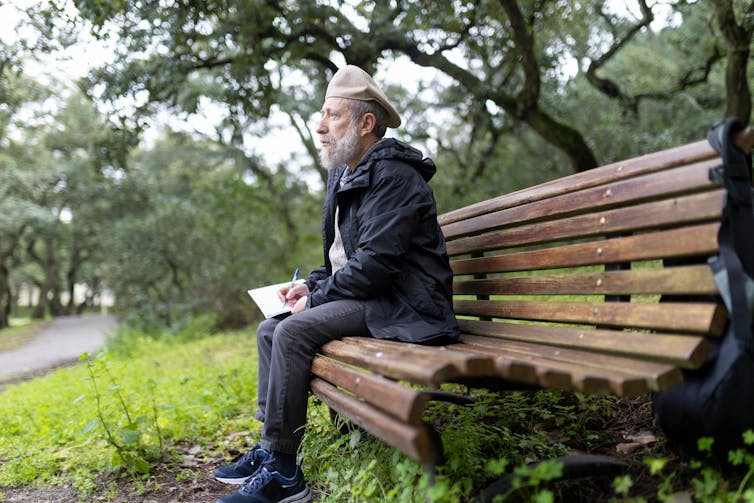
Man sat writing on a park bench
Most (67%) novelists surveyed said they never use AI.
Konstantin Shishkin/Shutterstock

The irony is, of course, that the work of these novelists has likely been used to train GenAI models. Almost two thirds of novelists (59%) reported that they know their work has already been used to train AI without permission or remuneration.

Moreover, there was widespread concern shared about the future of the novel. Fifty-one percent of novelists said they think it’s likely that AI will replace their work entirely.

Literary creatives expressed concern about a loss of creativity and the de-skilling of younger generations through an increased use of GenAI. We already know that one in four children between the ages of eight and 12 are already using AI.

Of the children who use it, four in ten use it for creative tasks. Literary creatives voiced fear around the use of AI within the creative process (where access needs do not require its use) and spoke about how this might affect the development of imagination, empathy, resilience, problem-solving and critical thinking, as well as what this might mean for the future of the art form.

In my survey, 67% of novelists said they never use AI. Where novelists reported that they did use AI, it was most commonly for tasks they deemed to be “non-creative”, such as admin or information search.

There was recognition from many that AI could be useful so long as it is responsibly designed and trained on licensed data. There was not so much an anti-AI sentiment as there was a pro-responsible AI sentiment.

By considering these findings, the UK government can better protect creative industries. The message from novelists, publishers and literary agents is clear – 86% support an opt-in model for AI training based on licensing structures which would enable them to give their informed consent and be fairly remunerated for the use of their work.

There is also a clear call for transparency from AI companies concerning the data used to train their AI models. This would help to facilitate a licensing market and would help creatives to exercise their rights.

Protecting the UK’s thriving literary arts is of urgent importance. The novel is a key foundation of the creative industries, which contributes immense amounts of soft power and £126 billion gross value to the UK economy annually.

Novels offer us so much, both personally and as a society. They entertain, educate and offer catharsis, connection with one another and self-discovery. We must fight to protect the novel, now more than ever.


This article is part of our State of the Arts series. These articles tackle the challenges of the arts and heritage industry – and celebrate the wins, too.


The Conversation

Dr Clementine Collett is funded by the Bridging Responsible AI Divides, BRAID UK, programme with funds received from the Arts and Humanities Research Council, grant number AH/X007146/1.

ref. Half of UK authors fear AI could replace them – what my new research suggests about the future of the novel – https://theconversation.com/half-of-uk-authors-fear-ai-could-replace-them-what-my-new-research-suggests-about-the-future-of-the-novel-270527

‘Mansplaining’ is different from other criticism – and Rachel Reeves is right to call it out

Source: The Conversation – UK – By Louise Ashley, Senior Lecturer in Sociology of Work, Queen Mary University of London

Ahead of delivering a consequential budget, Rachel Reeves, the chancellor of the exchequer, told the Times she was “sick of people mansplaining how to be chancellor to me”. She added: “I recognise that I’ve got a target on me. You can see that in the media; they’re going for me all the time.”

The term “mansplaining” signals a gendered dimension to how Reeves is critiqued. The suggestion is that, as a woman in a highly visible role, she is subject to patronising explanation, implicitly from men, that would not be levelled at a male chancellor. The prime minister backed up this assertion, saying that women in public life are subject to “much more criticism and abuse” than men.

Critics accused her of “playing the sexist card” – using the claim of mansplaining to deflect from questions about her policy record, including tax rises, welfare decisions and budget choices.

Women in public life often experience sexist behaviour but are punished for pointing it out.

This is not a defence of Reeves’s policies, nor a claim that she should be insulated from criticism – no chancellor is. Neither is it to suggest women are beyond critique, or too fragile for political life. Rather, the concern is with how criticism is delivered: the tone, assumptions and gendered framing that often underpin assessments of women in power.

“Mansplaining” typically refers to a particular mode of explanation: one delivered with unwarranted confidence, grounded in an assumption of superior authority – even when directed at a woman who is the expert in the room.

Men and women can be both perpetrators and targets of mansplaining. However, the term has particular force because it reflects deeper cultural patterns in which authority is still coded as male and, more specifically, white and middle or upper class.

Reeves operates in two fields – economics and politics – long dominated by men. The “default expert” in the public imagination remains male. Against this backdrop, separating robust policy challenge from patronising instruction becomes more difficult, especially as female leaders frequently face both.

The authority gap

A large body of research supports what journalist Mary Ann Sieghart terms the “authority gap”. This is the systematic tendency to undervalue women’s expertise, leadership and competence.

Research shows that women politicians are more likely than men to be covered in the media in terms of their appearance, family life or personal traits.

Casual sexism like mansplaining exists in unequal organisational systems. Our research on leadership pipelines shows that women face exclusion from informal decision-making and powerful networks, a pattern also observed in the civil service. In many sectors, this may become more pronounced when gender intersects with ethnicity and class.

The cumulative picture is clear: women must frequently exceed male colleagues simply to be judged equally competent

Credentials may help close this authority gap. Recent research finds that female economists persuade the public more than identical male counterparts but only when they are presented with visible credentials (university affiliation, professor title). Visible credentials don’t have a similar effect for men.

This suggests that for women like Reeves, the issue isn’t simply an absence of credentials – it is that their credentials must do extra work: acting not just as proof of competence, but as a signal of belonging in a role whose default image is male. In other words, Reeves is no less qualified than many previous chancellors, but may have to exceed the “average chancellor” threshold before her authority is assumed.

Doesn’t everyone get insulted in politics?

Critics often argue that Reeves is not unique. Male politicians, they note, face personal ridicule too. Boris Johnson, for example, was routinely mocked as a “buffoon”.

But these insults differ in important ways. As one example, calling Johnson a buffoon does not imply men are inherently unsuited to leadership.

They also do not draw on centuries of stereotypes used to keep men out of power. The cultural script suggesting men lack authority because they are men simply does not exist.

One telling example is the label “Rachel from accounts”, used by some to denigrate Reeves. This is not simply a dig, it is a gendered metaphor that places Reeves in a clerical, subordinate role – the diligent administrator who keeps receipts but does not make strategic decisions.

It reinforces a familiar pattern in which women leaders are recognised as operationally competent, but not as strategic thinkers. This is a dynamic our research identified in evaluations of women political leaders, even when their performance is rated equal to male politicians.

Crucially, there is no male equivalent to “Rachel from accounts”. This is why invoking the “rough and tumble of politics” as an explanation for such insults misses the point.

It is natural to attribute criticism to unfairness rather than mistakes. Women are not exempt from this. But gendered dismissal can coexist with legitimate scrutiny. The critical point is that still, women in public life are expected to navigate both.

Politics will always involve fierce criticism. The issue is whether it must also involve the reinforcement of unequal authority — and whether women in public life are allowed to name the structural patterns shaping their experience.

To move forward, expecting women leaders to refrain from calling out gendered criticism in the name of resilience will not shift the status quo. Organisations and institutions (including media, political commentary, boards, financial teams) must pay close attention to whose expertise is being assumed and whose contributions are being questioned or overlooked.

Until then, women like Reeves will continue to walk the tightrope: expected to endure sexist behaviour, and criticised for noticing it.

The Conversation

The authors do not work for, consult, own shares in or receive funding from any company or organisation that would benefit from this article, and have disclosed no relevant affiliations beyond their academic appointment.

ref. ‘Mansplaining’ is different from other criticism – and Rachel Reeves is right to call it out – https://theconversation.com/mansplaining-is-different-from-other-criticism-and-rachel-reeves-is-right-to-call-it-out-270521

From blood sugar to gut bacteria, how beans can improve your health

Source: The Conversation – UK – By Raysa El Zein, Lecturer, Life Sciences, University of Westminster

Beans, pulses and legumes are affordable and nutritious. Pixel-Shot/ Shutterstock

Celebrity chefs Jamie Oliver, Hugh Fearnley‑Whittingstall and Tom Kerridge have backed a new campaign that is putting the spotlight on beans. The Bang In Some Beans campaign is a bid to double the UK’s intake of beans, legumes and pulses by 2028.

Such a campaign is long overdue. Despite beans on toast being a British favourite, beans, pulses and legumes remain under-consumed in the UK. According to data from the Food Foundation, two-thirds of the UK population eat less than one portion of beans a week.

Beans are one of the most affordable and nutritious foods out there. With food costs continuing to rise and poor nutrition contributing to a growing number of diseases, beans may offer a solution to both problems.

Encouraging greater bean consumption could also help close the UK’s fibre gap, as most of the UK population do not meet the recommended 30g of fibre per day. Beans are one of the simplest, most achievable ways to bridge that gap.

If you still aren’t convinced, here are just a few of the health benefits beans can provide:

1. They can help you manage your weight

Beans are a great source of protein, fibre and micronutrients such as iron, magnesium and potassium. Increasing bean intake could improve your health and reduce chronic disease risk.

Research also shows that people who consume higher amounts of beans have lower body weight, smaller waist circumference and lower blood pressure. These are all associated with reduced risk of multiple chronic diseases including obesity, diabetes and heart disease.

Not only are beans low in calories, their high fibre and protein content can help increase satiety (the feeling of fullness), which is a key factor in appetite regulation and long-term weight management.

2. They’re good for your heart

An abundance of research links eating beans to a healthy heart. Diets rich in beans can significantly lower LDL (“bad”) cholesterol, improve blood pressure and reduce inflammation.

The fibre in beans binds cholesterol in the gut so it can be excreted from the body. Their potassium and magnesium content supports vascular function, which is essential for a healthy heart. This is why, for those managing cardiovascular diseases or hyperlipidaemia, beans should be a cornerstone of a heart healthy diet.

3. They’re good for blood sugar levels

Beans have a low glycaemic index. This means they release energy slowly, which reduces blood sugar spikes. Their fibre and protein content also helps slow carbohydrate absorption, which promotes better blood sugar control. Both factors are important for preventing or managing type 2 diabetes.

Evidence from clinical trials shows incorporating beans into meals also benefits other aspects of blood sugar in people with, or at risk of, type 2 diabetes – such as improving fasting blood sugar and insulin levels.

A randomised controlled trial of over 100 people with type 2 diabetes found that those who consumed at least one cup of legumes daily for three months not only had better blood sugar control, they also had a significant decrease in body weight, waist circumference, cholesterol levels and blood pressure.

4. They can benefit gut health

Beans support gut health by providing both soluble and insoluble fibre. These act as prebiotics, feeding beneficial gut bacteria.

The fermentation of these fibres in the gut also produces short-chain fatty acids, prebiotics which have anti-inflammatory effects and support the colon. Regular consumption contributes to improved digestion and bowel regularity.

A young woman in a supermarket compares two jars of beans.
Beans have many gut health benefits.
BearFotos/ Shutterstock

Boosting your bean consumption

You don’t need to make any sorts of dramatic dietary changes in order to incorporate more beans in your diet. Here are a few simple ways to eat more beans.

1. Start gradually.

Begin with small portions (about half a cup of cooked beans) a few times a week, increasing this as your digestive system adjusts and to avoid flatulance and bloating.

2. Mix up varieties.

Rotate between beans such as chickpeas, kidney beans, lentils, black beans and cannellini beans. Diversity boosts nutrient variety and keeps meals interesting.

3. Add beans to familiar dishes.

Stir beans or other legumes into soups, stews, curries, salads or pasta sauces. Even a handful can make a meaningful difference.

4. Choose canned beans.

These are just as nutritious as dried or fresh beans – just ensure you rinse them well to reduce the sodium content. If you do use dried beans, ensure you soak them overnight and cook them thoroughly to neutralise anti-nutrients such as phytates (which can reduce absorption of other nutrients) and improve their digestibility.

Nutritionally speaking, chickpeas and lentils are good choices, as they’re high in fibre and protein. Black beans contain antioxidants – compounds which have been linked to lower risk of diseases such as cancer, diabetes and Alzheimer’s disease.

Ultimately, the best beans are the ones you can integrate into your diet and will eat regularly.

However, there are some groups of people who should be mindful when increasing their bean intake, as some of the compounds they contain can have a negative impact on health.

People with IBS, IBD or digestive sensitivities may struggle with bloating or gastric discomfort if they consume large amounts of beans. Beans should be introduced into the diet gradually based on how well your body tolerates them.

People with kidney disease may want to be careful due to the high potassium content in beans. In this case, it’s important to consult with a doctor before consuming diets rich in beans.

Those who suffer from low iron or zinc levels may also want to be careful with how they prepare beans. The anti-nutrient compounds in beans can disrupt the absorption of minerals, which is why it’s so important to soak beans and cook them well.

Beans are a nutritional powerhouse. High in fibre, protein and key micronutrients, they support heart, metabolic and gut health while being both affordable and environmentally friendly.

The Conversation

Raysa El Zein does not work for, consult, own shares in or receive funding from any company or organisation that would benefit from this article, and has disclosed no relevant affiliations beyond their academic appointment.

ref. From blood sugar to gut bacteria, how beans can improve your health – https://theconversation.com/from-blood-sugar-to-gut-bacteria-how-beans-can-improve-your-health-269653

The cancer blood test making waves – and what the numbers really show

Source: The Conversation – UK – By John Ferguson, Senior Lecturer in Statistical Science, University of Galway

BLKStudio/Shutterstock.com

Progress in cutting the global toll of cancer remains painfully slow, but a new blood test has sparked unusual levels of hope. Researchers say it could one day make routine screening far more effective by catching cancers earlier, when treatment has the best chance of saving lives.

The Galleri blood test, developed by US firm Grail, is the latest entrant to attract worldwide attention, after early trial results were described as “exciting” by researchers.

A press release claims the test, currently being trialled by the NHS, can detect signals from 50 cancers and correctly identify the disease in 62% of people who receive a positive result.

It also appears to be highly accurate at ruling cancer out, with a reported 99.6% success rate among those who were disease-free. At first glance, these headline figures appear to represent a significant step forward.

But before we reach for the champagne, it’s worth looking more closely at what these numbers really mean. Early promise does not always translate into real-world performance.

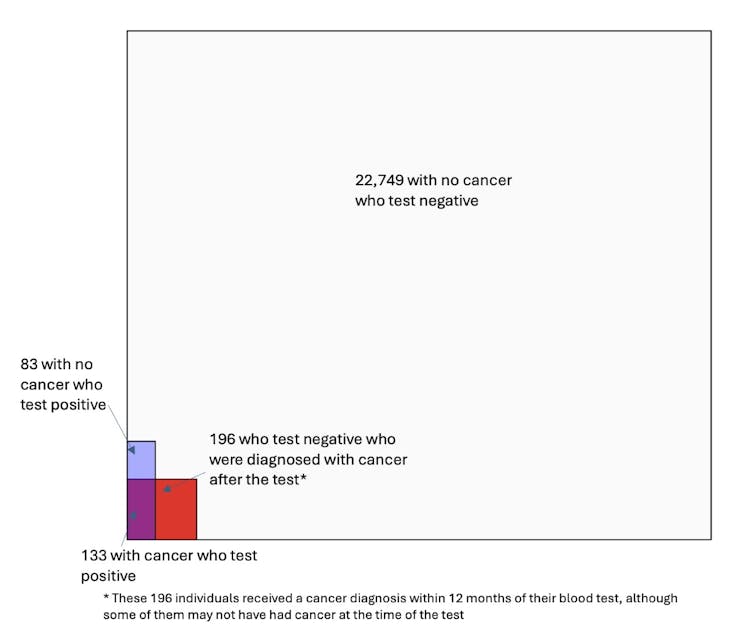
The Pathfinder 2 trial, involving 23,161 people aged over 50 from the US and Canada with no prior cancer diagnosis, produced the figures now circulating widely. Of the 216 participants who tested positive, 133 were later found to have cancer, giving the “positive predictive value” (PPV) of 62% that has been so widely reported.

That metric answers a crucial question: “If I test positive, what’s the chance I actually have cancer?” It also means, however, that 38% of positive results were false alarms.

Specificity – how often a test avoids falsely diagnosing cancer – is equally important, given the anxiety and medical follow-up triggered by an incorrect result. Here, the test performed well: 99.6% of people without cancer received a correct negative result.

Yet even this strong number has implications. If everyone aged over 50 in the UK were tested – more than 26 million people – the same rate would still generate over 100,000 false positives.

What has been less widely discussed is sensitivity, the measure of how many true cancer cases the test actually detects. On this measure, the result was 40.4%, meaning the test missed around three in every five cancers that appeared over the following year.

Galleri test results:

A chart showing how many cancer cases the Galleri test would correctly identify.
The Galleri cancer test in numbers.
John Ferguson, CC BY-SA

The figure that’s been less widely reported

That shortfall may disappoint those hoping for a catch-all screening tool. It also raises the risk that patients could be falsely reassured by a negative result, potentially delaying a diagnosis.

Statisticians caution that the reported PPV, specificity and sensitivity are estimates rather than fixed values, and each comes with uncertainty. They also note that tests often perform less well outside carefully controlled trials, meaning real-world accuracy could be lower.

So, where does this leave the Galleri test? It may well become a useful addition to future screening programmes, provided that negative results are not viewed as definitive by patients or doctors.

But the low sensitivity means many cancers would still be missed in its current form. The test is also expensive – US$949 (£723) in the US – and no evidence yet shows that widely using it reduces cancer deaths.

The early data is encouraging, but perhaps the excitement deserves to be tempered. This technology may be a step forward, but it is not a solution on its own.

The Conversation

John Ferguson does not work for, consult, own shares in or receive funding from any company or organisation that would benefit from this article, and has disclosed no relevant affiliations beyond their academic appointment.

ref. The cancer blood test making waves – and what the numbers really show – https://theconversation.com/the-cancer-blood-test-making-waves-and-what-the-numbers-really-show-270438

Calls for grizzly hunts to return to Western Canada oversimplify a complex ecological issue

Source: The Conversation – Canada – By Tandeep Sidhu, Assistant Professor, University of Manitoba

Highly publicized grizzly bear attacks have ignited calls to reopen grizzly trophy hunts across Western Canada. The most recent push came from the B.C. Wildlife Federation, a conservation and hunting advocacy organization that called for a hunting season on grizzlies after a bear attacked a group of schoolchildren in Bella Coola, B.C., leaving two people critically injured and two others seriously hurt.

The federation made the call while the circumstances of the attack were still unknown. Conservation officers now believe the attack involved a grizzly sow and her cubs. This does not dismiss or mitigate the traumatic nature of the incident, but it raises questions about why the federation would amplify this call during the early stages of an investigation.

Amid calls for British Columbia to revisit its grizzly hunting ban, Todd Loewen, Alberta’s minister for forestry and parks, has indicated he’s considering lifting his province’s ban in response to a growing number of grizzly attacks.

Alberta banned sport hunting of grizzlies in 2006. A similar ban was imposed in B.C. in 2018, drawing criticism from hunters and support from First Nations and the general public.

In 2024, Loewen introduced a framework allowing grizzlies to be killed by wildlife responders, rather than conservation officers, and some have questioned whether the right grizzly was euthanized in the program’s first kill.

The current debate about hunting grizzlies is being increasingly driven by emotion and political pressure.


Read more:
Fierce debate roars to life over grizzly bear hunt


Grizzly encounters are rare

A moral panic is a period marked by widespread, often exaggerated, concern about a perceived threat to a community. It relies on typically sensationalist media reporting echoing the claims of “moral entrepreneurs,” like advocacy groups, to induce public support for policy changes.

The recent grizzly attacks are already being used to fuel such a panic. Yet grizzly encounters are rare and often stem from surprise encounters, people encroaching on grizzly territory or sow grizzlies defending their cubs. The context of these incidents must be considered.

Every year, thousands of people encounter grizzly bears at national and provincial parks, including wildlife photographers, hikers and other naturalists, without incident.

Some people have expressed concerns that grizzlies are venturing away from their traditional habitats. But these observations may be the byproduct of a productive bumper crop season, which leads to a greater dispersion of berries that are crucial for hibernation foraging.

Predator control claims don’t match the evidence

Some hunters cite grizzlies and other predators as a contributor to declining elk populations across the Rockies. However, data from Alberta largely demonstrates that elk populations have trended upward, not downward.

Some evidence suggests elk population declines in mountainous hunting zones. It remains unclear as to why hunting interests would take precedence over natural ecological processes.

Hunting predatory animals is also a space that capitalizes on conspiracy theories and pseudoscience, despite the sector’s desired public image of science-based management and conservation.

For example, the B.C. Wildlife Federation has stated grizzly hunting was banned in B.C. with “no scientific rationale.”

This framing ignores substantial scientific evidence, including non-hunting-related mortalities, continued habitat loss, climate change that’s affecting denning patterns and increasing the risk of human conflict, and the fact that many grizzly populations are classified as “threatened.”

The claim there is no science to warrant a ban on grizzly hunting oversimplifies an inherently complex ecological issue.

Economic arguments miss the larger picture

The hunting industry has long claimed the economic value of trophy hunting. However, grizzly bear tourism creates more jobs and generates more revenue than trophy hunting. New research from the Greater Yellowstone Ecosystem has found that a single grizzly bear generates US$46,000 annually for the local economy.

Beyond this, framing wildlife solely through economic value reproduces a colonial dynamic in which natural resources are assigned value based on their economic and extractive potential.

There is also growing and widespread concern that changes to hunting policies in Alberta are spearheaded at the behest of the hunting industry itself. Loewen’s portfolio involves making decisions surrounding wildlife management, and some critics have raised concerns about his previous ownership of an outfitting business.

Loewen’s family owns Red Willow Outfitters, a hunt-guiding business. While the minister has indicated he’s working with lawyers and the province’s ethics commissioner over potential conflicts of interest, he has implied he doesn’t see any cause for concern.

Colonial dimensions of wildlife management

Grizzly bears, like wolves and bison, have tremendous cultural significance to many First Nations, including the Blackfoot people.

This connection that many First Nations communities have to native wildlife and their knowledge structures was disrupted by settler-colonialism.

These knowledge structures and worldviews are re-emerging. Examples include Indigenous-led stewardship of grizzlies in the Great Bear Rainforest in B.C. and the signing of the Grizzly Bear Treaty, led by the Piikani First Nation, in Alberta.

Reopening grizzly hunting would result in substantial cultural harms to many Indigenous communities. A comparable case unfolded in Wisconsin in 2021, when hunters killed almost one-quarter of the wolf population. Beyond its ecological harms, the hunt caused tremendous sociocultural harms to the Ojibwe.

Conservation and safety are not at odds

Calls to reopen grizzly hunting overlook the need for greater investment in public education and conflict mitigation to protect a threatened species. They also ignore that poaching is a driving cause of grizzly mortality and is likely under-reported.

Many recent attacks have involved sows with cubs, raising questions about how killing grizzlies could bolster conservation when the species is one of the slowest reproducing mammals. While sow grizzlies with cubs would likely be exempt from any hunt, they are responsible for many recent attacks. It is unclear how a hunt could reduce these incidents when the bears most likely to be involved would not be targeted.

The argument for reopening grizzly hunts is not about conservation or public safety. Trophy hunting remains tied to longstanding colonial practices and ideas about establishing masculine dominance, rather than ecological necessity.

Rural communities have demonstrated that existence with grizzlies and wolves is possible. Therefore, the question is not whether coexistence is achievable, but whether there is the political will to facilitate it.

The Conversation

The authors do not work for, consult, own shares in or receive funding from any company or organisation that would benefit from this article, and have disclosed no relevant affiliations beyond their academic appointment.

ref. Calls for grizzly hunts to return to Western Canada oversimplify a complex ecological issue – https://theconversation.com/calls-for-grizzly-hunts-to-return-to-western-canada-oversimplify-a-complex-ecological-issue-270267