Scroll, watch, burn: sunscreen misinformation and its real‑world damage

Source: The Conversation – UK – By Rachael Kent, Senior Lecturer in Digital Economy & Society Education, Department of Digital Humanities, King’s College London

Krakenimages.com/Shutterstock

On a sunny afternoon, I was scrolling through social media when I came across a video of a young woman tossing her sunscreen into a bin. “I don’t trust this stuff anymore,” she said to the camera, holding the bottle up like a piece of damning evidence.

The clip had been viewed over half a million times, with commenters applauding her for “ditching chemicals” and recommending homemade alternatives like coconut oil and zinc powder.

In my research on the effect of digital technology on health, I’ve seen how posts like this can shape real-world behaviour. And anecdotally, dermatologists have reported seeing more patients with severe sunburns or suspicious moles who say they stopped using sunscreen after watching similar videos.

Sunscreen misinformation created by social media influencers is spreading and this isn’t just a random trend. It’s being fuelled by the platforms designed to host influencer content.


Get your news from actual experts, straight to your inbox. Sign up to our daily newsletter to receive all The Conversation UK’s latest coverage of news and research, from politics and business to the arts and sciences.


In my book, The Digital Health Self, I explain how social media platforms are not neutral arenas for sharing information. They are commercial ecosystems engineered to maximise engagement and time spent online – metrics that directly drive advertising revenue.

Content that sparks emotion – outrage, fear, inspiration – is boosted to the top of your feed. That’s why posts questioning or rejecting science often spread further than measured, evidence-based advice.

Health misinformation thrives in this environment. A personal story about throwing out sunscreen performs well because it’s dramatic and emotionally charged. Algorithms reward such content with higher visibility: likes, shares and comments all signal popularity.

Each second a user spends watching or reacting gives the platform more data – and more opportunities to serve targeted ads. This is how health misinformation becomes profitable.

In my work, I describe social media platforms as “unregulated public health platforms”. They influence what users see and believe about health, but unlike public health institutions, they’re not bound by standards for accuracy or harm reduction.

If an influencer claims sunscreen is toxic, that message won’t be factchecked or flagged – it will often be amplified. Why? Because controversy fuels engagement.


Read more:
Misinformation lends itself to social contagion – here’s how to recognize and combat it


I call this environment “the credibility arena”: a space where trust is built not through expertise, but through performance and aesthetic appeal. As I write in my book: “Trust is earned not by what is known, but by how well one narrates suffering, recovery, and resilience.”

A creator crying on camera about “toxins” can feel more authentic to viewers than a calm, clinical explanation of ultraviolet radiation from a medical expert.

This shift has real consequences. Ultraviolet rays are invisible, constant and damaging. They penetrate cloud cover and harm skin even on cool days.

Decades of research, especially in countries like Australia with high skin cancer rates, show that regular use of broad-spectrum sunscreen dramatically reduces risk. And yet, myths spreading online are urging people to do the opposite: to abandon sunscreen as dangerous or unnecessary.

This trend isn’t driven solely by individual creators. It’s embedded in how content is designed, framed and presented. Algorithms prioritise short, emotionally-charged videos. Interfaces highlight trending sounds and hashtags. Recommendation systems push users toward extreme or dramatic content.

These features all shape what we see and how we interpret it. The “For You” page isn’t neutral. It’s engineered to keep you scrolling, and shock value outperforms nuance every time.

That’s why videos about “ditching chemicals” thrive, even as posts on other aspects of women’s health are shadowbanned or suppressed. Shadowbanning refers to when a platform limits the visibility of content – making it harder to find, without informing the user – often due to vague or inconsistently applied moderation rules.

The system rewards spectacle, not science. Once creators discover that a particular format, like tossing products into a bin, boosts engagement, it’s replicated over and over again. Visibility isn’t organic. It’s manufactured.

Those who throw away their sunscreen often believe they’re doing the right thing. They’re drawn to creators who feel relatable, sincere and independent — especially when official health campaigns seem cold, patronising or out of touch. But the consequences can be serious. Sun damage accumulates silently, raising skin cancer risk with every hour spent unprotected.

Sunscreen isn’t perfect. It needs to be reapplied properly and paired with shade and protective clothing. But the evidence for its effectiveness is clear and robust.

The real danger lies in a system that not only allows misinformation to spread, but also incentivises it. A system in which false claims can boost an influencer’s reach and a platform’s revenue.


Read more:
Four ways you can design social media posts to combat health misinformation


To resist harmful health trends, we need to understand the systems that promote them. In the case of sunscreen, rejecting protection isn’t just a personal decision – it’s a symptom of a digital culture that turns health into content, and often profits from the harm it causes.

The Conversation

Rachael Kent does not work for, consult, own shares in or receive funding from any company or organisation that would benefit from this article, and has disclosed no relevant affiliations beyond their academic appointment.

ref. Scroll, watch, burn: sunscreen misinformation and its real‑world damage – https://theconversation.com/scroll-watch-burn-sunscreen-misinformation-and-its-real-world-damage-261137

Why did the government hide a data leak about Afghans working with British forces and why did the courts finally reveal it?

Source: The Conversation – UK – By Alexandros Antoniou, Senior Lecturer in Media Law, University of Essex

William Barton/Shutterstock

When thousands of Afghans were quietly flown to the UK under a secret relocation scheme, few knew it was triggered by an error. A defence official had accidentally leaked the personal data of nearly 19,000 Afghan nationals who had worked with British forces and were at risk of Taliban reprisals.

It has now also been revealed that the leaked list contained the identities of UK special forces and spies.

Even fewer knew that this misstep was being kept from the public by a rare and powerful legal device: a superinjunction. Now, after nearly two years of legal wrangling, the High Court has lifted that order, reopening the conversation about when secrecy in the justice system goes too far.

What is a superinjunction?

An injunction is a court order that stops someone from doing something (like publishing a story) or requires them to do something (like taking down an online post or handing back confidential documents).

A superinjunction goes one step further and does two things: it bans the publication of certain information (usually to protect privacy, safety or national security) and also bans anyone from revealing that the court order even exists.

In essence, it is a tool that provides legal invisibility: the story is hidden and so is the fact that it is being hidden. While an injunction works like a padlock on a filing cabinet, a superinjunction means you cannot even tell anyone the cabinet is even there.

Superinjunctions are exceptionally rare and controversial, precisely because they run counter to the principle of open justice. This is the idea that courts must operate in public, and that their decisions can be seen, scrutinised and questioned. Any derogation from open justice must be continuously justified and treated with considerable caution, especially where media freedom is curtailed.


Want more politics coverage from academic experts? Every week, we bring you informed analysis of developments in government and fact check the claims being made.

Sign up for our weekly politics newsletter, delivered every Friday.


Historically, superinjunctions have been used sparingly in cases involving blackmail, risks of violence against witnesses, the protection of children or to prevent tipping-off a subject before an order can be served (such as in fraud investigations), always with the aim of preventing harm or ensuring that justice is done.

The superinjunction committee (which was established in 2010 by Lord Neuberger to review growing concerns about such orders) made clear that the use of these legal tools must meet strict tests of necessity and proportionality. And, that they are only granted where serious harm (for example to life, safety or the administration of justice) is credibly at stake.

Why was a superinjunction granted in the Afghan data breach case?

In this case, the government argued that revealing the data leak could put lives in danger. The leaked spreadsheet contained names, contact details and, in some cases, family information of Afghan nationals who had applied to resettle in the UK. Many feared Taliban retaliation.

So, in September 2023, the Ministry of Defence asked the High Court for an injunction to stop media outlets from reporting on the leak. The judge did not just grant that request, he escalated it to a superinjunction, banning any mention of the case or the fact of the order.

It was described at the time as “unprecedented” in its scope. Journalists, even those who had already discovered the breach, were effectively gagged. The public had no idea any of it was happening.

Why did the court later decide to lift the secrecy?

After multiple hearings and appeals, High Court judge Mr Justice Chamberlain ruled on July 15 2025 that the superinjunction should be discharged once and for all. A government-commissioned review found that the leak may not have spread as widely as initially feared, and that Taliban reprisals were unlikely to be triggered solely by someone appearing on the leaked list.

The judge concluded that while the leak was deeply serious, continued secrecy was no longer necessary, and that the harm of suppressing public debate and scrutiny now outweighed the risks of disclosure. To put it plainly, the balance tipped.

Protection v cover-up

Superinjunctions are not inherently wrong. There are situations where short-term secrecy is essential, for instance for the purposes of shielding vulnerable parties like children or genuinely guarding national security.

But the Afghan case exemplifies the dangers of allowing secrecy to persist too long or too broadly. For nearly two years, the public was kept in the dark about a data breach involving tens of thousands of lives – including British citizens – and a government response that may ultimately cost the taxpayer “several billion pounds”.

In this context, secrecy risked becoming a form of institutional self-protection, shielding the Ministry of Defence and the government from political fallout, legal scrutiny and accountability, rather than safeguarding people from actual harm.

The principle of open justice is at the heart of democratic life. Superinjunctions, by their nature, run directly against that principle. There are times when secrecy might be seen as necessary, but it must always be tightly scoped and justified with evidence while serving the public interest; not convenience or image. By lifting this superinjunction, the courts affirmed that the British public has a right to know not only what went wrong, but that something went wrong at all.

The Conversation

Alexandros Antoniou does not work for, consult, own shares in or receive funding from any company or organisation that would benefit from this article, and has disclosed no relevant affiliations beyond their academic appointment.

ref. Why did the government hide a data leak about Afghans working with British forces and why did the courts finally reveal it? – https://theconversation.com/why-did-the-government-hide-a-data-leak-about-afghans-working-with-british-forces-and-why-did-the-courts-finally-reveal-it-261437

Connie Francis was the voice of a generation and the soundtrack of post-war America

Source: The Conversation – Global Perspectives – By Leigh Carriage, Senior Lecturer in Music, Southern Cross University

Hulton Archive/Getty Images

Connie Francis dominated the music charts in the late 1950s and early 1960s with hits like Stupid Cupid, Pretty Little Baby and Don’t Break the Heart That Loves You.

The pop star, author and actor has died at 87, and will be remembered for recording the soundtrack songs of post-World War II America.

Francis sitting on a kayak in a one-piece swimsuit.
Francis photographed around 1963.
Silver Screen Collection/Getty Images

An early life of music

Francis was born Concetta Rosa Maria Franconero in Newark, New Jersey, to Italian immigrant parents. At a very early age, Francis was encouraged to take accordion and singing lessons, compete in talent shows, and later she would perform occasionally on the children’s production Star Time Kids on NBC, remaining there until she was 17.

Within these early recordings you can hear her style begin to develop: her tone, great pitching, her versatility in vocal range. Her vocal delivery is technically controlled and stylistically structured, often nuanced – and even at this early stage demonstrating such power coupled with an adaptability for a broad range of repertoire.

At 17, Francis signed a contract with MGM Records.

One of her early recordings was the song Who’s Sorry Now?, written by Ted Snyder with lyrics by Bert Kalmar and Harry Ruby in 1923. Her version was released in 1957 and struggled to get noticed.

The following year, Francis appeared with the ballad on American Bandstand. This performance exposed Francis’ talent for interpretation and her ability to bridge the teen and adult fanbase.

The song would become a hit.

It’s useful to listen to the original version to gain more insight into Francis’ vocal approach and styling. The original is an instrumental song of its time, with light whimsical call and response motives in a foxtrot feel.

But in Francis’ version, she demonstrates her ability to revitalise a late 1950s pop music aesthetic. In an emotional delivery she croons her own rendition, with the country styling elements of Patsy Cline.

Black and white photo, Francis at the microphone.
Connie Francis performing in Milan in 1961.
Universal Archive/Universal Images Group via Getty Images

The voice of a generation

Following Who’s Sorry Now?, Stupid Cupid (1958), Where The Boys Are (1960, the titular song of a feature film starring Francis) and Lipstick on Your Collar (1959) became the soundtrack songs of post-war America.

Francis was supported with songs penned by the some of the best songwriters from the Brill Building, a creative collective in Manhattan that housed professional songwriters, working with staff writers Edna Lewis and George Goehring.

In 1960, Francis released her hit Everybody’s Somebody’s Fool written by Jack Keller and Howard Greenfield. It was a teeny-bopper classic, and she became the first women to top the Billboard Hot 100.

The pair look at each other, holding sheet music.
Francis records in the studio with Freddy Quinn at MGM in 1963 in New York.
PoPsie Randolph/Michael Ochs Archives/Getty Images

Styled after some of the other greats of the time – such as Frank Sinatra (1915–98), Dean Martin (1917–95) and Louis Prima (1910–70) – Francis’ performance on the Ed Sullivan show highlighted her connection to her Italian heritage and ability to draw from a broad repertoire.

On the show, she performed Mama and La Paloma. Each performance is very carefully styled, a thoughtful approach to dynamics, sung in both English and Italian.

Don’t Break the Heart That Loves You, a number one hit from 1962, features Francis’ gorgeous crooning harmonies. Then, the song breaks down into an earnest spoken part and finishes with a powerful belted vocal part of long notes.

The song is full of confidence and hope.

Away from the microphone

Francis had two key roles in films, starring in Where the Boys Are (1960) and the comedy Follow the Boys (1963).

She was an author of two books. The second, Who’s Sorry Now?, became a New York Times bestseller.

Francis was involved with humanitarian causes. She was particularly involved with Women Against Rape, following her own violent rape in 1974, and the Valour Victims Assistance Legal Organisation, dedicated to supporting the legal rights of crime victims. A lesser known song in her repertoire, fitting to include here, is her version of Born Free from 1968.

As a singer, Francis worked at her craft and transitioned effortlessly from one genre to another, performing for over five decades. She will be remembered as a trailblazing solo artist, leaving a strong legacy in popular music culture.

She was the voice of one generation when she was a star. And in her final year she became the voice of a new generation as Pretty Little Baby, released in 1962, went viral on TikTok, with more than 1.4 million videos using her voice to share stories of their lives.

Francis in black, a band behind her on stage.
Francis performs in Atlantic City, New Jersey, in 2009.
Bobby Bank/WireImage

The Conversation

Leigh Carriage does not work for, consult, own shares in or receive funding from any company or organisation that would benefit from this article, and has disclosed no relevant affiliations beyond their academic appointment.

ref. Connie Francis was the voice of a generation and the soundtrack of post-war America – https://theconversation.com/connie-francis-was-the-voice-of-a-generation-and-the-soundtrack-of-post-war-america-261467

Chimamanda’s Lagos homecoming wasn’t just a book launch, it was a cultural moment

Source: The Conversation – Global Perspectives – By Tinashe Mushakavanhu, Assistant Professor, Harvard University

When the announcement of Chimamanda Adichie Ngozi’s latest novel Dream Count was made, it was regarded as a major event in African literature. The internationally celebrated Nigerian writer had not published a novel in the past 12 years, and her long-awaited return stirred both anticipation and speculation. In the post-COVID context in which the book comes, so much has changed in the world.

The first leg of her three city homecoming book tour coincided with my stay in Lagos as a curatorial fellow at Guest Artist Space Foundation, dedicated to facilitating cultural exchange and supporting creative practices. After Lagos, Chimamanda took the tour to Nigeria’s capital city Abuja and finally Enugu, where she was born and grew up.


Read more:
Chimamanda Ngozi Adichie’s new book Dream Count explores love in all its complicated messiness


As a scholar of African literature, I arrived here in search of literary Lagos. But my attachment to the city may also just be romantic, a nostalgia born out of years of reading about it in fiction. No doubt, Lagos is a city of imagination and creativity.

Chimamanda’s book event was a reminder that literary celebrity, when it happens in Africa, can exist on its own terms. It’s rooted in a popular imaginary that embraces both the writer and the spectacle.

Lagos superstar

The launch in Lagos took place at a conference centre on the evening of Friday 27 June. The MUSON is a multipurpose civic auditorium located in the centre of Lagos Island which can accommodate up to 1,000 guests. And on this night, the auditorium was packed.

When I arrive, the scene outside is buzzing. A crowd gathers in front of a large canvas banner bearing a radiant image of the author. It’s more than just decoration; it’s a backdrop. It is an occasion for the selfie, a digital marker that you were there. There is even a hashtag for this: #dreamcountlagos. People take turns posing in front of it, curating their presence in the frame of Chimamanda’s aura.

The atmosphere is festive, electric. And yet beneath the surface shimmer is something more urgent: a hunger for story, for presence, for return. Perhaps that explains why people come not just to witness, but to be counted.

Inside the lobby, piles of Chimamanda’s books are neatly arranged on long tables. People are not just buying a copy. They are buying several in the hope that the author will autograph them. The sight is striking, almost surreal. In many parts of the continent, a book launch is often a quiet affair. Writers are lucky to sell a handful of copies. But this is something else entirely. This is not just a book launch, it is a cultural moment.

It would have been easy to mistake the event for a political townhall. There was a VIP section reserved for the who’s who of Lagos, but those class distinctions easily dissolved into the collective energy of the room. The auditorium was filled with genuine enthusiasm.

Even after a delay of more than an hour, when Chimamanda finally walked in, she was met with rapturous applause. She wore a bright yellow dress, an Instagrammable outfit, suited for the many fans who rushed forward to take selfies with her. Chimamanda, no doubt, is as much a fashion icon as she is a literary figure.

On stage, she was joined by media personality Ebuka Obi-Uchendu, widely known as the host of the reality TV show Big Brother Africa. But here, he was also something more intimate: the author’s friend. Chimamanda even credited him with being a “great reader”. This is a rare compliment in a literary world that often separates celebrity from critical engagement.

Their conversation was relaxed and full of laughter, offering the audience both intimacy and insight. Chimamanda addressed the question that had lingered for years: her decade-long silence. She spoke candidly of writer’s block, of the grief that came with losing both her parents in quick succession, and how that loss eventually reignited her desire to write.

Dream Count, she explained, is shaped by that rupture. It is one of the major post-COVID novels from Africa, and centres on the lives of four women. It is a book about love, friendship and independence.

Africans do read

When she spoke about her characters on stage, it was as though she was talking about relatives that the audience recognised. They responded by shouting out the characters’ names, to the delight of the author.

When I asked people about the launch afterwards, many said that it was a very Nigerian event – big, colourful, exuberant, festive. It was indeed a celebration that felt communal, even joyous. It was also a public demonstration of how literature can still command space and attention, not just in private reading rooms or crammed bookstores, but on a civic scale.


Read more:
Lagos fashion: how designers make global trends uniquely Nigerian


This was a remarkable event because it defied the tired cliché that Africans do not read. People, mostly young, came out in their hundreds. They bought books, they took selfies with their “favourite” author, they screamed the names of fictional characters as though greeting friends.

But more significant was Chimamanda’s choice to work with a local publisher, Narrative Landscape Press, which produced the Nigerian edition of Dream Count that is now available and accessible locally, at the same time as its release in Europe and North America. That alone is a radical act.

In returning to Nigeria to launch her book, Chimamanda also disrupts the assumption that African literary prestige must only be validated abroad. Even though she belongs to a cohort of African writers shaped by the diaspora, she actively insists on presence – on homecoming – not as simply nostalgia, but as active engagement.

Of course, Chimamanda is an exception. Her stature as a global literary figure, combined with her deep connection to home, allows her to move between worlds with remarkable ease. Few writers command the kind of multigenerational, cross-class attention she does. I found myself wishing though that more book launches could carry this same sense of occasion, of meaning, of return. That they could gather people in such numbers, not just to celebrate the writer, but to affirm the African book as something still worth gathering for.

And perhaps that is what made this book launch unforgettable: not just the celebrity or the spectacle, but the sense that literature still matters here, and that it belongs to the people.

The Conversation

Tinashe Mushakavanhu does not work for, consult, own shares in or receive funding from any company or organisation that would benefit from this article, and has disclosed no relevant affiliations beyond their academic appointment.

ref. Chimamanda’s Lagos homecoming wasn’t just a book launch, it was a cultural moment – https://theconversation.com/chimamandas-lagos-homecoming-wasnt-just-a-book-launch-it-was-a-cultural-moment-261112

Immigrants in Europe and North America earn 18% less than natives – here’s why

Source: The Conversation – Global Perspectives – By Are Skeie Hermansen, Professor of Sociology, University of Oslo

F Armstrong Photography/Shutterstock

As many countries grapple with ageing populations, falling birthrates, labour shortages and fiscal pressures, the ability to successfully integrate immigrants is becoming an increasingly pressing matter.

However, our new study found that salaries of immigrants in Europe and North America are nearly 18% lower than those of natives, as foreign-born workers struggle to access higher-paying jobs. To reach this conclusion, we analysed the salaries of 13.5 million people in nine immigrant-receiving countries: Canada, Denmark, France, Germany, the Netherlands, Norway, Spain, Sweden and the United States. Data was taken from the period of 2016 to 2019.

Immigrants in these countries earned less primarily because they were unable to access higher-paying jobs. Three-quarters of the migrant pay gap was the result of a lack of access to well-paid jobs, while only one-quarter of the gap was attributed to pay differences between migrant and native-born workers in the same job.

Spain has the largest gap, while Sweden’s is the smallest.
Author’s own elaboration

The high-income countries we examined in Europe and North America all face similar demographic challenges, with low fertility rates resulting in an ageing population and labour shortages. Pro-natalist policies are unlikely to change this demographic destiny, but sound immigration policies can help.

Across these countries with vastly different labour market institutions and immigrant populations, a common theme emerged: countries are not making good use of immigrants’ human capital.

Stark regional differences

We found that immigrants earn 17.9% less than natives on average, although the pay gap varied widely by country. In Spain, a relatively recent large-scale receiver of immigrants, the pay gap was over 29%. In Sweden – a country where many employed immigrants find work in the public sector – it was just 7%. These results don’t include immigrants who are unemployed or in the informal economy.

Where immigrants were born also mattered. The highest average overall pay gaps were for immigrants from sub-Saharan Africa (26.1%) and the Middle East and North Africa (23.7%). For immigrants from Europe, North America and other Western countries, the difference in average pay compared to natives was a much more modest 9%.

Migrant pay gaps according to region of origin. The minus sign (−) before figures indicates that immigrants earn less than natives. Note that data for second-generation immigrants is unavailable in France, Spain and the US.
Author’s own elaboration

Our results suggest that the children of immigrants faced substantially better earning prospects than their parents. For the countries where second-generation data was available – Canada, Denmark, Germany, Netherlands, Norway and Sweden – the gap narrowed over time, and the children of immigrants had a substantially smaller earnings gap, earning an average of 5.7% less than workers with native-born parents.

The struggle to access higher-paying jobs

Beyond quantifying the gap, we wanted to understand the roots of pay disparities. To create better policies, it is important to know whether immigrants are paid less than natives when they’re doing the same job in the same company, or whether these differences arise because immigrants typically work in lower-paying jobs.

By a wide margin, we found that immigrants end up working in lower-paying industries, occupations and companies; three-quarters of the gap was due to this type of labour-market sorting. The pay gap for the same work in the same company was just 4.6% on average across the nine countries.

These differences represent a failure of immigration policy to incorporate immigrants, as immigrants are relegated to jobs where they cannot contribute to their full potential. Our analyses rule out that the lack of access to higher-paying jobs simply reflects a difference in skill between immigrants and native-born workers. We also found that the size of the pay gap and the key role of unequal access to well-paid jobs is similar for immigrants with and without a university education.

This means that the immigrant-native pay gap in large part represents a market inefficiency and policy failure, with significant social consequences for both immigrants and immigrant-receiving countries.


Leer más:
What Britons and Europeans really think about immigration – new analysis


Policy implications

Although equal pay for equal work policies may seem like a viable solution, they won’t close the immigrant pay gap. This is because they only help those who have already secured work, but immigrants face barriers to employment that begin long before even applying for a job. This includes convoluted processes to validate university degrees or other qualifications, and exclusion from professional networks.

The policy focus should therefore be on improving access to better jobs.

To make this happen, governments should invest in programmes such as language training, education and vocational skills for immigrants. They should ensure immigrants have early access to employment information, networks, job-search assistance and employer referrals. They should implement standardised and transparent recognition of foreign degrees and credentials, helping immigrants to access jobs matching their skills and training.

This is particularly important for Europe as it races to attract – and retain – skilled immigrants who may be having second thoughts about the US in the Trump era. In the European Union, around 40% of university-educated non-EU immigrants are employed in jobs that do not require a degree, an underutilisation of skills known as brain waste.

Some countries are already taking steps to remedy this. Germany’s Skilled Immigration Act – which took effect in 2024 – allows foreign graduates to work while their degrees are being formally recognised. In 2025, France reformed its Passeport Talent permit to attract skilled professionals and address labour shortages, especially in healthcare.

These kinds of policies help ensure that foreign-born workers can contribute at their full capacity, and that countries can reap the full benefits of immigration in terms of productivity gains, higher tax revenue and reduced inequality.

If immigrants can’t get access to good jobs, their skills are underutilised and society loses out. Smart immigration policy doesn’t end at the border – it starts there.

The Conversation

Are Skeie Hermansen has received funding from the European Research Council (ERC) under the European Union’s
Horizon 2020 research and innovation programme (grant agreement no. 851149), the Research Council of Norway (grant 287016), and the Center for Advanced Study at The Norwegian Academy of Science
and Letters (Young CAS grant 2019/2020).

Marta M. Elvira receives funding from the Spanish Ministry of Science and Innovation, grant PID2020-
118807RB-I00/AEI /10.13039/501100011033

Andrew Penner no recibe salario, ni ejerce labores de consultoría, ni posee acciones, ni recibe financiación de ninguna compañía u organización que pueda obtener beneficio de este artículo, y ha declarado carecer de vínculos relevantes más allá del cargo académico citado.

ref. Immigrants in Europe and North America earn 18% less than natives – here’s why – https://theconversation.com/immigrants-in-europe-and-north-america-earn-18-less-than-natives-heres-why-261188

EU efforts to measure companies’ environmental impacts have global effects. Here’s how to make them more just

Source: The Conversation – France – By Mira Manini Tiwari, Research Associate at the Robert Schuman Centre for Advanced Studies, European University Institute

If you choose to buy a sustainable product at the supermarket, or invest in a sustainable portfolio at your bank, how far does that sustainability reach? Does the product’s “sustainable” label account for the environmental and labour costs where the raw materials were extracted? Does the portfolio include renewable energy in countries where the investment is needed most?

In the EU, whether you are an individual or represent a company or financial institution, these questions are governed by the bloc’s non-financial reporting (NFR) regulations. The latest ones include the European Sustainable Reporting Standards (ESRS), which are gradually coming into force through 2029. The ESRS set out reporting standards and requirements, while the Corporate Sustainability Reporting Directive (CSRD) determines which companies these standards apply to, to what extent, and when.

These EU regulations also have strong implications for the Majority World, the countries and territories outside Europe and North America where most people live, at a time when global, systemic policy effects are more important than ever. As supply chains become longer and more interconnected, and as communities involved in them confront the fragilities of economic, political and climate shifts, the regulations that govern the sustainability of these chains and that enable or prohibit participation in them must be crafted and implemented to minimise harm to the most vulnerable.

In an article in Environment and Development Economics, my co-authors and I developed a set of proposals to improve the global sustainability of the NFR regulations. These call for collaborative development of regulations across the value chain, better data accessibility, measuring of and accounting for cross-border environmental damage, and greater integrity and engagement from financial actors.


A weekly e-mail in English featuring expertise from scholars and researchers. It provides an introduction to the diversity of research coming out of the continent and considers some of the key issues facing European countries. Get the newsletter!


Cooperation, not compliance

As the ESRS come into force, reporting requirements are being applied to companies’ full value chains. This means that Majority World actors, such as those that extract raw materials for European products, may be indirectly subjected to the NFR regulations. This is important, as it holds companies and consumers, EU and non, accountable for the ethics of the goods and services they rely on. However, when regulations are built without directly involving those they will affect, they risk causing collateral, longer-term damage. For example, reporting requirements that feel inaccessible to smaller organisations can foster distrust and backlash, or cause companies to withdraw from contexts where data are less accessible, taking away key sources of income for communities.

While global climate negotiations have come under public scrutiny for their Minority World dominance, there has been relatively less scrutiny of global organisations governing financial and corporate sustainability standards. On their boards, the Majority World is conspicuous by its absence, demonstrating the dearth of attention to its agency in enabling greater sustainability, both locally and globally. European investors and policymakers are already shifting capital from the Majority World back to the EU in response to the NFR regulations, citing the difficulty of accounting for activities along the length of value chains. The damage falls on livelihoods, industries and essential investments, such as in renewable energy, which can suddenly disappear.

Developing NFR regulations in collaboration with all stakeholders, rather than only at the top, can provide a regulatory landscape that is, from the outset, more implementable, accessible and effective in the long run.

Democratic data and digitalisation

Efficacy in global NFR regulations relies on global data cooperation, which could lower the administrative burden on those reporting and enable greater accountability. The increasing number of EU NFR regulations do not exist in a vacuum: they have been accompanied by shifts in global regulations and a proliferation of national regulations. With regulations expanding to cover the full value chain, actors are increasingly likely to be subjected to multiple regulatory bodies, or have to provide data to reporting entities upstream. The time, financial resources and practical challenges involved in identifying, collecting, processing and sharing data are considerable, both for those submitting data and those receiving and verifying them. This makes divestment or significant losses more likely. Furthermore, the expansion of regulations can result in isolated streams of data and closed-circuit processes, which, in turn, cut out civil society organisations and individuals who use data to help hold firms to account for their social and environmental responsibilities.

Aside from EU calls for a European Single Access Point for corporate data, Majority World contexts offer particularly fertile ground for reimagining and building data infrastructures. Digitalisation in low- and middle-income countries is growing rapidly, and demonstrates the ability to make digital financial and business instruments democratic and accessible to those with the fewest resources. Such efforts should involve statisticians and local data experts from the outset to determine and harmonise appropriate data, along with transnational entities with the mandate of establishing links across data systems.

Support for international emissions accounting

Corporate reporting on environmental impacts must be accompanied by their reduction. Indeed, the work and transparency required to identify impacts in the first place, let alone mitigate them, underpins decisions to simply detach from the system, moving economic activity to local contexts where impacts are more traceable.

Firms that cannot afford to bring their activities onshore must account for emissions that occur from assets not directly under their ownership or control, which are known as Scope 3 emissions. In some cases, these emissions constitute well over half of a firm’s total value chain emissions. However, the implementation of the ESRS has designated the reporting of Scope 3 emissions, and climate impacts in general, to be largely discretionary, under the condition that firms provide evaluations of the economic and material implications of a given activity in their value chains.

The glaring gaps between some firms’ targets, actions and declarations are in part enabled by reporting systems that allow the omission of more distant climate risks and impacts, maintaining the misalignment between climate pledges and actions aimed at achieving them. While the number of firms showing readiness to comply with Scope 3 accounting is increasing, data on global investor preferences suggests that investors do not necessarily prioritise companies’ performance on these emissions when making investment decisions. For ethics to exist on the ground, they must be prioritised in financial flows.

Investment with integrity

In light of the above, financial institutions have a core responsibility to engage with NFR. These institutions’ economic leverage and centrality in the value chains and activities of several sectors give them incentivising power to catalyse a shift from the submission of reports to the building of living data systems and the achievement of fuller value chain accountability. Currently, many investors are not willing to accept reductions in their returns in exchange for the pursuit of social or environmental goals. Surveys suggest this is in part due to perceptions of low quality of environmental information, limited ability to assess the data received, and the difficulty of making investment decisions accordingly. In the current landscape of Minority World-led reporting, such mistrust is likely to be greater with respect to Majority World data, reiterating the need for data systems and reporting mechanisms built on equal footing.

Financial institutions can operate proactively, using their privileged access to data to bridge Minority and Majority World actors engaging in sustainable practices, such as microfinance bodies, local communities and relevant investors. Doing so could plug, at least in part, an information and trust gap that can hinder Minority World firms’ investment in unfamiliar contexts.

Regulating for whom?

The research underpinning our article initially involved a recommendation on streamlining and supporting reporting by small and medium enterprises (SMEs), which account for more than 60% of the EU’s corporate emissions. For these firms, especially, regulators face a critical balance between lowering the entry barrier of the reporting ecosystem and setting robust environmental targets. The nature, data points and timelines of reporting under the CSRD are currently under review following calls for simplification and greater support, and decision-makers are wrestling with the tension between accessibility and integrity.

Our work also included a recommendation that turns from the supply side, the focus of the preceding proposals, to the demand side: the data and sustainability literacy of the individual who walks into the supermarket to buy that sustainable product, or wants family investments to do more good than harm. Across sectors – public policy, investment and citizen engagement – resources must be dedicated to these literacies, so that actors are better placed to hold each other to account. Regulation becomes easily abstracted, reduced to figures and PDFs, databases and scores. Beneath each regulation is a world of citizens whose homes, livelihoods and health depend on them.

The Conversation

The author was affiliated with the University of Siena during the period in which she and her colleagues did the original work for the scholarly article that is mentioned in this piece. The author’s affiliation came via a project that, overall, was financed by the Italian National Recovery and Resilience Plan (PNRR). The scholarly article and the present article were not outputs for the project.

ref. EU efforts to measure companies’ environmental impacts have global effects. Here’s how to make them more just – https://theconversation.com/eu-efforts-to-measure-companies-environmental-impacts-have-global-effects-heres-how-to-make-them-more-just-261226

Trump has ‘chronic venous insufficiency’. Is it dangerous? Can it be treated?

Source: The Conversation – Global Perspectives – By Theresa Larkin, Associate Professor of Medical Sciences, University of Wollongong

Anna Moneymaker/Staff/Getty

US President Donald Trump has been diagnosed with “chronic venous insufficiency” after experiencing some mild swelling in his lower legs.

According to a letter the White House published from the president’s doctor, the condition is common and not harmful, and the 79-year-old “remains in excellent health”.

But what is chronic venous insufficiency? What causes it, and can it lead to other health problems? Let’s take a look.

A disease of the veins

Veins are the blood vessels that carry de-oxygenated blood from all parts of the body to the heart.

Chronic venous insufficiency is a disease of the veins and mostly affects the legs.

When someone has this condition, it becomes more difficult for the blood to flow back to the heart. In other words, blood pools in the legs, rather than travelling up easily through the legs, pelvis and abdomen to the heart.

Blood pooling in the legs creates increased pressure in the veins in the legs and feet. This can cause swelling (called oedema), skin discolouration, varicose veins, and even skin ulcers (the skin stretches because of the increased pressure and becomes weak and can tear).

What causes chronic venous insufficiency?

There are several potential causes of chronic venous insufficiency, including damaged valves inside the veins in the legs.

When we’re standing, blood has to flow back to the heart from the legs against gravity. Veins have valves inside them which ensure this one-way flow and stop blood from running back the wrong way.

When valves in the veins – either the deeper veins or those closer to the skin’s surface – are damaged, this allows blood to flow backwards and pool in the legs.

Damage to the inside lining of the vein wall can also cause chronic venous insufficiency. When the lining is damaged, it becomes less smooth and blood cells can stick to the wall and build up. This can block the inside of the vein and impede the return of blood to the heart. Smoking is a major cause of this, though it also happens naturally with age.

Physical compression of a vein in the pelvis from the outside can also be a factor. Pregnancy, obesity or a tumour can push on a pelvic vein from the outside. This makes it harder for blood to flow through that vein, which causes back up of blood in the veins of the leg.

Deep vein thrombosis (DVT) also increases the risk of chronic venous insufficiency. This is where blood clots form in the deep veins, most commonly in the legs. It can block blood flow or damage the vein wall, and increase blood pooling further down the leg.

In a study I did with colleagues looking at people with chronic venous insufficiency, about 10% had a previous deep vein thrombosis. However, Trump’s doctor said there was no evidence of deep vein thrombosis in his case.

Who gets it?

The data on how many people get chronic venous insufficiency vary, but it is relatively common. In the United States, an estimated 10% to 35% of adults have the condition.

A number of factors increase a person’s likelihood of developing chronic venous insufficiency. Smoking and having previously had a deep vein thrombosis are strongly linked to this condition. Other risk factors include older age, pregnancy, obesity, and prolonged periods of standing still.

Is it dangerous?

On its own, chronic venous insufficiency is not life-threatening, but it is a progressive condition. It increases the risk of other conditions which can be more serious.

Interestingly, while deep vein thrombosis increases the risk of chronic venous insufficiency, people with chronic venous insufficiency also have a higher risk of deep vein thrombosis. This is because pooled blood doesn’t move as much, so it can start to form a clot.

Deep vein thrombosis then increases the risk of pulmonary embolism, blood clots in the lungs, which are life threatening.

In the legs, the most serious consequence of chronic venous insufficiency is developing a venous ulcer. Venous ulcers can be painful, are prone to infection (such as cellulitis), and have a high rate of recurring.

Research has shown 4% of adults aged 65 and older in the US develop venous ulcers as a result of chronic venous insufficiency.

Can it be treated?

Whether and how chronic venous insufficiency can be treated depends somewhat on the cause.

Initial conservative treatment usually involves elevating the legs and wearing compression stockings. Elevating the legs higher than the body means gravity will help blood flow back to the heart. Compression stockings help to push blood from the leg veins towards the heart.

Exercise such as walking also helps because when the muscles in the legs contract, this moves more blood from the legs back to the heart. Exercise and diet changes may also be recommended to address any weight-related issues.

In more progressive or severe cases, surgery may be needed to fix the inside of the veins, remove any underlying deep vein thrombosis, or insert a stent in the case of a vein compression.

Overall, Trump has been diagnosed with a common condition for someone of his age, and his doctors have ruled out severe underlying disease. But this is a reminder of the importance of healthy veins and of the risk factors for venous disease.

The Conversation

Theresa Larkin does not work for, consult, own shares in or receive funding from any company or organisation that would benefit from this article, and has disclosed no relevant affiliations beyond their academic appointment.

ref. Trump has ‘chronic venous insufficiency’. Is it dangerous? Can it be treated? – https://theconversation.com/trump-has-chronic-venous-insufficiency-is-it-dangerous-can-it-be-treated-261460

Bonnets, speech bubbles and ‘cheeky easter eggs’: a graphic biography of Jane Austen is subtly sophisticated

Source: The Conversation – Global Perspectives – By Kerrie Davies, Senior Lecturer, School of the Arts & Media, UNSW Sydney

Isabel Greenberg, Hachette

This year is the 250th anniversary of Jane Austen’s birth and she hasn’t aged a bit as the cultural touchstone of classy romance. Her Pride and Prejudice anti-hero, Mr Darcy, perennially pops up in his breeches in Instagram memes, while Regency feminist, Elizabeth Bennet has been brought to life by a host of contemporary actors.

Along with new screen versions of Austen’s Sense and Sensibility (starring Daisy Edgar-Jones) and a Netflix version of P & P, there have been adaptations of her classics Persuasion, Emma, Northanger Abbey, and Mansfield Park. And, there are numerous biographies and biopics including a TV drama about Jane’s sister, Cassandra, who burnt most of Jane’s letters.


Review: The Novel Life of Jane Austen: A Graphic Biography –
Janine Barchas, Isabel Greenberg (Hachette)


Now, there is also a graphic biography: The Novel Life of Jane Austen, written by Janine Barchas and illustrated by Isabel Greenberg.

Together, they have co-created a storyboard for the domestic life that framed Austen’s writing, encompassing her closeness to both Cassandra and her brother Frank, who joined the navy and liked to sew.

Unlike a “cradle to grave” biography, Barchas begins with a teenage Jane in London with Frank touring an exhibition about Shakespeare and his work. We then follow her, in illustrative comic boxes and speech bubbles, through her publishing rejections, her breakthrough debut Sense and Sensibility, and her rise to become one of most beloved writers in the canon of English literature.

The book ends beyond the grave, flashing forward to the present, in a scene where contemporary fans – Janeites – visit Jane Austen’s House, the cottage in Hampshire where Austen lived when she revised and published her six novels.

It’s also a sign of subtle structural polish. Now Jane Austen is as deserving of her own gallery as Shakespeare was when we first met Jane as a young, unpublished author.

Thinking in pink

Barchas – an “Austenite”, as Austen scholars are called – is the author of The Lost Books of Jane Austen, a study of the mass market editions of Austen’s work. (The Novel Life touches on Austen’s posthumous appeal with a scene where readers buy Austen books for one shilling at a railway station after her death, aged 41.)

Barchas also wrote Matters of Fact in Jane Austen: History, Location and Celebrity, which links Austen’s characters to well known locations and figures in her era.

Cover of The Novel Life of Jane Austen

Isabel Greenberg

Barchas is the co-creator of the interactive digital exhibition, What Jane Saw, which invites us to visit two art exhibitions witnessed by Jane Austen: the Sir Joshua Reynolds retrospective in 1813 or the Shakespeare Gallery as it looked in 1796. The Novel Life, however, is a more definitive life story. It’s also best read in print (although it is available as an e-book) to appreciate Greenberg’s illustrations and graphic format.

The Novel Life is a gentler, less dramatic style than traditional comics with six-pack superheroes or Japanese manga, similar to Greenberg’s previous literary graphic biography foray, Glass Town, about the Bronte sisters.

For the Novel Life, Greenberg has drawn a world in which Austen is whimsical, with expressive eyes looming under her signature bangs. She and her sister Cassandra appear in bright yellow or blue empire line dresses.

Most scenes are illustrated in a muted palette of yellow, blue and grey. This palette, Barchas reflects in the preface, represents “the relative quiet of her (Austen’s) life”.

When Jane is thinking or writing however, the pages transform into vivid shades of pink to symbolise her imagination and inspiration. In these pages, The Novel Life is at its best, showing graphic biography can be both captivating and deceptively sophisticated.

Archival nods

Is a graphic biography really a biography in the conventional understanding of the genre? It can upset the perceived rules. Anticipating this, in the preface, Barchas reminds us:

Any biography of Austen, and there are many, exists at the intersection of speculation and research.

This book is at this intersection. While the dialogue is largely invented, it is grounded in Barchas’ expertise and there is a glossary of sources at the end.

Throughout, there are also nods to the archive. Barchas begins with a scene of Jane in 1796 writing a letter to Cassandra at a desk while staying in London – one of the few not burnt.

A speech bubble quotes an extract from it:

Here I am once more in this scene of dissipation and vice, and I begin already to find my morals corrupted.

There are also Post-it style notes, separate to the bubbles, offering extra biographical context for readers less familiar with the intricacies of Austen’s story. A key scene happens when Jane, 22, receives her first rejection by a publisher for her manuscript “First Impressions” and is comforted by the loyal Cassandra. The note reads:

Jane would carry out more than a decade and a half of revisions before she dared to offer the manuscript to another publisher, who released it in 1813 as Pride and Prejudice.

Because of their visual casualness, importantly the notes don’t interfere with the intimate, engaging tone of the story.

‘Easter eggs’

For Austen’s committed “Janeite” fan base, Barchas promises “cheeky easter eggs” in the preface. Janeites can delight in well-quoted lines from the novels that appear as dialogue or a character’s thoughts.

Look, for instance, for Jane reading at a dinner party from P & P: “It’s a truth universally acknowledged […]” and “she is tolerable but not handsome enough to tempt me […]”.

It’s a truth universally acknowledged too that graphic biography can be confused with the graphic novel, now the third most popular literary genre in sales after general fiction and romance.

But, dear reader, there’s a tradition of life writing in the medium. The Pulitzer Prize winning graphic biography/memoir, The Complete Maus, told Art Spiegelman’s father’s story of the Holocaust to his son, (Art) who struggled to understand his father. Maus portrayed Jewish people anthropomorphically as mice and Nazis as cats. It was described by The New Yorker “as the first masterpiece of comic book history”.

Other high points in graphic biography include Peter Bagge’s Woman Rebel, the story of birth control campaigner Margaret Sanger, published in 2013.

Not everyone will appreciate a work diverging so dramatically from the expectations of a traditional biography. And those who will most appreciate or scrutinise The Novel Life are yes, the Janeites and Austenites.

Regardless, Austen comes to graphic life in the mind and hands of Barchas and Greenberg. More generally, for those of us who like our biographies in vivid colour – literally – and enjoy experiments in nonfiction storytelling, it’s a delightful reading experience, just like Jane Austen.

The Conversation

Kerrie Davies does not work for, consult, own shares in or receive funding from any company or organisation that would benefit from this article, and has disclosed no relevant affiliations beyond their academic appointment.

ref. Bonnets, speech bubbles and ‘cheeky easter eggs’: a graphic biography of Jane Austen is subtly sophisticated – https://theconversation.com/bonnets-speech-bubbles-and-cheeky-easter-eggs-a-graphic-biography-of-jane-austen-is-subtly-sophisticated-257558

Scientists could be accidentally damaging fossils with a method we thought was safe

Source: The Conversation – Global Perspectives – By Mathieu Duval, Adjunct Senior Researcher at Griffith University and La Trobe University, and Ramón y Cajal (Senior) Research Fellow, Centro Nacional de Investigación sobre la Evolución Humana (CENIEH)

185,000-year-old human fossil jawbone from Misliya Cave, Israel. Gerhard Weber, University of Vienna, CC BY-ND

Fossils are invaluable archives of the past. They preserve details about living things from a few thousand to hundreds of millions of years ago.

Studying fossils can help us understand the evolution of species over time, and glimpse snapshots of past environments and climates. Fossils can also reveal the diets or migration patterns of long-gone species – including our own ancestors.

But when living things turn to rock, discerning those details is no easy feat. One common technique for studying fossils is micro-computerised tomography or micro-CT. It’s been used to find the earliest evidence of bone cancer in humans, to study brain imprints and inner ears in early hominins, and to study the teeth of the oldest human modern remains outside Africa, among many other examples.

However, our new study, published today in Radiocarbon, shows that despite being widely regarded as non-destructive, micro-CT may actually affect fossil preservation and erase some crucial information held inside.

Preserving precious specimens

Fossils are rare and fragile by nature. Scientists are constantly evaluating how to balance their impact on fossils with the need to study them.

When palaeontologists and palaeoanthropologists (who work on human fossils) analyse fossils, they want to minimise any potential damage. We want to preserve fossils for future generations as much as possible – and technology can be a huge help here.

Micro-CT works like the medical CT scans doctors use to peek inside the human body. However, it does so at a much smaller scale and at a greater resolution.

This is perfect for studying small objects such as fossils. With micro-CT, scientists can take high-resolution 3D images and access the inner structure of fossils without the need to cut them open.

These scans also allow for virtual copies of the fossils, which other scientists can then access from anywhere in the world. This significantly reduces the risk of damage, since the scanned fossils can safely remain in a museum collection, for example.

Micro-CT is popular and routinely used. The scientific community widely regards it as “non-destructive” because it doesn’t cause any visual damage – but it could still affect the fossil.

Jaw bone of the human fossil species Homo antecessor from Spain. Left: micro-CT scan with a cutting plane to visualise the inner structures, bone and teeth; right: 3D reconstruction based on the high-resolution micro-CT images.
Laura Martín-Francés

How does micro-CT imaging work?

Micro-CT scanning uses X-rays and computer software to produce high-resolution images and reconstruct the fossil specimens in detail. Typically, palaeontologists use commercial scanners for this, but more advanced investigations may use powerful X-ray beams generated at a synchrotron.

The X-rays go through the specimen and are captured by a detector on the other end. This allows for a very fine-grained understanding of the matter they’ve passed through – especially density, which then provides clues about the shape of the internal structures, the composition of the tissues, or any contamination.

The scan produces a succession of 2D images from all angles. Computer software is then used to “clean up” these high-resolution images and assemble them into a 3D shape – a virtual copy of the fossil and its inner structures.

Example of micro-CT results on a hominin fossil known as Little Foot, from southern Africa.

But X-rays are not harmless

X-rays are a type of ionising radiation. This means they have a high level of energy and can break electrons away from atoms (this is called ionisation).

In living tissue, ionising radiation can damage cells and DNA, although the level of damage will depend on the duration and intensity of exposure. X-rays and CT scans used in medicine generally have a very low risk since the exposure of the human body is reduced as much as possible.

However, despite what we know about the impact of X-rays on living cells, the potential impact of X-rays on fossils through micro-CT imaging has never been deeply investigated.

What did our study find?

Using standard settings on a typical micro-CT scanner, we scanned several modern and fossil bones and teeth from animals. We also measured their collagen content before and after scanning.

Collagen is useful for many analytical purposes, such as finding out the age of the fossils using radiocarbon dating, or for stable isotope analysis – a method used to infer the diet of the extinct species, for example. The collagen content in fossils is usually much lower than in modern specimens because it slowly breaks down over time.

After comparing our measurements with unscanned samples taken from the same specimens, we found two things.

First, the radiocarbon age remained unchanged. In other words, micro-CT scanning doesn’t affect radiocarbon dating. That’s the good news.

The bad news is that we did observe a significant decrease in the amount of collagen present. In other words, the micro-CT scanned samples had about 35% less collagen than the samples before scanning.

This shows micro-CT imaging has a non-negligible impact on fossils that contain collagen traces. While this was to be expected, the impact hasn’t been experimentally confirmed before.

It’s possible some fossil samples won’t have enough collagen left after micro-CT scanning. This would make them unsuitable for a range of analytical techniques, including radiocarbon dating.

What now?

In a previous study, we showed micro-CT can artificially “age” fossils later dated with a method called electron spin resonance. It’s commonly used to date fossils older than 50,000 years – beyond what the radiocarbon method can discern.

This previous study and our new work show that micro-CT scanning may significantly and irreversibly change the fossil and the information it holds.

Despite causing no visible damage to the fossil, we argue that in this context the technique should no longer be regarded as non-destructive.

Micro-CT imaging is highly valuable in palaeontology and palaeoanthropology, no doubt about that. But our results suggest it should be used sparingly to minimise how much fossils are exposed to X-rays. There are guidelines scientists can use to minimise damage. Freely sharing data to avoid repeated scans of the same specimen will be helpful, too.

The Conversation

Mathieu Duval receives funding from the Spanish State Research Agency (Agencia Estatal de Investigación). He is currently the recipient of a Ramón y Cajal fellowship (RYC2018-025221-I) funded by MCIN/AEI/10.13039/501100011033 and by ‘‘ESF Investing in your future”. This work is also part of Spanish Grant PID2021-123092NB-C22 funded by MCIN/AEI/10.13039/501100011033/FEDER, UE, and by ‘‘ERDF A way of making Europe”.

Laura Martín-Francés receives funding from Marie Sklodowska-Curie Actions of the EU Ninth programme (2021-2027) under the HORIZON-MSCA-2021-PF-01-Project: 101060482.

ref. Scientists could be accidentally damaging fossils with a method we thought was safe – https://theconversation.com/scientists-could-be-accidentally-damaging-fossils-with-a-method-we-thought-was-safe-258827

Is it okay to boil water more than once, or should you empty the kettle every time?

Source: The Conversation – Global Perspectives – By Faisal Hai, Professor and Head of School of Civil, Mining, Environmental and Architectural Engineering, University of Wollongong

Avocado_studio/Shutterstock

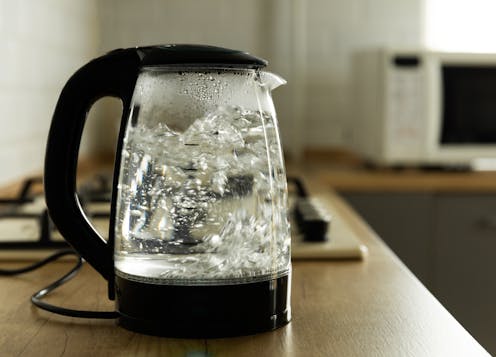
The kettle is a household staple practically everywhere – how else would we make our hot drinks?

But is it okay to re-boil water that’s already in the kettle from last time? While bringing water to a boil disinfects it, you may have heard that boiling water more than once will somehow make the water harmful and therefore you should empty the kettle each time.

Such claims are often accompanied by the argument that re-boiled water leads to the accumulation of allegedly hazardous substances including metals such as arsenic, or salts such as nitrates and fluoride.

This isn’t true. To understand why, let’s look at what is in our tap water and what really happens when we boil it.

What’s in our tap water?

Let’s take the example of tap water supplied by Sydney Water, Australia’s largest water utility which supplies water to Sydney, the Blue Mountains and the Illawarra region.

From the publicly available data for the January to March 2025 quarter for the Illawarra region, these were the average water quality results:

  • pH was slightly alkaline
  • total dissolved solids were low enough to avoid causing scaling in pipes or appliances
  • fluoride content was appropriate to improve dental health, and
  • it was “soft” water with a total hardness value below 40mg of calcium carbonate per litre.

The water contained trace amounts of metals such as iron and lead, low enough magnesium levels that it can’t be tasted, and sodium levels substantially lower than those in popular soft drinks.

These and all other monitored quality parameters were well within the Australian Drinking Water Guidelines during that period. If you were to make tea with this water, re-boiling would not cause a health problem. Here’s why.

It’s difficult to concentrate such low levels of chemicals

To concentrate substances in the water, you’d need to evaporate some of the liquid while the chemicals stay behind. Water evaporates at any temperature, but the vast majority of evaporation happens at the boiling point – when water turns into steam.

During boiling, some volatile organic compounds might escape into the air, but the amount of the inorganic compounds (such as metals and salts) remains unchanged.

While the concentration of inorganic compounds might increase as drinking water evaporates when boiled, evidence shows it doesn’t happen to such an extent that it would be hazardous.

Let’s say you boil one litre of tap water in a kettle in the morning, and your tap water has a fluoride content of 1mg per litre, which is within the limits of Australian guidelines.

You make a cup of tea taking 200ml of the boiled water. You then make another cup of tea in the afternoon by re-boiling the remaining water.

On both occasions, if heating was stopped soon after boiling started, the loss of water by evaporation would be small, and the fluoride content in each cup of tea would be similar.

But let’s assume that when making the second cup, you let the water keep boiling until 100ml of what’s in the kettle evaporates. Even then, the amount of fluoride you would consume with the second cup (0.23mg) would not be significantly higher than the fluoride you consumed with the first cup of tea (0.20mg).

The same applies to any other minerals or organics the supplied water may have contained. Let’s take lead: the water supplied in the Illawarra region as mentioned above, had a lead concentration of less than 0.0001mg per litre. To reach an unsafe lead concentration (0.01mg per litre, according to Australian guidelines) in a cup of water, you’d need to boil down roughly 20 litres of tap water to just that cup of 200ml.

Practically that is unlikely to happen – most electric kettles are designed to boil briefly before automatically shutting off. As long as the water you’re using is within the guidelines for drinking water, you can’t really concentrate it to harmful levels within your kettle.

But what about taste?

Whether re-boiled water actually affects the taste of your drinks will depend entirely on the specifics of your local water supply and your personal preferences.

The slight change in mineral concentration, or the loss of dissolved oxygen from water during boiling may affect the taste for some people – although there are a lot of other factors that contribute to the taste of your tap water.

The bottom line is that as long as the water in your kettle was originally compliant with guidelines for safe drinking water, it will remain safe and potable even after repeated boiling.

The Conversation

Faisal Hai does not work for, consult, own shares in or receive funding from any company or organisation that would benefit from this article, and has disclosed no relevant affiliations beyond their academic appointment.

ref. Is it okay to boil water more than once, or should you empty the kettle every time? – https://theconversation.com/is-it-okay-to-boil-water-more-than-once-or-should-you-empty-the-kettle-every-time-260293