The incredible impact of Ozzy Osbourne, from Black Sabbath to Ozzfest to 30 years of retirement tours

Source: The Conversation – Global Perspectives – By Lachlan Goold, Senior Lecturer in Contemporary Music, University of the Sunshine Coast

Ozzy Osbourne photographed in London in 1991. Martyn Goodacre/Getty Images

Ozzy Osbourne, the “prince of darkness” and godfather of heavy metal, has died aged 76, just weeks after he reunited with Black Sabbath bandmates for a farewell concert in his hometown of Birmingham in England.

His family posted a brief message overnight: “It is with more sadness than mere words can convey that we have to report that our beloved Ozzy Osbourne has passed away this morning.”

John Michael Osbourne changed the sound of rock music and leaves behind a stellar career spanning six decades, numerous Grammy awards, multiple hall of fame inductions – and a wave of controversy.

An agent of change

In 1969, from the ashes of various bands, Geezer Butler (bass), Tony Iommi (guitar), Bill Ward (drums) and Osbourne formed the band Earth.

Realising the name was taken, they quickly changed their name to Black Sabbath, an homage to the 1963 Italian horror anthology film.

With the Summer of Love a recent memory, Black Sabbath were part of a heavy music revolution, providing an antidote to the free loving hippies of the late 60s period.

Despite making their first two albums cheaply, Black Sabbath, released in February 1970, and Paranoid, released September that same year, they were a global success.

Their approach was laden with sarcasm and irony. American audiences mistook this for satanic worship, positioning them as outsiders (albeit popular ones).

Black and white photograph.
Black Sabbath pose for a group portrait with gold discs, London, 1973, L-R Bill Ward, Ozzy Osbourne, Tony Iommi, Geezer Butler.
Michael Putland/Getty Images

After Black Sabbath’s early successes, they were managed by the notorious Don Arden, whose daughter Sharon Levy was the receptionist. More than any musical bond Osbourne had in his life, Sharon would be the most influential character throughout his life.

Osbourne recorded eight albums with Black Sabbath (some to critical acclaim) and was then kicked out (by Sharon) due to his troubles with drugs and alcohol.

Ozzy solo

Osbourne’s solo career has always been managed by Sharon. While recording his second solo album, Diary of a Madman, guitarist Rhodes died in a tragic light plane crash. Osbourne was close to Rhodes and fell into a deep depression, after never having lost someone so close.

Sharon and Osbourne married only months after this incident. His struggle with drug use did not stop him from making further solo records alongside various guitar players, continuing with moderate success throughout his career.

On the road, Osbourne put the John Farnham’s last tour trope to shame.

He held his last ever gig more times than one can count with names like No More Tours (1992–93), Retirement Sucks (1995–96) and No More Tours 2 (2018–19).

Osbourne behind the microphone.
Osbourne ‘retired’ many times over 30 years. Here he performs in California in 2022.
Kevork Djansezian/Getty Images

This lament for touring led to the most successful era of Osbourne’s career. After being rejected for the 1995 Lollapaloza festival bill, Sharon (and their son Jack) started Ozzfest; initially an annual two-day multiband festival headlined by Osbourne, held in Phoenix, Arizona, and Devore, California.

Subsequently becoming a national – and then international – tour, Ozzfest led to a successful partnership with MTV, which led to the reality TV show The Osbournes premiering in 2002. Here, his previous and ongoing battle with drugs was obvious, proudly on display – and ridiculed – to huge global audiences.

The spectacle of a rich rockstar and his family featured a constant barrage of swearing, battles with lavish TV remotes, canine therapy, never-ending chaos, and Osbourne constantly yelling “Sharrrooon” like a twisted maniacal loop of A Street Car Named Desire.

Struggles and controversies

Osbourne suffered multiple health conditions over the years, rarely concealing the state of his physical or mental wellbeing.

Notably he’s struggled with drug and alcohol abuse his whole career with drug recovery centres using Osbourne as an exemplar. In 2007 he disclosed he suffered from the Parkinson’s adjacent condition Parkinsonian syndrome. In 2019 he was diagnosed with Parkinson’s disease.

Four very 70s rockers.
Black Sabbath photographed in the 1970s. Left to right: Geezer Butler, Tony Iommi, Bill Ward and Ozzy Osbourne.
Chris Walter/WireImage

This resulted in him being unable to walk for his final Back to the Beginning show in Birmingham on July 5 2025.

And Osbourne’s career had more than its fair share of controversy. He bit the head off a dove and a bat (celebrated with a commemorative toy), and urinated on the Alamo cenotaph. He was taken to court multiple times, but was never convicted.

Ozzy and me

As a white middle-class boy growing up in the Brisbane suburbs in the 80s, heavy metal music appealed to my testosterone and pimple filled body.

Exploring the secondhand record shops of Brisbane, I would’ve bought my first copy of Black Sabbath around 1985. The sound of thunder and a distant church bell before the first drop-D riff enters seemed like the antithesis to sunny Queensland and 80s pop.

As my life became obsessed with the recording studio and the vociferous music scene in Brisbane in the post-Joh era, and those drop-D riffs influenced a new style that swept the world in the early 90s.

Osbourne’s influence was huge and through grunge, his sound was reborn. Grunge was a marriage of the Sabbath-like drop-D riffs with the energy of punk and the melody of the Beatles.

Listening to Black Sabbath and Ozzy records, equipped me with a sonic palette ready to capture the wave of alternative music emmerging from the Brisbane scene.

While Ozzy’s death is no surprise (except for those who never thought he’d last this long), we should take pause and remember an icon with an endless energy for entertaining, a passion for music, and changing the expectations of popular culture for more than 50 years.

The Conversation

Lachlan Goold does not work for, consult, own shares in or receive funding from any company or organisation that would benefit from this article, and has disclosed no relevant affiliations beyond their academic appointment.

ref. The incredible impact of Ozzy Osbourne, from Black Sabbath to Ozzfest to 30 years of retirement tours – https://theconversation.com/the-incredible-impact-of-ozzy-osbourne-from-black-sabbath-to-ozzfest-to-30-years-of-retirement-tours-258820


‘Eat the rich’ — Why horror films are taking aim at the ultra-wealthy

Source: The Conversation – Canada – By Heather Roberts, PhD Candidate in Screen Cultures and Curatorial Studies, Queen’s University, Ontario

Samara Weaving in the horror film ‘Ready or Not.’ Weaving plays Grace, a bride who must survive until dawn on her wedding day as her in-laws hunt her down. (Searchlight Pictures)

This story contains spoilers about ‘Ready or Not’ and ‘The Menu.’

When Amazon founder Jeff Bezos and fiancée Lauren Sánchez held their lavish three-day wedding celebration in Venice recently, it wasn’t just a party — it was a spectacle of wealth, reportedly costing between US$47 million and US$56 million.

Critics highlighted the environmental toll of such an event on the fragile, flood-prone city, while protesters took to the streets to condemn the wedding as a tone-deaf symbol of oligarchical wealth at a time when many can’t afford to pay rent, let alone rent an island.

The excessive show of opulence felt like the opening of a horror film, and lately, that’s exactly what horror has been giving us. In films like Ready or Not (2019) and The Menu (2022), the rich aren’t simply out of touch; they’re portrayed as predators, criminals or even monsters.


Read more:
Horror comedy ‘The Menu’ delves into foodie snobbery when you’re dying for a cheeseburger


These “eat-the-rich” films channel widespread anxieties about the current socioeconomic climate and increasing disillusionment with capitalist systems.

In a world where the wealthy and powerful often seem to act with impunity, these films expose upper-class immorality and entitlement, and offer revenge fantasies where those normally crushed by the system fight back or burn it all down.

Horror takes aim at the wealthy

Originally a quote from social theorist Jean-Jacques Rousseau during the French Revolution, “eat the rich” has re-emerged in recent years in public protests and on social media in response to increasing socioeconomic inequality.

In cinema, eat-the-rich films often use grotesque hyperbole or satire to reveal and critique capitalist systems and the behaviours of the wealthy elite.

Film scholar Robin Wood argues that horror films enact a return of what is repressed by dominant bourgeois — that is, capitalist — ideology, typically embodied by the figure of the monster.

He cites The Texas Chain Saw Massacre (1974), a classic example of anti-capitalist sentiment in horror that depicts Leatherface (Gunnar Hansen) and his working-class family as monstrous victims of the 1970s industrial collapse. Rather than accept repression, they return as cannibalistic monsters, making visible the brutality of capitalist systems that exploit and degrade people like obsolete commodities.

But in eat-the-rich horror, it is the wealthy themselves who become the monsters. The locus of repression becomes their privilege, which is often built on exploitation, inequality and invisible or normalized forms of harm.

These films render these abstract systems tangible by making the elite’s monstrosity visible, literal and grotesque.

Revenge horror for the 99 per cent

Recent horror films are increasingly using genre conventions to critique wealth, privilege and the systems that sustain them.

Ready or Not turns the rich into bloodthirsty monsters who maintain their fortune through satanic rituals and human sacrifice. Grace (Samara Weaving) marries into the Le Domas family, board game magnates who initiate new family members with a deadly game of hide-and-seek. She must survive until dawn while her new in-laws hunt her down to fulfil a demonic pact.

The film critiques the idea of inherited wealth as something earned or honourable, combining humour and horror to reflect anxieties about class entrenchment and the moral decay of the elite.

Trailer for the 2019 horror film ‘Ready or Not.’

The Le Domases are monstrous not only for their violence, but for how casually they justify it. When several maids are accidentally killed in the chaos, they react with self-pity, indifferent to who must be sacrificed to maintain their wealth.

In The Menu, the rich are portrayed as monstrous not through physical violence, but through their moral failings — like financial crimes and infidelity — and their hollow consumption of culture.

Celebrity chef Julian Slowik (Ralph Fiennes) lures wealthy foodies to his exclusive island restaurant, using food as a weaponized form of art to expose guests’ hypocrisy and misdeeds. In one scene, guests are served tortillas laser-printed with incriminating images, such as banking records and evidence of fraudulent activity.

The tortilla scene from the 2022 horror film ‘The Menu.’

The film criticizes consumption in an industry where food is no longer a source of enjoyment or sustenance, but a status symbol for the elite to display their wealth and taste.

Why these films are striking a nerve now

It’s no surprise that audiences are turning to horror to make sense of systems that feel increasingly bleak and inescapable. In Canada, the cost of living continues to outpace wages, housing affordability remains an issue for many, while grocery prices are a source of horror in their own right.

A university degree, once considered a reliable path to stability, no longer guarantees the financial security of a salaried job. Many Canadians now rely on gig economy jobs as supplementary income.

Meanwhile, the wealth gap is increasing and obscene displays of wealth — like a multi-million-dollar wedding — can feel disconnected, even offensive, to people experiencing financial precarity.

Eat-the-rich films tap into this collective sense of injustice, transforming economic and social anxieties into a cathartic spectacle where ultra-wealthy villains are held accountable for their actions.

Screencap of a movie showing an older white man in a chef uniform standing beside a young white woman in a slip dress
Margot, played by Anya Taylor-Joy, and executive chef Julian Slowik, played by Ralph Fiennes, in ‘The Menu.’
(Eric Zachanowich/Searchlight Pictures)

At the end of Ready or Not, the members of the Le Domas family explode one by one and their mansion burns down. In The Menu, the guests are dressed up like s’mores and immolated. In both films, fire serves as a symbolic cleansing of the wealthy, their power and the systems that protect them.

More than that, these films provide someone to root for: working-class protagonists who are targeted by the elite but ultimately survive. Former foster child Grace fights her way through a pack of murderous millionaires, while escort Margot/Erin (Anya Taylor-Joy) is spared when she rejects the pretentiousness of fine dining and orders a humble cheeseburger instead.

In this way, horror becomes a form of narrative resistance, illustrating class rage through characters who refuse to be consumed by the systems trying to oppress them. While inequality and exploitation persist in reality, eat-the-rich films offer escape, and even justice, on screen.

The Conversation

Heather Roberts does not work for, consult, own shares in or receive funding from any company or organisation that would benefit from this article, and has disclosed no relevant affiliations beyond their academic appointment.

ref. ‘Eat the rich’ — Why horror films are taking aim at the ultra-wealthy – https://theconversation.com/eat-the-rich-why-horror-films-are-taking-aim-at-the-ultra-wealthy-260550

Yellowknife’s Giant Mine: Canada downplayed arsenic exposure as an Indigenous community was poisoned

Source: The Conversation – Canada – By Arn Keeling, Professor, Department of Geography, Memorial University of Newfoundland

Giant Mine, just north of Yellowknife, N.W.T., in September 2011. The gold mine officially opened in 1948 and was operational for over 50 years before it was closed in 2004. (John Sandlos)

Decades of gold mining at Giant Mine in Yellowknife, Northwest Territories, has left a toxic legacy: 237,000 tonnes of arsenic trioxide dust stored in underground chambers.

As a multi-billion government remediation effort to clean up the mine site and secure the underground arsenic ramps up, the Canadian government is promising to deal with the mine’s disastrous consequences for local Indigenous communities.

In March, the minister for Crown-Indigenous relations appointed a ministerial special representative, Murray Rankin, to investigate how historic mining affected the treaty rights of the Yellowknives Dene First Nation.

We document this history in our forthcoming book, The Price of Gold: Mining, Pollution, and Resistance in Yellowknife, exposing how colonialism, corporate greed and lax regulation led to widespread air and water pollution, particularly affecting Tatsǫ́t’ıné (Yellowknives Dene) communities.

We also highlight the struggle for pollution controls and public health led by Tatsǫ́t’ıné and their allies, including mine workers.

Sickness from Giant Mine

The story begins when prospectors discovered a rich gold ore body at Giant Mine in the 1930s. While mining started at the nearby Con Mine in the late 1930s, Giant’s development was interrupted by the Second World War. Only with new investment and the lifting of wartime labour restrictions in 1948 did Giant Mine start production.

Mining at Giant was a challenge. Much of the gold was locked within arsenopyrite formations, and to get at it, workers needed to crush, then roast the gold ore at very high temperatures.

This burned off the arsenic in the ore before using cyanide treatment to extract gold. One byproduct of this process was thousands of tonnes per day of arsenic trioxide, sent up a smokestack into the local environment.

In addition to being acutely toxic, arsenic trioxide is also linked to lung and skin cancers, though scientific understanding of environmental exposures was inconclusive at the time.

Archival records show that federal public health officials recommended the roaster be shut down until arsenic emissions could be controlled. But the company and federal mining regulators dragged their feet, fearing the economic impact.

The result, in 1951, was the poisoning death of at least one Dene child on Latham Island (now Ndilǫ), near the mine; his family was compensated a paltry $750. Many Dene in Ndilǫ relied on snow melt for drinking water, and there were reports of widespread sickness in the community. Local animals, including dairy cattle and sled dogs, also became sick and died.

Only after this tragedy did the federal government force the company to implement pollution controls. The control system was not terribly effective at first, though as it improved, arsenic emissions dropped dramatically from nearly 12,000 pounds per day to around 115 pounds per day in 1959. Thousands of tonnes of arsenic captured through this process was collected and stored in mined-out chambers underground.

Fighting back against pollution

Throughout the 1960s, public health officials continually downplayed concerns about arsenic exposure in Yellowknife, whether via drinking water or on local vegetables.

By the 1970s, however, latent public health concerns over arsenic exposure in Yellowknife became a major national media story. It began with a CBC Radio As it Happens episode in 1975 that unearthed an unreleased government report documenting widespread, chronic arsenic exposure in the city. Facing accusations of a cover-up, the federal government dismissed health concerns even as it set up a local study group to investigate them.

Suspicious of government studies and disregard for local health risks, Indigenous communities and workers took matters into their own hands. A remarkable alliance emerged between the Indian Brotherhood of the Northwest Territories and the United Steelworkers of America (the union representing Giant Mine workers) to undertake their own investigations.

They conducted hair samplings of Dene children and mine workers — the population most exposed to arsenic in the community — and submitted them for laboratory analysis.

The resulting report accused the federal government of suppressing health information and suggested children and workers were being poisoned. The controversy made national headlines yet again, prompting an independent inquiry by the Canadian Public Health Association.

The association’s 1978 report somewhat quelled public concern. But environmental and public health advocates in Yellowknife continued their fight for pollution reduction through the 1980s.

Giant’s toxic afterlife

As Giant Mine entered the turbulent final decade of its life, including a violent lockout in 1992, public concern mounted over the growing environmental liabilities. Most urgently, people living in and near Yellowknife began to realize that enough arsenic trioxide had been stored underground over the years to poison every human on the planet four times over.

Without constant pumping of groundwater out of the mine, the highly soluble arsenic could seep into local waterways, including Yellowknife Bay. When the company that owned the mine, Royal Oak Mines, went bankrupt in 1999, it left no clear plan for the remediation of this toxic material, and very little money to deal with it.

The federal government assumed primary responsibility for the abandoned mine and, in the quarter century since, developed plans to clean up the site and stabilize the arsenic underground by freezing it — an approach that will cost more than $4 billion.

Public concern and activism by Yellowknives Dene First Nation and other Yellowknifers prompted a highly contested environmental assessment and the creation of an independent oversight body, the Giant Mine Oversight Board in 2015. Under the current remediation strategy, the toxic waste at Giant Mine will require perpetual care, imposing a financial and environmental burden on future generations.

The long history of historical injustice resulting from mineral development and pollution around Yellowknife remains unaddressed. In support of calls for an apology and compensation, the Yellowknives Dene First Nation recently published reports that include oral testimony and other evidence of impacts on their health and land in their traditional territory.

Hopefully, the Canadian government’s appointment of the special representative means the colonial legacy of the mine will finally be addressed. Giant Mine serves as a warning about the current push from governments and industry to ram through development projects without environmental assessments or Indigenous consultations.

Extractive projects may generate short-term wealth, but they also compromise the national interest if they saddle the public with enormous costs and long-term consequences.

The Conversation

Arn Keeling receives funding from the Social Sciences and Humanities Research Council and National Sciences and Engineering Research Council of Canada.

John Sandlos receives funding from the Social Sciences and Humanities Research Council of Canada.

ref. Yellowknife’s Giant Mine: Canada downplayed arsenic exposure as an Indigenous community was poisoned – https://theconversation.com/yellowknifes-giant-mine-canada-downplayed-arsenic-exposure-as-an-indigenous-community-was-poisoned-261002

Popular Tunisian island’s cultural heritage at risk due to tourism, neglect and climate change

Source: The Conversation – UK – By Majdi Faleh, Academic Fellow & Lecturer in Architecture and Cultural Heritage, Nottingham Trent University

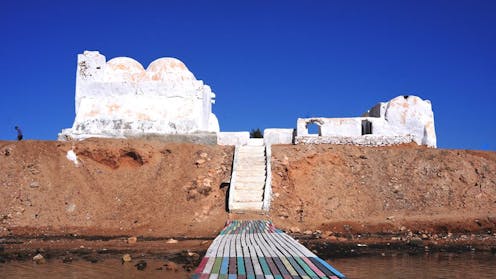
The Sidi Yati mosque in Djerba, which dates back to the 10th century, has been damaged by coastal erosion. Mehdi Elouati, CC BY-NC-ND

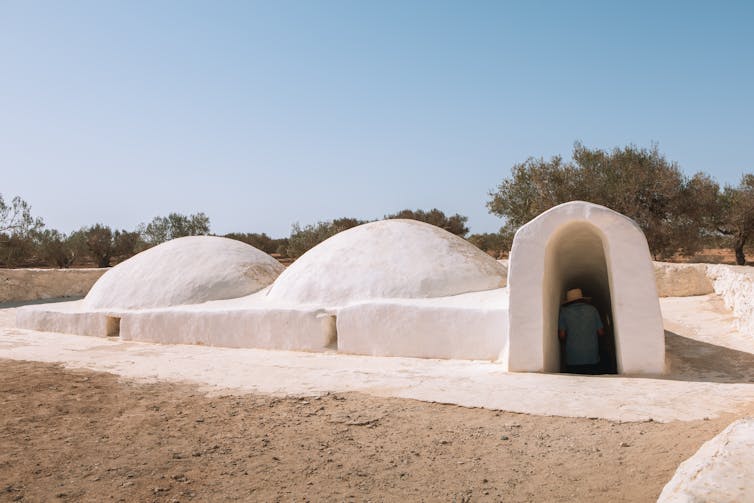
Nestled in the southern Mediterranean, off the south-east coast of Tunisia, lies the island of Djerba. With a rich cultural and religious history, it has been a crossroad of many civilisations, including the Phoenicians, Romans, Byzantines and Arabs, and is home to many unique architectural sites. These include the Sedouikech underground mosque, St Joseph’s Church and the El Ghriba Synagogue.

But, for many years, Djerba’s cultural heritage has been in danger. This is due to a combination of over-tourism, environmental change and human neglect.

An underground mosque on the island of Djerba.
Mariana Delca / Shutterstock

By the 1990s to early 2000s, when Djerba was at the height of its popularity, the island was attracting between 1 million and 1.5 million visitors each year. It is one of Tunisia’s most popular tourist areas, with more hotels than any other destination in the country.

Tourism has resulted in excessive tourist traffic in Djerba, particularly during the summer. It has also contributed to other problems such as water stress and waste generation. According to figures from 2020, hotels alone generate between 35% and 40% of all the waste on the island.

But the development of tourism has, above all, altered Djerba’s cultural landscape. In some areas of the island, Djerba’s traditional housing – houmas, menzels and houchs – have given way to more modern tourist infrastructure.

This has accelerated since Tunisia’s 2011 revolution, when long-time dictator Zine El Abidine Ben Ali was ousted. Weak institutional oversight has led to vandalism, illegal construction on archaeological sites and unauthorised demolitions.

The development of tourism on Djerba has also eroded traditional ways of life. The island has experienced significant changes due to tourism, with the development of roads, ferries, an airport and the internet leading to a decline in traditional activity. Livelihoods like agriculture, fishing and artisanal crafts have declined and are often now showcased only in tourist areas.

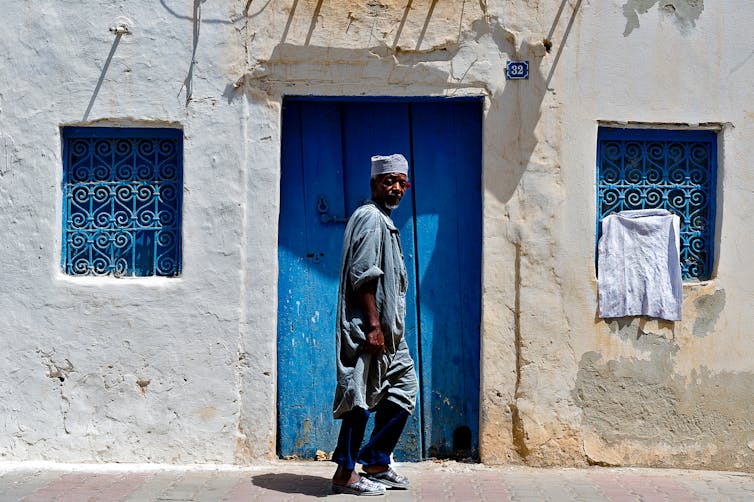
A man wearing traditional dress walks down a street in Djerba.
Life on Djerba has changed since it was opened up for tourism.
BTWImages / Shutterstock

Climate change has worsened Djerba’s problems. Rainfall patterns have changed across the island over recent decades, with models suggesting that annual precipitation rates could drop 20% by the end of the century. More frequent and prolonged droughts are expected.

At the same time, rising sea levels and increasingly common storm surges are affecting the island. Research from 2022 found that 14% of Djerba’s beaches are now highly vulnerable to submersion and coastal erosion.

Several historical monuments on Djerba have already experienced periodic flooding and saltwater intrusion. The ruins of Sidi Garous and the shrine of Sidi Bakour are now entirely underwater and have been replaced by memorials.

Other archaeological sites located near the coast like Haribus, Meninx, Ghizene and Edzira, some of which date back to the Roman era (eighth century BC to fifth century AD), are now partially or fully submerged. Studies by Tunisia’s National Institute of Heritage suggest that many of these sites have been lost permanently to the encroaching sea.

World heritage site

Significant portions of Djerba’s cultural heritage have already been erased by sea-level rise and coastal erosion. Future losses could be even more severe. The island’s cultural heritage will only grow more precarious without meaningful preservation and climate adaptation efforts.

However, many of Djerba’s monuments, historical buildings and traditional dwellings have suffered from years of neglect. A chronic lack of local and international funding, as well as weak institutional frameworks for heritage management, mean some of the island’s historic structures have been abandoned. Many other buildings have deteriorated due to a lack of protective measures and maintenance.

Community organisations such as the Association for the Safeguarding of the Island of Djerba have tried to step in to fill the void left by weak institutional frameworks. Their work ranges from delivering public awareness campaigns to local young people to efforts like re-purposing ancient rainwater tanks to manage periods of drought.

But these grassroots efforts alone are not enough to stop Djerba’s cultural heritage from deteriorating at its current pace.

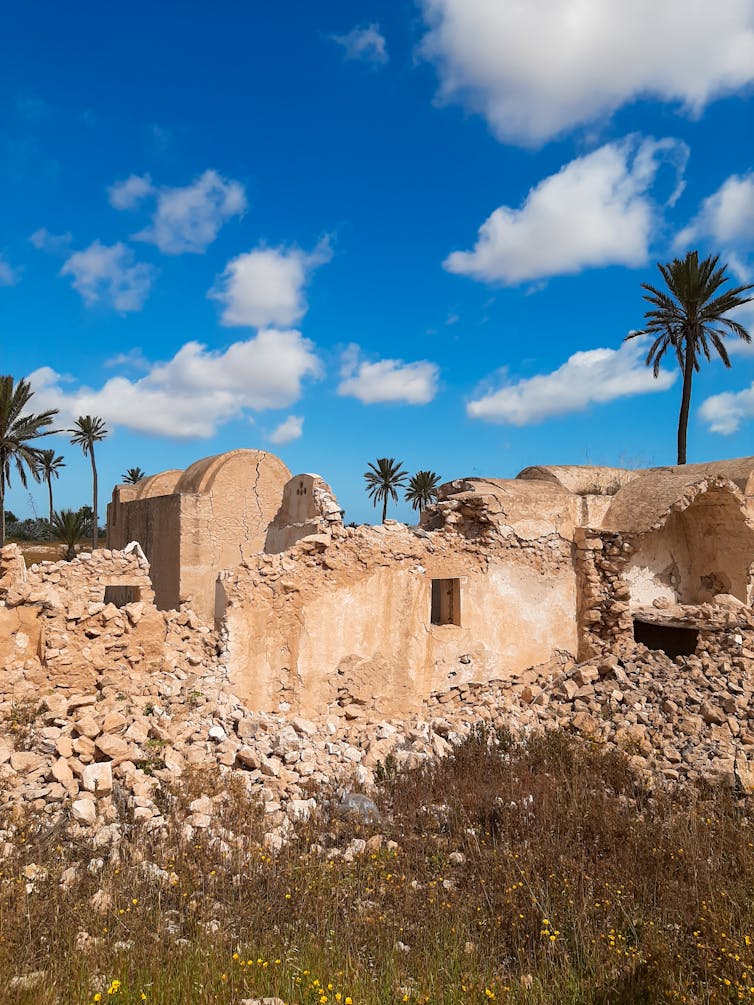
The ruins of a Housh on Djerba.
The ruins of a Housh, a traditional dwelling, on the island of Djerba.
Ahmed Bedoui, CC BY-NC-ND

In September 2023, the UN Educational, Scientific and Cultural Organization (Unesco) announced that it was adding Djerba to its list of world heritage sites. Tunisia’s culture ministry welcomed the decision. It followed years of efforts by local groups and government officials to add Djerba to the list.

Djerba’s inclusion offers hope for the long-term preservation of the island’s heritage. A world heritage site designation increases global recognition and enables improved access to sources of funding.

And since Djerba’s classification, there has been some progress. The culture ministry has established a task force to monitor the construction of buildings and other infrastructure, collect data on designated protected areas, and prepare projects to preserve heritage sites.

But Djerba’s cultural heritage remains in danger. Improved preservation of these sites will require continuous funding and stringent regulation of tourism and construction activities.

The Conversation

The authors do not work for, consult, own shares in or receive funding from any company or organisation that would benefit from this article, and have disclosed no relevant affiliations beyond their academic appointment.

ref. Popular Tunisian island’s cultural heritage at risk due to tourism, neglect and climate change – https://theconversation.com/popular-tunisian-islands-cultural-heritage-at-risk-due-to-tourism-neglect-and-climate-change-223612

Farewell to summer? ‘Haze’ and ‘trash’ among Earth’s new seasons as climate change and pollution play havoc

Source: The Conversation – UK – By Felicia Liu, Lecturer (Assistant Professor) in Sustainability, University of York

Throughout history, people have viewed seasons as relatively stable, recurrent blocks of time that neatly align farming, cultural celebrations and routines with nature’s cycles. But the seasons as we know them are changing. Human activity is rapidly transforming the Earth, and once reliable seasonal patterns are becoming unfamiliar.

In our recent study, we argue that new seasons are surfacing. These emergent seasons are entirely novel and anthropogenic (in other words, made by humans).

Examples include “haze seasons” in the northern and equatorial nations of south-east Asia, when the sky is filled with smoke for several weeks. This is caused by widespread burning of vegetation to clear forests and make way for agriculture during particularly dry times of year.

Or there is the annual “trash season”, during which tidal patterns bring plastic to the shores of Bali, Indonesia, between November and March.


Get your news from actual experts, straight to your inbox. Sign up to our daily newsletter to receive all The Conversation UK’s latest coverage of news and research, from politics and business to the arts and sciences.


At the same time, some seasons are disappearing altogether, with profound consequences for ecosystems and cultures. These extinct seasons can encompass drastically altered or terminated migratory animal behaviour, such as the decline of seabird breeding seasons in northern England.

Climate change is also calling time on traditional winter sport seasons by making snow scarcer in alpine regions.

Nature’s new rhythms

Perhaps more common are “syncopated seasons”. The changes are akin to new emphases on beats or off-beats in familiar music that capture the listener’s attention.

Syncopated seasons include hotter summers and milder winters in temperate climates, with increasingly frequent and severe extreme weather that exposes more people and ecosystems to stress.

The timings of key seasonal events, like when leaves fall or certain migratory species arrive, are becoming more unpredictable. We coined the term “arrhythmic seasons”, a concept borrowed from cardiology, to refer to abnormal rhythms which include earlier springs or breeding seasons, longer summers or growing seasons, and shorter winters or hibernating seasons.

Changing seasonal patterns throw the interdependent life cycles of plants and animals out of sync with each other, and disrupt the communities that are economically, socially and culturally dependent on them.

In northern Thailand, human activity has reshaped nature’s rhythms and affected the supply of water and food in turn. Communities along the Mekong river’s tributaries have relied on the seasonal flow of rivers to fish and farm for generations.

At first, upstream dams disrupted these cycles by blocking fish migration and preventing the accumulation of sediment that farms need for soil. More recently, climate change has shifted rainfall patterns and made dry seasons longer and rainy seasons shorter but more intense, bringing fires and further uncertainty to farmers.

Let’s rethink time

How we react to changing seasonal patterns can either worsen or improve environmental conditions. In south-east Asia, public awareness of the “haze season” has led to better forecasting, the installation of air filters in homes and the establishment of public health initiatives.

These efforts help communities adapt. But if society only uses adaptive fixes like these, it can make the haze worse over time by failing to tackle its root causes. By recognising this new season, societies might normalise the recurrence of haze and isolate anyone who demands the government and businesses deal with deforestation and burning.

Powerful institutions like these shape narratives about seasonal crises to minimise their responsibility and shift blame elsewhere. Understanding these dynamics is crucial to fostering accountability and ensuring fair responses.

The shifting seasons require us to rethink our relationship with time and the environment. Today, most of us think about time in terms of days, hours and minutes, which is a globalised standard used everywhere from smartphones to train timetables. But this way of keeping time forgets older and more local ways of understanding time – those that are shaped by natural rhythms, such as the arrival of the rainy season, or solar and lunar cycles, rooted in the lives and cultures of different communities.

Diverse perspectives, especially those from Indigenous knowledge systems, can enhance our ability to respond to environmental changes. Integrating alternative time-keeping methods into mainstream practices could foster fairer and more effective solutions to environmental problems.

Seasons are more than just divisions of time – they connect us with nature. Finding synchrony with changing seasonal rhythms is essential for building a sustainable future.


Don’t have time to read about climate change as much as you’d like?

Get a weekly roundup in your inbox instead. Every Wednesday, The Conversation’s environment editor writes Imagine, a short email that goes a little deeper into just one climate issue. Join the 45,000+ readers who’ve subscribed so far.


The Conversation

The authors do not work for, consult, own shares in or receive funding from any company or organisation that would benefit from this article, and have disclosed no relevant affiliations beyond their academic appointment.

ref. Farewell to summer? ‘Haze’ and ‘trash’ among Earth’s new seasons as climate change and pollution play havoc – https://theconversation.com/farewell-to-summer-haze-and-trash-among-earths-new-seasons-as-climate-change-and-pollution-play-havoc-260765

Is today’s political climate making dating harder for young people?

Source: The Conversation – UK – By Katherine Twamley, Professor of Sociology, UCL

Drazen Zigic/Shutterstock

The last year has highlighted a political divide between young men and women. Data from elections in several countries shows that women aged 18-29 are becoming significantly more liberal, while young men are leaning more conservative. And a recent 30-country study found generation Z more divided than other generations on key questions around gender equality.

At the same time, there is growing evidence that this cohort is turning away from traditional dating and long-term romantic relationships. According to the National Survey of Family Growth, in the US between 2022 and 2023, 24% of men and 13% of women aged 22-34 reported no sexual activity in the past year.

This is a significant increase on previous years. And American teens are less likely to have romantic relationships than teenagers of previous generations.

In the UK, surveys over the past decades reveal a trend in reduced sexual activity, in terms of both frequency and number of partners, among young people. Dating apps are also losing their lustre, with the top platforms seeing significant user declines among heterosexual gen Z users in the last year.

Is the gendered political divide making dating harder? As sociologists of intimacy, our work has shown how relationships are affected by larger social, economic and political trends.

Our research on enduring gender inequality has shown that it can affect the perceived quality of intimate relationships and relationship stability. For example, heterosexual relationships are often underpinned by unequal divisions of emotional and domestic labour, even among partners with similar incomes.


Dating today can feel like a mix of endless swipes, red flags and shifting expectations. From decoding mixed signals to balancing independence with intimacy, relationships in your 20s and 30s come with unique challenges. Love IRL is the latest series from Quarter Life that explores it all.

These research-backed articles break down the complexities of modern love to help you build meaningful connections, no matter your relationship status.


Some commentators and researchers have identified a trend of “heteropessimism” — a disillusionment with heterosexual relationships, often marked by irony, detachment or frustration. Anecdotally, women have widely expressed weariness with the gender inequality that can emerge in relationships with men.

But heteropessimism has been identified among men too, and research has found that women are, on average, happier being single than men.

Take domestic labour. Despite progress towards gender equality in many areas, data shows that women in mixed sex relationships still shoulder the majority of housework and care. In the UK, women carry out an average of 60% more unpaid work than men. This gap persists even among couples who both work full-time.


Read more:
What is ‘heteropessimism’, and why do men and women suffer from it?


In Korea, persistent gender inequality is thought to be behind the 4B movement. Young Korean women, fed up with sexist stereotypes which tie women to traditional roles, have declared their rejection of marriage, childbirth, dating and sex with men.

Beyond Korea, young women have declared themselves “boy sober”. Harassment, abuse and “toxic behaviour” on dating apps has reportedly driven young women away from wanting to date at all.

Others have embraced voluntary celibacy. One reason is that, for some women, the erosion of reproductive rights, such as the overturning of Roe v Wade in the US, sharpens the political stakes of intimacy. Political disagreements that may once have been surmountable in a relationship are now deeply personal, affecting womens’ bodily autonomy and experiences of misogyny.

Of course, gender inequality does not just negatively affect women. In education, evidence suggests boys are falling behind girls at every level in the UK, though recent research shows this has reversed in maths and science. Men report feeling locked out of opportunities to care for their children through old-fashioned parental leave norms, which offer minimal opportunities for fathers to spend time with their children.

Some influencers capitalise on real and perceived losses for men, pushing regressive and sexist views of women and relationships into the social media feeds of millions of boys and young men.

Given all of the above, it is not entirely surprising that young men are more likely than young women to report that feminism has done more harm than good.

Anxiety and uncertainty

But there are wider political and economic issues that affect both young men and women, and how (or whether) they date each other. Gen Z are coming of age in a time of economic depression. Research shows that those experiencing financial stress have difficulties in establishing and maintaining intimate relationships.

This may partly be because early stages of romance are strongly associated with consumerism – dinner out, gifts and so on. But there is also a lack of mental space for dating when people are under pressure to make ends meet. Insecure finances also affect young people’s ability to afford their own homes and have access to private spaces with a partner.

There are, additionally, growing rates of mental ill health reported by young people worldwide. Anxieties abound around the pandemic, economic recession, the climate and international conflict.

These anxieties play out in the dating scene, with some feeling that entering into a romantic relationship is another risk to be avoided. Research with UK-based heterosexual dating app users aged 18-25 found that they often saw dating as a psychological stand-off – where expressing care too soon could result in humiliation or rejection.

Cartoonish illustration of a man holding a mobile phone, which shows a woman running away through an open door
Be vulnerable and risk rejection, or jump ship?
Dedraw Studio/Shutterstock

The result was that neither young men nor women felt safe expressing genuine interest. This left people stuck in the much-lamented “talking stage”, where relationships fail to progress.

As sociologist Lisa Wade and others have shown, even when casual sex is part of the picture, emotional attachment is often actively resisted. The proliferation of “hook-up culture” – characterised by casual sexual encounters that prioritise physical pleasure over emotional intimacy – may partly be a response to a cultural discomfort with vulnerability.

Gen Z’s turn away from dating doesn’t necessarily reflect a lack of desire for connection, but perhaps a heightened sense of vulnerability related to larger trends in mental ill-health and social, economic and political insecurity.

It may not be that young people are rejecting relationships. Rather, they may be struggling to find emotionally safe (and affordable) spaces where intimacy can develop.

The Conversation

The authors do not work for, consult, own shares in or receive funding from any company or organisation that would benefit from this article, and have disclosed no relevant affiliations beyond their academic appointment.

ref. Is today’s political climate making dating harder for young people? – https://theconversation.com/is-todays-political-climate-making-dating-harder-for-young-people-257844

Floating babies, cosmic radiation and zero-gravity birth: what space pregnancy might actually involve

Source: The Conversation – UK – By Arun Vivian Holden, Emeritus Professor of Computational Biology, University of Leeds

Lidiia/Shutterstock

As plans for missions to Mars accelerate, so do questions about how the human body might cope. A return trip to the red planet would give more than enough time for someone to become pregnant and even give birth. But could a pregnancy be conceived and carried safely in space? And what would happen to a baby born far from Earth?

Most of us rarely consider the risks we survived before birth. For instance, about two thirds of human embryos do not live long enough to be born, with most losses happening in the first few weeks after fertilisation; often before a person even knows they’re pregnant. These early, unnoticed losses usually happen when an embryo either fails to develop properly or to implant successfully in the wall of the womb.

Pregnancy can be understood as a chain of biological milestones. Each one must happen in the right order and each has a certain chance of success. On Earth, these odds can be estimated using clinical research and biological models. My latest research explores how these same stages might be affected by the extreme conditions of interplanetary space.


Get your news from actual experts, straight to your inbox. Sign up to our daily newsletter to receive all The Conversation UK’s latest coverage of news and research, from politics and business to the arts and sciences.


Microgravity, the near-weightlessness experienced during spaceflight, would make conception more physically awkward but probably wouldn’t interfere much with staying pregnant once the embryo has implanted.

However, giving birth, and looking after a newborn, would be far more difficult in zero gravity. After all, in space, nothing stays still. Fluids float. So do people. That makes delivering a baby and caring for one a much messier and more complicated process than on Earth, where gravity helps with everything from positioning to feeding.

At the same time, the developing foetus already grows in something like microgravity. It floats in neutrally buoyant amniotic fluid inside the womb, cushioned and suspended. In fact, astronauts train for spacewalks in water tanks designed to mimic weightlessness. In that sense, the womb is already a microgravity simulator.

But gravity is only part of the picture.

Radiation

Outside Earth’s protective layers, there’s a more dangerous threat: cosmic rays. These are high-energy particles – “stripped-down” or “bare” atomic nuclei – that race through space at nearly the speed of light. They’re atoms that have lost all their electrons, leaving just the dense core of protons and neutrons. When these bare nuclei collide with the human body, they can cause serious cellular damage.

Here on Earth, we’re protected from most cosmic radiation by the planet’s thick atmosphere and, depending on the time of day, tens of thousands to millions of miles of coverage from the Earth’s magnetic field. In space, that shielding disappears.

When a cosmic ray passes through the human body, it may strike an atom, strip its electrons, and smash into its nucleus, knocking out protons and neutrons and leaving behind a different element or isotope. This can cause extremely localised damage – meaning that individual cells, or parts of cells, are destroyed while the rest of the body might remain unaffected. Sometimes the ray passes right through without hitting anything. But if it hits DNA, it can cause mutations that increase the risk of cancer.

Even when cells survive, radiation can trigger inflammatory responses. That means the immune system overreacts, releasing chemicals that can damage healthy tissue and disrupt organ function.

In the first few weeks of pregnancy, embryonic cells are rapidly dividing, moving, and forming early tissues and structures. For development to continue, the embryo must stay viable throughout this delicate process. The first month after fertilisation is the most vulnerable time.

A single hit from a high-energy cosmic ray at this stage could be lethal to the embryo. However, the embryo is very small – and cosmic rays, while dangerous, are relatively rare. So a direct hit is unlikely. If it did happen, it would probably result in an unnoticed miscarriage.

Pregnancy risks

As pregnancy progresses, the risks shift. Once the placental circulation – the blood flow system that connects mother and foetus – is fully formed by the end of the first trimester, the foetus and uterus grow rapidly.

That growth presents a larger target. A cosmic ray is now more likely to hit the uterine muscle, which could trigger contractions and potentially cause premature labour. And although neonatal intensive care has improved dramatically, the earlier a baby is born, the higher the risk of complications, particularly in space.

On Earth, pregnancy and childbirth already carry risks. In space, those risks are magnified – but not necessarily prohibitive.

But development doesn’t stop at birth. A baby born in space would continue growing in microgravity, which could interfere with postural reflexes and coordination. These are the instincts that help a baby learn to lift its head, sit up, crawl, and eventually walk: all movements that rely on gravity. Without that sense of “up” and “down,” these abilities might develop in very different ways.

And the radiation risk doesn’t go away. A baby’s brain continues to grow after birth, and prolonged exposure to cosmic rays could cause permanent damage – potentially affecting cognition, memory, behaviour and long-term health.

So, could a baby be born in space?

In theory, yes. But until we can protect embryos from radiation, prevent premature birth, and ensure babies can grow safely in microgravity, space pregnancy remains a high-risk experiment – one we’re not yet ready to try.

The Conversation

Arun Vivian Holden does not work for, consult, own shares in or receive funding from any company or organisation that would benefit from this article, and has disclosed no relevant affiliations beyond their academic appointment.

ref. Floating babies, cosmic radiation and zero-gravity birth: what space pregnancy might actually involve – https://theconversation.com/floating-babies-cosmic-radiation-and-zero-gravity-birth-what-space-pregnancy-might-actually-involve-261142

A Philosopher Looks at Clothes by Kate Moran is engaging and unpretentious – we need more philosophy books like this

Source: The Conversation – UK – By Sarah Richmond, Honorary Associate Professor of Philosophy, UCL

With a few exceptions, philosophers have had little to say about clothes. Maybe this is because the topic seems frivolous, or feminine, unworthy of the attention of a predominantly male collection of thinkers.

Perhaps, too, the transience of fashion, and the fact that clothes belong – quite literally – to the domain of mere appearance, also has something to do with it. In A Philosopher Looks at Clothes, an engaging and informative book, Kate Moran, philosophy professor at Brandeis University in the US, urges us to think again.

As Moran points out, clothing looms large in life. Every day we dress, deciding how many layers to wear and whether we need a coat – or might a cardigan suffice? We gaze critically at other people’s choices (“OMG, those shoes!”). We wonder how to rise to the challenge of an imminent Eurovision-themed party.

From a historical point of view, also, our species-specific recourse to clothes stretches back to the earliest human society. In mythical time, it begins with Adam’s and Eve’s discovery, in shame, that they were naked. If fashion is transient, clothes, per se, are not.


Looking for something good? Cut through the noise with a carefully curated selection of the latest releases, live events and exhibitions, straight to your inbox every fortnight, on Fridays. Sign up here.


Clothes, Moran tells us, serve three basic purposes: protection, modesty and decoration. At once, these introduce questions of deep philosophical interest. Are the purposes equally important? Why, throughout human history, have we refused to settle merely for protection, desiring for example that a hat should be of some favoured colour or shape? To what extent do our decorative choices express our personal identity? Do clothes ever qualify as works of art? Why is modesty an abiding concern, given that we all know the contours of the unclothed body?

In many contexts, and especially today, clothes invite ethical and political assessment. Clothes communicate a great deal of information about us, including our social position and the causes we espouse.


Read more:
A brief history of the slogan T-shirt


We may knowingly exploit this, choosing to flaunt an obviously expensive garment or to wear our football team’s scarf. In other cases the meanings are imposed. The uniforms forced on prisoners, for example, emphasise subordination and erase their individuality.

Poignantly, research into textile history has uncovered a streak of resistance in even the most ill-treated captives. In concentration camps during the second world war some prisoners altered their uniforms, or mended them, or added pockets. As Moran remarks, these actions were not just practical; their aim, too, was to “recover some sense of identity and dignity”.

Portrait of Friedrich Nietzsche by Edvard Munch
Portrait of Friedrich Nietzsche by Edvard Munch (1906).
Thiel Gallery, Stockholm

In the brilliantly conceived series by Cambridge University Press to which this title belongs, each author discusses some general topic from a perspective that is philosophically informed and at the same time personal.

We need more books like these, to counteract the entrenched pretence of disinterestedness in philosophy. (Nietzsche, exceptionally, saw through it, denouncing philosophers as “advocates who do not want to be seen as such … sly spokesmen for prejudices that they christen as ‘truths’”.)

Knowledge of the significance, in an author’s life, of her subject-matter enriches the reader’s imaginative experience of a book. Describing herself as an “ardent hobbyist” who sews her own clothes, Moran provides an additional facet to her account of today’s fashion industry and its scandalous environmental costs.

The reader knows that Moran herself has found an alternative. This lends a certain authority to her judgement that, however futile it may seem for any one person to step off the fast-fashion bus: “There is an important moral difference between being inefficacious and being innocent.”

Moran shows how many areas of philosophy can illuminate the phenomenon of clothes: not only ethics and political thought, but also aesthetics, theories of communication, of personal identity, of gender and cultural appropriation.

For readers unfamiliar with academic philosophy, these forays offer a path into a rich conceptual landscape. Along the way, we are offered a multitude of riveting facts. Who would have guessed that pink has not always been for girls, and blue for boys? And there are pictures, too. My highlight was the “revenge dress” that Princess Diana wore to a gala dinner in the midst of hostilities with Charles, in a successful bid to divert press attention from his appearance on TV.

This article features references to books that have been included for editorial reasons, and may contain links to bookshop.org. If you click on one of the links and go on to buy something from bookshop.org The Conversation UK may earn a commission.

The Conversation

Sarah Richmond does not work for, consult, own shares in or receive funding from any company or organisation that would benefit from this article, and has disclosed no relevant affiliations beyond their academic appointment.

ref. A Philosopher Looks at Clothes by Kate Moran is engaging and unpretentious – we need more philosophy books like this – https://theconversation.com/a-philosopher-looks-at-clothes-by-kate-moran-is-engaging-and-unpretentious-we-need-more-philosophy-books-like-this-260473

Hosepipe ban survival guide: which garden plants to save and which to sacrifice

Source: The Conversation – UK – By Alastair Culham, Associate Professor of Botany, University of Reading

Studio 37/Shutterstock

With hosepipe bans in force across several English regions and more restrictions likely to follow, gardeners face some tough choices. When every drop counts, which plants deserve your precious water from the water butt, and which should you leave to fend for themselves?

As someone who has researched how British gardeners need to adapt to respond to our changing climate, I can tell you that not all garden plants are created equal when it comes to water needs. Some plants will bounce back from a summer scorching, while others may never recover.

Top plants to prioritise for watering

1. New woody plants

Any woody plant installed in the last 12-18 months should be your absolute priority. These haven’t yet developed the deep root systems needed to find moisture reserves and going without enough water the first year or so after planting could kill them.

Water thoroughly and add a deep mulch of wood chips to help the soil hold water. For young trees you can install a watering bag around the trunk but you still need to top it up.

2. Hydrangeas

Hydrangeas adopt a conservative strategy when it comes to drought. They shut their stomata (leaf pores) rapidly when they sense dry soil, and keep them closed until consistent moisture returns. They often drop their leaves too.

This can mean many weeks without growth, after even a relatively short drought period. So if you want to keep them looking at their best, they need consistent watering. You can cut growth back to reduce water loss, and save the the plant at the cost of flowers.

Close up of blue hydrangea
Hydrangeas need help during a drought.
savitskaya iryna/Shutterstock

3. Moisture loving trees

Japanese maples (Acer palmatum), along with other moisture-loving trees like birch and beech, are prone to serious die-back during summer droughts. Their shallow root systems and large leaves make them particularly vulnerable to water stress. Water and mulch them.

4. Soft herbaceous plants

Astilbe, dicentra, filipendula, heuchera, primula, trollius and many other soft herbaceous plants require good moisture levels and may not survive prolonged drought.

5. Shallow-rooted shrubs

Rhododendrons and azaleas are shallow-rooted shrubs particularly susceptible to drought stress, especially the large-leaved evergreen species which are also prone to wind damage when stressed.

6. Clematis

Many clematis varieties struggle with drought. Since they’re often grown for their spectacular flowering displays, maintaining adequate moisture around the roots is crucial, especially for autumn-flowering varieties, or spring-flowering varieties which flower on the previous year’s growth.

A gravel mulch can help keep the roots cool and damp. However, clematis orientalis, terniflora, and evergreens such as C. cirrhosa can be surprisingly tolerant of a hot dry period.

7. Ripening vegetables

If you’re growing vegetables, prioritise crops approaching harvest and those that split when moisture returns after drought, such as carrots. Runner beans and courgettes need moist soil to keep cropping and potato yields are heavily influenced by water levels.

8. All the pots

Anything in pots has limited access to soil moisture reserves and will need regular attention. Move containers to shadier spots if possible. Always use a pot saucer to hold water and prevent it draining away.

Plants that can survive without extra water

Research into plant water-stress shows that many common garden plants are surprisingly resilient.

Forsythia adopts a risk-taking strategy. It keeps growing and photosynthesising even when soil moisture becomes limited, gambling that it can regrow after damage. This makes it remarkably drought-tolerant. It is also tolerant of heavy pruning which can save it in severe conditions.

Mediterranean shrubs like lavender, rosemary, sage and thyme are naturally adapted to dry conditions. Their grey, hairy or waxy leaves are evolved to conserve moisture. Soil conditions are crucial though. If the plants are deep rooted they will draw water up, but if your soil is shallow or compacted they might well be less drought tolerant.

Sedums, sempervivums and other succulents store water in their fleshy leaves and can survive extended dry periods. RHS research identifies Sedum spectabile as particularly reliable under stress.

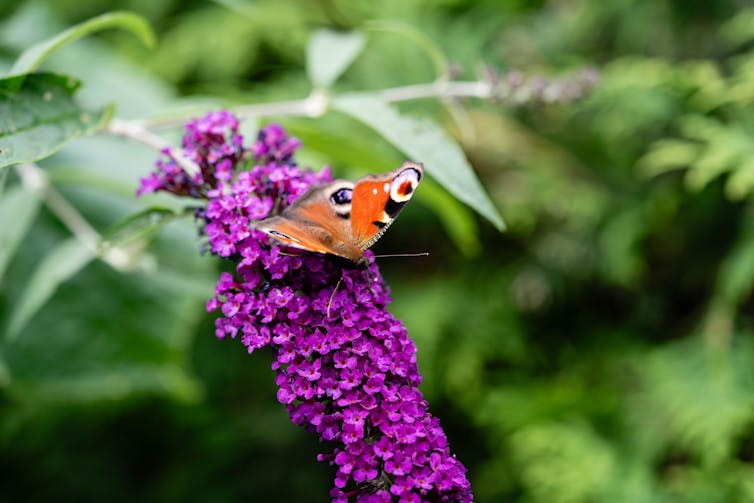
Peacock butterfly on purple buddleja.
Buddleja can cope better than you might think in dry spells.
Steidi/Shutterstock

Ornamental grasses generally have efficient root systems and many species actually prefer drier conditions once established.

Established shrubs including cistus, phlomis, buddleja, cotoneaster, berberis and viburnum have deep roots and proven track records for drought survival. The RHS report identifies these as garden stalwarts, with high stress resilience.

Some trees, including eucalyptus, bay (Laurus nobilis) and holm oak are remarkably drought tolerant.

Those to sacrifice

Grass lawns are thirsty and can be left to go dormant. If you have a newly seeded or turfed lawn from this year, some limited watering may be justified. But in general, embrace the golden colour of water-stressed lawns. As long as you don’t create too many bare patches from over-use, the green colour and growth will come back when it rains.

Annual bedding plants like busy lizzies and begonias have shallow root systems and high water demands. However, they are only there for one season and are easily replaceable, so prioritise them for watering only if they’re particularly important to your garden’s summer display and you can spare the water. You could save some by potting them up and enjoying a display that needs less water.

When you do water, research shows that technique is crucial. Water thoroughly but less frequently to encourage deep root growth. Focus water at the base of plants rather than on leaves, and water in early morning or evening to reduce evaporation.

Consider “split-root” watering for established shrubs – water one side of the plant thoroughly, then switch to the other side two to three weeks later. This keeps plants hydrated while chemical signals from the dry side’s roots prevent excessive new growth that would increase water demands.

This drought is a taste of Britain’s gardening future. The plants struggling most in this year’s drought are likely to become increasingly unsuitable for British gardens without intensive irrigation.

Be willing to swap out plants that suffer in drought for new plants that are more tolerant. Refresh plantings to adapt to the new climate.


This article features references to books that have been included for editorial reasons, and may contain links to bookshop.org. If you click on one of the links and go on to buy something from bookshop.org The Conversation UK may earn a commission.

The Conversation

Alastair Culham is affiliated with the Royal Horticultural Society through the RHS Science & Collections Group as a voluntary member. Opinions expressed here are his and do not represent the RHS.

ref. Hosepipe ban survival guide: which garden plants to save and which to sacrifice – https://theconversation.com/hosepipe-ban-survival-guide-which-garden-plants-to-save-and-which-to-sacrifice-261603

As Sri Lanka’s economy pivots from tourism, it’s well placed to benefit from global trade and geopolitical jostling – new research

Source: The Conversation – UK – By Hemamali Tennakoon, Senior Lecturer in Strategy and Management, Brunel University of London

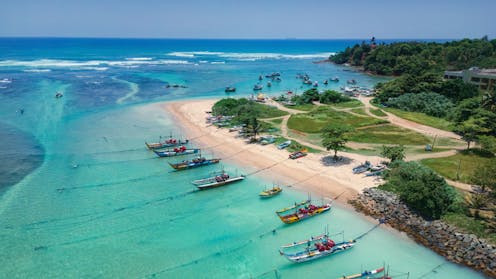
Dmytro Buianskyi/Shutterstock

With its natural beauty, wildlife and culture, Sri Lanka is known as the “pearl of the Indian Ocean”, and attracts millions of tourists every year.

But my research suggests that the country might not be so reliant on tourism in the future, as it looks to become a major player in global maritime trade. The island’s numerous harbours and enviable location along international sea routes have led to major investment from China and the US, as they seek to extend their strategic influence in the region.

That investment is being welcomed after years of economic and political turmoil in Sri Lanka.

The Easter bombings of 2019 targeted Catholic churches and hotels, killing 269 people and devastating tourism. The same year, significant tax cuts slashed government revenue before COVID did serious damage to the economy.

In 2021, a ban on chemical fertilisers led to nationwide agricultural failure, while excessive borrowing and money printing triggered soaring inflation, which peaked at 70% in August 2022. The country ended up failing to pay its foreign debts.

Following huge protests in 2022 and the resignation of the president, Sri Lanka began a major political and economic shift. It secured a bailout from the International Monetary Fund and implemented reforms aimed at stabilising the economy.

So far, some of the effects have been positive. Inflation has eased, investor confidence has improved and more tea, clothing and rubber products are being exported up.

Key to this has been improved logistics and port infrastructure. Business at the port of Colombo, the country’s largest, is booming, aided in part by global shipping disruptions, including the Red Sea crisis, which rerouted vessels through the Indian Ocean.

But international maritime ambitions can be a complex affair, and Sri Lanka needs to be wary of becoming just a well-positioned commodity for the world’s economic superpowers.

China for example, has secured a controversial 99-year lease of Hambantota port. India, wary of Chinese encroachment, has ramped up its own investments, including the development of a container terminal in Colombo.

In 2023, the US announced a US$500 million (£372 million) plan to develop a deep-water shipping container terminal at the port of Colombo. And the potential US tariffs of 30% on imports from Sri Lanka have been interpreted by some as a pressure tactic to get greater access to its waters.

Balancing these interests is a delicate act. While foreign investment is crucial for infrastructure development, Sri Lanka needs to protect its sovereignty and ensure that port operations serve national, not just international, interests.

My research suggests that one way of building a resilient and diverse Sri Lankan economy would be to focus on its surrounding waters. Sri Lanka’s vast “exclusive economic zone”, an area of sea where it controls marine resources, holds massive untapped potential.

Blue economy

This potential lies in traditional sectors like fisheries and tourism, but also emerging industries such as marine biotechnology.

This growing field offers opportunities in things like bioengineering and marine-based pharmaceuticals. With other countries rapidly advancing in these sectors, Sri Lanka is well-positioned to follow suit and become a regional leader in the blue economy (economic activities associated with the sustainable use of ocean resources).

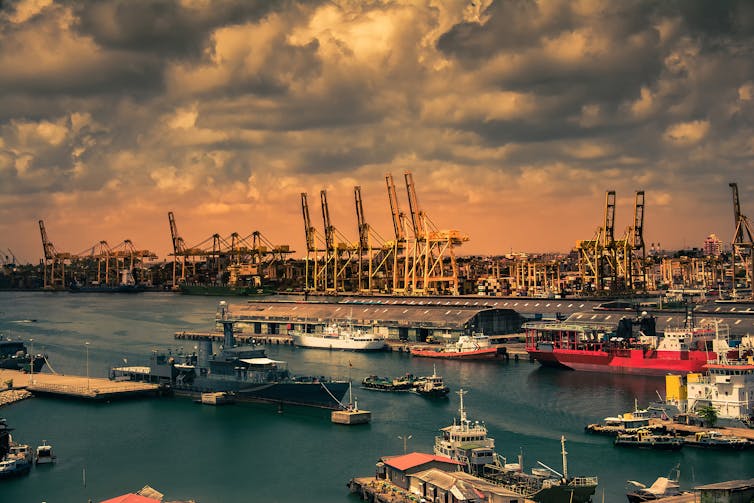
Port and harbour scene.
Business is booming in the port of Colombo.
shutterlk/Shutterstock

But there is still a complex web of geopolitical interests and economic pressures to navigate, as well as environmental challenges.

At the moment for example, the Sri Lankan government is making plans for the deep natural port at Trincomalee to become a major marine repair and refuelling centre between Dubai and Singapore. Other proposed projects include offshore wind farms and oil rig facilities.

The country also needs to compete with the likes of Malaysia, which is investing heavily in AI-driven port operations. To stay competitive, Sri Lanka must modernise infrastructure and streamline processes.

And despite the progress, challenges persist. Poverty in Sri Lanka has doubled since 2021, while youth unemployment remains high.

Sri Lanka faces rising maritime threats like piracy and illegal fishing, requiring stronger maritime surveillance. Simultaneously, port expansion risks damaging marine ecosystems. Green technologies and stricter environmental regulations are essential for long-term security and sustainability.

Sri Lanka’s strategic location and maritime heritage offer a foundation for economic renewal. With wise governance, sustainability, and balanced geopolitics, its ports could once again become vital gateways to regional prosperity and global trade.

The Conversation

Hemamali Tennakoon does not work for, consult, own shares in or receive funding from any company or organisation that would benefit from this article, and has disclosed no relevant affiliations beyond their academic appointment.

ref. As Sri Lanka’s economy pivots from tourism, it’s well placed to benefit from global trade and geopolitical jostling – new research – https://theconversation.com/as-sri-lankas-economy-pivots-from-tourism-its-well-placed-to-benefit-from-global-trade-and-geopolitical-jostling-new-research-261231