Yellowstone has been a ‘sacred wonderland’ of spiritual power and religious activity for centuries – and for different faith groups

Source: The Conversation – USA (3) – By Thomas S. Bremer, Professor Emeritus of Religious Studies, Rhodes College
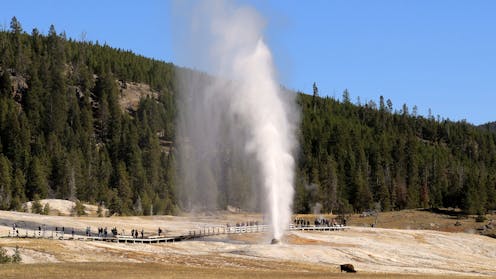
Beehive Geyser, in the Upper Geyser Basin of Yellowstone National Park. Thomas S. Bremer

Nearly 5 million travelers come to Wyoming to visit Yellowstone National Park each year, most in the summer months. They come for the geysers, wildlife, scenery and recreational activities such as hiking, fishing and photography.

However, few realize that religion has been part of Yellowstone’s appeal throughout the park’s history. My 2025 book “Sacred Wonderland” documents how people have long found holiness in Yellowstone: how a landscape once sacred to Native Americans later inspired Christians and New Age communities alike.

Native reverence – and removal

Long before European Americans “discovered” the Yellowstone region in the 19th century, numerous Indigenous peoples were aware of its unique landscape – particularly geysers, hot springs and other hydrothermal wonders. Several tribal groups engaged in devotional practices long before it became a park. These included the Tukudika, or Sheep Eaters, a band of mountain Shoshone. They lived year-round within the boundaries of what would become the national park.

Anthropologists know relatively little about the specific beliefs that Native Americans held about Yellowstone during this era. However, it’s clear most of the Indigenous groups who frequented Yellowstone considered it, as historian Paul Schullery concludes, “a place of spiritual power, of communion with natural forces, a place that inspired reverence.”

A large waterfall pours over a steep cliff into a river below, surrounded by rocky canyon walls and forested slopes.
Lower Falls of the Yellowstone River, Yellowstone National Park.
Thomas S. Bremer

After the Civil War, more Euro-Americans entered the region. In 1872, the U.S. government created Yellowstone as the first national park, setting a precedent for others in the United States and around the world.

Yellowstone and other U.S. national parks established in the 19th century were products of manifest destiny: the Christian idea that Americans had a divinely ordained right to expand their country across the continent. The nation’s westward expansion included turning supposedly wild, “uncivilized” areas into parks.

The park system’s creation, though, came at the cost of Indigenous communities. In Yellowstone, the Tukudika were forcibly removed in the 1870s to two reservations in Idaho and Wyoming, as anthropologists Peter Nabokov and Lawrence Loendorf discuss in their book “Restoring a Presence.”

Christian ministry

In addition to the concept of manifest destiny, Christians brought their own religious practices to Yellowstone National Park.

The U.S. Army was responsible for protecting and managing the park from 1886 to 1918. It operated from Fort Yellowstone at Mammoth Hot Springs in the northern part of the park. The last building it erected at the fort was a chapel, which has been in continuous use as a worship space – mostly for Christian groups – since its completion in 1913.

A small stone church features a pitched roof, arched windows and a prominent entrance.
The Yellowstone National Park Chapel at Mammoth Hot Springs, finished in 1913, was the last building constructed by the U.S. Army at Fort Yellowstone.
Thomas S. Bremer

One group that has used the chapel consistently since the 1950s is ACMNP, A Christian Ministry in the National Parks, an evangelical Protestant parachurch ministry founded in Yellowstone. Its volunteers conduct worship services and proselytize among employees and visitors.

ACMNP began as the brainchild of Presbyterian minister Warren Ost, who had worked as a bellhop at the Old Faithful Inn during summer breaks in seminary. Upon graduation, he formed the ministry, hoping to capitalize on the awe people experience in the parks to affirm believers’ faith and bring new souls to Christ.

ACMNP’s mission involves placing seminarians and other students in national parks as “worker-witnesses.” They work as paid employees in secular jobs and conduct religious activities after their regular working hours. Additionally, they are encouraged to talk about religion with their fellow workers on the job.

ACMNP experienced rapid growth in the 1950s and 1960s, boosted by support from National Park Service leadership. Cooperation included reduced-cost housing for their volunteers, and in some parks the superintendents or other high-level officials served on local ACMNP committees.

At its peak in the 1970s, ACMNP had nearly 300 volunteers working in over 50 locations. However, a federal lawsuit in the 1990s challenged its relationship with the government on the grounds of church-state separation and ended some of the privileges ACMNP had enjoyed. Not long after the legal action, Ost announced his retirement.

Although the organization has scaled back operations, the ministry in Yellowstone has experienced few changes. ACMNP volunteers continue to offer religious services to park employees and visitors throughout the summer.

Spiritual fortress

Another religious group has a very different interpretation of Yellowstone. The Church Universal and Triumphant, which had several thousand members at its height, was founded by Elizabeth Clare Prophet in the 1970s, based on the teachings of her late husband, Mark Prophet.

The Church Universal and Triumphant is an heir to the “I AM” movement, which flourished in the U.S. during the 1930s. Most prominent among I AM’s influences were theosophy, which promotes esoteric knowledge gleaned from Asian religious traditions as a universal wisdom underlying all religions; new thought, which advocates a mind-over-matter spirituality; and spiritualism, which involves communicating with spirits.

In the 1980s, Prophet’s followers relocated from California to Montana, where they purchased a large ranch adjacent to Yellowstone National Park’s northwest boundary. With them, they brought an eclectic New Age theology that combines elements of Christianity, Buddhism and Hinduism with belief in “ascended masters,” spiritual beings who guide the church. The group’s tradition teaches that beneath Yellowstone are two underground caverns, hidden from human view, that contain a cache of sacred stones with spiritual powers.

The Church Universal and Triumphant gained attention in the ‘90s when its believers in Montana built underground bunkers. Members believed that their ascended masters had predicted a nuclear war and had instructed the community to prepare to survive underground. When the prophecy of a nuclear attack did not materialize, many members became disillusioned.

The group struggled to rebuild its reputation and establish goodwill with Montana neighbors, including the National Park Service. Elizabeth Clare Prophet retired in 1999, and since then the church has concentrated more on its publishing and educational enterprises. However, a core community of the faithful still live and worship on their Royal Teton Ranch adjacent to Yellowstone.

A stage area displaying an image of the Hindu god Shiva and two large portraits of men, with a white chair flanked by two flower-laden tables.
The main church sanctuary at Church Universal and Triumphant headquarters, just outside Yellowstone National Park.
Thomas S. Bremer

Although the community teaches that its Montana ranch is a sacred location of the ascended masters, followers’ holiest place in the Western Hemisphere is roughly 35 miles south of Yellowstone, in Grand Teton National Park. They believe humanity began at Grand Teton Mountain and that the faithful will find their destiny there.

Accordingly, members believe that Yellowstone and Grand Teton national parks are brimming with spiritual powers, sacred sources of light and energy for the entire world.

In my conversations with people in the park, I found that very few knew anything about Yellowstone’s religious history at all – especially Native American practices. The ongoing practices of religious communities in the park remain invisible to nearly all visitors. Still, many vacationers interpret Yellowstone’s wonders as evidence of God’s handiwork.

The Conversation

Thomas S. Bremer received funding in the past to conduct historical research for the National Park Service at Lincoln Home National Historic Site in Springfield, Illinois.

ref. Yellowstone has been a ‘sacred wonderland’ of spiritual power and religious activity for centuries – and for different faith groups – https://theconversation.com/yellowstone-has-been-a-sacred-wonderland-of-spiritual-power-and-religious-activity-for-centuries-and-for-different-faith-groups-261045


From sweetener to cancer fighter? Fermented stevia shows promise in pancreatic cancer study

Source: The Conversation – UK – By Justin Stebbing, Professor of Biomedical Sciences, Anglia Ruskin University

Dionisvera/Shutterstock

In an unexpected twist in the fight against cancer, humble kitchen bacteria and a plant best known for sweetening tea could one day help in treating one of humanity’s deadliest diseases, new research suggests.

A group of scientists in Japan has discovered that fermented stevia, a plant commonly used as a calorie-free sweetener, may hold intriguing anti-cancer properties. While these findings are early and need much more research, they hint at a potential future role for stevia in tackling pancreatic cancer.

Pancreatic cancer remains one of the most difficult cancers to treat. Symptoms typically appear only after the disease has spread, and conventional therapies like chemotherapy rarely result in a cure. The outlook is bleak: fewer than 10% of patients survive five years beyond diagnosis.

This urgent need for more effective and less toxic treatments has driven researchers to explore plant-based compounds. Many chemotherapy drugs already used today have botanical origins – including paclitaxel, derived from the bark of the Pacific yew tree, and vincristine, sourced from the Madagascar periwinkle – offering a proven pathway for discovering new cancer-fighting agents.


Read more:
Chemotherapy can be a challenging treatment – here’s how to deal with some of the side-effects


Stevia, a leafy plant native to South America, is widely known for its natural sweetness. It’s a familiar presence on supermarket shelves, but few think of it as a medicinal plant.

Stevia leaves are rich in bioactive compounds, some of which have shown hints of anticancer and antioxidant activity in previous research. The challenge has been harnessing this potential, as unfermented stevia extracts are only mildly effective in laboratory settings, often requiring high doses to affect cancer cells.

Hand plucks stevia in the rays of the bright sun
Stevia could play an important role in cancer prevention.
yul38885/Shutterstock

That’s where fermentation comes in. Known for creating yogurt, kimchi and sourdough bread, fermentation is more than a culinary technique. I’s a form of microbial alchemy that can transform plant compounds into new, bioactive molecules.

Researchers at Hiroshima University asked a simple but innovative question: what if stevia was fermented with the right bacteria? They experimented with a strain called Lactobacillus plantarum SN13T, a relative of a bacteria commonly found in fermented foods. Fermentation produced a compound called chlorogenic acid methyl ester (CAME), which showed much stronger anti-cancer effects than raw stevia extract.

In lab tests, the fermented stevia extract caused pancreatic cancer cells to die in large numbers but left healthy kidney cells largely unharmed. Further analysis revealed that CAME was responsible for this effect. It worked by blocking cancer cells at a specific phase of their life cycle, preventing them from multiplying and by triggering apoptosis, a natural process where cells self-destruct when damaged or no longer needed.

CAME seems to alter the genetic programming of cancer cells. It activates genes that promote cell death while simultaneously suppressing those that help cancer cells grow and survive. This double hit both slows cancer progression and encourages malignant cells to kill themselves.

The power of fermentation

Fermented stevia extract was also found to be a stronger antioxidant than its unfermented counterpart. Oxidative stress – an imbalance of potentially harmful moelcules known as free radicals in the body — is linked to cancer and other diseases. By neutralizing these free radicals more effectively, the fermented extract may offer extra protection for healthy cells.

This is not the first time fermentation has been shown to unlock hidden benefits. Fermented soy and ginseng have been found to offer enhanced health properties compared to their raw forms.

Red ginseng plant
Fermented ginseng, particularly red ginseng, could offer enhanced health benefits.
zhengchengbao/Shutterstock

But the stevia findings stand out because of the compound’s selectivity. Killing cancer cells while sparing healthy ones is the holy grail for cancer researchers.

It’s important to note that these results come from lab-grown cells, not from animal or human studies. Many substances that look promising in petri dishes fail in clinical trials due to the complexity of the human body. Still, the discovery is exciting and warrants further exploration.

This research highlights the potential of everyday foods and their natural microbes as untapped sources of new medicines. It also reflects growing interest in “microbialbiotransformation” – using beneficial bacteria to create powerful compounds from plants.

In the case of stevia, a simple quest for a natural sweetener has evolved into something potentially far more profound: a stepping stone toward a cancer therapy that’s natural, targeted and cost-effective.


Get your news from actual experts, straight to your inbox. Sign up to our daily newsletter to receive all The Conversation UK’s latest coverage of news and research, from politics and business to the arts and sciences.

The Conversation

Justin Stebbing does not work for, consult, own shares in or receive funding from any company or organisation that would benefit from this article, and has disclosed no relevant affiliations beyond their academic appointment.

ref. From sweetener to cancer fighter? Fermented stevia shows promise in pancreatic cancer study – https://theconversation.com/from-sweetener-to-cancer-fighter-fermented-stevia-shows-promise-in-pancreatic-cancer-study-261599

An ultra-black coating for satellites could stop them spoiling astronomy pictures

Source: The Conversation – UK – By Noelia Noël, Senior Lecturer, School of Mathematics and Physics, University of Surrey

Every night, as telescopes around the world open their domes to study the cosmos, astronomers are forced to contend with an unexpected form of pollution: bright white streaks slicing across their images.

These luminous trails are caused by satellites. Specifically, the growing number of “megaconstellations” launched into low Earth orbit (LEO). These mega-constellations consist of many, sometimes hundreds, of satellites. They are intended to work as a system, providing services such as global internet access. Commercial companies that operate mega-constellations include SpaceX, Amazon and OneWeb.

The streaks in astronomy images aren’t just cosmetic. They can corrupt sensitive astronomy data, generate false signals, and even trigger alerts for events that never happened.

There may now be a partial solution to the luminous trails vexing astronomers. An ultra-black coating could be applied to the satellites themselves, dimming the trails that they leave in images. This material, called Vantablack 310, absorbs more than 99.99% of visible light.

Modern astronomical observations rely on long exposure imaging, collecting faint light from distant galaxies, exoplanets, or supernovae over several minutes or hours. When a satellite crosses the field of view during that time, it reflects sunlight into the telescope, creating a saturated streak across the image.

The impact is already substantial. Researchers at the Vera C Rubin Observatory in Chile – a flagship survey telescope set to revolutionise our understanding of the Universe – estimate that over 30% of the telescope’s twilight images already contain at least one satellite trail. And it’s not only visible light astronomy that’s at risk.

Radio telescopes, infrared detectors, and even gravitational wave observatories are reporting increasing interference from satellites – including reflected light, unwanted radio emissions, and other forms of contamination. The ultra-black coating won’t alleviate these issues, of course. Other solutions will need to be found for these other forms of interference.


Read more:
Could the first images from the Vera Rubin telescope change how we view space for good?


A crowded sky

With more than 16,000 active satellites already in orbit and tens of thousands more planned, the skies are becoming increasingly congested. While these constellations offer enormous benefits, including global internet access, disaster response, agricultural monitoring, and climate surveillance, they also threaten the clarity of astronomical observations.

Satellites in low Earth orbit (typically 500km-600km altitude) are often visible to the naked eye shortly after sunset or before sunrise. For sensitive telescopes, they can be ten to 100 times brighter than the recommended limits set by the International Astronomical Union.

I am one of a team of researchers at the University of Surrey that is exploring Vantablack 310 as a next generation coating to reduce satellite brightness. The trials are being carried out by UK scientists in partnership with the Surrey Space Centre, and materials innovators Surrey NanoSystems.

Originally developed for high-contrast optical systems – such as instruments that need to spot faint signals next to very bright ones – the coating absorbs more than 99.99% of visible light.

Very black car surrounded by spotlights
Vantablack has been demonstrated on on a BMW concept car.
Vanderwolf Images/Shutterstock

In 2026, Vantablack 310 will be tested in orbit for the first time aboard Jovian 1, a CubeSat – a small satellite about the size of a cereal box. It was developed at the University of Surrey and launched as part of the UK’s Jupiter programme, a university-led initiative that trains students in real-world satellite design, testing and operations, while supporting cutting-edge space research.

The mission will assess how the coating performs under the harsh conditions in space, such as temperature swings, ultraviolet radiation, and micro-meteoroid impacts. If successful, it could significantly reduce how bright satellites appear to telescopes – making the streaks they leave behind much fainter and easier to remove from astronomical images.

Ultra-black coatings will not make satellites invisible. Even the darkest object in orbit will reflect some light. But the goal is not invisibility – it is compatibility. Reducing satellite brightness below key thresholds ensures that scientific observations remain viable.

What’s at stake is more than just clean astronomical data. The night sky is one of humanity’s oldest shared resources – a source of scientific insight, cultural heritage, and spiritual meaning across time and geography. From the star lore of indigenous people to ancient navigation systems, the night sky has always helped us understand our place in the universe.

Publicly funded observatories in lower income countries – where many of the world’s darkest skies still exist – are also disproportionately affected, despite those countries having little say in the decisions that affect their skies.

Framing the issue solely as a technical inconvenience for elite institutions misses the point. This is also about equity, access, and environmental justice. Who gets to access the sky, and who decides how it is altered, are global questions that demand inclusive solutions.


Get your news from actual experts, straight to your inbox. Sign up to our daily newsletter to receive all The Conversation UK’s latest coverage of news and research, from politics and business to the arts and sciences.

The Conversation

This project was funded with six months of support from the Research England Development Fund (UKRI), focusing on mitigating satellite light pollution, including the in-orbit testing of ultra-black coatings.

ref. An ultra-black coating for satellites could stop them spoiling astronomy pictures – https://theconversation.com/an-ultra-black-coating-for-satellites-could-stop-them-spoiling-astronomy-pictures-259171

Russia-Ukraine talks: both sides play for time and wait for Donald Trump’s 50 days to run out

Source: The Conversation – UK – By Stefan Wolff, Professor of International Security, University of Birmingham

Russia and Ukraine met in Istanbul on July 23 for a third round of talks since face-to-face negotiations resumed in May. Expectations were low. Two previous rounds have yielded very few concrete results, apart from agreements on prisoner exchanges the return of the bodies of soldiers killed in action.

The latest meeting was the shortest yet, lasting just 40 minutes. The negotiating teams were led by former Ukrainian defence minister Rustem Umerov and Vladimir Medinsky, a senior aide to Russian president Vladimir Putin. They agreed on another exchange of prisoners and on setting up three working groups on political, military and humanitarian issues to engage online rather than in face-to-face meetings.

But if the talks have achieved very little, they have demonstrated two things. First, that the two sides remain very far apart on what they would consider acceptable terms for a ceasefire, let alone a peace agreement. And, second, that neither side is prepared to walk away from the negotiations, worried about incurring the wrath of the US president, Donald Trump.

A fourth round of negotiations has not been ruled out, but it is unlikely to involve either Vladimir Putin or Volodymyr Zelensky, given that their negotiating positions still offer little hope of a deal ready to be signed at a leaders’ summit.


Sign up to receive our weekly World Affairs Briefing newsletter from The Conversation UK. Every Thursday we’ll bring you expert analysis of the big stories in international relations.


The latest round of talks, however, took place in a different context to the earlier two meetings. Earlier in July, Trump set a deadline of 50 days, ending on September 2, for the fighting to stop.

After this if there’s no progress towards a ceasefire, the US president will consider imposing hefty secondary sanctions on Russia’s remaining trade partners. The aim would be to starve Moscow’s war economy of crucial foreign income, principally from heavily discounted sales of oil and gas to willing buyers including India and China.

The first ten days of this 50-day ultimatum have now passed. While the talks in Istanbul might be seen as a sign that Kyiv and Moscow are taking Trump seriously, the lack of tangible results suggests otherwise. There is no indication that either Russia or Ukraine have moved from their maximalist demands.

Russia keeps insisting on the recognition of its illegal occupation in Ukraine, on future limits to Ukraine’s military strength, and on a denial of the country’s accession to Nato. Ukraine meanwhile asks for its territory to be restored and its sovereignty – including its ability to determine its alliance arrangements – to be respected.

Playing for time

Developments on and around the battlefields in Ukraine don’t offer any signs that Moscow or Kyiv are ready even for a ceasefire either. Russia continues to make incremental gains along the 1,000km of frontlines in Ukraine.

It also keeps pounding Ukrainian cities, including the capital Kyiv, with nightly drone and missile attacks. These have taken place at unprecedented scales of hundreds of drones that have repeatedly overwhelmed Ukraine’s already stretched air defence systems.

Yet, Ukraine has been buoyed by the promise of more US arms deliveries – paid for by other Nato allies – and the continuing commitments by its international partners to support the country. These include those made at the recent Nato summit in The Hague and the Ukraine Recovery Conference in Rome.

Add to that Trump’s apparent pivot away from Putin and his recently more constructive relationship with Zelensky, and it becomes clear why Kyiv – like Moscow – thinks that time is on its side.

Both may be proved wrong. Zelensky’s latest efforts to consolidate his power – a large-scale cabinet reshuffle and a decree to curb the independence of two of Ukraine’s anti-corruption agencies – have caused alarm among EU officials in Brussels. More importantly, they have also triggered rare public protests against the government in Kyiv and other major Ukrainian cities, including Dnipro, Lviv and Odesa.

The protests may not get enough traction to pose a real danger to the government. But they indicate that support for Zelensky is not unconditional.

This is something that the Ukrainian president appeared to acknowledge when he outlined his plans to submit an additional bill to parliament to protect the independence of the embattled anti-corruption agencies. What is widely seen as a power grab by the president’s inner circle also has the potential of undermining public morale at a critical time in the war.

All of this also feeds into a Russian narrative of Zelensky as an illegitimate leader of his country who Russia cannot negotiate with. But it would be a mistake to assume that Russia can simply wait until Ukrainians are simply too exhausted to continue resisting Russia’s invasion or when western support will stop keeping Ukraine in the fight.

Even if Europeans become disillusioned with Zelensky, Russia’s war against Ukraine is too much of an existential question for European security that they will abandon Kyiv just because they do not agree with its anti-corruption policies.

It’s also not clear how long Russia can sustain the intensity of its ground and air campaigns against Ukraine or how long these will provide even the kinds of incremental gains that they currently achieve. Trump’s new plan for arming Ukraine by selling arms and ammunition to European Nato allies who would then deliver them to Kyiv is likely to blunt the effectiveness of the Russian air campaign and stymie its ground offensive.

So playing for time is unlikely to get either Moscow or Kyiv any closer to achieving their war aims. But preventing the other side’s victory – whether that’s on the battlefield or at the negotiation table – may well be enough for now for both Putin and Zelensky.

At the moment, continuing their war of attrition is the second-best solution that both presidents can agree on. The outcome of the third round of talks between their negotiators indicates that they may have reached such an implicit understanding already.


Get your news from actual experts, straight to your inbox. Sign up to our daily newsletter to receive all The Conversation UK’s latest coverage of news and research, from politics and business to the arts and sciences.

The Conversation

Stefan Wolff is a past recipient of grant funding from the Natural Environment Research Council of the UK, the United States Institute of Peace, the Economic and Social Research Council of the UK, the British Academy, the NATO Science for Peace Programme, the EU Framework Programmes 6 and 7 and Horizon 2020, as well as the EU’s Jean Monnet Programme. He is a Trustee and Honorary Treasurer of the Political Studies Association of the UK and a Senior Research Fellow at the Foreign Policy Centre in London.

ref. Russia-Ukraine talks: both sides play for time and wait for Donald Trump’s 50 days to run out – https://theconversation.com/russia-ukraine-talks-both-sides-play-for-time-and-wait-for-donald-trumps-50-days-to-run-out-261793

Origins of Israel’s nuclear ambiguity lie in a secret deal forged between Richard Nixon and Golda Meir – podcast

Source: The Conversation – UK – By Gemma Ware, Host, The Conversation Weekly Podcast, The Conversation

Israel has never officially confirmed or denied having nuclear weapons and has never signed the nuclear non-proliferation treaty. Instead, even as evidence has emerged about its nuclear capabilities, Israel has maintained a policy of nuclear ambiguity.

The origins of this opacity lie in a secret deal forged in a one-on-one meeting between Israeli prime minister, Golda Meir, and the US president, Richard Nixon, at the White House in September 1969.

In this episode of The Conversation Weekly podcast, we speak to Avner Cohen, professor of non-proliferation studies at the Middlebury Institute of International Studies at Monterrey in the US, about that 1969 deal and why it has endured for more than 50 years. Cohen is the author of Israel and the Bomb, considered the definitive work on Israel’s nuclear programme, and has been interrogated by the Israeli state for his research.

Cohen tells us that the understanding between Meir and Nixon meant the US accepted Israel as a special kind of nuclear weapon state. In turn, Israel committed to restraint, not to test nuclear weapons, and not to be the first to introduce them to the region. Neither side has confirmed the existence of a deal, and there are only hints at it in the historical record. Cohen explains:

 Once you realise that there is actually a deal, it explains a great deal of the situation. Why the US [is] looking the other way, why the issue is determined to be removed from the diplomatic agenda, and why many other countries, especially in the west, prefer not to see the Israeli nuclear issue.

Listen to the conversation with Avner Cohen on The Conversation Weekly podcast.


This episode of The Conversation Weekly was written and produced by Mend Mariwany and Gemma Ware with assistance from Katie Flood and Ashlynne McGhee. Mixing and sound design by Eloise Stevens and theme music by Neeta Sarl.

Newclips in this episode from CNN, AP Archive, BBC News and ABC.

Listen to The Conversation Weekly via any of the apps listed above, download it directly via our RSS feed or find out how else to listen here. A transcript of this episode is available on Apple Podcasts or Spotify.

The Conversation

Avner Cohen does not work for, consult, own shares in or receive funding from any company or organisation that would benefit from this article, and has disclosed no relevant affiliations beyond their academic appointment.

ref. Origins of Israel’s nuclear ambiguity lie in a secret deal forged between Richard Nixon and Golda Meir – podcast – https://theconversation.com/origins-of-israels-nuclear-ambiguity-lie-in-a-secret-deal-forged-between-richard-nixon-and-golda-meir-podcast-261789

Plug-in solar panels are the latest green energy trend – here’s what you need to know

Source: The Conversation – UK – By Dylan Ryan, Lecturer in Mechanical & Energy Engineering, Edinburgh Napier University

Astrid Gast/Shutterstock

Solar power is the fastest growing source of electricity globally. Normally, anyone wanting to tap into it would have to rely on roof-mounted panels. But in many parts of Europe, people have found a simple alternative in the form of “plug-in panels” that can be arranged on balconies.

Instead of having to be wired into the house, you can feed the power generated by these panels into an inverter and a standard plug. Is this something that might catch on in the UK? Let’s investigate.

First, solar installations usually come under “permitted development” with regard to planning permission. But you still might need to apply, particularly if you live in a shared development or a listed building.

For example, some apartment blocks are insured collectively; if solar panels are going to affect the building’s insurance, it’s going to affect the whole block. There may also be rules regarding what you can put on your balcony, so consult your building manager.

The UK government is promising to ease restrictions on solar balconies, but we shall have to see how it addresses these issues.

There are also safety concerns. The power generated by the panel has to be balanced with consumption. Which, in practice, may restrict their use to a circuit that only connects to low-power devices (lights, TVs or computers are fine, but not ovens or kettles).

So you need to be aware of what the panels are connected to, particularly if you have an older home which may have been built before modern electrical safety standards. Also, to connect the panels, you would need a weatherised external plug, which not all flats have.

How much power could you get?

As luck would have it, I have a south-facing balcony, so let us run the numbers.

I came across a 800W system online that sells for £499 (with supports that would allow me to mount it). It has an area of 3.95m² and is made of a thin photovoltaic film (about 10-12% efficient).

The optimum angle for a solar panel in Edinburgh where I live is 37.6 degrees. Mounting them vertically (draped over the railing of a balcony, as is often the case) will reduce performance, with typical losses of 30-45%. My balcony is also completely shaded for half of the day due to a neighbouring building, so a panel will generate little power at those times.

A house with a large balcony covered with a vertical line of panels.
A vertically mounted solar system in France. This is not the best angle for generation.
Asurnipal/Wikimedia, CC BY

The position of the sun varies as it moves across the sky during the day, as well as seasonally, as does the solar energy received. We can input this data plus our location into an online calculator, which will account for hourly and seasonal variations.

This estimates output for a vertically mounted panel at 132 kilowatt-hours per year (kWh/yr). Assuming electricity costs of £0.24/kWh, that means a payback period of 15.7 years (thin film solar systems typically last between ten and 20 years).

If we could orientate the panel at the optimum angle of 37.6° (tilt them out from the edge of the balcony), the power generated would rise to 182 kWh/yr (a payback period of 11.4 years, although this could fall foul of planning rules).

A first-floor flat with two solar arrays tilted slightly over the balcony.
Balcony solar panels angled to achieve optimum performance.
Triplec85/Wikimedia, CC BY

Free from the shading of my neighbour on the top floor and angled optimally, output from a plug-in panel could rise to 370 kWh/yr (payback 5.6 years). But this is for south-facing balconies. An east- or west-facing balcony would produce 30% less power and a north-facing panel, half as much or less.

Is it worth it?

Another issue is that you can only use the generated electricity when you are in the house. If, for example, I’m out half the time the panels are generating power (which is likely), the payback period doubles – so they will probably never pay for themselves. A battery could help store power for use later, but that adds costs plus the hassle of wiring everything up.

Let’s look at a monocrystalline panel (these last longer than film and are more efficient) that is roof-mounted at the optimum angle (so it’s clear of any obstructions) and wired up to feed into the grid so any power you don’t use, you can sell it to the network.

An apartment building with panels mounted on the roof.
Rooftop solar panels on an apartment block in Berlin, Germany.
Georg Slickers/Wikimedia, CC BY

Assuming a 4kW monocrystalline array at an installation cost of £5,500, the online calculator estimates generation of 2,970 kWh/yr for a payback period of 7.7 years (on a system that will last 25-30 years). And that’s not even considering any possible grants that you might be eligible for.

Whether or not balcony solar is feasible is going to be very site-specific. If you have a balcony with an uninterrupted view south and you are not going to fall foul of any planning or electrical issues, it might be worth it.

If you face north, or there’s another building in the way, or your fuse box looks like a prop from Downton Abbey, less so. In many cases, a solar generator mounted at an optimum angle and exporting electricity to the grid might be a better idea, even if the initial installation costs are higher.


Don’t have time to read about climate change as much as you’d like?

Get a weekly roundup in your inbox instead. Every Wednesday, The Conversation’s environment editor writes Imagine, a short email that goes a little deeper into just one climate issue. Join the 45,000+ readers who’ve subscribed so far.


The Conversation

Dylan Ryan does not work for, consult, own shares in or receive funding from any company or organisation that would benefit from this article, and has disclosed no relevant affiliations beyond their academic appointment.

ref. Plug-in solar panels are the latest green energy trend – here’s what you need to know – https://theconversation.com/plug-in-solar-panels-are-the-latest-green-energy-trend-heres-what-you-need-to-know-260467

Le réchauffement climatique menace les glaciers, les lacs et les écosystèmes des Pyrénées

Source: The Conversation – in French – By Hugo Sentenac, Maître de Conférence en écologie de la santé, Université Marie et Louis Pasteur (UMLP)

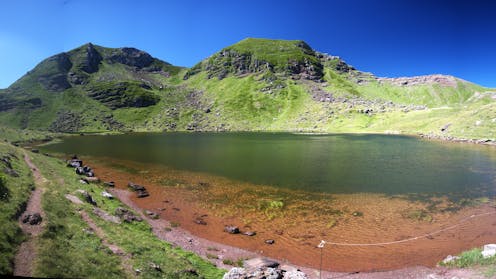
Le lac d’Arlet (1 986 m) dans les Pyrénées-Atlantiques subit lui aussi un verdissement de ses eaux. Ce mal touche de nombreux lacs, menaçant la biodiversité qu’ils hébergent. Dirk Schmeller/CNRS, Fourni par l’auteur

De récentes études sur les Pyrénées révèlent l’ampleur des changements environnementaux dans les écosystèmes montagnards. Le changement climatique s’avère plus intense que prévu, notamment pour les lacs, où les conditions de vie deviennent difficiles, et pour les glaciers. Les conséquences pourraient être dramatiques pour la biodiversité locale et pour le pastoralisme, mais aussi pour beaucoup de personnes, y compris en dehors des régions montagneuses, qui en dépendent pour leur approvisionnement en eau.


Les montagnes nous rendent chaque jour de nombreux services essentiels. En plus de leur grande valeur culturelle, spirituelle et récréative, elles assurent, entre autres, une provision durable en eau grâce à la neige et à la glace qui alimentent les rivières, ainsi qu’en bois et plantes médicinales. Les montagnes participent à la régulation du climat et offrent des opportunités économiques pour les touristes, grâce à leurs pentes enneigées en hiver, et pour le bétail avec des pâtures enherbées en été.

D’un point de vue écologique, les écosystèmes de montagnes abritent une biodiversité particulière qui s’est adaptée à de rudes conditions. En temps normal, elle contribue à maintenir une eau de bonne qualité en la purifiant. Pourtant, cette biodiversité et les services qu’elle nous rend sont aujourd’hui menacés, notamment par le réchauffement climatique, par le changement d’utilisation des terres, par la pollution et par l’introduction d’espèces non natives. Dans les Pyrénées, ces changements sont déjà flagrants.

Le changement climatique impacte l’eau sous toutes ses formes

Le réchauffement des températures est plus intense en altitude qu’en plaine, et leurs conséquences sur les écosystèmes montagnards sont bien visibles. D’après une étude dans les Pyrénées, rien qu’entre 2020 et 2023, les glaciers ont perdu en moyenne 9 % de leur surface et 2,5 m d’épaisseur, contre 2,4 % et 0,8 m entre 2011 et 2020. Avec les glaciers qui fondent, c’est nos réserves d’eau qui nous filent entre les doigts et qui manqueront pendant les étés chauds et secs.

En effet, une grande partie de l’eau potable consommée par l’agglomération toulousaine provient directement de la Garonne, et donc des Pyrénées. L’eau de la Garonne sert aussi à refroidir les réacteurs nucléaires de Golfech : il faut qu’il y en ait assez et qu’elle soit inférieure à 28 °C pour effectivement les refroidir. Dans le cas contraire, la centrale est mise à l’arrêt, comme cela a été fait le 29 juin 2025 à cause de la canicule.

D’autres écosystèmes, comme les lacs, les étangs et les mares, sont aussi fortement impactés, mais de manière moins évidente.

Notre étude sur 14 lacs, étangs et mares des Pyrénées a montré une augmentation moyenne de leur température de 1,65 °C de 2007 à 2023. C’est-à-dire qu’en seize ans seulement, l’eau a chauffé au-delà de la limite fixée par les accords de Paris de 2015, lors de la COP 21, qui était de 1,5 °C de réchauffement entre le niveau préindustriel et 2100.

Nous allons plus loin en montrant qu’en moyenne, sur la période d’étude, les « canicules aquatiques » ont été plus longues de 48 jours et les températures maximales supérieures de 6,4 °C, et que la durée de la période de gel a diminué de plus de 58 jours. C’est considérable, et cela va entraîner des changements de communautés en éliminant tous les organismes qui ne tolèrent pas les fortes variations de température ou les températures trop chaudes.

Lorsque la température augmente, la circulation de l’eau entre les couches profondes et de surface ne peut plus non plus se faire quand ces dernières sont trop chaudes. Cela peut provoquer une baisse d’oxygène au fond des lacs et entraîner la mort de nombreux organismes.

Enfin, qui dit périodes de gel plus courtes dit périodes d’activité plus longues pour les organismes, dont le métabolisme augmente avec les températures pour les animaux à sang froid, le plancton et les microorganismes. Des organismes adaptés à des conditions de vie montagnardes se retrouvent ainsi brusquement confrontés à de nouvelles modalités dont il est difficile de prévoir les conséquences plus générales.

Trop de facteurs de stress nuisent à la biodiversité, à la qualité de l’eau et à la santé

Le changement climatique est donc, en soi, un problème épineux pour la biodiversité et les socioécosystèmes des montagnes. Ces derniers pourraient s’adapter, mais le problème est que le réchauffement du climat s’accompagne de facteurs de stress supplémentaires : polluants chimiques portés par les précipitations, composés azotés et phosphorés issus des déjections du bétail, introductions de poissons pour le tourisme de la pêche dans les lacs naturellement apiscicoles, ou encore augmentation du tourisme et du pastoralisme.

Dans une récente autosaisine, le Conseil scientifique régional du patrimoine naturel (CSRPN) d’Occitanie s’inquiète de ces multiples pressions agissant simultanément sur les lacs de montagne, survenues de manière bien trop rapide pour que les écosystèmes s’adaptent. Le conseil déplore le fait que nombre de lacs deviennent verts, certes pour des raisons multifactorielles, mais indiquant que l’écosystème se dégrade et que la qualité de l’eau devient mauvaise.

Récentes proliférations d’algues, en profondeur (à gauche) et en surface (à droite) dans le lac de Bellonguère (1 911 m d’altitude, Pyrénées ariégeoises).
Dirk Schmeller/CNRS, Fourni par l’auteur

Les écosystèmes montagnards sont donc assaillis de toutes parts, ce qui complique la survie des êtres vivants. Par exemple, les amphibiens tendent à se réfugier dans les petites mares pour échapper aux poissons introduits, mais ces mares peuvent devenir des pièges écologiques pour leurs têtards, car elles chauffent et s’assèchent bien plus rapidement que les grands lacs.

Les pressions combinées peuvent engendrer des cascades de modifications dont les effets sont difficilement prédictibles, comme un changement de l’acidité de l’eau, paramètre très important pour les organismes aquatiques, ou encore l’augmentation d’une maladie mortelle chez les amphibiens quand la fonte des glaces survient tôt, ce qui va arriver de plus en plus souvent.

Une petite mare de faible profondeur, près de l’étang d’Arbu (1 726 m d’altitude, Ariège), où les amphibiens tendent à se réfugier et à pondre, ce qui les rend plus vulnérables aux effets du changement climatique.
Dirk Schmeller/CNRS, Fourni par l’auteur

Sans surprise, la biodiversité des lacs d’altitude tend à décliner et, avec elle, la qualité de l’eau. C’est ce que nous avons démontré dans une étude portant sur les biofilms, communautés de microbes vivant sur les roches du fond des lacs.

Dans ces biofilms, la biodiversité des microorganismes a diminué entre 2016 et 2020, mais les cyanobactéries qui y vivent, elles, ont fortement prospéré, notamment celles qui peuvent produire des toxines. Ces bactéries représentent un risque pour la santé de tous les animaux aquatiques, mais aussi pour ceux qui s’abreuvent dans ces lacs ou les personnes qui s’y baignent, ou pire, boivent l’eau sans la traiter.

Agir devient urgent

Pour toutes ces raisons, certains lacs bleus cristallins sont devenus verts et opaques.

Il faut garder à l’esprit que les écosystèmes montagnards, bien qu’hébergeant des ensembles d’espèces uniques, comprennent globalement moins de biodiversité que d’autres écosystèmes du fait de leurs conditions difficiles (fortes variations de température, UV, rareté des nutriments).

Il en résulte que ces écosystèmes possèdent moins de « roues de secours » en cas de coup dur, c’est-à-dire d’espèces qui peuvent remplir les mêmes rôles écologiques. La probabilité d’un effondrement (l’équivalent d’une extinction de l’écosystème) est ainsi plus forte et c’est pourquoi de nombreux milieux montagnards figurent dans la liste rouge des écosystèmes.

Il est donc urgent d’agir pour les socioécosystèmes pyrénéens, et de montagnes en général, avant qu’il ne soit trop tard. La vie dans les montagnes peut s’adapter, mais encore faut-il lui en laisser le temps et la chance en diminuant les facteurs de stress et leur intensité.

La lutte contre le changement climatique doit être menée à l’échelle globale, mais des mesures doivent aussi être mises en place localement comme la limitation de l’empoissonnement des milieux, de la pollution et de la pression pastorale.

C’est en tout cas une des recommandations du CSRPN d’Occitanie, qui préconise aussi un diagnostic des lacs d’altitude et une priorisation en fonction de leur vulnérabilité. La recherche doit accompagner cet objectif pour mieux comprendre comment les pressions agissent simultanément, afin de savoir sur laquelle ou lesquelles cibler les efforts d’atténuation.

Cela passe par une meilleure observation des systèmes naturels, possible grâce aux nouvelles technologies, aux sciences citoyennes et aux efforts de collaboration.

C’est ainsi que nous pourrons garantir la survie et le bon fonctionnement des écosystèmes montagnards, à la fois majestueux et précieux pour l’environnement et notre futur.


Créé, en 2007, pour aider à accélérer et à partager les recherches scientifiques sur des enjeux sociaux majeurs, le Fonds d’Axa pour la recherche soutient près de 700 projets dans le monde mené par des chercheurs issus de 38 pays (par exemple celui de Dirk Schmeller). Pour en savoir plus, visiter le site ou bien sa page LinkedIn.

The Conversation

Hugo Sentenac est membre de l’association Vétérinaires pour la biodiversité et du groupe d’étude pour l’écopathologie de la faune sauvage de montagnes.

Adeline Loyau a reçu des financements de l’Union européenne (bourse Marie Curie) et de l’Agence nationale pour la recherche (ANR), elle est membre du CSRPN Occitanie et présidente du comité scientifique de la fondation Clamor Terrae.

Dirk S. Schmeller a reçu des financements de AXA Research Fund, Clamor Terrae, ANR.

ref. Le réchauffement climatique menace les glaciers, les lacs et les écosystèmes des Pyrénées – https://theconversation.com/le-rechauffement-climatique-menace-les-glaciers-les-lacs-et-les-ecosystemes-des-pyrenees-260208

Dans les Pyrénées, la forêt ne s’étend pas aussi haut que le climat le lui permet

Source: The Conversation – France (in French) – By Déborah Birre, Docteure en géographie, Fondation pour la recherche sur la biodiversité

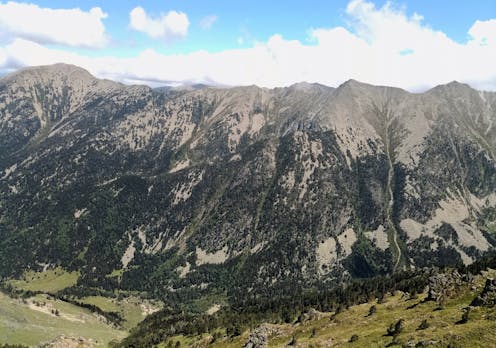
Dans les Pyrénées (ici, le massif du Puigmal), la limite supérieure de la forêt semble survenir plus tôt que ce que prédisent les modèles. Comment l’expliquer ? Déborah Birre/Fondation pour la recherche sur la biodiversité, Fourni par l’auteur

La forêt pourrait s’étendre bien plus haut sur les flancs des Pyrénées, alors pourquoi ne s’aventure-t-elle pas plus en altitude ? Ce phénomène se manifestait déjà avant que les effets du réchauffement climatique ne se fassent ressentir, l’explication est donc ailleurs.


Vous l’avez peut-être déjà remarqué lors d’une randonnée dans les Alpes ou dans les Pyrénées : en montagne, le climat façonne la répartition de la végétation. Plus on monte en altitude et plus les températures diminuent, plus les forêts deviennent clairsemées, jusqu’à laisser la place aux pelouses alpines. Ce schéma classique se retrouve des Andes aux Alpes. Pourtant, dans les Pyrénées orientales, la réalité du terrain raconte une tout autre histoire : la forêt s’arrête bien en dessous de la limite que le climat seul devrait imposer.

La limite supérieure de la forêt, sentinelle du climat ?

La limite supérieure de la forêt marque une transition entre la forêt fermée de l’étage subalpin et la pelouse de l’étage alpin. Elle correspond à ce que les scientifiques appellent un « écotone » : une zone de transition entre deux milieux.

Longtemps, cette discontinuité paysagère a été considérée comme le reflet naturel des contraintes climatiques, principalement le froid et la durée de la saison de croissance des arbres avec des vitesses de croissance qui varient selon les espèces.

Le modèle théorique classique de l’étagement de la végétation en montagne : la température correspond à la température moyenne pendant la saison de croissance.
Déborah Birre/Fondation pour la recherche sur la biodiversité, Fourni par l’auteur

Ce sujet n’est pas nouveau. Depuis plus de deux siècles, des scientifiques de toutes disciplines se sont intéressés à cet écotone. Au début du XIXe siècle, Alexander von Humboldt gravit le Chimborazo, un volcan de l’actuel Équateur, et y observe des changements graduels de la flore en altitude : la végétation s’y organise en bandes successives contrôlées par la température décroissante. Ces observations ont jeté les bases du modèle classique de l’étagement de la végétation. Un modèle qui, depuis, s’est longuement imposé avant d’être largement nuancé par les récentes recherches.

Les Pyrénées : un laboratoire grandeur nature

Les Pyrénées défient cependant ce paradigme. Ici, comme ailleurs en Europe, la limite supérieure de la forêt est située à une altitude bien plus basse (environ 1 900 mètres en moyenne dans la partie orientale des Pyrénées) que ce que les températures leur permettraient d’atteindre en théorie (environ 2 500 mètres d’altitude). La hausse actuelle des températures, liée au réchauffement climatique, n’entraîne pas non plus une progression systématique de cette limite.

Pour comprendre pourquoi, des chercheurs du programme SpatialTreeP ont mené une enquête d’envergure. Nous avons cartographié et comparé l’évolution de cet écotone sur 626 sites des Pyrénées ariégeoises et orientales entre 1955 et 2015 à partir de photographies aériennes.

Nous avons analysé plus de 90 variables caractérisant l’environnement de ces sites, allant du climat à la topographie, en passant par la géologie et les traces d’activités humaines. L’objectif était d’identifier les facteurs influençant la dynamique des lisières forestières et de détecter des profils de sites présentant des caractéristiques environnementales similaires.

Trois types de paysages forestiers dans les Pyrénées

Nos résultats révèlent une grande hétérogénéité dans l’évolution des forêts pyrénéennes au cours des soixante dernières années. Trois grands types de paysages et de dynamiques se dégagent.

Dans certains secteurs, la forêt progresse rapidement, gagnant plusieurs centaines de mètres en altitude sur soixante ans. Ailleurs, elle se densifie sans s’étendre, les arbres remplissant progressivement les clairières et espaces ouverts. Sur d’autres sites encore, la limite forestière reste figée voire recule.

Pourquoi de telles différences ? Parce que d’autres facteurs viennent interférer avec les conditions climatiques. Il est donc illusoire de chercher un unique coupable. La dynamique de limite forestière résulte d’une combinaison complexe et imbriquée de facteurs.

L’empreinte humaine : un héritage qui perdure

Les Pyrénées sont des montagnes profondément anthropisées, et ce depuis longtemps.

Pendant des siècles, les pratiques agropastorales (pâturage, défrichement, coupe de bois et reboisements) et l’exploitation du charbon de bois ont profondément façonné les paysages montagnards. Dans les zones les plus exploitées, la limite forestière a été largement abaissée, laissant place à des pâturages et à des landes dès l’étage montagnard.

Dans les zones pastorales actuelles, les milieux d’estives sont volontairement et activement laissés à l’état de prairie, empêchant toute colonisation forestière. À l’inverse, l’abandon progressif de ces pratiques, depuis le milieu du XXe siècle, a permis à la forêt de reconquérir les terrains délaissés, en particulier dans le département des Pyrénées-Orientales. L’abandon y a eu lieu plus tôt qu’en Ariège, ce qui explique que la limite forestière y atteigne des altitudes plus élevées.

Cette pression humaine, par son intensité variable selon les secteurs et les périodes, explique en grande partie pourquoi la position de l’écotone ne suit pas mécaniquement l’évolution du climat. Là où la pression humaine a diminué et où les conditions climatiques restent favorables, la forêt s’étend et rattrape progressivement l’écart avec son altitude maximum théorique.

Le terrain façonne aussi la forêt

D’autres variables liées au milieu conditionnent aussi le niveau de la forêt. L’exposition au vent et l’humidité des sols favorisent, par exemple, la densification des forêts au niveau de l’écotone. À l’inverse, la progression forestière est ralentie dans les zones où le relief est doux et donc plus favorable au maintien de l’activité agropastorale.

La composition des peuplements forestiers joue aussi un rôle. Les conifères comme les pins à crochets, mieux adaptés aux conditions rudes d’altitude, sont associés à des limites plus diffuses où arbres isolés et bosquets clairsemés s’échelonnent jusqu’à la pelouse alpine. Les feuillus comme les hêtres sont davantage associés à des limites plus nettes, avec une rupture paysagère marquée.

La nature du substrat a également une influence : les dépôts sédimentaires récents (dits quaternaires) et les roches cristallines (comme le granite ou le gneiss) favorisent des écotones plus diffus, caractérisés par des arbres épars. Cela pourrait s’expliquer par des sols plus pauvres et moins profonds, qui freinent la fermeture du couvert forestier.

Le réchauffement climatique : accélérateur de dynamiques déjà en cours

À l’échelle régionale, les variations climatiques n’expliquent pas ou peu les différences observées entre les sites. Elles jouent cependant probablement un rôle d’accélérateur des dynamiques, en facilitant l’établissement des arbres là où les conditions locales sont favorables. En ce sens, les dynamiques actuelles traduisent davantage une réponse à des conditions locales qu’un signal direct du réchauffement climatique.

En définitive, la limite supérieure de la forêt dans les Pyrénées ne se comprend qu’au travers de l’analyse des interactions complexes entre conditions environnementales et héritages des pratiques humaines.

Les recherches montrent qu’il n’existe pas un unique facteur et que, dans des milieux très transformés par l’être humain, comme c’est le cas dans ce massif, les effets du climat peuvent être localement dissimulés derrière les impacts humains. Chaque écotone porte ainsi l’héritage de son histoire et de ses particularités locales.

The Conversation

Déborah Birre a reçu des financements de l’Université Sorbonne Paris Nord dans le cadre d’un contrat doctoral.

Ces recherches ont été menées dans le cadre du programme SpatialTreeP, financé par l’agence nationale de la recherche (ANR-21-CE03-0002).

ref. Dans les Pyrénées, la forêt ne s’étend pas aussi haut que le climat le lui permet – https://theconversation.com/dans-les-pyrenees-la-foret-ne-setend-pas-aussi-haut-que-le-climat-le-lui-permet-261432

L’écologie, un problème de riches ? L’histoire environnementale nous dit plutôt le contraire

Source: The Conversation – France (in French) – By Renaud Bécot, Maitre de conférences en histoire contemporaine, Sciences Po Grenoble

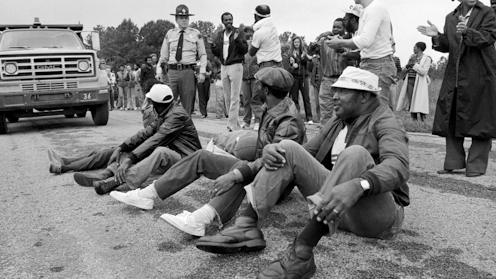
À Warren County, en Caroline du Nord, la mobilisation des habitants contre de la pollution aux polychlorobiphényles en 1982 marque un événement fondateur du mouvement pour la justice environnementale. Ricky Stilley/Henderson Dispatch

L’environnement n’intéresse-t-il que les classes supérieures ? Les travailleurs ont en réalité très vite identifié l’impact de l’industrialisation sur les écosystèmes dont ils dépendent. Mais cette conscience environnementale s’exprime de façon différente en fonction des classes sociales, comme l’explique Renaud Bécot, chercheur en histoire contemporaine et environnementale, dans un chapitre intitulé « Fin du monde, fin du mois, et au-delà ? L’environnementalisme des classes populaires » publié au sein de l’ouvrage collectif La Terre perdue. Une histoire de l’Occident et de la nature XVIIIᵉ-XXIᵉ siècle.


Au milieu des années 1950, Agnès Varda filme une scène ordinaire dans un quartier populaire du littoral méditerranéen. Quelques chats observent le réveil des familles dont les revenus d’existence reposent sur l’extraction des ressources de la mer. Les pêcheurs s’apprêtent à reprendre leur labeur, alors même que les fumées d’une industrie lourde souillent le rivage proche. Ils préparent leurs barques avec discrétion, car les autorités publiques surveillent la capture des poissons potentiellement pollués. Pourtant, « on ne veut pas travailler comme des empoisonneurs ! », s’exclament ces pêcheurs sétois.

Si cette représentation s’inscrit dans une œuvre de fiction (La Pointe courte, 1955), la scène illustre la position singulièrement inconfortable dans laquelle se trouvent les classes populaires contemporaines dans leurs rapports aux environnements. En effet, ces pêcheurs sont bien conscients que leurs revenus, et plus largement leurs conditions de subsistance, dépendent de l’extraction de ressources naturelles (ici halieutiques) – et, par extension, de la nécessité d’assurer la soutenabilité de celles-ci. Leur conscience est d’autant plus nette que l’industrialisation conforte une menace sur ces ressources et sur leur qualité.

Pourtant, malgré cette préoccupation, ces pêcheurs (tout comme les paysans au cours de cette période) sont pris dans l’état de la transition urbaine-industrielle que connaissent les sociétés européennes et américaines depuis le XIXe siècle.

[…]

L’acte d’accusation à l’encontre des classes populaires, supposément indifférentes aux enjeux écologiques, procède du déni des contraintes dans lesquelles se structurent les vies ordinaires au sein des groupes subalternes dans les sociétés occidentales. Face à l’ampleur des transformations urbaines et industrielles depuis le XIXe siècle, les préoccupations populaires pour l’environnement ont pourtant été récurrentes, et bien souvent ancrées dans des enjeux liés à l’organisation de la subsistance et à la protection de la santé.

De l’environnementalisme des pauvres à l’environnementalisme ouvrier

L’économiste catalan Joan Martinez-Alier distinguait trois principaux courants au sein des mouvements écologistes au début du XXIe siècle. Le premier, parfois qualifié de protectionniste, se caractérise par un culte de la nature sauvage. Son histoire se confond souvent avec les actions menées par des membres de classes aisées en faveur de la mise en réserve d’espaces présentés comme emblématiques, à l’instar d’intellectuels tels que John Muir (1838-1914), fondateur du Sierra Club, qui fut longtemps la principale association environnementale étasunienne.

Le deuxième courant renvoie aux promoteurs de l’écoefficacité ou de la modernisation écologique ; les membres de ce courant témoignent d’une conception technicienne et instrumentale du rapport des sociétés à l’environnement. Il vise à organiser les flux d’énergie et de matière de manière plus efficace et il est souvent associé à des figures scientifiques, à commencer par l’ingénieur forestier Gifford Pinchot (1865-1946).


Du lundi au vendredi + le dimanche, recevez gratuitement les analyses et décryptages de nos experts pour un autre regard sur l’actualité. Abonnez-vous dès aujourd’hui !


Enfin, le troisième courant correspond à l’environnementalisme des pauvres, dont Joan Martinez-Alier analyse que « le ressort principal n’est pas le respect sacré de la nature, mais l’intérêt matériel que représente l’environnement, source et condition de la subsistance ».

Cette catégorie d’environnementalisme des pauvres était d’abord pensée pour étudier les conflits dans les pays non occidentaux. Alier constatait que les motifs de protestation soulevaient des enjeux d’accès aux espaces naturels, de partage des ressources, ou de protection des milieux dont l’équilibre était essentiel pour la survie humaine. Plus qu’un culte de la nature ou une volonté de maximiser le rendement des écosystèmes, Alier observait ce qu’il désigne comme des conflits écologico-distributifs. Dans cette approche, il s’agit de penser une « nature ordinaire » correspondant à la protection d’une biodiversité sans valeur économique ou patrimoniale particulière, mais dont le maintien rend possible la protection de la santé humaine et du vivant. Cette nature ordinaire s’oppose aux initiatives de protection exclusive de sites naturels admirables, ou d’espèces animales emblématiques.

[…]

Luttes environnementales, conditions de travail et santé des ouvriers

Au crépuscule du XIXe siècle, dans les manufactures insalubres ou les mines de charbon, des voix s’élèvent pour dénoncer les maux de l’industrialisation. En 1893 puis 1895, ce sont les ouvrières d’usines d’allumettes de Trélazé (Maine-et-Loire), de Pantin et d’Aubervilliers (Seine) qui dénoncent notamment les dégâts sanitaires de leur exposition au phosphore blanc qui provoquent des nécroses maxillaires. Tout comme à Hull (Québec) en 1919, ces grèves d’allumettes rendent visibles les dégâts sanitaires d’une industrialisation à marche forcée. Autour de 1900 encore, l’historienne Judith Rainhorn souligne une convergence entre de rares syndicalistes et des médecins réformateurs, afin de défendre l’interdiction de l’usage de la céruse (ou blanc de plomb) dans la peinture utilisée sur les bâtiments – en France, cette revendication aboutira à l’adoption d’une loi d’interdiction en 1915.

La dénonciation des dommages ouvriers sanitaires et environnementaux de l’industrie se trouve partiellement désamorcée par l’adoption de réglementations encadrant les activités productives dans la plupart des pays industrialisés au début du XXe siècle. En matière de maladies professionnelles, ces lois consacrent le principe de la « réparation forfaitaire des risques du travail ». Ces maux sont présentés comme le revers empoisonné mais inéluctable du progrès. Si les syndicalistes contestèrent initialement cette monétarisation de la santé, la majorité d’entre eux se rallia par défaut à ce qui devint l’un des rares leviers de reconnaissance des maux endurés par les travailleurs.

Pourtant, au cours des années 1960, dans les territoires italiens de la pétrochimie tout comme dans les zones industrielles japonaises, certains groupes ouvriers alimentent une critique de pratiques qu’ils dénoncent comme une manière de « perdre leur vie à la gagner ». Dans une période marquée par une centralité ouvrière (symbolique, politique et sociologique) dans les sociétés occidentales, ces mobilisations réactivent un environnementalisme ouvrier, lequel conjugue un refus de la monétarisation des risques de santé, une volonté de protéger le cadre de vie des classes populaires, tout en énonçant des prescriptions pour une politique du travail plus respectueuse des corps et des environnements.

La justice environnementale, lutte dans un monde abîmé

Dans la typologie proposée par Joan Martinez-Alier, l’environnementalisme des pauvres recouvre également le mouvement se réclamant de la justice environnementale. Celui-ci s’enracine dans l’histoire spécifique des luttes socioécologistes étasuniennes, avant de connaître les résonances dans d’autres aires industrialisées.

Aux États-Unis, deux filiations militantes doivent être soulignées. D’une part, d’anciens militants des droits civiques alimentent une critique des grandes associations environnementales (à commencer par le Sierra Club), accusées de défendre prioritairement une nature « sauvage ». Cette préservation de la wilderness est dénoncée comme un mythe généré par des militants issus de la classe moyenne ou supérieure blanche. D’autre part, une seconde filiation s’inscrit dans la lignée des mobilisations ancrées dans les mondes du travail. Dans les années 1960, de grandes fédérations syndicales étasuniennes exigeaient une réglementation de certaines pollutions industrielles, et parfois une transformation des activités productives, à l’instar du syndicat des travailleurs de l’automobile (l’United Auto Workers). Ce double héritage militant fut à l’origine de grèves intenses, dont celle des éboueurs de Memphis, à laquelle Martin Luther King apporta son soutien lorsqu’il fut assassiné en 1968.

Néanmoins, le mouvement pour la justice environnementale ne s’est désigné comme tel qu’à l’orée des années 1980. Son récit fondateur voudrait qu’il débute lors de la mobilisation des habitants du quartier de Warren County (Caroline du Nord), confrontés au projet d’ouverture d’une décharge de produits toxiques. Ils dénoncent l’inégalité d’exposition aux toxiques dont sont victimes les populations racistes et paupérisées. Leur action se prolonge par l’invention d’un répertoire dans lequel la production de savoirs de santé occupe une fonction toujours plus considérable, comme en témoigne l’enquête d’épidémiologie populaire menée par les habitants de Woburn (en périphérie de Boston), avec le souhait d’éclairer le lien de causalité entre un cluster de leucémies infantiles et leur exposition à des forts taux de plomb, d’arsenic et de chrome. La multiplication des initiatives locales se prolonge dans des coordinations nationales et dans la publication d’études.

En 1987, le chimiste et militant Benjamin Chavis publie un rapport invitant à réfléchir aux processus sociaux de relégation de certaines populations dans des milieux pathogènes comme une forme de « racisme environnemental ». La justice environnementale est peu à peu devenue une grille d’analyse universitaire, consacrée notamment par les travaux du sociologue Robert Bullard au début des années 1990.

Mouvement social, autant que grille d’analyse du social, l’approche par la justice environnementale demeure largement ancrée dans son berceau nord-américain. Des historiens comme Geneviève Massard-Guilbaud et Richard Rodger ont montré la difficulté à transposer en Europe des catégories si liées à l’histoire étasunienne. Pourtant, la plus forte exposition des classes populaires aux toxiques est à l’origine d’une expérience commune de « violence lente » de part et d’autre de l’Atlantique. Proposée par le chercheur Rob Nixon, cette notion vise à désigner le phénomène d’atteintes différées à la santé qui marque les populations vivantes dans les territoires abîmés, ainsi que la difficulté à se mobiliser face aux pollutions dont les effets deviennent perceptibles après plusieurs décennies.

C’est pourtant face à ces violences pernicieuses qui se sont élevées habitants et salariés de nombre d’aires pétrochimiques dans l’Europe, au cours des années 1970. Ces initiatives se prolongent parfois jusqu’à nos jours, comme en témoignent les collectifs militants de Pierre-Bénite, dans le couloir de la chimie (Rhône). Après des conflits particulièrement vifs contre la fabrique d’acroléine entre 1976 et 1978, ce sont aujourd’hui les pollutions rémanentes des perfluorés (ou PFAS) qui sont au cœur des protestations adressées aux industriels de la chimie.

En France, au début du XXIe siècle, un ménage appartenant au décile le plus aisé de la population émet chaque année l’équivalent de 30 à 40 tonnes de dioxyde de carbone, soit au moins deux fois plus qu’un ménage appartenant au décile le plus pauvre (environ 15 tonnes). Pourtant, ce constat n’empêche pas l’éternelle réitération de la stigmatisation des classes populaires.

Couverture de La Terre perdue. Une histoire de l’Occident et de la nature XVIIIᵉ-XXIᵉ siècle, ouvrage dirigé par Steve Hagimont et Charles-François Mathis.
Éditions Tallandier

Contrairement aux parangons de la modernisation écologique, l’ethos des actrices et acteurs d’un environnementalisme populaire se caractérise souvent par une relative modestie dans le récit de leur rapport à une nature ordinaire. Cette attitude est aux antipodes de la mise en spectacle du syndrome du sauveur de la planète. De plus, l’étau de contraintes qui verrouillait le champ des possibles pour les pêcheurs sétois de l’après-guerre dans leur rapport à l’environnement ne s’est pas desserré pour les classes populaires du XXIe siècle. Il n’en reste pas moins que certaines fractions de celles-ci restent porteuses d’un rapport singulier à l’environnement.

The Conversation

Renaud Bécot ne travaille pas, ne conseille pas, ne possède pas de parts, ne reçoit pas de fonds d’une organisation qui pourrait tirer profit de cet article, et n’a déclaré aucune autre affiliation que son organisme de recherche.

ref. L’écologie, un problème de riches ? L’histoire environnementale nous dit plutôt le contraire – https://theconversation.com/lecologie-un-probleme-de-riches-lhistoire-environnementale-nous-dit-plutot-le-contraire-258764

Togo’s ‘Nana-Benz’: how cheap Chinese imports of African fabrics have hurt the famous women traders

Source: The Conversation – Africa – By Fidele B. Ebia, Postdoctoral fellow, Duke Africa Initiative, Duke University

The manufacturing of African print textiles has shifted to China in the 21st century. While they are widely consumed in African countries – and symbolic of the continent – the rise of “made in China” has undermined the African women traders who have long shaped the retail and distribution of this cloth.

For many decades Vlisco, the Dutch textile group which traces its origins to 1846 and whose products had been supplied to west Africa by European trading houses since the late 19th century, dominated manufacture of the cloth. But in the last 25 years dozens of factories in China have begun to supply African print textiles to west African markets. Qingdao Phoenix Hitarget Ltd, Sanhe Linqing Textile Group and Waxhaux Ltd are among the best known.

We conducted research to establish how the rise of Chinese-made cloth has affected the African print textiles trade. We focused on Togo. Though it’s a tiny country with a population of only 9.7 million, the capital city, Lomé, is the trading hub in west Africa for the textiles.

We conducted over 100 interviews with traders, street sellers, port agents or brokers, government officials and representatives of manufacturing companies to learn about how their activities have changed.

“Made in China” African print textiles are substantially cheaper and more accessible to a wider population than Vlisco fabric. Our market observations in Lomé’s famous Assigamé market found that Chinese African print textiles cost about 9,000 CFA (US$16) for six yards – one complete outfit. Wax Hollandais (50,000 CFA or US$87) cost over five times more.

Data is hard to come by, but our estimates suggest that 90% of imports of these textiles to Lomé port in 2019 came from China.

One Togolese trader summed up the attraction:

Who could resist a cloth that looked similar, but that cost much less than real Vlisco?

Our research shows how the rise of China manufactured cloth has undermined Vlisco’s once dominant market share as well as the monopoly on the trade of Dutch African print textiles that Togolese traders once enjoyed.

The traders, known as Nana-Benz because of the expensive cars they drove, once enjoyed an economic and political significance disproportionate to their small numbers. Their political influence was such that they were key backers of Togo’s first president, Sylvanus Olympio – himself a former director of the United Africa Company, which distributed Dutch cloth.

In turn, Olympio and long-term leader General Gnassingbé Eyadéma provided policy favours – such as low taxes – to support trading activity. In the 1970s, African print textile trade was considered as significant as the phosphate industry – the country’s primary export.

Nana-Benz have since been displaced – their numbers falling from 50 to about 20. Newer Togolese traders – known as Nanettes or “little Nanas” – have taken their place. While they have carved out a niche in mediating the textiles trade with China, they have lower economic and political stature. In turn, they too are increasingly threatened by Chinese competition, more recently within trading and distribution as well.

China displaces the Dutch

Dating back to the colonial period, African women traders have played essential roles in the wholesale and distribution of Dutch cloth in west African markets. As many countries in the region attained independence from the 1950s onwards, Grand Marché – or Assigamé – in Lomé became the hub for African print textile trade.

While neighbouring countries such as Ghana limited imports as part of efforts to promote domestic industrialisation, Togolese traders secured favourable conditions. These included low taxes and use of the port.


Read more:
West Africans ditch Dutch wax prints for Chinese ‘real-fakes’


Togolese women traders knew the taste of predominantly female, west African customers better than their mostly male, Dutch designers. The Nana-Benz were brought into the African print textile production and design process, selecting patterns and giving names to designs they knew would sell.

They acquired such wealth from this trade that they earned the Nana-Benz nickname from the cars they purchased and which they used to collect and move merchandise.

Nana-Benz exclusivity of trading and retailing of African print textiles cloth in west African markets has been disrupted. As Vlisco has responded to falling revenues – over 30% in the first five years of the 21st century – due to its Chinese competition, Togolese traders’ role in the supply chain of Dutch cloth has been downgraded.

In response to the flood of Chinese imports, the Dutch manufacturer re-positioned itself as a luxury fashion brand and placed greater focus on the marketing and distribution of the textiles.

Vlisco has opened several boutique stores in west and central Africa, starting with Cotonou (2008), Lomé (2008) and Abidjan (2009). The surviving Nana-Benz – an estimated 20 of the original 50 – operate under contract as retailers rather than traders and must follow strict rules of sale and pricing.

While newer Togolese traders known as Nanettes are involved in the sourcing of textiles from China, they have lower economic and political stature. Up to 60 are involved in the trade.

Former street sellers of textiles and other petty commodities, Nanettes began travelling to China in the early to mid-2000s to source African print textiles. They are involved in commissioning and advising on the manufacturing of African print textiles in China and the distribution in Africa.

While many Nanettes order the common Chinese brands, some own and market their own. These include what are now well-known designs in Lomé and west Africa such as “Femme de Caractère”, “Binta”, “Prestige”, “Rebecca Wax”, “GMG” and “Homeland”.

Compared to their Nana-Benz predecessors, the Nanettes carve out their business from the smaller pie available from the sale of cheaper Chinese cloth. Though the volumes traded are large, the margins are smaller due to the much lower final retail price compared to Dutch cloth.

After procuring African print textiles from China, Nanettes sell wholesale to independent local traders or “sellers” as well as traders from neighbouring countries. These sellers in turn break down the bulk they have purchased and sell it in smaller quantities to independent street vendors.

All African print textiles from China arrive in west Africa as an incomplete product – as six-yard or 12-yard segments of cloth, not as finished garments. Local tailors and seamstresses then make clothes according to consumer taste. Some fashion designers have also opened shops where they sell prêt-à-porter (ready-to-wear) garments made from bolts of African print and tailored to local taste. Thus, even though the monopoly of the Nana-Benz has been eroded, value is still added and captured locally.

Since the COVID-19 pandemic, Chinese actors have become more involved in trading activity – and not just manufacturing. The further evolution of Chinese presence risks an even greater marginalisation of locals, already excluded from manufacturing, from the trading and distribution end of the value chain. Maintaining their role – tailoring products to local culture and trends and linking the formal and informal economy – is vital not just for Togolese traders, but also the wider economy.

The Conversation

Rory Horner receives funding from the British Academy Mid-Career Fellowship. He is also a Research Associate at the Department of Geography, Environmental Management and Energy Studies at the University of Johannesburg.

Fidele B. Ebia does not work for, consult, own shares in or receive funding from any company or organisation that would benefit from this article, and has disclosed no relevant affiliations beyond their academic appointment.

ref. Togo’s ‘Nana-Benz’: how cheap Chinese imports of African fabrics have hurt the famous women traders – https://theconversation.com/togos-nana-benz-how-cheap-chinese-imports-of-african-fabrics-have-hurt-the-famous-women-traders-260924