Hockey Canada sex assault verdict: Sports culture should have also been on trial

Source: The Conversation – Canada – By Laura Misener, Professor & Director, School of Kinesiology, Western University

The verdict is in on the sexual assault trial of five former members of Canada’s 2018 world junior hockey team — all five have been acquitted.

Each player was accused of sexually assaulting a woman in a hotel room. Today, Justice Maria Carroccia stated that the Crown did not prove its case beyond a reasonable doubt.

The trial has captured the world’s attention and sparked polarized public debates about consent, hockey culture and the role of sport in socializing young men.

Elite athletes often operate within environments where their talent grants them special status and access to resources — monetary and otherwise — that bolster a sense of entitlement. In some instances, sport organizations exacerbate this sentiment by protecting their star performers instead of addressing misconduct, which was reflected in this case.

For example, an abusive national vaulting coach for New Zealand Athletics was finally banned for 10 years, but only after years of unchecked abuse of his female athletes, including “inappropriate sexual references.” This highlights how misconduct can go on unrestrained for so long.


Read more:
With another case of abuse in elite sport, why are we still waiting to protect NZ’s sportswomen from harm?


The culture of exceptionalism

As researchers with expertise in sport culture and sexual and gender-based violence, we’re reflecting on what the Hockey Canada trial reveals about the institutional and cultural practices within sport.

The formal and informal rules of men’s sport validate misogyny and reinforce systemic patterns of sexual entitlement and inadequate accountability. We offer some perspectives on how these troubling patterns of violence in sport can be reformed.

The Hockey Canada sexual assault trial has become a focal point for questioning how elite sporting environments shield athletes from accountability. This may be especially true in hockey.

In their book about toxic hockey culture, authors Evan Moore and Jashmina Shaw argue that hockey operates within “a bubble composed mostly of boys and men who are white, cis-het, straight and upper-class. And those who play often become coaches and teach the same values to the next generation.”

This closely knit community thrives on conformity and creates conditions that are ripe for the pervasive misogyny against women and systemic silence around issues of consent. The book _Skating on Thin Ice: Professional Hockey, Rape Culture and Violence against Women_, written by criminal justice scholars and sports reporters, demonstrates how endemic sexism, heavy alcohol use, abusive peers and the sexual objectification of women are buttressed by broader social factors. These factor uphold and reproduce toxic hockey culture, including patriarchal beliefs.

Male-dominated sporting cultures also emphasize a particular type of masculinity that focuses on dominance, physical intimidation and winning at all costs. This can blur the boundaries between acceptable competitive behaviour and problematic aggression.

Vulnerability in sports

Within the realm of professional sport, athletes also become commodified and objectified through media coverage, sponsorship deals and public scrutiny. This commodification can contribute to a culture where athletes may internalize the idea that their bodies are public property, further eroding their sense of autonomy and understanding of consent, especially in relation to others beyond the sport context.

Questioning or circumventing institutionally sanctioned behaviours is not easy, and it’s well-documented that many elite athletes struggle with mental health issues including depression, anxiety and substance misuse resulting from the pressure to align with the dominant culture.

But what often gets forgotten is how the hyper-masculine culture of sports creates significant barriers to seeking help. Young male athletes are socialized to comply with peer cultures that equate vulnerability with weakness. Yet they face intense pressures around family expectations, sponsorship deals and team success that demands they maintain appearances of strength and control.

This cycle of suppressed vulnerability and untreated distress enables toxic sporting masculinity to flourish, forcing organizations like Hockey Canada to confront their role in perpetuating these harmful dynamics.

The need for structural, cultural reform

Sports organizations have significant financial and reputational investment in athletes. This can create an inherent conflict when misconducts arise, problematically prompting sports organizations to use their power and resources to prioritize damage control over justice.

We saw this in the Hockey Canada sexual assault trial, where each hockey player had his own legal counsel, a stark illustration of institutional power and the extent to which sports organizations will go to shield their members from accountability. The deeply entrenched networks within sport prioritize self-preservation over addressing misconduct

Effectively responding to these issues requires addressing the systemic factors that perpetuate sexual and gender-based violence in sport. The sport ecosystem in Canada needs radical change, including who trains and mentors young men in hockey and how organizations investigate complaints.

It requires going beyond individual accountability, participating in consent workshops or issuing policy documents. These actions alone are insufficient to shift the cultural needle.

In 2022, Hockey Canada released a comprehensive action plan to address systemic issues in hockey that features discussions of accountability, governance, education and training and independent sport safety structures.

Community organizations like the Ontario Coalition of Rape Crisis Centres also issued a series of recommendations in 2022 that remain germane:

  • Work with athletes and sports organizations to address sexual violence in sports culture;
  • Support the development and growth of male allies programs within community-based sexual assault support centres; and
  • Support those who have been harmed.

In addition to these excellent suggestions, Hockey Canada and other allied hockey organizations must be willing to restructure the current hierarchical structure of power that governs not just hockey, but also the players and all the other agencies involved, including coaches, sponsors, trainers, legal teams, media and PR representatives.

These organizational changes are possible, as evidenced by the efforts of Bayne Pettinger, an agent who has led efforts to create space for queer hockey players in Hockey Canada and the National Hockey League.

Two men in suits sit behind a conference table. The man on the left sits behind a name plate that says 'Scott Smith' and the man on the right sits behind a name place that says 'Brian Cairo'
Scott Smith, who stepped down from his role as Hockey Canada’s President and CEO, left, and Hockey Canada Chief Financial Officer Brian Cairo appear at a standing committee in July 2022 looking into how Hockey Canada handled allegations of sexual assault and a subsequent lawsuit.
THE CANADIAN PRESS/Sean Kilpatrick

Sport’s moral reckoning

However, the cultural norms of power in sport extend beyond the playing field to shape attitudes toward consent and sexual conduct.

Until sport organizations address the foundational cultural elements that enable misconduct — toxic masculinity, institutional protection and erosion of consent culture — meaningful change will remain elusive.

Within hockey environments, in particular, the objectification of women and the institutional silence surrounding sexual violence have become normalized aspects of the sport’s culture, creating conditions where misconduct can flourish unchecked.

The events examined in this most recent trial are not isolated incidents but symptoms of deeper systemic failures within elite sport.

Only through comprehensive cultural transformation can we ensure that sport environments are spaces of genuine safety, respect and accountability for all participants.

The Conversation

Laura Misener receives funding from Social Sciences and Humanities Research Council of Canada

Treena Orchard receives funding from Western University for a Teaching Innovation Grant, however, those funds were not used in the creation of this article.

ref. Hockey Canada sex assault verdict: Sports culture should have also been on trial – https://theconversation.com/hockey-canada-sex-assault-verdict-sports-culture-should-have-also-been-on-trial-260662

High-profile sex assault cases — and their verdicts — have consequences for survivors seeking help

Source: The Conversation – Canada – By Lisa Boucher, Assistant Professor, Gender & Social Justice, Trent University

Five former Canada world junior hockey players have been acquitted of sexually assaulting a woman in a hotel room in 2018 after Ontario Superior Court Justice Maria Carroccia said the Crown failed to prove its case and that the victim’s evidence was neither credible nor reliable.

The shocking outcome highlights the inadequacies and harms of the legal system and formal institutions in responding to sexual assault that advocates, researchers and victim/survivors have long pointed to.

If we truly want to address sexual violence, then challenging rape myths — in the courts, in the media and elsewhere — is an essential part of this work.

Sexual violence — a type of gender-based violence — is a persistent problem in Canada and across the globe, with high rates of sexual assault and other forms of sexual violence. Statistics Canada has found that approximately 4.7 million women in Canada have been sexually assaulted since the age of 15. Reporting remains low, however, and victims/survivors face a multitude of barriers to care and justice.

Barriers to reporting and seeking help include factors like service gaps, not knowing where to go for help, inaccessibility and shame and stigma. Attitudes surrounding sexual violence can also impact survivors’ decisions to disclose. They can also influence the responses survivors receive when they reach out for support.

Supportive vs. unsupportive reactions

The majority of victims/survivors never report or seek help through formal channels. Instead, they’re more likely to disclose to informal support systems, like friends and family.

When a disclosure of violence is met with a supportive reaction, victim/survivors can experience improved well-being. Positive reactions can also lead to additional help-seeking by affirming the victims/survivors’ need for care, and offering information about services and resources.

In contrast, unsupportive responses can hinder a victim/survivor’s recovery. Such responses might involve blaming the victim, taking control of decision-making or priorizing the well-being of the person or entity receiving the information over the victim/survivor’s.

Negative reactions can silence the victim/survivor, encourage self-blame and deter them from seeking help. And when victims/survivors anticipate negative reactions to a disclosure of violence, they are less likely to talk about it, alert authorities or seek help.

Additionally, while most victims/survivors seek help through informal channels, most people are unprepared to hear about it. High levels of misinformation about sexual violence — or rape myths — also increase the likelihood that victims/survivors will receive unsupportive responses.

The persistence of rape myths

Rape myths are pervasive false beliefs about sexual assault. They minimize the seriousness of sexual violence and shift blame from individual perpetrators and root causes onto victims or survivors.

Common rape myths include ideas that rape is rare and committed by strangers, that victims/survivors lie, that certain clothing or behaviour invites sexual assault and that it is only rape if it involves physical force and active resistance.

Despite decades of research refuting rape myths, they persist. And they continue to influence perceptions of sexual violence, victims and perpetrators.

Rape myth acceptance is linked to higher rates of sexual assault and lower reporting and convictionrates. Because rape myths are often internalized, they also decrease the likelihood that victims/survivors will identify their experience as violence.


Read more:
Rape myths can affect jurors’ perceptions of sexual assault, and that needs to change


Rape myths and media

One powerful way that rape myths circulate is through media. This includes traditional forms of media and social media. The pervasiveness of media in our lives makes it difficult to avoid exposure to false and harmful ideas about sexual violence.

High-profile cases in the media — like the Jian Ghomeshi, Harvey Weinstein and Hockey Canada trials — expose the public to details and discourses about sexual violence. The intensity of coverage can have harmful effects on victims/survivors.

For instance, in a study about experiences with seeking help and reporting sexual assault, researchers found interview participants were negatively affected by rape myths circulating during the Brett Kavanaugh confirmation hearings for a position on the United States Supreme Court.


Read more:
Trauma 101 in the aftermath of the Ford-Kavanaugh saga


Interviewees reported an increase in victim-blaming reactions from friends, family and professionals. They also described intense feelings like grief and anger, and reflected on barriers to reporting sexual violence.

Sexual assault centres in Ontario have reported spikes in calls to their crisis/support lines in response to the Hockey Canada sexual assault trial.

This is further evidence that coverage of sexual violence can be stressful and retraumatizing for victims/survivors. Service providers have noted that some of the calls include concerns about the hurdles and attitudes sexual assault victims face when they report.

Challenging rape myths, victim-blaming

There are signs of growing awareness of sexual violence, spurred in large part by survivor-led movements like the #MeToo movement. Nonetheless, rape myths continue to influence understandings of, and responses to, this type of violence.

Challenging rape myths is therefore a critical anti-violence strategy. This requires ongoing education, for the public and for professionals.

It also requires commitments from institutions, like the courts and media, to take an active role in stopping the spread of misinformation about sexual violence, and challenging it whenever possible.

The Conversation

Lisa Boucher has previously received funding from the Social Sciences and Humanities Research Council of Canada and Women and Gender Equality Canada.

ref. High-profile sex assault cases — and their verdicts — have consequences for survivors seeking help – https://theconversation.com/high-profile-sex-assault-cases-and-their-verdicts-have-consequences-for-survivors-seeking-help-260668

Columbia’s $200M deal with Trump administration sets a precedent for other universities to bend to the government’s will

Source: The Conversation – USA (2) – By Brendan Cantwell, Associate Professor of Higher, Adult, and Lifelong Education, Michigan State University

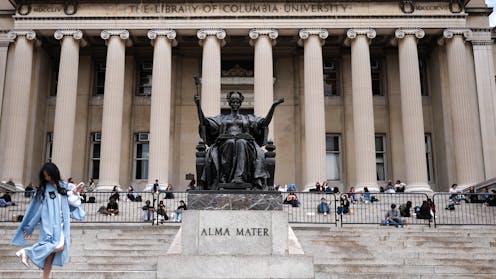
Students at Columbia University in New York City on April 14, 2025. Charly Triballeau/AFP via Getty Images

Columbia University agreed on July 23, 2025, to pay a US$200 million fine to the federal government and to settle allegations that it did not create a safe environment for Jewish students during Palestinian rights protests in 2024.

The deal will restore the vast majority of the $400 million in federal grants and contracts that Columbia was previously awarded, before the administration withdrew the funding in March 2025.

It marks the first financial and political agreement a university has reached with the Trump administration in its push for more control over higher education – and stands to have significant ripple effects for how other universities and colleges carry out their basic operations.

Amy Lieberman, the education editor at The Conversation U.S., spoke with Brendan Cantwell, a scholar of higher education at Michigan State University, to understand what’s exactly in this agreement – and the lasting precedent it may set on government intervention in higher education.

A group of people with their faces covered by cloth hold red, green, white and black flags and walk together in front of a large building with columns.
Palestinian rights demonstrators march through Columbia University on Oct. 7, 2024, marking one year of the war between Hamas and Israel.
Kena Betancur/AFP via Getty Images

What’s in the deal Columbia made with the Trump administration?

The agreement requires Columbia to make a $200 million payment to the federal government. Columbia will also pay $21 million to settle investigations brought by the U.S. Equal Employment Opportunity Commission.

Columbia will need to keep detailed statistics about student applicants – including their race and ethnicity, grades and SAT scores – as well as information about faculty and staff hiring decisions. Columbia will then have to share this data with the federal government.

In exchange, the federal government will release most of the $400 million in frozen grant money previously awarded to Columbia and allow faculty at the university to compete for future federal grants.

How does this deal address antisemitism?

The Trump administration has cited antisemitism against students and faculty on campuses to justify its broad incursion into the business of universities around the country.

Antisemitism is a real and legitimate concern in U.S. society and higher education, including at Columbia.

But the federal complaint the administration made against Columbia was not actually about antisemitism. The administration made a formal accusation of antisemitism at Columbia in May of this year but suspended grants to the university in March. The federal government had initially acknowledged that cutting federal research grants did nothing to address the climate for Jewish students on campus, for example.

When the federal government investigates civil rights violations, it usually conducts site visits and does very thorough investigations. We never saw such a government report about antisemitism at Columbia or other universities.

The settlement that Columbia has entered into with the administration also doesn’t do much about antisemitism.

The agreement includes Columbia redefining antisemitism with a broader definition that is also used by the International Holocaust Remembrance Alliance. The definition now includes “a certain perception of Jews, which may be expressed as hatred toward Jews” – a description that is also used by the U.S. State Department and several European governments but some critics say conflates antisemitism with anti-Zionism.

Instead, the agreement primarily has to do with faculty hiring and admissions decisions. The federal government alleges that Columbia is discriminating against white and Asian applicants, and that this will allow the government to ensure that everybody who is admitted is considered only on the basis of merit.

The administration could argue that changing hiring practices to get faculty who are less hostile to Jewish students could change the campus climate, but the agreement doesn’t really identify ways in which the university contributed to or ignored antisemitic conduct.

Is this a new issue?

There has been a long-running issue that conservatives and members of the Trump administration – dating back to his first term – have with higher education. The Trump administration and other conservatives have said for years that higher education is too liberal.

The protests were the flash point that put Columbia in the administration’s crosshairs, as well as claims that Columbia was creating a hostile environment for Jewish students.

The administration’s complaints aren’t limited to Columbia. Harvard is in a protracted conflict with the administration, and the administration has launched investigations into dozens of other schools around the country. These universities are butting heads with the administration over the same grievance that higher education is too liberal. There are also specific claims about antisemitism on university campuses and the privileges given to nonwhite students in admissions or campus life.

While the administration has a common set of complaints about a range of universities, there is a mix of schools that the administration is taking issue with. Some of them, such as Harvard, are very high profile. The Department of Justice forced out the president at the University of Virginia in January 2025 on the grounds that he had not done enough to root out diversity, equity and inclusion programs at the public university. The University of Virginia may have been a target for the administration because a Republican governor appointed most members of its governance board and agreed with Trump’s complaints.

How could this change the makeup of Columbia’s student population?

The Supreme Court ruled in 2023 that Harvard’s affirmative action program, which considered race in admissions, violated the Equal Protection Clause of the 14th Amendment. This effectively ended race-based affirmative action for all U.S. colleges and universities.

Now, with the Columbia deal, the government could say that it would expect to see a proportion of students who are white increase and students who are Black and Latino to decrease at Columbia. That’s a legal approach that America First Legal, a conservative legal advocacy group founded by Stephen Miller, a Trump administration official, has already tried.

Back in February 2025, America First Legal alleged in a federal lawsuit that the University of California, Los Angeles, was using illegal admissions criteria, because of the number of Black and Latino students that were admitted by the school. That lawsuit is ongoing.

A woman wears a blue robe and stands at a wooden podium. People dressed in caps and gowns for graduation stand behind her and hold light blue umbrellas.
Claire Shipman, Columbia University’s acting president, speaks during the school’s May 2025 commencement ceremony.
Jeenah Moon/Pool/AFP via Getty Images

What does this agreement mean for US higher education as a whole?

It is an enormous, unprecedented shift in how the federal government works with higher education. Since the McCarthy era in the 1940s and ’50s, when professors were blacklisted and fired because of their alleged communism, Americans have not seen the federal government interrogate education.

The federal government does have a role in securing people’s civil rights, including in the context of higher education, but this is very, very different from how the federal government has done civil rights investigations and entered into agreements with universities in the past.

This agreement is very broad and gives the federal government oversight of things that have long been under universities’ control, such as whom they hire to teach and which students they admit.

The federal government is now saying it has the right to look over universities’ shoulders and guide them in this work that has long been considered independent. And the government is willing to be extremely coercive to get universities to comply.

What signal does this agreement send to other universities?

This agreement sets a precedent for the government to direct colleges and universities to comply with its political agenda. This violates the long tradition of academic independence that had helped to make the U.S. higher education system the envy of the world.

Columbia can afford paying $200 million to the federal government. Most universities can’t afford to pay $200 million.

And most campuses cannot survive without federal resources, whether that comes in the form of student financial aid or research grants. This agreement sets a standard for other universities that, if they don’t immediately do what the federal government wants them to do, the government could impose penalties that are so high it could end their ability to operate.

The Conversation

Brendan Cantwell is a Professor in the Department of Educational Administration at Michigan State University.

ref. Columbia’s $200M deal with Trump administration sets a precedent for other universities to bend to the government’s will – https://theconversation.com/columbias-200m-deal-with-trump-administration-sets-a-precedent-for-other-universities-to-bend-to-the-governments-will-261902

We tracked illegal fishing in marine protected areas – satellites and AI show most bans are respected, and could help enforce future ones

Source: The Conversation – USA (2) – By Jennifer Raynor, Assistant Professor of Natural Resource Economics, University of Wisconsin-Madison

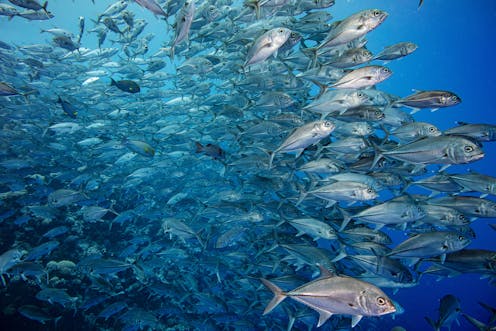
A school of bigeye trevally swims near Bikar Atoll. Enric Sala/National Geographic Pristine Seas

Marine protected areas cover more than 8% of the world’s oceans today, but they can get a bad rap as being protected on paper only.

While the name invokes safe havens for fish, whales and other sea life, these areas can be hard to monitor. High-profile violations, such as recent fishing fleet incursions near the Galapagos Islands and ships that “go dark” by turning off their tracking devices, have fueled concerns about just how much poaching is going undetected.

But some protected areas are successfully keeping illegal fishing out.

In a new global study using satellite technology that can track large ships even if they turn off their tracking systems, my colleagues and I found that marine protected areas where industrial fishing is fully banned are largely succeeding at preventing poaching.

What marine protected areas aim to save

Picture a sea turtle gliding by as striped butterfly fish weave through coral branches. Or the deep blue of the open ocean, where tuna flash like silver and seabirds wheel overhead.

These habitats, where fish and other marine life breed and feed, are the treasures that marine protected areas aim to protect.

The value of marine protected areas for people and nature.

A major threat to these ecosystems is industrial fishing.

These vessels can operate worldwide and stay at sea for years at a time with visits from refrigerated cargo ships that ferry their catch to port. China has an extensive global fleet of ships that operate as far away as the coast of South America and other regions.

The global industrial fishing fleet – nearly half a million vessels – hauls in about 100 million metric tons of seafood each year. That’s about a fivefold increase since 1950, though it has been close to flat for the past 30 years. Today, more than one-third of commercial fish species are overfished, exceeding what population growth can replenish.

Fleets of fishing boats leave port as the summer fishing ban ends in the Yellow and Bohai seas on Sept. 1, 2024.
Large fleets of fishing boats, supported by refrigerator ships to ferry their catch to shore, can stay at sea for months at a time.
VCG/VCG via Getty Images

When well designed and enforced, marine protected areas can help to restore fish populations and marine habitats. My previous work shows they can even benefit nearby fisheries because the fish spill over into surrounding areas.

That’s why expanding marine protected areas is a cornerstone of international conservation policy. Nearly every country has pledged to protect 30% of the ocean by 2030.

Big promises – and big doubts

But what “protection” means can vary.

Some marine protected areas ban industrial fishing. These are the gold standard for conservation, and research shows they can be effective ways to increase the amount of sea life and diversity of species.

However, most marine protected areas don’t meet that standard. While governments report that more than 8% of the global ocean is protected, only about 3% is actually covered by industrial fishing bans. Many “protected” areas even allow bottom trawling, one of the most destructive fishing practices, although regulations are slowly changing.

Sharks and a large school of fish swim near a reef.
Grey reef sharks at Bokak Pass, in the Marshall Islands’ first marine protected area, created in January 2025.
Manu San Félix, National Geographic Pristine Seas

The plentiful fish in better-protected areas can also attract poachers. In one high-profile case, a Chinese vessel was caught inside the Galápagos Marine Reserve with 300 tons of marine life, including 6,000 dead sharks, in 2017. This crew faced heavy fines and prison time. But how many others go unseen?

Shining a light on the ‘dark fleet’

Much of what the world knows about global industrial fishing comes from the automatic identification system, or AIS, which many ships are required to use. This system broadcasts their location every few seconds, primarily to reduce the risk of collisions at sea. Using artificial intelligence, researchers can analyze movement patterns in these messages to estimate when and where fishing is happening.

But AIS has blind spots. Captains can turn it off, tamper with data or avoid using it entirely. Coverage is also spotty in busy areas, such as Southeast Asia.

New satellite technologies are helping to see into those blind spots. Synthetic aperture radar can detect vessels even when they’re not transmitting AIS. It works by sending radar pulses to the ocean surface and measuring what bounces back. Paired with artificial intelligence, it reveals previously invisible activity.

Synthetic aperture radar still has limits – primarily difficulty detecting small boats and less frequent coverage than AIS – but it’s still a leap forward. In one study of coastal areas using both technologies, we found in about 75% of instances fishing vessels detected by synthetic aperture radar were not being tracked by AIS.

New global analysis shows what really happens

Two studies published in the journal Science on July 24, 2025, use these satellite datasets to track industrial fishing activity in marine protected areas.

Our study looked just at those marine protected areas where all industrial fishing is explicitly banned by law.

We combined AIS vessel tracking, synthetic aperture radar satellite imagery, official marine protected area rules, and implementation dates showing exactly when those bans took effect. The analysis covers nearly 1,400 marine protected areas spanning about 3 million square miles (7.9 million square kilometers) where industrial fishing is explicitly prohibited.

Two images show lots of fishing activity around the edges of the protected area, but little activity inside it.
AIS transponder signals over 2017-2021 (top) and synthetic aperture radar data (bottom) both show industrial fishing activity (yellow) mostly avoiding Carrington Point State Marine Reserve, a protected area off California’s Santa Rosa Island.
Jennifer Raynor, Sara Orofino and Gavin McDonald

The results were striking:

  • Most of these protected areas showed little to no signs of industrial fishing.

  • We detected about five fishing vessels per 100,000 square kilometers on average in these areas, compared to 42 on average in unprotected coastal areas.

  • 96% had less than one day per year of alleged illegal fishing effort.

The second study uses the same AIS and synthetic aperture radar data to examine a broader set of marine protected areas – including many that explicitly allow fishing. They document substantial fishing activity in these areas, with about eight times more detections than in the protected areas that ban industrial fishing.

Combined, these two studies lead to a clear conclusion: Marine protected areas with weak regulations see substantial industrial fishing, but where bans are in place, they’re largely respected.

We can’t tell whether these fishing bans are effective because they’re well enforced or simply because they were placed where little fishing happened anyway. Still, when violations do occur, this system offers a way for enforcement agencies to detect them.

A reason for optimism

These technological advances in vessel tracking have the potential to reshape marine law enforcement by significantly reducing the costs of monitoring.

Agencies such as national navies and coast guards no longer need to rely solely on costly physical patrols over huge areas. With tools such as the Global Fishing Watch map, which makes vessel tracking data freely available to the public, they can monitor activity remotely and focus patrol efforts where they’re needed most.

A Marine Nationale (French navy) officer of the 24F pratrol takes pictures of a fishboat working in the Biscaye Bay from a Falcon 50 plane, on February 5, 2024, to ensure it respects the law.
A French navy officer documents a fishing boat’s location in February 2024. Satellites make it easier to monitor activity on the ocean.
Loic Venance/AFP via Getty Images

That can also have a deterrent effect. In Costa Rica’s Cocos Island National Park, evidence of illegal fishing activity decreased substantially after the rollout of satellite and radar-based vessel tracking. Similar efforts are strengthening enforcement in the Galapagos Islands and Mexico’s Revillagigedo National Park.

Beyond marine protected areas, these technologies also have the potential to support tracking a broad range of human activities, such as oil slicks and deep-sea mining, making companies more accountable in how they use the ocean.

The Conversation

Jennifer Raynor receives funding from National Geographic Pristine Seas. She is a trustee at Global Fishing Watch, one of the primary data providers for this study.

ref. We tracked illegal fishing in marine protected areas – satellites and AI show most bans are respected, and could help enforce future ones – https://theconversation.com/we-tracked-illegal-fishing-in-marine-protected-areas-satellites-and-ai-show-most-bans-are-respected-and-could-help-enforce-future-ones-252800

Could the copper in your diet help prevent memory loss, as new study suggests?

Source: The Conversation – UK – By Eef Hogervorst, Professor of Biological Psychology, Loughborough University

Oysters are rich in copper. Vershinin89/Shutterstock.com

More and more research suggests that the copper in your diet could play a bigger role in brain health than we once believed. A recent study found that older Americans who ate more copper-rich foods did better on memory and concentration tests.

The findings, published in Nature Scientific Reports, looked at people’s diets using detailed food diaries and tested their cognitive function. Those who ate more foods that were high in copper – which include shellfish, dark chocolate and nuts – did better on tests that are used to spot early signs of age-related memory loss and dementia.

But the results aren’t straightforward. People who ate more copper-rich foods were mostly male, white, married and had higher incomes. They were also less likely to smoke or have high blood pressure or diabetes – all factors linked to a lower risk of dementia. People who consumed more copper also had more zinc, iron and selenium in their diets, and consumed more calories overall.

People with higher incomes often have better access to healthy food, medical care, cleaner environments and more education – all of which help protect against memory loss and dementia.

It’s hard to separate the effects of diet from these other advantages, although some research we reviewed suggests that improving nutrition might be especially helpful for people from less privileged backgrounds.

What other research tells us

The current study’s limitations are notable. It captured brain function at only one point in time and relied on participants’ food diaries rather than blood measurements of copper levels.

However, long-term studies support the idea that copper might matter for brain health. One study that tracked people over time found that those who had less copper in their diet showed more pronounced declines in memory and thinking.

More intriguingly, when researchers measured copper levels directly in brain tissue, they discovered that higher concentrations were associated with slower mental deterioration and fewer of the toxic amyloid plaques characteristic of Alzheimer’s disease.

Curiously, brain copper levels bore little relationship to dietary intake, suggesting the body’s processing of this mineral is more complex than simple consumption patterns might indicate.

There’s a good biological explanation for why copper might help protect the brain. This essential metal plays several important roles: it helps prevent brain cell damage via antioxidant effects, with production of the chemicals (neurotransmitters) that let brain cells talk to each other, and helps the brain produce energy, by working via particular enzymes.

Copper deficiency is thought to be relatively uncommon, but it can cause noticeable problems. If someone feels tired and weak and has anaemia that doesn’t improve with iron or vitamin B12 supplements, low copper might be to blame. Other signs can include getting sick more often, losing bone strength, and nerve damage that gets worse over time.

Copper is naturally found in high amounts in foods like beef, offal, shellfish, nuts, seeds and mushrooms. It’s also added to some cereals and found in whole grains and dark chocolate.

People who have had gastric bypass surgery for obesity or have bowel disorders may have trouble absorbing copper – and these conditions themselves could be linked to a higher risk of dementia.

It’s best to be cautious about taking copper supplements without careful thought. They body needs a delicate balance of essential minerals – too much iron or zinc can lower copper levels, while too much copper or iron can cause oxidative stress, which may speed up damage to brain cells.

A bottle of copper-supplement pills.
It’s best not to take copper as a supplement.
Gabriele Paoletti/Shutterstock.com

Studies examining mineral supplements in people already diagnosed with Alzheimer’s have shown little benefit.

Paradoxically, people with Alzheimer’s often have higher copper levels in their blood, but key brain areas like the hippocampus – which is vital for memory – often show lower copper levels. This suggests that Alzheimer’s disrupts how the body handles copper, causing it to get trapped in the amyloid plaques that are a hallmark of the disease.

Some researchers suggested that after Alzheimer’s develops, eating less copper and iron and more omega-3 fats from fish and nuts might help, while saturated fats seem to make things worse. However, a lack of copper could actually increase plaque build-up before dementia shows up, highlighting the need for balanced nutrition throughout life.

There seems to be an optimal range of copper for brain function – recent studies suggest 1.22 to 1.65 milligrams a day provides copper’s cognitive benefits without causing harm. This mirrors a broader principle in medicine: for many biological systems, including thyroid hormones, both deficiency and excess can impair brain function.

The human body typically manages these intricate chemical balances with remarkable precision. But disease and ageing can disrupt this equilibrium, potentially setting the stage for cognitive decline years before symptoms emerge. As researchers continue to unravel the relationship between nutrition and brain health, copper’s role serves as a reminder that the path to healthy ageing may be paved with the careful choices we make at every meal.


Get your news from actual experts, straight to your inbox. Sign up to our daily newsletter to receive all The Conversation UK’s latest coverage of news and research, from politics and business to the arts and sciences.

The Conversation

Eef Hogervorst has received funding from Alzheimer’s Research UK, MRC and Wellcome to investigate diet and dementia risk. She acted as dementia expert on medical panels including ESHRE and NICE. Eef received a consultancy fee from Proctor and Gamble for a review on folate and omega 3 and cognitive funcion

ref. Could the copper in your diet help prevent memory loss, as new study suggests? – https://theconversation.com/could-the-copper-in-your-diet-help-prevent-memory-loss-as-new-study-suggests-261494

Caught on the jumbotron: How literature helps us understand modern-day public shaming

Source: The Conversation – Canada – By Jason Wang, Postdoctoral Fellow, Modern Literature and Culture Research Centre, Toronto Metropolitan University

The scene at Gillette Stadium in Massachusetts on July 16 was steeped in irony.

During Coldplay’s “jumbotron song” — the concert segment where cameras pan over the crowd — the big screen landed on Andy Byron, then-CEO of data firm Astronomer, intimately embracing Kristin Cabot, the company’s chief people officer. Both are married to other people.

The moment, captured on video and widely circulated on social media, shows the pair abruptly recoiling as Coldplay’s lead singer Chris Martin says: “Either they’re having an affair or they’re just very shy.”

Martin’s comment — seemingly light-hearted at the time — quickly took on a different tone as online sleuths identified the pair and uncovered their corporate roles and marital statuses. Within days, Byron resigned from his position as CEO while Cabot is on leave.

This spectacle raises a deeper question: why does infidelity, especially among the powerful, provoke such public outcry. Literary tradition offers some insight: intimate betrayal is never truly private. It shatters an implicit social contract, demanding communal scrutiny to restore trust.

When trust crumbles publicly

French philosopher Paul Ricoeur’s notion of “narrative identity” suggests we make sense of our lives as unfolding stories. The promises we make (and break) become chapters of identity and the basis of others’ trust. Betrayal ruptures the framework that stitches private vows to public roles; without that stitch, trust frays.

Byron’s stadium exposure turned a marital vow into a proxy for professional integrity. Public betrayal magnifies public outcry because leaders symbolize stability; their personal failings inevitably reflect on their institutions.

When Astronomer’s board stated the expected standard “was not met,” they were lamenting the collapse of Byron’s narrative integrity — and, by extension, their company’s.

This idea — that private morality underpins public order — is hardly new. In Laws, ancient Greek philosopher Plato described adultery as a disorder undermining family and state. Roman philosopher Seneca called it a betrayal of nature, while statesman Cicero warned that breaking fides (trust) corrodes civic bonds.

The social cost of infidelity in literature

Literature rarely confines infidelity to the bedroom; its shockwaves fracture communities.

French sociologist Émile Durkheim’s idea of the “conscience collective” holds that shared moral norms create “social solidarity.” As literature demonstrates, violations of these norms inevitably undermines communal trust.

Book cover of 'Anna Karenina' by Leo Tolstoy.
‘Anna Karenina’ by Leo Tolstoy.
(Penguin Random House)

Leo Tolstoy’s Anna Karenina (1875-77) dramatizes the social fracture of betrayal. Anna’s affair with Count Vronsky not only defies moral convention but destabilizes the aristocratic norms that once upheld her status.

As the scandal leads to her ostracization, Anna mourns the social world she has lost, realizing too late that “the position she enjoyed in society… was precious to her… [and] she could not be stronger than she was.”

In Gustave Flaubert’s Madame Bovary (1857), Emma Bovary’s extramarital affairs unravel the networks of her provincial town, turning private yearning for luxury and romance into public contagion.

Nathaniel Hawthorne’s The Scarlet Letter (1850) makes this explicit: Hester Prynne’s scarlet “A” turns her sin into civic theatre. Public shaming on the scaffold, the novel suggests, delineates moral boundaries and seeks to restore social order — a process that prefigures today’s “digital pillories,” where viral moments subject individuals to mass online judgment and public condemnation.

Domestic crumbs and digital scaffolds

Contemporary narratives shift the setting but uphold the same principle: betrayal devastates the mundane rituals that build trust.

Book cover of 'Heartburn' by Nora Ephron. It's a white book with a small drawing of a heart on fire in the centre
‘Heartburn’ by Nora Ephron.
(Penguin Random House)

Nora Ephron’s autobiographical novel Heartburn (1983), based on her own marriage’s collapse to investigative journalist Carl Bernstein, weaponizes domesticity.

Heartburn’s protagonist Rachel Samstat delivers her emotions through recipes — “Vinaigrette” as a marker of intimacy and betrayal, “Lillian Hellman’s Pot Roast” as a bid for domestic stability and “Key Lime Pie,” hurled at her cheating husband — become symbols of a life undone by public infidelity.

Ephron’s satire, later adapted into a film, anticipates our digital age of exposure, where private pain fuels public consumption and judgment.

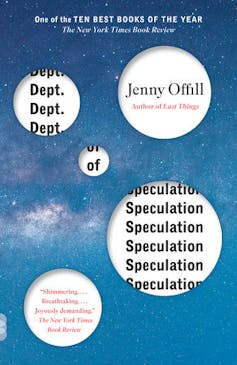
Book cover of 'Dept. of Speculation' by Jenny Offill.
‘Dept. of Speculation’ by Jenny Offill.
(Penguin Random House)

Jenny Offill’s Dept. of Speculation (2014), which draws from her own life, shows another perspective: betrayal as quiet erosion.

Offill never depicts the affair directly; instead, the husband’s absences, silences and an off-hand reference to “someone else” create a suffocating dread. This indirection shows betrayal’s power lies in its latent potential, slowly dismantling a life built on trust before any overt act.

Both works underscore betrayal’s impact on the collective conscience: a lie fractures a family as fundamentally as a CEO’s indiscretion erodes institutional trust. Power magnifies the fallout by turning private failings into public symbols of fragility. Even hidden betrayal poisons the shared rituals binding any group, making the notion of “private” unsustainable long before any public revelation.

The limits of power

Literature acknowledges power’s protective veneer from consequence — and its limits.

Theodore Dreiser’s Trilogy of Desire (1912–47), modelled on the Gilded Age robber baron Charles Yerkes, follows the rise of financier Frank Cowperwood, whose power shields him — until it doesn’t. Even his vast empire proves vulnerable once his adultery becomes public. The very networks that protected him grow wary.

Though many critics of the elite are themselves morally compromised in the trilogy, Cowperwood’s transgression becomes a weapon to discredit him. His brief exile shows that power may defer, but cannot erase, the costs of betrayal. Once trust fractures, even the powerful become liabilities. They do not fall less often — only more conspicuously.

Gender also plays a role in shaping these narratives. Male protagonists like Cowperwood rebound as tragic anti-heroes, their moral failings recast as flaws of character. By contrast, women — think Flaubert’s Emma Bovary or Hawthorne’s Hester Prynne — are branded cautionary figures, their transgressions stigmatized rather than mythologized.

This imbalance in assigning consequences reveals a deeper societal judgment: while broken trust demands repair, the path to restoration often depends on the transgressor’s gender.

The unblinking eye

From Tolstoy’s salons to TikTok’s scroll, literature offers no refuge from betrayal’s ripple effects. When private trust visibly fractures, communal reflexes kick in.

Scarlet letters, exile or a CEO’s resignation all aim to heal the collective trust. The jumbotron, like Hester’s scaffold, is the latest instrument in this age-old theatre of exposure.

Jumbotrons. Scaffolds. Same operating system. Same shame.

The Conversation

Jason Wang does not work for, consult, own shares in or receive funding from any company or organisation that would benefit from this article, and has disclosed no relevant affiliations beyond their academic appointment.

ref. Caught on the jumbotron: How literature helps us understand modern-day public shaming – https://theconversation.com/caught-on-the-jumbotron-how-literature-helps-us-understand-modern-day-public-shaming-261638

Releyendo ‘Olvidado rey Gudú’: la fantasía épica en Ana María Matute

Source: The Conversation – (in Spanish) – By Alicia Nila Martínez Díaz, Profesor Acreditado Contratado Doctor Filología Hispánica, Universidad Villanueva

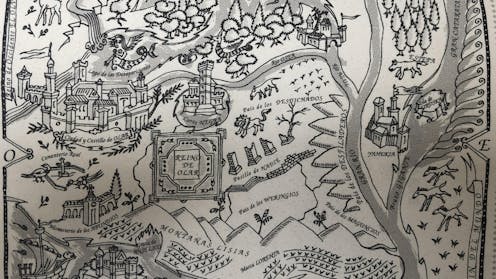
Mapa del reino de Olar que se incluye en ‘Olvidado rey Gudú’. C.L.R.

Hay libros que abren puertas a otros mundos y hay autores que crean esos mundos para hablarnos del nuestro. En 1996, Ana María Matute publicaba Olvidado rey Gudú, una novela escrita en secreto durante más de dos décadas y destinada a convertirse en una de las cumbres más insólitas y poderosas de la narrativa fantástica en español. En pleno auge de este género literario, Matute apostó por un relato atemporal, lleno de sombras, mitos y exemplum morale, que dialoga con J. R. R. Tolkien, Ursula K. Le Guin o Joe Abercrombie sin perder nunca su acento propio.

En este año que conmemoramos el centenario de su nacimiento, queremos invitar a los lectores de literatura fantástica a visitar el mundo mítico de Ana María Matute. Bienvenidos, lectores, a las tierras del rey Gudú.

Ana María Matute: una fabuladora

Nacida en 1925, Ana María Matute vivió una infancia marcada por la Guerra Civil y por ello, su nombre estará siempre vinculado a la “generación de los niños asombrados”.

Aquella niñez perdida sería la herida fundacional, el fértil territorio literario desde el que Matute elegiría narrar el mundo. Aunque sus primeras obras se ubiquen bajo el marbete de la novela social de posguerra, ella siempre tuvo claro su destino de fabuladora. Era cuestión de tiempo que abandonase los transitados caminos del costumbrismo para adentrarse por las tortuosas sendas de la fantasía.

Retrato en blanco y negro de una mujer delgada con el pelo blanco.
Retrato de Ana María Matute, por Julián Martín.
Planeta de Libros

La escritora nunca ocultó su fascinación por los cuentos de hadas, el ciclo artúrico y las sagas del norte de Europa. Olvidado rey Gudú es el fruto maduro de ese pensamiento y ese sentimiento. La respuesta final a una llamada que llevaba escribiendo en secreto desde los años 70 y que –como ella misma confesaría– “no pensaba publicar nunca”.

Sin embargo, Olvidado rey Gudú había de ser parada obligatoria en la carrera literaria de Matute porque con esta novela culminaba su singular viaje literario: el de una joven escritora que, partiendo de la narrativa de posguerra, había forjado con los pernos de la fantasía un universo literario propio, habitado por niños sagaces, criaturas mágicas y estirpes malditas que sucumben por la violencia y el olvido.

Quizás por ello, nunca fue una autora plenamente integrada en los centros de poder literario. Matute escribía desde la lateralidad porque solo así se sabía capaz de cartografiar unos mundos donde lo fantástico no se concebía como evasión, sino como destino lúcido para reflexionar acerca del dolor o el inexorable paso del tiempo.

“Nunca me he desprendido de la infancia, y eso se paga caro. La inocencia es un lujo que uno no se puede permitir y del que te quieren despertar a bofetadas”, diría a propósito de la publicación de Paraíso inhabitado.

Una novela de fantasía épica escrita antes del boom

Mucho antes del descubrimiento de Juego de tronos, mucho antes de la popularización masiva de la Tierra Media en la gran pantalla y antes, incluso, de que los lectores se rindieran ante The Witcher, Matute ya había escrito su gran novela de fantasía épica.

Publicada en 1996, Olvidado rey Gudú redefinió el género, anticipando muchas de las preguntas que hoy alientan la ficción fantástica contemporánea: el héroe crepuscular, la crítica al poder y la presencia de lo mágico como destino y maldición.

Árbol genealógico de la dinastía de Olar.
CLR

Ahora bien, ¿por qué Olvidado rey Gudú es una novela de fantasía épica distinta?

Escrita con el rigor estilístico de la mejor literatura y con la potencia simbólica de un mito fundacional, Olvidado rey Gudú es una novela monumental, bella y convulsa. Ambientada en el reino imaginario de Olar, narra el ascenso, esplendor y caída del rey Gudú, marcado por la prohibición de sentir amor. En sus más de 800 páginas, se traza a una historia coral donde trasgos, hechiceros, hadas y guerreros pierden batallas, urden intrigas y lanzan maldiciones.

Pero como toda novela de worldsbuilding (construcción de mundos), la fantasía no es solo decorado o atrezzo, sino soporte necesario para invitarnos a reflexionar. Matute fabula para hurgar en la herida de nuestra humanidad.

Con esta obra, ella nos recuerda que “la imaginación y la fantasía son muy importantes… forman parte indisoluble de la realidad de nuestra vida”, reivindicando así que Olvidado rey Gudú no es evasión, sino puente hacia lo esencial.

¿Por qué leer ahora Olvidado rey Gudú?

Porque no ha perdido ni un ápice de su vigencia. Como los buenos vinos, ha mejorado con los años. Sus temas –la guerra, el poder, la infancia, el olvido– resuenan como golpes de tambor en un mundo que ha redescubierto en lo fantástico una forma alternativa de pensamiento crítico.

Portada de 'Olvidado rey Gudú', de Ana María Matute.

Planeta de Libros

En un momento de auge del género, la novela ofrece una alternativa singular y, sorprendentemente, planteada desde la tradición de la literatura española más incontestable.

Ahora que autoras como Robin Hobb, N. K. Jemisin o Rebecca F. Kuang han llevado la fantasía a nuevos territorios éticos y estéticos, Matute reaparece como su precursora, inesperada y luminosa.

A partir de hoy, que aquellos valientes que osen adentrarse en el reino de Olar porten en su corazón esta severa advertencia: la historia de su rey no es un homenaje al pasado, sino una enjundiosa profecía disfrazada de cuento maravilloso.

Como toda gran literatura, crecerá con ellos, reflejará sus preguntas y les recordará –como dice uno de sus personajes– que “el olvido no es la paz: es solo otra forma de guerra”.


¿Quiere recibir más artículos como este? Suscríbase a Suplemento Cultural y reciba la actualidad cultural y una selección de los mejores artículos de historia, literatura, cine, arte o música, seleccionados por nuestra editora de Cultura Claudia Lorenzo.


The Conversation

Alicia Nila Martínez Díaz no recibe salario, ni ejerce labores de consultoría, ni posee acciones, ni recibe financiación de ninguna compañía u organización que pueda obtener beneficio de este artículo, y ha declarado carecer de vínculos relevantes más allá del cargo académico citado.

ref. Releyendo ‘Olvidado rey Gudú’: la fantasía épica en Ana María Matute – https://theconversation.com/releyendo-olvidado-rey-gudu-la-fantasia-epica-en-ana-maria-matute-260636

Ana María Matute y la censura franquista

Source: The Conversation – (in Spanish) – By Coral Azofra Loza, Docente del Área de Didáctica de la Lengua y la Literatura, Universidad de La Rioja

Ana María Matute en una imagen de la entrega del Premio Cervantes 2010, que ganó. RTVE

Una de las voces femeninas más encomiadas de la literatura española del siglo XX es, sin lugar a duda, Ana María Matute. Logros como ocupar el asiento “K” en la Real Academia Española, recibir el Premio Cervantes o ser propuesta para el Premio Nobel de Literatura lo evidencian.

Perteneció a la “generación de los 50” y, como cualquier autor que quisiera publicar en España durante los años de la posguerra y dictadura franquista, tuvo que enfrentarse al fenómeno de la censura que durante casi cuarenta años ejerció el Estado sobre toda la población.

Prohibiciones arbitrarias

La censura literaria, más ideológica en los años cuarenta y más moral a partir de los cincuenta, desempeñó un papel fundamental en el control sociocultural del país. Este aparato prohibía directamente obras contrarias a la moral católica o al régimen, y también actuaba de forma indirecta mediante mecanismos más sutiles, como la recompensa de obras afines o la modificación de textos.

Su aplicación, lejos de ser coherente y sistemática, era profundamente arbitraria, dependiendo más del criterio subjetivo de los censores que de unas normas estables. Desde finales de la década de los sesenta puede hablarse de una tímida apertura en el aparato censor institucional, aunque este se mantuvo vigente hasta la muerte de Franco e incluso de forma sutil durante la transición en lo relativo a temas considerados sensibles.

Si todo el proceso censor puede entenderse como “el camino que un texto tiene que recorrer para llegar a su publicación en un sistema complejo de censura previa” es interesante destacar que un primer ejercicio para evitarla fue la autocensura, aplicada por los propios autores “como un mecanismo de anticipación de aquello que el censor no va a consentir”, y que residía en la evitación de temas, la adaptación de contenidos delicados, o el uso de recursos como la fragmentación o la elipsis narrativas. Esto puede ampliarse a la presión editorial, ya que los editores, temerosos de represalias, favorecían aquellos textos que encajaran sin problema en todo lo canónico.

Conviene recordar que sobre las autoras se ejerció una censura mayor por el hecho de ser mujeres. Eso llevó a muchas a usar pseudónimos (Mercedes Formica publicó como Elena Puerto, por ejemplo) y a ser mucho más cuidadosas en el tratamiento de temas que pudieran ser cuestionables moralmente. En ellas se vigilaban especialmente motivos relacionados con la sexualidad, la maternidad no normativa o la crítica al rol tradicional de la mujer. Autoras tan reconocidas como Carmen Laforet, premio Nadal 1944 por Nada, vivieron en esas décadas largos periodos de silencio editorial.

Matute y los niños

Ana María Matute fue una de las afectadas por todo este sistema censor. Y fue ejemplo, asimismo, de que, pese a las restricciones, los autores supieron desarrollar estrategias de resistencia creativa.

Que la censura franquista se aplicaba de forma contradictoria, por lo que el destino de un manuscrito podía cambiar radicalmente según el censor, puede verse en su colección de cuentos Los niños tontos.

Portada de Los niños tontos
La colección de cuentos Los niños tontos.
Editorial Cátedra

Una primera censora, la bibliotecaria María Isabel Niño Mas, consideró que era perturbadora y potencialmente dañina para la infancia: “este libro es impropio de niños. Si se edita no podrá evitarse el que caiga en manos de ellos produciéndoles un daño tremendo. A los niños hay que tratarlos con más respeto. Rechazada su publicación totalmente”.

Sin embargo, en 1956, el segundo censor, el padre Francisco J. Aguirre Cuervo, permitió su publicación señalando: “poemas que, aunque tratan de niños no son para niños […], se puede permitir su publicación”.

Aunque la obra de Ana María Matute no lo fuera, la intensidad con la que la censura afectó a la literatura infantil y juvenil queda patente en la primera evaluación. Se eliminaba de ella cualquier contenido considerado inmoral o subversivo y se promovieron adaptaciones edulcoradas de clásicos y relatos con fuerte carga didáctica y moralizante.

Dos obras diferentes

También la novela Luciérnagas, ambientada en la contienda civil española, fue rechazada en dos ocasiones, en 1949 y 1953, por considerarse contraria a la moral católica y políticamente sospechosa. El censor la condenó acusándola de lo siguiente:

“domina un total sentimiento antirreligioso que llega a la irreverencia en muchos pasajes. Jamás se cita un nombre santo […] Políticamente, la novela deja mucho que desear. […] no debe autorizarse la obra, pues, intrínsecamente, resulta destructora de los valores humanos y religiosos esenciales”.

Como estrategia de supervivencia editorial, Matute tuvo que transformarla en En esta tierra, una versión que ya no reconocía como la misma novela. En ella se evitaba cualquier humanización del enemigo o pluralismo político, se introducían expresiones que reforzaban la idea de que el sufrimiento derivaba del pecado o del incumplimiento de los valores tradicionales, se añadían lecciones morales explícitas, subrayando el valor de la maternidad, la culpa y el castigo, y se eliminaban críticas a la educación religiosa o a la moral católica y palabras malsonantes.

La edición publicada en 1993 de Luciérnagas anunció una nueva reescritura, la cual, sin embargo, no provocó una recuperación completa de la primitiva versión.

Portadas de los libros En esta tierra y Luciérnagas.
En esta tierra y Luciérnagas, dos versiones de una historia separadas por la censura.
Todocolección/Editorial Cátedra

El control externo generó inevitablemente la mencionada censura interna. Los escritores interiorizaron el aparato censor, convirtiéndose en vigilantes de su propia creación. Este fue, para Matute, el mayor daño causado por el sistema y su verdadero triunfo, porque transformaba la mirada de los autores sobre su propia obra, imponiendo a menudo una modificación profunda en los textos.

Pese a las restricciones, ella logró mantener una voz singular, en ocasiones camuflada bajo la apariencia de inocencia narrativa, en una suerte de posibilismo buerovallejiano –otro autor que encontró formas de “burlar” la censura franquista–. Con la democracia su palabra original, evolucionada, pudo verse liberada de los silencios impuestos.

The Conversation

Coral Azofra Loza recibe fondos de la Universidad de La Rioja.

Maribel Martínez López no recibe salario, ni ejerce labores de consultoría, ni posee acciones, ni recibe financiación de ninguna compañía u organización que pueda obtener beneficio de este artículo, y ha declarado carecer de vínculos relevantes más allá del cargo académico citado.

ref. Ana María Matute y la censura franquista – https://theconversation.com/ana-maria-matute-y-la-censura-franquista-260610

La majorité de la pêche industrielle dans les aires marines protégées échappe à toute surveillance

Source: The Conversation – in French – By Raphael Seguin, Doctorant en écologie marine, en thèse avec l’Université de Montpellier et BLOOM, Université de Montpellier

Les aires marines protégées sont-elles vraiment efficaces pour protéger la vie marine et la pêche artisanale ? Alors que, à la suite de l’Unoc-3, des États comme la France ou la Grèce annoncent la création de nouvelles aires, une étude, parue ce 24 juillet dans la revue Science, montre que la majorité de ces zones reste exposée à la pêche industrielle, dont une large part échappe à toute surveillance publique. Une grande partie des aires marines ne respecte pas les recommandations scientifiques et n’offre que peu, voire aucune protection pour la vie marine.


La santé de l’océan est en péril, et par extension, la nôtre aussi. L’océan régule le climat et les régimes de pluie, il nourrit plus de trois milliards d’êtres humains et il soutient nos traditions culturelles et nos économies.

Historiquement, c’est la pêche industrielle qui est la première source de destruction de la vie marine : plus d’un tiers des populations de poissons sont surexploitées, un chiffre probablement sous-estimé, et les populations de grands poissons ont diminué de 90 à 99 % selon les régions.

À cela s’ajoute aujourd’hui le réchauffement climatique, qui impacte fortement la plupart des écosystèmes marins, ainsi que de nouvelles pressions encore mal connues, liées au développement des énergies renouvelables en mer, de l’aquaculture et de l’exploitation minière.

Les aires marines protégées, un outil efficace pour protéger l’océan et l’humain

Face à ces menaces, nous disposons d’un outil éprouvé pour protéger et reconstituer la vie marine : les aires marines protégées (AMP). Le principe est simple : nous exploitons trop l’océan, nous devons donc définir certaines zones où réguler, voire interdire, les activités impactantes pour permettre à la vie marine de se régénérer.

Les AMP ambitionnent une triple efficacité écologique, sociale et climatique. Elles permettent le rétablissement des écosystèmes marins et des populations de poissons qui peuvent s’y reproduire. Certaines autorisent uniquement la pêche artisanale, ce qui crée des zones de non-concurrence protégeant des méthodes plus respectueuses de l’environnement et créatrices d’emplois. Elles permettent aussi des activités de loisirs, comme la plongée sous-marine. Enfin, elles protègent des milieux qui stockent du CO2 et contribuent ainsi à la régulation du climat.

Trois photos : en haut à gauche, un banc de poissons ; en bas à gauche, un herbier marin ; à droite, trois hommes sur une plage tire une barque à l’eau
Les aires marines protégées permettent le rétablissement des populations de poissons, protègent des habitats puits de carbone comme les herbiers marins et peuvent protéger des activités non industrielles comme la pêche artisanale ou la plongée sous-marine.
Jeff Hester, Umeed Mistry, Hugh Whyte/Ocean Image Bank, Fourni par l’auteur

Dans le cadre de l’accord mondial de Kunming-Montréal signé lors de la COP 15 de la biodiversité, les États se sont engagés à protéger 30 % de l’océan d’ici 2030. Officiellement, plus de 9 % de la surface des océans est aujourd’hui sous protection.

Pour être efficaces, toutes les AMP devraient, selon les recommandations scientifiques, soit interdire la pêche industrielle et exclure toutes les activités humaines, soit en autoriser certaines d’entre elles, comme la pêche artisanale ou la plongée sous-marine, en fonction du niveau de protection. Or, en pratique, une grande partie des AMP ne suivent pas ces recommandations et n’excluent pas les activités industrielles qui sont les plus destructrices pour les écosystèmes marins, ce qui les rend peu, voire pas du tout, efficaces.

Réelle protection ou outil de communication ?

En effet, pour atteindre rapidement les objectifs internationaux de protection et proclamer leur victoire politique, les gouvernements créent souvent de grandes zones protégées sur le papier, mais sans réelle protection effective sur le terrain. Par exemple, la France affirme protéger plus de 33 % de ses eaux, mais seuls 4 % d’entre elles bénéficient de réglementations et d’un niveau de protection réellement efficace, dont seulement 0,1 % dans les eaux métropolitaines.

Lors du Sommet de l’ONU sur l’océan qui s’est tenu à Nice en juin 2025, la France, qui s’oppose par ailleurs à une réglementation européenne visant à interdire le chalutage de fond dans les AMP, a annoncé qu’elle labelliserait 4 % de ses eaux métropolitaines en protection forte et qu’elle y interdirait le chalutage. Le problème, c’est que la quasi-totalité de ces zones se situe dans des zones profondes… où le chalutage de fond est déjà interdit.

La situation est donc critique : dans l’Union européenne, 80 % des aires marines protégées en Europe n’interdisent pas les activités industrielles. Pis, l’intensité de la pêche au chalutage de fond est encore plus élevée dans ces zones qu’en dehors. Dans le monde, la plupart des AMP autorisent la pêche, et seulement un tiers des grandes AMP sont réellement protégées.

De plus, l’ampleur réelle de la pêche industrielle dans les AMP reste largement méconnue à l’échelle mondiale. Notre étude s’est donc attachée à combler en partie cette lacune.

La réalité de la pêche industrielle dans les aires protégées

Historiquement, il a toujours été très difficile de savoir où et quand vont pêcher les bateaux. Cela rendait le suivi de la pêche industrielle et de ses impacts très difficile pour les scientifiques. Il y a quelques années, l’ONG Global Fishing Watch a publié un jeu de données basé sur le système d’identification automatique (AIS), un système initialement conçu pour des raisons de sécurité, qui permet de connaître de manière publique et transparente la position des grands navires de pêche dans le monde. Dans l’Union européenne, ce système est obligatoire pour tous les navires de plus de 15 mètres.

Le problème, c’est que la plupart des navires de pêche n’émettent pas tout le temps leur position via le système AIS. Les raisons sont diverses : ils n’y sont pas forcément contraints, le navire peut se trouver dans une zone où la réception satellite est médiocre, et certains l’éteignent volontairement pour masquer leur activité.

Pour combler ce manque de connaissance, Global Fishing Watch a combiné ces données AIS avec des images satellites du programme Sentinel-1, sur lesquelles il est possible de détecter des navires. On distingue donc les navires qui sont suivis par AIS, et ceux qui ne le sont pas, mais détectés sur les images satellites.

Carte du monde sur fond noir représentant les bateaux transmettant leur position GPS et ceux qui ne l’émettent pas
Global Fishing Watch a analysé des millions d’images satellite radar afin de déterminer l’emplacement des navires qui restent invisibles aux systèmes de surveillance publics. Sur cette carte de 2022 sont indiqués en jaune les navires qui émettent leur position GPS publiquement via le système AIS, et en orange ceux qui ne l’émettent pas mais qui ont été détectés via les images satellites.
Global Fishing Watch, Fourni par l’auteur

Les aires sont efficaces, mais parce qu’elles sont placées là où peu de bateaux vont pêcher au départ

Notre étude s’intéresse à la présence de navires de pêche suivis ou non par AIS dans plus de 3 000 AMP côtières à travers le monde entre 2022 et 2024. Durant cette période, deux tiers des navires de pêche industrielle présents dans les AMP n’étaient pas suivis publiquement par AIS, une proportion équivalente à celle observée dans les zones non protégées. Cette proportion variait d’un pays à l’autre, mais des navires de pêche non suivis étaient également présents dans les aires marines protégées de pays membres de l’UE, où l’émission de la position via l’AIS est pourtant obligatoire.

Entre 2022 et 2024, nous avons détecté des navires de pêche industrielle dans la moitié des AMP étudiées. Nos résultats, conformes à une autre étude publiée dans le même numéro de la revue Science, montrent que la présence de navires de pêche industrielle était en effet plus faible dans les AMP réellement protégées, les rares qui interdisent toute activité d’extraction. C’est donc une bonne nouvelle : lorsque les réglementations existent et qu’elles sont efficacement gérées, les AMP excluent efficacement la pêche industrielle.

En revanche, nous avons tenté de comprendre les facteurs influençant la présence ou l’absence de navires de pêche industrielle dans les AMP : s’agit-il du niveau de protection réel ou de la localisation de l’AMP, de sa profondeur ou de sa distance par rapport à la côte ? Nos résultats indiquent que l’absence de pêche industrielle dans une AMP est plus liée à son emplacement stratégique – zones très côtières, reculées ou peu productives, donc peu exploitables – qu’à son niveau de protection. Cela révèle une stratégie opportuniste de localisation des AMP, souvent placées dans des zones peu pêchées afin d’atteindre plus facilement les objectifs internationaux.

Exemple de détections de navires de pêche industrielle suivis par AIS (en bleu) ou non suivis (en beige), le long de la côte atlantique française, à partir des données de l’ONG Global Fishing Watch. Les délimitations des aires marines protégées, selon la base de données WDPA, sont en blanc. Les images satellites du programme Sentinel-1 servent de fond de carte.
Raphael Seguin/Université de Montpellier, Fourni par l’auteur

Une pêche méconnue et sous-estimée

Enfin, une question subsistait : une détection de navire de pêche sur une image satellite signifie-t-elle pour autant que le navire est en train de pêcher, ou bien est-il simplement en transit ? Pour y répondre, nous avons comparé le nombre de détections de navires par images satellites dans une AMP à son activité de pêche connue, estimée par Global Fishing Watch à partir des données AIS. Si les deux indicateurs sont corrélés, et que le nombre de détections de navires sur images satellites est relié à un plus grand nombre d’heures de pêche, cela implique qu’il est possible d’estimer la part de l’activité de pêche « invisible » à partir des détections non suivies par AIS.

Nous avons constaté que les deux indicateurs étaient très corrélés, ce qui montre que les détections par satellites constituent un indicateur fiable de l’activité de pêche dans une AMP. Cela révèle que la pêche industrielle dans les AMP est bien plus importante qu’estimée jusqu’à présent, d’au moins un tiers selon nos résultats. Pourtant, la plupart des structures de recherche, de conservation, ONG ou journalistes se fondent sur cette seule source de données publiques et transparentes, qui ne reflète qu’une part limitée de la réalité.

De nombreuses interrogations subsistent encore : la résolution des images satellites nous empêche de voir les navires de moins de 15 mètres et rate une partie importante des navires entre 15 et 30 mètres. Nos résultats sous-estiment donc la pêche industrielle dans les aires protégées et éludent complètement les petits navires de moins de 15 mètres de long, qui peuvent également être considérés comme de la pêche industrielle, notamment s’ils en adoptent les méthodes, comme le chalutage de fond. De plus, les images satellites utilisées couvrent la plupart des eaux côtières, mais pas la majeure partie de la haute mer. Les AMP insulaires ou éloignées des côtes ne sont donc pas incluses dans cette étude.

Vers une véritable protection de l’océan

Nos résultats rejoignent ceux d’autres études sur le sujet et nous amènent à formuler trois recommandations.

D’une part, la quantité d’aires marines protégées ne fait pas leur qualité. Les définitions des AMP doivent suivre les recommandations scientifiques et interdire la pêche industrielle, faute de quoi elles ne devraient pas être considérées comme de véritables AMP. Ensuite, les AMP doivent aussi être situées dans des zones soumises à la pression de la pêche, pas seulement dans des zones peu exploitées. Enfin, la surveillance des pêcheries doit être renforcée et plus transparente, notamment en généralisant l’usage de l’AIS à l’échelle mondiale.

À l’avenir, grâce à l’imagerie satellite optique à haute résolution, nous pourrons également détecter les plus petits navires de pêche, afin d’avoir une vision plus large et plus complète des activités de pêche dans le monde.

Pour l’heure, l’urgence est d’aligner les définitions des aires marines protégées avec les recommandations scientifiques et d’interdire systématiquement les activités industrielles à l’intérieur de ces zones, pour construire une véritable protection de l’océan.

The Conversation

Raphael Seguin est membre de l’association BLOOM.

David Mouillot a reçu des financements de l’ANR.

ref. La majorité de la pêche industrielle dans les aires marines protégées échappe à toute surveillance – https://theconversation.com/la-majorite-de-la-peche-industrielle-dans-les-aires-marines-protegees-echappe-a-toute-surveillance-261595

Gaza and Ukraine are both waiting for action

Source: The Conversation – UK – By Jonathan Este, Senior International Affairs Editor, Associate Editor

For the past few weeks the headlines about Gaza have focused on the hundreds of people who have been killed while queueing for food. The aid distribution system put in place in May, backed by the US and Israel and run by the Gaza Humanitarian Foundation, has proved to be chaotic and allegedly resulted in violence, with both Israel Defense Forces personnel and armed Palestinian gangs blamed for killing about 1,000 people in the two months the new system has been operating.

Now the headlines are focusing on the growing number of people dying of starvation.

Harrowing reports from the Gaza Strip report almost daily on the children dying of malnutrition in hospitals and clinics that simply don’t have the food to keep them alive. Writing in the Guardian this week, a British volunteer surgeon working in one of Gaza’s hospitals, Nick Maynard, described patients who “deteriorate and die, not from their injuries, but because they are too malnourished to survive surgery”.

The UK and 27 other countries this week has condemned the “drip feeding of aid and the inhumane killing of civilians” who are trying to get food and water. And yet, writes Simon Mabon, still the world’s leaders look on: “Most are apparently content to condemn – but little action has been taken.”

Mabon, a professor of international relations at Lancaster University, quotes the latest report from the IPC, which monitors food security in conflict situations. It estimates that 500,000 people in Gaza are considered to be facing “catastrophe”, while a further 1.1 million fall into the “emergency” risk category. Both categories anticipate a steadily rising death rate among civilians in Gaza.

So how can Israel’s allies apply pressure on Benjamin Netanyahu’s government to bring an end to the violence and allow Palestinian civilians access to the food, water and medical supplies they so desperately need?

Mabon canvasses a range of options. First of all, countries that have yet to recognise the state of Palestine can do so. It’s nonsense, Madon believes, to talk of a two-state solution – as the UK government does – when you haven’t actually recognised the second state in the equation.

Then they could stop selling arms to Israel. Many countries already have. But the US still issues export licenses for some weapons that are sold to Israel.

There are a plethora of other things world leaders could do to pressure Israel. Mabon recommends having a look at what the world did to isolate South Africa during the apartheid years, measures which eventually helped bring about meaningful change there.


Read more:
Gaza is starving – how Israel’s allies can go beyond words and take meaningful action


As for Netanyahu, the Israeli prime minister is reported to be considering an early election. In previous months this looked like a move freighted with jeopardy. An election loss brought on by a disenchanted electorate, heartbroken at the hostage situation and exhausted by the conflict, would probably mean having to face the charges of corruption which have hung over him for more than five years.

But recent polls have suggested a bump in popularity following his 12-day campaign against Iran. Netanyahu is nothing if not a clever political manipulator. But Brian Brivati, a professor of contemporary history and human rights at Kingston University, believes that to have a chance of winning, the prime minister will need to fight a campaign on three narratives of his government’s success: securing the release of the hostages, defeating Hamas and delivering regional security. “It is a tall order,” Brivati concludes.


Read more:
Israel: Netanyahu considering early election but can he convince people he’s winning the war?


Anyone following the situation in Gaza over the past 18 months will have encountered Francesca Albanese, the UN’s special rapporteur for Palestine’s occupied territories. For three years she has monitored the human rights situation in Gaza and the West Bank, delivering trenchant criticism of Israel’s conduct and those who, by their inaction – and sometimes contrivance – have enabled it.

Earlier this months, the US government imposed sanctions on Albanese, because – as US secretary of state Marco Rubio insisted – she has engaged with the International Criminal Court (also subject to US sanctions) “in efforts to investigate, arrest, detain, or prosecute nationals of the United States or Israel”. Also she has written “threatening letters to dozens of entities worldwide, including major American companies”.

Alvina Hoffman, an expert in diplomatic affairs and human rights at SOAS, University of London, explains what a special rapporteur does and why their work is so valuable in the defence of human rights.


Read more:
The US has sanctioned UN special rapporteur Francesca Albanese – here’s why she’s the wrong target


Dispatches from Ukraine

To Istanbul, where delegations from Russia and Ukraine met yesterday for their third round of face-to-face talks. All 40 minutes of them. There was another agreement of prisoner swaps and the two sides decided to set up some working groups to look into various political, military and humanitarian issues – but online rather in person.

The brevity of the talks came as no surprise to Stefan Wolff. Wolff, an expert in international security at the University of Birmingham who has provided commentary for The Conversation throughout the conflict in Ukraine, points out that both sides remain wedded to their maximalist war aims. For Russia, this is for Ukraine to accept Russia’s annexation of Crimea and four provinces of eastern Ukraine, a ban on Ukraine’s membership of Nato and a much reduced military capacity. For Ukraine, it is getting their territory back and Russian acceptance of their national sovereignty, meaning it gets to determine for itself what alliances it seeks.

Donald Trump has told Vladimir Putin that, if there’s no ceasefire in 50 days, he’ll apply harsh secondary sanctions on the countries buying Russian oil and that he plans to supply Ukraine with American weapons (via Nato’s European member states, that is). Wolff believes both sides will now play the waiting game. They will calculate their next move after September 2, when the 50 days run out, and when they know more about what the US president plans to do.


Read more:
Russia-Ukraine talks: both sides play for time and wait for Donald Trump’s 50 days to run out


Volodymyr Zelensky, meanwhile, faces pressure from his own people. There have been days of protest at his decision to bring two formerly independent anti-corruption organisations under the direct control of the government. He argues that this was necessary to prevent Russian infiltration, while critics are saying that the Ukrainian president has launched a power grab designed to prevent independent investigation of alleged corruption against people close to him.

Jenny Mathers says these protests, which involve people from all political shades, including people who have fought in the defence of Ukraine since 2022, some with visible injuries, represents a fracture of the “informal agreement between the government and society to show a united front to the world while the war continues”.

Ukrainians protest after Zelensky signs law clamping down on anticorruption agencies.

It’s not as if Zelensky is in clear and present danger of losing his job. His party holds a majority of seats in the Ukrainian parliament, so he governs without having to depend on coalition partners. And the country’s constitution prohibits the holding of elections in wartime – whatever Putin, who regularly insists that Zelensky is an illegitimate leader because he is governing past his term limit, might think. Plus his approval rating sits at 65%.

Zelensky has been quick to soften his stance on this. Mathers says that political corruption is a very sore point in Ukraine, where there was decades of it until the Maidan protests of 2013-14 unseated the pro-Russian president Viktor Yanukovych. As she writes here, “the ‘Revolution of Dignity’ that rejected Yanukovych’s leadership and his policies was also a resounding demonstration of the strength of Ukraine’s civil society and its determination to hold its elected officials to account. Zelensky would be rash not to heed that.

He also knows it’s important for him to present a squeaky clean image to his supporters in the west. So while the protests may not present an immediate threat to his own position, he knows that unless he acts to root out corruption in Ukraine, it’ll be a threat to the future of the country itself.


Read more:
Ukrainian protests: Zelensky faces biggest threat to his presidency since taking power


But ethicist Marcel Vondermassen from the University of Tübingen believes another recent decision by the Ukrainian government is storing up trouble for the future. Ukraine has recently announced its decision to pull out of the Ottawa convention, the treaty that forbids the use of anti-personnel landmines.

In doing so, he’s following the example of Finland, Poland, Lithuania and Estonia which have all also quite the treaty in recent months for fear of Russian aggression.

But as Vondermassen points out, landmines don’t usually switch themselves off when a conflict ends and people are still being killed an maimed in former conflict zones around the world. Often it is farmers at work or children at play who are the victims. If other ways to protect countries from aggression aren’t pursued, as he puts it, in future decades we’ll still be “counting thousands of child casualties … from the landmines laid in the 2020s”.


Read more:
Ukraine joins other Russian neighbours in quitting landmines treaty: another deadly legacy in the making


Thailand-Cambodia: centuries-old dispute flares again

A dispute between the two south-east Asian countries that has been simmering since May flared into life yesterday when five Thai soldiers patrolling the border region were injured after stepping on a landmine – the second such incident in the past week. Both countries have sealed their border and there have been tit-for-tat ambassadorial expulsions.

Cambodia fired rockets and artillery into Thailand, killing 12 civilians. Thailand in turn has launched airstrikes against Cambodia. Both countries are blaming the other for starting it.

Petra Alderman, an expert in south-east Asian politics from London School of Economics and Political Science, traces the origins of this row, which go back to the colonial era in the 19th and early 20th centuries.


Read more:
Thailand and Cambodia’s escalating conflict has roots in century-old border dispute


World Affairs Briefing from The Conversation UK is available as a weekly email newsletter. Click here to get updates directly in your inbox.


The Conversation

ref. Gaza and Ukraine are both waiting for action – https://theconversation.com/gaza-and-ukraine-are-both-waiting-for-action-261894