Kamchatka earthquake is among top 10 strongest ever recorded. Here’s what they have in common

Source: The Conversation – Global Perspectives – By Dee Ninis, Earthquake Scientist, Monash University

Today at about 11:30am local time, a magnitude 8.8 earthquake struck off the coast of Russia’s Kamchatka Peninsula in the country’s far east.

Originating at a depth of roughly 20 kilometres, today’s powerful earthquake – among the ten strongest in recorded history and the largest worldwide since 2011 – has caused building damage and injuries in the largest nearby city, Petropavlosk-Kamchatsky, just 119 kilometres from the epicentre.

Tsunami warnings and evacuations have reverberated through Russia, Japan and Hawaii, with advisories issued for the Philippines, Indonesia, and as far away as New Zealand and Peru.

The Pacific region is highly prone to powerful earthquakes and resulting tsunamis because it’s located in the so-called Ring of Fire, a region of heightened seismic and volcanic activity. All ten most powerful earthquakes recorded in modern history were located on the Ring of Fire.

Here’s why the underlying structure of our planet makes this part of the world so volatile.

Why does Kamchatka get such strong earthquakes?

Immediately offshore the Kamchatka Peninsula is the Kuril-Kamchatka Trench, a tectonic plate boundary where the Pacific Plate is being thrust beneath the Okhotsk Plate.

While tectonic plates move continuously relative to one another, the interface at tectonic plates is often “stuck”. The strain related to plate motion builds up until it exceeds the strength of the plate interface, at which point it is released as a sudden rupture – an earthquake.

Because of the large areas of interface at plate boundaries, both in length and depth, the rupture can span large areas of the plate boundary. This results in some of the largest and potentially most damaging earthquakes on earth.

Another factor that affects the rates and sizes of subduction zone earthquakes is the speed at which the two plates are moving relative to each other.

In the case of Kamchatka, the Pacific Plate is moving at approximately 75 millimetres per year relative to the Okhotsk plate. This is a relatively high speed by tectonic standards, and causes large earthquakes to happen more frequently here than in some other subduction zones. In 1952, a magnitude 9.0 earthquake occurred in the same subduction zone, only about 30 kilometres away from today’s magnitude 8.8 earthquake.

Other examples of subduction plate boundary earthquakes include the 2011 magnitude 9.1 Tohoku-Oki Japan earthquake, and the 2004 magnitude 9.3 Sumatra-Andaman Indonesia “Boxing Day” earthquake. Both of these initiated at a relatively shallow depth and ruptured the plate boundary right to the surface.

They uplifted one side of the sea floor relative to the other, displacing the ocean above it and resulting in devastating tsunamis. In the case of the Boxing Day earthquake, the sea floor rupture happened along a length spanning roughly 1,400km.

What is likely to happen next?

At time of writing, approximately six hours after the earthquake struck, there have already been 35 aftershocks larger than magnitude 5.0, according to the United States Geological Survey.

Aftershocks happen when stress within Earth’s crust is redistributed following the mainshock. They are often as large as one magnitude unit smaller than the mainshock. In the case of today’s earthquake, that means aftershocks larger than magnitude 7.5 are possible.

For an earthquake of this size, aftershocks can continue for weeks to months or longer, but they typically will reduce in both magnitude and frequency over time.

Today’s earthquake also produced a tsunami, which has already affected coastal communities on the Kamchatka Peninsula, the Kurile Islands, and Hokkaido, Japan.

Over the coming hours, the tsunami will propagate across the Pacific, reaching Hawaii approximately six hours after the earthquake struck and continuing as far as Chile and Peru.

Tsunami scientists will continue to refine their models of the tsunami’s effects as it propagates, and civil defence authorities will provide authoritative advice on the expected local effects.


Read more:
Tsunami warnings are triggering mass evacuations across the Pacific – even though the waves look small. Here’s why


What are the lessons from this earthquake for other parts of the world?

Fortunately, earthquakes as large as today’s occur infrequently. However, their effects locally and across the globe can be devastating.

Apart from its magnitude, several aspects of today’s Kamchatka earthquake will make it a particularly important focus of research.

For instance, the area has been seismically very active in recent months, and a magnitude 7.4 earthquake occurred on 20 July. How this previous activity affected the location and timing of today’s earthquake will be a crucial focus of that research.

Like Kamchatka and northern Japan, New Zealand also sits above a subduction zone – in fact, above two subduction zones. The larger of these, the Hikurangi subduction zone, extends offshore along the east coast of the North Island.

Based on the characteristics of this plate interface, and geological records of past earthquakes, it is likely the Hikurangi subduction zone is capable of producing earthquakes at magnitude 9. It hasn’t done so in historic times, but if that happened it would produce a tsunami.

The threat of a major subduction zone earthquake never goes away. Today’s earthquake in Kamchatka is an important reminder to everyone living in such earthquake-prone areas to stay safe and heed warnings from civil defence authorities.

The Conversation

Dee Ninis works at the Seismology Research Centre, is Vice-President of the Australian Earthquake Engineering Society, and a Committee Member for the Geological Society of Australia – Victoria Division.

John Townend receives funding from the Marsden and Catalyst Funds of the Royal Society Te Apārangi, the Natural Hazards Commission Toka Tū Ake, and the NZ Ministry of Business, Innovation and Employment. He is a former president and director of the Seismological Society of America and president of the New Zealand Geophysical Society.

ref. Kamchatka earthquake is among top 10 strongest ever recorded. Here’s what they have in common – https://theconversation.com/kamchatka-earthquake-is-among-top-10-strongest-ever-recorded-heres-what-they-have-in-common-262223

Tsunami warnings are triggering mass evacuations across the Pacific – even though the waves look small. Here’s why

Source: The Conversation – Global Perspectives – By Milad Haghani, Associate Professor and Principal Fellow in Urban Risk and Resilience, The University of Melbourne

Last night, one of the ten largest earthquakes ever recorded struck Kamchatka, the sparsely populated Russian peninsula facing the Pacific. The magnitude 8.8 quake had its epicentre in the sea just off the Kamchatka coast.

Huge quakes such as these can cause devastating tsunamis. It’s no surprise this quake has triggered mass evacuations in Russia, Japan and Hawaii.

But despite the enormous strength of the quake, the waves expected from the resulting tsunami are projected to be remarkably small. Four metre-high waves have been reported in Russia. But the waves are projected to be far smaller elsewhere, ranging from 30 centimetres to 1 metre in China, and between 1 and 3 metres in parts of Japan, Hawaii and the Solomon Islands, as well as Ecuador and Chile on the other side of the Pacific.

map showing tsunami travel times from Kamchatka epicentre.
This map shows the estimated time in hours for tsunami waves from an earthquake in Kamchatka to reach different nations.
NOAA, CC BY-NC-ND

So why have authorities in Japan and parts of the United States announced evacuation orders? For one thing, tsunami waves can suddenly escalate, and even the smaller tsunami waves can pack surprising force. But the main reason is that late evacuation orders can cause panic and chaos. It’s far better to err on the side of caution.

This video shows tsunami waves hitting Severo-Kurilsk, a town on the Kamchatka Peninsula in Russia.

Too early is far better than too late

When tsunami monitoring centres issue early warnings about waves, there’s often a wide range given. That represents the significant uncertainty about what the final wave size will be.

As earthquake scientists Judith Hubbard and Kyle Bradley write:

the actual wave height at the shore depends on the specific bathymetry [underwater topography] of the ocean floor and shape of the coastline. Furthermore, how that wave impacts the coast depends on the topography on land. Do not second-guess a tsunami warning: evacuate to higher ground and wait for the all-clear.

If the decision was left to ordinary people to decide whether to evacuate, many might look at the projected wave heights and think “what’s the problem?”. This is why evacuation is usually a job for experts.

Behavioural scientists have found people are more likely to follow evacuation advice if they perceive the risk is real, if they trust the authorities and if there are social cues such as friends, family or neighbours evacuating.

If evacuations are done well, authorities will direct people down safe roads to shelters or safe zones located high enough above the ocean.

When people outside official evacuation zones flee on their own, this is known as a shadow evacuation. It often happens when people misunderstand warnings, don’t trust official boundaries, or feel safer leaving “just in case”.

While understandable, shadow evacuations can overload roads, clog evacuation routes, and strain shelters and resources intended for those at greatest risk.

Vulnerable groups such as older people and those with a disability often evacuate more slowly or not at all, putting them at much greater risk.

In wealthy nations such as Japan where tsunamis are a regular threat, drills and risk education have made evacuations run more smoothly and get more people to evacuate.

Japan also has designated vertical shelters – buildings to which people can flee – as well as coastal sirens and signs pointing to tsunami “safe zones”.

By contrast, most developing nations affected by tsunamis don’t have these systems or infrastructure in place. Death tolls are inevitably higher as a result.

More accurate warnings, fewer false alarms

A false alarm occurs when a tsunami warning is issued, but no hazardous waves arrive. False alarms often stem from the need to act fast. Because tsunamis can reach coastlines within minutes of an undersea earthquake, early warnings are based on limited and imprecise data — mainly the quake’s location and magnitude — before the tsunami’s actual size or impact is known.

In the past, tsunami alerts were issued using worst-case estimates based on simple tables linking quake size and location to fixed alert levels. These did not account for complex uncertainties in how the seafloor moved or how energy translated into how much water was displaced.

Even when waves are small at sea, they can behave unpredictably near shore. Tide gauge readings are easily distorted by nearby bays, seafloor shape and water depth. This approach often came at the cost of frequent false alarms.

A stark example came in 1986, when Hawaii undertook a major evacuation following an earthquake off the Aleutian Islands. While the tsunami did arrive on time, the waves didn’t cause any flooding. The evacuation triggered massive gridlock, halted businesses and cost the state an estimated A$63 million.

In 1987, the United States launched the DART program. This network of deep-sea buoys across the Pacific and, later, globally, measure changes in ocean pressure in real time, allowing scientists to verify whether a tsunami has actually been generated and to estimate its size far more accurately.

When there’s a tsunami false alarm, it makes people more sceptical of evacuation orders and compliance drops. Some people want to see the threat with their own eyes. But this delays action – and heightens the danger.

Shifting from simple tables and inferences to observational data has significantly reduced false alarms and improved public confidence. Today’s tsunami warnings combine quake analysis with real-time ocean data.

What have we learned from past tsunamis?

In 2004, a huge 9.1 magnitude earthquake off the coast of Aceh in Indonesia triggered the Indian Ocean tsunami, the deadliest in recorded history. Waves up to 30 metres high inundated entire cities and towns.

More than 227,000 people died throughout the region, primarily in Indonesia, Sri Lanka, India and Thailand. All these countries had low tsunami preparedness. At the time, there were no tsunami warning systems in the Indian Ocean.

The even stronger 2011 earthquake and tsunami in Japan killed just under 20,000 people. It was a terrible toll, but far fewer than the 2004 Indian Ocean tsunami. Evacuations took place and many people got to higher ground or into a high building.

In 2018, a 7.6 magnitude earthquake hit central Sulawesi in Indonesia, triggering tsunami waves up to 7 metres high. Citizen disbelief and a lack of clear communication meant many people did not evacuate in time. More than 4,000 people died.

These examples show the importance of warning systems and evacuations. But they also show their limitations. Even with warning systems in place, major loss of life can still ensue due to public scepticism and communication failures.

What should people do?

At their worst, tsunamis can devastate swathes of coastline and kill hundreds of thousands of people. They should not be underestimated.

If authorities issue an evacuation order, it is absolutely worth following. It’s far better to evacuate early and find a safe space in an orderly way, than to leave it too late and try to escape a city or town amid traffic jams, flooded roads and and widespread disruption.

The Conversation

The authors do not work for, consult, own shares in or receive funding from any company or organisation that would benefit from this article, and have disclosed no relevant affiliations beyond their academic appointment.

ref. Tsunami warnings are triggering mass evacuations across the Pacific – even though the waves look small. Here’s why – https://theconversation.com/tsunami-warnings-are-triggering-mass-evacuations-across-the-pacific-even-though-the-waves-look-small-heres-why-262224

Emil Bove confirmed – his appeals court nomination echoed earlier controversies, but with a key difference

Source: The Conversation – USA – By Paul M. Collins Jr., Professor of Legal Studies and Political Science, UMass Amherst

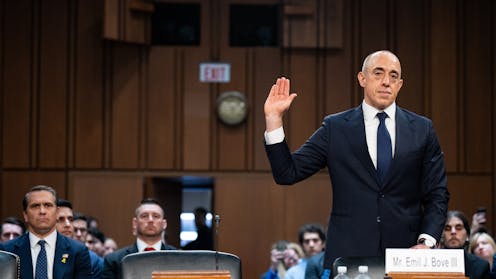
Emil Bove, Donald Trump’s nominee to serve as a federal appeals judge for the 3rd Circuit, is sworn in during a confirmation hearing in Washington, D.C., on June 25, 2025. Bill Clark/CQ-Roll Call, Inc, via Getty Images

President Donald Trump’s nomination of his former criminal defense attorney, Emil Bove, to be a judge on the United States Court of Appeals for the 3rd Circuit, was mired in controversy.

On June 24, 2025, Erez Reuveni, a former Department of Justice attorney who worked with Bove, released an extensive, 27-page whistleblower report. Reuveni claimed that Bove, as the Trump administration’s acting deputy attorney general, said “that it might become necessary to tell a court ‘fuck you’” and ignore court orders related to the administration’s immigration policies. Bove’s acting role ended on March 6 when he resumed his current position of principal associate deputy attorney general.

When asked about this statement at his June 25 Senate confirmation hearing, Bove said, “I don’t recall.”

And on July 15, 80 former federal and state judges signed a letter opposing Bove’s nomination. The letter argued that “Mr. Bove’s egregious record of mistreating law enforcement officers, abusing power, and disregarding the law itself disqualifies him for this position.”

A day later, more than 900 former Department of Justice attorneys submitted their own letter opposing Bove’s confirmation. The attorneys argued that “Few actions could undermine the rule of law more than a senior executive branch official flouting another branch’s authority. But that is exactly what Mr. Bove allegedly did through his involvement in DOJ’s defiance of court orders.”

On July 17, Democrats walked out of the Senate Judiciary Committee vote, in protest of the refusal by Chairman Chuck Grassley, a Republican from Iowa, to allow further investigation and debate on the nomination. Republicans on the committee then unanimously voted to move the nomination forward for a full Senate vote.

Late in the evening of July 29, and after two more whistleblower complaints about Bove’s conduct had emerged, the U.S. Senate confirmed Bove’s nomination in a 50-49 vote.

As a scholar of the courts, I know that most federal court appointments are not as controversial as Bove’s nomination. But highly contentious nominations do arise from time to time.

Here’s how three controversial nominations turned out – and how Bove’s nomination was different in a crucial way.

A man smiles and looks toward a microphone with people sitting behind him. All of them are dressed formally.
Robert Bork testifies before the Senate Judiciary Committee for his confirmation as associate justice of the Supreme Court in September 1987.
Mark Reinstein/Corbis via Getty Images

Robert Bork

Bork is the only federal court nominee whose name became a verb.

“Borking” is “to attack or defeat (a nominee or candidate for public office) unfairly through an organized campaign of harsh public criticism or vilification,” according to Merriam-Webster.

This refers to Republican President Ronald Reagan’s 1987 appointment of Bork to the Supreme Court.

Reagan called Bork “one of the finest judges in America’s history.” Democrats viewed Bork, a federal appeals court judge, as an ideologically extreme conservative, with their opposition based largely on his extensive scholarly work and opinions on the U.S. Court of Appeals for the District of Columbia Circuit.

In opposing the Bork nomination, Sen. Ted Kennedy of Massachusetts took the Senate floor and gave a fiery speech: “Robert Bork’s America is a land in which women would be forced into back-alley abortions, blacks would sit at segregated lunch counters, rogue police could break down citizens’ doors in midnight raids, schoolchildren could not be taught about evolution, writers and artists could be censored at the whim of government, and the doors of the federal courts would be shut on the fingers of millions of citizens for whom the judiciary is often the only protector of the individual rights that are the heart of our democracy.”

Ultimately, Bork’s nomination failed by a 58-42 vote in the Senate, with 52 Democrats and six Republicans rejecting the nomination.

Ronnie White

In 1997, Democratic President Bill Clinton nominated White to the United States District Court for the Eastern District of Missouri. White was the first Black judge on the Missouri Supreme Court.

Republican Sen. John Ashcroft, from White’s home state of Missouri, led the fight against the nomination. Ashcroft alleged that White’s confirmation would “push the law in a pro-criminal direction.” Ashcroft based this claim on White’s comparatively liberal record in death penalty cases as a judge on the Missouri Supreme Court.

However, there was limited evidence to support this assertion. This led some to believe that Ashcroft’s attack on the nomination was motivated by stereotypes that African Americans, like White, are soft on crime.

Even Clinton implied that race may be a factor in the attacks on White: “By voting down the first African-American judge to serve on the Missouri Supreme Court, the Republicans have deprived both the judiciary and the people of Missouri of an excellent, fair, and impartial Federal judge.”

White’s nomination was defeated in the Senate by a 54-45 party-line vote. In 2014, White was renominated to the same judgeship by President Barack Obama and confirmed by largely party-line 53-44 vote, garnering the support of a single Republican, Susan Collins of Maine.

A man with brown skin and a black suit places a hand on a leather chair and stands alongside people dressed formally.
Ronnie White, a former justice for the Missouri Supreme Court, testifies during an attorney general confirmation hearing in Washington in January 2001.
Alex Wong/Newsmakers

Miguel Estrada

Republican President George W. Bush nominated Estrada to the Court of Appeals for the District of Columbia Circuit in 2001.

Estrada, who had earned a unanimous “well-qualified” rating from the American Bar Association, faced deep opposition from Senate Democrats, who believed he was a conservative ideologue. They also worried that, if confirmed, he would later be appointed to the Supreme Court.

A dark-haired man in a suit, standing while swearing an oath.
Miguel Estrada, President George Bush’s nominee to the U.S. Court of Appeals for the District of Columbia, is sworn in during his hearing before Senate Judiciary on Sept. 26, 2002.
Scott J. Ferrell/Congressional Quarterly/Getty Images

However, unlike Bork – who had an extensive paper trail as an academic and judge – Estrada’s written record was very thin.

Democrats sought to use his confirmation hearing to probe his beliefs. But they didn’t get very far, as Estrada dodged many of the senators’ questions, including ones about Supreme Court cases he disagreed with and judges he admired.

Democrats were particularly troubled by allegations that Estrada, when he was screening candidates for Justice Anthony Kennedy, disqualified applicants for Supreme Court clerkships based on their ideology.

According to one attorney: “Miguel told me his job was to prevent liberal clerks from being hired. He told me he was screening out liberals because a liberal clerk had influenced Justice Kennedy to side with the majority and write a pro-gay-rights decision in a case known as Romer v. Evans, which struck down a Colorado statute that discriminated against gays and lesbians.”

When asked about this at his confirmation hearing, Estrada initially denied it but later backpedaled. Estrada said, “There is a set of circumstances in which I would consider ideology if I think that the person has some extreme view that he would not be willing to set aside in service to Justice Kennedy.”

Unlike the Bork nomination, Democrats didn’t have the numbers to vote Estrada’s nomination down. Instead, they successfully filibustered the nomination, knowing that Republicans couldn’t muster the required 60 votes to end the filibuster. This marked the first time in Senate history that a court of appeals nomination was filibustered. Estrada would never serve as a judge.

Bove stands out

As the examples of Bork, Estrada and White make clear, contentious nominations to the federal courts often involve ideological concerns.

This is also true for Bove, who was opposed in part because of the perception that he is a conservative ideologue.

But the main concerns about Bove were related to a belief that he is a Trump loyalist who shows little respect for the rule of law or the judicial branch.

This makes Bove stand out among contentious federal court nominations.

This story, originally published on July 21, 2025, has been updated to reflect the Senate’s confirmation of Bove.

The Conversation

Paul M. Collins Jr. does not work for, consult, own shares in or receive funding from any company or organization that would benefit from this article, and has disclosed no relevant affiliations beyond their academic appointment.

ref. Emil Bove confirmed – his appeals court nomination echoed earlier controversies, but with a key difference – https://theconversation.com/emil-bove-confirmed-his-appeals-court-nomination-echoed-earlier-controversies-but-with-a-key-difference-261347

How conspiracy theories about COVID’s origins are hampering our ability to prevent the next pandemic

Source: The Conversation – Global Perspectives – By Edward C. Holmes, NHMRC Leadership Fellow and Professor of Virology, University of Sydney

peterschreiber.media/Getty Images

In late June, the Scientific Advisory Group for the Origins of Novel Pathogens (SAGO), a group of independent experts convened by the World Health Organization (WHO), published an assessment of the origins of COVID.

The report concluded that although we don’t know conclusively where the virus that caused the pandemic came from:

a zoonotic origin with spillover from animals to humans is currently considered the best supported hypothesis.

SAGO did not find scientific evidence to support “a deliberate manipulation of the virus in a laboratory and subsequent biosafety breach”.

This follows a series of reports and research papers since the early days of the pandemic that have reached similar conclusions: COVID most likely emerged from an infected animal at the Huanan market in Wuhan, and was not the result of a lab leak.

But conspiracy theories about COVID’s origins persist. And this is hampering our ability to prevent the next pandemic.

Attacks on our research

As experts in the emergence of viruses, we published a peer-reviewed paper in Nature Medicine in 2020 on the origins of SARS-CoV-2, the virus that causes COVID.

Like SAGO, we evaluated several hypotheses for how a novel coronavirus could have emerged in Wuhan in late 2019. We concluded the virus very likely emerged through a natural spillover from animals – a “zoonosis” – caused by the unregulated wildlife trade in China.

Since then, our paper has become a focal point of conspiracy theories and political attacks.

The idea SARS-CoV-2 might have originated in a laboratory is not, in itself, a conspiracy theory. Like many scientists, we considered that possibility seriously. And we still do, although evidence hasn’t emerged to support it.

But the public discourse around the origin of the pandemic has increasingly been shaped by political agendas and conspiratorial narratives. Some of this has targeted our work and vilified experts who have studied this question in a data-driven manner.

A common conspiracy theory claims senior officials pressured us to promote the “preferred” hypothesis of a natural origin, while silencing the possibility of a lab leak. Some conspiracy theories even propose we were rewarded with grant funding in exchange.

These narratives are false. They ignore, dismiss or misrepresent the extensive body of evidence on the origin of the pandemic. Instead, they rely on selective quoting from private discussions and a distorted portrayal of the scientific process and the motivations of scientists.

So what does the evidence tell us?

In the five years since our Nature Medicine paper, a substantial body of new evidence has emerged that has deepened our understanding of how SARS-CoV-2 most likely emerged through a natural spillover.

In early 2020, the case for a zoonotic origin was already compelling. Much-discussed features of the virus are found in related coronaviruses and carry signatures of natural evolution. The genome of SARS-CoV-2 showed no signs of laboratory manipulation.

The multi-billion-dollar wildlife trade and fur farming industry in China regularly moves high-risk animals, frequently infected with viruses, into dense urban centres.

It’s believed that SARS-CoV-1, the virus responsible for the SARS outbreak, emerged this way in 2002 in China’s Guangdong province.

Similarly, detailed analyses of epidemiological data show the earliest known COVID cases clustered around the Huanan live-animal market in Wuhan, in the Hubei province, in December 2019.

Multiple independent data sources, including early hospitalisations, excess pneumonia deaths, antibody studies and infections among health-care workers indicate COVID first spread in the district where the market is located.

In a 2022 study we and other experts showed that environmental samples positive for SARS-CoV-2 clustered in the section of the market where wildlife was sold.

In a 2024 follow-up study we demonstrated those same samples contained genetic material from susceptible animals – including raccoon dogs and civets – on cages, carts, and other surfaces used to hold and transport them.

This doesn’t prove infected animals were the source. But it’s precisely what we would expect if the market was where the virus first spilled over. And it’s contrary to what would be expected from a lab leak.

These and all other independent lines of evidence point to the Huanan market as the early epicentre of the COVID pandemic.


Read more:
The COVID lab leak theory is dead. Here’s how we know the virus came from a Wuhan market


Hindering preparedness for the next pandemic

Speculation and conspiracy theories around the origin of COVID have undermined trust in science. The false balance between lab leak and zoonotic origin theories assigned by some commentators has added fuel to the conspiracy fire.

This anti-science agenda, stemming in part from COVID origin conspiracy theories, is being used to help justify deep cuts to funding for biomedical research, public health and global aid. These areas are essential for pandemic preparedness.

In the United States this has meant major cuts to the US Centers for Disease Control and the National Institutes of Health, the closure of the US Agency for International Development, and withdrawal from the WHO.

Undermining trust in science and public health institutions also hinders the development and uptake of life-saving vaccines and other medical interventions. This leaves us more vulnerable to future pandemics.

The amplification of conspiracy theories about the origin of COVID has promoted a dangerously flawed understanding of pandemic risk. The idea that a researcher discovered or engineered a pandemic virus, accidentally infected themselves, and unknowingly sparked a global outbreak (in exactly the type of setting where natural spillovers are known to occur) defies logic. It also detracts from the significant risk posed by the wildlife trade.

In contrast, the evidence-based conclusion that the COVID pandemic most likely began with a virus jumping from animals to humans highlights the very real risk we increasingly face. This is how pandemics start, and it will happen again. But we’re dismantling our ability to stop it or prepare for it.

The Conversation

Edward C Holmes receives funding from the Australian Research Council and the National Health and Medical Research Council (Australia). He has received consultancy fees from Pfizer Australia and Moderna, and has previously held honorary appointments (for which he has received no renumeration and performed no duties) at the China CDC in Beijing and the Shanghai Public Health Clinical Center (Fudan University).

Andrew Rambaut receives funding from The Wellcome Trust and the Gates Foundation.

Kristian G. Andersen receives funding from the National Institutes of Health, the Centers for Disease Control and Prevention, and the Gates Foundation. He is on the Scientific Advisory Board of Invivyd, Inc. and has consulted on topics related to the COVID-19 pandemic and other infectious diseases.

The views and opinions expressed in this publication are solely those of the author in their personal capacity and do not necessarily reflect the views, positions, or policies of Scripps Research, its leadership, faculty, staff, or its scientific collaborators or affiliates. Scripps Research does not endorse or take responsibility for any statements made in this piece.

Robert Garry has received funding from the National Institutes of Health, the Coalition for Epidemic Preparedness Innovation, the Wellcome Trust Foundation, Gilead Sciences, and the European and Developing Countries Clinical Trials Partnership Programme. He is a co-founder of Zalgen Labs, a biotechnology company developing countermeasures for emerging viruses.

ref. How conspiracy theories about COVID’s origins are hampering our ability to prevent the next pandemic – https://theconversation.com/how-conspiracy-theories-about-covids-origins-are-hampering-our-ability-to-prevent-the-next-pandemic-261475

Women’s rights in the US are in real danger of going back to 1965 – so Jessie Murph’s new song is no laughing matter

Source: The Conversation – Global Perspectives – By Prudence Flowers, Senior Lecturer in US History, College of Humanities, Arts and Social Sciences, Flinders University

Frazer Harrison/Getty Images for Stagecoach

1965, a trending new song by TikTok sensation and country music rebel Jessie Murph, is prompting heated online conversation about the status of women in the United States.

A retro sound and kitschy 1960s look mark the song and its confusingly pornographic (and age-restricted) music video. 1965 is muddled in its posturing, at turns sarcastic yet simultaneously conveying a wistfulness about the “simpler nature” of heterosexual romance in the 1960s.

Amid the nods to Lana Del Rey and Amy Winehouse, perhaps the most striking aspect is Murph’s visual homage to Priscilla Presley, who began dating Elvis in 1959 when she was 14 years old.

1965’s chorus has attracted particular controversy. Murph croons, in a lilting doo-wop style, about her willingness to “give up a few rights” for a man’s love and affection.

In the US, where hard-won rights are currently under attack, 1965’s seeming fetishisation of submission and female powerlessness has angered many listeners. Murph has claimed the song is “satire” – but a look at the legal and social status of American women in 1965 highlights how misplaced this attempt at irony is.

Women and the law in the US

In 1963 and 1964, federal laws prohibited discrimination in relation to pay or civil rights. But the idea that women might participate fully and equally in society was largely seen as a joke.

Federal and state governments, along with the private sector, had to be compelled through feminist action to take these rights seriously.

Into the 1970s, sex discrimination in education and housing was legal. So was employment discrimination against pregnant women and women with young children.

One visible sign reads 'Equal Pay For Equal Work,' while others reference 'Trainee Programs' and Women's and African-American Rights activist Sojouner Truth.
A women’s equality march, Los Angeles, California, circa 1970.
Baird Bryant/Getty Images

Job advertisements were often sex segregated. Women only gained the right to have a credit card or mortgage in their own name in 1974.

Sex, intimacy, relationships

In the 1960s, reproductive rights and bodily autonomy were in their infancy.

In 1965, married couples gained the right to contraception. This right was extended to unmarried people in 1972.

Although a tiny number of states began repealing abortion laws in the late 1960s, death from illegal and unsafe abortions were a common occurrence until the Supreme Court’s Roe v. Wade decision of 1973.

Banner reading 'Women in the schools demand free and legal abortion on demand, birth control information' featuring a raised fist in the circle of the female gender symbol, with placards reading 'Free abortions on demand now'.
Protestors during a mass demonstration against New York State abortion laws in March 1970.
Graphic House/Hulton Archive/Getty Images

Between World War II and 1973, approximately 4 million pregnant unmarried mothers placed their children for adoption, many under duress, in a period now called the baby scoop era.

Into the 1970s, Black, Latina and Indigenous women were coercively sterilised, often through eugenics programs.

Divorce was only possible if one spouse could persuade a judge the other had committed cruelty, adultery or desertion. In 1969, California became the first state to legalise no-fault divorce.

Throughout the 1970s and 1980s, feminists demanded that police and the courts stop treating domestic violence as a private matter. Only in 1993 was marital rape considered a crime in all state sexual offence codes.

Even today, the overwhelming majority of perpetrators who commit rape or sexual assault will not face trial.

Race and sexuality

Although women’s suffrage was achieved in 1920, African Americans, Latinos and Native Americans were prevented from voting in many states by literacy tests, poll taxes and violence.

In 1965, after decades of civil rights struggle, federal legislation prohibited racial discrimination in voting, expanding to protect non-English speaking citizens in 1975.

A group of women, several of whom carry a 'Women's Liberation' banner
The Free Bobby! Free Ericka! march was co-sponsored by the Black Panther Party and the Women’s Liberation Movement, held in Connecticut, November 1969.
Bev Grant/Getty Images

Until 1973, homosexuality was considered a sociopathic personality disorder that might necessitate psychiatric institutionalisation.

In 2003, laws criminalising consensual same-sex activity were found unconstitutional. In 2015, same-sex marriage became legal nationwide.

There are still no federal laws that protect LGBTQI+ people against discrimination in education, housing, employment or public accommodations.

The personal is political

Faced with immediate backlash, Murph has claimed the song is obviously satirical, asking “r yall stupid”.

To Teen Vogue she insisted “On the record, I love having rights […] bodily rights specifically.”

But for satire to work, it requires shared sets of knowledge, values and assumptions. The ironic posturing in 1965 is too muddled – lyrically and sonically – to be effective. Instead, for many it looks and sounds like just another celebration of restrictive gender politics.

Online, many have compared Murph to a “tradwife”, the increasingly popular genre of social media influencer who make content romanticising homemaking, large families and submission to husbands.

Tradwives are primarily white and offer a fantasy version of historical domesticity, often cosplaying a 1950s aesthetic. Some tradwives are overtly far right in their politics, others explicitly reject feminism and the “lie” of equality.


Read more:
Far-right ‘tradwives’ see feminism as evil. Their lifestyles push back against ‘the lie of equality’


This vision of family and gender is echoed in contemporary Christian Nationalist and MAGA discourse.

Project 2025, the 900-page conservative wish list for the Trump 2.0 administration, called for government to “replace ‘woke’ nonsense with a healthy vision” of family and sexuality, framed as heterosexual and patriarchal.

The culture wars waged by Donald Trump and Republicans directly target rights relating to gender and sexuality.

Since Roe v. Wade was overturned in 2022, 19 states now ban or restrict abortion.

Trans rights are under sustained and devastating attack.

Prominent conservative voices call for an end to no-fault divorce laws and same-sex marriage.
Federal Republicans have opposed efforts to codify the right to contraception and in vitro fertilisation (IVF).

The history of social movement activism is a history of struggle. Feminists, women of colour and LGBTQI+ movements fought against considerable resistance to establish rights that are now too often taken for granted.

In this moment of conservative backlash, it is vital that we interrogate any move that frames rights as accessories in a costume rather than foundational to equality.

The Conversation

Prudence Flowers does not work for, consult, own shares in or receive funding from any company or organisation that would benefit from this article, and has disclosed no relevant affiliations beyond their academic appointment.

ref. Women’s rights in the US are in real danger of going back to 1965 – so Jessie Murph’s new song is no laughing matter – https://theconversation.com/womens-rights-in-the-us-are-in-real-danger-of-going-back-to-1965-so-jessie-murphs-new-song-is-no-laughing-matter-261862

The giant cuttlefish’s technicolour mating display is globally unique. The SA algal bloom could kill them all

Source: The Conversation – Global Perspectives – By Zoe Doubleday, Marine Ecologist and ARC Future Fellow, University of South Australia

Great Southern Reef Foundation, CC BY-SA

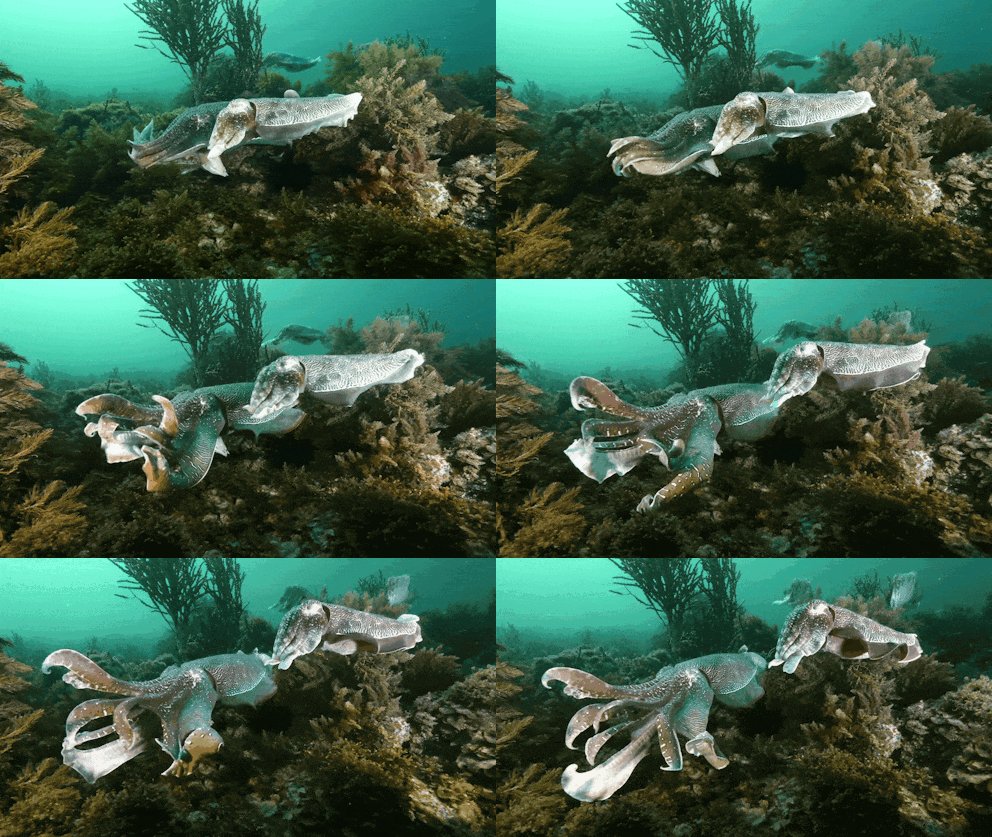
Every year off the South Australian coast, giant Australian cuttlefish come together in huge numbers to breed. They put on a technicolour display of blue, purple, green, red and gold, changing hues as they mate and lay eggs.

This dynamic, dreamlike display takes place in the upper Spencer Gulf, near Whyalla. This short strip of coastline is the only place in the world to host this spectacular event.

But South Australia’s killer algal bloom is advancing towards this natural wonder. If the algae reach the breeding site in the coming weeks or months, they could wipe the cuttlefish population out.

Now, scientists may have a chance to get there first, take some eggs and raise an insurance population in captivity. This rescue operation would be a world first.

Why are the cuttlefish so vulnerable?

The giant Australian cuttlefish congregate to mate in waters off Whyalla every winter, in a gathering known as a “breeding aggregation”. The sanctuary area received National Heritage status in 2023.

The displays of movement and colour take place as abundant males vie for the attention of a female. Each year it attracts tourists, photographers and marine life enthusiasts. To witness it, all you need is a thick wetsuit, mask and snorkel.

Cuttlefish are cephalopods, alongside octopus and squid. While cephalopods are adaptable to environmental change, their generations don’t overlap. This means the parents die before the offspring are born, and so the population cannot be replenished by the parents if the offspring are wiped out.

By now, in upper Spencer Gulf, most adult cuttlefish will be breeding and naturally dying off, leaving the eggs behind. They will incubate for about three months, then hatch and swim away.

What if the algal bloom reaches the cuttlefish?

The harmful microalgal bloom of Karenia mikimotoi first appeared in March this year on two surf beaches outside Gulf St Vincent, about an hour south of Adelaide. It is thought to have been triggered by a persistent marine heatwave coupled with prolonged calm weather, and possibly excess nutrients from the 2022–23 Murray River flooding event.

It has since spread to many corners of South Australia, and has now reached the lower to middle reaches of Spencer Gulf. Preliminary modelling revealed last week shows the bloom could spread through Spencer Gulf, up to Whyalla and across to Port Pirie.

The disaster has already affected about 400 types of fish and marine animals. And we know this algal species can rapidly dispatch cephalopods, both large and small. In other parts of South Australia already affected by the algal bloom, dead octopus and cuttlefish have been extensively photographed and recorded.

If the latest batch of eggs dies in the algal bloom, their parents will no longer be around to rebreed and restore the population next year. This means the population could go extinct.

Could we lose a species?

More than 100 cuttlefish species exist worldwide. The giant Australian cuttlefish is found throughout southern Australia, from Moreton Bay in Queensland to Ningaloo Reef in Western Australia.

However, the breeding aggregation is genetically distinct from even its closest cuttlefish neighbours in southern Spencer Gulf, about 200 kilometres away. And genetic evidence suggests the upper Spencer Gulf population could well be its own species, although scientists haven’t confirmed this yet.

Regardless, this cuttlefish population is truly unique. It is the only population of giant Australian cuttlefish, and the only population of cuttlefish worldwide, to breed en masse in such a spectacular fashion.

That’s why saving it from the algal bloom is so important.

Can we save this natural wonder?

Today I’ll be meeting with fellow marine and cephalopod experts at an emergency meeting convened by the South Australian government. There, we will discuss the feasibility of collecting an insurance population of eggs from the cuttlefish population.

Timing is everything. Two or three months from now, the eggs could be too developed to collect safely, because moving can trigger premature hatching. Even later, the eggs will have hatched and the hatchlings will have swum away.

Ironically, while the mass gathering of cuttlefish makes the species vulnerable to a permanent wipeout, it also makes them easier to rescue.

Collecting, transporting and raising eggs in tanks is a relatively straightforward process at a smaller scale. It has been done successfully for research purposes in South Australia.

Raising hatchlings is harder and more labour intensive. Then there is the question of what to do with them once they hatch. But the three-month incubation period would buy us time.

Author Zoe Doubleday makes her pitch for saving the giant Australian cuttlefish as the harmful algal bloom approaches (Biodiversity Council)

The Conversation

Zoe Doubleday receives funding from the Australian Research Council and is affiliated with the University of South Australia. She is also a Director of the Southern Ocean Discovery Centre and Board Member of the Aquaculture Tenure Allocation Board (Government of South Australia).

ref. The giant cuttlefish’s technicolour mating display is globally unique. The SA algal bloom could kill them all – https://theconversation.com/the-giant-cuttlefishs-technicolour-mating-display-is-globally-unique-the-sa-algal-bloom-could-kill-them-all-262108

Summer has brought both hope and questions for Ukraine amid Donald Trump’s posturing

Source: The Conversation – Canada – By James Horncastle, Assistant Professor and Edward and Emily McWhinney Professor in International Relations, Simon Fraser University

United States President Donald Trump has recently issued various threats towards Russia amid his apparent mounting frustration with Russian leader Vladmir Putin. These threats also occur at a time when Russia’s military campaign in Ukraine may have an end in sight.

Some experts have suggested that 2025 is Russia’s best chance to win its war against Ukraine in a decisive manner. Russia has material advantages over the Ukrainians, whose international backers have not matched the pace of Russian arms manufacturing.

Recent analyses emphasize that Russian advances in 2025 have been the most successful since its early efforts in 2022.

What such perspectives fail to note, however, is the amount of territory that Russia has seized in 2025 is, from a strategic standpoint, negligible. On the surface, this bodes well for Ukraine.

Nevertheless, long-term indicators for Ukraine’s success, notably external support and personnel issues, are unresolved.

Russia’s 2025 offensive

Russia has been involved in extensive offensive military operations since the spring of 2025, but it had been pursuing such a venture much earlier.

The year 2025 introduced a political variable into both Russia and Ukraine’s calculations that likely caused the Russians to accelerate their timetable: Trump. Trump has pushed for peace in Ukraine, no matter the terms.

Trump’s original 50-day deadline for Russia to conclude a peace deal is at the start of September. Given this time span is likely the limit of Russia’s operational capacity, it means that Putin is incentivized to seize as much territory as possible in the interim. There are too many unknowns in terms of Trump’s pivot to a 10-12 day deadline to warrant further analysis.


Read more:
Sanctioning ghosts: Why US plans to hit Russia with fresh economic penalties will have little effect


The role of North Korea

Nevertheless, Russian forces in 2025 have not achieved a decisive breakthrough or altered the war in a demonstrable manner. Russia’s failed efforts to make significant gains this year are best witnessed in two phenomena: its drone campaign against Ukrainian cities and its alliance with North Korea.

The North Korean alliance was designed to counter weaknesses in Russia’s personnel and industrial base. Despite Russia’s increased recruitment efforts and offering large sums to enlist, it still faces personnel shortages.


Read more:
Amid the West’s wavering aid to Ukraine, North Korea backs Russia in a mutually beneficial move


North Korean soldiers offer Russia an advantage since casualties are unlikely to affect Putin’s political base or to disrupt the alliance between the two authoritarian regimes. The fact that North Korea is sending additional soldiers after its first wave suffered significant casualties indicates how Russia and North Korea view those soldiers as dispensable.

Ukraine’s effective counter-strategy

Russia’s purpose in conducting drone strikes on Ukrainian cities is to make up for its weakness on the battlefield. But Russian drone strikes on civilian infrastructure have not demoralized the Ukrainian population; rather, the opposite has occurred.

Russian drone strikes seem aimed at demonstrating its capabilities to Russian citizens after Ukraine’s Operation Spider Web embarrassed the Russian leadership.


Read more:
Ukraine’s Operation Spider Web destroyed more than aircraft – it tore apart the old idea that bases far behind the front lines are safe


Ukrainian officials in 2025 recognized the challenges the year would bring for its armed forces. Any direct engagements between Ukraine and Russia were likely to result in either the significant loss of Ukrainian territory or — and even more critically — personnel. Ukraine has maintained its units at the front lines, and has so far succeeded in avoiding either of these dire outcomes.

Instead, Ukraine has launched asymmetric attacks to divert Russian resources and maintain the morale of Ukrainians. Operation Spider Web was the most successful of these operations, as the attacks garnered domestic and international support while exposing Russian vulnerabilities.

Ukrainian forces have conducted several other actions with the goal of inhibiting Russian operations and boosting the morale of their people.

Ukrainian asymmetric attacks are not a genuine strategy for victory. But they could position Ukraine for greater success in 2026 and beyond. First Ukraine needs to address several factors to achieve this goal, in particular the domestic and international challenges it’s facing.

Ukraine’s domestic challenges

Ukraine continues to face an ongoing personnel shortage. Ukrainians need to have faith in their leaders to make the sacrifices needed for victory in the conflict, but the government’s recent actions have dampened domestic enthusiasm.


Read more:
Ukrainian protests: Zelensky faces biggest threat to his presidency since taking power


Specifically, while many Ukrainians accept the necessity of a wartime government, recent legislation that removed the independence of the government’s anti-corruption agencies sparked an uproar.

Recent demonstrations, the first large-scale protests against the Ukrainian government since Russia’s invasion, speak to the dismay the legislation engendered. One Ukrainian soldier even called the new measures a “fatal mistake.”

For Ukrainians to make sacrifices for the state, they must possess faith in their government. The Ukrainian government’s move to repeal the law is an important first step, but it must continue to work to build trust among the Ukrainian people.

Ukraine’s international challenges

While Ukraine’s government can directly control the domestic challenges it faces, it cannot do so internationally. The shifts of American policy under Trump is an example.

Ukraine could, however, diversify its efforts away from the U.S. It’s already started to do so, but it’s a slow and ongoing process.

In the interim, Ukraine must manage a mercurial American president and administration that has a penchant for using international affairs to distract from domestic concerns.


Read more:
Russia-Ukraine talks: both sides play for time and wait for Donald Trump’s 50 days to run out


Ukrainian politicians have improved their ability to manage Trump since the infamous February Oval Office affair, evident by Trump’s recent announcement of sorely needed Patriot missiles being sent to Ukraine.

Ukraine is managing to survive what could be Russia’s last chance at decisive victory if Trump is serious about his ceasefire threats to the Russian regime. The future of the conflict, however, will depend on how Ukraine manages its domestic and international challenges.

The Conversation

James Horncastle does not work for, consult, own shares in or receive funding from any company or organisation that would benefit from this article, and has disclosed no relevant affiliations beyond their academic appointment.

ref. Summer has brought both hope and questions for Ukraine amid Donald Trump’s posturing – https://theconversation.com/summer-has-brought-both-hope-and-questions-for-ukraine-amid-donald-trumps-posturing-261646

With The Fantastic Four and Superman, superheroes are getting hopeful again – and showing strength through empathy

Source: The Conversation – UK – By Irene Zarza-Rubio, PhD Candidate, Film Theory and Media Industries, University of York

After years of multiverse chaos, grim antiheroes and morally ambiguous storylines, superhero films are making a striking return to their emotional and ideological roots. The new iterations of DC’s Superman and Marvel’s The Fantastic Four don’t aim to reinvent the genre – they return to its essence, offering stories grounded in hope, compassion and shared humanity.

Both films are reboots of familiar characters. Zack Snyder’s Man of Steel (2013) was the last major Superman feature, while Josh Trank’s Fantastic Four (2015) attempted – unsuccessfully – to reintroduce Marvel’s “first family”. These 2025 versions step away from the darker superhero tones popularised by Christopher Nolan’s Dark Knight trilogy to embrace vibrant colours and the idealism that made these heroes beloved in the comic books to begin with.

Whether by coincidence or design, both DC and Marvel are now releasing films that centre on embracing humanity – not in spite of difference, but through it. These stories reassert a message comic books have long championed: that community, support and acceptance are strengths. In doing so, they offer a powerful response to the social and political uncertainty of our time.


Looking for something good? Cut through the noise with a carefully curated selection of the latest releases, live events and exhibitions, straight to your inbox every fortnight, on Fridays. Sign up here.


Superheroes have always functioned as modern myths. Superman, first imagined in the 1930s, was created as a champion of the oppressed. The Fantastic Four, debuting in the 1960s, reflected the spirit of scientific discovery and familial unity.

Their return in 2025 is not just nostalgic. It comes at a moment of cultural significance when war, division and climate anxiety have made many of us question the future. These films don’t ignore that uncertainty, but offer a counterweight: stories that encourage belief in shared values and common purpose.

By reintroducing these characters with sincerity and emotional depth, studios are making a clear bet – that audiences are ready for hope again. And that doing the right thing still matters.

James Gunn’s Superman is a story about an alien learning to live among humans – not by distancing himself but by embracing vulnerability. The film puts moral clarity front and centre. Superman is no longer a distant figure. Instead, he is someone who chooses to believe in others. At one point, he says:

I am as human as anyone. I love, I get scared. I wake up every morning and, despite not knowing what to do, I put one foot in front of the other and try to make the best choices I can. I screw up all the time, but that is being human – and that’s my greatest strength.

This isn’t just sentimental. It’s a direct appeal to audiences facing a fractured world – to act with courage even in uncertainty, and to see all human life as worth protecting.

The trailer for Superman.

Marvel’s Fantastic Four reboot, First Steps, takes a similar approach. Rather than leaning into internal conflict, it reintroduces the team as a compassionate, collaborative unit. When the group faces a global threat, Sue Storm (Vanessa Kirby) reframes the challenge: “We will face this together, we will fight this together, and we will defeat this together – as a family.”

It’s a message not only to her teammates but to the world – framing difference as a strength, and unity as the path forward.

A genre renewed

Talk of superhero fatigue has grown in recent years. Some of that stems not from the heroes themselves, but from content overload and diminishing emotional stakes. When continuity outweighs character, even the most powerful icons can feel hollow.

But the return of Superman, the first superhero, and the Fantastic Four, the first superhero family, suggests the genre still has something meaningful to say – especially when it remembers what made it powerful. These characters remind us that heroism isn’t about perfection but perseverance – and that strength comes from empathy.

Other recent superhero films, such as DC’s The Batman (2022) and Marvel’s Thunderbolts* (2025), show that darker, emotionally complex stories remain powerful. They reflect real anxieties – climate crisis, political instability and distrust in institutions. These films resonate because they hold up a mirror to the world.

The trailer for The Fantastic Four: First Steps.

But there is also space – and perhaps a growing need – for stories that offer reassurance. Superman and The Fantastic Four present an alternative emotional truth: that even in fear and division, goodness, unity and belief in others remain possible. These films don’t reject complexity, they complement it. Where darker stories help us process uncertainty, these hopeful ones remind us of what we can still strive for.

Rather than being competing directions for the genre, these different approaches enrich it. One shows the world as it is; the other, the world as it could be.


Get your news from actual experts, straight to your inbox. Sign up to our daily newsletter to receive all The Conversation UK’s latest coverage of news and research, from politics and business to the arts and sciences.

The Conversation

The authors do not work for, consult, own shares in or receive funding from any company or organisation that would benefit from this article, and have disclosed no relevant affiliations beyond their academic appointment.

ref. With The Fantastic Four and Superman, superheroes are getting hopeful again – and showing strength through empathy – https://theconversation.com/with-the-fantastic-four-and-superman-superheroes-are-getting-hopeful-again-and-showing-strength-through-empathy-262069

Why dating can be tough for autistic people – and what may make it easier

Source: The Conversation – UK – By Rebecca Ellis, Assistant Researcher in Public Health, Swansea University

Motortion Films/Shutterstock

Modern dating is stressful enough, and that’s even before you throw in premium subscriptions, ghosting and the unwritten rules of flirting. But for autistic people, there are even more variables to consider.

Loud venues, ambiguous body language and the social exhaustion of meeting someone new can turn what’s meant to be a fun experience into an overwhelming ordeal. For many autistic people, dating can be a confusing and exhausting process, shaped by social rules that often feel unclear or exclusionary.

Being autistic affects how people experience the world. This includes how one may communicate, build relationships and interpret social cues. So, it’s perhaps no surprise that dating, with all its unpredictability and implicit expectations, can present a variety of challenges.

One common misconception is that autistic people lack empathy or can’t communicate effectively. But the double empathy problem, a theory proposed by the British sociologist and social psychologist Damian Milton, challenges this view.

Instead of seeing communication difficulties as a “deficit” in autistic people, the theory suggests that misunderstandings arise from a mismatch in perspectives between autistic and non-autistic people. In other words, it goes both ways.


Dating today can feel like a mix of endless swipes, red flags and shifting expectations. From decoding mixed signals to balancing independence with intimacy, relationships in your 20s and 30s come with unique challenges. Love IRL is the latest series from Quarter Life that explores it all.

These research-backed articles break down the complexities of modern love to help you build meaningful connections, no matter your relationship status.


Studies show that autistic people often communicate well with each other, and often as well as non-autistic people do among themselves. Some autistic people have also described the benefits of having autistic friends because of this ease of communication.

In theory, this could make dating within the neurodivergent community easier. But of course, who we’re attracted to is rarely that simple.

For some autistic people, popular dating environments, such as restaurants and bars, can be overstimulating places. Going on dates can lead to exhaustion from the logistics of organising oneself, breaking routine and navigating interactions with unfamiliar people.

Differing communication styles and ways of being, alongside the stigma towards neurodivergence which some people still hold, can lead to upsetting experiences and even harassment.

Online dating

For some, online dating could offer a helpful alternative. Apps such as Tinder or Bumble allow users to take their time, plan responses and reduce the pressure of immediate social interaction.

One may think this type of less socially demanding environment, as opposed to face-to-face dating, would be beneficial for autistic people. The ability to pre-select preferences and filter matches, for example, can make things easier for those autistic people who value structure and clarity.

But digital dating has its own difficulties. Many dating platforms are designed around neurotypical expectations. This may include how people present themselves, communicate and even what kind of relationships they’re looking for. Some autistic people have reported finding it hard to strike a balance between fitting into those unspoken norms and being authentically themselves.

These challenges can be even more pronounced for autistic people who are also LGBTQ+ or exploring non-traditional relationship structures.

Some platforms cater specifically to autistic and neurodivergent people, for example, Mattr and Hiki. But many such apps operate on premium models, creating potential barriers for users already facing social or financial challenges.

Worried woman looking at her phone lying in bed
Online dating has its own set of challenges.
Nicoleta Ionescu/Shutterstock

What can help?

Autistic advocates suggest a few practical strategies for navigating dating, online or off.

First, be clear about your communication preferences. Second, look for connections where you feel safe being yourself, without masking. Third, be wary of dating advice that assumes everyone thinks or communicates the same way. And finally, remember that rejection isn’t always personal.

The question of whether to disclose an autism diagnosis is deeply personal. Many fear being misunderstood or judged. But being honest, and using neurodiversity-affirming language may be viewed positively by prospective daters who don’t have stigmatising views of autism.

Studies on autism and dating remain limited. More research is required to understand the unique experiences of neurodivergent daters so that more resources can be created to help them.

Despite this lack of wider understanding, autistic people continue to build meaningful relationships, often by challenging the rules of dating and redefining them on their own terms.


Get your news from actual experts, straight to your inbox. Sign up to our daily newsletter to receive all The Conversation UK’s latest coverage of news and research, from politics and business to the arts and sciences.

The Conversation

Rebecca Ellis does not work for, consult, own shares in or receive funding from any company or organisation that would benefit from this article, and has disclosed no relevant affiliations beyond their academic appointment.

ref. Why dating can be tough for autistic people – and what may make it easier – https://theconversation.com/why-dating-can-be-tough-for-autistic-people-and-what-may-make-it-easier-257534

Four summer hotspots for germs – and why not washing your hands won’t strengthen your immune system

Source: The Conversation – UK – By Manal Mohammed, Senior Lecturer, Medical Microbiology, University of Westminster

MR.ALONGKORN YOOCHAROEN/Shutterstock

Summer is a time for sun-drenched fun. From relaxed days outdoors to packed festival fields and meals under open skies. But with the joy of the season comes an overlooked downside: a heightened risk of infection.

Warmer weather, increased social interaction and more frequent contact with unfamiliar environments all make it easier for germs to spread. That’s why handwashing becomes especially important during the summer months. It might not be glamorous, but clean hands are your first line of defence against the microbes that love to crash summer plans.

Microbes thrive in warmth and moisture, and the activities we enjoy in summer often bring us into closer contact with the surfaces, food and water sources that help them spread.

1. Public restrooms and shared toilets

Outdoor festivals, service stations, beaches and campsites all rely on public toilet facilities. These high-traffic areas can become breeding grounds for bacteria like E coli, salmonella and Staphylococcus aureus. Viruses such as norovirus and flu also spread easily via contaminated surfaces. Even coronavirus can persist in poorly ventilated or inadequately cleaned environments.

Washing your hands thoroughly after using public toilets is essential – and hand sanitiser may not be enough if your hands are visibly dirty.

Worryingly, even in places where hygiene is critical, like hospitals, people often skip this basic step. A 2025 study found that nearly half of hospital visitors failed to wash their hands after using the toilet, despite clear reminders. If so many people skip handwashing in hospitals, where the risks are obvious and facilities readily available, how many more are failing to do so at summer events, where soap and water can be scarce?

2. Outdoor eating and food preparation

Barbecues and picnics are summer staples — but they come with a side of risk. Foodborne pathogens like salmonella, E coli, Bacillus cereus and Staphylococcus aureus thrive in warm temperatures. Undercooked meat, poor hand hygiene and leaving food out in the sun can easily turn a festive gathering into a bout of food poisoning.

Even fungi such as Aspergillus can grow on food and produce mycotoxins: toxic compounds that can cause nausea, organ damage or even long-term harm when ingested.

Wash hands before and after handling food, especially raw meat and after touching shared surfaces like picnic tables, barbecue tools and cool boxes.

3. Swimming and water play

Lakes, rivers, swimming pools and oceans can all harbour harmful germs. Parasites like cryptosporidium and giardia can cause gastrointestinal illness – and they’re often resistant to chlorine. Beach sand and seawater can also carry faecal bacteria.

Whether you’re swimming, paddling or just building sandcastles, make sure to wash or sanitise your hands before eating or touching your face.

4. Camps, playgrounds and festivals

Children are particularly vulnerable to infection in summer thanks to group settings like summer camps, soft play centres and playgrounds.

A US study reported 229 youth camp–associated outbreaks of gastroenteritis over seven years. Common culprits included norovirus, salmonella and Shiga toxin-producing E coli, a particularly dangerous strain of E coli that can cause severe illness and even kidney failure.

In one incident, 20 campers became ill, and three were hospitalised, after eating undercooked beef cooked over a campfire. Shared toilet facilities, communal food preparation and tight sleeping arrangements all increase the importance of hand hygiene.

But isn’t it good to ‘get a bit dirty’?

Some people believe that letting children get dirty helps build their immune system. While early exposure to natural microbes from soil, animals or the environment can support immune development, this is not the same as skipping handwashing after using the toilet or before meals.

Leaving hands unwashed doesn’t strengthen the immune system – it increases the risk of illness. No credible studies show that poor hygiene is good for you. On the contrary, unwashed hands are a leading cause of preventable infections worldwide. This risk is especially serious for young children, older adults and people with weakened immune systems.

Hand hygiene is simple, cheap and effective – and never more important than in summer. As the hospital toilet study shows, we can’t assume that people are washing their hands properly, even in places designed to protect health. Add in the chaos of a campsite or the distractions of a music festival, and it becomes even easier to forget.

So, whether you’re hiking, camping or dancing in a field, you should wash your hands with soap and clean running water for at least 20 seconds and then dry them properly as damp hands spread germs more easily. Use hand sanitiser (at least 60% alcohol) if soap and water aren’t available and ideally keep some in your bag in case you can’t rely on public facilities.

The Conversation

Manal Mohammed does not work for, consult, own shares in or receive funding from any company or organisation that would benefit from this article, and has disclosed no relevant affiliations beyond their academic appointment.

ref. Four summer hotspots for germs – and why not washing your hands won’t strengthen your immune system – https://theconversation.com/four-summer-hotspots-for-germs-and-why-not-washing-your-hands-wont-strengthen-your-immune-system-261635