Why do we agree to take off our shoes at the airport?

Source: The Conversation – France – By Emmanuel Carré, Professeur, directeur de Excelia Communication School, chercheur associé au laboratoire CIMEOS (U. de Bourgogne) et CERIIM (Excelia), Excelia

It is 7.30am at Terminal 2E at Charles de Gaulle airport near Paris, and in the line leading to the security gates, an executive is removing his belt with a mechanical gesture, a mother is taking baby bottles out of her bag, and a tourist is sighing as he unties his shoes. Everyone is moving forward in beep-punctuated silence, only disturbed by the sound of bins moving along the conveyor belts.

This scene repeats itself relentlessly: according to the International Air Transport Association, 4.89 billion passengers took a flight in 2024, meaning that more than 13 million people a day go through such security checkpoints. (The Trump adminisration recently ended the requirement for people to remove shoes at US airports “during regular security checks”.

At first glance, going through airport security may seem like nothing more than a necessary technical procedure. Viewed from an anthropological perspective, however, this mundane moment reveals a transformation of our identities that is as effective as it is subtle. Something strange happens in these queues: we enter them as citizens, consumers, professionals – and leave them as “passengers in transit”. This metamorphosis, which we take for granted, deserves a closer look.

The dynamics of ritual transformation

What strikes us first in these airport scenes is the gradual, systematic dispossession of personal belongings, clothing, and status symbols deposited into plastic bins before they disappear from view. Then, there is the arbitrary character of the underlying logic: why shoes and not underwear? Why 100 ml and not 110 ml? This apparent lack of coherence actually serves a symbolic purpose: it’s there to create a sense of dispossession that touches on the individual’s social status attributes.

As early as 1909, ethnographer Arnold van Gennep identified separation as the first phase of rites of passage. Individuals must abandon their previous state, shedding what defined them in the secular world. The suited executive becomes an anonymous body, temporarily stripped of his attire, and subjected to the same technological gaze as everyone else. This forced egalitarianism is not a side effect. It is actually central to the process: it prepares for a transformation of identity by neutralizing, albeit temporarily, the usual social hierarchies.

Then comes the screening: scanners, detectors, questions about intentions. “Why are you travelling? Who are you going to see? Did you pack your bags yourself?” Every traveller becomes a temporary suspect who must prove their innocence. This reversal of the burden of proof – of the fundamental principle that one is “innocent until proven guilty” – goes largely unnoticed since it seems entirely “logical” in these circumstances.

This phase corresponds to what Van Gennep called the margin or liminality, a concept later developed by anthropologist Victor Turner: a moment when subjects, deprived of their usual social attributes, find themselves in a state of vulnerability that makes them malleable and ready to be transformed. In this technological in-between, we are no longer fully citizens, nor are we travellers just yet.

Trailer for the film Border Line (2023), by Juan Sebastián Vásquez and Alejandro Rojas, which illustrates the all-security approach to border controls.

Eventually, there is what is called reintegration, to use another term coined by Van Gennep: we are now permitted to enter the area beyond security checks. Officially, we have become “passengers” – a status that requires docility, patience, and the acceptance of various constraints “for the sake of our own safety”. This area, with its duty-free shops and overpriced cafés, highlights this ritual transformation, since we are no longer citizens exercising our right to travel, but global consumers in transit, stripped of our political and territorial roots.

A weekly e-mail in English featuring expertise from scholars and researchers. It provides an introduction to the diversity of research coming out of the continent and considers some of the key issues facing European countries. Get the newsletter!

The paradox of the ‘security theater’

The troubling paradox with security scanners is that although they effectively detect prohibited items (forgotten knives, suspicious liquids) and act as a real deterrent, they fall short when faced with sophisticated threats: in 2015, US test teams succeeded in smuggling fake weapons in 95% of their attempts.

Between 2007 and 2013, the US behaviour detection programme SPOT failed to detect a single terrorist, at a cost of $900 million. It missed the only real terrorists who passed through airports, but there were no hijackings in the United States. The programme therefore appears to be both useless (in the absence of any real threat) and ineffective (in failing to detect real threats).

This lack of operational efficiency is compounded by a major economic imbalance: according to engineer Mark Stewart and political scientist John Mueller, the actual reduction in the risk of terrorism resulting from the tens of millions invested annually by airports is so limited that the costs far outweigh the intended benefits.

Security expert Bruce Schneier refers to this logic as “security theater” – measures primarily designed to reassure the public rather than neutralize the most serious threats. These measures are not dysfunctional, but rather a rational response to social expectations.

After a terrorist attack, the public expects visible measures that, although of questionable effectiveness, will calm collective fears. The “security theater” responds to this demand by producing a sense of protection that helps maintain confidence in the system. Researchers Razaq Raj and Steve Wood of Leeds Beckett University describe how this theater is staged in a way that is reassuring, but sometimes discriminatory, at airports.

This explains why these measures persist and are becoming more common despite their limited results. In addition, they help reinforce a tacit acceptance of authority. This phenomenon relies largely on the status quo bias, which locks us into established systems, and on a societal dynamic of ever-increasing demands for security, with no apparent possibility of turning back.

Learning to be docile

These security checks teach us something more significant than meets the eye. They condition us to accept surveillance as something normal and necessary, benevolent even. This acceptance isn’t limited to airports; it extends to other social contexts. We learn to “show our ID”, to provide justification for our movements, and accept that our bodies be scrutinized “for our own good”.

This system also works by reversing the roles. Resistance becomes suspicious: anyone who questions the procedures, refuses an additional search or gets annoyed by delays is automatically labelled as a “problem”. The binary character of such moral classification – good, docile passengers versus difficult passengers – tends to turn criticism into an indication of potential guilt.

Over time, airport security gestures and their repetition become part of our bodily habits. We anticipate constraints by wearing shoes without laces, carrying prepackaged liquids and making our computers accessible. We develop what philosopher Michel Foucault called “docile bodies”: bodies trained by discipline to internalize constraints and facilitate control.

Beyond airports

The Covid-19 pandemic also introduced similar practices: certificates, passes and behaviours that have become near-rituals. We have become accustomed to “showing ID” for access to public spaces. With each new shock, new collective rules are established, which permanently alter our reference points.

The requirement for passengers to remove their shoes at airports actually dates back to a single failed attempt to carry out a terrorist attack: the December 2001 incident in which a man named Richard Reid concealed explosives in his shoes. One man, one failure… and travellers routinely complying 24 years later where the requirement still exists. This is just one example of an event among others which resonate as “founding myths” used to normalize a number of constraints.

French sociologist Didier Fassin notes the emergence of a “moral government” where obedience becomes a proof of ethics and where questioning control turns into a sign of civic irresponsibility. This evolution is remarkable in that it is largely invisible: we do not see the ritual at work, we just experience “necessary measures”. This normalization probably explains why such transformations encounter little to no resistance.

Anthropology teaches us that the most effective rituals are those that are no longer perceived as such. They become obvious, necessary and indisputable. The system uses what US political scientist Cass Sunstein calls “sludge”. Unlike “nudge”, which subtly encourages good behaviour, sludge operates through friction, making resistance more costly than cooperation. Social psychology research on compliance without pressure suggests that we are more likely to accept constraints when we feel we chose them. By believing that we are making a free choice to board a plane, we freely accept all the constraints that come with it.

Challenging the obvious

The conscious recognition of such mechanisms does not necessarily imply that they should be criticized or opposed. There are legitimate requirements associated with collective security. Being aware of these transformations, however, leads us to question and discuss their rationale, rather than just blindly submitting to them.

Philosopher Hannah Arendt pointed out that understanding power is a step toward regaining one’s capacity for action. Perhaps this is what is at stake here – not rejecting all constraints, but retaining the ability to think them through.

The Conversation

Emmanuel Carré ne travaille pas, ne conseille pas, ne possède pas de parts, ne reçoit pas de fonds d’une organisation qui pourrait tirer profit de cet article, et n’a déclaré aucune autre affiliation que son organisme de recherche.

ref. Why do we agree to take off our shoes at the airport? – https://theconversation.com/why-do-we-agree-to-take-off-our-shoes-at-the-airport-262931

Where you think you are in society (not where you actually are) matters for how you think about inequality

Source: The Conversation – UK – By Giacomo Melli, PhD candidate in sociology, University of Oxford

Where do you see yourself on the ladder? Cristina Conti/Shutterstock

Imagine society as a ladder with ten rungs. Where would you place yourself? That answer reflects your subjective social status – where you see yourself in society. Importantly, this is not necessarily reflective of where you actually are. Subjective social status matters as it shapes what you believe, how you behave, and, as my new study shows, how much you care about economic inequality.

These days, economic inequality is hard to ignore. In the UK, the richest 10% of households holds nearly half of all wealth, while millions struggle to make ends meet.

My research asked: why do some people support reducing inequality while others don’t?

Take two middle class professionals with similar jobs and incomes. One supports higher taxes on the wealthy, the other doesn’t. Why the difference? It’s not just their actua class position. What matters is where they feel they stand in society – their subjective social status.

My research analysed survey data on more than 51,000 people from 25 countries where respondents placed themselves on a ten-rung ladder representing society. This simple question – about how people feel they rank socially – turns out to be a powerful predictor of support for redistribution, such as progressive taxation or government efforts to reduce income inequality.

You might assume that views on redistribution boil down to income: those struggling financially want the government to help reduce inequality, while those who are doing well want to keep things as they are. But what really matters is where people feel they stand compared to others, regardless of their actual income or job.

As the sociological theory known as the Thomas theorem puts it: “If people define situations as real, they are real in their consequences.” These consequences can also affect politics – how people perceive their social standing can shape what policies (and parties) they support.

Where do you think you are?

My research found that people who feel at the bottom of the social ladder tend to support income redistribution, regardless of how unequal their country actually is. That might seem obvious.

But what’s striking – and what the research also shows – is how often people’s perceptions don’t match their economic reality. One in five who place themselves in the top third are in fact working class, while one in five people who see themselves in the bottom third of society are actually high income earners in their country. People’s perceptions of where they stand often don’t match reality because they rely on personal background, upbringing and comparisons with peers or social circles.

You might expect those who feel near the top of society to oppose redistribution, especially in countries where inequality is high. Yet the evidence tells a different story. People behave very differently depending on how unequal their society is.

In countries where income inequality is high, those who feel privileged are often more supportive of redistribution. This doesn’t happen in countries where inequality is low. My findings show that, for example, someone who feels near the top in the US (an unequal country) is 31% more likely to support government action to reduce inequality than their counterpart in more equal Denmark.

This suggests that “wealthy” people’s attitudes aren’t just about protecting their own interests. Something else is at play.

Fear and altruism

One possible answer lies in two feelings: fear and altruism. Those who feel socially well off don’t live in a vacuum, they notice when inequality is high around them. Whether out of fear for their own safety, altruism for those struggling or both, these feelings can lead even the privileged to support government efforts to reduce inequality.

Why should those who feel at the top of society in low-inequality countries worry? They think they are doing well, and they can see that society around them is also functioning reasonably well.

People respond not only to their material conditions, but to how they see themselves and the context around them. Even those who feel they’re doing well may support redistribution if they believe growing inequality could threaten the system.

Wooden blocks depicting two people on an uneven seesaw, against a yellow background
Where you think you are in terms of wealth in society doesn’t necessarily reflect where you actually are.
Bored Photography/Shutterstock

This research reveals something crucial about how politics works in democratic societies. Politics is about how people see themselves, not just their income or class. This matters beyond redistribution. It also affects populist attitudes, electoral participation and support for far-right parties.

This insight helps explain why some middle-class voters might back policies that don’t seem to benefit them, and why opinions vary so much between similar countries. As inequality keeps shaping political debates worldwide, understanding these feelings becomes key to making sense of contemporary politics. At the end of the day, it’s perception, not just reality, that drives the politics we see.

The Conversation

Giacomo Melli does not work for, consult, own shares in or receive funding from any company or organisation that would benefit from this article, and has disclosed no relevant affiliations beyond their academic appointment.

ref. Where you think you are in society (not where you actually are) matters for how you think about inequality – https://theconversation.com/where-you-think-you-are-in-society-not-where-you-actually-are-matters-for-how-you-think-about-inequality-259715

Freakier Friday: nostalgia-soaked sequel explores grief and blended families

Source: The Conversation – UK – By Harriet Fletcher, Lecturer in Media and Communication, Anglia Ruskin University

Twenty-two years after Lindsay Lohan and Jamie Lee Curtis first swapped bodies in the teen classic Freaky Friday, the beloved duo returns. This time there’s twice the chaos in an ambitious four-person body swap comedy dripping in noughties nostalgia. This sequel successfully recaptures the unapologetic girlish silliness that made the first film so beloved.

The timing couldn’t be better. Curtis is fresh from her Oscar win for Everything Everywhere All at Once, while Lohan is in the midst of her romcom renaissance in Netflix movies like Falling For Christmas (2022), Our Little Secret (2024) and Irish Wish (2024).

The film opens with a daydreaming Anna (Lohan), now in her late thirties, tearing it up on the electric guitar. It immediately recalls 2003 when Lohan first played the rebellious teen and aspiring rock star. Then reality hits.

This time, rebel Anna hasn’t swapped bodies with her mother – she’s become her mother. She’s a single mum working a busy job as a music producer, having shelved her rock-star dreams to raise her teenage daughter Harper (Julia Butters). Picking up where the last film left off, Anna’s mum Tess (Curtis) is still a successful therapist and author – though her latest foray into podcasting isn’t exactly going as planned.

The plot quickly sets up Anna’s new romance with fellow single-parent Eric (Manny Jacinto). He’s a charming British restaurateur who – much to Harper’s dismay – happens to be the father of her high-school nemesis Lily (Sophia Hammons). Ironically, the couple’s meet-cute in the principal’s office is incited by the girls’ feuding antics, including a science experiment that goes horribly wrong and an all-out food fight in the school yard.

The trailer for Freakier Friday.

At Anna’s bachelorette party, her and Tess are dragged into a palm reading by “Madame Jen” – a pushy but incompetent psychic and all-round grifter, comically played by SNL’s Vanessa Bayer. Harper and Lily are drawn into a separate reading and given a mysterious prophecy.

All four experience what feels like an earthquake, leading them to wake up with a rather unwelcome surprise: Anna and Harper have swapped bodies, as have Tess and Lily. Over the course of the film, Anna and Tess try to track down the elusive Madame Jen to undo the spell, while Harper and Lily use their new identities to sabotage their parents’ wedding.

While this ambitious four-person body swap is a little confusing at first (I often had to remind myself who was playing who), it hits its stride when the pairs go off on their respective capers. The concept is at its best when Harper and Lily (in Anna and Tess’s bodies) make a disastrous attempt to seduce Anna’s high school boyfriend (Chad Michael Murray), and when Anna and Tess in the teens’ much younger bodies bond over their newfound love of e-scooters.

As well as being “freakier” than its 2003 predecessor, this sequel packs a bigger emotional punch by revisiting themes of grief and blended families. Newcomer Lily is the surprising emotional core of the film – a young girl grieving the loss of her mum, homesick for her life in London, and struggling to find her place in a new family. The most poignant moments come through her unlikely bond with Tess.

That said, it’s a curious omission that Anna (Lohan) – who also lost a parent when she was younger – doesn’t share any meaningful moments with Lily. Curtis (as both Tess and Lily) does a lot of heavy lifting on this front.

Pure nostalgia

It could be argued that Freakier Friday didn’t need to retread the first film’s thematic ground at all. While the repetition does enable some degree of character development, it’s hard not to wonder what bolder risks could have taken after 22 years.

The film flirts with exploring teenage girls’ relationships with their bodies, including an over-the-top mirror scene where the teens recoil in horror at their older faces (despite Lohan and Curtis looking amazing), though mostly settles for cheap “old lady” gags.

Curtis groans about creaky knees, struggling to get off the floor and constantly needing to pee. These jokes feel out of place when she runs rings around her younger cast members and is undoubtedly the most dynamic presence in this film. At one point, Lily (in Tess’s body) overuses a lip plumper to absurd effect – a moment that hints at satirising beauty standards in the age of Botox and fillers but doesn’t dig much deeper than a surface-level punchline.

Chad Michael Murray returns as Jake for Freakier Friday.

While Freakier Friday has some fun references to contemporary pop culture, from Love Island to The Great British Bake Off with a smattering of gen-Z lingo here and there, it is a self-aware throwback to noughties girlhood. The soundtrack features Britney Spears and the Spice Girls, Curtis rocks Baby Spice pigtails, and Lohan’s pink-tint shades look like they could have teleported straight from 2003.

Even Harper and Lily’s scheme to derail the wedding feels like an intentional nod to Lohan’s childhood film, The Parent Trap (1998) – a nod that’s underscored by a cameo from Elaine Hendrix, who co-starred in the film with Lohan.

Overall, the film delivers satisfying fan service, especially through the return of noughties heartthrob Murray, whose role is pure nostalgia for long-time fans.


Looking for something good? Cut through the noise with a carefully curated selection of the latest releases, live events and exhibitions, straight to your inbox every fortnight, on Fridays. Sign up here.


The Conversation

Harriet Fletcher does not work for, consult, own shares in or receive funding from any company or organisation that would benefit from this article, and has disclosed no relevant affiliations beyond their academic appointment.

ref. Freakier Friday: nostalgia-soaked sequel explores grief and blended families – https://theconversation.com/freakier-friday-nostalgia-soaked-sequel-explores-grief-and-blended-families-262969

Love is Blind returns – but is there truth to the show’s ‘social experiment’? Here’s what the research says

Source: The Conversation – UK – By Martin Graff, Senior Lecturer in Psychology of Relationships, University of South Wales

Love is Blind UK returns to Netflix on August 13. For those who haven’t seen it, the show describes itself as a “social experiment” in which single men and women look for love and some get engaged – all before meeting each other in person.

Participants spend the first ten days of the experiment entering various “pods” – small individual rooms containing a sofa and a shared wall with another pod, through which they talk to – but cannot see – their potential matches. If they feel after a series of dates that they have fallen in love with another participant, they can propose marriage.

If accepted, they can then meet their partner in the flesh. Engaged couples are all sent to a resort for a week in order to become more familiar, before moving in together and deciding whether to get married in the show’s final episode.

Some of the couples who met and married on the show have had success. Bobby and Jasmine, and Benaiah and Nicole from the last season of Love is Blind UK are still happily married. Lauren and Cameron from season one of Love is Blind US are currently expecting their first child. But, for many more couples, the show does not lead to lasting love.

The show’s ultimate test is whether people are able to establish an emotional connection strong enough to propose marriage before they have actually met in person. But is talking alone enough for people to really fall in love? Here’s what the research says.

The trailer for Love is Blind UK season two.

A major component of romantic relationship development is what researchers call “reciprocal self-disclosure”. This basically means gradually revealing information about yourself to your partner, while listening to your partner reveal information about themselves.

Such disclosure initially involves the sharing of superficial information (what’s your favourite colour? Do you have any pets?) and progresses to disclosure of intimate and very intimate information. However, in interactions where we are unable to visually monitor the other person’s nonverbal feedback, we are unaware of subtle cues of approval or disapproval on disclosing information, which can cause misunderstanding.

One of the consequences of this is that an interaction may become more uninhibited. In the security of the Love is Blind pods, people may begin to reveal more intimate information about themselves at a faster rate than normal. Sharing intimate experiences early on in an interaction can actually expedite a degree of intimacy by creating a connection with the other person. But is this really love?


Dating today can feel like a mix of endless swipes, red flags and shifting expectations. From decoding mixed signals to balancing independence with intimacy, relationships in your 20s and 30s come with unique challenges. Love IRL is the latest series from Quarter Life that explores it all.

These research-backed articles break down the complexities of modern love to help you build meaningful connections, no matter your relationship status.


Whether or not Love is Blind’s cast become engaged or not may depend on their attachment styles. “Attachment style” refers to the way in which we became attached to our primary caregivers in infancy and continue that pattern on to later life, affecting the way we become attached to romantic partners.

The three principal styles of attachment are secure, avoidant or anxious. Participants on Love is Blind who have an anxious attachment style may feel increased pressure to settle for a partner than those more securely attached. When this is coupled with the time limit allowed for finding a partner it may result in some imprudent partner choices.

Furthermore, the lack of visual information afforded to Love is Blind participants means that they have to “fill in the gaps” regarding their date, which leads to a degree of imagining or fantasising.

One parallel to the love experienced by the show’s participants is the love victims report feeling for dating site scammers. Many victims say that they feel a sense of love for the scammer, which is why they part with money – although in reality they are merely experiencing a type of love illusion.

A person’s physical appearance, personality and habits, are never totally apparent until a first meeting. This leads to the possibility that people feel less satisfied than they expect on a first face-to-face encounter. This devaluing effect is caused by daters projecting their idea of their ideal partner on to the person with whom they have been talking. Sometimes they may not live up to expectations on first meeting.


Read more:
Looking for meaningful romantic relationships? Start by diversifying your friendships and forgetting your wishlist


We know from research that men rely mainly on physical appearance when evaluating a potential date more than women. Women are more likely to assess additional factors such as ambition and financial resources and also a willingness to invest in children – information which could potentially be ascertained through talking with dating partners.

Furthermore, women generally take longer to decide whether or not they are attracted to a potential date which is related to what has been termed “error management theory”. In essence it means that making an error in choosing the wrong person can be more costly to women. This is maybe why, in heterosexual couples, men are more likely than women to declare love first.

The modality switch

“Modality switching” is the research term for the moment the Love is Blind participants move from chatting in the pods to meeting face-to-face and it is important to understand what predicts success here.

Research from 2017 found that there are three key elements when moving from online dating to face-to-face dating. First, perceiving that a potential partner is similar, second overtly expressing this similarity to them and third the amount of information sought from a potential partner, which serves to reduce uncertainty about them on meeting face-to-face. The situation in Love is Blind is similar to an online date in as much as contestants have not yet met in person.

Love has been the subject of literature, poetry and music as well as the focus of psychological and biological research, and yet a conclusive definition and proper understanding of romantic love remains elusive. Some insight offered by psychologist Robert Sternberg’s “Triangular Theory of Love” suggests that true love comprises of intimacy, passion and commitment – all of which develop over time, not ten days in a pod.

Overall, the evidence suggests that though encouraging disclosure and fantasy combined with prompting a sense of urgency in finding a partner the show appears to facilitate romantic love, in most cases real love takes time together to develop.


Looking for something good? Cut through the noise with a carefully curated selection of the latest releases, live events and exhibitions, straight to your inbox every fortnight, on Fridays. Sign up here.


The Conversation

Martin Graff does not work for, consult, own shares in or receive funding from any company or organisation that would benefit from this article, and has disclosed no relevant affiliations beyond their academic appointment.

ref. Love is Blind returns – but is there truth to the show’s ‘social experiment’? Here’s what the research says – https://theconversation.com/love-is-blind-returns-but-is-there-truth-to-the-shows-social-experiment-heres-what-the-research-says-262557

How microbes could help solve the world’s plastic pollution crisis

Source: The Conversation – UK – By Julianne Megaw, Lecturer in Microbiology, Queen’s University Belfast

With conventional waste management systems falling short, many scientists are turning to nature for innovative solutions to the issue of plastic waste. One promising avenue is microbial degradation: harnessing the natural abilities of certain bacteria and fungi to break down plastics in ways that current technologies cannot.

These microbes produce specialised enzymes (proteins that carry out chemical reactions) capable of breaking the long, carbon-rich chains of molecules that form the backbones of many plastic polymers. They effectively use plastic as a food source.

Historically, scientists looking for plastic-degrading microbes have focused on plastic-polluted environments such as landfills and contaminated soils. These are logical starting points, as prolonged exposure to synthetic polymers may encourage the growth of organisms that are capable of using these materials as a food source. This trend has also been observed with other environmental pollutants including oil and pesticides.

This approach has led to the discovery of several promising candidate microbes that can degrade plastic. Among the most famous examples is Ideonella sakaiensis, a bacterium identified near a plastic bottle recycling facility in Japan.

It can completely degrade polyethylene terephthalate (PET), the plastic most commonly used in bottles and food packaging. It breaks PET into its (environmentally benign) building blocks. These can then be used as food by I. sakaiensis and other organisms.

But plastic-degrading microbes haven’t evolved this capability in response to plastic pollution. Instead, scientists are discovering and repurposing metabolic functions that already exist in nature. The potential for microbes to break down plastic long predates the invention of plastics themselves.

Many microbes already have the ability to decompose natural polymers such as cellulose (plant fibres), chitin (found in fungi and insects) and cutin (found on the surfaces of leaves). These naturally occurring materials share structural and chemical similarities with synthetic plastics. This overlap allows microbes to repurpose existing enzymes to tackle synthetic substances.

My team’s recent research, published in the journal Polymer Degradation and Stability, supports this idea. From unpolluted environments rich in natural polymers (a peat bog and domestic compost), we identified two bacterial strains, Gordonia and Arthrobacter, that degraded polypropylene and polystyrene by nearly 23% and 19.5%, respectively, in just 28 days. Crucially, this occurred without any pretreatment, which is often required to make plastics more susceptible to microbial attack.

While these numbers may seem modest, they are among the highest biodegradation rates ever recorded for these plastics. This suggests that we don’t have to stick to polluted sites. It’s possible that we could find microbes with excellent plastic-degrading potential anywhere.

This aligns with another fascinating study showing that waxworms (Galleria mellonella) can eat plastic bags, thanks to specific gut microbes. Waxworms do not naturally consume plastic, they are common pests in beehives where they feed on honeycomb. But, structurally, honeycomb is similar to polyethylene, the main component of plastic bags.

Drowning in plastic?

These advances are exciting because they show how nature can offer us tools to deal with the plastic problem we’ve created.

Plastic is one of the most pervasive materials on Earth. Lightweight, durable, cheap to produce and infinitely versatile, it permeates nearly every aspect of modern life. In critical applications such as medical devices and equipment, its presence is not just convenient but essential. Lives often depend on it.

But in the wrong context, the qualities that make plastics so useful and durable become their greatest flaw. Most plastics do not readily biodegrade, instead accumulating in natural environments, gradually fragmenting into microplastics that can persist for centuries. This poses a long-term threat to nature and human health.

Global plastic production now exceeds 460 million tonnes annually. Up to half of this is estimated to be single-use items, often used for only a few moments before being discarded.

While diligent users of recycling facilities might assume that most of our plastic is indeed recycled, the reality is sobering: the global recycling rate for plastics is only 9%.

Around half ends up in landfills, while around one-fifth is incinerated, and another fifth is mismanaged so it’s not recycled, incinerated or securely contained. That means it can end up in rivers, lakes and oceans. The result: a planet drowning in synthetic waste.

As plastic production and disposal continue to outpace our ability to manage it, the need for innovative, sustainable solutions is urgent. Recognising this, the UN’s ongoing negotiations for a global plastics treaty aims to build a more circular economy for plastics and end plastic pollution by 2040.

While challenges remain in enhancing the biodegradation capabilities of microorganisms to make them a viable solution for large-scale waste management and environmental remediation, progress is steadily being made.

Advances in microbial engineering, enzyme discovery and environmental microbiology are paving the way towards more efficient and scalable plastic biodegradation systems. With continued research and investment, what was once a distant possibility is now a realistic and promising component of a broader strategy to combat plastic pollution.


Don’t have time to read about climate change as much as you’d like?

Get a weekly roundup in your inbox instead. Every Wednesday, The Conversation’s environment editor writes Imagine, a short email that goes a little deeper into just one climate issue. Join the 45,000+ readers who’ve subscribed so far.


The Conversation

Julianne Megaw does not work for, consult, own shares in or receive funding from any company or organisation that would benefit from this article, and has disclosed no relevant affiliations beyond their academic appointment.

ref. How microbes could help solve the world’s plastic pollution crisis – https://theconversation.com/how-microbes-could-help-solve-the-worlds-plastic-pollution-crisis-262583

Gene therapy can be less effective in women – and my research in mice brings us one step closer to understanding why

Source: The Conversation – UK – By Alison Clare, Senior Research Associate, Translational Health Sciences and Ophthalmology, University of Bristol

Some gene therapies may be less effective in women. crystal light/ Shutterstock

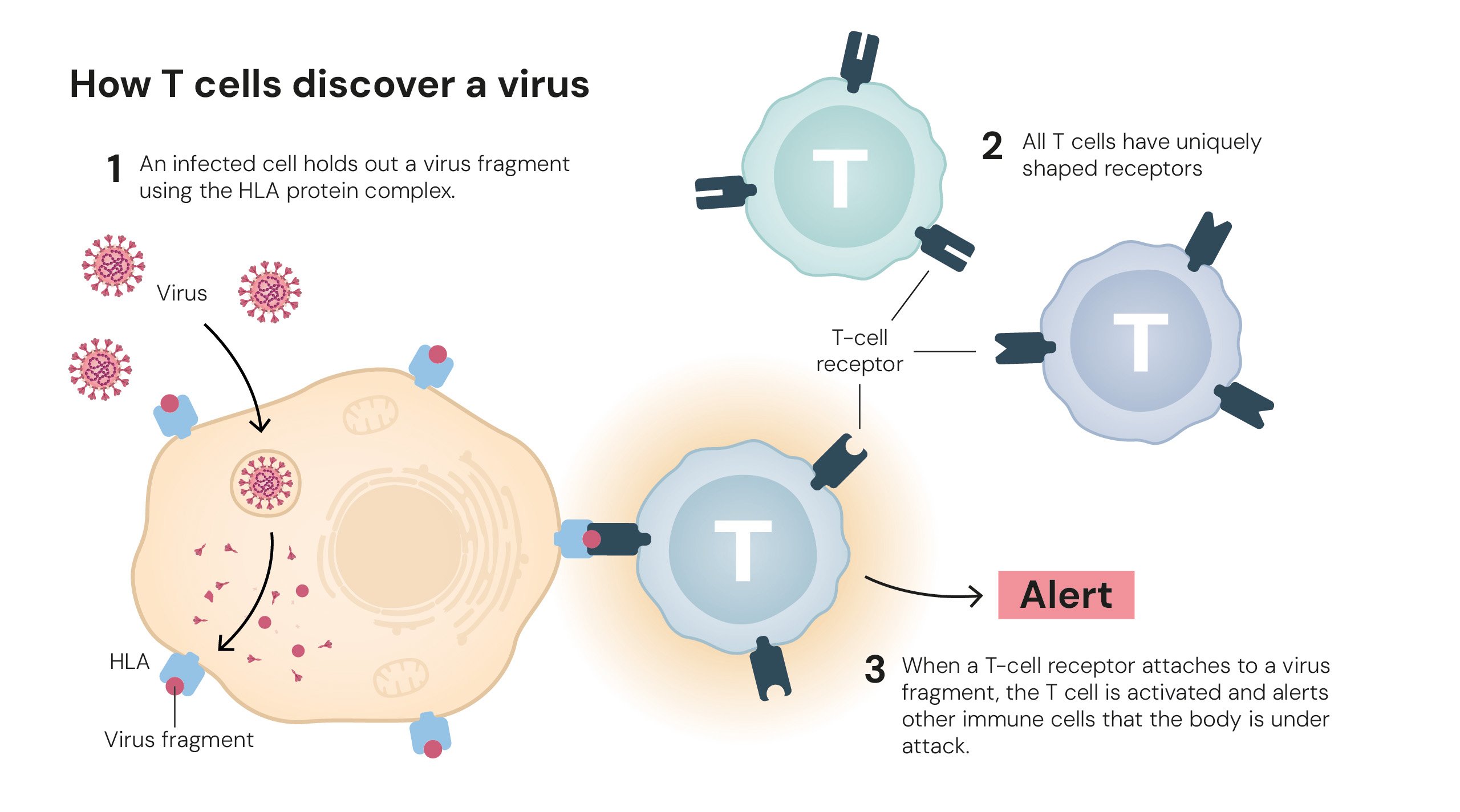
Gene therapies hold immense promise for treating sight loss. These therapies use a modified, harmless virus to deliver therapeutic genes directly to diseased cells, helping them to function normally again.

But numerous clinical trials have found that gene therapy causes serious side-effects in some patients because their immune system recognises the virus and attacks it.

So to improve safety and efficacy of gene therapy in the eye, my colleagues and I wanted to understand more about this immune response so we can someday prevent it from happening.

We discovered that old female mice were more vulnerable to experiencing a damaging side-effect from gene therapy, compared to both male mice and young female mice. This reaction was directly related to differences in the way the immune systems of old female mice functioned.

To conduct our study, we gave both male and female mice the gene therapy, which was delivered into the eye. The therapy was tested on young, middle-aged and old mice.

We found that in young mice, females had increased immune activation – even from a lower dose of gene therapy. A similar finding was also recently observed in human blood samples – with women’s immune cells exhibiting greater amounts of inflammation, a sign these immune cells were mounting an attack against the therapy.

Our research went on to show that age was also associated with a stronger inflammatory response to the gene therapy. This was true for both old male and female mice. The inflammatory response lasted longer in the older mice, too.

When we looked more closely at a specific type of immune cell that’s found in the brain and eye, we saw that in older female mice these cells showed signs of both an earlier stress response and stronger inflammatory reaction compared to younger mice and male mice. This reaction was also linked to signs of tissue degeneration.

Together, these findings suggest that women, particularly older women, could be at greater risk of harmful reactions to gene therapy – especially at the doses needed for these therapies to work.

Although our study was conducted in mice, it’s not the first research to show that immune response differences can affect the way men and women react to certain treatments.

Another research group also showed that female mice mounted a stronger response against a gene therapy – recognising it as foreign and removing it. This reduced the amount of therapy delivered successfully to females compared to males.

Treatments for conditions such as arthritis are another example of the way women’s immune response can affect how they respond to treatment. These immunotherapies work better in men compared to women. Some scientists believe this is because women’s immune systems are more likely to recognise the drug as foreign and remove it.

Sex differences and immune function

There’s one key reason men’s and women’s immune systems may respond differently to the same treatment. Women’s immune systems are generally more reactive than men’s to anything unfamiliar.

A digital drawing depicting a strand of DNA, alongside the X chromosome.
The X chromosome plays a role in immune response.
Anusorn Nakdee/ Shutterstock

The types of immune cells that respond the strongest and fastest to a foreign substance are different for men and women. This is because sex hormones – primarily oestrogen for females and testosterone for males – directly affect the way these cells behave.

The X chromosome also plays a role in immune response, as it contains a greater number of immune-related genes compared to the Y chromosome. Females have two X chromosomes, while males have one X and one Y chromosome. These differences will affect how well men and women respond to treatments.


Read more:
How biological differences between men and women alter immune responses – and affect women’s health


Age further affects how the immune system acts – and how the body responds to different treatments.

As we get older, our immune cells lose their ability to recognise and remove foreign pathogens – though these cells still continue to stimulate inflammation. This leads to a persistent inflammatory state, which is thought to be involved in many age-related conditions – including cardiovascular disease and neurodegeneration.

Differences in immune cell function also become more evident for men and women after the age of 65.

In older men, their inflammatory immune cells are more active after the age of 65, while their adaptive immune cells (which coordinate the recognition and removal of foreign pathogens) are less active.

But as women age, their adaptive immune cell activity can stay the same. Having a stronger adaptive immune response increases the risk of autoimmune conditions – a condition that has been linked to certain neurodegenerative diseases.

These differences help explain why vaccines are less effective for older men because they have fewer functioning adaptive immune cells. They may also help to explain why the older female mice in our study had adverse reactions to the gene therapy, as their immune cells are more primed to attack.

Women have historically been underrepresented in biomedical research. Modelling everything on males has created a data gap in clinical translation, causing harm. For instance, women have nearly twice as many adverse reactions to a drug compared to men.

But studies like ours are helping to provide important insight into why certain medications are less effective in women – and how the immune system is implicated. Crucially, these findings can also help us identify new targets to explore for future treatments.

The Conversation

Alison Clare has received funding from the Wellcome Trust and the Medical Research Council. Her position is currently funded by National Institute for Health and Care Research (NIHR) Biomedical Research Center based at Moorfields Eye Hospital NHS Foundation Trust and UCL Institute of Ophthalmology.

ref. Gene therapy can be less effective in women – and my research in mice brings us one step closer to understanding why – https://theconversation.com/gene-therapy-can-be-less-effective-in-women-and-my-research-in-mice-brings-us-one-step-closer-to-understanding-why-258135

Will Trump’s deal between Armenia and Azerbaijan lead to lasting peace?

Source: The Conversation – UK – By Brian Brivati, Visiting Professor of Contemporary History and Human Rights, Kingston University

Armenia and Azerbaijan signed a peace framework in Washington on August 8 after nearly four decades of conflict. The two nations, long divided over territorial disputes, committed to end hostilities, normalise relations and respect each other’s territorial integrity.

Brokered by the US president, Donald Trump, it had all the glitzy appearance of a comprehensive peace agreement. But in reality, it is merely a move in that direction. There are still many ways it could break down.

The decision of Armenia’s prime minister, Nikol Pashinyan, to pursue peace is politically risky. Armenian military defeats to Azerbaijan in 2020 and 2023, and the loss of the disputed Nagorno-Karabakh region, left deep scars.

Many Armenians feared concessions would legitimise Azerbaijan’s military gains or erode national sovereignty. Diaspora voices warned of “rewarding aggression” and ignoring the rights of displaced Karabakh Armenians. Yet Pashinyan pressed ahead, arguing a diplomatic settlement was the only route to security and prosperity.

His pivot away from relying on Russia – a former security guarantor whose credibility in Armenia has crumbled after failing to stop Azerbaijan from seizing Nagorno-Karabakh – signals a profound geopolitical shift. The US is now the guarantor of security, ending the Minsk process that has been working to resolve the conflict since 1994.

Sovereignty secured

One of the thorniest issues was Azerbaijan’s demand for a land route across southern Armenia to connect with its Nakhchivan exclave. Armenians feared this could mean ceding control of national territory. The US-brokered agreement resolves the dispute.

Armenia retains full sovereignty and jurisdiction over any new route. All transport links will operate under Armenian law, with Armenian customs and security in place. This is a marked improvement on the vague “unimpeded” transit clause in the 2020 ceasefire, which left room for dispute.

By enshrining sovereignty in the text, Armenia can reassure its public that the corridor is not an extraterritorial carve-out, but a transport link it is hosting. However, the corridor runs close to the Iranian border. And the Iranians, also pushed out of their influential role in Armenia by this deal, have already rejected it.

Following its recent war with Israel, Iran is perhaps too weak to stop the project from starting. But it could represent a threat to the security of companies involved in the route’s construction.

A map of the South Caucasus.
The peace deal creates a US-overseen transit area that will allow ‘unimpeded connectivity’ between Azerbaijan and its Nakhchivan exclave.
Peter Hermes Furian / Shutterstock

The transit corridor, which connects Azerbaijan to Turkey as well as to Nakhchivan, will be named the Trump Route for International Peace and Prosperity. The US has secured a 99-year development lease for the route. Planned infrastructure includes highways, railways, pipelines and fibre-optic cables.

Armenia keeps legal control, but gains investment and transit revenue from these endeavours without bearing construction costs. Azerbaijan will gain faster, cheaper export routes for oil, gas and manufactured goods to Turkish and European markets. Armenia also stands to benefit from access to Turkey if the border reopens – the Turks closed it in 1993 in support of Azerbaijan.

Armenia and Azerbaijan have signed separate bilateral agreements with the US on energy, technology and infrastructure, signalling a parallel push to modernise their economies as they normalise relations. Georgia, traditionally the most pro-western and strategically vital state in the South Caucuses, has been sidelined by this arrangement. This is a consequence of its more pro-Russia stance.


Read more:
Georgia: how democracy is being eroded fast as government shifts towards Russia


The Washington summit has capped years of intermittent mediation attempts. What set this round apart was sustained, high-level US engagement. The Trump administration sent envoys repeatedly, kept negotiations focused on solvable issues, and re-framed the transit corridor as a shared commercial venture.

US involvement is also a built-in guarantee. By taking a long-term stake in the corridor’s development, Washington has an interest in ensuring the agreement is implemented and respected. For Armenia, US backing offers reassurance against renewed coercion from Azerbaijan backed by Turkey. And it opens the door for Azerbaijan to forge deeper ties with the west during a period of bad relations with Russia.

Hurdles ahead

Despite the celebratory signing, the peace deal faces significant hurdles. The agreement sidesteps the plight of Armenian prisoners of war and detainees still held in Azerbaijan. It also ignores the right of return for over 110,000 Armenian civilians who were forcefully expelled from Nagorno-Karabakh. Armenian opposition and diaspora groups have criticised the accord for “sidelining justice”.

Political challenges inside Armenia further cloud the deal’s future. Azerbaijan’s president, Ilham Aliyev, has demanded that Armenia amend its constitution to renounce any territorial claims – specifically removing the 1990 declaration of independence that implied Nagorno-Karabakh is part of Armenia. Baku insists this change is a prerequisite for a “final” peace treaty.

Such external pressure is deeply sensitive. Pashinyan has agreed in principle that Armenia needs a new constitution by 2027 to reflect post-war realities. But if the alterations are perceived as capitulation to Azerbaijani diktat, the domestic backlash could be intense.

The Armenian opposition – already angered by the loss of Karabakh – will likely seize on any constitutional concessions as evidence of national humiliation. With parliamentary elections on the horizon in 2026, Pashinyan’s rivals are positioning to campaign against the peace deal.

They argue that his western-leaning “peace agenda” endangers Armenia’s sovereignty and security. Some have hinted they would reject or renegotiate the agreement if they come to power. Pashinyan’s party was polling poorly earlier in 2025, and recent local elections saw gains for pro-Russian figures, suggesting a volatile electorate.

Armenia’s security services have warned of possible foreign interference and destabilisation efforts as the elections approach. Moscow, in particular, could covertly back Pashinyan’s hardline opponents or spread disinformation to sway the vote, hoping to install a more Russia-aligned leadership that might undermine the deal.

The Washington framework has opened a path to peace. But the coming months and years will determine whether pragmatic interests can triumph over entrenched mistrust.

To succeed, Armenia and Azerbaijan must navigate a minefield of unresolved disputes and political minefields at home, all under the gaze of regional powers uneasy about their changing environment. Washington and Brussels will need to remain engaged, to guarantee compliance and help deliver early economic gains that reinforce peace.

If either side reneges – be it through renewed demands, slow-rolling implementation or back-channel interference – hard-won progress could quickly unravel. This historic breakthrough thus marks not an endpoint but the start of a delicate balancing act.

The Conversation

Brian Brivati does not work for, consult, own shares in or receive funding from any company or organisation that would benefit from this article, and has disclosed no relevant affiliations beyond their academic appointment.

ref. Will Trump’s deal between Armenia and Azerbaijan lead to lasting peace? – https://theconversation.com/will-trumps-deal-between-armenia-and-azerbaijan-lead-to-lasting-peace-262889

Synthetic drugs are having devastating effects around the world, from Sierra Leone to the UK

Source: The Conversation – UK – By Joseph Janes, Senior Lecturer in Criminology, Swansea University

In the blistering heat of Freetown, Sierra Leone, young men gather on street corners, their limbs swollen, eyes glazed. They are the victims of kush, a cheap and deadly synthetic drug sweeping the country.

But kush is not an isolated tragedy. From the townships of apartheid South Africa to the 21st-century streets of the UK, synthetic drugs have a long history of flourishing in places where society has abandoned its most vulnerable.

Kush first appeared in Sierra Leone around 2016, but its spread in recent years has been nothing short of catastrophic. Between 2020 and 2023, psychiatric admissions linked to the drug skyrocketed to a reported 1,865 cases at the country’s only psychiatric hospital.

The drug claims mostly young men between the ages of 18 and 25, whose bodies are ravaged by kush’s toxic effects. Doctors in Freetown estimate that hundreds of users have died from organ failure caused by the drug in recent months.

Sierra Leone’s president, Julius Maada Bio, branded kush a “death trap” and declared a national emergency. The drug, he says, represents an “existential crisis” for the nation.

Kush is both cheap and easily accessible, sold openly on the streets for as little as 20 pence per joint. But for those hooked on it, the cost can climb to £8 a day. This is a staggering sum in a country where the average income barely exceeds £4,000 a year.

The drug’s ingredients are equally chilling. A mix of cannabis, synthetic opioids like fentanyl, formalin (used in embalming) and, according to some reports, ground human bone, it’s a concoction that speaks to the bleakness of life for those who turn to it.

Channel 4 News report on kush in Sierra Leone.

Kush’s grip on Sierra Leone is not a random phenomenon but a symptom of a much deeper problem. The drug has become a chemical escape for people who see no viable future for themselves.

For those living in poverty and experiencing hunger, kush offers something that life in Sierra Leone often cannot: temporary relief from trauma and despair. It’s not a recreational indulgence but survival in a country where many face daily battles just to get by.

The drug’s rise follows a pattern seen in other parts of the world, where synthetic substances fill the void left by broken systems.

Apartheid South Africa

The situation in Sierra Leone echoes a chilling chapter from South Africa’s apartheid era. In the 1980s, methaqualone, a synthetic sedative-hypnotic drug – sold as quaalude or mandrax – became widely used in the townships, particularly among Black communities.

Often smoked alongside cannabis in a mix known as the “white pipe”, it became a cheap, sedative drug much like kush in Freetown today.

Vice documentary on methaqualone.

The apartheid government didn’t just turn a blind eye to its widespread use but deliberately encouraged it. Under the secretive Project Coast, the government’s chemical and biological warfare programme, scientists developed large quantities of methaqualone, ostensibly for crowd control and incapacitation.

Methaqualone was not officially declared a weapon. But evidence compiled by the UN suggests it was developed and stockpiled in prototype delivery systems that were intended to incapacitate without killing, then deployed quietly among the dissenting population.


Read more:
Addicted: how the world got hooked on illicit drugs – and why we need to view this as a global threat like climate change


The parallels with kush are undeniable. Both are chemically produced, highly addictive depressants offering cheap and easily accessible sedation to marginalised populations. These types of drug do not just affect individuals but serve to suppress entire communities under the weight of structural violence.

In South Africa, methaqualone was weaponised by the state as a means of control, while in Sierra Leone, kush has emerged in areas abandoned by the government. In both cases, the effect is the same: a drug-fuelled stasis that deepens despair and maintains a status quo of social neglect.

It’s a pattern where a synthetic depressant materialises in places where no other social or economic medicine exists, sedating not only bodies but resistance and possibility.

Spice in the UK

This pattern of synthetic drugs as a response to social decay is not confined to Africa. In the UK, synthetic drugs such as spice have become more common over the past decade, especially among homeless people and prisoners. Described as a “zombie drug” for its paralysing effects, spice is often used not for pleasure but to escape hunger, cold and trauma.

A 2023 study among the UK’s homeless population found that nearly 70% of participants, aged 18-64, used synthetic drugs such as spice to escape the harsh realities of homelessness. Many reported adverse effects that led to hospitalisation.

In many British towns and cities, it has become common to see users slumped on pavements or convulsing in parks, echoing the scenes from Sierra Leone’s kush hotspots.

This serves as a stark reminder that synthetic drugs are not an isolated issue. They are a global crisis playing out in different forms but with the same underlying causes.

Synthetic drugs like kush, methaqualone and spice are symptoms of deeper systemic failures. They thrive where housing is unstable, unemployment is rampant and healthcare is out of reach. Addressing the crisis requires more than just cracking down on drug use. It demands a radical shift in how we treat the most vulnerable in our society.


Read more:
‘There has never been a more dangerous time to take drugs’: the rising global threat of nitazenes and synthetic opioids


In Sierra Leone, this means investing in youth employment, improving nutrition and strengthening mental health services. In the UK, it calls for restoring funding to housing and substance use services, and recognising that stable shelter and social support are fundamental to recovery, not rewards for abstinence.

If we are serious about tackling this problem, we need to move beyond punishment and focus on addressing the root causes of addiction. Only by investing in social care and harm reduction can we hope to break the cycle of sedation and despair.

The Conversation

Joseph Janes does not work for, consult, own shares in or receive funding from any company or organisation that would benefit from this article, and has disclosed no relevant affiliations beyond their academic appointment.

ref. Synthetic drugs are having devastating effects around the world, from Sierra Leone to the UK – https://theconversation.com/synthetic-drugs-are-having-devastating-effects-around-the-world-from-sierra-leone-to-the-uk-262746

From clear skin to detoxing, chlorophyll and collagen supplements promise a lot, but what does the science say?

Source: The Conversation – UK – By Dan Baumgardt, Senior Lecturer, School of Physiology, Pharmacology and Neuroscience, University of Bristol

Tatevosian Yana/Shutterstock

Walk into any health store, scroll through TikTok, or browse the shelves of your favourite beauty retailer, and you’ll be met with a familiar promise: that a pill, powder or potion could be the secret to glowing skin, boosted energy, or even inner “detoxification.” Among the most hyped are chlorophyll – the green pigment in plants now found in trendy waters and tinctures – and collagen, the protein hailed as the holy grail for youthful skin and strong joints.

But how much of the buzz is backed by science? And how much is just clever marketing dressed up in green juice and glossy packaging?

Let’s take a closer look to explore what they actually do, what the evidence says, and whether your money (and hopes) might be better spent elsewhere.

Chlorophyll

Dark leafy greens like kale and cavolo nero are well known for boosting levels of essential nutrients such as iron, folate and beta-carotene. They’re also rich in chlorophyll – the pigment that plays a key role in photosynthesis, the process by which plants use sunlight to produce glucose and oxygen.

Some wellness influencers, including Gwyneth Paltrow and Kourtney Kardashian-Barker, have popularised chlorophyll water as part of their daily health routines. Both promote it through their respective wellness brands – Goop and Poosh – touting a range of supposed benefits, from reducing body odour to supporting detoxification. One of the more persistent claims is that chlorophyll – in water or supplement form – can “oxygenate” the blood.

But as Ben Goldacre – physician, academic and prominent critic of pseudoscience – has pointed out, that claim doesn’t quite hold up. The human body, unlike a plant leaf, isn’t flooded with sunlight. And without light, chlorophyll simply can’t perform photosynthesis in the gut or bloodstream. It can’t generate oxygen internally – no matter how green your smoothie.

So what does chlorophyll actually do? Aside from turning plants (and your poo) a vivid shade of green, its core function is to trap sunlight and convert water and carbon dioxide into glucose and oxygen. Cast your mind back to GCSE biology and the familiar photosynthesis equation scribbled across the whiteboard.

Through this process, plants generate food for themselves and for animals – while releasing oxygen into the atmosphere. It’s a pathway fundamental to life on Earth. But since we breathe in oxygen and eat carbohydrates, we’ve managed to thrive without chlorophyll. And for it to work in humans the way it does in plants, it would surely need to be present in our skin – effectively turning us into the Wicked Witch of the West.

So what about those wider health claims? Supplement packaging for chlorophyllin – a semi-synthetic, water-soluble form of chlorophyll thought to be more active – often promises detoxification, glowing skin, improved wound healing and even better body odour.

The suggested mechanisms? Chlorophyll may inhibit bacterial growth or neutralise foul-smelling compounds in the gut. It’s also been proposed as a free radical scavenger – mopping up the unstable molecules generated by toxins or metabolism that can damage tissues.

The evidence is mixed. A few (much older) studies suggest chlorophyllin can reduce the odour of faeces and flatulence, although it might also turn them green. There’s weaker evidence when it comes to halitosis or body odour. Research supporting its role as an antioxidant is limited, and the buzz around weight loss is largely anecdotal. Realistically, any benefit in that department likely comes from a diet rich in greens – low in fat and high in fibre – rather than chlorophyll alone.

Where things get more promising is in wound care. Chlorophyll-based dressings have been investigated for their ability to accelerate healing and reduce odours from infected wounds.


Read more:
How to treat a wound – without using superglue, grout or vodka, like some people


Collagen

But chlorophyll isn’t the only so-called “miracle” substance being sold to the wellness crowd. Take collagen – arguably even more popular than any green powder or superfood pill.

Collagen is a protein and a natural component of connective tissue found throughout the body. It gives strength and structure to the skin, bones, ligaments, blood vessels – even the heart and lungs. Without enough collagen – or in conditions where collagen production is impaired, such as Ehlers-Danlos syndrome – tissues can become fragile, prone to damage or slow to heal.

All the more reason, then, to make sure our bodies can produce it. Collagen is made from amino acids – the building blocks of protein – so eating enough protein is essential. Vitamin C also plays a vital role, helping the body synthesise collagen from those amino acids.

But do we really need to supplement it? What does the evidence say? Some studies suggest oral collagen supplements may help improve skin appearance, support joint health, increase bone strength, and enhance muscle mass. But there’s no convincing evidence that they promote weight loss or treat cardiovascular or autoimmune conditions – despite the lofty promises made by some brands.

Topical collagen products are even more widespread, but their scientific backing is thinner. Collagen molecules are generally too large to be absorbed through the skin, meaning they’re unlikely to have any meaningful impact on wrinkles. At best, they may hydrate the surface and offer a temporary plumping effect.

In short, the research is patchy – encouraging in some areas, inconclusive in others. And when it comes to supporting your body’s natural collagen production, there may be more effective (and less expensive) options. Foods such as chicken, fish, eggs and bone broth ensure a good protein intake. So too are collagen-supporting micronutrients, including vitamin C, copper and zinc.


Read more:
Bone broth is hyped by celebrities and hailed as a wellness superfood – here’s what the science says


So unless you’re Poison Ivy from Batman (who, to be fair, looks fantastic), you probably don’t need to load up on chlorophyll. And unless your diet is lacking, you don’t need to shell out for collagen powders or creams either.

Love the skin you’re in. It’s better than turning green like Elphaba from Wicked.

The Conversation

Dan Baumgardt does not work for, consult, own shares in or receive funding from any company or organisation that would benefit from this article, and has disclosed no relevant affiliations beyond their academic appointment.

ref. From clear skin to detoxing, chlorophyll and collagen supplements promise a lot, but what does the science say? – https://theconversation.com/from-clear-skin-to-detoxing-chlorophyll-and-collagen-supplements-promise-a-lot-but-what-does-the-science-say-261210

Sydney Sweeney, American Eagle et le retour à une féminité « traditionnelle »

Source: The Conversation – in French – By Meaghan Furlano, PhD Student, Sociology, Western University

L’actrice Sydney Sweeney est une nouvelle fois au cœur d’une polémique. Après avoir fait parlé d’elle pour la vente de savons infusés avec l’eau de son bain ou pour la publication de photos où ses invités portent des casquettes rouges inspirées du mouvement MAGA, la star d’Euphoria fait cette fois la une pour son rôle dans une campagne publicitaire controversée menée par American Eagle Outfitters.

Si l’ensemble de la campagne a suscité un vif débat en ligne, une publicité en particulier a été la cible de critiques spécialement virulentes.

On y voit Sweeney allongée avec élégance sur une chaise longue, en train d’enfiler un jean American Eagle. D’une voix haletante, elle dit : « Les gènes sont transmis des parents à leurs enfants et déterminent souvent des traits tels que la couleur des cheveux, la personnalité et même la couleur des yeux. »

Alors que la caméra se déplace lentement et qu’elle tourne les yeux vers le spectateur, Sweeney conclut : « Mon jean est bleu. »

Des commentateurs et des utilisateurs des réseaux sociaux ont affirmé que cette campagne était un message codé destiné aux conservateurs, exprimant un soutien à peine voilé à la suprématie blanche et à l’eugénisme.

Sydney Sweeney dans la publicité controversée de American Eagle.

American Eagle a publié un communiqué défendant la publicité le 1er août, affirmant que « Sydney Sweeney Has Great Jeans » (Sydney Sweeney a de beaux jeans) faisait toujours référence aux jeans.

Marketing innocent ou message subliminal intentionnel ?

L’eugénisme est une idéologie discréditée enracinée dans la suprématie blanche et le racisme scientifique. Elle promeut la fausse croyance selon laquelle les groupes raciaux sont déterminés biologiquement et que certains groupes sont génétiquement supérieurs à d’autres, et devraient se reproduire de manière sélective afin de préserver leurs « bons gènes ».

Historiquement, l’objectif ultime de l’eugénisme a été d’éliminer les soi-disant « mauvais gènes » — souvent associés aux communautés non blanches, aux personnes handicapées, aux populations pauvres ou marginalisées — afin que les élites sociales puissent maintenir leur domination.

La publicité dans le domaine de la mode qui joue sur les thèmes de l’eugénisme a une longue histoire. Des commentateurs ont souligné les similitudes entre la publicité de Sweeney et la célèbre campagne Calvin Klein des années 1980 mettant en scène Brooke Shields, alors âgée de 15 ans, qui se roule dans ses sous-vêtements Calvin Klein tout en parlant de codes génétiques, d’évolution et de survie du plus apte, un langage évocateur de la pensée eugéniste.

La campagne American Eagle semble être un hommage direct à celle de Calvin Klein, mais la rhétorique eugéniste est-elle vraiment quelque chose que nous voulons voir employée dans le marketing ?

Le retour de la féminité « traditionnelle »

La campagne American Eagle est intitulée de manière provocante « Sydney Sweeney Has Great Jeans » (Sydney Sweeney a de beaux jeans), le mot « jeans » étant parfois remplacé par « gènes ». Il s’agit clairement d’une plaisanterie.

Mais elle n’est pas pour autant inoffensive. Si la campagne ne reflétait pas des tensions culturelles plus larges, ni le président américain Donald Trump ni le sénateur Ted Cruz n’auraient pris la peine de s’y intéresser.

« La gauche folle s’en prend aux belles femmes », a écrit Cruz dans un tweet à propos de la controverse. Un média de droite est allé plus loin, affirmant que la positivité corporelle menait « la blonde rieuse à la poitrine généreuse… au bord de l’extinction. »

En célébrant l’apparence conventionnellement attirante de Sweeney, American Eagle a réintroduit haut et fort la silhouette féminine « traditionnelle ». En ce sens, cette campagne symbolise un changement de tendance culturelle : fini la positivité corporelle, place à la « poitrine généreuse » et tout ce qu’elle implique.

Dans le contexte culturel actuel, saturé de messages conservateurs, il n’est guère surprenant de voir Sweeney, une jeune star hollywoodienne mince, blanche et sexualisée, vendre la qualité de ses « gènes » (pardon, de ses « jeans »).

De la montée en puissance des tradwife influencers et des SkinnyTokers à la performance féminine ritualisée des « morning shedders », la campagne s’inscrit clairement dans un renouveau plus large des idéaux féminins régressifs, enrobés d’une esthétique policée et édulcorée.


Déjà des milliers d’abonnés à l’infolettre de La Conversation. Et vous ? Abonnez-vous gratuitement à notre infolettre pour mieux comprendre les grands enjeux contemporains.


Exorciser l’amour-propre de l’agenda des entreprises

En tant que chercheuse féministe spécialisée dans les médias et intéressée par l’intersection entre la culture pop et l’extrême droite, mes recherches actuelles explorent la montée de l’antiféminisme et de la politique de droite. Nous ne sommes plus à l’ère du féminisme populaire, où les entreprises s’appropriaient avec empressement la rhétorique féministe pour vendre leurs produits et services.

À la place, les marques reviennent à des images traditionnelles : des femmes minces et blanches stylisées pour le regard masculin, un terme qui désigne l’objectivation et la sexualisation des femmes dans les médias populaires, du cinéma et de la télévision aux publicités de mode. C’est une stratégie qui a longtemps fonctionné et que les marques se réjouissent de voir redevenir tendance.

La régression esthétique incarnée par la campagne Sweeney/American Eagle révèle ce que de nombreux critiques soupçonnaient depuis longtemps : l’adhésion des entreprises au féminisme n’a jamais été sincère.

Les campagnes vantant « l’amour de son corps », « l’émancipation » et « la confiance en soi » à la fin des années 2010 et au début des années 2020 ont été délibérément conçues pour séduire les consommateurs progressistes et tirer profit de la popularité du féminisme. Le modèle économique fondamental de ces entreprises – vendre des insécurités et engranger des profits pour leurs actionnaires – n’avait pas fondamentalement changé.

Au contraire, comme le soutiennent d’autres chercheurs, le marketing de l’amour de soi a encouragé les femmes à améliorer non seulement leur corps, mais aussi leur esprit. Il n’était plus culturellement acceptable que les femmes soient belles ; elles devaient également se sentir bien dans leur corps. Cette norme exigeait davantage d’efforts et, bien sûr, davantage de produits, que les marques se faisaient un plaisir de vendre.

Poussées par un climat politique de plus en plus conservateur, de nombreuses marques n’hésitent plus à exprimer leurs motivations. La minceur est de retour et la blancheur est à nouveau associée à la « rectitude »

Vivre le contrecoup culturel

Comme je l’ai expliqué ailleurs, nous vivons actuellement une période de contrecoup. Dans son livre publié en 1991, la journaliste Susan Faludi écrit que le contrecoup est « un phénomène récurrent qui revient chaque fois que les femmes commencent à faire des progrès vers l’égalité ».

Bien que de nombreux articles décrivent une « réaction négative » des consommateurs à la campagne Sweeney/American Eagle, je parle ici d’une réaction négative culturelle contre les mouvements sociaux et politiques progressistes. Elle se manifeste aujourd’hui dans les sphères politique, juridique et économique, et va bien au-delà d’une simple publicité.

Le contrecoup actuel vise le féminisme populaire, le mouvement Black Lives Matter, la diversité, l’inclusion et à l’équité (DEI) et les analyses systémiques incisives issues des études et du militantisme féministes, antiracistes et queer. La campagne Sweeney n’en est qu’un symptômes parmi d’autres.

Faludi a observé que « les images de femmes contraintes tapissent les murs de la culture populaire » dans les périodes de contrecoup. Cette remarque semble tristement d’actualité.

Quelques jours seulement après l’abandon de la campagne d’American Eagle, la marque SKIMS de Kim Kardashian a lancé ses « sculpt face wraps », un produit destiné à donner à celles qui les portent un menton plus « sculpté ». Les photos promotionnelles montrent des femmes emprisonnées dans des produits qui ressemblent au célèbre masque d’Hannibal Lecter ou à un appareil orthodontique. Des images particulièrement dérangeantes.

Si Faludi nous a appris quelque chose, c’est que la tendance à montrer des images de femmes contraintes — physiquement ou par des rôles rigides — ne préfigure pas seulement un avenir inquiétant : elle reflète aussi un présent alarmant, qu’il faut reconnaître pour pouvoir y résister.

La Conversation Canada

Meaghan Furlano ne travaille pas, ne conseille pas, ne possède pas de parts, ne reçoit pas de fonds d’une organisation qui pourrait tirer profit de cet article, et n’a déclaré aucune autre affiliation que son organisme de recherche.

ref. Sydney Sweeney, American Eagle et le retour à une féminité « traditionnelle » – https://theconversation.com/sydney-sweeney-american-eagle-et-le-retour-a-une-feminite-traditionnelle-262852