Why Russia’s provocations in Europe actually signal a weakened strategic position

Source: The Conversation – Canada – By James Horncastle, Assistant Professor and Edward and Emily McWhinney Professor in International Relations, Simon Fraser University

There’s recently been a significant uptick in Russian incursions into Europe. They started in mid-September with Russian drones violating Polish airspace, resulting in Poland being forced to deploy its air force to protect its sovereignty.

Subsequently, a Russian drone violated Romanian airspace. Perhaps most disconcerting, three Russian MiG-31s deliberately violated Estonian airspace in a clearly provocative act.

But these known Russian incursions are being overtaken by a troubling phenomenon. Airports in Europe, including but not limited to Copenhagen and Munich, have seen their operations disrupted by unknown drones.

Analysts increasingly believe these mysterious drones are operated by Russian agents to sow fear and tension in Europe. Whether that’s true remains to be seen.

Russian offensive weakening

While these incidents may appear designed to escalate the conflict by threatening to draw the European Union and NATO into the conflict, they instead reflect Russian strategic weakness as winter approaches.

Throughout 2025, Russia had several advantages over Ukraine. Russian superiority in arms production and mobilization, supplemented by direct and indirect aid from states like North Korea and China put it in a favourable strategic position compared to Ukraine.


Read more:
Amid the West’s wavering aid to Ukraine, North Korea backs Russia in a mutually beneficial move


Russia has hit Ukraine on multiple fronts.

While Russian frontline forces advance against Ukrainian positions, Russia increased the tempo and volume of its drone and missile strikes against Ukrainian cities. Nonetheless, even though Russian drones and missiles have inflicted considerable destruction and casualties on Ukraine in 2025, Ukrainians have yet to lose their will to resist.

Russian forces took advantage of this strategic imbalance against Ukraine to seize Ukrainian territory. Critically, however, while Russian forces have made gains, they have not achieved a decisive breakthrough against Ukraine. Russia’s minimal gains in September, furthermore, indicate that its offensive is stalling.

The fall weather and resulting cold and rain will further stall Russian offensive operations in Ukraine. The year 2025, initially looking like it would favour Russia, has resulted in Putin having little to show for it.

What’s more, Ukraine has not been passive during this period.

Exploiting Russian vulnerabilities

From a numbers and material standpoint, Ukraine is at a considerable disadvantage against Russia. But Putin’s government has two interrelated points that Ukraine seeks to undermine: domestic support for Putin and the Russian economy.

The extent of domestic support for Putin is a subject of debate among scholars and analysts. But Putin’s actions suggest he’s nervous enough about it that he’s seeking to insulate his support base against the effects of the war. To do so, he’s maintaining the illusion of a strong Russian economy.

But Elvira Nabiullina, Russia’s central bank governor, has warned the Russian economy is in trouble. Putin has ignored her warnings and has instead offered pithy retorts to criticisms of the Russian economy.

Despite Putin’s nonchalant reaction to the weakness of the Russian economy, Ukraine recognizes the fragility of his stance. In fact, Ukraine is now repeatedly striking the resource at the heart of Russia’s precarious prosperity: oil.

Oil and natural gas account for at least 30 per cent of the federal Russian budget. Ukrainian innovations in drone and missile technology has allowed Ukraine to repeatedly strike Russian oil and natural gas refining and logistical facilities.

This has resulted in Russia declaring a full moratorium on gasoline exports for the rest of the year. Furthermore, Russia was recently forced to partially extend an export ban to diesel as well.

Fuel shortages will only become more pronounced as energy demands increase over the cold Russian winter. Putin’s base, in short, could finally be forced to confront the consequences of his policies.

Escalate to de-escalate

Russian strategic failures in 2025, along with increased Ukrainian pressure, help explain Russia’s subversive efforts in Europe.

A misunderstood element of Russian strategic doctrine is the concept of escalating to de-escalate. Although this tactic is most commonly applied to nuclear strategy, it applies to all aspects of Russia’s strategic doctrine.

Russian politicians and generals are calculating that Europe is simultaneously unprepared and unwilling to wage war against Russia. Furthermore, Russian leaders are relying on the belief that European leaders, despite their rhetoric, will do whatever possible to eliminate the root cause of Russia’s recent incursions into European airspace: the Russia-Ukraine war.

Putin, after seemingly pushing Europeans to the brink of war, will likely pivot to a policy that encourages a diplomatic solution to Ukraine. Putin has followed a similar strategy of appearing to be more diplomatically inclined in the winters of 2024 and early 2025. World leaders, desperate for the war to end, have treated such proposals more seriously than warranted.


Read more:
Trump-Putin ceasefire conversation shows no initial signs of bringing peace to Ukraine


Russian drones and missiles may have proven devastating for Ukraine, but they haven’t altered the strategic balance.

Ukraine’s strikes, on the other hand, appear to be bearing strategic fruit at a critical moment of Russian vulnerability, forcing Putin to use unconventional means to try to secure victory against Ukraine.

The Conversation

James Horncastle does not work for, consult, own shares in or receive funding from any company or organisation that would benefit from this article, and has disclosed no relevant affiliations beyond their academic appointment.

ref. Why Russia’s provocations in Europe actually signal a weakened strategic position – https://theconversation.com/why-russias-provocations-in-europe-actually-signal-a-weakened-strategic-position-266883


The disasters we talk about shape our priorities and determine our preparedness

Source: The Conversation – Canada – By Fatma Ozdogan, PhD Candidate & Researcher, Université de Montréal

In December 1989, the United Nations declared Oct. 13 International Day for Disaster Risk Reduction. At the time, the aim was to make disaster-risk reduction part of everyday thinking worldwide.

Today, this mission is more urgent than ever as disasters strike more often and with greater force.

And although substantial progress has been made, there is still much to achieve in reducing disaster risks and their impacts.

One of the main culprits for overlooking certain disasters is the way we talk about them. We tend to focus more on the narratives surrounding rapid-onset events — wildfires, earthquakes, hurricanes — versus long-term crises like climate change.

Punishment from the gods

Historically, people saw disasters as unpredictable forces beyond human control.

Earthquakes, floods and famines were often explained as punishment from the gods. Communities believed these events reflected moral failings or divine judgment, rooted in cultural and religious traditions.

For instance, the Epic of Gilgamesh tells of a great flood sent to cleanse humanity of its sins. Early Islamic traditions interpreted disasters as tests of faith or signs of divine displeasure, with references in the Qur’an. Other major religions such as Buddhism and Hinduism have similar divine-based interpretations.

The Lisbon earthquake of 1755, however, marked a turning point, prompting a shift towards human-centred explanations of disasters.

Enlightenment thinkers such as Voltaire, Rousseau and Kant challenged purely religious interpretations, advocating rational and scientific reasoning and a better understanding of nature, ushering in a new view of disasters as acts of nature.

Disasters as human-induced

This intellectual shift marked the beginning of a more secular and scientific understanding of disasters. It suggested that disasters could be studied, anticipated and potentially prevented through human action.

Building on this foundation, the Industrial Revolution in the 19th century introduced new risks associated directly with human activities, such as factory accidents and railway crashes. By statistically analyzing these incidents, experts identified predictable patterns, prompting the creation of specialized institutions to manage and mitigate these emerging hazards.

As the understanding of human influence on disasters evolved further in the early 20th century, scholars began exploring how social behaviours, industrial practices and preparedness levels shaped disaster outcomes.

This expanded perspective underscored the crucial role of societal structures and human decisions, demonstrating that disasters were not just natural events but deeply intertwined with human factors. Although religious interpretations still exist in some communities, the consensus has shifted toward viewing disasters as human-induced.

By the 1960s, research turned to the social, political and economic roots of disasters. Scholars showed that poverty, weak governance, poor infrastructure and inequality made communities far more vulnerable.

As a result, attention shifted from reacting after disasters to tackling their root causes in advance. This regarded disasters as acts of social systems and structures.

Politics and equity meet

More recently, vulnerability and resilience have become core concepts in disaster management practice and policy-making.

International frameworks such as the Hyogo Framework (2005–2015) and the Sendai Framework for Disaster Risk Reduction (2015–2030) reflect this shift. These frameworks define disasters as a global issue requiring international collaboration, systematic risk management and proactive strategies.

Today, scholars widely recognize disasters not as purely natural events but as results of human actions, including negligence, poor planning and inadequate governance.

Defining what exactly constitutes a disaster, however, remains contested: Who decides what qualifies as a disaster, and according to which criteria? Which ones are more important and deserve more attention?

This distinction is especially clear in media and political discussions, which tend to highlight rapid-onset events like earthquakes, floods or hurricanes. In contrast, slower, long-term crises related to climate change or environmental degradation often receive far less attention

What media coverage misses

Our understanding and management of disasters is biased.

A recent analysis of Canadian media highlights a significant imbalance in the attention given to sudden and slow-onset disasters.

Sudden disasters like wildfires consistently receive far greater media coverage in comparison to slower-developing events like droughts or environmental degradation.

For example, CBC devoted up to eight hours in a single day to covering the immediate aftermath of the 2010 Haiti earthquake. In contrast, the 2011 Horn of Africa drought typically received less than two minutes of daily coverage. Yet the cumulative impacts of these slow-onset crises are substantial, often surpassing the effects of rapid-onset disasters.

According to a report by the United Nations Convention to Combat Desertification, although droughts accounted for only 15 per cent of natural hazard-induced disasters from 1970 to 2019, they exacted the highest human toll, causing approximately 650,000 deaths globally.

During this period, weather-, climate- and water-related hazards comprised half of all disasters and 45 per cent of disaster-related deaths, disproportionately affecting developing countries. Additionally, between 1998 and 2017 alone, droughts led to economic losses roughly US$124 billion.

The World Bank further underscores this critical issue, estimating that climate-related, slow-onset disasters could displace about 216 million people globally by 2050. Such displacement carries extensive humanitarian and geopolitical consequences.

Recent events highlight the serious consequences of slow-onset disasters. Global soil degradation, for example, currently affects nearly 3.2 billion people. Between 2015 and 2019, 100 million hectares of land were lost each year, cutting food production and worsening hunger.

Rising sea levels threaten nearly 900 million people globally in low-lying coastal areas. Flooding, saltwater intrusion and soil salinization are damaging homes, farmland and public health.

Building a better future

Addressing what we pay attention to requires a fundamental shift in approaches to disasters.

This involves critically recognizing human accountability in exacerbating hazards and scrutinizing structural vulnerabilities — poverty, inadequate infrastructure, ineffective governance — which increase disaster impacts.

As a society, we need to re-evaluate our priorities and adopt a holistic perspective that equally acknowledges all disaster forms.

With sustained investment in prevention, stronger infrastructure and greater social equity, communities in Canada and around the world can strengthen their capacity to face the future.

The Conversation

The authors do not work for, consult, own shares in or receive funding from any company or organisation that would benefit from this article, and have disclosed no relevant affiliations beyond their academic appointment.

ref. The disasters we talk about shape our priorities and determine our preparedness – https://theconversation.com/the-disasters-we-talk-about-shape-our-priorities-and-determine-our-preparedness-266200

¿Cómo es una comunicación jurídica clara? Pautas para acercar el derecho a la ciudadanía

Source: The Conversation – (in Spanish) – By Cristina Carretero González, Profesora Doctora de Derecho Procesal e investigadora en Derecho y Lenguaje, Universidad Pontificia Comillas

fitzkes / shutterstock CC BY

El lenguaje jurídico es uno de los más técnicos y específicos que pueden encontrarse en la comunicación humana. Para quienes hemos estudiado Derecho, que nos hablen de una cláusula “rebus sic stantibus”, o palabras como “precepto”, “fallo” o “tipificación” forma parte de nuestro día a día y no supone ningún esfuerzo extra de comprensión.

Pero el lenguaje jurídico también se usa para comunicar a la ciudadanía cuestiones importantes relativas a sus derechos y obligaciones, desde sentencias judiciales a contratos legales. Por eso habría que revisar siempre las comunicaciones jurídicas cuando su destinatario no pertenece a este ámbito.

Pensemos en la siguiente frase: “El Tribunal del Jurado es competente para el conocimiento y fallo de las causas por los delitos tipificados en determinados preceptos del Código Penal y recogidos en la ley que lo regula”. Aparentemente sencilla, pero ¿qué quiere decir? ¿Se podría formular de una manera más clara?

“Competente” significa que tiene autoridad para encargarse de algo determinado. El “conocimiento y fallo de las causas” implica que un tribunal del jurado (los jurados y el magistrado presidente que lo componen) enjuicia y sentencia. Las “causas” son los casos o conflictos que se plantean en esos tribunales. Los delitos “tipificados” son los que están descritos legalmente como delitos con sus elementos particulares. “Determinados preceptos” son las normas.

Así, cuando se quiere comunicar con una sencillez y claridad que posibilite la comprensión por la mayoría de receptores, ¿por qué no decir?: “El Tribunal del Jurado enjuicia y decide sobre ciertos delitos recogidos en su ley y descritos en el Código Penal”.


Leer más:
20 consejos sencillos para comunicar eficazmente en Internet


Una nueva norma europea

En agosto de 2025, la Organización Internacional de Normalización (una organización internacional independiente que reúne a expertos de todo el mundo para acordar las mejores formas de hacer las cosas) publicó la norma 24495-2: 2025 sobre comunicación jurídica clara. Se trata de una serie de pautas o recomendaciones internacionalmente acordadas para lograr una comunicación jurídica clara y, cuando sus destinatarios no sean especialistas, sencilla.

El objetivo no es comunicar el derecho de modo ramplón e impreciso, sino que resulte eficaz según el destinatario. Es decir, que pueda comprenderse, sin especial dificultad, por quienes debamos leerlo o escucharlo para obedecerlo, aplicarlo o hacerlo valer, según proceda del poder legislativo, del ejecutivo y de sus administraciones o del judicial.

Pautas de comunicación jurídica clara y sencilla

La nueva norma desarrolla los principios y directrices del lenguaje claro y sencillo, a partir de otras iniciativas previas no específicamente dirigidas a la comunicación jurídica. Busca que un mismo texto pueda ser entendido por distintos destinatarios, explicando procesos y conceptos jurídicos complejos.

Cada documento jurídico con un destinatario no especializado tendría seguir cuatro principios básicos para resultar comprensible:

  1. Ser relevante y concreto: debe tratar un tema concreto, sin irse por las ramas, e informar únicamente de lo que se necesite saber.

  2. Que la información sea fácilmente localizable. Los documentos deben estar estructurados de manera que los datos necesarios sean detectables: utilizar encabezamientos y situar la información complementaria en un lugar secundario. Por ejemplo, como puede ocurrir en un contrato, se propone formular los encabezamientos o títulos como preguntas: “¿Cómo puedo ampliar el plazo?”

  3. Que la información sea comprensible. Las frases de la comunicación deben estar redactadas de forma clara y concisa, con la elección adecuada de las palabras para que resulten comprensibles por cada tipo de destinatario y según el supuesto. Además, podrían aportarse imágenes o elementos multimedia cuando proceda.

    Por ejemplo, la frase: “Cualquier controversia que surja del presente contrato podrá ser resuelta por los tribunales del fuero de firma del mismo” resulta comprensible para un jurista, pero para un público más amplio no tanto. Podría redactarse más sencillamente así: “Si surgen disputas derivadas de este contrato, podrán resolverse en los tribunales del lugar donde este se firmó”.

  4. Que sea información práctica, y pueda utilizarse. Para cumplir este principio, el documento debe evaluarse al final de su redacción con una lista de verificación. Por ejemplo: ¿Son claras y concisas las frases? O ¿he elegido palabras que sean familiares para los lectores?


Leer más:
La comunicación clara como herramienta para mejorar las alertas por emergencia


Una comunicación muy presente en el día a día

Una comunicación jurídica clara y, cuando resulte pertinente, sencilla, ahorra costes, disputas inútiles y tiempo: minimiza las dudas, elimina malentendidos y evita tiempos de consulta y de aclaraciones.

Además de facilitar a la ciudadanía el acceso a la justicia y a las administraciones, algo que es un derecho, cuanto más claras y sencillas sean las comunicaciones, menos errores ocurrirán. Si en lugar de utilizar la expresión “dies a quo” en un plazo, utilizo la palabra “inicio”, evito la duda y el error en el cómputo, por ejemplo. Además, la claridad es más necesaria que nunca en el uso de la tecnología.

El lenguaje jurídico ha de avanzar en consonancia con un mundo en el que todas las comunicaciones se vuelven más ágiles, comprensibles y eficaces.

Adaptaciones al contexto español

Las recomendaciones de la norma, que han sido consensuadas a nivel internacional, son complementarias a las normas de cada país. En España ya existen algunas guías y recomendaciones no obligatorias. Por ejemplo, el derecho a un lenguaje claro en los tribunales: los juristas hispanohablantes contamos ya con un Libro de estilo de la Justicia, de 2017, de la RAE y del CGPJ, detallado y con recomendaciones específicas y particulares en nuestra cultura jurídica.

Pero, además, la norma internacional debería contar con una traducción al castellano, con las modificaciones necesarias para amoldarla a las peculiaridades nacionales.

Los retos de simplificar

Las comunicaciones y escritos jurídicos pueden pasar por muchas manos antes de llegar a una versión final: en el ámbito legislativo, diferentes responsables de diferentes ministerios; en el ámbito de ejecutivo, a través de sus administraciones, desde una orden de un ministerio hasta un bando de un alcalde; y en los tribunales, desde un juez hasta un fiscal o un letrado de la administración de justicia.

Si todas esas manos e intervinientes tuvieran buena formación jurídica, conocimiento de referencias de claridad, como las que aporta esta norma, y las pusieran en práctica, la comunicación del derecho sería bastante menos compleja.

En definitiva, los juristas podemos y debemos expresarnos con claridad y sencillez. Con pautas como las expuestas en este artículo, tenemos faros que nos guíen hacia puerto seguro.

The Conversation

Cristina Carretero González no recibe salario, ni ejerce labores de consultoría, ni posee acciones, ni recibe financiación de ninguna compañía u organización que pueda obtener beneficio de este artículo, y ha declarado carecer de vínculos relevantes más allá del cargo académico citado.

ref. ¿Cómo es una comunicación jurídica clara? Pautas para acercar el derecho a la ciudadanía – https://theconversation.com/como-es-una-comunicacion-juridica-clara-pautas-para-acercar-el-derecho-a-la-ciudadania-266157

Climate tipping points sound scary, especially for ice sheets and oceans – here’s why there’s still room for optimism

Source: The Conversation – USA (2) – By Alexandra A Phillips, Assistant Teaching Professor in Environmental Communication, University of California, Santa Barbara

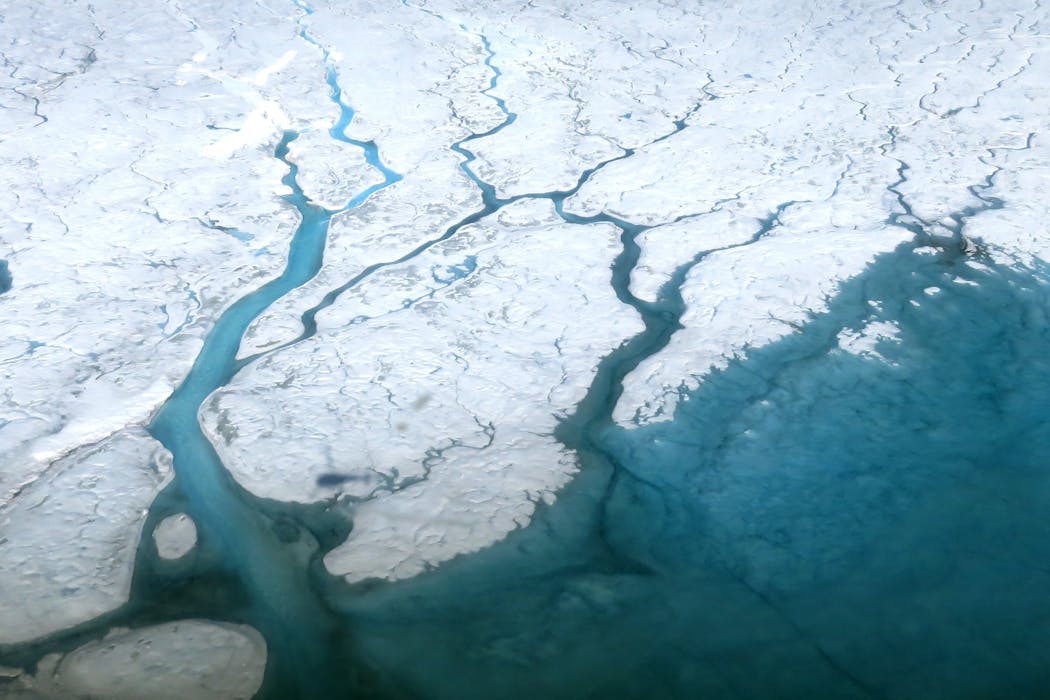
Meltwater runs across the Greenland ice sheet in rivers. The ice sheet is already losing mass and could soon reach a tipping point. Maria-José Viñas/NASA

As the planet warms, it risks crossing catastrophic tipping points: thresholds where Earth systems, such as ice sheets and rain forests, change irreversibly over human lifetimes.

Scientists have long warned that if global temperatures warmed more than 1.5 degrees Celsius (2.7 Fahrenheit) compared with before the Industrial Revolution, and stayed high, they would increase the risk of passing multiple tipping points. For each of these elements, like the Amazon rain forest or the Greenland ice sheet, hotter temperatures lead to melting ice or drier forests that leave the system more vulnerable to further changes.

Worse, these systems can interact. Freshwater melting from the Greenland ice sheet can weaken ocean currents in the North Atlantic, disrupting air and ocean temperature patterns and marine food chains.

World map showing locations for potential tipping points.
Pink circles show the systems closest to tipping points. Some would have regional effects, such as loss of coral reefs. Others are global, such as the beginning of the collapse of the Greenland ice sheet.
Global Tipping Points Report, CC BY-ND

With these warnings in mind, 194 countries a decade ago set 1.5 C as a goal they would try not to cross. Yet in 2024, the planet temporarily breached that threshold.

The term “tipping point” is often used to illustrate these problems, but apocalyptic messages can leave people feeling helpless, wondering if it’s pointless to slam the brakes. As a geoscientist who has studied the ocean and climate for over a decade and recently spent a year on Capitol Hill working on bipartisan climate policy, I still see room for optimism.

It helps to understand what a tipping point is – and what’s known about when each might be reached.

Tipping points are not precise

A tipping point is a metaphor for runaway change. Small changes can push a system out of balance. Once past a threshold, the changes reinforce themselves, amplifying until the system transforms into something new.

Almost as soon as “tipping points” entered the climate science lexicon — following Malcolm Gladwell’s 2000 book, “The Tipping Point: How Little Things Can Make a Big Difference” — scientists warned the public not to confuse global warming policy benchmarks with precise thresholds.

A tall glacier front seen from above shows huge chunks of ice calving off into Disko Bay.
The Greenland ice sheet, which is 1.9 miles (3 kilometers) thick at its thickest point, has been losing mass for several years as temperatures rise and more of its ice is lost to the ocean. A tipping point would mean runaway ice loss, with the potential to eventually raise sea level 24 feet (7.4 meters) and shut down a crucial ocean circulation.
Sean Gallup/Getty Images

The scientific reality of tipping points is more complicated than crossing a temperature line. Instead, different elements in the climate system have risks of tipping that increase with each fraction of a degree of warming.

For example, the beginning of a slow collapse of the Greenland ice sheet, which could raise global sea level by about 24 feet (7.4 meters), is one of the most likely tipping elements in a world more than 1.5 C warmer than preindustrial times. Some models place the critical threshold at 1.6 C (2.9 F). More recent simulations estimate runaway conditions at 2.7 C (4.9 F) of warming. Both simulations consider when summer melt will outpace winter snow, but predicting the future is not an exact science.

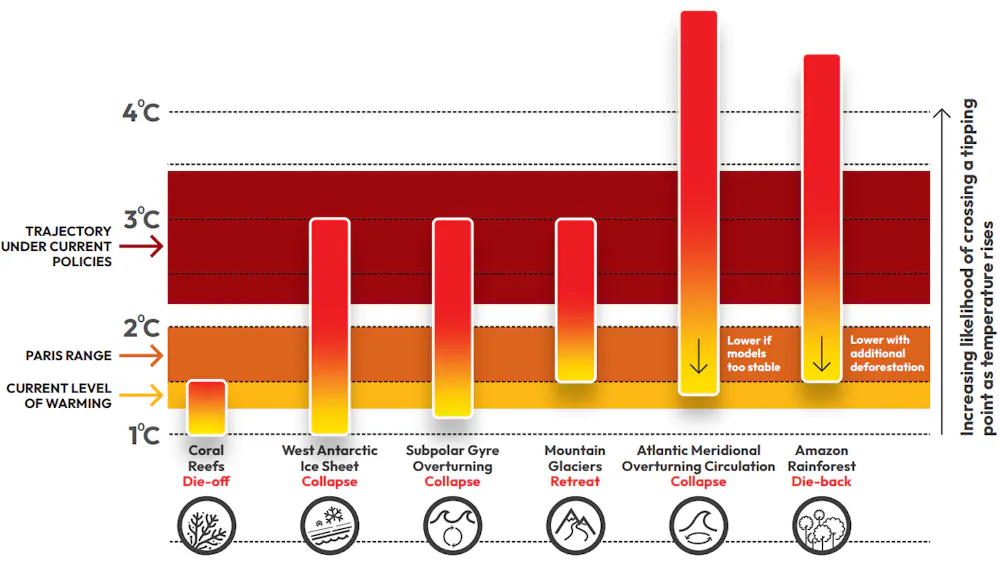
Bars with gradients show the rising risk as temperatures rise that key systems, including Greenland ice sheet and Amazon rain forest, will reach tipping points.
Gradients show science-based estimates from the Global Tipping Points Report of when key global or regional climate tipping points are increasingly likely to be reached. Every fraction of a degree increases the likeliness, reflected in the warming color.
Global Tipping Points Report 2025, CC BY-ND

Forecasts like these are generated using powerful climate models that simulate how air, oceans, land and ice interact. These virtual laboratories allow scientists to run experiments, increasing the temperature bit by bit to see when each element might tip.

Climate scientist Timothy Lenton first identified climate tipping points in 2008. In 2022, he and his team revisited temperature collapse ranges, integrating over a decade of additional data and more sophisticated computer models.

Their nine core tipping elements include large-scale components of Earth’s climate, such as ice sheets, rain forests and ocean currents. They also simulated thresholds for smaller tipping elements that pack a large punch, including die-offs of coral reefs and widespread thawing of permafrost.

A few fish swim among branches of a white coral skeleton during a bleaching event.
The world may have already passed one tipping point, according to the 2025 Global Tipping Points Report: Corals reefs are dying as marine temperatures rise. Healthy reefs are essential fish nurseries and habitat and also help protect coastlines from storm erosion. Once they die, their structures begin to disintegrate.
Vardhan Patankar/Wikimedia Commons, CC BY-SA

Some tipping elements, such as the East Antarctic ice sheet, aren’t in immediate danger. The ice sheet’s stability is due to its massive size – nearly six times that of the Greenland ice sheet – making it much harder to push out of equilibrium. Model results vary, but they generally place its tipping threshold between 5 C (9 F) and 10 C (18 F) of warming.

Other elements, however, are closer to the edge.

Alarm bells sounding in forests and oceans

In the Amazon, self-perpetuating feedback loops threaten the stability of the Earth’s largest rain forest, an ecosystem that influences global climate. As temperatures rise, drought and wildfire activity increase, killing trees and releasing more carbon into the atmosphere, which in turn makes the forest hotter and drier still.

By 2050, scientists warn, nearly half of the Amazon rain forest could face multiple stressors. That pressure may trigger a tipping point with mass tree die-offs. The once-damp rainforest canopy could shift to a dry savanna for at least several centuries.

Rising temperatures also threaten biodiversity underwater.

The second Global Tipping Points Report, released Oct. 12, 2025, by a team of 160 scientists including Lenton, suggests tropical reefs may have passed a tipping point that will wipe out all but isolated patches.

Coral loss on the Great Barrier Reef. Australian Institute of Marine Science.

Corals rely on algae called zooxanthellae to thrive. Under heat stress, the algae leave their coral homes, draining reefs of nutrition and color. These mass bleaching events can kill corals, stripping the ecosystem of vital biodiversity that millions of people rely on for food and tourism.

Low-latitude reefs have the highest risk of tipping, with the upper threshold at just 1.5 C, the report found. Above this amount of warming, there is a 99% chance that these coral reefs tip past their breaking point.

Similar alarms are ringing for ocean currents, where freshwater ice melt is slowing down a major marine highway that circulates heat, known as the Atlantic Meridional Overturning Circulation, or AMOC.

Two illustrations show how the AMOC looks today and its expected weaker state in the future
How the Atlantic Ocean circulation would change as it slows.
IPCC 6th Assessment Report

The AMOC carries warm water northward from the tropics. In the North Atlantic, as sea ice forms, the surface gets colder and saltier, and this dense water sinks. The sinking action drives the return flow of cold, salty water southward, completing the circulation’s loop. But melting land ice from Greenland threatens the density-driven motor of this ocean conveyor belt by dilution: Fresher water doesn’t sink as easily.

A weaker current could create a feedback loop, slowing the circulation further and leading to a shutdown within a century once it begins, according to one estimate. Like a domino, the climate changes that would accompany an AMOC collapse could worsen drought in the Amazon and accelerate ice loss in the Antarctic.

There is still room for hope

Not all scientists agree that an AMOC collapse is close. For the Amazon rain forest and the North Atlantic, some cite a lack of evidence to declare the forest is collapsing or currents are weakening.

In the Amazon, researchers have questioned whether modeled vegetation data that underpins tipping point concerns is accurate. In the North Atlantic, there are similar concerns about data showing a long-term trend.

A map of the Amazon shows large areas along its edges and rivers in particular losing tree cover
The Amazon forest has been losing tree cover to logging, farming, ranching, wildfires and a changing climate. Pink shows areas with greater than 75% tree canopy loss from 2001 to 2024. Blue is tree cover gain from 2000 to 2020.
Global Forest Watch, CC BY

Climate models that predict collapses are also less accurate when forecasting interactions between multiple tipping points. Some interactions can push systems out of balance, while others pull an ecosystem closer to equilibrium.

Other changes driven by rising global temperatures, like melting permafrost, likely don’t meet the criteria for tipping points because they aren’t self-sustaining. Permafrost could refreeze if temperatures drop again.

Risks are too high to ignore

Despite the uncertainty, tipping points are too risky to ignore. Rising temperatures put people and economies around the world at greater risk of dangerous conditions.

But there is still room for preventive actions – every fraction of a degree in warming that humans prevent reduces the risk of runaway climate conditions. For example, a full reversal of coral bleaching may no longer be possible, but reducing emissions and pollution can allow reefs that still support life to survive.

Tipping points highlight the stakes, but they also underscore the climate choices humanity can still make to stop the damage.

The Conversation

Alexandra A Phillips does not work for, consult, own shares in or receive funding from any company or organization that would benefit from this article, and has disclosed no relevant affiliations beyond their academic appointment.

ref. Climate tipping points sound scary, especially for ice sheets and oceans – here’s why there’s still room for optimism – https://theconversation.com/climate-tipping-points-sound-scary-especially-for-ice-sheets-and-oceans-heres-why-theres-still-room-for-optimism-265183

Unusual red rocks in Australia are rewriting the rules on exceptional fossil sites

Source: The Conversation – Global Perspectives – By Tara Djokic, Scientific Officer, Palaeontology, Australian Museum; UNSW Sydney

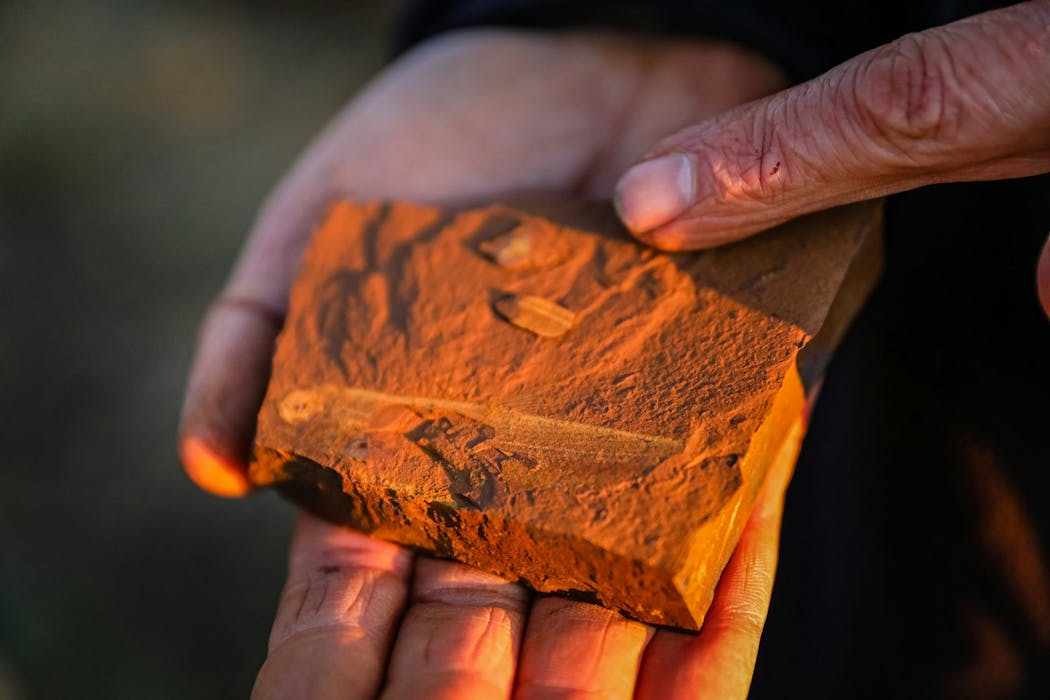
Fossilised fish from McGraths Flat. Salty Dingo

Hidden beneath farmland in the central tablelands of New South Wales lies one of Australia’s most extraordinary fossil sites – McGraths Flat. It dates back between 11 million and 16 million years into the Miocene epoch, a time when many of today’s familiar plants and animals evolved.

It is here that palaentologists and geologists from the Australian Museum Research Institute have made remarkable fossil discoveries. Where dust and drought now dominate, a lush rainforest once flourished. In stunning ecological detail, fossils at McGraths Flat reveal this ancient ecosystem.

Strikingly red in appearance, the sedimentary rocks here are composed entirely of goethite – a fine-grained mineral that contains iron. This iron has preserved a range of plants, insects, spiders, fish and feathers with exceptional detail.

Our new study, published in the journal Gondwana Research, shows there’s another reason these rocks are so intriguing. They fundamentally challenge ideas about where well-preserved fossil sites on Earth can be found, and why.

Large trapdoor spider fossil preserved on a red rock
A large trapdoor spider preserved in McGraths Flat.
Michael Frese

Beyond shale and sandstone

Traditionally, the most exceptionally well-preserved fossil sites are from rocks dominated by shale, sandstone, limestone, or volcanic ash.

Consider Germany’s Messel Pit or Canada’s Burgess Shale. At these sites, organisms were rapidly buried in fine-grained sediments, allowing the exceptional preservation of soft tissues, not just hard parts.

Messel Pit has preserved roughly 47 million-year-old fossils showing the outlines of feathers, fur and skin. Meanwhile, the Burgess Shale contains soft tissues from some of Earth’s earliest animal life, dating back about 500 million years.

By contrast, sedimentary rocks made entirely of iron are the last place you’d expect to find well-preserved remains of land-based (terrestrial) animal and plant life.

That’s because iron-rich sedimentary rocks are predominantly known from banded iron formations. These massive iron deposits largely formed around 2.5 billion years ago in Earth’s ancient oxygen-depleted oceans, long before complex animal and plant life evolved.

In more recent history, iron is considered a mere weathering product, forming rust on the continents when exposed to our oxygen-rich atmosphere. Just look at Australia’s iconic red-rocked outback landscape that preserves these million- to billion-year-old features.

Yet the discovery of McGraths Flat has defied these expectations.

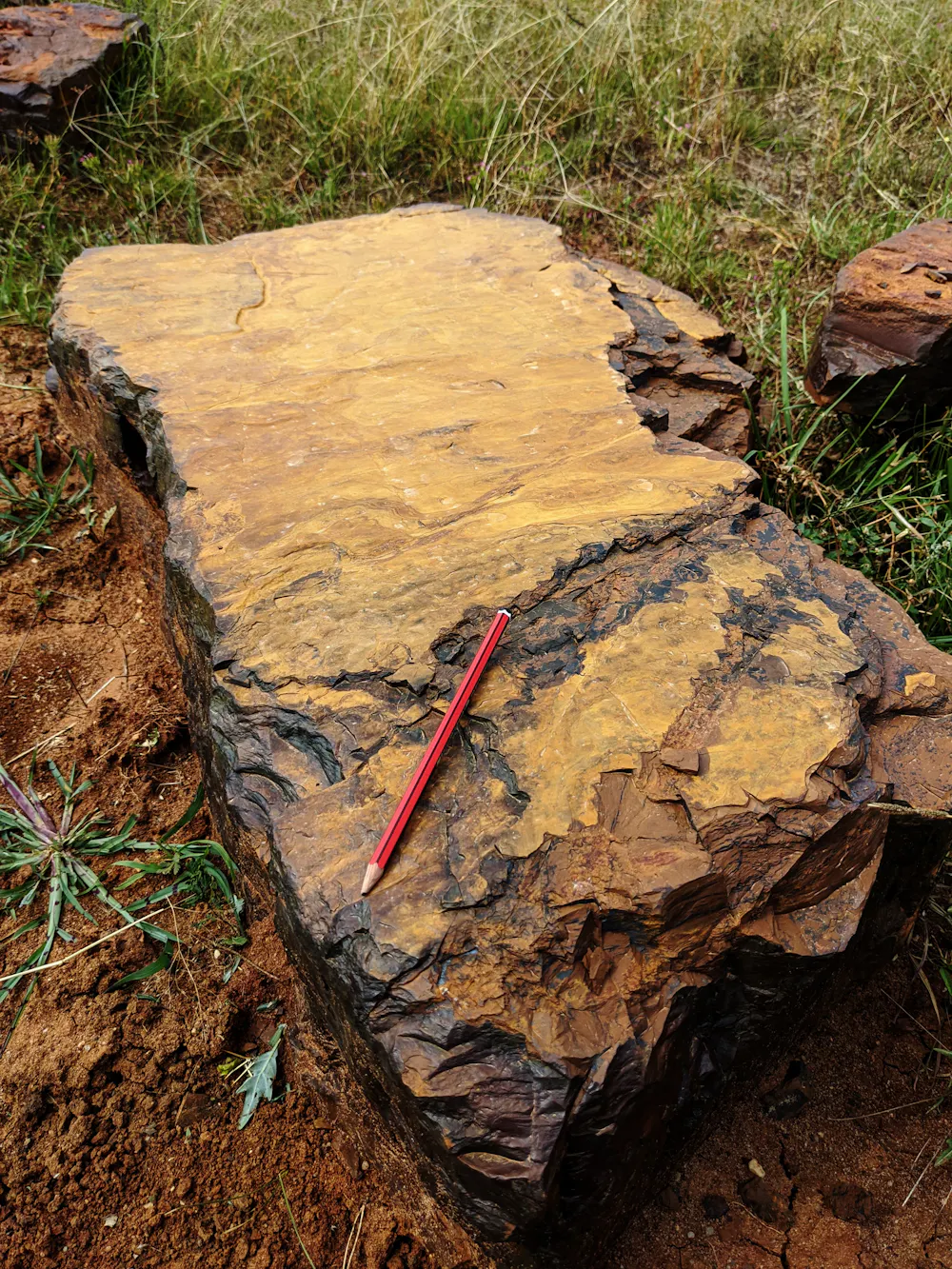
Large rectangular block of red rock composed of goethite, an iron-rich mineral.
Strikingly red fossil-bearing rocks of McGraths Flat, composed of an iron-oxyhydroxide mineral called goethite.
Tara Djokic

Terrestrial life entombed in iron

McGraths Flat is made from a very fine-grained, iron-rich rock called ferricrete. It’s essentially a cement made from iron.

The ferricrete consists almost entirely of microscopic iron-oxyhydroxide mineral particles, each just 0.005 millimetres across. When an animal died and was buried in the sediment, this minute scale is what allowed the iron particles to fill every cell. The result? Extraordinarily well-preserved soft tissue fossils.

Compared with marine life, fossil sites preserving terrestrial life are notoriously rare. Terrestrial sites that preserve soft tissues? Even rarer. The exceptional detail captured in the McGraths Flat fossils reveals new snapshots of past life we don’t often get to find.

These fossils are so perfectly preserved that individual pigment cells in fish eyes, internal organs of insects and fish, and even delicate spider hairs and nerve cells can be seen.

This level of preservation rivals other well-preserved fossil sites, such as those consisting of shale or sandstone. Except here, they are entombed in iron.

Three people, two men standing on either side of one woman, in a rural field wearing outdoor gear with work boots and wide brimmed hats.
Australian Museum Research Institute researchers Matthew McCurry, Tara Djokic and Patrick Smith (left to right), three of 15 co-authors who collaborated on this study published in Gondwana Research.
Salty Dingo

How did McGraths Flat form?

Our new study sheds light on how this fossil site came to be – a crucial step for finding similar terrestrial fossil troves in iron.

McGraths Flat began forming during the Miocene when iron leached from weathering basalt under warm, wet rainforest conditions.

Acidic groundwater then carried the dissolved iron underground until it reached a river system with an oxbow lake – an abandoned river channel. There, the iron became ultra-fine iron-oxyhydroxide sediment.

It rapidly coated dead organisms on the lake floor and replicated their soft tissue structures down to the cellular level.

A new fossil roadmap

Understanding how McGraths Flat formed could provide a roadmap for finding similar iron-rich fossil sites worldwide.

Key features to look for include very fine-grained and finely layered ferricrete in areas where:

  • ancient river channels cut through older iron-rich landscapes, such as basaltic rocks from volcanoes

  • ancient warm, humid conditions once promoted intense weathering, and

  • the surrounding geology lacks significant limestone or sulphur-containing minerals (such as pyrite), because these could interfere with the formation of the iron-oxyhydroxide mineral sediments.

The red rocks of McGraths Flat open an entirely new chapter in our understanding of how exceptionally well-preserved fossil sites can form.

The next breakthrough in understanding ancient terrestrial life might not come from traditional shale or sandstone fossil beds, but from rusty-red rocks hidden beneath our feet.

Four people kneeling on the ground over red rocks, with hammer and chisels spitting the rocks apart to search for fossils.
Palaeontologists from the Australian Museum Research institute at the McGraths Flat field site, splitting the red rocks apart with a hammer and chisel to search for fossils.
Tara Djokic

The study’s authors acknowledge the traditional custodians of the land and waterways on which McGraths Flat is located, the Wiradjuri Nation people.

The Conversation

Tara Djokic and co-authors received funding for this research from the Etheridge family descendants; Australian Museum Research Institute, Australian Museum Trust; and Australian Research Council (ARC). We acknowledge the scientific and technical assistance of Microscopy Australia, especially from the Centre for Advanced Microscopy, ANU (jointly funded by the ANU and the Australian Federal Government).
Tara is affiliated with the not-for-profit organisation Women in Earth and Environmental Sciences Australasia (WOMEESA).

ref. Unusual red rocks in Australia are rewriting the rules on exceptional fossil sites – https://theconversation.com/unusual-red-rocks-in-australia-are-rewriting-the-rules-on-exceptional-fossil-sites-266904

Will Trump’s ceasefire plan really lead to lasting peace in the Middle East? There’s still a long way to go

Source: The Conversation – Global Perspectives – By Andrew Thomas, Lecturer in Middle East Studies, Deakin University

The first steps of the peace plan for Gaza are underway. Now both parties have agreed to terms, Hamas is obligated to release all hostages within 72 hours and the Israeli Defence Forces (IDF) will withdraw to an agreed-upon line within the strip.

Hopes are high, particularly on the ground in Gaza and in Israel after two years of brutal conflict. Some argue the parties are now closer than ever to an end to hostilities, and US President Donald Trump’s 20-point peace plan may be an effective road-map.

But the truth is we have been here before. Hamas and Israel have now agreed to a road-map to peace in principle, but what is in place today is very similar to ceasefire deals in the past, and a ceasefire is not the same as a peace deal or an armistice.

The plan is also very light on specifics, and the devil is definitely in the detail. Will the IDF completely withdraw from Gaza and rule out annexation? Who will take on governance of the strip? Is Hamas going to be involved in this governance? There were signs of disagreement on these issues even before the fighting stopped.

So if the ceasefire steps hold in the short term – then what? What would it take for the peace plan to be successful?

First, the political pressures to refrain from resuming hostilities will need to hold. Once all the hostages are returned, which is expected to take place by Tuesday Australian time, Hamas effectively loses any remaining leverage for future negotiations if hostilities were to resume.

Once the hostage exchange is complete, it’s likely Israeli Prime Minister Benjamin Netanyahu will see some pressure from his right to resume hostilities.

With Hamas relinquishing this leverage, it will be essential for the Israeli government to see these negotiations and the end of the war as fundamental to its long term interests and security for peace to hold. There must be a sincere desire to return to dialogue and compromise, not the pre-October 7 2023 complacency.

Second, Hamas will likely have to relinquish its arms and any political power in Gaza. Previously, Hamas has said it would only do this on the condition of recognition of a sovereign Palestinian state. As recently as October 10, factions in Gaza have said they would not accept foreign guardianship, a key part of the peace plan, with governance to be determined “by the national component of our people directly”.

Related to this, any interim governance or authority that takes shape in Gaza must reflect local needs. The proposed “body of peace” headed by Trump and former UK prime minister Tony Blair, could risk repeating previous mistakes of cutting Palestinians out of discussions over their own future.

Part of the peace deal is the resumption of humanitarian aid flows, but the fate of the Gaza blockade that has been effectively in place since 2007 is unclear. The land, sea and air blockade, which was imposed by Egypt and Israel following Hamas’ political takeover of Gaza, heavily restricts imports and the movement of Gazans.

Prior to October 2023, unemployment in the strip sat at 46%, and 62% of Gazans required food assistance as a result of the limits placed on imports, including basic food and agricultural items such as fertiliser.

Should the blockade continue, at best Israel will create the same humanitarian conditions in Gaza of food, medical and financial insecurity that existed prior to the October 7 attacks. While conditions and restrictions are orders of magnitude worse in Gaza today, NGOs called early incarnations of the blockade “collective punishment”. For peace to hold in the strip, security policy needs to be in line with global humanitarian principles and international law.

Most importantly, however, all parties involved must see peace in Gaza as fundamentally connected to broader peace between Israelis and Palestinians. Seeing the Gaza conflict as discrete and separate from the broader Palestinian-Israeli conflict would be a mistake. Discussions of Palestinian national self-determination in Gaza and the West Bank must be taken seriously and be a central part of the plan for peace to last.

While the 20-point plan mentions a “credible pathway to Palestinian self-determination and statehood”“, history tells us these pathways struggle to get past the rhetoric stage.

Many challenges stand in the way, including Israeli settlement and annexation, the status of Jerusalem and the question of demilitarisation.

A meaningful step would be for the US to refrain from using its veto power at the UN Security Council (UNSC) against votes supporting Palestinian statehood. While several states recognised a Palestinian state at the recent UN General Assembly, the US has blocked formal status at the UNSC every time.

Despite all these concerns, any pause in hostilities is undeniably a good thing. Deaths from October 7 2023 number nearly 70,000 in total, with 11% of Gaza’s population killed or injured and 465 Israeli soldiers killed. The resumption of aid delivery alone will go far in addressing the growing famine in the strip.

However, peace deals are incredibly difficult to negotiate at the best of times, requiring good faith, sustained commitment and trust. The roots of this conflict reach back decades, and mutual mistrust has been institutionalised and weaponised. Difficulties in negotiating the Oslo Accords in the 1990s showed just how deep the roots of the conflict are. The situation is now much worse.

It is not clear if any party involved in negotiation possesses the political will needed to reach an accord. However, an opportunity exists to reach one, and it should not be taken for granted.

The Conversation

Andrew Thomas does not work for, consult, own shares in or receive funding from any company or organisation that would benefit from this article, and has disclosed no relevant affiliations beyond their academic appointment.

ref. Will Trump’s ceasefire plan really lead to lasting peace in the Middle East? There’s still a long way to go – https://theconversation.com/will-trumps-ceasefire-plan-really-lead-to-lasting-peace-in-the-middle-east-theres-still-a-long-way-to-go-267112

Why Trump is not a death knell for global climate action

Source: The Conversation – Global Perspectives – By Matt McDonald, Professor of International Relations, The University of Queensland

GettyImages Rasid Necati Aslim/Getty

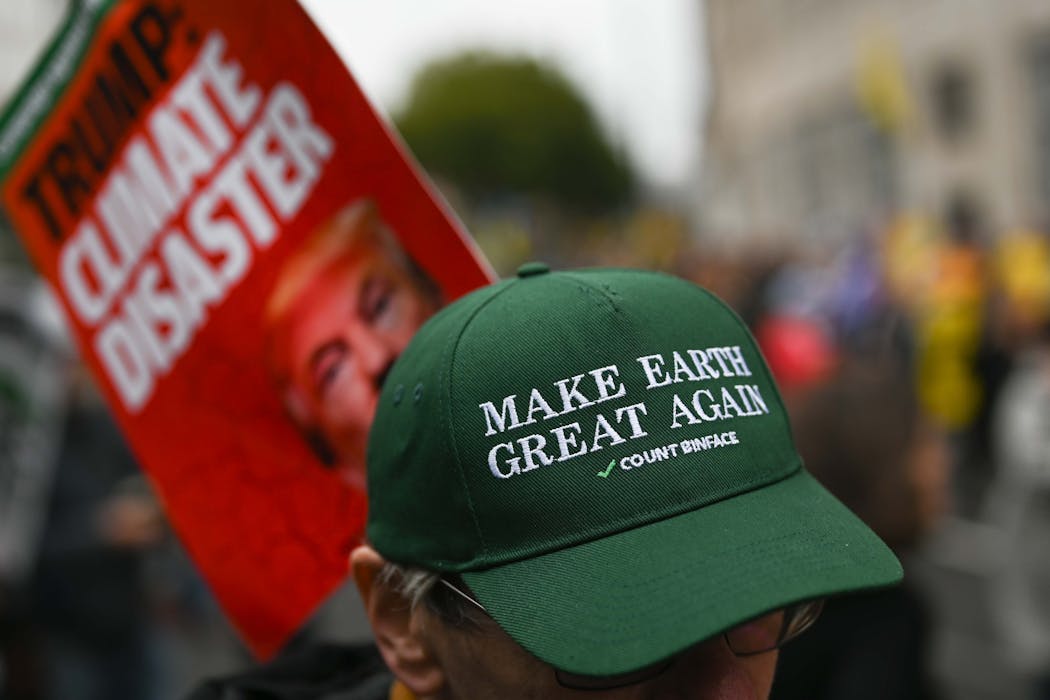
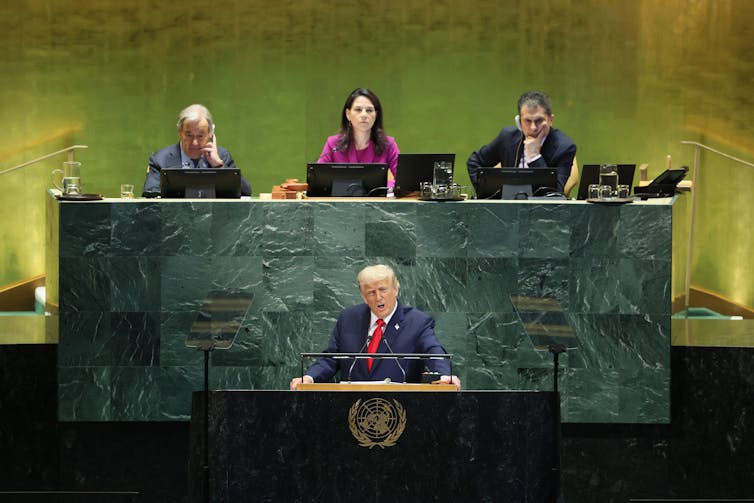
In his rambling speech to the United Nations last month, United States President Donald Trump described climate change as “the greatest con job ever perpetrated on the world”.

Of course, this claim was unfounded, ignoring the overwhelming scientific evidence that climate change is occurring.

It was also unlikely to convince gathered dignitaries, who appeared bemused by a speech better suited to a campaign rally than a presidential address to world leaders.

But coming on the eve of the crucial global COP30 climate talks in Brazil, the speech does raise the question: what does the second Trump administration mean mean for international climate action?

US President Donald Trump addresses the UN, while three dignitaries sit behind him
US President Donald Trump speaks during the United Nations General Assembly on September 23, 2025 in New York City.
Michael M. Santiago/Getty

Trump digs coal

Beyond enabling climate denialists and disinformation peddlers, Trump has ultimately delivered on his campaign promise to aggressively support the US fossil fuel sector. In his words: “drill, baby, drill”. Or, more recently: “mine, baby, mine”.

Soon after his inauguration, Trump signed an executive order to withdraw the US from the Paris Agreement, the legally binding UN treaty aimed at limiting global temperature rise well below 2°C degrees over pre-industrial levels.

Last month, Trump announced a plan to open up 13 million acres of federal land for coal mining, and offered hundreds of millions in federal subsidies for coal projects.

He has ordered the removal of climate data from government sites and all but eliminated direct government funding for climate science research and monitoring.

And he has gutted the Inflation Reduction Act, the signature climate initiative of the Biden administration that was designed to stimulate large-scale investment in renewable energy.

All told, Trump’s initiatives are likely to mean an additional 7 billion tonnes of emissions will be created compared to a scenario where the US met its Paris commitments.

This is bad news. But what implications will it have for international climate cooperation?

Dark clouds on the climate horizon

Clearly, 7 billion tonnes of additional emissions is a problem. By some accounts, this represents around one fifth of the global carbon budget if we are to keep to the Paris target of under 2°C.

And when the world’s most powerful state, largest economy and second-largest greenhouse gas emitter walks away from the United Nations Framework Convention on Climate Change (UNFCC), it does not bode well for international climate action.

Of course this raises the question of how the Brazilian climate talks organisers can motivate states to adopt strong emissions targets when wealthy, high-emitting countries walk away. There is a real risk the US position takes the pressure off other high-emitting countries, such as the Gulf States and Russia, who are disproportionately responsible for the problem.

Finally, climate finance – financial resources used to support action on climate change – looms once again as a crucial issue at climate negotiations. Securing sufficient funding will be far more complicated given Trump’s “America First” platform, which prioritises foreign and domestic policies serving US interests.

Despite this, there are still grounds to be optimistic.

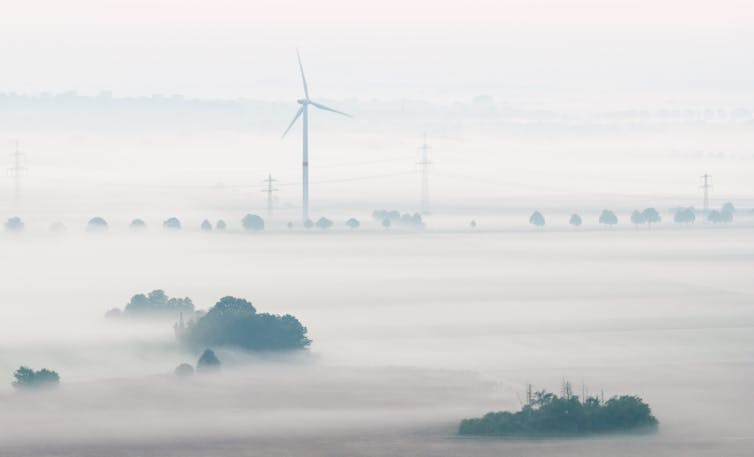
A wind turbine stands in a foggy field in France.
Global emissions have likely peaked, driven by the increase in renewable energy.
Julian Stratenschulte/Getty Images

Leadership without the US

A first point in the case for cautious optimism is that global emissions have potentially peaked and are on the verge of decline for the first time since the Industrial Revolution.

This has been driven by unprecedented global investment in renewable energy. The energy market is changing rapidly despite aggressive US subsidies for the fossil fuel sector. Global energy investment is likely to top A$1.5 trillion in 2025. Meanwhile, coal, oil and natural gas will see the first decline in global investment since the COVID pandemic.

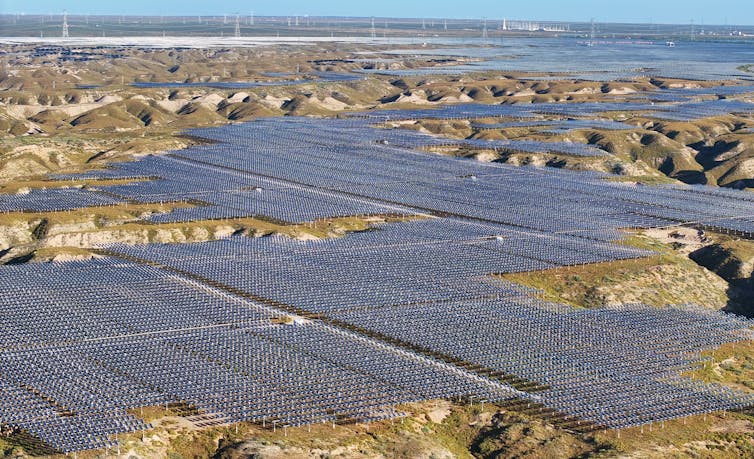
There are also signs other countries, like China, view the US position as an opportunity. Last month Beijing outlined a target for emissions reduction (7–10% by 2035) for the first time in its history. Even though China is still adding to its fleet of coal-fired power stations, it is also adding more solar and wind capacity than the rest of the world combined.

China may want to make a case for itself as a responsible global leader in contrast to the US. This could in turn advance China’s strategic interests in regions such as the Pacific which are acutely vulnerable to climate effects.

An aerial shot of a a huge swathe of solar panels in China.
Solar panels are seen on fields and hilltops in Yinchuan, China’s northern region. China – the world’s largest emitter of greenhouse gases – is rapidly expanding renewables.
AFP/Getty

So far, there’s no evidence countries have used US backsliding as an excuse to pull back from international cooperation. No country has left the Paris agreement since Trump’s withdrawal.

In 2001, when the Bush administration signalled the US wouldn’t ratify the Kyoto Protocol, Australia’s Prime Minister John Howard soon followed suit.

But in 2025, only months after the US withdrew from Paris, Prime Minister Anthony Albanese outlined an increased emissions target.

Even at home, Trump’s position has not amounted to a death knell for climate action. California, whose governor Gavin Newsom famously parodied Trump’s communication style on social media, already oversees one of the world’s largest emissions trading schemes and has entered into a climate partnership with Brazil to further cooperation ahead of COP30.

All in all, there are grounds for cautious optimism, even hope, that the rest of the world might band together without US leadership.

Eyes on COP

Negotiators at next month’s COP30 talks will face formidable challenges which have only become more pressing as a result of the Trump administration’s climate stance.

But past experience suggests hard-fought COP negotiations can build strong momentum for global action by focusing international attention.

Perhaps they can build pressure on the US to come back into the fold, or at least enable pro-climate actors within the US to pursue reform despite President Trump’s interference.

The Conversation

Matt McDonald has received funding from the Australian Research Council and the Economic and Social Research Council in the UK.

ref. Why Trump is not a death knell for global climate action – https://theconversation.com/why-trump-is-not-a-death-knell-for-global-climate-action-266350

Misma enfermedad, distinto tratamiento: por qué no todos necesitamos la misma dosis de fármacos

Source: The Conversation – (in Spanish) – By Dra. Cristina Belén García García, Profesora titular Biología Celular y Molecular. Facultad de Ciencias de la Salud, Universidad San Jorge

Quality Stock Arts/Shutterstock

Resulta bastante obvio que no todos los seres humanos somos iguales. ¿Acaso no nos diferencian aspectos tan llamativos como el color de los ojos y del pelo, que podamos enrollar o no nuestra lengua o que nos parezcamos más a nuestro padre o a nuestra madre? Por tanto, no es de extrañar que el efecto que tienen los medicamentos en las distintas personas también pueda variar.

Estas variaciones son objeto de estudio de una disciplina denominada farmacogenética. Se trata de un campo de la medicina que estudia cómo los genes de una persona pueden afectar a la forma en que su cuerpo responde a los medicamentos. Esto implica, entre otras cosas, que no todas las personas que comparten una enfermedad o necesitan tomar un mismo fármaco requieren la misma dosis. Porque cada cual tiene una combinación única de genes que influyen en su forma concreta de interactuar con los medicamentos.

Pautas y dosis a medida del paciente

Prescribir cada compuesto terapéutico con pautas y dosis específicas para cada individuo, en lugar de generalizar un mismo tratamiento para todos, mejoraría la efectividad y la seguridad de los tratamientos. Entre otras cosas porque si alguien tiene una variante genética que hace que procese un medicamento más rápido, puede necesitar una dosis más alta para que el tratamiento sea efectivo. Y si otro individuo presenta una variante que hace que sea más sensible a un fármaco, requerirá una dosis más baja para sanar sin afrontar una avalancha de efectos secundarios.

En algunos casos se complica porque el mismo medicamento puede tener incluso consecuencias diferentes cuando está implicado un gen que puede ser muy variable genéticamente. Esto ocurre, por ejemplo, en el caso de pacientes en tratamiento con codeína, usada para disminuir el dolor: para una serie de variantes genéticas existe un riesgo de toxicidad grave, mientras que para otras predispone a una falta de efecto analgésico.

El área en la que más se ha desarrollado esta ciencia es en el tratamiento del cáncer. De hecho, uno de los ejemplos más recientes en España corresponde a la alerta de seguridad que se publicó en 2020 por parte de la Agencia Española de Medicamentos y Productos Sanitarios (AEMPS. Se trató como una alerta sanitaria que recomendaba llevar a cabo un análisis de la deficiencia de la enzima DPD (dihidropirimidina deshidrogenasa) en pacientes candidatos a recibir tratamiento antitumoral con fluoropirimidinas. En caso de tener una deficiencia de dicha enzima, se debería optar por un medicamento alternativo.

A pesar de que existen limitaciones, Estados Unidos lidera la integración de la farmacogenética en la atención clínica de los pacientes a nivel de infraestructura y políticas públicas. Mientras, España está progresando con iniciativas sólidas regionales, aunque necesitamos mayor formación de los profesionales sanitarios y cobertura uniforme para todos los pacientes.

La farmacogenética en España

En España, el Consejo Interterritorial del Sistema Nacional de Salud aprobó, en junio de 2023, la inclusión de pruebas farmacogenéticas en la cartera común de servicios del Sistema Nacional de Salud junto con el Ministerio de Sanidad. El objetivo era mejorar la equidad y la homogeneidad en el acceso a estas pruebas. De esta forma, se reconoce la importancia de la constitución genética de los pacientes para los resultados de los tratamientos farmacológicos.

En concreto, el acuerdo permite a los profesionales sanitarios utilizar un paquete básico de 12 genes para analizar la respuesta de los pacientes a 65 fármacos de diversas especialidades. España se ha convertido, así, en el primer país europeo con un programa asistencial de farmacogenética de este nivel.

La Sociedad Española de Farmacogenética y Farmacogenómica (SEFF], que vela por el desarrollo y la difusión de esta ciencia en España, ha creado guías de recomendación accesibles y vídeos para diferentes medicamentos: abacavir, alopurinol, atomoxetina, carbamazepina y oxcarbazepina, clopidogrel, codeína-tramadol, fluoropirimidinas, inhibidores de la bomba de protones (como omeprazol), irinotecan, pimozida, siponimod, tamoxifeno, tiopurinas y voriconazol.

La farmacogenética, salta a la vista, es una ciencia en expansión que ya está ayudando a los profesionales sanitarios a implementar una medicina personalizada de precisión.

The Conversation

Las personas firmantes no son asalariadas, ni consultoras, ni poseen acciones, ni reciben financiación de ninguna compañía u organización que pueda obtener beneficio de este artículo, y han declarado carecer de vínculos relevantes más allá del cargo académico citado anteriormente.

ref. Misma enfermedad, distinto tratamiento: por qué no todos necesitamos la misma dosis de fármacos – https://theconversation.com/misma-enfermedad-distinto-tratamiento-por-que-no-todos-necesitamos-la-misma-dosis-de-farmacos-262356

Soy Superratón y he salvado muchas vidas

Source: The Conversation – (in Spanish) – By Francisco José Esteban Ruiz, Profesor titular de Biología Celular, Universidad de Jaén

l i g h t p o e t/Shutterstock

Hola.

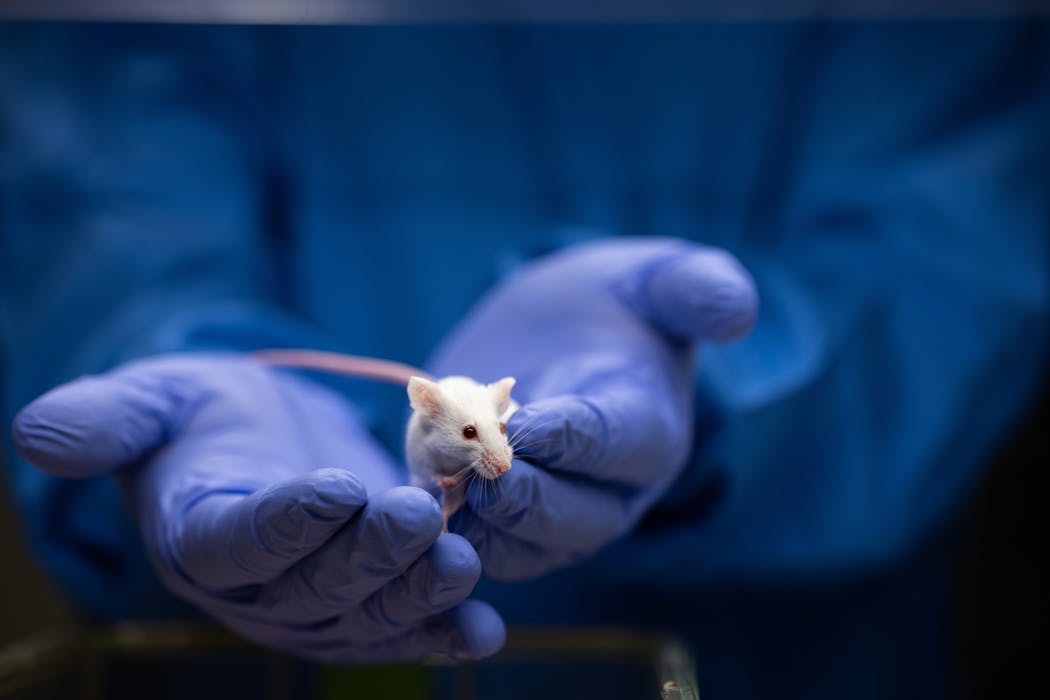
Soy Superratón, pero no aquel que salía en los cómics y en la televisión. Yo soy de verdad. No tengo capa, ni vuelo, ni soy superfuerte, pero he salvado la vida de muchos individuos de vuestra especie.

Gracias a mí, y a otros como yo, hoy existen vacunas, antibióticos, tratamientos contra el cáncer y fármacos que controlan la epilepsia o la depresión. Sí, he sido parte silenciosa de algunos de los mayores logros de la medicina moderna. Y aquí va mi historia.

Una vida distinta, pero cuidada

Mi vida no transcurre entre madrigueras ni túneles oscuros. Vivo bajo el cuidado de personas con bata blanca que me alimentan, me limpian y me atienden con respeto.

No corro libre por los campos como mis primos, pero tampoco me falta atención. Para ellos, y para todos los que me conocen, soy un héroe. Mi misión es ayudar a comprender cómo funciona la vida y cómo vencer las enfermedades.

Lo que hemos conseguido

En algunos laboratorios he visto carteles con mi foto que decían: “Este animal ha salvado más vidas que el 112”. Y tienen razón. Si la penicilina pudo convertirse en el antibiótico universal que cambió la historia de la medicina fue porque ratones como yo demostramos su eficacia hasta llegar al frente en la Segunda Guerra Mundial.

Desde hace siglos, los animales hemos acompañado al ser humano en su intento de entender la salud y la enfermedad. Ya en el Corpus Hippocraticum (siglo IV a. e. c.) se describían experimentos en cerdos, y en el siglo XIX fueron Pasteur y Koch quienes, a través de estudios en animales, demostraron la relación entre microbios y enfermedades, abriendo así el camino a vacunas y tratamientos eficaces.

Además, hemos sido protagonistas en el nacimiento de la inmunología moderna, ya que de nuestras células surgieron, en los años setenta, los primeros anticuerpos monoclonales. Estos anticuerpos son hoy imprescindibles en terapias contra el cáncer, las enfermedades autoinmunes o el alzhéimer, por citar algunas.

También hemos acompañado el desarrollo de modelos de cáncer que revelaron cómo ciertos genes provocan o frenan tumores. Por ejemplo, fuimos nosotros quienes comprobamos el papel de algunos de estos genes en el cáncer de mama, lo que permitió desarrollar terapias dirigidas, que hoy salvan la vida a miles de mujeres.

Durante la pandemia, nos pusimos manos a la obra para ensayar rápidamente vacunas y antivirales frente al virus causante de la covid-19. En una carrera a contrarreloj, las vacunas llegaron en menos de un año y, solo en Europa salvaron más de 1,6 millones de vidas.

En la actualidad, nos orgullece nuestro imprescindible papel en el estudio de la lesión de la médula espinal, pues estamos identificando mecanismos de regeneración neuronal y sus posibles terapias.


Leer más:
¿Para qué se crean animales transgénicos?


Somos pequeños, sí, pero coincidimos con los humanos en la mayoría de los genes relacionados con enfermedades. Aunque nuestro corazón late más deprisa y nuestras vidas son más cortas, compartimos procesos biológicos de un modo sorprendentemente parecido. Eso nos convierte en compañeros de viaje indispensables para entender el cerebro, el corazón, el sistema inmune o el metabolismo.

Y no todo en el laboratorio es serio. A veces, recorro laberintos en los que cada giro es un reto y cada salida una recompensa. Mientras yo juego, los investigadores aprenden cómo se forman y se pierden los recuerdos.

No estamos solos

En el laboratorio no estoy solo. Hay otros animales que también han hecho posible grandes avances. Por ejemplo, cuando veáis un pez cebra pensad en que su transparencia permitió observar en directo cómo se forman los órganos.

Si alguna vez os cruzáis con una mosca de la fruta, recordad que gracias a ella entendimos la herencia genética. Y las ovejas nos recuerdan a Dolly, fruto de la primera clonación de un mamífero, además de seguir siendo siendo modelos muy valiosos en estudios de pulmón y terapia génica.

Los cerdos han abierto el camino para que los trasplantes de órganos entre especies estén cada vez más cerca de ser una realidad. Y los primates no humanos han sido esenciales en la investigación sobre la depresión, la enfermedad de Parkinson o el desarrollo de vacunas frente al VIH/sida, tareas tan difíciles como imprescindibles.

El precio de mi misión

Sé que mi tiempo es breve. A veces pruebo fármacos nuevos o participo en estudios que ayudan a las gentes de ciencia a entender cómo reacciona un organismo. No siempre es fácil, pero cada experiencia se transforma en conocimiento que salva no solo vidas humanas, sino también la de otros animales.

No escribo estas líneas para pedir compasión. Me cuidan, me respetan y existen leyes que garantizan que mi papel sea limitado y necesario. Mi especie colabora en la ciencia porque vosotros, los humanos, os habéis comprometido a que nuestro esfuerzo tenga sentido.

El futuro que deseo

Sé que llegará un día en el que ya no se necesiten ni ratones como yo ni, quizás, ningún animal. Ya se están desarrollando órganos en miniatura, modelos por ordenador e inteligencia artificial capaces de simular funciones de un organismo. Algún día esas alternativas puede que sean suficientes.

Y, creedme, yo seré el primero en celebrarlo porque la ciencia habrá encontrado un camino más ético, más preciso y más rápido para descubrir cómo curar enfermedades. Hasta entonces, aquí seguiré y seguiremos colaborando en silencio.

Seguimos en contacto

Tal vez os sorprenda leer una carta escrita por un ratón. Pero creo que imaginar mi voz puede ayudar a comprender que la investigación con animales no es un capricho sino un dilema ético complejo y, todavía hoy, una herramienta poderosa para salvar vidas.

Cuando escuchéis un latido que resiste a la enfermedad, cuando una respiración se recupere, cuando una familia vuelva a abrazar a quien ama gracias a la medicina, pensad que quizá un pequeño ratón estuvo detrás.

No soy un superhéroe de dibujos animados. Soy Superratón, un ratón de laboratorio, sencillo y discreto. Y mi vida, breve y cuidada, late junto a las vuestras.

Con afecto,

Superratón

The Conversation

Francisco José Esteban Ruiz recibe fondos para investigación del Ministerio de Ciencia e Innovación, la Agencia Estatal de Investigación (AEI) y el Fondo Europeo de Desarrollo Regional (FEDER) bajo el proyecto PID-156228NB-I00, y de la Consejería de Salud y Consumo, Junta de Andalucía (PIP-0113-2024).

ref. Soy Superratón y he salvado muchas vidas – https://theconversation.com/soy-superraton-y-he-salvado-muchas-vidas-265957

¿Cómo es una comunicación jurídica clara? Pautas para acercar el derecho a la ciudanía

Source: The Conversation – (in Spanish) – By Cristina Carretero González, Profesora Doctora de Derecho Procesal e investigadora en Derecho y Lenguaje, Universidad Pontificia Comillas

fitzkes / shutterstock CC BY

El lenguaje jurídico es uno de los más técnicos y específicos que pueden encontrarse en la comunicación humana. Para quienes hemos estudiado Derecho, que nos hablen de una cláusula “rebus sic stantibus”, o palabras como “precepto”, “fallo” o “tipificación” forma parte de nuestro día a día y no supone ningún esfuerzo extra de comprensión.

Pero el lenguaje jurídico también se usa para comunicar a la ciudadanía cuestiones importantes relativas a sus derechos y obligaciones, desde sentencias judiciales a contratos legales. Por eso habría que revisar siempre las comunicaciones jurídicas cuando su destinatario no pertenece a este ámbito.

Pensemos en la siguiente frase: “El Tribunal del Jurado es competente para el conocimiento y fallo de las causas por los delitos tipificados en determinados preceptos del Código Penal y recogidos en la ley que lo regula”. Aparentemente sencilla, pero ¿qué quiere decir? ¿Se podría formular de una manera más clara?

“Competente” significa que tiene autoridad para encargarse de algo determinado. El “conocimiento y fallo de las causas” implica que un tribunal del jurado (los jurados y el magistrado presidente que lo componen) enjuicia y sentencia. Las “causas” son los casos o conflictos que se plantean en esos tribunales. Los delitos “tipificados” son los que están descritos legalmente como delitos con sus elementos particulares. “Determinados preceptos” son las normas.

Así, cuando se quiere comunicar con una sencillez y claridad que posibilite la comprensión por la mayoría de receptores, ¿por qué no decir?: “El Tribunal del Jurado enjuicia y decide sobre ciertos delitos recogidos en su ley y descritos en el Código Penal”.


Leer más:
20 consejos sencillos para comunicar eficazmente en Internet


Una nueva norma europea

En agosto de 2025, la Organización Internacional de Normalización (una organización internacional independiente que reúne a expertos de todo el mundo para acordar las mejores formas de hacer las cosas) publicó la norma 24495-2: 2025 sobre comunicación jurídica clara. Se trata de una serie de pautas o recomendaciones internacionalmente acordadas para lograr una comunicación jurídica clara y, cuando sus destinatarios no sean especialistas, sencilla.

El objetivo no es comunicar el derecho de modo ramplón e impreciso, sino que resulte eficaz según el destinatario. Es decir, que pueda comprenderse, sin especial dificultad, por quienes debamos leerlo o escucharlo para obedecerlo, aplicarlo o hacerlo valer, según proceda del poder legislativo, del ejecutivo y de sus administraciones o del judicial.

Pautas de comunicación jurídica clara y sencilla

La nueva norma desarrolla los principios y directrices del lenguaje claro y sencillo, a partir de otras iniciativas previas no específicamente dirigidas a la comunicación jurídica. Busca que un mismo texto pueda ser entendido por distintos destinatarios, explicando procesos y conceptos jurídicos complejos.

Cada documento jurídico con un destinatario no especializado tendría seguir cuatro principios básicos para resultar comprensible:

  1. Ser relevante y concreto: debe tratar un tema concreto, sin irse por las ramas, e informar únicamente de lo que se necesite saber.

  2. Que la información sea fácilmente localizable. Los documentos deben estar estructurados de manera que los datos necesarios sean detectables: utilizar encabezamientos y situar la información complementaria en un lugar secundario. Por ejemplo, como puede ocurrir en un contrato, se propone formular los encabezamientos o títulos como preguntas: “¿Cómo puedo ampliar el plazo?”

  3. Que la información sea comprensible. Las frases de la comunicación deben estar redactadas de forma clara y concisa, con la elección adecuada de las palabras para que resulten comprensibles por cada tipo de destinatario y según el supuesto. Además, podrían aportarse imágenes o elementos multimedia cuando proceda.

    Por ejemplo, la frase: “Cualquier controversia que surja del presente contrato podrá ser resuelta por los tribunales del fuero de firma del mismo” resulta comprensible para un jurista, pero para un público más amplio no tanto. Podría redactarse más sencillamente así: “Si surgen disputas derivadas de este contrato, podrán resolverse en los tribunales del lugar donde este se firmó”.

  4. Que sea información práctica, y pueda utilizarse. Para cumplir este principio, el documento debe evaluarse al final de su redacción con una lista de verificación. Por ejemplo: ¿Son claras y concisas las frases? O ¿he elegido palabras que sean familiares para los lectores?


Leer más:
La comunicación clara como herramienta para mejorar las alertas por emergencia


Una comunicación muy presente en el día a día

Una comunicación jurídica clara y, cuando resulte pertinente, sencilla, ahorra costes, disputas inútiles y tiempo: minimiza las dudas, elimina malentendidos y evita tiempos de consulta y de aclaraciones.

Además de facilitar a la ciudadanía el acceso a la justicia y a las administraciones, algo que es un derecho, cuanto más claras y sencillas sean las comunicaciones, menos errores ocurrirán. Si en lugar de utilizar la expresión “dies a quo” en un plazo, utilizo la palabra “inicio”, evito la duda y el error en el cómputo, por ejemplo. Además, la claridad es más necesaria que nunca en el uso de la tecnología.

El lenguaje jurídico ha de avanzar en consonancia con un mundo en el que todas las comunicaciones se vuelven más ágiles, comprensibles y eficaces.

Adaptaciones al contexto español

Las recomendaciones de la norma, que han sido consensuadas a nivel internacional, son complementarias a las normas de cada país. En España ya existen algunas guías y recomendaciones no obligatorias. Por ejemplo, el derecho a un lenguaje claro en los tribunales: los juristas hispanohablantes contamos ya con un Libro de estilo de la Justicia, de 2017, de la RAE y del CGPJ, detallado y con recomendaciones específicas y particulares en nuestra cultura jurídica.

Pero, además, la norma internacional debería contar con una traducción al castellano, con las modificaciones necesarias para amoldarla a las peculiaridades nacionales.

Los retos de simplificar

Las comunicaciones y escritos jurídicos pueden pasar por muchas manos antes de llegar a una versión final: en el ámbito legislativo, diferentes responsables de diferentes ministerios; en el ámbito de ejecutivo, a través de sus administraciones, desde una orden de un ministerio hasta un bando de un alcalde; y en los tribunales, desde un juez hasta un fiscal o un letrado de la administración de justicia.

Si todas esas manos e intervinientes tuvieran buena formación jurídica, conocimiento de referencias de claridad, como las que aporta esta norma, y las pusieran en práctica, la comunicación del derecho sería bastante menos compleja.

En definitiva, los juristas podemos y debemos expresarnos con claridad y sencillez. Con pautas como las expuestas en este artículo, tenemos faros que nos guíen hacia puerto seguro.

The Conversation

Cristina Carretero González no recibe salario, ni ejerce labores de consultoría, ni posee acciones, ni recibe financiación de ninguna compañía u organización que pueda obtener beneficio de este artículo, y ha declarado carecer de vínculos relevantes más allá del cargo académico citado.

ref. ¿Cómo es una comunicación jurídica clara? Pautas para acercar el derecho a la ciudanía – https://theconversation.com/como-es-una-comunicacion-juridica-clara-pautas-para-acercar-el-derecho-a-la-ciudania-266157