The cooking pot that became a symbol of Sweden’s commitment to helping Palestine

Source: The Conversation – UK – By Maria Småberg, Senior Lecturer, Peace and Conflict Research, Department of HIstory, Lund University

In the hills of the southern West Bank, a Swedish cooking pot has become a symbol of trust, resilience and forgotten solidarity. Half a century after it was first distributed as emergency aid, the cooking pots still gleam in the kitchens of Beit Awwa – reminding villagers of a time when Sweden stood by them in the aftermath of war.

Today, that legacy stands in stark contrast to Sweden’s current policy: a sharp reduction in aid to Palestine which has been folded into a regional government strategy for all of the Middle East and north Africa region.

The origins of these pots – and the trust they symbolise – were uncovered through research into the history of Swedish civil society organisations in Palestine. In the aftermath of the six-day war in 1967, Beit Awwa was one of several villages destroyed by Israeli forces. Villagers lost their homes, belongings and livelihoods.

Beit Awwa was not alone. In the chaotic aftermath of the six-day war, entire Palestinian villages were razed. Few international observers were present to document what happened. Israeli authorities actively tried to prevent outside scrutiny.

One of the few who bore witness was Sister Marie-Thérèse, a French nun from the Companions of Jesus order, who later wrote about the devastation in her diary. Israeli journalist Amos Kenan also reported on the forced expulsions, describing elderly people and mothers with infants wandering with white flags.

By mid-July 1967, John Reddaway, Unrwa’s deputy commissioner-general, estimated that around 16,000 people had been made homeless by the destruction of villages in the West Bank. Altogether, between 200,000 and 250,000 people from the West Bank went into exile.

Just a week after the war ended, on June 10, representatives from the Swedish organisation Individuell Människohjälp (IM), including the then ambassador, Bo Siegbahn, and consul, Arnold Hjertström, visited the ruins of Beit Awwa and the neighbouring village of Beit Marsam. They witnessed the devastation and appealed for help.

Sweden’s foreign ministry did not respond. But IM acted. With funding from the Norwegian Refugee Council and donations from the Swedish public (raising more than kr544,000 (£343,000) in July alone), IM chartered two planes from Malmö.

They delivered blankets, clothing, 100 tons of wheat flour, powdered milk, food supplies, primus stoves, and kitchen utensils — including the now-legendary Skultuna pots, a brand dating back to 1607.

The village elder, or mukhtar, oversaw the distribution, ensuring that aid was shared fairly. One of the men who proudly showed the pots to a visiting development worker decades later turned out to be the mukhtar’s grandson. IM also set up two tent camps and later sent medical supplies, prosthetics, spectacles and wheelchairs.

Cleaning up

Many years after the humanitarian intervention in 1967, Sweden returned to the Beit Awwa area to help resolve a new and complex problem. Swedish representatives were met with goodwill by the villagers, apparently based on the role Sweden had played decades earlier, even though no one was old enough to have their own clear memories of what had taken place in 1967.

During the 2010s, the Swedish consulate-general in Jerusalem identified a growing environmental crisis in the occupied Palestinian territory. In the villages near Hebron, many families had turned to informal recycling of Israeli electronic waste, a hazardous livelihood born out of economic necessity and political exclusion.

After the second intifada, when Palestinian workers were largely barred from entering Israel, some turned to old contacts among Israeli junk dealers. They began importing discarded electronics, burning them to extract copper and other metals, and selling the materials back through informal networks.

The environmental cost was devastating. Thick black smoke from burning cables choked the air and toxic runoff seeped into the soil and groundwater. The intricacies of the dangerous trade were brought to light by a group of researcher led by Yaakov Garb at Ben-Gurion University. They were able to link the burn sites to rising rates of lymphoma and other illnesses among children in the area.

In response to the crisis, researchers and villagers, supported by the Swedish International Development Cooperation Agency (Sida), developed a pilot project in 2015 to transform the informal recycling into a safer, small-scale industry.

The idea was to replace open-air burning with mechanical cable grinding, decontaminate the burn sites by removing toxic soil, and register the recycling operations as formal businesses with the Palestinian Authority. Local municipalities were also tasked with forming monitoring teams to prevent illegal burning.

The pilot project was a success. A significant area was cleaned, and a volunteer force of 60 people was quickly mobilised to enforce the new regulations. On both sides of the green line, the project earned praise – from Palestinian villagers, Israeli neighbours, and local authorities alike. In the villages, it became known as “the Swedish project”.

One cable-grinding machine remains in operation today – but like many well-intentioned initiatives in Palestine, the project eventually ran into political obstacles. Sustaining the success of the pilot project required a degree of formalised collaboration between Israeli and Palestinian authorities, but agreement on the details proved impossible and the structures of occupation left little room for long-term, trust-based governance.

Events since then, including the Israeli government’s declared intention to annex the West Bank and the trauma of October 7 2023 and its violent aftermath, have made any efforts at aid requiring collaboration between Israeli and Palestinian authorities virtually impossible.

Still, Sweden’s name continues to carry weight in Beit Awwa and beyond. The memory of those aluminium pots – still gleaming after half a century of use – speaks to a legacy of solidarity that transcends politics. As a historian and a development worker, we believe this legacy deserves to be remembered, and reconsidered, in light of today’s shifting aid policies.

Perhaps one day, that legacy will form the foundation for a renewed Swedish contribution to just peace and prosperity in the region.

The Conversation

The authors do not work for, consult, own shares in or receive funding from any company or organisation that would benefit from this article, and have disclosed no relevant affiliations beyond their academic appointment.

ref. The cooking pot that became a symbol of Sweden’s commitment to helping Palestine – https://theconversation.com/the-cooking-pot-that-became-a-symbol-of-swedens-commitment-to-helping-palestine-266488


Does resistance training really improve your gut microbiome?

Source: The Conversation – UK – By Rosie Young, PhD Candidate, Gut Microbes in Health and Disease, Quadram Institute

Burnt Red Hen/Shutterstock.com

Lifting weights just two or three times a week can significantly change the trillions of bacteria living in your gut, and it might happen in as little as eight weeks.

That’s according to a recent study – not yet peer-reviewed – finding that previously inactive people who began resistance training showed notable changes in their gut microbiome, the community of microbes living in the digestive system.

Your gut is home to bacteria, fungi, viruses and other microscopic organisms, most of which live in the large intestine. These microbes help break down food that your body can’t digest on its own, allowing you to access more nutrients and vitamins.

Some bacteria are considered beneficial because they’re often found in people who are healthy, both physically and mentally. They produce compounds that appear to support wellbeing.

The makeup of your gut microbiome isn’t fixed. It changes based on factors such as what you eat, how old you are, how well you sleep – and, as this study shows, whether you exercise.

Researchers at the University of Tübingen in Germany recruited 150 people who didn’t normally exercise and asked them to do resistance training two to three times a week for eight weeks. Participants used either lighter weights with more repetitions (15 to 20) or heavier weights with fewer repetitions (eight to ten).

Both approaches produced similar improvements in strength and body composition. The exercises included chest presses, abdominal work, leg curls, leg presses and back exercises – two sets of each.

The researchers collected stool samples at the start of the programme, after four weeks and after eight weeks to track changes in participants’ gut bacteria.

Some people gained strength much faster than others. The researchers divided participants into “high responders” – the top 20%, who increased their strength by more than 33% on average – and “low responders” – the bottom 20%, who gained less than 12.2%.

The biggest factor determining whether someone was a high or low responder appeared to be their initial strength level.

But the researchers also found something interesting: the people who gained the most strength showed subtle but significant changes in their gut bacteria that the others didn’t.

High responders showed increases in 16 types of bacteria and decreases in 11 others. Two bacteria in particular stood out: Faecalibacterium and Roseburia hominis.

Both produce butyrate, a type of compound called a short-chain fatty acid. These compounds are created when gut bacteria break down fibre, and they serve multiple purposes: they provide energy for the body and help maintain a healthy gut lining, which prevents harmful bacteria from entering the bloodstream.

Similar increases in these bacteria have been found in other studies looking at exercise and the gut. However, in this study, the researchers didn’t find an actual increase in short-chain fatty acids in the stool samples – only more of the bacteria that produce them.

Not that simple

It’s tempting to label certain bacteria as “good” or “bad”, but it’s not that simple. Throughout the study, some bacteria typically associated with good health decreased, while others previously linked to poor health increased.

This highlights an important point: everyone’s microbiome is unique. The same bacteria might perform different roles in different people, depending on the individual and their overall health.

A person holding a paper model of a gut in front of their body.
Everyone’s gut microbiome is unique.
Helena Nechaeva/Shutterstock.com

We also can’t say for certain whether the changes in gut bacteria caused the strength gains, or whether getting stronger caused the bacterial changes. Studies like this can show associations, but they can’t prove cause and effect – the microbiome is influenced by too many factors to control them all.

Diet, for instance, has a major effect on gut bacteria. Participants were told not to change their eating habits during the study, but it’s extremely difficult to accurately track what people eat.

It’s possible that some high responders changed their diet as they became more focused on fitness, and this could have contributed both to their bacterial changes and their strength gains.

What we can say with more confidence is that exercise appears to benefit overall physical and mental health and should be part of a healthy lifestyle regardless of what it does to your gut microbes.

This was a small study that still has to go through the peer-review process of being officially looke at by other scientists. But it has the potential to add to growing evidence that our lifestyle choices, including how much we move, can influence the microscopic world living inside us.

The Conversation

Rosie Young does not work for, consult, own shares in or receive funding from any company or organisation that would benefit from this article, and has disclosed no relevant affiliations beyond their academic appointment.

ref. Does resistance training really improve your gut microbiome? – https://theconversation.com/does-resistance-training-really-improve-your-gut-microbiome-265221

‘Sex for rent’ is illegal in the UK. Why are thousands of people still affected?

Source: The Conversation – UK – By Chris Waugh, Lecturer in Sociology and Criminology, Manchester Metropolitan University

WPixz/Shutterstock

When Andrew (not his real name) lost his job during the COVID-19 pandemic, he turned to work as a courier. His days became a slog – cycling for hours in rain or shine, juggling Deliveroo, Uber Eats and JustEat.

Despite the grind, he couldn’t afford to rent even a single room in his city. After months of sofa surfing and crammed bunk-bed accommodation, a friend of a friend offered him a room at a rent he could actually manage.

The catch? He had to have sex with his new, live-in landlady once a week.

This is what’s known as a sex-for-rent arrangement: when someone offers free or discounted accommodation in exchange for sex. I’ve been studying the experiences of people in sex-for-rent arrangements, and will be publishing my findings over the coming year.

While such arrangements might come with a veneer of consent, research from the UK and US shows they are often exploitative and disempowering. They start with a power imbalance, usually economic, that allows one person to exploit another’s desperation for housing.

There is relatively little academic research on sex for rent in the UK. But what we do have so far is deeply concerning. A 2022 survey by campaign group Generation Rent estimated that over 200,000 women may have been offered free or discounted rent in exchange for sexual favours.

These offers sometimes appear on platforms like Craigslist or Facebook Marketplace, often couched in vague, euphemistic language: “reduced rent for suitable female tenant”, or “alternative arrangements can be discussed”.

Investigative journalism has shown that these ads typically target young women – especially students and those in insecure work.

While confirming that young women are heavily targeted, my ongoing research reveals how economically marginalised men are being exploited too. Through qualitative interviews with survivors of sex-for-rent, I am exploring how this exploitative practice occurs, who is targeted and why.

Participants like Andrew often work in the gig economy, where wages are low and unpredictable. Others are migrants with no access to benefits or housing assistance, making it near impossible to access stable accommodation. Their experiences of sex-for-rent are made worse by social stigma, masculine expectations of self-reliance and a lack of tailored support.

What I have found so far supports and expands on findings already established in existing research, which has found how sex-for-rent is advertised to young women online, and becoming a regular part of an insecure housing market.

Survivors told me that landladies as well as landlords were engaging in sexual exploitation via sex-for-rent. Landlords were often aware of participants’ financial struggles and framed the arrangement as “helping them out”. Participants who tried to leave said they were threatened with eviction – both legal and illegal – to trap them.

The 15 men I spoke to reported intense feelings of shame, degradation and emasculation. They were also often unaware of support services that might be able to help them, including housing charities or services for male victims of sexual violence. Many feared legal consequences, wrongly believing they had broken the law by “prostituting themselves” and doubted police would believe them.

The limits of the law

Sex-for-rent is technically illegal under the Sexual Offences Act 2003, which states that sex-for-rent amounts to “controlling or inciting prostitution for gain”. Yet only two successful prosecutions have occurred – Christopher Cox in 2022 and Frederick Allyard in 2024.

It is unclear whether any further attempted prosecutions have occurred. But my research indicates that victims broadly believe that they themselves have committed an offence, rather than their landlords, grounded in the wrongful belief that sex work is a crime – it isn’t a crime to sell sex anywhere in the UK.

What is illegal is soliciting, brothel keeping and pimping, though these concepts are poorly defined in British law.

In 2023, the Home Office launched an open consultation on exchange of sexual relations for accommodation. While this is a welcome recognition of the issue, the consultation largely frames sex-for-rent as a matter of individual criminal landlords. It says little about why such exploitation persists – or how social conditions actively enable it.

A blue To Let sign outside of a terraced house
Rents outpacing wage growth have created conditions for predatory landlords to take advantage of tenants.
William Barton/Shutterstock

Landlords hold far more power than tenants in the UK. Rents are among the highest in Europe, with projections suggesting that 2.2 million working adults could be priced out of the rental market by 2030.

The UK average rent is £1,339 per month, a more than 100% increase compared to ten years ago. People on lower incomes can spend up to 59% of their monthly wages on rent alone.

At the same time, wages have stagnated, housing benefit is inadequate, and those with insecure immigration status are locked out of public support entirely. Tenants begin from a position of reduced power, in a housing system that gives more power to the interests of landlords.

This system can be taken advantage of by predatory landlords, either through exploitation like sex-for-rent, or not keeping properties in liveable conditions.

Even if there were more prosecutions for sex-for-rent, it wouldn’t solve the problem alone. We can’t just focus on individual acts of criminality – sex-for-rent is the outcome of structural inequalities in housing, made possible by policy choices: the erosion of social housing, the deregulation of the private rental sector, the rise of precarious work and punitive immigration controls.

Properly addressing the problem would require more secure, affordable housing, an end to no recourse to public funds conditions and support services for all victims of sexual exploitation, not just women.

Over a decade of austerity has left many of these services hanging on by a thread. The current government could do worse than to reverse these trends. Sex-for-rent is not a fringe issue. It is a symptom of how deeply our housing and welfare systems have failed – and it demands a response as structural as the harm itself.

The Conversation

Chris Waugh does not work for, consult, own shares in or receive funding from any company or organisation that would benefit from this article, and has disclosed no relevant affiliations beyond their academic appointment.

ref. ‘Sex for rent’ is illegal in the UK. Why are thousands of people still affected? – https://theconversation.com/sex-for-rent-is-illegal-in-the-uk-why-are-thousands-of-people-still-affected-255744

Diane Keaton pioneered new kinds of complex femininity on screen

Source: The Conversation – UK – By Jen Harvie, Professor of Contemporary Theatre and Performance, Queen Mary University of London

American film actress Diane Keaton, who has died aged 79, was an icon of style but also character. She challenged the boundaries and range of what it was possible for women to play and be, especially in American cinema’s new wave of the 1970s and 80s.

Keaton was most famous for her performance as the title character in Woody Allen’s 1977 satirical romantic comedy-drama, Annie Hall. Her Annie could have been the love child of Katharine Hepburn and Charlie Chaplin.

She had Hepburn’s strength, intelligence, hair in a bun, and gender non-conforming trousers and tie; Chaplin’s comedy, goofiness and charm; and the idiosyncrasy of them both. Annie – like many more of Keaton’s characters – was kooky but smart, troubled and flawed, sweet but sensuous. And always endearing and complex.

Keaton won an Oscar for Annie. She physically overshadowed Allen despite being the same height (according to Allen), and her character’s awkward flirtatiousness, delight and curiosity balanced his character’s neurosis. Allen cast Keaton in eight of his movies and described her as, “with the exception of Judy Holliday”, “the finest screen comedienne we’ve ever seen”.

Keaton is better known as a comedian (or, as film critic Peter Bradshaw puts it, “a comic performer of ethereally self-aware genius”). But she had an impressive record in drama as well.

Keaton as Annie Hall.

Five years before Annie Hall, Keaton played the marrying-in outsider Kay to the mob family in Francis Ford Coppola’s The Godfather (1972). She appeared across the trilogy opposite Al Pacino.

Speaking to US broadcaster NPR in 2017, she explained that she drew on her experience as a young woman on The Godfather’s profoundly male-dominated set to understand Kay’s experience in the similarly male mob world.

The same year as Annie Hall, Keaton played Theresa Dunn in the much darker Looking for Mr Goodbar. Theresa leads a double life. By day she’s a Catholic teacher and by night, she cruises bars and discos for casual and sometimes rough sex.

Adapted from Judith Rossner’s 1975 novel, the film has been criticised for crude sensationalism, but Keaton’s portrayal of Theresa’s desire was broadly admired. Sight and Sound, for example, called her performance impressive “mainly because her strength and sensitivity as an actress seem to be operating apart from the underdeveloped character she is playing”.

Keaton also starred alongside Warren Beatty and Jack Nicholson in Reds (1981), Beatty’s epic drama exploring political and personal commitment in the context of journalists’ engagement with the Russian revolution. Keaton played activist Louise Bryant, who leaves her family to join the political struggle and, let’s be honest, handsome journalist Jack Reed (Beatty).

New York Times journalist Alissa Wilkinson wrote of the performance: “We might not all be Reed, the charismatic idealist giving speeches, but we might be Bryant, just trying to catch hold as history barrels past and discovering who we are inside of it.

Keaton’s later career

It is an indictment of Hollywood that, as Keaton aged, her roles and films generally became more conventional and less challenging than some of her earlier work. That said, she admitted that her own confidence affected her career, mistakenly believing that “without a great man writing and directing for me” she was “mediocre”.

Despite this, she did find and create roles that continued to challenge expectations about how women can behave, and she made a series of successful collaborations with director Nancy Meyers.

The trailer for Something’s Gotta Give.

In 1987’s Baby Boom, co-written by Meyers, Keaton played a career-committed businesswoman who inherits a baby that disrupts her life. Not only does she gradually cope, she eventually pulls off the hat-trick of growing her career, keeping the baby and snatching heartthrob Sam Shepard.

Keaton also starred in another tale of mainstream feminism triumphant, Meyers’ romantic comedy-drama Something’s Gotta Give (2003). Turning the tables on sexist stereotypes, Keaton’s successful playwright character “tames” playboy Nicholson while also attracting the much younger Keanu Reeves.

There is a sense that Hollywood couldn’t imagine Keaton’s early frisson in the body of an ageing woman. But she carried on doing what she could from within these more tame and often liberal feminist comedy-dramas, which sought gender equality but never questioned structures that were fundamentally sexist.

Keaton’s legacy persists. Some of the most influential American women television and filmmakers of the 21st century have sought to take up the mantle of her complex characterisations of smart, awkward and unconventional femininity, including Lena Dunham and Greta Gerwig. And we will always have Diane Keaton’s back catalogue to remind us of Hepburn and Chaplin’s strange, poignant, funny love child.


Looking for something good? Cut through the noise with a carefully curated selection of the latest releases, live events and exhibitions, straight to your inbox every fortnight, on Fridays. Sign up here.


The Conversation

Jen Harvie does not work for, consult, own shares in or receive funding from any company or organisation that would benefit from this article, and has disclosed no relevant affiliations beyond their academic appointment.

ref. Diane Keaton pioneered new kinds of complex femininity on screen – https://theconversation.com/diane-keaton-pioneered-new-kinds-of-complex-femininity-on-screen-267348

Las estrellas no se apagan: Diane Keaton, una actriz que trasciende generaciones

Source: The Conversation – (in Spanish) – By Joana Rodríguez Pérez, Contratada predoctoral en el departamento de Historia del Arte y Filosofía, Universidad de La Laguna

Diane Keaton en la gala del American Film Institute en el que le entregaron el premio a toda una carrera. Tinseltown/Shutterstock

La-di-da, la-di-da, la la…”. Una expresión indeterminada cargada de sentido que marcó por completo uno de los personajes más icónicos del cine estadounidense de los 70: la excéntrica joven cantante Annie Hall.

Diane Keaton, fallecida el pasado sábado 11 de octubre a los 79 años, y que dio vida al personaje en el homónimo film dirigido por Woody Allen, recibió el Óscar a mejor actriz por este papel, lo que supuso el despegue y la consolidación de su carrera en la industria cinematográfica.

De Hall a Keaton

La carrera actoral de Keaton es un viaje fascinante entre la ironía nerviosa y la profunda intensidad emocional. Nacida como Diane Hall en 1946 en Los Ángeles, adoptó el apellido de soltera de su madre porque en el momento de registrar su nombre artístico descubrió que ya existía una Diane Hall. Tras comenzar en el teatro en Nueva York, en musicales como Hair, gradualmente trazó su camino en el séptimo arte desde su primera película, Lovers and Other Strangers (1970) de Cy Howard, hasta, con el paso del tiempo, consolidarse como una de las actrices más emblemáticas de su generación.

Aunque su papel como Kay Adams, mujer de Michael Corleone en El Padrino (1972) de Francis Ford Coppola, le daría visibilidad, su presencia en la pantalla emergió con rotunda nitidez gracias a su colaboración con Woody Allen.

La relación con Allen comenzó, como la propia Keaton afirma en sus memorias, en el otoño de 1968 cuando ella acudió a una audición para la obra de teatro Play It Again, Sam (Sueños de un seductor) y logró hacerse con el papel (que, posteriormente, repetiría en la gran pantalla). Desde entonces, se estableció una unión profesional que los llevó a trabajar juntos en producciones como El dormilón (1973), la ya citada y reconocida Annie Hall (1977), Interiores (1978) o Manhattan (1979), entre otras.

Un hombre de pantalón y camisa blanca y una mujer de pantalón beis, chaleco y corbata, hablan en una terraza.
Diane Keaton junto a Woody Allen en Annie Hall.
IMDB

A lo largo de su carrera, que se prolongó más de medio siglo, Diane Keaton desarrolló una versatilidad indiscutible: comedias sofisticadas, dramas íntimos y personajes que transitaban la ligereza y la melancolía con igual convicción.

Participó en Rojos (1981) y La habitación de Marvin (1996), por las que también estuvo nominada al Óscar, además de El precio de la pasión (1988), Amelia Earhart: el vuelo final (1994), The First Wives Club (1996) o Something’s Gotta Give de la directora Nancy Meyers, entre muchísimas otras. Según afirmó la misma Keaton en su aparición en 2018 en los premios David di Donattello del cine italiano, esta última película –su cuarta nominación al Óscar– desatascó su carrera y renovó su presencia, otorgándole 20 años más de cine.

Su estilo como actriz se caracterizaba por una contención deliberada; muchas veces reprimía el gesto, la respiración, y otras sabía el modo justo de utilizar el histrionismo. Llenaba la pantalla con pequeñas inflexiones, tensiones internas y miradas que sostenían el fuera de campo, como la famosa escena final de El Padrino en la que Kay se percata de la realidad de la familia en la que acaba de entrar. Esta manera de actuar modulada le otorgó un sello personal difícil de imitar.

La mirada de Diane Keaton es la mirada del espectador al final de El Padrino.

Además de sus incursiones delante de la cámara, Keaton tuvo relación con el cine detrás de esta. Dirigió proyectos como Heaven (1987), un documental que también escribió, o Hanging Up (2000), protagonizada por ella misma, Meg Ryan y Lisa Kudrow. Asimismo, estuvo a cargo del decimoquinto capítulo, “Slaves and Masters”, de la segunda temporada de Twin Peaks, la serie creada por David Lynch.

La creación de un icono

Diane Keaton no solo habitó personajes, también creó una iconografía visible. Su estilo se convirtió en extensión de su aura artística, y con los años su propia imagen atravesó el mundo de la moda y la identidad visual.

Una mujer vestida con un chaqué y sombrero saluda fuera de cámara.
Diane Keaton en la gala de los premios Óscar de 2004.
Featureflash Photo Agency/Shutterstock

Desde muy pronto la actriz desarrolló un interés especial por la ropa y una capacidad notoria para expresarse a través de ella. El 23 de junio de 2020 afirmaba en su perfil de Instagram que de joven tomaba patrones de algunas piezas y daba indicaciones a su madre sobre cómo quería que fueran.

En Annie Hall –donde la aportación personal de Keaton fue sustancial– quedó fijada esa estética aparentemente desaliñada: sombreros (bombines, boinas, fedoras), camisas de cuello alto, corbatas holgadas, chalecos, cinturones anchos y pantalones de talle alto. Aunque ya otras actrices como Marlene Dietrich o Katharine Hepburn habían llevado de manera icónica un traje, Diane Keaton lo convirtió en su sello personal.

De esta manera, Keaton legitimó su estilo como una declaración estética propia y creo así un discurso visual independiente, ajustado a su personalidad, y a modo de resistencia ante los estándares.

Un atlas de la memoria

Si algo amaba la actriz eran las imágenes, no solo como objeto pasivo sino como materia expresiva y como archivo emocional. Esto queda claro a través del cine, pero también a través de su interés en la composición de collages con fotografías familiares, recortes de revistas, objetos visuales que la interpelaban y le interesaban, etc.

En entrevistas, y también en sus memorias, expresó que aprendió de su madre a jugar con recortes, con combinaciones que desbordan narraciones íntimas. Entendía la práctica del collage como una forma de diálogo entre su memoria, sus obsesiones estéticas y su identidad.

En varias ocasiones a través de publicaciones en Instagram compartió y explicó sus composiciones en un enorme corcho de pared en el que creaba un verdadero atlas de imágenes que se relacionaban entre sí por estética, temática…

Diane Keaton fue un ser único, carismático y luminoso, cuya huella trasciende generaciones. Convirtió la naturalidad en arte, la excentricidad en autenticidad y la imagen en forma de pensamiento. Como han señalado estos días, consternadas por su perdida, figuras como Jane Fonda, Andy Garcia o Bette Midler, fue un rayo de luz en la cultura cinematográfica, una presencia que marcó la manera de mirar, vestir y sentir el cine.

The Conversation

Joana Rodríguez Pérez recibe fondos de la Agencia Canaria de Investigación, Innovación y Sociedad de la Información de la Consejería de Economía, Conocimiento y Empleo y por el Fondo Social Europeo (FSE) Programa Operativo Integrado de Canarias 2014-2020, Eje 3 Tema Prioritario 74 (85%)

Enrique Ramírez Guedes no recibe salario, ni ejerce labores de consultoría, ni posee acciones, ni recibe financiación de ninguna compañía u organización que pueda obtener beneficio de este artículo, y ha declarado carecer de vínculos relevantes más allá del cargo académico citado.

ref. Las estrellas no se apagan: Diane Keaton, una actriz que trasciende generaciones – https://theconversation.com/las-estrellas-no-se-apagan-diane-keaton-una-actriz-que-trasciende-generaciones-267296

Travel between African countries is still hard: fresh ideas to get movement flowing

Source: The Conversation – Africa – By Alan Hirsch, Senior Research Fellow New South Institute, Emeritus Professor at The Nelson Mandela School of Public Governance, University of Cape Town

It remains too difficult for Africans to travel between African countries. Africa-wide reforms have failed. The keynote continental agreement, the African Union’s Protocol on Free Movement of Persons, adopted in 2018, still has only four country ratifications from 55 members.

A new report of the African Union bemoans the low (though slightly improved) level of human integration in Africa. It describes the main challenges as legal fragmentation, weak institutional frameworks, security concerns, and limited mutual recognition of documents and qualifications.

Nevertheless, some consolation can be drawn from the fact that African migration governance systems have been moving in the right direction.

We are migration researchers and, as we show in our recent report, there has been some progress. This is evident in improving scores in the annual African Visa Openness Index, which is published by the African Development Bank.

The visa openness index shows that for 28% of country‑to-country travel scenarios within Africa, African citizens do not need a visa to cross the border. This is an improvement from 20% in 2016.

But the pace of change is slow. Given this, and the fact that progress has been driven at bilateral and regional levels, is there still a role for continental initiatives?

Based on our research over the last decade, we argue that incremental reforms at all levels – unilateral, bilateral, regional and continental – can combine to move Africa forward towards free regular movement.

We recognise that the implementation of the African Union Protocol on Free Movement of Persons is still some way off. But there are opportunities to support its aims and intentions through incremental initiatives and reforms. This could include pilot programmes run under the auspices of the African Union and regional bodies that provide for categories of people to travel freely. These categories could include, for example, traders at borders or those with professional skills.

What’s standing in the way

There are many reasons a continental process to reform and align migration governance shouldn’t work.

Firstly, the African Union has an extraordinary number of members (55). The European Union has 27. The large number of countries makes any wholesale continental institutional intervention difficult.

Secondly, there are huge levels of inequality both within and between African countries. The richest country in Africa has an income per person on average – taking costs into account – around 53 times higher than the poorest. Large income differences between countries, sometimes coinciding with better judicial systems and social services, make it likely that, whatever the reality, vulnerable residents in the richer country are likely to fear an uncontrolled influx.

Thirdly, the level of institutional development varies hugely between countries. Population registration is very weak in many African countries. Unicef estimated that in 2022, more than half of the unregistered children in the world were African. The Lancet medical journal estimated that in 2021 only one in three deaths in Africa were registered. Systems for issuing identification documents and passports are imperfect. Confidence in other countries keeping good records of citizens and monitoring criminal and terrorist activity are key ingredients of a good migration partnership.

But Africans cannot afford to allow these and other obstacles to diminish the effort towards a fully integrated continent.

In a world of large, competing power blocs, Africa’s fragmentation puts it at a huge disadvantage. In any case, compared with much of the rest of the world, at least Africa is moving in the right direction. It is mostly opening borders, rather than closing them.

The efforts so far

African initiatives to facilitate easier border crossings have a long history.

In 1991, the Abuja Treaty committed Organisation of African Union member states to

establish a common market and gradually remove obstacles to the free movement of persons, goods, services, and capital and the right of residence and establishment.

The African Charter on Human and Peoples’ Rights guarantees the right to free movement of persons. The Migration Policy Framework for Africa and Plan of Action (2018–2030) is a detailed plan for implementing the Free Movement of Persons Protocol.

The 2018 protocol itself explained why freer movement would be beneficial for Africa’s social and economic development. It set up a programme of three phases, from visa-free visits to (eventually) rights to settle, work and start a business.

We noted some evidence that citizens of African countries are often more open to freer movement than their governments are.

Unlike the Free Movement of Persons Protocol, the African Continental Free Trade Agreement (AfCFTA) has been widely ratified and is in the process of implementation. It provides for specific categories of travellers to be allowed free movement in the course of service delivery.

The free movement protocol is, in practice, driven by a few busy staffers in the AU headquarters in Addis Ababa, with some kind external assistance. The AfCFTA is driven by a relatively large, dedicated secretariat with wide support within and beyond Africa.

A more practical way forward

One of the conclusions we have drawn from our research is that a varied approach might work better.

For example, migration expert Amanda Bisong has pointed out that the AfCFTA services protocol makes provision for the visa-free movement of certain categories of professional and business persons. If implemented, this would be a significant continental step towards broader reforms.

We noted previously that such “neo-liberal” or “elitist” reforms could pave the way to broader multilateral reforms, as was the case in South America. The term “neo-liberal migration reform” was coined in South America to refer to visa-free travel for elites, but not for lower-skilled people.

Secondly, informal cross-border traders could be included into the ambit of formality within a specific agreement. Or as an extension of the services protocol of the free trade agreement.

Thirdly, such initiatives could be initiated as pilot programmes under the auspices of the AU and some regional blocs. Their purpose would be to support the free trade agreement services protocol commitment and to formalise informal traders.

Such pilot programmes could include:

  • the implementation of regional agreements on mutual recognition of skills

  • special economic zones with freer movement provisions, or

  • harmonised visa policies for specific categories of persons.

If successful, these models could be scaled up to encourage broader adoption of the AU Free Movement of Persons Protocol.

Countries with weaker institutional capacities should not be left behind in integrating mobility into the implementation of the free trade agreement. Capacity-building programmes, including financial and technical assistance, should be provided to states that struggle with border management, migration governance or digital infrastructure.

We also noted that continental and regional forums to exchange views and experiences in migration policy and practice are important. We recommend more frequent and more focused forums to monitor the implementation of migration reform policies and discuss the systematic deepening of reforms.

The Conversation

Alan Hirsch is a Senior Research fellow at the New South Institute which funded the research on which this article is based.

Victor Amadi is an Affiliate Researcher at the New South Institute, which funded the research on which this article is based.

ref. Travel between African countries is still hard: fresh ideas to get movement flowing – https://theconversation.com/travel-between-african-countries-is-still-hard-fresh-ideas-to-get-movement-flowing-266837

Le projet africain de Grande muraille verte peine à verdir au Sénégal

Source: The Conversation – in French – By Annah Lake Zhu, Assistant Professor, Wageningen University

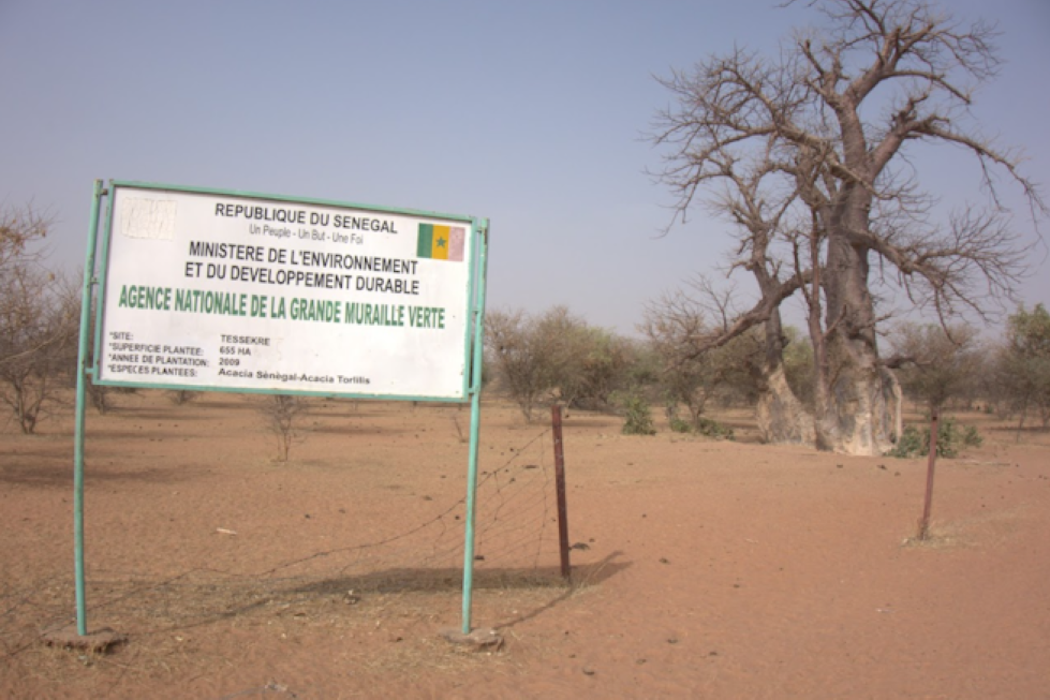
L’une des zones de la Grande muraille verte au Sénégal où les arbres peinent à pousser. Annah Zhu, Fourni par l’auteur

Le projet africain de la Grande muraille verte a débuté comme un plan ambitieux visant à créer une bande d’arbres de 15 kilomètres de large à travers le nord de l’Afrique. L’Union africaine a lancé ce projet en 2007 avec pour objectif de planter des arbres sur 6 000 kilomètres à travers 11 pays du Sahel. Ce projet devait restaurer 100 millions d’hectares de terres du Sénégal à Djibouti et en Éthiopie, avec pour objectif principal d’empêcher l’avancée du désert du Sahara. La Grande muraille verte a également été présentée comme une solution au changement climatique, à la pauvreté et même à l’extrémisme.

Bien qu’il soit l’un des plus petits participants, le Sénégal est l’un des pays les plus actifs dans la mise en œuvre de l’initiative de la Grande Muraille Verte. Il s’est fixé comme objectif de restaurer 817 500 hectares de terre. Les chercheurs en environnement Annah Lake Zhu et Amadou Ndiaye ont fait partie d’une équipe qui a examiné des images satellites d’une partie de la Grande muraille verte dans ce pays. Leur étude a révélé que seul un site sur 36 présentait une végétation plus dense que ce qu’elle aurait été naturellement. Le projet ne consiste pas à planter une véritable muraille d’arbres, mais plutôt en une mosaïque de terres réhabilitées, qui devrait être visible depuis l’espace. Les chercheurs ont également constaté que de nombreux engagements financiers n’avaient pas été tenus, que l’argent n’arrivait pas jusqu’au terrain et que le taux de survie des arbres plantés restait faible.


Peut-on retracer les fonds alloués à ce projet ?

À ce jour, plus de 20 milliards de dollars ont été promis. On peut citer, par exemple les 4 milliards annoncés lors de la conférence de Paris sur le climat en 2015, et les 14,3 milliards lors du One Planet Summit en 2021.

Les promesses faites lors des sommets mondiaux font certes la une des médias, mais ne se concrétisent pas toujours. Souvent, seule une petite partie des fonds promis parvient aux pays cibles, et une partie encore plus infime est effectivement utilisée sur le terrain.

Par exemple, selon une évaluation du financement de la Grande muraille verte réalisée en 2020, les pays de la Grande Muraille Verte ont déclaré n’avoir reçu qu’un total de 149 millions de dollars américains entre 2011 et 2019.

Sur les 14,3 milliards de dollars américains promis en 2021, seuls 2,5 milliards de dollars américains avaient été effectivement versés en mars 2023.

Cet écart s’explique par plusieurs raisons. La plus importante est sans doute la bureaucratie. Chaque projet de la Grande muraille verte qui reçoit un financement de bailleurs de fonds internationaux tels que la Banque mondiale, le Fonds pour l’environnement mondial ou la Banque africaine de développement doit passer par des phases rigoureuses de préparation et d’approbation. Les fonds ne sont pas transférés instantanément : certains pays disposent d’une agence désignée pour recevoir les fonds, d’autres non. Une grande partie du financement est affectée à des projets de développement qui s’alignent sur les objectifs de la Grande Muraille Verte, mais qui ne sont pas nécessairement utilisés directement pour planter des arbres.

Même si l’argent arrivait instantanément, les gouvernements locaux n’auraient pas la capacité de gérer et de distribuer de telles grosses sommes. Les contraintes budgétaires internes peuvent également conduire à la réaffectation des fonds à d’autres secteurs, tels que les infrastructures, l’éducation et la santé.

En outre, de nombreux pays de la Grande muraille verte (Burkina Faso, Mali, Niger) sont désormais gouvernés par des régimes autoritaires qui ne sont plus favorables à l’Occident. La plupart des aides à long terme en matière d’environnement et de développement ont été suspendues. Et les zones où se déroulent les projets sont désormais instables en raison de l’insécurité, liée à l’avancée des groupes djihadistes.

Quels devraient être les résultats visibles sur le terrain à l’heure actuelle ?

Après près de deux décennies, même en tenant compte du fait que tous les fonds promis n’ont pas été versés, les résultats devraient être visibles.

Cependant, les progrès dans la mise en oeuvre du projet de la Grande muraille verte ne se mesure pas avec des images satellites. Ses promoteurs communiquent plutôt sur le nombre d’arbres plantés ou sur la superficie de terres réservées à la régénération naturelle. Des terres qui sont généralement comptabilisées dans l’objectif des 100 millions d’hectares restaurés, même si les arbres ne poussent jamais.

L’Observatoire de la Grande muraille verte, dirigé par l’Europe et l’Afrique, et le Facilitateur Big Data de la Grande muraille verte(une plateforme qui permet aux acteurs de faire le suivi), géré par l’Académie chinoise des sciences en partenariat avec les pays africains participants, s’orientent vers une surveillance par satellite de la croissance des plantes dans l’ensemble de la région. Mais il faudra encore un certain temps avant que ces plateformes soient réellement en mesure de mesurer systématiquement l’impact de la plantation au niveau des sites.

À quoi ressemble aujourd’hui la Grande muraille verte au Sénégal ?

Nous avons visité les sites de la Grande muraille verte au Sénégal et interrogé le personnel du projet et les membres de la communauté où des activités de reboisement ont eu lieu. Notre équipe a également examiné des photos satellites de 36 parcelles couvrant 18 090 hectares de la zone cible de la Grande muraille verte au Sénégal, qui s’étend sur environ 817 500 hectares.

Nos recherches ont montré que la Grande muraille verte génère des emplois dans les nouvelles pépinières, dans la plantation et dans la surveillance des sites de reboisement. La récolte de produits forestiers non ligneux (gomme arabique et dattes du désert) est un autre avantage de la Grande muraille verte, qui fournit également des services sociaux tels que des soins de santé et la construction de pare-feux.

Ces avantages sont tangibles : des emplois dans des régions reculées où il y a très peu de travail. Mais ces emplois sont souvent de courte durée, se limitant principalement à la saison des plantations ou à la création d’une nouvelle parcelle de reboisement.


Read more:
Grâce à la Grande muraille verte, une meilleure qualité de vie dans le Sahel ?


Sur le plan écologique, l’impact est beaucoup moins clair. Notre analyse d’images satellites de 36 parcelles de reboisement au Sénégal a montré que seules deux d’entre elles étaient beaucoup plus vertes depuis la création de la muraille. Et une seule d’entre elles était plus verte qu’elle ne l’aurait été naturellement.

Cela s’explique peut-être par le fait que les nouveaux arbres ne sont pas irrigués. Même si des espèces résistantes à la sécheresse sont plantées, de nombreux arbres meurent si la saison des pluies est modérée. Les arbres sont également piétinés ou mangés par le bétail lorsque les clôtures ne sont pas correctement entretenues.

En examinant les zones spécifiques où des travaux de restauration ont été effectués et en tenant compte du verdissement attendu grâce aux précipitations, notre étude a révélé que, dans l’ensemble, la Grande muraille verte n’a eu pratiquement aucun impact écologique au Sénégal.

Que faut-il faire maintenant ?

On parle le plus souvent de l’argent nécessaire pour un projet. Par exemple, l’ONU estime qu’il faudrait 33 milliards de dollars américains pour la Grande muraille verte. C’est une fiction. Les projets de grande envergure comme celui-ci ont besoin de plus que de l’argent. Ils ont besoin de moyens fiables pour acheminer les fonds jusqu’à la destination. Cette question doit être abordée.

Les évaluations de projets doivent également cesser d’utiliser uniquement les activités (comme le nombre d’arbres plantés) comme critères de réussite. Ce sont plutôt les résultats de ces activités, à savoir l’augmentation de la végétation et la réduction de la dégradation des sols, qui témoignent de la réussite.

Il existe aujourd’hui de puissants outils numériques et de surveillance à distance pour suivre la Grande muraille verte. Ceux-ci n’existaient pas lorsque le projet a démarré. Nous recommandons de les utiliser : fixer des objectifs d’augmentation de la végétation le long du tracé de la muraille, surveiller à distance l’impact du projet et récompenser généreusement les succès. C’est le modèle à suivre pour l’avenir. Il va au-delà des promesses symboliques et met l’accent sur les changements réels sur le terrain.

The Conversation

Annah Lake Zhu reçoit un financement du Conseil néerlandais de la recherche (NWO)

Amadou Ndiaye est enseignant chercheur à l’université Amadou Mahtar Mbow de Dakar.

ref. Le projet africain de Grande muraille verte peine à verdir au Sénégal – https://theconversation.com/le-projet-africain-de-grande-muraille-verte-peine-a-verdir-au-senegal-267237

Un mauvais collègue peut-il devenir un bon manager ? Non, mais oui !

Source: The Conversation – in French – By Isabelle Barth, Secrétaire général, The Conversation France, Université de Strasbourg

Le monde n’est pas toujours juste, et ce ne sont pas toujours les plus compétents qui sont récompensés. Comment faire quand un mauvais collègue est promu ? Est-ce forcément synonyme de catastrophe ? ou bien arrive-t-il que le boulet d’hier se réalise en devenant encadrant ? C’est à toutes ces questions qu’on n’ose pas toujours poser que s’attelle notre experte du management.


Existe-t-il une justice immanente dans le monde du travail qui ferait qu’un collègue qui se comporte mal ne pourra jamais devenir manager ? On aimerait bien… mais il n’en est rien. Et parfois (souvent ?) même, au contraire, ce mauvais comportement peut l’aider à obtenir ce qui est considéré comme une promotion.

Quant à savoir s’il (ou elle) sera un bon manager, la réponse est plus nuancée, mais cela reste du domaine du possible ! C’est parce que cette perspective est dérangeante qu’elle nous fait perdre beaucoup de nos repères. Mais il faut savoir la regarder en face pour affronter, voire déjouer, ces situations qui peuvent être très difficiles.

Le « mauvais collègue » : incompétent et/ou toxique

Un mauvais collègue est quelqu’un qui n’est pas apprécié par l’équipe, et donc pas intégré. Il peut, en revanche, être bien vu par le manager. Les motifs de cette mauvaise appréciation, voire de ce rejet par l’équipe, sont, dans la très grande majorité des cas, liés à deux formes d’incompétences :

  • l’incompétence métier quand le « mauvais collègue » ne fait pas son travail et nuit à la performance du collectif parce qu’il est incompétent (mal recruté, pas formé). Ce collègue peut en revanche être charmant et considéré comme sympathique. Mais, factuellement, c’est un « boulet » qui grève la performance du collectif.

  • l’incompétence relationnelle, quand le collègue possède les compétences du métier mais a un comportement désagréable, voire toxique.

Les deux cas de figure sont bien évidemment cumulables : certains mauvais collègues réussissent à la fois à être incompétent dans leur métier et posséder un relationnel détestable !


À lire aussi :
Devenir manager ne fait plus rêver… sauf les enfants issus d’un milieu populaire


Le premier réflexe serait de recommander de remédier à la situation. Dans un monde parfait, le manager soutenu par les RRH cherche les causes d’une telle situation, trouve des solutions et il devient possible d’imaginer une réintégration dans l’équipe du « mauvais collègue ». Mais si rien n’y fait ? Ou si, on n’a ni le temps ni l’envie de faire évoluer la situation ?

On va alors chercher à se débarrasser du « mauvais collègue ». Il y a bien sûr le licenciement, la rétrogradation, ou bien le changement de poste ou d’équipes. Mais il existe un scénario fréquemment observé de l’évolution vers le management.

Et le « mauvais collègue » devint manager

C’est étonnant, mais finalement assez courant, sans qu’il existe des statistiques sur le sujet. On peut alors identifier au moins trois cas de figure :

  1. Le syndrome de Dilbert a été imaginé par le dessinateur et humoriste Scott Adams qui dit qu’une personne incompétente a toutes les chances d’être promue manager, car c’est là où son incompétence aura le moins d’impact.

C’est mal connaître les dégâts d’un mauvais management, mais c’est un réflexe qu’on observe malheureusement très souvent. Le profil du « mauvais collègue » est alors surévalué par son manager pour se donner toutes les chances que son départ soit rapide !

  1. Le collègue désagréable ou incompétent passe des concours pour devenir manager… et les réussit ! Or, les connaissances ne garantissent en rien la compétence de manager.

  2. Tout le monde le déteste, sauf… le grand patron ! Ils ont fait la même grande école, ils sont cousins, ils jouent au tennis ensemble… Et il est hors de question de le laisser tomber à cause de collègues grincheux.

Le poste de manager : une révélation ?

Une fois qu’il devient manager, le « mauvais collègue » peut-il devenir un bon encadrant ? Mais Qu’entend-on par un « bon manager » ? C’est un professionnel qui possède du leadership et sait motiver ses équipes. Il donne du sens au travail de chacun de ses collaborateurs, il écoute, fait preuve de bienveillance au sens où il ne cherche pas des coupables en cas de problème. Il sait aussi prendre des décisions, être équitable. L’ensemble de ces compétences managériales ne sont pas les mêmes que celles attendues d’un opérationnel.

Il peut arriver qu’évoluant vers un poste de management le « mauvais collègue » révèle des talents cachés ! Après tout, les meilleurs coachs sportifs ne sont pas tous de grands champions (c’est même souvent le contraire !).

Même si c’est loin d’être une règle absolue, on constate deux phénomènes en entreprise qui contribuent à rendre cela possible :

  • « la fonction crée la compétence », et c’est vrai que souvent, on voit des personnes évoluer très positivement à la prise de nouvelles fonctions.

  • l’adéquation entre la personne et le contexte étant incontournable, un changement d’entreprise, de service, de management (N+1 du nouveau manager) peuvent être à l’origine de revirements étonnants.

Pour toutes ces raisons, et sans en faire une généralité ni une règle absolue : un mauvais collègue peut devenir un bon, et, pourquoi pas, un très bon manager ! Pourtant, quelle que soit l’évolution, la « promotion » provoque malaise et perte de repères !

Anticiper les dégâts collatéraux

L’évolution d’un collègue considéré comme « mauvais » vers un poste de manager, sans préjuger de la suite, est profondément perturbante. Elle donne un sentiment d’injustice : « il était mauvais, et il est récompensé ! »

Cela va à rebours de toutes les injonctions entendes depuis la petite enfance : « il faut travailler dur pour avoir de bonnes notes », « il faut avoir de bonnes notes pour passer dans la classe supérieure », « il faut être compétent pour être recruté »…

Lefebvre Dalloz 2025.

La compétence est au cœur de la méritocratie. Et l’incompétent doit être sanctionné, du moins, s’il persiste à l’être. C’est une perte de repères car c’est l’incompétence qui a alors de la valeur !

La trappe de la compétence

À l’inverse, de nombreux hypercompétents témoignent qu’ils ont le sentiment d’être dans une nasse. Ils sont en quelque sorte « collés » à leur poste car, sans eux, le service ne pourrait pas fonctionner ! Cette « trappe de la compétence » est la source d’une grande souffrance et peut amener à du désengagement, et un mal-être profond relevant des risques psycho-sociaux.

Pour éviter ces dérives et ces promotions qui n’ont aucun sens, le manager doit intervenir avant. Il doit affronter le mauvais collègue pour poser avec lui les termes du problème. Pour cela, il est incontournable d’objectiver les situations où des dérives et des dysfonctionnements ont été observés.

Il faut ensuite bien peser les différentes issues, en sachant résister à celle de la promotion qui peut laisser des traces durables dans l’équipe.

Cela demande du temps, car la voie du dialogue est longue. Il faut aussi du courage, car il n’est pas simple de mettre un collaborateur devant ses failles. Entre déni et désir d’évacuer un problème complexe, le non-choix de la promotion vers le management est une voie qu’on retrouve souvent. Le risque est grand de la systématisation. C’est comme cela que naissent les kakistocraties.

The Conversation

Isabelle Barth ne travaille pas, ne conseille pas, ne possède pas de parts, ne reçoit pas de fonds d’une organisation qui pourrait tirer profit de cet article, et n’a déclaré aucune autre affiliation que son organisme de recherche.

ref. Un mauvais collègue peut-il devenir un bon manager ? Non, mais oui ! – https://theconversation.com/un-mauvais-collegue-peut-il-devenir-un-bon-manager-non-mais-oui-265885

Pour relever certains défis de l’entreprise, le doctorat peut être la solution

Source: The Conversation – in French – By Michel Kalika, Professeur émérite, iaelyon School of Management – Université Jean Moulin Lyon 3

Oubliez tous vos préjugés sur le doctorat. Le Doctorate of business administration (DBA) peut apporter une aide aux entreprises. Précisions sur ce diplôme peu connu qui crée des ponts entre le monde des affaires et celui de la recherche.


Dans un contexte caractérisé par la multiplication des crises (géopolitiques, environnementales, économiques, sanitaires, etc.), les entreprises doivent remettre en cause leurs processus de décision et leurs business models. Pour cela, elles se heurtent à un obstacle : les connaissances passées des employés et des dirigeants sont frappées d’une obsolescence accélérée.

Un certain nombre de managers déjà titulaires de MBA ou de maîtrises, soit des programmes très professionnels mais sans le pas de côté indispensable à la réflexion et à l’action, s’engagent alors dans un parcours doctoral afin de trouver de nouvelles réponses. L’expérience acquise dans un secteur ou un métier permet en effet de prendre la mesure des changements en cours.


À lire aussi :
Recherche ou innovation ? Avec les thèses Cifre, plus besoin de choisir


Récemment, un manager membre du Comex d’une grande entreprise internationale du secteur électronique nous a contactés, sa direction lui ayant confié la mission de refondre les business models des différentes divisions pour les adapter au changement climatique inévitable.

Deux sous-questions se posent alors :

  • Un parcours doctoral est-il utile à un manager, et plus généralement à une organisation ?

  • Quel parcours doctoral choisir, entre doctorat traditionnel (sigle anglais, PhD) et Doctorate of Business Administration (DBA) ?

L’intérêt d’un doctorat

Concernant la première question, l’expérience des auteurs, qui ont dirigé ensemble plus d’une soixantaine de thèses de doctorat, ainsi que le récent Livre blanc « La recherche en Management au bénéfice des entreprises », qui présente le récit et les résultats d’une vingtaine de parcours doctoraux de managers en activité, apportent une réponse sans ambiguïté. Des managers ayant une expérience professionnelle significative peuvent bénéficier grandement d’une porte ouverte vers la performance en s’engageant dans une thèse de doctorat sur un sujet en lien avec leur pratique.

Le premier DBA a été créé en France en 1993 par GEM, et les programmes (environ une vingtaine aujourd’hui) se sont véritablement développés depuis une dizaine d’années. Les candidats viennent d’organisations, privées ou publiques. Ils occupent des fonctions très diverses, ils peuvent être consultants. Mais ils ont tous en commun d’être animés par un désir commun de prise de recul.

Cette démarche les autorise à prendre un recul utile par rapport aux routines organisationnelles. Par ailleurs, la possibilité de travailler en grande symbiose pendant plusieurs années avec des professeurs habilités à diriger des recherches est toujours fructueuse. De cette façon, il est possible d’associer expérience managériale, richesse du terrain et apport conceptuel et méthodologique des encadrants.

Une prise de recul sur l’expérience

La réponse à la deuxième question, celle du choix du format, suppose en préalable de clarifier les différences entre doctorat traditionnel et Doctorate of business administration, même si, bien évidemment, certaines caractéristiques les rapprochent. Au plan international, EQUAL (organisme international qui fédère AACSB, AMBA, EFMD et une vingtaine d’associations académiques) précise clairement l’existence de deux parcours doctoraux dans son document « Guidelines for Doctoral Programmes in Business and Management ».

Dans le domaine du management, le doctorat traditionnel concerne plutôt de jeunes chercheurs financés pour réaliser une thèse et intégrer ensuite à temps plein une institution d’enseignement supérieur (université ou école). Si, en revanche, l’objectif du doctorant est de prendre du recul sur son expérience, de la capitaliser en produisant des connaissances nouvelles utiles à son organisation ou à son secteur, tout en restant en activité, le DBA apparaît plus adapté.

L’organisation pédagogique diffère également : le doctorat suppose un travail à temps plein, alors que le DBA est conçu à temps partiel, compatible avec une activité professionnelle. Les deux parcours ont en commun de reposer sur une réflexion conceptuelle, de mobiliser la littérature existante, une méthodologie de recherche et une analyse de données de terrain. En revanche, ils diffèrent par l’objectif majeur de la thèse. Le doctorat traditionnel poursuit principalement une finalité conceptuelle et académique, matérialisée par des publications dans des revues scientifiques internationales en vue d’une carrière académique. Le DBA, quant à lui, trouve son importance dans la formulation de recommandations managériales et la création indispensable d’un impact organisationnel et sociétal.

Le rôle du directeur de thèse amendé

De plus, dans le doctorat traditionnel, le rôle du directeur de thèse est déterminant dans le choix du sujet, tandis que dans le DBA, c’est le doctorant-manager qui se présente avec son expérience, son sujet et son accès au terrain.

Fnege 2025.

Un autre élément de distinction est propre au contexte français : le doctorat est un diplôme national préparé au sein des Écoles Doctorales universitaires. Le DBA, créé par Harvard en 1953, reconnu internationalement par les organismes d’accréditation (AACSB, AMBA, EFMD), reste en France un diplôme d’établissement qu’il soit universitaire ou d’école.

Cela dit, les trajectoires ne sont pas toujours linéaires. Certains titulaires de doctorat en management rejoignent l’industrie, tandis que certains DBA s’orientent vers une carrière académique, soit en prolongeant leur DBA par un doctorat, soit en complétant leur parcours par des publications académiques.

Au regard de l’expérience internationale et nationale, le DBA peut contribuer très positivement à répondre aux défis actuels des organisations publiques et privées. Une récente enquête auprès d’une soixantaine de diplômés indique que les domaines d’impact les plus cités sont : transformation digitale (18 %), gestion du changement (15 %), planification stratégique (30 %), résolution de problèmes organisationnels (20 %). En effet, ce programme crée un pont entre deux mondes qui – on peut le regretter – s’ignorent trop souvent : celui de la recherche académique et celui des pratiques managériales.

Un pont existait déjà avec les thèses Cifre, mais celles-ci s’adressent à de jeunes diplômés, qui font leur thèse dans une entreprise que, bien souvent, ils découvrent, quand la thèse de DBA s’adresse au manager en DBA travaillant déjà dans l’entreprise qui est son terrain d’investigation.

The Conversation

Michel Kalika a créé le DBA a l université Paris Dauphine en 2008 et le DBA du Business Science Institute en 2012. Les deux co-auteurs ont coordonne le livre blanc de la Fnege sur le DBA .

Jean-Pierre Helfer ne travaille pas, ne conseille pas, ne possède pas de parts, ne reçoit pas de fonds d’une organisation qui pourrait tirer profit de cet article, et n’a déclaré aucune autre affiliation que son organisme de recherche.

ref. Pour relever certains défis de l’entreprise, le doctorat peut être la solution – https://theconversation.com/pour-relever-certains-defis-de-lentreprise-le-doctorat-peut-etre-la-solution-265098

Les secrets de la domination de l’Université Harvard au classement de Shanghai

Source: The Conversation – in French – By Michel Ferrary, Professeur de Management à l’Université de Genève, Chercheur-affilié, SKEMA Business School

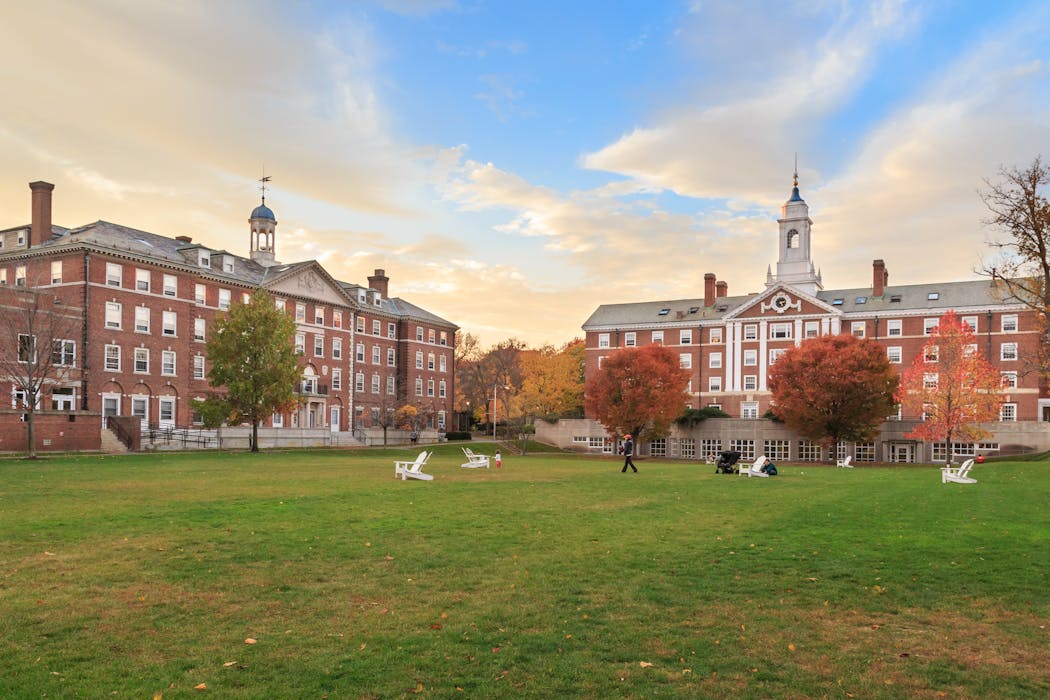
Sur les cinq dernières années, Harvard a déposé 204 560 publications, dont 16 873 dans des revues à comité de lecture. JannisTobiasWerner/Shutterstock

L’élection de Donald Trump met à mal le « business model » de l’Université d’Harvard. Cette université domine le classement de Shanghai grâce à son excellence scientifique, une fondation gérant 53,2 milliards de dollars et un réseau de 420 000 diplômés. À partir de la « théorie des capitaux » de Bourdieu, une étude cherche à comprendre comment la plus prestigieuse université domine son champ scientifique.


Le classement de Shanghai mesure l’excellence scientifique des universités dans le monde. Sur les dix premières, huit sont états-uniennes ; l’université d’Harvard trône à son sommet depuis 2003. Comment expliquer la domination de cette organisation privée à but non lucratif dans un champ universitaire réputé très concurrentiel ?

Avec Rachel Bocquet et Gaëlle Cotterlaz-Rannard, à partir de la « théorie des capitaux » de Pierre Bourdieu, nous décodons le modèle économique, ou business model, des universités de recherche états-uniennes. L’enjeu est de comprendre comment la plus prestigieuse et la plus puissante d’entre elles domine son champ scientifique.

L’excellence scientifique d’Harvard, symboliquement reconnue par le classement de Shanghai, résulte de l’accumulation et de la conversion de capital économique, social, culturel et symbolique. La dimension systémique qui fonde la robustesse du business model le rend difficilement reproductible. Il est lié à cette capacité d’accumuler simultanément les quatre formes de capitaux et de les interconvertir.

Près de 204 560 publications au cours des cinq dernières années

La théorie de Bourdieu articule quatre formes de capitaux : le capital économique, le capital culturel, le capital social et le capital symbolique. Le dernier étant la reconnaissance sociétale de la possession des trois autres. Chaque forme de capital contribue à l’accumulation des autres formes de capital par un processus d’inter-conversion ; le capital culturel est converti en capital économique, social ou symbolique et inversement.

Harvard est une université de recherche. Ses 2 445 professeurs et 3 048 chercheurs affiliés ont pour mission première de produire des connaissances scientifiques – capital culturel. Sur les cinq dernières années, la plateforme Web of Science recense pour Harvard 204 560 publications, dont 16 873 dans des revues à comité de lecture, ce qui en fait l’université qui produit le plus de connaissances scientifiques. Ses chercheurs sont les plus cités par la communauté scientifique.

Ce capital culturel est converti en capital économique par l’obtention de financement : 6,5 milliards de dollars en 2024. La faculté de médecine est l’une des universités états-uniennes qui obtient le plus de financement de l’État fédéral (National Institut of Health).

Fondation de 53,2 milliards de dollars

Ce capital culturel fait l’objet d’une reconnaissance sociétale par l’attribution à ses chercheurs de récompenses prestigieuses : prix Nobel, médaille Fields, prix Turing, prix Pulitzer, etc. Cette reconnaissance correspond à une conversion du capital culturel en capital symbolique, ce qui renforce le prestige de l’institution.

Accumulation des capitaux symboliques, sociaux, économiques et culturels liés à l’Université d’Harvard.
Fourni par l’auteur

Ce capital symbolique contribue par sa conversion à l’accumulation des autres formes de capitaux, notamment en capital économique en favorisant les donations à la fondation de l’université par des individus ou des entreprises.

En 2024, l’endownment (capital économique) issu de donations représente 53,2 milliards de dollars, soit le plus important fond de dotation au monde pour une université. En 2024, la rentabilité des investissements de la fondation est de 9,6 %. Ces revenus permettent de verser 2,4 milliards de dollars à l’université, soit 40 % de son budget, pour financer des projets de recherche.

Sélection des meilleurs étudiants

Le capital symbolique est également converti en capital économique en justifiant des frais d’inscription importants. En 2025, une inscription au bachelor d’Harvard coûte 61 670 dollars par an, soit une des institutions les plus chères des États-Unis. Les frais d’inscription au programme MBA sont de 81 500 de dollars par an et ceux de la Harvard Law School sont de 82 560 dollars. Certaines grandes fortunes peuvent faire des donations à Harvard pour faciliter l’admission de leur progéniture.


À lire aussi :
Harvard face à l’administration Trump : une lecture éthique d’un combat pour la liberté académique


Le prestige académique attire d’excellents étudiants et contribue à l’accumulation de capital social. Pour être admis dans son bachelor, Harvard exige le plus haut score SAT des universités états-uniennes (1500-1580). Son taux d’admission des candidats de 3 % est le plus faible du pays.

Lorsqu’ils sont diplômés, ces étudiants irriguent la société dans ses sphères scientifique – Roy Glauber, George Minot –, politique – huit présidents des États-Unis sont diplômés d’Harvard –, économique pour créer ou diriger de grandes entreprises – Microsoft, JP Morgan, IBM, Morgan Stanley, Amazon, Fidelity Investments, Boeing, etc. –, littéraire – William S. Burroughs, T. S. Eliot – et artistique – Robert Altman, Natalie Portman.

Harvard Alumni Association

Tous ces diplômés, notamment en adhérant à la Harvard Alumni Association, correspondent à une accumulation de capital social qui représente un réseau de 420 000 personnes. L’université mobilise ce réseau pour des levées de fonds, des participations à ses instances de gouvernance ou des évènements.

L’homme d’affaires Kenneth Griffin illustre ce mécanisme. En 1989, Il est diplômé d’Harvard en économie. Il fonde Citadel LLC, un des hedge funds les plus réputés des États-Unis et, accessoirement, devient la 34e fortune mondiale. Il a donné 450 millionsde dollars à son alma mater (université) : 300 millions à la faculté des arts et des sciences et 150 millions à Harvard College. Son objectif est de financer la recherche et de subventionner des étudiants issus de milieux défavorisés. La célébrité de Kenneth Griffin dans les milieux financiers incite des étudiants à venir à Harvard et, à terme, entretenir le processus d’accumulation et de conversion lorsqu’ils travailleront dans la finance.

L’université instaure une compétition symbolique entre ses diplômés sur les montants donnés à la fondation. Les plus importants donateurs sont reconnus par le prestige de voir leur nom attribué à un bâtiment du campus, voir à une faculté. En 2015, John Paulson, diplômé de la Harvard Business School et fondateur d’un des hedge funds les plus importants des États-Unis, a donné 400 millions de dollars à la faculté d’ingénierie et des sciences appliquées qui est devenu la Harvard John A. Paulson School of Engineering and Applied Sciences.

Face à Trump, la vulnérabilité du « business model »

L’élection du président Trump ouvre une période d’hostilité avec Harvard en menaçant son modèle économique.

La première raison est fiscale. Les donations à la fondation de l’université offrent des avantages fiscaux importants aux donateurs en matière de déductions. La fondation est exonérée sur les bénéfices réalisés par nombre de ses investissements. Une révocation de ces deux avantages par l’administration des États-Unis réduirait les montants disponibles pour financer la recherche et la production de capital culturel.

La seconde est liée aux financements fédéraux de la recherche. En 2024, Harvard a reçu 686 millions de dollars de l’État fédéral. Leur suppression limiterait la capacité de l’université à développer des connaissances scientifiques.

La troisième résulte des poursuites pour discrimination menées par l’administration Trump, qui peut nuire à la réputation de l’université et détourner d’Harvard certains donateurs, chercheurs ou étudiants. Kenneth Griffin et Leonard Blavatnik, deux importants donateurs, ont décidé de suspendre leurs dons en raison des accusations d’antisémitisme portées contre Harvard. En 2024, les dons ont diminué de 193 millions dollars, notamment en raison de ces accusations.

La suppression pour Harvard de la possibilité d’attribuer des certificats d’éligibilité, ou DS 2019, aux étudiants étrangers, notamment aux doctorants et post-doctorants, limiterait le nombre d’individus contribuant à la recherche. En 2025, l’Université d’Harvard compte 10 158 étrangers, dont 250 professeurs et 6 793 étudiants, soit 27,2 % de l’ensemble des étudiants.


À lire aussi :
Moins d’étudiants étrangers aux États-Unis : une baisse qui coûte cher aux universités


The Conversation

Michel Ferrary ne travaille pas, ne conseille pas, ne possède pas de parts, ne reçoit pas de fonds d’une organisation qui pourrait tirer profit de cet article, et n’a déclaré aucune autre affiliation que son organisme de recherche.

ref. Les secrets de la domination de l’Université Harvard au classement de Shanghai – https://theconversation.com/les-secrets-de-la-domination-de-luniversite-harvard-au-classement-de-shanghai-264516