Putin’s forever war against the west

Source: The Conversation – UK – By Jonathan Este, Senior International Affairs Editor, Associate Editor, The Conversation

This newsletter was first published in The Conversation UK’s World Affairs Briefing email. Sign up to receive weekly analysis of the latest developments in international relations, direct to your inbox.


There’s an organisation in Russia called the Valdai Discussion Club, a group of public intellectuals that has met since 2004 to discuss the country’s place in the world. It has strong links with government and each year hosts the president, Vladimir Putin, for a day of discussion. This year’s talkfest focused, as Putin put it, on “what is happening in the world, the role of our country in it, and how we see its development prospects”.

And that’s very interesting when you consider the title of the thinktank’s annual report this year, which will particularly appeal to any fans of Dr Strangelove – Dr Chaos or: How to Stop Worrying and Love the Disorder. The report’s basic thesis is that because the west is attempting to inflict, in Putin’s words “a strategic defeat on Russia”, Russia, in turn, must rise to the threat.

One of the ways it can do that, the Valdai Club’s report says, is by recognising that the purpose of conflict is changing and that the “contemporary objective may no longer lie in victories – wherein one party achieves all its goals – but rather in maintaining a balance necessary for a period of relative peaceful development”.

This, writes Stefan Wolff, an expert in international security at the University of Birmingham, would go a long way towards explaining the low-level but constant hybrid warfare that Russia has been waging against the west for more than a decade now, and which blew up in 2022 into an all-out armed conflict in Ukraine.

This so-called “grey-zone warfare” seems to have become ever-present in Europe in recent months. Interference in elections, Russian warplanes flying into other countries’ airspace, drone incursions forcing airports to close, regular cyber attacks – they all test the resilience and preparedness of Nato, Wolff believes.

In his analysis, winning the war in Ukraine will involve Russia being able to weaken western resolve and unity. And winning the war will demonstrate that it is capable of doing just that. “In this sense,” Wolff writes, “the intensification of the Kremlin’s hybrid war against Kyiv’s European allies is a tool Moscow uses as part of its broader war effort.”


Read more:
Russia now has a strategy for a permanent state of hybrid war


Wolff’s thesis is echoed by Christo Atanasov Kostov, an international relations expert with particular focus on Russia at Schiller International University in Madrid. Kostov analyses Russia’s grey-zone “toolkit”, and concludes: “The Kremlin’s strategy increasingly favours hybrid means – drones, cyberattacks, disinformation, and energy blackmail – over warfare. These are not random provocations, but a coherent campaign of testing.”

Kostov believes that Russia has set out to exhaust the west, not to conquer it. He draws several conclusions as to where this is likely to lead, concluding that an all-out war with Nato is unlikely, “but not unthinkable”. More likely is an escalation into a new cold war across Europe, meaning permanently increased defence budgets and requiring a stronger focus on coordination across Nato, but also stronger European autonomy to compensate for America’s intention to dial down its involvement in the continent’s security.

Europe, writes Kostov, “has to resist the fatigue of endless crisis and demonstrate that resilience, not fear, defines the continent’s future”.


Read more:
Russia’s ‘permanent test’ is pushing Europe to the brink of war – here’s what Moscow actually wants


Donald Trump, peacemaker

Vladmir Putin wasn’t among the dignitaries who gathered in Sharm el-Sheikh to sign the “Trump Declaration for Enduring Peace and Prosperity”. This, you’ll remember, is the rather grandiosely titled 642-word statement signed by the US president, Egyptian president Abdel Fattah al-Sisi (the meeting’s host) and a supporting cast of world leaders including UK prime minister Keir Starmer, French president Emmanuel Macron and Canadian prime minister Mark Carney.

The declaration itself was insubstantial. It welcomed the “historic commitment” by all parties to the Trump peace agreement (also known as the Gaza ceasefire deal) and made a joint commitment to “a comprehensive vision of peace, security, and shared prosperity in the region, grounded in the principles of mutual respect and shared destiny”.

Trump had flown to Egypt hot from his appearance at Israel’s parliament, the Knesset, where he took applause from all sides for his achievement in getting Israel and Hamas to agree a ceasefire. The US president was understandably enthusiastic, referring to the “the historic dawn of a new Middle East”.

But is it really? asks David Dunn, a professor of international politics at the University of Birmingham. Dunn felt that the day was more of a performance than anything else. But this in itself might serve a useful purpose. Besides playing to the US president’s well-known love for adulation, as Dunn puts it: “For the US to be openly and obviously committed to the peace process makes it more difficult for the opposing parties to reopen hostilities without the risk of incurring US displeasure for ruining their achievement.”

And for Starmer, Macron, Carney and the rest, who risk being mocked in their own countries as also-rans in the scheme of things, Dunn believes that there’s a purpose to that as well. The more they encourage Trump to see himself in the role of peacemaker and the more he gets to bask in a praise he has rightly earned for the Gaza ceasefire, the greater the chance that he might redouble his efforts to get Russia to see sense over Ukraine.

As he concludes: “If flattering his [Trump’s] ego into directing his energies towards this end achieves this goal, then their part in this iteration of the Trump Show should probably be judged by history as worthwhile.”


Read more:
Egypt peace summit showed that Donald Trump’s Gaza deal is more showbiz extravaganza than the ‘dawn of a new Middle East’


As to how long the ceasefire will stick, at the moment that’s changing day by day. We’ll continue to monitor events in Gaza as they unfold. The other big question is whether the Israeli prime minister can survive the peace.

John Strawson, who researches Israeli politics at the University of East London, believes that he’ll be under pressure ahead of an election which must – if peace holds – be held within a year. Some say the ceasefire is bad news for him. He sold the war on the basis it would achieve total victory and annihilate Hamas. And he may struggle to retain the support of his far-right colleagues who wanted Israel to do just that.

But Strawson believes it would be a mistake to underestimate Netanyahu. He’s a wily campaigner who “has made a career out of turning obstacles into opportunities”.


Read more:
Can Netanyahu survive peace?


Sign up to receive our weekly World Affairs Briefing newsletter from The Conversation UK. Every Thursday we’ll bring you expert analysis of the big stories in international relations.


The Conversation

ref. Putin’s forever war against the west – https://theconversation.com/putins-forever-war-against-the-west-267679

Ibuprofen: how an everyday drug might offer protection against cancer

Source: The Conversation – UK – By Dipa Kamdar, Senior Lecturer in Pharmacy Practice, Kingston University

Ibuprofen is a household name – the go-to remedy for everything from headaches to period pain. But recent research suggests this everyday drug might be doing more than easing discomfort. It could also have anti-cancer properties.

As scientists uncover more about the links between inflammation and cancer, ibuprofen’s role is coming under the spotlight – raising intriguing questions about how something so familiar might offer unexpected protection.

Ibuprofen belongs to the non-steroidal anti-inflammatory drugs (NSAIDs) family. The connection between NSAIDs and cancer prevention isn’t new: as far back as 1983, clinical evidence linked sulindac – an older prescription NSAID similar to ibuprofen – to a reduced incidence of colon cancer in certain patients. Since then, researchers have been investigating whether these drugs could help prevent or slow other cancers too.

NSAIDs work by blocking enzymes called cyclooxygenases (COX). There are two main types. COX-1 helps protect the stomach lining, maintains kidney function, and plays a role in blood clotting. COX-2, on the other hand, drives inflammation.

Most NSAIDs, including ibuprofen, inhibit both, which is why doctors recommend taking them with food rather than on an empty stomach.

Ibuprofen and endometrial cancer

A 2025 study found that ibuprofen may lower the risk of endometrial cancer, the most common type of womb cancer, which starts in the lining of the uterus (the endometrium) and mainly affects women after menopause.

One of the biggest preventable risk factors for endometrial cancer is being overweight or obese, since excess body fat increases levels of oestrogen – a hormone that can stimulate cancer cell growth.

Other risk factors include older age, hormone replacement therapy (particularly oestrogen-only HRT), diabetes, and polycystic ovary syndrome. Early onset of menstruation, late menopause, or not having children also increase risk. Symptoms can include abnormal vaginal bleeding, pelvic pain, and discomfort during sex.

In the Prostate, Lung, Colorectal, and Ovarian (PLCO) study, data from more than 42,000 women aged 55–74 was analysed over 12 years. Those who reported taking at least 30 ibuprofen tablets per month had a 25% lower risk of developing endometrial cancer than those taking fewer than four tablets monthly. The protective effect appeared strongest among women with heart disease.

Interestingly, aspirin – another common NSAID – did not show the same association with reduced risk in this or other studies. That said, aspirin may help prevent bowel cancer returning.

Other NSAIDs, such as naproxen, have been studied for preventing colon, bladder, and breast cancers. The effectiveness of these drugs seems to depend on cancer type, genetics, and underlying health conditions.

Ibuprofen’s broader potential

Ibuprofen’s possible cancer-protective effects extend beyond endometrial cancer. Studies suggest it may also reduce risk of bowel, breast, lung, and prostate cancers.

For example, people who previously had bowel cancer and took ibuprofen were less likely to experience recurrence. It has also been shown to inhibit colon cancer growth and survival, and some evidence even suggests a protective effect against lung cancer in smokers.

Inflammation is a hallmark of cancer and ibuprofen is, at its core, anti-inflammatory. By blocking COX-2 enzyme activity, the drug reduces production of prostaglandins, chemical messengers that drive inflammation and cell growth – including cancer cell growth. Lower prostaglandin levels may slow or stop tumour development.

But that’s only part of the story. Ibuprofen also appears to influence cancer-related genes such as HIF-1α, NFκB, and STAT3, which help tumour cells survive in low-oxygen conditions and resist treatment.

Ibuprofen seems to reduce the activity of these genes, making cancer cells more vulnerable. It can also alter how DNA is packaged within cells, potentially making cancer cells more sensitive to chemotherapy.

A word of caution

But not all research points in the same direction. A study involving 7,751 patients found that taking aspirin after an endometrial cancer diagnosis was linked to higher mortality, particularly among those who had used aspirin before diagnosis. Other NSAIDs also appeared to increase cancer-related death risk.

Conversely, a recent review found that NSAIDs, especially aspirin, may reduce the risk of several cancers – though regular use of other NSAIDs could raise the risk of kidney cancer. These conflicting results show how complex the interaction between inflammation, immunity, and cancer really is.

Despite the promise, experts warn against self-medicating with ibuprofen for cancer prevention. Long-term or high-dose NSAID use can cause serious side effects such as stomach ulcers, gut bleeding, and kidney damage.

Less commonly, they may trigger heart problems like heart attacks or strokes. NSAIDs also interact with several medications, including warfarin and certain antidepressants, increasing the risk of bleeding and other complications.

The idea that a humble painkiller could help prevent cancer is both exciting and provocative. If future studies confirm these findings, ibuprofen might one day form part of a broader strategy for reducing cancer risk, especially in high-risk groups.

For now, experts agree it’s wiser to focus on lifestyle-based prevention: eating anti-inflammatory foods, maintaining a healthy weight and staying physically active.

Everyday medicines may yet hold surprising promise, but until the science is settled, the safest prescription for cancer prevention remains the oldest one: eat well, move often, and listen to your doctor before reaching for the pill bottle.

The Conversation

The authors do not work for, consult, own shares in or receive funding from any company or organisation that would benefit from this article, and have disclosed no relevant affiliations beyond their academic appointment.

ref. Ibuprofen: how an everyday drug might offer protection against cancer – https://theconversation.com/ibuprofen-how-an-everyday-drug-might-offer-protection-against-cancer-266645

Diversidad e inclusión: una estrategia para aumentar la rentabilidad

Source: The Conversation – (in Spanish) – By Deniz Torcu, Adjunct Professor of Globalization, Business and Media, IE University

Si uno solo leyera los titulares de la guerra cultural contra las políticas de diversidad e inclusión pensaría que su aplicación en las empresas es puro postureo. Según los detractores, contratar con criterios de diversidad baja el listón, los programas de inclusión son caros y prescindibles, o solo sirven en sectores “blandos” como el marketing o las ONG.

La pregunta de fondo es: ¿los equipos directivos más diversos ayudan a que las empresas funcionen mejor? En los últimos cinco años, la evidencia se ha vuelto cada vez más clara, y más incómoda para quienes sostienen lo contrario.

Más diversidad, más rentabilidad

En 2023, la consultora estratégica McKinsey & Company analizó 1 265 empresas en 23 países. El informe resultante, Diversity Matters Even More, señala que las compañías con mayor diversidad de género en sus equipos ejecutivos tienen un 39 % más de probabilidades de superar financieramente a sus pares. La cifra también es del 39 % en diversidad étnica y cultural.

Ya en 2020, en plena pandemia y con más empresas analizadas, las cifras eran de 25 % y 36 % respectivamente. Es decir, la mejora en los datos era consistente pese a las condiciones adversas.

¿Por qué mejoran los datos?

Un liderazgo diverso cambia cómo se toman las decisiones: se reducen los puntos ciegos, se cuestionan supuestos, se anticipan riesgos y se diseñan productos más ajustados a una base de clientes cada vez más heterogénea.

Además, esa base está cambiando rápidamente: los análisis demográficos del think tank estadounidense Brookings Institution muestran que en Estados Unidos –y, de manera similar, en Europa– los jóvenes son ya mucho más diversos que las generaciones anteriores. Ignorar esa realidad equivale a diseñar para un consumidor que ya no existe.

La macroeconomía también lo respalda

El Banco Mundial, en su informe Women, Business and the Law 2024, muestra que las mujeres disfrutan en promedio de solo el 64 % de igualdad formal frente a los hombres (esto es que, en el papel, hombres y mujeres deben recibir el mismo trato y tener los mismos derechos pero en el mundo real esta igualdad no se cumple), y que la brecha entre lo que dice la ley y lo que se aplica en la práctica es aún mayor.

Estudios complementarios de la misma institución –como el Gender Employment Gap Index (GEGI)– estiman que si se cerraran las brechas de empleo entre hombres y mujeres, el PIB per cápita de los países podría aumentar en torno a un 19 % en promedio, llegando incluso a más del 40 % en economías con desigualdades mayores. Además, la nueva metodología del informe no se limita a medir las normas escritas sino también su implementación efectiva, subrayando que la inclusión depende de sistemas que funcionen, no solo de leyes bien intencionadas.

La OCDE calculó en 2023 a partir de datos de nueve economías, que si las empresas con menor representación femenina en la alta dirección alcanzaran al menos el promedio de la muestra (20 %), la productividad agregada aumentaría en 0,6 %. Puede parecer un porcentaje modesto, pero, en términos macroeconómicos, es un empujón notable y constante.

El FMI, por su parte, lanzó en 2022 una estrategia para integrar la igualdad de género en todas sus políticas. La conclusión central: cerrar las brechas de género no solo impulsa el crecimiento, también refuerza la estabilidad macroeconómica.

Y en el terreno del comercio, un informe conjunto OMC–Banco Mundial (2020) documenta cómo las mujeres ganan con la apertura comercial y cómo las políticas inclusivas de género amplían las oportunidades de las economías enteras.

Más digitalización y educación

Finalmente, la ONU, en su informe Gender Snapshot 2024, advierte que la brecha digital de género tiene un coste económico directo: la menor participación de las mujeres en el uso de internet podría suponer una pérdida estimada de 500 000 millones de dólares en países de ingresos bajos y medios durante los próximos cinco años.


fizkes/Shutterstock

El informe también recuerda que el 65 % de las mujeres usó internet en 2023 frente al 70 % de los hombres, y que las mujeres siguen teniendo un 8 % menos de probabilidades de poseer un teléfono móvil.

En cuanto a escolarización, un dato esperanzador: si en 2015 el 46 % de las jóvenes no acaban la enseñanza secundaria diez años después ese porcentaje ha caído hasta el 39 %.

Según estimaciones del Banco Mundial de 2018 sobre [los costes de la falta de escolarización] de las niñas, si las mujeres con educación primaria solo ganan entre un 14 y un 19 % más que las mujeres sin educación, las que han completado la educación secundaria ganan casi el doble que las mujeres que han completado la primaria.

Así pues, la desigualdad de género no solo es una injusticia sino también una enorme ineficiencia económica.

Evidencia europea: gobernanza y riesgo

El Banco Central Europeo ha publicado estudios que vinculan directamente diversidad con desempeño. Un documento de trabajo de 2022 muestra que los bancos con consejos más diversos en género conceden menos crédito a empresas altamente contaminantes. Esto significa mejor filtrado de riesgo climático en un mundo donde la transición energética ya es un riesgo financiero.

En 2025, otro informe del BCE analizó cómo el perfil de los consejeros –incluida la diversidad de género– se relacionaba con el desempeño bancario. Según el informe, la incorporación de mujeres consejeras se asocia con una mejora (aunque modesta) en la rentabilidad. En suma, la diversidad en los consejos se vincula con un gobierno corporativo más sólido.

Estos hallazgos no provienen de activistas sino de supervisores financieros: la diversidad en la gobernanza es un factor de estabilidad.

¿Por qué persisten los mitos?

El mito sobrevive por dos razones:

  1. Porque la homogeneidad se siente cómoda: menos discusiones, decisiones más rápidas. Pero fluidez no equivale a calidad. Los equipos diversos generan más fricción, pero esa fricción produce análisis más sólidos y decisiones más robustas.

  2. Porque los beneficios no son inmediatos. Contratar perfiles diversos sin crear un entorno inclusivo lleva a la frustración de las personas y a una mayor rotación.

Qué deben hacer los líderes

Hemos visto cómo la inclusión es el multiplicador que convierte la diversidad en rendimiento. Tomando en cuenta la evidencia, las empresas deben incorporar la diversidad y la inclusión (D&I) en su estrategia de negocio:

  • Dejando de tratar la D&I como un gasto prescindible. Los datos son más contundentes en 2023 que en 2020.

  • Cerrar la brecha entre discurso y práctica. La nueva metodología del Banco Mundial es un buen modelo: medir la brecha entre lo que se dice y cómo se implementa para corregirla.

  • Integrar la diversidad en la gestión de riesgos. Si el BCE encuentra correlaciones entre la diversidad en los consejos y el desempeño bancario cualquier comité de riesgos debería tomar nota de esto.

  • Pensar en productividad y mercado. La OCDE ya lo midió: incluso pequeños aumentos en representación femenina generan ganancias agregadas.

No es un gesto sino una ventaja

La diversidad en las organizaciones no es un accesorio ideológico ni un gesto reputacional. Es una ventaja operativa y financiera.

Las organizaciones que lo han entendido ya reasignan capital, mejoran su gobernanza y ejecutan con más éxito. Las que no, siguen discutiendo consignas mientras el mercado avanza.

En un mundo volátil, ignorar la diversidad no es neutral: es autodestructivo.


La versión original de este artículo ha sido publicada en la Revista Telos, de Fundación Telefónica.

The Conversation

Deniz Torcu no recibe salario, ni ejerce labores de consultoría, ni posee acciones, ni recibe financiación de ninguna compañía u organización que pueda obtener beneficio de este artículo, y ha declarado carecer de vínculos relevantes más allá del cargo académico citado.

ref. Diversidad e inclusión: una estrategia para aumentar la rentabilidad – https://theconversation.com/diversidad-e-inclusion-una-estrategia-para-aumentar-la-rentabilidad-265824

El carisma del mal: cómo los rasgos psicopáticos se han normalizado en la cultura del éxito

Source: The Conversation – (in Spanish) – By Dolores Fernández Pérez, Profesora Ayudante Doctora. Departamento de Psicología, Universidad de Castilla-La Mancha

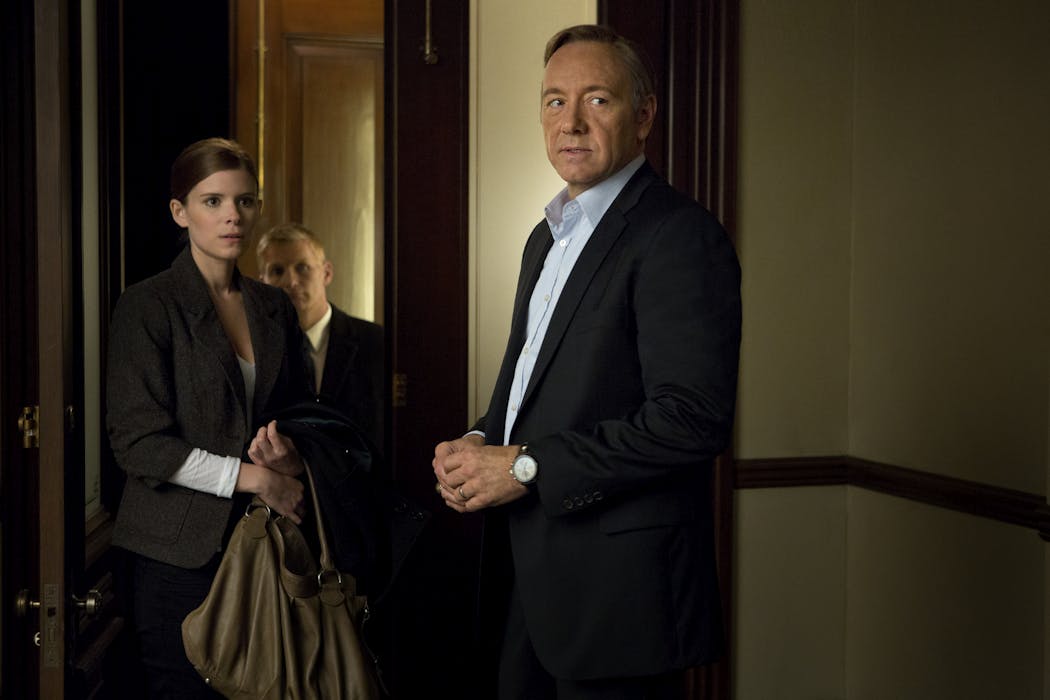
Kevin Spacey encarnó al turbio y despiadado Frank Underwood, vicepresidente de Estados Unidos, en la serie _House of Cards_. Melinda Sue Gordon / Knight Takes King Prod.

Vivimos en una sociedad que premia la audacia y la frialdad. Lo vemos en series como House of Cards, donde Frank Underwood asciende pisando a quien haga falta. En Succession, Logan Roy domina su imperio familiar a base de miedo y control. Incluso en El lobo de Wall Street el exceso se celebra como si fuera genialidad.

Estas historias no han inventado nada: reflejan una idea extendida, que “el fin justifica los medios”. Y ese mismo modo de actuar también aparece, a veces, en la vida real.

La psicopatía se ha estudiado durante décadas. En los años cuarenta se describió como encanto superficial, ausencia de culpa, frialdad emocional y conducta impulsiva. Más tarde, se crearon herramientas para medirla y se demostró que estos rasgos no solo aparecen en criminales. También están presentes, en menor grado, en personas aparentemente normales y exitosas. Algunas funcionan bien en la sociedad e incluso son capaces de alcanzar el poder.

Perfiles difíciles de detectar

No obstante, este tipo de perfiles oscuros son difíciles de detectar. Suelen convivir con buenas habilidades sociales. De manera que su encanto inicial puede ocultar sus fallos y su comportamiento dañino y peligroso. A corto plazo pueden parecer líderes ideales, pero a largo plazo dejan conflictos, miedo y desgaste.

En las empresas, sobre todo en la cúpula, el carisma frío, el gusto por el riesgo y la manipulación pueden vender un buen liderazgo. Muchas compañías persiguen resultados inmediatos, seguridad aparente, gestos firmes, decisiones rápidas. La empatía, en cambio, se ve como una debilidad. Incluso en las entrevistas se valora más el aplomo que la ética de la persona.

Así se cuelan máscaras bien pulidas, una apariencia de control que puede deslumbrar y ocultar señales de abuso o incompetencia. Después, esa frialdad y la ambición impulsan el ascenso, aunque a menudo acaban debilitando el entorno que los sostiene.

Dos grandes psicópatas

La historia reciente nos deja ejemplos claros. Bernie Madoff mantuvo durante años una imagen de respetabilidad mientras dirigía una enorme estafa piramidal que hizo perder 50 000 millones de dólares a miles de inversores. Madoff usaba el dinero que entraba de nuevos clientes para pagar a los antiguos y hacerles creer que estaban ganando rendimientos. En realidad, no había ninguna inversión detrás, solo movía dinero de unos a otros hasta que todo colapsó.

Kenneth Lay, de Enron, parecía un visionario mientras su empresa maquillaba cuentas y ocultaba deudas, hasta provocar una de las mayores quiebras de la historia y arruinar a miles de personas. Ambos mostraban carisma y sangre fría hasta que todo se derrumbó.

En política ocurren situaciones similares. Donald Trump ha construido su imagen en torno a la fuerza y la confrontación constante. Usa mensajes simples y combativos, domina el escenario y no muestra dudas. A muchos seguidores eso les inspira admiración, pese a su tono agresivo y a su escasa disposición al diálogo y el consenso.

Algo parecido pasa con líderes que impulsan guerras actuales. La invasión de Ucrania por Rusia o la ofensiva de Israel en Gaza, con decenas de miles de civiles muertos y desplazados y un caso por genocidio ante la Corte Internacional de Justicia, muestran cómo decisiones frías pueden destruir miles de vidas civiles. Quienes más sufren esas guerras rara vez son quienes las inician. Y, sin embargo, sus responsables suelen ser venerados como símbolos de fuerza.

La “tríada oscura” y el poder

Los psicólogos buscan entender por qué este tipo de personalidades prospera. Se habla de la “tríada oscura”: narcisismo, maquiavelismo y psicopatía. Combinadas, transmiten confianza, dominio y resistencia al estrés. Esto puede ayudar a alcanzar el poder, pero conlleva riesgos. Este metaanálisis muestra algo importante: tales rasgos ayudan a llegar arriba, pero no garantizan eficacia una vez allí. Algunos líderes logran resultados a corto plazo; otros hunden la moral de sus equipos y toman decisiones temerarias. Un poco de audacia ayuda en un momento de crisis. Pero un exceso de la misma rompe la confianza y la ética.

Hay rasgos que pueden frenar esos efectos. La responsabilidad, la amabilidad o la estabilidad emocional ayudan a regular la impulsividad. También favorecen decisiones justas. Sin ellos, la frialdad se convierte en temeridad. Además, los equipos con climas cooperativos y reglas claras resisten mejor a estos perfiles.

El problema es que, en entornos muy competitivos, esas cualidades suelen estar ausentes. Y cuando un líder frío asciende, tiende a rodearse de personas parecidas. Así se crean culturas que expulsan a quienes valoran la cooperación y el respeto.

La política debería aprender de esto. Un país no es una empresa, pero ambos comparten riesgos. El culto al líder erosiona los controles. La transparencia cede ante el relato heroico. La oposición se convierte en enemigo. Gobernar no es ganar siempre, es cuidar de todos.

Conviene matizar. No todos los líderes son psicópatas ni presentan rasgos de ese tipo. Tampoco todos los que muestran algunos de esos rasgos resultan dañinos.
La audacia, por ejemplo, puede ser valiosa en situaciones de emergencia. Sin embargo, la audacia sin empatía se convierte en temeridad. Por tanto, el problema surge cuando esos rasgos se combinan de forma desequilibrada.

Todo esto debería hacernos pensar: ¿qué estamos premiando cuando aplaudimos a un líder? ¿Su capacidad de imponerse o de cuidarnos? Cada vez que celebramos la frialdad, normalizamos que el poder pase por encima de las personas. Quizá sea hora de revisar nuestro ideal de éxito. El carisma del mal deslumbra, pero suele dejar tras de sí miedo, desgaste y daño colectivo.

The Conversation

Dolores Fernández Pérez no recibe salario, ni ejerce labores de consultoría, ni posee acciones, ni recibe financiación de ninguna compañía u organización que pueda obtener beneficio de este artículo, y ha declarado carecer de vínculos relevantes más allá del cargo académico citado.

ref. El carisma del mal: cómo los rasgos psicopáticos se han normalizado en la cultura del éxito – https://theconversation.com/el-carisma-del-mal-como-los-rasgos-psicopaticos-se-han-normalizado-en-la-cultura-del-exito-264655

Canada still lacks universal paid sick leave — and that’s a public health problem as we approach flu season

Source: The Conversation – Canada – By Alyssa Grocutt, Postdoctoral Associate at Haskayne School of Business, University of Calgary

As Canadians head into another flu and COVID season, many workers still face an impossible choice if they fall ill: stay home and lose pay, or clock in sick and risk spreading illness. This is more than an individual dilemma; it’s a predictable public health failure — one the government already knows how to fix.

Paid sick leave is good for both health and business, reducing the spread of illness while supporting workforce productivity, promoting better health outcomes and increasing labour force participation.

So why don’t all workers in Canada have it?

A lesson we’ve failed to learn

The costs of sick people going to work were starkly evident during the COVID-19 pandemic.

In 2021, Peel Region in Ontario became a hotspot for transmission. Research from Peel Public Health found that one in four employees went to work while showing symptoms of COVID-19, and about one per cent did so even after testing positive.

Mississauga Mayor Bonnie Crombie called these figures “evidence” that workers were being forced into a dangerous trade-off between “losing a paycheque and putting food on the table.”


Read more:
COVID-19 outbreaks in long-term care highlight the urgent need for paid sick leave


And yet, Canada still lacks a comprehensive paid sick leave system. Access remains patchy, depending on the province, sector or employer. The Canada Labour Code mandates 10 days of paid sick leave, but only for federally regulated employees.

At the provincial level, only British Columbia (five days per year), Québec (two days) and Prince Edward Island (one to three days, depending on tenure), have permanent paid sick leave. Ontario briefly offered three days during the pandemic but ended the program in 2023.

Even where these programs exist, they don’t cover everyone. Independent contractors and gig workers are excluded, and many low-wage and part-time employees still lack coverage altogether.

Gig workers, in particular, fall through the cracks. They’re classified as self-employed and left without the basic protections that most employees take for granted.

Canadian unionized workers are more likely to have paid sick days negotiated into their contracts, but coverage remains uneven and far from universal. In sectors with low union density, such as hospitality and agriculture, workers are least likely to have access to any form of paid sick leave at all.

The case for paid sick leave

Every year, workers bring colds, flu and other contagious illnesses to work because they cannot afford to stay home. Presenteeism — working while ill — harms recovery, spreads infection and increases workplace outbreaks.

Research shows that high job demands and low resources drive presenteeism, which in turn reduces job satisfaction and organizational effectiveness. It’s a lose-lose equation: employees suffer, productivity drops and illness spreads faster.

The evidence shows that paid sick leave improves both public health and business outcomes. A 2023 review of 43 studies found that paid sick leave is linked with higher job satisfaction, better retention, fewer workplace injuries, reduced contagion and even lower mortality.

Other research shows that employees without paid sick leave experience greater psychological distress, while simply knowing that such policies exist improves attitudes and trust toward employers.

Although some studies note short-term costs for organizations, the previously mentioned 2023 review found these costs are outweighed by long-term gains, including stronger employee loyalty, lower turnover and improved public health outcomes.

Building on what works

To address this, Canada should integrate paid sick leave into systems similar to workers’ compensation for workplace injuries and fatalities.

Canada already has well-established mechanisms, such as provincial Workers’ Compensation Boards and the Federal Workers’ Compensation Service, that provide income replacement and rehabilitation support for employees with work-related illnesses and injuries.

Extending this logic to illness, especially when it spreads through communities, would prevent workers from being penalized for following public health guidance while helping organizations avoid widespread disruption.

Governments and employers could draw lessons from the successes and shortcomings of existing compensation systems to design a program that is fair, efficient and responsive to routine illness and public health emergencies.

For instance, the workers’ compensation programs have long provided reliable, no-fault coverage for physical injuries, but they also struggle with uneven access, complex claims procedures and limited recognition of mental health conditions.

Leadership is also crucial. Leaders who prioritize employee well-being and model prosocial safety behaviours can reduce presenteeism and strengthen safety culture. They are also crucial for setting examples and encouraging employees to use sick leave without fear.

When leaders communicate that taking time off while sick is responsible, not risky, they help rewrite the social norms that keep people working through illness and ensure paid sick leave policies translate into healthier workplaces.

Paid sick leave is a public health imperative

Policymakers, business leaders, unions and the public need to support the creation of a paid sick leave system that is robust, fair and capable of protecting all workers and workplaces. The COVID-19 pandemic revealed the need for expanded sick leave policies, and it remains just as urgent today.

Paid sick leave is basic public health infrastructure. During the COVID-19 pandemic, paid sick leave enabled workers to stay home when they were exhibiting symptoms, which reduced transmissions, workplace outbreaks and worker absenteeism.

A universal sick leave system would help Canada better manage seasonal illnesses and future outbreaks, protect economic stability and prepare for emerging crises, from new pandemics to climate-related health shocks.

Lives depend on it. Organizational health rests on it. Society’s well-being requires it.

The Conversation

Alyssa Grocutt receives funding from the Social Sciences and Humanities Research Council of Canada.

Julian Barling receives funding from the Borden Chair of Leadership and the Social Sciences and Humanities Research Council of Canada (SSHRC).

Nick Turner receives research funding from Cenovus Energy Inc., Haskayne School of Business’s Future Fund, Mitacs, and the Social Sciences and Humanities Research Council of Canada (SSHRC).

ref. Canada still lacks universal paid sick leave — and that’s a public health problem as we approach flu season – https://theconversation.com/canada-still-lacks-universal-paid-sick-leave-and-thats-a-public-health-problem-as-we-approach-flu-season-266987

Raila Odinga: the man who changed Kenya without ever ruling it

Source: The Conversation – Africa (2) – By Justin Willis, Professor of History, Durham University

Raila Amollo Odinga, who has died at the age of 80, was something of a paradox in post-independence Kenyan politics.

A leader who repeatedly ran for president, he never won – in part due to the 2007 election being manipulated in favour of Mwai Kibaki. Despite this, Odinga will be remembered as a figure who profoundly shaped the country’s politics as much as any president.

The son of a famous anti-colonial leader, he was born into influence. Yet he became bitterly critical of Kenya’s enduring political and economic inequalities, speaking out on behalf of the county’s “have nots”, which earned him a place in the hearts of millions.

He was a fiercely nationalist politician who mobilised support across ethnic lines. But he was also the dominant leader of the Luo community – one of the country’s larger ethnic groups mainly based in Western Kenya – whose voters formed the core of his support.

Having self-identified as a revolutionary, Odinga later proved to be committed to institutional reform and democratisation. His greatest legacy is the 2010 constitution, which attempted to devolve power away from the “imperial presidency”, which he campaigned for over many years.

This was not the end of the contradictions. A leader who often spoke about economic development and deprivation, his agenda was typically more focused on political change. Odinga did so in part because he believed that rights and freedoms would anchor nation-building and development.

Perhaps most strikingly, although he scorned the elite power sharing deals that dominated Kenyan politics – he repeatedly made such agreements himself, often invoking the need for national stability.

Odinga embodied Kenya’s political contradictions, so the impact of his life and death will be debated. This article explores this contested legacy and what it means for Kenya’s future.

Early years

Born in western Kenya on 7 January 1945, Odinga – popularly known as Baba (father) – was the son of Jaramogi Oginga Odinga, the redoubtable community mobiliser who was a thorn in the side of the colonial state. Oginga famously insisted that he and other nationalists would make no deals with the British until Jomo Kenyatta was released.

When Kenyatta became prime minister in 1963, and later president in 1964, Oginga became Kenya’s first vice-president and minister of home affairs. However, he fell out with Kenyatta in 1966 over the government’s failure to overturn colonial inequalities. This meant that the Oginga family was excluded from the country’s powerful political elite. Oginga spent the following decades in and out of detention.

Raila Odinga spent his early years in Kenya before leaving in 1962 to study in East Germany. Returning in 1970, he became a university lecturer. Later, he joined the government standards agency – a job he lost abruptly in 1982 when he was linked to a failed coup against Daniel arap Moi. Charged with treason, he was detained until 1988, when he became active in the growing opposition to Moi’s rule. He was detained twice more during the turbulent years of protest that followed and fled briefly to Sweden.

Odinga returned before Kenya’s 1992 elections, the first multi-party polls since the 1960s, siding with his father when the opposition split. Aided by that division and state manipulation, Moi won, but Odinga’s role confirmed his status as a major political figure.

Blazing his own trail

When Oginga died in 1994, Odinga sought to take over his father’s party but, defeated, left to form his own. He ran for president in 1997, which Moi again won against a divided opposition.

When Moi did not seek re-election in 2002, it seemed Odinga’s moment had come. However, after briefly supporting Odinga as his successor Moi ultimately decided to back Uhuru Kenyatta, son of Jomo. In response, Odinga threw his weight behind Mwai Kibaki, a move which was critical to Kibaki’s victory in 2002.

Odinga’s support for Kibaki was conditional on major constitutional and political reforms. Yet where Odinga had expected widespread constitutional reforms to devolve power away from the executive, Kibaki offered limited changes. Refusing to simply prop up the administration, Odinga successfully campaigned against the government’s flawed draft constitution in the 2005 referendum.

Once again, Odinga seemed on the brink of power: he led a broad coalition into the 2007 elections on a promise of fundamental change. Early results put him ahead of Kibaki in the elections – but then Kibaki was declared the winner in a hasty process that raised widespread suspicions of malpractice and triggered Kenya’s greatest crisis, including ethnic clashes and state repression.

A power-sharing deal brought the violence to an end and made Odinga prime minister in a government of national unity. He focused his energy on political reform and constitutional changes, as well as other long standing concerns. In August 2010 a referendum approved a new constitution that devolved power to Kenya’s 47 counties. The constitution also reformed key institutions including the judiciary and electoral commission and expanded citizens’ rights.

A contested final act

The 2010 constitution remains Odinga’s signal achievement. Certainly, it created the potential for the country to forge a new and more democratic future.

Yet in its aftermath he struggled to find an equally compelling narrative. Constitutional reform had been a long-standing demand that allowed him to mobilise opposition around the promise of a new Kenya. Without this single over-arching “cause”, Odinga’s ability to sustain mass mobilisation became more fragile.

Furthermore, the progressive constitution did not prevent the continuation of older political logics. It proved no barrier against the rise to the presidency of Uhuru Kenyatta and his then deputy, William Ruto, who had faced charges of crimes against humanity at the International Criminal Court.

Odinga faced increasingly difficult choices, particularly after repeated presidential defeats in 2013, 2017 and 2022 amid allegations of electoral manipulation.

These losses convinced some that he would never win the presidency – and not only because of the use of state power to deny him. That recognition, coupled with advancing age and ill health, led Odinga to make compromises once unthinkable, revealing an increasingly pragmatic reasoning in his later years. This was starkly illustrated after the 2017 elections, when – having claimed he was rigged out and led mass protests – Odinga struck the “handshake” deal with Kenyatta in March 2018. This was framed as nation-building but viewed by some as a betrayal.

The handshake led Odinga to stand as Kenyatta’s preferred candidate in the 2022 elections. This backing proved doubly damaging, however. On the one hand, it undermined Odinga’s opposition credentials and lowered turnout in his Nyanza strongholds. On the other, it meant that his loss could not be blamed on a “deep state” conspiring against him.

The difficulties that followed were magnified when, after suggesting the 2022 results had been manipulated by those around Ruto, Odinga agreed to prop up Ruto’s struggling government in March 2025. The formation of what was billed as a “broad-based” administration was presented as nation-building, but critics saw it differently. Coming after mass youth-led protests – first against tax increases and later against corruption, state repression, and Ruto’s leadership – Odinga appeared to some to side with power against the people he once represented.

Not flawless, but consequential

These turns complicate how history, and Kenyans, will remember him – not as a flawless icon, but as a deeply consequential and sometimes contradictory figure. Yet those with longer memories will also understand what led Odinga there.

Imprisoned and tortured under Moi, sold out by Kibaki, and denied victory in 2007, Odinga endured more than a lifetime’s share of misfortune and betrayal. He made his own choices, but rarely under conditions of his own making, and arguably did more than any other Kenyan to make the country’s political system more responsive to its people.

His absence will generate a political vacuum that other leaders will struggle to fill. Ruto was banking on Odinga’s support to win the 2027 elections. He will now have to work harder to put together a winning coalition. Meanwhile those leaders who coalesced around Odinga – including those who depended on him for their positions – will need to decide how they can most effectively mobilise in his absence.

As they do so, Kenya’s leaders will all be operating in his shadow, and in a context in which the country’s marginalised people and communities will feel even less represented by those in power.

The Conversation

Justin Willis has previously received funding from the ESRC and the UK government for research on Kenyan politics

Gabrielle Lynch has previously received funding from the ESRC and the UK government for research on Kenyan politics.

Karuti Kanyinga has previously received funding from East Africa Research Fund on Kenyan politics and elections.

Nic Cheeseman has previously received funding from the ESRC and the UK government for research on Kenyan politics.

ref. Raila Odinga: the man who changed Kenya without ever ruling it – https://theconversation.com/raila-odinga-the-man-who-changed-kenya-without-ever-ruling-it-267643

The real reason abolishing stamp duty won’t help first-time buyers

Source: The Conversation – UK – By Nigel Gilbert, Professor of Sociology, University of Surrey

sirtravelalot/Shutterstock

Scrapping stamp duty may sound like a quick fix to Britain’s housing crisis, but there’s reason to believe it would barely move the needle on affordability – while costing the Treasury billions.

At the Conservative party conference, leader Kemi Badenoch announced that a future Tory government would abolish stamp duty for people buying their main home. Badenoch called stamp duty “tax on aspiration” that traps families and holds back social mobility.

But research we conducted with colleagues casts doubt on this claim. We tested it using a detailed computer model of the English housing market. Our results told a different story.

Our simulation found that removing stamp duty, which the Tories themselves estimated would cost between £9 billion and £11 billion a year in lost revenue, would make almost no difference to house prices, rents or people’s ability to buy a home. It might be politically attractive, but the proposal would deliver little benefit to those most in need of help and would hand the biggest savings to wealthier buyers.

To understand why, it is helpful to examine what stamp duty actually does. Buyers in England and Northern Ireland pay the tax on property purchases above £125,000, with rates increasing for more expensive homes. (Scotland and Wales now have their own systems.)

The logic of abolishing it is simple enough: if you cut upfront costs, more people can afford to move. But our research shows this doesn’t translate into meaningful change.

We built an agent-based computer model that simulates the behaviour of thousands of virtual households across England. These digital households vary in income, family size, tenure and employment status. They make realistic decisions about saving, renting, buying and selling property over time. The model mirrors how the market behaves when conditions change, such as when interest rates rise or a tax is removed.


Read more:
Housebuyers hate stamp duty. Why hasn’t it been reformed before now?


When we ran the model without stamp duty for main homes, very little changed. Buyers could save for a deposit slightly faster because they no longer needed to set aside money for the tax. But the overall patterns of prices and transactions remained almost identical to the current system.

In other words, removing stamp duty gave households a modest short-term boost without altering the deeper forces that shape the market.

Rising deposits

For most people, the real barrier to home ownership is the deposit, not the tax. The average first-time buyer now needs around £60,000 to put down a deposit, while abolishing stamp duty would save them only a few thousand pounds. It’s the difference between climbing a mountain and skipping the last step.

More importantly, the benefits of scrapping stamp duty wouldn’t be shared evenly. Buyers of high-value homes, who currently face rates as high as 12%, would gain the most.

First-time buyers and those buying modest properties would see only a small difference. That makes the policy regressive – it helps those already well-off far more than those struggling to get on the ladder.

Our model also highlights how tightly connected the housing system is. Changes in one part of the market ripple through others. If more affluent buyers rush to buy expensive homes, prices can rise further up the chain, offsetting any small gains made lower down. Renters, meanwhile, would see no direct benefit.

cover of the daily express showing conservative leader kemi badenoch and a headline about plans to abolish stamp duty
Conservatives knew the stamp duty pledge would grab headlines.
Steve Travelguide/Shutterstock

This complexity explains why policies that look straightforward, often disappoint in practice. Housing markets are shaped by multiple factors: interest rates, planning restrictions, the supply of new homes and people’s incomes. Tweaking a single tax rarely shifts the overall picture.

The findings underline a broader point about policymaking. Governments often announce headline-grabbing tax cuts or incentives without fully testing their effects. But simulation models like ours can provide a powerful way to forecast outcomes before they happen in the real world.

They allow researchers to explore how thousands of households, landlords and lenders interact, revealing unintended consequences that might otherwise be missed.

In this case, the message is clear: abolishing stamp duty might sound like a lifeline for aspiring homeowners, but it’s unlikely to change who can actually afford to buy. The real solutions lie elsewhere: in building more homes, addressing stagnant wages and improving access to affordable credit.

The housing crisis is one of the defining challenges of our time. Quick fixes make for good headlines, but data-driven evidence should guide decisions that affect millions of people. Before policymakers reach for the next easy answer, they would do well to test whether it’s genuinely likely to work.

The Conversation

Nigel Gilbert receives funding from the Economic and Social Research Council. He is a Fellow of the Royal Academy of Engineering.

Corinna Elsenbroich receives funding from UKRI. She is a member of the Labour Party.

Yahya Gamal (Yahya Gamalaldin) receives funding from UKRI.

ref. The real reason abolishing stamp duty won’t help first-time buyers – https://theconversation.com/the-real-reason-abolishing-stamp-duty-wont-help-first-time-buyers-267584

Guillermo de Toro’s Frankenstein: beguiling adaptation stays true to heart of Mary Shelley’s story

Source: The Conversation – UK – By Sharon Ruston, Professor of English and Creative Writing, Lancaster University

Frankenstein has clearly been a labour of love for the director Guillermo del Toro. I am editing Frankenstein for The Oxford Complete Works of Mary Shelley so have spent a lot of time with her tale too. While del Toro’s deviates in noticeable but interesting ways from Shelley’s novel, the film remains true to the heart of her story with its obvious compassion and empathy for the Creature created in an unorthodox experiment by a young scientist.

The film is grand and lush, the costumes are incredibly opulent, the settings awe-inspiring, and the score emotional. I watched it in a sold out 600+ seat cinema in Manchester, filled with a young audience mainly in their 20s and late teens who laughed, cried and winced along with the action on screen.


Read more:
Frankenstein at 200 and why Mary Shelley was far more than the sum of her monster’s parts


It is divided into two parts – scientist Victor Frankenstein’s (Oscar Issac) narrative and then the Creature’s (Jacob Elordi) narrative – framed by and interspersed with the story of a ship caught in the ice and a captain faced with mutinous sailors who want to give up on their foolhardy mission and return home. This very much follows Shelley’s original tale.

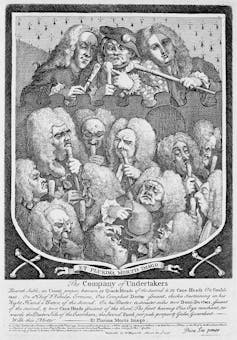
A cartoon of undertakers in wigs.
A Consultation of Physicians, or The Company of Undertakers is an engraving by the English artist William Hogarth that satirises the medical profession.
Wellcome

The main narrative in the film has been moved to 1857; Shelley’s book is set in the 1790s. This enables a far greater range of technology to be employed – from early photography, flushable toilets, and gigantic voltaic piles, which were the first electrical batteries.

However, many scenes evoke earlier times, such as the gowns and wigs of the medical professionals who reject Victor Frankenstein’s heretical experiments with corpses. These have an 18th-century aesthetic, wearing large white wigs like those depicted in William Hogarth’s 1736 engraving A Consultation of Physicians, or The Company of Undertakers.

The film makes full use of historical medical knowledge. For example, one breakthrough in Victor’s experiments comes when he is given a map of the lymphatic system, which is said to be the fifth long lost Evelyn Table. The real four tables are from 17th-century Italy and were an educational tool to demonstrate the vein, artery and nervous systems. Famously, these wooden boards were pasted with real human tissue.


Read more:
The dark history of medical illustrations and the question of consent


Just as the surgeon who gathered the material for the Evelyn Tables is unlikely to have asked for the patient’s consent before their death, Victor is relentless in his search for body parts to build his monster. One of the most visceral scenes is of him surrounded by piles of heads, legs, and other human parts, sawing off what he intends to use, and lugging sacks of unwanted bits of bodies to be slung into the gutter.

Throughout, Victor is brilliant but single-minded to the point of monomania. He is likened, as he is in the novel’s subtitle, to the mythological figure Prometheus who stole fire from the gods to give to humans. But, unlike Prometheus, Victor’s actions seem to lack much altruistic purpose.

The one character who sees through him is Elizabeth Lavenza (Mia Goth), newly imagined as the intended wife of Victor’s brother William (Felix Kammerer). Elizabeth in this version is herself an amateur entomologist (a scientist who studies insects). Her scarab necklace, with its Egyptian symbolism, is a symbol of renewal and rebirth – a symbol of her affinity with creatures that are often misunderstood.

Del Toro creates animosity between Victor and his father Leopold (Charles Dance) to prepare us for the inadequacies of Victor’s relationship with his creation. He also leans into the theory that Victor and his Creature are doubles. Nowhere is this more clear than when the scientist identifies himself as Victor and the monster applies that name to himself. Both characters also emit the same animalistic growl when they are angry.

There are also visual signs of this doubling. At first, the monster is practically naked bar a few bandages until he acquires a long coat from a fallen soldier and other swaddling layers, which only enhances his formidable size.

When Victor begins to hunt the Creature, he is dressed in a similarly huge fur coat. His gait is ambling, much like the creatures in his first steps, as he drags his prosthetic leg across the snow in pursuit. Their resemblance seems to signify a merging of identities. It is difficult to know who is the hunter and who is hunted.


Read more:
Two centuries on, Frankenstein is the perfect metaphor for the Anthropocene era


Created from a process declared unholy, obscene and an abomination, and declared by Victor to be a mistake, the Creature endures. In fact, as it all ends we are left with a final close up of the monster’s face, cementing del Toro’s sympathy with the Creature.

In the film, the Creature is, throughout, afraid, attempting to be gentle, wanting to find affection at the hands of the humans he encounters but most often instead encounters pain and suffering. Ultimately, he is not of “the same nature” as humans, which allows for some intriguing differences.

Despite this, he insists that he is not a “something” but a “someone”. Those watching will be left with the Creature’s words reverberating in their heads, words which shine a harsh light on us all: “the world will hunt you and kill you just for being who you are.”

The Conversation

Sharon Ruston does not work for, consult, own shares in or receive funding from any company or organisation that would benefit from this article, and has disclosed no relevant affiliations beyond their academic appointment.

ref. Guillermo de Toro’s Frankenstein: beguiling adaptation stays true to heart of Mary Shelley’s story – https://theconversation.com/guillermo-de-toros-frankenstein-beguiling-adaptation-stays-true-to-heart-of-mary-shelleys-story-267570

Drought, sand storms and evacuations: how Iran’s climate crisis gets ignored

Source: The Conversation – UK – By Sanam Mahoozi, PhD Candidate Journalism, City St George’s, University of London

Iran and Israel fought a 12-day war in June. Although a ceasefire was declared the same month, news coverage of Iran continues to focus on the conflict’s aftermath and the Middle East’s tense political situation.

Meanwhile, Tehran – home to more than 10 million people – is facing one of its worst water shortages in decades. Dams near the capital are at their lowest levels for nearly 70 years – the Karaj dam (one of the city’s major suppliers), which has 25 million cubic metres of water storage, is 86% empty.

In the centre of the country, the city of Isfahan is sinking as subsidence swallows cars and pedestrians. Land subsidence is mainly caused by over-extraction of ground water for agriculture – more than 90% of Iran’s water is extracted for agricultural use. Many of Iran’s iconic lakes have turned into a bed of salt.

Even though schools and roads in Tehran were evacuated in September due to their risk of collapsing, international media coverage of this major environmental problem remains alarmingly low – limited mostly to local and Persian-language diaspora outlets.

Earlier this year, the country’s southern provinces were blanketed by sand and dust storms that sent thousands to hospitals and disrupted infrastructure. Again, this went mostly unreported outside Iran.


Wars and climate change are inextricably linked. Climate change can increase the likelihood of violent conflict by intensifying resource scarcity and displacement, while conflict itself accelerates environmental damage. This article is part of a series, War on climate, which explores the relationship between climate issues and global conflicts.


There has also been little international coverage of the environmental impact of the war on Iran.

In contrast, local media have reported that Israel’s missile attacks on oil depots close to Tehran released 47,000 tons of greenhouse gases into the city’s atmosphere, causing air pollution. They claimed surface and groundwater systems, soil and wider ecosystems have all been damaged by the leakage of industrial wastewater, urban sewage and other forms of pollution including noise, vibration, radiation and heat – all of which pose a threat to the lives of humans, animals and plants.

For months, international news outlets have focused their coverage of Iran on questions about its nuclear programme and worsening ties with the west. They have covered espionage, sanctions, cybersecurity and Iranian officials’ statements about uranium enrichment and nuclear weapons.

This is not surprising. An analysis by the Reuters Institute for the Study of Journalism at the University of Oxford found that newsrooms covering the Middle East will mainly report on war and conflict. Other academic studies underline that long-term but far-reaching environmental issues are far down their list of priorities.

Iran is being hit by a major drought.

Even inside Iran, the news media has largely concentrated on the war. During the conflict, conservative Iranian state-affiliated news outlets such as Tasnim, Mizan and Kayhan focused almost entirely on military developments and official narratives of “national defence” and “foreign threats.”

But when the fighting ended, some Iranian newspapers, particularly those which advocate for gradual social, political and press freedom (along with the state-run IRNA news agency), started to cover the drought and water shortages. The conservative Iranian news media outlets are now covering these stories a little, but less so than the reformist media, such as Payamema and Shargh.

Today, the Middle East faces some of the world’s worst environmental crises — including droughts, floods, sand and dust storms with enormous consequences. Across Iran’s provinces, many rivers and wetlands have dried up. Air pollution is getting worse and power cuts are devastating lives and livelihoods.

What does the world know?

My research looks at how the media reports climate change across the Middle East and North Africa, and particularly in Iran.

I also write for news organisations about water and climate change. In doing this research, I have found that Iran’s environmental problems are largely driven by decades of government mismanagement and the overexploitation of water resources — including excessive dam construction and groundwater use for agriculture.

Even on the few occasions when international media outlets have covered Iran’s water crisis in recent months, the lead section of the coverage is often tied to the war. While reporting on war is essential to expose its human costs and security, environmental coverage is equally important. Climate change will not pause for a ceasefire, and neglecting it risks overlooking a crisis that affects everyone.


Don’t have time to read about climate change as much as you’d like?

Get a weekly roundup in your inbox instead. Every Wednesday, The Conversation’s environment editor writes Imagine, a short email that goes a little deeper into just one climate issue. Join the 45,000+ readers who’ve subscribed so far.


The Conversation

Sanam Mahoozi does not work for, consult, own shares in or receive funding from any company or organisation that would benefit from this article, and has disclosed no relevant affiliations beyond their academic appointment.

ref. Drought, sand storms and evacuations: how Iran’s climate crisis gets ignored – https://theconversation.com/drought-sand-storms-and-evacuations-how-irans-climate-crisis-gets-ignored-266725

Inside the far-right social media ecosystem normalising extremist ideas in UK politics

Source: The Conversation – UK – By Ed Harrison, PhD Candidate, Institute for Digital Security and Behaviour, University of Bath

Last September, Reform leader Nigel Farage dismissed a policy of mass deportations as a “political impossibility”. Now, a year on, the party has pledged to deport up to 600,000 illegal migrants and retrospectively strip indefinite leave to remain from people already settled in the UK.

This is a drastic lurch to the right, even for Reform. Only last year the party was saying it seeks to represent the “silent majority” and keep out “extremists”.

In explaining this shift, Reform politicians would probably claim this is what the silent majority wants. They would point to a hardening of public opinion on illegal migration.

They would want to avoid the accusation they have given in to extremists by proposing these policies. Reform has, after all, sought to distance itself from the far-right with every step it takes towards the mainstream.

But an analysis of social media suggests something else. Many people and groups on the radical and far-right are harnessing a process known as audience capture in order to influence political policy.

A group of anonymous X accounts is said to follow a “posting-to-policy” strategy. These accounts – some of which are run by disaffected Westminster professionals – post to inject their grievances into online discourse.

Their goal is to see their narratives circulate and gain popularity within rightwing networks. Once established, they hope political actors, many of whom follow them, will take up the ideas.

Use and discussion of the “Boriswave” is an example of this. The term, which refers to a rise in non-EU immigration under former prime minister Boris Johnson, originated and proliferated from this network. It is now commonly used in the mainstream and was deployed by Reform to justify its proposal to revoke indefinite leave to remain.

Another example is the motability scheme, a programme that helps eligible disabled individuals lease a car. It was first highlighted and heavily criticised by anonymous accounts on X for being wasteful and subject to fraudulent abuse, and has dominated much of the discussion on welfare reform in 2025. Conservative leader Kemi Badenoch recently promised to restrict eligibility to the scheme.

While many of these accounts are anonymous, some are more out in the open. Online conservatives such as Connor Tomlinson and Steven Edington have boasted of how their work has helped move Reform to the right.

Further to the online activities of aggrieved anonymous online users and disaffected conservatives, are the cases of ex-Reform politicians MP Rupert Lowe and Advance UK leader Ben Habib. Both left the party in acrimonious circumstances, both now lead alternative movements, and both are pushing Reform to adopt more radical policies.

Lowe has called Reform’s pledge to deport up to 600,000 illegal migrants “pathetic” and has suggested it be quadrupled. Habib attended the far-right Unite the Kingdom protests in September.

Add these forces together and you get what amounts to a rightwing arms race – communities of social media users pushing for more radical policies in an attempt to change the norms and policies of Reform and the right.

How an idea spreads

To explore this dynamic, and how Reform’s recent u-turn has been shaped by it, we analysed the online networks that drove conversation about “mass deportations” on X over the past year. Using computational methods, we identified four distinct sub-communities defined by their retweet relationships. These sub-communities were formed around far-right influencers, radical right influencers, Advance UK/free-marketeer influencers – and around the Reform party.

Reposting network of discussion of mass deportation on X:

A table categorising rightwing voices online.
The online conservative voices influencing Reform policy.
CC BY-ND

Discussion of mass deportations in 2024 was almost exclusively dominated by the far-right and the anonymous accounts of the radical right. Fast forward to April 2025 and we find Lowe, Habib and a wider range of rightwing influencers have entered the conversation in support of the policy.

Finally, in September, following Reform’s August announcement, you can see Farage and key Reform personnel supplant the influencers as players in a movement they had little role in creating. In doing so, the party has aligned itself with a policy that less than a year ago it vehemently rejected.

This offers only a snapshot of discussions on social media and cannot account for the wider political and socioeconomic factors influencing these shifts. It does, however, demonstrate how narratives in far-right and fringe online ecosystems can migrate into more mainstream discourse over time and help shape the norms and policies of whole political movements.

It is difficult to imagine this happening without the new role of X under Elon Musk. With far-right figures now allowed back onto the platform, and the liberalisation of its algorithms to push more extreme content, the result has been the amplification and normalisation of more radical views and rhetoric.

Researchers have highlighted how, as a result of this, social media begins to function like a funhouse mirror, distorting political reality. Because online debate is dominated by a small number of extreme voices (10% of users produce 97% of political content), it projects a skewed and unrepresentative picture of public opinion.

This, in turn, blurs users’ sense of which norms and views are mainstream. The fact that offline, the majority is said to oppose the retrospective removal of indefinite leave to remain, only adds weight to the argument that Reform’s policy shifts are being driven by a small number of influential online voices rather than the voices of the masses.

Where once social media played a role more akin to that of a town hall, allowing people to express their views and support for political parties, it is now increasingly reflective of the strategic activities of a select influential few.

While the extent of this is unclear, we have to wonder if Reform’s perceptions of public opinion are being distorted by the funhouse mirror that X has increasingly become. And while the party is polling ahead of all others, that has implications for the future direction of the UK.

The Conversation

The authors do not work for, consult, own shares in or receive funding from any company or organisation that would benefit from this article, and have disclosed no relevant affiliations beyond their academic appointment.

ref. Inside the far-right social media ecosystem normalising extremist ideas in UK politics – https://theconversation.com/inside-the-far-right-social-media-ecosystem-normalising-extremist-ideas-in-uk-politics-266948