Kennedy hearing deepens crisis over dismantling of CDC leadership – health scholar explains why the agency’s ability to protect public health is compromised

Source: The Conversation – Global Perspectives – By Jordan Miller, Teaching Professor of Public Health, Arizona State University
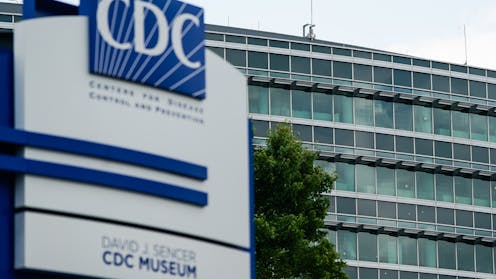
Visible bullet holes in the CDC’s venerable building speak volumes of the unfolding crisis. Elijah Nouvelage/Getty Images News via Getty Images

The Centers for Disease Control and Prevention, long considered the nation’s – if not the world’s – premier public health organization, is mired in a crisis that not only threatens Americans’ health but also its very survival as a leading public health institution.

The degree of this crisis was on full display during Health and Human Services Secretary Robert F. Kennedy Jr.’s Sept. 4, 2025, testimony before the U.S. Senate.

In the hearing, Kennedy openly criticized CDC professionals’ response to the COVID-19 pandemic, saying “the people at CDC who oversaw that process, who put masks on our children, who closed our schools, are the people who will be leaving.”

Kennedy’s hearing came on the heels of a contentious week in which Kennedy fired the CDC’s director, Susan Monarez, spurring 12 members of the Senate Finance Committee – including 11 Democrats and independent Bernie Sanders – to call on Kennedy to resign from his position.

At least four top CDC leaders resigned following Monarez’s ouster, citing pressure from Kennedy to depart from recommendations based on sound scientific evidence.

I am a teaching professor and public health professional. Like many of my colleagues, the disruption happening at the CDC in recent months has left me scrambling to find alternate credible sources of health information and feeling deeply concerned for the future of public health.

HHS Secretary RFK Jr. walks into a Senate office building, flanked by police officers standing along the wall.
Health and Human Services Secretary Robert F. Kennedy Jr. arrives to testify before the Senate Finance Committee on Sept. 4, 2025.
Andrew Harnik/Getty Images News via Getty Images

The CDC’s unraveling

These leadership shakeups come on the heels of months of targeted actions aimed at unraveling the CDC’s structure, function and leadership as it has existed for decades.

The turmoil began almost as soon as President Donald Trump took office in January 2025, when his administration enacted sweeping cuts to the CDC’s workforce that health experts broadly agree jeopardized its ability to respond to emerging health threats.

Trump used executive orders to limit CDC employees’ communication with the public and other external agencies, like the World Health Organization.

Within weeks, he ordered as much as 10% of the overall workforce to be cut.

Soon after, Kennedy – who was newly appointed by Trump – began undoing long-standing CDC institutions, like the Advisory Committee on Immunization Practices, replacing all 17 of its members in a move that was widely denounced by health experts.

Critics pointed to a lack of qualifications for the new committee members, with more than half never having published research on vaccinations and many having predetermined hostility toward vaccines.

In June, more than 20 authoritative organizations, including the National Medical Association and American Academy of Pediatrics, expressed serious concerns for the health impacts of overhauling the advisory committee.

How Monarez’s removal spurred the crisis

Public health leaders had cheered the July confirmation of Monarez as the CDC’s new director, seeing her nomination as a welcome relief to those who value evidence-based practice in public health. Monarez is an accomplished scientist and career public servant.

Many viewed her as a potential voice of scientific wisdom amid untrained officials appointed by Trump, who has a track record of policies that undermine public health and science.

In her role as acting director, to which she was appointed in January, Monarez had quietly presided over the wave of cuts to the CDC workforce and other moves that drastically reshaped the agency and weakened the country’s capacity to steward the nation’s health.

Yet Monarez had “red lines” that she would not cross: She would not fire CDC leadership, and she would not endorse vaccine policies that ran contrary to scientifically supported recommendations.

According to Monarez, Kennedy asked her to do both in an Aug. 27 meeting. When she refused, he asked her to resign.

Monarez walks into a room for a confirmation hearing with officials standing behind her.
Susan Monarez said that she had ‘red lines’ she would not cross in her role as CDC director.
Kayla Bartkowski/Getty Images News via Getty Images

Her lawyers pushed back, arguing that only the president had the authority to remove her, stating: “When CDC Director Susan Monarez refused to rubber-stamp unscientific, reckless directives and fire dedicated health experts, she chose protecting the public over serving a political agenda. For that, she has been targeted.”

Ultimately, the White House made her dismissal official later that evening.

An agency in turmoil

Further exemplifying and deepening the crisis at the agency, on Aug. 8, a gunman who had expressed anger over COVID-19 vaccinations opened fire on CDC headquarters, killing a police officer.

Many health workers attributed this directly to misinformation spread by Kennedy. The shooting amplified tensions and made tangible the sense of threat under which the CDC has been operating over the tumultuous months since Trump’s second term began. One employee stated that “the CDC is crumbling.”

Some public health officials said the violence of Aug. 8 was a reaction to the ‘dangerous rhetoric targeting their profession.’

Public health experts, including former CDC directors, are sounding the alarm, speaking out about the precariousness of the agency’s position. Some are questioning whether the CDC can even survive.

A crisis of trust

Even before the most recent shock waves, Americans said they were losing trust and confidence in CDC guidance: In April, 44% of U.S. adults polled said that they will place less trust in CDC recommendations under the new leadership. This would undoubtedly undermine the U.S. response if the country faces another public health challenge requiring a rapid, coordinated response, like COVID-19.

In addition to installing new members on the vaccine advisory committee, Kennedy abruptly changed the recommendations for flu and COVID-19 vaccines without input from the CDC or the vaccine advisory committee, and contrary to data presented by CDC scientists.

Public health professionals and advocates are now warning the public that vaccine recommendations coming from the CDC’s Advisory Committee on Immunization Practices may not be trustworthy. They point to the lack of credibility in the review process for the new committee, the fact that members have made statements contrary to scientific evidence in the past, and failure to apply an evidence-to-recommendations framework as compromising factors. Critics of the committee even describe a lack of basic understanding of the science behind vaccines.

Health impacts are being felt in real time, with health care providers reporting confusion among parents as a result of the conflicting vaccine recommendations. Now, those who want to be vaccinated are facing barriers to access, with major retailers placing new limits on vaccine access in the face of federal pressure. This as vaccination rates were already declining, largely due to misinformation.

The end result is an environment in which the credibility of the CDC is in question because people are unsure whether recommendations made in the CDC’s name are coming from the science and scientists or from the politicians who are in charge.

Filling the gaps

Reputable organizations are working to fill the void created by the CDC’s precariousness and the fact that recommendations are now being made based on political will, rather than scientific evidence.

The American Academy of Pediatrics and the American College of Gynecology have both released recommended vaccination schedules that, for the first time, diverge from CDC recommendations.

And medical organizations are discussing strategies that include giving more weight to their recommendations than the CDC’s and creating pathways for clinicians to obtain vaccines directly from manufacturers. These measures would create workarounds to compensate for CDC leadership voids.

Some states, including California, Oregon, Washington and New Mexico, are establishing their own guidance regarding vaccinations. Public health scientists and physicians are attempting to preserve data and surveillance systems that the Trump administration has been removing. But independent organizations may not be able to sustain this work without federal funding.

What’s at stake

As part of its crucial work in every facet of public health, the CDC oversees larger-scale operations, both nationally and globally, that cannot simply be handed off to states or individual organizations. Some public health responses – such as to infectious diseases and foodborne illnesses – must be coordinated at the national level in order to be effective, since health risks are shared across state borders.

In a health information space that is awash with misinformation, having accurate, reliable health statistics and evidence-based guidelines is essential for public health educators like me to know what information to share and how to design effective health programs. Doctors and other clinicians rely on disease tracking to know how best to approach treating patients presenting with infections. The COVID-19 pandemic made clear the importance of laboratory science, a unified emergency response and rapid distribution of effective vaccines to the public.

One of the strengths of the American system of governance is its ability to approach challenges – including public health – in a coordinated way, having a federal level of cooperation that unifies state-level efforts.

The CDC has been the nation’s preeminent public health institution for more than eight decades as a result of its vast reach and unparalleled expertise. Right now, it’s all sitting at a precarious edge.

The Conversation

Jordan Miller does not work for, consult, own shares in or receive funding from any company or organization that would benefit from this article, and has disclosed no relevant affiliations beyond their academic appointment.

ref. Kennedy hearing deepens crisis over dismantling of CDC leadership – health scholar explains why the agency’s ability to protect public health is compromised – https://theconversation.com/kennedy-hearing-deepens-crisis-over-dismantling-of-cdc-leadership-health-scholar-explains-why-the-agencys-ability-to-protect-public-health-is-compromised-264273
Put down your phone and engage in boredom – how philosophy can help with digital overload

Source: The Conversation – UK – By Mehmet Sebih Oruc, PhD Researcher in digital media and philosophy, Newcastle University

Vectorium/Shutterstock

It feels like there are so many things constantly vying for our attention: the sharp buzz of the phone, the low hum of social media, the unrelenting flood of emails, the endless carousel of content.

It’s a familiar and almost universal ailment in our digital age. Our lives are punctuated by constant stimulation, and moments of real stillness – the kind where the mind wanders without a destination – have become rare.

Digital technologies permeate work, education, and intimacy. Not participating feels to many like nonexistence. But we tell ourselves that’s OK because platforms promise endless choice and self-expression, but this promise is deceptive. What appears as freedom masks a subtle coercion: distraction, visibility, and engagement are prescribed as obligations.

As someone who has spent years reading philosophy, I have been asking myself how to step out of this loop and try to think like great thinkers did in the past. A possible answer came from a thinker most people wouldn’t expect to help with our TikTok-era malaise: the German philosopher Martin Heidegger.

Heidegger argued that modern technology is not simply a collection of tools, but a way of revealing – a framework in which the world appears primarily as a resource, including the human body and mind, to be used for content. In the same way, platforms are also part of this resource, and one that shapes what appears, how it appears, and how we orient ourselves toward life.

Digital culture revolves around speed, visibility, algorithmic selection, and the compulsive generation of content. Life increasingly mirrors the logic of the feed: constantly updating, always “now” and allergic to slowness, silence and stillness.

What digital platforms take away is more than just our attention being “continuously partial” — they also limit the deeper kind of reflection that allows us to engage with life and ourselves fully. They make us lose the capacity to inhabit silence and confront the unfilled moment.

When moments of silence or emptiness arise, we instinctively look to others — not for real connection, but to fill the void with distraction. Heidegger calls this distraction “das man” or “they”: the social collective whose influence we unconsciously follow.

In this way, the “they” becomes a kind of ghostly refuge, offering comfort while quietly erasing our own sense of individuality. This “they” multiplies endlessly through likes, trends, and algorithmic virality. In fleeing from boredom together, the possibility of an authentic “I” disappears into the infinite deferral of collective mimicry.

Heidegger feared that under the dominance of technology, humanity might lose its capacity to relate to “being itself”. This “forgetting of being” is not merely an intellectual error but an existential poverty.

Today, it can be seen as the loss of depth — the eclipse of boredom, the erosion of interiority, the disappearance of silence. Where there is no boredom, there can be no reflection. Where there is no pause, there can be no real choice.

Heidegger’s “forgetting of being” now manifests as the loss of boredom itself. What we forfeit is the capacity for sustained reflection.

Boredom as a privileged mood

For Heidegger, profound boredom is not merely a psychological state but a privileged mood in which the everyday world begins to withdraw. In his 1929 to 1930 lecture course The Fundamental Concepts of Metaphysics, he describes boredom as a fundamental attunement through which beings no longer “speak” to us, revealing the nothingness at the heart of being itself.

“Profound boredom removes all things and men and oneself along with it into a remarkable indifference. This boredom reveals beings as a whole.”

Boredom is not absence but a threshold — a condition for thinking, wonder, and the emergence of meaning.

The loss of profound boredom mirrors the broader collapse of existential depth into surface. Once a portal to being, boredom is now treated as a design flaw, patched with entertainment and distraction.

Never allowing ourselves to be bored is equivalent to never allowing ourselves to be as we are. As Heidegger insists, only in the totality of profound boredom do we come face to face with beings as a whole. When we flee boredom, we escape ourselves. At least, we try to.

Man sitting on floor sighing
Rather than filling every moment we should allow ourselves to sit in boredom and see where our minds go.
Autumn/shutterstock

The problem is not that boredom strikes too often, but that it is never allowed to fully arrive. Boredom, which has paradoxically seen a rise in countries drowning in technology like the US, is shameful. It is treated like an illness almost. We avoid it, hate it, fear it.

Digital life and its many platforms offer streams of micro-distractions that prevent immersion into this more primitive attunement. Restlessness is redirected into scrolling, which, instead of meaningful reflection, produces only more scrolling. What disappears with boredom is not leisure, but metaphysical access — the silence in which the world might speak, and one might hear.

In this light, rediscovering boredom is not about idle time, it is about reclaiming the conditions for thought, depth, and authenticity. It is a quiet resistance to the pervasive logic of digital life, an opening to the full presence of being, and a reminder that the pause, the unstructured moment, and the still passage are not failures – they are essential.


Looking for something good? Cut through the noise with a carefully curated selection of the latest releases, live events and exhibitions, straight to your inbox every fortnight, on Fridays. Sign up here.


The Conversation

Mehmet Sebih Oruc does not work for, consult, own shares in or receive funding from any company or organisation that would benefit from this article, and has disclosed no relevant affiliations beyond their academic appointment.

ref. Put down your phone and engage in boredom – how philosophy can help with digital overload – https://theconversation.com/put-down-your-phone-and-engage-in-boredom-how-philosophy-can-help-with-digital-overload-262396

Al sistema inmune también le salen ‘arrugas’: ¿qué ocurre cuando nuestras defensas envejecen?

Source: The Conversation – (in Spanish) – By Daniel Miranda Prieto, Investigador Predoctoral de Inmunología, Universidad de Oviedo

El envejecimiento supone un gran desafío económico y sanitario para las sociedades occidentales. En España, por ejemplo, un tercio de la población será mayor de 65 años en 2055. Estas cifras apuntan a un incremento de casos de patologías asociadas a la edad como las enfermedades cardiovasculares o el cáncer, sin olvidar el aumento de las personas susceptibles a enfermedades infecciosas y autoinmunes.

Para prevenir o ralentizar esas consecuencias, resulta esencial comprender los cambios que experimenta nuestro cuerpo con el paso del tiempo. Es fácil entender qué ocurre en los huesos, el cerebro o las hormonas, pero ¿de qué manera afecta el envejecimiento a nuestras defensas?

Como veremos más adelante, nuevos hallazgos sobre la naturaleza de las enfermedades autoinmunes (cuando el sistema inmune ataca por error a nuestro propio cuerpo) nos están proporcionando pistas valiosas al respecto.

Los achaques del sistema inmunitario

El sistema inmunitario se puede dividir en dos ramas: la innata y la adaptativa. La primera responde rápidamente ante cualquier amenaza y avisa a la adaptativa. En ella participan, entre otros, dos tipos de glóbulos blancos: los monocitos y los neutrófilos. Estas células inician la inflamación, que nos ayuda a luchar contra las amenazas a las que nos enfrentamos. Sin embargo, las respuestas inflamatorias deben ser cortas y precisas, ya que si no el sistema inmunitario se agota manteniendo la inflamación y disminuye su capacidad para protegernos.


Leer más:
Enfermedades autoinmunes: ¿de verdad nuestro cuerpo se destruye a sí mismo?


La inmunidad adaptativa tarda varios días en desarrollarse porque actúa específicamente contra el microorganismo o célula cancerígena que nos amenaza. Está constituida por otro tipo de glóbulos blancos: los linfocitos T y B. Los primeros interaccionan con la inmunidad innata, eliminan células infectadas y activan a los segundos, que producen anticuerpos. Ambos generan células de memoria que recuerdan a los enemigos a los que nos hemos enfrentado para que, si vuelven a atacarnos, actuemos de forma más rápida y efectiva.

Lo que ocurre es que, con el paso del tiempo, nuestras células del sistema inmunitario también envejecen en un proceso llamado inmunosenescencia o immunoaging. En primer lugar, los neutrófilos y monocitos experimentan una reducción en su capacidad de moverse y de eliminar patógenos eficazmente. Y en lo que se refiere a la inmunidad adaptativa, la generación de nuevos linfocitos disminuye, lo que dificulta hacer frente a nuevos patógenos. Aunque se acumulan las células de memoria, su activación se ve limitada.

Esta nueva composición del sistema inmunitario favorece una inflamación constante y respuestas más débiles y desordenadas ante las amenazas. Nuestras defensas envejecidas se vuelven torpes y un poco más lentas. Todo ello contribuye a una mayor desprotección frente a infecciones, un mayor daño en nuestro organismo y, en consecuencia, al desarrollo de patologías asociadas a la edad.

Autoinmunidad: un envejecimiento prematuro

Pero, a veces, el envejecimiento del sistema inmune no se corresponde con la fecha de nacimiento. Es lo que ocurre con los pacientes de algunas enfermedades autoinmunes como la artritis o el lupus.

Recientemente, se ha descubierto un nuevo tipo de linfocitos B –las llamadas células B asociadas a edad o células ABC– cuyo número aumenta de manera natural al cumplir años. No obstante, su abundancia puede dispararse en otras situaciones.

Aunque inicialmente se pensaba que su función era únicamente producir anticuerpos frente a la presencia de patógenos, se ha comprobado que también juegan un papel central en la autoinmunidad. Es decir, estas células producen anticuerpos contra partes de nuestro propio organismo y activan a otros linfocitos, lo que contribuye a generar inflamación sostenida en el tiempo.

En esta situación, la inflamación agrava la enfermedad, afectando a diferentes tejidos; entre ellos, los vasos sanguíneos. Y es aquí donde encontramos una conexión entre las dolencias autoinmunes y ciertos achaques propios de la tercera edad.

Enfermedades cardiovasculares: el enemigo número uno

La primera causa de muerte en el mundo son las enfermedades cardiovasculares, y la edad es uno de los principales factores de riesgo. Pero además, muchos pacientes con enfermedades autoinmunes tienen una mayor probabilidad de padecer patologías del corazón respecto a la población sana de su misma edad y sexo.

Un evento clave que precede a muchas enfermedades cardiovasculares es la formación de placas de colesterol. Este proceso se ve favorecido por la inflamación, que daña las células de los vasos sanguíneos, favorece los depósitos de ese lípido e impide su eliminación por los macrófagos, aumentando así el tamaño de las placas. De ese modo, los cambios que alteran el funcionamiento de nuestras defensas pueden favorecer el crecimiento de las placas de colesterol y, con ello, el riesgo de enfermedades cardiovasculares.


Leer más:
Las mujeres tienen un sistema inmune más robusto, pero eso también puede pasarles factura


Ya que todos estos cambios se van acumulando, es fácil comprender que el riesgo se incrementará con el paso de los años, aunque no siempre es así. En ocasiones, nuestro sistema inmunitario sufre un envejecimiento prematuro, lo que explica que aparezcan dolencias asociadas a la edad en personas jóvenes, mucho antes de lo esperable. De hecho, se ha visto que las células ABC tienen un papel en las enfermedades cardiovasculares que no se puede explicar por la fecha de nacimiento de los individuos. En este caso, es más importante la edad de las defensas que la que figura en el DNI.

Este tipo de descubrimientos podrían abrir nuevos horizontes para ralentizar el envejecimiento del sistema inmunitario, mejorar la calidad de vida de los mayores y ayudar a encontrar soluciones a diversas patologías. La relación entre las dolencias autoinmunes y las enfermedades cardiovasculares podría ser una clave para aumentar nuestra longevidad. Quizá el sistema inmunitario albergue la fuente de la eterna juventud.

The Conversation

Daniel Miranda Prieto recibe fondos del Instituto de Salud Carlos III como investigador predoctoral con un Contrato Predoctoral de Formación en Investigación en Salud (PFIS) (ISCIII:FI22/00148, convocatoria en concurrencia competitiva).

Javier Rodríguez-Carrio recibe fondos en convocatorias competitivas como Investigador Principal del Instituto de Salud Carlos III para sus líneas de investigación en artritis reumatoide.

ref. Al sistema inmune también le salen ‘arrugas’: ¿qué ocurre cuando nuestras defensas envejecen? – https://theconversation.com/al-sistema-inmune-tambien-le-salen-arrugas-que-ocurre-cuando-nuestras-defensas-envejecen-261816

Thailand has another new prime minister and an opening for progress. But will anything change?

Source: The Conversation – Global Perspectives – By Adam Simpson, Visiting Scholar at the Center for Southeast Asian Studies, Kyoto University; Senior Lecturer, International Studies, University of South Australia

Thai politics is often chaotic. But this past week has been especially tumultuous, even by Thailand’s standards.

In a matter of days, Thailand has seen one prime minister, Paetongtarn Shinawatra, ousted by the country’s top court. And following a great deal of intrigue and horse-trading, a new prime minister, Anutin Charnvirakul, has finally been elected.

Anutin, a conservative tycoon who led the fight to legalise medicinal cannabis use, was elected by parliament after securing the backing of the progressive People’s Party in a surprise move.

Despite a leader being agreed on, there will be little stability in the new arrangement. Anutin will lead a shaky minority government, as many of his conservative values and policies are in direct opposition to those of his new backers.

The deal also requires a snap election within the next four months, once some constitutional questions have been settled.

The People’s Party has demanded Anutin commit to constitutional reform in exchange for its support. So, there is a chance democratic changes might finally be achieved. But Anutin could also renege on the deal once in power, if he can peel away enough MPs from other parties to sustain his government.

This would not be surprising. The country’s conservative forces have a long history of undermining the will of the people.

An all-powerful court

This political drama was put in motion after Paetongtarn Shinawatra was removed from office last Friday by the powerful and conservative Constitutional Court over violations of ethics standards.

Paetongtarn is the daughter of former Prime Minister Thaksin Shinawatra, who was himself ousted by a military coup in 2006.

Since the Constitutional Court was established in 1997, it has toppled five prime ministers linked to the Shinawatra clan, in addition to dissolving 111 political parties, often linked to popular, pro-democracy politicians.

The court has dissolved three parties linked to the Shinawatras, as well as both progressive predecessors of the People’s Party. This includes Move Forward, which won the most seats in the last general election in 2023 but was prevented from taking power.

Thailand also has a history of military coups, with at least 12 over the past century. Not only was Thaksin’s government overthrown by a coup, so was his sister Yingluck’s government in 2014.

What did the People’s Party demand?

After Paetongtarn’s dismissal, the coalition government formed by Pheu Thai, the Shinawatra family’s party, and Anutin’s Bhumjaithai Party fell apart. In the political vacuum, the People’s Party emerged as kingmaker.

Despite its popularity, the People’s Party has been repeatedly stymied in its attempts to promote constitutional reform by the potent conservative forces in Thai society.

In exchange for supporting Anutin’s rise to prime minister, the People’s Party laid out several key conditions for the new government:

  • it must dissolve parliament within four months and hold a new election

  • it must organise a referendum, if required by the Constitutional Court, to allow parliament to amend the constitution

  • if no referendum is required, it must work with the People’s Party to expedite the process of moving towards drafting a new constitution.

The People’s Party also committed against joining the new coalition government or taking any ministerial seats in cabinet.

This plan would allow the People’s Party to put forward its candidates for prime minister at the snap election, which it is restricted from doing in the current parliamentary vote by the constitution.


Read more:
Explainer: why was the winner of Thailand’s election blocked from becoming prime minister?


Thaksin flees again

Adding to the political turmoil, 76-year-old Thaksin Shinawatra abruptly left the country on his private jet on Thursday, heading for his mansion in Dubai.

Thaksin, who had previously spent 15 years in self-imposed exile to avoid legal charges, was acquitted in late August over charges he violated Thailand’s oppressive lèse-majesté law. Under Section 112 of Thailand’s Criminal Code, anyone found guilty of insulting the monarchy can receive up to 15 years in jail.

His acquittal initially suggested that a détente between the Shinawatras and conservative forces supporting the military and monarchy may have been back on track. But the removal of his daughter from office suggested these forces were keen to demonstrate they still held powerful cards.

Thaksin had been due to return to the Supreme Court next week in a separate case that could have seen him jailed. He said on social media he would return to Thailand for the court date on Tuesday, but whether he does so remains to be seen.

Where to now?

If the agreement between Anutin and the People’s Party holds, Thailand could see some movement towards constitutional reform, followed by a new election.

The People’s Party will likely win any election held, but whether its leader will be allowed to become prime minister is another question.

Since its predecessor was dissolved in 2024, its MPs have softened their rhetoric over reforming the lèse-majesté law. But there is little doubt conservative forces in Thailand still see the progressive policies and supporters of the party as a threat to their privileged status in society. They can be expected to use all means at their disposal to ensure the party doesn’t assume power.

Given the turmoil, another question is whether the military will step in, as it has in the past, to take control.

When asked about the military’s potential role in the current political negotiations, the Second Army commander said “the military has no plans for a coup”.

This will hardly be reassuring to Thais who have lived through more coups and removals of governments than they can count.

The Conversation

Adam Simpson does not work for, consult, own shares in or receive funding from any company or organisation that would benefit from this article, and has disclosed no relevant affiliations beyond their academic appointment.

ref. Thailand has another new prime minister and an opening for progress. But will anything change? – https://theconversation.com/thailand-has-another-new-prime-minister-and-an-opening-for-progress-but-will-anything-change-264332

La revolución silenciosa de Giorgio Armani

Source: The Conversation – (in Spanish) – By Sandra Bravo Durán, Socióloga y Doctora en Creatividad Aplicada, UDIT – Universidad de Diseño, Innovación y Tecnología

Giorgio Armani, retratado tras un desfile en Milán en 2015. FFFILMS.IT/Shutterstock

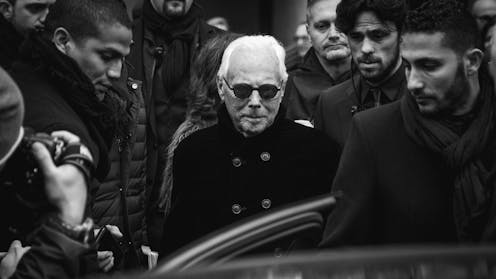
El mundo de la moda acaba de perder a una de sus figuras más silenciosamente influyentes. Giorgio Armani nos acaba de dejar a los 91 años, dejando tras de sí no solo una firma, sino un universo. En las últimas horas, los medios han recopilado biografías, líneas del tiempo y homenajes visuales.

Pero más allá de las cifras, las pasarelas y las celebridades, lo que queda es una pregunta más compleja: ¿qué hizo Armani con la sociedad? ¿Qué cambió, realmente, en nuestro modo de vestir, de ver y de estar en el mundo?

Decía la experta en industrias culturales Joanne Entwistle que el vestido ha sido siempre una frontera entre el cuerpo individual y el cuerpo social. Armani transformó esa frontera en un puente. Lo hizo con trazo limpio, sin levantar la voz. Convirtió la discreción en lenguaje, la sobriedad en estatus y la comodidad en poder. Armani no fue solo un diseñador: fue un editor de silencios, un arquitecto de códigos simbólicos.

Reescribir el traje: diseñar el poder sin gritarlo

En 1975, fundó su firma junto a Sergio Galeotti. Desde entonces, reescribió los códigos del poder. Lo hizo no a través del exceso, como Versace o Mugler, sino a través de la eliminación. Quitó forros, hombreras, rigidez. Desarmó el traje masculino desde dentro y propuso una nueva masculinidad que no necesitaba blindaje. En pleno auge del neoliberalismo y la cultura corporativa, Armani ofreció un uniforme para el poder tranquilo. Su propuesta no era disruptiva desde el grito, sino desde la pausa. Frente al maximalismo estridente, eligió el susurro. Y ese susurro transformó la estética ejecutiva en Hollywood, Wall Street y hasta en los gobiernos.

Una mujer con un vestido dorado en una alfombra roja.
Demi Moore vestida de Armani en la última ceremonia de los Globos de Oro.
Tilnseltown/Shutterstock

Uno de sus gestos más potentes fue también el menos comentado: su forma de tratar el cuerpo femenino sin erotizarlo ni infantilizarlo. Armani no diseñaba para agradar al deseo masculino, sino para empoderar al sujeto que lo llevaba. En los años 80, cuando el power dressing femenino llenaba las oficinas de hombreras afiladas y faldas tubo, Armani ofreció pantalones fluidos, blazers suaves, tejidos que abrazaban sin marcar.

No era una moda feminista en el sentido militante, pero sí profundamente política: daba herramientas para habitar el espacio público con autoridad no agresiva. En vez de simular al hombre, las mujeres Armani ocupaban su lugar con elegancia autónoma.

Más estilo que moda, más emoción que tendencia

El estallido global llegó en 1980 con American Gigolo. Richard Gere, prácticamente vestido de Armani en cada escena, se convirtió en el símbolo del nuevo hombre: elegante, sensual, seguro, pero también relajado. La película hizo por Armani lo que Sexo en Nueva York hizo por Manolo Blahnik. Desde entonces, el armanismo se expandió: no como una tendencia, sino como una estética emocional. Armani no vendía ropa; vendía actitud, luz tamizada, deseo contenido.

Un hombre con abrigo beis y cigarro en la boca.
Richard Gere en un fotograma de American Gigolo.
CinemaPhoto/Corbis

Lo mismo ocurrió con sus musas: Michelle Pfeiffer, Cate Blanchett, Julia Roberts… Ninguna respondía al estereotipo ruidoso de la diva sexualizada. Eran mujeres inteligentes, sofisticadas, con siluetas suaves y presencia hipnótica. Como si la ropa no las cubriera, sino que simplemente estuviera ahí, flotando en el aire.

El arte de construir sin logotipo

Mucho antes de que la industria hablara de lifestyle brands o universos de marca, Giorgio Armani ya había trazado una forma de expansión estética que no dependía de un logotipo visible. Su fuerza no residía en un símbolo gráfico, sino en un tono visual, un gesto compartido, una atmósfera. La marca Armani se reconocía por cómo caía un pantalón, por cómo iluminaba una pasarela, por el silencio elegante de un escaparate.

Una tienda blanca con una A gigante y una X gigante en su fachada.
Tienda de Armani Exchange, la marca juvenil de Armani, en Florida (Estados Unidos).
DowntownMiami/Wikimedia Commons, CC BY-SA

Desde los años noventa, diversificó sin fragmentarse: Armani Jeans, Emporio Armani, Armani Casa, Armani Beauty, Armani Hotels… Pero lo hizo sin sacrificar su narrativa. Cada extensión era una pieza más del mismo relato: sobriedad, calma, precisión. Fue uno de los primeros diseñadores en entender que la moda podía diseñar no solo prendas, sino experiencias. Su legado anticipó la lógica actual del branding emocional y la coherencia multisensorial que hoy persiguen las grandes casas de lujo.

Armani construyó un mundo reconocible sin necesidad de gritar su nombre. Y eso, en una industria obsesionada con el logo, sigue siendo una de sus mayores revoluciones.

La arquitectura invisible del estilo

Desde la sociología de la moda, el legado de Giorgio Armani puede leerse a través de varios ejes que explican su sofisticación estructural. Como sostenía el sociólogo Pierre Bourdieu, los objetos de moda son dispositivos simbólicos que nos ayudan a navegar las tensiones entre pertenencia y diferenciación. Armani transformó ese equilibrio en una forma de arte: construyó un capital simbólico basado en la contención, no en la ostentación. Sus prendas no buscaban deslumbrar, sino insinuar. No gritaban, susurraban. Su cliente no necesitaba exhibirse, sino habitar una elegancia sin fricción.

Una mujer desfila con un pantalón negro y una chaqueta colorida.
Imagen de un desfile de Giorgio Armani para la colección Primavera/Verano 2016.
Fashionstock/Shutterstock

Incluso desde la mirada del también sociólogo Zygmunt Bauman, Armani podría considerarse un maestro de la coherencia en un entorno líquido: fluyó con los tiempos, sí, pero sin diluirse jamás. Supo mantenerse en la parte alta del mercado sin necesidad de viralidad, sin coreografías ni ruidos. Él mismo lo dijo en una de sus últimas entrevistas: “Prefiero dejar intuir antes que exhibir”. Esa frase no es solo una declaración estética; es un manifiesto de poder simbólico.

Hay diseñadores que imponen, y otros que persuaden. Armani persuadía. No por casualidad comenzó como escaparatista y dibujante: siempre pensó como un arquitecto. Por eso sus colecciones parecían edificios invisibles: no se veían las estructuras, pero sostenían al cuerpo con precisión silenciosa. Su ropa era una forma de habitar el mundo con firmeza liviana.

Solía decir que el negro no es ausencia de color, sino la síntesis de todos ellos. Esa idea resume su visión: no se trataba de quitar para vaciar, sino para concentrar. Su moda era esencialista, no minimalista. Cada prenda tenía algo de haiku, de ceremonia japonesa, de exactitud sin alarde. Armani no diseñó para llamar la atención: diseñó para que el cuerpo habitara el estilo como se habita una verdad que no necesita ser dicha.

El verdadero lujo silencioso

Un hombre vestido de negro saluda.
Giorgio Armani saluda al público tras el desfile de Emporio Armani en la Semana de la Moda de Milán Otoño/Invierno 2019/20.
FashionStock/Shutterstock

La muerte de Giorgio Armani marca el fin de una era en la moda. Pero su legado no es un archivo cerrado: es un estilo de pensamiento. Quedan sus tejidos, sus cortes, sus desfiles. Pero sobre todo queda una forma de mirar el cuerpo, el género, el trabajo y el poder con delicadeza y profundidad.

En un momento en que la moda se ha vuelto algoritmo, meme, logotipo y viralidad, Armani sigue siendo ese susurro que atraviesa la sala. Una marca sin escándalo que entendió que el verdadero lujo no es hacerse ver, sino saber estar.

Ese quiet luxury del que ahora todos hablan, el que se ha convertido en tendencia, él lo practicó durante cinco décadas. Cuando aún no tenía nombre, Armani ya lo había convertido en código y lenguaje. Porque el auténtico lujo silencioso… era él.

The Conversation

Sandra Bravo Durán no recibe salario, ni ejerce labores de consultoría, ni posee acciones, ni recibe financiación de ninguna compañía u organización que pueda obtener beneficio de este artículo, y ha declarado carecer de vínculos relevantes más allá del cargo académico citado.

ref. La revolución silenciosa de Giorgio Armani – https://theconversation.com/la-revolucion-silenciosa-de-giorgio-armani-264635

What actually happens in your brain when you change your mind?

Source: The Conversation – Global Perspectives – By Dragan Rangelov, Senior Lecturer in Psychology and Cognitive Neuroscience, Swinburne University of Technology

master1305 / Getty Images

Imagine a game show where the host asks the contestant to randomly pick one option out of three: A, B or C.

After the contestant chooses, say, option B, the host reveals one of the remaining choices (say C) does not contain the prize. In the final step, the contestant is asked whether they want to change their mind and select the remaining option A or stick with their original choice, B.

Dubbed the Monty Hall problem after an American game show host, this famous puzzle has entertained mathematicians for decades. But it can also tell us something about how the human mind and brain function.

Why do some people choose to change their minds while others stick with their first choice? What would you do and what might your choice reveal about your mind?

Choosing when to change

Research on changes of mind uses the concept of “metacognition” to explain when and how mind changes occur. Broadly speaking, metacognition refers to psychological and biological processes that inform us about how well we are doing the task.

In a sense, metacognition is that inner voice telling us we are either on track or that we should try harder.

Intuitively, changes of mind may be triggered by low confidence in our initial choice. Yet, when my colleagues and I reviewed the research on changes of mind about a range of different kinds of decisions, we found many studies showing people change their minds less often than you might think. This was surprising, given how often we feel uncertain about our choices.

On the other hand, when people do choose to change their mind, it is often for the better. This ability to accurately gauge whether to change your mind is referred to as metacognitive sensitivity.

Our research has found people often make better decisions about whether to change their minds when they are put under time pressure.

Understanding more about how we decide to change our minds may lead to ways to train our minds to make better choices.

Our brains show when we will change our minds

Another interesting question about changes of mind is when do people choose to change their minds. The answer to this question might seem obvious, as people can change their minds only after they have made the first choice.

To find out more about this process, we measured people’s brain activity before they even made their initial choice in a laboratory task that involved answering questions about moving images on a screen. We successfully predicted changes of mind seconds before they took place.

These findings suggest brain activity that predicts changes of mind could be harnessed to improve the quality of the initial choices, without needing a change of mind later. Training based on this brain activity may help people in sensitive professions such as health or defence make better choices.

Why don’t we change our minds more often?

Research on metacognition has provided robust evidence that changes of mind tend to improve choice outcomes. So why are people so reluctant to change their minds?

There are at least two possible reasons. First, deciding to change your mind is typically a result of making extra cognitive effort to analyse the quality of the initial choices. Not every decision requires that effort, and most everyday choices can be good enough rather than perfect.

For example, choosing a wrong brand of orange-flavoured soft drink will probably not significantly impact our wellbeing. In fact, consumer research shows buyers tend to report higher product satisfaction when offered fewer choices, a phenomenon called “the paradox of choice”. This suggests having more choices and, therefore, greater opportunity to change one’s mind may be more cognitively effortful.

Second, frequent changes of mind may signal personality traits that are not socially desirable. Meaningful and fulfilling interpersonal relationships rely on the ability to predict and rely on another person’s actions.

Erratic and frequent changes of mind could negatively impact relationships and people may avoid doing this to improve their social integration.

The future of changing your mind

The science of changes of mind is an exciting field of research, developing at a fast pace.

Future developments in the field might focus on identifying specific brain activity markers of subsequent correct changes of mind. If reliable and valid markers are found, they could be harnessed to help people become experts on when they should change their minds to achieve better professional and social outcomes.

Oh, and coming back to the Monty Hall problem: if you ever do find yourself offered this choice by a game show host, you should definitely change your mind. In this scenario, for mathematical reasons, switching away from your first pick will double your chances of winning.

The Conversation

Dragan Rangelov does not work for, consult, own shares in or receive funding from any company or organisation that would benefit from this article, and has disclosed no relevant affiliations beyond their academic appointment.

ref. What actually happens in your brain when you change your mind? – https://theconversation.com/what-actually-happens-in-your-brain-when-you-change-your-mind-263907

As Trump abandons the rulebook on trade, does free trade have a future elsewhere?

Source: The Conversation – Global Perspectives – By Peter Draper, Professor, and Executive Director: Institute for International Trade, and Director of the Jean Monnet Centre of Trade and Environment, University of Adelaide

The global trading system that promoted free trade and underpinned global prosperity for 80 years now stands at a crossroads.

Recent trade policy developments have introduced unprecedented levels of uncertainty – not least, the upheaval caused by United States President Donald Trump’s sweeping tariff regime.

This is presenting some fundamental changes to the way nations interact economically and politically.

The free trade ideal

Free trade envisions movement of goods and services across borders with minimal restrictions. That’s in contrast to protectionist policies such as tariffs or import quotas.

However, free trade has never existed in pure form. The rules-based global trading system emerged from the ashes of the second world war. It was designed to progressively reduce trade barriers while letting countries maintain national sovereignty.

This system began with the 1947 General Agreement on Tariffs and Trade, which was signed by 23 countries in Geneva, Switzerland.

Through successive rounds of negotiation, this treaty achieved substantial reductions in tariffs on merchandise goods. It ultimately laid the groundwork for the establishment of the World Trade Organization in 1995.

‘Plumbing of the trading system’

The World Trade Organization introduced binding mechanisms to settle trade disputes between countries. It also expanded coverage of rules-based trade to services, intellectual property and investment measures.

Colloquially known as “the plumbing of the trading system”, this framework enabled global trade to expand dramatically.

Merchandise exports grew from US$10.2 trillion (A$15.6 trillion) in 2005 to more than US$25 trillion (A$38.3 trillion) in 2022.

Yet despite decades of liberalisation, truly free trade remains elusive. Protectionism has persisted, not only through traditional tariffs but also non-tariff measures such as technical standards. Increasingly, national security restrictions have also played a role.

Trump’s new trade doctrine

Economist Richard Baldwin has argued the current trade disruption stems from the Trump administration’s “grievance doctrine”.

This doctrine doesn’t view trade as an exchange between countries with mutual benefits. Rather, it sees it as as a zero-sum competition, what Trump describes as other nations “ripping off” the United States.

Trade deficits – where the total value of a country’s imports exceeds the value of its exports – aren’t regarded as economic outcomes of the trade system. Instead, they’re seen as theft.

Likewise, the doctrine sees international agreements as instruments of disadvantage rather than mutual benefit.


Read more:
No, that’s not what a trade deficit means – and that’s not how you calculate other nations’ tariffs


The US retreats from leadership

Trump has cast himself as a figure resetting a system he says is rigged against the US.

Once, the US provided defence, economic and political security, stable currency arrangements, and predictable market access. Now, it increasingly acts as an economic bully seeking absolute advantage.

This shift – from “global insurer to extractor of profit” – has created uncertainty that extends far beyond its relationships with individual countries.

Trump’s policies have explicitly challenged core principles of the World Trade Organization.

Examples include his ignoring the principle of “most-favoured nation”, where countries can’t make different rules for different trading partners, and “tariff bindings” – which limit global tariff rates.

Some trade policy analysts have even suggested the US might withdraw from the World Trade Organization. Doing so would complete its formal rejection of the global trading rules-based order.

China’s challenge and the US response

China’s emergence as the world’s manufacturing superpower has fundamentally altered global trade dynamics. China is on track to produce 45% of global industrial output by 2030.

China’s manufacturing surpluses are approaching US$1 trillion annually (A$1.5 trillion), aided by big subsidies and market protections.

For the Trump administration, this represents a fundamental clash between US market-capitalism and China’s state-capitalism.

How ‘middle powers’ are responding

Many countries maintain significant relationships with both China and the US. This creates pressure to choose sides in an increasingly polarised environment.

Australia exemplifies these tensions. It maintains defence and security ties with the US, notably through the AUKUS agreement. But Australia has also built significant economic relationships with China, despite recent disputes. China remains Australia’s largest two-way trading partner.

This fragmentation, however, creates opportunities for cooperation between “middle powers”. European and Asian countries are increasingly exploring partnerships, bypassing traditional US-led frameworks.

However, these alternatives cannot fully replicate the scale and advantages of the US-led system.

Alternatives won’t fix the system

At a summit this week, China, Russia, India and other non-Western members of the Shanghai Cooperation Organization voiced their support for the multilateral trading system. A joint statement reaffirmed World Trade Organization principles while criticising unilateral trade measures.

This represents an attempt to claim global leadership while the US pursues its own policies with individual countries.

The larger “BRICS+” bloc is a grouping of countries that includes Brazil, Russia, India, China, South Africa and Indonesia. This group has frequently voiced its opposition to Western-dominated institutions and called for alternative governance structures.

However, BRICS+ lacks the institutional depth to function as a genuine alternative to the World Trade Organization-centred trading system. It lacks enforceable trade rules, systematic monitoring mechanisms, or conflict resolution procedures.

Where is the trading system headed?

The global trading system has been instrumental in lifting more than a billion people out of extreme poverty since 1990. But the old system of US-led multilateralism has ended. What replaces it remains unclear.

One possible outcome is that we see a gradual weakening of global institutions like the World Trade Organization, while regional arrangements become more important. This would preserve elements of rules-based trade while accommodating competition between great powers.

Coalitions of like-minded nations” could set high policy standards in specific areas, while remaining open to other countries willing to meet those standards.

These coalitions could focus on freer trade, regulatory harmonisation, or security restrictions depending on their interests. That could help maintain the plumbing in a global trade system.

The Conversation

Nathan Howard Gray receives funding from the Department of Foreign Affairs and Trade

Peter Draper does not work for, consult, own shares in or receive funding from any company or organisation that would benefit from this article, and has disclosed no relevant affiliations beyond their academic appointment.

ref. As Trump abandons the rulebook on trade, does free trade have a future elsewhere? – https://theconversation.com/as-trump-abandons-the-rulebook-on-trade-does-free-trade-have-a-future-elsewhere-264338

Giorgio Armani: adiós al arquitecto de la elegancia moderna

Source: The Conversation – (in Spanish) – By Pedro Mir, Profesor de Marketing – Comportamiento del Consumidor, Universidad de Navarra

Con el fallecimiento, a los 91 años, de Giorgio Armani, se cierra un capítulo dorado de la alta costura y se consolida el legado de un visionario que redefinió para siempre los códigos de la elegancia contemporánea. La muerte del diseñador constituye un momento crucial para un imperio que genera ingresos anuales de 2 300 millones de euros.

El revolucionario silencioso

Armani transformó la moda con sus siluetas no estructuradas, desafiando décadas de tradición sartorial. En una época en la que las hombreras dominaban las pasarelas y los trajes masculinos seguían códigos rígidos victorianos, el maestro milanés propuso algo radicalmente diferente: la sofisticación a través de la simplicidad.

Su genio residió en comprender que el verdadero lujo no gritaba, sino que susurraba. Las chaquetas Armani, con su estructura relajada y sus líneas fluidas, liberaron tanto al hombre como a la mujer del corsé de la formalidad extrema. Era, en esencia, el concepto de elegancia discreta convertido en un imperio multimillonario.

Cómo vestir los sueños de millones de personas

Armani es reconocido por haber inventado la moda de alfombra roja, un logro que trasciende la industria textil para adentrarse en el territorio de la cultura popular. Desde Richard Gere en American Gigolo hasta las estrellas de hoy, el diseñador italiano entendió que vestir a Hollywood significaba vestir los sueños de millones de personas.

Sus creaciones no solo adornaban cuerpos; construían personajes, definían épocas y establecían estándares de aspiración global. Cada traje de Armani en pantalla se convertía en un manifiesto silencioso sobre qué significaba ser elegante, poderoso y deseable.

Armani ayudó a definir el eslogan made in Italy como sinónimo de calidad para los consumidores, elevando la manufactura italiana a niveles de prestigio mundial. Su contribución trasciende la moda: fue un embajador cultural que exportó la sofisticación mediterránea a mercados globales, desde Tokio hasta Nueva York.

El imperio Armani no es solo un testimonio de éxito comercial, sino de la capacidad de una visión artística coherente para transformarse en un fenómeno cultural duradero.

El minimalista máximo

En una industria obsesionada con la ostentación, Armani abrazó la sobriedad como filosofía creativa. Sus paletas neutras, sus texturas exquisitas y sus cortes impecables demostraron que se podía ser revolucionario siendo sutil. Cada prenda era un ejercicio de sustracción: eliminar lo innecesario hasta alcanzar la esencia pura del diseño.

Esta aproximación minimalista no era frialdad, sino calidez destilada. Sus prendas envolvían al usuario en una segunda piel de confianza, transformando la vestimenta de mero atuendo a armadura psicológica.

Durante más de cinco décadas, Armani moldeó la elegancia moderna con una claridad de visión que se expandió mucho más allá de la moda.

Su influencia se extiende desde la arquitectura de sus boutiques hasta la filosofía de vida que representaba: la belleza encontrada en la simplicidad, el poder expresado con moderación. Hoy, mientras el mundo de la moda procesa esta pérdida irreparable, queda claro que Giorgio Armani no solo vistió cuerpos: vistió una época.

Su legado perdurará en cada silueta que celebre la elegancia por encima de la exhibición, en cada prenda que prefiera la sutileza al grito, en cada diseñador que entienda que la verdadera revolución, a veces, llega susurrando.

Il Signore Armani, como era conocido cariñosamente, nos deja no solo un imperio comercial, sino una lección maestra sobre cómo la visión artística auténtica puede transformar industrias enteras. En un mundo cada vez más ruidoso, su voz silenciosa resuena ahora con más fuerza que nunca.

CEO y único accionista de su empresa

El imperio Armani no era solo una marca, sino un ecosistema financiero meticulosamente estructurado. La arquitectura del negocio refleja la visión estratégica de su fundador: Giorgio Armani como la marca insignia de alta costura, Emporio Armani posicionada en el segmento accesible de lujo, y Armani Exchange capturando el mercado joven. Esta segmentación permitió al grupo penetrar múltiples demografías sin canibalizar sus propias marcas.

En una industria dominada por conglomerados como LVMH y Kering, Armani representaba la excepción: era tanto CEO como único accionista de la empresa, manteniendo un control absoluto sobre su visión creativa y estrategia comercial.

Esta independencia no fue solo ideológica, sino financieramente astuta. Sin presiones de accionistas externos, el grupo pudo mantener márgenes sanos y reinvertir consistentemente en su infraestructura global.

La empresa podría tener un valor actual de entre 6 000 y 7 000 millones de euros. Independientemente de la cifra exacta, Armani se consolidó como uno de los empresarios más exitosos de la historia de la moda.

Expansión estratégica más allá del textil

El genio financiero de Armani se manifestó en su capacidad de diversificación. La compañía opera una gama de cafés en todo el mundo, además de planear junto con Emaar Properties lanzar una cadena hotelera y resorts de lujo en grandes ciudades como Nueva York y Tokio. Esta expansión es la extensión lógica de una marca que había logrado trascender la moda para convertirse en sinónimo de un estilo de vida aspiracional.

El negocio Armani se había expandido hacia la música, el deporte y la gastronomía italiana, creando un ecosistema de marcas que se reforzaba mutuamente y maximizaba el valor de la propiedad intelectual.

Mientras otros grupos de lujo sufrían las fluctuaciones del mercado, Armani demostró una resistencia excepcional. El grupo de lujo italiano creció sus ingresos un 16,5 % en 2022 a pesar de la volatilidad del mercado. La estrategia conservadora del grupo, manteniendo una reserva de efectivo de más de mil millones, le permitió navegar crisis económicas sin depender de financiación externa o socios estratégicos. Esta liquidez no solo proporcionaba estabilidad, sino poder de negociación y capacidad de inversión contracíclica.

Un modelo de negocio que otros intentaron copiar

El éxito financiero de Armani no fue casualidad. Su modelo combinaba control vertical de la producción, expansión geográfica estratégica y una gestión de marca que maximizaba el precio de calidad superior.

Hoy, mientras el mundo de la moda procesa esta pérdida, los analistas financieros reconocen en Armani no solo a un diseñador, sino a un estratega que construyó una de las empresas más rentables y estables del sector de lujo.

Su capacidad para mantener márgenes superiores al 20 % durante décadas, expandirse globalmente sin perder identidad de marca y resistir las presiones de consolidación sectorial convierte su legado en un caso de estudio obligatorio para cualquier escuela de negocios.

El imperio que deja Armani no es solo un conjunto de activos, sino la materialización de una visión que entendió que el verdadero lujo no se compra, se construye. Marca por marca, tienda por tienda, temporada tras temporada.

The Conversation

Pedro Mir no recibe salario, ni ejerce labores de consultoría, ni posee acciones, ni recibe financiación de ninguna compañía u organización que pueda obtener beneficio de este artículo, y ha declarado carecer de vínculos relevantes más allá del cargo académico citado.

ref. Giorgio Armani: adiós al arquitecto de la elegancia moderna – https://theconversation.com/giorgio-armani-adios-al-arquitecto-de-la-elegancia-moderna-264659

Fashion icon Giorgio Armani’s impact and legacy will be felt for decades to come

Source: The Conversation – Canada – By John Potvin, Professor, Art and Design History, Concordia University

Despite the hyperbolic and fleeting tendencies of the fashion industry, few designers have had the impact of Giorgio Armani, who has died in Milan at the age of 91.

The new look and attitude the designer offered 50 years ago is today largely taken for granted and, at first glance, seems rather unassuming. But from the outset, Armani’s focus and determination was to provide his customers with an easier way of dressing that was at once practical, sophisticated and thoughtful, yet unpretentious, powerful and subtle.

His suits required little effort on the part of the wearer, whose individuality and identity were meant to shine rather than being overwhelmed by his clothes. His approach to tailoring coincided with the growing awareness of health and fitness in the 1970s and 1980s.

Armani’s body-conscious approach soon garnered attention in Hollywood, and he was asked to provide the wardrobe for Richard Gere in the now cult-classic 1980 film American Gigolo.

Humble beginnings

Born in 1934 in the small northern Italian town of Piacenza, Armani was originally destined to be a country family doctor. Before founding his own fashion house in 1975 relatively late in life, at the age of 41, Armani began in the fashion industry as a window dresser for the Milanese department store La Rinascente.

In 1961, he was hired by stylist and businessman Nino Cerruti to work in the Cerruti family’s textile factory. This new and fertile environment proved seminal to Armani’s future in textile development and would determine his own aesthetic formula.

While working at Cerruti, designing for the firm’s Hitman menswear collection, Armani proverbially and literally took the stuffing out of traditional Italian tailoring, offering men a modern attitude and a novel, less rigid way of moving and living in their jackets and suits.

Quickly, and throughout his 50-year career, the now iconic multi-purpose Armani jacket provided men and women alike armour as much as comfort and support for the body underneath.

Encouraged by his romantic and business partner Sergio Galeotti, an architect who remained Armani’s business partner until his untimely death in 1984, Armani officially founded his own fashion house in July 1975.

He quickly changed the vocabulary of both menswear and womenswear: he incorporated and adapted textiles traditionally reserved for men’s tailoring for his womenswear collections while at the same time softening the fabrics and silhouettes of his menswear. Women appeared stronger, independent, resilient and ready to take on the workplace of the 1980s, while the Armani man was less aggressive and instead attractive and glamourous.

Conquering Hollywood

For American Gigolo, Armani sidestepped vulgarity and provided the lead character with a fluid and unstructured swagger and sex appeal.

Hollywood was immediately hooked. Armani had been enamoured by the classic era of cinema as a child and the star quality of actors like Katharine Hepburn, Cary Grant, Geta Garbo and Marlene Dietrich, so he was keenly aware of the value and cultural potential of not only dressing actors in films, but also saw the red carpet as what was, until then, an untapped resource.


Read more:
Oscars 2024: How a dress goes from haute couture design to red carpet


Armani soon had a major impact on red carpet dressing, so much so that industry bible Women’s Wear Daily dubbed the 1990 Oscars the “Armani Awards.”

This red carpet transformation was the result of Armani’s love of cinema and his business acumen as much it was his collaboration with Wanda McDaniel, an American whom he recruited in 1988, the same year he opened his first boutique in Beverly Hills.

As a social columnist and well connected to Hollywood’s elite, McDaniel was hired as a special liaison to Armani’s increasing film industry clientele. Their collaboration was a force to be reckoned with in the industry.

Armani’s personal abode

Fuelled by a steadfast drive, the personal and professional was indistinguishable for Armani, so much so that the designer’s palazzo at 21 via Borgonuovo in the heart of Milan served as both his home as well as the theatre where he staged his men’s and women’s runway collections from 1984 until 2000.

The space provided a personal and intimate invitation to more than just fashion shows, but a lifestyle empire in the making.

In addition to co-curating a 25-year retrospective exhibition at the Guggenheim Museum in New York, the year 2000 also saw the designer transform the brand’s DNA into a global lifestyle proposition that today encompasses hotels, spas, Michelin Star-awarded restaurants, makeup, jewellery, home furnishings and chocolates, among other items.

From the unstructured jacket that’s worn with ease to the social media frenzy garnered by red carpets, Armani’s imprint can be seen in every corner of the fashion industry and around the globe. His impact and legacy will be felt for decades to come.

The Conversation

John Potvin does not work for, consult, own shares in or receive funding from any company or organisation that would benefit from this article, and has disclosed no relevant affiliations beyond their academic appointment.

ref. Fashion icon Giorgio Armani’s impact and legacy will be felt for decades to come – https://theconversation.com/fashion-icon-giorgio-armanis-impact-and-legacy-will-be-felt-for-decades-to-come-264653

Volcans de boue et séismes silencieux : quand les ondes d’un séisme ont des effets à très grande distance

Source: The Conversation – in French – By Cécile Doubre, Physicienne du Globe, Université de Strasbourg

Un volcan de boue en Azerbaïdjan. Chmee2/Wikipédia, CC BY-SA

Les tremblements de terre ne restent jamais isolés : ils peuvent déclencher toute une cascade d’autres phénomènes géologiques, un effet que les chercheurs étudient depuis des décennies. Une nouvelle étude confirme que les fluides, comme l’eau, jouent un rôle majeur dans la résistance de la croûte terrestre aux forces tectoniques à l’origine des séismes.


La Terre ne reste pas immobile après un grand séisme. À proximité de l’épicentre d’un fort séisme, des dégâts importants peuvent être provoqués par les secousses sismiques (destructions de routes ou d’immeubles, par exemple). Et il n’est pas rare d’observer également des glissements de terrain. Le choc principal peut aussi déstabiliser les failles environnantes, et créer ainsi de nouveaux points de rupture, appelés les « répliques ».

Beaucoup plus loin, là où personne ne ressent la moindre secousse, les instruments détectent une augmentation des petits tremblements de terre, surtout dans les régions volcaniques et géothermiques. Récemment, on a aussi pu observer des mouvements le long de zone de subduction, situés à plusieurs milliers de kilomètres de l’épicentre d’un séisme ayant eu lieu quelques minutes avant, interrogeant ainsi sur le lien mécanique entre ces deux phénomènes.

Dans notre article, publié cette semaine dans Science, nous révélons comment les grands tremblements de terre qui ont frappé la Turquie en 2023 ont produit des effets imprévus dans le bassin de Kura en Azerbaijan, à 1 000 kilomètres de l’épicentre : éruptions de volcans de boue (grands édifices faits de boue consolidée à la suite d’éruptions successives), gonflement d’une nappe d’hydrocarbures et séismes lents (également appelés « silencieux », c’est-à-dire sans émissions d’ondes sismiques).

Ces observations nous ont permis de mettre en évidence de manière quasi directe, et c’est bien là la nouveauté de cette étude, le rôle fondamental que jouent les fluides présents dans la croûte terrestre (de l’eau, par exemple) sur la résistance de celle-ci et, par conséquent, sur l’activité sismique.

Des observations inattendues à 1 000 kilomètres des deux séismes turcs

Dans le cadre de sa thèse sur la déformation lente dans le Caucase oriental, notre doctorant, Zaur Baraymov a traité de nombreuses images satellitaires radar de l’Agence spatiale européenne. En les comparant une à une (technique de géophysique appelée interférométrie radar), il a été étonné d’observer un signal le long de plusieurs failles dans la période correspondant aux deux grands séismes de Kahramanmaras, en Turquie, en février 2023.

Grâce à cette compilation d’images satellites et aux enregistrements sismologiques locaux, nous montrons que ces grands séismes ont déclenché, à plus de 1 000 kilomètres de distance, des gonflements et des éruptions de plusieurs dizaines de volcans de boue ainsi que des « séismes lents » sur plusieurs failles : ces glissements ont lieu trop lentement pour émettre eux-mêmes des ondes sismiques.

Que s’est-il passé ?

Sous l’effet du mouvement continu des plaques tectoniques à la surface de la Terre, des forces s’accumulent dans la croûte terrestre. Au sud-est de la Turquie, les plaques arabique et anatolienne se déplacent l’une par rapport à l’autre et la faille est-anatolienne résiste à ce mouvement. La majeure partie du temps, les failles sismiques sont « bloquées », et rien ne se passe… jusqu’au moment où ça lâche.

En février 2023, ce système de failles a brutalement glissé de plusieurs mètres, deux fois en quelques heures. Ce mouvement brutal est comparable au relâchement soudain d’un élastique : lorsqu’il se détend d’un coup, il rebondit dans tous les sens. Dans le cas d’un séisme, des ondes sismiques sont émises dans toutes les directions de l’espace. Typiquement, les secousses sont très fortes et peuvent détruire des bâtiments à proximité de l’épicentre, mais, à 1 000 kilomètres de distance, ces mouvements sont atténués et ne sont plus ressentis par les humains, même si les sismomètres, très sensibles, enregistrent des vibrations.

En 2023, au moment où les ondes atténuées du séisme turc ont traversé le bassin de Kura en Azerbaïdjan, à 1 000 kilomètres de l’épicentre, quelque six minutes après le séisme, nous avons détecté, sur des images satellites, du mouvement sur sept failles tectoniques. Celles-ci ont glissé silencieusement de plusieurs centimètres, sans émettre d’ondes sismiques.

carte des 2 séismes et des effets observés à distance
Les séismes de Turquie, en 2023, ont eu des effets inattendus à 1 000 kilomètres de là, à l’ouest de la mer Caspienne, dans les contreforts du Caucase.
Romain Jolivet, Fourni par l’auteur

En même temps, une cinquantaine de volcans de boue sont entrés en éruption en crachant de la boue, tandis que d’autres se déformaient.

Nous avons même mesuré le soulèvement du sol de quelques centimètres au-dessus d’un gisement d’hydrocarbures situé à l’aplomb d’une des failles activées.

Jamais une telle accumulation de phénomènes déclenchés par un même séisme n’avait été observée.

Comment un séisme peut-il déclencher de tels phénomènes à distance ?

La concomitance des éruptions de volcans de boue et des glissements silencieux sur les failles met en évidence le rôle des fluides dans ces déclenchements.

Plus précisément, observer ces volcans de boue s’activer et le champ d’hydrocarbures gonfler indique que la pression des fluides dans les roches du sous-sol a augmenté au passage des ondes sismiques. Cet effet est connu, notamment le phénomène appelé « liquéfaction » qui se produit sur les sols saturés en eau, perdant leur stabilité à la suite d’un séisme.

L’augmentation de la pression des fluides est aussi connue pour fragiliser les failles et les conduire à relâcher de la contrainte en glissant. De plus, il est bien établi qu’une pression de fluide élevée favorise un glissement lent sur les failles, qui ne génère pas d’ondes sismiques. Les ondes sismiques, en passant, ont donc fait grimper la pression des fluides dans la croûte, occasionnant à la fois les éruptions de boue et les glissements asismiques sur ces failles.

Cette étude constitue la première observation directe de l’influence des fluides présents dans la croûte sur le déclenchement à distance des séismes lents.

Le rôle des fluides dans la propagation des ondes sismiques sur de grandes distances

Depuis longtemps, les géophysiciens soupçonnaient que les fluides jouent un rôle dans une observation intrigante : comment de simples ondes sismiques, qui génèrent de faibles contraintes de quelques kilopascals, peuvent-elles déclencher des glissements sur des failles pourtant capables de résister à des contraintes bien supérieures, de quelques mégapascals ?

Nos observations apportent la réponse. L’augmentation de pression de fluide peut permettre d’atteindre l’échelle des mégapascals et d’activer les failles présentes dans la croûte saturée en fluides.

Il reste maintenant à généraliser ces observations. Toutes les failles sont-elles baignées de fluides circulant dans les roches de la croûte ? Si oui, quelle est la nature de ces fluides ? Nous savons qu’il y a de l’eau dans la croûte, et particulièrement dans les sédiments de la région du bassin de Kura, mais nos observations montrent que les hydrocarbures peuvent aussi être impliqués.

Des analyses géochimiques suggèrent même que des fluides, comme de l’eau chargée en dioxyde de carbone, pourraient remonter du manteau. La question reste ouverte…


Le projet Évolution spatiale et temporelle de la déformation sur et hors faille – SaTellite est soutenu par l’Agence nationale de la recherche (ANR) qui finance en France la recherche sur projets. L’ANR a pour mission de soutenir et de promouvoir le développement de recherches fondamentales et finalisées dans toutes les disciplines, et de renforcer le dialogue entre science et société. Pour en savoir plus, consultez le site de l’ANR.

The Conversation

Jusqu’à fin 2024, Alessia Maggi a été conseillère en matière de formations universitaires à l’Université Franco-Azerbaijanaise, un partenariat entre l’université de Strasbourg et la Azerbaijan State Oil and Industry University (ASOIU).

Romain Jolivet a été membre de l’Institut Universitaire de France entre 2019 et 2024. Il a reçu des financements de l’ANR ainsi que l’ERC.

Cécile Doubre et Luis Rivera ne travaillent pas, ne conseillent pas, ne possèdent pas de parts, ne reçoivent pas de fonds d’une organisation qui pourrait tirer profit de cet article, et n’ont déclaré aucune autre affiliation que leur poste universitaire.

ref. Volcans de boue et séismes silencieux : quand les ondes d’un séisme ont des effets à très grande distance – https://theconversation.com/volcans-de-boue-et-seismes-silencieux-quand-les-ondes-dun-seisme-ont-des-effets-a-tres-grande-distance-264526