Our research shows COVID-19 made people appreciate street cleaners more – but it also made their lives harder

Source: The Conversation – UK – By Natasha Slutskaya, Chair Professor, Work and Organization Studies, University of Sussex

In the early days of the pandemic, “solidarity” became a buzzword. As COVID-19 appeared to directly threaten us all, the UK celebrated its key workers who were keeping the country running.

This idea ran through discussions on TV and on social media. The Clap for Our Carers movement had people gathering outside on their doorsteps, applauding, ringing bells, chanting and banging on pots and pans to signal their support.

As a result, the collective reliance on various workforces, such as carers, street cleaners, refuse collectors and supermarket workers, to name a few, became increasingly transparent. Public demonstrations of solidarity with these workers gave the initial impression that the status we attach to such work might be revalued: instead of the low status to which these jobs were assigned before, COVID-19 underlined how essential they are.

However, our research on refuse workers shows that this has not translated into a permanent reevaluation of the benefit key workers bring. On the contrary, instead of a collective shift towards real social solidarity, the pandemic has exacerbated socioeconomic divisions.
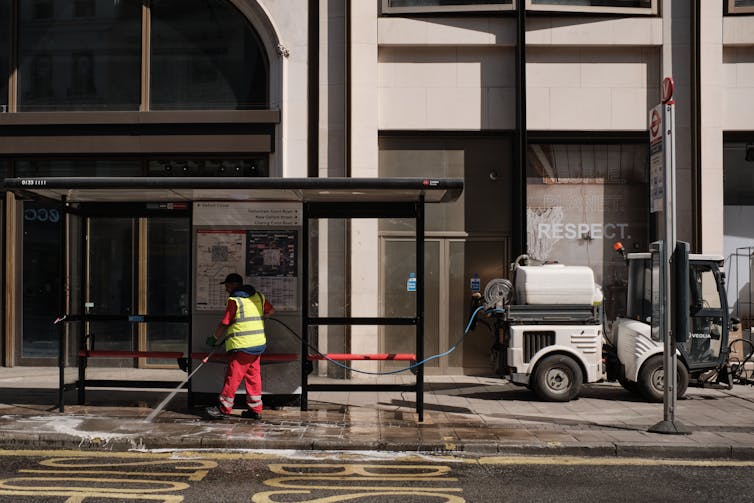
A man in red and hi-vis yellow with street cleaning apparatus on an urban pavement.
Cleaners worked hard to keep infection at bay.
G Torres/Shutterstock

Unexpected visibility

Between the UK’s first and the second lockdowns in 2020 and again, in the period after the end of the second lockdown in 2021, we interviewed 41 council workers involved in waste management across four sites in London and south-east England. Two were sites where we had previously conducted ethnographic research among street cleaners and refuse collectors.

We wanted to investigate if, and how, the pandemic affected the way that key workers involved in waste management are recognised. We asked our interviewees to reflect on and compare their experiences of working before, during and after the lockdown. We wondered whether they had noticed any changes in their interactions with the public and how they thought these developments might affect them in the future.

We found that the pandemic gave these workers moments of unexpected visibility and recognition. Not only did this show, to their minds, increased public respect, it also gave them hope that social bonds between workers and the public might be strengthened in the long term. They saw the possibility of a novel, yet seemingly mutual acknowledgement and respect. As Keith, one of our interviewees, put it:

During the pandemic we’re part of it, yes … it’s kind of like the police, the fire brigade, the ambulance, the hospitals, it’s part of the services of a community, working to keep the community functioning, and what we do is part of that.

And yet, this experience of coming together was eroded by the unequal consequences of the pandemic for different social groups. Our participants spoke of the differences they saw in people’s ability to distance themselves from the unpleasant or potentially dangerous aspects of the pandemic.

Whereas these workers still had to go to work everyday, other people did not. Our interviewees also noted the stark gap separating those key workers who performed the riskiest jobs (nurses, carers) and those whose jobs involved little risk and could be undertaken from home.

Another interviewee, Kevin, who works as a dustcart driver said:

COVID’s still going on now, because we’re not out of it yet. But, still, they’ve just carried on as their normal day, stayed at home working, while the likes of me go out there all day. And if I don’t work, I don’t get paid.

This chimed with what Nigel, a litter picker, reported:

They’re at home, comfortable. We get nothing. No nothing. Not even ‘Oh, we’ll give you a couple of days, like a couple of days extra as your holiday so you can recover and that’, nothing.

The pandemic also made broader social divisions more tangible. Our interviewees spoke about those with privilege seeming to lack interest in knowing about the deteriorating living conditions of workers like themselves. This was despite the fact that the activities these workers were doing, like waste collection and street cleaning, were vital for societal functioning. Another litter picker, Bernie, put it plainly:

You see people, you see some people going and spending like £12, £16 a day just on food going and buying lunch, and I sit there and I think: ‘How the hell do you do it?’ Nine times out of ten I have to make lunch just buying basics, you know, like a cheap loaf of bread, cheap bit of meat – luxury is a bit of sauce. They don’t want to think about people like me.

This illustrates the oxymoron of being “visibly invisible”. During the pandemic, keyworkers’ effort became more apparent. At the same time, they sensed little desire from the wider public to consider and challenge the cultural and socioeconomic factors that were negatively affecting their lives.

Our findings chime with research on how nurses, too, experienced the pandemic, with comparable levels of scepticism with regards to positive, long-term transformations. The question is whether, as German sociologist Andreas Reckwitz has argued, we are witnessing an increasing polarisation between different groups and social classes. Our research suggests that the sense that the world can be improved and society become more progressive feels ever more remote.

This has worrying implications for societal solidarity. As inequality grows, the mutual obligations citizens might have towards one another are increasingly being eroded.

All names have been changed to preserve interviewee anonymity.

The Conversation

The authors do not work for, consult, own shares in or receive funding from any company or organisation that would benefit from this article, and have disclosed no relevant affiliations beyond their academic appointment.

ref. Our research shows COVID-19 made people appreciate street cleaners more – but it also made their lives harder – https://theconversation.com/our-research-shows-covid-19-made-people-appreciate-street-cleaners-more-but-it-also-made-their-lives-harder-210298

Surge in global youth mortality fuelled by mental illness, drugs, violence and other preventable causes

Source: The Conversation – UK – By Manuel Corpas, Lecturer in Genomics, University of Westminster

In some regions, youth mortality has actually risen in the past decade. KieferPix/ Shutterstock

Global mortality continues to fall. Life expectancy has improved to unprecedented levels and deaths in young children have plummeted. Yet for adolescents and young adults, especially those aged 15 to 24, little progress has been made according to data from the latest Global Burden of Disease study. In parts of North America and eastern Europe, mortality in those aged 15-24 has actually risen in the past decade.

This latest study also showed the main causes of death among young people aren’t disease or poor health. The main causes were shown to be injury, violence, suicide, road traffic accidents and substance abuse.

This shows us that health systems worldwide are still ill-equipped to prevent or intervene effectively in social and structural causes of youth mortality.

The Global Burden of Disease study is one of the largest studies on the picture of health, disease and mortality worldwide. The study analysed more than 310,000 data sources collected between 1950 and 2023 from 204 countries. Using death registries, censuses and household surveys, the research team estimated age-specific mortality trends across the lifespan.

The overall picture is one of uneven progress.

For children, especially in low and middle-income countries, vaccines, improved sanitation and better nutrition have saved millions of lives. In east Asia, for instance, mortality in under-fives fell by 68% between 2011 and 2023.

For older adults, the global mortality rate declined by 67% between 1950 and 2023, thanks to better screening, medication and chronic disease management.

Deaths from cardiovascular disease (the leading cause of death globally) have also improved substantially. But cardiovascular disease and other non-communicable diseases (such as cancer and diabetes) still account for nearly two-thirds of all deaths ariund the world.

For young people aged 15-24, the risk profile was different. For them, the main causes of death were primarily preventable ones.

In North America, deaths among people aged 20 to 39 rose by as much as 50% in the past decade – largely due to suicide, drug overdose and alcohol-related harms. The picture was also similar in some parts of Latin America.

But in other parts of the world, such as sub-Saharan Africa, infectious diseases (such as as tuberculosis) and unintentional injuries were the main drivers of youth mortality.

The study also highlighted stark inequalities in mortality risk for youth from marginalised, low-income or Indigenous groups. For instance, the study found that mortality in young women aged 15-29 living in sub-Saharan Africa was 61% higher than previously estimated, mostly due to maternal mortality, road injuries and meningitis.

However, these groups remain systematically underrepresented in global health datasets. The study found that more than 80% of countries lacked nationally representative data across key health domains, including mental health and child health. This meant most of the data was drawn from high-income regions.

Latin Americans, for example, make up over 8% of the global population but represent less than 1% of some global reference datasets. Such a systemic lack of representation from these groups renders their health needs invisible – including the health needs of those affecting the young.

Emerging trends

Today’s young people face unprecedented economic insecurity, social volatility, violence and pressures from social media – all of which can have an extraordinary toll on both mental health and wellbeing.

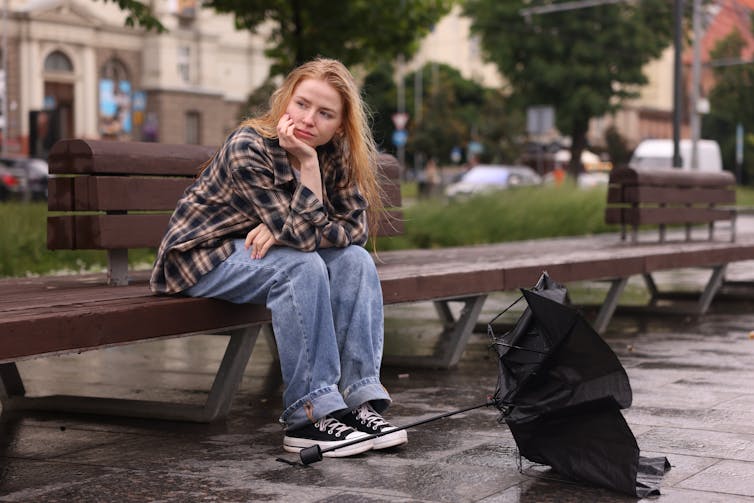
A young woman sits alone on a bench outside, gazing thoughtfully.
The mental health needs of young people must urgently be addressed.
New Africa/ Shutterstock

Mental health challenges underlie many of the leading causes of adolescent death reported in the study. It’s clear from this and other studies that youth mental health urgently needs to be addressed.

For instance, research from Spain which looked at over 2 million adolescent hospitalisations between 2000 and 2021, found admissions for mental health conditions more than doubled – surging especially after the COVID-19 pandemic.

For teenage boys, substance use, ADHD and psychosis were the most common causes of hospitalisation. For girls, eating disorders, anxiety and depression were more prevalent.

A related study found admissions for adolescent anorexia nervosa rose by almost 90% after 2020 – with cases overwhelmingly concentrated in girls aged 13-17.

Health survey data from 2023 also showed that half of US young adults aged 18-24 reported experiencing symptoms of anxiety or depression. Additionally, a separate US survey also found that more than one-third of 18-24-year-olds reported they’d recently thought about self-harm or suicide.

Other factors which may also have contributed to high youth mortality rates may include a historical lack of preparedness by health systems in focusing on adolescent health issues, as well as a lack of interventions aimed at reducing the actual leading causes of youth death (such as road safety, violence prevention and meaningful mental health care).

The response to youth mortality cannot be medical alone as the leading causes of death in this age group require interventions that sit outside healthcare and require coordination across sectors.

Data systems must also change. Youth from low-income countries, Indigenous people and marginalised groups are underrepresented in research. This means we don’t fully understand the needs of these groups and the problems they face – making it difficult to plan and implement effective interventions.

Youth health must be re-framed as an equity issue, as well. The current model treats young people as responsible for their own poor outcomes, when research shows that, overwhelmingly, these issues can be caused by conditions that young people do not control: poverty, exposure to violence, unsafe road environments, inadequate mental health services and lack of economic opportunity.

These deaths are preventable. We cannot celebrate global health gains when youth mortality is stagnant – and even worsening in many parts of the world. Preventing adolescent and young adult deaths is the next frontier for a fairer, healthier future.

The Conversation

Manuel Corpas does not work for, consult, own shares in or receive funding from any company or organisation that would benefit from this article, and has disclosed no relevant affiliations beyond their academic appointment.

ref. Surge in global youth mortality fuelled by mental illness, drugs, violence and other preventable causes – https://theconversation.com/surge-in-global-youth-mortality-fuelled-by-mental-illness-drugs-violence-and-other-preventable-causes-267459

The fungi living in the body play an important role in health – here’s what you should know about the ‘mycobiome’

Source: The Conversation – UK – By Rebecca A. Drummond, Professor, Immunology and Immunotherapy, University of Birmingham

The most common fungal species found in our mycobiome are yeast from the _Candida_ family. Kateryna Kon/ Shutterstock

The “gut microbiome” has become a popular health term in recent years. It’s easy to see why, with an abundance of research showing how important the trillions of microbes living in our gut are for health.

But what many people might not realise is that the microbiome doesn’t only contain bacteria. It also contains other types of microbes – including fungi. The fungal component of the microbiome is called the “mycobiome”.

Although the mycobiome has been less well studied than its bacterial counterpart, recent research shows it’s sensitive to diet and may affect our health, too.

The best studied mycobiome is the one in our intestines. It’s composed of many fungal species. The most common fungal species found there, particularly in the Western world, belong to the Candida family.

Candida are a type of yeast. For most of us, the Candida population in our mycobiome is kept in check by our immune system and our gut bacteria. But changes to either of these can cause populations of Candida to expand in the mycobiome. This can be a problem, because Candida may cause life-threatening infections in people with damaged immune systems.

For example, research found that hospital patients who are given antibiotics are more likely to develop Candida infections.

This is partly explained by the effect of antibiotics, which kill off certain species of gut bacteria that compete with Candida for space and resources within the intestine. Antibiotics have also been found to directly alter our immune cells and how they fight fungal infections.

Another study, which analysed the mycobiome of cancer patients, found that those who developed serious Candida infections had an overgrowth of the fungus in their mycobiome just before the infection started. Combined with the damaging effects of chemotherapy on the immune system, this made it harder for patients to fight off the infection.

Disruption in the mycobiome’s Candida balance has also been linked to several other diseases. For instance, Candida levels are high in patients who are critically ill. This suggests that too much Candida in our guts is a sign of poor health.

Changes in the fungal mycobiome have also been linked to several gut diseases, including inflammatory bowel disease. Research on Crohn’s disease has also shown that patients have an overgrowth of Candida. These fungi also produce toxins that irritate the gut lining, which could potentially explain some of the symptoms Crohn’s patients experience.

High levels of Candida in the gut can activate immune cells as well, making them more inflammatory. This has been seen in patients with severe COVID-19.

Mycobiomes in the body

The mycobiome isn’t only found in our gut.

We also have a skin mycobiome. In fact, the skin between our toes contains a more diverse number of fungal species than any other skin mycobiome.

The skin mycobiome is mostly dominated by a fungus called Malassezia. This yeast has adapted to grow on the skin’s surface.

Malassezia can activate the immune cells that reside between the skin’s layers. This may lead to inflammation linked to skin disorders, such as psoriasis and eczema.

A person scratches at eczema patches on their hands.
Eczema is linked to the skin mycobiome fungus Malassezia.
Ternavskaia Olga Alibec/ Shutterstock

Candida auris is also a cause for concern. This fungus is resistant to many antifungal drugs, which is why it can be a problem if it grows on the skin’s surface. In a hospital or emergency room, this could be dangerous – particularly to patients who have immune system problems.

Women also have a mycobiome within the vagina. Its balance with the bacterial communities living there can be a big determinant for vaginal health.

One of the most common fungal infections globally is vaginal candidiasis (thrush). It can cause symptoms such as intense itching, pain and swelling. Many adult women will experience at least one thrush infection in their lifetime.

The source of thrush is another fungus from the Candida family: Candida albicans. This is a common member of the vaginal mycobiome.

The vagina’s microbiome is normally dominated by the bacteria Lactobacillus which help keep Candida populations in check. But if the balance between bacteria and fungi gets disrupted (for example, by antibiotics), the fungus can overgrow or produce inflammatory molecules within the vagina. This inflammatory response is responsible for common thrush symptoms such as redness and itching.

Probiotics may help to restore the balance between fungi and bacteria to prevent vaginal yeast infections – although this has had limited success so far. Some new treatments that target inflammation-causing fungal molecules have shown promise in animal models and in small numbers of women.

There’s good evidence to suggest we might also have a mycobiome in the lungs and in breastmilk.

Controversially, some have even suggested that we may have small numbers of fungal cells in the brain – and these fungal cells may be linked with neurodegenerative disorders such as Parkinsons and Alzheimer’s.

Autopsy studies have found evidence of fungi in the brains of people who died from brain disorders – but this doesn’t prove the fungi caused their illness or that it was there during their life.

Experimental studies in mice have also shown that small numbers of fungal cells can survive in the brain for long periods of time – and the presence of these fungal cells was linked with reduced memory function.

Experiments in flies have also shown fungi may travel to the brain and affect function. This is the best evidence we currently have showing small numbers of fungi may get into the brain and survive long-term.

Whether this occurs in people, and if this would be considered a true mycobiome, remains to be proven.

There’s still much we don’t know about the mycobiome. But with continued research in this area we may soon better understand the mycobiome’s importance in our health and how we can nurture and care for it.

The Conversation

Rebecca A. Drummond receives funding from the Medical Research Council, the Wellcome Trust and the Lister Institute for Preventative Medicine.

ref. The fungi living in the body play an important role in health – here’s what you should know about the ‘mycobiome’ – https://theconversation.com/the-fungi-living-in-the-body-play-an-important-role-in-health-heres-what-you-should-know-about-the-mycobiome-264545

Sam Fender wins Mercury prize: ‘Geordie Springsteen’ is voice of a UK ravaged by industrial decline

Source: The Conversation – UK – By Mike Jones, Course Director MA (Music Industries), University of Liverpool

The Mercury prize almost always produces surprises – among them, Gomez not The Verve in 1998, and English Teacher not Charlie XCX in 2024 – but perhaps the biggest surprise is that the prize has survived for so many years. That it has been won this year by Sam Fender in his native Newcastle speaks very much of the time that has passed in those 34 years.

Conceived as a kind of credible alternative to the Brit Awards – a prize for those beyond the razzamatazz of mainstream pop music – the (then) Mercury Music prize was introduced in 1992.

This was the year of a general election which, while won by the Conservative party, did not see the re-election of Margaret Thatcher. But Thatcher’s work had been done: the introduction of neoliberal policies which ravaged many UK industries and the regions in which they were located.

Fender can be understood as a voice of that ravaged Britain. He was born two years after John Major’s election victory, and grew up in a disintegrating family in a disintegrating former industrial region. He survived the chaos and has written about that collective suffering with great skill and passion over three albums.

It is telling, too, that the (renamed) Mercury Prize lost its corporate sponsorship along the way. Being publicly allied with music is no longer the marketing “must have” it once was. This year’s award event was paid for jointly by Newcastle City Council and the regional authority.

As Britain attempts to cope with the evaporation of major industries and the suffering that permanent loss of employment infrastructure induces, many UK regions now foreground the creative abilities of their residents as a reason to invest in their particular area. Demand for music, and for the creativity it carries and expresses, has become a key feature of social and economic as well as cultural life.

This begs the question: what is it that creative people actually contribute? The 2025 Mercury prize shortlist gives us some clues, especially if we look at three of the nominees who missed out on the prize: Pulp, Wolf Alice and Martin Carthy. Both Pulp and Wolf Alice are previous winners (1996 and 2018 respectively), but Carthy has won very few awards over the 84 years of his life.

“Notable” musicians tend to be of their time. This is partly because their choice of instruments and combinations of keys, notes and tempos resonate with the moments they and their audiences are living through. But there is more to being a musician than this.

Real, affecting performance draws on and mobilises symbolic information far beyond musical soundmaking – even though that demands skill and ability. Fender, for example, is unequivocally a Geordie, even as he fits the mould of a kind of Bruce Springsteen for his times.

Both Pulp and Wolf Alice are challenging to discuss. Where Jarvis Cocker is concerned, the word “uncompromising” comes to mind, but what does that mean? Here is someone who is unique – yet what his vision of the world is, is never quite apparent. Cocker is “about something”, and he is about it so strongly that people stand back and admire him for it.

Wolf Alice are something different: a successful rock band in a time when rock bands have gone into decline. It is almost the band’s own self-awareness that, somehow, “they shouldn’t be” that gives them their energy – mining rock’s extensive back catalogue to support essentially introspective lyrics about (mainly singer Ellie Rowsell) self-adjusting to the demands of an evermore turbulent world.

In this, there are shades of Cocker. And with Fender singing about negotiating this turbulence too (only with a more explicit set of references to a world beyond his interior), so the core strengths of contemporary music begin to emerge.

Popular musicians go on providing a soundtrack for our lives because they express themselves through the idioms of the moment. If we take Fender’s previous album, Seventeen Going Under, as a point of reference, every aspect of the recording and its video speaks to his growing up in the northeast of England and his continuing loyalty to the place.

His moving acceptance speech and rapport with the audience were evidence of this. His performance of People Watching was almost pure Bruce Springsteen – mainstream rock inflected and defined by a hometown sensibility.

Which brings us to Martin Carthy. It is impossible to capture Carthy’s significance in words, because his voice cannot be heard on the page – and it is so powerfully distinctive that it needs to be heard.

Carthy was the soul of English folk music in the 1960s and ’70s. His brand of folk music speaks to a resilience through suffering – the suffering of pre-industrial society articulated through song. Now, Fender is speaking to the suffering of post-industrial society. They both should have won.

The Conversation

Mike Jones does not work for, consult, own shares in or receive funding from any company or organisation that would benefit from this article, and has disclosed no relevant affiliations beyond their academic appointment.

ref. Sam Fender wins Mercury prize: ‘Geordie Springsteen’ is voice of a UK ravaged by industrial decline – https://theconversation.com/sam-fender-wins-mercury-prize-geordie-springsteen-is-voice-of-a-uk-ravaged-by-industrial-decline-267767

How Britain’s weakened global position may have pulled it into a Chinese spying scandal

Source: The Conversation – UK – By Robert Dover, Professor of Intelligence and National Security & Dean of Faculty, University of Hull

helloRuby/Shutterstock

The alleged Chinese spying affair currently troubling the UK government after the collapse of a trial is markedly different from previous espionage scandals. That is because it is centred not on the actions of suspected spies, but on the behaviour of the government. How did this come to happen?

The two men – former parliamentary researcher Christopher Cash and academic Christopher Berry – remain without stain on their character. The case against them, which they denied, was dropped before going to trial.

As in all spy cases, there is a gap between the speculation (what those outside of government are free to theorise on), and the secrets (the classified material and processes behind closed doors).

The speculation is around whether government behaviour collapsed the prosecution to benefit diplomatic and trade relations with China. The secrets, which a parliamentary inquiry will now investigate, are whether this was indeed what happened, and who in the government, if anyone, was involved in the collapse of the case.

Cash and Berry were charged under the 1911 Official Secrets Act (now replaced by the 2023 National Security Act). They were accused of passing “at least 34 reports” containing politically sensitive information about parliament or parliamentarians to a Chinese intelligence agent.

The information was then allegedly passed to Cai Qi, a senior Chinese communist party official often referred to as President Xi Jinping’s right-hand man. The content of the material (which does not need to be classified for the sharing of it to be illegal) and how damaging it may be will also be of interest to the inquiry.

Prosecutors unexpectedly dropped the charges weeks before a trial was to go ahead. The CPS said that it could not obtain necessary evidence from the government that China was a threat to the UK’s national security.

Because of precedent from a 2024 Russian spying case, witness statements were needed to say that at the time of the alleged offences, China was an enemy of the UK. The deputy national security advisor, Matthew Collins, provided three witness statements (in December 2023, February 2025 and July 2025) to the CPS, which the government has now made public.

These statements make clear the range of Chinese intelligence activities against the UK, including continual attempts to compromise UK government systems. They also outline the scale of the challenge from China, and align with current government policy and the last government’s 2023 integrated review of foreign, defence and security policy.

In my view as a researcher of intelligence and national security, Collins’ statements clearly provide evidence of a range of challenges that China poses to the UK. They chime with aspects of the 1989 Security Service Act that puts economic security on a par with other security threats. However, it might have been challenging to put to a jury something the government was not prepared to state outright.

The director of public prosecutions, Stephen Parkinson, reportedly told MPs that he had 95% of the evidence he needed for prosecution. The government has said that it’s up to Parkinson to explain what that remaining 5% would be.

There are now several key questions. Was the government involved in the CPS’s decision to drop the charges? What discussions took place within government around this case? Does the government view China as a threat to the level required by the CPS? And could the prime minister have stopped the case from collapsing, had he wanted to?

Starmer at PMQs
Prime Minister Keir Starmer is facing questions over the collapse of the trial.
House of Commons/Flickr, CC BY-NC-ND

The government’s statements about Collins, emphasising his expertise and role, effectively ask us to believe that he did not consult his boss (Starmer’s trusted aide, Jonathan Powell), nor consult anyone else in Whitehall about an issue that has deep diplomatic ramifications.

The prime minister has acknowledged that he was told the case was on the brink of collapse two days before it did. The PM maintains that he did not involve himself in it.

Starmer made the point that CPS decisions are independent of the government.
While true, it would be very disciplined of Starmer to allow a case with such diplomatic importance to resolve itself without any political input. The government has, historically, intervened in legal cases of a national security nature, including the 1991 arms to Iraq scandal which led to the Scott inquiry, the Binyam Mohammad case (2010), the Belhaj case (2017) and Shamima Begum cases (2021-24). All of these involved the government putting forward national security arguments to protect intelligence relationships and foreign partners.

Brewing storms

The current government has sought to blame the fallout on the last Conservative government’s ambiguity on China. Labour’s position is similarly complex. It sees China as an important partner for trade, global warming, pandemic mitigation and on emerging conflicts. It also sees China as a persistent challenge to British security.

Complicating this further is the director general of MI5, Ken McCallum, expressing his frustration with the collapse of the prosecution. He described how large the threat from Chinese espionage is, citing a successful MI5 operation from the previous week. He also said that MI5 had seen a 35% increase in all state-based plots against the UK.

The speculation around the diplomatic and economic advantages of this case collapsing is created by the challenges of the UK’s post-Brexit economy. The UK needs to do business with China, but without being exploited as many nations are seen to be.

A UK still within the EU might have felt more able to weather the storm of offending China with a prosecution. This also applies to the Chinese government’s delayed application to transform the former Royal Mint building into an embassy. Opponents of which have raised security concerns about its proximity to sensitive underground fibre-optic cables, which could be tapped into for eavesdropping purposes. The Chinese government has threatened consequences if it is not approved.

There are a growing number of friction points for the UK operating with increasingly confident and assertive international partners and competitors. The inquiry into the collapsed prosecution will shine a light on how the British establishment is handling these.

The Conversation

Robert Dover does not work for, consult, own shares in or receive funding from any company or organisation that would benefit from this article, and has disclosed no relevant affiliations beyond their academic appointment.

ref. How Britain’s weakened global position may have pulled it into a Chinese spying scandal – https://theconversation.com/how-britains-weakened-global-position-may-have-pulled-it-into-a-chinese-spying-scandal-267673

Scary stories for kids: Watership Down made me aware of my mortality at four

Source: The Conversation – UK – By Aislinn Clarke, Lecturer in Film Studies, Queen’s University Belfast

When I think of my first encounter with horror, I don’t think of a vampire, a witch, or even a possessed girl’s head spinning round (I saw The Exorcist at the age of seven). I think of a Sun God, I think of teeth and claws slicked with blood, I think of the Black Rabbit of Death. And he wasn’t even the bad guy.

I’m not talking about some campy folk horror from the 1960s. I’m talking about the 1978 animated version of Richard Adams’ Watership Down.

I was perhaps four when I saw it. The opening sequence remains a core memory: the myth of the Prince with a Thousand Enemies, the Original Rabbit, rendered in gorgeous animation that evoked Aboriginal art via the films of New Zealand artist Len Lye. Then the great crimson wave of blood flowing across the fields. Death, cold and indiscriminate, was coming to the gentle slopes of Watership Down.

That was the moment I first felt awe and terror at the fragility of life. And the utter indifference of death. The kind of awe and terror we assume children’s minds can neither comprehend nor bear.

And that was just the beginning.


This article is part of a series of expert recommendations of spooky stories – on screen and in print – for brave young souls. From the surprisingly dark depths of Watership Down to Tim Burton’s delightfully eerie kid-friendly films, there’s a whole haunted world out there just waiting for kids to explore. Dare to dive in here.


It’s easy to assume that because Watership Down is a cartoon about woodland animals, it must be gentle. It isn’t. And that’s why it’s so powerful. My parents had already let my older siblings and I watch the campy spectacle of Hammer Horror at Halloween, but they couldn’t have guessed the deeper impact of Adams’s rabbits – they let me watch alone from the safe distance of the shag rug one sunny afternoon in 1984.

Nothing terrible had yet happened to me. I hadn’t known grief or loss. Watership Down cracked that open. For the first time, I understood, viscerally, that all the earth’s creatures – including myself – are mortal, and that death was coming for us all.

But don’t let that put you off sharing it with your four-year-old.

The value of horror is that it gives us a safe space to process fear. It takes the anxieties we can’t name and turns them into something we can face. I watched horror films with my family every weekend – Poltergeist, Day of the Dead, The Evil Dead.

Afterwards I slept like the actual dead. Soundly. Peacefully. I didn’t have nightmares, even if I did dream of rabbits. I didn’t need nightmares. For, what is a horror film, after all, if not a nightmare you share with people you love – a nightmare that can be switched off and tucked back into its case?

And, yes, I am saying that Watership Down is a horror film. Like Lovecraft’s cosmic horror, like The Thing or Alien, the terror of Watership Down arises from mortal insignificance. We too are small, powerless, unmoored, no different to the rabbits fleeing the down.

The film’s horror depends on empathy, the recognition that every creature wants what we want: to live, to love, to survive. Children understand that we are not special.

However, it is perhaps the most primal and defining characteristic of humanity that, not only do we fear death, but we know it is coming. Such darkness is part of being human and we can’t insulate children from the fullness of being human.

If we try, the chances are that the darkness will come out anyway in their nightmares, understood as a terrible thing that their own mind created in the dead of night. To share a film like Watership Down with them is to say: “I trust you with this. You are ready for awe, wonder, and yes, for fear too. And it is because we fear that we hope.”

Richard Adams opened his novel with a gruesome quote from the ancient Greek tragedian Aeschylus and added: “If that makes the child put it back on the shelf, then to Hell with the child.”

His provocation was not contempt but a refusal to patronise. Children, he argued, deserve stories that take them seriously. Indeed, to live without curiosity, without discomfort, without provocation, is the stuff of nightmares. That is hell.

Both the book and the film trust their audience to confront mortality honestly. That trust makes for stronger children – and stronger adults. Adams rejected allegorical readings of his story, insisting that this gut wrenching heroes’ journey, with its keen sense of justice, really was about rabbits.

Children understand that not everything has to be about us. Only adults insist on being the default main character. Children know that in this beautiful, terrible world, everything – even us – just wants to live.

Perhaps all of this is more than one would expect from a cartoon film about woodland animals. Maybe we could all use a sunny afternoon on the rug, watching Watership Down, and remembering what it is like to be small and afraid and full of hope.


Watership Down has a PG rating, which means some material may not be suitable for young children, so parental guidance is advised.

This article features references to books that have been included for editorial reasons, and may contain links to bookshop.org. If you click on one of the links and go on to buy something from bookshop.org The Conversation UK may earn a commission.


Looking for something good? Cut through the noise with a carefully curated selection of the latest releases, live events and exhibitions, straight to your inbox every fortnight, on Fridays. Sign up here.


The Conversation

Aislinn Clarke does not work for, consult, own shares in or receive funding from any company or organisation that would benefit from this article, and has disclosed no relevant affiliations beyond their academic appointment.

ref. Scary stories for kids: Watership Down made me aware of my mortality at four – https://theconversation.com/scary-stories-for-kids-watership-down-made-me-aware-of-my-mortality-at-four-267052

Protecting Brazil and Indonesia’s tropical forests requires political will, law enforcement and public pressure

Source: The Conversation – UK – By Rachael Garrett, Moran Professor of Conservation and Development, University of Cambridge

Tarcisio Schnaider/Shutterstock

The vast tropical forest nations of Brazil and Indonesia are both home to millions of people, including Indigenous communities. They store enormous amounts of carbon to protect our climate and are home to staggering numbers of species found nowhere else in the world.

How are their forests still standing while other forests have fallen? Answering this question is critical in the current global moment. As people gear up for the 30th UN climate summit (Cop30) in Belém, Brazil, in November, this “Amazon Cop” could help galvanise action to save the world’s forests with a clearer blueprint for success.

While progress at global climate and biodiversity summits often seems limited, our study highlights how sustained pressure from civil society and international commitments can lead to improved political will for forest protection.

In the agricultural powerhouse of Brazil, 60% of the land area (511 million hectares – more than 20 times the size of the UK) is still covered in natural forests. In the diverse archipelago of Indonesia, known for its globally important production of palm oil, among other tropical crops, 50% of the land (nearly 94 million hectares) is remaining.

Last year, global records for deforestation were shattered, with 6.7 million hectares of pristine tropical forests being cleared – an area almost the size of Ireland. Even by recent standards this was a huge amount of loss, driven by raging fires in the hottest year on record. Yet over a billion hectares of tropical forests remain. Two of the forest giants – Brazil and Indonesia – have both bucked the trend of increasing forest loss at different times in recent years.

aerial shot of rainforest and river
Brazil reduced deforestation in the Amazon rainforest by 84% between 2004 and 2012.
Curioso.Photography/Shutterstock

Brazil reduced deforestation in the Amazon rainforest by 84% between 2004 and 2012. However, deforestation picked up again in the late 2010s and under President Jair Bolsonaro’s administration.

In Indonesia, a similarly impressive 78% reduction in deforestation was achieved between 2016, when devastating forest fires created a haze across south-east Asia, and 2021. Fortunately these reductions have been sustained, at least for now.

To understand the reasons for Brazil and Indonesia’s success, we brought together the world’s leading experts in forest conservation in these two regions. Most of them came from these two countries. By asking our experts to participate in multiple rounds of surveys and providing feedback on responses from one round to the next, we could identify the full range of factors that are important for protecting forests. This approach, known as a Delphi process, enabled us to avoid groupthink or excessive influence by strong-willed or well-respected characters.

Still standing?

Our results were clear: across both countries, our experts judged that political will and law enforcement were by far the most important factors for protecting forests.

The study revealed how international diplomacy and advocacy by civil society have been pivotal in creating the awareness and demand for political leadership to emerge. Moving to the 2010s, Indigenous rights were seen as an important complement to political will and law enforcement.

These results point to the need to accelerate pressure on policymakers to protect forests and continue to spread public awareness. This is a difficult task with a human toll: worldwide, more than 2100 environmental defenders were killed between 2012 and 2023.

Political will to conserve forests also waned in the late 2010s in Brazil, and is in question under the current Indonesian administration.

Yet the need for instant results and a temptation to pursue the latest big idea should not overshadow the long-lasting and hard-won consequences of sustained pressure for good forest stewardship.

As policymakers, activists and scientists from around the world converge on the Amazon for the next UN climate summit, the message from our research is clear: above the fray of tense negotiations and discussions over policy minutiae, political leadership and persistent advocacy can and do protect forests. We’ve done it before, and we can do it again.


Don’t have time to read about climate change as much as you’d like?

Get a weekly roundup in your inbox instead. Every Wednesday, The Conversation’s environment editor writes Imagine, a short email that goes a little deeper into just one climate issue. Join the 45,000+ readers who’ve subscribed so far.


The Conversation

Rachael Garrett consults for the businesses Sumthing and Rainforest Builder. She receives funding from the European Research Council (ERC) grant 949932 and the company Suzano. She is affiliated with the Global Land Programme as co-chair of the Science Steering Committee and the UK Joint Nature Conservation Committee. She serves on the UN Science Panel for the Amazon and UN Forum on Sustainability Standards Academic Advisory Board.

Joss Lyons-White receives funding from the European Research Council (ERC) grant 949932.

Matthew Spencer works for IDH, which works on forest-risk commodities and agricultural market transformation and is funded by European government donors and philanthropic foundations. His visiting fellowship at the Cambridge Conservation Initiative is supported by the Turner Kirk Trust.

ref. Protecting Brazil and Indonesia’s tropical forests requires political will, law enforcement and public pressure – https://theconversation.com/protecting-brazil-and-indonesias-tropical-forests-requires-political-will-law-enforcement-and-public-pressure-261958

Le développement des études supérieures entre « faux procès » et vraies questions…

Source: The Conversation – in French – By Marie Duru-Bellat, Professeure des universités émérite en sociologie, Centre de recherche sur les inégalités sociales (CRIS), Sciences Po

Les études s’allongent, le niveau de diplôme progresse chez les jeunes. Mais cela se traduit-il vraiment par une hausse des compétences ? Et dans quelle mesure cet investissement apporte-t-il une plus-value sur le marché du travail ? Éclairages sur un débat qui invite à repenser les liens entre formation et emploi.


Dans un article intitulé « Le faux procès des études supérieures trop longues », et publié par The Conversation, l’économiste Guillaume Allègre revient sur les discours souvent idéologiques et les analyses, plus sérieuses, qui interrogent dans un sens critique le développement des études supérieures.

Ce développement est particulièrement marqué depuis le début du XXIe siècle (2,16 millions d’étudiants, dont 1,397 million à l’université, en 2000, contre 2,96 millions, dont 1,6 million à l’université, en 2023), accompagné, sur la longue période, de conséquences massives sur l’entrée dans la vie. En 1986, à l’âge de 21 ans, environ 20 % des jeunes étaient encore scolarisés, c’est le cas de près de la moitié d’entre eux, en 2021.

Pourtant, pour Guillaume Allègre, « en durée, les jeunes ne font pas plus d’études qu’avant », et l’accroissement du nombre de diplômés s’explique par la baisse des redoublements.

Des diplômes, mais quel « capital humain » ?

Les jeunes parviendraient donc à des niveaux de diplôme plus élevés du fait de carrières scolaires moins perturbées par des redoublements. La baisse du redoublement – en elle-même positive vu l’inefficacité, largement démontrée, de cette pratique – a été le fruit d’une politique volontariste. On a laissé passer plus facilement dans la classe supérieure, mais personne n’oserait dire que c’est parce que les élèves ou les étudiants étaient (tout simplement) meilleurs…

À l’école primaire, on observe une baisse du niveau des élèves, si l’on se réfère aux notes d’information de la direction de l’évaluation, de la prospective et de la performance (DEPP) du ministère de l’éducation nationale, de 2008 à 2020.

Dans l’enseignement supérieur, où il n’existe pas de mesures standardisées de ce que savent les étudiants, certains chercheurs, constatant que « les règles de validation des enseignements par les compensations de notes n’ont jamais autant favorisé l’obtention des diplômes », suggèrent plutôt « une tolérance nouvelle, bon gré mal gré, à la fragilité des aptitudes scolaires des étudiants ».

On peut donc craindre que ces jeunes qui ont moins redoublé et qui font des études plus longues n’aient pas, malgré un niveau formel d’instruction plus élevé, des acquis proportionnellement plus importants. Certes, plus de jeunes qui vont plus loin, moins de jeunes qui font du surplace en redoublant, c’est en moyenne une hausse de leurs acquis, mais à niveau de diplôme identique, ils en savent moins, ce qui traduit une baisse d’efficacité de l’école.

Il y a donc de la marge entre le diplôme et le « capital humain » qu’il est censé certifier, ce qui devrait interroger les économistes dans leur a priori favorable à l’élévation du niveau d’éducation.

On constate ainsi que si la France compte autant, voire plus, de diplômés du supérieur que la plupart des pays voisins, leur niveau de compétences en littératie – la capacité à maîtriser l’écrit – n’est pas toujours très supérieur à celui de personnes moins diplômées d’autres pays. Par exemple, le niveau des Néerlandais dotés d’un diplôme de second cycle du secondaire est très proche de celui des Français diplômés de l’enseignement supérieur, selon les évaluations de l’Organisation de coopération et de développement économiques (OCDE).

Or,pour Guillaume Allègre, dès lors que le diplôme reste rentable, il est « individuellement utile ». Il l’est effectivement pour se placer : la rentabilité relative d’un diplôme, par rapport au diplôme immédiatement inférieur, est incontestable.

D’où vient alors ce leitmotiv des jeunes qui se plaignent de la situation qu’ils trouvent au sortir de leurs études, sur le mode de « Avec un master, t’as plus rien » ? Tout simplement du fait qu’ils considèrent également le rendement « absolu » du diplôme, le poste qu’il permet d’obtenir ; et là, le déclassement est réel et incontesté chez les économistes, par rapport à ce que le diplôme permettait d’obtenir dans un passé pas si lointain, à l’époque de leurs parents notamment.

Se former à entrer dans la vie…

Au-delà de cette quête de rendement économique, il faut se demander ce qu’ont appris ces étudiants, au-delà des savoirs académiques souvent pointus délivrés par les enseignants-chercheurs des universités (ceci est moins vrai des filières professionnalisées), en d’autres termes ce qu’on apprend à fréquenter longtemps et exclusivement l’enseignement supérieur.

Certaines enquêtes montrent que la quête d’un diplôme toujours plus élevé nourrit chez les étudiants des attitudes qui peuvent s’avérer dysfonctionnelles à l’heure de l’insertion. Lors de l’entrée sur le marché du travail, ils réalisent parfois que leur diplôme ne sera pas forcément apprécié dans un monde où la valorisation du savoir pour le savoir n’a pas cours.

Formés, dans les filières universitaires généralistes du moins, à des savoirs dont les applications concrètes sont rarement dégagées, ils découvrent que la vie professionnelle minimise de fait la valeur des connaissances théoriques au profit de ce qu’elles permettent de réaliser. Une véritable reconversion s’impose parfois pour désapprendre très vite ce qu’on a mis du temps à apprendre.


À lire aussi :
« L’emprise scolaire » : les diplômes ont-ils trop de poids sur nos vies ?


Par contraste, quand ils ont combiné études et emploi, les étudiants estiment pour les trois quarts d’entre eux qu’un travail rémunéré occupé pendant leurs études apporte des compétences et des réseaux (même, à hauteur des deux tiers, quand il s’agit d’un travail non qualifié). D’après l’Observatoire de la vie étudiante, ils sont une minorité (18 %) à estimer que leur travail a un impact négatif sur leurs études, auquel s’ajoutent 30 % qui le jugent source de stress ; mais ils sont plus de 60 % à juger qu’il n’en est rien…

Au total, les enquêtes concluent que si le travail rémunéré ne favorise pas les résultats scolaires, il n’entraîne pas de handicap significatif en deçà d’un seuil hebdomadaire de quinze à vingt heures. Et, par ailleurs, il favoriserait plutôt l’insertion professionnelle.

Articuler formation et emploi

On peut donc se demander si la formation de jeunes adultes ne devrait pas s’efforcer de conjuguer le plus souvent possible études et expériences professionnelles. En France, le modèle de l’élève des classes préparatoires, entièrement absorbé par ses études, domine et, en arrière-plan, la conviction que ce que notre pays peut offrir de mieux à la jeunesse, c’est de rester le plus longtemps possible dans les enceintes scolaires.

La proposition de Guillaume Allègre développée dans un rapport de Terra Nova de 2010 s’inspire des dispositifs de type « allocation d’études » qui existent dans certains pays du Nord, pour favoriser l’autonomie des jeunes. Mais rappelons que ces pays sélectionnent à l’entrée du supérieur, et sont donc moins exposés que nous au risque de voir des étudiants s’engager dans des nasses sans débouchés.

Surtout, le cumul emploi-études est bien moins répandu dans notre pays que chez nombre de nos voisins – Danemark, Pays-Bas, Royaume-Uni ou Allemagne. On pourrait tout à fait imaginer des « emplois pour étudiants », adaptés à leur emploi du temps, comme il existe dans de nombreux campus américains. Les étudiants y gagneraient en diversité d’expériences – possiblement aussi formatrices que ce qu’on apprend en milieu universitaire – et en autonomie financière.


À lire aussi :
Le mérite est-il encore un idéal démocratique ?


Qu’en est-il pour le pays ? Sans verser dans la polémique sur le thème « les Français ne travaillent pas assez », il faut rappeler, sur la base notamment de la note 110 du Conseil d’Analyse économique, publiée en mars 2025, « Objectif “plein emploi” » que ce n’est pas la durée annuelle de travail des actifs qui distingue la France mais la faiblesse des taux d’emploi et des seniors et des jeunes.

Si la question du travail des « seniors » fait couler beaucoup d’encre, celle du travail des jeunes, en particulier des jeunes en cours d’études, s’avère des plus taboues : le « droit aux études » ne saurait se discuter… sachant qu’on parle en l’occurrence du droit aux études à temps plein.

Si l’on s’attache à la formation des jeunes adultes, favoriser la conjugaison études-emploi serait sans doute une piste intéressante, tout en étant également « rentable » en termes économiques, ce qui n’a pas de raison d’être négligé. Sans évidemment faire le « procès » des études supérieures, il est nécessaire de réfléchir à la formation que nous devons offrir à ces jeunes qui constituent à présent la majorité des générations montantes.

The Conversation

Marie Duru-Bellat ne travaille pas, ne conseille pas, ne possède pas de parts, ne reçoit pas de fonds d’une organisation qui pourrait tirer profit de cet article, et n’a déclaré aucune autre affiliation que son organisme de recherche.

ref. Le développement des études supérieures entre « faux procès » et vraies questions… – https://theconversation.com/le-developpement-des-etudes-superieures-entre-faux-proces-et-vraies-questions-267336

La selección: la importancia de la educación financiera

Source: The Conversation – (in Spanish) – By Elba Astorga, Editora de Economía, The Conversation

pogonici/Shutterstock

Muy pronto en la vida comienza nuestra relación con el dinero: desde las primeras monedas dejadas por Ratoncito Pérez a cambio de pequeños dientes de leche (compra-venta) a las pagas de padres y abuelos (rentas). Y bueno es aprender pronto a gestionarlo.

Empoderar para decidir

La educación financiera no es solo cuestión de concienciar y transmitir información, sino de empoderar a las personas para que se sientan capaces de tomar decisiones acertadas de ahorro e inversión.

Más allá de entender conceptos económicos básicos (inflación, tasas de interés, diversificación), la educación financiera también consiste en aprender a aplicar esos conocimientos en la vida cotidiana.

Para invertir es importante conocer y comprender las características de los productos de inversión y ahorro: cuentas, depósitos, fondos, acciones, bonos. Y, para ahorrar de manera consistente en el tiempo, disciplina: anticipar, o al menos monitorizar, y controlar los ingresos y gastos.

La condición humana

Un elemento que dificulta el ahorro es nuestra propia naturaleza: más allá del pensamiento racional, a la hora de tomar decisiones tendemos a elegir el gasto inmediato y su fogonazo de dopamina a postergar la recompensa del ahorro (y sus intereses). Caemos en la tentación del consumo y dejamos el guardar para más adelante.

La cuestión es que la llegada de las tecnologías financieras ha facilitado tanto los pagos que los usuarios han dejado de percibirlos como lo que son: gastos. Apenas un clic en el ordenador o pasar el teléfono inteligente por la terminal de pago aumentan el riesgo de hacer compras impulsivas y, por tanto, hacen caer la capacidad de ahorro.

La eficiencia fintech pone a prueba, pues, nuestra capacidad de tomar decisiones racionales en el uso de nuestro dinero.

Educación financiera para reducir la desigualdad y la pobreza

La educación financiera trasciende el bienestar de las familias, se globaliza y participa en la consecución de los objetivos de desarrollo sostenible (ODS). Tres ejemplos:

  • Es clave para alcanzar el objetivo 1, la erradicación de la pobreza, pues permite tomar decisiones financieras informadas.

  • La educación financiera de las mujeres es determinante si se quiere alcanzar la igualdad de género (objetivo 4): mejora las perspectivas de autonomía económica y acceso a recursos financieros (préstamos, ahorro, inversión).

  • El diseño y aplicación de programas de educación financiera puede ayudar a reducir la desigualdad económica (objetivo 10).

Las edades del ahorro

Lo cierto es que las decisiones de ahorro e inversión dependen de factores que van más allá del conocimiento, la racionalidad y la autoconfianza: las necesidades y posibilidades financieras no son las mismas comenzando el propio proyecto vital y profesional que alcanzada ya la edad de retiro.

Pero, además, hay que tomar en cuenta la aversión al riesgo, que va a depender del perfil del inversor (de más arriesgado a más conservador) y determinará qué instrumento financiero se adapta mejor a la relación entre su disposición a perder (riesgo) y sus expectativas de ganancias (rentabilidad).

Llegada la jubilación, haber tenido un ahorro planificado y haber sido capaz de tomar decisiones de inversión adecuadas ayudará a obtener unas rentas que, más allá de la pensión, permitan una buena calidad de vida durante un periodo que cada vez tiende a ser más largo.

The Conversation

ref. La selección: la importancia de la educación financiera – https://theconversation.com/la-seleccion-la-importancia-de-la-educacion-financiera-253591

Suplemento cultural: todos somos ‘otakus’

Source: The Conversation – (in Spanish) – By Claudia Lorenzo Rubiera, Editora de Cultura, The Conversation

Imagen de _Guardianes de la noche: la fortaleza infinita_. Cortesía de Sony Pictures

Este texto se publicó por primera vez en nuestro boletín Suplemento cultural, un resumen quincenal de la actualidad cultural y una selección de los mejores artículos de historia, literatura, cine, arte o música. Si quiere recibirlo, puede suscribirse aquí.


Otoño, como todos los años, ha empezado fuertecito en las salas de cine. Se entrelazan varias razones: la vuelta a la rutina, la inmediatez de las entregas de premios, la saturación de festivales de cine… El caso es que, una vez presentados ante la crítica, los estrenos plagados de grandes estrellas esperan a que el público les eleve por encima del resto y produzca grandes beneficios.

Y eso ha ocurrido, aunque no como se predecía en los círculos más cinéfilos. Porque, hace unas semanas, en los primeros puestos de la recaudación emergió una sorpresa. O, al menos, una sorpresa para quien no lo tuviese en el radar: Guardianes de la noche: la fortaleza infinita. La película, secuela del anime televisivo del mismo nombre, se estrenaba con la idea de triunfar en salas, habida cuenta de que eso había hecho el anterior largometraje en 2020. Pero más que triunfar, ha arrasado, convirtiéndose en el anime más taquillero de la historia.

Eso, unido al hecho de que en las últimas semanas se ha visto cómo, por todo el mundo, los manifestantes de la generación Z enarbolaban la bandera pirata del manga (y también anime) One Piece, indica que el impacto de los dibujos animados japoneses ha alcanzado nuevas cotas. La puerta que se abrió en los 90 y de la que muchos fuimos televidentes -“Oliver, Benji, los magos del balón”- ha ido haciéndose cada vez más y más grande con ayuda, como explica Antonio Horno López, de un incremento de la calidad de los productos. Por eso, el anime ya no es solo cuestión de unos pocos otakus. Es un fenómeno mainstream.

Un Nobel para descubrirlos

“Todos los años igual”, pensamos. Quiniela arriba, quiniela abajo, hacemos predicciones del Premio Nobel de Literatura y, como también esperamos, no damos una. Pues no. No en 2025, cuando finalmente el galardón ha recaído en un nombre que llevaba días circulando: László Krasznahorkai. Para celebrarlo (y situarlo al margen de las apuestas) la profesora de Lengua y literatura húngaras en la Universidad de Barcelona, Emőke Jámbor, ha trazado el perfil de un autor que “combina la melancolía centroeuropea con una visión apocalíptica del mundo moderno”.

Otro Nobel que está de actualidad es el noruego Jon Fosse, cuya nueva novela, Vaim, acaba de publicarse en español. Una excusa tan buena como cualquier otra para repasar sus vínculos con el paisaje rural, mucho más que un telón de fondo en su obra.

50 años del fallecimiento de una memoria

La memoria a veces es traicionera. La memoria histórica de un país, repleta de vaivenes, conflictos y alteraciones, todavía más. Pero conviene saber que hace poco menos de un siglo España ardía creativamente y la modernidad era un tren imparable en el arte, la literatura y la música. Escribo esto mientras escucho a Rubén Lorenzo interpretar al piano las tres danzas de La romería de los cornudos, un ballet con argumento de Federico García Lorca y el dramaturgo Cipriano Rivas Cherif, coreografía original de “La Argentinita” y música compuesta por quien nos ocupa hoy: Gustavo Pittaluga González del Campillo.

De su muerte se acaban de cumplir 50 años -mal recordados por la sociedad española, como indica Juan Pablo Fernández-Cortés- a pesar de que no solo nos dejó su obra sino también sus esfuerzos en el exilio por recordar y mantener la memoria de la España que fue moderna.

La moda se renueva

Hablé no hace mucho de que la temporada no solo se inicia en las salas de cine, también en las pasarelas de moda. Este otoño desembarca una nueva generación de diseñadores (mayoritariamente, todo sea dicho, masculinos) que coparán la dirección de las grandes marcas. Uno de ellos es Jonathan Anderson, al frente de Dior. Sandra Bravo Durán explica a quienes, como yo, están menos familiarizados con la historia de la maison, por qué su llegada y su presentación han sido una bocanada de aire fresco no solo para Dior sino para todo el sector.

Pequeñas y grandes

Y no abandonamos las pantallas porque noticias no faltan.

Por un lado, tenemos el auge de las telenovelas turcas, que no solo sirve como promoción de una industria sino también de un país al completo. Si lo vemos y nos gusta, queremos ir a conocerlo en persona. Ahí están Irlanda del Norte y Juego de tronos para demostrarlo.

Y si, efectivamente, nos gusta y queremos ir a conocerlo en persona, también es cierto que, si lo escuchamos y nos apela, queremos profundizar en ello. Eso pasa con muchos monólogos, que entre risa y risa dejan un poso que hace pensar, lo que incomoda a los poderes políticos. Así lo están dejando claros los casos de Stephen Colbert y Jimmy Kimmel en Estados Unidos, no precisamente los primeros ejemplos de censura cómica en la historia de ese país.

En este 2025 que estamos de aniversario, apuesto a que, cuando Jane Austen escribió hace tres siglos sobre el señor Darcy, no imaginaba que se iba a convertir en el ideal romántico que actualmente es (aunque puede que funcione mejor en el papel que en la realidad).

La que seguro que tampoco se imaginó los derroteros que iba a tomar su personaje masculino cuando esbozó la personalidad de Heathcliff en Cumbres borrascosas es Emily Brontë. Sobre sus adaptaciones (y cómo se olvidan de medio libro) hablamos a propósito del tráiler de la última de ellas, que se estrenará el 14 de febrero de 2026 y que ya tiene haters. Aunque, en este 2025, ¿quién no los tiene?

The Conversation

ref. Suplemento cultural: todos somos ‘otakus’ – https://theconversation.com/suplemento-cultural-todos-somos-otakus-267231