How AI can improve storm surge forecasts to help save lives

Source: The Conversation – USA (2) – By Navid Tahvildari, Associate Professor of Civil and Environmental Engineering, Florida International University

A hurricane’s storm surge can quickly inundate coastal areas. Chip Somodevilla/Getty Images

Hurricanes are America’s most destructive natural hazards, causing more deaths and property damage than any other type of disaster. Since 1980, these powerful tropical storms have done more than US$1.5 trillion in damage and killed more than 7,000 people.

The No. 1 cause of the damages and deaths from hurricanes is storm surge.

Storm surge is the rise in the ocean’s water level, caused by a combination of powerful winds pushing water toward the coastline and reduced air pressure within the hurricane compared to the pressure outside of it. In addition to these factors, waves breaking close to the coast causes sea level to increase near the coastline, a phenomenon we call wave setup, which can be an important component of storm surge.

Accurate storm surge predictions are critical for giving coastal residents time to evacuate and giving emergency responders time to prepare. But storm surge forecasts at high resolution can be slow.

A coastal area with severe damage to homes and others buildings.
An aerial photo of Fort Myers Beach, Fla., in the aftermath of Hurricane Ian in September 2022 shows the damage storm surge can do.
Ricardo Arduengo/AFP via Getty Images

As a coastal engineer, I study how storm surge and waves interact with natural and human-made features on the ocean floor and coast and ways to mitigate their impact. I have used physics-based models for coastal flooding and have recently been exploring ways that artificial intelligence can improve the speed of storm surge forecasting.

How storm surge is forecast today

Today, operational storm surge forecasts rely on hydrodynamic models, which are based on the physics of water flow.

These models use current environmental conditions – such as how fast the storm is moving toward shore, its wind speed and direction, the timing of the tide, and the shape of the seafloor and the landscape – to compute the projected surge height and determine which locations are most at risk.

Hydrodynamic models have substantially improved in recent decades, and computers have become significantly more powerful, such that rapid low-resolution simulations are possible over very large areas. However, high-resolution simulation that provide neighborhood-level detail can take several hours to run.

Those hours can be critical for communities at risk to evacuate safely and for emergency responders to prepare adequately.

A map of Florida shows areas at greatest risk of storm surge.
The National Hurricane Center’s storm surge forecast for Hurricane Ian two days before it made landfall near Fort Myers, Fla., on Sept. 28, 2022.
NOAA

To forecast storm surge across a wide area, modelers break up the target area into many small pieces that together form a computational grid or mesh. Picture pixels in an image. The smaller the grid pieces, or cells, the higher the resolution and the more accurate the forecast. However, creating many small cells across a large area requires greater computing power, so forecasting storm surge takes longer as a result.

Forecasters can use low-resolution computer grids to speed up the process, but that reduces accuracy, leaving communities with more uncertainty about their flood risk.

AI can help speed that up.

How AI can create better forecasts

There are two main sources of uncertainty in storm surge predictions.

One involves the data fed into the computer model. A hurricane’s storm track and wind field, which determine where it will make landfall and how intense the surge will be, are still hard to forecast accurately more than a few days in advance. Changes to the coast and sea floor, such as from channel dredging or loss of salt marshes, mangroves or sand dunes, can affect the resistance that storm surge will face.

The second uncertainty involves the resolution of the computational grid, over which the mathematical equations of the surge and wave motion are solved. The resolution determines how well the model sees changes in landscape elevation and land cover and accounts for them, and at how much granularity the physics of hurricane surge and waves is solved.

Detailed storm surge models can provide more specific information about expected flood height. These two modeled examples show the difference in expected flooding from a fast-moving storm, above, and a slow-moving storm, below.
NOAA
Slower-moving storms tend to have higher and broader storm surge inland, including into bays and estuaries.
NOAA

AI models can produce detailed predictions faster. For example, engineers and scientists have developed AI models based on deep neural networks that can predict water levels along the coastline quickly and accurately by using data about the wind field. In some cases, these models have been more accurate than traditional hydrodynamic models.

AI can also develop forecasts for areas with little historic data, or be used to understand extreme conditions that may not have occurred there before.

For these forecasts, physics-based models can be used to generate synthetic data to train the AI on scenarios that might be possible but haven’t actually happened. Once an AI model is trained on both the historic and synthetic data, it can quickly generate surge forecasts using details about the wind and atmospheric pressure.

Training the AI on data from hydrodynamic models can also improve its ability to quickly generate inundation risk maps showing which streets or houses are likely to flood in extreme events that may not have a historical precedent but could happen in the future.

The future of AI for hurricane forecasting

AI is already being used in operational storm surge forecasts in a limited way, mainly to augment the commonly used physics-based models.

In addition to improving those methods, my team and other researchers have been developing ways to use AI for storm surge prediction using observed data, assessing the damage after hurricanes and processing camera images to deduce flood intensity. That can fill a critical gap in the data needed for validating storm surge models at granular levels.

As artificial intelligence models rapidly spread through every aspect of our lives and more data becomes available for training them, the technology offers potential to improve hurricane and storm surge forecasting in the future, giving coastal communities faster and more detailed warnings about the risks on the way.

The Conversation

Navid Tahvildari’s research on coastal flooding has been funded by NSF, NOAA, NASA, and DOT.

ref. How AI can improve storm surge forecasts to help save lives – https://theconversation.com/how-ai-can-improve-storm-surge-forecasts-to-help-save-lives-259007


Why is Halloween starting so much earlier each year? A business professor explains

Source: The Conversation – USA (2) – By Jay L. Zagorsky, Associate Professor Questrom School of Business, Boston University

Halloween is a fun, scary time for children and adults alike – but why does the holiday seem to start so much earlier every year? Decades ago, when I was young, Halloween was a much smaller affair, and people didn’t start preparing until mid-October. Today, in my neighborhood near where I grew up in Massachusetts, Halloween decorations start appearing in the middle of summer.

What’s changed isn’t just when we celebrate but how: Halloween has evolved from a simple folk tradition to a massive commercial event. As a business school professor who has studied the economics of holidays for years, I’m astounded by how the business of Halloween has grown. And understanding why it’s such big business may help explain why it’s creeping earlier and earlier.

The business of Halloween

Halloween’s roots lie in a Celtic holiday honoring the dead, later adapted by the Catholic Church as a time to remember saints. Today it’s largely a secular celebration – one that gives people from all backgrounds a chance to dress up, engage in fantasy and safely confront their fears.

That broad appeal has fueled explosive growth. The National Retail Federation has surveyed Americans about their Halloween plans each September since 2005. Back then, slightly more than half of Americans said they planned to celebrate. In 2025, nearly three-quarters said they would – a huge jump in 20 years.

And people are planning to shell out more money than ever. Total spending on Halloween is expected to reach a record US$13 billion this year, according to the federation – an almost fourfold increase over the past two decades. Adjusting for inflation and population growth, I found that the average American will spend an expected $38 on Halloween this year – up from just $18 per person back in 2005. That’s a lot of candy corn.

Candy imports show a similar trend. September has long been the key month for the candy trade, with imports about one-fifth higher than during the rest of the year. Back in September 2005, the U.S. imported about $250 million of the sweet stuff. In September 2024, that figure had tripled to about $750 million.

This is part of a larger trend of Halloween becoming a lot more professionalized. For example, when I was a kid, it wasn’t unusual for households to pass out brownies, candied apples and other homemade treats to trick-or-treaters. But because of safety concerns and food allergies, for decades Americans have been warned to stick to mass-produced, individually wrapped candies.

The same shift has happened with costumes. Years ago, many people made their own; today, store-bought costumes dominate — even for pets.

Why Halloween keeps creeping earlier

While there’s no definitive research establishing why Halloween seems to start earlier each year, the increase in spending is one major driver.

Halloween items are seasonal, which means no one wants to buy giant plastic skeletons on Nov. 1. As total spending grows, retailers order more inventory, and the cost of storing ever-larger amounts of unsold items until the next year becomes a bigger consideration.

Once a season’s commercial footprint becomes large enough, retailers begin ordering and displaying merchandise long before it’s actually needed. For example, winter coats start appearing in stores in early fall and are typically gone when the snow starts falling. It’s the same with Halloween: Retailers put out merchandise early to ensure they’re not stuck with unsold goods once the season is over.

They also often price strategically – charging full price when items first hit the shelves, appealing to eager early shoppers, and then marking down prices closer to the holiday. This clears shelves and warehouses, making room for the next upcoming shopping season.

Over the past two decades, Halloween has become an ever-bigger commercial holiday. The growth in people enjoying the holiday and the increase in spending has resulted in Halloween becoming one giant treat for businesses. The big trick for retailers is preventing this holiday from starting before the Fourth of July.

The Conversation

Jay L. Zagorsky does not work for, consult, own shares in or receive funding from any company or organization that would benefit from this article, and has disclosed no relevant affiliations beyond their academic appointment.

ref. Why is Halloween starting so much earlier each year? A business professor explains – https://theconversation.com/why-is-halloween-starting-so-much-earlier-each-year-a-business-professor-explains-267716

Why are women’s shoes so pointy? A fashion expert on impractical but stylish footwear

Source: The Conversation – USA (2) – By Michael Watson, Interim Associate Chair and Instructor of Retailing, University of South Carolina

One thing uniting humans across history is their willingness to suffer for fashion. Victoria Kotlyarchuk/iStock via Getty Images Plus

Curious Kids is a series for children of all ages. If you have a question you’d like an expert to answer, send it to CuriousKidsUS@theconversation.com.


“Why are ladies’ shoes so pointy? Feet and toes aren’t pointy, most of men’s shoes aren’t pointy, and they hurt my feet.” – Bunny, age 13, Mizpah, New Jersey


While people’s actual feet are rounded on the end, women’s dress shoes often come to a sharp point at the toe. Many people also feel these pointy shoes are uncomfortable to wear. So why do shoe designers keep making them this way?

With over two decades in the fashion industry, I’ve researched and taught on the influences behind fashion design and how it’s used, even when certain traditions and styles seem impractical.

Revisiting the interesting history behind women’s pointy shoes can help us understand the various reasons why they’re still popular.

Pointy poulaines for men

Several current fashion trends for women, including pointy shoes, were in fact initially adopted by men.

In medieval Europe, around the 14th and 15th centuries, pointy leather shoes were popular among wealthy men. Called poulaines – or cracows, after the Polish city Kraków, where historians think they originated – these shoes could run as long as 12 inches in length. To keep the stiff, pointy shape, the wearer would stuff the ends of the shoes with moss or wool.

Black shoes with long, pointed tips
The pointy tip is the point for poulaines.
Deutsches Schuhmuseum Hauenstein, CC BY-SA

Like most items of fashion, shoes signal the wearer’s status to their peers. Poulaines were heavily decorated and expensive to make, and their elongated design made it difficult to move around. Thus, wearing poulaines communicated to others that the wearer was wealthy, having no need to perform physical work that required mobility.

Pointy shoes as status symbol

These shoes became so popular that in 1463 King Edward IV of England passed laws limiting toe length to 2 inches for anyone below a lord in social ranking. This decree had social, political and religious effects.

Socially, restricting the longest-toed shoes to the nobility ensured the shoe would be a visual status marker associated with the upper classes. This obvious sign helped maintain social order and prevented lower-class people from trying to pass themselves off as higher in standing than they were.

Politically, the king used this same legislation to control the textile trade and protect English industries. By regulating the fabrics and accessories necessary to make excessively ornate shoes, Edward IV could limit foreign competition with English textile manufacturers and at the same time manage fashion trends.

Painting depicting various aristocrats wearing pointy shoes at a banquet
Only nobility got to enjoy the longest pointy shoes England could offer.
Loyset Liédet (circa 1470)/Bibliothèque de l’Arsenal

From a religious perspective, King Edward IV passed these laws on the grounds that God was displeased by anything other than modest clothing – for the lower classes, anyway. Additionally, religious leaders believed that the long toes prevented people from kneeling in a respectful, submissive manner and so restricted the ability to properly pray.

The pressure to literally “fit in” to these pointy shoes also came with a physical cost. Poulaines hurt the wearer’s feet and could make their toe bones crooked. Bunions – a bony bump that develops on the inside of the foot at the big toe – became more common with the popularity of these shoes.

Pain with a purpose

Various cultures have adopted pointy shoes throughout history, often to signify status, wealth or a connection to a specific subculture. A few examples include the juttis or khussas of Northern India and Pakistan, respectively; the lotus shoes once popular in China; and the pointed flat slippers worn during the Etruscan civilization.

From a practical standpoint, however, pointy-toed shoes can lead to foot deformities and health problems. Why do people still wear pointy shoes if they’re so painful?

Shoes with a very close taper at the toes and high arches
Fitting into lotus shoes required intentionally breaking one’s feet.
Daniel Schwen/The Children’s Museum of Indianapolis via Wikimedia Commons, CC BY-SA

One reason is a desire to belong. Your brain is programmed to seek out and find people who think and believe like you. Like how early humans needed to stay with their tribe to survive, your brain thinks that being part of a group can help keep you safe.

Because high-heeled, pointed shoes are commonly worn by women, wearing them gives the wearer feelings of acceptance from other women. While there is nothing inherent about pointy shoes that make them feminine or attractive – considering that they were often originally designed for men – fashion often relies on trends that people unconsciously agree on. What is stylish is often influenced by accepted social norms.

Your brain also has clever shortcuts to help you make decisions quickly. One shortcut is to look at what other people are doing. If you see lots of people wearing a certain style or playing a particular game, your brain thinks, well, if everyone is doing this, it must be a good choice. This process helps you make decisions without having to think too hard about every little detail.

Scientists call the powerful, mental influence fashion has on both the person wearing it and the people seeing their outfit enclothed cognition. The shoes you wear may alter how you perceive yourself and others, as well as carry symbolic meaning. So designers might use elongated shoes to create the illusion of a long, slender silhouette to create a look that is not only seen but also personally felt as elegant and powerful.

With new technology and an increased consumer desire for comfort, the good news is that next time you get dressed and want to wear pointy, fashionable shoes, they may be at least a little less painful than they were in the past.


Hello, curious kids! Do you have a question you’d like an expert to answer? Ask an adult to send your question to CuriousKidsUS@theconversation.com. Please tell us your name, age and the city where you live.

And since curiosity has no age limit – adults, let us know what you’re wondering, too. We won’t be able to answer every question, but we will do our best.

The Conversation

Michael Watson does not work for, consult, own shares in or receive funding from any company or organization that would benefit from this article, and has disclosed no relevant affiliations beyond their academic appointment.

ref. Why are women’s shoes so pointy? A fashion expert on impractical but stylish footwear – https://theconversation.com/why-are-womens-shoes-so-pointy-a-fashion-expert-on-impractical-but-stylish-footwear-256174

How mobsters’ own words brought down Philly’s mafia − a veteran crime reporter has the story behind the end of the ‘Mob War’

Source: The Conversation – USA (2) – By George Anastasia, Adjunct Professor of Law and Justice Studies, Rowan University

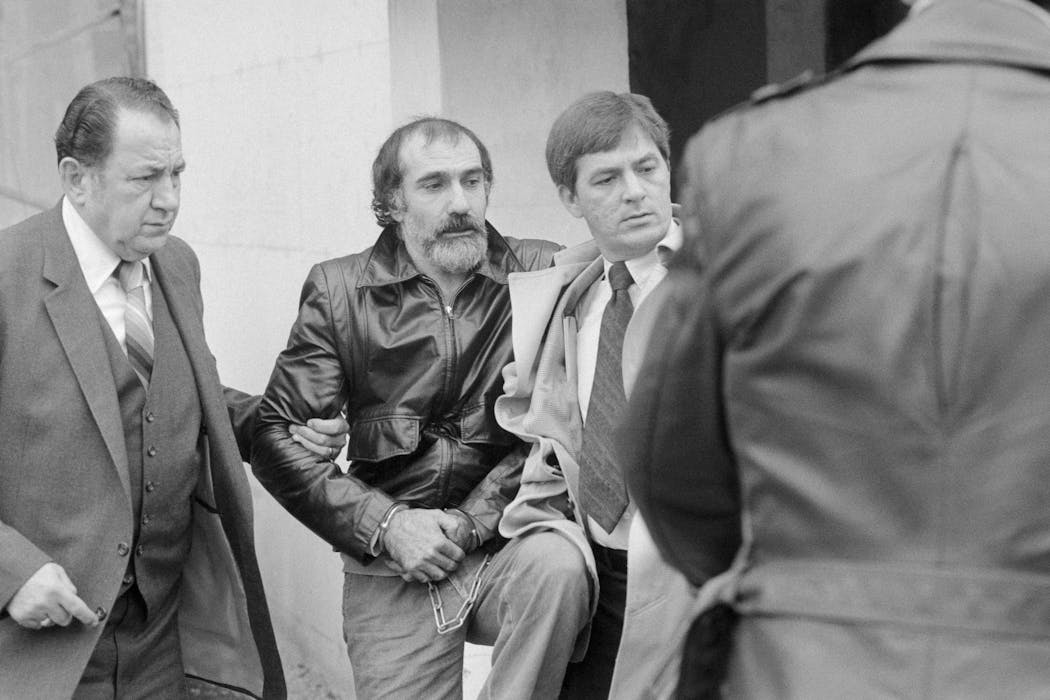
Former mob boss John Stanfa, pictured here in 1980, waged a bloody war for control of the Philadelphia mafia in the late 1990s.
Bettmann via Getty Images

The bloody mob war that is the focus of the new Netflix series “Mob War: Philadelphia vs. The Mafia,” which premieres Oct. 22, 2025, is full of the murder and mayhem, treachery and deceit that have been the hallmarks of the nation’s Cosa Nostra family conflicts.

What was different in Philadelphia was that the FBI had it all wired for sound.

Electronic surveillance has been a major tool in the government’s highly successful war against the Mafia nationwide, but nowhere has its impact been felt more dramatically than in Philadelphia.

As a reporter for The Philadelphia Inquirer, I covered this mob war in real time from 1994 through 2000. Now I teach a course at Rowan University on the history of organized crime, using the war as a case study, and I was a consultant on the Netflix series.

The war pitted one faction of the Philadelphia mob, headed by Sicilian-born John Stanfa, against a rival faction led by Joseph “Skinny Joey” Merlino. The issues were control of all illegal operations in the underworld – gambling, loan-sharking, drug-dealing and extortion. Money was the bottom line, but there also was a cultural and generational divide that had Stanfa and, for the most part, his group of older wiseguys facing off against Merlino and his crew of young South Philadelphia-born mobsters.

But only after indictments were handed down and evidence was introduced at trials did the extent of the electronic surveillance operation become known.

A trailer for ‘Mob War: Philadelphia vs. The Mafia’

‘Goodfellas kill goodfellas’

Mobsters, speaking in unguarded moments and unaware that the feds were listening, buried themselves.

So here was mob boss Stanfa discussing with an associate plans to lure Merlino and two of his two lieutenants to a meeting where they would be killed:

“See, you no gotta give a chance,” the Sicilian-born Stanfa said in his halting English. “Bam, bam … Over here is best, behind the ear.”

Or here was Salvatore Profaci, a New York mobster brought in to quietly settle a dispute that had gone public after mob lawyer Salvatore Avena filed a multimillion-dollar lawsuit against his mobbed-up business partner in a trash-hauling business.

“Goodfellas don’t sue goodfellas,” Profaci said in a line that couldn’t have been written any better by “The Godfather” author Mario Puzo or delivered more effectively by the award-winning actor Robert De Niro. “Goodfellas kill goodfellas.”

The most staggering piece of the investigation, which was made known only after Stanfa and more than 20 of his associates had been indicted and arrested, was that the FBI had received court authorization to plant listening devices in the Camden, New Jersey, law offices of Salvatore Avena, Stanfa’s defense attorney.

A judge approved the highly unusual authorization after the feds argued that Stanfa was using the shield of attorney-client privilege to conduct mob meetings in Avena’s office while a mob war raged on the streets of South Philadelphia.

More than 2,000 conversations were recorded during the two-year electronic surveillance operation, with FBI agents and an assistant U.S. attorney manning a listening post in the basement of the federal courthouse a block away from Avena’s office. Whenever Stanfa and his associates got together, the feds were listening. Many of those conversations were then introduced as evidence at the racketeering trials that followed.

The conversations proved to be a treasure trove not only for investigators but also for journalists who covered the story as it unfolded and later got access to the tapes that were made public when the cases went to trial.

Blood in the streets

Two of the books I’ve written about the Philadelphia mob, “The Last Gangster” in 2004 and “The Goodfella Tapes” in 1998, are built around those tapes and the investigations they spawned.

Anyone who has written true crime knows that part of the problem with nonfiction storytelling is coming up with dialogue. In writing books about the Philadelphia mob wars that are the focus of the new Netflix series, that was never a problem.

Mobsters from Philadelphia, South Jersey, New York and the Scanton-Wilkes Barre area of Pennsylvania ended up on the recordings, which offered not only details about the war but also included philosophical ramblings and personal asides that provided a glimpse into the world of organized crime as good as or better than any fictionalized story line from “The Godfather” or “The Sopranos.”

Throughout the conflict, as bodies piled up and blood ran in the streets of the City of Brotherly Love, Stanfa and several of his associates were picked up plotting murder and mayhem, bemoaning the loss of honor and loyalty that had once been the hallmark of Cosa Nostra, and belittling their street-corner rivals, the “little Americans” who hadn’t a clue about what it meant to be a real mafioso.

“When you’re a dwarf they could put you on a high mountain, you’re still a dwarf,” Avena told Stanfa in one of several conversations mocking Merlino and his associates.

“I was born and raised in this thing (Cosa Nostra) and I’m gonna die in this thing,” said Stanfa at another point, bemoaning the state of the Philadelphia mob. “But with the right people. Over here is like kindergarten.”

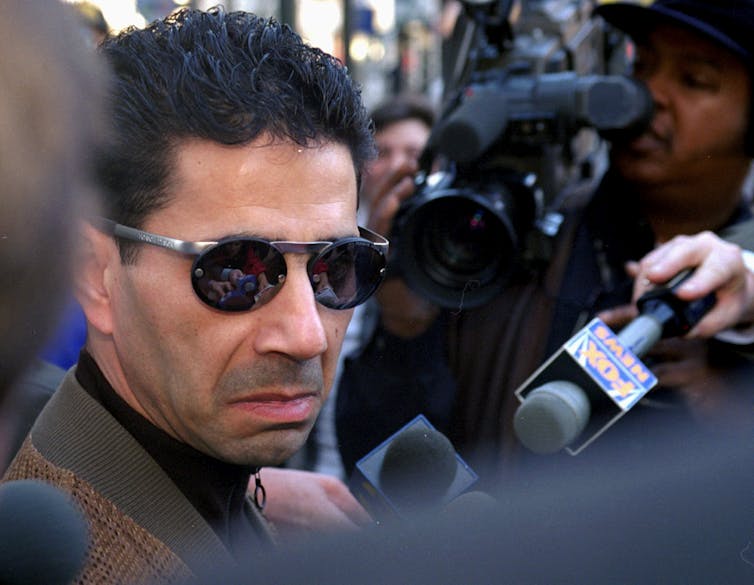
Man wearing sunglasses stands in front of people holding video camera and microphones
Former Philadelphia mob boss ‘Skinny’ Joey Merlino, pictured here in 1997.
AP Photo/H. Rumph Jr.

‘You can’t cross-examine a tape’

Electronic surveillance was used again and again in racketeering trials in which the feds not only dismantled but judicially eviscerated the Philadelphia crime family.

Stanfa is currently serving life in prison. Several of his top associates were jailed for more than 20 years. In a second prosecution, Merlino and most of his top associates were convicted of racketeering and jailed for sentences ranging from seven to 14 years.

Dozens of conversations were played for the juries that sat in judgment during the racketeering trials that followed. Again and again the mobster’s own words were turned against them.

Another highlight was an FBI surveillance video of a mob hit picked up on a hidden camera as it occurred. A surveillance camera located across the street from a deli run by then-Stanfa underboss Joseph Ciancaglini Jr. picked up the early morning shooting in which four shadowy figures burst into the deli and opened fire. An audio bug hidden inside the deli provided the sound effects – gunshots, shouting and the screams of a waitress. The shooting occurred shortly after 6 a.m. and just moments after Ciancaglini and his waitress had arrived and begun setting up for business.

Cooperating witnesses were also part of the trial, but defense attorneys frequently undermined their testimony by providing a litany of the crimes – often including murders – that the witnesses had admitted to as part of their plea deals.

You can attack the credibility of a cooperating witness by focusing on his own crimes and his need to say whatever the government wants in order to win a lenient sentence, a defense attorney once explained to me. What you can’t do, he said, “is cross-examine a tape.”

Jurors got to hear mobsters in their own words discussing the mob war. And there was nothing the defense could do to counterattack the impact of those words.

One classic discussion underscored the mobsters’ concern about electronic surveillance and demonstrated their inability to do much about it.

Stanfa consigliere Anthony Piccolo was talking with Avena about the problem with cooperators and phone taps. Both men agreed it was important to be cautious. Avena then told Piccolo that he’d had an electronic anti-bugging expert come into his office over the weekend and had swept the rooms. It had cost him $500, Avena said.

“It’s money well spent,” said Piccolo as the undetected FBI listening device beamed the conversation back to the listening post.

Read more of our stories about Philadelphia and Pennsylvania, or sign up for our Philadelphia newsletter on Substack.

The Conversation

George Anastasia is the owner of G&A Media LLC, the company through which he served as consultant for the series and through which he was paid, .

ref. How mobsters’ own words brought down Philly’s mafia − a veteran crime reporter has the story behind the end of the ‘Mob War’ – https://theconversation.com/how-mobsters-own-words-brought-down-phillys-mafia-a-veteran-crime-reporter-has-the-story-behind-the-end-of-the-mob-war-267196

Pharaohs in Dixieland – how 19th-century America reimagined Egypt to justify racism and slavery

Source: The Conversation – USA (2) – By Charles Vanthournout, Ph.D. Student in Ancient History, Université de Lorraine

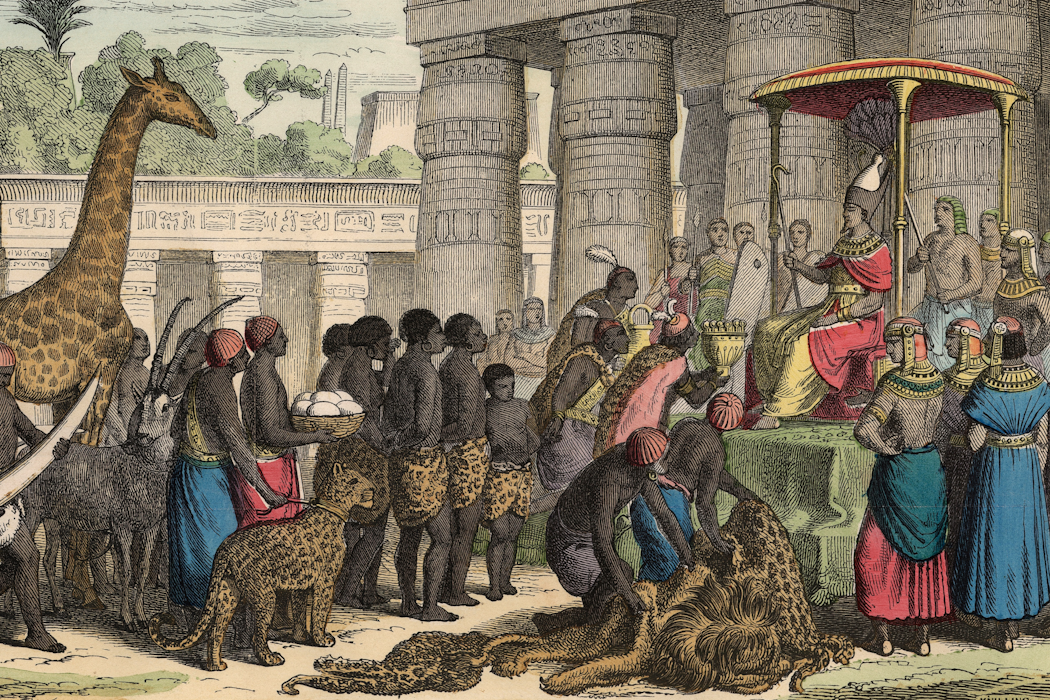
In the American South, ancient Egypt and its pharaohs became a way to justify slavery. Stefano Bianchetti/Corbis via Getty Images

When Napoleon embarked upon a military expedition into Egypt in 1798, he brought with him a team of scholars, scientists and artists. Together, they produced the monumental “Description de l’Égypte,” a massive, multivolume work about Egyptian geography, history and culture.

Colorful drawing of Egyptian ruins.
The frontispiece of the second edition of ‘Description de l’Égypte.’
Wikimedia Commons

At the time, the United States was a young nation with big aspirations, and Americans often viewed their country as an heir to the great civilizations of the past. The tales of ancient Egypt that emerged from Napoleon’s travels became a source of fascination to Americans, though in different ways.

In the slaveholding South, ancient Egypt and its pharaohs became a way to justify slavery. For abolitionists and African Americans, biblical Egypt served as a symbol of bondage and liberation.

As a historian, I study how 19th-century Americans – from Southern intellectuals to Black abolitionists – used ancient Egypt to debate questions of race, civilization and national identity. My research traces how a distorted image of ancient Egypt shaped competing visions of freedom and hierarchy in a deeply divided nation.

Egypt inspires the pro-slavery South

In 1819, when lawyer John Overton, military officer James Winchester and future president Andrew Jackson founded a city in Tennessee along the Mississippi River, they christened it Memphis, after the ancient Egyptian capital.

While promoting the new city, Overton declared of the Mississippi River that ran alongside it: “This noble river may, with propriety, be denominated the American Nile.”

“Who can tell that she may not, in time, rival … her ancient namesake, of Egypt in classic elegance and art?” The Arkansas Banner excitedly reported.

In the region’s fertile soil, Chancellor William Harper, a jurist and pro-slavery theorist from South Carolina, saw the promise of an agricultural empire built on slavery, one “capable of being made a far greater Egypt.”

There was a reason pro-slavery businessmen and thinkers were energized by the prospect of an American Egypt: Many Southern planters imagined themselves as guardians of a hierarchical and aristocratic system, one grounded in landownership, tradition and honor. As Alabama newspaper editor William Falconer put it, he and his fellow white Southerners belonged to a “race that had established law, order, and government on earth.”

To them, Egypt represented the archetype of a great hierarchical civilization. Older than Athens or Rome, Egypt conferred a special legitimacy. And just like the pharaohs, the white elites of the South saw themselves as the stewards of a prosperous society sustained by enslaved labor.

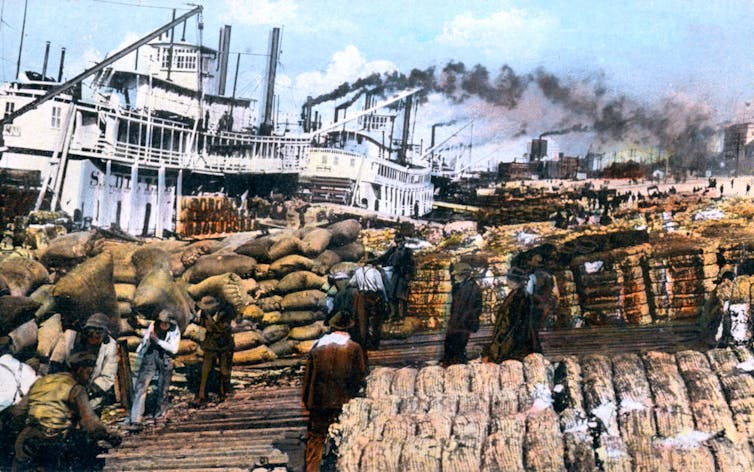
Colorful drawing of people loading bales of cotton onto steamboats.
The founders of Memphis named it after the ancient Egyptian capital, and they hoped the Mississippi River that ran alongside it would become an ‘American Nile.’
The Print Collector/Getty Images

Leading pro-slavery thinkers like Virginia social theorist George Fitzhugh, South Carolina lawyer and U.S. Senator Robert Barnwell Rhett and Georgia lawyer and politician Thomas R.R. Cobb all invoked Egypt as an example to follow.

“These [Egyptian] monuments show negro slaves in Egypt at least 1,600 years before Christ,” Cobb wrote in 1858. “That they were the same happy negroes of this day is proven by their being represented in a dance 1,300 years before Christ.”

A distorted view of history

But their view of history didn’t exactly square with reality. Slavery did exist in ancient Egypt, but most slaves had been originally captured as prisoners of war.

The country never developed a system of slavery comparable to that of Greece or Rome, and servitude was neither race-based nor tied to a plantation economy. The mistaken notion that Egypt’s great monuments were built by slaves largely stems from ancient authors and the biblical account of the Hebrews. Later, popular culture – especially Hollywood epics – would continue to advance this misconception.

Nonetheless, 19th-century Southern intellectuals drew on this imagined Egypt to legitimize slavery as an ancient and divinely sanctioned institution.

Even after the Civil War, which ended in 1865, nostalgia for these myths of ancient Egypt endured. In 1877, former Confederate officer Edward Fontaine noted how “Veritable specimens of black, woolyheaded negroes are represented by the old Egyptian artists in chains, as slaves, and even singing and dancing, as we have seen them on Southern plantations in the present century.”

Turning Egypt white

But to claim their place among the world’s great civilizations, Southerners had to reconcile a troubling fact: Egypt was located in Africa, the ancestral land of those enslaved in the U.S.

A colorful drawing of a young queen with a gilded headdress being embraced from behind by a man wearing a gilded helmet.
A collectible tobacco card depicts actors Claudette Colbert and Henry Wilcoxon in a still from the 1934 film ‘Cleopatra.’
Nextrecord Archives/Getty Images

In response, an intellectual movement called the American School of Ethnology – which promoted the idea that races had separate, unequal origins to justify Black inferiority and slavery – set out to “whiten” Egypt.

In a series of texts and lectures, they portrayed Egypt as a slaveholding civilization dominated by whites. They pointed to Egyptian monuments as proof of the greatness that a slave society could achieve. And they also promoted a scientifically discredited theory called “polygenesis,” which argued that Black people did not descend from the Bible’s Adam, but from some other source.

Richard Colfax, the author of the 1833 pamphlet “Evidence Against the Views of the Abolitionists,” insisted that “the Egyptians were decidedly of the Caucasian variety of men.” Most mummies, he added, “bear not the most distant resemblance to the negro race.”

Physician Samuel George Morton cited “Crania Aegyptiaca,” an 1822 German study of Egyptian skulls, to reinforce this view. Writing in the Charleston Medical Journal in 1851, he explained how the German study had concluded that the skulls mirrored those of Europeans in size and shape. In doing so, it established “the negro his true position as an inferior race.”

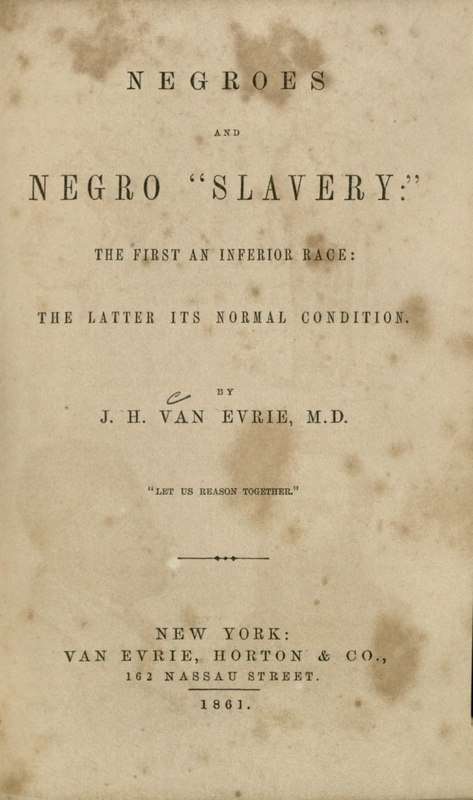
A cover page for a pamphlet reading 'Negroes and Negro Slavery: The first an inferior race, the latter its normal condition.'
Pro-slavery activists like John H. Van Evrie took great pains to ‘prove’ the inherent inferiority of Black people.
Harvard Countway Library Center for the History of Medicine

Physician Josiah C. Nott, Egyptologist George Gliddon and physician and propagandist John H. Van Evrie formed an effective triumvirate: Through press releases and public lectures featuring the skulls of mummies, they turned Egyptology into a tool of pro-slavery propaganda.

“The Negro question was the one I wished to bring out,” Nott wrote, adding that he “embalmed it in Egyptian ethnography.”

Nott and Gliddon’s 1854 bestseller “Types of Mankind” fused pseudoscience with Egyptology to both “prove” Black inferiority and advance the idea that their beloved African civilization was populated by a white Egyptian elite.

“Negroes were numerous in Egypt,” they write, “but their social position in ancient times was the same that it now is, that of servants and slaves.”

Denouncing America’s pharaohs

This distorted vision of Egypt, however, wasn’t the only one to take hold in the U.S., and abolitionists saw this history through a decidedly different lens.

In the Bible, Egypt occupies a central place, mentioned repeatedly as a land of refuge – notably for Joseph – but also as a nation of idolatry and as the cradle of slavery.

The episode of the Exodus is perhaps the most famous reference. The Hebrews, enslaved under an oppressive pharaoh, are freed by Moses, who leads them to the Promised Land, Canaan. This biblical image of Egypt as a land of bondage deeply shaped 19th-century moral and political debates: For many abolitionists, it represented the ultimate symbol of tyranny and human oppression.

When the Emancipation Proclamation went into effect on Jan. 1, 1863, Black people could be heard singing in front of the White House, “Go down Moses, way down in Egypt Land … Tell Jeff Davis to let my people go.”

Black Americans seized upon this biblical parallel. Confederate President Jefferson Davis was a contemporary pharaoh, with Moses still the prophet of liberation.

A late 19th-century map of the United States, with Northern states labeled 'God's Blessing Liberty' and Southern states labeled 'God's Curse Slavery.'
A map titled ‘Historical Geography,’ created by John F. Smith, shows how religion and the Bible were wielded by abolitionists.
Library of Congress

African American writers and activists like Phillis Wheatley and Sojourner Truth also invoked Egypt as a tool of emancipation.

“God has implanted in every human heart a principle which we call the love of liberty,” Wheatley wrote in a 1774 letter. “It is impatient with oppression and longs for deliverance; and with the permission of our modern Egyptians, I will assert that this same principle lives in us.”

Yet the South’s infatuation with Egypt shows how antiquity can always be recast to serve the powerful. And it’s a reminder that the past is far from neutral terrain – that there is rarely, if ever, a ceasefire in wars over history and memory.

The Conversation

Charles Vanthournout does not work for, consult, own shares in or receive funding from any company or organization that would benefit from this article, and has disclosed no relevant affiliations beyond their academic appointment.

ref. Pharaohs in Dixieland – how 19th-century America reimagined Egypt to justify racism and slavery – https://theconversation.com/pharaohs-in-dixieland-how-19th-century-america-reimagined-egypt-to-justify-racism-and-slavery-266665

How a more flexible energy grid can cope better with swings in Britain’s weather

Source: The Conversation – UK – By Matthew Wright, PhD Candidate, Department of Atmospheric Physics, University of Oxford

gazadavies93/Shutterstock

For most Brits, January 8 2025 was an uneventful Wednesday, albeit slightly cold. But these low temperatures, coupled with a significant drop in wind speed, contributed to a spike in the real-time electricity price to over seven times the 2024-25 winter average.

The National Energy System Operator (Neso), the organisation responsible for balancing electricity supply with demand minute-by-minute, highlighted “weather driven factors” as a major challenge on January 8. Neso’s costs to produce enough electricity to balance the system on this day reached £21 million – costs that increase consumer bills.

A new report, coordinated by the Royal Meteorological Society and supported by the energy team at AECOM, a global infrastructure consulting company, highlights how Britain’s electricity system is sensitive to seemingly benign weather conditions. This report highlights the importance of predicting and responding to these events – and provides evidence to inform how the future energy system could be designed to ensure it remains resilient to the weather.


Read more:
What Europe’s exceptionally low winds mean for the future energy grid


Every minute, Neso monitors weather conditions to make decisions about how best to balance supply and demand. If the forecast suggests a drop off in wind speed, then Neso can use a range of tools to make up for the resulting reduction in wind generation. This includes interconnectors (importing excess electricity from neighbouring countries), stored energy or gas generation.

Electricity demand also fluctuates depending on changes in weather. In winter, when the weather is dull and cold, people tend to use more heating and lighting (alongside increased kettle usage for more cups of tea). In summer, heatwaves can increase demand through fan and air conditioning usage.

man sits on chair reading book by radiator, keeping warm inside
Electricity demand goes up when people light and heat their homes more in cold weather.
Alena Ozerova/Shutterstock

The most difficult periods occur when there is an increase in demand at the same time as a decrease in wind generation. Weather that causes these cloudy and still conditions is referred to as dunkelflaute – German for “dark and still”.

Dunkelflaute conditions are also known as anticyclonic gloom. This has recently been affecting the UK’s weather. Researchers at the University of Reading have shown that dunkelflaute is usually associated with stationary high pressure over the UK. These systems get in the way and “block” wet and windy weather from hitting the British Isles.

Thanks to the accuracy of modern weather forecasting, there is usually plenty of warning about when these situations will occur. But there is a cost associated with requesting additional electricity generation at relatively short notice, as only a few power plants can switch on quickly, and they’re expensive to start and run. That puts the overall system price of electricity up.

These dunkelflaute episodes can be brief and intense like on January 8, when the price spiked so dramatically because forecasts gave limited warning. Or, they can be less severe but last for a longer period, for example in early November 2024, when there was an extended wind drought lasting several weeks. This leads to an extended period of high system prices for electricity.

Dunkelflaute conditions are not unique to the UK. They can stretch across multiple countries, as shown by researchers in Germany. More cables are being built to connect European energy systems and share power across borders. But if countries are experiencing wind droughts simultaneously, the ability of these connections to help balance supply and demand is reduced. Grids need to be resilient even if nations can’t import energy from their neighbours.

water being released from hydropower dam
Hydropower stations can store energy.
Yalcin Sonat/Shutterstock

Future-proofing the energy system

In the future, wind and solar capacity is set to increase and electricity demand will jump due to more heat pumps and electric vehicles. The report models what the consequences of January’s extreme drop in wind speed would be in such a future energy system – increasing the number of wind turbines and solar panels alone is not enough. Other strategies are required to keep the lights on in a low-carbon electricity system.

Importantly, getting more of our electricity from weather-dependent sources does not mean that plans for a low-carbon energy system are impossible. But other technologies will be needed to plug the gap between the renewable generation at any given moment, and the demand at that time.

One option is increasing the amount of energy storage, using excess electricity at times of high winds to store energy for future wind droughts. Energy storage comes in many forms including pumped hydropower (pumping water uphill and letting it fall to release energy later), batteries and potentially green hydrogen (generated from the electrolysis of water).


Read more:
Quantum computers can accelerate the transition to net zero power grids


Other options include interconnection with other countries’ networks and building other forms of low-carbon generation, like nuclear power stations. An interconnector to Denmark – Viking Link – came online at the end of 2023. This means Britain can import energy from Denmark when domestic wind generation is low, and export energy in the other direction when there is a surplus of renewable power, smoothing out electricity supply fluctuations in both countries.

Further new interconnectors, between the UK and the Netherlands, Belgium and Germany, are planned.

An alternative is to adjust demand to match the available supply. This is called “demand flexibility”. For example, consumers may be offered very cheap – even free – electricity during periods of excess renewable electricity generation, encouraging them to use more electricity when there is plenty of it.
Businesses may also be incentivised to reduce usage when supply is tight.

New technologies can help reduce energy use at peak times, making it easier to match supply levels. For example, smart car chargers communicate with the grid and operators to adjust charging times to when there is less demand. Demand flexibility is already being trialled, and is likely to become more common in the future.

Britain needs the right mix of these solutions to maintain a system that continues to provide electricity in the ever-changing British weather. Much of Britain’s electricity will come from wind when it blows. But storage, interconnectors and flexible electricity use – informed by research into the frequency and severity of dunkelflaute – are vital components.

With this mix in place, days like January 8 will become much easier to manage.


Don’t have time to read about climate change as much as you’d like?

Get a weekly roundup in your inbox instead. Every Wednesday, The Conversation’s environment editor writes Imagine, a short email that goes a little deeper into just one climate issue. Join the 45,000+ readers who’ve subscribed so far.


The Conversation

Matthew Wright receives funding from the Natural Environment Research Council through the Oxford NERC DTP.

Ben Hutchins receives funding from Natural Environment Research Council (NERC) through the Scenario training programme.

James Mollard receives research funding through a Network Innovation Allowance Project with National Grid Electricity Transmission. He is affiliated with the Royal Meteorological Society.

ref. How a more flexible energy grid can cope better with swings in Britain’s weather – https://theconversation.com/how-a-more-flexible-energy-grid-can-cope-better-with-swings-in-britains-weather-267577

Cancer du sein : comment sont remboursés les produits de soutien ?

Source: The Conversation – France in French (3) – By Laurence Coiffard, Professeur en galénique et cosmétologie, Université de Nantes, Auteurs historiques The Conversation France

Au début de l’année 2025, l’Assemblée nationale et le Sénat ont adopté une loi ayant pour objectif d’aboutir au remboursement à 100 % par la Sécurité sociale de certains soins et dispositifs prescrits dans le cadre de la prise en charge du cancer du sein.


La loi n° 2025-106 du 5 février 2025 visant à améliorer la prise en charge des soins et dispositifs spécifiques au traitement du cancer du sein par l’Assurance maladie a été promulguée, après son adoption par l’Assemblée nationale et le Sénat.

Elle concerne pour l’heure les « actes de dermopigmentation », les « sous-vêtements adaptés au port de prothèses mammaires amovibles » et le « renouvellement des prothèses mammaires ». La loi prévoit également « un forfait finançant des soins et des dispositifs non remboursables présentant un caractère spécifique au traitement du cancer du sein et à ses suites, sur prescription médicale ».

Toutefois, pour en savoir plus sur la nature des autres soins et dispositifs susceptibles d’être remboursés, il faudra attendre le décret d’application, qui n’a pas encore été publié au moment où ces lignes sont écrites. La Haute Autorité de santé (HAS), l’Agence nationale de sécurité du médicament et des produits de santé (ANSM) et l’Agence nationale de sécurité sanitaire de l’alimentation, de l’environnement et du travail (Anses) sont notamment consultées dans ce cadre.

Ce texte de loi nous amène à réfléchir à plusieurs sujets : la dermopigmentation et sa sécurité d’emploi, l’existence de produits hydratants susceptibles d’être prescrits et remboursés, ou encore l’importance des cosmétiques pour l’amélioration de la qualité de vie des patientes. Faisons le point.

« Soin de support » : de quoi s’agit-il ?

Utilisée depuis les années 1950 dans la littérature médicale, l’expression anglaise de « supportive cares » est souvent traduite improprement en français par le terme de « soins de support ». Il serait en effet plus juste d’employer le terme de « soins de soutien ».

Leur définition est précisée en 1994, grâce à la philosophe Margaret Fitch, qui les circonscrit à la cancérologie et les définit comme

« la prestation des services nécessaires aux personnes atteintes ou affectées par le cancer, pour répondre à leurs besoins informationnels, émotionnels, spirituels, sociaux ou physiques, pendant les phases de diagnostic, de traitement ou de suivi, englobant les questions de promotion de la santé et de prévention, de survie, de soins palliatifs et de deuil… »

Ce terme de « soins de support » sera repris par le président Jacques Chirac dans son plan Cancer de 2003, dont lesdits soins constitueront le point 42 des 70 mesures à mettre en place.

Dermopigmentation et remboursement

Le texte de loi évoque le remboursement des soins de « tatouage médical », dans le cadre de la chirurgie reconstructive du sein. Cette technique de tatouage, réalisée depuis 1975, a pour objectif de simuler l’aréole manquante à l’aide de pigments. Considérée comme sûre par le corps médical, elle est appréciée des bénéficiaires de manière générale.

Il serait utile, toutefois, de s’assurer de la qualité des encres utilisées. En effet, on trouve sur le marché des produits pouvant être contaminés par divers polluants susceptibles de compromettre la santé des utilisatrices : métaux lourds, hydrocarbures aromatiques polycycliques, amines aromatiques,formaldéhyde, etc.


À lire aussi :
Tatouage et allergies : de nombreuses encres contiennent des ingrédients non indiqués sur l’étiquette


Quelles crèmes hydratantes rembourser ?

Si les crèmes hydratantes ne sont pas désignées explicitement en tant que soins de support, il est évident que ces crèmes, susceptibles de traiter le problème de la sécheresse cutanée, effet indésirable récurrent, sont bien concernées.

Les traitements par chimio et radiothérapies peuvent induire une sécheresse cutanée. Dans ce contexte, les crèmes hydratantes susceptibles de traiter ce problème sont des produits importants pour améliorer la qualité de vie des patientes. Cependant, elles ne sont pas désignées explicitement en tant que soins de support dans le texte de loi.

Par ailleurs, il est important de déterminer de quelles crèmes hydratantes il est question, car leur nature n’est pas sans conséquences sur leur remboursement. Faut-il plutôt les chercher dans le domaine cosmétique ou bien dans celui du médicament ?

À l’heure actuelle, une dizaine de spécialités médicamenteuses sont remboursées à hauteur de 15 %. Destinées à traiter la sécheresse cutanée dans le cadre de différentes pathologies (comme l’eczéma ou le psoriasis), elles sont de composition très simple, renfermant un trio de principes actifs : glycérol, vaseline, paraffine. Leur prix est modique, puisqu’il faut compter 2,51 € pour acquérir un tube de 250 grammes.

D’autres dispositifs médicaux à caractère hydratant sont également remboursables en cas de prescription, dans certaines indications. Pour pouvoir être remboursable, il faut que le fabricant du dispositif médical en question accomplisse la démarche de déposer un dossier auprès de la Haute Autorité de santé (plus précisément à la Commission nationale d’évaluation des dispositifs médicaux et des technologies de santé, Cnedimts) et auprès du Comité économique des produits de santé (Ceps). Si le remboursement est agréé, alors, ledit dispositif médical pourra figurer sur la liste des produits et prestations remboursables (LPP).

À côté de ces différents dispositifs médicaux, il existe de très nombreux produits cosmétiques présentés comme hydratants ou émollients (capables d’amollir les tissus biologiques, les rendant plus souples). Ces derniers ne sont pas, pour l’heure, remboursés. Leur composition, très variable, devra être examinée avec soin, au cas par cas, afin d’éviter la présence de toute substance indésirable.

Pourquoi rembourser des vernis à ongles ?

Certains traitements du cancer du sein peuvent provoquer une altération de la plaque unguéale se traduisant par l’apparition de stries ou une modification de sa couleur. Afin de protéger les ongles des effets délétères de la chimiothérapie, qui peuvent entraîner leur chute, il est possible d’appliquer sur ceux-ci des vernis à ongles.

Les produits destinés à renforcer l’ongle peuvent donc être considérés comme des soins de support et, à ce titre, pourraient être remboursés.

Ces substances doivent être appliquées en deux couches successives. Pour renforcer leur efficacité, on peut d’abord couvrir l’ongle nu d’une couche de base, qui recevra le vernis, puis une couche de « top coat » sur ce dernier.

Des « thérapies par la beauté » ?

Certaines études ont mis en évidence le fait que les ateliers de maquillage, proposés par des socio-esthéticiennes (maquillage du teint, des yeux) permettent d’améliorer le bien-être et la qualité de vie des patientes. Cette « thérapie par la beauté » permet d’augmenter l’estime de soi, même chez les femmes qui ne semblent pas porter un intérêt particulier à leur apparence.

Ce moment est considéré comme une bulle apaisante par les femmes qui bénéficient de ces ateliers, lesquelles apprécient d’être traitées « comme une personne à part entière », et non plus comme une malade dont le corps est soumis à toutes sortes de protocoles curatifs.

Que changer, et jusqu’où aller ?

Proposer le remboursement des soins de support aux femmes souffrant d’un cancer du sein est une bonne chose. Cependant, la notion de soin de support est une notion vague et élastique, suffisamment étirable pour recouvrir toutes les pratiques qui permettent d’apporter un bénéfice à la patiente.

Cette loi, pour être appliquée correctement, va donc devoir faire la lumière sur les zones d’ombre qui existent encore, afin de ne proposer aux patientes que des produits sûrs et efficaces. Une crème hydratante remboursable ? Il en existe déjà. Des produits de maquillage des ongles ou du teint remboursables ? Il n’en existe pas encore, et il va falloir déterminer lesquels seront les plus bénéfiques pour les patientes.

Par ailleurs, une dernière question se pose : qu’en sera-t-il du remboursement des soins de support applicables aux patients atteints d’autres types de cancers ?

The Conversation

Les auteurs ne travaillent pas, ne conseillent pas, ne possèdent pas de parts, ne reçoivent pas de fonds d’une organisation qui pourrait tirer profit de cet article, et n’ont déclaré aucune autre affiliation que leur organisme de recherche.

ref. Cancer du sein : comment sont remboursés les produits de soutien ? – https://theconversation.com/cancer-du-sein-comment-sont-rembourses-les-produits-de-soutien-250115

The Mona Lisa, a gold toilet and now the Louvre’s royal jewels: a fascinating history of art heists

Source: The Conversation – Global Perspectives – By Penelope Jackson, Adjunct Research Associate, School of Social Work and Arts, Charles Sturt University

The world’s largest art museum, the Louvre has approximately half a million objects in its collection, with about 30,000 on display, and sees on average 8 million visitors per year. That’s big on any scale, with a lot of people and objects to keep watch over. And Sundays are particularly busy.

In a cleverly conceived operation, four men wearing fluorescent vests pulled up at the Louvre in a flat-decked truck at 9.30 Sunday morning. Quickly setting to work, they raised an extendable ladder to the second storey. Climbing it, they cut through a window, entered the Galerie d’Apollon and, brandishing power tools, helped themselves to nine exquisite objects.

The objects taken were France’s royal jewels, formerly belonging to the Empress Eugénie, Napoleon III’s wife and arts patron.

This is where it gets tricky for the thieves: what can you do with these priceless objects? They can’t wear them – too big and glitzy to go unnoticed – and they can’t sell them legitimately, as images are all over the internet.

The jewels.
Jewels of Empress Eugénie photographed in 2020. The diadem, left, and diamond bow brooch, right, have been stolen. The crown, centre, was stolen but has been recovered.
Stephanie de Sakutin/AFP via Getty Images

The best-case scenario, from the thieves’ perspective, is to break them down, melt the precious metals and sell the gems separately.

Empress Eugenie’s crown, which the perpetrators took and subsequently dropped as they fled the scene on motor scooters, contains eight gold eagles, 1,354 brilliant-cut diamonds, 1,136 rose-cut diamonds and 56 emeralds. In short, this amounts to a sizeable stash of individual gems to try and sell.

Timing is everything

For the Louvre, any heist is a major blow. It calls into question their security, both electronic and human. Five security staff were nearby who acted to protect visitors and the alarms did ring, but the entire heist was completed within seven minutes.

Timing is crucial with heists.

A gold toilet.
America, a fully functioning toilet made of 18-karat solid gold, on display here at the Guggenheim in 2017.
MossAlbatross/Wikimedia Commons, CC BY-SA

In 2019, an 18-karat gold toilet titled America (2016), from the artist Maurizio Cattelan, was stolen from Blenheim Palace, England. It was taken in five and a half minutes. It weighed 98 kilograms and was fully functioning. In other words, the two men who took it (and were later caught and served prison sentences for their crimes) worked quickly and efficiently. At the time of the theft, as gold bullion it was estimated to be valued at A$6 million.

Van Gogh’s painting The Parsonage Garden at Neunen in Spring (1884) was stolen from the Singer Laren Museum, in the Netherlands, during their 2020 COVID closure. It was recovered in late 2023 after an investigation by Dutch art detective Arthur Brand.

The 2017 theft of two Gottfried Lindauer paintings from Auckland’s International Art Centre took just a few minutes to complete. The thieves ram-raided the front window of the auction house where the paintings, valued at NZ$1 million, were displayed. The portraits were recovered five years later through an intermediary, with only minor damage.

Recovering the stolen

The National Gallery of Victoria’s Picasso painting Weeping Woman (1937) was famously taken by the Australian Cultural Terrorists in 1986 – but only noticed as missing two days later.

Recovered just over two weeks later, the painting was left for the gallery staff to collect in a locker at Spencer Street railway station. The motivation behind the theft was to highlight the lack of financial support given to Victorian artists, but the true identity of the thieves remains a mystery.

In 1986, 26 paintings of religious subjects were stolen from the gallery at the Benedictine Monastery at New Norcia, Western Australia.

The thieves were poor planners: they hadn’t factored in that three men and the stash of paintings couldn’t fit into a Ford Falcon. The paintings were cut from their frames, ostensibly butchered. One was completely destroyed. The thieves were caught and charged.

Where to next for the thief?

Recovery of objects from heists is low. It’s impossible to put a number on but some say art recoveries globally are possibly as low as 10%.

Paintings are more difficult to sell on – you can’t change their physical appearance to the point of not being recognised.

However, with objects such as the gold toilet or jewels, the precious materials and gems can be repurposed. Time will tell if the Napoleonic jewels will be recovered.

Never say never. The Mona Lisa (1503), undoubtedly the main attraction at the Louvre, was stolen in 1911 and recovered two years later. The thief, Vincenzo Peruggia, was an Italian handyman working at the Louvre and was caught trying to sell it.

Men stand with the Mona Lisa.
The ceremony for the return to France of the Mona Lisa, Rome, 1913.
Mondadori via Getty Images

This latest heist at the Louvre highlights the vulnerability of objects in public collections. The irony being they’re often gifted to such institutions for safekeeping.

Those who guard objects are usually paid a minimum wage and yet they are tasked with a huge responsibility. When budget cuts are made, it’s often security staff that are reduced – such as the Art Gallery of New South Wales’ announcement just last week.

The thieves on Sunday knew what they were after and why. We aren’t privy to their motivation. We know the stolen jewels are part of France’s history and are irreplaceable. Their theft denies visitors of experiencing them individually for their beauty and craftsmanship, as well as collectively within the context of France’s history.

But part of me can’t help thinking how the French were partial to helping themselves to artworks and precious objects belonging to others. So perhaps this could be a case of déjà vu.


Penelope Jackson’s Unseen: Art and Crime in Australia (Monash University Publishing) will be published in December 2025.

The Conversation

Penelope Jackson does not work for, consult, own shares in or receive funding from any company or organisation that would benefit from this article, and has disclosed no relevant affiliations beyond their academic appointment.

ref. The Mona Lisa, a gold toilet and now the Louvre’s royal jewels: a fascinating history of art heists – https://theconversation.com/the-mona-lisa-a-gold-toilet-and-now-the-louvres-royal-jewels-a-fascinating-history-of-art-heists-267849

Une culture pour les gouverner tous ?

Source: The Conversation – France (in French) – By Louise Colling, PhD candidate in organizational behavior, Université de Liège

Plus agiles, participatives, collaboratives, démocratiques… les organisations lâchent progressivement la bride hiérarchique pour gagner en résilience et pour répondre aux attentes des plus jeunes générations de travailleurs. Disparu le contrôle ? Pas vraiment. D’autres formes discrètes émergent dans ce contexte.


Le contrôle normatif prévoit l’autodiscipline des travailleurs baignés dans une culture organisationnelle forte et exigeante. Les travailleurs sont alors confrontés à ce contrôle impalpable, complexe, dont les conséquences sont mal appréhendées. Rétablir conscience et nuance autour de ce phénomène est essentiel pour la santé des collaborateurs et des organisations.

Le contrôle normatif, ce méconnu

Coffee corner, ambiance campus universitaire, buddy pour accueillir les nouveaux, codes vestimentaires et conversationnels décontractés, petit-déjeuners spécial valeurs, awards calqués sur les valeurs de l’entreprise, récit mythique de la fondation de l’entreprise… une culture d’entreprise « vibrante » est au cœur des stratégies pour attirer les meilleurs talents, assurer leur loyauté et leur engagement.

Dès les années 1960, la science en management définit le contrôle normatif comme un alignement spontané des comportements et actions des travailleurs sur la culture d’organisation. Soucieux de se montrer dignes des valeurs et idéaux de l’entreprise, les travailleurs donnent le meilleur d’eux-mêmes et agissent naturellement dans l’intérêt de l’organisation. C’est l’avènement de la motivation intrinsèque, de la fierté du travail bien fait et de l’appartenance à une organisation unique.


À lire aussi :
L’entreprise libérée donne-t-elle du courage ?


Le contrôle normatif prend de l’ampleur avec la vague de flexibilisation et de libération des organisations. Quoi de mieux qu’un contrôle discret et spontané dans une organisation où le contrôle hiérarchique n’est plus légitime ? Prenons l’exemple des cabinets de conseils, réputés pour l’autonomie de leurs travailleurs, des équipes projet dites « agiles », une relation très fluide entre les collaborateurs, une ambiance décontractée. La culture organisationnelle d’excellence qui y est largement diffusée pousse pourtant les travailleurs à donner le meilleur d’eux-mêmes et viser l’hyper performance. Une autodiscipline bien plus efficace qu’un supérieur qui vérifie le travail par-dessus l’épaule.

Loyauté et engagement

« Culture eats strategy for breakfast », selon le théoricien Peter Drucker. La littérature managériale grand public loue la culture organisationnelle pour la loyauté et l’engagement qu’elle suscite chez les travailleurs. Les organisations déploient alors avec optimisme des pratiques relevant du contrôle normatif – ateliers valeurs, atmosphère ludique et familiale au bureau, engagement en faveur d’une cause sociétale.

La science en management se montre beaucoup plus sceptique, voire carrément hostile. Elle met en garde contre l’exploitation, l’uniformisation des employés et les dérives totalitaires du contrôle normatif. Alors, pour ou contre le contrôle normatif ? Bon ou mauvais ? Face à l’optimisme des livres de management et à la critique souvent cantonnée au champ académique, difficile pour les organisations de se faire une raison. Notre analyse de près de 80 articles et livres traitant du contrôle normatif vise à rétablir nuance et conscience. Elle aboutit à une liste d’opportunités et de menaces du contrôle normatif pour les organisations et leurs travailleurs.

Une source de sens, mais pas seulement

Le contrôle normatif est d’abord source de sens pour les travailleurs. En adhérant aux valeurs et idéaux de l’organisation, ces derniers ont le sentiment de se réaliser. L’individu qui a internalisé ces normes culturelles devient plus proactif, nécessite moins de supervision. Le partage d’une identité commune porte le collectif, avec une diminution des conflits.

Poussée par cet élan individuel et collectif, l’organisation est en meilleure capacité d’innover et de s’adapter aux changements. Dans ce contexte favorable, il est plus facile d’attirer et de garder des travailleurs motivés. Ces derniers communiquent leur enthousiasme auprès des clients, s’engagent plus personnellement dans les échanges avec eux et se montrent d’autant plus exemplaires qu’ils se sentent ambassadeurs d’une culture unique. Un phénomène illustré notamment chez Ikea, avec des employés tellement imprégnés de la culture familiale qu’ils en viennent à représenter et défendre l’entreprise auprès de leurs proches.

Mais ce sens, cet idéal fort soulèvent aussi des questions éthiques quand engagement rime avec exploitation. La frontière entre travail et vie privée s’efface, l’investissement est sans fin pour être digne de l’idéal organisationnel. Les travailleurs se dépassent quand ils le font pour « la grande famille des collègues », « un service d’exception au client », ou « une entreprise engagée pour la transition »…

Une résistance peu frontale

Apparaît alors une résistance certes peu frontale mais qui peut miner l’organisation à coups de sabotages, faux-semblants, cynisme, et finalement départs. Pour ceux qui n’ont pas la force de résister, les risques psychosociaux sont réels : stress, diminution de l’estime de soi, burn out. Les managers ne sont pas épargnés, la pression de l’exemplarité s’abat sur eux.

Une culture d’organisation trop uniforme et sacralisée peut aussi causer rigidité, manque de créativité et résistance au changement. Enfin, il faut également avoir à l’esprit les efforts conséquents en temps et en argent pour diffuser cette culture (événements sociaux, décoration des locaux, système de buddy, campagnes sur les valeurs, etc.).

Un contrôle à double tranchant

Le contrôle normatif déclenche ainsi un mix d’opportunités et de menaces qui dépend du contexte organisationnel et de chaque individu. Par exemple, il est illusoire de s’en remettre au contrôle normatif en espérant seulement améliorer l’engagement des collaborateurs, sans que cela augmente également les risques psychosociaux.

Fondation nationale pour l’enseignement de la gestion des entreprises (Fnege) Médias, 2025.

Favoriser le contrôle normatif, c’est s’exposer à ces différentes opportunités et menaces, en même temps. C’est devoir naviguer entre ses différents paradoxes ; agilité et rigidité organisationnelle, engagement et résistance des travailleurs, relâchement et exemplarité managériale.

Adaptation à l’entreprise-tribu

Depuis quelques années, le contrôle normatif s’est adapté à l’engouement pour un travail toujours plus collaboratif, des environnements de travail communautaires (par exemple, le coworking). C’est l’organisation idéalisée comme une tribu. D’un côté, l’extase du dépassement de soi pour le collectif, les moments transcendants de partage avec les collègues. De l’autre, une porosité entre la vie privée et professionnelle toujours plus forte, la proximité et les émotions des collègues à gérer. Entre les deux, le yo-yo émotionnel. Si les références culturelles évoluent, le contrôle normatif reste à double tranchant.

En présence d’un contrôle normatif fort, les managers avisés peuvent renforcer le suivi des indicateurs psychosociaux, être attentifs aux discours trop dogmatiques qui mettent les équipes sous pression, veiller à ce que les voix dissonantes puissent continuer à s’exprimer. Les équipes des ressources humaines ont également un rôle clé à jouer pour qu’acculturation ne rime pas avec endoctrinement. Notamment dans les parcours d’onboarding, trouver un équilibre entre partage des repères culturels communs et valorisation des personnalités uniques de tout un chacun. Le rôle des cabinets de conseil doit aussi être encadré, pour éviter qu’ils ouvrent les vannes d’une culture organisationnelle super puissante. Les grands ateliers participatifs sur les valeurs et la culture organisationnelle ne sont pas anodins, ils enclenchent une dynamique normative. Et les consultants sont souvent repartis quand les effets négatifs du contrôle normatif se font sentir.

Être conscient du contrôle normatif et rester alerte sur ses dérives est plus que jamais d’actualité avec cette fausse impression que le contrôle se dilue dans des organisations toujours plus flexibles. Notre liste d’opportunités et de menaces du contrôle normatif peut constituer une boussole pour préserver les organisations et leurs travailleurs.

The Conversation

Les auteurs ne travaillent pas, ne conseillent pas, ne possèdent pas de parts, ne reçoivent pas de fonds d’une organisation qui pourrait tirer profit de cet article, et n’ont déclaré aucune autre affiliation que leur organisme de recherche.

ref. Une culture pour les gouverner tous ? – https://theconversation.com/une-culture-pour-les-gouverner-tous-265635

Échec de la fusion Kraft-Heinz. Les dix secrets des fusions qui réussissent

Source: The Conversation – France (in French) – By Ludivine Chalencon, Maître de conférences, finance et comptabilité, iaelyon School of Management – Université Jean Moulin Lyon 3

Début septembre 2025, dix ans après la création du cinquième groupe mondial de l’industrie agroalimentaire, le géant états-unien Kraft-Heinz, qui distribue notamment le célèbre ketchup Heinz ou le fromage à tartiner Philadelphia, annonce la scission de ses activités. Quelles sont les raisons de l’échec de cette mégafusion ? Et quels sont les secrets des fusions réussies ?


Dans un communiqué de presse publié le 2 septembre 2025, The Kraft Heinz Company (KHC) annonce son intention de se scinder en deux entités distinctes, pour mieux cibler ses priorités stratégiques, accélérer la croissance rentable et créer de la valeur pour ses actionnaires.

« Les marques de Kraft-Heinz sont emblématiques et aimées, mais la complexité de notre structure actuelle complique l’allocation efficace des capitaux, la priorisation des initiatives et le développement de nos activités les plus prometteuses », déclare Miguel Patricio, le PDG de Kraft-Heinz.

« En nous séparant en deux sociétés, nous pouvons allouer l’attention et les ressources nécessaires pour libérer le potentiel de chaque marque et ainsi améliorer la performance et créer de la valeur à long terme pour les actionnaires. »

C’est en 2015 que les deux groupes américains Kraft Foods et Heinz fusionnent pour former un nouveau géant mondial de l’industrie agroalimentaire, sous la houlette du fonds d’investissement brésilien 3G et de l’homme d’affaires Warren Buffet. Le montant de l’opération est estimé à 45 milliards de dollars, l’un des plus gros « deals » réalisés dans la période. L’objectif était de réaliser des économies et des synergies annuelles de 1,5 milliard de dollars.

Kraft-Heinz a perdu 62 % de sa valeur depuis sa création

Dix ans après, la fusion se révèle être un échec et les objectifs annoncés n’ont pas été réalisés. Les divergences sont nombreuses au sein du groupe qui a perdu 62 % de sa valeur en Bourse depuis sa création. Les activités du groupe vont être réparties entre deux entreprises : les deux nouvelles entités seront Global Taste Elevation Co., qui regroupera des marques emblématiques, telles que Heinz, Philadelphia et Kraft Mac & Cheese, et North American Grocery Co, qui réunira notamment Oscar Mayer, Kraft Singles et Lunchables. En 2024, les ventes de sauces et de pâtes à tartiner de Kraft-Heinz ont atteint environ 15,4 milliards de dollars (soit 13,15 milliards d’euros), tandis que celles des produits alimentaires transformés et des plats préparés se sont élevées à 10,4 milliards de dollars.

Les raisons de l’échec de cette mégafusion sont multiples. Il convient d’abord de rappeler que le mariage scellé en 2015 n’était pas égalitaire : 51 % du capital du nouveau groupe étaient détenus par les actionnaires de Heinz, dont le PDG était nommé PDG de Kraft-Heinz, et 49 % du capital étaient détenus par Kraft Foods.

Cette gouvernance déséquilibrée en faveur de Heinz a entraîné de nombreuses difficultés dans la réalisation du processus d’intégration et des objectifs fixés. A ces difficultés internes se rajoute un contexte défavorable qui est marqué par la hausse des matières premières dans l’industrie agroalimentaire et des changements profonds dans les comportements des consommateurs, en particulier américains, qui délaissent de plus en plus les produits ultratransformés pour de la nourriture plus saine.

Dix secrets pour réussir une fusion

Nos travaux de recherche, fondés sur des études qualitatives et quantitatives, permettent d’identifier 10 secrets relatifs à la préparation, au déploiement et à la performance des fusions qui réussissent :

Préparation de la fusion

Le déroulement d’une fusion est d’abord lié à la gouvernance qui doit être équilibrée sous la forme d’un « merger of equals ». L’équilibre au niveau de la gouvernance concerne à la fois la structure actionnariale et la composition des équipes dirigeantes (secret n° 1). La réussite dépend aussi de la complémentarité des activités et des marchés des entreprises qui décident de fusionner (secret n° 2).

Le processus d’intégration joue un rôle déterminant dans la réalisation d’une fusion. Le temps constitue un facteur clé et il est nécessaire d’établir un calendrier avec les différentes étapes du processus d’intégration, qui s’étale généralement sur une période allant de six à 24 mois (secret n° 3). Les dirigeants des entreprises associées doivent communiquer la vision stratégique et les différentes étapes de l’opération auprès de leurs salariés, de leurs actionnaires, de leurs clients et fournisseurs et du grand public (secret n° 4).

Déploiement de la fusion

Les différentes étapes du processus d’intégration doivent être gérées par des comités de pilotage et des groupes de travail mixtes, qui représentent de manière équilibrée les équipes des deux entreprises qui fusionnent (secret n° 5). Les équipes mixtes constituées doivent gérer l’intégration des pratiques et des processus en identifiant les best practices dans les deux entreprises (secret n° 6).

L’intégration des pratiques et des processus est uniquement possible si les équipes concernées acceptent et partagent les best practices identifiées dans chaque entreprise (secret n° 7). Elle est facilitée par la création d’une culture organisationnelle commune qui s’appuie sur les valeurs des entreprises associées (secret n° 8). Ces valeurs peuvent être liées aux différences culturelles entre les pays.

Performance de la fusion

Le processus d’intégration doit faciliter la réalisation d’économies et de synergies sur le long terme afin de permettre la croissance rentable, garant de la pérennité de la fusion (secret n° 9). Enfin, la réussite d’une fusion dépend d’une évolution favorable du marché et de l’environnement (secret n° 10). Dans cette perspective, il convient de rappeler que le contexte actuel est marqué par une forte instabilité politique et économique, qui est accentuée par la multiplication de crises et de conflits à l’échelle mondiale.

Les dix secrets de fusions qui réussissent que nous avons identifiés dans nos travaux de recherche concernent aussi bien des grands groupes que des PME, même si les petites entreprises sont moins actives dans ces opérations de croissance externe.

Les causes de l’échec de la fusion Kraft-Heinz

Notre analyse permet de mieux comprendre les raisons de l’échec de la mégafusion entre les groupes américains Heinz et Kraft Foods. Elle montre que l’échec de cette fusion est principalement lié à une gouvernance déséquilibrée, aux difficultés rencontrées dans le processus d’intégration, à la non-réalisation des économies et des synergies escomptées et à l’évolution défavorable du marché et de l’environnement.

Concrètement, le processus d’intégration a conduit à la suppression de 2 500 emplois aux États-Unis et au Canada, et la plupart des fonctions stratégiques ont été confiées aux anciens dirigeants de Heinz (10 postes sur 12). Ce contexte anxiogène a détérioré la confiance et la motivation des équipes et entraîné de nombreux départs de salariés. De plus, le processus d’intégration n’a pas abouti à une entité unifiée, l’organisation était encore fortement ancrée dans les structures opérationnelles d’avant la fusion.

La fusion s’est construite autour d’une stratégie de réduction des coûts, avec des coupes budgétaires significatives qui ont notamment impacté l’innovation et le marketing. Cette stratégie a eu pour conséquence de détériorer le climat social et de freiner l’adaptation des produits à l’évolution du marché. Pour autant, les économies de coût demeuraient insuffisantes au regard des objectifs fixés et dans un contexte d’augmentation du prix des matières premières.

Malgré leur grande popularité, les fusions d’entreprises restent des opérations complexes aux performances contrastées, comme en témoigne la scission du groupe Kraft-Heinz !

The Conversation

Les auteurs ne travaillent pas, ne conseillent pas, ne possèdent pas de parts, ne reçoivent pas de fonds d’une organisation qui pourrait tirer profit de cet article, et n’ont déclaré aucune autre affiliation que leur organisme de recherche.

ref. Échec de la fusion Kraft-Heinz. Les dix secrets des fusions qui réussissent – https://theconversation.com/echec-de-la-fusion-kraft-heinz-les-dix-secrets-des-fusions-qui-reussissent-265105