Why we keep hunting ghosts – and what it says about us

Source: The Conversation – UK – By Alice Vernon, Lecturer in Creative Writing and 19th-Century Literature, Aberystwyth University
shutterstock Juiced Up Media/Shutterstock

In 1874, renowned chemist Sir William Crookes sat in a darkened room, eyes fixed on a curtain over an alcove. The curtain twitched, and out came a glowing ghost of a young woman, dressed in a white shroud. He was entranced.

But the ghost was fake, and his involvement in séances nearly ruined his career. The lesson wasn’t learned, however, and Crookes, like thousands after him, continued to search for evidence of spirits.

The popularity of the Victorian séance, and its associated pseudo-religion Spiritualism, spread rapidly across the world. From small parlours hushed with the hopes of the recently bereaved, to grand concert halls, audiences were eager for a spooky spectacle.

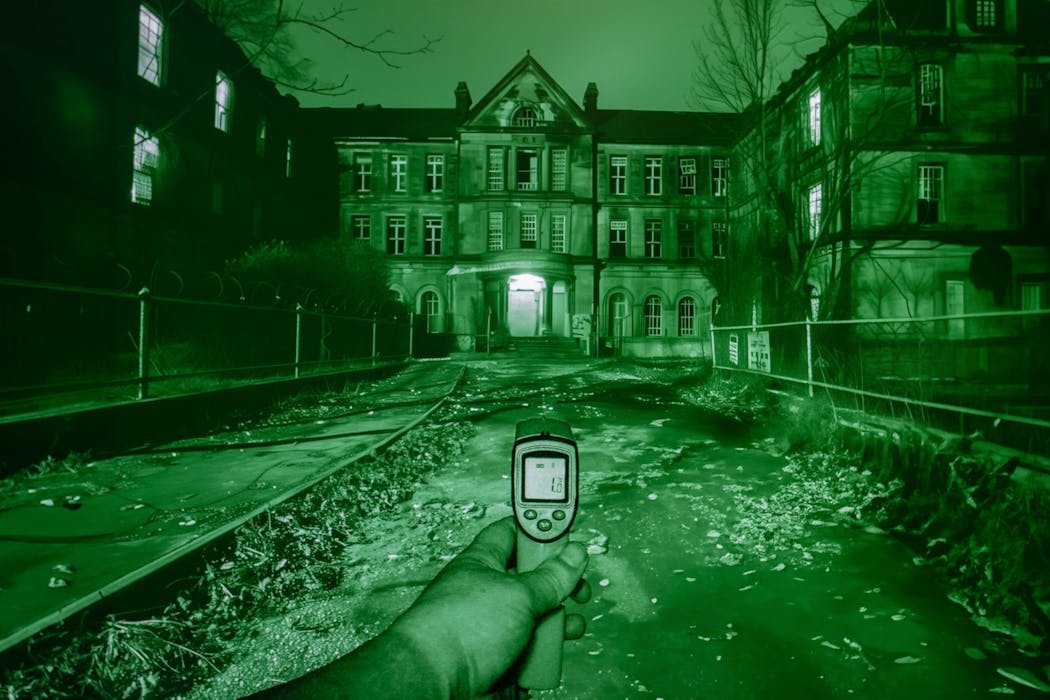
Ghost-hunting remains an immensely popular cultural interest. Platforms such as YouTube and TikTok are now awash with amateur investigators trudging through abandoned buildings and well-known haunted houses in order to capture evidence.

I’ve spent the last few years researching the social history of ghost-hunting for my new book, Ghosted: A History of Ghost-Hunting, and Why We Keep Looking, to examine ghosts from the perspective of the living. Why do we continue to cling to the hope of finding definite proof of a spectral afterlife?

Sam & Colby are popular ghost hunters on YouTube.

The active investigation of ghosts became an international phenomenon in 1848, when young sisters Kate and Mary Fox popularised a knocking code to communicate with the ghost that allegedly haunted their farmhouse in Hydesville, New York.

Five years later, it was estimated that they had amassed $500,000 (equivalent to almost £15,000,000 today). Spiritualism spread across the world, particularly to the UK, France and Australia. It was helped along by grief in the aftermath of the American civil war and, in the beginning of the 20th century, the mass bereavement of the first world war.

People turned to Spiritualism and ghost-hunting for fame and fortune, but also for genuine hope and an overwhelming need for evidence that death was not the end.

Rise of the sceptic

In direct parallel with Spiritualism, however, rose sceptics keen to seek out the truth of ghosts. The most vehement critics of Spiritualism were magicians, who felt that mediums were trying to copy their trade but from a morally reprehensible approach. At least a magician’s audience knew they were deliberately being deceived.

The famous illusionist Harry Houdini, for instance, often bitterly argued with his close friend and ardent Spiritualist, Sir Arthur Conan Doyle, about the fraudulent practice of mediums.

With the rise of modern scientific laboratories and the development of portable sound and image recording devices in the 20th century, ghost hunting became an increasingly popular and sensationalised hobby. Harry Price, psychical researcher, author and professional hobbyist, used ghost-hunting to create a cult of personality for himself, sniffing out any interesting haunting that could potentially lead to publicity.

But it was also Harry Price who brought ghost-hunting to the media as a form of entertainment. In 1936 he did a live BBC radio broadcast from a haunted house.

Price’s broadcast is the forgotten precursor for ghost-hunting as we know it today. Reality TV shows mimic the format of his 1936 broadcast, with examples such as Most Haunted gaining a loyal following since it began airing on Living TV in 2002. While no longer produced for television, the Most Haunted crew continue to film and post new episodes on their YouTube channel.

Most Haunted first appeared on TV in 2002 but now is available on YouTube.

It’s also a clear influence for international copies such as Ukraine’s Bytva ekstrasensov and New Zealand’s Ghost Hunt. Social media, too, has changed the way we ghost hunt. It has allowed for amateur groups and investigators to gain an immense audience across various platforms.

But ghost-hunting is also rife with competition as groups and investigators seek to outdo each other for the best evidence. For many, this means coming armed with Ghostbusters-style tools. These can include flashing gadgets and sensors, including electromagnetic field detectors, high-tech sound recorders and even motion-activated LED cat toys.

It’s all in a bid to gain the most “scientific” evidence and, therefore, popularity and respect among their peers. It seems that the more scientific we claim to be in the search for ghosts, the more we allow pseudo-scientific theories to encroach on the hunt.

It’s not about proof, it’s about people

Yet we never give up. This is what fascinated me when I undertook my research. I wanted to know why, after centuries, we’re no closer to achieving conclusive evidence for the paranormal, but ghost-hunting is more popular than ever before.

I even went on a couple of ghost hunts myself to try to figure out this conundrum. The answer, I think, is that ghost-hunting isn’t for scientific discovery at all. It’s for social connection, revealing more about the living than the dead.

I had one of the most fun experiences of my life while on a ghost hunt. Despite being a sceptic, I was drawn into the search, but also to the way it allowed me to connect with new people and with the history of the haunted building itself.

What I’ve learned through my research and experiences is that ghost-hunting is about us, the living, more than the ghosts we try to find. Ghost-hunting, done ethically, is a crucial social activity. It allows us to process grief, to analyse our fears of death and to explore what it means to be alive.

The Conversation

Alice Vernon does not work for, consult, own shares in or receive funding from any company or organisation that would benefit from this article, and has disclosed no relevant affiliations beyond their academic appointment.

ref. Why we keep hunting ghosts – and what it says about us – https://theconversation.com/why-we-keep-hunting-ghosts-and-what-it-says-about-us-267173


Budget 2025: what should Rachel Reeves do about tax? Join our live event

Source: The Conversation – UK – By Sarah Reid, Senior Business Editor, The Conversation

Sean Aidan Calderbank/Shutterstock

It is the economics version of music’s “difficult second album”. When the UK chancellor, Rachel Reeves, steps up to deliver her follow-up budget on November 26, she faces some daunting choices.

Now that the Office for Budget Responsibility – the UK’s’s independent financial watchdog – is expected to downgrade its predictions for UK prosperity, Reeves is widely anticipated to put up taxes again (something she herself alluded to recently). But beyond that, few people agree on the best way for her to do it.

The British Chambers of Commerce is calling this a “make-or-break budget”, demanding a tax approach that incentivises growth after Reeves hit employers with a national insurance (NI) rise last year. Equally, no one expects the chancellor to break Labour’s manifesto pledge and raise one of the “big three”: income tax, VAT or employee NI contributions.

So where does that leave her? And what would be best for Britain’s (and Labour’s) prospects of revival – not just in the short term, but for the long-term prosperity of those people, young and old, who find themselves struggling with the cost of living, spiralling rents and precarious employment?

To help us understand the complexities of this key political and socioeconomic moment, The Conversation and the LSE International Inequalities Institute have teamed up for a special pre-budget, online event on Tuesday, November 18 from 5pm-6.30pm GMT – in which leading experts from the worlds of business, taxation and government policy will tackle all these questions and more.

The experts who will join us for this event, which I will be chairing, are:

Headshot of Helen Miller, IFS director

Helen Miller (pictured), director of the Institute for Fiscal Studies (IFS), the leading UK thinktank whose pre-budget analyses always offer some important clues to the chancellor’s thinking.

Mike Savage, co-founder and former director of the International Inequalities Institute, and one of the UK’s leading voices on the relationship between wealth and inequality.

Emma Chamberlain, one of the UK’s leading tax experts working in London’s Pump Court Tax Chambers. She was a co-author of the Wealth Tax Commission’s 2020 final report on the pros and cons of an annual or one-off UK wealth tax.

Maha Rafi Atal, Adam Smith senior lecturer in political economy at the University of Glasgow and an award-winning business journalist.

Questions about wealth and inequality

One of the key aspects of our discussion will be how the chancellor could address the UK’s national and private wealth stores – not merely by changing tax rates, but by rethinking some antiquated taxes altogether. This could mean, for example, transforming Britain’s council tax system (as 13 of Reeves’ fellow MPs have called for), scrapping stamp duty in favour of a tax on some first-home sales, or releasing the triple lock on pensions.

Another option backed by many experts is a one-off windfall tax on existing wealth. In the UK, nearly 60% of total wealth is now held by the richest 10% of private individuals, whereas the bottom half of the UK population hold only around 5% of the total wealth between them. It is a startling rise in inequality which, according to our guest Mike Savage, means that:

The current debate about wealth taxation should not be framed purely in technical terms – whether it is an efficient way of raising funds for the public purse without damaging UK economic prosperity – but needs to be seen as a question of values and common purpose.

If you’d like to join us for our online expert discussion, please sign up for free here. And if you have a question you’d like our experts to answer, email it now to mybudgetquestion@theconversation.com.


Budget 2025 event advert with the chancellor's famous red briefcase.

The Conversation and LSE’s International Inequalities Institute have teamed up for a special pre-budget, online event on Tuesday, November 18 from 5pm-6.30pm. Join leading experts from the worlds of business, taxation and government policy as they discuss the difficult policy choices facing Chancellor Rachel Reeves in her upcoming budget.

Sign up for free here


The Conversation

ref. Budget 2025: what should Rachel Reeves do about tax? Join our live event – https://theconversation.com/budget-2025-what-should-rachel-reeves-do-about-tax-join-our-live-event-267878

Stroke can happen to anyone – an expert explains how to spot the signs and act fast

Source: The Conversation – UK – By Siobhan Mclernon, Senior Lecturer, Adult Nursing and co-lead, Ageing, Acute and Long Term Conditions. Member of Health and Well Being Research Center, London South Bank University

Pormezz/Shutterstock

Stroke can happen to anyone, at any age and at any time. The number of strokes among younger adults under 55 is rising worldwide, and every day in the UK around 240 people experience the traumatic and life-changing effects of a stroke.

A stroke is sometimes described by doctors and stroke awareness campaigns as a “brain attack” to help people understand that a stroke is as urgent and life-threatening as a heart attack. Both happen when blood flow is suddenly cut off, depriving vital tissue of oxygen and nutrients.

There are two main types of stroke. In an ischaemic stroke, blood flow to the brain is blocked, usually by a clot in a blood vessel. Without oxygen, brain cells begin to die, which can cause loss of movement, speech, memory or even death. In a haemorrhagic stroke, a blood vessel inside the brain bursts. This is often due to high blood pressure, which weakens blood vessel walls and makes them more likely to rupture.

Treating a stroke is a race against time because, as doctors say, “time is brain”: the longer the brain is starved of blood and oxygen, the more brain cells die. Treatments that can dissolve or remove a clot in an ischaemic stroke or lower dangerously high blood pressure in a haemorrhagic stroke must be given quickly to limit brain damage.

Anyone with a suspected stroke should be taken by emergency services directly to a specialist stroke unit. Patients admitted to these dedicated units tend to have better outcomes because they receive expert care from doctors trained specifically to manage stroke.

How to recognise the signs of stroke

A lack of early recognition of stroke symptoms is linked to higher mortality rates. The acronym “Fast” (Face, Arm, Speech, Time) has been a cornerstone of public stroke awareness for more than 20 years. It was developed as a quick screening tool for use before hospital admission, helping people recognise the signs of a stroke and seek urgent medical help.

Fast highlights the most common warning signs of stroke, but some strokes present differently. To make sure fewer cases are missed, additional symptoms such as dizziness, visual changes and loss of balance have been added, creating the Be Fast acronym.

B = Balance problems. A sudden loss of balance or coordination, dizziness, or a sensation that the room is spinning.

E = Eyes. Sudden blurred vision, loss of vision in one or both eyes, double vision, or difficulty focusing.

F = Face. Facial weakness or unevenness, often with a droop on one side of the mouth or eye.

A = Arm or leg weakness or numbness, often affecting one side of the body.

S = Speech difficulty, slurred speech, trouble finding words, or an inability to speak clearly.

T = Time to call an ambulance. Make a note of when symptoms began, as this helps doctors decide which treatment is most effective.

Other warning signs

Stroke symptoms often develop suddenly and can vary from person to person. Some people, particularly women, may experience stroke symptoms that are not included in the Be Fast acronym. Women are less likely to be recognised as having a stroke because their symptoms can differ from men’s. These may include sudden fatigue, confusion, nausea, fainting, or general weakness rather than clear paralysis or slurred speech.


Read more:
Paramedics are less likely to identify a stroke in women than men. Closing this gap could save lives – and money


Other possible signs for any person include a severe headache with no clear cause, vomiting, difficulty swallowing, agitation, or sudden memory loss. In some cases, a person may collapse, lose consciousness, or have a seizure.

Sometimes stroke symptoms last only a few minutes or hours before disappearing completely within 24 hours. This may indicate a Transient Ischaemic Attack (TIA), sometimes called a “mini stroke.” A TIA happens when the blood supply to the brain is briefly interrupted, causing temporary symptoms. The difference between a TIA and a full stroke is that the blockage clears on its own before permanent brain damage occurs. However, a TIA is still a medical emergency and a serious warning sign that a major stroke could soon follow.

Advances in technology

Telemedicine has become an important tool in making rapid diagnosis and early treatment possible. By using secure video links, paramedics can consult with hospital stroke specialists in real time, even while still at the scene or en route to hospital. This allows early diagnosis, faster decision making and immediate preparation for treatment once the patient arrives.

For example, some ambulances now operate as mobile stroke units equipped with brain imaging scanners and clot-busting medicines. In London, video calls between senior doctors and paramedics at emergency scenes have helped speed up care and direct patients to the most appropriate treatment centre.

While telemedicine connects specialists to paramedics on the move, other tools are bringing medical help directly to patients within moments of a 999 call. The GoodSAM app was first developed to improve survival after cardiac arrest by alerting nearby trained responders to begin CPR before an ambulance arrives. The platform has since expanded to support other life-threatening emergencies, including stroke.

When someone calls for help, the system identifies clinically trained staff or volunteers in the area and dispatches them to the scene while paramedics are on their way. These responders can provide rapid assessment, basic first aid and reassurance to the patient and family, and can help ensure that key information such as the time symptoms began is ready for the arriving medical team. By combining digital technology, trained volunteers and rapid communication, the app is helping bridge the critical gap between the onset of symptoms and hospital treatment: the period where, quite literally, every minute matters.

A stroke can strike suddenly and without warning, but quick recognition and immediate medical attention can mean the difference between life and death. Learning the Be Fast signs and acting immediately could save a life, protect the brain and preserve a person’s ability to speak, move and think.

The Conversation

Siobhan Mclernon does not work for, consult, own shares in or receive funding from any company or organisation that would benefit from this article, and has disclosed no relevant affiliations beyond their academic appointment.

ref. Stroke can happen to anyone – an expert explains how to spot the signs and act fast – https://theconversation.com/stroke-can-happen-to-anyone-an-expert-explains-how-to-spot-the-signs-and-act-fast-266039

From the cold war to today, why espionage cases are so difficult to prosecute

Source: The Conversation – UK – By Philip Murphy, Director of History & Policy at the Institute of Historical Research and Professor of British and Commonwealth History, School of Advanced Study, University of London

The collapse of the prosecutions of Christopher Cash and Christopher Berry is a reminder that bringing charges for espionage can be an extremely risky business, particularly in western democracies. Cash and Berry were accused of spying for China, but the CPS dropped the case before it could go to trial. They deny the charges against them.


Read more:
How Britain’s weakened global position may have pulled it into a Chinese spying scandal


Espionage cases have caused headaches for UK governments for decades. Harold Macmillan, who as prime minister from 1957 to 1963 suffered more than his fair share of embarrassment from them, complained to his biographer: “You can’t just shoot a spy as you did in the war.”

Instead, there would be a “great public trial”, during which “the Security Services will not be praised for how efficient they are but blamed for how hopeless they are. There will be an enquiry … a terrible row in the press, there will be a debate in the House of Commons and the Government will probably fall.”

Macmillan was describing the case of John Vassall, whose 1962 conviction for spying caused a major political scandal. But his words resonate powerfully today.

Espionage trials risk revealing the sometimes highly confidential methods by which evidence had been gathered against the accused. And in some cases, the evidence itself is too circumstantial to prove guilt beyond reasonable doubt.

One of the major postwar sources of secret information about Moscow’s agents were the Venona documents. These were Soviet messages partially decrypted by US intelligence officers. But the Venona project remained a closely guarded secret until the 1980s, and only officially made public in 1995. As such, it proved necessary to obtain other forms of evidence to convict some of those incriminated by this source.

In the case of Julius and Ethel Rosenberg, accused of passing nuclear secrets to the USSR, this took the form of a confession by Ethel’s brother, David Greenglass. Nevertheless, the couple’s execution in the US in 1953 drew condemnation from across the world, and Ethel’s conviction remains controversial.

It was only possible for British courts to convict another nuclear spy identified by Venona, Klaus Fuchs, because patient interrogation by MI5 officer William Skardon eventually led him to confess.

Immunity or prosecution

The current MI5 chief, Ken McCallum, has publicly distanced himself from the collapse of the cases against Cash and Berry, and the Security Service clearly hopes that the 2023 National Security Act will make future prosecutions much easier. But historically, the Security Service has sometimes been more than happy for suspects to avoid a trial in return for cooperation.

In 1961, MI6 officer George Blake was convicted of espionage for the USSR under section one of the 1911 Official Secrets Act. However, concerns over the weakness of the evidence against him led to questions about whether the case could or should be brought to court.

The authorised history of MI5, (2009) revealed that intelligence chiefs were prepared to contemplate offering Blake immunity from prosecution, in return for a confession. Luckily for them, he confessed before any such offer was made. He was sentenced to 42 years in prison, but managed to escape in 1966 with the help of two peace campaigners. He lived the rest of his life in Moscow.

Two decades later, similar concerns surrounded the case of Michael Bettaney, a disillusioned MI5 officer suspected of passing secrets to the USSR. As they interrogated Bettaney, his colleagues were anxiously aware that they did not have enough evidence against him that could be used in court. Potentially, he could simply walk away and even leave the country. Again, luckily, Bettaney broke under questioning, confessed and was sent to prison.

Political headaches

Aside from questions of evidence, the British establishment traditionally shied away from anything – criminal trials included – that cast light on the secret world of intelligence gathering.

Writing in 1985, military historian Michael Howard likened the prevailing attitude to that towards intramarital sex: “Everyone knows it goes on and is quite content that it should, but to speak, write or ask questions about it is regarded as extremely bad form.”

When the subjects of sex and espionage merged, as they did explosively in 1963 with allegations that the war minister John Profumo had shared a mistress with a Russian spy, they created a political shock which left Macmillan’s administration mortally damaged.

The following year, it became clear to the intelligence community that Anthony Blunt, the surveyor of the queen’s pictures in the royal household, was the “fourth man” in the Cambridge Five spy ring. The Tory government of Alec Douglas-Home gladly accepted the advice of the heads of MI5 and MI6 that Blunt should be offered immunity from prosecution in return for his full confession, and his treachery concealed from the British public.

The arrangement spared Douglas-Home a scandal on the scale of Profumo. But after the public unmasking of Blunt in 1979, the embarrassing task of defending the offer of immunity was left to Margaret Thatcher.

Frequently in the past, the urge to punish spies has been subordinated to broader considerations of the national interest. Much comment in the case of Cash and Berry has focused on the supposed difficulties in defining China as an “enemy”. However, the easy cold war distinction between enemies and allies has been breaking down.

The British government now regularly finds itself having to maintain effective diplomatic and trading relationships with countries that are disagreeable or positively malign. There is much about the current case we do not know and may never know. But if it turned out that influential figures in the British government were reluctant to endanger relations with China in the interests of prosecuting two fairly low-grade alleged Chinese agents, I doubt whether anyone would be very surprised.


Want more politics coverage from academic experts? Every week, we bring you informed analysis of developments in government and fact check the claims being made.

Sign up for our weekly politics newsletter, delivered every Friday.


The Conversation

Philip Murphy has received funding from the AHRC. He is a member of the European Movement UK.

ref. From the cold war to today, why espionage cases are so difficult to prosecute – https://theconversation.com/from-the-cold-war-to-today-why-espionage-cases-are-so-difficult-to-prosecute-267674

Trump’s heated White House meeting with Zelensky shows how well Putin is playing the US president

Source: The Conversation – UK – By Stefan Wolff, Professor of International Security, University of Birmingham

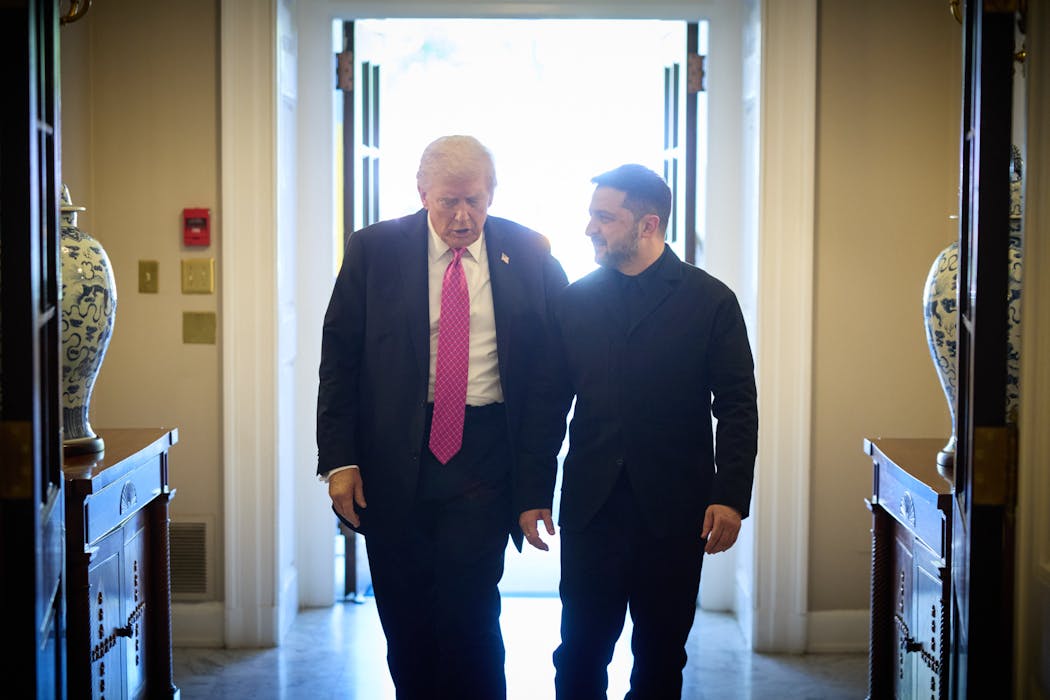
On-again, off-again relatonship: Donald Trump and Volodymyr Zelensky. Press service of the president of Ukraine

Within 24 hours last week Donald Trump performed yet another pivot in his approach to the Russian war against Ukraine. It’s become a familiar pattern of behaviour with the US president. First he expresses anger and frustration with his Russian counterpart, Vladimir Putin. Then he threatens severe consequences.

And finally – usually after some contact with the Russian president – he finds some imaginary silver lining that, in his considered view alone, justifies backing down and essentially dancing to the Russian dictator’s tune again.

The latest iteration of his by now very predictable sequence of events has unfolded as follows. Back in September, while he was still busy pushing his ultimately unsuccessful campaign to be awarded the Nobel peace prize, the US president began to envisage a Ukrainian victory against Russia. This, he said, would involve Kyiv reclaiming all territory lost to Russia’s aggression since the illegal annexation of Crimea in 2014.

To make this happen, there was suddenly talk of US deliveries of Tomahawk missiles to Ukraine. Access to these missiles would enable strikes against Russian military assets and energy infrastructure far beyond the current reach of most of Ukraine’s weapons. Trump and the Ukrainian president, Volodymyr Zelensky, spoke twice by telephone on October 11 and 12 to discuss the details. A deal was expected to be announced after they met in the White House on October 17.

Yet, the day before that meeting, Trump, apparently at the Kremlin’s request, took a phone call from Putin. Over the course of two hours of flattery and promises of reinvigorated trade relations, the Russian president managed to get Trump to back off his threat to supply Ukraine with Tomahawks.

This message was promptly delivered the following day to the Ukrainian delegation led by Zelensky. While clearly not as disastrous as their first encounter in the White House in February this year, Ukraine’s humiliation was clear.

Not only were Tomahawks taken off the table, but Kyiv and its European allies are essentially back to square one and the very real possibility of a deal between Putin and Trump. Or rather two deals to be hammered out by senior officials first and then sealed at another Trump-Putin summit in Budapest.

The first deal would likely be on the broader terms of a peace settlement. After the meeting, Trump posted on his social media channel that Russia and Ukraine should simply accept the current status quo and stop the fighting. With Trump thus appearing keen – again – to stop the fighting in Ukraine on the basis of a compromise between Russia and Ukraine means that Ukraine would lose as much as 20% of its internationally recognised territory. This is something that Kyiv and its European allies have repeatedly said is unacceptable.

The second deal would be on resetting relations between Washington and Moscow. This is something that Trump has been keen on for some time and suggests that more severe sanctions on Russia and its enablers, including India and China, are unlikely to be forthcoming any time soon.

Before Zelensky’s trip to Washington, there appeared to be some genuine hope that a ceasefire could be established as early as November. But Trump’s arrangements with Putin do not mention a ceasefire. Instead they make an end to the fighting conditional on a deal between the US and Russian presidents, which Zelensky is then simply expected to accept.

This will put further pressure on Ukraine, which suffers from daily attacks against critical infrastructure and is particularly harmful to the country’s economy and civilian population and foreshadows another difficult winter.

Russia continues its push for territory

So far, so bad for Ukraine. But this was not an accidental outcome that could have gone the other way, depending on the whims of Trump. Ever since the US president appeared to shift gear in his approach to the war in late September, the Kremlin carefully prepared the ground for a rapprochement between the two presidents – with a mixture of concern, threats and a good dose of flattery.

The goal of this rapprochement, however, is not a better peace deal for Russia. Putin surely knows this is unrealistic. Rather, it appears that the Kremlin’s main goal was buying itself more time to continue ground offensive in the Donbas.

ISW map showing state of the confict in Ukraine, October 19 2025.
State of the confict in Ukraine, October 19 2025.
Institute for the Study of War

This is best achieved by preventing the US from fully backing the position of Ukraine and its European allies. In this context, the choice of venue for a potentially deal-clinching summit between Trump and Putin is also interesting.

It will not be possible for Putin to travel to Budapest without flying through Nato airspace and through the airspace of countries that are at least candidate states for EU membership. This will put serious pressure on the EU and Nato to allow Putin passage or otherwise be seen as obstructing Trump’s peacemaking efforts – a narrative that the Kremlin has been peddling for some time, part of its strategy to disrupt the transatlantic relationship.

On the other hand, Trump’s latest turnaround – difficult as it may be for Kyiv to stomach – does not bring Ukraine closer to defeat. In Ukraine, mobilisation is in full swing and domestic arms production is increasing. Ukraine is further helped by the commitment of more than half of Nato’s member states to supply Kyiv with more US weapons.

There are three key takeaways from the diplomatic flurry over the past few weeks.

First, for all of Putin’s bluster, the threat of supplying Ukraine with Tomahawk missiles clearly had an effect. Putin made a move to reach out to Trump, thereby exposing an obvious vulnerability on Russia’s part. Second, and this barely needed confirmation, Trump is not a dependable ally of Ukraine or within the transatlantic alliance. He clearly has not given up on the possibility of a US-Russia deal, including one concluded behind the back and at the expense of Ukraine and European allies.

Finally, Zelensky may be down again after his latest fruitless encounter with Trump, but Ukraine is definitely not out. After all, Trump was right that Russia is a bit of a paper tiger and Ukraine can still win this war, or at least negotiate an acceptable settlement. Until Europe steps up, the key to this remains in the White House.

The Conversation

Stefan Wolff is a past recipient of grant funding from the Natural Environment Research Council of the UK, the United States Institute of Peace, the Economic and Social Research Council of the UK, the British Academy, the NATO Science for Peace Programme, the EU Framework Programmes 6 and 7 and Horizon 2020, as well as the EU’s Jean Monnet Programme. He is a Trustee and Honorary Treasurer of the Political Studies Association of the UK and a Senior Research Fellow at the Foreign Policy Centre in London.

Tetyana Malyarenko does not work for, consult, own shares in or receive funding from any company or organisation that would benefit from this article, and has disclosed no relevant affiliations beyond their academic appointment.

ref. Trump’s heated White House meeting with Zelensky shows how well Putin is playing the US president – https://theconversation.com/trumps-heated-white-house-meeting-with-zelensky-shows-how-well-putin-is-playing-the-us-president-267760

La Mona Lisa, un inodoro de oro y ahora las joyas reales del Louvre: la fascinante historia de robos de obras de arte

Source: The Conversation – (in Spanish) – By Penelope Jackson, Adjunct Research Associate, School of Social Work and Arts, Charles Sturt University

El Louvre, el museo de arte más grande del mundo, cuenta con aproximadamente medio millón de objetos en su colección, de los cuales unos 30 000 están expuestos, y recibe una media de 8 millones de visitantes al año. Se trata de una cifra considerable a cualquier escala, con mucha gente y muchos objetos que vigilar. Y los domingos son especialmente ajetreados.

En una operación ingeniosamente concebida, cuatro hombres vestidos con chalecos fluorescentes llegaron al Louvre en un camión de plataforma plana a las nueve y media de la mañana del domingo. Rápidamente se pusieron manos a la obra y colocaron una escalera extensible hasta el segundo piso. Tras subirla, cortaron una ventana, entraron en la Galería Apolo y, blandiendo herramientas eléctricas, se llevaron nueve objetos exquisitos.

Los objetos sustraídos eran las joyas reales de Francia, que anteriormente pertenecieron a la emperatriz Eugenia, esposa de Napoleón III y mecenas de las artes.

Aquí es donde la cosa se complica para los ladrones: ¿qué se puede hacer con estos objetos de valor incalculable? No pueden llevarlos puestos, ya que son demasiado grandes y llamativos como para pasar desapercibidos, y no pueden venderlos de forma legal, ya que hay imágenes de ellos por toda la red.

Las joyas.
Joyas de la emperatriz Eugenia fotografiadas en 2020. La diadema, a la izquierda, y el broche de diamantes en forma de lazo, a la derecha, han sido robados. La corona, en el centro, también fue sustraída, pero ha sido recuperada.
Stephanie de Sakutin/AFP via Getty Images

Lo mejor, desde el punto de vista de los ladrones, es desmontar las piezas, fundir los metales preciosos y vender las gemas por separado.

La corona de la emperatriz Eugenia, que los autores se llevaron y posteriormente dejaron caer mientras huían del lugar en motocicletas, contiene ocho águilas de oro, 1 354 diamantes de talla brillante, 1 136 diamantes de talla rosa y 56 esmeraldas. En resumen, se trata de una considerable cantidad de gemas individuales que hay que intentar vender.

El momento lo es todo

Para el Louvre, cualquier robo es un duro golpe. Pone en tela de juicio su seguridad, tanto electrónica como humana. Había cinco miembros del personal de seguridad cerca que actuaron para proteger a los visitantes y las alarmas sonaron, pero todo el robo se completó en siete minutos.

El momento oportuno es crucial en los robos.

Un inodoro de oro.
America, un inodoro totalmente funcional hecho de oro macizo de 18 quilates, expuesto en el Guggenheim en 2017.
MossAlbatross/Wikimedia Commons, CC BY-SA

En 2019, un inodoro de oro de 18 quilates titulado America (2016), del artista Maurizio Cattelan, fue robado del palacio de Blenheim, en Inglaterra. Se lo llevaron en cinco minutos y medio. Pesaba 98 kilogramos y funcionaba perfectamente.

En otras palabras, los dos hombres que lo robaron (y que más tarde fueron detenidos y condenados a penas de prisión por sus delitos) trabajaron con rapidez y eficacia. En el momento del robo, se estimaba que el valor de los lingotes de oro ascendía a unos 4,5 millones de euros.

El cuadro de Van Gogh Jardín rectoral en Nuenen en primavera (1884) fue robado del Museo Singer Laren, en los Países Bajos, durante su cierre por la covid en 2020. Fue recuperado a finales de 2023 tras una investigación del detective de arte holandés Arthur Brand.

El robo en 2017 de dos pinturas de Gottfried Lindauer del Centro Internacional de Arte de Auckland (Nueva Zelanda) solo tardó unos minutos en culminar con éxito. Los ladrones irrumpieron en la ventana delantera de la casa de subastas donde se exhibían las pinturas, valoradas en medio millón de euros.

Los retratos fueron recuperados cinco años después a través de un intermediario, con daños menores.

Recuperación de los objetos robados

El cuadro de Picasso La mujer que llora (1937), propiedad de la Galería Nacional de Victoria, en Australia, fue robado de forma notoria por los llamados Terroristas Culturales Australianos en 1986, pero su desaparición no se notó hasta pasados dos días.

Recuperado poco más de dos semanas después, el cuadro fue dejado para que el personal de la galería lo recogiera en una taquilla de la estación de tren de Spencer Street. El motivo del robo era poner de relieve la falta de apoyo financiero a los artistas del Estado de Victoria, pero la verdadera identidad de los ladrones sigue siendo un misterio.

En 1986, 26 pinturas de temática religiosa fueron sustraídas de la galería del monasterio benedictino de New Norcia, en Australia Occidental.

Los ladrones no planificaron bien el robo: no tuvieron en cuenta que tres hombres y el alijo de cuadros no cabían en un Ford Falcon. Los cuadros fueron cortados de sus marcos, aparentemente destrozados. Uno quedó completamente destruido. Los ladrones fueron capturados y acusados.

¿Cuál será el próximo destino del ladrón?

Resulta imposible cuantificarlo, pero algunos dicen que las recuperaciones de obras de arte a nivel mundial son posiblemente tan bajas como el 10 %.

Las pinturas son más difíciles de vender, ya que no se puede cambiar su aspecto físico hasta el punto de que no se reconozcan.

Sin embargo, en el caso de objetos como el inodoro de oro o las joyas, los materiales preciosos y las gemas pueden reutilizarse. El tiempo dirá si se recuperarán las joyas napoleónicas.

Nunca digas nunca jamás. La Gioconda (1503), sin duda la principal atracción del Louvre, fue robada en 1911 y recuperada dos años más tarde. El ladrón, Vincenzo Peruggia, era un operario italiano que trabajaba en el Louvre y fue detenido cuando intentaba venderla.

Hombres junto a la Mona Lisa.
Ceremonia de regreso a Francia de la Mona Lisa, Roma, 1913.
Mondadori via Getty Images

Este último robo en el Louvre pone de relieve la vulnerabilidad de los objetos de las colecciones públicas. Lo irónico es que a menudo se donan a estas instituciones para su custodia.

Los ladrones del domingo sabían lo que buscaban y por qué. No conocemos sus motivos. Sabemos que las joyas robadas forman parte de la historia de Francia y son irreemplazables. Su robo priva a los visitantes de la posibilidad de apreciarlas individualmente por su belleza y manufactura.

Pero una parte de mí no puede evitar pensar en cómo los franceses eran parciales a la hora de apropiarse de obras de arte y objetos preciosos que pertenecían a otros. Así que tal vez este podría ser un caso de déjà vu.

The Conversation

Penelope Jackson no recibe salario, ni ejerce labores de consultoría, ni posee acciones, ni recibe financiación de ninguna compañía u organización que pueda obtener beneficio de este artículo, y ha declarado carecer de vínculos relevantes más allá del cargo académico citado.

ref. La Mona Lisa, un inodoro de oro y ahora las joyas reales del Louvre: la fascinante historia de robos de obras de arte – https://theconversation.com/la-mona-lisa-un-inodoro-de-oro-y-ahora-las-joyas-reales-del-louvre-la-fascinante-historia-de-robos-de-obras-de-arte-267919

Pennsylvania’s budget crisis drags on as fed shutdown adds to residents’ hardships

Source: The Conversation – USA – By Daniel J. Mallinson, Associate Professor of Public Policy and Administration, Penn State

Pennsylvania Gov. Josh Shapiro’s first budget, in 2023, was not fully passed until mid-December. AP Photo/Daniel Shanken

While Americans across the country deal with the consequences of the federal government shutdown, residents of Pennsylvania are being hit with a double blow.

Pennsylvania has been without a state budget for over 100 days – and remains the only state currently operating without a budget.

As a political scientist at Penn State who studies state politics and policy, I see how Pennsylvania’s budget impasse has ripple effects that are compounded by the current budget problems in Washington.

Let’s look at the present budget problems in Pennsylvania and what we can learn from past battles over the state budget.

A double crisis

Double government budget crises, like the one Pennsylvania faces now, are rare. One reason is that 46 states, including Pennsylvania, begin their new fiscal year on July 1. The federal government’s fiscal year begins on Oct. 1. Even a state like Pennsylvania, that has had late budgets for eight of the last 10 years, would have to be very late in passing a budget for it to potentially coincide with a federal budget impasse. And, of course, federal government shutdowns do not happen all the time.

Men in suits shown in shadow underneath elaborate ceiling with arches
A group of Republican senators talk at the U.S. Capitol Building on Oct. 15, 2025, during a government shutdown that began Oct. 1.
Andrew Harnik via Getty Images

Pennsylvania’s Democratic Gov. Josh Shapiro faces a delicate political environment in Harrisburg – as he has since his first budget in 2023. The Democrats control the state House by a single seat, whereas the Republicans have a comfortable majority in the Senate.

The parties have been debating over the last several budget cycles how to handle funding surpluses – much of which came from Biden-era legislation like the Infrastructure Investment and Jobs Act – and when and how to deal with the inevitable end to those surpluses.

This year, the two sides are far apart on their views of the proper spending level.

The Democrats in the House passed a US$50.3 billion spending plan, but Senate Republicans want to keep state spending flat at $47.6 billion. The two sides have clashed over proposals surrounding school vouchers, marijuana legalization and more.

As for the federal government, Republicans have a trifecta – control of the White House, Senate and House of Representatives – but do not have the 60 votes in the Senate required to overcome a filibuster. Democrats have dug in over reversing cuts to health care from the earlier passed “one big beautiful bill” and expiring Obamacare subsidies.

There is little sign of an immediate end to either impasse.

In Pennsylvania, there is growing frustration on both sides about an inability to compromise. Nationally, House Speaker Mike Johnson has speculated that this may end up being the longest federal government shutdown in history. In neither case, though, does there seem to be a great deal of urgency in coming to a compromise.

Effects on Pennsylvania

These dual crises are affecting Pennsylvanians in many ways. The state government continues to function even without a budget, but counties, school districts and nonprofit organizations that rely on state funding are being forced to make difficult operating choices.

Some counties like Westmoreland and Northampton are beginning the process of furloughing employees. School districts are taking out loans, freezing hiring and deferring spending. The state already owes school districts more than $3 billion in missed payments for the past three months.

Woman reaches for loaf of bread on shelf that contains food products
Cozy Wilkins, 66, stocks the shelves at New Bethany, a nonprofit that provides food access, housing and social services, in Bethlehem, Pa., on July, 22, 2024.
Ryan Collerd/AFP via Getty Images

The social safety net is also fraying as social service organizations, like rape crisis centers and mental health providers, are also expending reserves, taking out loans and furloughing employees.

Then comes the federal shutdown.

Military families nationwide have been hit particularly hard, with many turning to food pantries to help meet their needs. The recent money maneuvers at the Department of Defense to pay active-duty and activated National Guard and Reserves personnel is temporary. The commonwealth also has the eighth-highest population of federal civilian employees, at over 66,000 who are not being paid.

Services like food banks are especially vulnerable in this situation, as they are seeing greater demand – which may increase due to federal workers going unpaid – but rely on both the state and federal governments for subsidies. Just this week, it was announced that Pennsylvanians buying health care through the state’s Affordable Care Act marketplace for 2026 should expect a 22% increase in premiums, on average. Part of that increase is due to expectations around the expiring Obamacare subsidies at the center of the Democrats’ demands in this shutdown.

All of these forces are coming together to pinch Pennsylvania residents.

Echoes of the past

While the compounding pain of the federal shutdown is unique, long budget delays in Pennsylvania are not.

In 2023, Gov. Shapiro’s first budget was not fully passed until Dec. 14. That budget was fundamentally delayed by the acrimonious implosion of a deal on school voucher spending between the governor and Senate Republicans. The budget negotiations ended after some horse-trading on specific programs, like removing the popular Whole-Home Repairs Program started during the COVID-19 pandemic but adding funding for lead and asbestos abatement in schools.

The difference between then and now, however, is that back then the governor and General Assembly agreed on the overall budget, but typical bargaining was needed to get the votes needed to pass the spending bills after the voucher blow-up. This time, the parties are almost $3 billion apart in what should even be spent.

In the end, however, both Pennsylvania and the federal government will pass budgets, and I expect that each will be the result of protracted negotiations over multiple spending items, as Americans have seen in the past. The question is: How much pain will citizens, nonprofits and local governments face in the interim?

Read more of our stories about Philadelphia and Pennsylvania, or sign up for our Philadelphia newsletter on Substack.

The Conversation

Daniel J. Mallinson does not work for, consult, own shares in or receive funding from any company or organization that would benefit from this article, and has disclosed no relevant affiliations beyond their academic appointment.

ref. Pennsylvania’s budget crisis drags on as fed shutdown adds to residents’ hardships – https://theconversation.com/pennsylvanias-budget-crisis-drags-on-as-fed-shutdown-adds-to-residents-hardships-267382

The great wildebeest migration, seen from space: satellites and AI are helping count Africa’s wildlife

Source: The Conversation – Africa (2) – By Isla C. Duporge, British–French zoologist and Postdoctoral Research Fellow, Princeton University

The Great Wildebeest Migration is one of the most remarkable natural spectacles on Earth. Each year, immense herds of wildebeest, joined by zebras and gazelles, travel 800-1,000km between Tanzania and Kenya in search of fresh grazing after the rains.

This vast, circular journey is the engine of the Serengeti-Mara ecosystem. The migration feeds predators such as lions and crocodiles, fertilises the land and sustains the grasslands. Countless other species, and human livelihoods tied to rangelands and tourism, depend on it.

Because this migration underpins the entire ecosystem, it’s vital to know how many animals are involved. A change in numbers would not only affect wildebeest, but would ripple outward to predators, vegetation and the millions of people who rely on this landscape.

For decades, aerial surveys have been the main tool for estimating the size of east Africa’s wildebeest population. Aircraft fly in straight lines (transects) a few kilometres apart and use these strips to estimate the total population. This dedicated and arduous work, using a long-established method, has given us an estimate of about 1.3 million wildebeest.

In recent years, conservation scientists have begun testing whether satellites and artificial intelligence (identifying patterns in large datasets) can offer a new way to monitor wildlife. Earlier work showed that other species – Weddell seals, beluga whales and elephants – could be identified in satellite imagery using artificial intelligence.

In 2023, we showed that migratory wildebeest could be detected from satellite images using deep learning. That study proved it’s possible to monitor large gatherings of mammals from space. The next step has been to move from simply detecting animals to estimating their populations – using satellites not just to spot them, but to count them at scale.

Our recent study was carried out through collaboration between biologists, remote sensing specialists and machine-learning scientists. We analysed satellite imagery of the Serengeti-Mara ecosystem from 2022 and 2023, covering more than 4,000km².

Using deep learning models

The images were collected at very high spatial resolution (33-60cm per pixel), with each wildebeest represented by fewer than nine pixels. We analysed the imagery using two complementary deep learning models: a pixel-based U-Net and an object-based YOLO model. Both were trained to recognise wildebeest from above. Applying them together allowed us to cross-validate detections and reduce potential bias. The images were taken at the beginning and end of August, corresponding to different stages of the dry-season migration. Smaller herds were observed earlier in the month, as expected.

Across both years, the models detected fewer than 600,000 wildebeest within the dry-season range. While these numbers are lower than some previous aerial estimates, this should not necessarily be interpreted as evidence of a population decline, and we encourage more surveying effort to work out the relative error biases in each approach. While some animals are inevitably missed, under trees or outside the imaged area, it is unlikely that such factors could account for hundreds of thousands more. To confirm that the main herds were covered, we validated the survey extent using GPS tracking data from collared wildebeest and ground-based observations from organisations monitoring herd movements in the region.

These results provide the first satellite-based dry-season census of the Serengeti-Mara migration. Rather than replacing aerial surveys, they offer a complementary perspective on seasonal population dynamics. The next step is to coordinate aerial and satellite surveys in parallel. This way each method can help refine the other and build a more complete picture of this extraordinary migration.

Future directions

Satellite monitoring is not a panacea. Images are expensive, sometimes obscured by cloud cover. And they can never capture every individual on the ground (neither can aerial surveys). But the advantages are compelling. Satellites can capture a snapshot of vast landscapes at a single moment in time, removing much of the uncertainty that comes from extrapolating localised counts.

The approach is scalable to many other species and ecosystems. And as more high-resolution satellites (capable of imaging at less than 50cm) are launched, we can now revisit the same spot on Earth multiple times a day, bringing wildlife monitoring closer to real time than ever before.

Beyond population counts, satellites also open up a new scientific frontier: the study of collective movement at scale. The wildebeest migration is a classic case of emergent behaviour: there is no leader, yet order still arises. Each animal follows simple cues like where the grass is greener or where a neighbour is moving, and together thousands create a vast, coordinated journey.

With high-resolution satellite data, scientists can now explore the basic physics that shape how animals move together in large groups. But how do density waves of movement propagate across the landscape, what scaling rules might be governing patterns of spacing and alignment, and how do these collective patterns influence the functioning of ecosystems?

Our findings demonstrate how satellites and AI can be harnessed not only for wildlife population monitoring but also for applications that extend beyond population counts to uncovering the mechanisms of collective organisation in animal groups.

The Conversation

Isla C. Duporge received funding support from the National Academy of Sciences (NAS) while leading this research. The imagery used in the project was acquired via her fellowship with NAS.

Daniel Rubenstein, David Macdonald, and Tiejun Wang do not work for, consult, own shares in or receive funding from any company or organisation that would benefit from this article, and have disclosed no relevant affiliations beyond their academic appointment.

ref. The great wildebeest migration, seen from space: satellites and AI are helping count Africa’s wildlife – https://theconversation.com/the-great-wildebeest-migration-seen-from-space-satellites-and-ai-are-helping-count-africas-wildlife-266308

SAAQclic : voici comment les dirigeants de PME peuvent éviter de reproduire les mêmes erreurs

Source: The Conversation – in French – By Azouz Ali, Professeur en Entrepreneuriat, Université du Québec à Montréal (UQAM)

Ce devait être la vitrine de la modernisation de l’État. C’est devenu un avertissement pour tous ceux qui rêvent de transformation numérique express. En observant le naufrage du projet SAAQclic, les PME québécoises peuvent tirer trois leçons clés avant de se lancer dans leurs propres virages technologiques.

Lancée en 2023 par la Société de l’assurance automobile du Québec (SAAQ), la plate-forme SAAQclic promettait un accès simple et rapide aux démarches d’immatriculation et de permis des citoyens. Mais entre retards, bogues et frustration citoyenne, ce projet technologique (trop) ambitieux est devenu symbole de fiasco.

Alors que son coût pourrait atteindre 1,1 milliard de dollars, presque le double du budget initial, le gouvernement de François Legault a précipitamment mis en place en avril 2025 une commission d’enquête pour comprendre les causes de ce fiasco. Pour les petites et moyennes entreprises (PME), cet épisode rappelle qu’un projet technologique mal géré peut rapidement se transformer en gouffre financier et réputationnel.

Que ce soit pour des projets de refonte de leur site web, l’implantation d’un logiciel de gestion de la relation client (CRM) ou encore l’automatisation de la facturation à l’aide de l’intelligence artificielle, les PME font de plus en plus le choix d’adopter des solutions numériques avancées afin de s’adapter à un environnement mondialisé et concurrentiel.

Bien que les PME soient réputées pour leur agilité et leur capacité d’adaptation, elles ne sont pas à l’abri des mêmes risques que ceux observés dans le projet SAAQclic : sous-estimation de la complexité technique, dépendance excessive aux prestataires externes, communication tardive avec les employés ou les clients, dépassements budgétaires qui plombent la trésorerie. Ainsi, le fiasco SAAQclic rappelle que les projets numériques ne sont pas seulement une affaire de technologie, mais avant tout de gouvernance et d’organisation.


À lire aussi :
Les scandales SAAQclic et ArriveCan révèlent l’absence de contrôles internes


Trois leçons simples pour les PME

1. Faire confiance, sans perdre le contrôle

Par définition, les PME sont des organisations où la proximité règne. Les liens hiérarchiques y sont plus souples, ce qui favorise naturellement la confiance entre l’entrepreneur et ses équipes internes et/ou externes. Cependant, cette confiance ne devrait pas remplacer un certain niveau de rigueur. Comme les PME ne disposent pas toujours des ressources nécessaires pour mener à bien un projet technologique, confier un mandat à un prestataire externe ne dispense jamais de le suivre de près. Autrement dit, la confiance et le contrôle vont de pair. L’un ne fonctionne pas sans l’autre.

Typiquement, cela implique la nomination d’un référent ou coordonnateur (employé en interne) qui suit le projet au quotidien et s’assure de définir des jalons clairs (maquette, tests utilisateurs, mise en production). L’idéal serait de prévoir aussi des pénalités ou clauses de sortie si les engagements ne sont pas tenus par le prestataire externe.

2. Découper pour mieux maîtriser : avancer par petits pas

L’une des erreurs majeures du projet SAAQclic tient à la décision d’un déploiement intégral et simultané de la plate-forme, une approche connue sous le nom de « big bang ».

Cette stratégie, risquée même pour une grande organisation, laisse peu de place à l’ajustement et amplifie les risques. Dans une PME, mieux vaut fragmenter l’implémentation afin de limiter les risques d’échecs du projet technologique.

Avant de généraliser le projet à toute l’entreprise, il est préférable de lancer d’abord un test sur un module ou une équipe pilote. Par exemple, lors d’un projet de mise en place d’un progiciel de gestion intégré – ou ERP (Enterprise Resource Planning), un système qui centralise les principales fonctions d’une entreprise –, il est plus prudent d’automatiser d’abord la facturation avant d’intégrer le module logistique.

Du point de vue opérationnel, il est aussi essentiel d’adopter des méthodes de gestion de projet flexibles, appelées « méthodes agiles » : avancer par petites étapes (sprints), livrer régulièrement des fonctionnalités, et tester souvent avec les utilisateurs finaux. Ces étapes permettent de détecter et corriger les erreurs rapidement, à moindre coût.

3. Anticiper pour mieux rebondir

L’une des critiques qui ont été faites lors de la commission d’enquête chargée de comprendre les causes du fiasco du projet SAAQclic a été la sous-estimation des risques liés au déroulement du projet : dépassements, retards, résistances internes.

Une PME peut difficilement absorber un tel manque de proactivité. D’un point de vue financier, il est essentiel de prévoir un budget tampon de 10 à 20 % pour absorber les imprévus. Au niveau organisationnel, il est nécessaire d’envisager un plan B si le prestataire externe principal fait défaut.


Déjà des milliers d’abonnés à l’infolettre de La Conversation. Et vous ? Abonnez-vous aujourd’hui à notre infolettre pour mieux comprendre les grands enjeux contemporains.


Enfin, un plan de communication devrait être établi afin de rester transparent avec les employés et les clients sur les échéances et les problèmes rencontrés. Ainsi, anticiper le pire n’est pas faire preuve de pessimisme, mais plutôt un gage de résilience.


À lire aussi :
Scandale ArriveCan : comment éviter un tel dérapage à l’avenir ?


La transformation numérique, un levier stratégique

La transformation numérique, qu’elle soit publique ou privée, n’est pas qu’une question de technologie. C’est avant tout un exercice de gouvernance, de discipline et de confiance bien placée. Bien menée, une transformation numérique est un formidable levier pour les PME : gain de temps, amélioration de la relation client, meilleure traçabilité et prise de décisions plus rapides. Mais mal préparée, elle peut aussi entraîner perte de crédibilité, stress organisationnel et perte financière lourde.

L’affaire SAAQclic rappelle que les projets numériques sont avant tout des projets humains et organisationnels. Alors qu’il restera sans doute dans les annales comme l’un des grands fiascos numériques publics du Québec, il offre aussi une leçon précieuse pour les PME. En effet, même les projets les mieux intentionnés peuvent échouer lorsque la gouvernance, la communication et la gestion des risques sont insuffisamment réfléchies. Bien que ces principes ne garantissent pas le succès absolu, elles réduisent considérablement le risque d’un fiasco coûteux.

La Conversation Canada

Azouz Ali ne travaille pas, ne conseille pas, ne possède pas de parts, ne reçoit pas de fonds d’une organisation qui pourrait tirer profit de cet article, et n’a déclaré aucune autre affiliation que son organisme de recherche.

ref. SAAQclic : voici comment les dirigeants de PME peuvent éviter de reproduire les mêmes erreurs – https://theconversation.com/saaqclic-voici-comment-les-dirigeants-de-pme-peuvent-eviter-de-reproduire-les-memes-erreurs-265835

Le tilapia, un poisson dont le succès pose question, des Caraïbes au Pacifique

Source: The Conversation – France (in French) – By Samson JEAN MARIE, Doctorant en anthropologie et géographie, Ingénieur agronome, Institut de recherche pour le développement (IRD)

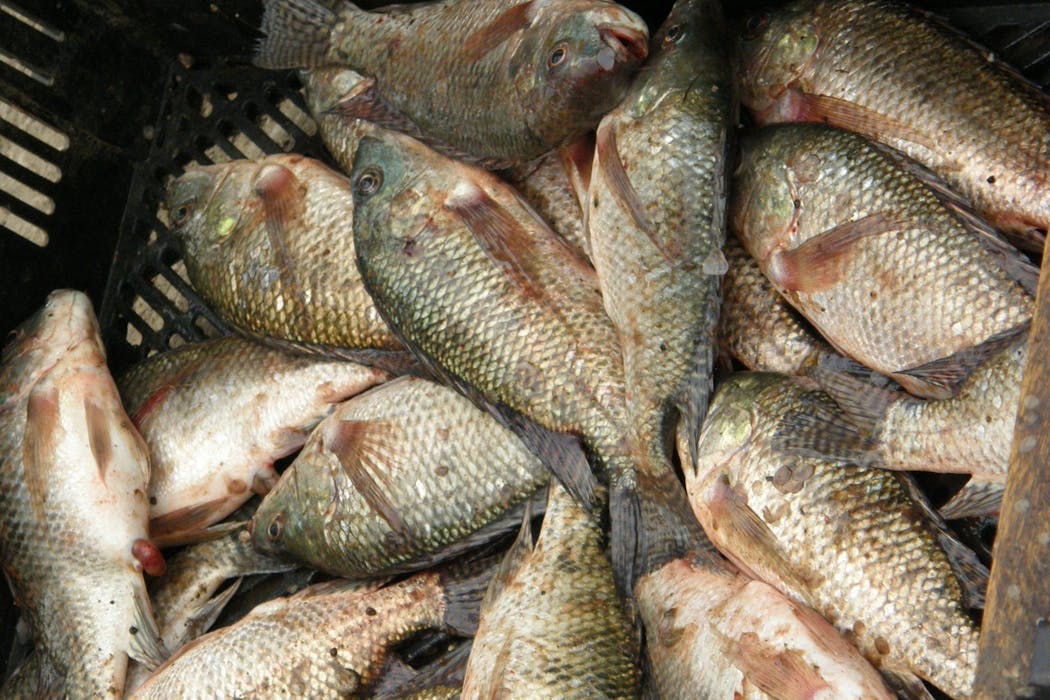
Originaire d’Afrique et du sud-ouest de l’Asie, le tilapia est aujourd’hui présent dans 135 pays. Rafael Medina/Flickr, CC BY

Entre promesse de résilience alimentaire et menaces écologiques silencieuses, le tilapia cristallise aujourd’hui les grands enjeux du développement de l’élevage de poissons dans les territoires insulaires. En Haïti par exemple, où il s’est largement développé, le tilapia est présenté comme une solution prometteuse pour renforcer la sécurité alimentaire. Toutefois, cette expansion, souvent promue sans garde-fous écologiques solides, soulève de vives préoccupations environnementales, notamment autour de la gestion de l’eau douce et des risques liés à la diffusion incontrôlée du tilapia dans les milieux naturels.


C’est un poisson que l’on retrouve aujourd’hui sur des îles du monde entier. On l’appelle tilapia, mais derrière ce nom vernaculaire se trouve en réalité un ensemble de cichlidés, des poissons tropicaux d’eau douce, principalement des genres Oreochromis, Tilapia et Sarotherodon, indigènes d’Afrique et du sud-ouest de l’Asie. L’élevage du tilapia est aujourd’hui pratiqué dans plus de 135 pays, de la Chine et de l’Indonésie, dans le Pacifique, au Brésil, au Mexique et à Haïti. Cet engouement s’explique par sa capacité à croître rapidement (atteignant 400 ou 500 grammes en cinq à huit mois en étang), à se nourrir de ressources variées et à s’adapter à des milieux divers, autant d’atouts qui facilitent son élevage par rapport à bien d’autres espèces de poissons d’eau douce.

Importé d’Afrique dans les années 1950, le tilapia (Oreochromis mossambicus) a été largement diffusé à travers Haïti, notamment à partir des années 1980, avec l’appui de la Organisation pour l’alimentation et l’agriculture (FAO) et du ministère de l’agriculture, des ressources naturelles et du développement rural, au point de devenir l’un des poissons d’élevage les plus utilisés dans les projets d’aquaculture rurale.

Aujourd’hui, Haïti dispose ainsi de plusieurs initiatives aquacoles d’envergure variable, allant des stations expérimentales aux exploitations privées commerciales comme Taïno Aqua Ferme sur le lac Azuéi. Toutefois, malgré ces efforts, la pisciculture demeure marginale : moins de 4 % des agriculteurs haïtiens y sont engagés, et la consommation annuelle de poisson (4,5 kg/an) reste inférieure à la moyenne caribéenne.

Parmi les freins récurrents figurent l’accès irrégulier aux jeunes poissons et aux aliments (coûts, importations), les contraintes d’eau et d’énergie, l’accompagnement technique limité, l’insécurité et des chaînes du froid et d’écoulement insuffisantes, soit autant d’obstacles qui fragilisent les modèles économiques des petites exploitations.

Malgré ce bilan pour le moins mitigé, certains, à l’instar de l’ancien ministre de l’agriculture Patrix Sévère, ont continué de nourrir l’ambition « de voir tous les plans d’eau du pays peuplés de tilapia ». En voulant « passer de la parole aux actes », l’actuel ministre de l’agriculture Vernet Joseph promettait en août 2024 d’introduire dans quatre plans d’eau du pays (le lac de Péligre, l’étang Bois Neuf, le lac Azuei et l’étang de Miragoâne), trois millions de jeunes tilapias ».

L’opération, selon lui, devait permettre, en deux mois, la production « de 25 tonnes de poissons ». Aujourd’hui, cependant, le projet est suspendu à la suite d’un avis consultatif initial de Caribaea Initiative (organisation consacrée à la recherche et la conservation de la biodiversité caribéenne) soulignant les risques écologiques, notamment pour les espèces de poissons endémiques de l’étang de Miragroâne. Aucune décision officielle n’a encore été actée quant à la poursuite ou non du projet, lequel resterait également conditionné à la mobilisation de financements, « selon un cadre du ministère de l’agriculture ».

Des expériences contrastées en contexte insulaire : l’exemple de Santo (Vanuatu)

À plus de 13 000 kilomètres de là, dans le sud de l’île de Santo au Vanuatu (archipel du Pacifique Sud), une expérience parallèle fortuite permet cependant de tirer des leçons précieuses. En avril 2020, le cyclone Harold a frappé de plein fouet cette île volcanique, provoquant le débordement de nombreux bassins piscicoles artisanaux. Des milliers de tilapias se sont ainsi échappés et ont colonisé les cours d’eau naturels, entraînant une transformation brutale des écosystèmes aquatiques. Les résultats préliminaires des enquêtes menées dans le cadre d’une thèse, conduite au sein du projet « Climat du Pacifique Sud, savoirs locaux et stratégies d’adaptation » (Clipssa), auprès d’une centaine d’usagers de cinq cours d’eau de l’île, révèlent que 87 % des personnes interrogées déclarent avoir constaté une diminution, voire une disparition, de nombreuses espèces de poissons et de crustacés autochtones depuis l’introduction involontaire du tilapia.

« Il y avait des crevettes, des poissons noirs [black fish], des anguilles […]. Maintenant, il n’y a presque plus que du tilapia », témoigne ainsi une habitante du sud-ouest de l’île.

« On ne pêche plus comme avant. Le tilapia est partout, il mange les œufs des autres poissons et tous ceux qu’ils trouvent », ajoute un pêcheur sur la côte est de l’île.

Les études menées par des chercheurs chinois et thaïlandais rapportent que l’introduction de deux espèces de tilapia dans leurs pays respectifs a également entraîné une réduction significative de la biodiversité des poissons natifs. Ces résultats sont corroborés par les données du Global Invasive Species Database, qui soulignent que le tilapia figure parmi les 100 espèces envahissantes les plus problématiques au monde.

Toutefois, il convient de nuancer ce constat. Une introduction maîtrisée de tilapia dans un écosystème ne conduit pas systématiquement à des effets négatifs. Les recherches du biologiste kenyan Edwine Yongo au sujet de la Chine et de Daykin Harohau aux îles Salomon montrent que, dans certaines conditions, l’élevage de cette espèce peut contribuer au contrôle des algues nuisibles, grâce à son régime alimentaire et à ses activités de fouissage des sédiments. Ce processus contrôlé peut ainsi améliorer la qualité de l’eau, tout en soutenant la sécurité alimentaire locale, notamment dans les contextes insulaires ou ruraux.

En somme, c’est donc moins l’espèce en elle-même que les modalités de son introduction et de son suivi qui déterminent si elle devient un facteur de dégradation écologique ou, au contraire, un levier de régulation et de sécurité alimentaire.

Quelles leçons pour Haïti ?

L’expérience de Vanuatu, tout comme les travaux menés en Chine et aux îles Salomon, offre ainsi à Haïti une précieuse grille de lecture pour penser l’avenir de l’élevage du tilapia sur son territoire. Si ce poisson peut devenir un levier de sécurité alimentaire, sa prolifération incontrôlée pourrait également menacer les écosystèmes aquatiques déjà fragiles et nuire à la biodiversité locale. Introduire massivement un poisson « pour nourrir la population locale » sans tenir compte de ces équilibres pourrait donc s’avérer contre-productif, en concurrençant les espèces locales, en perturbant les chaînes alimentaires et, in fine, en fragilisant les moyens d’existence de nombreux ménages. Son introduction dans le lac Miragoâne en Haïti pourrait par exemple entraîner un désastre écologique et conduire à l’extinction de tout un groupe d’espèces de petits poissons du genre Limia, endémiques de ce plan d’eau et que l’on ne trouve donc nulle part ailleurs en Haïti ou dans le monde.

Des exemples d’élevages circulaires ou multitrophiques, c’est-à-dire associant plusieurs niveaux de la chaîne alimentaire (poissons, mollusques filtreurs, algues) afin de recycler les nutriments, menés en Chine, au Sénégal ou d’autres types de projets pilotes en Haïti (comme Taïno Aqua Ferme, Caribean Harvest), montrent qu’il est possible de développer une aquaculture durable, à condition de :

  • maîtriser l’élevage en bassins clos ou cages flottantes sécurisées, de préférence dans des lacs artificiels, afin d’éviter tout risque pour les grands lacs naturels comme le lac Miragoâne, qui abrite une communauté de poissons endémiques ;

  • recourir à des espèces adaptées. Le rapport rédigé par Gilles, Celestin et Belot (2021) à la demande de l’Institut de recherche pour le développement (IRD) propose un modèle plus durable, adapté aux spécificités haïtiennes : l’élevage du tilapia ouest-africain Sarotherodon melanotheron, une espèce qui se nourrit surtout de débris organiques et d’algues en décomposition et qui tolère de fortes variations de salinité ;

  • valoriser les sous-produits agricoles (son de riz de l’Artibonite, pelures de banane-plantain, tourteaux d’arachide, drêche de sorgho séchée) et limiter la dépendance à des aliments importés ;

  • renforcer la formation technique des éleveurs pour garantir le bon fonctionnement des systèmes d’élevage ;

  • protéger les installations d’élevage contre les évènements météorologiques et climatiques extrêmes.

Poisson miracle pour certains, espèce à risque pour d’autres, le tilapia incarne à lui seul les dilemmes du développement aquacole en Haïti. Tirer les leçons des expériences internationales, notamment celles de Santo au Vanuatu, c’est comprendre qu’une expansion sans garde-fous écologiques pourrait transformer une solution alimentaire en problème écologique. L’avenir de la pisciculture haïtienne ne se jouerait pas seulement dans les bassins : il dépendra aussi de choix politiques éclairés, de modèles durables, et d’une écoute attentive des écosystèmes comme des communautés locales.

The Conversation

Samson JEAN MARIE ne travaille pas, ne conseille pas, ne possède pas de parts, ne reçoit pas de fonds d’une organisation qui pourrait tirer profit de cet article, et n’a déclaré aucune autre affiliation que son organisme de recherche.

ref. Le tilapia, un poisson dont le succès pose question, des Caraïbes au Pacifique – https://theconversation.com/le-tilapia-un-poisson-dont-le-succes-pose-question-des-cara-bes-au-pacifique-265895