La edición genética podría desactivar a uno de los principales culpables del cáncer de pulmón

Source: The Conversation – (in Spanish) – By Pedro Pablo Medina Vico, Catedrático en el Departamento de Biología Molecular y Bioquímica. Director del Grupo de Investigación de Regulación Génica y Cáncer en el Centro de Investigación Genómica y Oncológica (GenyO)., Universidad de Granada

Yok_onepiece/Shutterstock

El paso del tiempo lo cambia casi todo menos la principal causa de cáncer en el mundo, que en las últimas décadas ha sido el cáncer de pulmón. Solo en España se diagnostican más de 30 000 casos cada año, y la supervivencia a cinco años apenas alcanza el 20 %. Parte del problema es que los tumores suelen detectarse tarde y que los tratamientos, incluso los más novedosos, acaban perdiendo eficacia.

KRAS: el interruptor genético que no se apaga

Entre los principales culpables está un gen con nombre propio: KRAS. Codifica una proteína con un interruptor que indica a las células cuándo crecer y dividirse. Cuando el gen que la produce muta, el interruptor queda atascado en la posición de “encendido”, desencadenando una proliferación descontrolada.

Aproximadamente un tercio de los pacientes con adenocarcinoma de pulmón presenta mutaciones en KRAS. Y los tumores se vuelven “adictos” a estas versiones mutadas de la proteína: si se eliminan, el tumor no sobrevive.

Del “gen intocable” a un blanco terapéutico

Durante años, KRAS fue considerado inabordable desde la farmacología. Todos los intentos de bloquearlo fallaban. El panorama cambió con la llegada de inhibidores como Sotorasib, aprobado en 2021 para una mutación concreta de KRAS llamada G12C. El fármaco supuso un avance histórico, aunque con limitaciones importantes: muchos pacientes no responden y otros desarrollan resistencia en cuestión de meses.

Nuestro equipo ha explorado otra vía. En lugar de bloquear la proteína mutada, hemos intentado eliminar la mutación de raíz, atacando al gen que produce la proteína. Para ello empleamos HiFi-Cas9, una versión de alta fidelidad de la herramienta CRISPR-Cas9.

KRAS.

La clave es la precisión. Diseñamos guías capaces de distinguir las mutaciones más comunes en KRAS (G12C y G12D). HiFi-Cas9 corta exclusivamente el ADN mutado y respeta la copia normal del gen. Así, las células tumorales –adictas a las proteínas mutadas– dejan de producirlas y, en consecuencia, mueren, mientras que las normales no se ven afectadas.

En modelos preclínicos, las células cayeron fulminadas

En cultivos celulares y en esferoides tridimensionales, que reproducen mejor la realidad de un tumor, la viabilidad celular se desplomó tras la aplicación de nuestra terapia. Es decir, las células no resistieron y cayeron fulminadas.

El siguiente paso fueron los xenoinjertos PDX, pequeños fragmentos de tumor de pacientes directamente implantados en ratones. En este modelo más realista, HiFi-Cas9 frenó de manera significativa el crecimiento tumoral. En algunos casos, la eficacia fue incluso superior a la de Sotorasib. Y lo más prometedor: también mostró actividad en modelos resistentes al fármaco.

En organoides de pacientes, es decir, minitumores cultivados en laboratorio, los resultados fueron consistentes: nuestra terapia experimental volvió a limitar la proliferación de las células con KRAS mutado.

Lo más interesante es que KRAS no es exclusivo del pulmón: también está implicado en tumores de páncreas y colorrectales de mal pronóstico. Si logramos aprovechar esta “adicción tumoral” como vulnerabilidad terapéutica, la estrategia podría extenderse a varios tipos de cáncer.

Eliminar la mutación desde el origen

¿Qué aporta la edición genética frente a los fármacos actuales? La diferencia esencial es que CRISPR elimina la mutación en su origen, mientras que los inhibidores como Sotorasib solo bloquean la proteína una vez producida. Esto podría explicar por qué las herramientas de edición genética funcionan en contextos donde los fármacos dejan de hacerlo.

Pero hay que ser cautos. Se trata aún de una prueba de concepto preclínica. El gran reto pendiente es encontrar formas seguras y eficientes de llevar las herramientas de edición génica a las células tumorales dentro del organismo. En nuestro estudio usamos partículas virales como vehículo, pero esta tecnología debe continuar mejorándose antes de que pueda ser suministrada de manera generalizada a los pacientes.

¿Puede ser esta la terapia oncológica del futuro?

La edición genética con HiFi-Cas9 abre un camino distinto en oncología. No es todavía una terapia disponible en la clínica, pero combina la potencia de la investigación básica con la ambición de la medicina personalizada. Mostrar que es posible eliminar mutaciones clave directamente en el ADN tumoral es un primer paso hacia nuevas terapias para quienes más lo necesitan.

Obviamente, plantea una serie de cuestiones importantes. Por ejemplo, ¿podemos garantizar que el sistema actúe solo en células tumorales? ¿Cómo evitamos reacciones inmunes frente a los vehículos de entrega? ¿Qué consecuencias a largo plazo puede tener alterar de forma permanente el ADN?

Responderlas llevará años de investigación y ensayos rigurosos. No obstante, nuestros resultados, junto con otros trabajos pioneros, sugieren que esta terapia es prometedora y merece seguir siendo explorada.


Este estudio ha sido realizado por investigadores de la Universidad de Granada (GENYO), el Hospital 12 de Octubre (Madrid), el Hospital General Universitario de Valencia y la Universitat Politècnica de València. El trabajo ha contado con la financiación de la Asociación Española Contra el Cáncer, el Ministerio de Ciencia e Innovación y la Junta de Andalucía.


The Conversation

Las investigaciones que han dado lugar a este artículo, cuentan con financiación de la Asociación Española contra el Cáncer (AECC). La AECC no ha tenido ninguna injerencia en el diseño, desarrollo, análisis ni interpretación de los resultados.

ref. La edición genética podría desactivar a uno de los principales culpables del cáncer de pulmón – https://theconversation.com/la-edicion-genetica-podria-desactivar-a-uno-de-los-principales-culpables-del-cancer-de-pulmon-265573

El cansancio emocional del turismo: por qué algunos vecinos están hartos (y otros no tanto)

Source: The Conversation – (in Spanish) – By Ana Soliguer Guix, Investigadora TWINTUR, UOC – Universitat Oberta de Catalunya

El turismo no solo transforma las calles. También afecta cómo sienten los vecinos su ciudad. Entender el turismo desde la psicología social permite verlo como una relación humana, con tensiones y límites, no solo como una industria.

Hablar de emociones puede parecer poco técnico. Pero es esencial para crear modelos turísticos sostenibles y ciudades habitables.

En ciudades como Barcelona o Lloret de Mar, convivir con millones de turistas es un desafío. No solo urbano sino también emocional. Grafitis como “Tourists go home” o protestas contra los pisos turísticos no expresan odio al visitante. Reflejan el cansancio de quienes sienten que su ciudad ya no les pertenece.

Gente con pancartas contra el turismo masivo.
Protesta contra el turismo en Lloret de Mar (Girona) durante el verano de 2024.
Fotografía realizada por vecinos afines a la plataforma UALEP (Un Altre Lloret És Possible)

En mi investigación doctoral sobre vecinos y turismo quise entender este malestar. Analicé medios, protestas vecinales y emociones cotidianas de los residentes. Descubrí que la turismofobia no es odio al turista. Es una reacción emocional ante un modelo turístico que ha sobrepasado los límites de la convivencia.

La turismofobia nació en los titulares

Aunque el término turismofobia se popularizó en los medios españoles en 2016, no nació en los barrios. Al analizar el tratamiento mediático del turismo en Barcelona comprobé que el concepto surgió en las redacciones. Los medios lo usaron para simplificar un fenómeno complejo. Cualquier crítica vecinal al turismo se interpretaba como “odio al turista”.

Esta etiqueta desvió la atención. Sirvió para desactivar la protesta y presentar a los vecinos críticos como enemigos del progreso. Pero sus quejas no iban contra los turistas: se dirigían al modelo turístico. Señalaban la presión sobre la vivienda, la saturación del espacio público y la pérdida de identidad barrial.

En trabajos posteriores mostré cómo este discurso mediático refuerza los estereotipos y dificulta la empatía. Cuando el conflicto se presenta como una fobia se pierde la posibilidad de diálogo.

Del “no al turismo” al “sí a la ciudad”

En entrevistas con vecinos, activistas y trabajadores del sector turístico conocí colectivos como la Assemblea de Barris pel Decreixement Turístic, en Barcelona, y Un Altre Lloret És Possible, en Lloret de Mar. Ninguno de ellos pedía eliminar el turismo. Reclamaban recuperar su derecho a la ciudad: a vivir, trabajar y decidir sobre su entorno.

En otros estudios comprobé que los residentes valoran medidas que intentan controlar los impactos del turismo. Por ejemplo, regular los pisos turísticos o limitar el acceso a zonas saturadas. Sin embargo, muchos critican no poder participar en su diseño. “Queremos poder vivir aquí”, repetían. Esa frase resume una reivindicación política y emocional.

El papel de los ciudadanos en la transformación urbana

Los vecinos no solo sufren los efectos del turismo masivo: también pueden ser agentes de cambio. Participar en asociaciones vecinales y proponer soluciones ayuda a que la ciudad refleje las necesidades de quienes la habitan. Colaborar con las autoridades no significa rechazar a los turistas. Significa buscar un equilibrio donde la convivencia, el respeto por el espacio público y la vida cotidiana sean lo más importante. Así, la ciudad deja de ser solo un lugar turístico y vuelve a ser un hogar compartido.

El turismo mata los barrios. Fuente: Arran Països Catalans.

Muchos vecinos y pequeños empresarios prefieren hablar de regulación, no de decrecimiento. En lugar de decir “no al turismo”, piden “sí a la convivencia”. En ambos casos quieren recuperar el control sobre un territorio que sienten saturado e inseguro.

El cansancio emocional del turismo

El impacto más invisible es emocional. En encuestas a más de 400 residentes de Barcelona y Lloret de Mar observé un patrón claro: el estrés, la irritación y el nerviosismo aumentan con la presión turística.

En Barcelona, tres de cada cuatro vecinos muestran signos de malestar; en Lloret de Mar, dos de cada tres. Llamo a esto agotamiento emocional urbano: sentir que se vive en un lugar que ya no ofrece descanso ni control.

No se trata de odio irracional. Es una respuesta al estrés que provoca la presencia constante de visitantes y comportamientos incívicos. En Lloret de Mar, la dependencia económica del turismo suaviza el malestar. En Barcelona, donde la vida cotidiana se ve más afectada, se intensifica.

Hacia una gestión turística empática

La solución no pasa por reducir turistas sino por aumentar la empatía institucional. Escuchar a los residentes y reconocer su malestar como legítimo debe formar parte de cualquier política turística.

Una gestión empática significa diversificar la economía, limitar flujos en zonas saturadas, garantizar el derecho a la vivienda y combatir el incivismo. También supone cambiar el discurso oficial. En lugar de hablar solo de competitividad o atracción de visitantes, se debe hablar de bienestar local.

En realidad, la turismofobia es un síntoma de que una ciudad necesita respirar. Una gestión más humana –con límites, participación y reconocimiento emocional– puede devolver ese aire perdido. Una ciudad sostenible no solo necesita equilibrio económico o ambiental: también debe ser emocionalmente habitable.

The Conversation

Ana Soliguer Guix no recibe salario, ni ejerce labores de consultoría, ni posee acciones, ni recibe financiación de ninguna compañía u organización que pueda obtener beneficio de este artículo, y ha declarado carecer de vínculos relevantes más allá del cargo académico citado.

ref. El cansancio emocional del turismo: por qué algunos vecinos están hartos (y otros no tanto) – https://theconversation.com/el-cansancio-emocional-del-turismo-por-que-algunos-vecinos-estan-hartos-y-otros-no-tanto-267525

What the US$55 billion Electronic Arts takeover means for video game workers and the industry

Source: The Conversation – Canada – By Johanna Weststar, Associate Professor of Labour and Employment Relations, DAN Department of Management & Organizational Studies, Western University

Electronic Arts (EA) is one of the world’s largest gaming companies. It has agreed to be acquired for US$55 billion in the second largest buyout in the industry’s history.

Under the terms, Saudi Arabia’s sovereign wealth fund (a state-owned investment fund), along with private equity firms Silver Lake and Affinity Partners, will pay EA shareholders US$210 per share.

EA is known for making popular gaming titles such as such as Madden NFL, The Sims and Mass Effect. The deal, US$20 billion of which is debt-financed, will take the company private.

The acquisition reinforces consolidation trends across the creative sector, mirroring similar deals in music, film and television. Creative and cultural industries have a “tendency for bigness,” and this is certainly a big deal.

It marks a continuation of large game companies being consumed by even larger players, such as Microsoft’s acquisition of Activision/Blizzard in 2023.


Read more:
Microsoft buys Activision Blizzard: with the video game industry under new management, what’s going to change?


Bad news for workers

There is growing consensus that this acquisition is likely to be bad news for game workers, who have already seen tens of thousands of layoffs in recent years.

This leveraged buyout will result in restructuring at EA-owned studios. It adds massive debt that will need servicing. That will likely mean cancelled titles, closed studios and lost jobs.

In their book Private Equity at Work: When Wall Street Manages Main Street, researchers Eileen Appelbaum and Rosemary Batt point to the “moral hazard” created when equity partners saddle portfolio companies with debt but carry little direct financial risk themselves.

The Saudi Public Investment Fund (PIF) is looking to increase its holdings in lucrative sectors of the game industry as part of its diversification strategy. However, private equity firms subscribe to a “buy to sell” model, focusing on making significant returns in the short term.

Appelbaum notes that restructuring opportunities are more limited when larger, successful companies — like EA — are acquired. In such cases, she says, “financial engineering is more common,” often resulting in “layoffs or downsizing to increase cash flow and service debt.”

Financial engineering combines techniques from applied mathematics, computer science and economic theory to create new and complex financial tools. The failed risk management of these tools has been implicated in financial scandals and market crashes.

Financialization and the fissured workplace

The financialization of the game industry is a problem. Financialization refers to a set of changes in corporate ownership and governance — including the deregulation of financial markets — that have increased the influence of financial companies and investors.

It has produced economies where a considerable share of profits comes from financial transactions rather than the production and provision of goods and services.

It creates what American management professor David Weil calls a “fissured workplace” where ownership models are multi-layered and complex.

It gives financial players an influential seat at the corporate decision-making table and directs managerial attention toward investment returns while transferring the risks of failure to the portfolio company.

As a result, game titles, jobs and studios can be easily shed when financial companies restructure to increase dividends, leaving workers with little access to these financial players as accountable employers.

Chasing incentives and cutting costs

The Saudi PIF has stated a goal of creating 1.8 million “direct and indirect jobs” to stimulate the Saudi economy. But capital is mobile, and game companies will likely follow jurisdictions that have lower wages, fewer labour protections and significant tax incentives.

Some Canadian governments are working to keep studios and creative jobs closer to home. British Columbia recently increased its interactive media tax credit to 25 per cent.

The move was welcomed by the chief operations officer of EA Vancouver, who said “B.C.’s continued commitment to the interactive digital media sector…through enhancements to the … tax credit … reflects the province’s recognition of the industry’s value and enables companies like ours to continue contributing to B.C.’s creative and innovative economy.”

This may buffer Vancouver’s flagship EA Sports studio, but those making less lucrative games or in regions without financial subsidies will be more at risk of closure, relocation or sale. Alberta-based Bioware — developer of games including Dragon Age and Mass Effect — could be at risk.

Other ways of aggressively cutting costs might come in the form of increased AI use. EA was called out in 2023 for saying AI regulation could negatively impact its business. Yet creative stagnation and cutting corners through AI will negatively impact the number of jobs, the quality of jobs and the quality of games. That could be a larger threat to EA’s business and reinforce a negative direction for the industry.

Game players have low tolerance for quality shifts and predatory monetization strategies. Research shows that gamers see acquisitions negatively: development takes longer, innovation is curtailed and creativity is stymied.

Consolidation among industry giants may cause players to lose faith in EA’s product — and games in general, given the many other entertainment options that are available.

Creative control and worker power at risk

Some have raised concerns that the acquisition could affect EA’s creative direction and editorial decisions, potentially leading to increased content restrictions.

While it’s still unclear how the deal will influence EA’s output, experiences in other industries might be a sign of things to come. For instance, comedians reportedly censored themselves to perform in Saudi Arabia.

The acquisition may also have a chilling effect on the workers’ unionization movement. Currently, no EA studios in Canada are unionized. Outsourced quality assurance workers at the EA-owned BioWare Studio in Edmonton successfully certified a union in 2022, but were subsequently laid off. Fears of outsourcing, layoffs and restructuring could discourage future organizing efforts.

On the other hand, the knowledge that large financial players are making massive profits could galvanize workers, especially considering that before the buyout, EA CEO Andrew Wilson was paid about 264 times the salary of the median EA employee.

The deal certainly does nothing to bring stability to an already volatile industry. Regardless of any cash injection, EA remains very exposed.

The Conversation

Johanna Weststar has received funding from the Social Sciences and Humanities Research Council and the Dancap Private Equity Research Award in the DAN Department of Management and Organizational Studies at Western University. She produces the Developer Satisfaction Survey for the International Game Developers Association.

Sean Gouglas receives funding from the Social Science and Humanities Research Council. He also serves as a member of the survey committee for the Higher Education Video Game Alliance.

Louis-Etienne Dubois does not work for, consult, own shares in or receive funding from any company or organisation that would benefit from this article, and has disclosed no relevant affiliations beyond their academic appointment.

ref. What the US$55 billion Electronic Arts takeover means for video game workers and the industry – https://theconversation.com/what-the-us-55-billion-electronic-arts-takeover-means-for-video-game-workers-and-the-industry-267206

Why we keep hunting ghosts – and what it says about us

Source: The Conversation – UK – By Alice Vernon, Lecturer in Creative Writing and 19th-Century Literature, Aberystwyth University

shutterstock Juiced Up Media/Shutterstock

In 1874, renowned chemist Sir William Crookes sat in a darkened room, eyes fixed on a curtain over an alcove. The curtain twitched, and out came a glowing ghost of a young woman, dressed in a white shroud. He was entranced.

But the ghost was fake, and his involvement in séances nearly ruined his career. The lesson wasn’t learned, however, and Crookes, like thousands after him, continued to search for evidence of spirits.

The popularity of the Victorian séance, and its associated pseudo-religion Spiritualism, spread rapidly across the world. From small parlours hushed with the hopes of the recently bereaved, to grand concert halls, audiences were eager for a spooky spectacle.

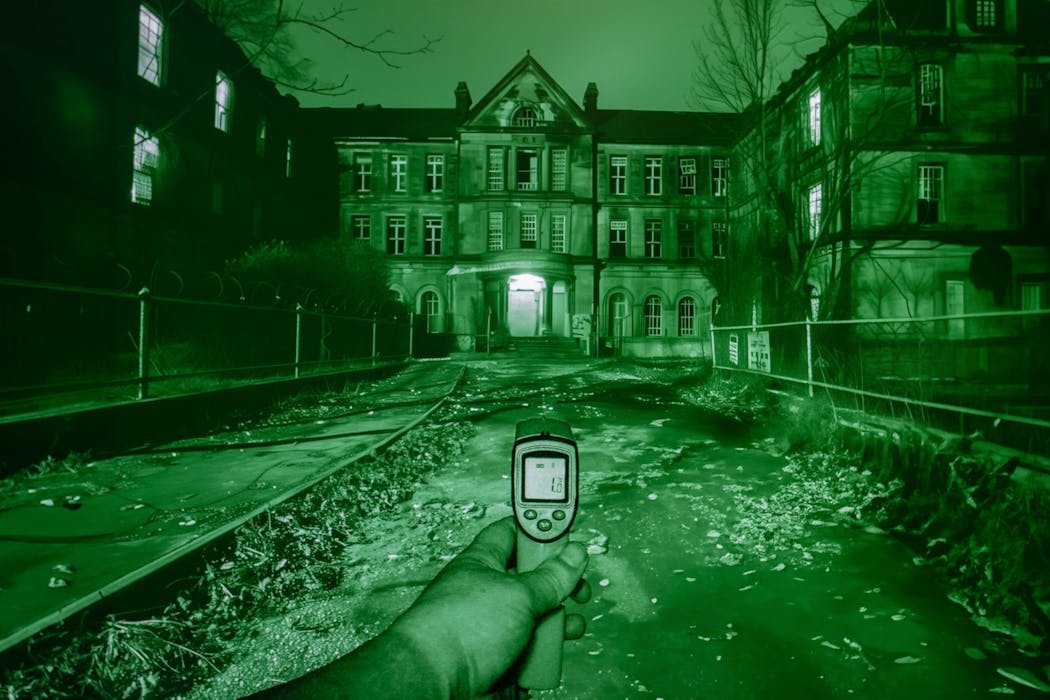
Ghost-hunting remains an immensely popular cultural interest. Platforms such as YouTube and TikTok are now awash with amateur investigators trudging through abandoned buildings and well-known haunted houses in order to capture evidence.

I’ve spent the last few years researching the social history of ghost-hunting for my new book, Ghosted: A History of Ghost-Hunting, and Why We Keep Looking, to examine ghosts from the perspective of the living. Why do we continue to cling to the hope of finding definite proof of a spectral afterlife?

Sam & Colby are popular ghost hunters on YouTube.

The active investigation of ghosts became an international phenomenon in 1848, when young sisters Kate and Mary Fox popularised a knocking code to communicate with the ghost that allegedly haunted their farmhouse in Hydesville, New York.

Five years later, it was estimated that they had amassed $500,000 (equivalent to almost £15,000,000 today). Spiritualism spread across the world, particularly to the UK, France and Australia. It was helped along by grief in the aftermath of the American civil war and, in the beginning of the 20th century, the mass bereavement of the first world war.

People turned to Spiritualism and ghost-hunting for fame and fortune, but also for genuine hope and an overwhelming need for evidence that death was not the end.

Rise of the sceptic

In direct parallel with Spiritualism, however, rose sceptics keen to seek out the truth of ghosts. The most vehement critics of Spiritualism were magicians, who felt that mediums were trying to copy their trade but from a morally reprehensible approach. At least a magician’s audience knew they were deliberately being deceived.

The famous illusionist Harry Houdini, for instance, often bitterly argued with his close friend and ardent Spiritualist, Sir Arthur Conan Doyle, about the fraudulent practice of mediums.

With the rise of modern scientific laboratories and the development of portable sound and image recording devices in the 20th century, ghost hunting became an increasingly popular and sensationalised hobby. Harry Price, psychical researcher, author and professional hobbyist, used ghost-hunting to create a cult of personality for himself, sniffing out any interesting haunting that could potentially lead to publicity.

But it was also Harry Price who brought ghost-hunting to the media as a form of entertainment. In 1936 he did a live BBC radio broadcast from a haunted house.

Price’s broadcast is the forgotten precursor for ghost-hunting as we know it today. Reality TV shows mimic the format of his 1936 broadcast, with examples such as Most Haunted gaining a loyal following since it began airing on Living TV in 2002. While no longer produced for television, the Most Haunted crew continue to film and post new episodes on their YouTube channel.

Most Haunted first appeared on TV in 2002 but now is available on YouTube.

It’s also a clear influence for international copies such as Ukraine’s Bytva ekstrasensov and New Zealand’s Ghost Hunt. Social media, too, has changed the way we ghost hunt. It has allowed for amateur groups and investigators to gain an immense audience across various platforms.

But ghost-hunting is also rife with competition as groups and investigators seek to outdo each other for the best evidence. For many, this means coming armed with Ghostbusters-style tools. These can include flashing gadgets and sensors, including electromagnetic field detectors, high-tech sound recorders and even motion-activated LED cat toys.

It’s all in a bid to gain the most “scientific” evidence and, therefore, popularity and respect among their peers. It seems that the more scientific we claim to be in the search for ghosts, the more we allow pseudo-scientific theories to encroach on the hunt.

It’s not about proof, it’s about people

Yet we never give up. This is what fascinated me when I undertook my research. I wanted to know why, after centuries, we’re no closer to achieving conclusive evidence for the paranormal, but ghost-hunting is more popular than ever before.

I even went on a couple of ghost hunts myself to try to figure out this conundrum. The answer, I think, is that ghost-hunting isn’t for scientific discovery at all. It’s for social connection, revealing more about the living than the dead.

I had one of the most fun experiences of my life while on a ghost hunt. Despite being a sceptic, I was drawn into the search, but also to the way it allowed me to connect with new people and with the history of the haunted building itself.

What I’ve learned through my research and experiences is that ghost-hunting is about us, the living, more than the ghosts we try to find. Ghost-hunting, done ethically, is a crucial social activity. It allows us to process grief, to analyse our fears of death and to explore what it means to be alive.

The Conversation

Alice Vernon does not work for, consult, own shares in or receive funding from any company or organisation that would benefit from this article, and has disclosed no relevant affiliations beyond their academic appointment.

ref. Why we keep hunting ghosts – and what it says about us – https://theconversation.com/why-we-keep-hunting-ghosts-and-what-it-says-about-us-267173

Will England’s new reading test for secondary pupils be useful?

Source: The Conversation – UK – By Stephen Gorard, Professor of Education and Public Policy, Durham University

Rawpixel.com/Shutterstock

All secondary-age school pupils in year eight (aged 12 and 13) in England will be required by the government to take a reading test. The declared purpose is to help drive up reading standards so that “everyone can thrive”. Is this additional test a good idea?

Although the results of the tests will not be published, they will be provided to families and to Ofsted (the body responsible for school inspections in England). The existence of the tests may therefore encourage secondary schools to devote more attention to improving reading.

The average levels of reading are high among young people in England, according to international tests. There was a small decline in scores following the pandemic, but this happened nearly everywhere.

The major concern should be for a minority of pupils who arrive at secondary school without the level of literacy needed for school and everyday life. This means that they are unable to access the wider curriculum. Low literacy at this stage is linked to lower exam results when children reach their GCSEs.

Primary schools tend to emphasise literacy and numeracy, but secondary schools introduce separate subject disciplines, many of which are almost impossible to understand without the ability to read fluently. Basic literacy should be a minimal threshold expectation for school attendance.

It is also vital for everyday and later life as a citizen. If the test means that secondary schools will focus even more on these “catch-up” pupils, then so far so good.

A few problems

However, any test involves a cost, as well as the curriculum time devoted to preparing for it. If schools do not prepare for it, then the test will merely provide a snapshot without changing anything.

It will highlight the lower achievement of children from groups we already know come to school with a disadvantage: those with special educational needs and disabilities, and those from poorer backgrounds.


Read more:
Poorer pupils do worse at school – here’s how to reduce the attainment gap


Tests also cause anxiety for some students. And they may not be accurate measures of what was intended. For example, summer-born children, who may start primary school when they are barely four, tend to score lower on reading tests without being behind the expected level for their actual age.

This “summer-born effect” persists well into secondary school. So will the new reading test be calibrated by age? If so, how?

Teenagers in uniform sitting a classroom test
Tests may make some children anxious.
Rawpixel.com/Shutterstock

It will be really hard to get everyone to pass this test. Even for the primary phonics screening test, taken in year one, the target is only that 90% of pupils pass. But it is precisely the other 10%, plus a few more (including home-schooled and hospitalised children), that this new test should be aimed at.

Otherwise the results given to Ofsted will just be a summary of the levels of poverty and learning challenges – special educational needs – of the pupil intake to any school. And my research shows that Ofsted is poor at separating context and raw test scores.

The way forward?

If this proposed new secondary school test is meant to be high stakes and to provoke a positive reaction from schools, then why not have it earlier, for a younger age group? Reading is something best learnt young. Perhaps in year four, when there are still two years to prepare for the transition to secondary school – but primary schools may not welcome another test in an already crowded phase.

Either way, a desire to help is not enough. Schools and teachers must know how to help that last 10% or so of children who struggle with reading, cost effectively and efficiently. There is a growing body of robust evidence on how best to improve literacy for struggling readers – but also a proliferation of less useful approaches promoted by advocates, salespeople, and those with a vested interest.

So, in addition to this new test, the government could do more to help schools judge the quality of evidence for or against specific literacy approaches. This would mean that schools use the limited time and resources they have to help children with their reading making use of the most effective ways to get results. They should not simply rely on organisations or commentators who present a collection of evidence without considering the quality of the underlying research.

The Conversation

Stephen Gorard receives funding from Economic and Social Research Council, and Department for Education, to conduct work in this general area.

ref. Will England’s new reading test for secondary pupils be useful? – https://theconversation.com/will-englands-new-reading-test-for-secondary-pupils-be-useful-267678

How spacefaring nations could avoid conflict on the Moon

Source: The Conversation – UK – By Simonetta Di Pippo, Director of the Space Economy Evolution Lab, Bocconi University

In the 1960s, Frank Sinatra’s song Fly Me to the Moon became closely associated with the Apollo missions. The optimistic track was recorded in 1964, when US success against the Soviet Union in the Moon race was not assured.

Nevertheless, when the crew of the Apollo 11 mission landed first on the lunar surface in 1969, the Sinatra song became an appropriate tune for an era when, in the West, anything seemed possible.

In the 21st century, the exploration of the Moon will take a different form. Several countries want to go there and stay. The US, China and international partners on both sides have plans to establish permanent bases on the lunar surface – raising the possibility of conflict.

The bases will be located at the south pole of the Moon, which has valuable resources such as abundant water in the form of ice. This ice, locked up in permanently shadowed craters, could be turned into water for use by lunar bases and into rocket fuel to support ongoing exploration and the people living there. The Moon may also have valuable minerals, such as rare earth metals, that countries may want to extract.

But such resources will be limited, as are suitable sites for landing and building lunar bases. The potential for conflict between nations in space is not beyond the realms of possibility.

However, there are measures that can be taken to ensure that the future is a cooperative one. So a song as optimistic as Fly Me To The Moon could serve as the soundtrack to this new age in exploration, just as it did in the 1960s and 70s.

International treaties could be the solution, together with a willingness of countries to operate responsibly. The outer space treaty of 1967 says that space is not subject to national appropriation by claim of sovereignty, or by means of use or occupation. At the same time, article I of the treaty considers space as a global common, and states that the exploration and use of space is for all nations, including its resources.

A vital question is whether the Moon’s water ice be used without some level of appropriation.

Moon agreement

The Artemis accords, a set of guidelines initiated by the US, is a bottom-up attempt to establish a common behaviour. Section 10 of the Artemis accords says that the “extraction of space resources does not inherently constitute national appropriation under Article II of the Outer Space Treaty”.

It also proposes the use of temporary “safety zones” around operations to extract resources. Signatories to the Artemis accords must provide notification of their activities to other nations and commit to coordinating to avoid harmful interference.

However, these safety zones are highly controversial because they could be seen as a breach of the outer space treaty’s non-appropriation principles, to say the least. To some, these zones could create de facto ownership rights over space resources.

As of now, 56 countries have signed the Artemis accords. Thailand and Senegal have signed the US-led accords and are also involved in China’s lunar base project. As such, these nations provide a bridge between the two programmes and hope for collaboration.

The Moon agreement, adopted in 1979 by the UN, also governs how Earth’s natural satellite should be used. There are a lot of interesting features in this treaty, including a call for transparency, with requirements for states to share information about their lunar activities, and an international effort to manage lunar resources.

The aim is to build confidence between signatories to the agreement. Like the outer space treaty, it strictly prohibits the national appropriation of space resources.

A major impediment is that neither China, nor the US nor the Russian Federation have signed up. However, in my view, the Moon agreement provides the best framework for the future – without further treaties or accords. Nations just need to use it. And if one or two articles need a change, they should be changed.

New era

The world is standing on the verge of a new age in lunar exploration. Whether the US or China arrive there first, there is a new will to establish a permanent presence on Earth’s natural satellite. China, along with about ten countries, is planning a base called the ILRS (International Lunar Research Station). Nasa, meanwhile, is developing a lunar station called Artemis Base Camp.

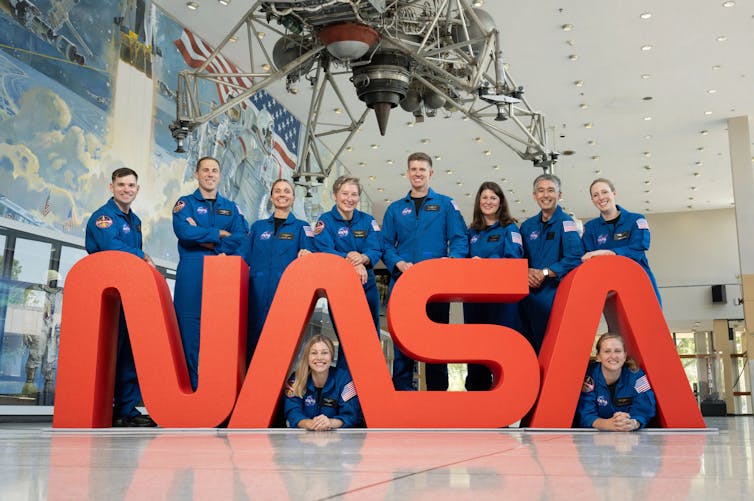
Nasa astronaut candidates
Members of the new astronaut class could fly on missions to the Moon.
Nasa

These will take some time to build, but nations are already off the starting blocks. Nasa’s Artemis II mission, which will carry four astronauts on a flyby of the Moon, is set to launch in February 2026. On September 24 this year, the US space agency also announced a new class of astronauts who are likely to fly on future missions to the lunar surface.

These developments show that there is the potential for a more equitable future in space than the one we have experienced in the past. I couldn’t help notice, for example, that of the 10 newly selected astronauts, 60% are women, which is a first.

China recently completed a test of its crewed lunar lander, Lanyue. Its ILRS lunar base project has signed up nations without a long track record in human space exploration.

So how can countries ensure that they capitalise on the promise of a cooperative future in space and avoid transferring existing rivalries – and inequities – beyond Earth’s boundaries?

Replicating the wild west on the Moon, where the first person to arrive claims the the land, is not an option in the 21st century. Humans will all be “terrestrials” when they land on the Moon, regardless of national flags.

Space can be a platform for diplomacy as well as conflict. It can also be a tool for socio-economic development. These are powerful incentives for humankind to act as partners on the final frontier.

Expanding humanity’s footprint beyond Earth is the biggest challenge of this century and beyond. So a global effort to explore outer space collaboratively and peacefully is not only possible, but mandatory.

The Conversation

Simonetta Di Pippo does not work for, consult, own shares in or receive funding from any company or organisation that would benefit from this article, and has disclosed no relevant affiliations beyond their academic appointment.

ref. How spacefaring nations could avoid conflict on the Moon – https://theconversation.com/how-spacefaring-nations-could-avoid-conflict-on-the-moon-267125

How Jane Austen’s landscapes mapped women’s lives

Source: The Conversation – UK – By Nada Saadaoui, PhD Candidate in English Literature, University of Cumbria

Jane Austen’s novels are often remembered for their wit, romance and sharp social critique. Yet they are also profoundly geographical works: cities, seaside resorts, country estates and naval towns structure the possibilities and limitations of her heroines’ lives.

In Austen’s world, place equals power. Where a woman could walk, who she might encounter and how her movements were constrained often determined the course of her story. Tracing Austen’s fictional geographies – from Bath’s promenades to Brighton’s dangers, Portsmouth’s naval streets and the expansive grounds of Pemberley – reveals how these locations shaped women’s freedoms, reputations and choices.

For Catherine Morland in Northanger Abbey (1817), Bath is both exciting and bewildering. She is “about to be launched into all the difficulties and dangers of a six weeks’ residence in Bath”. The phrase parodies gothic terror while also capturing Catherine’s unpreparedness for the subtler hazards of urban sociability: flattery, pretence and manipulation.

Her early walks are tentative. She dutifully accompanies Mrs Allen to the Pump Room, where they “paraded up and down for an hour … looking at everybody and speaking to no one”. The scene highlights both the possibilities and frustrations of urban walking: exposure to fashionable society without any guarantee of genuine connection.


This article is part of a series commemorating the 250th anniversary of Jane Austen’s birth. Despite having published only six books, she is one of the best-known authors in history. These articles explore the legacy and life of this incredible writer.


Anne Elliot in Persuasion (1817) moves through Bath with greater clarity. Where Catherine mistakes politeness for affection, Anne recognises the city as a site of display and competition. For her, Bath represents confinement. She longs for the lawns and groves of Kellynch Hall, where she once walked freely: “She disliked Bath, and did not think it agreed with her; and Bath was to be her home.”

Bath’s crowded rooms and choreographed promenades stand in stark contrast to the restorative rural landscapes Anne loves. Through both heroines, Austen portrays the city as a stage on which women must learn to navigate visibility, reputation and choice.

Brighton: risk, display and reputation

If Bath is a space of display, Brighton brims with danger. As a fashionable seaside resort, it promised excitement and opportunity, but for young women it carried real risk.

In Pride and Prejudice (1813), 15-year-old Lydia Bennet imagines Brighton as paradise: “In Lydia’s imagination, a visit to Brighton comprised every possibility of earthly happiness … the streets of that gay bathing-place covered with officers.”

Lydia demands to go to Brighton in the 1995 adaptation of Pride and Prejudice.

Lydia’s giddy enthusiasm blinds her to danger, and the fantasy ends in disaster. Allowed too much freedom, she elopes with a cad, Wickham, disgracing her family. Yet after the marriage is hastily arranged, she boasts: “I only hope they may have half my good luck. They must all go to Brighton. That is the place to get husbands.”

Lydia’s naïve pride underscores Austen’s critique of Brighton as a site of social peril. This negative portrayal was not accidental: Brighton was strongly associated with the Prince Regent and his notorious lifestyle, whose extravagance Austen quietly mocked, despite him being a big fan. In her writing, the resort embodies a world of unregulated freedom and moral laxity – a place where allure could swiftly lead to ruin.

Portsmouth: naval life and restricted mobility

In Mansfield Park(1814), Fanny Price’s return to her family home in Portsmouth reveals another urban geography, shaped not by leisure but precarity.

This naval town, sustained by war and colonial trade, is crowded, noisy and unstable. Unlike the protected grounds of Mansfield, where walking fosters reflection, Portsmouth’s streets are chaotic and male-dominated, exposing women to scrutiny and risk.

Henry Crawford visits Fanny in Portsmouth in the 1999 film of Mansfield Park.

Fanny recoils at her new surroundings: “The men appeared to her all coarse, the women all pert, everybody under-bred.” Walking here is not liberating but “strange, awkward, and distressing״.

When Henry Crawford suggests going for a walk with Fanny, it is treated as rare and functional. Mrs Price admits her daughters “did not often get out” unless “they had some errands in the town”. Henry, wealthy and male, strolls without restriction. Fanny and her sister Susan, by contrast, can only walk under supervision.

Austen uses Portsmouth to highlight how class, gender and geography intersect to restrict women’s mobility and reinforce inequality.

Pemberley: moral geography and possibility

By contrast, the countryside walks at Pemberley in Pride and Prejudice offer Elizabeth Bennet a landscape of harmony and possibility.

Austen describes “a large, handsome stone building, standing well on rising ground״, surrounded by woods, streams and “great variety of ground”. Elizabeth and her aunt and uncle gradually ascend through “a beautiful wood stretching over a wide extent” before their first view of the house. This prompts her famous reflection: “She had never seen a place for which nature had done more … At that moment she felt that to be mistress of Pemberley might be something!”

Lizzie visits Pemberley in the 2005 adaptation of Pride and Prejudice.

Unlike the artificial grandeur of other estates, Pemberley harmonises with its natural setting, reflecting Darcy’s character. Its “natural importance” conveys authenticity rather than display. Walking here is exploratory and expansive, offering shifting perspectives that mirror Elizabeth’s changing emotions.

Pemberley becomes moral geography: a space whose openness and balance anticipate a union founded on respect, responsibility and freedom.

Across her fiction, Austen maps women’s lives through the spaces they inhabit and traverse. Bath exposes the pressures of visibility, Brighton the risks of temptation, Portsmouth the limits of mobility and Pemberley the possibilities of harmony. Walking, whether through crowded assembly rooms, along seaside promenades or across open parkland, becomes a measure of female agency.

Austen’s mapped worlds remind us that geography is never neutral. It shapes choices, relationships and power. Her novels continue to resonate because they ask a question still urgent today: where, and how freely, can women move?


Looking for something good? Cut through the noise with a carefully curated selection of the latest releases, live events and exhibitions, straight to your inbox every fortnight, on Fridays. Sign up here.


The Conversation

Nada Saadaoui does not work for, consult, own shares in or receive funding from any company or organisation that would benefit from this article, and has disclosed no relevant affiliations beyond their academic appointment.

ref. How Jane Austen’s landscapes mapped women’s lives – https://theconversation.com/how-jane-austens-landscapes-mapped-womens-lives-266878

The Twits: new Netflix adaptation brings Roald Dahl’s magic to life

Source: The Conversation – UK – By Oliver Gingrich, Programme Lead BA (Hons) Animation, University of Greenwich

A film adaptation of Roald Dahl’s classic children’s book The Twits has been promised for more than two decades. The Netflix animation plays to the strengths of the beloved classic, while adapting it to present times. Dark humour, many pranks, twists and turns ensure an enjoyable visual feast.

The film was written, directed and produced by the Oscar-nominated film-maker Phil Johnston, also known for his animated films Wreck-it Ralph (2012) and Zootopia (2016). The Twits is a fast-paced, whirlwind animation that speaks to audiences of all ages.

In this contemporary adaptation, the vindictive Mr and Mrs Twit (Johnny Vegas and Margo Martindale) are joint owners of the dilapidated amusement park Twitlandia. In a reinterpretation from the original plot, the park is now located in America, and its attractions include rides made out of toilets. The derelict rides are powered by the Muggle-Wumps – colourful monkey-like creatures that are held prisoner by the Twits.

The Twits spread their spite towards each other all over their hometown. When Twitlandia gets shut down by the police, they choose to take revenge on the city. Their evil scheming is uncovered by two unlikely heroes, orphans Beesha (Maitreyi Ramakrishnan) and Bupsie (Ryan Anderson Lopez), who set out to unmask the Twits and free the Muggle-Wumps from their misery.

The trailer for The Twits.

The story leans on the original while reimagining it for global audiences, combining Dahl’s dark humour with a contemporary tale of public deceit. The Twits remain as intransigently nasty and detestable as in the original book, in keeping with Dahl’s fairytale juxtaposition of good versus evil.

Animation artistry

Some critics have taken issue with the Americanisation of the plot. But from an animation perspective, the film’s craftsmanship and collaborative 3D animation expertise still warrant recognition.

The environment design is complex and visually eclectic. The lighting design, meanwhile, is successfully atmospheric and supports the moody and dark twilight present throughout most of the story world.

Though it has been created through CGI, at first glance the film looks like a stop-motion production. The texture of the animation appears almost realistic if not quite painterly, with an aesthetic reminiscent of the 2014 stop-motion film, Box Trolls. The character designs make original use of what is known as shape language – the effective use of simple shapes in character design to communicate both personality and emotion to the viewer.

A fast-paced story like The Twits would be difficult to tell other than through CGI animation. Set pieces such as a city sinking in hot dog grease, a house being displaced by an angry mob and the magic of the Muggle-Wumps require a wealth of technical animation skills.

The magic of animated feature films stems from a substantial team effort. And a successful animation team requires a supportive ecosystem to thrive. The talent list for this film includes more than 350 highly technically skilled artists across cinematography and layout, 3D modelling, art direction, 3D character design, rigging, 3D environment design, 3D lighting, sound, rendering and other fields.

The Twits was produced by the British animation company Jellyfish Pictures before its animation studio closed its doors forever earlier this year. Against the backdrop of a volatile animation industry landscape, it remains important to ensure a favourable climate for animation companies in the UK through continued access to funding, tax breaks and support for skills development in animation practices.

The UK has a longstanding history in children’s animation from the Woodentops in the 1950s to the many iterations of Noddy’s adventures, to Aardman Animation’s many successes, most notably Wallace and Gromit. The UK remains a leading global centre for children’s animation. It is therefore no surprise that the UK was at the heart of the animation pipeline for The Twits.

Animation UK estimates the UK Animation industry’s value at £1.7 billion, with a workforce of 16,000 and over 800 animation production companies. While there are economic challenges, the sector continues to be fuelled by a diverse, highly skilled workforce in which 93% hold a degree. Regional centres such as the University of Greenwich or the National Centre for Computer Animation provide animation degrees across 2D and 3D animation, in support of a talent pool for animated features such as The Twits.

As an international co-production, The Twits points to the fast-paced changes and challenges the animation industry is experiencing globally. But despite such economic headwinds, The Twits is a case in point for just what a labour of love an animated feature film is.


Looking for something good? Cut through the noise with a carefully curated selection of the latest releases, live events and exhibitions, straight to your inbox every fortnight, on Fridays. Sign up here.


The Conversation

Oliver Gingrich receives funding from Arts and Humanities Research Council.

Min Young Oh does not work for, consult, own shares in or receive funding from any company or organisation that would benefit from this article, and has disclosed no relevant affiliations beyond their academic appointment.

ref. The Twits: new Netflix adaptation brings Roald Dahl’s magic to life – https://theconversation.com/the-twits-new-netflix-adaptation-brings-roald-dahls-magic-to-life-267759

Budget 2025: what should Rachel Reeves do about tax? Join our live event

Source: The Conversation – UK – By Sarah Reid, Senior Business Editor, The Conversation

Sean Aidan Calderbank/Shutterstock

It is the economics version of music’s “difficult second album”. When the UK chancellor, Rachel Reeves, steps up to deliver her follow-up budget on November 26, she faces some daunting choices.

Now that the Office for Budget Responsibility – the UK’s’s independent financial watchdog – is expected to downgrade its predictions for UK prosperity, Reeves is widely anticipated to put up taxes again (something she herself alluded to recently). But beyond that, few people agree on the best way for her to do it.

The British Chambers of Commerce is calling this a “make-or-break budget”, demanding a tax approach that incentivises growth after Reeves hit employers with a national insurance (NI) rise last year. Equally, no one expects the chancellor to break Labour’s manifesto pledge and raise one of the “big three”: income tax, VAT or employee NI contributions.

So where does that leave her? And what would be best for Britain’s (and Labour’s) prospects of revival – not just in the short term, but for the long-term prosperity of those people, young and old, who find themselves struggling with the cost of living, spiralling rents and precarious employment?

To help us understand the complexities of this key political and socioeconomic moment, The Conversation and the LSE International Inequalities Institute have teamed up for a special pre-budget, online event on Tuesday, November 18 from 5pm-6.30pm GMT – in which leading experts from the worlds of business, taxation and government policy will tackle all these questions and more.

The experts who will join us for this event, which I will be chairing, are:

Headshot of Helen Miller, IFS director

Helen Miller (pictured), director of the Institute for Fiscal Studies (IFS), the leading UK thinktank whose pre-budget analyses always offer some important clues to the chancellor’s thinking.

Mike Savage, co-founder and former director of the International Inequalities Institute, and one of the UK’s leading voices on the relationship between wealth and inequality.

Emma Chamberlain, one of the UK’s leading tax experts working in London’s Pump Court Tax Chambers. She was a co-author of the Wealth Tax Commission’s 2020 final report on the pros and cons of an annual or one-off UK wealth tax.

Maha Rafi Atal, Adam Smith senior lecturer in political economy at the University of Glasgow and an award-winning business journalist.

Questions about wealth and inequality

One of the key aspects of our discussion will be how the chancellor could address the UK’s national and private wealth stores – not merely by changing tax rates, but by rethinking some antiquated taxes altogether. This could mean, for example, transforming Britain’s council tax system (as 13 of Reeves’ fellow MPs have called for), scrapping stamp duty in favour of a tax on some first-home sales, or releasing the triple lock on pensions.

Another option backed by many experts is a one-off windfall tax on existing wealth. In the UK, nearly 60% of total wealth is now held by the richest 10% of private individuals, whereas the bottom half of the UK population hold only around 5% of the total wealth between them. It is a startling rise in inequality which, according to our guest Mike Savage, means that:

The current debate about wealth taxation should not be framed purely in technical terms – whether it is an efficient way of raising funds for the public purse without damaging UK economic prosperity – but needs to be seen as a question of values and common purpose.

If you’d like to join us for our online expert discussion, please sign up for free here. And if you have a question you’d like our experts to answer, email it now to mybudgetquestion@theconversation.com.


Budget 2025 event advert with the chancellor's famous red briefcase.

The Conversation and LSE’s International Inequalities Institute have teamed up for a special pre-budget, online event on Tuesday, November 18 from 5pm-6.30pm. Join leading experts from the worlds of business, taxation and government policy as they discuss the difficult policy choices facing Chancellor Rachel Reeves in her upcoming budget.

Sign up for free here


The Conversation

ref. Budget 2025: what should Rachel Reeves do about tax? Join our live event – https://theconversation.com/budget-2025-what-should-rachel-reeves-do-about-tax-join-our-live-event-267878

Stroke can happen to anyone – an expert explains how to spot the signs and act fast

Source: The Conversation – UK – By Siobhan Mclernon, Senior Lecturer, Adult Nursing and co-lead, Ageing, Acute and Long Term Conditions. Member of Health and Well Being Research Center, London South Bank University

Pormezz/Shutterstock

Stroke can happen to anyone, at any age and at any time. The number of strokes among younger adults under 55 is rising worldwide, and every day in the UK around 240 people experience the traumatic and life-changing effects of a stroke.

A stroke is sometimes described by doctors and stroke awareness campaigns as a “brain attack” to help people understand that a stroke is as urgent and life-threatening as a heart attack. Both happen when blood flow is suddenly cut off, depriving vital tissue of oxygen and nutrients.

There are two main types of stroke. In an ischaemic stroke, blood flow to the brain is blocked, usually by a clot in a blood vessel. Without oxygen, brain cells begin to die, which can cause loss of movement, speech, memory or even death. In a haemorrhagic stroke, a blood vessel inside the brain bursts. This is often due to high blood pressure, which weakens blood vessel walls and makes them more likely to rupture.

Treating a stroke is a race against time because, as doctors say, “time is brain”: the longer the brain is starved of blood and oxygen, the more brain cells die. Treatments that can dissolve or remove a clot in an ischaemic stroke or lower dangerously high blood pressure in a haemorrhagic stroke must be given quickly to limit brain damage.

Anyone with a suspected stroke should be taken by emergency services directly to a specialist stroke unit. Patients admitted to these dedicated units tend to have better outcomes because they receive expert care from doctors trained specifically to manage stroke.

How to recognise the signs of stroke

A lack of early recognition of stroke symptoms is linked to higher mortality rates. The acronym “Fast” (Face, Arm, Speech, Time) has been a cornerstone of public stroke awareness for more than 20 years. It was developed as a quick screening tool for use before hospital admission, helping people recognise the signs of a stroke and seek urgent medical help.

Fast highlights the most common warning signs of stroke, but some strokes present differently. To make sure fewer cases are missed, additional symptoms such as dizziness, visual changes and loss of balance have been added, creating the Be Fast acronym.

B = Balance problems. A sudden loss of balance or coordination, dizziness, or a sensation that the room is spinning.

E = Eyes. Sudden blurred vision, loss of vision in one or both eyes, double vision, or difficulty focusing.

F = Face. Facial weakness or unevenness, often with a droop on one side of the mouth or eye.

A = Arm or leg weakness or numbness, often affecting one side of the body.

S = Speech difficulty, slurred speech, trouble finding words, or an inability to speak clearly.

T = Time to call an ambulance. Make a note of when symptoms began, as this helps doctors decide which treatment is most effective.

Other warning signs

Stroke symptoms often develop suddenly and can vary from person to person. Some people, particularly women, may experience stroke symptoms that are not included in the Be Fast acronym. Women are less likely to be recognised as having a stroke because their symptoms can differ from men’s. These may include sudden fatigue, confusion, nausea, fainting, or general weakness rather than clear paralysis or slurred speech.


Read more:
Paramedics are less likely to identify a stroke in women than men. Closing this gap could save lives – and money


Other possible signs for any person include a severe headache with no clear cause, vomiting, difficulty swallowing, agitation, or sudden memory loss. In some cases, a person may collapse, lose consciousness, or have a seizure.

Sometimes stroke symptoms last only a few minutes or hours before disappearing completely within 24 hours. This may indicate a Transient Ischaemic Attack (TIA), sometimes called a “mini stroke.” A TIA happens when the blood supply to the brain is briefly interrupted, causing temporary symptoms. The difference between a TIA and a full stroke is that the blockage clears on its own before permanent brain damage occurs. However, a TIA is still a medical emergency and a serious warning sign that a major stroke could soon follow.

Advances in technology

Telemedicine has become an important tool in making rapid diagnosis and early treatment possible. By using secure video links, paramedics can consult with hospital stroke specialists in real time, even while still at the scene or en route to hospital. This allows early diagnosis, faster decision making and immediate preparation for treatment once the patient arrives.

For example, some ambulances now operate as mobile stroke units equipped with brain imaging scanners and clot-busting medicines. In London, video calls between senior doctors and paramedics at emergency scenes have helped speed up care and direct patients to the most appropriate treatment centre.

While telemedicine connects specialists to paramedics on the move, other tools are bringing medical help directly to patients within moments of a 999 call. The GoodSAM app was first developed to improve survival after cardiac arrest by alerting nearby trained responders to begin CPR before an ambulance arrives. The platform has since expanded to support other life-threatening emergencies, including stroke.

When someone calls for help, the system identifies clinically trained staff or volunteers in the area and dispatches them to the scene while paramedics are on their way. These responders can provide rapid assessment, basic first aid and reassurance to the patient and family, and can help ensure that key information such as the time symptoms began is ready for the arriving medical team. By combining digital technology, trained volunteers and rapid communication, the app is helping bridge the critical gap between the onset of symptoms and hospital treatment: the period where, quite literally, every minute matters.

A stroke can strike suddenly and without warning, but quick recognition and immediate medical attention can mean the difference between life and death. Learning the Be Fast signs and acting immediately could save a life, protect the brain and preserve a person’s ability to speak, move and think.

The Conversation

Siobhan Mclernon does not work for, consult, own shares in or receive funding from any company or organisation that would benefit from this article, and has disclosed no relevant affiliations beyond their academic appointment.

ref. Stroke can happen to anyone – an expert explains how to spot the signs and act fast – https://theconversation.com/stroke-can-happen-to-anyone-an-expert-explains-how-to-spot-the-signs-and-act-fast-266039