Lo bueno, lo malo y lo feo del primer año de Claudia Sheinbaum como presidenta de México

Source: The Conversation – (in Spanish) – By Alfredo Rico Chávez, Profesor titular, Universidad de Guadalajara
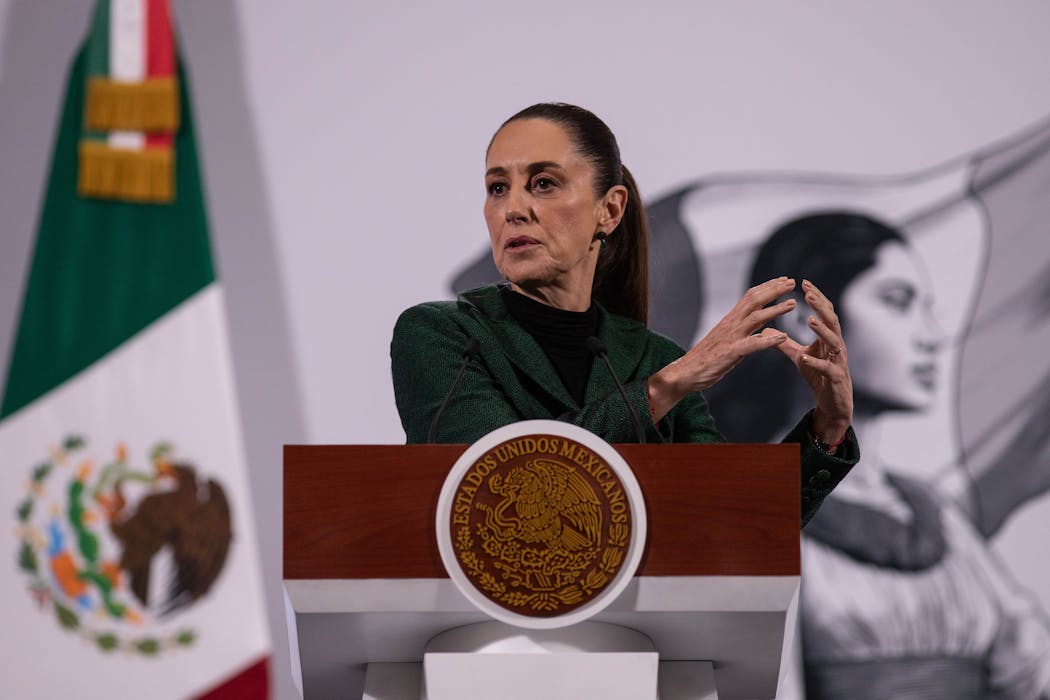
Claudia Sheinbaum, durante su conferencia matutina en el Palacio Nacional el 23 de enero de 2025. Octavio Hoyos/Shutterstock

Es difícil encontrar en los medios de comunicación un balance imparcial sobre el Gobierno de la denominada “Cuarta Transformación” (4T) y, en particular, sobre el primer año de la primera presidenta de México. La polarización sigue marcando el debate, lo que nubla la posibilidad de entender el momento histórico que vivimos.

Muchos celebramos la elección de la primera presidenta y el inicio de una etapa para el futuro de la patria. Pero no de manera incondicional: son reseñables también los errores, los vicios y el lado oscuro de este proyecto. En este sentido, aquí dejo algunos apuntes que intentan salir de esa polarización irracional para evaluar de forma balanceada el gobierno de Claudia Sheinbaum.

Lo bueno

La existencia de un debate sobre los asuntos públicos del país es una ganancia, pues obliga a pensar con mayor profundidad los resultados del trabajo gubernamental. Aunque exista cerrazón de muchos, este debate contribuirá a mejorar la participación ciudadana y nuestra endeble democracia. La dinámica muestra que vivimos un cambio en la cultura política, que ha sacado el debate de los pasillos del poder y ha llegado a las calles. Aunque todavía no lo hacemos con la apertura y madurez necesaria, es un paso adelante hacia gobiernos honestos y efectivos.

En el haber de este primer año de Sheinbaum como presidenta destacan los programas para la reducción de la pobreza, unas acciones que dan continuidad a la política social de su antecesor, Andrés Manuel López Obrador. En este área obtiene el mayor reconocimiento.

Si bien el aumento al salario es lo que más impacta en la reducción de la pobreza, los programas sociales despiertan más adhesión popular en México. La razón es sencilla: es un apoyo que se refleja de forma inmediata en los bolsillos de las personas. Una muestra de que, ahora, los recursos públicos (al menos una parte) no se quedan en las cuentas de las y los políticos.

Aunque los especialistas señalan que “regalar” dinero no es la mejor fórmula y que hace falta una política integral, también es cierto que estas acciones sí han beneficiado a la población y mejorado sus condiciones de vida.

Otro de los aciertos ha sido la forma en que ha gestionado la compleja relación con el presidente Donald Trump, quien ha asumido una actitud agresiva en las interacciones con el resto del mundo. Frente a las amenazas permanentes, Claudia Sheinbaum ha mantenido una postura firme, pero mesurada. Sin someterse, ha establecido estrategias para evitar conflictos y, al mismo tiempo, mantener el respeto a la soberanía nacional.

Lo malo

Sin duda, la seguridad sigue siendo el mayor desafío. A pesar de que la presidenta destacó en su primer informe de Gobierno una reducción de delitos, lo cierto es que el crimen organizado y la violencia preocupan mucho a los ciudadanos. Según la Encuesta Nacional de Seguridad Pública Urbana (ENSU), elaborada por el Instituto Nacional de Estadística y Geografía (INEGI), el 63 % de la población adulta en zonas urbanas considera inseguro vivir en su ciudad.

En este sentido, la falta de autocrítica manifiesta la insensibilidad con las víctimas, que son presa de la delincuencia y viven en carne propia las consecuencias de la inseguridad, en particular las familias de los desaparecidos.

La militarización con la Guardia Nacional, aunque disfrazada, es una de las más grandes contradicciones del movimiento obradorista. Ratificada el pasado 1 de julio y gestada durante el mandato del anterior presidente, representa una incongruencia programática, con el agravante de que la presencia militar en las calles no ha reducido la delincuencia.

Otro de los temas negativos es la inexistente división de poderes y la falta de espíritu crítico dentro de Movimiento de Regeneración Nacional (Morena), el partido gobernante. Su amplia mayoría legislativa ha condicionado la dinámica del Congreso de la Unión. La relación de fuerzas –364 diputados de la coalición gobernante (Morena, Partido del Trabajo y Partido Verde Ecologista de México) frente a los 135 de la oposición– justifica pensar que la cámara parezca una oficialía de partes.

Otro tanto ocurre con la reforma del poder judicial y la simulada elección de los jueces vivida hace algunos meses. El poder judicial mexicano se sometió por décadas a la voluntad del presidente en turno. Urgía un cambio para lograr una auténtica impartición de justicia. Pero la reforma impulsada por López Obrador y continuada por Sheinbaum no ha significado esa transformación sustantiva, que garantice un sistema imparcial y efectivo. Una justicia para todas y todos, no solo para quienes pudieran pagarla como ocurría en el pasado.

La elección judicial, que ha dado lugar al nombramiento de ministros de la Corte Suprema, de los tribunales electorales y los restantes ámbitos de la magistratura, apenas tuvo una participación del 13 %. El voto popular solo ha servido para legitimar el nombramiento de jueces y magistrados afines al gobierno actual.

Otra de las asignaturas pendientes es la corrupción. Por más que pretendan justificarlo, sigue siendo parte de la vida pública, en buena medida porque se mantienen los políticos del viejo régimen y las viejas estructuras siguen intactas. La vigencia de personajes como Manuel Bartlett, históricamente vinculado a etapas oscuras de los gobiernos del PRI, y Manuel Espino, quien fue presidente del PAN, son la muestra de que la vieja política sigue viva.

Lo feo

El trabajo que ha realizado la presidenta es la principal razón por la que su popularidad se encuentre por las nubes. Esta resulta incluso más elevada que la obtenida por López Obrador durante su mandato. El estilo de Sheinbaum, por más que parezca una réplica comunicacional del tabasqueño, ha dejado un sello propio basado en su impronta personal y su independencia.

Desde el sexenio pasado, la oposición se ha desdibujado y se ha estancado en una postura que la sigue alejando de los votantes.

Esa es la razón por la que algunos analistas han señalado que lo peor de esta nueva etapa en la historia nacional sigue siendo la oposición: errática, decadente, incapaz de convertirse en un actor que sea el contrapeso que toda sociedad necesita para evitar los excesos del grupo en el poder.

Sin autocrítica y con una oposición tan pobre será imposible enmendar los errores de los gobiernos de Morena, que no son de izquierda. A pesar de esto, existe un cierto consenso en que México ha dejado atrás un régimen de abusos, corrupción y privilegios. Por eso, existe la esperanza de que el futuro de la patria será mejor, pero solo si recuperamos un debate crítico, responsable y sensato sobre el destino de la nación.

The Conversation

Alfredo Rico Chávez no recibe salario, ni ejerce labores de consultoría, ni posee acciones, ni recibe financiación de ninguna compañía u organización que pueda obtener beneficio de este artículo, y ha declarado carecer de vínculos relevantes más allá del cargo académico citado.

ref. Lo bueno, lo malo y lo feo del primer año de Claudia Sheinbaum como presidenta de México – https://theconversation.com/lo-bueno-lo-malo-y-lo-feo-del-primer-ano-de-claudia-sheinbaum-como-presidenta-de-mexico-268115

L’opéra, carte sonore du monde

Source: The Conversation – France (in French) – By Frédéric Lamantia, Docteur en géographie et maître de conférences, UCLy (Lyon Catholic University)

L’opéra de Dubaï (Émirats arabes unis), posé sur l’eau, dans le quartier de Downtown, dont le design évoque la forme d’un _dhow_, navire traditionnel de la mer d’Arabie. Denys Gromov/Pexels, CC BY

En fonction des lieux où il se réinvente, l’opéra nous offre une véritable cartographie sonore du monde – un espace où s’entremêlent héritages, innovations et enjeux territoriaux, attirant des publics diversifiés. Loin du berceau européen, les scènes lyriques deviennent des plateformes de dialogue culturel et des vitrines stratégiques pour les États et les villes, en Asie comme au Moyen-Orient.

À travers cette lecture géopolitique et sensible de l’opéra, Frédéric Lamantia questionne les notions de patrimoine, de pouvoir et d’identité culturelle.

Retrouvez ci-dessous tous les articles de cette série !


L’art lyrique, un marqueur géographique de l’identité culturelle européenne

L’opéra au Moyen-Orient, vitrine culturelle et outil de soft power

Algérie, Tunisie, Maroc : Comment l’opéra est passé d’un héritage colonial à un outil diplomatique

L’opéra en Asie : entre héritage colonial, soft power et appropriation locale

The Conversation

Frédéric Lamantia ne travaille pas, ne conseille pas, ne possède pas de parts, ne reçoit pas de fonds d’une organisation qui pourrait tirer profit de cet article, et n’a déclaré aucune autre affiliation que son organisme de recherche.

ref. L’opéra, carte sonore du monde – https://theconversation.com/lopera-carte-sonore-du-monde-267056

Remote work reduced gender discrimination — returning to the office may change that

Source: The Conversation – Canada – By Laura Doering, Associate Professor of Strategic Management, University of Toronto

Return-to-office mandates are spreading across North America, with Canada’s major banks, the Ontario government, Amazon and Facebook calling employees back into the office.

These moves reverse the flexibility that became widespread during the COVID-19 pandemic, when remote work became the new norm as public health measures emphasized staying home and avoiding large gatherings.

Supporters of these policies often cite collaboration, innovation and mentorship as reasons to bring workers together in person.

But our research shows that these mandates don’t affect everyone equally. For many women, returning to the office means stepping back into environments where gender bias is more pronounced.


Read more:
As back-to-school season approaches, Canadian employers are making a mistake by mandating workers back to the office


Everyday discrimination at work

When people think about gender discrimination, many imagine pay gaps or barriers to promotion. But discrimination also plays out in routine interactions — what we refer to as “everyday gender discrimination” in our study.

These are regular slights and offences that can chip away at women’s confidence and sense of belonging over time. They might include being ignored in meetings, being asked to perform administrative tasks outside one’s role, receiving inappropriate comments or having one’s ideas credited to others.

While each single incident might seem trivial, their cumulative effect can make women feel frustrated, dissatisfied with their jobs and more likely to leave their organizations.

As organizations reassess where and how people work in the wake of the pandemic, we decided to examine whether everyday discrimination looks different in remote versus in-person settings.

Clear differences by location

To investigate how location shapes everyday gender discrimination, we surveyed 1,091 professional women in the United States with hybrid jobs, or roles that involved both in-person and remote work. Our design allowed us to compare the same person’s experiences across work locations and pinpoint the impact of location itself.

The results were striking. Women were significantly more likely to experience everyday gender discrimination when working on-site than when working remotely.

In a typical month, 29 per cent of respondents reported experiencing discrimination in the office, compared to just 18 per cent when working from home. These patterns held across types of discrimination, from being underestimated to being excluded from social activities and experiencing sexual harassment.

The contrast was especially sharp for two groups: younger women (under 30) and women who worked mostly with men. Among younger women, the likelihood of experiencing discrimination dropped from 31 per cent on site to just 14 per cent when remote.

Similarly, women who interacted primarily with men saw their likelihood of experiencing discrimination fall from 58 per cent on site to 26 per cent remotely. For these groups, remote work provides a meaningful reduction in exposure to everyday gender discrimination.

The trade-offs of remote work

Still, remote work is no silver bullet for gender inequality. Our findings highlight a key advantage — reduced exposure to everyday discrimination — but there are important trade-offs that need to be considered.

One challenge is that working remotely can limit informal interactions that are crucial for building relationships. It can also reduce access to mentors and feedback and make it harder for women to be considered for high-profile assignments.

Remote work can also make it harder to tell where the office ends and home begins, pulling family duties into the workday and intensifying family obligations even during work hours.

These factors are crucial for career advancement, especially for women. While remote work offers an environment with less everyday gender discrimination, working off-site may also limit women’s professional opportunities.

Understanding these trade-offs is essential as organizations craft return-to-office policies. Rather than treating remote work as inherently good or bad, leaders need nuanced strategies that combine the benefits of both in-person and remote work.

What employers and policymakers can do

As companies and governments push employees to return to the office, they risk overlooking how much location matters for women’s workplace experiences. Here are three steps organizations can take to address this issue:

1. Offer flexibility where possible.

Giving employees the option to work remotely empowers women to choose the environment where they feel most respected and productive. Some companies have adopted remote-first policies, framing them as tools for talent retention. Such policies allow employees to make decisions about the work location that suits them best.

2. Import best practices from remote meetings.

While virtual meetings tend to be less engaging, they are also more efficient and focused, with fewer opportunities for offhand comments or interruptions. Applying that same structure to in-person meetings could reduce discrimination while improving productivity.

Companies should consider formal agendas, structured turn-taking and asynchronous feedback to create fairer, more professional discussions. Amazon, for example, applied this principle by centring in-person meetings around “six-page memos” rather than open-ended discussions.

3. Acknowledge the trade-offs.

Leaders should recognize that, while on-site work can accelerate skill development, it can also magnify gender bias. A frank acknowledgement of this tension is the first step toward creating systems that minimize harm while maximizing opportunity.

One bank we studied in separate research, which hasn’t been published yet, overcame this challenge by pairing junior staff with senior mentors and implementing a project-tracking system to ensure equitable assignment of opportunities.

Location, location, location

Workplace discrimination is not only an ethical problem — it also undermines performance, fuels turnover and exposes firms to legal risks.

Our study shows that where work happens — remotely or on site — plays a central role in shaping women’s exposure to everyday gender discrimination.

As organizations roll back the remote work practices adopted during the pandemic, it’s important to recognize that decisions about location can powerfully shape employees’ experiences and professional opportunities at work.

Thoughtful policies that balance the benefits of in-person interaction with the protections afforded by remote work can help ensure that women face less everyday discrimination and experience greater equality at work.

The Conversation

Laura Doering receives funding from the Social Sciences and Humanities Research Council of Canada, the Institute for Gender and the Economy at Rotman, and the Lee-Chin Institute.

András Tilcsik has received research funding from the Social Sciences and Humanities Research Council of Canada, the University of Toronto’s Institute for Pandemics, and the Institute for Gender and the Economy at the Rotman School of Management.

ref. Remote work reduced gender discrimination — returning to the office may change that – https://theconversation.com/remote-work-reduced-gender-discrimination-returning-to-the-office-may-change-that-265945

Major Canadian banks’ digital emissions stay massive while they disclose less and less

Source: The Conversation – Canada – By Sylvain Amoros, Adjunct Professor, Department of Marketing, HEC Montréal

In early 2025, some of Canada’s largest banks — including those with the highest digital emissions and greatest responsibility — withdrew from the Net Zero Asset Managers Initiative.

These major institutions, with digital carbon footprints that are disproportionately large, cited regulatory complexity and competitive pressures for their departure. This move has intensified questions from investors, policymakers and the public about their commitment to sustainability.

At the same time, Bill C-59, adopted in late 2024, introduced new provisions under the Competition Act to strengthen accountability for greenwashing and misleading environmental claims.

The timing is striking: as Ottawa tightens disclosure rules, the same large banks that dominate digital emissions are stepping away from voluntary climate commitments. This tension between voluntary pledges and federal accountability underscores the growing pressure on financial institutions to prove — rather than simply promote — their environmental performance.

Digital carbon footprint

For decades, banks have presented themselves as leaders in sustainability through renewable energy financing and ambitious environmental, social and governance commitments. Yet their recent departure from climate coalitions — coupled with their outsized digital carbon footprints — represents an alarming reversal.

We recently conducted a study of the environmental impact of nine Canadian banks including the big five: CIBC, TD Bank, Scotiabank, Royal Bank of Canada and BMO. Our recent study sought to quantify banks’ environmental impact through their digital carbon footprint.

Banks are pillars of our economy and society, possessing both the power and responsibility to lead the transition toward a more sustainable economy. However, their recent withdrawal from the Net Zero Asset Managers Initiative, coupled with ongoing concerns about greenwashing, raises legitimate questions about their true commitment to sustainability.

In this context, our goal as researchers is to provide both bank clients and financial institutions with crucial information about their environmental impact. Understanding the environmental footprint of banks’ digital operations is essential, as this often-overlooked aspect constitutes a significant portion of their overall carbon footprint.

We analyzed public data from 2024 to measure the carbon impact of Canadian banks’ digital practices. Our study examined two main dimensions:

1) Website usage (the energy consumed by website loading, data transfers and hosting) and;

2) Traffic acquisition, which includes all marketing activities that bring visitors to these sites, such as email marketing, paid advertising search engine optimization and social media campaigns.

The objective was to compare carbon emissions among different banks, assess their efficiency per visit and provide transparent information to the public. By identifying the most polluting areas in digital operations, we provide recommendations for improvement.


Read more:
Canadian financial institutions are fuelling the climate change crisis


Social media activity

Our study uncovered significant findings about Canadian banks’ digital environmental impact. Most strikingly, we found a performance gap where the worst bank emits twice as much carbon per visitor as the best; just three banks account for two-thirds of total emissions.

To clarify, “traffic acquisition” refers to the process of attracting visitors to a website — whether through paid ads, organic search results, or social media content. Organic traffic comes from users who find a bank’s site naturally through search engines, social media or content marketing, while paid traffic is generated through advertising placements.

The data reveals that 77 per cent of digital emissions come from traffic acquisition versus only 23 per cent from website usage. Paid traffic drives 95 per cent of traffic emissions despite being a small fraction of total traffic, while organic traffic accounts for just five per cent of emissions.

Paid social media is particularly problematic — responsible for 58 per cent of emissions while generating only one per cent of total traffic.

In other words, social media ads are highly inefficient from a carbon perspective: a visitor coming from online advertising emits 418 times more carbon dioxide than one coming from organic sources.

These results expose online advertising — especially social media campaigns — as major hidden pollution sources.

A hidden source of pollution

These findings highlight how online advertising — particularly social media campaigns — can become a major source of digital pollution. The reality is clear: every click has a carbon cost.

Banks can improve their inbound marketing, meaning strategies that attract users organically through relevant content, search optimization and user experience improvements rather than through paid ads.

Transparency and sustainable digital practices are essential for greener banking — practices that reduce emissions without sacrificing innovation or competitiveness.

After withdrawing from the Net Zero Asset Managers Initiative and maintaining public net-zero commitments, many banks continue to generate significant emissions through their digital operations.

This raises a critical question for regulators, investors and consumers alike: will banks leverage their considerable resources to lead on sustainability, or continue to delay meaningful action?

Our next study will assess whether these institutions uphold their commitments or persist in their current practices, despite the escalating climate urgency.

Victor Prouteau, who at the time of this study was an M. Sc. student at HEC Montréal, co-authored this article.

The Conversation

The authors do not work for, consult, own shares in or receive funding from any company or organisation that would benefit from this article, and have disclosed no relevant affiliations beyond their academic appointment.

ref. Major Canadian banks’ digital emissions stay massive while they disclose less and less – https://theconversation.com/major-canadian-banks-digital-emissions-stay-massive-while-they-disclose-less-and-less-260768

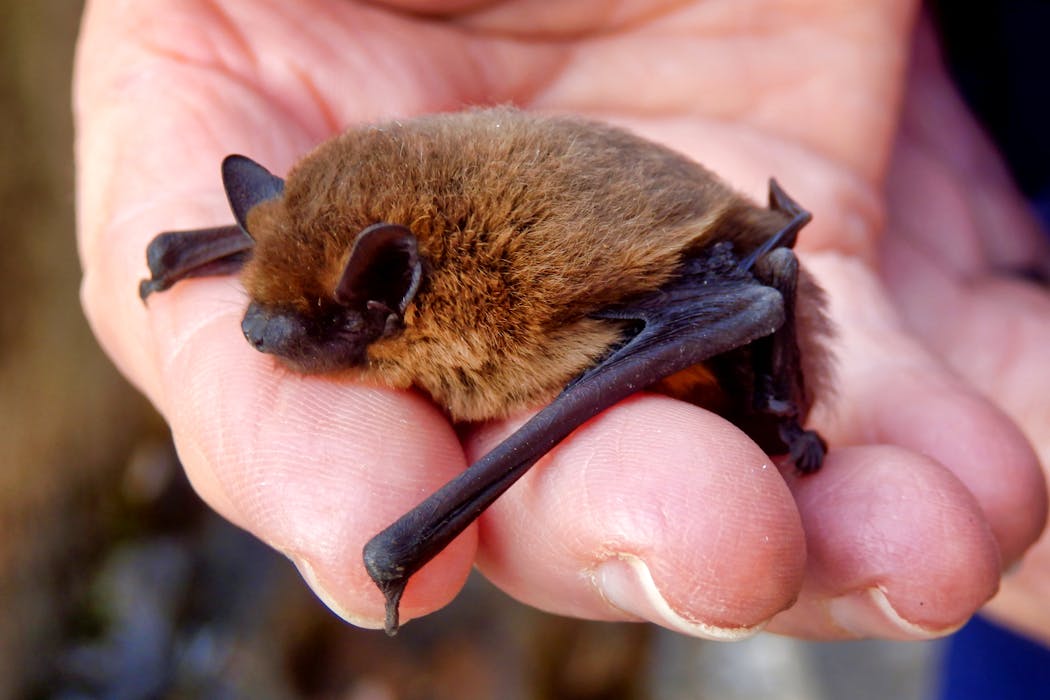
Seven things Halloween and Hollywood get wrong about bats

Source: The Conversation – UK – By Veronica Zamora-Gutierrez, Lecturer in Ecology, University of Southampton

Stephen Farhall/Shutterstock

October is bats’ time in the spotlight, although they are mostly portrayed as spooky and creepy. The truth is, bats are more likely to help you than harm you.

Since I first saw a bat as an undergraduate student more than 20 years ago, I was captivated by these enigmatic and “weird” animals. The more I learn, the more I am amazed by their uniqueness and extraordinary adaptations. Here are seven fascinating facts that reveal the truth behind the many misunderstandings people still have about bats.

1. Fear of bats is not universal, it’s cultural

In western cultures, bats tend to be associated with witches, vampires, night and fear. Literature, films and Halloween imagery lean on these themes. In contrast, in many parts of the world bats are viewed positively. In Mesoamerica, bats were woven into sacred stories. The Maya revered Camazotz, the bat god of the underworld, associated with night, death and sacrifice. In the Popol Vuh (the sacred book of the K’iche’ Maya), Camazotz dwells in the House of Bats in Xibalba (the Maya underworld). Even today, the Popol Vuh remains alive in Maya culture.

Sculpture of Mayan bat god Camazotz.
Tracy Barnett/Wikimedia, CC BY-SA

In 1946, at Monte Albán, an important archaeological site in southern Mexico, archaeologists discovered the so-called mask of the bat God, a jade artefact dated to around 100BC-AD200. Researchers interpret it as evidence that bats were revered in cultures inhabiting these regions, symbolising fertility, death and the sacred world of caves and night.

Caves in Mesoamerica were often seen as portals to the underworld, and bats emerging from these dark spaces became associated with ancestors and divine forces. Rather than mere harbingers of fear, they embodied the powerful link between life, death and renewal. Today, caves and sinkholes are still regarded as sacred spaces, where rituals that blend ancient traditions with Catholic influences are performed.

2. Bats don’t attack humans

From Dracula to Morbius, bats in movies are often cast as villains or responsible for terrible disease outbreaks. The story of Dracula depicts bats as bloodsucking creatures from hell. But in reality, only three out of the 1,500 or so bat species feed on blood and they do not live in the UK or Europe. They prefer warmer climates and are found in the tropical areas of the Americas.

Even vampire bats target mostly livestock or other animals, not humans. Far more common are bats that feed on insects, fruit, nectar or even fish. These varied diets make bats essential to ecosystems.

3. Bats don’t deserve the rap they get for disease

Yes, bats can carry viruses and pathogens (as many animals do). But disease spillover to humans usually happens when bats are stressed by habitat loss, disturbance, or forced into closer contact with us or other animals. If blame is to be cast, it lies with us humans.

As for the COVID pandemic, it’s possible a person rather than an animal brought the virus to the live animal market in Wuhan.

4. Bats aren’t blind

Have you ever heard someone say that bats are blind? Maybe this idea comes from the fact that bats fly in unusual ways and are completely nocturnal in some regions. But bats have good vision supplemented by a sixth sense: echolocation. It helps them “see” the details of their environment.

Bat sonar navigation is fine-tuned to help them avoid obstacles such as trees and vegetation, and it helps them find food such as insects flying in the air or resting on plants. This system is comparable to some of our most advanced technology, such as the sonar submarines use to navigate in the darkness of the ocean.

Bat flying and trying to catch moth in mid air.
Insect-eating bats are vital to their ecosystems.
Rudmer Zwerver/Shutterstock

5. Bats are givers, not takers

In the UK, bats eat insects – and a lot of them. This natural pest suppression helps reduce crop damage, control mosquito populations and relieve pressure on farmers to use chemical insecticides. But in tropical regions, bats do even more. They offer pollination, seed dispersal and vegetation regeneration services that are critical to ecosystems and agriculture.

In 2021 my colleagues and I conducted a study in Mexico showing that bats improve both yield and fruit quality of an important cactus fruit crop in Mexico. This was the first direct evidence of the economic value of bat pollination services, estimated at US$2,500 (£1,8060) per crop hectare.

We can taste their benefits here in the UK too. Do you drink tequila or mezcal? Well, bats are the main pollinators of that group of plants, called agaves.

6. Bats aren’t pests

You may have got the wrong idea from those depictions of bats as hellish creatures but these animals are closely entwined with their environment. Bats use weather cues to time key life cycles (hibernation, migration, reproduction). And these activities need to coincide with the availability of food. For example, insectivorous bats rely on insects emerging at predictable times. But as climate change makes spring warmer and shifts rainfall patterns, insects may appear earlier or in altered numbers.

These risks are especially relevant for insect eaters in temperate zones like the UK, where seasonality is strongly marked. A European study from 2025 of temperate bats warns that weather changes could push bat activity out of sync with prey availability.

We don’t yet know how severe the consequences will be. But if bats can’t feed on insects anymore, pest outbreaks and crop losses could rise.

7. Bats are lovers, not loners

Many bats are highly social and cooperative. Female vampire bats, for instance, are known to share blood meals with roost-mates that failed to feed that night, even when those bats are not related to them. They also spend large amounts of time social grooming, which not only helps with hygiene but also strengthens bonds between bats.

In other cave-roosting species, mothers form large nurseries and help care for each other’s young. They share grooming and protection duties and help with the thermoregulation of newborns.

Recent research on the spectral bat (Vampyrum spectrum), a carnivorous bat and one of the largest in the Americas (with a wingspan of about one metre), shows that these carnivores live in close family groups like parents and pups. Using cameras inside tree roosts, scientists observed adults bringing prey to their young, grooming, greeting each other, and even leaving and returning together, a level of cooperation rarely seen in carnivorous mammals.

These social bonds challenge the Hollywood image of bats as eerie loners of the night. Instead, bats live in rich communities built on cooperation and social bonding.

The Conversation

Veronica Zamora-Gutierrez receives funding from The Royal Society, British Cactus and Succulent Society.

ref. Seven things Halloween and Hollywood get wrong about bats – https://theconversation.com/seven-things-halloween-and-hollywood-get-wrong-about-bats-267341

Ukraine: another week of diplomatic wrangling leaves Kyiv short of defensive options

Source: The Conversation – UK – By Richard Whitman, Member of the Conflict Analysis Research Centre, University of Kent; Royal United Services Institute

Following another week of diplomatic flip-flopping in the United States, Ukraine’s European allies did not disappoint when it came to the fulsomeness of their diplomatic rhetoric. Yet concrete action to strengthen the capabilities Ukraine needs to win the war remained at a snail’s pace.

After a less than successful meeting in the White House on October 17 between the American and Ukrainian presidents, Donald Trump and Volodymyr Zelensky, Ukraine and its European allies once again scrambled to respond to US equivocation with public affirmations of support for Kyiv.

A meeting of EU foreign ministers on Monday October 20, a summit of EU leaders on Thursday October 23, and a gathering of the coalition of the willing on Friday October 24, provided plenty of opportunities for such statements. For good measure, the Nato secretary general, Mark Rutte, paid a visit to Washington on October 21 and 22 before joining the leaders of the coalition of the willing on Friday.

The core message from all these meetings was that where the Trump administration sends ambiguous signals, Ukraine’s more steadfast European supporters are still keen to demonstrate their mettle.

When they met on Monday in Brussels, EU foreign ministers had a packed agenda. On Ukraine, the EU’s foreign affairs chief, Kaja Kallas, reiterated the bloc’s support for what she described as “Trump’s efforts to end the war” and condemned Russian attacks on Ukrainian energy infrastructure.

The following day, Tuesday October 21, brought diplomatic whiplash, when it transpired that there had been another apparent shift in the White House. The Budapest summit between Trump and his Russian counterpart, Vladimir Putin, was postponed until further notice. The supposed host, Hungary’s Kremlin-friendly prime minister, Viktor Orban, and Putin’s spokesman, Dmitry Peskov, maintained that preparations for the meeting were continuing. But Trump was unequivocal. He would not waste time on a meeting if a peace deal was not a realistic prospect.

In an unusual moment of clarity, the US president then appeared to realise that he needed to demonstrate actual consequences for Russia obstructing a peace agreement. On October 22 the US announced sanctions on two of Russia’s largest oil companies – Rosneft and Lukoil – the first sanctions package imposed on Russia in Trump’s second term.

There is a grace period until November 21 to allow for the necessary winding down of transactions with, and divestment from, the two companies. Nonetheless, the mere announcement of the sanctions has already led to major Indian and Chinese clients beginning to pull out from their deals with Russia’s energy giants. Additional sanctions against the Russian banking sector and companies involved in oil infrastructure are apparently also being contemplated in the White House.

After much deliberation to overcome internal divisions, the EU followed suit. On October 23, it announced its 19th package of sanctions against Russia. This also targeted an oil trader and two refineries in China and banks in Central Asia.

In addition, the EU confirmed that a decision had been taken on the rules of the transition to a complete ban on any Russian gas imports. This will take full effect at the end of 2027.

All these efforts are critical to increasing pressure on Russia and are long overdue. But their immediate effect is uncertain. Russia has responded with the usual performative defiance. It has tested a new nuclear-powered missile and carried out a readiness drill for the country’s nuclear forces, overseen directly by Putin.

More help needed

With Russia’s air and ground wars against Ukraine continuing unabated, the other major challenge for Kyiv’s allies is providing assistance.

ISW map whsing the state of the conflict in Ukraine as at October 26 2025.
The state of the conflict in Ukraine as at October 26 2025.
Institute for the Study of War

Here, progress has stalled. The US continues to withhold permission for Ukraine to use long-range missiles against targets deep inside of Russia. The mooted supply of Tomahawk missiles to Ukraine by the US has been scotched. Meeting with coalition leaders on Friday, Zelensky kept pressing for deep-strike weapons, stressing that when the US threatened to supply Tomahawks to Ukraine, Putin was willing to negotiate.

Even more pressing is the issue of how to cover Ukraine’s financial needs. Kyiv’s most recent estimate of the country’s unmet external financing needs for 2026-27 stands at US$60 billion (£45 billion).

At the European Council meeting on October 23, leaders reiterated their commitment to “continue to provide, in coordination with like-minded partners and allies, comprehensive political, financial, economic, humanitarian, military and diplomatic support to Ukraine and its people”. However, crucially, no agreement was reached on how the necessary funds would be mobilised.

There is strong support for using frozen Russian assets to assist Ukraine, including from the coalition of the willing and the US. A proposal to provide Ukraine with a loan secured by these frozen Russian assets has been around for some time.

It has not been finalised due to two major obstacles. The first was Ukraine’s refusal to accept EU conditions that while some of the money could be used to buy weapons, none of the funds should be spent on procuring them from the US. The second, more critical, issue was a demand from Belgium – where most of the frozen Russian assets are held at the Euroclear securities depository – for robust guarantees that the burden for any Russian litigation and retaliation be collectively shared by EU members.

Despite all the signalling from the EU’s leadership in the run-up to last week’s gathering in Brussels that these two major obstacles to approving the loan were being overcome, the meeting ended with EU leaders postponing a decision to their next meeting in December.

At the end of a week of concentrated attention on Russia’s war against Ukraine, the outcome was therefore a repetition of recent behaviour. The Trump administration flip-flopped and the coalition of the willing produced little more than a statement of intent to continue their support for Ukraine. The track record of Kyiv’s European partners to slow-walk the necessary goods for Ukraine’s defence continues. There’s mounting evidence suggesting that they will not stretch themselves to go beyond securing Ukraine’s immediate survival.

Unsurprisingly, a credible pathway to ending the war with a just and stable peace is still lacking.

The Conversation

Richard Whitman has received funding from the Economic and Research Council of the UK as a Senior Fellow of the UK in a Changing Europe initiative. He is a past recipient of grant funding from the British Academy of the UK, EU Erasmus+ and Jean Monnet Programme. He is a Senior Associate Fellow at the Royal United Services Institute (RUSI), and an Academic Fellow of the European Policy Centre in Brussels. He is a past Associate Fellow and Head of the Europe Programme of the Royal Institute of International Affairs (Chatham House).

Stefan Wolff is a past recipient of grant funding from the Natural Environment Research Council of the UK, the United States Institute of Peace, the Economic and Social Research Council of the UK, the British Academy, the NATO Science for Peace Programme, the EU Framework Programmes 6 and 7 and Horizon 2020, as well as the EU’s Jean Monnet Programme. He is a Trustee and Honorary Treasurer of the Political Studies Association of the UK and a Senior Research Fellow at the Foreign Policy Centre in London.

ref. Ukraine: another week of diplomatic wrangling leaves Kyiv short of defensive options – https://theconversation.com/ukraine-another-week-of-diplomatic-wrangling-leaves-kyiv-short-of-defensive-options-268023

ICJ tells Israel to let UN aid flow into Gaza – but UN’s own failures throughout the war loom large

Source: The Conversation – UK – By Ben L Murphy, Senior Lecturer in Law, University of Liverpool

The UN’s top court, the International Court of Justice (ICJ), demanded that Israel allow aid into Gaza in an advisory opinion on October 22. It held that Israel is in breach of its obligations as a UN member state by having failed to do so adequately over the past two years.

The opinion was requested ten months ago by the UN general assembly after Israel’s parliament banned the UN Relief and Works Agency (Unrwa) from operating in territories occupied by the country. Unrwa has long played a pivotal role in delivering humanitarian aid to Palestinians.

In its verdict, the ICJ unanimously reaffirmed that the use of starvation as a method of warfare is prohibited under international law. The court also ordered Israel, by ten votes to one, to agree to and facilitate humanitarian relief in Gaza provided by the UN and its entities.

This aspect of the opinion should be celebrated. The precarious ceasefire in Gaza has not been accompanied by a simultaneous influx of aid. Conditions of famine, destitution and death continue to define the day-to-day experience of those living in Gaza.

However, some observers will be sceptical about whether the ICJ’s advisory opinion will have any tangible impact. A collection of judicial and institutional pronouncements on the illegality of Israel’s conduct in Gaza over the past two years has fallen on deaf ears.

These include the ICJ’s January 2024 order for Israel to take all measures to prevent genocide in Gaza, which a recent UN human rights council commission of inquiry report concluded it is committing.

The International Criminal Court also has outstanding arrest warrants for the Israeli prime minister, Benjamin Netanyahu, and his former defence minister, Yoav Gallant. Issued for alleged war crimes and crimes against humanity committed in Gaza, these warrants have not been enforced.

The ICJ’s recent opinion will be added to this list. Israel did not participate in the oral proceedings for the opinion, and in a post on social media immediately after the verdict, the country’s foreign ministry stated that it “categorically rejects” the court’s findings.

UN falling short

In its advisory opinion, the ICJ held that “Israel has an obligation to cooperate in good faith with the United Nations by providing every assistance in any action it takes”. Here, the court was referring to action by Unrwa to assist Palestinians in Gaza. But this statement should prompt consideration of other types of “action” the UN has failed to take over the past two years of war.

As the ICJ said in its recent verdict, self-determination for the Palestinian people should include the “right to an independent and sovereign state”. However, Palestine continues to be denied full UN membership – a key element of statehood.

In May 2024, a majority of states in the UN general assembly determined that Palestine qualified for membership in accordance with the UN charter. But, despite only nine states voting against the resolution from a total of 193, Palestine was not granted membership.

This was a result of the UN’s dysfunctional structure. The five permanent members of the UN security council (China, France, Russia, the UK and US), the organ that is tasked with maintaining international peace and security, have veto power to block a resolution from being adopted.

And as Israel’s strongest military and diplomatic backer, the US has used its veto power continuously to defend Israeli interests. As long as Israel effectively wields a proxy veto at the security council through its alliance with the US, the UN’s ability to take action in support of the Palestinian people will be restricted and this never-ending loop will continue.

Judicial and institutional pronouncements on Israel’s conduct can have a broader cumulative effect in the pursuit of the realisation of Palestinian self-determination. A timely pronouncement can also be an important rhetorical tool in the quest for concrete goals, such as the reopening of humanitarian routes in Gaza.

But it is important to be aware of the fact that the UN is not a neutral arbiter of rights and obligations. In its current form, which allows members of the security council to block resolutions based on their own national interests, it is complicit in the current humanitarian catastrophe in Gaza.

The Conversation

Ben L Murphy does not work for, consult, own shares in or receive funding from any company or organisation that would benefit from this article, and has disclosed no relevant affiliations beyond their academic appointment.

ref. ICJ tells Israel to let UN aid flow into Gaza – but UN’s own failures throughout the war loom large – https://theconversation.com/icj-tells-israel-to-let-un-aid-flow-into-gaza-but-uns-own-failures-throughout-the-war-loom-large-268222

From grooming gangs to Virginia Giuffre, this is the common thread in abuse

Source: The Conversation – UK – By Rebecca Hamer, Research associate, Sheffield Hallam University

Two stories of abuse have repeatedly captured the nation’s attention. The first relates to Prince Andrew’s friendship with financier Jeffrey Epstein, even after Epstein was convicted for sex offences. The second is the group-based child sexual abuse in Rotherham, Rochdale and other cities.

Prince Andrew has come under mounting pressure over the posthumous publication of a memoir by Virginia Giuffre a victim of Epstein’s who also accused Andrew of abuse. In 2022, Andrew settled a civil sexual assault case brought by Giuffre, for an undisclosed sum.

At the same time, the victims of grooming gangs have accused the government of failing them by mishandling an inquiry into the crimes committed against them.

I work with survivors of childhood sexual abuse, including in Rotherham, and the services that support them. While it would be disingenuous to claim that all survivors’ experiences are the same, there are important similarities in these stories, as well as their abusers.


Read more:
How to make sure the new grooming gangs inquiry is the last


Their backgrounds may differ – wealthy financier or Pakistani taxi driver from Yorkshire – but sexual abusers of children, especially where group grooming is involved, share some traits.

In her memoir, Giuffre accused Andrew of being “entitled – as if he believed having sex with me was his birthright”.

Entitlement, underpinned by misogyny, and the othering and denigration of particular girls and women, is evident in many cases of child sexual abuse. Abusers may have close relationships with some women, but have a set of criteria – conscious or subconscious – that render the girls they abuse as “other”, and deserving of being exploited or used.

Another common thread is commodification of women and girls. Epstein trafficked underage girls via private jet to his island where he “entertained” other high-profile men. He leveraged his wealth and power to exploit girls to impress his peers.

Grooming victims in Rotherham and other cities in the UK were also trafficked, often by networks of taxi drivers. They were taken to dilapidated flats above takeaways, where they were also forced or coerced into sex with associates of men who had manipulated their way into being trusted by vulnerable girls.

Regardless of the sums involved or the nature of the currency (fiscal, kudos, business arrangements), abusers often view the women and girls they abuse as a means to improve their own personal lot.

That may be money changing hands, or a sense of brotherhood and respect from other powerful men. Investigations into Epstein have revealed fawning letters to him, allegedly written by high-profile politicians including Donald Trump and Peter Mandelson.

The legacy of trauma

All survivors of child sexual exploitation have suffered highly traumatic experiences in their formative years. This impacts their sense of who they are, what they are worth and can do, and their perception of other people.

It also affects their psychological health. PTSD is frequently misdiagnosed as bipolar disorder, schizophrenia and other chronic mental health conditions. They may become further stigmatised and othered, feeling blamed for their abuse, as the symptoms of their trauma are treated as individual dysfunction.

Trauma shows itself in physical symptoms too – chronic fatigue and chronic pain, or affecting the heart, brain and nervous system. Many now-adult survivors I have spoken to have described the physical and psychological injuries that their experiences of abuse inflicted upon them. They have felt unable to leave the house, or injured themselves to try and overcome the physical flashbacks of their abuse.

When Giuffre died by suicide earlier this year, her family said: “In the end, the toll of abuse is so heavy that it became unbearable for Virginia to handle its weight.”


Read more:
Virginia Giuffre’s treatment in the media highlights the great consequences of accusing high profile men of abuse


The trauma of being dismissed

The UK government’s inquiry into grooming gangs now faces months of delays, after candidates to lead the inquiry pulled out, and multiple women resigned from the inquiry’s victims liaison panel.

It’s not surprising to see survivors questioning the validity of an inquiry overseen by professionals with backgrounds in the police and social work – organisations that they feel have abandoned them.

Survivors of childhood sexual abuse regularly describe feeling “gaslit”, diminished and silenced by people with more power than them. In a way, it is a replication of the trauma they experienced at the hands of predatory abusers in their childhood.

Abuse survivors also have different notions of justice, or what they want from speaking out. But whether it’s through an inquiry, the courts, campaigning or a memoir, survivors want to be heard and believed when they share their story.

Giuffre and the UK grooming gangs survivors have this in common, too. They have all been doubted, intimidated and abused for their bravery of speaking out.

Police are looking into claims that Prince Andrew asked his bodyguard to uncover information on Giuffre, although there is no suggestion that individual took any such action. But the Met reportedly did not investigate allegations against Andrew that were released as part of the Epstein files.

Many survivors in Rotherham had frequent contact with police, who viewed them as disruptive and problematic. Survivors were dismissed as “child prostitutes”, a grossly inaccurate term that blames the victim of child sexual exploitation. Grown men were referred to as their “boyfriends”, rather than identified as criminals and abusers.

Often, survivors feel let down by organisations whose duty it is to protect. Their hesitance to be represented by these same services again is understandable.

But there is a possibility for positive change. I have heard many stories of the enormous benefits of trauma-focused work, including physical and cognitive techniques to ground the mind and body in the present and to soothe the nervous system. Survivors value being supported by professionals who understand their experiences and the impact through a trauma-informed lens.

Survivors who have been able to access support like this describe being able to stand proud in their community, to speak up for themselves, set boundaries and recognise themselves as important, capable and worthy of respect.

The Conversation

Rebecca Hamer receives funding from Innovate UK for a pilot developing an equine based trauma-stabilisation pathway for women with substance use problems.

ref. From grooming gangs to Virginia Giuffre, this is the common thread in abuse – https://theconversation.com/from-grooming-gangs-to-virginia-giuffre-this-is-the-common-thread-in-abuse-268153

Javier Milei’s victory in Argentina’s midterm elections is also a win for Trump

Source: The Conversation – UK – By Juan Pablo Ferrero, Senior Lecturer in Latin American Politics, University of Bath

Javier Milei, Argentina’s self-styled anarcho-capitalist president, has secured a resounding victory in legislative midterm elections. Following a year marked by radical austerity, economic upheaval and political scandals, this outcome is nothing short of extraordinary.

Milei’s La Libertad Avanza coalition defied expectations to secure more than 40% of the nationwide vote, substantially outperforming the main opposition Fuerza Patria coalition’s roughly 32%. This triumph bolsters the president’s legislative power and, critically, positions him as a strong contender for reelection in 2027.

The elections were widely interpreted as a referendum on Milei’s tenure, which began in December 2023. His victory is a testament to his successful strategy of polarisation and his ability to present himself as the sole purveyor of hope and “redemption” amid prolonged economic stagnation and declining real incomes.

Yet the narrative of this win is also inextricably linked to a dramatic intervention by the US government to stabilise Argentina’s shaky economy. This intervention transformed a local legislative contest into a global geopolitical flashpoint.

Milei’s first year as president was characterised by a “chainsaw” approach to public spending, cutting tens of thousands of government jobs and freezing public investments. These measures were painful, contributing to business closures and job losses. But they also delivered tangible – albeit fragile – macroeconomic gains.

Annual inflation, which peaked at 289% in April 2024, was brought down to about 32% by October 2025. The country also achieved its first fiscal surplus in more than a decade. However, the more immediate electoral lifeline was the government’s intense focus on managing the price of the US dollar.

The longstanding instability of Argentina’s own currency, the peso, coupled with frequent high inflation has created a dual system where the peso is used for daily transactions there but the dollar is preferred for savings and larger purchases, like real estate.

And Milei’s administration has gone to great lengths to control the exchange rate, thereby engineering a temporary but palpable sense of stability just ahead of the polls. This stability was crucial for voters battered by volatility.

It also came at a high cost: a heavy reliance on Washington’s financial backing. As Argentina’s central bank reserves dwindled and a currency crisis loomed, the US government – under President Donald Trump – moved with speed to rescue the situation.

A US$20 billion (£15 billion) currency swap agreement between the US Treasury and Argentina’s central bank was formalised on October 20. This financial assistance, which was quickly followed by an additional announced facility of up to US$20 billion sourced from private banks and sovereign funds, was undeniably timed to shore up Milei’s position before the election.

Trump explicitly linked the continuation of this aid to a Milei victory, warning: “If he loses, we are not going to be generous with Argentina”. Milei’s win is a clear victory for his ideological ally in Washington, who championed the financial lifeline as a strategic move to support a “great philosophy” and “make Argentina great again”.

The US government’s overt and decisive intervention marks a shift not seen in Latin America since perhaps the cold war. It signals that Argentina, and Latin America more broadly, is back on the geopolitical chessboard.

For the US, this is less about ideological affinity and more about strategic resource competition. Latin America holds vast reserves of natural resources, including critical minerals such as lithium that are essential components of the global clean energy supply chain.

Washington’s support for Milei is a move to challenge China’s expanding economic and political foothold in the region. It ensures that a key resource provider and trade partner remains firmly within the US orbit. Milei is, in turn, keen to facilitate American investment in key sectors such as oil, gas and mining. These sectors are all central to his economic recovery plans.

A lithium field in the highlands of northern Argentina.
Freedom_wanted / Shutterstock

A reckoning for the opposition

The election results have definitively confirmed a deep and persistent political polarisation in Argentina. The centre-left opposition’s traditional strategy – waiting for the incumbent’s austerity and scandals to generate discontent – failed to deliver a victory. This should force a period of fundamental soul-searching for the opposition.

But, in my opinion, Milei’s success is not simply the product of a “crisis of representation”, where traditional parties are failing. He instead appears to be a faithful representative of a new, reactive global society. This society is deeply sceptical of institutional mediation, preferring strong executive leaders and perceived “problem solvers” over consensus-based politics.


Read more:
Argentina: despite the scandals, Milei’s politics are here to stay


Milei’s radical experiment has survived its first great electoral test. His party, despite its limited base in the Argentine Congress, secured enough seats to be a formidable legislative force. This means it is now capable of upholding presidential vetoes and advancing critical tax and labour reforms.

He has also set a powerful new trajectory for the country – one that is tightly bound to the geopolitical strategies of the US, its indispensable new partner. As I have argued before, Milei’s politics are here to stay in Argentina and Latin America.

The Conversation

Juan Pablo Ferrero does not work for, consult, own shares in or receive funding from any company or organisation that would benefit from this article, and has disclosed no relevant affiliations beyond their academic appointment.

ref. Javier Milei’s victory in Argentina’s midterm elections is also a win for Trump – https://theconversation.com/javier-mileis-victory-in-argentinas-midterm-elections-is-also-a-win-for-trump-268339

Scary stories for kids: Gremlins and the terror of normal, even cute, things becoming horrific

Source: The Conversation – UK – By Louis Bayman, Associate Professor in Department of Film Studies, University of Southampton

Horror has always helped us establish the boundaries of acceptability by giving a name and shape to what transgresses them. Much of what constitutes horror stems from childhood, a time when boundaries and ideas of transgression are first being set.

Children can often encounter the world as a frightening place, full of unseen, mysterious powers. Any child who has been told that the monsters under the bed aren’t real knows just how little that reassurance helps their very real sense of fear.


Read more:
Scary stories for kids: Watership Down made me aware of my mortality at age four


It is the adult attitude to monsters that is harder to understand. As a society, we largely no longer believe in sprites and demons. However, we still fear the possible bad influence they could have on children’s minds. The 1984 film Gremlins is a good example of this.

Gremlins is about a young man who receives a new pet for Christmas. Billy’s father hasn’t bought him a cat or a dog but a cute little creature known as a mogwai, which he procured from a mysterious seller in Chinatown. Billy, who names the mogwai Gizmo, just has to follow three essential rules: do not expose him to light, he must be kept away from water, and, most important of all, he must never be fed after midnight.


This article is part of a series of expert recommendations of spooky stories – on screen and in print – for brave young souls. From the surprisingly dark depths of Watership Down to Tim Burton’s delightfully eerie kid-friendly films, there’s a whole haunted world out there just waiting for kids to explore. Dare to dive in here.


Gizmo is cute. He has big round eyes and chubby cheeks and a bashful smile that looks up expectantly at Billy, as if Billy is the centre of his universe. He babbles but can’t speak, snuggles softly and plays. Gizmo is, in other words, a representation of a child.

Billy spills water on Gizmo and finds out that this breeds a litter of littler mogwais. The more rambunctious of the new litter, Stripe, manages to trick Billy into feeding them after midnight, at which point they form into cocoons and then hatch into gremlins.

Gremlins are violent, sadistic, destructive pleasure-seekers, and their principle pleasure is mayhem. They have teeth and claws and scaly skin, and eyes that look with gleeful hatred at those who get in their way. Gremlins are, in other ways, also a representation of a child.

The psychoanalyst Sigmund Freud discussed the roots of the uncanny in the familiar, something that is altered just enough to become horrific. A pet, a toy, a bedroom at night, a child, have a comforting familiarity. But they are also classic sources of terror.

We are not scared of that which is different from us; we are scared of what is close to us – something that we thought was familiar, that is suddenly made strange.

What could be more familiar and yet more strange than a child? At once, both an idealised figure of helpless innocence and an unrelenting force of energetic indiscipline, a child is the most deeply human and the most deeply alien of creatures.

The Gremlins destroy Billy’s house, swing from the lampshades and take his mother hostage, all with the television constantly on. The scenario is surely familiar to many a parent, even more so given that the film takes place at Christmas.

Through various ever more ingenious methods – you may never look at a food blender the same way again – Billy, his mother, and his co-worker Kate (who is traumatised by Christmas after her father broke his neck trying to descend a chimney), manage to kill the gremlins off. The owner of the Chinatown emporium comes back to reclaim the mogwai (the word is Chinese for “evil spirit”), but not before chiding the family, and westerners in general, for their inability to take care of nature.

The film suggests that various rules have been transgressed. Our crazed desire to accumulate ever more things is done without thinking of the consequences. The films also poses the question about the limits of knowledge.

When Billy takes his new pet to school his teacher wants to experiment on it, a Gothic figure of the amoral scientist that goes back at least to Frankenstein. At the same time, the gremlins rampaging around the American suburb clearly reference moral panics over immigrants.

The discovery of the mogwai in Chinatown draws on a long tradition of orientalist fantasies of a magical, exotic but dangerous East, grafted onto a more modern association of east Asia with cheaply manufactured consumer goods.

The violence of Gremlins led American theatres to introduce a special PG-13 certificate. Here in the UK, I saw it in the cinema, aged five. I am not sure it was the children’s film my mother expected when she got me a ticket. But I loved it – and I think your kids will love it too.

Gremlins is suitable for children aged 13+


Looking for something good? Cut through the noise with a carefully curated selection of the latest releases, live events and exhibitions, straight to your inbox every fortnight, on Fridays. Sign up here.


The Conversation

Louis Bayman does not work for, consult, own shares in or receive funding from any company or organisation that would benefit from this article, and has disclosed no relevant affiliations beyond their academic appointment.

ref. Scary stories for kids: Gremlins and the terror of normal, even cute, things becoming horrific – https://theconversation.com/scary-stories-for-kids-gremlins-and-the-terror-of-normal-even-cute-things-becoming-horrific-267788