Le crime organisé est la première entreprise du Brésil et la menace la plus grave qui pèse sur le pays

Source: The Conversation – in French – By Robert Muggah, Richard von Weizsäcker Fellow na Bosch Academy e Co-fundador, Instituto Igarapé

Le raid policier mené le 28 octobre contre des narcotrafiquants dans les favelas de Rio de Janeiro est le plus meurtrier qu’ait connu la ville. Mais face à l’empire que le crime organisé a constitué au Brésil, les interventions spectaculaires ne suffisent plus : l’État doit inventer une réponse nationale.


Le 28 octobre, à Rio de Janeiro, des véhicules blindés de la police ont pénétré dans les complexes d’Alemão et de Penha pour interpeller des chefs de gangs. Des fusillades ont éclaté, des routes ont été bloquées, des bus ont été détournés, des écoles et des campus ont été fermés, et des drones ont largué des explosifs sur les forces de l’ordre. Le soir venu, l’État confirmait que « l’opération Contenção » s’était soldée par 64 morts, dont quatre policiers. Ce fut la confrontation la plus sanglante jamais enregistrée dans l’histoire de la ville.

L’économie criminelle du Brésil est sortie des ruelles pour investir désormais les salles de réunion, figurer dans les bilans financiers et s’infiltrer dans des chaînes d’approvisionnement essentielles. Au cours de la dernière décennie, le crime organisé brésilien s’est étendu à l’ensemble du pays et même à d’autres continents. Les plus grandes organisations de trafic de drogue, comme le Primeiro Comando da Capital (PCC) et le Comando Vermelho (CV), se trouvent au cœur de véritables réseaux franchisés. Les « milices » de Rio – groupes paramilitaires principalement composés de policiers et de pompiers ayant quitté leurs anciennes fonctions ou, pour certains, les exerçant toujours – monétisent le contrôle qu’elles exercent sur le territoire en se faisant payer pour des « services » de protection, de transport, de construction et autres services essentiels.

À mesure que ces groupes se sont professionnalisés, ils ont diversifié leurs activités, qui vont aujourd’hui du trafic de cocaïne à la contrebande d’or, aux paiements numériques et aux services publics. Lorsque les groupes armés du Brésil se disputent les marchés illicites, la violence peut atteindre des niveaux comparables à ceux de zones de guerre.

Rien n’illustre mieux le nouveau modèle économique que le commerce illégal de carburants. Comme je l’ai écrit dans The Conversation fin août, les autorités ont effectué environ 350 perquisitions dans huit États dans le cadre de l’opération Carbone Caché, qui visait à faire la lumière sur le blanchiment présumé de sommes colossales à travers des importations de dérivés du pétrole et un réseau de plus d’un millier de stations-service. Entre 2020 et 2024, environ 46 milliards de réaux (7,3 milliards d’euros) de flux suspects ont transité par des fintechs, dont l’une fonctionnait en tant que banque parallèle. Des fonds fermés auraient investi dans des usines d’éthanol, des flottes de camions et un terminal portuaire, donnant aux profits illicites un vernis de respectabilité.

Sur les marchés financiers, les investisseurs sont à présent conscients des dangers. Ces derniers mois, les fonds d’investissement ont enfin commencé à considérer l’infiltration criminelle comme un risque matériel, et les analystes cherchent plus qu’auparavant à déterminer quelles chaînes logistiques, quelles institutions de paiement et quels fournisseurs régionaux pourraient être exposés.

Gouvernance criminelle

Les équipes de sécurité des entreprises cartographient l’extorsion et le contrôle des milices avec la même attention que celle qu’elles accordent aux menaces cyber.

La réaction du marché aux opérations menées en août par la police dans le cadre de l’opération « Carbone Caché » a rappelé que le crime organisé ne génère pas seulement de la violence : il fausse la concurrence, pénalise les entreprises respectueuses des règles et impose une taxe cachée aux consommateurs. Il n’est donc pas surprenant qu’en septembre, le ministre des finances Fernando Haddad ait annoncé la création d’une nouvelle unité policière dédiée à la lutte contre les crimes financiers.

La « gouvernance criminelle » s’est propagée des prisons aux centres financiers. Dans leurs fiefs de Rio, les gangs et les milices opèrent comme des bandits traditionnels, contrôlant le territoire et les chaînes d’approvisionnement logistique. Pendant ce temps, des franchises du PCC et du CV sont apparues à l’intérieur des terres et en Amazonie, cherchant à engranger des profits plus élevés grâce à la contrebande d’or et de bois, ainsi qu’au transport fluvial illégal de marchandises.

Ces factions opèrent désormais au-delà des frontières, du pays en lien avec des organisations criminelles de Colombie, du Pérou et du Venezuela.

Les outils de contrôle n’ont pas suivi l’évolution du crime

Le bilan humain reste accablant, même si les chiffres nationaux agrégés se sont améliorés. En 2024, le Brésil a enregistré 44 127 morts violentes intentionnelles, son niveau le plus bas depuis 2012, mais cela représente encore plus de 120 homicides par jour. La géographie de l’intimidation s’est étendue : une enquête commandée par le Forum brésilien de la sécurité publique a révélé que 19 % des Brésiliens – soit environ 28,5 millions de personnes – vivent aujourd’hui dans des quartiers où la présence de gangs ou de milices est manifeste, soit une hausse de cinq points en un an.

Les outils de contrôle de l’État n’ont pas suivi l’évolution du modèle économique du crime organisé. Les incursions spectaculaires et les occupations temporaires font les gros titres et entraînent de nombreuses morts, mais perturbent peu le marché. Les polices des États, depuis longtemps considérées comme les plus létales du monde, démantèlent rarement les groupes criminels.

Les politiques étatiques et municipales sont elles aussi devenues de plus en plus vulnérables : le financement des campagnes, les contrats de travaux publics et les licences sont désormais des canaux investis par le pouvoir criminel. L’opération fédérale d’août a constitué une rare exception et a apporté la preuve de l’efficacité d’une répression visant l’argent du crime, et non seulement les porte-flingues.

Si les législateurs brésiliens sont sérieux, ils doivent traiter le crime organisé comme une défaillance du marché national et réagir à l’échelle nationale. Cela commence par placer le gouvernement fédéral à la tête de forces spéciales interinstitutionnelles permanentes réunissant police fédérale, procureur général, administration fiscale, cellules de renseignement financier, régulateurs du carburant et du marché, ainsi que Banque centrale.

Il faut davantage de condamnations

Ces équipes devront disposer d’un mandat clair pour agir au-delà des frontières des États et accomplir quatre tâches simples : suivre en temps réel les paiements à risque ; publier une liste fiable des propriétaires réels des entreprises qui contrôlent le carburant, les ports et d’autres actifs stratégiques ; connecter les données fiscales, douanières, de concurrence et de marchés afin qu’un signal d’alerte dans un domaine déclenche des vérifications dans les autres ; et se tourner vers des tribunaux au fonctionnement accéléré pour rapidement geler et saisir l’argent sale.

Les incitations doivent être modifiées afin que la police et les procureurs soient récompensés pour les condamnations et les saisies d’actifs, et non pour le nombre de morts. Et là où des groupes criminels ont pris le contrôle de services essentiels, comme les transports ou les services publics, ceux-ci doivent être placés sous contrôle fédéral temporaire et faire l’objet d’appels d’offres transparents et étroitement surveillés afin d’être, au final, remis à des opérateurs légaux.

Le Brésil a déjà prouvé qu’il pouvait mener de grandes opérations aux effets dévastateurs contre le crime. Le véritable défi est désormais de faire en sorte que le travail ordinaire de la loi – enquêtes, constitution de dossiers solides… – soit plus décisif que les interventions spectaculaires. Faute de quoi, il ne faudra pas longtemps pour qu’une grande ville brésilienne ne soit complètement paralysée.

The Conversation

Robert Muggah est affilié à l’Institut Igarapé et à SecDev.

ref. Le crime organisé est la première entreprise du Brésil et la menace la plus grave qui pèse sur le pays – https://theconversation.com/le-crime-organise-est-la-premiere-entreprise-du-bresil-et-la-menace-la-plus-grave-qui-pese-sur-le-pays-268591

De la dépression postnatale à la détresse relationnelle : repenser la santé mentale périnatale

Source: The Conversation – in French – By Thomas Delawarde-SaÏas, Professeur de psychologie, Université du Québec à Montréal (UQAM)

On parle de « dépression postnatale » depuis cinquante ans comme d’un trouble identifiable, mesurable, traitable. Seuils, échelles, prévalences : tout semble clair, rassurant même. Mais ce modèle binaire — déprimée ou pas déprimée — occulte une réalité plus subtile : la parentalité bouleverse, fragilise, et nous place toutes et tous sur un spectre de détresse.

Si la notion de « dépression postnatale » s’est imposée depuis 1968, c’est d’abord parce qu’elle répondait à une double demande académique et médicale : donner une légitimité scientifique à la souffrance des mères, et proposer un cadre diagnostique clair et spécifique à une période de vie. On capitalisait alors sur la forme « atypique » de cette dépression aux allures de trouble anxieux. On considérait que sa spécificité tenait uniquement à ses symptômes, et l’enjeu résidait davantage dans sa détection que dans sa prise en charge.

Par ailleurs, cette caractérisation spécifique permettait de distinguer les « dépressions » post-natales du « baby-blues » (parfois appelé « dépression chimique ») survenant sous la forme de brefs épisodes dépressifs liés à des facteurs biologiques, notamment aux variations hormonales du post-partum. Cependant, le débat est depuis resté cantonné aux classifications psychiatriques et aux outils de dépistage. Ce faisant, on a réduit une expérience vécue à une simple catégorie diagnostique.

Dans un article récent paru dans la revue Neuropsychiatrie de l’enfance et de l’adolescence, nous proposons avec le pédopsychiatre Romain Dugravier de parler de détresse relationnelle périnatale plutôt que de dépression postnatale. Loin de faire l’unanimité au sein de la communauté scientifique, notre approche, qui remet en question les diagnostics ou les étiquettes, tente de voir la parentalité au-delà du seul prisme des troubles individuels.

Une crise maturative, pas un simple trouble individuel

Devenir parent, c’est répondre aux besoins d’un enfant totalement dépendant tout en réorganisant sa vie affective, conjugale et sociale. Pour beaucoup, cette expérience se révèle profondément structurante. Pour d’autres, elle ravive d’anciennes blessures : carences affectives, solitude, expériences de rejet. L’arrivée d’un bébé peut alors faire effraction, réveillant des vulnérabilités enfouies.

Prenons le cas d’une femme qui accueille son premier enfant. Plus que la fatigue, c’est le sentiment d’être piégée qui la submerge : elle qui s’est toujours définie comme indépendante, n’ayant « besoin de personne », se retrouve confrontée à la dépendance totale de son nourrisson.

Cette confrontation réactive le pattern d’une enfance marquée par la nécessité de se débrouiller seule. Ainsi, le diagnostic de « dépression postnatale » qu’on lui propose ne dit rien de cette histoire ni de cette tension entre dépendance et indépendance. Le traitement antidépresseur, qui est dans notre expérience parfois prescrit suite à ce diagnostic, ne permettra pas de toucher la cause de cette détresse. Au contraire d’un espace où la vulnérabilité est reconnue et où la relation avec l’enfant peut être soutenue.


À lire aussi :
Voici à quoi ressemble la dépression post-partum


On perd ainsi leur sens : on diagnostique une « dépression » là où il faudrait surtout comprendre les interactions et les bouleversements induits par la nouvelle relation parent-enfant. Les échelles utilisées — comme la très répandue échelle d’Edimbourg (EPDS), un questionnaire de dix items conçu pour dépister les symptômes dépressifs après la naissance — se centrent sur l’humeur de la mère, négligeant la qualité du lien parent-enfant, le soutien social ou les remaniements identitaires.

Résultat : on évalue des symptômes, mais on passe à côté de la solitude, des conflits de loyauté familiaux, ou des difficultés à investir la relation avec le bébé. Ayant « psychiatrisé » la relation, on a aussi du mal à la prendre en charge, au-delà des traitements médicamenteux.

Dépendance, indépendance : le cœur de la détresse

Notre article propose une autre lecture, inspirée de la théorie de l’attachement : la tension entre la dépendance du bébé et l’indépendance du parent.

L’indépendance des parents n’est pas toujours synonyme d’autonomie. Elle peut être une stratégie de survie apprise dans l’enfance, quand compter sur autrui s’avérait trop risqué. Or, devenir parent confronte brutalement à la dépendance absolue d’un nouveau-né : il faut être là, tout le temps, sans condition. Pour celles et ceux qui ont appris à ne jamais rien devoir à personne, cette expérience peut être vertigineuse.

Cette lecture relationnelle permet de comprendre pourquoi la détresse périnatale ne se laisse pas découper en deux groupes — déprimés ou pas — mais forme un gradient : de la fatigue normale aux épisodes anxio-dépressifs sévères, en passant par la solitude, la perte de confiance ou le sentiment d’incompétence parentale.

Contenance et continuité : deux principes pour agir

Contrairement à une approche catégorielle, qui peut enfermer, la théorie de l’attachement ouvre des perspectives. Elle s’appuie sur deux principes essentiels : la contenance et la continuité.

  • La contenance, d’abord : offrir aux parents un espace où leurs émotions sont accueillies, sans jugement, pour les aider à donner sens à ce qu’ils vivent. Des interventions comme la thérapie d’interaction parent-enfant ou l’intervention relationnelle avec vidéo-feedback montrent qu’en valorisant les compétences parentales existantes — plutôt qu’en corrigeant des « déficits » — on restaure confiance et sécurité.

  • La continuité, ensuite : dans le temps (de la grossesse aux premières années de l’enfant), dans les lieux (maternité, domicile, services de santé), et dans le langage (entre disciplines médicales, sociales, psychologiques). Trop souvent, les parents passent d’une professionnelle à l’autre, répètent leur histoire, subissent des ruptures de suivi. Assurer une chaîne de sécurité relationnelle, c’est éviter que l’aide ne se résume à des interventions ponctuelles, isolées, sans fil conducteur.

Repenser l’organisation des soins

Notre critique ne vise pas seulement les concepts, mais aussi la cohérence des différentes interventions auprès des familles. Les soins périnataux restent fragmentés : entre la santé mentale adulte, la pédopsychiatrie et les services sociaux, chacun parle son langage, suit ses priorités, laissant parfois les parents seuls à assembler les morceaux.


Déjà des milliers d’abonnés à l’infolettre de La Conversation. Et vous ? Abonnez-vous aujourd’hui à notre infolettre pour mieux comprendre les grands enjeux contemporains.


Nous plaidons pour une organisation des soins centrée sur la relation : formation des équipes à la théorie de l’attachement, création d’espaces postnataux accessibles, figures pivots pour accompagner les familles à travers les transitions. Car si « un bébé tout seul n’existe pas », des parents isolés ne devraient pas exister non plus.

Pour une santé mentale périnatale centrée sur l’humain

Remplacer la dépression postnatale par la détresse relationnelle périnatale, ce n’est pas jouer sur les mots. C’est refuser de se limiter à une approche qui classe les troubles dans des cases diagnostiques, selon des critères figés, au détriment d’une considération psychopathologique pour penser la parentalité comme une expérience humaine universelle, relationnelle et évolutive.

Il ne s’agit pas de nier la souffrance ni d’écarter les traitements quand ils sont nécessaires. Mais de rappeler que la santé mentale périnatale ne peut se limiter à dépister, prescrire, orienter. Elle doit contenir, relier, accompagner.

En somme, il est temps de passer d’une logique centrée sur le trouble individuel à une approche qui soigne le lien parent-enfant, pas seulement les symptômes. La prévention et le soin doivent s’organiser autour des familles, et non autour des catégories diagnostiques.

La Conversation Canada

Thomas Delawarde-Saïas est co-gérant de l’Agence Kalía (France).

ref. De la dépression postnatale à la détresse relationnelle : repenser la santé mentale périnatale – https://theconversation.com/de-la-depression-postnatale-a-la-detresse-relationnelle-repenser-la-sante-mentale-perinatale-266193

Hurricane Melissa turned sharply to devastate Jamaica − how forecasters knew where it was headed

Source: The Conversation – USA (2) – By Ethan Murray, Postdoctoral Researcher, NOAA Hurricane Research Division, University of Colorado Boulder

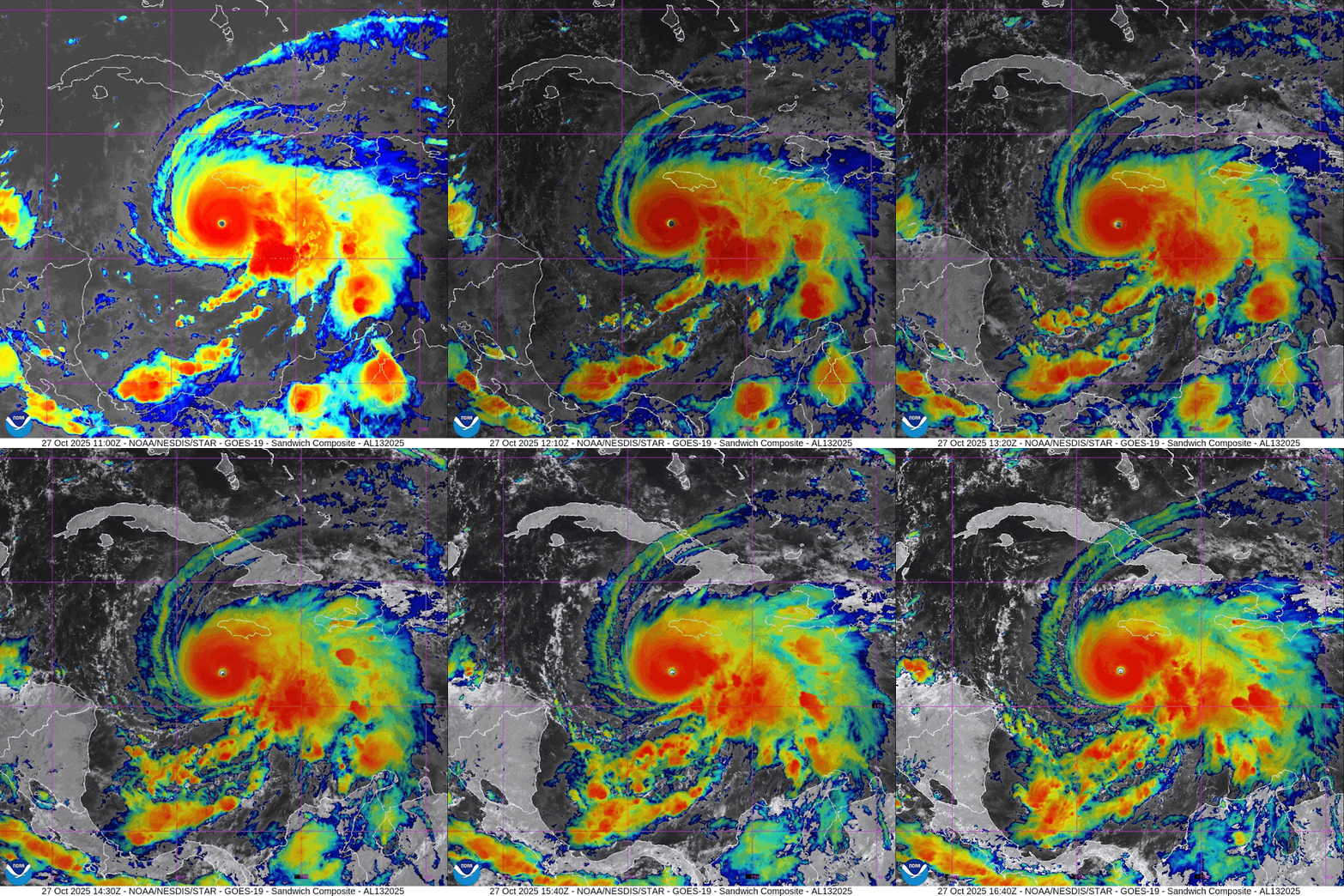
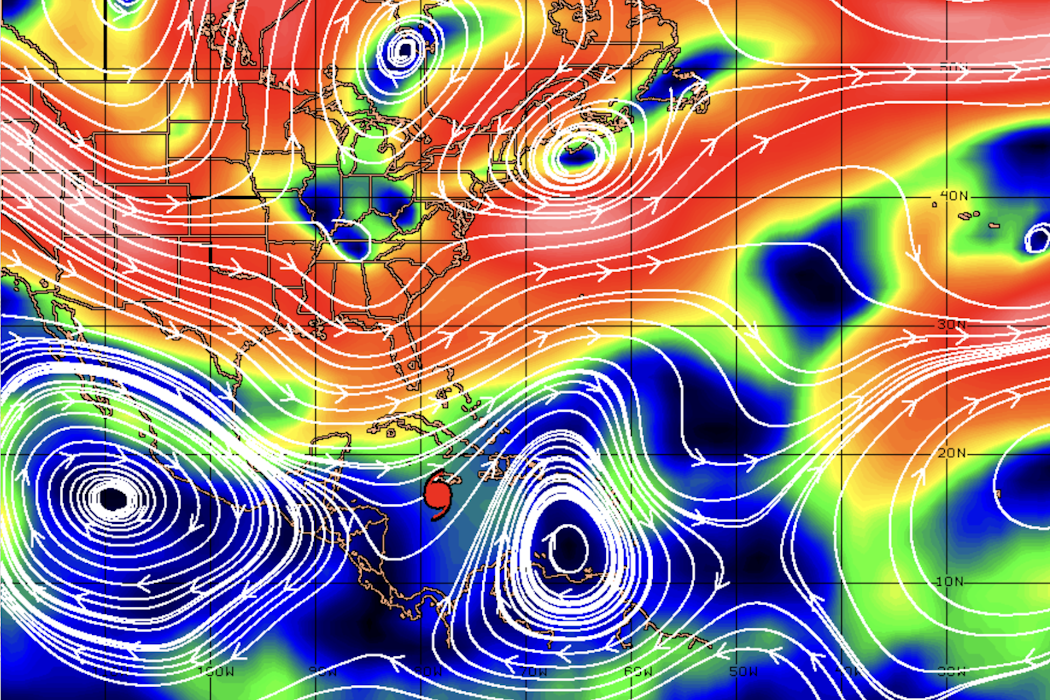
High-level steering winds sent Hurricane Melissa on a sharp turn directly into Jamaica on Oct. 28, 2025. Cooperative Institute for Meteorological Satellite Studies/University of Wisconsin-Madison

Hurricane Melissa grew into one of the most powerful Atlantic tropical cyclones in recorded history on Oct. 28, 2025, hitting western Jamaica with 185 mph sustained winds. The Category 5 hurricane blew roofs off buildings and knocked down power lines, its torrential rainfall generated mudslides and flash flooding, and its storm surge inundated coastal areas.

Melissa had been wobbling south of the island for days, quickly gaining strength over the hot Caribbean Sea, before taking a sharp turn to the northeast that morning.

An animation of the hurricane between central America and Jamaica.
Hurricane Melissa, shown on Oct. 27, 2025, grew into an extremely powerful 185-mph hurricane just south of Jamaica before turning sharply northeastward and crashing into the island.
NOAA

As a hurricane researcher, I work with colleagues at NOAA’s Atlantic Oceanographic and Meteorological Laboratory to improve predictions of hurricanes’ tracks and strengths. Accurate forecasts of Melissa’s turn to the northeast gave many people across Jamaica, Cuba and the eastern Bahamas extra time to evacuate to safer areas before the hurricane headed their way.

Throughout 2025, most hurricanes similarly veered off toward the open Atlantic, sparing the U.S. mainland. To understand the forces that shaped these storms and their paths, let’s take a closer look at Melissa and the 2025 hurricane season.

The origins of Atlantic tropical cyclones

Before they evolve into powerful hurricanes, storm systems start out as jumbled clusters of clouds over the open ocean.

Many of 2025’s Atlantic tropical cyclones began life far from the U.S. coastline in the warm waters west of Africa, near the Cape Verde islands. These Cape Verde hurricanes are consistently blown toward the United States, especially during peak hurricane season.

A map shows 13 storms, most starting far from the U.S. and curving off into the open Atlantic.
Storm tracks for the 2025 Atlantic tropical cyclone season, through Oct. 26. Hurricane Melissa’s meandering track is seen far to the south, just off the coast of Jamaica.
Sandy14156/Wikimedia Commons, using NOAA data

The driving force steering these storms is a hot, semi-permanent high-pressure air mass often found spinning above the Atlantic Ocean known as the Bermuda high or Azores high.

When this high-pressure system, or subtropical ridge, is positioned farther east, closer to the Azores islands, its strong, clockwise-rotating winds typically curve tropical cyclones briskly out to sea toward their demise in the cold North Atlantic. When the high-pressure ridge is closer to the U.S. and centered over Bermuda, it can send storms crashing into the U.S. coast.

How the Bermuda high-pressure system can steer tropical cyclones. Many of 2025’s storms were steered out to sea by the high-pressure system being positioned further to the East.

Because that high-pressure system was positioned further east in summer and fall 2025, many of the season’s strongest storms, such as hurricanes Erin, Gabrielle and Humberto, swung east of the U.S. mainland. Combined with an active jet stream above the Southeast U.S., most tropical cyclones were steered away from the Atlantic coast.

The clouds that eventually became Hurricane Melissa traveled farther to the south, avoiding the Bermuda high and making their way into the Caribbean Sea.

Tropical cyclones’ high-stakes balancing act

After a tropical cyclone forms, its path is guided by the movement of air surrounding it, known as atmospheric steering currents. These steering currents direct the forward movement of storms in the Atlantic at speeds ranging from a sluggish 1 mph to a blistering 70 mph or more.

Hurricane Melissa’s meandering track was determined by these steering currents. At first, the system was caught between winds from high-pressure systems to its northwest and southeast. This setup trapped the storm over the warm Caribbean Sea for days, just to the south of Jamaica.

An animation shows the direction of steering winds over four days
Charts of high-level steering currents over five days, Oct. 23-27, 2025, show the influences that kept Hurricane Melissa (red symbol) in place for several days. The strong curving winds in red are the jet stream, which would help steer Melissa northeastward toward the open Atlantic.
Cooperative Institute for Meteorological Satellite Studies/University of Wisconsin-Madison, CC BY-ND

As a tropical cyclone is steered by outside forces, its internal makeup also constantly evolves, changing how the storm interacts with its steering currents.

When Hurricane Melissa was a weak, lopsided system, it didn’t receive much of a push from its upper-level environment. But as the hurricane gained strength from the very warm ocean below, it grew taller. Like a skyscraper reaching high into the air, major hurricanes like Melissa have towering thunderstorms and feel more of a push from upper-level winds than weaker storms do.

Melissa’s center also became aligned vertically, allowing the tropical cyclone to rapidly intensify from 70 mph to a staggering 140 mph sustained winds in 24 hours.

A map shows warm water temperatures south of Jamaica, where Hurricane Melissa passed through.
Hurricanes need ocean temperatures above about 80 degrees Fahrenheit (27 degrees Celsius) for a storm to gain enough energy to strengthen. The water south of Jamaica was much warmer than that while Hurricane Melissa meandered there, quickly gaining strength on Oct. 26, 2025.
NOAA Coral Reef Watch

Eventually, the precarious atmospheric balancing act holding Melissa in place collapsed. A ripple in the jet stream known as an atmospheric trough steered the hurricane to the northeast and into the Jamaican coast.

Melissa’s snail’s pace of about 2 mph was rare but not unheard of. Slow storms like Melissa are more common in October, as steering currents are often very weak or pushing in opposite directions, which can trap a tropical cyclone in place. Similar steering currents affected Hurricane Matthew in 2016.

Tragically, stalled tropical cyclones often bring prolonged rainfall, winds, flash flooding and storm surge with them. The wind and downpours can be extreme for mountain communities, as their high topography enhances local rainfall that can trigger mudslides and flooding, as Jamaica saw from Melissa.

Improving storm track forecasting

Meteorologists generally understand how atmospheric steering currents guide tropical cyclones, yet forecasting these wind patterns remains a challenge. Depending on the atmospheric setup, certain hurricanes can be harder to forecast than others, as changes to steering currents can be subtle.

New approaches to hurricane track forecasting include using machine learning models, such as Google DeepMind, which outperformed many traditional models in forecasting storm tracks this hurricane season. Rather than solving a complex set of equations to make a forecast, DeepMind looks at statistics of previous hurricane tracks to infer the path of a current storm.

NOAA Hurricane Hunter reconnaissance data can also accelerate progress in predicting tropical cyclone paths. Recent tests show how accounting for specific measurements from within a hurricane can improve forecasts. Certain flight patterns that Hurricane Hunters and drones fly through strong hurricanes can also improve predictions of a storm’s path.

Scientists and engineers aim to further improve hurricane track and intensity forecasts through research into storm behavior and improving hurricane models to better inform the public when danger is on the way.

The Conversation

Ethan Murray receives funding from the Office of Naval Research and National Science Foundation. He works for The University of Miami and NOAA Atlantic Oceanographic and Meteorological Laboratory.

ref. Hurricane Melissa turned sharply to devastate Jamaica − how forecasters knew where it was headed – https://theconversation.com/hurricane-melissa-turned-sharply-to-devastate-jamaica-how-forecasters-knew-where-it-was-headed-268183

Agricultural drones are taking off globally, saving farmers time and money

Source: The Conversation – USA (2) – By Ben Belton, Professor of International Development, Michigan State University

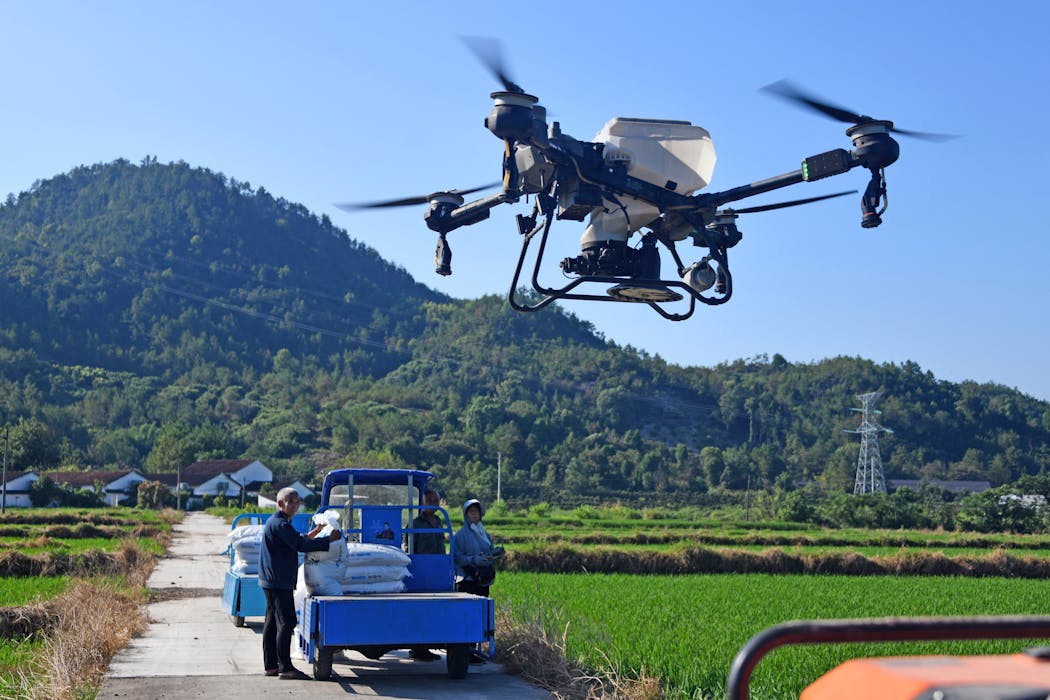
A farmer in China operates a drone to spray fertilizer on fields. Wang Huabin/VCG via Getty Images

Drones have become integrated into everyday life over the past decade – in sectors as diverse as entertainment, health care and construction. They have also begun to transform the way people grow food.

In a new study published in the journal Science, we show that use of agricultural drones has spread extremely rapidly around the world. In our research as social scientists studying agriculture and rural development, we set out to document where agricultural drones have taken off around the world, what they are doing, and why they have traveled so far so fast. We also explored what these changes mean for farmers, the environment, the public and governments.

From toys to farm tools

Just a few years ago, agricultural drones were expensive, small and difficult to use, limiting their appeal to farmers. In contrast, today’s models can be flown immediately after purchase and carry loads weighing up to 220 pounds (100 kg) – the weight of two sacks of fertilizer.

Their prices vary from country to country due to taxes, tariffs and shipping costs. In the U.S., a drone owner can expect to spend US$20,000 to $30,000 for the same equipment that a farmer in China could buy for less than $10,000. However, most farmers hire service providers, small businesses that supply drones and pilots for a fee, making them easy and relatively affordable to use.

A promotional video for the DJI Agras T100 agricultural drone, which can carry a maximum load of 220 pounds (100 kg).

Agricultural drones are now akin to flying tractors – multifunctional machines that can perform numerous tasks using different hardware attachments. Common uses for drones on farms include spraying crops, spreading fertilizer, sowing seeds, transporting produce, dispensing fish feeds, painting greenhouses, monitoring livestock locations and well-being, mapping field topography and drainage, and measuring crop health. This versatility makes drones valuable for growing numerous crops, on farms of all sizes.

Technological leapfrogging

We estimated the number of agricultural drones operating in some of the world’s leading agricultural countries by scouring online news and trade publications in many different languages. This effort revealed where agricultural drones have already taken off around the world.

Historically, most agricultural technology – tractors, for example – has spread from high-income countries to middle- and then lower-income ones over the course of many decades. Drones partially reversed and dramatically accelerated this pattern, diffusing first from East Asia to Southeast Asia, then to Latin America, and finally to North America and Europe. Their use in higher-income regions is more limited but is accelerating rapidly in the U.S.

China leads the world in agricultural drone manufacturing and adoption. In 2016, a Chinese company introduced the first agriculture-specific quadcopter model. There are now more than 250,000 agricultural drones reported to be in use there. Other middle-income countries have also been enthusiastic adopters. For instance, drones were used on 30% of Thailand’s farmland in 2023, up from almost none in 2019, mainly by spraying pesticides and spreading fertilizers.

In the U.S., the number of agricultural drones registered with the Federal Aviation Administration leaped from about 1,000 in January 2024 to around 5,500 in mid-2025. Industry reports suggest those numbers substantially underreport U.S. drone use because some owners seek to avoid the complex registration process. Agricultural drones in the U.S. are used mainly for spraying crops such as corn and soy, especially in areas that are difficult to reach with tractors or crop-dusting aircraft.

Safer, but not risk-free

In countries such as China, Thailand and Vietnam, millions of smallholder farmers have upgraded from the dangerous and tiring job of applying agrochemicals by hand with backpack sprayers to using some of the most cutting-edge technology in the world, often using the same models that are popular in the U.S.

Shifting from applying chemicals with backpack sprayers to drones substantially reduces the risk of direct exposure to toxins for farmers and farmworkers.

However, because drones usually spray from a height of at least 6 feet (2 meters), if used improperly, they can spread droplets containing pesticides or herbicides to neighboring farms, waterways or bystanders. That can damage crops and endanger people and nature.

Saving labor or displacing it?

Drones save farmers time and money. They reduce the need for smallholders – people who farm less than 5 acres (2 hectares), which account for 85% of farms globally – to do dangerous and tiring manual spraying and spreading work on their own farms. They also remove the need to hire workers to do the same.

By eliminating some of the last remaining physically demanding work in farming, drones may also help make agriculture more attractive to rural youth, who are often disillusioned with the drudgery of traditional farming. In addition, drones create new skilled employment opportunities in rural areas for pilots, many of whom are young people.

On the downside, using drones could displace workers who currently earn a living from crop spraying. For instance, according to one estimate from China, drones can cover between 10 and 25 acres (4 to 10 hectares) of farmland per hour when spraying pesticides. That is equivalent to the effort of between 30 and 100 workers spraying manually. Governments may need to find ways to help displaced workers find new jobs.

A person pours liquid into a tank attached to a drone, while standing near a large field.
An agricultural worker fills a drone tank with pesticide spray at a farm in Brazil.
Mateus Bonomi/Anadolu Agency via Getty Images

Sky’s the limit

Drones spray and spread fertilizers and seeds evenly and efficiently, so that less is wasted. They may also reduce damage to crops in the field and consume less energy than large farm machines such as tractors.

In combination, these factors may increase the amount of food that can be produced on each acre of land, while reducing the amount of resources needed to do so. This outcome is a holy grail for agricultural scientists, who refer to it as “sustainable intensification.”

However, much of the evidence so far on yield gains from drone-assisted farming is anecdotal, or based on small studies or industry reports.

The drone revolution is reshaping farming faster than almost any technology before it. In just five years, millions of farmers around the world have embraced drones. Early signs point to big benefits: greater efficiency, safer working conditions and improved rural livelihoods. But the full picture isn’t clear yet.

The Conversation

The authors do not work for, consult, own shares in or receive funding from any company or organization that would benefit from this article, and have disclosed no relevant affiliations beyond their academic appointment.

ref. Agricultural drones are taking off globally, saving farmers time and money – https://theconversation.com/agricultural-drones-are-taking-off-globally-saving-farmers-time-and-money-265154

SNAP benefit freeze will leave millions nationwide struggling to pay for food – including 472,711 people in Philadelphia

Source: The Conversation – USA (2) – By Félice Lê-Scherban, Associate Professor of Epidemiology, Drexel University

Currently, SNAP benefits average just over $6 per person per day. Catherine McQueen/Moment Collection via Getty Images

The Supplemental Nutrition Assistance Program, or SNAP, is the largest, most effective tool the U.S. has to reduce food insecurity. As of late 2025, it helps more than 42 million people – including 2 million Pennsylvanians and nearly half a million Philadelphians – buy groceries.

But starting Nov. 1, 2025, Pennsylvania will stop distributing SNAP benefits due to the federal government shutdown, which began Oct. 1.

Félice Lê-Scherban, a public health researcher and associate professor of epidemiology at Drexel University, studies food insecurity among low-income young children and their families in Philadelphia. The Conversation U.S. asked her about the program and what impact its suspension would have – especially in Philadelphia.

What is SNAP?

SNAP benefits – sometimes called food stamps – are provided through a federally funded program administered by the states. The amount of help received depends on a family’s income and the number and ages of the people in the household. Currently, benefits average just over US$6 per person per day. In Pennsylvania, the monthly benefits are loaded onto participants’ electronic benefits transfer cards, or EBT cards, during the first 10 business days of each month.

Researchers have found that SNAP benefits reduce poverty and food insecurity – a term for when people don’t have consistent access to enough food for all household members to lead active, healthy lives. It also contributes to healthy growth and development in childhood, and lower risks for obesity, diabetes, hypertension and poor mental health later in life.

Studies have also found that when eligible families lose access to SNAP benefits, even temporarily, they are more likely to get sick, and their children are at a greater risk of developmental delays.

Additionally, losing SNAP and similar benefits can strain household finances, forcing low-income people to choose between skipping meals or forgoing other basic needs like rent, utilities and prescription drugs.

How is the government shutdown affecting SNAP benefits in Pennsylvania?

The Department of Agriculture notified SNAP state agency directors in October that it would stop funding the program should the shutdown continue past Nov. 1. The federal agency directed all states to withhold November benefits until further notice.

The USDA is taking this step even though it has more than $5 billion in its coffers, which could fund approximately two-thirds of what the nation spends each month on SNAP benefits.

In the more than 60-year history of SNAP and the programs that preceded it, the USDA has never before refused to spend contingency funds to disburse monthly benefits. During previous shutdowns, including the 35 days in 2018-2019, the federal government used the department’s contingency funds to ensure SNAP wasn’t interrupted.

On Oct. 17, the Pennsylvania Department of Human Services issued a statement to the more than 2 million Pennsylvanians participating in SNAP. It warned them that they won’t receive their November benefits or any benefits thereafter until the USDA releases funds again.

Pennsylvania is also among 17 states that have suspended approving new SNAP applications until the government reopens, leaving hundreds, if not thousands, of food-insecure families in a prolonged state of hardship.

This disruption is likely to rattle the broader economy. About 12% of U.S. grocery sales are made with SNAP benefits, and over 9,800 supermarkets and other Pennsylvania retailers accept them.

What does this mean for people in Philadelphia?

There are over 470,000 SNAP recipients in Philadelphia – 3 in 10 Philadelphians – who will not receive these benefits until the government shutdown ends.

In the meantime, state agencies are urging people who get SNAP benefits to visit food banks, food pantries and soup kitchens, which are run by nonprofits and not the government. Unfortunately, it seems unlikely that those organizations will be able to keep up. For every meal nonprofits provide, SNAP provides nine.

Additionally, the Pennsylvania state budget impasse – the Commonwealth has been without a budget for nearly four months – has already affected other state-run programs that food banks in Philadelphia rely on.

This is particularly troubling because even when receiving their full benefit, most people who are enrolled in SNAP across the country say that they frequently struggle to afford a healthy diet.

Low-income parents and guardians in Philadelphia, according to research I’ve conducted and studies by my colleagues, say they strain to stretch their dollars to feed their children amid rising food prices, and sometimes skip meals or delay paying bills when the benefit runs out before the end of the month.

A robust body of evidence has demonstrated the serious mental and physical harm that food insecurity – even for short periods – causes across the lifespan. It can lead to billions of dollars of avoidable costs due to health care and educational needs, and lost productivity.

How this disruption of SNAP and other nutrition programs increases food insecurity will be hard to measure. The Trump administration has canceled the USDA’s long-standing annual report on food security.

What can state and federal leaders do to fund the program?

The federal government and Pennsylvania lawmakers have options to at least restore some SNAP benefits in the state while the shutdown continues.

The USDA can reverse its earlier ruling and disburse its more than $5 billion in emergency funds and issue guidance that states should continue to accept and process new SNAP applications. This would help states provide at least partial benefits to their residents enrolled in SNAP and ensure that new applicants get all the benefits they’re eligible for.

The federal government can allocate discretionary and reserve funds to SNAP for the duration of the shutdown so benefits are not interrupted. The government did this with Supplemental Nutrition for Women, Infants, and Children, or WIC benefits, as well as farm aid earlier this month.

The government of Pennsylvania and other state governments can pick up the costs of the program for November with their own state budget stabilization funds, also known as “rainy day funds.” Pennsylvania’s rainy day fund holds more than $7 billion – well above what’s needed to cover its SNAP benefits for November. Some states have already committed to doing this.

Read more of our stories about Philadelphia and Pennsylvania.

The Conversation

Félice Lê-Scherban is the Philadelphia site principal investigator of Children’s HealthWatch. She receives funding from the National Institutes of Health. The content is solely the responsibility of the authors and does not represent the official views of the National Institutes of Health.

ref. SNAP benefit freeze will leave millions nationwide struggling to pay for food – including 472,711 people in Philadelphia – https://theconversation.com/snap-benefit-freeze-will-leave-millions-nationwide-struggling-to-pay-for-food-including-472-711-people-in-philadelphia-268337

How Hershey’s chocolate survived an attack from Mars − and adopted a business strategy alien to its founder

Source: The Conversation – USA (2) – By John Haddad, Professor of American Studies, Penn State

Hershey’s chocolates are made in Hershey, Pa., a town once considered an industrial utopia.
Gary Burke/Moment Collection via Getty Images

Walk into any grocery store to stock up for Halloween and you will discover that, for chocolate treats, you have two basic choices:

Will it be Mars or Hershey?

I often buy both, but that is beside the point. The point is that the two giants compete for market share, but both enjoy robust sales. In other words, a relatively stable duopoly defines the U.S. chocolate candy market.

But it wasn’t always like this.

Before the 1960s, the Hershey Chocolate Corp. reigned supreme as the undisputed chocolate king. It was in that decade that Mars went for Hershey’s jugular. Hershey Chocolate’s response brought lasting change – to its candy business, the local community and Hershey Park, its chocolate-themed amusement park.

As a professor of American studies at Penn State Harrisburg who has recently published a book on Hershey Park, I am astounded by how these changes continue to reverberate today.

Milton Hershey’s paternalistic capitalism

Before the 1960s, change was not a word one associated with either the town of Hershey, Pennsylvania, or its famous chocolate company. Better words would be “stability” and “productivity” – and this was by the founder’s design.

Black and white portrait of man with mustache wearing three-piece suit
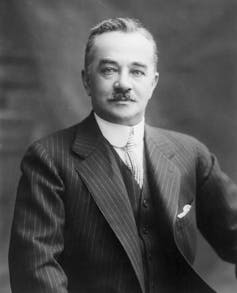
Milton Hershey founded Hershey Chocolate and built up the town of Hershey, Pa., for his employees.
Bettman/Bettman Collection via Getty Images

When Milton Hershey entered the confection industry in the 1880s, violent clashes between corporations and labor roiled American society. Hershey imagined a better way: paternalistic capitalism.

In the early 1900s, he built a chocolate factory and planned community out in the farms and pastures of central Pennsylvania. Instead of offering men and women wage-earning jobs and nothing else, he took care of his workers. They owned nice homes and benefited from a generous array of free or subsidized services and amenities: snow removal, garbage collection, trolley lines, good schools, a junior college, zoo, museum, sports arena, library, community center and theater.

They even had their own amusement park.

But this was a reciprocal relationship. In return, employees were expected to work hard, exhibit loyalty, practice clean living and refrain from labor agitation. With the exception of a strike during the Great Depression, the company and town lived in harmony. Milton Hershey called the place an “industrial utopia,” and residents largely agreed.

“Moving to Hershey,” one recalled, “was like moving to paradise.”

Harmony also defined Hershey’s relations with Mars. At the time, Hershey produced only solid chocolate – think of Hershey bars and Kisses. In contrast, Frank Mars’ company specialized in chocolate-covered snacks, suches Snickers or Milky Way, in which milk chocolate is poured over nuts, caramel or nougat.

Where did that chocolate coating come from?

Hershey, of course.

In those days, Mars was a client, not a rival. Without competition, Hershey enjoyed the luxury of not having to worry about market share. Amazingly, the company did not advertise under Milton Hershey and continued this policy after his death in 1945.

Hershey in crisis

Everything changed in 1964. The catalyst for change was Forrest Mars, the founder’s hard-charging son who was a true disrupter.

After seizing control of his father’s company, Forrest Mars set his sights on dethroning Hershey. As reporter and author Joël Glenn Brenner explains, the younger Mars boldly terminated the partnership with Hershey while ordering his engineers to learn how to make Hershey-caliber chocolate in six months. He also modernized the factory and ordered a surge in advertising, all to wrestle market share away from Hershey, the “sleeping giant.”

Sepia-toned photograph of woman working large machine in a factory
The production line at the Hershey chocolate factory in 1969.
Peter Simins/Pix/Michael Ochs Archives via Getty Images

The strategy worked. By the decade’s end, Mars had caught Hershey in terms of market share and pushed the chocolate colossus into crisis.

The good news for Hershey was that it had at the helm two forward-looking leaders, Harold Mohler and Bill Dearden. Though standard practice had always been to hire locally and from within, Mohler and Dearden recruited outsiders with MBAs from Harvard and Wharton to initiate sweeping reforms aimed at modernizing its archaic business practices.

The company opened a public relations office, conducted market research, installed IBM mainframe computers to crunch numbers, retrained its sales force and created a marketing department. Many employees, a new executive joked, were so behind the times that they had thought marketing was “what their wives did … with a shopping cart.”

This effort culminated with the release of the company’s first TV commercials starting in 1969. The sleeping giant had awoken.

An iconic TV commercial for Reese’s, which was purchased by Hershey in the early 1960s.

The company’s next move altered the town forever. As a cost-cutting measure, it terminated the free services and amenities at the core of Milton Hershey’s vision. The era of paternalism was over.

As the company liquidated assets, residents howled in protest.

“It was a very traumatic time for the community,” one executive recalled.

For residents, the only consolation was that at least the amusement park would stay the same.

Or would it?

By the late 1960s, Hershey Park had degenerated into what one executive called “an iron park with a bunch of clanging rides.” Leadership faced a pivotal decision: renovate the park or close it forever.

The park had such a “rich heritage,” one executive recalled, that to shutter it would “put a stamp of negative feeling within the community.”

The company elected to renovate.

Hersheypark’s transformation

But how to renovate was another matter.

In the 1960s and 1970s, owners of traditional amusement parks had to think twice before investing in their properties. That was because Disneyland, the nation’s first theme park, had caused a sensation when it debuted in 1955. Its incredible popularity, and the opening of the more spectacular Disney World in 1971, placed pressure on old-fashioned amusement parks everywhere.

After commissioning a feasibility study, Hershey officials decided to gamble: Instead of fixing up the old amusement park, they would convert it into a Disney-style theme park. To pay for the massive overhaul, they redirected capital earned from the dismantling of Milton Hershey’s paternalism. Reborn as “Hersheypark” in 1973, the ever-growing complex has become a mecca for chocolate lovers and thrill-ride seekers from across the Northeast.

Pharmacy shelves lined with Halloween candy
Hershey and Mars products are ubiquitous in trick-or-treat hauls.
Lindsey Nicholson/UCG/Universal Images Group via Getty Images

Every year, Halloween reminds me of this remarkable transformation. The stores become stocked with Hershey brands, and the theme park comes alive with its spooky “Dark Nights” entertainment.

In the past, workers at the Hershey plant would joke that they had “chocolate syrup in their veins.” These days, they clearly have innovation too, and that creative spirit is largely due to Forrest Mars. By giving Hershey the jolt it needed, he shook up the status quo and changed the chocolate company, town and park forever.

Read more of our stories about Philadelphia and Pennsylvania.

The Conversation

John Haddad does not work for, consult, own shares in or receive funding from any company or organization that would benefit from this article, and has disclosed no relevant affiliations beyond their academic appointment.

ref. How Hershey’s chocolate survived an attack from Mars − and adopted a business strategy alien to its founder – https://theconversation.com/how-hersheys-chocolate-survived-an-attack-from-mars-and-adopted-a-business-strategy-alien-to-its-founder-267722

CDC’s ability to prevent injuries like drowning, traumatic brain injury and falls is severely compromised by Trump cuts

Source: The Conversation – USA (3) – By Greta Massetti, Professor of Population Health Sciences, Georgia State University

Motor vehicle crashes kill more than 40,000 people in the U.S. every year. Cavan Images/Getty Images

Much has been written about the unprecedented impact that the second Trump administration has had on the Centers for Disease Control and Prevention, from massive job cuts and entire programs being wiped out to leadership shake-ups and the undermining of science. But behind every headline, countless stories have gone untold about the real-world impacts that these changes will have on everyday people.

I’m a public health expert who spent 18 years as a scientist at the CDC. I see the systematic dismantling of the agency as a significant risk to the country’s ability to keep Americans safe and give medical professionals the data needed to keep them that way.

Most of my time at the CDC was spent in the National Center for Injury Prevention and Control, one of the hardest hit of the agency’s programs. The center has lost more than half of its staff through layoffs alone and as many as two-thirds when other reductions are accounted for.

Injuries affect people of all ages

More Americans die from injuries and violence in the first half of life than from any other cause, including cancer, HIV or the flu. These include suicide, overdose, homicide and unintentional injuries.

The mass layoffs that the Trump administration has carried out in 2025 struck at the core of the injury center’s programs on violence prevention and eliminated the work being done to prevent unintentional injuries like drowning, traumatic brain injuries, falls in older adults and motor vehicle crashes.

As of late October, only the CDC programs focused on overdose prevention, suicide and the National Violent Deaths Reporting System remain in the injury center.

Unintentional injuries cost the U.S. $4.5 trillion annually and directly affect workforce and community stability. This includes $323 billion in medical care as well as costs from lost work productivity.

Every unintentional injury represents a preventable tragedy — a fall, a crash, a drowning — that alters the course of a life. Like me, many Americans are eager for information about keeping their loved ones safe.

Making youth sports safer

One critical injury center program that was cut from CDC in April is its HEADS UP program, which is aimed at preventing and reducing head trauma. The program includes online courses for youth coaches, health care providers, schools, athletic trainers and others that provide information about how to protect kids from concussions and other serious brain injuries.

Traumatic brain injury affects more than 230,000 people in the U.S. A traumatic brain injury is a disruption in the normal function of the brain that can be caused by a bump, blow or jolt to the head, or a penetrating head injury.

People of all ages are at risk of experiencing a traumatic brain injury. For young people, concussions from contact sports account for 45% of all emergency department visits for a traumatic brain injury each year.

Older female doctor in a lab coat examines a young boy who is holding an ice pack to his head.
Concussions in youth contact sports are the cause of nearly half of all traumatic brain injury emergency room visits annually.
SDI Productions/E+ via Getty Images

HEADS UP specifically aims to create education and awareness around youth traumatic brain injuries. Currently, 45 states recommend or require HEADS UP materials or training to be used by sports programs and schools in their concussion prevention laws.

The elimination of the CDC’s injury prevention team will undoubtedly result in a loss of progress in preventing these avoidable injuries. It will also leave gaps in states whose coaches are unable to fulfill their training requirements.

Preventing drownings

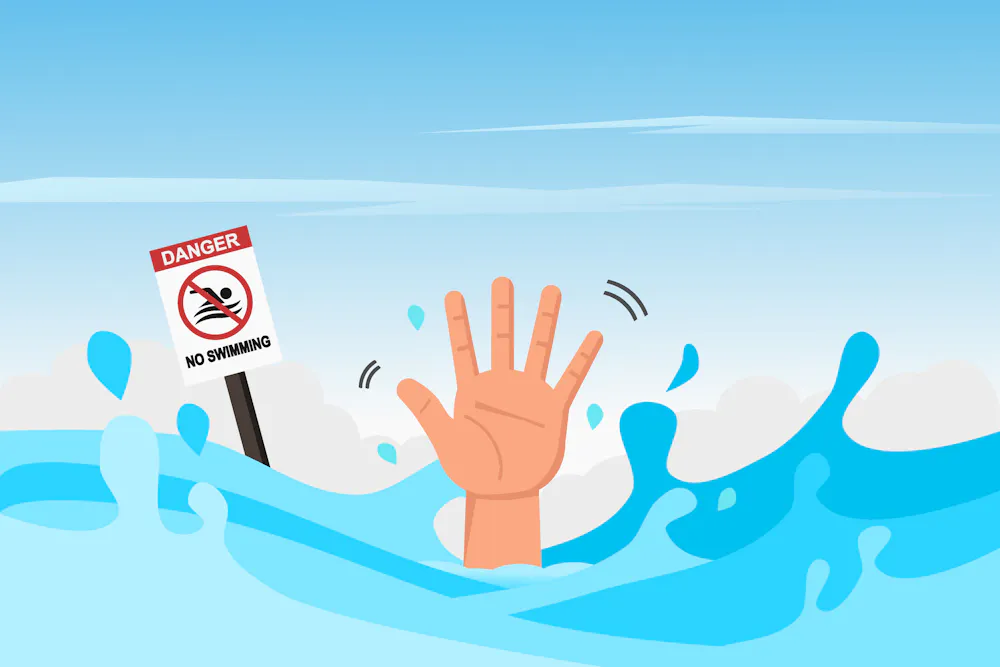
Drowning is the No. 1 cause of death for children ages 1 to 4, and fatal and nonfatal drownings cost the U.S. $56 billion each year. Drowning deaths have been increasing steadily among young children since 2019.

When CDC’s drowning prevention team was eliminated, the injury center was the only federal public health department focused on preventing drowning.

It did so on a shoestring: With only $2 million annually appropriated by Congress, the team stretched every penny to maximize its impact on public health by strengthening data systems and supporting communities in getting access to lifesaving swimming and water safety skills.

Every drowning death of a young child is a preventable, costly tragedy.

The critical work of the CDC’s drowning prevention team brought critical lifesaving work to communities across America by providing water safety skills and training to more than 22,000 children in 2024 alone. At a cost of just $110 per child, teaching a child to swim reduces their risk of drowning by up to 88%.

Illustration of a hand reaching out of the water for help, with a 'no swimming' sign in the background.
Drowning deaths have been rising in young children.
fadfebrian/iStock via Getty Images Plus

Keeping older adults safe from falls

Injuries also affect older adults in significant ways.

Falls are the leading cause of injury and death among adults age 65 and over, and 1 of 4 older adults falls each year. Falls result in hospitalizations, hip fractures and traumatic brain injuries, which can be debilitating and deadly for older adults.

A CDC program known as STEADI – short for Stopping Early Accidents, Deaths and Injuries – provides educational materials to make preventing falls a routine part of clinical care that doctors provide. Staff cuts resulted in the elimination of STEADI.

In the U.S. $2 out of every $3 of the $80 billion spent in medical costs on falls are paid by Medicare, representing 9% of the total Medicare spending on older adults.

Strategies aimed at reducing falls in older adults are key to lowering Medicare spending, showing how the critical work of the CDC is essential to reducing health care costs to individuals and taxpayers.

A caregiver helps support an elderly woman as she braces herself against two walls.
About 9% of Medicare spending in older adults stems from falls.
sasirin pamai/iStock via Getty Images Plus

Safer roads for drivers and pedestrians

In the U.S., motor vehicle crashes are a leading cause of death, killing more than 100 people every day and over 40,000 people each year. In 2023, deaths from road crashes resulted in an estimated $457 billion in medical costs and expenses.

Experts at CDC’s injury center developed tools for helping to better track and monitor motor vehicle crash injuries. This work made it possible for states to look at trends in transportation-related injuries within hours instead of waiting for the previous two- to three-year lag in data.

Before this program was eliminated by the Trump administration, CDC’s experts created resources for parents of teen drivers like me to keep their teens safe on the road. They also shared information to improve the safety of child passengers and older adult drivers.

Turning complex data into usable information

When health care providers and others face questions about keeping children and adults safe, they have long turned to the CDC to translate complex information into practical, actionable advice.

For instance, CDC’s clinical guidance helped improve diagnosis of mild traumatic brain injuries in children and teens and has guided doctors in emergency rooms and clinics to provide consistent, high-quality care to their patients. CDC experts also provided data on emergency department visits due to drowning injuries and practical resources for doctors and pharmacists to identify patients at risk of falls.

As a public health expert, I see the deep cuts to CDC’s injury prevention programs as serious threats to public health broadly. As a mother, sister, daughter and neighbor, I worry that my loved ones and their doctors will not have the information and resources they need to stay healthy and injury-free.

The Conversation

Greta Massetti does not work for, consult, own shares in or receive funding from any company or organization that would benefit from this article, and has disclosed no relevant affiliations beyond their academic appointment.

ref. CDC’s ability to prevent injuries like drowning, traumatic brain injury and falls is severely compromised by Trump cuts – https://theconversation.com/cdcs-ability-to-prevent-injuries-like-drowning-traumatic-brain-injury-and-falls-is-severely-compromised-by-trump-cuts-267531

Washington state settles controversy over child abuse law that tested the limits of ‘priest-penitent’ privilege

Source: The Conversation – USA (3) – By Ann M Murphy, Professor of Law, Gonzaga University

Under church law, Catholic priests are forbidden from breaking the ‘seal of confession.’ Miguel Sotomayor/Moment via Getty Images

For months, a Washington state bill generated controversy over two critical interests: protecting children from abuse and protecting the freedom of religion.

Signed by the governor in May 2025, SB 5375 designated clergy as mandatory reporters, requiring them to report child sexual abuse, physical abuse and neglect – even if they learned of the abuse during a confidential sacred rite.

Some faiths, including the Catholic Church and Eastern Orthodox churches, prohibit clergy from revealing information learned through a confession or sacrament. In the Catholic Church, there are no exceptions – and the penalty for disclosure is excommunication.

In mid-October, however, Washington state announced it would not enforce the mandatory reporting requirement for information learned during confidential rites. On Oct. 14, 2025, a federal court approved the state’s agreements with groups of Catholic and Orthodox clergy who had sued to block that part of the law, arguing it violated their religious freedom. The U.S. Department of Justice had also intervened, claiming the law discriminates against Catholics.

Reporting laws can be complicated by what is known as “legal privilege”: the rights granted to certain people, such as spouses or lawyers of suspects, to keep confidentiality by refusing to cooperate with an investigation. As a law professor, I have written often about clergy privilege, as well as other legal privileges. The attorney-client privilege is the oldest, dating to the 16th century, but the “priest-penitent privilege” has a long history as well.

US landscape

It was not until the 1960s that U.S. states began using mandatory reporting laws to protect children from abuse. Some laws apply to any person who learns of abuse. Others specifically mention categories of people, such as nurses and teachers.

A teacher in a striped sweater crouches as she speaks with a girl, seated on a bench, who wears a red sweater and black skirt.
People designated as mandatory reporters must share information about suspected abuse with authorities.
10’000 Hours/Digital Vision via Getty Images

Today, a majority of states require religious personnel to report suspected child abuse to law enforcement. However, most have an exemption for clergy who learn about abuse during a rite or prayer.

Several states do not have such an exemption. However, the text of their laws do not specifically mention religious leaders, which may be why they did not provoke as much controversy as Washington’s bill. For example, North Carolina requires “any person” who suspects abuse to report it.

Before SB 5375, Washington excluded clergy entirely from mandatory reporting requirements that apply to many other professionals, such as medical professionals, therapists and school personnel.

Now, under the October agreements filed in court, clergy are included in the list of mandatory reporters, but they are not required to report anything they learn about during a confession or sacred rite. The Vatican also instructs bishops to report abuse by priests, deacons and prelates to civil authorities.

2 key issues

There are two issues at play in clergy reporting laws.

One is whether clergy must take the initiative to report abuse that they learn about through their professional duties.

The other is whether clergy members have an evidentiary privilege – that is, the right to refuse to testify in court, or to answer questions during investigations, in order to protect their parishioners’ privacy.

Although mandatory reporting and clergy privilege are separate issues, both may apply in particular cases.

In 2021, for example, three children sued officials in the Church of Jesus Christ of Latter-day Saints for its failure to report their father’s abuse to authorities. The children ultimately lost their negligence case against the church because, although Arizona had a mandatory reporting statute, it also has an exception for information learned through confession or other confidential communication.

Washington state recognizes a “priest-penitent privilege.” Therefore, a priest who hears about abuse during confession may refuse to divulge what he’s heard if called into a legal proceeding. Originally, however, Washington’s new law would have required clergy to make an initial report to law enforcement, breaking the “seal of confession” – but they could have refused to cooperate with the resulting investigation.

Now, under the stipulations, clergy do not need to make an initial report if they learn of abuse through a confidential rite such as confession. In contrast, other individuals who have a legal privilege under Washington state law – for example, a spousal privilege or a physician privilege – must still report in the event of child abuse.

An older man in a suit holds his head in his hand as he sits at a table with a younger man taking notes.
Attorney-client privilege is intended to protect someone’s right to accurate legal advice.
Nitat Termmee/Moment via Getty Images

History of privilege

Under English law, the origin of most early American law, the “minister’s privilege,” as it was called, was not recognized after the Protestant Reformation of the 16th century.

In the U.S., a clergy privilege was first recognized in 1813. In People v. Philips, a Catholic priest in New York was summoned to testify about the return of some stolen jewelry – which apparently he required a parishioner to do, after hearing about the theft during confession. The court reasoned that requiring the priest to testify about what the parishioner revealed would violate his religious liberty.

Four years later, in another New York case, People v. Smith, the court found that a minister did not have grounds for a privilege because, as a Protestant, he was not bound by the same “seal of confession” rules as Catholic priests. In 1828, the New York Legislature passed a statute broadening the privilege to include all ministers and priests.

The general theory of all testimonial privileges is that it protects confidential communications that society wishes to foster. Attorney-client privilege, for example, exists so that the client may receive the best advice. The benefit of a privilege – the right to legal representation or the right to the free exercise of religion – is considered more important than society’s quest for truth.

There is a legal maxim that “the public has a right to every man’s evidence.” Privileges are an exception to this rule and thus are narrowly applied by courts.

In the United States, 1 in 4 children experience child abuse or neglect. If society believes that information about child abuse, even if disclosed during a religious rite, is more important than shielding that information, then the clergy privilege should be eliminated or weakened in such cases.

Religious freedom is a core constitutional guarantee. The question is how society should balance these two important interests.

The Conversation

Ann M Murphy does not work for, consult, own shares in or receive funding from any company or organization that would benefit from this article, and has disclosed no relevant affiliations beyond their academic appointment.

ref. Washington state settles controversy over child abuse law that tested the limits of ‘priest-penitent’ privilege – https://theconversation.com/washington-state-settles-controversy-over-child-abuse-law-that-tested-the-limits-of-priest-penitent-privilege-264002

Rediscovery of African American burial grounds provides long-overdue opportunities for collective healing

Source: The Conversation – USA (3) – By Joanna Gilmore, Adjunct Professor in Museum Studies and Bioarchaeology, College of Charleston

In the course of construction work in 2013, the remains of 36 individuals of African descent were uncovered in the heart of downtown Charleston, South Carolina. They had lain hidden for some 200 years in an unmarked 18th-century burial ground.

For more than two centuries, such burial grounds, especially those in the former American slave states, have often been erased or obscured – paved over by parking lots, built upon by highways or private development, or simply left unknown and untended. In recent years, descendant communities in places such as Bethesda, Maryland, Richmond, Virginia, St. Petersburg, Florida, and Sugarland, Texas, have called for greater recognition and respect for these long-neglected sites.

As a public archaeologist and educator who has spent over a decade working in Charleston, South Carolina, I co-direct the Anson Street African Burial Ground project – the community-led effort to honor and respectfully lay to rest the 36 African ancestors whose remains were uncovered in 2013.

This Charleston project reflects a growing recognition of African American burial grounds as important historical memory sites and unique sources of genealogical information. Yet there is still limited public understanding about how engaging with these places of sacred rest can promote collective healing, reconciliation and cross-cultural understanding.

An old, faded tombstone.
A tombstone bearing the name of Caezer Smith and dated 1839 is displayed on the site of a recently rediscovered African burial ground in Kingston, N.Y., in August 2024.
AP Photo/Seth Wenig

Cemeteries obscured by history

Since the British colonial period, racist laws and customs across America prevented enslaved and free people of African descent from using white burial grounds to bury their dead. On plantations, enslavers controlled where and how the enslaved were buried and whether burials could be marked or visited. In cities from Charleston to New York, segregated burial grounds, many now forgotten, were established by local authorities for indigent Black and white people.

Pushed to the margins, people of African descent maintained burial traditions and used impermanent or specific grave markers such as shells, bottles, clocks or ceramics – items that were culturally meaningful but often invisible or unimportant to white observers. As a result, many of these sites were neither recorded in historical documents nor officially recognized as burial grounds.

From the 1770s, African American churches, benevolent societies and funeral homes sought to establish cemeteries where Black communities could honor the dead with dignity. What began regionally – especially in Charleston and Philadelphia – quickly spread nationally during the 19th century across the American South and North.

In the decades after Reconstruction, and especially during the Jim Crow era, nearly 6 million African Americans moved north and west to escape racial violence and seek better opportunities – an event known as the Great Migration. This movement often severed ties between families and ancestral burial grounds in the South. As churches and burial societies lost members, many cemeteries fell into disrepair and were officially labeled “abandoned” by local authorities or developers.

In both rural and urban areas, Black burial grounds were often located on less valuable lands, sites that today are increasingly threatened by gentrification, development and the effects of climate change.

The Gullah Geechee, who descend from enslaved Africans from West Africa and still preserve unique cultural traditions in the southeastern U.S., argue these burial sites were never abandoned and that ancestors are still present. This perspective views the dead as actively connected to the living. For them, lacking formally designated cemetery space doesn’t make the sites any less sacred.

A tradition of sacred spaces

For many African Americans, especially in the South, death during slavery was seen as not merely an ending but a spiritual return — a “homegoing.”

Rooted in West African spiritual worldviews and carried through other traditions in America, the act of burial was often viewed as a release from bondage, a return to the ancestors and a step toward wholeness.

The Gullah Geechee traditions of coastal South Carolina emphasize ancestral presence, spiritual continuity and the sanctity of the land. In that worldview, with a porous boundary between the living and the dead, proper burial and remembrance are not only cultural imperatives but necessary for community well-being.

It was not until the early 1990s that recognition of rights over ancestral remains and sacred burial grounds began to find a wider audience.

Inspired by the 1990 Native American Graves Protection and Repatriation Act that recognized Indigenous rights over ancestral remains, African American communities increasingly asserted their own rights to ethical research, respectful handling and meaningful memorialization, especially during the 1991 New York African Burial Ground project, which reshaped public memory and archaeological ethics.

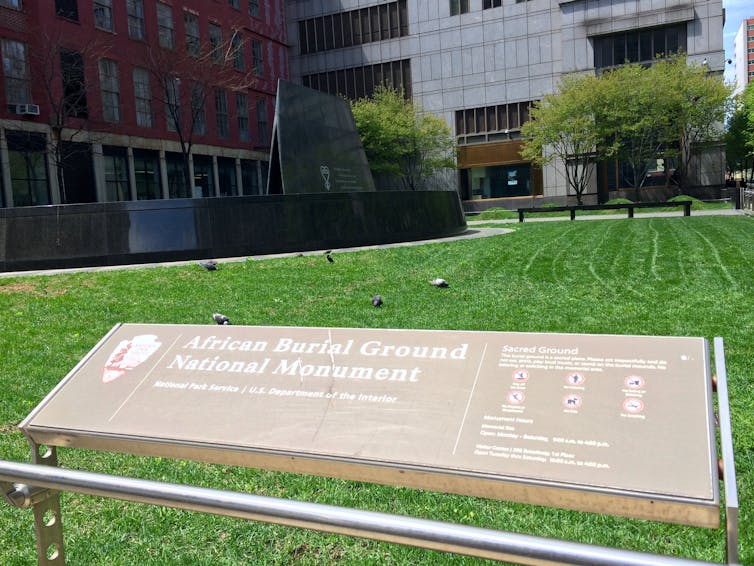
Discovered during construction in lower Manhattan, the 18th-century burial ground contained the remains of more than 400 enslaved and free Africans. Community advocacy led to the site’s protection, descendant-led research, ceremonial reburial and the establishment of a national memorial in 2006.

A monument plaque.
The Outdoor Memorial of the African Burial Ground National Monument in lower Manhattan is an important archaeological find of the 20th century and one of the most preeminent memorials to the struggle of Africans and African descendants.
Keith Getter/Getty Images

Since this time, across the U.S. and the Atlantic world, descendant-led ceremonies from Portsmouth, New Hampshire, to Key West, Florida, have restored dignity to ancestral remains.

Meanwhile, efforts to preserve African American burial grounds, including by national scholar organizations and federal lawmakers, continue amid political debates over how history should be remembered and taught.

What made the Anson Street project unique

In Charleston, the Anson Street African Burial Ground project stands out for the way Gullah Geechee traditions and descendant collaboration shaped every stage of the process — from scientific study to reinterment.

Launched as a community-led initiative in 2017, the team began by listening. Through regular gatherings, they invited questions about the ancestors’ lives and identities, and about their hopes for the reburial, centering Black community voices at every stage. The team combined scientific investigations of ancestry and health while also creating space for spiritual guidance, ceremony and descendant leadership. In doing so, the project became more than a study of the past; it became a communal act of repair and remembrance, reconnecting Charleston’s present communities with the ancestors whose stories had long been buried.

Over the next two years, the team wove this commitment into every aspect of its work: youth art programs, a college course on memorial design, public exhibitions, and school partnerships. One of the most moving moments came from conversations with schoolchildren, who decided that the ancestors should be given names before they were reburied.

That naming ceremony took place in April 2019. The names were conferred by Natalie Washington-Weik, a Yorùbá-Orisa Ọ̀ṣun priestess, a spiritual leader in a West African tradition and an African historian. She described the ritual as an “important step forward in reclaiming the humanity of the deceased people who were most likely forced to travel across the Atlantic Ocean under the terror of other humans – who saw them merely as animals.”

The ancestors were finally reinterred in a powerful public ceremony that reflected their ancestries and West-Central African spiritual traditions.

When pain is acknowledged, healing can occur

The 2019 naming and reinterment ceremonies were not simply commemorations; they were rituals of remembrance and healing.

Construction for a permanent memorial at the Anson Street site, designed by artist Stephen L. Hayes Jr., has now begun. At its center is a basin fabricated with sacred soil collected from 36 African-descended burial grounds across the Charleston region. From the basin, 36 bronze hands will rise – cast from living community members whose profiles reflect those of the ancestors. Raised in gestures of prayer, resistance and reverence, these hands link past to present.

Throughout the memorialization process, community members reflected on what it meant to participate in such a project. Many spoke of feeling pride, reverence, joy, sadness and peace. “This conversation makes me feel complete,” one participant said.

As Charleston demonstrates, these projects are not only about preserving the past – they are acts of recognition, respect and reconciliation, helping communities nationwide confront and honor the histories long denied to African-descended peoples.

The Conversation

Joanna Gilmore has received funding from the City of Charleston, the National Geographic Society, and the College of Charleston. She previously worked for the Gullah Society, Inc. a not-for-profit organization.

ref. Rediscovery of African American burial grounds provides long-overdue opportunities for collective healing – https://theconversation.com/rediscovery-of-african-american-burial-grounds-provides-long-overdue-opportunities-for-collective-healing-260394

Combien de temps un moustique peut-il survivre sans piquer un humain ?

Source: The Conversation – in French – By Claudio Lazzari, Professeur des Universités, Département de biologie animale et de génétique, Université de Tours

La capacité d’un moustique à survivre sans piquer un humain dépend de plusieurs facteurs : son état de développement, son sexe, son espèce, son environnement et ses besoins physiologiques. Contrairement à ce que l’on pourrait penser, tous les moustiques ne se nourrissent pas de sang et même ceux qui le font n’en ont pas besoin en permanence pour survivre.


À leur naissance, tous les moustiques mènent une vie aquatique et se nourrissent de matière organique et de petits organismes. Cette période dure entre une et deux semaines, selon l’espèce, la température et la disponibilité en nourriture. Ils traversent quatre stades larvaires consacrés à l’alimentation et à la croissance, puis un stade de nymphe mobile au cours duquel une transformation corporelle profonde en moustique adulte a lieu, et durant lequel ils ne se nourrissent pas.

Au cours de leur vie, les moustiques occupent ainsi deux habitats complètement différents : l’eau et le milieu aérien, et utilisent des ressources différentes. À la différence d’autres insectes piqueurs, comme les punaises de lit ou les poux, qui se nourrissent de sang durant toute leur vie, les moustiques ne le font qu’à l’état adulte.

Moustiques mâles vs moustiques femelles

Il existe plus de 3 500 espèces de moustiques différentes, dont seule une petite fraction pique les humains, soit environ 200 espèces, dont 65 sont présentes en France hexagonale.

Les mâles ne piquent jamais. Ils se nourrissent exclusivement de nectar de fleurs et de jus de plantes, riches en sucres, qui leur fournissent toute l’énergie nécessaire à leur survie. Leur espérance de vie est généralement courte, de quelques jours à quelques semaines dans des conditions idéales.

Les femelles, en revanche, ont une double alimentation. Elles se nourrissent également de nectar pour vivre au quotidien. Cependant, lorsqu’elles doivent produire leurs œufs, elles ont besoin d’un apport en protéines que seul le sang peut leur fournir. Elles peuvent piquer des humains, mais aussi d’autres animaux, selon leurs préférences. Certaines espèces sont assez éclectiques en ce qui concerne leurs hôtes, piquant tout ce qui se présente à elles, tandis que d’autres montrent une préférence marquée pour le sang humain.

La plupart des moustiques se nourrissent du sang d’animaux à sang chaud, comme les oiseaux et les mammifères, y compris les êtres humains, mais certaines espèces peuvent aussi piquer des animaux à sang-froid, comme des grenouilles ou des chenilles de papillons.

Combien de temps une femelle peut survivre sans piquer ?

Une femelle moustique peut survivre plusieurs jours, voire quelques semaines sans piquer, pourvu qu’elle ait accès à une source de sucre, comme du nectar. Ce sont donc ses besoins reproductifs, et non sa survie immédiate, qui la poussent à piquer. Sans repas de sang, elle ne pourra pas pondre, mais elle ne mourra pas pour autant rapidement.

La femelle du moustique tigre Aedes albopictus, vecteur des virus de la dengue, du Zika ou du chikungunya, peut par exemple vivre environ un mois en tant qu’adulte dans des conditions optimales. Pendant cette période, elle peut survivre sans piquer, à condition de trouver une autre source de nourriture énergétique. Il en va de même pour Culex pipiens, le moustique le plus commun en France hexagonale, qui est également capable de transmettre certains virus responsables de maladies telles que la fièvre du Nil occidental ou l’encéphalite japonaise.

Influence de l’environnement

La température, l’humidité et la disponibilité en nourriture influencent fortement leur longévité. Un milieu chaud et humide, avec de l’eau stagnante, des hôtes et du nectar à proximité, favorise une reproduction rapide et des repas fréquents. En revanche, une température relativement basse ralentit le métabolisme des insectes et leur permet d’espacer les repas.

Il est également à noter que certains moustiques entrent en diapause, une sorte d’hibernation, pendant les saisons froides et peuvent survivre plusieurs mois sans se nourrir activement. Selon l’espèce, les œufs, les larves, les nymphes ou les adultes peuvent subir cette sorte de « stand-by physiologique » durant l’hiver. Si on ne les voit pas, ce n’est pas parce qu’ils sont partis, mais parce qu’ils sont cachés et plongés dans un profond sommeil.

The Conversation

Claudio Lazzari a reçu des financements de INEE-CNRS, projet IRP “REPEL”.

ref. Combien de temps un moustique peut-il survivre sans piquer un humain ? – https://theconversation.com/combien-de-temps-un-moustique-peut-il-survivre-sans-piquer-un-humain-267882