Why are state visits such powerful diplomatic tools? A constitutional expert explains

Source: The Conversation – UK – By Stephen Clear, Lecturer in Constitutional and Administrative Law, and Public Procurement, Bangor University

The US president and first lady, at the king’s invitation, are on a state visit to the UK and will stay at Windsor castle. The event is laden with ceremony and glitz, but it also carries great political potential – for the host nation in particular.

Formal visits by foreign heads of state are generally aimed at strengthening international relationships. The invitation for this visit was handed to Donald Trump in the Oval Office, on camera, by Keir Starmer at a time when the British prime minister was seeking to act as the bridge between the US and Europe over the war in Ukraine.

While many countries have state visits, their ceremonial style varies. In the US, ceremonial honours usually involve arrival on the White House south lawn, accompanied by a military band, 21-gun salute and then a state dinner. But it is the scale and grandeur of the UK’s carriage processions, state banquets, speeches in parliament and military pageantry, tied to the monarchy’s long history, which make them a powerful diplomatic tool for the UK. Trump has made no secret of his delight at being invited for an unprecedented second state visit.

Trump’s praise of the royal family is testament to the soft power at work here. An offer of an audience with the king can deepen diplomatic ties. In this instance, it’s a powerful tool for enhancing the UK-US relationship at a time when this is a priority for Britain.

How state visits work

In the UK, the procedures surrounding state visits are guided by conventions (traditions) and protocols. The prerogative – the government’s residue discretionary power – also comes into play.

The formal invitation for a UK state visit is issued in the name of the king, as head of state. However, in practice, the decision as to who receives them is usually based on another country firstly expressing an interest, and then the UK government offering ministerial advice to the king to extend an invitation. This advice usually comes from the foreign secretary in conjunction with the prime minister, as part of their prerogative powers surrounding foreign relations.

Windsor castle
Most of Trump’s visit will take place at Windsor castle.
Shutterstock/Tomas Marek

Once an invitation is issued, the Foreign, Commonwealth and Development Office, together with the royal household, will set the agenda for ceremonies, banquets, guards of honour and meetings with the king and prime minister.

Typically, the king will receive two foreign heads of state per year. In 2024, he hosted the emperor and empress of Japan, and the amir sheikh and sheikha of Qatar. These visits are usually only a couple of days and start with a ceremonial welcome attended by the king and other senior royal family members.

Having arrived in London on Tuesday, September 16, Trump will spend Wednesday at Windsor castle with the royal family and attend a state banquet in the evening. He will leave on Thursday for Chequers, the prime minister’s country residence, where the two will hold a bilateral meeting.

Diplomatic immunity, costs and threat levels

To facilitate secure visits, the State Immunity Act 1978 affords heads of state the same privileges as are applied to the heads of diplomatic missions. The visits are further underpinned by customary international sources such as the Vienna Convention on Diplomatic Relations of 1961. While these do not make explicit reference to state visits, they establish practices surrounding immunities and the treatment of heads of state in the discharge of their public duties.

In reality, hosting the US president means the UK has to manage a high threat level – which also means paying a lot, mostly for security and policing. Trump’s last state visit in 2019 cost £3.9 million.

But state visits bring reward as well as expenditure. These are not just opportunities for ceremony: meetings take place around the pomp, and there are always vigorous diplomatic efforts to reach agreements that can be announced while leaders are delivering speeches during the visit.

Even before Trump had touched down, it had been announced that Google would invest £5 billion in artificial intelligence in the UK over the next two years. More announcements of this kind can be expected to follow.

This will go some way to meeting a call from the UK parliament’s Business and Trade Committee for Starmer to apply “maximum pressure” on Trump to secure a trade and technology alliance to rival China. Starmer will also be hoping to negotiate on tariffs during the Chequers meeting on Thursday.

What the king does

The UK is a constitutional monarchy, meaning the king’s powers are limited by law, and are largely used by the UK government rather than the royal family. While the king is able to “advise and warn”, decisions are ultimately taken by the government. In that sense, the king reigns, but does not rule.

Nonetheless, the monarchy is very useful in delicate diplomatic situations. Wielding significant soft power in international diplomacy and serving as a visible symbol of stability and continuity on the global stage as head of the Commonwealth, the king can promote shared values and cooperation across borders.

His role in awarding honours, celebrating the voluntary and charitable sector, and delivering speeches often makes him synonymous with officially recognising success and excellence. The demands made of the monarchy to remain politically neutral on all matters can lead to them being seen as a unifying force.

It is noteworthy that even during moments of intense geopolitical tension, such as after the Russian invasion of Ukraine in 2022 when significant economic sanctions were being placed on Russia by the UK, the Russian president, Vladimir Putin, still offered condolences to the new king upon the death of Queen Elizabeth II – describing it as a “heavy, irreparable loss” of an “authority on the world stage”.

In this context, the king’s capacity to act as a bridge in diplomacy is an asset. Starmer will be hoping that the cost of hosting this second state visit will translate into tangible outcomes for the UK.

The Conversation

Stephen Clear does not work for, consult, own shares in or receive funding from any company or organisation that would benefit from this article, and has disclosed no relevant affiliations beyond their academic appointment.

ref. Why are state visits such powerful diplomatic tools? A constitutional expert explains – https://theconversation.com/why-are-state-visits-such-powerful-diplomatic-tools-a-constitutional-expert-explains-265425


Serious mental illness often brings rapid weight gain – but support is missing

Source: The Conversation – UK – By Charlotte Lee, Research Fellow, Primary Care Health Sciences, University of Oxford

Rostislav Sedlacek/Shutterstock.com

Being diagnosed with a serious mental illness like schizophrenia or bipolar disorder often brings an overlooked challenge: rapid and sustained weight gain. This side-effect can raise the risk of diabetes, heart disease and early death – widening an already stark life expectancy gap.

A new study my colleagues and I conducted, published in The Lancet Psychiatry, is the largest and longest to track these changes in real-world settings. Analysing GP health records of over 113,000 adults in the UK between 1998 and 2020, we found that weight gain is not only common but predictable.

A 39-year-old newly diagnosed with schizophrenia or bipolar disorder can expect to gain 2kg in the first year and roughly 5kg within five years. Fifteen years on, the average increase is about 5.5kg. In comparison, people of the same age and gender without serious mental illness gained barely 1.5kg over the same period, on average.

Initially, we wondered if some early weight gain might reflect recovery – a bounce-back effect. People typically regain their appetite after a period of acute illness once they begin treatment. But in our study, most people were already overweight at diagnosis, and then gained enough weight to become obese over time. That shows the rise is a sustained, long-term increase, not a rebound related to recovery.

These patterns are not just statistical quirks; they reflect well-known physiological and social factors. Antipsychotics can trigger metabolic and appetite changes, and most people with a serious mental illness take these medications. In our study, people taking antipsychotics showed the greatest weight gain, an average of 5.9kg over 15 years.

Person holding a blister pack of pills.
People on antipsychotic medication gained the most weight.
Gerdesk89/Shutterstock.com

But people who had never been prescribed them still gained substantial weight, averaging 2.5kg over the same period. Other factors also play a role, from social isolation and poverty to poor access to healthy food, exercise and regular routines – but our study could not monitor them because this data is not held in GP records.

We also examined whether people were getting help to lose weight. People with schizophrenia or bipolar disorder who were overweight or obese were around 10% more likely than the average overweight or obese person to be told to lose weight. Yet, despite their much higher risk of diabetes and heart disease, they were no more likely to be offered a place on a weight-loss programme. Only 4.5% had any record of a referral, compared with about 3% of people without mental illness.

The people most at risk of chronic conditions like diabetes and heart disease are being warned to lose weight, but not given help to do so. Community weight-loss groups can be effective – but without a referral, many people don’t know they exist or can’t get to them.

Mental health staff often have to focus on immediate psychiatric care: managing crises, stabilising symptoms, and keeping people safe. That leaves little scope for preventive physical healthcare. Meanwhile, in GP practices, staff may feel unsure how to approach weight loss with people who have complex mental health needs.

The result is a gap between policy and practice. National plans like the government’s recently launched 10-Year Health Plan for England emphasise cardiovascular prevention for people with serious mental illness, but in everyday care many still slip through the cracks. This is not a uniquely British problem; health systems worldwide are struggling to deliver integrated physical and mental healthcare.

What needs to change

This pattern is not inevitable. Weight gain after a diagnosis of serious mental illness is predictable, measurable and, with the right action, preventable.

Our findings show that the years immediately after diagnosis are a critical window to act. Intervening within the first five years could reduce the risk of long-term obesity, diabetes and heart disease, improve quality of life, and narrow the life expectancy gap. It could also ease the strain on health systems already crumbling under rising rates of chronic disease.

Despite this potential, the common belief that people with schizophrenia or bipolar disorder cannot lose weight persists, and it is wrong. Effective support means intervening early with evidence-based care and regular follow-ups. Community weight-loss groups should fit the person, adapting to their changing mental health, medication side-effects, and everyday difficulties like getting to appointments.

People with mental illnesses deserve the same chance of good physical health as everyone else. If potential benefits are to be realised, primary care and mental health services must check weight at diagnosis, and refer patients with schizophrenia or bipolar disorder to tailored weight-loss programmes before rapid gains set in. This is essential to delivering on the ambitions of national plans for cardiovascular prevention in our most underserved communities.

The Conversation

Charlotte Lee does not work for, consult, own shares in or receive funding from any company or organisation that would benefit from this article, and has disclosed no relevant affiliations beyond their academic appointment.

ref. Serious mental illness often brings rapid weight gain – but support is missing – https://theconversation.com/serious-mental-illness-often-brings-rapid-weight-gain-but-support-is-missing-264842

The history of strikes in France

Source: The Conversation – France in French (3) – By Stéphane Sirot, Professeur d’histoire politique et sociale du XXème siècle, CY Cergy Paris Université

While strikes do not occur more often in France than elsewhere in Western Europe, their place in the history of the French labor movement is nonetheless unique. For trade unions, strikes were once a preferred means of improving everyday life, and also at the heart of their revolutionary utopia. In other words, they were aimed at the overcoming of capitalism.

Over time, strikes have become firmly established as a central feature of social relations in France, but their utopian function has faltered. At the turn of the 20th and 21st centuries, like other expressions of class struggle, it has even been significantly devalued.

The disruption of the prevailing order by the workers

In addition to its role as a tool for defending living conditions and fighting for new rights, strikes are a primitive form of agglomeration of the working class, whose rise in power precedes and then accompanies the development of trade unionism.

When the right to form unions was granted in 1884, labor disputes, which had been decriminalized in 1864, were already well on their way to becoming a central feature of industrial relations. In other words, action preceded organization. Often, throughout the 19th century, action even laid the foundation for organization: unions were formed in the wake of social unrest, with some disappearing quickly once a strike was over, and others continuing to exist.

When la Confédération Générale du Travail (General Trade Confederation), known as the CGT, was founded in central France in 1895, it quickly adopted a set of values based on “worker autonomy” and “direct action”. Through its own struggles, independent of partisan structures and institutions, the working class was supposed to prepare for the “dual task”, defined by the trade union movement, of the prosaic struggle for immediate demands and the utopian prospect of overthrowing capitalism. This approach gives strikes a central role and tends to endow them with all kinds of virtues.

Strikes are seen as an education in solidarity, through the material mutual aid they often generate or through their interprofessional reach. They are also an education in class struggle, an “episode of social warfare”, as one of the pre-1914 leaders of the CGT wrote. This is why, whatever happens, “its results can only be favorable to the working class from a moral point of view, [because] there is an increase in proletarian militancy”. And if a strike is victorious, it is a form of collective recovery from capitalism, because it produces “a reduction in the privileges of the exploiting class”.

Finally, revolutionary trade unionists believe that a general strike provides workers with the weapon that will enable them to achieve the Holy Grail: the definitive demise of capitalism. This is the argument put forward in Comment nous ferons la Révolution (How We Will Bring About the Revolution) the only work in the activist field that describes in detail the process of appropriation of the means of production by the workers themselves, under the aegis of their unions, which then set about organizing a bright future.

A politically charged general strike in France never occurred and, thus, never led to radical social change. But such a utopia was not necessarily intended to be prophetic. Its function was also, and perhaps above all, to protect the labor movement from the siren calls of co-management of and support for the existing system, a project conceived in the last decades of the 19th century by the republican elites. In addition, maintaining a revolutionary course seems conducive to fuelling a “great fear” in the dominant order, which, to reassure itself, feels compelled to make concessions.

From the paradise of class struggle to the purgatory of ‘social dialogue’

While the first world war dealt the final blow to revolutionary trade unionism, two main approaches to strikes prevailed during the years of a split in the CGT (1922-1935). For the confederation of Léon Jouhaux, a socialist who was awarded a Nobel peace prize in 1951, the suspension of production was essentially a last resort to be used only if negotiations failed. For the CGTU, which was close to the French Communist Party (PCF), it could be a weapon that went beyond the mere satisfaction of economic demands. According to communist trade unionists, “as it develops, the strike inevitably becomes a political struggle pitting workers against the trinity of employers, government and reformists, demonstrating the need for a ruthless struggle that goes beyond the corporate framework”.

However, in trade union discourse and imagination, striking is no longer seen as a practice capable of promoting the principle of “worker autonomy” or bringing about the birth of a new society. It has lost its utopian dimension.

Nevertheless, a strike remains a major weapon. Until the second world war, trade unionism and the working class were not yet fully integrated into Western societies; the process was certainly under way, but not yet complete. Although gradually becoming more commonplace, collective bargaining struggled to find its place. Workers’ organizations therefore had to rely on a culture of struggle, which was almost the only means of improving daily life and temporarily disrupting the capitalist system of exploitation.

Subsequently, and until the 1960s and 1970s, strikes remained a very common feature of union practices, albeit for reasons that differed significantly from those of previous periods. Within the framework of the “Fordist compromise” (the exchange of productivity gains for purchasing power) and the institutionalization of trade unionism, strikes became primarily a means of managing systemic disruptions and promoting a slightly less inequitable distribution of wealth, in a logic of conflictual regulation of social relations. The act of stopping work became ritualized, as illustrated by the exponential increase in the number of days of action.

Furthermore, within the framework of the welfare states built up during the post-war economic boom, France and the Western world undergo a phase of progressive reforms which, on the surface, do not appear to be the result of a systematic and constant power struggle. It is reasonable to assume that, in the long term, this situation is partly responsible for the decline in the legitimacy of strike action. As soon as an improvement in living conditions appears possible through political action or through compromises agreed with the unions in the context of a “social dialogue” that is set to prosper, a shift is likely to occur that will relegate strikes to the status of a nuisance or an accident to be avoided.

It was then that employee organizations and their practices were confronted with, among other things, the effects of the economic climate (slowing growth, deindustrialization, job insecurity, individualization of wages, counterreforms dismantling the welfare state, etc.), the rise of liberalism – one of whose aims is to paralyze union action – and post-1968 changes in society (rise of individualism, decline of grand political utopias, etc.).

To this list of endogenous causes, it must be added those created by trade unionism itself. These include its distancing from the political arena and its role in this area; its inability to generate hope; and the contradictions raised by its nature as an institutional counterweight, torn between an obligation to oppose and a deep-rooted inclusion in society.

Delegitimization of strike action

In this context, the trade union movement at the turn of the 20th and 21st centuries seems to have significantly retreated to a strategy of survival. This appears to consist of saving its legitimacy, if necessary by distancing itself from the mobilization of workers and, ultimately, by abandoning the idea of breaking with the capitalist order.

For the past 30 or 40 years, one after another and to varying degrees, the major labor confederations have also embarked on a path that has fuelled doubt. There has even been rhetorical delegitimization of strike action. In 1985, Edmond Maire, then leader of the French Democratic Confederation of Labour (la Confédération française démocratique du travail or CFDT), said: “[…] the old myth that says union action is only about strikes is a thing of the past. Trade unions must abandon it.”

However, trade unionism based on “social dialogue” without leverage has never been as successful as that based on confrontation. In France, the major historical phases of significant social gains have resulted from trade union and popular mobilization. The Popular Front in the 1930s, liberation (la Libération) from German occupation in the 1940s, and May-June 1968 are striking examples.

Conversely, since the 1980s, characterized by the development of decentralized collective bargaining processes, the restriction of social rights has been steadily progressing. Except in November-December 1995, when a determined social movement, in this case a bloquant (blocking) and renewable one, managed to spread while sparking debates that were able to establish a link between professional demands and the societal choices they brought to light.

Throughout its history, trade unionism has rallied support and established itself as a social force feared by the ruling order, which, today as in the past, rarely concedes anything without feeling threatened. This has been achieved both through the utopian political project that it promoted, and through strike action, which it made a major paradigm.


A weekly e-mail in English featuring expertise from scholars and researchers. It provides an introduction to the diversity of research coming out of the continent and considers some of the key issues facing European countries. Get the newsletter!


The Conversation

Stéphane Sirot ne travaille pas, ne conseille pas, ne possède pas de parts, ne reçoit pas de fonds d’une organisation qui pourrait tirer profit de cet article, et n’a déclaré aucune autre affiliation que son organisme de recherche.

ref. The history of strikes in France – https://theconversation.com/the-history-of-strikes-in-france-264823

‘Para mi sorpresa, creció más de lo que hubiese podido imaginar’: el legado de Robert Redford en Sundance

Source: The Conversation – (in Spanish) – By Jenny Cooney, Lecturer in Lifestyle Journalism, Monash University

Robert Redford en el ‘brunch’ de cineastas durante el Festival de Cine de Sundance de 2005. George Pimentel/WireImage

Cuando en 1981 Robert Redford fundó el Instituto Sundance, con sede en Utah, con el fin de proporcionar un sistema de apoyo independiente a cineastas, transformó por completo Hollywood. De hecho Sundance, bautizado con el nombre de su papel en Dos hombres y un destino (1969), se convirtió en su mayor legado.

Redford, que ha fallecido a los 89 años, ya era un gran icono cinematográfico cuando compró un terreno y creó un espacio sin ánimo de lucro con la misión de “fomentar las voces independientes, defender las historias arriesgadas y originales, y cultivar una comunidad para que los artistas puedan crear y prosperar a nivel mundial”.

Comenzando con laboratorios, becas, subvenciones y programas de mentoría para cineastas independientes, finalmente decidió lanzar su propio festival de cine en la cercana Park City, también en Utah, en 1985.

“Los laboratorios eran sin duda la parte más importante de Sundance y siguen siendo el núcleo de lo que somos y lo que hacemos hoy en día”, reflexionó el actor durante mi última entrevista con él en 2013 en el Festival Internacional de Cine de Toronto, mientras promocionaba su propia película independiente, Cuando todo está perdido.

Pero, como me dijo, después de cinco años de funcionamiento del programa:

“Me di cuenta de que habíamos tenido mucho éxito, pero ahora no tenían ningún sitio al que acudir. Así que pensé: ‘Bueno, ¿y si creamos un festival en el que al menos podamos reunirlos para que vean el trabajo de los demás y así podamos crear una comunidad para ellos?’. Y entonces, para mi grata sorpresa, creció más allá de lo que hubiese podido imaginar”.

Y eso es decir poco. Una impresionante lista de cineastas pueden agradecer a Redford el impulso que dio a sus carreras. Entre los antiguos alumnos del Instituto Sundance se encuentran Bong Joon-ho (que trabajó en sus primeros guiones en los laboratorios Sundance antes de Parásitos), Chloé Zhao y Taika Waititi, que a menudo regresa al Instituto como mentor.

Tres personas en un escenario
El presidente y fundador del Instituto Sundance, Robert Redford, la directora ejecutiva del Instituto Sundance, Keri Putnam, y el director del Festival de Cine de Sundance, John Cooper, durante el festival de 2018.
Nicholas Hunt/Getty Images

Entre las primeras películas que se estrenaron en el festival se encuentran Reservoir Dogs (1992), de Quentin Tarantino; Sexo, mentiras y cintas de vídeo (1989), de Steve Soderbergh; Slackers (2002), de Richard Linklater; Cigarettes and Coffee (1993), de Paul Thomas Anderson; el cortometraje Angry (1991), de Nicole Holofcener; Pi (1998), de Darren Aronofsky, y Whiplash (2014), de Damian Chazelle.

Creando un refugio

Para cualquiera que tuviera la suerte de asistir a Sundance en sus inicios, aquel era un refugio para los cineastas independientes. No era raro ver a “Bob”, como siempre se le conocía en persona, caminando por la calle principal de camino al estreno de una película o a una cena con jóvenes directores ansiosos por recibir sus consejos.

Ver a Redford interpretar a Bob Woodward en el thriller sobre el Watergate Todos los hombres del presidente (1976) fue una de mis primeras inspiraciones para dedicarme al periodismo. Además, desde que me enamoré de él en El golpe (1973) y Tal como éramos (1973), me costaba no sentirme intimidada al cruzarme con él en Park City.

Robert Redford y Andie MacDowell en el Festival de Cine de Sundance en 2003.
Randall Michelson/WireImage

Sin embargo, Bob te hacía olvidar rápidamente su estatus de icono. En poco tiempo, acababas charlando sobre un nuevo cineasta al que él apoyaba con entusiasmo o sobre su labor medioambiental (fue miembro del consejo de administración de la organización sin ánimo de lucro Natural Resources Defense Council durante cinco décadas).

Todo el mundo se sentía igual en ese mundo del cine independiente, y Redford era el responsable del buen ambiente.

En 1994, estuve esperando en una cafetería de Main Street a que Elle MacPherson bajara esquiando de una montaña para hacerle una entrevista promocionando su papel en la película australiana Sirenas. Más tarde ese mismo día, compartí un chocolate caliente con Hugh Grant mientras se quejaba de que se le habían congelado los dedos de los pies por llevar unos zapatos inadecuados y haber tenido que caminar bajo una tormenta de nieve para asistir al estreno de Cuatro bodas y un funeral.

En sus inicios, Sundance era un destino para los amantes del cine, no para los peluqueros y maquilladores, los vestidos de diseñador inapropiadamente glamurosos o los regalos promocionales.

La llegada de Hollywood

Pero, al final, como no se podía negar la influencia de cualquier película que llegara a Sundance, Hollywood llamó a la puerta.

“En 1985, solo teníamos un cine y quizá cuatro o cinco restaurantes en la ciudad, por lo que era un lugar mucho más tranquilo y pequeño, pero con el tiempo creció tanto que el ambiente cambió por completo”, reflexionó Redford durante nuestra entrevista:

“De repente, toda esta gente vino a aprovecharse de nuestro festival y, como somos una organización sin ánimo de lucro, no pudimos hacer nada al respecto. Teníamos lo que llamábamos ‘ambush mongers’ (en español sería algo parecido a ‘promotores de emboscadas’) que venían a vender sus productos y repartir regalos promocionales, y estoy seguro de que siempre habrá gente así, pero somos lo suficientemente fuertes como para resistir”.

El evento resistió, pero la infraestructura cedió. En 2027, el festival se trasladará finalmente a Boulder, Colorado, tras un cuidadoso proceso de selección destinado a garantizar que se mantenga el espíritu de Sundance.

Redford dejó de ser la cara visible del certamen en 2019 para dedicarse a pasar más tiempo con los cineastas y sus proyectos. Sin embargo, apoyó el traslado a Colorado y dijo en su declaración sobre el anuncio

“No hay palabras para expresar la sincera gratitud que siento hacia Park City, el estado de Utah y todos los miembros de la comunidad de Utah que han ayudado a construir la organización”.

El espíritu de Sundance sigue vivo, pero no será lo mismo sin Bob en las calles o en las salas de cine.

The Conversation

Jenny Cooney no recibe salario, ni ejerce labores de consultoría, ni posee acciones, ni recibe financiación de ninguna compañía u organización que pueda obtener beneficio de este artículo, y ha declarado carecer de vínculos relevantes más allá del cargo académico citado.

ref. ‘Para mi sorpresa, creció más de lo que hubiese podido imaginar’: el legado de Robert Redford en Sundance – https://theconversation.com/para-mi-sorpresa-crecio-mas-de-lo-que-hubiese-podido-imaginar-el-legado-de-robert-redford-en-sundance-265495

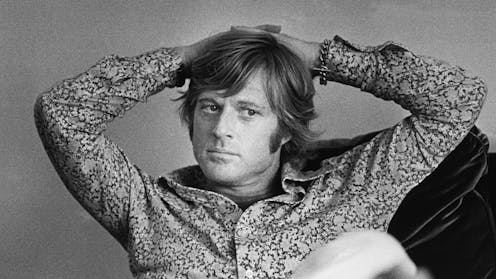
A pretty face helped make Robert Redford a star. Talent and dedication kept him one

Source: The Conversation – Global Perspectives – By Daryl Sparkes, Senior Lecturer, Media Studies and Production, University of Southern Queensland

Miroslav Zajic/CORBIS/Corbis via Getty Images

Hollywood is the place where having a great face will get you far. Think Errol Flynn, James Dean, George Clooney, Brad Pitt – a handsome appearance opens acting doors.

Those good looks, the magical smile, the natural charm all became synonymous with Robert Redford, who has died aged 89.

But good looks can only get you so far. You still need the acting chops as well as the strength of character to make a real impression in the world of cinema, and in the world itself.

Redford had this all in spades.

The young actor

After a rough start in life, including the death of his mother and dropping out of college, Redford began acting at 23 on Broadway and in small roles in quality television productions such as The Untouchables (1963), Maverick (1960), Dr Kildare (1962) and The Twilight Zone (1962), to name a few, which all honed his screen presence.

He made his feature film debut with a minor role in Tall Story (1960), alongside Jane Fonda (also her debut). This started a lifelong friendship between the two. They would act on several productions together, and Fonda admitted she was in love with Redford her whole life.

His talent was soon recognised. He was nominated for his first Emmy in 1962 for his supporting role in the TV movie The Voice of Charlie Pont.

After this, Redford soon became an in-demand actor. Larger roles in film and TV soon came his way, many as a romantic character.

Films such as Inside Daisy Clover (1965), This Property is Condemned (1966) and Barefoot in the Park (1967) portrayed Redford as the lover/husband to strong female characters, the first two with Natalie Wood, the third, again, with Fonda.

The birth of an icon

His good looks sometimes grated on Redford, which led him to refuse a role in Who’s Afraid of Virginia Woolf (1966) and being turned down for the lead in The Graduate (1967). He went in search of more diverse roles.

This led to a film that didn’t just make Redford a star, but a Hollywood icon.

Butch Cassidy and the Sundance Kid (1969) was one of the greatest actor partnerships in Hollywood history. Paul Newman was a much bigger star than Redford at the time of the movie’s release, but arguably it propelled Redford’s star beyond anyone else at that time.

Redford portrayed Sundance with sly wit, simmering masculinity, sardonic smartness and, well, just outright sexiness. Suddenly both teenage boys and girls had his poster on their bedroom wall. The world fell in love with him.

a poster for George Roy Hill's 1969 biopic Butch Cassidy and the Sundance Kid.

Movie Poster Image Art/Getty Images

Redford was on a roll. Over the next half-decade came hit after hit, including The Candidate (1972), The Way We Were (1973) with Barbara Streisand, The Sting (1972) again with Newman, and The Great Gatsby (1974), to name but a few. Redford was cemented as the lead man du jour.

The saying “lightning never strikes twice” never reckoned on Redford. In 1976 he took on his next highly iconic role alongside Dustin Hoffman in All the President’s Men.

It could be said that Hoffman, well regarded as the actor’s actor, was eclipsed by Redford in his role as Watergate journalist Bob Woodward. To me it was a travesty that Redford (or Hoffman, for that matter) was not nominated for Oscars in these roles.

By now Redford wasn’t just seen as the “pretty boy” but as a serious actor who took on more and more dramatic roles in The Electric Horseman (1979), Brubaker (1980), Out of Africa (1985) and Indecent Proposal (1998).

Being on screen for over five decades, younger audiences possibly wondered who the grizzled old man playing agent Alexander Pierce in two Marvel movies in 2014 and 2019 was.

A lasting legacy

Beginning in the 70s, Redford increasingly yearned to also be behind the camera.

As early as 1969 he took on the executive producer role in Downhill Racer.

Into the 80s he began directing. His feature directorial debut, Ordinary People (1980), won him his one and only Oscar (although he was given an honorary one in 2002).

He would go on to direct and produce notable films such as The Horse Whisperer (1998), A River Runs Through It (1992) and Quiz Show (1994), among others.

He was still working as an executive producer up until recently on the TV series Dark Wind (2022–25).

Away from the cameras, Redford was widely known as a philanthropist, environmentalist and a strong supporter of American First Nations and LGBTQI+ rights.

Publicly, though, Redford will probably be most remembered for the Sundance Institute and the film festival that sprang from it.

Redford poses for a photo in front of a snow capped mountain.
Redford at the Sundance Film Festival in Salt Lake City, Utah, in 1994.
Tom Smart/Liaison

The largest independent festival in the United States, it gave a leg up to hundreds of up-and-coming independent filmmakers over the years including Quentin Tarantino, Robert Rodriguez, Jane Schoenbrun, Kevin Smith and Paul Thomas Anderson.

When we look back on his body of work, though, one thing becomes plainly obvious.

While Redford may have used his looks to initially open the Hollywood doors to success and fame, it was his talent and dedication to his craft that kept those doors open.

A versatile actor, director and producer who gave back to the industry just as much, if not more, than he took. For this, Redford was much, much more than a pretty face.

The Conversation

Daryl Sparkes does not work for, consult, own shares in or receive funding from any company or organisation that would benefit from this article, and has disclosed no relevant affiliations beyond their academic appointment.

ref. A pretty face helped make Robert Redford a star. Talent and dedication kept him one – https://theconversation.com/a-pretty-face-helped-make-robert-redford-a-star-talent-and-dedication-kept-him-one-265426

Charlie Kirk shooting suspect had ties to gaming culture and the ‘dark internet’. Here’s how they radicalise

Source: The Conversation – Global Perspectives – By Matthew Sharpe, Associate Professor in Philosophy, Australian Catholic University

Tyler Robinson, the 22-year-old Utah man suspected of having fatally shot right-wing activist Charlie Kirk, is reportedly not cooperating with authorities. Robinson was apprehended after a more than two-day manhunt and is being held without bail at the Utah County Jail.

While a motive for the shooting has yet to be established, Utah Governor Spencer Cox has highlighted Robinson’s links to gaming and the “dark internet”.

Bullet casings found at the scene were inscribed with various messages evoking gaming subcultures. One of the quotes – “Notices bulges, OwO what’s this” – can be linked to the furry community, known for role-playing using animal avatars.

Another message – “Hey, fascist! Catch! ↑ → ↓↓↓” – features arrow symbols associated with an action that allows players to drop bombs on their foes in Helldiver 2, a game in which players play as fascists fighting enemy forces.

One casing reads “O Bella ciao, Bella ciao, Bella ciao, Ciao, ciao!”, words from an Italian anti-Mussolini protest song, which also appears in the shooter game Far Cry 6. Yet another is a homophobic jibe: “if you read this you are gay LMAO”.

If Robinson does turn out to be a shooter radicalised through online gaming spaces, he would not be the first. Previous terrorist shootings at Christchurch (New Zealand), Halle (Germany), Bærum (Norway), and the US cities of Buffalo, El Paso and Poway were all carried out by radicalised young men who embraced online conspiracies and violent video games.

In each of these cases, the shooter attempted (and in all but the Poway shooting, succeeded) to live stream the atrocities, as though emulating a first-person shooter game.

A growing online threat

The global video game market is enormous, with an estimated value of almost US$300 billion (about A$450 billion) in 2024. Of the more than three billion gamers, the largest percentage is made up of young adults aged 18–34.

Many of these are vulnerable young men. And extremist activists have long recognised this group as a demographic ripe for radicalisation.

As early as 2002, American neo-Nazi leader Matt Hale advised his followers “if we can influence video games and entertainment, it will make people understand we are their friends and neighbours”.

Since then, far-right groups have produced ethnonationalist-themed games, such as “Ethnic Cleansing” and “ZOG’s Nightmare”, in which players defend the “white race” against Islamists, immigrants, LGBTQIA+ people, Jews and more.

Studying radicalisation in gamer circles

For many, the Kirk shooting has resurfaced the perennial question about the link (or lack thereof) between playing violent video games and real-world violence.

But while this is an important line of inquiry, the evidence suggests most radicalisation takes place not through playing video games themselves, but through gaming platform communication channels.

In 2020, my colleagues and I studied an extraordinary data dump of more than nine million posts from the gaming platform Steam to understand this process.

We found evidence of radicalisation occurring through communication channels, such as team voice channels. Here, players establish connections with one another, and can leverage these connections for political recruitment.

The radicalisation of vulnerable users is not instantaneous. Once extremists have connected with potential targets, they invite them into platforms such as Discord or private chat rooms. These spaces allow for meme and image sharing, as well as ongoing voice and video conversations.

Skilful recruiters will play to a target’s specific grievances. These may be personal, psycho-sexual (such as being unable to gain love or approval), or related to divisive issues such as employment, housing or gender roles.

The recruit is initiated into a fast-changing set of cynical in-jokes and in-group terms. These may include mocking self-designations, such as the Pepe the Frog meme, used by the far-right to ironically embrace their ugly “political incorrectness”. They also use derogatory terms for “enemies”, such as “woke”, “social justice warriors”, “soyboys”, “fascists” and “cultural Marxists”.

Gradually, the new recruit becomes accustomed to the casual denigration and dehumanisation of the “enemies”.

Dark and sarcastic humour allow for plausible deniability while still spreading hate. As such, humour acts an on-ramp to slowly introduce new recruits to the conspiratorial and violent ideologies that lie at the heart of terrorist shootings.

Generally, these ideologies claim the world is run by nefarious and super-powerful plutocrats/Jews/liberals/communists/elites, who can only be stopped through extreme measures.

It then becomes a question of resolve. Who among the group is willing to do what the ideology suggests is necessary?

What can be done?

The Australian Federal Police, as well as the Australian parliament, has recognised the threat of violence as a result of radicalisation through online gaming. Clearly, it’s something we can’t be complacent about.

Social isolation and mental illness, which are sadly as widespread in Australia as they are elsewhere, are some of the factors online extremists try to exploit when luring vulnerable individuals.

At the same time, social media algorithms function to shunt users into ever more sensational content. This is something online extremists have benefited from, and learned to exploit.

There is a growing number of organisations devoted to trying to prevent online radicalisation through gaming platforms. Many of these have resources for concerned parents, teachers and care givers.

Ultimately, in an increasingly online world, the best way to keep young people safe from online radicalisation is to keep having constructive offline conversations about their virtual experiences, and the people they might meet in the process.

The Conversation

Matthew Sharpe does not work for, consult, own shares in or receive funding from any company or organisation that would benefit from this article, and has disclosed no relevant affiliations beyond their academic appointment.

ref. Charlie Kirk shooting suspect had ties to gaming culture and the ‘dark internet’. Here’s how they radicalise – https://theconversation.com/charlie-kirk-shooting-suspect-had-ties-to-gaming-culture-and-the-dark-internet-heres-how-they-radicalise-265279

Since WWII, it’s been taboo to force nations to cede land after war. Russia wants to normalise conquest again

Source: The Conversation – Global Perspectives – By Jon Richardson, Visiting Fellow, Centre for European Studies, Australian National University

A frequent question around peace talks over Russia’s invasion of Ukraine is whether Ukraine should give up land as part of an interim or final settlement.

United States President Donald Trump has often suggested this would be a natural and inevitable outcome, particularly given Ukraine has – in his view – a weak hand of “cards”. When Ukrainian President Volodymyr Zelensky visited the White House last month, Trump told him there was no getting back Crimea, which has been occupied by Russia since 2014.

Trump has jokingly described his motivation for promoting peace in Ukraine as a desire to “get to heaven”. But as the saying goes, the path to hell is paved with good intentions.

Indeed, Trump has aligned himself with many Russian officials on territorial concessions, including Foreign Minister Sergei Lavrov, who has said history has many examples of peace agreements that shift borders.

It is important to debunk this notion. Acquisition of territory through war has, in fact, been taboo since the end of the second world war and the establishment of the United Nations.

While there have been many military conflicts, there are no evident examples of a UN member country ceding recognised, independent territory to another UN member following a war or invasion.

Wars and conquest

Until the early 20th century, territorial concessions were the norm after wars, backed by all sorts of narratives about hereditary rights, ancient borders, superior civilisations, punishments for unpaid debts or simple law of the jungle.

A classic example was the Treaty of Guadeloupe-Hidalgo, which ended the Mexican-American War of 1846–48. Mexico was forced to cede 55% of its territory, including present-day New Mexico, Utah, Nevada, Arizona, California, Texas and western Colorado.

Mexican territory that was relinquished in the Treaty of Guadalupe Hidalgo, coloured white.
Wikimedia Commons

In a recent article, Yale academics Oona Hathaway and Scott Shapiro explain that before the first world war, shifting borders was a legally recognised means by which states resolved disputes. They calculate there were more than 150 territorial conquests around the world before 1945.

The end of the second world war saw massive border changes in Eastern Europe. Soviet leader Joseph Stalin shifted the borders of Poland hundreds of kilometres westward at the expense of Germany, while the Soviet Union swallowed swathes of eastern Poland. Italy also lost some of its pre-war territory to Yugoslavia and France.

The Soviet Union also got to keep regions it had absorbed in the wake of the 1939 Nazi-Soviet Non-Aggression Pact, including the Baltic States, Moldova, western Ukraine and parts of Finland. These changes reflected the facts on the ground and were accepted at the Yalta and Potsdam conferences.

But in the broader zeitgeist, it was time to put an end to wars of conquest. This was articulated in Article 2 of the UN Charter, which requires states to refrain from the use of force against the “territorial integrity or political independence” of any other state.

The principle was further cemented in UN Security Council resolution 242 following the 1967 Arab-Israeli Six-Day War, which decrees that acquisition of territory following war cannot be accepted.

That is why the international community has largely rejected any move towards Israeli sovereignty over the occupied Palestinian territories of the West Bank, Gaza and East Jerusalem, along with the Golan Heights. (The United States, however, accepted the latter in 2019.)

The taboo on conquest since 1945

The only successful territorial conquests broadly accepted by the international community since 1945 have been a few cases of newly independent countries in the 1960s taking over enclaves or neighbouring territory formerly held by colonial powers. This includes, for example, India taking Goa from Portugal.

But other seizures of ex-colonial territories have been broadly rejected, or at least strongly contested. The main examples are Morocco’s annexation of Western Sahara and Indonesia’s seizure of East Timor. Indonesia’s takeover of West Papua was accepted by the international community as part of a UN-mandated self-determination process, though this has since been condemned by many as deeply flawed.

South Vietnam’s ultimate takeover by the North might be regarded as a conquest, but neither Vietnam recognised the other as a separate country, seeing the conflict effectively as a continuation of civil war. Neither was a UN member.

Before Russia’s invasion of Ukraine, the most blatant attempt to conquer independent territory was Iraqi dictator Saddam Hussein’s invasion and annexation of Kuwait. This was repelled by a UN-sanctioned force.

Global opposition to Russia’s seizures

Distinct from invasions, there have been many unresolved border disputes that have occasionally flared into armed conflict. Russia, however, had no such dispute with Ukraine before its 2014 takeover of Crimea.

After the dissolution of the Soviet Union, Russia and Ukraine negotiated a border treaty to delineate their borders in precise detail. Russian President Vladimir Putin signed the treaty in 2003 and later affirmed that Russia had no territorial claim against Ukraine.

An overwhelming number of UN members have rejected Russia’s annexation of Crimea and four other regions of southeastern Ukraine.

However, the initial outrage at the invasion has weakened over time. Many countries have accused the US of a double standard, given its invasion of Iraq in 2003 (even if that didn’t involve territorial conquest). Trump’s statements about acquiring Greenland, Canada, Gaza and the Panama Canal have only further weakened confidence in US opposition to territorial conquest.

As political scientist Tanisha Fazal argues, the norm against territorial conquest risks suffering a “death of a thousand cuts”. Allowing Russia to keep parts of Ukraine could be a terminal blow.

What a lasting peace should look like

Some commentators have argued for an interim settlement under which Russia would retain control of occupied territory without Ukraine ceding it formally. A final settlement would be left to the future.

Some have called this de facto recognition of Russian annexation, but that is a misguided notion. De facto recognition implies acceptance of a new status quo, along with a return to business as usual.

The outcome of the war will only be partially about territory. Russia has imposed a brutal occupation on these regions, with widespread allegations of torture, killings, disappearances, population transfers and thefts of Ukrainian businesses and homes. Ukrainian language, culture and identity are being erased under a draconian regime.

Ukraine appears willing to accept an interim ceasefire to stop the bloodshed. But its territorial integrity should be fully supported by making clear to Russia that its invasion and occupation remain illegal and unacceptable.

This would include maintaining economic sanctions, demanding accountability for war crimes, returning property stolen from Ukrainians, and allowing Ukrainians transferred to Russia to return home. Ukraine must also be given the means to defend itself against a renewed Russian attack.

Advocates of anything less would be condoning and normalising flagrant territorial aggression. They would merit neither earthly rewards, such as Nobel Prizes, nor divine blessings.

The Conversation

Jon Richardson does not work for, consult, own shares in or receive funding from any company or organisation that would benefit from this article, and has disclosed no relevant affiliations beyond their academic appointment.

ref. Since WWII, it’s been taboo to force nations to cede land after war. Russia wants to normalise conquest again – https://theconversation.com/since-wwii-its-been-taboo-to-force-nations-to-cede-land-after-war-russia-wants-to-normalise-conquest-again-264590

Viral violent videos on social media are skewing young people’s sense of the world

Source: The Conversation – Global Perspectives – By Samuel Cornell, PhD Candidate in Public Health & Community Medicine, School of Population Health, UNSW Sydney

When news broke last week that US political influencer Charlie Kirk had been shot at an event at Utah Valley University, millions of people around the world were first alerted to it by social media before journalists had written a word.

Rather than first seeing the news on a mainstream news website, footage of the bloody and public assassination was pushed directly onto audiences’ social media feeds. There weren’t any editors deciding whether the raw footage was too distressing, nor warnings before clips auto-played.

Australia’s eSafety commissioner called on platforms to shield children from the footage, noting “all platforms have a responsibility to protect their users by quickly removing or restricting illegal harmful material”.

This is the norm in today’s media environment: extreme violence often bypasses traditional media gatekeepers and can reach millions of people, including children, instantly. This has wide-ranging impacts on young people – and on society at large.

A wide range of violence

Young people are more likely than older adults to come across violent and disturbing content online. This is partly because they are more frequent users of platforms such as TikTok, Instagram and X.

Research from 2024 from the United Kingdom suggests a majority of teenagers have seen violent videos in their feeds.

The violence young people see on social media ranges from schoolyard fights and knife attacks to war footage and terrorist attacks.

The footage is often visceral, raw and unexpected.

A wide range of harms

Seeing this kind of violent footage on social media can make some children not want to leave the house.

Research also shows engaging with distressing media can cause symptoms similar to trauma, especially if the violence feels close to our own lives.

Research shows social media is not simply a mirror of youth violence but also a vector for it, with bullying, gang violence, dating aggression, and even self-directed violence playing out online. Exposure to these harms can have a negative effect on young people’s mental health, behaviour and academic performance.

For others, violent content on social media risks “desensitisation”, where people become so used to suffering and violence they become less empathetic.

Communication scholars also point to cultivation theory – the idea in this case that people who consume more violent content begin to see the world as potentially more dangerous than it really is.

This potentially skewed perception can influence everyday behaviour even among those who do not directly experience violence.


Read more:
How images of knives intended to stop youth knife crime may actually be making things worse


A long history of violence

Violence distributed by media is as old as media itself.

The ancient Greeks painted their pottery with scenes of battles and slaying. The Romans wrote about their gladiators. Some of the first photographs ever taken were of the Crimean War. And in the second world war, people went to the cinema to watch newsreels for updates on the war.

The Vietnam war was the first “television war” – images of violence and destruction were beamed into people’s homes for the first time. Yet television still involved editorial judgement. Footage of violence was cut, edited, narrated and contextualised.

Seeing violence as if you were there has been transformed by social media.

Now, footage of war, recorded in real time on phones or drones, is uploaded to TikTok or YouTube and shared with unprecedented immediacy. It often appears without any additional context – and often isn’t packaged any differently to a video of, say, somebody walking down the street or hanging out with friends.

War influencers have emerged – people who post updates from conflict zones, often with no editorial training, unlike war journalists. This blurs the line between reporting and spectacle. And this content spreads rapidly, reaching audiences who have often not sought it.

Israel’s military even uses war influencers to “thirst trap” social media users for propaganda purposes. A thirst trap is a deliberately eye-catching, often seductive, social media post designed to attract attention and engage users.

How to opt out of violence

There are some practical steps that can be taken to reduce your chances of encountering unwanted violent content:

  • turn off autoplay. This can prevent videos from playing unprompted

  • use mute or block filters. Platforms such as X and TikTok let you hide content with certain keywords

  • report disturbing videos or images. Flagging videos for violence can reduce how often they are promoted

  • curate your feed. Following accounts that focus on verified news can reduce exposure to random viral violence

  • take a break from social media, which isn’t as extreme as it sounds.

These actions aren’t foolproof. And the reality is that users of social media have very limited control over what they see. Algorithms still nudge users’ attention toward the sensational.

The viral videos of Kirk’s assassination highlight the failures of platforms to protect their users. Despite formal rules banning violent content, shocking videos slip through and reach users, including children.

In turn, this highlights why more stringent regulation of social media companies is urgently needed.

The Conversation

Samuel Cornell receives funding from an Australian Government Research Training Program Scholarship.

T.J. Thomson receives funding from the Australian Research Council. He is an affiliate with the ARC Centre of Excellence for Automated Decision Making & Society.

ref. Viral violent videos on social media are skewing young people’s sense of the world – https://theconversation.com/viral-violent-videos-on-social-media-are-skewing-young-peoples-sense-of-the-world-265371

Genocidio: la palabra que creó Raphael Lemkin y que hoy nos interpela en Gaza

Source: The Conversation – (in Spanish) – By Joaquín González Ibáñez, Derecho Internacional Público – Protección internacional de derechos humanos, Universidad Complutense de Madrid

kipgodi/Shutterstock

La visión de justicia que algunos tratados internacionales quieren alcanzar está vinculada, a veces, a un nombre propio y a una historia humana excepcional que desembocó en su creación. La Convención para la Prevención y Sanción del Delito de Genocidio de 1948 nació como una decisión soberana de los Estados, pero se cimentó en la imaginación moral y visión jurídica del polaco Raphael Lemkin.

Lemkin disfrutó gracias a la literatura de la capacidad de imaginar la vida de los otros. En su autobiografía, titulada Totalmente extraoficial, Lemkin relata cómo conformó su visión de justicia desde su niñez en Polonia hasta su condición de refugiado en Estados Unidos y cómo creó el neologismo “genocidio”, en 1943 hasta que finalmente fuera adoptada el 9 de diciembre de 1948 en la Convención sobre genocidio.

Con su relato, Lemkin exhorta a informarse, obliga a comprometerse y afirma que “la función de la memoria no es solamente registrar los acontecimientos del pasado, sino también estimular la conciencia”. Al igual que nosotros hoy en Gaza, Ucrania, Myanmar, Sudán y el resto de crisis invisibilizadas con víctimas civiles, Lemkin enfrentó durante sus estudios en la Facultad de Derecho de la Universidad de Leópolis en 1921 –cuyos bancos de la última fila eran el lugar obligado para los estudiantes judíos– el dilema y la crisis moral frente a las matanzas de los armenios en 1915 y la inacción jurídica contra los perpetradores turcos.

Hoy somos parte de las revoluciones que iniciaron personas como Lemkin. Hemos aprendido que la historia humana evoluciona porque siempre hubo personas que atisbaron nuevos escenarios y construyeron espacios innovadores desde donde reorientar la acción humana de la justicia.

La revolución de los derechos humanos no avala que las personas de una determinada nacionalidad, etnia, religión o grupo gocen prima facie de una especial probidad, buena fe u honradez. Son únicamente nuestros actos los que determinan nuestra condición y responsabilidades.

Tras los procesos de Núremberg, se asentó el principio jurídico de que quien comete crímenes internacionales es responsable de los mismos sin excepción alguna. En 2025, lo trascendente es cómo protegemos con mayor eficacia a las víctimas en el plano interno o internacional, independientemente de quién cometió los crímenes.

Justicia para todas las víctimas

Por tanto, la justicia que reclamamos es para las víctimas de las atrocidades cometidas por Hamás en Israel el 7 de octubre de 2022, sean las asesinadas o las supervivientes que aún hoy, en 2025, se encuentran en Gaza como rehenes de dicho grupo terrorista. De igual modo, protestamos por los diferentes crímenes internacionales que se están perpetrando de manera indiscriminada por parte de Israel contra la población civil de Gaza.

La lectura del artículo II de la Convención sobre Genocidio permite realizar una interpretación legítima sobre si las acciones realizadas por el ejército de Israel coinciden con las conductas descritas en la Convención como actos de genocidio.

La destrucción de infraestructuras alimenticias y energéticas y el quebranto absoluto de las instituciones vitales para el desarrollo de la comunidad palestina gazatí (escuelas, lugares de culto y hospitales), así como la creación deliberada de hambrunas y víctimas mortales como resultado de operaciones militares, con un porcentaje abrumador de mujeres y niños entre las víctimas, pueden subsumirse en el tipo penal del crimen de genocidio.

Los hechos coinciden en su descripción con varias de las conductas recogidas expresamente en la Convención como constitutivas de este crimen: “matar a miembros del grupo, causar daños físicos o psicológicos graves o someter deliberadamente a los miembros del grupo a condiciones de vida que hayan de acarrear su destrucción física, total o parcial”.

En relación con la intencionalidad dolosa de la comisión del crimen, las alegaciones de Sudáfrica en el proceso en la Corte Internacional de Justicia de enero de 2024 señalaban las declaraciones expresas de miembros del gobierno de Israel que deshumanizaban y cosificaban a los palestinos. Se suman, además, las recientes perífrasis conceptuales sobre el destino de los palestinos al citar pasajes del Antiguo Testamento que instaban a cometer matanzas y exterminios. Todos estos elementos muestran una deliberada voluntad de destruir total o parcialmente a la población gazatí.

Acusar de antisemitismo a quien interpreta que las acciones del ejército de Israel son constitutivas de un genocidio, como la relatora de la ONU Francesca Albanese, el escritor israelí David Grossman o los periodistas que sobreviven en Gaza y relatan lo que acontece, es una forma de censura y violencia moral dirigida contra quienes deciden no permanecer indiferentes frente a la hambruna y el asesinato de decenas de miles de personas. El silencio nunca ha ayudado a las víctimas; el ruido que distorsiona tampoco.

Sólo la voz de las personas que incidan en la acción cívica y busquen una respuesta institucional nacional e internacional puede acabar con la indiferencia.

Debemos expresar rechazo al dolor

Si bien la Corte Penal Internacional imputó a Netanyahu y a su exministro de Defensa Yoav Gallan por el crimen de genocidio en noviembre de 2024, y previamente Sudáfrica denució a Israel en diciembre de 2023 ante la Corte Internacional de Justicia por violación de la Convención sobre Genocidio, lo que está ocurriendo en Gaza es demasiado importante para dejarlo sólo en manos de los juristas.

Se puede y se debe expresar rechazo a la catástrofe y al dolor aberrante. Los desastres humanitarios, los conflictos y las guerras nos han enseñado que nuestra indignación es intermitente. Pero también sabemos, gracias al legado de personas como Lemkin, que las revoluciones son todas imposibles, hasta que acontecen. Entonces, se convierten en inevitables.

Albie Sachs, jurista judío, víctima del apartheid y magistrado del Tribunal Constitucional de la nueva Sudáfrica de Nelson Mandela, señalaba que “aunque siempre uno debería ser escéptico sobre las pretensiones del Derecho, nunca se debería ser cínico sobre sus posibilidades”. Por eso, el legado de Lemkin no puede ser una entelequia.

En Gaza tenemos la posibilidad de oponernos a una nueva barbarie y evitar la impunidad. En palabras de Lemkin, esta es una nueva causa de la humanidad.

Gracias a Lemkin, el Derecho ofrece una posibilidad de respuesta a las víctimas inermes y casi invisibilizadas. Y ciertamente, es una justicia humana e imperfecta frente a la catástrofe proferida, pero una justicia posible.

The Conversation

Joaquín González Ibáñez no recibe salario, ni ejerce labores de consultoría, ni posee acciones, ni recibe financiación de ninguna compañía u organización que pueda obtener beneficio de este artículo, y ha declarado carecer de vínculos relevantes más allá del cargo académico citado.

ref. Genocidio: la palabra que creó Raphael Lemkin y que hoy nos interpela en Gaza – https://theconversation.com/genocidio-la-palabra-que-creo-raphael-lemkin-y-que-hoy-nos-interpela-en-gaza-264955

La Vuelta, Mayo del 68 o las campañas contra el apartheid: cómo las protestas incomodan y transforman

Source: The Conversation – (in Spanish) – By Igor Ahedo Gurrutxaga, Profesor de Ciencia Política – Investigador Principal de Parte Hartuz – Director del programa de doctorado Sociedad, Política y Cultura, Universidad del País Vasco / Euskal Herriko Unibertsitatea

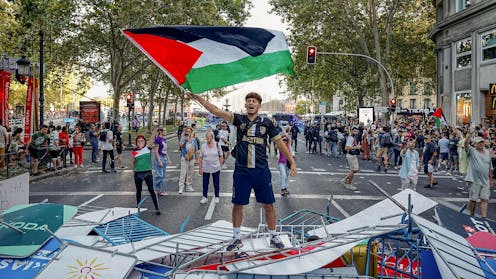
Protestas propalestinas el pasado domingo durante la última etapa de la Vuelta ciclista a España. RTVE

¿Sirve para algo parar la Vuelta ciclista a España? ¿Puede la protesta ser compatible con la normalidad? ¿Es legítima la neutralidad en estos tiempos? Son preguntas que el movimiento de protesta ante la masacre que Israel está perpetrando en Gaza ha puesto sobre la mesa y el tablero mediático recientemente.

La ciencia política y la política comparada dan algunas pistas. La primera es que la protesta forma parte del avance democratizador a lo largo de la historia. La segunda es que el éxito de la protesta es esquivo pero, a menudo, desencadena cambios en la mirada de las poblaciones. La tercera es que cualquier análisis sobre la protesta sirve para interrogarnos sobre nuestra responsabilidad personal ante la realidad.

No se puede entender la democracia sin comprender que el conflicto es parte consustancial del avance en los derechos sociales, políticos y económicos. No se puede entender la política como proceso de mejora de la vida pública sin comprender que los movimientos sociales son agentes legítimos y necesarios.

La política es un proceso cuyo resultado deriva de una correlación de fuerzas entre actores mediadores de intereses (generales o particulares) presentes en la sociedad. De esta correlación emerge un tipo u otro de sistema (más o menos democrático), así como decisiones que obligan. Desde cuestiones generales como los derechos sociales a aspectos particulares como quién participa en un evento deportivo, todo es resultado de una correlación de fuerzas.

En contextos autoritarios, la ausencia de partidos políticos hace que los movimientos sociales sean claves en la transición o cambio de régimen. Son los únicos actores capaces de socavar la legitimación del régimen, sea en Birmania, Portugal o la RDA. El impacto de la protesta siempre se acumula en la memoria, sea en forma de tumultos frente al muro de Berlín, o sea en forma claveles en los fusiles de los militares –Portugal, 1974–.

No es un momento, es un proceso

Pero estos eventos no son espontáneos: son el resultado de la lenta, oculta e inexorable acción de una miríada de colectivos que van limitando la legitimidad de los regímenes autoritarios o de las políticas injustas. Esta es una clave. La protesta no es un momento, sino un proceso.

En los regímenes democráticos, el papel de los movimientos sociales sigue siendo esencial. Y también molesto para los actores con capacidad de influencia. Molestan a los partidos y a los grupos de interés, algunos de ellos con acceso a grandes recursos económicos y capacidad de influencia.

Por ello, para garantizar un equilibrio de los intereses generales sobre los particulares en democracia se necesita de una sociedad civil sana y organizada en colectivos que apuesten por el avance de los derechos, limiten los intereses particulares y presionen a los decisores públicos.

Así las cosas, la presencia de los movimientos sociales y la protesta está detrás de cualquier avance de derechos. La institucionalización de las políticas de igualdad, los derechos reproductivos, sexuales y cívicos de las mujeres no se puede entender sin décadas, sino siglos, de lucha feminista, una lucha que toma forma de protestas convencionales, pero también desobedientes.

Su práctica transita entre las estrategias convencionales, regladas y ajustadas al marco legal y las prácticas disruptivas, orientadas a desestabilizar el orden para llamar atención sobre la injusticia. Por eso, los repertorios de protesta de los movimientos sociales contemplan la ruptura de la norma y la normalidad. Cuando esta ruptura se hace masiva, pone al sistema ante los límites del mantenimiento de aquello que la sociedad asimila como injusto.

De la ‘mili’ al ‘apartheid’

En España, la “mili” –el antiguo servicio militar obligatorio– no desapareció a causa de estrategias como la objeción de conciencia, asimilada por el sistema a través de la prestación social sustitutoria. Es verdad que se apoyó en este avance asentado en lo normal y lo legal, practicado de forma masiva, pero se precipitó con la ruptura del orden: como consecuencia de una creciente ola desobediente que tenía su expresión en la insumisión de miles de jóvenes al servicio militar. En este contexto, la correlación de fuerzas que es la política impedía a España presentarse como una democracia avanzada con un ejército de jóvenes en prisión que se negaban a portar las armas.

No cabe duda de que los movimientos sociales son agentes claves en los procesos de democratización y en el avance de la democracia: han hecho tambalear los cimientos del apartheid, han deslegitimado las políticas de segregación en EE. UU, han permitido el avance de la igualdad de género en España o han provocado la caída de regímenes en países como Taiwan, Nepal, Portugal o Chile.

Pero su éxito no es univoco. Estos movimientos han provocado cambios culturales, sin impactos inmediatos en el sistema político, como fue el caso de Mayo del 68. Pueden provocar cambios en el gobierno, pero no en el sistema, como sucedió en Chile con el ascenso de Gabriel Boric y el rechazo a la reforma constitucional.

El feminismo o Gaza

También pueden provocar cambios lentos, pero inexorables, que permiten comprender sistemas de dominación, como sucede con el feminismo. Y pueden evidenciar que la normalidad no es una opción cuando se asiste a una de las mayores barbaries de la historia de la humanidad, como está sucediendo en Gaza.

Ello nos lleva a una última reflexión. Más que preguntar si sirve la protesta, la pregunta en nuestro tiempo es si es legítimo no protestar. Decía Erich Fromm que si en todos los mitos el origen de la civilización fue resultado de un acto de desobediencia, el final de la civilización puede ser el resultado de un acto de obediencia masiva.

Gaza interpela al mundo y evidencia el abismo del fin de la civilización. Por eso, si el antónimo de la obediencia es la desobediencia, no hay otra salida que la protesta frente a lo intolerable que es la normalidad en un mundo en escombros en el que la neutralidad es complicidad.

The Conversation

Igor Ahedo Gurrutxaga no recibe salario, ni ejerce labores de consultoría, ni posee acciones, ni recibe financiación de ninguna compañía u organización que pueda obtener beneficio de este artículo, y ha declarado carecer de vínculos relevantes más allá del cargo académico citado.

ref. La Vuelta, Mayo del 68 o las campañas contra el apartheid: cómo las protestas incomodan y transforman – https://theconversation.com/la-vuelta-mayo-del-68-o-las-campanas-contra-el-apartheid-como-las-protestas-incomodan-y-transforman-265436