Amateur hour in Congress: How political newcomers fuel gridlock and government shutdowns

Source: The Conversation – USA – By Rachel Porter, Assistant Professor of Political Science, University of Notre Dame
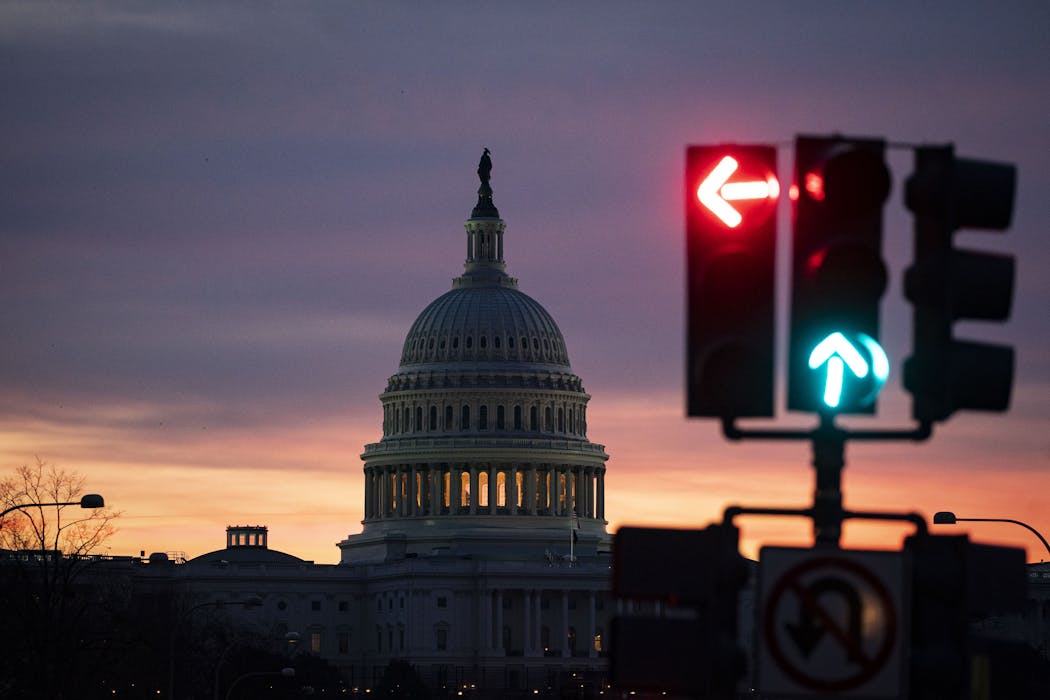
Legislative progress depends on bipartisanship − but amateur lawmakers undermine it with their inexperience as legislators. Bloomberg Creative via Getty Images

The ongoing government shutdown shows how hard it has become for Congress to do its most basic job: keeping the government running. Ending the stalemate will require lawmakers from both parties to strike a deal – a reminder that legislative progress depends on bipartisanship.

Politicians often call for greater cooperation across party lines, and research shows that bills rarely become law without it. Bipartisan deal-making is also popular with the public. Recent polls demonstrate that Americans are twice as likely to favor leaders who compromise to get things done over those who stick to their beliefs and accomplish less.

Yet partisan gridlock continues to stall policymaking.

The public’s growing frustration with “politics as usual” has led more political newcomers to run for and win office since 2016.

These “amateur” politicians, with no prior experience in elected office, present themselves as problem-solvers rather than politicians. Many come from outside government entirely – including business owners, military veterans and schoolteachers. Amateurs’ real-world backgrounds are often seen as assets by voters, donors and even politicians themselves – qualities thought to make them more effective in Congress.

As scholars of legislative politics, we wanted to interrogate that claim. And our new study reaches a different conclusion: Electing amateurs reduces bipartisan cooperation in Congress.

We find that, once in office, political newcomers are less likely than career politicians to work across the aisle. The very outsiders many voters hope will “fix” Congress contribute to the partisan divisions that keep it from functioning.

Amateurs are more likely to view bipartisanship as a concession rather than a tool for advancing policy.
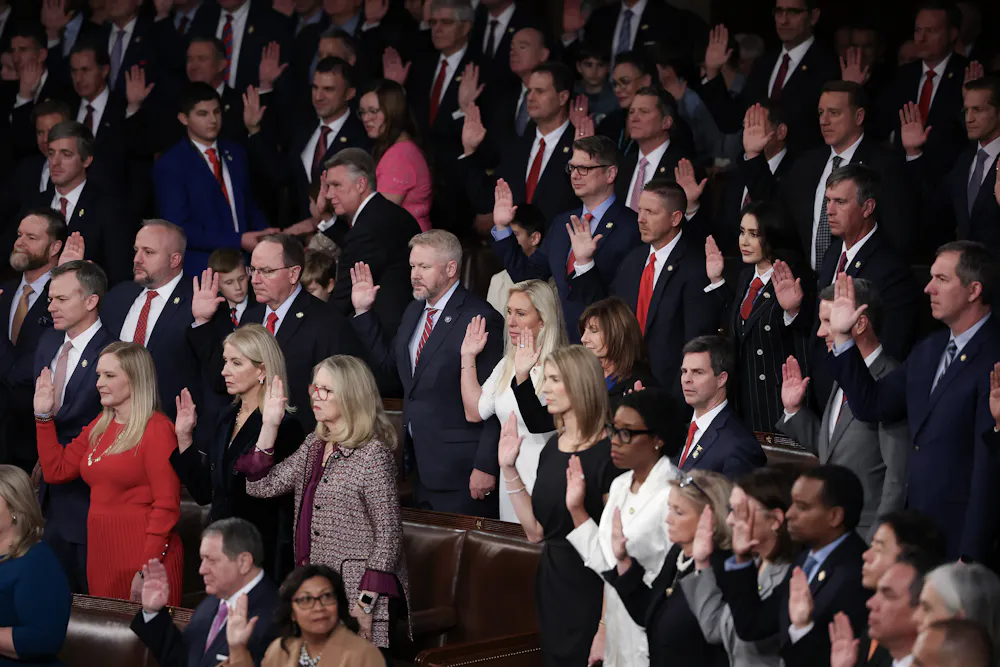
Many people standing and raising their hands to take an oath.
U.S. representatives of the 119th Congress are sworn in during the first day of session in the House chamber of the U.S. Capitol on Jan. 3, 2025.
Win McNamee/Getty Images

What the data shows

We analyzed over 2.2 million policymaking actions from 1980 to 2022 to assess how often members of the U.S. House of Representatives worked across the aisle to co-author bills. Legislation developed through bipartisan collaboration is much more likely to become law. We then compared the collaboration patterns of first-term amateurs – legislators who have never held office and were just elected to Congress – against the collaboration patterns of established incumbents.

The difference was clear. Over the past four decades, amateur lawmakers worked across party lines far less often than incumbent lawmakers, both when developing their own legislation and when lending support to other legislators’ proposals.

This finding is not simply a “freshman effect,” observed among all new members of Congress who are still learning its norms and procedures.

First-term representatives who entered Congress with prior elected experience in state or local office engaged in bipartisan cooperation about as frequently as longer-serving incumbents. This suggests that what matters for bipartisan engagement is prior experience in elected office, not a lack of experience in Congress itself.

The impact on democracy

Amateur lawmakers are about 10–20 percentage points less likely to engage in bipartisanship during their first term than experienced officeholders.

To put it in perspective, the size of the amateur effect is roughly on par with the collapse in bipartisan relationships that followed the Jan. 6, 2021, attack on the U.S. Capitol. After some Republican members refused to certify the 2020 presidential election results, Democrats largely stopped working with them in that Congress – a decline in collaboration comparable in scale to what we observe among amateurs.

These effects are likely to continue, with amateurs making up nearly half of all first-term lawmakers in recent years compared to decades past. Notable amateurs elected to Congress include Alexandria Ocasio-Cortez, Lauren Boebert and Marjorie Taylor-Greene. As new cohorts of amateurs enter office each election cycle, this bipartisanship problem will persist.

Learning to value bipartisanship

Our findings show that amateur lawmakers’ approach to bipartisanship evolves as they gain office-holding experience. By their third term in Congress – about six years after first taking office – the gap in bipartisan behavior between amateurs and experienced legislators largely disappears.

Amateur lawmakers often bring impressive credentials to office – many are skilled professionals, public figures or highly educated.

However, we show that these backgrounds do not necessarily prepare amateurs for the demands of governing. Experience holding state or local office exposes politicians to the practical realities of policymaking. Lacking that experience, amateurs are more likely to view bipartisanship as giving up on their principles rather than a method for serving the public interest. We find that this tendency diminishes only as newcomers gain firsthand experience in the legislative process.

A global trend with familiar consequences

The U.S. is not alone in this trend toward amateurism. Around the world, political newcomers have surged to power amid frustration with traditional elites.

In Europe, Italy’s Five Star Movement in 2013 and France’s En Marche! movement in 2017 were led by and composed of amateur politicians who framed themselves as anti-establishment outsiders.

In each case, widespread outsider success in the legislature delivered disruption – but not necessarily effective governance. These groups often start with promises of pragmatic reform but struggle once in office.

Looking toward the midterms

Heading into 2026, many Americans continue to express deep dissatisfaction with their party’s establishment. Public approval of Congress is near historic lows, and polling shows that many voters believe professional politicians are self-interested and out of touch.

Amateur politicians are once again emerging in response to this discontent, positioning themselves as outsiders who can bring change to Washington. Yet, as our research shows, these newcomers will undervalue the bipartisan relationships needed to govern effectively.

As voters look for change, the challenge will be to balance the desire for fresh perspectives with the experience required to sustain cooperation – and to keep Congress, and democracy, working.

The Conversation

The authors do not work for, consult, own shares in or receive funding from any company or organization that would benefit from this article, and have disclosed no relevant affiliations beyond their academic appointment.

ref. Amateur hour in Congress: How political newcomers fuel gridlock and government shutdowns – https://theconversation.com/amateur-hour-in-congress-how-political-newcomers-fuel-gridlock-and-government-shutdowns-268133

Trump is changing student loan forgiveness rules – barring some public workers from getting relief, but resuming it for others

Source: The Conversation – USA (2) – By Jennifer L. Steele, Professor of Education, American University

Student loan debt has continued to rise in the country over the past few decades. William Potter/iStock/Getty Images Plus

The Trump administration has tried to upend many facets of American life, and many facets of higher education are no exception.

The Department of Education announced on Oct. 27, 2025, that it would resume canceling student loan debt for certain borrowers, after the government stopped this practice earlier in 2025.

The Trump administration also announced on Oct. 30 that it is planning to limit loan forgiveness eligibility for former students who work at nonprofit organizations and whose work has what the Trump administration calls a “substantial illegal purpose.” This means organizations that work with immigrants and transgender youth.

Amy Lieberman, education editor at The Conversation U.S., spoke with Jennifer L. Steele, a scholar of the economics of education, to understand the significance of these announcements and what student loan borrowers should know.

A group of young people hold up signs that say 'Cancel student loan debt.'
Student loan forgiveness advocates rally outside the Supreme Court building in Washington in June 2023.
Kent Nishimura/Los Angeles Times via Getty Images

How big is the problem of student loan debt?

There is currently more than US$1.6 trillion of student loan debt in the United States. That number has been climbing dramatically over the past few decades. About 52% of federal loan borrowers are on track to repay their loans within 10 years.

It is difficult for some people to handle their debt levels, and they miss scheduled payments. This is especially true for people who didn’t finish their degrees or who attended for-profit colleges. It can also be challenging for people to repay their loans if they work in public service jobs that don’t pay a lot of money.

A person with an average amount of undergraduate federal student loan debt is paying about $299 a month over the course of the 10 years it typically takes to repay the loans. They could be paying considerably more if they have debt from graduate school, as well.

How do you qualify for student loan forgiveness?

Student loan forgiveness means that after people pay back their federal student loans for a certain number of years, the balance is forgiven by the Department of Education, which issues the loans.

There are two main kinds of forgiveness plans for federal student loans. There are income-driven repayment plans and public service loan forgiveness plans.

Income-driven repayment plans are used by people who do not earn enough money to easily meet the monthly payment on the standard 10-year repayment plan. In these cases, the Department of Education provides options that let you pay no more than 10% to 20% of your discretionary income toward your loans each month.

After the borrower makes the required monthly payments on time for 20 to 30 years, depending on the plan, the federal government will forgive any remaining balance.

It’s important to know that the amount you are being forgiven may be subject to income tax, as of 2026.

Borrowers who work full time for the federal, state, local or tribal government – including in schools and the military – can have their remaining debt forgiven after 10 years of monthly payments through public service loan forgiveness. This also applies to people working for nonprofit, nonpartisan organizations.

How are these standards on federal student loan forgiveness changing?

In March 2025, the Trump administration began slowing the public service loan forgiveness application process for some borrowers. It also vowed to scrutinize which public service employers qualify as nonprofit, nonpartisan groups.

The administration released new rules on Oct. 30 that will exclude borrowers from receiving new public service loan forgiveness credit if their employers are found to have a “substantial illegal purpose.” This includes organizations that provide support for undocumented immigrants, children who seek medical gender transitions, or for speech the administration deems to support terrorist, violent or discriminatory ideas. My research has shown that public service incentives help attract skilled workers to work for nonprofits and other organizations that try to help people. This shift may make it harder for organizations that help vulnerable communities to attract and retain staff.

Also in March, the Trump administration stopped processing applications for forgiveness under some income-dependent repayment plans, arguing that a recent court ruling that blocked a particular forgiveness plan initiated by then-President Joe Biden applied to other plans as well.

In response, the American Federation of Teachers filed a lawsuit in March demanding reinstatement of loan forgiveness for eligible borrowers.

In October, the American Federation of Teachers and the Trump administration reached a deal. Now, the Department of Education will resume processing student loan forgiveness applications for people who need financial help paying off the loans and for people who are public service workers. Still, public service workers might find that their work is now considered to have an “illegal purpose,” according to the White House, challenging their forgiveness.

They also agreed that loans eligible for tax-exempt forgiveness through 2025 will remain tax-exempt. In 2026, most student loan debt forgiveness will become taxable as income. There is an exception for public service workers and for former students who have been affected by college closures or fraud.

What does the new agreement mean for people who have student loans?

People who are already making monthly payments on existing federal student loans under income-driven repayment can continue to do so. People in a standard 10-year repayment plan who cannot afford their payments should know their income-driven repayment options and talk to their loan servicer if they wish to consider such a plan.

Also, beginning in 2026, the Education Department will offer a new kind of income-driven repayment plan called the repayment assistance plan. The department will begin phasing out some older income-driven plans in 2028.

A large group of people dressed in black robes and graduation caps are seated in rows, except for one person who walks in the aisle.
Boston College students attend their graduation ceremony in May 2025.
David L. Ryan/The Boston Globe via Getty Images

How does this affect people considering going to college or graduate school?

If you are considering going to college or graduate school, it is important to know that lifetime federal debt limits for graduate degrees were reduced modestly by the tax breaks and spending cuts bill signed into law in July 2025. Lower federal debt limits decrease the amount of debt that borrowers can accrue.

People planning to go into public service with the expectation that their loans will be forgiven after 10 years should do so with modest caution. Public Service Loan Forgiveness was created by Congress to encourage public service careers, making it difficult to fully repeal. On the other hand, the Department of Education has discretion over which organizations count as public service employers, as the new Oct. 30 rules demonstrate. The department also has discretion over how easily and quickly it processes loan forgiveness applications.

Given the Trump administration’s public skepticism of not only Public Service Loan Forgiveness, but also public service employment in general, it is possible that it would continue to erode this incentive for public service workers.

Borrowers can help their case by annually certifying their employment with an eligible public service employer and by maintaining records of their loan’s eligibility, repayment plan and monthly payments. Because employers’ Public Service Loan Forgiveness eligibility may change under the administration’s Oct. 30 rules, borrowers should also stay up to date on the eligibility of their current or prospective employers.

Typically, taking on some debt to get a degree is not a bad investment. You just have to be careful with how much debt you are accumulating and whether it is reasonable given how much you expect to earn after you graduate. There are simple online tools that can help you decide whether the investment and potential debt burden are worthwhile.

The Conversation

Jennifer L. Steele does not work for, consult, own shares in or receive funding from any company or organization that would benefit from this article, and has disclosed no relevant affiliations beyond their academic appointment.

ref. Trump is changing student loan forgiveness rules – barring some public workers from getting relief, but resuming it for others – https://theconversation.com/trump-is-changing-student-loan-forgiveness-rules-barring-some-public-workers-from-getting-relief-but-resuming-it-for-others-268351

Private equity firms are snapping up mobile home parks − and driving out the residents who can least afford to lose them

Source: The Conversation – USA (2) – By Cassie Powell, Assistant Professor of Law, Legal Practice, University of Richmond

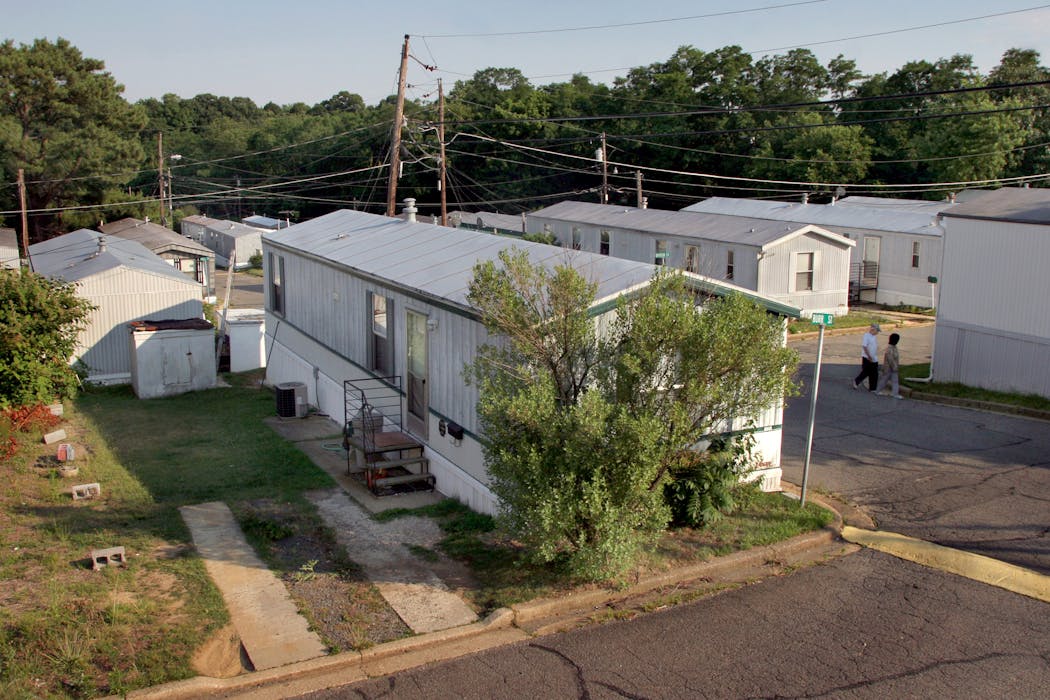
In mobile home parks, like this one in Fairfax, Va., residents often own the home itself but rent the lot where the home sits. Michael Williamson/The Washington Post via Getty Images

One of America’s most affordable paths to homeownership is slipping away.

At manufactured home parks – sometimes called trailer parks or mobile home parks – rents are rapidly rising due to large-scale buyouts by private equity firms.

Although private equity’s foray into the housing market is not new, the buyout of mobile home parks by investment firms is on the rise – with devastating consequences for residents. Over the past decade, rents in these parks have risen 45%, according to census data. Once a park is sold, the risk of eviction rises significantly in the following year.

I’m a poverty law attorney in Virginia, and many of my clients are residents of mobile home parks. Over the past four years, I’ve watched their communities get sold, one by one, to large investment firms. Many of them are desperately struggling to protect their homes – for some, their only source of wealth – in the face of exploding rents and threats of eviction.

The immovable mobile home

Today, the term “mobile home” is a misnomer.

Historically, mobile homes were trailers designed for travelers and workers living near factories. With so many veterans returning home after World War II, trailers provided an easy and affordable way for them to obtain housing in the face of shortages. The trailers could be moved from place to place as people either attended school or sought work.

Black and white photo of mobile homes situated in a desert landscape.
Many workers at the Los Alamos National Laboratory in New Mexico were housed in trailers in the 1940s and 1950s.
Corbis/Getty Images

A shift occurred in the 1950s. Those with higher incomes bought houses, and those with less means continued to live in mobile homes. Eventually, mobile home communities cropped up throughout the country as places for people to park their mobile homes for months, years or permanently.

Nowadays, mobile homes are more often called “manufactured homes.” They are assembled in factories and rarely move once they’ve been purchased and settled. In fact, more than 90% of manufactured homes never move from their original site.

Today, around 20.6 million Americans live in a mobile or manufactured home. About one-third of mobile homes are located in mobile home communities.

In these communities, the residents usually own the home itself, but they rent the lot that the home sits on. They are responsible for the upkeep of their home, but the park owners are responsible for park infrastructure, including street maintenance and sewage systems.

Although many Americans still think of these homes as mobile, they’re prohibitively expensive to move. Many have had the wheels or hitches removed years ago. Additionally, many owners of trailers or manufactured homes have invested in additions, such as porches or extra rooms, that have made these homes even more difficult to relocate.

A robin-egg blue mobile home with fencing, a concrete front steps and a concrete front porch.
Starting in the 1950s, mobile homes became more permanent fixtures, with owners building out additions such as porches, fences and walkways.
Found Image Holdings/Getty Images

Private equity swoops in

According to the National Low Income Housing Coalition, no state has enough affordable housing for those with the lowest incomes.

In the midst of a housing affordability crisis, mobile homes are seen as a way for those with limited incomes to generate wealth and access homeownership. Indeed, over half of all manufactured homeowners earn less than US$50,000 a year, and one-third are over age 60.

However, this type of homeownership is becoming more difficult to maintain for many due to the increased buyout of mobile home parks by large investment firms – a trend that mirrors the rest of the housing market.

Increasingly, housing is being treated as a commodity rather than an essential social good – what’s sometimes called the “financialization of the housing market.”

For private equity firms, housing has been a fruitful investment. But in order to maximize returns on their investments, they usually increase rents and cut costs. Company leadership is often totally divorced from their tenants; instead, they hire on-site and regional managers who exercise disproportionate control over evictions and rule enforcement. Overall, this financialization has transformed the way those with limited incomes are able to obtain shelter – including the owners of mobile homes.

In the past, manufactured home communities were largely “mom-and-pop” enterprises. Though they were still subjected to abusive practices, tenants usually knew their landlords and saw them often, and rents were much more stable.

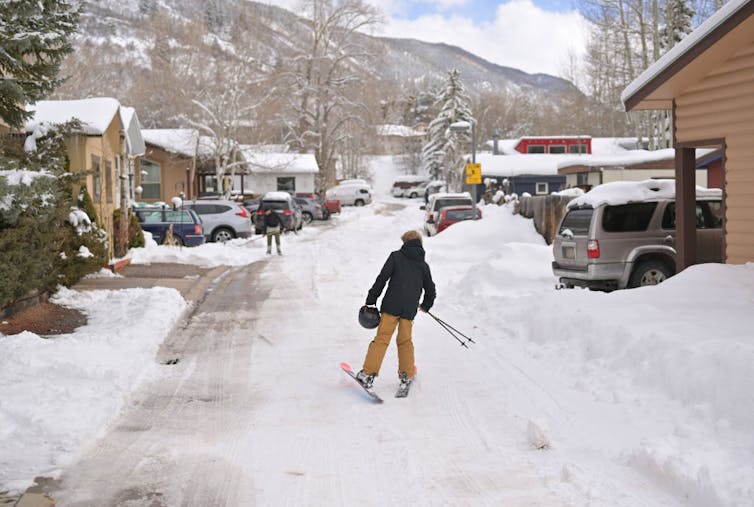
A teenager on skis traverses a snowy mobile home park.
Since Aspen, Colo., is one of the most expensive places to live in the country, mobile homes are the only way for some locals to get their foot in the door of homeownership.
RJ Sangosti/MediaNews Group/The Denver Post via Getty Images

In 2020 and 2021, institutional investors accounted for 23% of all manufactured home park purchases, up from 13% between 2017-2019. Now, 23 private equity firms own over 1,800 parks in the U.S.

Once bought, lot rents usually begin rising. Mobile home park residents are especially vulnerable due to their circumstances: Since their homes are so difficult to move, they are essentially trapped when faced with rising lot rents. One study of Florida mobile home communities found that in the months after a park sale, eviction filings increased by 40%. Residents often find themselves forced to choose between paying exorbitant costs to move their home or paying unaffordable lot rents.

State laws put the squeeze on tenants

Because they’re so unique, manufactured home communities are often governed by a special set of state laws.

In my state, Virginia, the Manufactured Home Lot Rental Act covers rules that park owners and residents must follow. If someone is evicted for failing to pay their lot rent, they still own their home but can no longer live in the park.

Often, states impose short time frames for someone to move their home following an eviction. In North Carolina, for example, a tenant has just 21 days to remove the manufactured home from the park following an eviction judgment. In Virginia, a homeowner has 90 days after being evicted to move or sell their mobile home, but they must continue paying rent during that time.

People wearing masks and holding signs surround a police car in front of a mobile home park.
Residents protest the sale of a mobile home park in Bell, Calif., in 2021.
Gina Ferazzi/Los Angeles Times via Getty Images

In many states, if a resident fails to move their home in time, the park owner may repossess the home or move it. Even if the resident lives in a state that continues to protect ownership of the mobile home against park owners, it is often difficult to enforce, as park owners may now have a lien on the mobile home for any amount the resident owes. The result is that many residents who are evicted lose their home.

Putting power back in the hands of residents

Currently, only 22 states have laws that require advance notice to residents of park sales. Most simply provide a timeline for owners to inform park residents of their intent to sell.

Nonetheless, many states are coming up with strategies to keep residents from being forced out and help them assume ownership of the parks.

Recently, Maine passed a law that gives park residents a right of first refusal if their park is up for sale. The law also levies a fee for out-of-state investors who buy parks, which can put residents in a better position to purchase the parks where they live.

In other cases, residents have banded together to buy the park by forming a cooperative with external support. They then apply for financing and purchase the park. Resident Owned Communities USA is one example of an organization that works to support resident ownership in manufactured home parks.

Many advocates are also pushing for rent control policies in mobile home parks, limiting the amount that new owners can raise rents annually. In 2019, New York state passed a law limiting annual rent hikes in mobile home parks to 3%, though this can climb to 6% annually in certain circumstances.

Additional solutions include limiting evictions to narrow circumstances, tightening lot lease contracts to give residents additional protections and strengthening zoning rights for existing mobile home parks.

In my practice, I see park residents eager to maintain their long-standing homes and communities in the face of outside investors and unresponsive local governments. But until these solutions are widely adopted, residents will continue to lose their wealth – and with it, this crucial path to homeownership.

The Conversation

I represent tenants facing eviction from mobile home parks, as well as tenant associations in mobile home parks advocating against displacement.

ref. Private equity firms are snapping up mobile home parks − and driving out the residents who can least afford to lose them – https://theconversation.com/private-equity-firms-are-snapping-up-mobile-home-parks-and-driving-out-the-residents-who-can-least-afford-to-lose-them-264456

Signatures meant more in Mesopotamia than they do now − what cylinder seals say about ancient and modern life

Source: The Conversation – USA (2) – By Serdar Yalçin, Assistant Professor of Art History, Macalester College

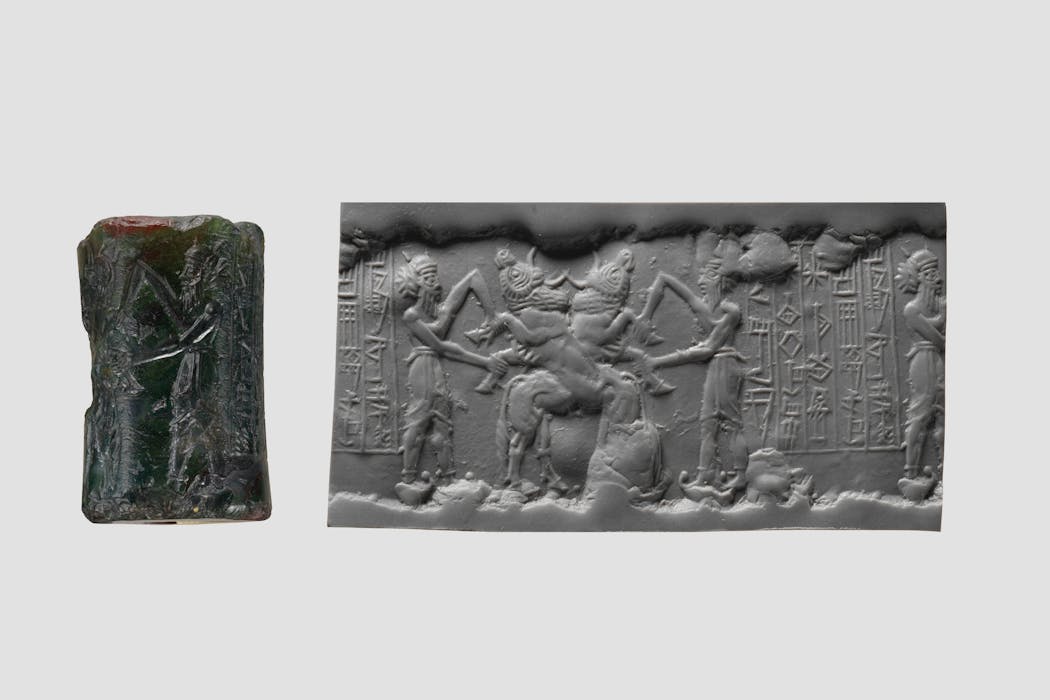
An Akkadian cylinder seal, circa 2350-2150 B.C.E., depicts a contest scene. The image on the right shows the impression the seal would make. Gift of Nanette B. Kelekian, in memory of Charles Dikran and Beatrice Kelekian, 1999/Metropolitan Museum of Art

The earliest form of the signature came from ancient Iraq in the form of cylinder seals.

Mesopotamians, the ancient inhabitants of the land between the Euphrates and Tigris rivers, are credited for many firsts in human history, including writing, urbanism and the state. Among these inventions, cylinder seals are perhaps the most distinctive but least known.

Scan of an artifact with columns of glyphs and a figure depicted on the far right
Babylonian seal made of chalcedony, circa 14th century B.C.E., inscribed with a hymn to the goddess Inanna. The seal was owned by a man named Tunamisah, son of Pari.
Gift of The Right Reverend Paul Moore Jr., 1985/Metropolitan Museum of Art

Seals as artifacts

Thousands of these tiny objects – often no bigger than 2 inches (5 centimeters) in height and 1 inch (2.5 cm) in diameter – are displayed in museums today. They testify to an artistic tradition in ancient Iraq and Syria that remained uninterrupted from the late fourth to first millennia B.C.E.

In essence, a cylinder seal was a small sculpture that served a crucial utilitarian purpose: signing documents. It was generally made of a precious or semiprecious stone such as lapis lazuli, agate or chalcedony. Images and texts were engraved into the stone with a technique called intaglio. Notably, these engravings would need to be made in reverse of how the markings would look when it was used.

When rolled on a moist clay tablet, these engravings left low-relief markings, signifying that the object’s owner authorized the written document. In this respect, a cylinder seal’s impression is the ancestor of modern handwritten and digital signatures.

Three clay artifacts with glyphs and figures inscribed
Clay envelope and tablets from Kültepe-Kanesh (now Turkey), circa 20th-19th centuries BCE. The writer, Ashur-muttabbil, impressed – or signed – the envelope twice with a cylinder seal.
Bequest of Edith Aggiman, 1982/Metropolitan Museum of Art

Seals and identity

While cylinder seals were a creation of the Sumerians who inhabited southern Mesopotamia about 6,000 years ago, they rapidly spread to the rest of Western Asia and the eastern Mediterranean and became important items in everyday life.

Communities in this vast region – especially those in Mesopotamia, an area poor in raw materials – imported stones from distant lands to make their seals. Mesopotamians extracted diorite from Oman, lapis lazuli from Afghanistan, and carnelian and agate from the Indus Valley and other parts of South Asia.

Seals made of these exotic stones were extra valuable, so only the elite could afford them. Often affiliated with the state and temples, these people were typically royalty, high-level bureaucrats and priests. In contrast, people from lower classes used seals made of less valuable materials, such as limestone, clay or glass.

Mesopotamians and their contemporaries in Western Asia expressed their identities not just through the material of their seals but also through the texts and images engraved on them. The seal texts often introduced the owners with their names, genealogies, gender, professions and hometowns. Thanks to this information, researchers know that not just men but also wealthy women owned seals, albeit in much smaller proportions.

Religious identity, too, was communicated via long prayers addressed to personal gods or via images depicting gods and worshippers.

Cylinder seal with a scan of the figures inscribed on its surface on the right
Assyrian cylinder seal from the late ninth to seventh centuries B.C.E., made of chalcedony and inscribed with a cultic scene. The image on the right shows the impression the seal would make.
Gift of Nanette B. Kelekian, in memory of Charles Dikran and Beatrice Kelekian, 1999/Metropolitan Museum of Art

Making seals

The scope of Mesopotamian imagery depicted on cylinder seals was broad. For thousands of years, seal-cutters – the artisans who exclusively specialized in making seals – carved scenes representing daily life and nature, religious rituals, warfare, architectural vistas and mythical stories involving gods, heroes and hybrid creatures such as winged horses and griffins.

Much of this rich imagery was a result of the owners’ personal choices, often referencing their identities. In some exceptional cases, Mesopotamian kings or their aides monitored and approved the designs of the cylinder seals they gifted to high-level officials.

Many seals seem to have been already carved with the popular cultural motifs before they were sold to clients, although solid archaeological and archival evidence is still needed to confirm this. When a customer bought these premade objects, they may have asked for a new inscription or some adjustments to the imagery. Most known cylinder seals were likely carved anew for elite clients, especially for those from the highest echelons of the society such as royalty.

Cylinder seal with a scan of the figures inscribed on its surface on the right
Akkadian cylinder seal made of serpentine, circa 2250-2150 B.C.E., depicting a bull-man wrestling a lion and a nude, bearded hero wrestling a water buffalo. The image on the right shows the impression the seal would make.
Bequest of W. Gedney Beatty, 1941/Metropolitan Museum of Art

Cylinder seals open a wide window not just into ancient Mesopotamian art and culture but also into the minds of individual Mesopotamians. Carved with personalized images and texts reflecting their views on life and society, seals were intimately connected to their owners. Losing one’s seal was considered a very negative omen for its patron. In contrast, modern signatures are often depersonalized and generic.

Cylinder seals – along with city life, organized religion and bureaucracy – were a key component of ancient Mesopotamian civilization. These features, in different forms and proportions, continue to define modern life today.

The Conversation

Serdar Yalçin does not work for, consult, own shares in or receive funding from any company or organization that would benefit from this article, and has disclosed no relevant affiliations beyond their academic appointment.

ref. Signatures meant more in Mesopotamia than they do now − what cylinder seals say about ancient and modern life – https://theconversation.com/signatures-meant-more-in-mesopotamia-than-they-do-now-what-cylinder-seals-say-about-ancient-and-modern-life-266547

Strict school vaccine mandates work, and parents don’t game the system − new research

Source: The Conversation – USA (3) – By Y. Tony Yang, Endowed Professor of Health Policy and Associate Dean, George Washington University

Families are increasingly seeking nonmedical exemptions to routine childhood vaccines, making communities more vulnerable to preventable diseases. FatCamera/E+ via Getty Images

When four states between 2015 and 2021 stopped allowing parents to opt their children out of receiving routine vaccines without a medical reason, vaccination rates among kindergartners increased substantially. That’s the key finding from our new study published in the medical journal JAMA Pediatrics.

All states require children entering kindergarten to be vaccinated against infectious diseases like measles and polio. Parents can request medical exemptions if, for example, their child has a severe allergy to a vaccine ingredient. But most states also allow nonmedical exemptions based on religious or philosophical beliefs. To examine whether state policy on vaccine exemptions could counter falling vaccination rates, we probed data from approximately 2.8 million kindergartners across multiple states from 2011 to 2023.

California, New York, Maine and Connecticut completely eliminated nonmedical exemptions during this period. In those states, exemption rates fell by 3.2 percentage points on average within three years – meaning tens of thousands more children gained protection against diseases like measles.

We examined rates for all four vaccines that are required in most states for children to attend school: diphtheria-tetanus-acellular pertussis, hepatitis B, measles-mumps-rubella and polio. Vaccination rates increased for all of them after nonmedical exemptions were eliminated.

One common concern with not allowing nonmedical exemptions is that parents would simply seek medical exemptions instead. But that didn’t happen in any significant numbers, we found. While California did see an initial uptick in medical exemptions after its 2015 repeal, they declined after the state implemented centralized review processes in 2021. Overall, medical exemptions increased by only 0.4 percentage points – a statistically significant but clinically modest difference.

We also examined states that took a more limited approach. Vermont repealed philosophical exemptions but retained religious exemptions in 2015. Washington repealed nonmedical exemptions only for the MMR vaccine in 2019. These partial repeals were less effective, producing smaller and less persistent increases in vaccination rates than those from total repeal.

The timing matters too. Our findings show that vaccination rates rise over time, with the largest increases observed three to four years after repeal. This is partly because many states don’t immediately enforce legislation for all children, allowing for gradual phase-in periods.

Child gets a vaccine from his doctor, with his mother by his side.
California, New York, Maine and Connecticut eliminated nonmedical vaccine exemptions, meaning children must be vaccinated to attend school unless they have a valid medical reason.
Jose Luis Pelaez Inc/DigitalVision via Getty Images

Why it matters

Vaccination rates for routine childhood vaccines are falling sharply in the U.S. – primarily because more families are seeking exemptions for their children. Between 2011 and 2023, overall kindergarten exemption rates more than doubled, from 1.6% to 3.3%. This trend has accelerated during and after the COVID-19 pandemic, as vaccine skepticism has become increasingly mainstream

This trend leaves more children vulnerable to preventable diseases. Measles, for example, requires about 95% vaccination coverage to prevent outbreaks, and even small drops below that threshold can leave communities vulnerable. In 2025, the country surpassed 1,600 measles cases – the highest count since 1992. Public health experts worry that the U.S. could lose its measles elimination status, which was declared by the World Health Organization in 2000.

Our study shows that comprehensive policy changes can meaningfully protect vaccination coverage. When states eliminate religious, philosophical and other nonmedical vaccine exemptions, childhood vaccination rates increase – without parents simply shifting to medical exemptions.

These findings provide valuable evidence in the face of declining vaccination coverage, and they reveal what’s at stake for states considering weakening vaccine requirements. In September 2025, Florida announced its plan to end vaccine mandates for hepatitis B, chickenpox and bacterial meningitis, with seven additional diseases expected to follow.

What’s next

Our research demonstrates that policy-level solutions work. But they require comprehensive implementation and adequate enforcement mechanisms.

We’re now expanding this research to look at a critical question: Do unvaccinated children cluster together in certain neighborhoods or communities? Even when a state’s overall vaccination rate looks healthy, there might be specific towns or school districts where rates are dangerously low – leaving those areas vulnerable to disease outbreaks.

Understanding these patterns will help public health officials target interventions for the communities at highest risk for outbreaks.

The Research Brief is a short take on interesting academic work.

The Conversation

The authors do not work for, consult, own shares in or receive funding from any company or organization that would benefit from this article, and have disclosed no relevant affiliations beyond their academic appointment.

ref. Strict school vaccine mandates work, and parents don’t game the system − new research – https://theconversation.com/strict-school-vaccine-mandates-work-and-parents-dont-game-the-system-new-research-268558

Investors prefer ‘I’ over ‘we’ when CEOs apologize

Source: The Conversation – USA (3) – By Prachi Gala, Associate Professor of Marketing, Kennesaw State University

When corporate crises hit, the public looks to the CEO. From product recalls to workplace discrimination, to customer mistreatment scandals, CEOs are often thrust into the spotlight and forced to apologize.

But do the exact words they choose really matter?

I’m a professor of marketing, and my preliminary research suggests the answer is yes. In fact, they can even move stock prices.

A tale of 2 apologies

Consider two examples from the not-too-distant past. When Samsung Electronics had to recall 2.5 million smartphones in 2016 due to battery fires, the company ran full-page ads in major American newspapers that said, “We are truly sorry.” Despite the apology, Samsung’s stock continued falling, wiping out billions of dollars in market value.

Contrast that with a famous case: the 1982 Tylenol crisis, in which seven people died after taking capsules that a still-unidentified criminal had laced with cyanide, circumventing the company’s safety protocols. The then-CEO of Tylenol’s parent company, Johnson & Johnson, said “I apologize” to consumers and immediately ordered a nationwide recall, costing the company over US$100 million. His direct acknowledgment of responsibility and swift action helped restore public trust and became a case study in effective crisis leadership. The company’s stock price didn’t take much of a hit, either.

While the two cases are different in many ways, together they illustrate a pattern my colleagues and I observed in our study: Markets respond differently to “I apologize” versus “We apologize.”

Investors reward personal accountability

I collaborated with marketing professors Jennifer H. Tatara and Courtney B. Peters to analyze 224 corporate apologies between 1996 and 2023. Using event-study methods common in finance, we tracked unusual stock returns around apology announcements and linked them to how CEOs framed their statements.

Our results, which we are preparing for publication, were striking. CEOs who said “I apologize” often saw short-term stock returns rise by a statistically significant amount. CEOs who said “We apologize” saw no such effect. Saying “I apologize” lessens the market penalty by roughly 86%, we found.

We think this is because markets reward leaders who take individual responsibility. “I” signals personal accountability and decisiveness. “We,” by comparison, dilutes ownership of the problem.

But context matters, we found. When we zeroed in on diversity-related cases – those involving mistreatment based on race, gender, disability or LGBTQ+ status, for example – the positive effect of “I apologize” weakened or disappeared.

That’s because investors often interpret diversity crises as signs of systemic failure, rather than isolated mistakes. In those cases, investors, employees and the public may expect accountability that goes beyond the CEO. A lone “I apologize” can seem hollow, while “We apologize” may resonate more by acknowledging shared institutional responsibility.

Beyond CEOs: Why stakeholders should care

Apologies are among the most scrutinized executive communications. Their effects ripple across different audiences.

For investors, apology language provides a real-time signal of leadership quality and future governance. Our research shows these signals are strong enough to move stock prices.

For corporate boards, an apology can be as important as a balance sheet in shaping market perceptions. Our research suggests that boards should insist leaders prepare for crisis communications as a standard part of risk management.

For employees and customers, apology language sends a message about corporate culture. “I” can demonstrate accountability; “we” can affirm inclusion and shared responsibility. Both matter, depending on the situation.

Leading in a skeptical era

Corporate apologies are nothing new. But in today’s environment – where social media amplifies every word and trust in institutions is fragile – the stakes are higher. A single poorly framed statement can trigger outrage, stock sell-offs or viral boycotts.

The good news is that “sorry” doesn’t have to be the hardest word. In fact, this research suggests that a good apology can pay off, literally. The key is to remember that apologies aren’t one-size-fits-all. The right words depend on the nature of the wrongdoing.

The Conversation

Prachi Gala does not work for, consult, own shares in or receive funding from any company or organization that would benefit from this article, and has disclosed no relevant affiliations beyond their academic appointment.

ref. Investors prefer ‘I’ over ‘we’ when CEOs apologize – https://theconversation.com/investors-prefer-i-over-we-when-ceos-apologize-266294

Boys, bullying and belonging: understanding violent initiation at a South African school

Source: The Conversation – Africa – By Ndumiso Daluxolo Ngidi, Senior Lecturer, University of KwaZulu-Natal

Violence among learners in South African schools is a pressing concern. The minister of basic education told parliament in 2025 that hundreds of bullying cases had been reported in the first few weeks of the year. Since then, a series of alarming incidents have further drawn public attention.

While these occurrences mirror the high rates of violence in the country, they are also symptoms of systemic challenges within South African schools.

In 2015 the government introduced the National School Safety Framework to set minimum standards of safety and help schools understand and meet their responsibilities. It noted “the relationship between violence and other ecological factors relating to safe and caring schools by locating the school within its broader community”.

The framework suggests an awareness of structural determinants of violence in schools. But the sustained rise in incidents of interpersonal violence among learners points to the need for renewed attention, especially among schoolboys.

We are researchers whose interests include the anthropology of masculinities and health, and inclusive education and children’s geographies. In a recent study we encountered a practice in schools called ukufikisana: a kind of initiation through which senior boys assert their dominance over junior boys, often through violence and intimidation.

Derived from the isiZulu phrase ukufikisana emandleni (“testing each other’s power”), the practice shares similarities with “hazing” or bullying. But it also reveals the social and cultural dimensions of violence within schools. For instance, schoolboys described ukufikisana as how one becomes “fully a boy”, suggesting that the experience and exertion of violence are inevitable.

Our findings demonstrate how ukufikisana reinforces hierarchical gender relations and normalises violence as a means of navigating power and identity among boys. This is deeply entrenched in the school environment.

We suggest that solutions lie in the interplay of poverty, violence and gender norms.

What boys said about bullying

The study
drew on a larger photovoice study exploring learners’ perspectives on violence in and around their school. It focused on 14 teenage boys (aged 14-17) attending a poorly resourced, co-educational school in Inanda, KwaZulu-Natal province. Inanda is an urban area characterised by poverty, unemployment and high levels of violence and crime. Its circumstances are a legacy of the policies applied to black South Africans under apartheid.

The study engaged boys as experts in their own lives, allowing them to share their experiences through images and films. We followed ethical protocols to get consent from schools, parents and learners. A social worker was available to provide support.

We prompted the participants to visually depict what violence looked like in their school environment.

Working in pairs, the boys captured images of simulated acts and experiences of violence using cellphones, discussed them and added captions. Then they presented this material in focus group discussions, which were recorded audiovisually and transcribed. We looked for themes in what was discussed.

The boys produced images showing the various ways that violence emerged at school. In one instance, two participants recreated a stabbing incident in which senior boys threatened to stab a junior boy.

Senior boys spoke of ukufikisana as an initiation practice that reinforced their position as “leaders”. One described the “younger and powerless boys” as “puppets”; another said “it’s to show them who is boss in this school”. Another spoke of it as a “baptism of fire”, saying:

they must always be prepared for it because it is coming for them … We show them that we are in charge of the school and they must respect that.

Younger boys told us:

They don’t listen when we try to stop them; they just threaten to beat us.

I was scared of them. So I just kept quiet and let them do whatever they wanted.

It hurt in more ways than one. One boy said:

Ukufikisana is not just what they do; it is also what they say to you … After that experience, I just kept to myself, and I am now more reserved at school.

What ukufikisana does

From our analysis of what the boys said, it appears that ukufikisana serves a dual function. For senior boys, it works as a rite of passage that solidifies their position as “fully boys”, and warrants their demonstration of physical strength, authority and control. For junior boys, the experience enforces submission and vulnerability, framing them as incomplete or “lesser boys”.


Read more:
Bullies in South African schools were often bullied themselves – insights from an expert


This dynamic normalises violence among boys in school settings. It also perpetuates rigid and harmful ways of being boys at school. At school, boys must always be ready to fight and to show their power through violence.

From this perspective, it’s possible to understand why violence may be prevalent and persisting in some South African schools.


Read more:
Violent behaviour shows up at primary school — and can end there too


For most boys, ukufikisana primes boys to think that bullying and the reinforcement of power through violence are key attributes for their lives. The participants described how this practice shaped their daily interactions, fostering a culture where dominance and submission were ingrained in their understanding of what it meant to be a man.


Read more:
Why girls continue to experience violence at South African schools


These findings align with broader concerns raised in recent anti-bullying research, globally and locally, which highlights the need for school approaches to address bullying.

What needs to change

We suggest that to effectively combat bullying, schools should move beyond punitive measures and zero-tolerance policies. Instead, they should adopt participatory and community-driven strategies that not only consider the interplay of poverty, violence and gender norms, but also allow learners to contribute to possible solutions to violence.

One way this might be done is through actively involving learners as equal stakeholders in school violence interventions.

The Conversation

Melusi Andile Dlamini receives funding from the National Research Foundation.

Ndumiso Daluxolo Ngidi does not work for, consult, own shares in or receive funding from any company or organisation that would benefit from this article, and has disclosed no relevant affiliations beyond their academic appointment.

ref. Boys, bullying and belonging: understanding violent initiation at a South African school – https://theconversation.com/boys-bullying-and-belonging-understanding-violent-initiation-at-a-south-african-school-256008

Africa’s trade deal with the US was left in limbo: what exporters can do about it

Source: The Conversation – Africa – By Bedassa Tadesse, Professor of Economics, University of Minnesota Duluth

The US-Africa preferential trade deal – in place for a quarter century – expired on 30 September 2025. It’s far from certain if the trade deal will be renewed and, if so, how. Through the African Growth and Opportunity Act (Agoa), roughly 35 sub-Saharan African countries could export thousands of products to the American market duty-free.

First signed into law in 2000, it was designed to encourage African exports, create jobs, and deepen trade ties. Its usage varied widely: South Africa shipped cars and citrus; Kenya and Ethiopia focused on apparel; Lesotho and Eswatini relied heavily on garments; Mauritius sent textiles and seafood.

Those exports support hundreds of thousands of jobs. A sizeable proportion are held by women and young workers, particularly in areas where formal employment is scarce. For African exporters, a world without Agoa and with broader US tariffs is a double squeeze on competitiveness.

Will Agoa be revived at all or quickly enough? It rests with the US Congress rather than the White House, which has publicly supported a one-year extension. Transitional deals are being floated, but only an enacted law restores certainty. If the deal remains off – or remains uncertain – the sharpest pain falls on smaller, apparel-focused exporters that employ many low-income workers.


Read more:
US-Africa trade deal turns 25 next year: Agoa’s winners, losers and what should come next


I am a scholar of international trade with an interest in the economic development problems of developing countries. My 2023 analysis of scholarly articles and policy reports examined the impact of Agoa on the economic performance of sub-Saharan Africa.

If Congress cannot agree quickly, the lapse continues. Even if a renewal arrives later, some damage, such as cancelled orders and lost shifts, will already have occurred, and any retroactive fix will be uneven across sectors and firms. Uncertainty is costly: ambiguity surrounding Agoa’s renewal dampens orders and investment, particularly in labour-intensive sectors such as apparel and automotive components.

Amid the present economic uncertainties, Agoa exporters should prioritise three key measures. First, take steps to redirect vulnerable orders to the EU preference schemes, and regional buyers under the African Continental Free Trade Area (AfCFTA). Second, invest in competitiveness through improved ports and predictable customs. Finally, lobby smartly in Washington to argue for a short, retroactive “bridge” renewal.

The high cost of uncertainty for Africa

The duty-free status matters for Africa. Take the case of a basic cotton T-shirt from a country like Kenya or Lesotho that qualifies under Agoa enters the US duty-free. Without Agoa, the standard most-favoured-nation duty is about 16.5% on cotton T-shirts. That swing alone can erase thin margins and redirect orders.

The US imported $791 billion worth of goods from 2001 to 2021 from Agoa eligible countries. The corresponding value of US economic assistance to these countries amounted to $145 billion from 2001 through 2019. The striking difference in magnitude indicates the significance of Agoa in the US-Africa economic relationship.

The trade preferences have particularly benefited apparel, textiles, agriculture and light manufacturing. However, the impact has been uneven. Some countries have used the opportunities more effectively than others, so the consequences of a lapse will likewise be uneven among exporters.

Apparel hubs hit hardest: Lesotho, Eswatini, Madagascar, Kenya and Mauritius built entire export bases around Agoa’s duty-free access for clothing. Without it, typical US most-favoured-nation tariffs (usually 10%-20%) apply immediately, razor-thin margins vanish, and orders get pulled. Factory closures and job losses follow quickly.

South Africa’s cars and fruit: South Africa’s shipments of vehicles, parts, wine, citrus and nuts also face new tariffs. These globally competitive sectors are highly cost-sensitive; the loss of preferences undercuts auto supply-chain investment and farm incomes.

Oil exporters are less exposed: Crude oil generally faces low US tariffs already, so countries like Nigeria and Angola are less affected than non-oil manufacturers and farmers.

Recent returnees are vulnerable: Countries that only recently regained eligibility – after earlier suspensions over concerns about human rights, governance (including coups), or labour rights – are likely to see investors hesitate again amid renewed uncertainty.

What African exporters can do

Given the mix of US statute and presidential practice, there are three realistic paths out of the trade limbo. Congress could pass a multi-year extension in the weeks ahead. That would restore certainty for buyers and factories. Another is a short “bridge” renewal in which lawmakers agree to a one- or two-year extension. This scenario averts a cliff but keeps investment on pause: buyers may place smaller, repeat orders, and postpone new lines until the long-term outlook is resolved. The last is a continued lapse.

While the uncertainty persists, African exporters can look to other measures to shore up business. I propose these three:

Plan for uncertainty: Redirect vulnerable orders to the European Union’s preference routes. Use the Generalised Scheme of Preferences and relevant Economic Partnership Agreements where rules of origin are met. Also pivot to regional buyers under the African Continental Free Trade Area. This can be paired with quick logistics wins such as:

  • pre-clearance: allowing customs processing before goods reach port, cutting dwell times

  • single-window customs: a digital portal where all trade documents are submitted once, reducing delays and paperwork

  • scheduled sailings: fixed, reliable shipping timetables that shorten delivery cycles and improve buyer confidence.

Together, these steps can improve margins through faster lead times. Countries can also bridge working-capital gaps for exposed firms with trade guarantees or invoice discounting, so confirmed orders don’t collapse. They should also maintain a standing public–private task force ready to pivot as US decisions evolve.

Lobby smartly in Washington: Affected countries should coordinate with embassies and lead exporters. They should present hard evidence, including buyer letters, job counts and likely US price pass-through, to argue for a short, retroactive “bridge” renewal. They can also stress that predictable access supports US supply-chain diversification away from China and stabilises consumer prices.

These countries could also align their messages across affected sectors, ranging from apparel to autos and agro-processing. The goal is to show a broad economic impact rather than narrow special pleading. They should also time their outreach to coincide with congressional windows and committee calendars.

Invest in competitiveness: Trade officials should compete on reliability. This is because dependable power, faster ports and predictable customs often matter more to buyers than wages alone. Build regional inputs (yarn-to-garment, packaging, parts) so a shock in one market doesn’t halt production, and scale testing and certification so one run meets US, EU and UK standards.

They should aim to move up the value chain: from free-on-board/full-package (for example, in apparel, not just cut-make-trim but also sourcing fabric and trims and arranging logistics) to components, branded, and ready-to-eat lines, where margins are stickier. Tie investment incentives to verifiable outcomes: jobs, on-time-in-full delivery, and clean production.

For three decades, African governments were urged to liberalise and build export capacity on the promise of predictable rules. A sudden US pullback moves the goalposts—raising prices at home, cutting jobs abroad, and shrinking the space for rules-based trade. Exporters can buy time with EU routes, regional buyers and logistics fixes. But only Congress can restore certainty: pass a short, retroactive bridge renewal now, then set a clear timeline for a multi-year AGOA update.

The Conversation

Bedassa Tadesse does not work for, consult, own shares in or receive funding from any company or organisation that would benefit from this article, and has disclosed no relevant affiliations beyond their academic appointment.

ref. Africa’s trade deal with the US was left in limbo: what exporters can do about it – https://theconversation.com/africas-trade-deal-with-the-us-was-left-in-limbo-what-exporters-can-do-about-it-268515

What is Françafrique? The taboo word that reveals the shifting influence of France in Africa

Source: The Conversation – Africa (2) – By Christophe Premat, Professor, Canadian and Cultural Studies, Stockholm University

The term “Françafrique” describes the political, economic and military networks built to preserve French influence in Africa. It refers to a past era but many believe that it still shapes relations between France and its former colonies today.

The word was popularised by French economist, historian and activist François-Xavier Verschave in his 1998 book Françafrique: The Longest Scandal of the Republic. He used it to condemn a neocolonial system that created dependence and allowed for French interference. Originally, the idea meant a close cooperation between France and Francophone Africa.

As a researcher in political discourse and Franco-African relations, I am interested in how the idea of Françafrique still affects the way both sides see each other today.

How Françafrique got its name

The term Françafrique was first used in 1945 by Jean Piot, editor-in-chief of L’Aurore newspaper. He saw it as a way to unite France and Africa to renew the French Empire. Later, Félix Houphouët-Boigny, the first president of independent Côte d’Ivoire, gave the term a positive meaning. In 1955, he used it to describe a positive partnership. He wanted to celebrate the shared language, culture and economic ties between France and Africa.

Verschave completely redefined the meaning of the term. For him, Françafrique symbolised a shadowy system of corruption, patronage and political interference.

A key architect of this system was Jacques Foccart. He was the African affairs adviser to French presidents between 1958 and 1974 and then adviser to Prime Minister Jacques Chirac between 1986 and 1988. He also served as the secretary-general for the Community and African and Malagasy Affairs, a body designed by General Charles de Gaulle to manage France’s relations with its former colonies.

The pillars of Françafrique

Françafrique is based on three main pillars:

1. Political and military support

Since African independence in the 1960s, France has maintained close ties with leaders considered to be “friends of France”. Through specific defence agreements, Paris retained the right to conduct military interventions to stabilise or protect allied governments. Key examples include Operation Manta in Chad in 1983 and Operation Serval in Mali in 2013. This structure was upheld by a shadow network. It was made up of unofficial advisors, intelligence services and personal connections among the elite. It was best symolised by the so-called “African cell” within the Élysée Palace, which was long led by Foccart.

2. Economic ties

The economic pillar of Françafrique is defined by deep financial ties. The CFA franc currency, created in 1945, is a clear legacy of colonial-era monetary dependence. Major French corporations like Elf, Bolloré, Bouygues and Total gained privileged access to key sectors such as oil, infrastructure and telecommunications in Africa. In return, these companies often funded a hidden system of financial support for African political parties and regimes. This corrupt system was exposed in the 1990s when a judicial investigation revealed that the French state-owned oil giant, Elf-Aquitaine, operated a vast network of corruption that involved both French politicians and African leaders.

3. Personal and informal networks

Beyond official diplomacy, Françafrique thrived on personal and informal networks. It operated through a web of businessmen, diplomats and military figures. These intermediaries formed a powerful “parallel state”. Their networks mixed business deals, intelligence work and personal friendships. This system effectively bypassed standard diplomatic channels. The importance of these personal ties is confirmed in the 2024 memoirs of Robert Bourgi, a key insider. As a disciple of Foccart, he details his extensive relationships with numerous African political leaders.

Is Françafrique really over?

The Francafrique system was weakened by major global and regional shifts. The Soviet Union’s collapse, growing demands for democracy in Africa, and financial scandals in France all challenged its existence.

A key turning point was the 1990 La Baule speech by French president François Mitterrand. He declared that French aid would be tied to democratic reforms. Despite this, French influence persisted, simply changing its form through privatisation, new military partnerships and economic diplomacy.

In the 2000s, successive French presidents – Jacques Chirac, Nicolas Sarkozy and François Hollande – all vowed to end the Françafrique era. However, continued French military action in Côte d’Ivoire in 2002, Mali in 2013, and the wider Sahel region until 2023 demonstrated a lasting French security role on the continent.

A concept in crisis

Today, the concept of Françafrique is in crisis. Under President Emmanuel Macron, the term itself has become politically taboo. Since his 2017 speech in Ouagadougou, he has insisted on breaking with the old logic of paternalism. He advocates instead for a “partnership of equals”.

Symbolic initiatives aim to modernise the relationship. These include returning looted artworks to Benin, acknowledging France’s role in the Rwandan genocide, and creating a new Africa-France Summit format.

Yet for many Africans, this new rhetoric does not match reality. French military presence in the Sahel, the ongoing use of the CFA franc (even as it is slowly rebranded), and the dominance of large French companies fuel a powerful feeling that French influence remains largely unchanged.

In countries like Mali, Burkina Faso, and Niger rejection of France is now expressed through pan-Africanist and sovereignty rhetoric, which has led to regime changes.

The rise of competing powers

A key feature of the current era is the diversification of Africa’s international partners. Countries like China, Turkey, Russia and Gulf states are now major players in both economic and security sectors. The era of France having an exclusive “backyard” in Africa is over. African states now enjoy significantly greater geopolitical leeway.

In this new competitive landscape, France is attempting to redefine its policy. It now emphasises targeted bilateral relations, support for civil society, and academic and cultural cooperation. However, this strategic shift is struggling to overcome decades of deep-seated mistrust.

The powerful and enduring image of Françafrique continues to shape perceptions, especially among a younger generations of Africans who view past relations with scepticism.

An unfinished break

Today, discussing Françafrique means confronting both a historical system and a powerful political idea. While the shadowy networks of the past have faded, the underlying structures of economic influence remain. So too do the powerful postcolonial emotions that shape relations between France and Africa.

Françafrique may no longer be an official policy. Yet it remains a powerful lens. It is the key to understanding how colonial legacies continue to shape the present day.

The Conversation

Christophe Premat is a Professor of Francophone Cultural Studies and Director of the Centre for Canadian Studies at Stockholm University. He is also Co-Editor-in-Chief of the Nordic Journal of Francophone Studies. He recently published Sensibilités intellectuelles africaines with Buata Malela (Hermann Editions, https://www.editions-hermann.fr/livre/sensibilites-intellectuelles-africaines-buata-b-malela).

ref. What is Françafrique? The taboo word that reveals the shifting influence of France in Africa – https://theconversation.com/what-is-francafrique-the-taboo-word-that-reveals-the-shifting-influence-of-france-in-africa-268129

Moins de cris, moins de coups : le Québec a changé sa façon d’éduquer

Source: The Conversation – in French – By Annie Bérubé, Professeure au département de psychologie et de psychoéducation, Université du Québec en Outaouais (UQO)

En un quart de siècle, le Québec a profondément transformé sa façon d’éduquer ses enfants, et pour le mieux. La cinquième édition d’une enquête unique au monde confirme une tendance claire : moins de violence dans l’éducation des enfants.

Le Québec est riche de 25 ans de données documentant la violence à l’égard des enfants, recueillies par le biais de cinq éditions d’une enquête populationnelle. Rares sont les sociétés capables de documenter ainsi la maltraitance envers les enfants.

Cette enquête unique est le fruit d’une collaboration entre l’Institut de la statistique du Québec et de chercheuses universitaires. À leur tête, la chercheuse Marie-Ève Clément, de l’Université du Québec en Outaouais (UQO), est présente depuis les débuts de ce travail, qui fait du Québec un pionnier en la matière. Ont également contribué aux différentes éditions des enquêtes : Annie Bérubé de l’UQO, Marie-Hélène Gagné de l’Université Laval et Sylvie Lévesque de l’Université du Québec à Montréal.

Une diminution de la violence envers les enfants

Les résultats de l’enquête qui vient de paraître sont encourageants. Ils montrent une diminution marquée autant des attitudes parentales favorables envers la punition corporelle que des comportements de violence physique et psychologique envers les enfants. Aujourd’hui, moins d’une mère sur 20 croit encore qu’une tape est nécessaire pour éduquer son enfant, contre près d’une sur trois il y a 25 ans.

Ce changement d’attitude se reflète dans une réduction des comportements violents à l’égard des enfants dans les familles. Ainsi, en 25 ans, l’utilisation de la punition corporelle, comme donner la fessée, a diminué de 70 %. Ce sont aujourd’hui près de 14 % des enfants qui subiraient de tels comportements au moins une fois dans l’année, contre 48 % en 1999. Il y a 25 ans, environ 7 enfants sur 100 subissaient de la violence physique sévère chaque année. Aujourd’hui, ce chiffre se situe à 3 enfants sur 100.

Enfin, l’agression psychologique répétée, qui se manifeste par des comportements comme crier ou hurler après l’enfant ou le traiter de noms, a diminué de près de moitié et toucherait aujourd’hui 28 % des enfants du Québec au cours d’une année, contre 48 % en 1999.

Même si c’est constats sont encourageants, il reste que 62 % des enfants vivent au moins une forme de violence au cours d’une année, qu’elle soit psychologique ou physique. Bien qu’ils aient diminué, les taux annuels de violence physique sévère demeurent bien plus élevés que ce que laissent entrevoir les statistiques des services de protection de la jeunesse au Québec.

Les ados, premiers touchés par la négligence

Chaque année, près de 290 000 enfants au Québec vivent des situations de négligence. L’enquête distingue trois formes principales. D’abord, la négligence de supervision, qui touche 6 enfants sur 100 et expose ceux-ci à des risques pour leur sécurité. Les adolescents de 13 à 17 ans sont les plus touchés : presque 1 sur 7 manque de surveillance suffisante.

Plus de 6 % des enfants vivent une négligence cognitive et affective, lorsque les adultes du ménage ne participent pas suffisamment aux activités quotidiennes de l’enfant. La négligence physique, concernant l’accès à la nourriture, aux vêtements et aux soins médicaux, touche moins de 1 enfant sur 100 (0,4 %).

Un enfant sur cinq témoin de violence entre ses parents

L’enquête de 2024 a permis de documenter l’exposition des enfants à la violence entre leurs parents ou un partenaire intime au cours de l’année. Les résultats montrent que 20 % des enfants du Québec sont exposés à ce type de violence qui s’exprime principalement sous forme de violence psychologique entre les partenaires (19 %), mais aussi de violence physique (2,5 %).

La maltraitance, un cycle difficile à briser

L’enquête montre que certains enfants sont plus exposés à la maltraitance, quel que soit leur âge ou le type de violence. Ceux dont les parents signalent des difficultés de développement ou des problèmes de santé, physiques ou mentaux, sont particulièrement vulnérables.

Trois caractéristiques parentales se distinguent par leur lien avec toutes les formes de maltraitance. D’abord, les parents ayant eux-mêmes vécu de la maltraitance durant leur enfance sont plus susceptibles d’exercer de la violence physique ou psychologique, de négliger leur enfant ou de l’exposer à la violence conjugale.


Déjà des milliers d’abonnés à l’infolettre de La Conversation. Et vous ? Abonnez-vous aujourd’hui à notre infolettre pour mieux comprendre les grands enjeux contemporains.


Ensuite, les enfants grandissant auprès de parents qui rapportent des symptômes dépressifs sont plus susceptibles que les autres d’être exposés à au moins une forme de maltraitance. Enfin, le stress parental est particulièrement lié à l’agression psychologique répétée, à la violence physique et à l’exposition à la violence entre partenaires intimes, alors qu’il est associé à la négligence pour les enfants de 6 à 17 ans.

Finalement, au niveau de l’environnement familial, un faible niveau de soutien social rapporté par le parent s’avère être un facteur relié à toutes les formes de maltraitance. Les enfants grandissant auprès de parents moins bien soutenus sont significativement plus à risque de vivre de la violence, d’y être exposés ou de grandir dans un contexte de négligence que les autres enfants.

En somme, plus de la moitié (52 %) des enfants de 6 mois à 17 ans vivent annuellement au moins un type de maltraitance au sein de leur foyer, que ce soit sous forme de violence physique, psychologique, de négligence ou d’exposition à la violence entre partenaires intime. Parmi eux, 18 % subissent deux formes ou plus de maltraitance. Cette combinaison de violences, généralement vue comme un signe de gravité, toucherait davantage les personnes adolescentes. Les enfants vivent souvent en même temps des violences à la maison et des disputes ou violences entre leurs parents.

Agir pour prévenir et soutenir

Les facteurs associés à la maltraitance identifiés par l’enquête soulignent l’importance d’un soutien efficace, à la fois dans les services publics et dans le réseau communautaire. Cela inclut, par exemple, les politiques et programmes publics comme le Régime québécois d’assurance parentale ou les Services intégrés en périnatalité et petite enfance, ainsi que les services communautaires, éducatifs et philanthropiques. Pensons aux organismes communautaires Famille (OCF), aux centres de la petite enfance (CPE), aux initiatives comme Naître et grandir, ou programmes de parentalité qui accompagnent et soutiennent les parents et les familles. Les investissements en prévention demeurent primordiaux, comme le rappelle un récent texte appuyé par plus de 175 personnes issues du milieu de la recherche.

En somme, les données de la récente enquête soulignent l’important travail accompli au cours des 25 dernières années pour mieux soutenir le développement des enfants. Il reste crucial de garantir à tous les enfants des foyers sûrs et bienveillants. Ces résultats militent en faveur d’interventions de proximité, précoces et préventives.

La Conversation Canada

Annie Bérubé a reçu des financements du CRSH et des financements passés du MSSS.

Clément, Marie-Eve a reçu des financements du CRSH, du FRQ et du MSSS.

Lévesque sylvie a reçu des financements du FRQSC, du CRSH, des IRSC et du Secrétariat à la condition féminine du Québec.

Marie-Hélène Gagné a reçu des financements du CRSH, des IRSC et des FRQ.

ref. Moins de cris, moins de coups : le Québec a changé sa façon d’éduquer – https://theconversation.com/moins-de-cris-moins-de-coups-le-quebec-a-change-sa-facon-deduquer-267931