Dick Cheney’s expansive vision of presidential power lives on in Trump’s agenda

Source: The Conversation – USA – By Graham G. Dodds, Professor of Political Science, Concordia University
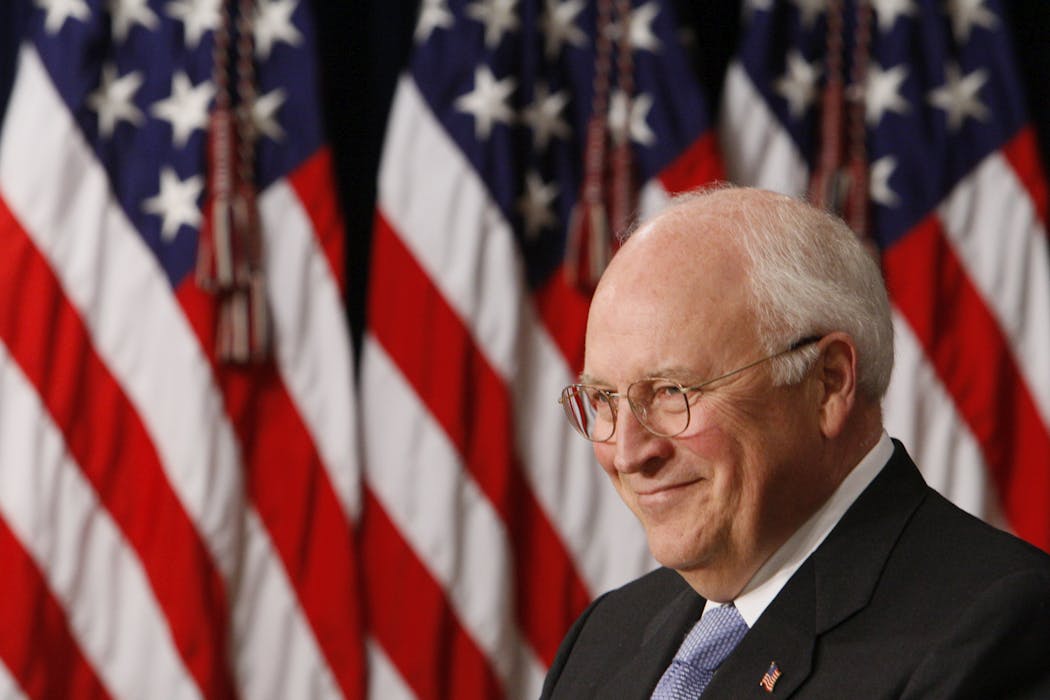
Vice President Dick Cheney appears at a Washington D.C., event in 2007. AP Photo/Charles Dharapak

This is an updated version of a story that first published on Oct. 7, 2025.

Former Vice President Dick Cheney will be remembered for many things. He was arguably the most powerful vice president in American history. He was a paragon of conservatism. He was the
architect of many of the more extreme measures in President George W. Bush’s “war on terror.”

But Cheney’s legacy, after his death on Nov. 3, 2025, will also include a crucial development that dates back a half-century, when he served as President Gerald Ford’s chief of staff. Based on his experience in the Ford administration, Cheney felt that Congress had overreacted in its efforts to rein in the presidency after the abuses of President Richard Nixon. He thought that the assertive Congress of the 1970s had gone too far and had emasculated the presidency, making it nearly impossible for the president to get things done.

As Cheney told an interviewer in 2005: “I do have the view that over the years there had been an erosion of presidential power and authority, that it’s reflected in a number of developments – the War Powers Act. … I am one of those who believe that was an infringement upon the authority of the President. … A lot of the things around Watergate and Vietnam, both, in the ’70s served to erode the authority, I think, the President needs to be effective especially in a national security area.”

Cheney’s experience in the Ford years set in place a decades-long effort to enhance presidential power, to reinvigorate an office that he believed Congress had wrongly diminished. When Bush surprisingly picked Cheney to be his vice president in July 2000, Cheney finally had a chance to right that perceived wrong.

Bush was happy to expand his own power, and the Bush administration made bold assertions of presidential power in a variety of areas. In many instances, Bush and others sought to justify his actions by invoking the unitary executive theory, a conservative thesis that calls for total presidential control over the entire executive branch.

Now, nearly two decades later, President Donald Trump is using this theory to push his agenda. He set the tone for his second term by issuing 26 executive orders, four proclamations and 12 memorandums on his first day back in office. The barrage of unilateral presidential actions has not yet let up.

These have included Trump’s efforts to remove thousands of government workers and fire several prominent officials, such as members of the Corporation for Public Broadcasting and the chair of the Commission on Civil Rights. He has also attempted to shut down entire agencies, such as the Department of Education and the U.S. Agency for International Development.

For some scholars, these actions appear rooted in the psychology of an unrestrained politician with an overdeveloped ego.

But it’s more than that.

As a political science scholar who studies presidential power, I believe Trump’s recent actions mark the culmination of the unitary executive theory, which is perhaps the most contentious and consequential constitutional theory of the past several decades.

A prescription for a potent presidency

In 2017, Trump complained that the scope of his power as president was limited: “You know, the saddest thing is that because I’m the president of the United States, I am not supposed to be involved with the Justice Department. I am not supposed to be involved with the FBI, I’m not supposed to be doing the kind of things that I would love to be doing. And I’m very frustrated by it.”

The unitary executive theory suggests that such limits wrongly curtail the powers of the chief executive.

Formed by conservative legal theorists in the 1980s to help President Ronald Reagan roll back liberal policies, the unitary executive theory promises to radically expand presidential power.

There is no widely agreed upon definition of the theory. And even its proponents disagree about what it says and what it might justify. But in its most basic version, the unitary executive theory claims that whatever the federal government does that is executive in nature – from implementing and enforcing laws to managing most of what the federal government does – the president alone should personally control it.

This means the president should have total control over the executive branch, with its dozens of major governmental institutions and millions of employees. Put simply, the theory says the president should be able to issue orders to subordinates and to fire them at will.

President Donal Trump appears seated in the oval office.
President Donald Trump signs executive orders in the Oval Office next to a poster displaying the Trump Gold Card on Sept. 19, 2025.
AP Photo/Alex Brandon

The president could boss around the FBI or order the U.S. attorney general to investigate his political opponents, as Trump has done. The president could issue signing statements – a written pronouncement – that reinterpret or ignore parts of the laws, like George W. Bush did in 2006 to circumvent a ban on torture. The president could control independent agencies such as the Securities and Exchange Commission and the Consumer Product Safety Commission. The president might be able to force the Federal Reserve to change interest rates, as Trump has suggested. And the president might possess inherent power to wage war as he sees fit without a formal authorization from Congress, as officials argued during Bush’s presidency.

A constitutionally questionable doctrine

A theory is one thing. But if it gains the official endorsement of the Supreme Court, it can become governing orthodoxy. It appears to many observers and scholars that Trump’s actions have intentionally invited court cases by which he hopes the judiciary will embrace the theory and thus permit him to do even more. And the current Supreme Court appears ready to grant that wish.

Until recently, the judiciary tended to indirectly address the claims that now appear more formally as the unitary executive theory.

During the country’s first two centuries, courts touched on aspects of the theory in cases such as Kendall v. U.S. in 1838, which limited presidential control of the postmaster general, and Myers v. U.S. in 1926, which held that the president could remove a postmaster in Oregon.

In 1935, in Humphrey’s Executor v. U.S., the high court unanimously held that Congress could limit the president’s ability to fire a commissioner of the Federal Trade Commission. And in Morrison v. Olson the court in 1988 upheld the ability of Congress to limit the president’s ability to fire an independent counsel.

Some of those decisions aligned with some unitary executive claims, but others directly repudiated them.

Warming up to a unitary executive

In a series of cases over the past 15 years, the Supreme Court has moved in an unambiguously unitarian, pro-presidential direction. In these cases, the court has struck down statutory limits on the president’s ability to remove federal officials, enabling much greater presidential control.

These decisions clearly suggest that long-standing, anti-unitarian landmark decisions such as Humphrey’s are on increasingly thin ice. In fact, in Justice Clarence Thomas’ 2019 concurring opinion in Seila Law LLC v. CFPB, where the court ruled the Consumer Financial Protection Bureau’s leadership structure was unconstitutional, he articulated his desire to “repudiate” the “erroneous precedent” of Humphrey’s.

Several cases from the court’s emergency docket, or shadow docket, in recent months indicate that other justices share that desire. Such cases do not require full arguments but can indicate where the court is headed.

In Trump v. Wilcox, Trump v. Boyle and Trump v. Slaughter, all from 2025, the court upheld Trump’s firing of officials from the National Labor Relations Board, the Merit Systems Protection Board, the Consumer Product Safety Commission and the Federal Trade Commission.

Previously, these officials had appeared to be protected from political interference.

President George W. Bush appears with several soldiers.
President George W. Bush signed statements in 2006 to bypass a ban on torture.
AP Photo/Pablo Martinez Monsivais, File

Total control

Remarks by conservative justices in those cases indicated that the court will soon reassess anti-unitary precedents.

In Trump v. Boyle, Justice Brett Kavanaugh wrote, “whether this Court will narrow or overrule a precedent … there is at least a fair prospect (not certainty, but at least a reasonable prospect) that we will do so.” And in her dissent in Trump v. Slaughter, Justice Elena Kagan said the conservative majority was “raring” to overturn Humphrey’s and finally officially embrace the unitary executive.

In short, the writing is on the wall, and Humphrey’s may soon go the way of Roe v. Wade and other landmark decisions that had guided American life for decades.

As for what judicial endorsement of the unitary executive theory could mean in practice, Trump seems to hope it will mean total control and hence the ability to eradicate the so-called “deep state.” Other conservatives hope it will diminish the government’s regulatory role.

Kagan recently warned it could mean the end of administrative governance – the ways that the federal government provides services, oversees businesses and enforces the law – as we know it:

“Humphrey’s undergirds a significant feature of American governance: bipartisan administrative bodies carrying out expertise-based functions with a measure of independence from presidential control. Congress created them … out of one basic vision. It thought that in certain spheres of government, a group of knowledgeable people from both parties – none of whom a President could remove without cause – would make decisions likely to advance the long-term public good.”

If the Supreme Court officially makes the chief executive a unitary executive, the advancement of the public good may depend on little more than the whims of the president, a state of affairs normally more characteristic of dictatorship than democracy.

Judicial approval of the unitary executive theory might well have pleased Cheney by enshrining a significant means of enhancing presidential power. But ironically, the former vice president would be displeased for such power to be accessible to the current president, whom Cheney criticized, calling Trump a “threat to our republic.”

The Conversation

Graham G. Dodds does not work for, consult, own shares in or receive funding from any company or organization that would benefit from this article, and has disclosed no relevant affiliations beyond their academic appointment.

ref. Dick Cheney’s expansive vision of presidential power lives on in Trump’s agenda – https://theconversation.com/dick-cheneys-expansive-vision-of-presidential-power-lives-on-in-trumps-agenda-269071

University still pays off – even in lower-wage Britain

Source: The Conversation – UK – By Sean Brophy, Senior Lecturer, Manchester Metropolitan Business School, Manchester Metropolitan University

Guguart/Shutterstock

In the upcoming budget, Chancellor Rachel Reeves is expected to raise the minimum wage to £12.70 an hour: £26,416 annually for a full-time job. This means that the gap between salaries for minimum wage jobs and those for professional jobs that require a degree is shrinking fast.

Some smaller law firms are already paying newly qualified solicitors barely more than minimum wage. “Why would young people take on £45,000 of student debt if they can earn the same stacking shelves?” one executive told the Financial Times.

The concern from business leaders is understandable, but it’s focused on the wrong problem. This isn’t a story about university losing its value. It’s a story about Britain becoming a lower wage economy.

Based on all available evidence, university remains a sound long-term investment. The raw undergraduate earnings premium – the simple difference between graduate and non-graduate median salaries – stands at £11,500 per annum.

Earnings by education level:

Line graph
Median Gross Annual Earnings by Education Level, Working Age Population (25-64), England.
Sean Brophy/Office for National Statistics’ Labour Force Survey, CC BY-NC-ND

Earnings typically accelerate as graduates progress through their careers and gain labour market experience. The lifetime earnings premium – the additional amount graduates earn over their working lives compared to non-graduates – remains substantial. The most comprehensive recent analysis estimates that the average UK graduate earns about 20% more in net lifetime earnings than a comparable non-graduate – equivalent to roughly £130,000 for men and £100,000 for women after taxes and student loan repayments.

The issue isn’t whether university pays off. It’s that in the current UK economy, everything pays off less.

It bears emphasising here that investing in education remains the primary mechanism an individual has to improve their life chances. In other words, the problem is structural and not the fault of recent graduates.

Britain’s lower wage trajectory

Britain is undergoing a fundamental shift in its economic position relative to competitor nations. It’s transitioning from a top-tier wage economy to a mid-tier one.

The compression of graduate starting salaries against the minimum wage is merely a symptom of this broader downward trend. Since the 2008 financial crisis, UK wage growth has stagnated compared to other advanced economies.

Wage growth in G7 countries, 2008-2024:

Line graph
Real wage growth comparison, UK vs OECD countries, 2008-2024.
Sean Brophy/OECD Data Explorer, Average annual wages, US dollars, PPP converted, CC BY-NC-ND

Much has been written about Britain’s so-called “productivity puzzle”, but one of the likely culprits is the fact that British executives don’t invest in training their workers compared to their international competitors. Instead the burden of upskilling the UK workforce shifts to universities.

This in turn causes the government to apply pressure to the higher education sector to be more responsive to the needs of employers, which has the perverse effect of calling for the elimination of what are deemed “low value degrees”.

Yet universities are several steps removed from the day-to-day realities of the workplace, and are far less suited to providing role-specific training than employers themselves.

When neither employers nor universities effectively address the skills needed in the economy, the result contributes to a low-investment, low-productivity trap that depresses wages across the entire economy.

The productivity gap:

Line graph
UK productivity growth comparison with G7 nations, 2008-2024.
Sean Brophy/OECD Data Explorer, CC BY-NC-ND

Until private sector leaders tackle it through renewed training investment, blaming recent graduates or universities for wage compression is misplaced.

Wage compression affects everyone, but it’s particularly visible at the graduate entry level. When the overall wage distribution compresses, entry-level professional salaries get squeezed from below by rising minimum wages and from above by stagnant mid-career earnings.

Risk and reward

The average English graduate now carries £53,000 in student debt. In a high-wage-growth economy, taking on substantial debt to access the graduate premium makes clear sense – you’re buying a ticket to rapid salary progression. In a low-growth economy, the same debt represents a different risk profile for the same investment.

And the social mobility implications are real. Students from families who can afford to subsidise them through university and early career years face less risk than those who cannot.

The fundamental calculus that favours university education hasn’t changed. Educated workers still earn more, enjoy better employment prospects, and have more career options. But the simple fact is that financial returns may be lower in a lower wage economy.

This is similar to how investors adjust expectations after decades of high returns. The question isn’t whether to invest in university, but what financial returns to reasonably expect. A graduate premium of 15% instead of 20% is still a premium. Reaching peak earnings in your early 50s instead of mid 40s is slower, but the trajectory still leads upward.

Britain is settling into a mid-tier wage economy unless firms start investing in workers like their international competitors do. This creates a risk of brain drain, as graduates seek higher wages in countries that value their skills more highly.

Until that changes, universities are urged to scrap “low-value” degrees while employers slash training and expect graduates to bring the skills they no longer provide through training. The graduate premium still exists – but in a lower wage economy, expect it to be smaller.

The Conversation

Sean Brophy does not work for, consult, own shares in or receive funding from any company or organisation that would benefit from this article, and has disclosed no relevant affiliations beyond their academic appointment.

ref. University still pays off – even in lower-wage Britain – https://theconversation.com/university-still-pays-off-even-in-lower-wage-britain-268959

Can you treat a narcissist?

Source: The Conversation – UK – By Jodie Raybould, Lecturer in Psychology, Coventry University

Rawpixel.com/Shutterstock

Perhaps you know someone who always deflects blame onto you. Someone who
smirks when caught in a lie, who twists your words until you’re apologising for their mistakes. And over time, you may start to wonder, can someone like this ever truly change?

You could be talking about a narcissist.

When people high in narcissism feel slighted or criticised, it threatens their fragile or inflated self-esteem, prompting them to react with aggression to protect their self-image. Naturally, when confronted with such behaviour, people often demand change from the narcissist.

But sometimes, the impact isn’t just on others – it’s on the narcissist themselves. Narcissists can be particularly prone to feeling rejected, likely due to the very behaviour that pushes people away. So, can narcissists change with psychological intervention?

First, it’s helpful to understand narcissism as viewed in psychology.


Read more:
What we’ve learned about narcissism over the past 30 years


There are generally two types, grandiose and vulnerable. Grandiose narcissists tend to view themselves as superior to others whereas vulnerable narcissists tend to be hypersensitive to criticism. In both cases, narcissists can be arrogant and self-centred. If these traits become extreme, a person may be diagnosed with something like narcissistic personality disorder (NPD) or be described as having pathological narcissism.

Narcissists can act in a passive aggressive way to undermine you. For instance, such people may socially exclude others and withhold love and affection as a form of punishment.

Other times it may not be so subtle. Research has shown that narcissists can be prone to violence, even when unprovoked.


Read more:
Narcissism – and the various ways it can lead to domestically abusive relationships


Pathological narcissism

While someone with NPD has a lifelong mental health disorder, meaning there is no “cure”, research does suggest that treatment can help manage the symptoms. Treating narcissism normally starts with talking therapies.

This is the classic therapeutic approach where a counsellor sits and talks to their client. The most common technique a counsellor will use for narcissists is cognitive behavioural therapy, which may help people notice and challenge inaccurate or unhelpful thoughts and change their behaviour.

But, when therapists were asked what they thought was the most effective approach as part of a 2015 study, they said they preferred introspective relational techniques. This involves the client exploring their feelings and motivations while the counsellor is nonjudgmental and understanding. That approach is key when working with narcissists because some patients assume the counsellor thinks they are vulnerable.

Fear of vulnerability often goes hand-in-hand with difficulty building a trusting relationship and rapport between the client and counsellor. For example, the client might feel the need to impress their therapist or maintain a confident image, rather than admitting any potential weakness.

Feelings of inadequacy, shame, guilt, aggression and victimisation, can all contribute to this defensiveness in people with narcissism. Counsellors have to recognise and work through these barriers for the intervention to be successful, which takes skill.

When they seek treatment narcissistic patients are often in a vulnerable symptom state, rather than grandiose. But these presentations can co-occur meaning grandiose traits will start to emerge during treatment. The counsellor may then recognise symptoms of NPD in that client and begin to tailor counselling to that diagnosis.

Woman in suit sits on a sofa opposite a therapist taking notes. The woman is wearing a white mask.
It takes skill to work with a narcissist in therapy.
Elnur/Shutterstock

When those barriers hold steadfast, a patient may end their therapy early. There are several other reasons why a patient may drop out, but drop out rates for therapy in general range from 10–50% compared to 63-64% in narcissists.

It is also rare for someone with NPD to seek out therapy in the first place, as they often do not believe that they have a problem. People with NPD often visit their doctor or therapist for a different reason, such as an external problem (like a job loss or divorce) or emotional issue (perhaps depression from perceived rejection).

What are the alternatives?

Most innovations in personality disorder treatment comes from borderline personality disorder, and a few borderline personality disorder treatments have been adapted and tested for narcissists. These approaches tend to be successful in treating borderline personality disorder and examples include dialectical behaviour therapy, mentalisation-based therapy and schema therapy.

Dialectical behaviour therapy focuses on challenging negative thoughts and intense emotions, while accepting who you are. Mentalisation-based therapy helps you make sense of thoughts and beliefs and link them to your behaviour.

In comparison, schema therapy helps challenge unhelpful mental blueprints for how the world works. For instance, if you were neglected as a child you could develop a blueprint that says your needs will never be met by anyone.

But there is limited evidence that these approaches are effective for NPD. And they have the same barriers seen in introspective relational techniques like long treatment times and challenges in building rapport.

In light of these issues, in April 2025 psychiatric researchers Alexa Albert and Anthony Back suggested using psychedelic drugs during therapy could create a window of opportunity where narcissistic clients are more open and emotionally receptive.

MDMA, more commonly known as ecstasy, can enhance empathy, prosocial behaviour, and
feelings of closeness to others. Although, MDMA-assisted therapy has seen success for some conditions, such as post traumatic stress disorder, it may also lead to worsening mental health.

Also, rapport is even more important when you introduce substances to therapy. Rapport is needed in MDMA-assisted therapy so the patient feels safe to trust their therapist while under the influence of the drug.

The treatment faces legal barriers too, since ecstasy is under Schedule 1 of the Misuse of Drugs regulations, meaning it has no recognised medicinal use in the UK. Researchers, mental health charities, patients, and some MPs have called for its movement into Schedule 2 to allow clinical trials, but no change has been made yet.

It is important to note that Albert and Back’s suggestion is theoretical, because they haven’t finished any clinical trials yet.

For now, therapists must rely on their skills to build rapport with patients and overcome treatment barriers without chemical assistance. So, yes, narcissists may change, but it takes great care from the therapist and the patience of both counsellor and client.

The Conversation

Jodie Raybould works for Coventry University

Daniel Waldeck works for Coventry University

ref. Can you treat a narcissist? – https://theconversation.com/can-you-treat-a-narcissist-268504

Dick Cheney dies: giant of the US conservative movement whose legacy was defined by the Iraq war

Source: The Conversation – UK – By Natasha Lindstaedt, Professor in the Department of Government, University of Essex

Dick Cheney, one of the most important figures in America’s neo-conservative movement, has died at the age of 84. Cheney had a long career in government and was considered by many as one of the most powerful vice-presidents in US history.

Cheney started his career in politics in 1968 in the office of William Steiger, a Republican representative from Wisconsin, before joining the staff of Donald Rumsfeld, who was at the time the director of the Office of Economic Opportunity. By 1974, Cheney was brought on to the team of Gerald Ford, who had assumed the US presidency that year following the resignation of Richard Nixon. He followed Rumsfeld as Ford’s White House chief of staff in 1975, at the age of 34.

Cheney then went on to spend over a decade serving as a member of the House of Representatives. He represented a district in Wyoming until 1989 when he was appointed secretary of defense by the then-president, George H.W. Bush.

This experience would prove critical to Cheney’s subsequent selection as running mate by Bush’s son, George W. Bush, for his 2000 presidential campaign as the Republican candidate. Bush Jr. went on to win that election, and his partnership with Cheney would ultimately prove incredibly significant in reshaping US foreign policy in the Middle East.

After the 9/11 terrorist attacks in 2001, the neo-conservative movement gained momentum in Washington and found an ally in Cheney. He was a founding signatory of the so-called Project for the New American Century, which became a major forum for neo-conservative thinking. The goal was to promote US interests – namely spreading democracy abroad – through a bold deployment of military power.

This interventionist foreign policy culminated in the 2003 US invasion of Iraq. Considered by some to be a shadow president, Cheney had a huge influence over Bush Jr. He reportedly played a major role in convincing Bush to go to war in Iraq.

Cheney expressed no regrets about this decision, calling critics of the war “spineless” in 2005. But a majority of Americans considered this decision to be a grave error.

The war is estimated to have cost the US well over US$1 trillion (£800 billion), and as much as US$3 trillion when taking the wider regional conflict it sparked into account. The war also led to the deaths of as many as 600,000 Iraqi civilians, according to an estimate published by the Lancet medical journal.

American soldiers on patrol in Taji, Iraq.
American soldiers on patrol in Taji, Iraq, in 2008.
Christopher Landis / Shutterstock

There were also questions about whether Cheney had a conflict of interest. He had previously served as the chief executive of Halliburton, a company that won billions of dollars in US military contracts to restore Iraq’s oil sector – this included some of the biggest military logistics contracts in history. Cheney was even accused of coordinating preferential awarding of contracts to the company, though he and Halliburton denied it.

He was also accused of circumventing due process, constitutional checks and congressional oversight during his time as vice-president. A prominent example of this was his involvement in a programme to intercept domestic communications without a judicial warrant.

Cheney was also widely disliked in the intelligence community. Many of these people resented the way he undermined the CIA by, for example, instructing subordinates in the agency to transmit raw intelligence directly to his office.

Change of heart?

Given that Cheney believed executive power needed to be expanded, there was a degree of irony in his decision to endorse the Democratic candidate, Kamala Harris, in the 2024 presidential election. The winner of that election, Donald Trump, also favours an executive unencumbered by institutions.

But Cheney clearly had his limits. While Bush Jr. was reticent to publicly attack Trump, Cheney became one of his harshest critics. This was especially so after Liz Cheney, his daughter and a now former congresswoman, voted to impeach Trump after the insurrection of January 6 2021, which made her enemy number one in Trump’s eyes.

However, some critics claim that it was Cheney’s shadow presidency that paved the way for Trump’s aggressive expansion of the executive power of the presidency. Along the way, he wielded the power of the vice-presidency in a way not been seen before or, arguably, since.

Cheney was not just powerful but prone to operating clandestinely, even creating an independent operation inside the White House. All of this helped fuel mistrust of the government.

As Cheney advanced in age, his stances seemed to be softening from the Darth Vader image he had embraced as vice-president. More than half of the multi-million fortune that Cheney gained from selling his Halliburton stock options, for example, was donated to the Cardiac Institute at George Washington University.

Cheney, who survived five heart attacks and eventually a heart transplant, was seen a political survivor. But the Republican party that he had led in the shadows has been transformed. Once a towering figure in the conservative movement, today his brand of conservatism is a relic of the past.

The Conversation

Natasha Lindstaedt does not work for, consult, own shares in or receive funding from any company or organisation that would benefit from this article, and has disclosed no relevant affiliations beyond their academic appointment.

ref. Dick Cheney dies: giant of the US conservative movement whose legacy was defined by the Iraq war – https://theconversation.com/dick-cheney-dies-giant-of-the-us-conservative-movement-whose-legacy-was-defined-by-the-iraq-war-269019

Scary stories for kids: I made my dad take me to see Ghostbusters three times

Source: The Conversation – UK – By Diane A. Rodgers, Senior Lecturer in Film Studies and Media & Communication, Sheffield Hallam University

“Three parapsychologists lose their university funding” sounds like the beginning of a terrible joke, rather than a premise for one of the most successful films of the 1980s. Nonetheless, this is how the story of Ghostbusters (1984) begins, with a trio of unlikely professors.

Peter Venkman (Bill Murray) cares more about flirting than research, Ray Stantz (Dan Aykroyd) bounces around like an excitable puppy, while nerdy Egon Spengler’s (Harold Ramis) hobby is to “collect spores, moulds and fungus”. It’s no wonder the credibility of their research is called into question, after they attest to seeing a real ghost at the New York Public Library.

Turfed out of the hallowed halls of academia, the trio remain steadfast in their pursuit of ghosts, establishing “Ghostbusters” – a paranormal investigation outfit – in a disused New York firehouse. They hire a fourth member, Winston Zeddemore (Ernie Hudson), a commonsense everyman, and develop a series of nuclear-powered ghost-catching equipment.

The Ghostbusters vow to investigate reports of spooky encounters and, most importantly, “to believe you”.


Read more:
Scary stories for kids: Gremlins and the terror of normal, even cute, things becoming horrific


Ghostbusters ticked a heap of boxes in appealing to children – from the cartoon logo and catchy singalong theme tune asking “Who ya gonna call?” to the pleasingly retro Ecto-1 (a converted 1959 Cadillac Miller-Meteor Sentinel ambulance), which positively begged to be made into a toy. However, you may be surprised to learn this film wasn’t originally made for young audiences.

Ghostbusters is full of scary scenes, sexual innuendo and bad language. Despite all this, it became a hit with children, spawning a world of kid-friendly spin-offs, books and toys. When I first saw the film at the age of seven, soon after its UK cinema release in December 1984, I was completely enraptured.


This article is part of a series of expert recommendations of spooky stories – on screen and in print – for brave young souls. From the surprisingly dark depths of Watership Down to Tim Burton’s delightfully eerie kid-friendly films, there’s a whole haunted world out there just waiting for kids to explore. Dare to dive in here.


The encounter that sets our heroes off on their path as ghost hunters is truly shocking. This is not a Casper-type of (friendly) ghost, ready to have a witty exchange. In the library, they meet a properly terrifying spectre of an old lady who suddenly transforms into a gruesome apparition, lunging directly at the camera.

From this early moment in the film, it’s apparent the audience is in for a rollercoaster ride. As a child, I used to dare myself to put my face right up to a double-page spread image of this ghoulish moment in the Ghostbusters storybook I had been given. That much-loved text would sow the seeds of my future as a horror scholar and folklorist.

The three principal stars would have been most recognisable to adult audiences in the 80s. They were regulars of late-night comedy shows like Saturday Night Live in the US, on which Aykroyd and Murray found fame, and Canada’s SCTV (Second City Television), for which Ramis both wrote and performed.

This sort of off-the-cuff sketch comedy wends its way into the film’s script. Many of Venkman’s lines, in particular, seem improvised and full of sharp, adult humour. Take the scene when he’s looking round Dana’s (Sigourney Weaver) apartment to assess paranormal activity. Explaining where he should direct his attention, Dana says: “That’s the bedroom, but nothing interesting ever happened in there” – to which Venkman replies: “What a crime.”

Such retorts went over most kids’ heads but left the adults laughing, which to me was a major appeal. The fact I could enjoy the film with my dad made watching Ghostbusters a true delight.

After seeing it, we chatted about plot details and he joked with me about getting “slimed” – a reference to an encountering with a mischievous and greedy green spectre (popularly referred to as “Slimer”) which leaves Venkman covered in sticky ectoplasm.

In the 1980s, of course, there was no repeat opportunity to see the film anytime soon, as it typically took between six months and a year to appear for rental – and then only if you were lucky enough to own a VHS player.

Happily for me, my dad’s enjoyment of it meant convincing him to take me to see Ghostbusters a second time at the cinema was easy. What is astounding to me, though, is the fact he also took me a third time, driving outside my hometown of Sheffield to find a cinema that was still showing it.

To quote his diary from February 1985: the seven-year-old me had “not stopped talking about it since last time”. For nostalgia’s sake, it’s also worth noting that dad jotted down the ticket prices: £1 for an adult and 80p for a child.

The enduring appeal of Ghostbusters to new and old fans alike is evident in the sequels, reboots and remakes that continue to be released. And having demanded that my parents make me a costume so I could dress up as Venkman for Halloween in the ’80s, I am delighted there are now versions (from 2016 onwards) that show girls being Ghostbusters too.

Ghostbusters is appropriate for children aged 10+


Looking for something good? Cut through the noise with a carefully curated selection of the latest releases, live events and exhibitions, straight to your inbox every fortnight, on Fridays. Sign up here.


The Conversation

Diane Rodgers receives funding from AHRC via Sheffield Hallam University for being co-lead on the National Folklore Survey for England project which runs from Jan 2025 – Dec 2026.

ref. Scary stories for kids: I made my dad take me to see Ghostbusters three times – https://theconversation.com/scary-stories-for-kids-i-made-my-dad-take-me-to-see-ghostbusters-three-times-267791

How wars ravage the environment – and what international law is doing about it

Source: The Conversation – UK – By Benjamin Neimark, Senior Lecturer, School of Business Management, Queen Mary University of London

People across the Gaza Strip have been returning to towns and cities badly damaged by the war after a fragile ceasefire took effect in October. Eventually, their lives will be restored and their homes will be built back. But the climate consequences of the war will remain for years to come.

Research, which is currently under review, demonstrates that the equivalent of over 32 million tonnes of CO₂ was generated in the first 15 months of the war. This is equal to the greenhouse gas emissions of roughly eight-and-a-half coal-fired power plants in one year or the annual greenhouse gases emitted by Jordan.

The war in Ukraine has had a devastating environmental impact, too. One study, published in February 2025, concluded that the equivalent of nearly 237 million tonnes of CO₂ were released as a result of the war in the three years after Russia’s full-scale invasion. This figure is similar to the annual emissions of Austria, Czech Republic, Hungary and Slovakia combined.


Wars and climate change are inextricably linked. Climate change can increase the likelihood of violent conflict by intensifying resource scarcity and displacement, while conflict itself accelerates environmental damage. This article is part of a series, War on climate, which explores the relationship between climate issues and global conflicts.


It is currently up to researchers themselves to calculate the climate impact of wars. This is because there is no legal obligation for countries to report annual conflict emissions to the UN’s climate body, the UN Framework Convention on Climate Change (UNFCCC). But that may soon change.

In July, the International Court of Justice (ICJ) delivered a historic advisory opinion on countries’ obligations to tackle climate change. This much-anticipated opinion confirmed that states are legally bound to protect the climate system, and must take concrete action to tackle and respond to the climate emergency.

Two of the court’s key legal findings were that states are obliged to do their utmost to prevent harm to the climate system and to cooperate with each other to that end. In a declaration annexed to the opinion, Judge Sarah Cleveland emphasised that this obligation necessarily includes assessing, reporting on and tackling greenhouse gas emissions from armed conflicts.

As she explained: “Failing to take such harms into account underreports and distorts our understanding of global warming and undermines the ability of the international community to tackle its causes. It is thus directly contrary to the international obligations of states to protect the climate system and other parts of the environment from greenhouse gas emissions.”

Protecting the environment

The ICJ’s opinion followed a number of international legal efforts in recent years to protect the environment from harm caused by conflict. In 2022, the UN’s authoritative International Law Commission released its “draft principles” on the protection of the environment during armed conflict. The principles were approved by the UN general assembly in December of that year.

They set out how the environment should be protected before, during and after armed conflicts, while also presenting a framework for environmental protection in situations of occupation. The principles include recognition of the potential of armed conflict to exacerbate global environmental challenges, such as climate change and biodiversity loss.

Ecocide is also emerging as an important way to think about war and its associated ecological destruction. This is defined as severe and either widespread or long-term harm to the environment that results from unlawful or wanton acts.

Several states, including Belgium and Chile, have already adopted the crime in their national laws. And the International Union for Conservation of Nature, the world’s largest and most diverse environmental network, voted to adopt a motion in October “recognising the crime of ecocide to protect nature”.

The ecological devastation that has been inflicted in Gaza probably reaches the level of ecocide. Even before the conflict began, the populations of Gaza and neighbouring communities in Israel were experiencing long periods of water scarcity and extreme heat. But the widespread devastation caused by two years of war means Gazans now face devastating environmental and health conditions.

Food production is now impossible as munitions, solid waste and untreated sewage contaminate Gaza’s farmland. The UN Environment Programme estimates that up to 97% of tree crops, 82% of annual crops and 89% of pastureland there have been destroyed during the war.

One study, published in July 2025, also found that it could take as long as four decades to remove the millions of tonnes of rubble left by the Israeli military’s bombardment. The researchers estimated that removing and processing the rubble from Gaza alone will involve driving heavy machinery and trucks a total of 18 million miles – approximately 737 times around the world. This will generate the equivalent of almost 66,000 tonnes of CO₂.

International law is beginning to reflect the growing consensus among states and global bodies on the need to recognise the climate and wider environmental effects of armed conflicts. But the scale of the environmental damage inflicted by conflict underlines the urgent need for transparent reporting and robust data. Global climate policy is proceeding without the full facts.

Palestinian farmers harvesting green peppers at a farm in Khan Yunis, Gaza.
Palestinian farmers harvesting green peppers at a farm in Khan Yunis, Gaza, a month before the war began.
Anas-Mohammed / Shutterstock

Road to Belém

At Cop30, the UN’s upcoming 30th climate change conference in the Brazilian city of Belém, one of us (Benjamin Neimark) will attend a high-level panel that will address the issue of military emissions in Gaza. The failure of militaries to report emissions associated with armed conflict, in particular to the UNFCCC, will be central to the panel.

The panel will also highlight the impact of increased military spending on meeting the UN’s sustainable development goals, as well as the effects of climate hazards on de-mining and tree planting in post-conflict Colombia. And it will look at pathways to green reconstruction and energy decarbonisation in Ukraine.

Judge Cleveland’s ICJ declaration is not binding law. But it is an authoritative indication that time is running out for states that turn a blind eye to the significant climate harms of military activities. For global climate governance to succeed in averting disaster, wartime emissions must be brought into full view.


Don’t have time to read about climate change as much as you’d like?

Get a weekly roundup in your inbox instead. Every Wednesday, The Conversation’s environment editor writes Imagine, a short email that goes a little deeper into just one climate issue. Join the 45,000+ readers who’ve subscribed so far.


The Conversation

Benjamin Neimark receives funding from the UKRI-ESRC. I am a Fellow at the Transition Security Project

Kate Mackintosh is affiliated with Stop Ecocide International.

ref. How wars ravage the environment – and what international law is doing about it – https://theconversation.com/how-wars-ravage-the-environment-and-what-international-law-is-doing-about-it-268031

The case for a cancer warning on your bacon butty

Source: The Conversation – UK – By Justin Stebbing, Professor of Biomedical Sciences, Anglia Ruskin University

irina2511/Shutterstock

A group of scientists in the UK recently demanded that bacon and ham products carry health warnings similar to those on cigarettes.

These experts argue that these meats, which are often preserved with chemicals called nitrites, pose a cancer risk that successive UK governments have failed to address.

They are urging the government to act on growing evidence that these foods can increase the risk of cancer, particularly colon (bowel) cancer. This type of cancer is rising, especially among young people, for reasons that remain unclear despite growing research into potential causes.

It has been nearly a decade since the World Health Organization’s International Agency for Research on Cancer (IARC) classified processed meat as a group 1 carcinogen, meaning there is strong evidence it can cause cancer. That places it in the same category as tobacco and asbestos.

Since then, the UK government has faced mounting pressure to regulate or ban carcinogenic preservatives used in many processed meats such as bacon and ham. These preservatives, known as nitrites, are added to keep meat looking fresh and pink, enhance flavour and prevent spoilage. But they are now implicated in tens of thousands of cancer cases every year in the UK.

The danger comes from the way nitrites behave once eaten. Inside the body, they can turn into compounds called nitrosamines, which are potent carcinogens that damage DNA, the genetic material that controls how cells grow and divide.

These nitrosamines can attach themselves to DNA in the liver, forming DNA adducts, which are small chemical bonds that stick to the genetic material and distort its structure. This damage can cause genetic errors that, over time, build up and allow cells to divide uncontrollably, forming tumours, particularly in the colon.

Nitrosamines can also trigger stress within cells by creating harmful molecules called reactive oxygen species, which cause additional DNA damage. This combination of oxidative stress and genetic instability can help cancer develop and spread.

Scientific consensus

Experts estimate that nitrites in processed meats have caused around 54,000 cases of colorectal cancer in the UK over the past ten years. Since the IARC classification in 2015, the scientific consensus supporting this link has only grown stronger.

Recent studies continue to confirm a clear association between eating processed meat and an increased risk of colorectal cancer. Other research has extended these concerns to breast cancer, finding that women who eat processed meat weekly have a significantly higher risk than those who do not.

The greatest risk comes from meats treated with nitrites. In response, the EU has tightened regulations by reducing permitted levels of nitrites in processed meats. The EU aims to lead the way in food safety and cancer prevention by encouraging the use of safer alternatives.

Industry groups of food manufacturers that oppose nitrite bans argue that removing them could make food less safe by increasing the risk of bacterial contamination. Many scientists and food safety experts disagree. With modern refrigeration and hygiene standards, they say, it is entirely possible to produce safe, long-lasting cured meats without nitrites.

European producers already sell nitrite-free meats at scale, with no recorded outbreaks of food poisoning linked to such products for decades. This challenges the claim that nitrites are essential for food safety.

Food scientists generally believe innovation can protect public health while maintaining quality and taste. The debate, however, goes beyond food technology. It raises broader questions about how governments balance consumer safety, industry interests and public health priorities.

A call for preventive action

Advocates for reform say the government should take stronger responsibility by phasing out harmful additives and improving food labelling so consumers can make informed choices. They argue that the UK now lags behind the EU in food safety standards after Brexit, where stricter controls on nitrites have already been introduced.

From a public health perspective, dietary carcinogens such as nitrites represent a preventable cause of cancer. Reducing exposure could significantly lower the national cancer burden and ease pressure on healthcare systems.

Diet plays a key role in cancer risk and in related conditions such as obesity. Cutting down on eating processed meats, and supporting safer production methods, would be a major step forward for both personal and public health.

The message from researchers is clear. Processed meats containing nitrites pose a significant and well-documented cancer risk. With growing scientific evidence and public awareness, there is now real pressure on policymakers to act. Banning or phasing out these carcinogenic additives, introducing cancer warnings on packaging and supporting producers to switch to safer alternatives could save thousands of lives.

The Conversation

Justin Stebbing does not work for, consult, own shares in or receive funding from any company or organisation that would benefit from this article, and has disclosed no relevant affiliations beyond their academic appointment.

ref. The case for a cancer warning on your bacon butty – https://theconversation.com/the-case-for-a-cancer-warning-on-your-bacon-butty-268404

Brazil’s upcoming UN climate summit highlights how tricky climate pledges are to keep

Source: The Conversation – UK – By Hannah Hughes, Senior Lecturer International Politics and Climate Change, Aberystwyth University

Belem, Brazil. Pedro Magrod/Shutterstock

For two weeks during November, countries are coming together in the city of Belém in Brazil to negotiate their responses to climate change. This will be the 30th UN climate summit, known as Cop30. It marks ten years since the negotiation of the Paris agreement (a global agreement to keep temperature rise to well below 2°C, and as close to 1.5°C as possible). For the first time, this global summit is being held in the Amazon, the largest rainforest ecosystem in the world.

But most countries have not submitted their national climate plans, and the US has withdrawn from the Paris agreement. While many governments remain committed to climate action, the agreement’s objective requires difficult decisions.

Research has documented how countries dependent on fossil fuel wealth have sought to weaken climate science published by the UN’s climate authority (the Intergovernmental Panel on Climate Change or IPCC) and undermine its influence on UN climate negotiations for decades.

The transition away from fossil fuels is difficult for countries. An ambiguous timeline for fossil fuel phase out and investment in technologies that remove greenhouse gases from the atmosphere are easier options. The Paris agreement also comes with financial and technological obligations for developed countries.


Read more:
US politics has long shaped global climate action and science – how much will Trump’s opposition matter?


Under the Paris agreement, countries agreed to reach a new climate finance target by 2025. Developed countries failed to reach the previous goal of providing US$100 billion (£76 billion) by 2020.

At the UN climate summit in Azerbaijan last November, known as Cop29, a new financial goal was agreed. However, the US$300 billion a year by 2035 target agreed fell well below what developing countries actually needed to mitigate and adapt to climate change. Progress to increase climate finance to US$1.3 trillion will be a key debate at Cop30. Despite historical responsibility, these weak financial commitments indicate that developed countries are not providing the climate leadership needed.

Brazil’s climate presidency

Brazilian Cop30 president, André Corrêa do Lago, has a critical role to play as mediator and bridge builder to increase the collective ambition of governments.

In Brazil’s leadership of Cop30, the tension between negotiating and implementing the Paris agreement are apparent. While Brazil deploys its diplomatic resources to strengthen the global climate response, it appears to undermine it nationally by approving new fossil fuel exploitation.

Less than one month before Cop30, the state oil and gas company, Petrobras, was authorised to begin exploratory drilling in the mouth of the Amazon. Brazil intends to expand production by more than 20% by 2030 and is projected to become the fourth-largest producer in the world. The Brazilian government justifies this through the Paris agreement, which enables countries to choose their own climate action plans.

However, the Paris agreement is not just about government action. It recognises that action is needed by businesses, investors and cities and regions, and that everyone has a role to play, from climate youth to Indigenous people in collective climate action. Mobilising broader social participation and support has been a key objective of Brazil’s Cop30 presidency.

Amazon visions and voices

Brazil is hosting Cop30 in the Amazon, despite resistance to this location from countries because of limited and costly accommodation. Brazil Cop30 organisers are supporting greater Indigenous participation than any previous UN climate summit.

This will provide a platform for community voices most affected by climate change and deforestation. One of the key goals for Indigenous and other Amazonian communities at Cop30 will be to demand direct financing for their community funds — grassroots mechanisms designed to channel money directly to those protecting the forest. They argue that funding should go straight to local hands, not through government agencies, to ensure real autonomy and impact on the ground.

Gatherings outside the main venue for negotiations include the people’s summit and planned protest. At these alternative summit events Indigenous peoples and other civil society groups call for climate justice and try to hold governments accountable to their climate promises.

woman in blue top, stood outside by green garden
Marcele Oliveira is the Cop30 youth climate champion and believes that a collective effort against climate change will help shift society’s thinking and relationship with the environment.
Gabriel Della Giustina / COP30, CC BY-NC-ND

As researchers, we sit and listen to the climate negotiators. We have watched country negotiators push difficult decisions back another year and weaken collective commitment to fossil fuel phaseout. Fossil fuel interests have been empowered in US energy decision making and the US government now seeks to slow the energy transition outside of the Paris agreement. It is not clear which governments, if any, will lead the collective effort necessary to leave this dependence behind at Cop30.

We will be in Belém as a research team documenting the unfolding events. Our research into global agreement-making shows all the diverse ways that people participate in climate politics are important to ensure the Paris agreement objectives are met. In Belém, these diverse visions will come alive in vivid and tangible ways, offering glimpses of alternative futures and collective paths that could reshape how the world approaches climate action. That is what many people will be hoping to see.

Don’t have time to read about climate change as much as you’d like?

Get a weekly roundup in your inbox instead. Every Wednesday, The Conversation’s environment editor writes Imagine, a short email that goes a little deeper into just one climate issue. Join the 45,000+ readers who’ve subscribed so far.


The Conversation

Hannah Hughes receives funding from British Academy.

Veronica Korber Gonçalves receives funding from the Brazilian National Council for Scientific and Technological Development (CNPq).

ref. Brazil’s upcoming UN climate summit highlights how tricky climate pledges are to keep – https://theconversation.com/brazils-upcoming-un-climate-summit-highlights-how-tricky-climate-pledges-are-to-keep-267704

How China spreads authoritarian practices beyond its borders

Source: The Conversation – UK – By Giulia Sciorati, LSE Fellow in International Relations, London School of Economics and Political Science

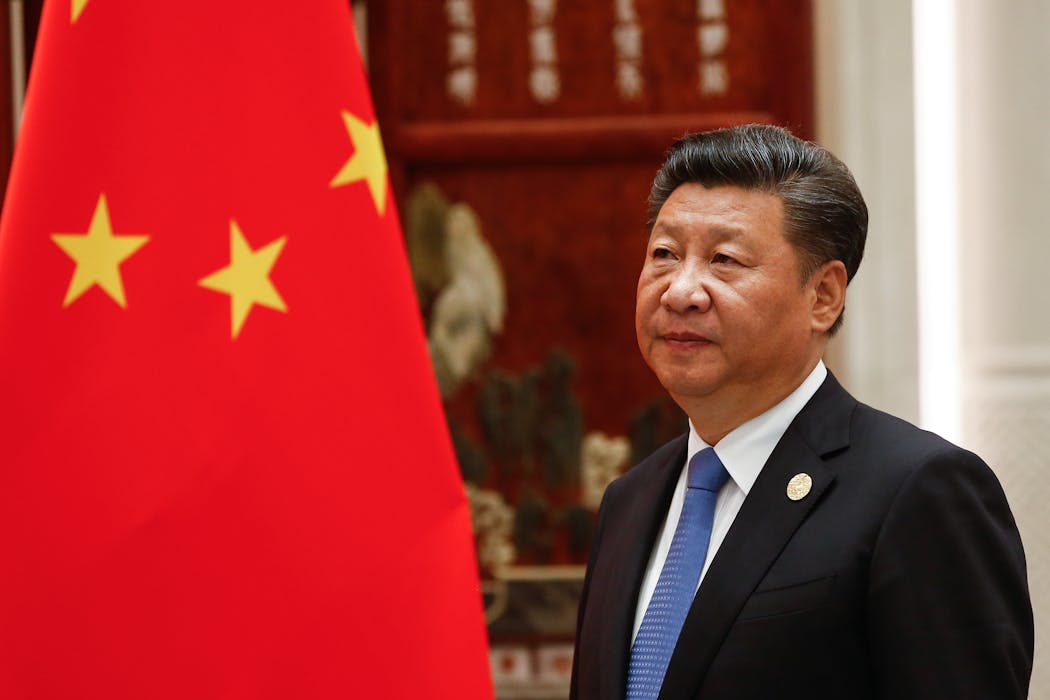
China’s president, Xi Jinping, during the G20 summit in Hangzhou, China, in 2016. Gil Corzo / Shutterstock

Protests erupted in Bishkek, the capital of Kyrgyzstan, in October 2020 following disputed parliamentary elections. Only four political parties out of 16 had passed the threshold for entry into parliament. Three of these had close ties to the country’s then-president, Sooronbay Jeenbekov.

Kyrgyzstan’s powerful neighbour, China, responded to the unrest with restraint – but in a way that implied democracy can cause political upheaval. Hua Chunying, spokeswoman for the Chinese foreign ministry, said: “China sincerely hopes that all parties in Kyrgyzstan can resolve the issue according to law through dialogue and consultation, and push for stability as soon as possible”.

China adopted a different tone when Kazakhstan’s government responded violently to civil unrest in early 2022. It endorsed the Kazakh president, Kassym-Jomart Tokayev, repeating his claims that “terrorists trained abroad” were responsible for the unrest. Beijing praised Tokayev’s firm response, which left hundreds of people dead.

Why did China, confronted with two uprisings in neighbouring countries, react cautiously in one case and assertively in the other? As my recently published research shows, the answer points to a broader pattern in the promotion of authoritarian governance in the world today.

Researchers tend to assume that authoritarian regimes seek to export a coherent ideological model, like how the Soviet Union once promoted communism. The Soviet Union declared the aim of advancing communism abroad during the cold war, presenting one-party rule and central planning as a model for sympathetic regimes to adopt.

But few autocracies nowadays have a common ideological model to advance. Repressive regimes like the one in Beijing instead look to normalise autocratic practices elsewhere by presenting them as reasonable solutions to pressing governance challenges.

I call this “autocracy commercialisation”. Just as products are marketed differently depending on the consumer, China encourages autocratic practices in different ways that are tailored to local conditions.

Different approaches

The Kyrgyzstan and Kazakhstan examples illustrate this dynamic. Since its independence from the Soviet Union in 1991, Kyrgyzstan was for many years considered the most democratic country in central Asia. It had an active political opposition, as well as a vibrant civil society and independent media outlets.

Here, Beijing has relied on what I describe in my research as a “defensive logic”. This has seen it present autocratic practices to Kyrgyzstan’s political leaders as a possible bulwark against democratic volatility. These practices have ultimately been accepted, and Kyrgyzstan has further descended towards authoritarianism.

During the unrest in 2020, Chinese officials and state media repeatedly warned that continued political turmoil could undermine Kyrgyzstan’s development. They urged all parties to resolve issues swiftly “through dialogue and consultation”. Through these claims, Beijing presented stability as the highest political good and implied that elections – and, by extension, participatory democracy – can lead to chaos.

Following the protests, the electoral authorities in Kyrgyzstan annulled the results of the elections. Jeenbekov accused “political forces” of trying to seize power illegally and subsequently resigned. He told the BBC he was ready to hand over “responsibility to strong leaders”.

A nationalist politician called Sadyr Zhaparov rapidly consolidated power in Kyrgyzstan after Jeenbekov’s resignation. He first declared himself acting president before being officially elected several months later in a vote criticised for lacking genuine competition.

China swiftly recognised his government, treating it as a return to order after a period of instability. In 2024, Kyrgyzstan then put forward new laws to give more power to governing authorities and curb dissent. Media freedoms have also narrowed under Zhaparov’s rule and civil society space has shrunk.

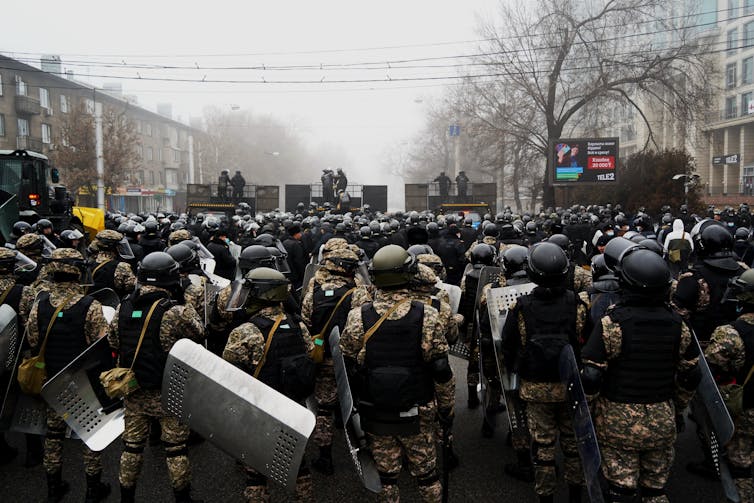
A group of riot police during protests in Almaty.
The Kazakh authorities cracked down violently on protests in 2022.
Vladimir Tretyakov / Shutterstock

Kazakhstan shows a different picture – demonstrating what I call an “affirmative logic”. When protests over fuel prices escalated into nationwide unrest in January 2022, Chinese officials aligned themselves with the government’s account of events. They emphasised terrorism and foreign interference as the root causes.

China not only fully supported Tokayev and praised his leadership. It also highlighted the stabilising roles of regional security organisations such as the Collective Security Treaty Organization, which sent troops to Kazakhstan to help tackle the protests, and the Shanghai Cooperation Organization. Autocracy was framed affirmatively by Beijing as the guarantor of order.

Kazakhstan has subsequently continued along its authoritarian path. In April 2024, for instance, a new media law came into effect that gave the ministry of information powers to block accreditation of foreign media and their representatives if they deem them as posing a threat to national security.

These two cases show how China adapts its narratives to different contexts. This adaptability is powerful. By promoting autocracy as a flexible and context-sensitive practice, regimes such as the one in Beijing render it legitimate and, at times, preferable to any other.

Recognising this strategy is essential for those concerned with the global clash between democracy and authoritarianism. It helps explain why autocracy persists across diverse settings and why its appeal may be broader than many people suggest.

The Conversation

Giulia Sciorati does not work for, consult, own shares in or receive funding from any company or organisation that would benefit from this article, and has disclosed no relevant affiliations beyond their academic appointment.

ref. How China spreads authoritarian practices beyond its borders – https://theconversation.com/how-china-spreads-authoritarian-practices-beyond-its-borders-266543

How the French philosopher Jean Baudrillard predicted today’s AI 30 years before ChatGPT

Source: The Conversation – UK – By Bran Nicol, Professor of English, University of Surrey

Some writers appear so accurate in their assessment of where society and technology is taking us that they have attracted the label “prophet”. Think of J. G. Ballard, Octavia E. Butler, Marshall McLuhan, or Donna Haraway.

One of the most important members of this enlightened club is the philosopher Jean Baudrillard – even though his reputation over the past couple of decades has diminished to an association with a now bygone era when fellow French theorists such as Roland Barthes and Jacques Derrida reigned supreme.

In writing our new biography of Baudrillard, however, we have been reminded just how prescient his predictions about modern technology and its effects have turned out to be. Especially insightful is his understanding of digital culture and AI – presented over 30 years before the launch of ChatGPT.

Back in the 1980s, cutting-edge communication technology involved devices which seem obsolete to us now: answering machines, fax machines, and (in France) Minitel, an interactive online service that predated the internet. But Baudrillard’s genius lay in foreseeing what these relatively rudimentary devices suggested about likely future uses of technology.

In the late 1970s, he had begun to develop a highly original theory of information and communication. This ramped up following the publication of his book Simulacra and Simulation in 1981 (the book which influenced the 1999 movie The Matrix).

In 1986 Baudrillard was noting that in society “the scene and the mirror have given way to a screen and a network”. He predicted the use of the smartphone, foreseeing each person in control of a machine which would isolate them “in a position of perfect sovereignty”, like “an astronaut in a bubble”. Such insights helped him go on to devise perhaps his most famous concept: the theory that we were stepping into the era of “hyperreality”.

The Matrix was partly inspired by Baudrillard’s work.

In the 1990s, Baudrillard turned his attention to the effects of AI, in ways which help us grasp its pervasive rise in our age, and the gradual vanishing of reality that we now face more acutely with each passing day.

To readers of Baudrillard, the recent case of the AI “actor” Tilly Norwood, an apparently logical step in the development of simulations and other deepfakes, seems entirely in keeping with his view of the hyperreal world.

Baudrillard considered AI a prosthetic, the mental equivalent of artificial limbs, heart valves, contact lenses or surgical beauty enhancements. As he explains in his books The Transparency of Evil (1990) and The Perfect Crime (1995) its job is to make us think better – or to do our thinking for us.

But he was convinced that all it really does is enable us to experience the “spectacle of thought” rather than engaging in thought itself. Doing so means we can put off thinking forever. And, for Baudrillard, it followed that immersing ourselves in AI equated to giving up our freedom.

This is why Baudrillard thought digital culture hastened the “disappearance” of human beings. He didn’t mean literally, nor that we would become forcibly enslaved the way people are in The Matrix. Instead, outsourcing our intelligence to the machine meant that we “exorcise” our humanness.

Ultimately, though, he knew that the danger of sacrificing our humanness to a machine is not created by the technology itself, but how we relate to it. We are increasingly turning to large language models like ChatGPT to make decisions for us, as if the interface is an oracle or a personal advisor.

The worst effects of this dependence are when people fall in love with an AI, experience AI-induced psychosis, or are encouraged to kill themselves by a chatbot.


Read more:
Sex machina: in the wild west world of human-AI relationships, the lonely and vulnerable are most at risk


No doubt the humanised presentation of AI chatbots, the choice of a name like Claude or its presentation as a “companion” doesn’t help. But Baudrillard felt the problem was not so much the technology itself as our willingness to cede reality to it.

Falling in love with an AI avatar or surrendering decision-making to it is a human flaw not a machine flaw. But it’s essentially the same thing. The increasing bizarreness of Elon Musk’s bot Grok’s behaviour can be explained by the fact that it has real-time access to information (opinions, claims, conspiracies) circulating on X, the platform into which it is integrated.

Just as human beings are being shaped by our engagement with AI, so AI is being transformed by its users. The technological developments of the 1990s, Baudrillard thought, meant the question “am I human or machine?” was already becoming impossible to answer.

He was always confident, however, that there was one distinction which would remain in place. AI could never take pleasure in its operations the way the human being – in love, music, or sport, for example – can enjoy going through the motions of being human. But this is one prediction which may yet be proved wrong. “I may be AI-generated”, Tilly Norwood declared in the Facebook post which introduced her to the public, “but I feel real emotions”.


Looking for something good? Cut through the noise with a carefully curated selection of the latest releases, live events and exhibitions, straight to your inbox every fortnight, on Fridays. Sign up here.


This article features references to books that have been included for editorial reasons, and may contain links to bookshop.org. If you click on one of the links and go on to buy something from bookshop.org The Conversation UK may earn a commission.

The Conversation

The authors do not work for, consult, own shares in or receive funding from any company or organisation that would benefit from this article, and have disclosed no relevant affiliations beyond their academic appointment.

ref. How the French philosopher Jean Baudrillard predicted today’s AI 30 years before ChatGPT – https://theconversation.com/how-the-french-philosopher-jean-baudrillard-predicted-todays-ai-30-years-before-chatgpt-267372