Source: The Conversation – (in Spanish) – By Gabriel Rodríguez-Garnica, Profesor de Finanzas, FinTech, Blockchain y Criptoactivos, Universidad Pontificia Comillas
En la última década, las plataformas de crowdfunding (micromecenazgo) –como Kickstarter, Indiegogo, Verkami o Ulule– se han convertido en uno de los motores más visibles de la financiación colectiva, ayudando a pequeños emprendedores con proyectos innovadores a conseguir financiación por casi 10 000 millones de dólares.
Desde relojes inteligentes hasta cafeteras portátiles o videojuegos, millones de personas han apoyado ideas creativas aportando pequeñas sumas de dinero a cambio de una recompensa futura (compra del producto con descuento, versiones exclusivas o tempranas, merchandising, eventos, talleres, etc.). Pero detrás de este fenómeno aparentemente espontáneo se esconde una pregunta fascinante: ¿cómo decide la multitud (los inversores y financiadores) qué proyectos apoyar?
En un estudio académico publicado en verano de 2025 ofrecemos una respuesta basada en la evidencia. Analizando los datos diarios de casi 4 000 proyectos de Kickstarter encontramos un patrón de comportamiento colectivo que combina dos fuerzas:
La señalización: la información que transmite el creador.
El comportamiento de manada (herding): la imitación a los primeros financiadores por parte de los posteriores.
Lejos de ser irracional, esta combinación genera lo que en economía se denomina una cascada informativa: un proceso en el que las decisiones individuales, observadas y acumuladas, transmiten información útil al resto del mercado. En otras palabras, la sabiduría surge dentro de la multitud… si las condiciones son las adecuadas.
La curva de comportamiento: del análisis a la imitación
Kickstarter es un laboratorio perfecto para estudiar cómo la gente toma decisiones en entornos de incertidumbre. A diferencia del crowdfunding de capital, donde los inversores compran participaciones de una empresa y los expertos financieros juegan un papel clave, el crowdfunding basado en recompensas carece de expertos identificables.
Los financiadores (backers) son, en su mayoría, consumidores normales que aportan pequeñas cantidades a cambio de recibir el producto cuando se fabrique. Esto plantea un problema: ¿cómo distinguir los buenos proyectos de los malos si en estos mercados apenas hay analistas o inversores profesionales que filtren la información?
El resultado más revelador del estudio es la existencia de dos fases claramente diferenciadas en la evolución de las campañas de Kickstarter: la fase de señalización y la fase de comportamiento de manada.
La fase de señalización
Durante los primeros días, un grupo reducido de patrocinadores (entre el 5 y el 10 % del total) se comporta de manera racional e informada. Estos financiadores tempranos no actúan por impulso, sino basándose en señales observables de calidad, como la claridad y extensión de la descripción del proyecto, la experiencia previa del emprendedor, la existencia de actualizaciones tempranas o enlaces externos (páginas web, redes sociales), y el uso de un tono positivo y transparente en la descripción de los riesgos del proyecto.
En términos prácticos, estos primeros patrocinadores “leen la letra pequeña”, analizan la información y deciden si vale la pena confiar en el creador del proyecto: el emprendedor.
Nuestro estudio muestra que los proyectos mejor presentados logran alcanzar rápidamente el 10 % de su objetivo de financiación, lo que constituye una señal pública de credibilidad.
La fase de comportamiento de manada
A medida que avanza la campaña, la lógica cambia. Los patrocinadores tardíos –la gran mayoría– dejan de basar sus decisiones en la información directa del proyecto y comienzan a imitar el comportamiento de los primeros.
Si una campaña avanza rápido en sus primeros días, esa velocidad genera confianza y atrae nuevas aportaciones. Si, por el contrario, tarda demasiado en despegar, el efecto es el opuesto.
El estudio demuestra que existe una relación directa entre el tiempo en que el proyecto tarda en alcanzar el 10 % inicial y la velocidad de financiación en las fases posteriores: cuanto más rápido se recauda al principio, más rápido se financia todo el proyecto.
Este patrón genera una curva característica: un inicio muy dinámico (la señalización), seguido de una aceleración sostenida impulsada por el comportamiento de manada. En los proyectos exitosos, la curva de financiación tiene forma convexa –una subida creciente–. En los fracasados, la curva es plana o decreciente desde el inicio.
¿Sabiduría o contagio?
Podría pensarse que este comportamiento colectivo es simplemente una forma de contagio emocional. Sin embargo, el comportamiento de manada que observamos en Kickstarter no es irracional, sino el resultado de un aprendizaje social eficiente, conocido como “la sabiduría de la multitud”, que hace que los patrocinadores se autoseleccionen:
Los que tienen más conocimientos sobre el producto (por ejemplo, diseñadores que apoyan un nuevo dispositivo) tienden a ser patrocinadores tempranos, capaces de analizar la calidad del proyecto y del emprendedor.
Los menos informados prefieren esperar y observar qué hacen los primeros antes de decidir.
Esa autoselección produce una cascada informativa positiva, donde las primeras decisiones contienen información útil que se transmite al resto. Conforme la campaña avanza, la información transmitida por el comportamiento de los patrocinadores tempranos se vuelve más fuerte. Es decir, la manada sustituye a la señalización de la calidad, pero no la destruye sino que la complementa.
¿Por qué la cascada informativa es una buena noticia?
La multitud aprende colectivamente. Los patrocinadores más informados enseñan con sus decisiones a los menos informados y el resultado es que la asignación de fondos termina siendo, en promedio, más eficiente de lo que cabría esperar en un mercado sin supervisión profesional.
Este mecanismo permite compensar la falta de expertos y reducir los problemas de información asimétrica que suelen limitar la financiación de proyectos creativos.
En conclusión, la multitud, bien guiada, puede ser sabia.
Implicaciones directas para los emprendedores
Las dos fuerzas que intervienen en esta toma de decisiones, señalización y comportamiento de manada hacen del crowdfunding una herramienta muy atractiva para los emprendedores con ideas creativas, ya que aquellos proyectos buenos consiguen el 100 % de la financiación en apenas días.
La clave está en la calidad de las señales iniciales y en la capacidad de las plataformas para hacer visible la información sobre el comportamiento temprano de los financiadores. Las campañas con mejor diseño y comunicación inicial en crowdfunding atraen a los patrocinadores informados, que actúan como catalizadores del éxito.
Es crucial que el emprendedor publique información transparente y señales de compromiso (por ejemplo, actualizaciones tempranas, prototipos o vídeos claros).
La atención debe centrarse en los primeros días, porque la financiación temprana genera un efecto “bola de nieve” que determina el resultado final.
Implicaciones para los reguladores
Al contrario de lo que algunos temen, la evidencia sugiere que los mercados de crowdfunding no están dominados por el fraude o la irracionalidad, sino que tienden a autorregularse mediante el aprendizaje social.
Por lo tanto, el riesgo de fraude es bajo mientras que una regulación excesiva podría sofocar la innovación de los creadores y la participación de los financiadores.
Gabriel Rodríguez-Garnica no recibe salario, ni ejerce labores de consultoría, ni posee acciones, ni recibe financiación de ninguna compañía u organización que pueda obtener beneficio de este artículo, y ha declarado carecer de vínculos relevantes más allá del cargo académico citado.
Source: The Conversation – (in Spanish) – By José Sánchez Santamaría, Profesor Titular de Equidad Educativa y Aprendizaje a lo Largo de la Vida. Coordinador de GRIOCE – UCLM. Vocal de FEAE-CLM, Universidad de Castilla-La Mancha
“¡Hola! Veo que estás aquí buscando un momento de calma. No estás solo. Estoy contigo para ayudarte a respirar, entender lo que sientes y encontrar un poco de alivio. ¿Quieres contarme qué te preocupa ahora?”.
Así es un “texto inicial” de un chatbot de apoyo emocional. Hasta hace poco, esto parecía ciencia-ficción, pero hoy, muchas personas buscan en la IA algo más que respuestas rápidas: quieren comprensión, compañía y consuelo. Por ejemplo Nora, de 14 años, usa un chatbot cuando discute con sus amigas, según nos contó. Independientemente de la edad, muchos podemos tener la tentación de usar esta tecnología para mejorar nuestras relaciones laborales o encontrar a alguien que siempre nos “escucha”.
¿Puede una máquina ‘escucharnos’ de verdad?
La sensación es que la IA nos puede escuchar y comprender. Pero la IA es una máquina: no escucha en el sentido humano de la palabra, sino que procesa datos. Funciona como un sistema de predicción estadística que genera respuestas palabra por palabra.
Esto plantea preguntas importantes: ¿puede una IA ser un apoyo emocional real? ¿Podría sustituir a un amigo? ¿O incluso a un psicólogo? Y todo esto ¿qué efectos tiene sobre nuestro bienestar?
¿Qué es un chatbot?
Un chatbot es un programa informático con el que interactuamos a través de texto, voz o imagen. Su secuencia de trabajo es: recibe, interpreta, decide, consulta y responde. Imagina que escribe: “Quiero cambiar mi vuelo del sábado”. Y hace esto: “cambiar vuelo” + “viernes”, comprueba su reserva en la API, ofrece opciones y confirma el cambio.
Por reglas: ofrece respuestas fijas. Son comunes en atención a la ciudadanía o al cliente: ISSA o RUFUS.
Generales con IA: dan respuestas a casi todo usando texto, imágenes o voz, y sirven para muchas cosas diferentes: ChatGPT, Perplexity o Deepseek.
Especializados con IA: como los anteriores, pero entrenados en temas concretos como salud emocional (Wysa), educación (Tutor AI) o compañía (Replika).
Asistentes virtuales de IA: ayudan en tareas diarias. Son capaces de seguir instrucciones y llevar a cabo acciones muy concretas y ofrecen alternativas: Siri (Apple), Alexa (Amazon) o Google Assistant.
Personalizados con IA: son chatbots personales e individuales creados por uno mismo. Se puede adaptar su estilo de respuesta, su tono y sus funciones para aprender un idioma, planificar viajes o incluso para investigación o asesoramiento jurídico: Watsonx-Assistant, el Chat Watson, la función de GPT de ChatGPT o el Gem de Gemini.
‘Chatbots’ especializados en gestión emocional
El primer chatbot de gestión emocional apareció en 1966 y se llamó Eliza. Simulaba una terapia psicológica “centrada en la persona”, técnica desarrollada por Carl Rogers. Era un chatbot basado en reglas: si el usuario decía: “Estoy triste”, Eliza respondía: “¿Por qué crees que estás triste?”.
En la actualidad, un estudio estadounidense indica que la mitad de los adultos ven con buenos ojos el uso de chatbots de apoyo emocional, una tendencia que se repite en Europa.
En España, el 24 % de la población encuestada reconoce usar chatbots para apoyo emocional, el 45 % de ellos de entre 18 y 24 años. Otra encuesta muestra lo mismo: las chicas lo emplean más. Nosotros hemos podido observar que los adolescentes usan chatbots para expresar y gestionar emociones y para sentirse acompañados y comprendidos en momentos de tristeza o dificultad. Estas son algunas de las cosas que nos han contado en nuestro reciente estudio:
“Hablo mucho con ChatGPT. Me hace sentir acompañada, sobre todo cuando me siento triste y no me comprendo muy bien.”
“Una vez discutí con mi novio, me sentía fatal y acabé desahogándome con la IA.”
Los chatbots ofrecen algo que algunos jóvenes pueden tener dificultades en conseguir: una escucha inmediata y sin juicios. Siempre están disponibles, responden con calma y permiten hablar desde un aparente anonimato. En momentos de confusión o soledad, esto puede generar una sensación de control y alivio, al permitirnos desahogarnos. Su tono amable y el lenguaje empático que usan refuerzan esa dependencia emocional.
En otro nuestro estudio, algunos adolescentes afirmaban que contaban a la IA “cosas que no diría a nadie” y que les ayudaba “a calmarse cuando tienen problemas” porque no les hace sentirse “cuestionados” ni sentirse mal por lo que comparten.
¿Pueden ser amigo o psicólogo?
Pero un chatbot no sustituye a una amistad ni a una terapia. Puede servir como “apoyo puntual” o espacio de desahogo –con matices–, pero nunca reemplazar una relación humana ni el juicio clínico profesional. Hay al menos 10 razones por las que esto es así:
No tiene responsabilidad ética ni legal.
Desconoce nuestra historia y contexto.
Ofrece respuestas lógicas, pero puede equivocarse y está limitado.
Busca complacer, no desafiar. Puede dar siempre la razón, creando un efecto burbuja.
Carece de seguimiento terapéutico. No sabe interpretar cambios emocionales.
¿Cómo usarlo de forma saludable?
Los chatbots especializados no son psicólogos ni amigos. La clave es un uso reflexivo y ético:
Preguntarnos por qué lo usamos. ¿Para desahogarnos, comprendernos, distraernos o sentirnos acompañados o apoyados? No debería servir para suplir ni dar salida rápida y fácil a situaciones emocionales complejas.
Pensar para qué lo necesitamos. ¿Lo que dice el chatbot nos ayuda a entender cómo nos sentimos o a tomar decisiones? Sea la respuesta sí o no, debemos cuestionarlo y no darle credibilidad absoluta. Incluso si lo que dice fuera correcto, podría generar efectos psicológicos negativos a medio y largo plazo, que aún desconocemos.
Informarnos. Es fundamental saber cómo funciona el chatbot, lo que puede y no puede hacer, y cuáles son sus errores más comunes.
Aprender a usar los chatbots
Usar una máquina digital no es negativo. Los chatbots pueden “acompañar”, pero no reemplazan el afecto, la amistad ni la atención psicológica profesional. Incluso en psicología se emplean cada vez más herramientas de IA, aunque todavía existe debate sobre sus límites.
Conviene ser prudentes porque aún desconocemos su impacto y sus riesgos. Nuestro bienestar emocional depende también de la seguridad ante la IA. No debemos confundir consuelo digital con apoyo profesional ni con relaciones humanas. Este es uno de los retos que plantea la vida digital actual.
Las personas firmantes no son asalariadas, ni consultoras, ni poseen acciones, ni reciben financiación de ninguna compañía u organización que pueda obtener beneficio de este artículo, y han declarado carecer de vínculos relevantes más allá del cargo académico citado anteriormente.
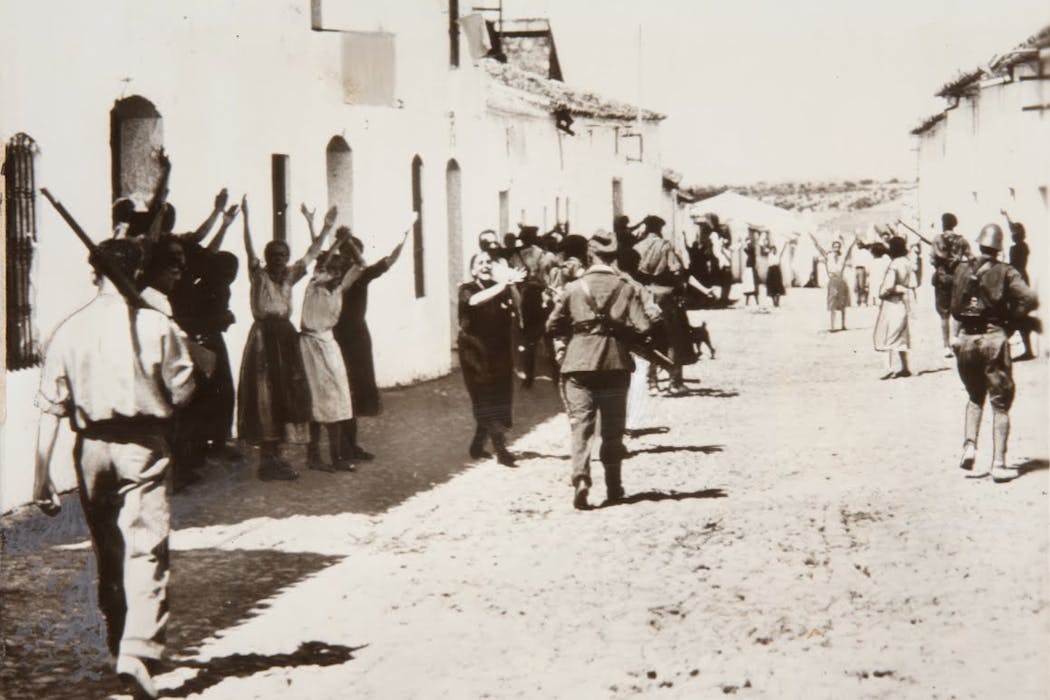
Mujeres pidiendo a los soldados del bando nacional que no asesinaran a sus prisioneros en Constantina (Sevilla), al principio de la Guerra Civil.Wikimedia Commons, CC BY
El 17 de julio de 1936, Francisco Franco y otros militares se sublevaron contra el orden constitucional republicano. Esto originó, tras casi tres años de guerra, la caída de la Segunda República española el 1 de abril de 1939 y su violenta sustitución por un régimen totalitario.
El nuevo régimen se caracterizó por la militarización de la política y del orden público, por la dirección económica de las oligarquías, por la defensa de postulados ultracatólicos, antidemocráticos y especialmente anticomunistas y por una durísima represión sobre los vencidos y sus familias.
La represión –que se configuró como un elemento constitutivo del nuevo régimen, esencial para su supervivencia– consistió principalmente en la eliminación física de una parte de los republicanos y opositores al régimen.
Durante los primeros meses de la contienda predominaron los asesinatos extrajudiciales, protagonizados por militares y miembros de la Guardia Civil sublevados –muchos se mantuvieron también leales a la República–, falangistas, requetés, caciques locales y otros elementos de ultraderecha.
Fue a partir de 1937 cuando se pusieron en marcha numerosos consejos de guerra en las zonas conquistadas por los golpistas, que actuaron mediante procesos sumarísimos de urgencia, caracterizados por la ausencia de garantías para los procesados. Estos impusieron y ejecutaron la pena de muerte mediante fusilamiento a numerosos republicanos, principalmente en aplicación del delito de rebelión militar previsto en el viejo Código de Justicia militar de 1890.
De esta forma, los defensores de la legalidad republicana fueron condenados precisa y paradójicamente como rebeldes por parte de los verdaderos rebeldes que se habían alzado en armas contra el régimen legalmente constituido. Como el propio dirigente franquista Ramón Serrano Suñer admitió tiempo después en sus memorias –Entre el silencio y la propaganda. La Historia como fue. Memorias–, se aplicó la “justicia al revés”.
En cualquier caso, las ejecuciones extrajudiciales se siguieron perpetrando durante toda la guerra e incluso en pleno franquismo. Sobre todo, en la represión del movimiento guerrillero antifranquista –el maquis– durante los años cuarenta, en aplicación de la oficiosa Ley de Fugas, una práctica consistente en que los agentes encargados de custodiar a los detenidos justificaban su ejecución alegando una supuesta fuga.
El fin de la guerra no trajo la paz
De esta forma, el fin de la guerra no supuso la paz, sino el inicio de otra clase de guerra contra la España derrotada. Se siguió empleando el mencionado Código de Justicia militar de 1890 y su sucesor, aprobado en 1945. También se hizo uso de nuevas leyes penales especiales que contemplaban castigos muy duros –incluida la muerte– para los opositores al franquismo y que solían atribuir a la parcial jurisdicción militar, hipertrofiándola, el conocimiento de las infracciones previstas en aquellas normativas.
Todas estas normas incluyeron la pena capital en su catálogo de sanciones: la Ley de Seguridad para el Estado de 1941, los Decretos Leyes de 1947 y de 1968 –ambos sobre represión de los delitos de bandidaje y terrorismo– y el Decreto Ley de 1975, sobre prevención del terrorismo. Este último fue aprobado en agosto, unas semanas antes de la muerte del dictador.
Sin embargo, para garantizar la dominación total del enemigo y la neutralización de cualquier conato de revuelta contra el impopular régimen, la represión había de ser total. Había que expulsar a todos los opositores que habían sobrevivido a la muerte o no se habían exiliado de todas las esferas de la vida social.
Y eso se hizo primeramente con la imposición a numerosos republicanos y opositores de elevadísimas penas privativas de libertad, incluida la reclusión perpetua. El hacinamiento en las prisiones, así como la necesidad de disponer de mano de obra barata tanto para empresas como para el propio Estado, hizo que ya desde 1938, en plena guerra civil, el régimen desarrollara un sistema de redención de penas por trabajo –forzado–.
También desde 1936 se dictaron varias disposiciones dirigidas a depurar al funcionariado que no acreditara su lealtad al Movimiento. La depuración se cebó especialmente con los maestros, y también afectó notablemente al profesorado universitario.
En virtud de las normas de depuración, entre las que destaca la Ley de 10 de febrero de 1939, se expulsó a miles de trabajadores de la nueva Administración franquista. Muchos de ellos se reemplazaron por partidarios del bando sublevado mutilados, excombatientes, excautivos y familiares de “las víctimas nacionales de la guerra y de los asesinados por los rojos”, en virtud de la Ley de 25 de agosto de 1939.
Los “peligrosos” actos homosexuales
Además, el régimen no derogó la republicana Ley de Vagos y Maleantes de 1933, sino que de hecho la empleó para reprimir con medidas de seguridad, incluidas las privativas de libertad, a determinados sujetos peligrosos para el orden social: vagos y mendigos habituales, proxenetas…
Por último, la represión también tuvo un marcado carácter económico, principalmente con la Ley de responsabilidades políticas de 1939, aprobada en febrero, poco antes de la victoria franquista. Incluía, entre otras sanciones, la de pérdida total o parcial de los bienes (incautación) y la del pago de una cantidad fija (multa). Además, estas sanciones se hacían efectivas incluso tras el fallecimiento del responsable. Entonces eran ejecutadas sobre sus herederos, salvo que hubiesen prestado “eminentes servicios al Movimiento Nacional” o demostrasen su “anterior y pública adhesión” a sus postulados.
Sin duda, el conglomerado de elementos de la represión franquista cuyos principales medios se han expuesto aquí no solo operó como instrumento de limpieza política, sino que sirvió especialmente para generar en capas amplias de la población un estado de terror. Este resultó imprescindible para la desafección política que hizo posible que el franquismo persistiese durante casi 40 años.
Cristian Sánchez Benítez no recibe salario, ni ejerce labores de consultoría, ni posee acciones, ni recibe financiación de ninguna compañía u organización que pueda obtener beneficio de este artículo, y ha declarado carecer de vínculos relevantes más allá del cargo académico citado.
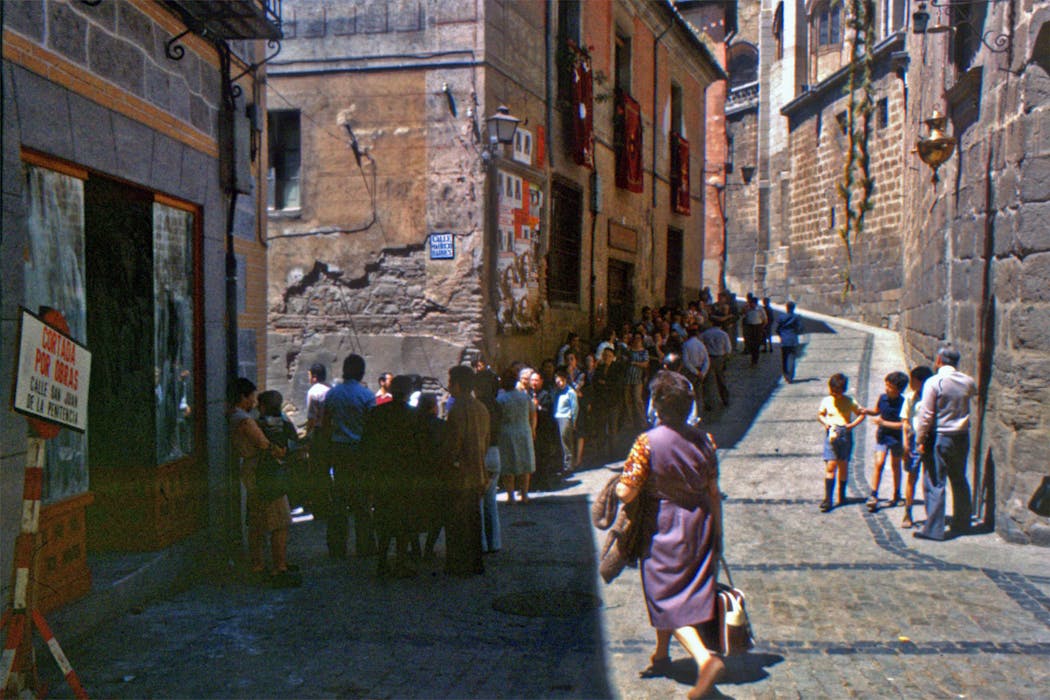
Fila para votar en las primeras elecciones democráticas en una calle de Toledo (15 de junio de 1977).Magica/Wikimedia Commons, CC BY
El 20 de noviembre de 2025 marca medio siglo desde la muerte de Francisco Franco. Más allá de debates políticos o interpretaciones históricas, esta efeméride permite observar un fenómeno menos abordado: la profunda transformación psicológica que los españoles han experimentado en las últimas cinco décadas.
Este artículo revisa esa evolución desde una perspectiva psicológica, integrando datos empíricos y ejemplos comparativos entre 1975 y la actualidad.
De la obediencia a la autonomía
Las sociedades cambian sus valores cuando cambian sus condiciones materiales, educativas y culturales. En España, este proceso es especialmente visible. Los datos integrados de la World Values Survey (1981-2022) muestran un desplazamiento claro desde valores centrados en la seguridad, la tradición y la conformidad hacia valores de autonomía, igualdad y autoexpresión.
En los años setenta predominaba la idea de seguir trayectorias vitales establecidas: estudios breves, trabajo cuanto antes, matrimonio joven y roles familiares rígidos. Hoy, la población declara mayor importancia a decidir por sí misma, explorar posibilidades y priorizar el desarrollo personal.
La sociedad ha pasado de una “personalidad adaptada” a una “personalidad exploratoria”, marcada por elecciones más libres y menos dictadas por la norma social.
Este cambio se aprecia también en la vida cotidiana: mayor libertad para elegir estudios, movilidad geográfica más común, identidades más abiertas y un aumento de decisiones vitales basadas en la realización personal más que en la norma social.
Vídeo del Gobierno de España conmemorando los 50 años de democracia en el país.
Confianza: menos vertical, más relacional
La confianza social o comunitaria también ha cambiado. Los datos de la European Social Survey] muestran que la confianza interpersonal –la creencia de que “la mayoría de la gente es digna de confianza”– ha mostrado una tendencia a aumentar en España desde principios de los años 2000.
En cambio, la confianza institucional ha seguido un patrón opuesto. Informes como Societal Change and Trust in Institutions, de Eurofound, documentan un descenso marcado en la confianza en partidos políticos, parlamento y justicia en los países del sur de Europa, incluida España, especialmente a raíz de la crisis económica de 2008.
Este cambio indica una transformación psicológica en las fuentes de seguridad.
En 1975 predominaban las estructuras verticales –la Iglesia, la empresa, la autoridad familiar– como referencia. Hoy, la confianza se apoya más en vínculos horizontales: amistades, redes sociales cercanas y comunidades elegidas.
Por último, según datos de la Plataforma del Voluntariado de España, que recopila estudios periódicos sobre la participación ciudadana, el porcentaje de la población española que realiza voluntariado ha crecido claramente en la última década: en 2018 ya se señalaba un aumento anual del 6,5 % respecto al año anterior.
Aunque no hay una serie continua que abarque desde 1975 con exactitud, todos los indicadores coinciden en que la cultura del voluntariado se ha normalizado y ampliado sustancialmente, lo que sugiere que el este tipo de compromiso es hoy mucho mayor que hace medio siglo.
La familia: del mandato al acuerdo
El modelo familiar se ha transformado profundamente. En 1975, la edad media para tener el primer hijo era 25 años; hoy es 32,6. Las familias numerosas eran frecuentes; hoy predominan hogares de 1-2 hijos o sin hijos. Los roles estaban fuertemente diferenciados por género, y sin embargo hoy existe una mayor corresponsabilidad y simetría en las tareas.
Psicológicamente, esto implica una transición desde familias organizadas por mandato (“lo que toca”) hacia familias organizadas por acuerdo (“qué queremos”). Los miembros negocian más, reparten responsabilidades con mayor flexibilidad y construyen proyectos vitales más personales.
Esta investigación sobre valores familiares muestra que la importancia atribuida a “seguir las tradiciones familiares” ha ido disminuyendo, mientras que la idea de “desarrollarse como persona dentro y fuera de la familia” ha ganado fuerza.
Bienestar emocional: del “aguantar” al “cuidarse”
La salud mental es uno de los ámbitos donde la transformación psicológica es más evidente. En los años setenta, hablar de ansiedad, depresión o estrés era casi impensable; la norma social era “aguantar” y no verbalizar el malestar.
Hoy el panorama es muy diferente. La OCDE recoge en su Better Life Index que España se encuentra entre los países europeos con niveles de satisfacción vital relativamente altos, pero también con una de las mayores demandas crecientes de apoyo psicológico formal.
Las encuestas del CIS o los barómetros sanitarios más actualizados muestran una progresiva normalización de la salud mental: más personas dicen haber acudido a un profesional, más padres dicen hablar con sus hijos de emociones y más jóvenes reconocen abiertamente experimentar ansiedad sin asociarlo a debilidad.
Psicológicamente, esto indica un giro cultural: reconocer el malestar se entiende como un gesto de autocuidado, no de vulnerabilidad.
Identidades más complejas y flexibles
Otro cambio clave es la identidad colectiva. En 1975, estaba más fuertemente asociada a la localidad, la familia y la religión. Hoy, según el mapa cultural de Inglehart-Welzel, España figura en el grupo de países con identidades múltiples: local, autonómica, nacional y europea, pero también digital, profesional y comunitaria.
Esta pluralidad identitaria afecta a la psicología individual: aumenta la capacidad para gestionar pertenencias múltiples; incrementa la tolerancia a estilos de vida diversos y fomenta la autorreflexión sobre “quién soy” y “qué me representa”.
También implica que el “yo” social es más flexible, menos predeterminado y más negociado que hace medio siglo.
Una conclusión psicológica
En síntesis, España ha transitado en cinco décadas de una cultura basada en la obediencia, la estabilidad y los roles predefinidos a otra centrada en la autonomía, la diversidad, la flexibilidad y la autoexpresión.
Se trata de un cambio psicológico, no solo sociológico. Se observa en cómo se construye la identidad, cómo se gestiona el malestar, cómo se negocian las relaciones, cómo se participa socialmente y cómo se toman decisiones vitales.
Entender esta transformación permite comprender mejor la España actual y los desafíos que afronta una sociedad que, en apenas dos generaciones, ha cambiado su forma de sentir, pensar y vivir.
Oliver Serrano León no recibe salario, ni ejerce labores de consultoría, ni posee acciones, ni recibe financiación de ninguna compañía u organización que pueda obtener beneficio de este artículo, y ha declarado carecer de vínculos relevantes más allá del cargo académico citado.
¿Se imagina necesitar el permiso por escrito de su marido o de su padre para abrir una cuenta bancaria? ¿Que casarse signifique abandonar su trabajo para dedicarse a las tareas del hogar? ¿Que no pueda salir a la calle sin maquillarse, peinarse y arreglarse? No, con Franco no se vivía mejor.
Esas cosas ocurrían en el mejor de los casos, si se era de “familia bien”. Si se era una mujer de clase social baja, las opciones vitales y profesionales estaban aún más limitadas.
El trabajo fuera de casa estaba mal visto por el régimen y legalmente restringido, pero la necesidad económica obligaba a muchísimas mujeres a buscar cualquier ingreso posible para subsistir. La mayoría de las mujeres pobres trabajaba desde muy joven en labores duras y mal remuneradas, muchas veces en la economía sumergida o como sirvientas, limpiadoras, costureras, vendedoras en mercados o ayudando en el campo y la industria, siempre con salarios inferiores a los de los hombres.
Hoy, décadas después, esos derechos han sido recuperados y ampliados, y recordar este pasado resulta esencial, sobre todo para las nuevas generaciones, ante discursos que idealizan aquel régimen o proponen retrocesos en materia de igualdad.
Los derechos en la Segunda República
La Segunda República fue un periodo de grandes avances para las mujeres en España. Se aprobaron leyes que permitieron su acceso a cargos públicos, el divorcio, la patria potestad compartida y la no discriminación por el estado civil en el acceso al empleo o en el despido.
Por primera vez, la Constitución de 1931 establecía la no discriminación jurídica por razón de sexo, el derecho al voto femenino, la igualdad ante la ley, el derecho a trabajar en igualdad de condiciones con los hombres y la igualdad de derechos en el matrimonio.
Se promulgó la Ley de Divorcio de 1932, que permitía la disolución del matrimonio por mutuo acuerdo o por justa causa y reconocía derechos igualitarios para ambos cónyuges.
Durante los años veinte y treinta surge la figura de la mujer moderna, principalmente de clase burguesa o alta, que desafía los roles tradicionales femeninos de matrimonio para buscar autonomía, educación y participación cultural.
Estas mujeres accedieron progresivamente a espacios antes masculinos como universidades, tertulias, espectáculos artísticos y el deporte. La moda y los nuevos hábitos (fumar, trabajar, viajar solas) se convierten en símbolos de su independencia.
Se produjeron episodios simbólicos de rebeldía, como el de “Las Sinsombrero”, en el que mujeres rompieron abiertamente con las convenciones sociales y estéticas, buscando la visibilidad y una identidad artística y profesional autónoma.
Este grupo incluye, por ejemplo, a las pintoras Maruja Mallo y Margarita Manso, entre otras. Rosa Chacel y María Zambrano destacaron en la literatura, la filosofía y el pensamiento, conectando las tendencias de la vanguardia europea con la realidad intelectual española.
De esta época también son Clara Campoamor, abogada, diputada y principal impulsora del sufragio femenino en España; Victoria Kent, jurista y diputada, que fue la primera mujer del mundo en ejercer la abogacía ante un tribunal militar y la primera Directora General de Prisiones en España; Federica Montseny, escritora, militante anarquista y la primera mujer ministra en España; María Teresa León, escritora, intelectual y militante republicana, conocida por su labor en la Alianza de Intelectuales Antifascistas; o Margarita Salas, una de las grandes pioneras de la ciencia española.
Retrocesos y represión durante el franquismo
Con el franquismo, a partir de 1939, todos estos avances fueron sistemáticamente suprimidos. El régimen devolvió a las mujeres a la condición de menores tuteladas: toda acción relevante, como trabajar, disponer de patrimonio, viajar al extranjero o incluso ejercer la patria potestad de sus hijos o hijas, requería la llamada licencia marital (la autorización del marido o del padre). Las intelectuales y artistas de la República fueron borradas por la historiografía dominante y discriminadas en el ámbito profesional.
La educación y los medios de comunicación reforzaban la idea de que la única función femenina era la de madre y esposa abnegada.
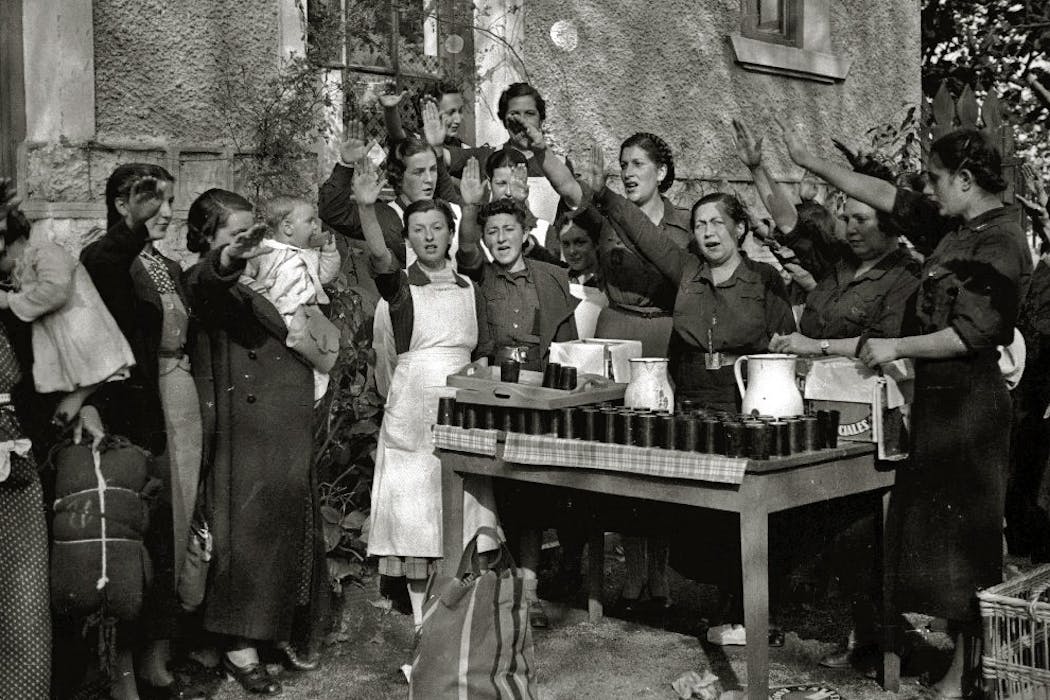
La “Sección Femenina” –rama femenina de la Falange Española de las JONS, fundada en 1934 y liderada por Pilar Primo de Rivera– imponía una estricta reeducación basada en la sumisión y el servicio al hogar. Su hermano José Antonio Primo de Rivera, fundador de Falange, definía la función de las mujeres en estos términos:
“Tampoco somos feministas. No entendemos que la manera de respetar a la mujer consista en sustraerla a su magnífico destino y entregarla a funciones varoniles. A mí siempre me ha dado tristeza ver a la mujer en ejercicios de hombre, toda afanada y desquiciada en una rivalidad donde lleva –entre la morbosa complacencia de los competidores masculinos– todas las de perder. El verdadero feminismo no debiera consistir en querer para las mujeres las funciones que hoy se estiman superiores, sino en rodear cada vez de mayor dignidad humana y social a las funciones femeninas”.
Estos estudios relatan cómo la violencia sexual se utilizó, tanto durante la Guerra Civil como en la posguerra, para castigar y atemorizar a mujeres vinculadas al bando republicano o consideradas peligrosas para el régimen.
Se describen casos de violaciones individuales y grupales, a menudo seguidas de asesinatos, humillaciones públicas o castigos adicionales. Muchas mujeres presas sufrieron abusos sexuales de manera recurrente en cárceles, cuarteles o durante traslados.
El robo de bebés fue una medida institucionalizada: miles fueron arrebatados a sus madres republicanas y entregados a familias afines al régimen o a instituciones controladas por la Iglesia católica.
Un decreto de 1940 permitía quitar a las madres la patria potestad de su descendencia por “malos antecedentes”, provocando pérdidas y desapariciones masivas, documentadas por historiadores y organizaciones de memoria histórica.
Durante el franquismo, las condiciones de vida fueron muy duras en barrios obreros o en chabolas: las mujeres tenían que buscar agua, hacer largas colas por alimentos, cuidar de una numerosa descendencia –porque en muchos casos no tenían acceso a la planificación familiar– y sortear enfermedades, sin apenas acceso a centros médicos, todo ello siempre bajo vigilancia social y sin horarios ni protección social efectiva.
El empleo propio apenas suponía autonomía personal: los salarios ayudaban a la economía familiar, pero prácticamente ninguna mujer humilde podía permitirse soñar con independencia real ni con romper el ciclo de la pobreza y el sometimiento.
Recuperación de derechos y nueva ciudadanía
Aunque el franquismo no fue un periodo uniforme y, hacia el final, hubo avances, la recuperación de derechos no empezó hasta después de la muerte de Franco y de la Constitución de 1978.
A partir de entonces, la igualdad legal entre hombres y mujeres se reconoció constitucionalmente y se fueron suprimiendo las leyes discriminatorias. Se recuperaron el divorcio, el acceso igualitario al empleo y a la educación, y se fueron aprobando leyes para avanzar en igualdad salarial, permisos de maternidad y paternidad, y protección frente a la violencia machista.
Hoy, si bien la igualdad plena aún es un reto, España cuenta con leyes de igualdad, cuotas de representación y derechos reproductivos (como el aborto y la anticoncepción regulados) y es referente europeo en políticas de género.
Es fundamental recordar que votar a partidos ultraderechistas que minimizan, cuestionan o atacan los avances feministas –aunque también estén representados por mujeres– puede poner en peligro derechos que costaron décadas y luchas para recuperar.
Con Franco, las mujeres no vivían mejor, no, sino que estaban sometidas, sin derechos civiles, políticos ni laborales. Solo la democracia y el feminismo han hecho avanzar la igualdad: una sociedad justa no puede permitirse olvidar su pasado.
Miren Gutiérrez no recibe salario, ni ejerce labores de consultoría, ni posee acciones, ni recibe financiación de ninguna compañía u organización que pueda obtener beneficio de este artículo, y ha declarado carecer de vínculos relevantes más allá del cargo académico citado.
Source: The Conversation – USA (2) – By Shelley Mitchell, Senior Extension Specialist in Horticulture and Landscape Architecture, Oklahoma State University
Pecans have a storied history in the United States. Today, American trees produce hundreds of million of pounds of pecans – 80% of the world’s pecan crop. Most of that crop stays here. Pecans are used to produce pecan milk, butter and oil, but many of the nuts end up in pecan pies.
Throughout history, pecans have been overlooked, poached, cultivated and improved. As they have spread throughout the United States, they have been eaten raw and in recipes. Pecans have grown more popular over the decades, and you will probably encounter them in some form this holiday season.
I’m an extension specialist in Oklahoma, a state consistently ranked fifth in pecan production, behind Georgia, New Mexico, Arizona and Texas. I’ll admit that I am not a fan of the taste of pecans, which leaves more for the squirrels, crows and enthusiastic pecan lovers.
The spread of pecans
The pecan is a nut related to the hickory. Actually, though we call them nuts, pecans are actually a type of fruit called a drupe. Drupes have pits, like the peach and cherry.
Three pecan fruits, which ripen and split open to release pecan nuts, clustered on a pecan tree. IAISI/Moment via Getty Images
The pecan nuts that look like little brown footballs are actually the seed that starts inside the pecan fruit – until the fruit ripens and splits open to release the pecan. They are usually the size of your thumb, and you may need a nutcracker to open them. You can eat them raw or as part of a cooked dish.
The pecan derives its name from the Algonquin “pakani,” which means “a nut too hard to crack by hand.” Rich in fat and easy to transport, pecans traveled with Native Americans throughout what is now the southern United States. They were used for food, medicine and trade as early as 8,000 years ago.
Pecans are native to the southern United States, and while they had previously spread along travel and trade routes, the first documented purposeful planting of a pecan tree was in New York in 1722. Three years later, George Washington’s estate, Mount Vernon, had some planted pecans. Washington loved pecans, and Revolutionary War soldiers said he was constantly eating them.
Meanwhile, no one needed to plant pecans in the South, since they naturally grew along riverbanks and in groves. Pecan trees are alternate bearing: They will have a very large crop one year, followed by one or two very small crops. But because they naturally produced a harvest with no input from farmers, people did not need to actively cultivate them. Locals would harvest nuts for themselves but otherwise ignored the self-sufficient trees.
It wasn’t until the late 1800s that people in the pecan’s native range realized the pecan’s potential worth for income and trade. Harvesting pecans became competitive, and young boys would climb onto precarious tree branches. One girl was lifted by a hot air balloon so she could beat on the upper branches of trees and let them fall to collectors below. Pecan poaching was a problem in natural groves on private property.
Pecan cultivation begins
Even with so obvious a demand, cultivated orchards in the South were still rare into the 1900s. Pecan trees don’t produce nuts for several years after planting, so their future quality is unknown.
To guarantee quality nuts, farmers began using a technique called grafting; they’d join branches from quality trees to another pecan tree’s trunk. The first attempt at grafting pecans was in 1822, but the attempts weren’t very successful.
Grafting pecans became popular after an enslaved man named Antoine who lived on a Louisiana plantation successfully produced large pecans with tender shells by grafting, around 1846. His pecans became the first widely available improved pecan variety.
The variety was named Centennial because it was introduced to the public 30 years later at the Philadelphia Centennial Expedition in 1876, alongside the telephone, Heinz ketchup and the right arm of the Statue of Liberty.
This technique also sped up the production process. To keep pecan quality up and produce consistent annual harvests, today’s pecan growers shake the trees while the nuts are still growing, until about half of the pecans fall off. This reduces the number of nuts so that the tree can put more energy into fewer pecans, which leads to better quality. Shaking also evens out the yield, so that the alternate-bearing characteristic doesn’t create a boom-bust cycle.
US pecan consumption
The French brought praline dessert with them when they immigrated to Louisiana in the early 1700s. A praline is a flat, creamy candy made with nuts, sugar, butter and cream. Their original recipe used almonds, but at the time, the only nut available in America was the pecan, so pecan pralines were born.
During the Civil War and world wars, Americans consumed pecans in large quantities because they were a protein-packed alternative when meat was expensive and scarce. One ounce of pecans has the same amount of protein as 2 ounces of meat.
After the wars, pecan demand declined, resulting in millions of excess pounds at harvest. One effort to increase demand was a national pecan recipe contest in 1924. Over 21,000 submissions came from over 5,000 cooks, with 800 of them published in a book.
Pecan consumption went up with the inclusion of pecans in commercially prepared foods and the start of the mail-order industry in the 1870s, as pecans can be shipped and stored at room temperature. That characteristic also put them on some Apollo missions. Small amounts of pecans contain many vitamins and minerals. They became commonplace in cereals, which touted their health benefits.
In 1938, the federal government published the pamphlet Nuts and How to Use Them, which touted pecans’ nutritional value and came with recipes. Food writers suggested using pecans as shortening because they are composed mostly of fat.
The government even put a price ceiling on pecans to encourage consumption, but consumers weren’t buying them. The government ended up buying the surplus pecans and integrating them into the National School Lunch Program.
While you are sitting around the Thanksgiving table this year, you can discuss one of the biggest controversies in the pecan industry: Are they PEE-cans or puh-KAHNS?
Shelley Mitchell does not work for, consult, own shares in or receive funding from any company or organization that would benefit from this article, and has disclosed no relevant affiliations beyond their academic appointment.
Source: The Conversation – UK – By Estrella Luna-Diez, Associate Professor in Plant Pathology, School of Biosciences, University of Birmingham
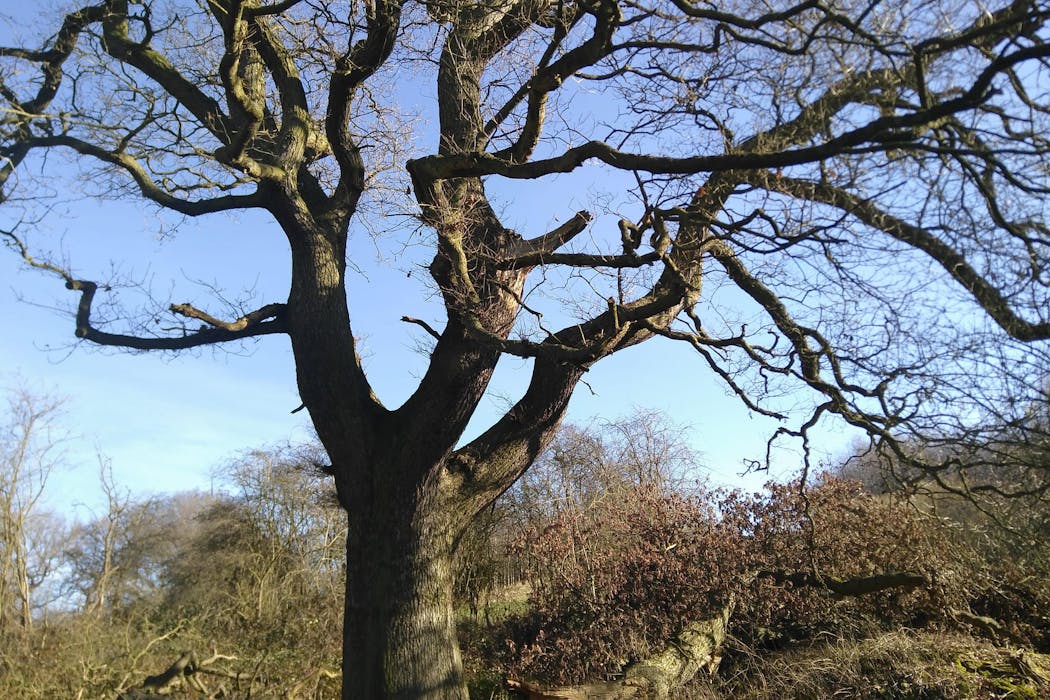
The mighty Feanedock Oak in Derbyshire has provided an anchor habitat for many lifeforms, including people, for more than 200 years.Lucy Neal, CC BY-NC-SA
The Feanedock Oak stands out so clearly in Derbyshire’s section of the National Forest, you’d think it was calling to you. Surrounded by open fields, hawthorn hedges and young beech forest, a majestic old oak like this anchors the English countryside.
As the highest expression of our woodlands, oaks support more life in the UK than any other native tree. At the foot of the Feanedock oak, you can hear and see – at a glance – wrens, blackbirds, spiders, squirrels, song thrush, hoverflies, butterflies, blackcaps, woodlouse, ants and chiffchaffs. For more than two centuries, it has provided an anchor habitat, including for humans – a tumbled-down dwelling lies under its shade.
How well any English oak (Quercus robur) thrives affects everything living on and around it, from canopy to soil. In recent years of heat and drought, the Feanedock Oak has lost two large boughs.
In the summer of 2023, dendrochronologists – who research and date trees through their growth rings – took samples from the tree’s trunk to study its “healthy” and “poor” years of growth. They counted 195 rings but did not get to the centre of the tree – so it was probably seeded in the early 19th century, if not earlier. As a sapling, it would have greeted Derbyshire miners walking across the fields from nearby villages to work in the newly-dug coal shafts or the many industrial potteries in the area.
More than 200 years later, in July 2023, the Feanedock Oak (now measuring around 120 feet) played a central role in Ring of Truth. This creative collaboration between tree scientists and artists from the Walking Forest collective imagined a legal case set in the year 2030 between a claimant, the oak (in whose shadow the case was heard), and the UK government.
Ring of Truth’s imagined court case is heard at the Timber Festival, July 2023. RB Films, CC BY-NC-SA
The counsel for the claimant – real-life rights of nature lawyer Paul Powlesland – set out his argument to the judge and jury, claiming the government had breached legal obligations set out in the 2008 Climate Change Act. Scientists from the University of Birmingham – including one of us (Bruno) – acted as expert witnesses, bringing evidence of the threats posed to the tree from increased heat, atmospheric CO₂, soil damage and disease.
After hearing all the evidence, the assembled audience – in the role of jury – voted for their verdict. Many were acutely conscious that the claimant had been standing in this spot far longer than anyone else present – a silent witness to the damage done by humans on the environment and landscape. They ordered the secretary of state for climate and ecological breakdown (as the job is known in 2030) to cease breaching legal obligations to protect this and all “anchor oaks”, and the communities that thrive or suffer with them.
That powerful moment under the Feanedock Oak opened a door to a deeper question: how and what do trees remember?
Until recently, little was known about how memory might function in long-lived organisms like trees which experience decades, even centuries, of shifting environmental pressures. So this is what our multidisciplinary research collaboration – featuring artworks, performances and even a musical composition as well as groundbreaking science – set out to discover.
On the Memory of Trees, by Scott Wilson, was composed using data collated by the Membra project.
How trees’ memories work
For trees, memory is not a metaphor but a biological reality, written into their cells. One of the most remarkable forms this takes is epigenetic memory: the ability of a tree to record its life experiences and allow those experiences to shape its future, without changing the sequence of its DNA.
As Membra (full name: Understanding Memory of UK Treescapes for Better Resilience and Adaptation), we’ve studied a number of ecologically vital and culturally significant UK species including oak, ash, hazel, beech and birch. Together, they have helped us understand how trees register and respond to environmental stress, offering a powerful glimpse into how their memories are carried through woodlands.
At the heart of this process is DNA methylation, where chemical tags known as methyl groups are added to the tree’s DNA over time. While not rewriting the genetic code, they do alter how it is read. These chemical signatures can turn genes on or off, dial responses up or down, and fundamentally shift how a tree grows, adapts, or defends itself. In oaks, for example, long-term drought exposure over decades is associated with changes in DNA methylation, suggesting that trees may adjust their gene expression in response to repeated stress.
These epigenetic memories may allow trees to respond more quickly to drought, disease or climate extremes, and could even be passed to the next generation. In some plant species, this kind of inheritance is well documented, but in long-lived trees, it remains an open question – one with critical implications for forest regeneration and resilience.
The Insights section is committed to high-quality longform journalism. Our editors work with academics from many different backgrounds who are tackling a wide range of societal and scientific challenges.
So far, our research has shown trees respond to stress in ways that can extend well beyond the immediate event. Exposure to drought or high CO₂, for example, can leave lasting marks on a tree’s growth and internal chemistry, and may shape how it responds to future conditions. But the strength of this memory appears to depend on the nature of the stress: it is more pronounced when the stress is particularly strong, such as disease, or when it occurs repeatedly over time, such as chronic drought.
A surprising result came from oak, where we observed that DNA methylation itself changes depending on the time of year – with methylation levels lowest in early spring, then increasing as the seasons progress. This suggests the imprinting of memory in trees may be far more dynamic than previously thought, and that the timing of stress events within the growing season could influence how strongly that memory is encoded.
All our studied species and associated environmental conditions have now been sequenced. In every case, we have found evidence of these memories of past stresses. In ash trees, for example, we’ve begun to detect methylation changes linked to ash dieback pressure, offering clues as to how trees regulate their defences over time as a disease progresses.
Trees are certainly resilient. They bend, adapt and endure, holding the memory of storms and seasons within their very bodies. But even their deep-rooted strength has limits. The challenges they now face are faster, more frequent and more severe than at any point in their evolutionary history.
This means what we are learning from their memories is not just a story of survival, but a warning. They are telling us there could come a point when they can no longer cope.
Even young trees remember
It is easy to be awed by a centuries-old oak. But what often goes unnoticed is the quiet crisis beneath the canopy. Across many UK woodlands, the next generation is missing.
Surveys show steep declines in most species of young trees (seedlings and saplings) due to a growing list of pressures: prolonged drought, warming temperatures, shifting herbivore populations, and an expanding wave of pests and pathogens. According to a study of nine sites in England and Scotland, co-authored by one of us (Bruno) and currently under review, the sapling mortality rate has increased from 16.2% in the period up to 2000 to 30.9% two decades later.
In some species such as elm and now ash, diseases have brought populations close to the point of lack of regeneration – when a woodland can no longer sustain itself. To counter this threat, young trees must be highly adaptable – not just in form, but at the molecular level. At Membra, scientists are exploring whether young trees imprint environmental stress more readily than older ones, and whether that memory, recorded through changes in DNA methylation, influences their survival.
One way we have tested such transgenerational changes is to expose trees (oak and hazel) to the elevated levels of CO₂ that are expected in the UK by 2050. This was done in the Birmingham Institute for Forest Research (Bifor) facility in a Staffordshire woodland – one of the world’s largest climate change experiments, where tree “arrays” (circular patches of woodland) are exposed to 150 parts per million (ppm) of CO₂ above ambient concentrations.
Membra’s research there has found that the offspring of trees exposed to these CO₂ levels respond very differently to further environmental stressors – in ways that can make them more resilient. For example, acorns from CO₂-exposed oaks were notably larger and their seedlings showed both faster growth and improved resistance to pathogens like powdery mildew – a strong sign that environmental conditions experienced by parent trees can shape offspring resilience.
To date, molecular analysis shows the inherited memory of this exposure is imprinted in the tree genes that are involved in defence mechanisms. The direct link with resilience should be identified in the next few years as our data analysis progresses.
Strikingly, these beneficial effects were most pronounced during “mast” years, when trees produce a bumper crop of seeds, suggesting that the reproductive cycles of mature oaks as well as resource availability are key to the oaks’ successful inheritance of stress-adaptive traits. Similarly, seedlings from oak trees that had undergone repeated drought exposure have shown increased drought tolerance – which suggests some trees may “prime” their offspring to be more resilient in the face of repeated climate stress.
Our work also shows that young trees can be artificially primed for resilience. For instance, early treatment with certain natural compounds enhances oak seedlings’ resistance to powdery mildew disease, triggering biochemical and transcriptional responses that allow them to mount a faster and stronger defence. This priming acts like a kind of immunological memory – in this case not inherited but induced – and could potentially open up new avenues for improving forest health and regeneration.
Importantly, species differ widely in how they pass on environmental experiences to their progeny. Hazel trees subjected to the same elevated CO₂ conditions in the Bifor woodland produced both smaller nuts and seedlings that often failed to thrive after germination. So, rather than assuming a one-size-fits-all strategy for seed sourcing, forestry managers may need to tailor decisions based on species-specific responses to past environmental stresses. Recognising the importance of parental environmental history, especially for stressors like drought, could shape how we select and prepare the next generation of trees.
This may also mean rethinking how and when we collect seeds. In species such as oak, collecting from mast years may improve the odds of transmitting beneficial adaptive traits. In all cases, understanding how trees’ memory works, not just within a tree’s lifetime but across generations, offers a crucial tool for building more adaptive, resilient treescapes in this rapidly changing world.
Tree rings such as those sampled from the Feanedock Oak record much more than just a tree’s age. They hold evidence of how trees respond to changing climates, rising carbon levels and extreme events.
Studies using these natural archives (the rings) have shown that rising atmospheric CO₂ is already changing how trees grow and photosynthesise. In some oaks, it has led to faster growth and more carbon being stored – a hopeful sign.
But this acceleration may come with hidden costs. Trees that grow quickly not only reach maturity sooner but may also die younger, potentially limiting the long-term stability of forest carbon storage.
And these shifts are not just a concern for the trees themselves – they ripple outward. Faster growth can alter forest structure, affecting biodiversity and resilience. In the UK and globally, trees face an escalating cascade of challenges including pollution, drought, storms and disease – and increasingly, these pressures overlap.
Understanding how different trees’ memories will mediate their responses to new, more stressful conditions is key to predicting which species will thrive, adapt or decline. Artificially priming young trees by exposing them early to stress may enhance their memory and survival.
In recent years, a wave of tree planting, often tied to carbon offsetting schemes, is rapidly reshaping landscapes across much of the UK. National and local governments have launched large-scale initiatives such as the England Tree Action Plan. These programmes aim to restore canopy cover, improve biodiversity and contribute to net-zero goals. Local authorities, environmental charities, landowners and corporate offsetting partners are among those overseeing the planting, with guidance and funding provided by the Forestry Commission and Defra.
However, the choice of species is often constrained by budget and availability, which can result in limited diversity and mismatches between trees and local ecological conditions. Fast-growing species like sycamore, alder, and hybrid poplar are frequently used, while slower-growing native species with deeper ecological value may be underrepresented.
Planting trees without understanding their long-term ecological roles – or their capacity to remember and adapt – also risks repeating old mistakes that could compromise long-term resilience. Selecting the right trees to face future climate threats requires more than just numbers. A forest full of fast-growing, short-lived trees may have a very different effect on the local ecosystem than one with long-lived, memory-bearing individuals. In the worst-case scenario, such woodlands will fail to regenerate and die out.
Climate models indicate a future of warmer, wetter winters and hotter, drier summers in the UK, which will challenge many native species. Diseases such as ash dieback have already transformed landscapes, with over 80% of ash trees expected to be lost in many areas. This is not just a loss of a species but a loss of the biodiversity that depends on it.
Our work highlights the value of sourcing seed from trees that have survived historic drought and understanding how memory, resilience and adaptation are embedded in the biology of many older individuals. Future woodlands will need to blend ancient wisdom with modern science, combining genetic diversity, environmental memory and community stewardship to thrive.
This legal shift complements the scientific insight from Membra: that mature woodlands, with deep memory and biodiversity, are not replaceable. And as Ring of Truth’s imagined court case made clear, it is a travesty if trees such as the Feanedock Oak are thought of as little more than machines to extract human-created carbon from the atmosphere.
Their social, cultural and ecological roles are vast. Listening to Indigenous and local communities with long-held tree knowledge, and empowering tree guardians in cities and villages alike, is vital to fostering a meaningful public practice of tree stewardship.
As one Walking Forest participant put it, time spent with trees creates space and renewed agency for surviving the climate and nature crises: “We are like trees. The stronger we root and allow ourselves, like them, to be nurtured by those around us, the better we are at withstanding the strongest of storms”.
Another said: “I see the bigger picture now, of how we are related to the forest – at one with nature because we too are part of the ecosystem.”
By weaving together artistic performance, scientific insight and ancestral knowledge, the Walking Forest collective has sought to expand how we understand our relationship with woodlands – connecting women, trees and ecological justice across time.
One powerful example is the 107-year-old Monterey Pine planted by suffragette Rose Lamartine Yates, the last known survivor of a historic arboretum planted by women activists at Eagle House in Batheaston, Somerset. A place of recovery for women who were politically active as part of the suffrage movement, this was the home of the Blathwayt family – and known as the Suffragettes’ Retreat.
Suffragettes Adela Pankhurst and Annie Kenney at Eagle House in Batheaston, Somerset, in 1910. Linley Blathwayt/Wikimedia
Between April 1909 and July 1911, at least 47 trees were planted in the grounds of Eagle House to commemorate individual suffragists and suffragettes, many of whom had been imprisoned and tortured. The arboretum afforded the suffragettes an opportunity to imagine the future into which their young trees would grow.
The trees were all bulldozed in the late 1960s to make way for a housing estate – other than Lamartine Yates’s Monterey Pine, planted in 1909, which survives to this day, protected in a private garden. The seeds of this tree are a touchstone of Walking Forest: we have gathered and propagated them, shared them with communities, and created performances and ceremonies that honour the tree’s legacy – connecting past and future generations (of trees and people) in a project to create a woodland that mirrors the original Eagle House arboretum.
Since 2018, Walking Forest artists have travelled overland to UN climate talks to gift seeds from the Monterey Pine to women and youth activists, climate negotiators, Indigenous community leaders and environmental campaigners – connecting with them in this story of resilience and renewal.
In another act of collective mourning and protest, a 100-year-old silver birch cut down for the HS2 rail link was carried through Coventry by more than 40 women during Coventry’s year as City of Culture in 2021. The act made visible the loss of ancient woodland and connected it with human grief, resistance and care.
These stories are not isolated. Across the UK, trees have become flashpoints for protest and protection – from the Sycamore Gap tree at Hadrian’s Wall to Sheffield Council’s felling of more than 5,000 healthy street trees between 2014 and 2018 as part of road maintenance.
Walking Forest has collaborated with Membra not only to share scientific knowledge but to offer new ways of knowing through storytelling, ritual and creative action. As climate pressures grow, so too does public awareness of how irreplaceable mature trees are.
We are still only beginning to uncover the complexity of tree memory. Future research may reveal exactly how memory is transferred between generations, how trees prepare for challenges they’ve never seen, and how entire forests might adapt together.
But our collaboration between scientists, artists and communities is already helping to shift how people think about trees, from passive backdrop to learning beings. Through this work, we understand that trees are not just survivors – they are storytellers, record keepers and even teachers.
As our understanding of their memory deepens, so too does our responsibility to listen, learn and act. The future of forests depends not just on what trees can remember, but on what we choose not to forget.
A recent return to the Feanedock Oak, two years after its case was argued in Ring of Truth, found the tree still standing but visibly altered. Its two large, fallen limbs lay cloaked in bramble and nettle. But under its canopy, foxes burrowed, birds sang and fruit trees flowered.
Though imbalanced, this grand old oak holds its ground – a tree of memory and now a symbol of care. We will return again and again to honour its survival, and admire its provision for so many other species in the natural world. The tree reminds us that people need ways to anchor ourselves too, as we navigate uncertain times ahead.
Estrella Luna-Diez receives funding from UK Research & Innovation (UKRI) and the Natural Environment Research Council (NERC).
Anne-Marie Culhane receives funding from UKRI and the NERC.
Bruno Barcante Ladvocat Cintra receives funding from the NERC.
Additional thanks to Lucy Neal, member of the Walking Forest collective, for her written and photographic contributions to this article. Lucy was the creator of Ring of Truth, performed at the Timber Festival in July 2023.
The International Criminal Court in The Hague, Netherlands. Canada and the EU have legal remedies at hand that could help the ICC thrive in the years ahead.(Wikimedia Commons), CC BY-SA
Four key staff of the court — including Canadian judge Kimberly Prost — have been sanctioned by President Donald Trump’s administration because of their involvement in investigations related to alleged war crimes committed by American and Israeli officials.
Other allies, including France, Belgium and the European Union have publicly opposed the sanctions, issuing statements in support of the ICC.
Canada has publicly backed Prost, and has recently joined a number of states at the United Nations in supporting the overall work of the court. But Canadian officials have been silent about the American sanctions.
Sanctions fallout
The current wave of sanctions has forced the court to take extraordinary measures, such as paying staff ahead of time and changing email software to openDesk which was developed by the Germany-based Centre for Digital Sovereignty.
This would mean that any American company — including financial institutions — or even Canadian companies with subsidiaries in the U.S. that deal with the court may be subject to penalties and legal action.
Shielding businesses
Not all is lost, however. There are two legal remedies that could be be used to shield the ICC. Canada and the EU could amend key laws designed to protect companies from such actions, which could significantly aid in the operation of the court.
A FEMA amendment was passed in 1996 in response to the Helms-Burton Act in the U.S. that prohibited companies from trading or conducting business in Cuba.
FEMA shields Canadian businesses affected by the Helms-Burton Act and contains specific provisions to protect companies from retaliatory action by the U.S. Similarly, the EBS was passed in the European Parliament to shield European companies from American sanctions.
It was introduced initially as a result of the Helms-Burton Act, and then later revised when the U.S. withdrew from the Iran nuclear deal in 2018.
Canada and the EU could amend both FEMA and the EBS to ensure that Canadian and European companies are shielded from the effects of American sanctions and can continue to provide key services to the court.
In the case of the EU, most of the ICC’s contractual arrangements with entities like banks, insurers, service providers, technology providers and landlords are with European firms because the court is located in Europe — in The Hague, Netherlands.
Amending the EBS, therefore, would protect these companies from further American sanctions and would ensure they can still provide services to the ICC.
These legal remedies are a proportional response to the U.S. sanctions. They would allow all parties — the U.S. and the ICC’s supporters — to continue to negotiate instead of bringing international criminal justice to a grinding halt.
Ensuring the survival of the ICC
It’s important to note that including the need to shield businesses from U.S. sanctions in any amended legislation in both Canada and the EU legislation isn’t aimed at helping governments in either Cuba or Iran.
The goal is to protect Canadian and European companies from possible legal action or economic fallout if more sanctions are applied. Most importantly, the aim is to ensure that the ICC continues to operate with as little interruption as possible.
Sanctions may have significant effects on businesses, and what’s been identified as Trump’s penchant for “retributive diplomacy” may compel states — and businesses — to think twice before they act.
But FEMA and EBS provide appropriate countermeasures if and when broader U.S. sanctions on the entire ICC are introduced, or if Canadian and European companies unjustifiably suffer due to the imposition of new sanctions.
The ICC is the international organization with the ability to deliver justice and support victims. It’s the “court of last resort” that only gets involved when offending states are unwilling or unable to do so.
National security concerns in the U.S., Canada and the EU stem as much from the committing of mass atrocities as they do from other types of global crimes. That’s why it’s so important for states to support international criminal justice efforts by fulsomely supporting the ICC.
Laszlo Sarkany does not work for, consult, own shares in or receive funding from any company or organisation that would benefit from this article, and has disclosed no relevant affiliations beyond their academic appointment.
Watching a film about dementia is, ordinarily, a sobering activity. We watch someone become imprisoned in the temporal chaos of their mind. We empathise with the family members nobly trying their best to do what’s right. We leave the film in a fog of melancholia, having been reminded of how sad the condition is.
And dementia is sad. But the stories we tell about it need not only be a premature elegy for someone still living. There is more for filmmakers to think about here: when does “the rest of our lives” stop mattering? How do we love those profoundly changed by illness? What is it like when the concept of “now” itself becomes unfamiliar?
A Kind of Madness, from director Christiaan Olwagen, examines how love is redefined when dementia shatters a shared sense of reality. The film follows elderly couple Elna (Sandra Prinsloo) and Dan (Ian Roberts) as they flee from the great obstacle to their joint happiness: residential care.
After breaking Elna out of the care home where she was placed by her adult children, the couple escapes across the South African countryside, Elna reliving the exploits of the rebel bride she once was (and sometimes believes she still is), as Dan tries to save them both from a life flattened by loss.
The trailer for A Kind of Madness.
In one moving scene, Elna insists: “We can start over; it’s never too late.” Dan decides she might just be right. His own reality, overburdened by loss, pales beside Elna’s, a world which, though certainly clouded by confusion and fear, is also filled with beauty, affection, playfulness and the hope in a better future that once defined their love.
While the film does not minimise the horrors dementia brings into family life, it also does not linger there. Instead, it turns toward a deeper question: what do we do with the love we have for someone who faces this illness? A Kind of Madness suggests that a person’s wellbeing may depend as much on how that question is answered as on any form of medical care.
Dementia in Rose of Nevada
A Kind of Madness steers clear of the melancholy dread characteristic of many films about dementia. Rose of Nevada, directed by Mark Jenkin, is steeped in it, but in an entirely new and unsettling way.
A casual viewing of the film might consider dementia thematically peripheral to the central storyline, which follows three Cornish fishermen stranded in 1993, a time-slip three decades past. Yet I would argue that Rose of Nevada is less a tale of supernatural time travel and more about what it really means when someone’s relationship to time is dramatically altered through disease or otherwise.
This theme is embodied by Mrs Richards (Mary Woodvine), an elderly woman seemingly affected by dementia. Mrs Richards’s presence primes the viewer to consider the time-slip not simply as a supernatural phenomenon, but as something profoundly human.
When Nick (George MacKay), a young fisherman, finds himself in what should be his home, but isn’t, he understandably protests: “My name is Nick Dyer! I was born in 1996!” Mrs Richards, appearing as her younger self in 1993, regards him with the same pity that will one day be turned on her.
Through this eerie inversion, which sees a young, healthy fisherman entrenched in the same kind of disorientation that often characterises dementia, Jenkin opens a new avenue for relating to dementia – the uncanny sensation of not knowing where, when or who you are, of being a stranger in once-familiar surroundings.
The cast of Rose of Nevada discuss the film.
What makes Jenkin’s new film so unusual is how it takes those experiences and relocates them away from the one character actually suffering from dementia. The young are not treated as outsiders in the same way that the elderly are. Nick and Mrs Richards could not be more different on the surface, but there is a poignant parallel between the two characters.
In showing a young man met with pity as he struggles to assert the basic facts of his identity, the film invites us to set aside our habitual assumptions about dementia and reconsider how we relate to those who live with it. The result is that dementia symptoms are defamiliarised – made strange and unsettling – and a pervasive sense of dread emerges as both characters and audience confront the unsettling possibility that no single, stable reality exists.
Any successful film provides new spaces in which to think about and relate to human experiences. Both A Kind of Madness and Rose of Nevada shift the viewing platform away from the stale master narrative of dementia we know so well, to consider new perspectives.
This is important. How we think about dementia is coloured not only by the stories we see in popular culture, but by the perspectives these stories privilege. These two films are a corrective to a body of cinematic and literary work that has yet to fully recognise the persistent humanity of people living with a disease that renders life non-linear, confounding and painful, but nevertheless resiliently human.
Looking for something good? Cut through the noise with a carefully curated selection of the latest releases, live events and exhibitions, straight to your inbox every fortnight, on Fridays. Sign up here.
Andrea Holck does not work for, consult, own shares in or receive funding from any company or organisation that would benefit from this article, and has disclosed no relevant affiliations beyond their academic appointment.
Amid growing public concern over migration and a political threat from Reform UK, the Labour government has proposed sweeping reforms to the asylum and refugee system. The home secretary, Shabana Mahmood, says the plans will address an “out of control” asylum system.
By restricting the rights of refugees, the proposals aim to make Britain a “less attractive” destination for people who arrive without documentation. But they also risk making an already-bureaucratic system even harder for refugees to navigate – and for an overstretched Home Office to administer.
Central to the proposals are changes to refugees’ rights to settle in the UK. Currently, people who are granted asylum (recognised by the government as refugees) can apply for settled status after five years, giving them a pathway to potential citizenship and a stable future. Under the new plans, the wait to apply for settled status will be extended to 20 years. Refugees would need to reapply to remain in Britain every two and a half years.
The precise conditions for such “earned settlement” are still to come, but these plans indicate that being in work or education will be central.
The potential for family reunification, the route through which refugees can sponsor close family members to join them in Britain, will be restricted to those in work or study and even then reunification is not guaranteed.
These proposals mean that people who have been recognised as needing humanitarian protection will be under constant review. For a Home Office already struggling to manage an application backlog, the addition of a sizeable number of reviews each year will add even further pressure and expense. The Refugee Council estimates that were this policy in place today, it would mean potentially reviewing the status of “1.4 million people between now and 2035” at a cost of £730 million.
For refugees, this change will increase their insecurity and hinder integration. Finding housing, employment and education opportunities are all made harder with insecure status. The emotional burden of that insecurity – two decades of trying to integrate, with the threat of removal hanging over them throughout – is considerable.
A hardline stance on deportation
Mahmood is proposing changes to legal frameworks and the asylum appeals system, to make it easier to remove “failed” asylum seekers. This “hard-headed approach” introduces the possibility of deporting families “who have a safe home country they can return to”.
With Reform UK proposing a widespread deportation programme if elected, the current government risks legitimising the detention and removal of children who may have spent their childhood in the UK.
The question remains of how far a Labour government is willing to go in to order to apply such a policy. Will they (and their voters) be happy to see images of families and young children detained and deported? Will this be seen by ministers as an acceptable cost in order to claim the government has “restored order” to the UK’s borders?
Removing support for asylum seekers
The government is currently legally obligated to support asylum seekers who would otherwise be destitute. This obligation is partly what’s led to the controversial reliance on hotels to house people awaiting a decision on their claims.
The government wants to revoke this duty and make it a discretionary “power” of government.
Support and accommodation will be removed from asylum seekers found to have committed a crime, including illegal working. It will also be revoked if asylum seekers refuse to be moved or are found to be “disruptive in accommodation”. It is unclear if the government will want to pursue this path and remove all support from people who cannot legally be removed from the country. Adding to street homelessness is not the sign of an effective policy.
The government will also “require individuals to contribute towards the cost of their asylum support where they have some assets or income”. With ministers adamant that this will not mean confiscating family heirlooms, as was the case in Denmark, the effect of this is likely to be minimal. Very few people fleeing conflict and persecution travel with considerable assets.
A more significant contribution is expected from those with the right to work. The main problem here is that most asylum seekers in Britain are currently denied the right to work, with the exception of those who have been in the asylum system for over 12 months and who fit a limited range of skilled roles. Extending the right to work further would mean a reduced reliance on the state for housing and greater pathways to integration. But this is not part of the proposals.
The message of these proposals is clear – asylum seekers should be docile guests with no right to complain about the conditions of their accommodation (which have been notably horrific) or about the denial of their rights.
Safe and legal routes
The government has restated its commitment to “safe and legal routes” to Britain, and will introduce an annual cap on the number of arrivals. Communities would also have the opportunity to sponsor specific refugees, and there would be a limited route for highly-skilled refugees. Refugees arriving through these routes would have a ten-year path to settled status.
These proposals expand the possibility of safe and legal routes beyond current schemes for groups from Afghanistan, Hong Kong and Ukraine.
They also show a renewed emphasis on refugee sponsorship, making the case that communities should have a say in supporting refugees. In a divisive political climate, this is a positive move that will encourage integration.
But there’s a risk it could operate in place of, rather than alongside, government support to protect the rights of refugees. And that developing more safe and legal routes could be used to justify hardline measures directed towards asylum seekers already in Britain.
Home Office research has indicated that social networks, language and cultural connections are the most significant factors influencing decisions and that deterrent measures have little effect on number arriving in the UK.
Rising asylum applications are an indication of the unstable world we live in. Seeking to evade responsibilities for supporting refugees will not change that.
Then there are the political challenges to navigate. Will the British public be supportive of the removal of people who have been neighbours and community members for a decade?
As the last Conservative government found, talking tough does not in itself fix the asylum system. It very often exacerbates the failures of the system, distracts attention and drives resentment towards asylum seekers and refugees.
Jonathan Darling receives funding from the Economic and Social Research Council. He is a trustee of the No Accommodation Network.