Feelings of despair at the state of the world can be overwhelming. Social and environmental problems persist, but political discourse is polarised, divisive and often ineffective.
A couple of decades ago, some behavioural scientists – ourselves included – began to think there might be a better way of addressing these challenges.
Instead of relying on governments to change things, we figured, perhaps we should switch the focus to people’s own actions. And maybe improving their choices would provide an alternative route to social and environmental transformation.
The idea developed from the fact that people sometimes make bad decisions which may be harmful – to themselves, to others or to the environment.
So what if we tried to discourage things like smoking or frequent flying, not with the heavy hand of government, but by appealing directly to the psychology of the individual?
Two pioneers of this approach, Richard Thaler and Cass Sunstein, argued that governments and institutions could “nudge” people by subtly redesigning the decision-making process. A typical nudge might involve making certain arrangements the default option, such as automatic enrolment into pension schemes. Or it might mean placing healthier meals first on menus.
In these situations, nothing needs to be banned. The undesirable options remain available – they’re just tucked away or more difficult to access.
Behaviour gets nudged along in personally and socially beneficial directions, without removing freedom of choice, and without getting into politically contentious territory. Like many enthusiasts, we were optimistic that focusing on individual behaviour might prove to be an effective route to a better world.
Sadly, things turned out rather differently.
Recent results from large meta-analyses (studies that bring together findings from many previous experiments) suggest that the effects of nudges and other individualistic interventions are disappointingly small.
Some authors have even concluded that there may be no reliable evidence that nudges work at all. Other evidence suggests that even when nudges do have an effect, those effects are small, short lived and difficult to scale up.
And there is another problem, as we argue in our new book It’s On You. By focusing attention on individual responsibility for the world’s problems, behavioural scientists may have inadvertently assisted a broader process known as “responsibilisation”“.
Responsibilisation means placing the burden of blame onto individual consumers – deflecting attention from the need to regulate or constrain big businesses which benefit and profit from maintaining the status quo.
Oil companies for example, might want the world to focus on the responsibility of individual car drivers and frequent flyers. Plastics and packaging companies stress the scourge of individual littering. Manufacturers of ultra-processed foods and sugary drinks want us to blame ourselves for poor diets.
In each case, individual behaviour is placed centre stage, while the need for regulations to shift corporate practices recedes from view.
And persuading us to place responsibility on the individual goes very much with the grain of human psychology. Our social lives are built around interacting with small numbers of other people, even while we are governed by complex systems of norms, conventions and rules that change slowly. Systems that we largely take for granted, do not control and rarely even notice.
Taking responsibility
It is hardly surprising then, that when we look for explanations for social problems such as climate change or gun violence, we naturally attribute them to the actions of bad people. It’s the drivers of big cars or violent types with mental health problems.
This means that people are wired to be all too ready to buy into the responsibilisation narrative that individuals, including ourselves, are at the heart of the problems that bedevil society.
But when social problems arise and intensify, it is unlikely that human nature has suddenly deteriorated en masse.
It is far more plausible that large-scale systemic forces – changes in regulation, market structure, technology and incentives – are at work. And when problems are systemic and self-reinforcing, systemic solutions are what is required.
In a world that feels increasingly contentious and imperilled, it is tempting to hope that individual consumers can really make a difference – to imagine that we can improve the world one recycled yoghurt pot at a time. And each of us should, of course, do our bit by making good consumer choices where we can.
But we must not allow a focus on the individual to distract us from the need for deeper systemic change. Gentle nudges will never be enough. To address our persistent social and environmental challenges, we need the collective political will to reshape the rules that govern all of our lives.
Nick Chater receives funding from UKRI and NSF. I am also a co-founder of Decision Technology, a behavioural science consulting company founded in 2002 (and I continue to be a share-holder and director). The company doesn’t stand to benefit from this article (if anything, the reverse!).
George Loewenstein does not work for, consult, own shares in or receive funding from any company or organisation that would benefit from this article, and has disclosed no relevant affiliations beyond their academic appointment.
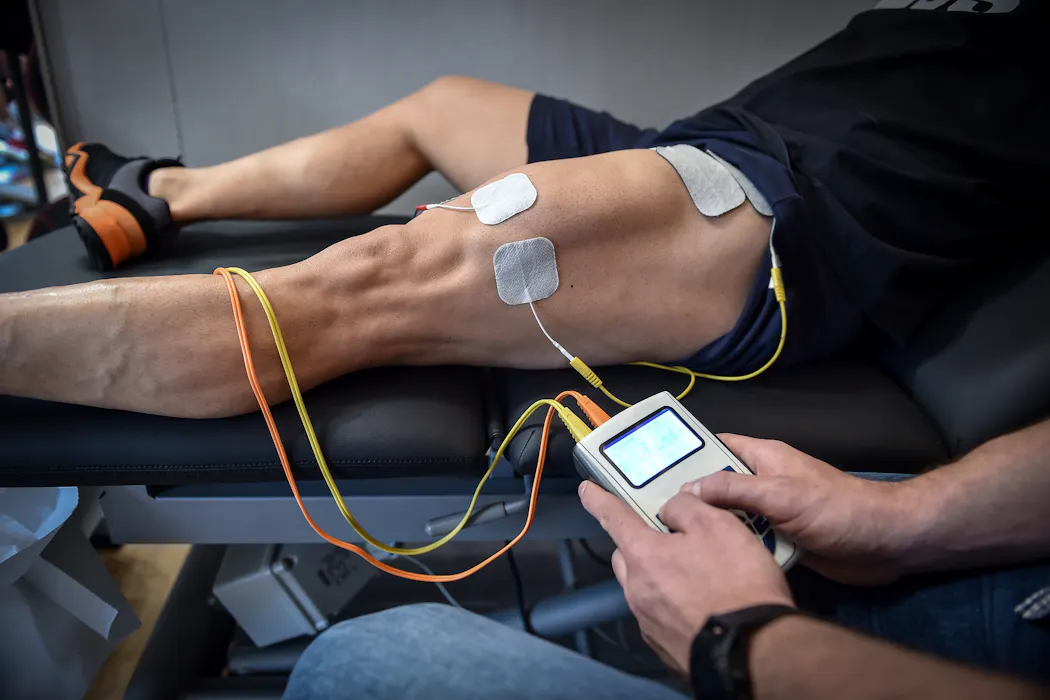
EMS training could be particularly beneficial for people with osteoarthritis who have limited mobility or pain.roibu/ Shutterstock
An estimated 595 million people globally are living with osteoarthritis. This makes it one of the leading causes of pain and disability.
Osteoarthritis is a degenerative joint disease, in which tissues in the joint break down over time. The condition can affect any joint, but most commonly the knees, hips, hands and spine.
However, the impact of osteoarthritis often goes beyond the affected joint. The condition can have profound effects on daily life.
Research shows that people with osteoarthritis are less likely to remain in work and more likely to develop additional health problems, such as diabetes, obesity and poor mental health, than those without the disease.
One of the key approaches recommended for managing osteoarthritis is exercise, including aerobic exercise and muscle strengthening. It’s shown to be extremely beneficial for managing the condition and its associated symptoms.
But not everyone who has osteoarthritis is able to exercise due to pain and limited mobility. This is why electrical muscle stimulation, a novel technology that uses small electrical impulses to help muscles contract, is being investigated for managing osteoarthritis.
Exercise for osteoarthritis
Aerobic and muscle strengthening exercises are both proven to address key drivers of osteoarthritis symptoms.
Muscle strengthening exercise improves joint stability by supporting the surrounding musculature. This reduces stress on the joint and improves movement.
Together, these approaches can help to break the cycle of pain, inactivity, weight gain and physical decline that can happen in osteoarthritis.
In fact, data suggests that people with musculoskeletal conditions (such as osteoarthritis) are around twice as likely to be physically inactive as their healthy counterparts.
Reported barriers to physical activity include pain, limited mobility, negative experiences of physical activity and a lack of motivation. But the less we move, the more muscle mass and strength we gradually lose.
A difficult cycle can then emerge, whereby pain, stiffness and fear of making symptoms worse all discourage movement. Then, without movement, stiffness and pain worsen.
An alternative approach
When exercise feels too painful or isn’t possible, electrical muscle stimulation (EMS) may offer an alternative method for maintaining and improving strength.
This works by placing electrodes on the skin to deliver small electrical impulses, causing muscles to contract without the joint needing to move. The electrical impulse is similar to the signal we normally send from our nervous system when we want to perform a movement.
The therapy can be used in isolation, or it can be applied during exercise to activate even more muscle fibres in what is called a superimposed muscle contraction.
Electrical muscle stimulation also shows promise for those with severe, end-stage osteoarthritis who are preparing for surgery.
For example, one study compared the effects of performing EMS or exercise before surgery for knee osteoarthritis on postoperative outcomes. The study found that participants who used EMS for 20 minutes a day, five days a week in the six weeks before surgery saw greater improvements in postoperative muscle mass, strength and function, compared with patients who performed physical exercise.
Muscle weakness is common both before and after surgery, partly due to pain and reduced movement. While exercise programmes before and after surgery are widely recommended, research suggests they often only have modest effects on functional recovery from joint replacement surgery.
That said, electrical muscle stimulation is not a magic solution and has its limitations. In many cases, it works best as a complement to, not a substitute for, active rehabilitation.
The body of evidence for its effectiveness in osteoarthritis is also still evolving. Some studies showed inconsistent results or were only conducted using a small sample.
Some people find the sensation of electrical stimulation uncomfortable. Some aren’t suitable for its use (for example, those with pacemakers) and devices can be expensive to buy.
Nonetheless, for those who cannot exercise due to pain, swelling or limited mobility, EMS offers a practical tool to maintain muscle strength. This can help them stay active and independent for longer, recover quicker from surgery, and maintain a better quality of life.
Louise Burgess does not work for, consult, own shares in or receive funding from any company or organisation that would benefit from this article, and has disclosed no relevant affiliations beyond their academic appointment.
A great Tyrannosaurus rex strides through the conifer trees of her territory, sniffing the air. She picks up the scent from the carcass of a dead horned dinosaur, Triceratops, that she was feeding on yesterday. She walks over and strips off some more shreds of meat, but the smell is foul even for her.
She goes down to the lake to drink and small crocodiles and turtles scuttle into the water. But she hardly sees them. Of more interest is an armoured dinosaur, Ankylosaurus, lurking nearby. However, she knows this dinosaur won’t be an easy kill and she isn’t desperate enough for food to risk a fight. Little does she know there are bigger dangers ahead. She looks up and sees a bright light racing downwards accompanied by faint crackling and sizzling noises.
Our T. rex has excellent hearing for low frequency sounds and she is disturbed by the vibrations she can feel. But her upset only lasts for a moment. In a flash, she has been burnt to a crisp and her world changed forever.
This all happened 66 million years ago, when a huge asteroid famously hit the Earth in the area of what is now the Caribbean. At the end of the Cretaceous period, sea levels were 100–200 metres higher than today, so the shores of the Caribbean lay far inland over eastern Mexico and the southern United States. The impact happened entirely within these waters.
The event triggered instant changes to our planet and its atmosphere and led to the extinction of the dinosaurs and about half Earth’s other species. But what would it have been like to experience such an gargantuan impact? What would you have seen, heard or smelled? And how would you have died – or survived?
The Insights section is committed to high-quality longform journalism. Our editors work with academics from many different backgrounds who are tackling a wide range of societal and scientific challenges.
As experts on meteoritics and palaeontology, respectively, we’ve created a detailed timeline, based on decades of research, to take you right there. So let’s start by travelling back in time to the very last day of the Cretaceous.
T-minus one day
All is calm and the Cretaceous day proceeds as usual. In what will soon be ground zero, it is pleasantly warm, about 26°C, and wet. It often is. For about a week, the asteroid has been visible only at night. Because the giant rock is heading straight towards Earth, it looks like a motionless star. There is no dramatic tail; this is a rocky asteroid rather than a comet.
The dinosaurs were enjoying nice weather before the big impact. Orla/Shutterstock
In the last 24 hours, the light becomes visible during the daytime. But it still looks like a star or planet, getting as brighter in the final few hours before impact.
T equals 0: the impact
If you were close by, you would first have experienced a brief light and sound show. Minutes to seconds before the impact, you’d have seen the bright fireball, and its accompanying crackling or fizzing noises. This sizzling sound is a result of the photo-acoustic effect: the intense light of the fireball warms the ground, which then heats the air above it, causing pressure waves, or sound.
Next, a deafening sonic boom, which occurs because the asteroid is travelling faster than the speed of sound. But the asteroid is so huge, perhaps 10km in diameter, that it almost certainly hits the ground before any living creature near the impact zone has time to run for cover.
The asteroid’s enormous energy forms a crater through a series of processes that together take only a few seconds. As the asteroid collides with the surface, its kinetic (movement) energy is instantly transferred to the surface as a combination of kinetic, thermal (heat) and seismic energy (released during earthquakes). This results in a series of shock waves that heat and compress both the asteroid and its target.
As the shock waves propagate, rocks fracture, break up and are ejected, producing a bowl-shaped depression, or transient cavity, about ten seconds after impact. The heat and compression also melt and vaporise large volumes of material, including the asteroid itself, releasing a fountain of incandescent vapour (its temperature is more than 10,000 K, or 9726.85°C).
Over the next few seconds, the cavity increases in size to many times the diameter of the original asteroid. Simulations suggest that around 20 seconds after impact, the transient cavity is at least 30km deep – deeper than the deepest depth currently known on Earth, the 11km Challenger Deep valley, part of the Pacific Ocean’s Marianas Trench. The rim of the crater is over 20km high – more than twice the height of 8,900m Mount Everest.
But this enormous feature lasts for less than a minute before it starts to collapse. Within three minutes of the impact, the centre of the crater has rebounded to form a peak several kilometres high. The peak only lasts about two minutes before collapsing back into the crater.
Whether a dinosaur or a dung beetle, if you were near the transient cavity you would have been incinerated instantly by the blast. But even if you were up to 2,000km from the epicentre, you’d likely have been killed quickly by the thermal radiation and supersonic winds now spreading out from the impact site.
T-plus 5 minutes
Five minutes after the impact, the winds have “eased” to those of a category 5 hurricane, flattening everything within about 1,500km of the impact. Destroying everything, that is, which has not already been burnt. Atmospheric temperatures in the region rise to over 500K (226.85°C). This would feel like being inside an oven – causing burns, heatstroke and death. Wood and plant matter ignite, creating fires everywhere.
Because the asteroid struck the sea, the atmosphere is also filled with super-heated steam, making the hurricane-force winds even deadlier.
Next come the tidal waves, triggered by the vast quantities of displaced rock and water. These 100-metre megatsunamis first strike the shores of what is now the Gulf of Mexico, engulfing the land before depositing huge amounts of debris as they retreat.
By now, the crater has almost reached its final dimensions – 180km across and 20km deep. But making an enormous hole in the ground isn’t the only outcome of the impact. All the rock and vapour displaced during the collision has to go somewhere. Several locations in Northern America show that metre-sized blocks of debris from the impact were thrown distances of hundreds of kilometres.
So if you were 2,000km to 3,000km from the epicentre and survived the first few seconds, you’d most likely die from overheating, earthquakes, hurricanes, fires, tsunami-driven floods or being hit by impact melt.
But what is happening much further away? In the first five minutes after impact, dinosaurs roaming the Cretaceous forests of what are now China or New Zealand are so far undisturbed.
But it won’t be long before that changes.
T-plus one hour
Shockwaves on land and sea are only minor inconveniences compared with the fire that is still radiating down from the sky. Some of the impact energy has been transferred into the atmosphere, heating the air and dust to incandescence.
An hour after impact, a belt of dust has circled the globe. Deposits of solidified molten droplets (impact spherules) and mineral grains have been found in numerous locations from New Zealand in the south to Denmark in the north. In these locations, you would not have been aware of the tsunamis around the Americas or the wildfires, but the skies would certainly have begun to darken.
T-plus one day
By now, huge tsunamis are moving east across the Atlantic and west across the Pacific, entering the Indian Ocean from both sides.
They are still around 50m high – causing death and destruction across many coasts around the world. By comparison, the 2004 Boxing Day tsunami reached heights of up to 30 metres. Tsunamis kill fishes and marine life that are washed high on the shore and then dumped, just as they kill coastal trees and drown land animals. But the tsunamis gradually fade away and probably don’t wipe out any entire species – at least on their own.
The hurricane force winds have also died down, but tropical storm strength winds are whipping up debris and causing further chaos and destruction across the tsunami-affected areas. The burning sky is also triggering wildfires across the globe – which, in turn, carry ever more soot into the atmosphere. The sooty signature of these wildfires has been found deposited as carbon particles in sediments from the K-Pg boundary – a 66-million-year-old thin clay layer.
Further away, in what is modern Europe and Asia, the skies continue to fill up with dust and soot, as they do everywhere. Temperatures start to drop as sunlight is blocked. Trees and plants in general, including phytoplankton, close down as if for winter, unable to photosynthesise. Any animals that rely on warm conditions ultimately hunker down and die.
T-plus one week
It’s getting darker and darker. Simulations of solar radiation reaching the Earth’s surface following the impact indicate that, after about a week, the solar flux (the amount of heat and light per a certain area) is just one thousandth of that prior to the impact. This is caused by particles of dust and soot in the atmosphere.
The continued decrease in light levels is accompanied by a global drop in surface temperatures of at least 5°C. This means that most of the dinosaurs and other large flying and swimming reptiles probably die from freezing within the course of this first week (smaller reptiles with slower metabolisms or more flexible diets could survive longer). Cooling temperatures and cloud cover also lead to rain. But not just any rain. Storms of acid rain fall across the Earth.
Two separate mechanisms generate acid rain. The first is down to the geology of the impact region. The asteroid happened to hit an area of sediments rich in sulphur, which vaporised and caused sulphur oxides (acidic and pungent gas compounds composed of sulphur and oxygen) to be part of the plume of plasma blasted into the atmosphere. Second, the energy of the collision was sufficient to turn nitrogen and oxygen into nitrogen oxides – highly reactive gases that can form smog.
The dropping temperature ultimately allows water vapour to condense into drops, and the sulphur and nitrogen oxides dissolve to form sulphuric and nitric acids. This is sufficient to generate a rapid drop in pH. Early models suggest that the pH of the rain might be as low as 1 – the same acidity as battery acid.
At this point, Earth is not a great place to be. Rotting vegetation, choking smoke and sulphur aerosols combine to make the planet stink. Plants and animals on land and in shallow seas that have survived the darkness and cold succumb to the corrosive acid rain and ocean acidification. Acid rain also kills trees by leaching nutrients such as calcium, magnesium and potassium from the soil. Shallow marine shellfish, crustaceans and corals also die as acid seawater destroys their skeletons.
T-plus one year
Winds die down, wildfires are extinguished and the oceans are once again calm. It might appear that the asteroid collision is just a scar on the ocean floor. But its effects are still destructive. The atmosphere is still filled with dust and the Sun hasn’t shone for a year. Temperatures have continued to drop, with the average surface temperature now 15°C lower than before the impact. Winter has come.
Any dinosaurs or marine reptiles that survived the first week of freezing conditions would have died very soon after. A year after the impact, only rotted skeletons of these behemoths remain. Here and there, smaller animals like mammals the size of rats and insects would be nestling in crevices, barely surviving on their reserves and decaying plants.
While most plant groups and many of the modern groups of insects, fishes, reptiles, birds and mammals recover reasonably rapidly, things don’t look great for other species. Dinosaurs and pterosaurs living on land are extinct, as are many marine reptiles, ammonites, belemnites and rudist bivalves in the oceans. Ammonites and belemnites are high in their food chains, and so suffer not only from the cold and acidification but also from the loss of abundant food resources, such as smaller marine organisms.
T-plus ten years
The Earth is still in the grip of a fierce winter. Although most of the sulphur has rained out of the atmosphere, dust and soot particles remain. The average surface temperature is still about 5°C lower than before the impact. The main oceans have not frozen, but inland lakes and rivers around the world are iced over.
Surviving plant and animal groups such as turtles, smaller crocodiles, lizards, snakes, some ground-dwelling birds and small mammals repopulate the Earth at this point. But they are forced back to limited areas of relative safety a long way from the impact site. These areas are now receiving sufficient sunlight for plants and phytoplankton to photosynthesise again. As leaves and seeds provide the basis for the food chains on land and in the sea, life begins to rebuild.
Eventually, life returns to the devastated landscapes, but ecosystems are very different and the dinosaurs are no more.
T-plus 66 million years
Today, 66 million years after the impact, the scars of the collision are hidden within geological strata – and scientists have started deciphering them. It was in 1980 that researchers first reported evidence of the impact. In their classic paper, Luis Alvarez, a Nobel-prize-winning physicist, and co-authors, described a sudden enrichment in the element iridium in a specific clay layer in Denmark and in Italy.
Iridium is rare in surface rocks because most of it was sequestered in Earth’s core when the planet first formed. However, iridium is found in meteorites, and Alvarez and colleagues inferred that the rate of accumulation of the metal in the sediments was so high that it could only have been produced by impact of a gigantic meteorite.
Because the scientists had only observed the iridium spike in two locations, the impact hypothesis was rejected by many scientists at the time. However, through the 1980s, iridium spikes were identified in clay layers at more and more locations – in muds laid down on land, in lakes, in the sea.
Support for an impact hypothesis strengthened when a crater of the correct age was found in 1991. The crater is buried beneath younger rocks, but clearly visible in geophysical surveys, lying half on land in the Yucatán Peninsula of Mexico, and half offshore. Since 1990, evidence for the impact has increased, not least when scientists discovered that there was indeed a sharp cooling event at the end of the Cretaceous.
Possible T rex footprint from New Mexico. Wikipedia, CC BY-SA
In total, it is estimated that half the species of plants and animals alive at the end of the Cretaceous disappeared. It was once thought that surviving groups such as many plants, insects, molluscs, lizards, birds and mammals somehow escaped unscathed. But detailed study shows that this is not the case – they were all hit hard.
But, by chance or luck, enough individuals and species were able to survive the cold and absence of food, or were in parts of the world where the effects were less extreme. As the world returned to normal, they had the opportunity to expand rapidly into their old niches, but also to occupy the space vacated by extinct groups. In fact, one important consequence of the extinction of the dinosaurs, apex predators in their heyday, was the successful spread and evolution of mammals.
When Alvarez and colleagues first described the drop in temperature following the impact, they called it a “nuclear winter”, reflecting the political climate of the early 1980s. Now we might be more inclined to describe the effects as a global climate change – similar events are currently resulting from increased carbon dioxide in the atmosphere (flooding, temperature fluctuations).
It is salutary to think that without the asteroid collision, primates might never have reached the level we are at today. But it is equally salutary to consider that modern humans are causing some of the same changes to the atmosphere that ultimately killed our reptilian forbears and may one day also lead to our own demise.
To hear about new Insights articles, join the hundreds of thousands of people who value The Conversation’s evidence-based news. Subscribe to our newsletter.
Monica Grady receives funding from the Leverhulme Trust for an Emeritus Fellowship and from the STFC. She is affiliated with The Open University, Liverpool Hope University and the Natural History Museum, London.
Michael J. Benton does not work for, consult, own shares in or receive funding from any company or organisation that would benefit from this article, and has disclosed no relevant affiliations beyond their academic appointment.
Source: The Conversation – France in French (3) – By Florian Leniaud, Docteur en civilisation américaine. Membre associé au Centre d’histoire culturelle des sociétés contemporaines, Université de Versailles Saint-Quentin-en-Yvelines (UVSQ) – Université Paris-Saclay
La tentative d’assassinat qui a visé Donald Trump et ses ministres les plus importants le 26 avril dernier s’est produite à l’hôtel Hilton de Washington, devant lequel Ronald Reagan avait été grièvement blessé par balles 45 ans plus tôt. Ce parallèle invite à analyser la manière dont les attaques physiques qu’ils ont subies ont transformé l’image des deux présidents républicains, ainsi que les réponses qu’ils y ont apportées.
Ce détail n’en est pas un, car il transforme un fait isolé en continuité. Le lieu devient une scène. La violence politique ne surgit plus seulement comme un événement, elle semble se rejouer, tout en reliant deux figures présidentielles au sein d’une même épreuve.
Un lieu qui transforme la violence en récit
En 1981, Reagan, qui avait eu le poumon perforé par une balle tirée à bout portant par John Warnock Hinckley, Jr., sort profondément renforcé de cet épisode. Les images de sa sortie d’hôpital, son humour face au danger mortel auquel il a été exposé et la mise en récit médiatique contribuent à installer durablement la figure d’un leader ayant traversé l’épreuve.
Quelques heures après avoir été touché, Reagan plaisante auprès de ses chirurgiens : « J’espère que vous êtes tous des Republicans ». La formule fait immédiatement le tour du pays et structure l’image d’un président courageux, maître de lui-même jusque dans la proximité de la mort.
Aujourd’hui, Trump — qui avait déjà vécu un moment similaire le 14 juillet 2024 lorsqu’il avait émergé, le poing brandi et l’oreille en sang, après avoir échappé à une tentative d’assassinat lors d’un meeting — apparaît dans une configuration différente mais comparable sur un point précis : l’exposition à la violence renforce une posture de leader assiégé. Depuis près de dix ans, son discours politique repose largement sur l’idée d’une Amérique menacée, encerclée par des ennemis intérieurs et extérieurs. Chaque attaque contribue dès lors à renforcer un récit déjà installé, celui d’un dirigeant pris pour cible parce qu’il incarnerait une forme de résistance politique.
Dans les deux cas, l’événement ne se limite donc pas à un acte violent, puisqu’il est immédiatement intégré dans une narration politique. Or ce récit ne fonctionne pas seul. Il repose sur une médiatisation continue qui transforme la violence en séquence politique majeure. Si la violence fait l’événement, le récit médiatisé en fait un moment politique.
Un attentat prémédité dans un espace hautement symbolique
Les éléments désormais connus sur l’assaillant du 25 avril dernier, Cole Tomas Allen, confirment qu’il avait préparé son attaque de longue date. L’homme, âgé de 31 ans, avait traversé les États-Unis avec plusieurs armes et réservé une chambre au Hilton plusieurs semaines à l’avance. Selon les enquêteurs, il projetait de viser Donald Trump ainsi que plusieurs responsables politiques présents lors du dîner des correspondants de la Maison-Blanche.
Cette dimension est importante car elle éloigne l’idée d’un acte purement impulsif ou irrationnel. Les travaux consacrés aux auteurs de fusillades montrent des trajectoires souvent marquées par l’isolement social, des formes d’humiliation ou une quête de reconnaissance. Dans de nombreux cas, le passage à l’acte s’inscrit dans un environnement saturé de récits violents et fortement médiatisés.
La médiatisation ne constitue alors pas un simple relais d’information, car à travers la répétition des images et des noms des assaillants, elle peut contribuer, chez certains individus, à rendre ces actes réellement possibles, soit imaginables. À force d’être rejouée en boucle, la violence s’installe dans un horizon mental familier où le passage à l’acte peut apparaître comme un moyen brutal d’accéder à une forme de visibilité publique.
Le lieu comme scène politique
Le choix du lieu joue un rôle central dans cette dynamique. Les attaques ne surviennent pas dans des espaces neutres : écoles, centres commerciaux, universités, lieux de pouvoir ou bâtiments gouvernementaux concentrent visibilité et résonance médiatique. Ils fonctionnent comme des scènes ouvertes sur le pays tout entier.
Le Hilton de Washington agit à ce titre comme un espace de mémoire politique. Déjà associé à la tentative d’assassinat contre Reagan, il transforme instantanément l’événement en continuité historique. Ce lieu de mémoire produit du sens avant même l’interprétation politique et dépasse largement le geste individuel.
La comparaison d’Allen avec John Hinckley Jr. permet néanmoins de souligner des différences importantes. Hinckley agit dans une logique obsessionnelle très personnelle qui mêle fascination médiatique et fixation sur l’actrice Jodie Foster. Allen apparaît, quant à lui, engagé dans une démarche nettement plus politisée et idéologique. Pourtant, un point commun demeure : dans les deux cas, l’acte vise un espace hautement visible, aujourd’hui chargé de sens.
La violence politique contemporaine ne cible donc pas seulement des individus. Elle cible aussi des lieux, des symboles et des récits.
Une polarisation médiatique qui transforme immédiatement la violence en affrontement politique
Cette évolution ne peut être comprise sans replacer ces événements dans l’histoire récente du paysage médiatique américain. La présidence Reagan marque un tournant majeur avec la disparition progressive de la Fairness Doctrine à la fin des années 1980. Cette règle imposait jusque-là aux médias audiovisuels de traiter les sujets controversés de manière équilibrée.
Sa suppression ouvre progressivement la voie à un système médiatique beaucoup plus polarisé, où l’information devient un espace d’affrontement idéologique permanent. L’essor du talk radio conservateur, puis des chaînes d’information continue et des réseaux sociaux fragmente l’espace public américain en récits concurrents.
Dans ce contexte, chaque événement violent fait immédiatement l’objet d’interprétations opposées. Pour les soutiens de Trump, l’attaque confirme l’idée d’un dirigeant persécuté parce qu’il dérange une partie du système politique et médiatique. Pour ses opposants, l’attaque renvoie au contraire à un climat de tension politique auquel les discours de Trump et sa manière de polariser le débat public auraient contribué.
La violence cesse alors d’être seulement un drame partagé pour devenir un élément du combat politique, utilisé par chaque camp pour conforter sa propre lecture du pays, du pouvoir et de la menace.
Les armes à feu comme imaginaire politique
La question des armes à feu occupe une place centrale dans cette dynamique. Leur diffusion massive entretient un imaginaire politique fondé sur l’autodéfense et la menace permanente. Aux États-Unis, lorsque les armes ne relèvent pas de la sécurité ou du loisir, elles constituent un marqueur culturel et identitaire profondément enraciné dans une partie du conservatisme américain.
C’est précisément dans cette tension entre culture des armes et expérience directe de la violence que la comparaison entre Reagan et Trump devient éclairante. Ronald Reagan, pourtant figure majeure du conservatisme américain et défenseur du deuxième amendement, avait progressivement infléchi sa position après avoir survécu à la tentative d’assassinat de 1981 lors d’une tribune écrite pour le New York Times. Dans les années 1990, après ses deux mandats, il soutient publiquement le Brady Act, texte renforçant les contrôles sur les ventes d’armes à feu — baptisé ainsi en hommage à James Brady, porte-parole de la Maison-Blanche grièvement blessé en même temps que le président le 30 mars 1981, et resté lourdement handicapé à la suite de ses blessures. Reagan reconnaît alors qu’un meilleur encadrement des armes aurait pu sauver des vies.
Donald Trump défend au contraire une ligne plus ferme en faveur du droit au port d’armes, y compris après avoir lui-même été visé. Cette différence traduit une transformation plus profonde du camp républicain : chez Reagan, la violence conduit partiellement à une forme de remise en question, alors que chez Trump elle vise davantage à renforcer un récit politique déjà raffermi autour du danger et de l’affrontement.
Quand le lieu survit à l’événement
L’attaque contre Donald Trump ne constitue pas un événement isolé. Elle survient dans un contexte plus large de polarisation politique et de violences visant des responsables publics aux États-Unis. L’assaut du Capitole en 2021 avait déjà révélé l’intensité d’une polarisation où une partie du conflit politique se déplace désormais sur le terrain physique et sécuritaire.
Mais le plus frappant reste peut-être la persistance du lieu lui-même. Quarante-cinq ans après Reagan, le Hilton de Washington réapparaît comme si certains espaces conservaient la mémoire des violences qui les ont traversés. Le lieu ne se contente plus d’accueillir l’événement : il lui donne une profondeur historique immédiate et relie plusieurs séquences de la vie politique américaine à travers une même scène.
De Reagan à Trump, les effets politiques diffèrent, mais une constante demeure : l’exposition à la violence peut renforcer la portée symbolique du pouvoir. Si la violence politique fait depuis longtemps partie de l’histoire américaine, sa médiatisation permanente et son inscription dans un paysage fortement polarisé lui donnent aujourd’hui une résonance particulière, où chaque attaque devient aussitôt un affrontement politique et médiatique qui dépasse largement l’événement lui-même..
Florian Leniaud est membre du Centre d’histoire et d’études culturelles rattaché à l’Université Paris-Saclay
Source: The Conversation – Africa – By Janet Appiah Osei, Research Fellow, African Research Universities Alliance (ARUA), University of Ghana
Every morning in Accra, Ghana’s capital, thousands of commuters sit in traffic while minibuses and taxis compete for limited road space.
More than 70% of Ghanaians rely on informal public transport, predominantly minibuses (trotros) and taxis, for their daily mobility. About 84% of passenger trips in Accra are made using these modes (a 2017 estimate). Precise counts of vehicles are not available due to the informal nature of the sector, but thousands of taxis and trotros are active on Accra’s roads each day.
Despite the constant movement, the traffic’s progress is slow. Ghana’s cities are moving, but not efficiently.
Taxi and minibus services are essential. They provide flexible, relatively affordable mobility and reach areas that formal systems do not. For millions of people, they are the backbone of daily travel.
Yet surprisingly little is known about their diversity and characteristics.
I research how urban transport systems can be made more efficient and climate-friendly, particularly in rapidly growing cities where there are mobility challenges.
In my recent study of commercial vehicle models in Ghana’s urban transport system, I identified 52 different types of taxis and trotros currently in operation. This diversity reflects a system shaped more by market demand than by coordinated, large-scale planning.
My findings show a highly diverse fleet structure, with differences in vehicle capacity and service patterns across the fleet. There’s a strong reliance on conventional fuels and older vehicles. These patterns suggest a fleet that has developed gradually over time, rather than through deliberate and structured modernisation. The result is traffic congestion, higher fuel consumption and increased emissions.
I argue that a more structured approach to urban transport could allow cities to move more people with fewer vehicles, reduce overlapping low-occupancy trips, and improve fleet regulation and planning.
Why efficiency is a growing problem
Most taxis, which are typically sedan cars, carry only a few passengers per trip and operate over short distances. Trotros seating about 10-20 people carry more passengers and travel longer routes. But they still fall short of the capacity offered by larger buses used for mass transit, which can carry 50 or more passengers per trip.
This means more vehicles are required to move the same number of passengers.
In Accra alone, roughly one million passenger trips are made daily using these modes. As demand increases, the system responds by adding more vehicles, not by increasing capacity per vehicle.
This pattern is evident in the the city’s rapid motorisation: vehicle ownership rose from about 40 per 1,000 people in 1990 to 260 per 1,000 in 2015. This highlights how growing mobility demand has largely been met through more vehicles on the road, rather than through more efficient, higher-capacity transport.
The result is growing congestion, longer travel times and increasing pressure on already limited road infrastructure.
For commuters, this means more time spent in traffic. For cities, it means declining transport efficiency.
Environmental costs of low-capacity transport
The dominance of low-occupancy vehicles also affects the environment.
Vehicles that carry fewer passengers generally consume more fuel and generate higher emissions per passenger-kilometre compared to higher-capacity modes of transport. For example, one study on urban transport found that transit buses can reduce emissions by 82%-94% relative to sedan cars.
The cumulative effect of a large fleet of low-occupancy vehicles in Accra contributes to higher overall fuel consumption and increased urban emissions.
Expanding and strengthening high-capacity public transport systems is not only a transport issue, but also an environmental one.
Economic implications for cities and commuters
Inefficiency in transport systems has direct economic consequences.
Higher fuel consumption increases operating costs for drivers, which can eventually translate into higher fares. Congestion slows down the movement of people and goods, reducing productivity and increasing the cost of doing business in urban areas.
Efficient transport systems support economic growth by improving reliability and reducing delays. As Ghana’s cities expand, these efficiencies become even more critical.
Why the current system persists
Despite these challenges, taxis and trotros continue to dominate for good reason.
They are flexible, adaptable and responsive to demand. Routes can change quickly, and services can reach areas that formal systems often overlook. The relatively low cost of entry also allows many individuals to participate in the sector.
This flexibility has made the system resilient. But it has also limited large-scale coordination.
The case for high-occupancy transport
Improving urban mobility is not just about increasing the number of vehicles, it is about moving more people with fewer vehicles.
High-occupancy transport systems, particularly Bus Rapid Transit (BRT), a system that uses larger buses operating along dedicated corridors, carry more passengers per trip. A single high-capacity bus can replace multiple taxis or minibuses.
This does not mean eliminating existing transport modes. Taxis and trotros can play a complementary role as feeder services, connecting passengers to main transit routes. This integrated approach combines flexibility with efficiency.
Ghana has already made attempts to introduce BRT systems. But partial implementation has limited their impact. For such systems to succeed, they require dedicated lanes, consistent policy support, and long-term investment.
A critical moment for Ghana’s cities
Urbanisation in Ghana is accelerating. As more people move into cities, demand for transport will continue to rise.
If current trends continue, the number of low-capacity vehicles will increase further, worsening congestion and environmental pressures. Over time, this could reduce the overall effectiveness of urban transport systems.
Ghana now faces a choice: continue expanding a vehicle-intensive system, or move towards higher-capacity models that prioritise efficiency and sustainability.
What needs to change
Addressing these challenges requires coordinated policy action.
Transport planning must move beyond reactive, market-driven growth, towards long-term system design. This includes integrating informal transport operators into structured frameworks while investing in infrastructure that supports high-capacity movement.
In my view, priorities should include:
full implementation of Bus Rapid Transit systems with dedicated lanes
investment in high-capacity buses and supporting infrastructure
integration of informal operators into formal planning systems
gradual reduction of low-occupancy vehicles along major corridors
stronger institutional coordination and long-term planning.
These steps can help create a more flexible and efficient, balanced system.
The future of Ghana’s cities will depend on a simple shift where more people, not more vehicles, are moved.
Janet Appiah Osei received funding from the African Research Alliance Universities (ARUA) in collaboration with the University of Ghana
Dogs can be very aggressive towards one another, as many people will have witnessed in public places. But in South Africa aggression between dogs occurs more often in people’s homes.
We, a group of South African veterinary scientists including epidemiologists and a behaviourist at the Faculty of Veterinary Science, University of Pretoria, set out to understand the drivers of dog-on-dog aggression in dog bite patients. One of the reasons for doing this is that international studies rarely represent African settings, yet dog-keeping practices profoundly influence behaviour.
In South Africa, for example, dog ownership is driven by safety concerns and a guard against crime. Typically owners keep multiple dogs, select more aggressive dog breeds and combine large breeds for protection with smaller “alert” dogs meant to raise the alarm.
In a recent paper we examined detailed owner surveys from dogs presented to the veterinary hospital with bite wounds. We have also been drilling down into data based on more than 3,000 dogs that had been treated for dog bite wounds between 2013 and 2024 at the Onderstepoort Veterinary Academic Hospital. We analysed dog fight descriptions and household demographics, looking at the sex, age, breed and sterilisation status of dogs.
Our aim was to provide solid evidence-based and locally relevant prevention strategies to reduce inter-dog aggression, and to identify some risk amelioration strategies for South Africa.
We found that the biggest drivers of dog-on-dog aggression were overcrowded homes, and mismatched dog groups in terms of sex, sterilisation status and size. And that, by and large, dogs had minimal training and early socialisation and were given limited exercise outside the household.
Together, these factors create a household “pressure cooker” for inter-dog conflict.
Unfortunately, once fighting between household dogs occurs, this behaviour usually escalates. It’s often necessary to permanently supervise or separate fighting dogs.
This makes identifying prevention strategies all the more important, as once fighting occurs between two household dogs it is very difficult to curb.
Our findings highlight the importance of selecting compatible dogs, managing home environments and supporting owners with practical, evidence-based advice. Based on our findings we make seven recommendations that could help reduce dog-on-dog violence. These include limiting the number of dogs in a home to two or three, castrating male dogs, making sure there’s a mix of males and females, and not mixing small and large breeds.
What we found
Our research found extensive damage to the dogs that had been bitten:
4% had chest or abdominal cavity penetration
12% suffered fractures
6% resulted in death or euthanasia.
Beyond the welfare concerns for the dogs, this conflict also affected humans in considerable ways. Owners were injured while breaking up the fight in 3.2% of fights. Wounds to the face and hands were reported.
We found that households where fighting occurred owned more dogs (4.1 dogs compared to 3.4 dogs) and had more than one intact male dog.
When we examined patterns in fighting pairs, we identified clear trends: 71% of fights were between dogs of the same sex; 53% occurred between dogs with the same sterilisation status. Conversely, fighting was less common between male and female dogs (29%). The most common pairs were two intact males (25%) or two spayed females (15%).
Intact males were significantly over-represented in fights (38% of fighters vs 12.7% for castrated males). We did not establish causality, but the association is strong.
Female spayed dogs were slightly over-represented: 28% of fighting dogs vs 22% for female intact dogs. Fighting was frequent (12% of reports) when one household dog was in oestrus (on heat).
Fights were more common in dogs older than three years when hierarchy challenges arose. Most injured dogs were small breeds attacked by larger dogs.
Several breeds were over-represented in fighting households. These included boerboels, German shepherd dogs and pitbull terriers. Jack Russell terriers and miniature pinschers were over-represented in dog bite wound patients.
Breeds such as dachshunds, labrador retrievers, miniature schnauzers and toy poodles were less represented in fighting households.
But in South Africa, household dynamics themselves are the central risk factor. In our study 85% of the dog bite wound cases happened at the owner’s home, and 68% involved dogs living in the same household.
Fighting often happened when a dog escaped from the yard or entered another dog’s property.
In several countries like the UK and Germany, leash laws were introducted to reduce dog attacks and fighting. But in our study population this would have a minimal effect on fighting between dogs at this occurs mostly at home.
Other clear differences to previous western studies were that most households in our survey kept 3.4 dogs. In many European studies there were usually fewer than two.
This shows that South African households face unique pressures that shape dog behaviour. Local evidence is essential to prevent fights and improve welfare.
What can owners do?
Keep no more than three dogs in a household. More dogs, more competition = more fighting.
Secondly, castrate all male dogs.
Third, avoid keeping dogs of only one sex. Fighting between same sex pairs was more common.
Fourth, avoid keeping large breed dogs with small breed dogs. Injuries were more common when small breed dogs were bitten by larger breed dogs.
Fifth, avoid keeping boerboels, German shepherds and pitbull terriers in multi-dog households. These breeds were more common in fighting households.
Sixth, Jack Russell terriers and miniature pinschers should be limited to low risk households without large breed dogs. These two breeds were over-represented in dog bite wound patients.
Seventh, maintain dog proof-fencing and control dogs during gate opening and closing. Fighting was often reported when dogs escaped their yard or entered another property.
Josef Hanekom works for the Faculty of Veterinary Science, University of Pretoria.
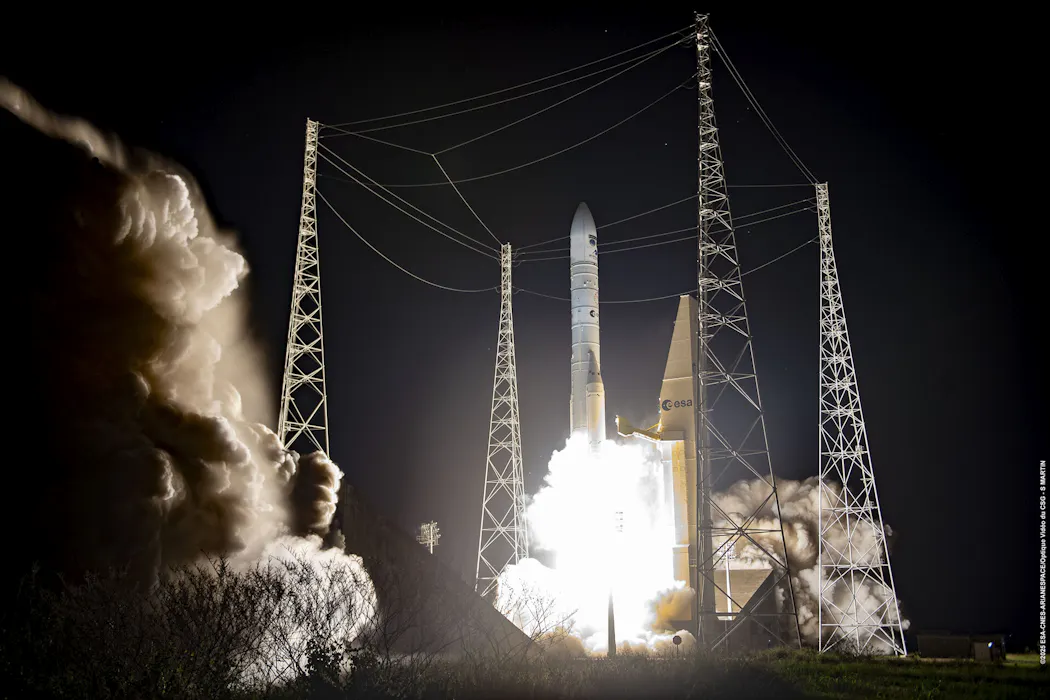
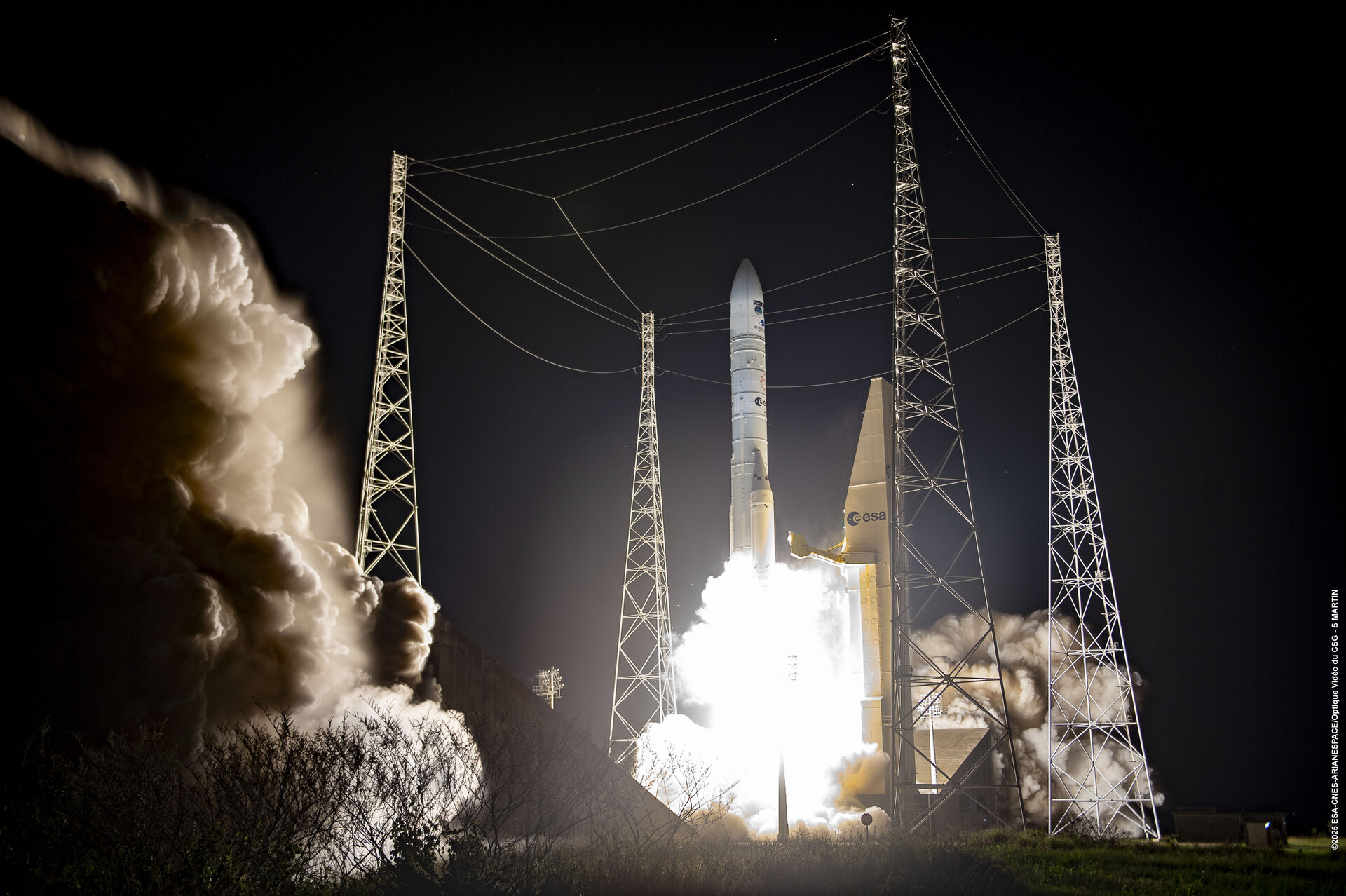
Le satellite européen Metop-SG-A1 a été lancé depuis la base de Kourou à bord d’Ariane 6 le 12 août 2025, et les premières données ont été distribuées à la communauté scientifique ce 4 mai. À son bord, pas moins de six instruments dédiés à l’observation de l’atmosphère terrestre, parmi lesquels la mission-phare IASI-Nouvelle Génération (IASI-NG) du CNES.
À l’heure où les données sur le climat sont en danger, cette nouvelle génération d’instrument va suivre l’évolution de l’atmosphère terrestre pendant plus de 20 ans et servir de référence internationale pour le sondage vertical infrarouge de notre atmosphère.
—
Les satellites sont une composante majeure de l’étude et de l’observation de la Terre. Ils apportent à l’échelle globale les observations nécessaires afin de mieux comprendre et prévoir l’évolution de la planète, et de distinguer les effets induits par l’homme de ceux liés à la variabilité naturelle de la Terre. Au cours des trois dernières décennies, les observations satellitaires ont permis de surveiller en continu l’état de l’atmosphère terrestre. Les instruments spatiaux actuels alimentent ainsi les modèles de prévision météorologique, contribuent à l’évaluation du climat et surveillent les changements rapides dans la composition de l’atmosphère.
La mission IASI (pour « Interféromètre Atmosphérique de Sondage Infrarouge ») occupe une place essentielle dans ce domaine car elle permet de cartographier l’atmosphère et sa composition en 3D. IASI cumule désormais plus de dix-huit années d’observations grâce à la combinaison de trois instruments identiques lancés sur trois satellites successifs entre 2006 et 2018. Les deux derniers exemplaires sont toujours en activité.
Afin de garantir la continuité à long terme de ces observations, le CNES et EUMETSAT (l’agence européenne chargée de la surveillance satellite du climat et de la météorologie) ont lancé le développement de la mission IASI-NG.
Deux fois plus précise et deux fois plus performante que ses prédécesseurs, IASI-NG fournira pour 20 nouvelles années une meilleure description de la structure de l’atmosphère (température, humidité, gaz atmosphériques) notamment dans les premiers kilomètres de l’atmosphère, ce qui est essentiel pour réaliser une bonne prévision météorologique, étudier la qualité de l’air et les émissions de gaz à la surface.
Lancement du satellite Metop-SG-A1 à bord d’Ariane 6.
Le sondage atmosphérique dans l’infrarouge : une filière d’excellence française
Développé par le CNES en collaboration avec EUMETSAT, l’instrument IASI mesure le spectre du rayonnement infrarouge émis par la Terre. Celui-ci varie en fonction de la température et des gaz présents dans l’atmosphère, et c’est son analyse qui permet de cartographier l’atmosphère en 3D et donc de visualiser les vagues de chaleur ou de froid, les nuages de poussières désertiques ou encore les panaches de pollution par exemple.
IASI est ainsi un contributeur clé aux services européens Copernicus, le programme européen de surveillance intégrée de l’environnement basé sur des réseaux de surveillance in situ, sur l’observation spatiale et sur la mise en œuvre de modèles numériques. En reconnaissance de ses performances instrumentales exceptionnelles, IASI a été choisi comme référence internationale pour les mesures dans l’infrarouge par l’Organisation Météorologique Mondiale, contre laquelle toutes les autres missions spatiales du même type doivent se calibrer.
Les objectifs de IASI-NG
La mission IASI-NG vise à améliorer significativement les performances de IASI. Elle est embarquée sur les satellites européens Metop-SG-A dont trois lancements sont prévus de 2025 à 2039.
Ainsi, en couplant IASI et IASI-NG, quarante années d’observation du rayonnement infrarouge terrestre seront disponibles pour étudier l’évolution de l’atmosphère sur une échelle climatique.
De plus, grâce à ses performances instrumentales accrues, IASI-NG fournira une meilleure description de la température et de l’humidité, notamment dans les premiers kilomètres de l’atmosphère, ce qui est essentiel pour réaliser une bonne prévision météorologique. Ainsi, par exemple, IASI-NG améliorera la prévision des tempêtes, en termes de localisation et de suivi, mais également en termes de niveaux de précipitations.
Alors que les instruments IASI en service détectent déjà plus de 30 molécules de gaz différents (gaz à effet de serre, ammoniac, ozone, monoxyde de carbone), IASI-NG va encore enrichir ce catalogue, tout en observant mieux les basses couches de l’atmosphère ce qui est essentiel pour mieux prévoir les épisodes de pollution ou de soulèvement de poussières désertiques.
Enfin, IASI-NG permettra de mieux connaître le positionnement vertical de ces différents composants atmosphériques (gaz, particules), ce qui permettra de mieux contraindre les modèles de transport atmosphérique qui sont à la base des modèles de prévision météorologique et des modèles du climat.
La mission IASI-NG.
Une innovation technologique pour une première mondiale
IASI et IASI-NG mesurent le spectre du rayonnement infrarouge émis par le système Terre-atmosphère. À l’aide d’algorithmes numériques de traitement du signal, les spectres sont interprétés en termes de variables géophysiques (température, concentration de gaz).
Lors de la conception d’un nouvel instrument, il est nécessaire de trouver un compromis entre différents paramètres instrumentaux — par exemple, avoir un spectre mieux résolu avec un meilleur échantillonnage en fréquences augmente le bruit associé à la mesure. Le défi consiste donc à optimiser le choix des paramètres instrumentaux afin d’améliorer la résolution verticale et la précision des sondages.
Pour IASI-NG, une amélioration d’un facteur deux de la résolution spectrale et du bruit radiométrique par rapport à IASI a été choisie. Pour y parvenir, la solution est d’augmenter le champ d’observation de l’instrument. Mais l’instrument reçoit alors un rayonnement à un angle d’incidence élevé par rapport à son axe, ce qui altère le spectre mesuré.
La conception de IASI-NG a donc nécessité une innovation technologique pour compenser ces « effets de champ » : la réalisation d’un interféromètre de Mertz. Ce concept est pour la première fois déployé dans le cadre d’une mission spatiale. Le mécanisme interférométrique central est particulièrement innovant et a été breveté par le CNES et Airbus Defence and Space, maître d’œuvre de l’instrument.
Depuis sa mise en orbite, IASI-NG mesure plus de 1,3 million de spectres infrarouges par jour, sur terre et sur mer, de jour comme de nuit, avec un délai de réception par les centres de prévision météorologique et les laboratoires de recherche de moins de 120 minutes. Après une phase classique de « calibratrion/validation », durant laquelle le CNES s’est assuré du bon fonctionnement technique et des derniers réglages, la distribution des observations de IASI à la communauté scientifique débute début avril.
Plus qu’une simple continuation de IASI, les performances accrues et innovantes de IASI-NG en feront un atout pour les sciences atmosphériques pour les prochaines décennies dans trois domaines majeurs, la prévision numérique du temps, la composition atmosphérique et l’étude du climat.
Cyril Crevoisier a reçu des financements de projets et bourses de recherche de l’Agence Nationale de la Recherche, du Centre National d’Etudes Spatiales, de l’Agence Spatiale Européenne et de l’Agence Spatiale Européenne pour les Satellites Météorologiques.
Adrien Deschamps travaille au CNES qui a la responsabilité du développement de IASI-NG et a assuré sa maitrise d’ouvrage
Une simple odeur diffusée pendant le sommeil peut-elle améliorer votre odorat, votre mémoire ou même la qualité de votre sommeil ? De nouvelles recherches explorent les bienfaits de la stimulation olfactive passive.
Les personnes touchées peuvent s’isoler par crainte de sentir mauvais, ressentir de l’anxiété, perdre l’envie de manger ou modifier leur alimentation. La sécurité quotidienne est aussi compromise, puisque détecter la fumée, le gaz ou des aliments avariés devient plus difficile. Enfin, cette perte peut nuire à certaines professions, comme chef, parfumeur ou sommelier pour qui l’odorat est un véritable outil de travail.
Le traitement principal de la perte olfactive consiste en un « entraînement olfactif ». Tous les jours, matin et soir, le protocole consiste à s’exposer à des odeurs différentes pendant environ 30 à 40 secondes par odeur.
Les limites de la stimulation olfactive
Bien que les effets bénéfiques de la stimulation olfactive soient documentés par plusieurs études, le taux d’abandon est élevé. Effectivement, pour être efficace, l’entraînement olfactif requiert deux séances par jour pendant trois mois minimum. Cette routine répétitive est contraignante et certains abandonnent avant d’en voir les bénéfices.
Sans effort et sans médicament, cette pratique nocturne intrigue de plus en plus les neuroscientifiques en raison de ses bienfaits. En effet, certaines études montrent une amélioration de la mémoire, une meilleure qualité du sommeil et même des changements anatomiques au niveau cérébral.
Ces effets reposent sur la plasticité cérébrale, c’est-à-dire la capacité du cerveau à se remodeler en fonction des expériences et apprentissages. En sentant des odeurs, nous activons et stimulons le système limbique du cerveau, une région clé qui régule les émotions et la mémoire. Malgré un champ de recherche en pleine expansion, cette approche demeure peu connue du grand public. Ses effets bénéfiques sur le cerveau pourraient améliorer la qualité de vie de nombreuses personnes, d’autant plus que les plaintes de mémoire, de sommeil ou d’odorat augmentent avec l’âge.
L’odeur d’une tarte au sucre sortant du four peut suffire à raviver un souvenir d’enfance chez grand-mère. Véritable madeleine de Proust, ce phénomène illustre le lien intime entre l’odorat et la mémoire.
Une étude publiée dans Frontier in Neuroscience a exposé un groupe d’adultes en santé âgés de 60 à 85 ans à une odeur différente chaque nuit, soit sept odeurs en rotation sur une semaine, pendant six mois. Leurs résultats montrent une amélioration de 226 % de leur mémoire verbale comparativement à un groupe d’adultes non exposés.
Au niveau cérébral, les chercheurs ont rapporté une augmentation du faisceau unciné gauche, une sorte d’autoroute de communication entre les régions du cerveau impliquées dans la mémoire et l’apprentissage. Le fait que cette structure soit positivement modifiée par la stimulation olfactive passive laisse sous-entendre que les effets ne seraient pas qu’éphémères.
Ainsi, la stimulation olfactive pourrait agir comme un véritable « booster » pour la mémoire des personnes âgées. Cependant, bien qu’encourageants, ces résultats nécessitent d’être confirmés par d’autres études, notamment en raison de la petite taille de l’échantillon.
Déjà des milliers d’abonnés à l’infolettre de La Conversation. Et vous ? Abonnez-vous gratuitement à notre infolettre pour mieux comprendre les grands enjeux contemporains.
Bienfaits sur le sommeil
Les odeurs et le sommeil sont intimement liés, et ce depuis des millénaires. Déjà dans l’Égypte ancienne, nos ancêtres brûlaient de l’encens de myrrhe pour protéger les dormeurs des cauchemars. Aujourd’hui, la recherche suggère que la stimulation olfactive pratiquée au moment de l’endormissement et durant la nuit pourrait effectivement améliorer le sommeil.
Le sommeil est crucial pour le bon fonctionnement de notre santé physique et mentale. Au sens large, le sommeil permet à notre corps de récupérer, de réguler les émotions et d’éliminer les déchets métaboliques accumulés durant la journée ainsi que soutenir le système immunitaire. C’est également un moment clé pour consolider les souvenirs, en transformant les informations fraîchement apprises en mémoires à long terme. Or, en vieillissant, notre sommeil devient plus fragmenté, contient plus d’éveils et nous rapportons généralement un sommeil de moindre qualité.
Une méta-analyse regroupant plusieurs études démontre que certaines odeurs peuvent améliorer la qualité du sommeil des personnes insomniaques. La lavande, l’écorce d’orange et la rose sont les odeurs les plus étudiées, bien que leurs effets thérapeutiques respectifs restent encore peu connus.
Dans la même lignée, une étude pilote a montré que la diffusion nocturne de l’odeur de lavande pouvait améliorer à la fois le sommeil perçu et certains indices objectifs du sommeil mesurés par EEG. Comparativement à une nuit sans odeur, la nuit avec odeur de lavande était associée à un meilleur bien-être au réveil, à une diminution des perturbations du sommeil, ainsi qu’à une augmentation du sommeil lent profond (N3) et de l’activité delta, un marqueur de sommeil plus profond et récupérateur.
Ces résultats restent préliminaires, mais suggèrent qu’une stimulation olfactive passive durant la nuit pourrait favoriser un sommeil de meilleure qualité.
Par où commencer ?
Pas besoin d’équipement sophistiqué pour s’initier à la stimulation olfactive passive. Voici quelques pistes :
Sentir un parfum, des huiles essentielles chaque matin ou soir sur les vêtements.
Utiliser un diffuseur ou un parfum d’ambiance dans votre pièce de vie.
S’exposer à des odeurs différentes.
Sentir au minimum 4 odeurs différentes. Chaque type durant environ 30 s dans chaque narine, 2 fois par jour pendant 3 à 6 mois.
Pour préparer notre corps à s’endormir, on tamise la lumière, on cherche le silence, on enfile des vêtements amples. On mobilise sans même s’en rendre compte presque tous nos sens. Alors, pourquoi ne pas y ajouter une odeur apaisante avant de fermer les yeux ?
Coline Zigrand a reçu des financements de Fonds de recherche du Québec en Santé (FRQS).
Benoît Jobin reçoit du financement des Instituts de recherche en santé du Canada (IRSC).
Researchers at MIT have suggested that rice seeds can hear the sound of rain, according to a new study. MIT calls it “the first direct evidence that plant seeds and seedlings can sense sounds in nature”. Perhaps surprisingly, the effects reported in this new study are not as radical as they may appear.
Playing music to your plants may sound eccentric, but a few previous studies have found it has some effect. For example, a 2024 study found bok choi grew better to classical music but less well to rock and roll. Nor is this an isolated phenomenon. Sound can have a range of effects on plant behaviour.
For example, some flowers use the pitch of an insect’s buzz to determine whether they will release their pollen. Both arabidopsis (thale cress) and tobacco plants produce higher levels of toxins, such as nicotine, in response to the sound of caterpillars chewing on neighbouring plants. There have also been reports that notes from a synthesiser can increase seed germination and seedling growth in mung beans, cucumber and rice.
Many people think of plants as nice-looking greens. Essential for clean air, yes, but simple organisms. A step change in research is shaking up the way scientists think about plants: they are far more complex and more like us than you might imagine. This blossoming field of science is too delightful to do it justice in one or two stories. This article is part of a series, Plant Curious, exploring scientific studies that challenge the way you view plantlife.
In contrast to previous experiments using electronic tones from a speaker, the MIT researchers instead tested the effect of a natural sound upon rice germination: the fall of rain. Rice can grow in soil or under water, and the researchers started by measuring the sound made by raindrops falling onto shallow puddles similar to the paddies they sowed seed in. The volume of sound waves created by drops landing on water was incredibly loud, equivalent to someone shouting straight into your ear, but mostly at frequencies too low or too high for a human to hear.
They then poured simulated rain on some of the pools containing rice and compared their rate of sprouting with seeds in still water. They found that although water droplets imitating light rain had little effect, heavier rain increased germination, and the heaviest by more than 30%.
They also picked up on an important clue from a previous study about how the rice might be detecting the sound. A 2002 study found that mutant arabidopsis plants which can’t make starch didn’t respond to vibration in the same way that normal arabidopsis do.
Sound waves are just vibrating energy travelling through a gas, liquid or solid that make objects, such as the eardrum membranes we use to hear, shake as they pass. Sound is one way we detect vibrations. The MIT researchers theorised that perhaps plants needed to be able to make starch to detect sound.
This drew their attention to structures called statoliths, from the Greek for “standing stone”. Plant cells that can detect gravity each contain several statoliths filled with highly dense starch which sink through the cell. As they fall, the statoliths brush against other structures in the cell and come to rest pressing on its bottom, telling the plant which way is down.
To test their theory, the researchers modelled the effect of the recorded sound upon statoliths in the rice seeds. They found that the rain sounds could make the statoliths bounce up from the bottom of the cell like beads on a drum. Light rain would have little effect, but as the rain sound got heavier the statoliths jumped higher and faster, matching the stimulation of germination.
It also seemed that the layer of statoliths in the bottom of the cell would behave almost like a liquid, similar to the balls in a children’s ball pit, and that the sound energy would stir this “liquid” and help spread chemical messages to the rest of the plant.
The mutant arabidopsis from the previous study probably couldn’t sense vibrations because they can’t make the starch that their statoliths need to work. This suggests that that statoliths may be one way that plants “hear”.
Although there is now little doubt among scientists that plants can detect and respond to sounds, is this really hearing or is a mind needed to perceive the signal? Plants don’t have a nervous system and centralised brain like humans and most other animals. There has, however, been a lively debate amongst scientists about whether plants demonstrate some type of intelligence or not.
Observations of plant behaviour that appears intelligent include a 2017 study in which pea roots seemed to follow the sound of water through a simple maze, and 2016 research that claimed pea shoots learned that they would find light if they followed the direction of wind from a fan.
Scientists have observed electrical signals in plants of a similar type to those in our nerves, even if they are not carried by specialised structures like our nervous system. In many cases we don’t know what they do, but this may be because plants often respond in ways that aren’t obvious to us.
And there may be other factors at play. Hearing may require an organism that is conscious to sound. There are many definitions of consciousness. But mother and daughter scientists Lynn Margulis and Dorian Sagan have argued that at its most fundamental, consciousness is simply an awareness of the world outside the organism. If so, this is surely something that all species must possess if they are to respond to their environment and survive, even if it varies in complexity and nature.
Maybe the world of a rice seedling is too different to ours for us to understand, but it may not be too much of a stretch to say that they hear the sound or rain.
Stuart Thompson has received funding from MAFF and the Nuffield Foundation and has consulted to the University of Copenhagen.
The UK’s local elections saw the Green Party gain 440 councillors across England and win its first two elected mayors. They will join many councillors from all parties who will have to confront the same question: what can any one local authority actually do about climate change?
If they ask what they are required to do, the answer is: surprisingly little. In the UK’s highly centralised system, most responsibility lies with central government. Local authorities in England have no specific climate duties or targets – even though they have asked for them.
Ask instead what councils can do, and the answer is very different. Powers over things such as planning, business development, transport and social care, open up a huge range of opportunities to contribute to climate action. There are hundreds of initiatives driven or supported by local politicians which could provide vital inspiration to newly elected councillors.
Global problem, local action
For instance, local authorities across Cambridgeshire have worked together on a plan to boost home energy efficiency, providing help and funding to householders to fit heat pumps, cut energy use and bills, and creating green jobs.
The Robin is a new transport service in rural Gloucestershire that can be booked on demand, to fill in gaps in formal transport provision and reduce isolation for rural dwellers who don’t have access to a car. Leeds City Council has partnered with private energy companies to develop Pipes, a city-wide district heating network. Some local authorities, including North Somerset and Sheffield, have even banned advertising of high-carbon products and services such as petrol cars and flights.
The tallest structure in Bristol is this wind turbine, owned collectively by residents of the Lawrence Weston housing estate. Captain Galaxy / wiki, CC BY-SA
In Lawrence Weston, a relatively low-income area of Bristol, local government and a community organisation worked together to build the UK’s largest onshore wind turbine, which ploughs its revenues back into the community.
In Hull, an area prone to flooding, the council is working closely with local residents to protect them from increasingly extreme weather, through sustainable urban drainage systems, and a “floodmobile” which engages with local communities to discuss how best to protect households and gains vital feedback from people’s experiences.
People want more action
My local town council, Kendal, held a citizens’ jury in 2020, to ask residents what Kendal should be doing about climate change. It was one of the first of many local assemblies and juries to involve a randomly selected group of ordinary people in climate decision-making.
My research group has pulled together the findings of over 30 of these processes. It found that people want more action on climate and support more ambitious policies on transport, home energy and green space. They want the opportunity to be more involved in the decisions that affect them.
Kendal, near England’s Lake District, hosted one of the country’s first citizens’ juries on climate change. Kevin Eaves / shutterstock
Since Kendal’s jury, the town council has used its very limited budget to create more allotments, set up a bike maintenance hub, and support a community-run café that uses surplus food from supermarkets to serve pay-as-you-can meals.
These examples, from cities, towns and rural areas, involving councillors of all political persuasions, show what can be done by a determined local authority. What they have in common is they connect climate goals to immediate local benefits: lower bills, better transport, more green space and help for families struggling to make ends meet.
But there are limits
While it’s important to celebrate these successes, there’s a need to attach a substantial health warning. Each initiative has relied on a determined council officials, elected members, and community and business support. Nearly all need external funding, which is increasingly hard to come by. Local councils’ own budgets are under constant pressure, and there are fewer staff in post. Funding per person has decreased by 18% since the 2010s. Remember that councils have no formal duties to reduce emissions – and it’s easy to understand why many feel they need to prioritise elsewhere.
It’s also an uncomfortable, rarely discussed, truth that some things local councils do actually make it harder to meet our climate objectives. Examples include planning policies which increase car dependence through low-density housing and out-of-town developments, poor transport planning which makes walking and cycling more dangerous, and support for high-carbon industrial development. We may have a climate crisis on our hands, but with limited budgets and an increasingly fraught political arena, there is a huge temptation for local councillors to look the other way.
Given this mixed and confusing picture, one of the things a new councillor could do to have the most impact would be to lobby for clear climate-related responsibilities, targets and funding for local areas. This would provide firmer foundations for local areas to act, would raise the floor, to ensure that all local areas were playing their part, and would standardise reporting so that we could compare and learn what results in the best outcomes for climate, people and nature.
Perhaps targets, funding and reporting is not the best rallying cry for climate action, but it would be the best way to make sure that these exceptional initiatives that have sprung up across England could become the norm – not the exception.
Rebecca Willis receives funding from UK Research and Innovation (UKRI).








_-_February_2026_(3).jpg)