Despairing at the state of the world? The ancient Greeks and Romans knew the feeling

Source: The Conversation – Global Perspectives – By Konstantine Panegyres, Lecturer in Classics and Ancient History, The University of Western Australia

Heraclitus — Johannes Moreelse (c.1630) Public domain, via Wikimedia Commons

If you’re feeling fed up with the way things are in the world, then, no matter your politics, you are experiencing an emotion people have felt for millennia.

Perhaps you feel helpless. Maybe you feel like the character in the Roman dramatist Terence’s play The Brothers (160 BCE), who exclaims:

we’re enclosed by so many things from which there’s no escape: violence, poverty, injustice, loneliness, disgrace. What an age we live in!

What can you do? As we will see, ancient people had different ideas about how to act.

One popular option was to retreat – or try to retreat – from the world, renouncing involvement and avoiding society. A less common option was to try to sort things out in the world by yourself, as one person facing all its woes.

Heraclitus’ escape

Heraclitus of Ephesus (c.540-480 BCE) is one of the most prominent Greek philosophers known for becoming disillusioned with worldly affairs.

Heraclitus – Abraham Janssens (c.1601).
Public domain, via Wikimedia Commons

His main gripe was with politics. He disliked the insolence and stupidity of politicians and the laws they created. He was also tired of the foolishness of the people, who didn’t defend their laws and constitutions: “the people,” he said, “must fight for the law as for city-walls”.

When his friend Hermodorus was banished from Ephesus, Heraclitus condemned the city for elevating foolish men and destroying good men. As the historian Diogenes Laertius informs us, Heraclitus told the leaders of Ephesus that they were so worthless they should kill themselves:

The Ephesians would do well to end their lives, every grown man of them, and leave the city to beardless boys, for that they have driven out Hermodorus, the worthiest man among them, saying, “We will have none who is worthiest among us; or if there be any such, let him go elsewhere and consort with others.”

When the people of Ephesus asked why an intelligent man like Heraclitus ignored politics and preferred instead to play games of knuckle-bones with children, he apparently said civil life was no longer worth an intelligent man’s time:

Are you astonished? Is it not better to do this than to take part in your civil life?

Eventually, Heraclitus couldn’t bear it any more. As Diogenes Laertius continues the story, Heraclitus “became a hater of his kind”. He took to wandering in the mountains, living on grass and herbs, but “when this gave him dropsy, he made his way back to the city and put this riddle to the physicians, whether they were competent to create a drought after heavy rain”. He then tried to cure himself by repairing to a cowshed and burying himself in manure.

Living his life in the mountains away from society, Heraclitus’ health quickly deteriorated. He died soon after at the age of 60.

Sertorius’ dream of escape

Quintus Sertorius (123-72 BCE) was a Roman statesman who distinguished himself by his rhetorical skill and his military victories as a commander against tribes in Gaul.

During the political unrest in Rome in the 90s BCE, Sertorius was sent to command the empire’s Spanish provinces. While there, he became an enemy of the ruling faction at Rome and effectively established his own independent rule of Spain for eight years.

Sertorius and his deer – Juan León Pallière (1849).
Public domain, via Wikimedia Commons

Sertorius’ enemies at Rome sent armies to Spain to defeat him, but were unsuccessful in dislodging him. Sertorius set up his own senate of 300 members. This included a mix of Romans and members of Spanish tribes. He consolidated his popularity by appealing to local superstitions – he went everywhere accompanied by a white fawn, a symbol of divine power.

After years of threats and toil, Sertorius became sick of it all. According to the Greek historian Plutarch (c.46-119 CE), Sertorius met some sailors “who had recently come back from the Atlantic Islands”. The sailors spoke of a land off the coast of Africa with a warm climate and plentiful food and water. Most importantly, it was far away from all the political and military turmoil.

Plutarch tells us that the words of the sailors made an impression:

When Sertorius heard this tale, he was seized with an amazing desire to dwell in the islands and live in quiet, freed from tyranny and wars that would never end.

Nobody today knows for sure what islands these sailors were referring to. Some possibilities are Madeira, Porto Santo or the Canary Islands.

Unfortunately for Sertorius, he never found his “escape”. He endured many more years of political and social strife, until he was murdered by conspirators in 72 BCE.

Can happiness come from disengagement?

Many people living in ancient Greece and Rome appear to have recognised that happiness can come from removing oneself from worldly affairs. The Greek philosopher Epicurus (c.341-270 BCE) advised people to seek obscurity and avoid the world. His famous saying is two words: “live unknown”.

Some disagreed, of course. Plutarch, for example, thought Epicurus’ idea was a mark of defeat and a waste of the potential of living:

he who casts himself into the unknown state and wraps himself in darkness and buries his life in an empty tomb would appear to be aggrieved at his very birth and to renounce the effort of being.

Others, however, seemed to favour the idea that disappearing into a a quiet and hidden life, ignorant of the world’s affairs, could bring happiness. The Roman poet Horace (65-8 BCE), for example, wrote:

Happy the man who, far from business concerns, works his ancestral acres with his oxen like the men of old, free from every kind of debt; he is not wakened, like a soldier, by the harsh bray of the bugle, and has no fear of the angry sea; he avoids both the city centre and the lofty doorways of powerful citizens.

For Horace, someone who is happy is far from cities and armies, living simply on his ancestral farm with animals and loved ones – with no debt.

Taking matters into your own hands

Some, of course, don’t want to retreat from things. They want to solve problems and make the world around them better. But how can you do this if you’re just an ordinary person?

The Athenian playwright Aristophanes (450-388 BCE) had a comical, tongue-in-cheek solution. In his play Acharnians, first performed in 425 BCE, he depicts a man called Dicaeopolis who is fed up with politics.

Dicaeopolis is not only tired of politicians lying and starting endless wars; he is also tired of people voting selfishly for handouts and for harmful policies. The people, he says, “can be bought and sold”.

So Dicaeopolis comes up with a personal solution. He will “make a treaty with the Spartans for me alone and my children and the missus” so his family can live in peace.

His efforts are a triumph. He successfully negotiates the treaty and lives freely, enjoying privileges other citizens cannot, like farming, trading with other states and drinking.

The play is not meant to be taken seriously – it is a comedy, after all, and no private individual would really be able to negotiate a treaty with another city. But its plot reveals something about the political frustration ordinary citizens can often feel.

So what can you do if you are fed up with politics?

Two thousand years later, the options haven’t improved much. The ancient advice is clear: you can withdraw, endure, or laugh. Preferably the last option. It seems to have the best survival rate.

The Conversation

Konstantine Panegyres does not work for, consult, own shares in or receive funding from any company or organisation that would benefit from this article, and has disclosed no relevant affiliations beyond their academic appointment.

ref. Despairing at the state of the world? The ancient Greeks and Romans knew the feeling – https://theconversation.com/despairing-at-the-state-of-the-world-the-ancient-greeks-and-romans-knew-the-feeling-279566

All The President’s Men at 50: one of the finest films about investigative journalism ever made

Source: The Conversation – Global Perspectives – By Alexander Howard, Senior Lecturer, Discipline of English and Writing, University of Sydney

Nighttime. A dim and dingy car park. Woefully inadequate fluorescent lights flicker and buzz overhead. Two men stand in half-shadow. One is barely visible, his face almost entirely swallowed by darkness. His voice is low and gravelly:

The list is longer than anyone can imagine. It involves the entire US intelligence community. FBI, CIA, Justice. It’s incredible. The cover-up had little to do with Watergate. It was mainly to protect the covert operations. It leads everywhere. Get out your notebook. There’s more.

The other man is lost for words. He just stands there, mouth slightly open and eyes wide, trying to make sense of what he’s hearing. The exchange ends with a warning: his life, along with that of his colleague, in is grave and immediate danger.

This is a pivotal moment in Alan J. Pakula’s All the President’s Men, which has just turned 50. The film was based on the 1974 book by journalists Bob Woodward and Carl Bernstein, who investigated the Watergate scandal for the Washington Post.

The man doing the talking in the scene I’ve been describing is Mark Felt (Hal Holbrook), then associate director of the FBI, better known as “Deep Throat”. His interlocutor, temporarily stunned into silence, is Woodward (Robert Redford).

A masterpiece of political cinema, All The President’s Men remains one of the finest films about investigative journalism ever made.

Steeped in a fog of paranoia and distrust – an atmosphere shaped in no small part by cinematographer Gordon Willis’ matchless treatment of light and shade – it is as relevant now as it was on first release.

Uncovering the Watergate scandal

“At its simplest,” journalist Garrett M. Graff writes about the scandal,

Watergate is the story of two separate criminal conspiracies: the Nixon world’s ‘dirty tricks’ that led to the burglary on June 17 1972, and the subsequent wider cover-up. The first conspiracy was deliberate, a sloppy and shambolic but nonetheless developed plan to subvert the 1972 election; the second was reactive, almost instinctive – it seems to have happened simply because no one said no.

What started out as an ostensibly ordinary break-in at the Democratic National Committee headquarters in Washington, DC during the US presidential election cycle soon revealed a broader pattern of political espionage, illegal surveillance, campaign sabotage and the systematic misuse of state power. Much of it targeted perceived political enemies.

As the indefatigable Woodward and Bernstein pursued the story, it became clear the burglary was part of a much larger operation – one that reached all the way into the heart of the White House.

Their probing would ultimately lead to the disgrace and resignation of Richard Nixon, who faced near-certain impeachment.

Figuring out the puzzle

Redford was the driving force behind All the President’s Men.

He became interested in the Watergate story while working on The Candidate, a 1972 satire about the backstage machinations underpinning an idealistic Senate campaign that, in an instance of uncanny timing, overlapped with the unfolding scandal.

Redford followed Woodward and Bernstein’s investigation as it panned out in real time. In 1972, he reached out to Woodward directly, hoping to better understand both the facts of the case and the methods of the reporting.

Convinced that the story demanded a restrained, quasi-documentary approach, Redford initially envisioned a black-and-white film shot in a pared-back style, with an emphasis on process rather than star power.

Warner Bros, with whom he had a production deal, thought otherwise. Having already agreed to finance the film, the studio insisted that Redford take a leading role – and marketed the as yet-unmade project as “the most devastating detective story” of the century.

There were early discussions about casting Al Pacino as Bernstein, fresh from the success of The Godfather (1972), but the part ultimately went to Dustin Hoffman. Pakula then signed on to direct, bringing with him a conceptual and tonal sensibility ideally suited to the material.

A quandary remained: how do you build suspense out of a story who outcome is already common knowledge? Film scholars Robert B. Ray and Christian Keathley suggest the filmmaking team’s response to that challenge is “the key” which unlocks the movie.

At one point, during his first meeting with Deep Throat, Woordward admits:

The story is dry. All we’ve got are pieces. We can’t seem to figure out what the puzzle is supposed to look like.

We share the confusion of the reporters as they struggle to get to the bottom of things. What might, in the wrong hands, have been a disastrous mistake turned out to be a masterstroke.

The result is an endlessly watchable and quotable (“Follow the money”) film that generates narrative and dramatic tension through the sheer difficultly of knowing anything at all.

In age beset by disinformation, brazen political deceit, strategic obfuscation and collapsing trust in public institutions, that lesson feels less historically distant than it does disturbingly prescient.

The Conversation

Alexander Howard does not work for, consult, own shares in or receive funding from any company or organisation that would benefit from this article, and has disclosed no relevant affiliations beyond their academic appointment.

ref. All The President’s Men at 50: one of the finest films about investigative journalism ever made – https://theconversation.com/all-the-presidents-men-at-50-one-of-the-finest-films-about-investigative-journalism-ever-made-279451

Treating previously untreatable cancers: How CAR-T cell therapy could be made accessible to more patients

Source: The Conversation – Canada – By Nolan Maugourd, PhD Candidate in Chemical Engineering, Université Laval

CAR-T therapies harvest the patient’s own cells, modify them outside the body for treatment and then reinject them into the patient. (Pexels/Karola G)

Cancers that were once considered incurable now have new treatment options. Among these innovations are CAR-T (chimeric antigen receptor T cell) therapies that modify a patient’s T cells, which play an important role in immune systems.

The T cells are modified to induce the expression of a receptor that is capable of recognizing and attacking cancer cells. These therapies have provided therapeutic responses in previously untreatable forms of leukemias and lymphomas.

However, they’re associated with significant accessibility challenges in Canada due to their high cost and complexity. To address these issues, Canadian academic researchers and public institutions are developing non-commercial CAR-T therapies that promise to improve accessibility by reducing costs while keeping comparable clinical outcomes.

As a PhD candidate at Université Laval in collaboration with the National Research Council, my research focus is cell engineering to produce lentiviral vectors needed in CAR-T therapies. I’m interested in making CAR T-cell therapy more broadly available.

CAR-T cell therapy process

These personalized treatments are called ex vivo autologous therapies. They use the patient’s own cells, which are harvested from blood, modified outside the body and then re-injected into the patient.

To perform CAR-T cell therapy, T lymphocytes are collected from patient’s blood and then exposed to viruses carrying the CAR gene, which insert it into the cells. The modified cells expressing the specific receptors are expanded and reintroduced into the patient’s body, allowing them to recognize and kill cancer cells.
National Cancer Institute, CC BY

The process follows several key steps. First, apheresis is performed to filter the patient’s blood and collect only T lymphocytes. Once isolated, the T lymphocytes are exposed to a modified virus carrying the CAR gene, programming them to express the CAR receptor and target cancer cells. Once modified, cells are cultured until sufficient quantities are produced. After expansion in culture, the T lymphocytes are reinfused into the patient’s body, creating a personalized therapy.

Various types of CARs can be expressed on the surface of T lymphocytes to target different types of cancer cells. For example, antiCD-19 CARs and antiCD-22 CARs are used to treat leukemia and lymphoma while anti-BCMA CARs are used for myeloma.

A complex and costly centralized model

Currently, six CAR-T therapies are available in Canada. These treatments are made by pharmaceutical companies at few sites where all the stages of production occur for several regions or countries. In this centralized model, cells collected from patients are sent to these companies, modified there and then distributed to the point-of-care location for reinjection into the patient.

This process takes four to six weeks between cell collection and reinfusion. This delay can be critical depending on the patient’s condition, and often necessitates a temporary therapy, called bridging therapy, to stabilize the progression of the disease. This prolonged turnaround time is attributed to the multiple preparation steps and the logistical complexity of centralized manufacturing.

These treatments cost between $440,000 and $630,000, which represents a high cost for public institutions and a big impact on provincial budgets. This pricing limits patient access to these treatments depending on the province of residence. For example, Kimriah an antiCD-19 CAR therapy is only reimbursed in Alberta, Ontario and Québec.

Furthermore, these therapies are only offered in large hospitals due to the expertise and infrastructure required. These geographic barriers prevent patients in remote areas from receiving the same care, resulting in unequal treatment for the same disease.

Non-commercial academic production

Academic therapies are those developed by public institutions such as research institutes, universities and hospitals. In Canada, three academically developed CAR-T therapies are currently undergoing clinical trials targeting forms of lymphoma and leukemia.

Two of these trials target the CD19 antigen (ACIT001/EXC002 and CLIC-1901), while one targets CD22 antigen (CLIC-2201). Because these therapies are in the clinical trials phase, they aren’t yet commercially available, but data is being collected.

The CLIC-1901 therapeutic treatment is unique in that it involves collaboration among different Canadian stakeholders: viral vector components are manufactured in Vancouver at BC Cancer, viral vectors are then produced in Ottawa at the Ottawa Hospital Research Institute and the patient’s cells are engineered into CAR-T cells back in Vancouver at BC Cancer. Finally, treatment re-injections are performed at the same clinical sites, either Vancouver General Hospital or The Ottawa Hospital, where they were originally collected.

The ACIT001/EXC002 treatment relies on two production sites in Alberta to supply four centres spread across the province.

Ultimately, the CLIC clinical trials aim to validate the efficacy of a CAR-T cell treatment made in Canada, paving the way for broader access to other sites and provinces across the country.

Benefits for the health system

These academic therapies present several advantages for the Canadian health-care system. Unlike centralized commercial therapies, this approach benefits from in-house production, avoiding the shipment of patient cells to distant manufacturing facilities and reducing turnaround time between collection and reinfusion.

The median vein-to-vein time is only 15 days for CLIC1901 and ACIT001/EXC002. This rapid production notably eliminates the need for bridging therapy.

Although the cost of CLIC-1901 has not yet been determined, researchers expect it to be significantly lower than commercial alternatives currently available. For ACIT001/EXC002, the announced cost is less than $100,000. By comparison, academic production of CAR-T therapy at Hospital Clínic in Barcelona, Spain has reduced costs to approximately €89,000 (equivalent of $145,000). For CLIC-2201, no cost estimate is currently available

These academic CAR-T therapies align with the accessibility principles outlined in Section 3 of the Canada Health Act, guaranteeing all Canadians access to health services, without financial or other barriers. With these three clinical trials, patients from three provinces already benefit from this treatments. The goal for the CLIC therapies is also to extend the distribution to six provinces: British Columbia, Ontario, Manitoba, Saskatchewan, New Brunswick and Alberta.

This decentralized model helps reduce access inequalities both geographically, through the presence of these treatments across more provinces, and economically through their reduced cost.

Finally, these academic therapies demonstrate promising efficacy. Until now, CLIC-1901 shows clinical results that are equivalent, or even superior, to certain commercial treatments. Preliminary results suggest that CLIC-1901 may have a lower toxicity rate than commercial products. However, conclusions are limited by the sample size on this point.

For ACIT001/EXC002, the results for safety and efficacy are comparable to those currently available on the market, while results for CLIC-2201 are still awaited.

The success of these various clinical phases paves the way for advanced stages and the widespread development of academic CAR-T therapies in Canada.

The Conversation

Nolan Maugourd works for National Research Council Canada.

ref. Treating previously untreatable cancers: How CAR-T cell therapy could be made accessible to more patients – https://theconversation.com/treating-previously-untreatable-cancers-how-car-t-cell-therapy-could-be-made-accessible-to-more-patients-270937

Donald Trump’s profane threats against Iran expose the unhinged language of war

Source: The Conversation – Canada – By Henry Giroux, Chaired professor for Scholarship in the Public Interest in the Department of English and Cultural Studies, McMaster University

The language of war has long wrapped itself in the rhetoric of courage and the honour of vengeance, drawing on moral and religious appeals to make violence appear necessary, even just.

Today, that language has returned. As war stretches across Gaza and Lebanon, Ukraine and Iran, the words used to justify it are as brutal, self-assured and distant as ever from the suffering they conceal.

A glaring example are the social media posts of United States President Donald Trump, who has in recent days threatened to bomb Iran “back to the Stone Ages” and called Iranians “crazy bastards” in a demand that they open the Strait of Hormuz.

The ongoing and cascading conflict with Iran, in fact, has been portrayed by Israel and the U.S. as an existential struggle between good and evil.

This is not the messaging of strategy or international law — it’s the renewed language of the Crusades, driven by ideological fervour and staged as a performance of power in which, in Trump’s world view, “might makes right.”

Biblical references

The tone is even more pronounced within segments of Trump’s political orbit, where the conflict is interpreted through apocalyptic and biblical narratives.

References to divine purpose and destiny, including Trump’s claim that he was “saved by God,” draw on a broader evangelical language that frames political conflict in theological terms.

In this environment, war is no longer a tragic necessity but a sacred obligation. This reflects a dangerous fusion of militarism, religious fundamentalism, spectacle and authoritarian politics that is redefining how military power is justified, experienced and normalized.

Religious fundamentalism doesn’t just accompany this violence; it sanctifies it. It functions as an alibi for power, cloaking destruction in the language of destiny while rendering its victims invisible. It turns domination into virtue and makes the machinery of death appear necessary, even divinely ordained.

War as sacred

This isn’t unintentional. It signals a shift in which war becomes a sacred imperative. Trump’s inner circle and his supporters often invoke scripture and religious imagery to cast violence as part of a divine plan. Some of them, like Sen. Lindsey Graham, have described the ongoing war in Iran as a civilizational or even religious war.

Pete Hegeseth, Trump’s defense secretary, expresses this world view most chillingly. He has declared that the mission of the U.S. military is “to unleash death and destruction from the sky all day long,” and has called for “maximum lethality, not tepid legality” as its guiding principle.

This reveals a policy of stripping war of restraint or law and openly aiming for annihilation. Hegseth has also invoked Crusader imagery and claimed that Trump has been ordained by God to wield military power. In his 2020 book American Crusade, Hegseth writes that those who value western civilization, freedom and equal justice should “thank a crusader.”

Domestic militarism

The same language that sanctifies violence abroad, like in Gaza and Ukraine, is similar to Trump’s calls for aggression at home — against protesters, immigrants and political enemies.

He has targeted political opponents, including James Comey and Letitia James, revoked visas for international students protesting Israel’s war in Gaza, and dismissed critics, including his Democratic opponent in the 2024 presidential election, Kamala Harris, as “radical left lunatics.”

Retribution and regarding opponents as mortal enemies are treated as justified, even necessary, blurring the lines between war-making and domestic repression.

In this environment, it’s easy for the lines between politics and theology to dissolve as well, weakening ethical restraint and defining conflict as sanctioned, even righteous, violence.

Beyond simply justifying war, the U.S. is once again framing itself as a white Christian nation, which normalizes exclusion, disposability, historical erasure and racialized violence.

Nonetheless, this fusion of faith and force is not universally accepted. As Pope Leo XIV said in his first Palm Sunday address, God is the “king of peace,” rejecting any claim that war can be divinely sanctioned.

War as entertainment

The religious framing of the war in Iran is converging with another shift: the transformation of war into spectacle.

Under Trump, violence is not only being justified; it’s being staged, estheticized and consumed, as White House promotional videos blend action-movie imagery with real footage of Iran bombings. This renders the war a stylized performance designed to excite, entertain and showcase technological power.

In this spectacle, human suffering recedes. Targets become co-ordinates, destruction appears cinematic and violence is stripped of its moral weight. What remains is the seductive image of power — war emptied of judgment.

When these efforts fuse with religious fundamentalism, the consequences can be profound. The theatrics of destruction become a sacred drama and the capacity to kill is defined as evidence of both national strength and divine purpose.

Under such conditions, war is no longer constrained by law, reason or democratic accountability. It is propelled by belief, emotion and spectacle.

Trump provides the script as his rhetoric intensifies this convergence. His suggestion that war might end when he “feels it in his bones” or his remark about bombing Iran “just for fun” shows how ignorance can become governance.

Making fascism possible

The human costs of the war in Iran are devastating. Bombing campaigns have inflicted widespread destruction across the country, with civilian casualties mounting steadily. Yet this death toll is increasingly obscured by the spectacle of war itself, reduced to background noise beneath the American celebration of military power.

The economic costs of the war to Americans are also staggering, estimated at roughly $1 billion per day, resources that could support social needs. Yet in a culture steeped in militarism, concentrated power and inequality, such considerations recede.

History offers stark warnings about such moments. The horrors of the past — from the Holocaust to the Vietnam War, the Rwandan genocide, the Pinochet dictatorship and the Iraq war — reveal how societies can be mobilized through propaganda, fear and the erosion of critical thought.


Read more:
War sent America off the rails 19 years ago. Could another one bring it back?


They remind us what happens when violence is normalized, power is unchecked and human life is stripped of its value. Those conditions are visible again. But authoritarianism can only endure in a culture that enables it — where war, both at home and abroad, becomes a permanent feature of social life.

What’s at stake is not only the violence unleashed abroad but the political culture it legitimizes at home. When war is staged as entertainment and justified as a moral duty, its human costs disappear from view.

A society that embraces cruelty as virtue, ignorance as governance and violence as destiny risks losing its capacity for judgment. Under such conditions, democracy does not simply erode. It is obliterated, giving way to forces that make fascism possible.

The Conversation

Henry Giroux does not work for, consult, own shares in or receive funding from any company or organisation that would benefit from this article, and has disclosed no relevant affiliations beyond their academic appointment.

ref. Donald Trump’s profane threats against Iran expose the unhinged language of war – https://theconversation.com/donald-trumps-profane-threats-against-iran-expose-the-unhinged-language-of-war-279801

Donald Trump’s profane threats against Iran display the unhinged language of war

Source: The Conversation – Canada – By Henry Giroux, Chaired professor for Scholarship in the Public Interest in the Department of English and Cultural Studies, McMaster University

The language of war has long wrapped itself in the rhetoric of courage and the honour of vengeance, drawing on moral and religious appeals to make violence appear necessary, even just.

Today, that language has returned. As war stretches across Gaza and Lebanon, Ukraine and Iran, the words used to justify it are as brutal, self-assured and distant as ever from the suffering they conceal.

A glaring example are the social media posts of United States President Donald Trump, who has in recent days threatened to bomb Iran “back to the Stone Ages” and called Iranians “crazy bastards” in a demand that they open the Strait of Hormuz.

The ongoing and cascading conflict with Iran, in fact, has been portrayed by Israel and the U.S. as an existential struggle between good and evil.

This is not the messaging of strategy or international law — it’s the renewed language of the Crusades, driven by ideological fervour and staged as a performance of power in which, in Trump’s world view, “might makes right.”

Biblical references

The tone is even more pronounced within segments of Trump’s political orbit, where the conflict is interpreted through apocalyptic and biblical narratives.

References to divine purpose and destiny, including Trump’s claim that he was “saved by God,” draw on a broader evangelical language that frames political conflict in theological terms.

In this environment, war is no longer a tragic necessity but a sacred obligation. This reflects a dangerous fusion of militarism, religious fundamentalism, spectacle and authoritarian politics that is redefining how military power is justified, experienced and normalized.

Religious fundamentalism doesn’t just accompany this violence; it sanctifies it. It functions as an alibi for power, cloaking destruction in the language of destiny while rendering its victims invisible. It turns domination into virtue and makes the machinery of death appear necessary, even divinely ordained.

War as sacred

This isn’t unintentional. It signals a shift in which war becomes a sacred imperative. Trump’s inner circle and his supporters often invoke scripture and religious imagery to cast violence as part of a divine plan. Some of them, like Sen. Lindsey Graham, have described the ongoing war in Iran as a civilizational or even religious war.

Pete Hegeseth, Trump’s defense secretary, expresses this world view most chillingly. He has declared that the mission of the U.S. military is “to unleash death and destruction from the sky all day long,” and has called for “maximum lethality, not tepid legality” as its guiding principle.

This reveals a policy of stripping war of restraint or law and openly aiming for annihilation. Hegseth has also invoked Crusader imagery and claimed that Trump has been ordained by God to wield military power. In his 2020 book American Crusade, Hegseth writes that those who value western civilization, freedom and equal justice should “thank a crusader.”

Domestic militarism

The same language that sanctifies violence abroad, like in Gaza and Ukraine, is similar to Trump’s calls for aggression at home — against protesters, immigrants and political enemies.

He has targeted political opponents, including James Comey and Letitia James, revoked visas for international students protesting Israel’s war in Gaza, and dismissed critics, including his Democratic opponent in the 2024 presidential election, Kamala Harris, as “radical left lunatics.”

Retribution and regarding opponents as mortal enemies are treated as justified, even necessary, blurring the lines between war-making and domestic repression.

In this environment, it’s easy for the lines between politics and theology to dissolve as well, weakening ethical restraint and defining conflict as sanctioned, even righteous, violence.

Beyond simply justifying war, the U.S. is once again framing itself as a white Christian nation, which normalizes exclusion, disposability, historical erasure and racialized violence.

Nonetheless, this fusion of faith and force is not universally accepted. As Pope Leo XIV said in his first Palm Sunday address, God is the “king of peace,” rejecting any claim that war can be divinely sanctioned.

War as entertainment

The religious framing of the war in Iran is converging with another shift: the transformation of war into spectacle.

Under Trump, violence is not only being justified; it’s being staged, estheticized and consumed, as White House promotional videos blend action-movie imagery with real footage of Iran bombings. This renders the war a stylized performance designed to excite, entertain and showcase technological power.

In this spectacle, human suffering recedes. Targets become co-ordinates, destruction appears cinematic and violence is stripped of its moral weight. What remains is the seductive image of power — war emptied of judgment.

When these efforts fuse with religious fundamentalism, the consequences can be profound. The theatrics of destruction become a sacred drama and the capacity to kill is defined as evidence of both national strength and divine purpose.

Under such conditions, war is no longer constrained by law, reason or democratic accountability. It is propelled by belief, emotion and spectacle.

Trump provides the script as his rhetoric intensifies this convergence. His suggestion that war might end when he “feels it in his bones” or his remark about bombing Iran “just for fun” shows how ignorance can become governance.

Making fascism possible

The human costs of the war in Iran are devastating. Bombing campaigns have inflicted widespread destruction across the country, with civilian casualties mounting steadily. Yet this death toll is increasingly obscured by the spectacle of war itself, reduced to background noise beneath the American celebration of military power.

The economic costs of the war to Americans are also staggering, estimated at roughly $1 billion per day, resources that could support social needs. Yet in a culture steeped in militarism, concentrated power and inequality, such considerations recede.

History offers stark warnings about such moments. The horrors of the past — from the Holocaust to the Vietnam War, the Rwandan genocide, the Pinochet dictatorship and the Iraq war — reveal how societies can be mobilized through propaganda, fear and the erosion of critical thought.


Read more:
War sent America off the rails 19 years ago. Could another one bring it back?


They remind us what happens when violence is normalized, power is unchecked and human life is stripped of its value. Those conditions are visible again. But authoritarianism can only endure in a culture that enables it — where war, both at home and abroad, becomes a permanent feature of social life.

What’s at stake is not only the violence unleashed abroad but the political culture it legitimizes at home. When war is staged as entertainment and justified as a moral duty, its human costs disappear from view.

A society that embraces cruelty as virtue, ignorance as governance and violence as destiny risks losing its capacity for judgment. Under such conditions, democracy does not simply erode. It is obliterated, giving way to forces that make fascism possible.

The Conversation

Henry Giroux does not work for, consult, own shares in or receive funding from any company or organisation that would benefit from this article, and has disclosed no relevant affiliations beyond their academic appointment.

ref. Donald Trump’s profane threats against Iran display the unhinged language of war – https://theconversation.com/donald-trumps-profane-threats-against-iran-display-the-unhinged-language-of-war-279801

AI pragmatists: How language teachers are navigating AI with nuance

Source: The Conversation – Canada – By Martine Rhéaume, Coordinator of Technological Innovation and Artificial Intelligence in Language Education, L’Université d’Ottawa/University of Ottawa

A pervasive narrative has taken hold in education: generative AI (genAI) is an unstoppable force, and educators must adapt or be left behind.

Technology companies market AI tools as the ultimate classroom assistants, while popular media warns that essay writing is dead.

Teachers have long been labelled or framed by technology enthusiasts and policymakers as “resistant” and “risk averse.” Discourse about technology in classrooms has amplified notions that teachers either embrace or reject tech.

Yet research with educators is showing that a binary framing of AI innovators versus Luddites obscures what is actually happening in classrooms.

To better understand this, I turned to my own institution, the University of Ottawa’s Official Languages and Bilingualism Institute (OLBI). I consulted English as a second language (ESL) and French as a second language (FSL) instructors to examine their attitudes toward, and current use of, AI-assisted tools. I did this through conducting a bottom-up institutional survey.

Twenty-four of 60 eligible staff members responded, yielding a 40 per cent response rate. In the context of institutional research, this is a robust turnout that provides a representative cross-section of our department.

Because my goal was to understand the nuances of educators’ decision-making, this qualitative sample offers deep insights into front-line teaching realities. The findings point to a thoughtful majority of instructors navigating complex pedagogical terrain with considerable nuance.

The myth of the resistant teacher

As educational historian Larry Cuban has argued, teachers are not inherently resistant to technology; they’re resistant to tools that don’t solve their problems. Data from my study supports this distinction.

Research in acquiring a second language suggests experienced language educators, keen to see their students progress, seek normalization of novel technologies — the stage at which a tool becomes invisible and learning takes centre stage.

My survey confirms this orientation. When asked to identify their stance on AI integration, the majority of OLBI staff did not select “skeptic.”

The majority of respondents are best characterized as “pragmatists” — educators who recognize the potential of genAI tools but are withholding full adoption pending credible pedagogical evidence.

A significant minority, however, expressed substantive and philosophically grounded concerns. One FSL instructor described genAI as “une menace à l’autonomie de la pensée” (“a threat to the autonomy of thought”).

This is a considered defence of the critical thinking capacities that higher education exists to cultivate.


Read more:
The ‘slow professor’ could bring back creativity to our universities


The ‘hidden AI’ problem

My survey also suggests a striking inconsistency in how educators conceive of AI. Several respondents reported that they “never” use generative AI. Yet, in subsequent questions, they acknowledged regular use of tools such as Grammarly for writing assistance or DeepL for translation.

Grammarly introduced generative AI to its earlier AI technology integrating machine learning and natural language processing, and the genAI feature can be turned off. DeepL has also developed a genAI model.

However, the bigger point is instructors appeared to distinguish between AI they perceived as assisting existing work and AI they perceived as generating new text. That distinction reflects different understandings of authorship, agency and acceptable use.

What the data reveals, then, is an intuitive taxonomy: instructors are broadly comfortable with tools that refine or correct their existing work (assistive AI) and considerably more cautious about tools that produce content on their behalf.

Such a distinction is reflected in my own process with this article. As a francophone writing in English, I used Anthropic’s Claude to clarify sentence-level phrasing in a draft I had already written.

A differentiation between refining existing work and producing content reflects broader discussions taken up elsewhere related to learning and academic integrity.


Read more:
ChatGPT is in classrooms. How should educators now assess student learning?


The efficiency shield

The most significant finding from the survey concerns how instructors are deploying genAI primarily as an administrative efficiency tool, using it to generate lesson plans, draft course communications and create short texts for classroom use. Such tasks consume significant time but don’t directly mediate student learning.

One ESL instructor shared their enthusiasm about this:

“The possibilities for lesson planning and activity ideas are endless.”

Yet the same instructors who embraced AI for their own productivity expressed marked reluctance to introduce these tools into student learning.

The reasoning is grounded in cognitive science. Language acquisition depends on what psychologists Robert Bjork and Elizabeth Bjork term desirable difficulties — the effortful cognitive processing that consolidates new linguistic knowledge into long-term memory.

When a student offloads a grammatical decision to an auto-complete function, or delegates argument construction to a language model, they bypass the neural engagement that makes learning durable. This phenomenon, known as cognitive offloading, may produce a polished written product while leaving the underlying competency undeveloped.

One respondent articulated this concern:

“If [students] get away with that, then they will never learn how to write.”

Such positions align with UNESCO’s 2023 guidance on generative AI in education and research, which cautions that the pace of genAI adoption in educational settings must not outstrip our collective understanding of its cognitive and ethical implications.

Our instructors are, in effect, applying an instinctive precautionary principle — one that is well-supported by the empirical research.


Read more:
What are the key purposes of human writing? How we name AI-generated text confuses things


Policy must follow pedagogy

The OLBI consultation illustrates why meaningful AI education policy cannot be imposed from above. If universities issue broad mandates to embrace innovation without consulting those who understand the cognitive architecture of learning, they risk producing policies that are administratively tidy but practically incoherent.

Conversely, blanket prohibitions ignore the reality that students will graduate into a labour market saturated with AI tools, and must develop the critical literacy to engage with them responsibly.

The path illuminated by our “pragmatist” majority is one of critical AI literacy. Concretely, this involves three institutional commitments:

Distinguishing between functions of AI: Institutions must teach students to distinguish between AI tools according to their function rather than their underlying technology. This means considering tools that operate in an assistive capacity — correcting, refining or translating work that the student has already produced — and a generative capacity by producing content on the user’s behalf.

This said, both categories of “assistive” and “generative” AI warrant scrutiny. It’s relevant to note that some educational or accessibility rights bodies are discussing using generative AI as an assistive technology, particularly for people with disabilities.

Protecting the learning process: Assessment design should value the process of writing and argumentation — drafting, revision, reflection — rather than privileging only the final product, which a language model can readily simulate.

Repositioning the instructor: As the OECD has noted, the educator’s role is shifting from knowledge transmitter to critical evaluator and learning architect. AI tools can support this transition — but only if instructors retain the agency to define the terms of engagement.

The question facing universities is whether institutions will trust the educators who understand their students’ cognitive needs to draw the lines that matter.

The Conversation

Martine Rhéaume does not work for, consult, own shares in or receive funding from any company or organisation that would benefit from this article, and has disclosed no relevant affiliations beyond their academic appointment.

ref. AI pragmatists: How language teachers are navigating AI with nuance – https://theconversation.com/ai-pragmatists-how-language-teachers-are-navigating-ai-with-nuance-279041

How does spider venom damage human cells? Researchers uncover the killer mechanism of recluse spider toxin

Source: The Conversation – USA – By Matthew Cordes, Associate Professor of Chemistry and Biochemistry, University of Arizona

While rarely aggressive, the brown recluse is known for the damage its venom can inflict on people. Lisa Zins/Flickr, CC BY-SA

Spiders are among Earth’s most resourceful predators, nabbing prey by any means necessary. Orb weavers spin webs for capture. Wolf spiders ambush on the ground at night. Almost all spiders use venom when they hunt.

But each spider’s venom is a cocktail of ingredients as varied as their hunting behavior. Some venom ingredients can harm people, while others do not. As a result, only a few spiders threaten human health, while most are harmless and even beneficial for pest control.

In the United States, spiders that are dangerous to people include the brown recluse, which carries a necrotic toxin that destroys tissue, and the black widow, which has a special neurotoxin that damages nerve cells.

But how do these toxins work? My laboratory, in collaboration with my colleague Greta Binford, has been studying venom toxins for over two decades. In newly published research led by my former student Alexandra Sundman, we captured the structure of the recluse toxin made by the six-eyed sand spider, a relative of the brown recluse that is found in Chile. Our findings provide new clues for developing new treatments for spider bites.

Close-up of spider burrowed into sand, abdomen mostly covered with eight long legs mostly visible
Six-eyed sand spiders camouflage themselves by burrowing in sand.
Ansie Dippenaar-Schoeman/crabspider via iNaturalist, CC BY-SA

Mowing down the cell’s surface

The toxin in recluse venom is an enzyme, which is a protein that makes certain chemical reactions go faster.

The recluse toxin binds to the surface of cells and scoots along it like a lawn mower, clipping the heads off molecules on this surface. While working in my lab, my former student Dan Lajoie discovered that the toxin transforms these surface molecules into unusual ring structures. When the immune system attacks these damaged and fragile cells, it can lead to widespread tissue death called necrosis.

For reasons researchers still don’t understand, these toxins cause necrosis in humans but seem to primarily affect the nerve cells of insect prey. Both effects probably result from damaged or rearranged cell membranes.

To better understand how spider venom damages cells, my team and I crystallized and took X-rays of a toxin from a Chilean six-eyed sand spider as it binds to target molecules found in cell membranes. We were amazed to behold a structure that reveals how the toxin binds to cell surfaces. Clearly visible in the mouth of the enzyme were the cell surface molecules, positioned in a way that showed how the enzyme cuts the head off and turns it into a ring.

Illustration of a mass of grey spirals and ribbons perched on a yellow surface resembling mesh
Recluse toxin (gray), specifically phospholipase D toxin, binds to cell membranes (yellow).
Matthew Cordes/ChimeraX, CC BY-SA

When we compared the structure of the toxin when it’s bound to its target molecules to its structure when it is not, we saw changes that suggest it gets activated when it binds to cell surfaces. That is, it begins to damage cells once it attaches to their surface.

Uncovering the recluse

True to their name, recluses tend to reside in dark, covered places such as woodpiles, closets and pillowcases, and they may accidentally come into contact with people. They are not aggressive, but they do bite when threatened. The most common symptom is a serious skin wound that may require grafts, but the toxin may also damage red blood cells and cause life-threatening kidney failure.

Recluse spider lesions can be misdiagnosed due to their similarity to sores from bacteria such as methicillin-resistant Staphylococcus. There are no approved treatments in the U.S., though antivenoms are available in South America.

Our hope is that this work can guide scientists in developing new ways to treat spider bites and block the effect of their toxins, by either interfering with their ability to bind to the surface of cells or to chemically alter them.

The Conversation

Matthew Cordes has received funding from the National Science Foundation and the Bio5 Institute.

ref. How does spider venom damage human cells? Researchers uncover the killer mechanism of recluse spider toxin – https://theconversation.com/how-does-spider-venom-damage-human-cells-researchers-uncover-the-killer-mechanism-of-recluse-spider-toxin-279903

Hormuz closure threatens the global food supply – why grocery price hikes are coming

Source: The Conversation – USA (2) – By Aya S. Chacar, Professor of International Business, Florida International University

Fertilizer scarcity and costs are just the beginning of the problems. Jim Watson/AFP via Getty Images

The global energy crisis caused by the closure of the Strait of Hormuz is only the beginning of the economic cost of the war with Iran.

I study how institutions affect businesses and supply chains, and I expect food prices to rise next, with high prices lasting even after whatever point hostilities end.

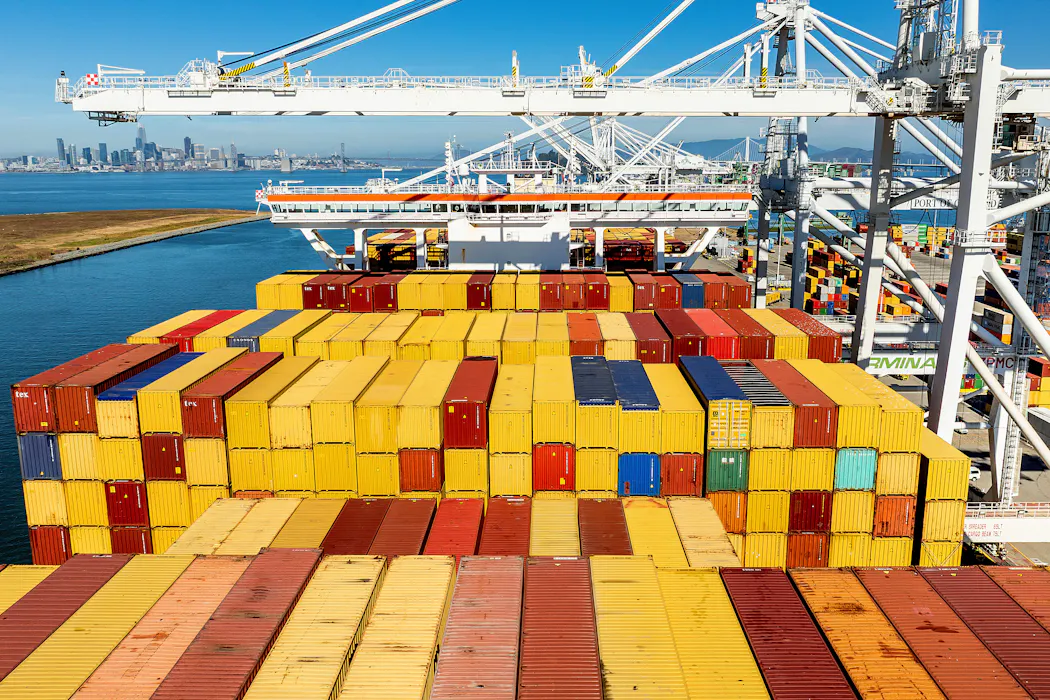
Along with about 20% of the world’s crude oil trade and a similar share of the world’s liquefied natural gas shipments, shipping traffic through the strait also carries roughly a third of internationally traded fertilizer, which is key to bountiful crops around the world.

Modern agriculture depends on precise timing of delivering nutrients to plants. When fertilizer arrives late or becomes too expensive to buy in sufficient quantities, farmers are left to either reduce the amount they use, plant fewer crops or switch to crops that need less fertilizer. Each option reduces overall productivity, cutting supplies of basic foods, feed for livestock and key ingredients used in a wide range of food products.

Ultimately, with corn prices rising, summer barbecues may taste a bit different or cost more. Corn on the cob may not be cheap, nor will corn-fed beef. In addition, many store-bought condiments, soft drinks and other food products are made with high-fructose corn syrup and will also cost more.

A man in a hoodie stands in a field, lifting his ballcap and scratching his head.
Farmers have hard decisions to make about what crops to plant and how much of each.
RJ Sangosti/MediaNews Group/The Denver Post via Getty Images

3 main crops, 3 nutrients needed

Three staple crops – corn, wheat and rice – supply more than half of the world’s dietary calories.

To maximize production, those crops need three main nutrients: nitrogen, phosphate and potassium. Nitrogen helps plants grow. Phosphorus helps transport energy within plant cells and is critical for early root growth and the formation of seeds and fruit. Potassium helps plants conserve water and boosts protein content.

The closure of the Strait of Hormuz has reduced the supply and increased the cost of all three.

Natural gas, which determines 70% to 90% of the cost of producing nitrogen fertilizer, has seen a 20% drop in production due to the war and price increases up to 70%. To preserve its own supplies, Russia has suspended exports of ammonium nitrate, another nitrogen source for fertilizer.

In a similar effort, China, the world’s largest phosphate producer, has blocked phosphate exports, removing 25% of the global supply.

Potash, the potassium-rich component of fertilizers, has also been in short supply in recent years, in part because of economic sanctions on Belarus and Russia, which are major potash producers.

As a consequence, fertilizer prices have risen globally. In the U.S., some fertilizers rose more than 40% in just one month after the war’s start in late February 2026.

An American farmer talks about the cost of fertilizer amid the war in Iran.

Affecting farmers first

Cereal plants absorb the vast majority of their nitrogen needs during their early growth. Applying fertilizer later in the growth cycle is less effective.

Reducing nitrogen application by 10% to 15%, or delaying application by two to four weeks, can reduce corn yields by 10% to 25%.

Producing less corn and wheat reduces not only food available for humans but also food for livestock. Increased fertilizer costs and reduced grain supplies increase the price of raising livestock, making meat and animal products more expensive.

When feed costs become unsustainable, farmers may be forced to kill or sell off the breeding cows and sows that represent the future of the food supply. In the U.S., a combination of persistent drought and high costs in 2022 forced producers to kill 13.3% of the national beef cow herd, the highest proportion ever. As a result, the U.S. beef cattle inventory shrank to its lowest level since 1962, a problem that restricts beef supplies for years.

Ultimately, the costs are passed to consumers. In 2012, when a historic Midwest drought slashed corn yields by 13%, it triggered a surge in feed prices, and U.S. poultry prices rose 20%.

Chickens eat feed from a trough.
The cost of feeding chickens contributes to the cost of their meat.
Edwin Remsberg/VWPics/Universal Images Group via Getty Images

More money can’t fix this problem

In mid-March 2026, the U.S. fertilizer supply was around 75% of normal levels. That’s right at the beginning of the time when Corn Belt farmers typically prepare their soil for planting, including the first applications of fertilizer. Subsequent fertilizer applications typically come from mid-April to early May and between late May and mid-June.

Farmers who fear not being able to optimize their corn yields may decide to plant less corn or switch crops and plant soybeans, which need less fertilizer. Either would reduce the corn supply.

Government loan guarantees and aid packages may help farmers cover higher costs, but they cannot address timing if enough fertilizer simply isn’t available when it is needed.

Hitting home

American consumers aren’t facing the gas and food shortages or power outages other countries are seeing from the war, but they will be hit in the pocketbook. U.S. prices for gas and jet fuel are already climbing. The effects on the food supply take longer to appear, but they are coming.

Even when crops are bountiful in the U.S., consumers are not immune to global economic forces. A smaller 2026 crop, with rising demand for livestock feed in some of the most populous countries, including China and India, will put pressure on global corn prices, affecting everyone regardless of their nationality.

In March 2026, the U.S. Department of Agriculture used data from before the Iran war to project a 3.1% average increase for all food prices.

The question for consumers is how much of the rise in corn prices will be passed to the consumer, and how fast.

USDA research shows that the speed and extent of changes in food prices vary widely by food category and the level of processing involved in making the food. Other factors also play a role, such as inventory levels, perishability and market competition. When farm prices change, wholesale prices usually adjust within the first month, but retail prices often take longer – sometimes two to four months.

Stacks of round tortillas sit in a plastic carrying crate.
Corn tortilla prices rise relatively quickly when corn prices increase.
Christina House/Los Angeles Times via Getty Images

Corn tortillas and other relatively lightly processed corn foods are more likely to show price responses within a few months after corn prices increase. Adjustments to cereals or poultry prices will take a little longer. Changes in the cost of livestock products such as beef will take longer, because there are more steps between the purchase of feed corn and the sale of the meat to consumers.

Other indirect costs, related to the cost of fuel and packaging, tend to hit later. Producers often absorb the price increases in the short term, but some increases are already in the works. For instance, transport companies are adding fuel surcharges on freight shipments.

Food price hikes hit low-income households harder than high-income households, because people with lower incomes spend larger shares of their money on food and housing. For these households, even relatively affordable proteins, such as chicken, may become harder to purchase regularly.

People in a field collect grain.
Farm workers in Sudan begin to harvest sorghum.
Tariq Ishaq Musa/Xinhua via Getty Images

A global food emergency

The cost and availability of fertilizer will affect the whole world. More than 300 million people worldwide already do not have enough food. The U.N. World Food Program predicts an additional 45 million could join them by the end of 2026 if the conflict in the Middle East continues into the middle of the year.

Crop yields in India and Brazil in 2026 are expected to be lower than normal. East African farmers
struggled to afford fertilizer even before the crisis and will likely have to make do with even less.

These problems may seem removed for most Americans, but food prices are global in nature, and people in the U.S. will soon face these additional costs of the war.

The Conversation

Aya S. Chacar does not work for, consult, own shares in or receive funding from any company or organization that would benefit from this article, and has disclosed no relevant affiliations beyond their academic appointment.

ref. Hormuz closure threatens the global food supply – why grocery price hikes are coming – https://theconversation.com/hormuz-closure-threatens-the-global-food-supply-why-grocery-price-hikes-are-coming-279899

Policing the grocery store checkout won’t fix Canada’s food retail crisis

Source: The Conversation – Canada – By Alissa Overend, Associate Professor, Department of Sociology, MacEwan University

Militarized surveillance systems are becoming the new normal in many Canadian grocery stores, marking a disturbing symptom of an already fraught food retail system.

At a FreshCo in Toronto and a Superstore in Calgary, staff have begun wearing body cameras in response to rising theft at self-checkouts, organized retail crime where high-value items such as meat are stolen and resold and increased food insecurity.

Surveillance systems in commercial retail are nothing new; cameras, mirrors and store design have long been used to deter shoplifting. But these newer, more militarized approaches seem both heavy-handed and misguided.

The new measures raise important questions about the camera’s effectiveness in theft detection, impacts on consumers and employees and freedom of information and privacy concerns.

Surveillance expands as theft rises

Despite the growing costs for employees and consumers, retailers say they are facing significant losses from retail crime, which the Retail Council of Canada has called a “national crisis.”

Retailers reported an average profit shrink of 1.5 per cent in 2024, which is almost double what it was in 2019. Grocers and retailers have both cited self-checkouts as a top contributor to this shrink.

Meanwhile, police-reported incidents of shoplifting are rising. Toronto police reported that 105 incidents of shoplifting goods over $5,000 occurred in 2024, up from just 32 in 2020. Winnipeg police reported a 46 per cent increase in retail theft in 2024 compared to the year prior.

In response, retailers are spending millions on police, security and other forms of surveillance. Superstore, for example, has spent more than $12 million in the last five years on special duty police officers to patrol checkouts. Walmart started using special duty officers in their Winnipeg stores in 2022, costing the U.S. conglomerate $1.4 million.

Persistent food insecurity

These developments cannot be separated from the fact that food insecurity in Canada is widespread and growing. About one-quarter of all Canadians find themselves food insecure, with disproportionately higher rates among Indigenous, Black, disabled, newcomer and senior populations.

This persists despite Canada having the ninth-largest global economy and despite the global food system producing more food now than at any time in history.

The problem is not a lack of food but a lack of affordable, equitable access to food. Food insecurity has been growing for decades, even as corporate food retailers report high profits.

At the same time, workers’ wages in the retail food sector remain stagnant. The industry relies heavily on migrant and immigrant labourers and routinely pays minimum wage. While the federal minimum wage was just raised to $18.15 per hour, it remains lower in some provinces, including $15 in Alberta.

For many workers, an hour’s wages barely covers the cost of a 10-ounce steak or its vegan equivalent. According to the Canada Food Price Report, Canadians are spending between three and five per cent more on groceries, with the highest increases seen in meat.

As fuel costs increase due to the U.S.-led invasion of Iran, grocery prices are likely to increase even more.

Rising profits for companies

Commercial food retail in Canada, and elsewhere around the world, is big business.

A handful of companies dominate the market. Loblaw Companies Ltd., whose parent company is led by CEO Galen Weston Jr., operates chains including Loblaws, Real Canadian Superstore, No Frills, Zehrs, T&T Supermarket and Shoppers Drug Mart. He was the third-wealthiest Canadian in 2025, with a net worth of $20.6 billion.

The company’s stock has more than tripled since the COVID-19 pandemic, with earnings up 11.6 per cent in 2025. This is despite paying out $500 million in a class-action settlement from a bread price-fixing scheme.


Read more:
Show me the money: Canada Bread penalty raises questions about criminal fines


The other “Big Five” food companies in Canada include Sobeys (that owns Safeway, IGA, FreshCo and Farm Boy), Metro (that owns Super C, Food Basics and Jean Coutu), Costco and Walmart. Together, the Big Five control roughly 80 per cent of the grocery market.

CTV news segment about the increase in retail workers wearing body cameras.

Rethinking food systems

The bottom line is that people are hungry and food is expensive. We’ve replaced human labour with automated self-checkouts. Misshapen vegetables are wasted at the farm due to strict grocery store specifications of shape and size.

Food is spoiled in transit or held up at borders. Grocery stores purposefully over-buy to give the sense of abundance in store aisles all while throwing a lot of it out.

The problem lies not in people ringing in organic bananas for the non-organic ones, but in the way we buy and sell food more broadly. Canadians are already fed up with the business-as-usual of large commercial retail grocery stores — perhaps the recent militarized surveillance might serve as a collective breaking point.

There are better alternatives: farmers’ markets, community supported agriculture and the mounting support for public grocery stores are all more sustainable on several social, ecological and economic markers.

Food should be a human right, not one protected by pricey surveillance systems to protect corporate profits. Our collective purchasing power can exercise the kinds of food systems we want, and the ones we can no longer tolerate.

The Conversation

Alissa Overend received funding from the Social Sciences and Humanities Research Council of Canada through a SSHRC Institutional Grant at MacEwan University.

ref. Policing the grocery store checkout won’t fix Canada’s food retail crisis – https://theconversation.com/policing-the-grocery-store-checkout-wont-fix-canadas-food-retail-crisis-279419

Understanding how plants pause and restart growth can help develop climate-resilient crops

Source: The Conversation – Canada – By Arif Ashraf, Assistant Professor, Department of Botany, University of British Columbia

When plants face biting cold, floods or parched soil, they can’t run away or seek shelter like animals. Instead, they have to develop ways to overcome and survive them until the weather improves.

Some plants do this by putting a pause on productivity until the weather improves. In our recently published research, we discovered which genes control the “pause-and-play” mechanism of plant growth and are key for the survival of Canada’s crops.

Our goal is to understand the genetic factors that control growth so they can eventually be used to improve the resilience of crops grown in Canada and around the world.

A changing climate means extreme weather events are becoming more frequent. These findings could help create climate-resilient, genetically engineered crops that can recover faster and more efficiently after climate shocks.

These plants might be more likely to complete their life cycle and produce food during the harvest season, even after experiencing snowstorms, heat waves or flooding.

How plants respond to stress

To get an idea of how plants tolerate stress, we measured root growth under a series of environmental stresses that Canadian and globally relevant crops commonly face throughout their life cycles. These included cold temperatures, salt stress and drought-like conditions. For our first experiments, we used thale cress (Arabidopsis thaliana).

a small green plant in a pot
A Brachypodium distachyon plant.
(Neil Harris/University of Alberta), CC BY-SA

Roots are particularly useful for this type of research because they grow continuously and respond quickly to environmental change.

By measuring root length over time, we could see when growth slowed down and when it resumed. We tested the root length in model organism.

We found that tested plants paused their root growth when exposed to cold or salt stress. When the stress was removed and the plants returned to normal growing conditions, root growth resumed as normal within about 24 hours.

However, plants did not respond the same way to every type of stress. We found that plants can recover from osmotic or drought stress, but it takes a little longer for them to do so. We referred to that dynamic as “pause and push” because plants need time to push through and recover.

To test whether the same stress response occurs in other plant species, we partnered with researchers from the United States Department of Agriculture. Together, we repeated the experiments using two wild grasses that are closely related to major cereal crops: brachypodium (Brachypodium distachyon) and annual ryegrass (Lolium multiflorum).

The grasses showed similar patterns of stress response and recovery. That suggests the mechanism that pauses and restarts growth may be shared across many plant species.

Pinpointing stress-recovery genes

Observing these dynamics is one thing, but how can scientists figure out what’s going on at the genetic and molecular level?

One common approach is to attach a fluorescent marker to genes of interest. Scientists often use a green fluorescent protein, originally discovered in jellyfish, that glows under specific light.

When this protein is inserted into a plant genome, researchers can fuse it to a gene of interest to see when and where that gene becomes active as it lights up inside cells.

We knew that the lack of growth during stress was due to a decrease in cell division, so we targeted genes related to cell division. Using fluorescent markers, we observed how the plant cells lit up differently in response to stress and stress recovery.

After counting thousands of cells for months, we could see certain genes were present in fewer cells when plants were under cold, drought and salt stress. However, within about 24 hours of being put back into optimal growth conditions, their numbers returned to normal.

One gene stood out in particular: Cyclin-dependent Kinase A;1 (CDKA;1). This gene helps regulate the cell cycle, the process that controls when cells divide and grow. A related gene named CDK1 exists in animals and humans, where it performs similar functions.

After performing more experiments targeting CDKA;1 in plants, we found that inhibiting the gene prevented plants from recovering from cold and salt stress. This suggests CDKA;1 plays a vital role in helping plants resume growth once environmental conditions stabilize.

Supporting food security

Our focus is on helping crops recover faster. We can’t stop heat waves or snowstorms. Pinpointing genes, however, can help plants recover from these events and still produce in time for harvest.

Understanding these genes opens the door to new approaches in crop breeding. Researchers could look for natural variants of these genes that already exist in crop populations. Traditional breeding programs could then select for varieties that recover faster after stress.

Another option is modern gene-editing tools such as CRISPR. This tool allows scientists to make precise changes to a plant’s DNA, including strengthening or adjusting genes involved in stress recovery.

As our research progresses, we hope to adjust the genetics of these Canadian crop varieties and create our own CRISPR-edited lines that are better able to cope with a changing climate.

Improving stress recovery could also expand where crops can be grown. Regions that currently experience unpredictable weather or short growing seasons may become more suitable for agriculture if crops can recover quickly after stress.

For Canada, this could help stabilize production in areas where climate variability is increasing. For the global food system, it could make crops better equipped to handle the environmental uncertainty expected in the coming decades.

By identifying the genes that allow plants to pause growth during stress and restart, we’re beginning to understand a critical survival strategy in plants. This knowledge can eventually help ensure crops continue to produce reliable harvests in a changing climate.

The Conversation

The authors do not work for, consult, own shares in or receive funding from any company or organisation that would benefit from this article, and have disclosed no relevant affiliations beyond their academic appointment.

ref. Understanding how plants pause and restart growth can help develop climate-resilient crops – https://theconversation.com/understanding-how-plants-pause-and-restart-growth-can-help-develop-climate-resilient-crops-278392