Hacked phones and Wi-Fi surveillance have replaced Cold War spies and radio waves in the delusions of people with schizophrenia

Source: The Conversation – USA – By Alaina Vandervoort Burns, Assistant Clinical Professor of Psychiatry and Biobehavioral Sciences, University of California, Los Angeles
Everyday tech of modern life can take on sinister dimensions for people with thought disorders. Busà Photography/Moment via Getty Images

A young woman starts to become suspicious of her cellphone. She notices it listing Wi-Fi networks she does not recognize, and the photos on her contact cards seem to mysteriously change at random times. One day she tries to make a call and just hears static on the line. She begins to think that someone – or an entire organization – has hacked her phone or placed spyware in it, and she wonders what crime she is being framed for.

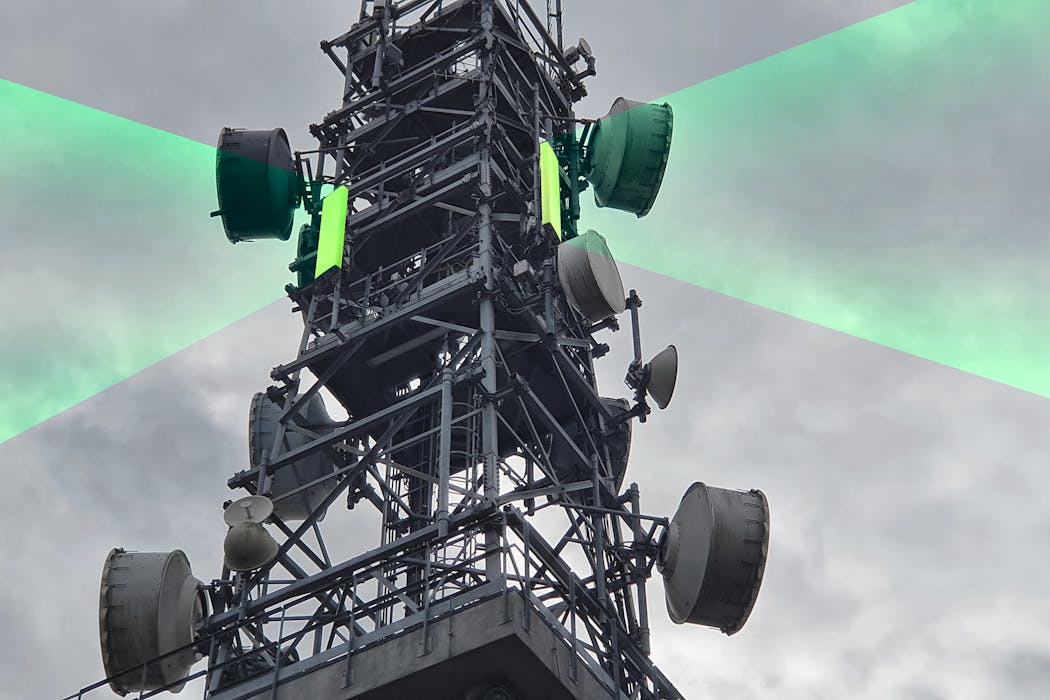
Built-in laptop webcams, unfamiliar Wi-Fi networks, targeted ads on search engines and personalized algorithms on social media sites: Most people have come to accept and ignore the quirks and drawbacks of daily contact with the internet and devices such as cellphones and computers. But for people with severe mental illness, new technologies are fertile ground for the start of false ideas that can lead eventually to a break with reality.

Psychiatrists like me help people who are bothered by their thoughts, behaviors or emotional states. For the past 10 years I’ve been working closely with people who have schizophrenia.

Schizophrenia, sometimes referred to as a type of thought disorder, is a chronic condition in which alterations in brain function change the way one perceives the world. People with schizophrenia can become hyperaware of their surroundings, often interpreting things they see or hear as being hostile and directed toward them even when there’s no real danger.

Over time, people with schizophrenia can develop delusions: beliefs that are fully held even though they are not based in reality and even when there is evidence to the contrary.

With technology and the internet now such an integral part of daily life, it’s no wonder that people with schizophrenia have incorporated new technologies into their delusional beliefs. In my recent research, my colleagues and I set out to explore the ways modern tech influences the content of delusions for people today.

Old delusional themes expressed in new ways

Most delusions are persecutory, meaning a person believes they are being watched, followed or monitored. Other delusional forms involve the belief that a person has special powers, is being controlled by outside forces, or that a spouse is unfaithful even when they are not.

Prior research has shown that these themes are consistent among people with schizophrenia, but the sociopolitical context in which a person lives shapes the form in which they are expressed.

For example, Americans living during World War II developed persecutory delusions involving Germans, while those living during the Cold War focused on communists. People with thought disorders have incorporated important events such as the fall of the Berlin Wall and the O.J. Simpson trial into delusional frameworks.

Surveillance camera with red lens glowing in the dark.
New technologies offer new raw material for persecutory delusions to work with.
hernan4429/iStock via Getty Images Plus

The past three decades have seen incredible strides in technological advances and easy access to the internet. How have these old themes become repackaged and expressed in the digital age?

For this research, my colleagues and I reviewed medical records of 228 people with thought disorders who participated in a specialized day treatment program between 2016 and 2024.

We identified any mention of delusional thought content and examined the ways in which these beliefs incorporated new technology. We also analyzed the data to see whether certain people were more likely to express delusions tied to technology, or if there was a change in the frequency of these delusions over time.

Delusions of persecution via common tech

Over half of our study’s participants mentioned new technology or the internet when describing delusional beliefs. Most commonly, people felt they were being persecuted via their electronics – that their Wi-Fi networks, computers or cellphones had been hacked or implanted with tracking devices. One person reported believing that neighbors had access to their Wi-Fi network and were monitoring their activities, while another worried that family members had put tracking devices on their phone.

About a quarter of participants reported delusional beliefs surrounding social media. For example, people believed that celebrities were communicating with them directly through social media posts, that they were receiving encoded messages through suggested playlists, or that social media algorithms were linked directly to their thoughts.

Some participants felt they were being monitored through hidden cameras or microphones implanted in their homes or even in their bodies. Several reported what’s known as the “Truman Show delusion” – the belief that their lives are staged and recorded, their daily activities broadcast as a reality TV show.

hand holds phone with emojis, hearts, likes etc rising in a cloud around it
The universe of social media figured in a number of delusions.
d3sign/Moment via Getty Images

With each passing year of the 21st century, we found participants were significantly more likely to express delusions connected to technology.

Stretching the bounds of past realities

Our study confirms that common delusional themes, such as persecution, have become repackaged for the digital age. Interestingly, people often described fears that were based on misunderstanding how technology works – or fails to work. A Wi-Fi router that needed to be reset, a familiar app with a new logo, and text messages that disappeared over time were all cause for suspicion.

The issue that has become hardest for me to grapple with as a psychiatrist is how any of us can distinguish delusional beliefs from reality, given things we never could have imagined would be possible just 10 years ago are now commonplace. Although social media algorithms are not currently linked to our thoughts, is it such a stretch to imagine that in a few short years they may be?

Given recent advances in AI, our collective perception of reality is likely to be further distorted in the years to come. We will all need to find ways to anchor ourselves in a common truth and determine what’s real – and what isn’t.

The Conversation

Alaina Vandervoort Burns does not work for, consult, own shares in or receive funding from any company or organization that would benefit from this article, and has disclosed no relevant affiliations beyond their academic appointment.

ref. Hacked phones and Wi-Fi surveillance have replaced Cold War spies and radio waves in the delusions of people with schizophrenia – https://theconversation.com/hacked-phones-and-wi-fi-surveillance-have-replaced-cold-war-spies-and-radio-waves-in-the-delusions-of-people-with-schizophrenia-271620

Trump’s second term is reshaping US science with unprecedented cuts and destabilizing policy changes

Source: The Conversation – USA – By Kenneth M. Evans, Fellow in Science, Technology, and Innovation Policy, Baker Institute for Public Policy, Rice University

Before 2025, science policy rarely made headline news. Through decades of changing political winds, financial crises and global conflicts, funding for U.S. research and innovation has remained remarkably stable, reflecting the American public’s strong support for investing in basic science.

In his first year back in office, President Donald Trump’s relentless attempts to overhaul the federal support system for research and development has put science policy back above the fold.

As a policy scholar, I study how American presidents treat science and technology. Trump is far from the first president to be deeply skeptical of the academic research community. But his second-term actions have set a new precedent for the level of mutual distrust and its consequences for scientists.

Unlike Trump’s first term, which lacked a coherent science policy beyond its attempted across-the-board cuts to federal research agencies, his current administration has used science policy as a vehicle for its ideological goals. Policy levers historically used to drive science in the national interest have instead been repurposed to punish universities, limit freedom of inquiry and promote private sector interests.

Given science and technology’s critical importance to the nation’s economic growth, industrial competitiveness and national security, it’s worth taking a look back at science policy in 2025, a year of unprecedented reform – and resilience.

Science gets a voice

The conservative Heritage Foundation’s Project 2025, which provided much of the blueprint for Trump’s second term, recommended the president “increase the prominence” of the director of the White House Office of Science and Technology Policy. To that end, then-President-elect Trump named Michael Kratsios as Office of Science and Technology Policy director and his chief scientific adviser weeks before taking office, tasking him with “(blazing) a trail to the next frontiers of science.”

Michael Kratsios stands behind Trump, seated and holding up a signed document
As head of the White House Office of Science and Technology Policy, Michael Kratsios’ role is to advise President Trump on science-related matters.
Roy Rochlin/Hill & Valley Forum via Getty Images

Kratsios, a high-ranking alum of the first Trump administration and protégé of billionaire tech investor Peter Thiel, shares Trump’s skepticism of universities. His tenure in the White House has so far been marked by highlighting the failures of the U.S. science policy system rather than its successes. For Kratsios, American science is suffering from an outdated and morally corrupt incentive system too reliant on research universities.

Kratsios arrived at the White House with a clear vision for redesigning America’s 80-year-old social compact for science in line with Trump’s political agenda. In under a year, he helped push through four major science policy reforms.

Gold Standard Science” recommits the U.S. to scientific integrity and adds political oversight into agency operations.

Another sweeping executive order works to centralize federal grantmaking and align research activities with presidential priorities.

The White House AI Action Plan supports AI upskilling and reskilling workforce programs and catalyzes private sector innovation through deregulation.

And Project Genesis, branded as a successor to the Manhattan Project and Apollo program, leverages public datasets and the computing infrastructure of the Department of Energy’s national labs to advance AI for science.

Taken together, Trump’s second-term science policy reflects several emerging trends in U.S. research policy: the public’s growing distrust of higher education, the private sector’s accelerating investment in fundamental research, and the government’s increasing appetite for state interventions to increase scientific and industrial competitiveness.

A broken partnership

Science has always been a system of patronage. Since the end of World War II, the U.S. government has served as the primary patron of fundamental research at American universities.

The year 2025 has laid bare the fragility of this setup, where research universities sit at the center of the U.S. innovation system. The Trump administration spent the year inventing and deploying new strategies to pause, terminate and severely curtail grants to academic institutions, testing the limits of executive authority over budget decisions.

hands hold up cardboard sign 'DOGE HANDS OFF US GOVT' in front of NIH building
Demonstrators protested funding cuts at NIH in May.
Kayla Bartkowski/Getty Images

The chaos of canceled awards, court challenges and reinstatements prompted NSF and NIH to get creative. Rushing to spend their appropriations before the end of the fiscal year on Oct. 1, they distributed over 20% fewer grants but paid out more money up front to multiyear awards – a fundamental change to how agencies have spent money.

In parallel, Trump proposed massive spending cuts to federal research agencies as part of his administration’s stated effort to dismantle the administrative state.

A budget impasse between the White House and House Democrats over certain Medicaid expansion subsidies led to a historic 43-day government shutdown. To end the shutdown, Congress opted to punt its final budget for this fiscal year to the end of January 2026 through what’s known as a continuing resolution. The stopgap law keeps budget levels unchanged from the prior year but makes it nearly impossible for agencies to plan for the following year.

Trump’s outright attacks on higher education aren’t the only source of uncertainty about next year’s science budget. The White House’s push to cap overhead costs at 15% and the university endowment tax passed this past summer in what the GOP calls the “One Big Beautiful Bill” have universities scrambling to balance the books.

Students caught in the crossfire

For many students and early-career scientists, the Trump administration’s actions toward higher education pose an existential threat to their research careers in the United States. As universities tighten their belts, they’re significantly reducing available spots in Ph.D. programs.

back of a graduating crowd with 'PROTECT INTERNATIONAL STUDENTS' on top of mortarboard
Students at Harvard, one of Trump’s biggest targets for reform, responded to policies that affected international students.
Selcuk Acar/Anadolu via Getty Images

Trump’s immigration policies and anti-DEI actions have further jeopardized the career viability of international students and scholars and students from minority or historically marginalized groups. A battery of executive orders, immigration reforms and enforcement have upended the lives of thousands of young scientists. International student enrollment in U.S. colleges and universities dropped by an estimated 17% this fall.

The effects of these actions extend far beyond the elite universities targeted by Department of Justice investigations, undermining American soft power and placing a generation of future U.S.-based scientists at risk.

The ghost of DOGE lingers

The early days of Trump’s second term will likely be remembered for Elon Musk’s outsize influence inside the White House and the launch of the Department of Government Efficiency. DOGE was tasked with reigning in the federal bureaucracy and rooting out alleged “billions and billions in fraud, waste and abuse.”

For science, DOGE’s cost-cutting crusade meant hollowing out agency expertise, ripping up contracts and searching for keywords from Sen. Ted Cruz’s list of woke science topics, such as climate change, DEI, misinformation or even “women,” in grant applications to terminate.

In practice, DOGE made little measurable progress toward Musk’s target of $1 trillion in reduced spending. Instead, DOGE closed shop in November 2025, eight months before its charter was set to expire.

DOGE’s well-publicized flop masks its less visible but more pernicious legacy: Instead of disappearing, it has been institutionalized. Trump’s budget director, Russell Vought, who spent 2025 taking aim at the federal workforce, is leveraging DOGE’s network to continue its core mission. Through forced relocations, layoffs, a deferred resignation program and the legal gray area of the shutdown, Vought is pushing science-mission agencies to reform their grant review processes and align new grants with Trump’s priorities.

By the start of December 2025, over 200,000 civil servants had left the federal workforce, including nearly 5,000 from NASA, 600 from NSF and at least 14,000 from the Department of Health and Human Services, the parent department of NIH.

The politics of science advice

In the 80 years following Vannevar Bush’s 1945 report to President Harry Truman, Science, the Endless Frontier, scientists have found themselves outside the president’s inner circle more than inside it. Even Bush, despite his legendary stature in science policy then and now, left the White House just two years later, frustrated by Truman’s unwillingness to take his advice.

With only occasional exceptions, when the interests of the president and the scientific community aligned, science advisers have rarely captured the attention of presidents in the decades since.

Kratsios seems to have Trump’s ear. The future of U.S. science rests not on whether government-sponsored research will survive the next three years. Instead, it rides on U.S. higher ed’s ability to regain the trust of the American public – and the White House.

The Conversation

Kenneth Evans receives funding from the National Science Foundation, the American Institute of Physics, and the Clinton Foundation. He is affiliated with Rice University’s Baker Institute for Public Policy

ref. Trump’s second term is reshaping US science with unprecedented cuts and destabilizing policy changes – https://theconversation.com/trumps-second-term-is-reshaping-us-science-with-unprecedented-cuts-and-destabilizing-policy-changes-271079

Is democracy the worst form of government – apart from all the others? We asked 5 experts

Source: The Conversation – Global Perspectives – By James Ley, Deputy Books + Ideas Editor, The Conversation

Claims that democracy is in crisis are certainly not new, but recent history has given the claim a new urgency. Over the past decade or so, there has been no shortage of people expressing concern that democratic institutions are under strain.

Recent studies have indeed shown declining levels of trust in democratic systems around the world. The trend is evident in the United States, Japan, the United Kingdom and New Zealand. In Australia, too, a recent study found that trust in politics was at record lows.

We asked 5 experts to reflect on the strengths and weaknesses of democratic governance, taking as their prompt Winston Churchill’s famously backhanded observation that “democracy is the worst form of government, apart from all the others that have been tried”.


Adele Webb

“No one pretends that democracy is perfect or all-wise,” Churchill told the House of Commons in 1947, before delivering his famous line.

Democracy is not meant to rest on blind faith. It makes room for wariness, disappointment and ambivalence. Once we accept its built-in flaws and its tendency to decay from within, a lot of the anxious commentary about “eroding public trust” starts to look misplaced.

For a start, people are mostly losing trust in the governments of the day, not in democracy itself – 95% of Australians say living in a democracy is important to them. And a certain level of scepticism toward whoever currently holds temporary power is not a crisis; it’s a safeguard.

That kind of circumspection is what a living democracy depends on. Slowing down and asking how our democratic institutions are working in practice can put real limits on those who currently benefit from the status quo.

If sceptical or mistrusting citizens are not democracy’s transgressors, but its canaries in the coal mine – warning us that current democratic institutions need recalibrating – the real question is how well are we listening to the dissatisfied.

Those who benefit from the current rules have weak incentives to acknowledge the flaws, let alone rewrite them.

Adele Webb is research fellow, democracy and citizen engagement, at the Centre for Deliberative Democracy, University of Canberra.


Russell Blackford

In today’s world, democracy refers to a system of representative government with free, fair and relatively frequent elections. The particular institutions and the rationales for them vary greatly, but the essential criterion for a country to count as a genuine democracy is that it holds elections with realistic opportunities to remove unpopular governments through a non-violent process.

Where democratic institutions are in place, they provide a strong incentive for the incumbent government to avoid being seen as corrupt, tyrannical or simply incompetent. In practice, this should encourage governments to make efforts to avoid corruption and govern effectively in the common interest of the people. It isn’t foolproof, but it does give democracy one huge advantage over other systems.

Alas, democracy is fragile and it’s almost miraculous that it ever survives. The government of the day is expected to take a psychologically unnatural attitude to its opponents.

It has to maintain, firstly, that it is objectively better at governing than its opponents, whom it is justified in criticising without mercy. But then it must accept that, if it should lose an election, it will graciously hand over control of the treasury, the military, and all the agencies and powers of the state to those same opponents.

I suspect that the conditions in which this attitude seems rational and commendable are very rare, and that they are all too easy to erode. We ought to give them more thought if we really care about preserving democracy.

Russell Blackford is conjoint senior lecturer in philosophy at the University of Newcastle


Jill Sheppard

When Churchill spoke of democracy he spoke of a particular form: representative democracy. Political scientists and philosophers will take pains to tell you there are many forms of democracy: deliberation until we reach something close to consensus; random selection of citizens to decide laws; regular plebiscites to approve or veto policies.

None of them are perfect, but elections – even when they feel tedious and produce frustrating results – strike the best compromise.

Supporting democracy means supporting the idea that citizens will have some degree of oversight of the people making laws on their behalf. But oversight takes time and effort. As a citizen, I don’t want to have to learn about and vote on every act before the parliament. I also don’t want to be randomly recruited to deliberate on complex policies. I want to spend time with my family, my pets, on my hobbies and my job.

Sending representatives to Canberra to negotiate laws on our behalf and holding them to account every three years is a good deal for citizens. Do political parties work to undermine this accountability? Absolutely. Are the candidates we are offered the best available? Absolutely not. But this form of democracy hits the sweet spot of accountability and everyday life.

Jill Sheppard is senior lecturer in politics and international relations, Australian National University


Matthew Sharpe

Winston Churchill’s record dealing with colonised people merits review, but there are many reasons to support his claim about democracy.

Democracy is, above all, a system enshrining the accountability of leaders to the people who are affected by their decisions. The accountability is embodied principally in elections for public office, in which leaders who have failed their constituents can be thrown out.

When the democratic franchise extends to all adults, it is the system most true to the basic fact – long denied or obscured in history – that all adult men and women are capable of thinking for themselves. People have an intrinsic dignity which means they can and should have a say in decisions which affect their lives.

All other political systems hold that there are morally salient distinctions between people which mean entire classes, races or genders should have no say in how they are governed, nor means (short of revolution) to overthrow bad governments. Democracy is thus the least worst system in a stronger sense than Churchill granted.

That said, other political systems are easier to sustain. Democracies, over time, stand or fall on their ability to foster a public that is engaged, materially secure and educated enough to decide wisely. For this reason, democracy requires an independent media, willing and supported to fearlessly hold the feet of the powers of money and government to the fires of critical publicity.

There is a need for ongoing critical vigilance, so that the media and public offices remain free from capture by interested lobbies who support policies which so disadvantage so many ordinary people as to make law and governance, in all but name, their own exclusive prerogative.

Matthew Sharpe is associate professor in philosophy, Australian Catholic University

Jean-Paul Gagnon

Churchill’s father was an aristocrat and “meteoric conservative”. His mother was the daughter of a wealthy New York financier. He attended a private all-boys school called Harrow – today its annual fees are £63,735.

Its mottos – Stet fortuna domus (May the fortune of the House stand) and Donorum dei dispensatio fidelis (The faithful dispensation of the gifts of God) – put family (think war-won crests and land that can be inherited) and the Anglican Christian God at the forefront.

I offer this brief genealogy to ask one question: why should we care about a quip by an elite man during a sitting of the UK Parliament in 1947? Especially one who surely understood democracy to mean the mid-20th century’s inheritance of Edward Longshanks’ model parliament, founded in 1295?

This was very same Edward Longshanks who colonised Wales and began the colonisation of Scotland. Churchill himself thought well of the two-and-a-half years or so he spent with the 4th Hussars in British occupied India.

So what did Churchill know of democracy? Not much. He knew of a bicameral system held hostage by a duopoly of major parties that was overseen by hereditary peers and lords. In his career, he was surrounded almost entirely by white men of means, who were elected to parliament in a medieval plurality system that permitted voting by men and women of at least 21 years of age.

Maybe he recognised this. If he did, he would have still been right to say democracy is bad, but better than all other known non or less democratic options.

Today we know there are many other ways of being democratic and developing our respective democracies.

Jean-Paul Gagnon is senior lecturer in democracy studies, University of Canberra

The Conversation

ref. Is democracy the worst form of government – apart from all the others? We asked 5 experts – https://theconversation.com/is-democracy-the-worst-form-of-government-apart-from-all-the-others-we-asked-5-experts-271293

Who really photographed Napalm Girl? The famous war photo is now contested history

Source: The Conversation – Global Perspectives – By Kate Cantrell, Senior Lecturer, Writing, Editing and Publishing, University of Southern Queensland

The Terror of War, commonly known as “Napalm Girl”, is one of the most enduring and influential images of the 20th century.

Captured on June 8 1972, the photograph shows nine-year-old Kim Phúc running naked toward a camera. She has her arms outstretched, and is flanked by other children screaming in terror after a napalm strike on their village during the Vietnam War.

For five decades, the photo has been credited to Nick Út, a then 21-year old Vietnamese photographer working for the Associated Press (AP) in Saigon.

The image earned Út the Pulitzer Prize and World Press Photo of the Year in 1973, and the National Medal of Arts (America’s highest honour for artists) in 2021.

His account of the moment – how he photographed Phúc, then rushed her to hospital to save her life – has become inseparable from the photo’s legacy. But a new documentary calls this narrative into question.

Recently released on Netflix, The Stringer is directed by Bao Nguyen and narrated by photojournalist Gary Knight. It claims the iconic image was actually taken by a local freelance photographer – a “stringer” – paid just US$20 by the AP and given a print of the photo, before his contribution was erased from history.

If true, Napalm Girl becomes not only a damning indictment of war’s brutality, but also of the systematic exploitation of non-Western journalists by Western media organisations – a pattern that persists today.

The first media war

The Vietnam War, dubbed the living room war, was the first conflict fought in the global media spotlight.

While reporters were embedded in military units during the World Wars, the horrors of those conflicts remained carefully curated – limited by the technological constraints of monochrome print and government censorship.

By the late 1960s, everything had changed. War’s violence arrived in full colour, broadcast on the evening news and splashed across the pages of magazines. America’s failure in Vietnam was increasingly apparent. And media coverage of the 1968 Mai Lai massacre turned the tide of public opinion, intensifying the anti-war movement.

By 1972, the writing was on the wall. Australian troops withdrew following massive protests during the 1970 moratoriums.

In the United States, anti-war sentiment reached fever pitch. The publication of an image showing a young Vietnamese girl naked and severely burned as she fled a misdirected attack by South Vietnamese forces only accelerated the inevitable.

A theatre of conflict

The Stringer is a kind of detective story that hinges largely on testimony from Carl Robinson, the AP’s photo editor in Vietnam at the time the photo was taken.

Now in his eighties, Robinson claims once the photo was developed, AP’s Saigon bureau chief Horst Faas ordered the credit be changed to Nick Út instead of the actual freelance photographer, Nguyễn Thành Nghệ, ensuring the image remained AP property.

The filmmakers build their case methodically through archival footage and witness accounts, including an interview with the stringer.

Perhaps the most compelling evidence emerges at the film’s climax, when French independent forensic-investigation company, Index, presents a visual-spatial timeline of the day’s events using aerial photographs, video recording and satellite imagery.

Through 3D modelling, the investigators propose Út was not in the right position to take the photo. In fact, 15 seconds after the photo was taken, Út was standing 250 feet away.

To have taken the shot, he would have needed to sprint about 75 metres in seconds, while somehow remaining outside the frame of another camera crew filming the scene.

Index concludes Út’s authorship is “highly unlikely” and editorially “doesn’t really make sense”, since Út, if he had taken the photograph, would have then moved away from the action rather than toward it.

The stringer too is unequivocal:

Nick Út came with me on that assignment, but he didn’t take that photo […] That photo was mine.

Út declined to be interviewed for the film. In a statement posted to Facebook, he called the accusation “a slap in the face”.

The fallout

Following The Stringer’s premiere at Sundance in January this year, both World Press Photo and the AP launched investigations into the documentary’s claims.

In May, World Press Photo suspended the attribution of authorship to Út, concluding that “based on analysis of location, distance, and the camera used on that day, photographers Nguyễn Thành Nghệ or Huỳnh Công Phúc may have been better positioned to take the photograph than Nick Út”.

The statement went on:

Importantly, the photograph itself remains undisputed, and the award for this significant photo […] remains a fact. Only the authorship is suspended and under review. This remains contested history, and it is possible that the author of the photograph will never be fully confirmed.

At the same time, the AP published a 97-page report concluding there is no definitive evidence Út did not take the photo, and therefore retained the attribution to him.

In the same report, however, the AP conceded its internal investigation raised “unanswered questions”, and that it “remains open to the possibility” Út did not take the photo.

The image remains available from the AP under Út’s byline. But World Press Photo now lists the photograph’s author as “indeterminate/unknown”.

Attribution in the AI age

Questions of authorship and attribution have taken on new urgency in a world of generative AI, where fabricated images, text and video are virtually indistinguishable from human-made work.

Despite huge technological advances since the 1970s, the underpinning systems remain unchanged: large corporations still appropriate the work of the less powerful without attribution or compensation.

The filmmakers claim “this was something that happened to Nick” as well, and that he had no agency in the AP’s reported decision to change the photo credit. The documentary concludes:

What we accept as the official record is often shaped more by power than perspective […] even the most entrenched histories deserve to be reexamined.

The Conversation

The authors do not work for, consult, own shares in or receive funding from any company or organisation that would benefit from this article, and have disclosed no relevant affiliations beyond their academic appointment.

ref. Who really photographed Napalm Girl? The famous war photo is now contested history – https://theconversation.com/who-really-photographed-napalm-girl-the-famous-war-photo-is-now-contested-history-267440

The #iwasfifteen hashtag and ongoing Epstein coverage show how traffickers exploit the vulnerabilities of teens and tweens

Source: The Conversation – USA (3) – By Anne P. DePrince, Professor of Psychology, University of Denver

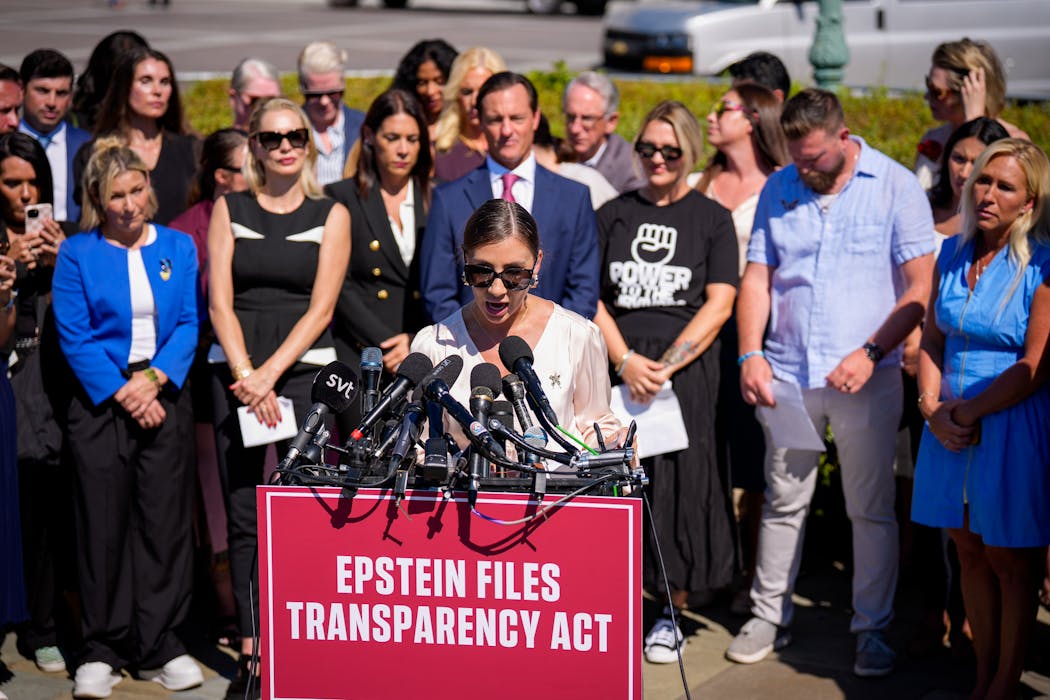
Marina Lacerda was among the alleged victims of convicted sex trafficker Jeffrey Epstein who spoke at a news conference outside the U.S. Capitol on Sept. 3, 2025. Andrew Harnik/Getty Images News

The release of information about the powerful cadre of men associated with convicted sex offender and accused sex trafficker Jeffrey Epstein – known as the Epstein files – has been a long time coming.

Under the Epstein Files Transparency Act, which President Donald Trump signed into law in November 2025, the Justice Department must release its documents related to Epstein by Dec. 19, 2025.

But information has been trickling out for months, including more than 20,000 of Epstein’s emails released by members of Congress in November.

In the firestorm of reactions that followed, conservative media figure Megyn Kelly made comments that minimized the victimization of teenagers.

In response to her remarks, a new hashtag, #iwasfifteen, went viral, as celebrities and others took to social media to share photos of themselves as teenagers.

I’m a clinical psychologist who studies intimate violence – from child abuse to domestic violence and sexual assault. After more than two decades in this field, I wasn’t surprised to hear someone minimize the abuse of adolescents. My research and the work of other researchers across the country have shown that victims who disclose their abuse are often met with disbelief and blame.

What did surprise me was how the viral #iwasfifteen hashtag shed light on the dynamics of abuse, pointing to the vulnerabilities that traffickers exploit and the harms they cause.

Abusive tactics in sex trafficking of minors

Unlike stereotypes of teens being kidnapped out of parking lots, people who traffic minors use a range of tactics and build relationships with the teens and tweens they’re targeting. Getting young people to trust and depend on the traffickers is part of entrapping them.

One in-depth 2014 analysis revealed these strategies in action. Researchers looked at more than 40 social service case files of minors who were trafficked and interviewed social service workers.

The researchers found it was common for traffickers to use flattery or romance to entrap adolescents. Some built trust with the teens by helping them out of difficult situations. Meanwhile, the traffickers normalized sex and prostitution as they isolated their victims from their friends and family – all of which echoes the grooming described by victims of Epstein and his accomplice Ghislaine Maxwell.

The research also showed that traffickers kept tight control over the teens, using economic and emotional manipulation. They took their money, blackmailed and shamed them, and threatened harm if they were to leave. As in the Epstein case, many traffickers compelled victims to take part in the trafficking itself, such as by recruiting their friends.

The same kinds of manipulation show up in other studies nationally. A 2019 study found that across more than 1,400 cases, a third of traffickers used threats and psychological coercion to control victims.

Another research team looked across 23 studies of minors who were sex trafficked in the United States and Canada. They found that the youth, who were mostly girls, were entrapped by traffickers who pretended to love or care for them, only to manipulate and abuse them.

The tactics identified by researchers and the reports of how Epstein trapped victims on his island reveal that all the strategies used by traffickers have one thing in common: They create ever more dependence of the victim on the trafficker.

Dependence and betrayal

Adolescence is a time of rapid change – change that traffickers exploit. From the tween through the teen years, young people are forming their identities and learning about romantic relationships, all while their brains are still developing.

During this period of rapid change, they are starting to differentiate and seek autonomy. Yet they remain dependent on the adults in their lives for everything from their psychological needs, such as love, to basic physical needs, such as food and housing.

When victims of trafficking depend – financially, psychologically or physically – on the very person abusing them, it’s a betrayal trauma. In these scenarios, victims depend on the abuser, so they cannot simply leave the situation. Instead, they have to adapt psychologically.

One way to adapt is to minimize awareness of the abuse – or what psychologists call betrayal blindness. In the short term, minimizing awareness of the abuse helps the victim endure the abuse. This could be the difference between life and death for a victim whose abuser might harm them if they try to leave or report the abuse – or for a teen who doesn’t have anywhere else to turn for basic survival.

In the long term, though, betrayal traumas are linked with a host of harms that may affect how victims see themselves and the world around them. Compared with other kinds of traumas, betrayal traumas are linked to more severe psychological and physical health problems.

Betrayal trauma often leads to shame, self-blame and fear and can leave survivors alienated from and distrusting of others. Survivors may also be less likely to disclose abuse perpetrated by someone they trusted. They may even have difficulty remembering what happened to them, which can worsen self-doubt and self-blame.

Making sense of the far-reaching impacts of betrayal trauma can be difficult for survivors – and others who hear their stories later.

projected image of a woman holding a photo of her younger self. Text underneath reads, 'I was 16 when I met Epstein.'
Images of alleged Epstein survivors holding photographs of their teenage selves were projected onto the FBI building in Washington, D.C., on Nov. 17, 2025.
Tasos Katopodis/Getty Images Entertainment via Getty Images

Myths and public opinion of victims

When sex traffickers target minors, they use strategies that give others reason to doubt victims. Most people are regularly exposed to misinformation about sexual violence and trafficking through popular media, and that misinformation plays in the perpetrators’ favor.

Researchers started documenting myths about intimate violence decades ago. Since then, research shows that erroneous views of rape, child abuse and sex trafficking persist in media – with consequences for victims.

These myths and misconceptions often seep into the conversation unnoticed, such as when even well-intentioned reporting refers to the girls trafficked by Epstein as “underaged women.” But calling tweens and teens “women” minimizes the age difference with the perpetrators. It also masks the vulnerability of children and adolescents who were victimized by adults.

Myths can include beliefs that intimate violence is rare and always physically violent, and that victims all respond the same way. Myths also tend to minimize the perpetrator’s role while shifting blame to victims for what was done to them, particularly if victims had mental health problems or used substances.

Changing the conversation

With so many myths out there, #iwasfifteen showed one way to change the usual conversation from blaming victims to exposing the ways that abusers exploit tweens and teens. Meeting myths about sex trafficking with research is crucial to putting responsibility where it belongs, on those who traffic youth and perpetrate abuse.

Research shows that the more people buy into myths, the more likely they are to blame victims or not believe them in the first place, including in sex trafficking.

And it’s not only the unsuspecting public that falls for this misinformation. When victims don’t conform to common myths, even law enforcement officers, who are trained to investigate intimate violence, are less likely to believe them.

In this way, the psychological consequences of betrayal trauma – from minimizing the abuse to psychological distress – can feed into myths that people have about intimate violence. Suddenly, it’s easier for friends, family, juries and others to blame victims or not believe them at all.

And, of course, that’s what perpetrators have often told victims all along: No one will believe you. It’s not surprising, then, that victims may take years to come forward, if ever.

The Conversation

Anne P. DePrince has received funding from the Department of Justice, National Institutes of Health, State of Colorado, and University of Denver. She has received honoraria for giving presentations and has been paid as a consultant. She has a book with Oxford University Press. She is an Advisory Group Member of the National Crime Victim Law Institute and a Senior Advisor to the Center for Institutional Courage.

ref. The #iwasfifteen hashtag and ongoing Epstein coverage show how traffickers exploit the vulnerabilities of teens and tweens – https://theconversation.com/the-iwasfifteen-hashtag-and-ongoing-epstein-coverage-show-how-traffickers-exploit-the-vulnerabilities-of-teens-and-tweens-270349

The Housemaid: this dark, sexy thriller is a seriously satisfying watch

Source: The Conversation – UK – By Harriet Fletcher, Lecturer in Media and Communication, Anglia Ruskin University

Based on the bestselling novel by Freida McFadden, The Housemaid is a dark, sexy and satisfying thriller with plenty of twists to enjoy along the way.

Millie (Sydney Sweeney) applies for a job as a housemaid for the wealthy Winchester family. We first meet her as she pulls up to the grand Winchester house in her run-down car – a gated mansion with echoes of the sinister and mysterious Manderley in Hitchcock’s Rebecca. What secrets might be contained behind these gates? Millie is about to find out.

She is interviewed by Nina Winchester (Amanda Seyfried), an eccentric and over-familiar housewife who is so taken with Millie that she immediately offers her the job on a live-in basis. An alarmingly artificial family portrait looms large in this early scene, suggesting that the Waspy Winchesters are more artist’s impression than reality.

Millie is given a bedroom in the attic – a strange place to lodge a housemaid, considering the enormity and grandeur of the Winchester mansion. The attic is stark, claustrophobic and loaded with gothic literary connotations that the story knowingly leans into.

The trailer for The Housemaid.

Also part of the Winchester household is Nina’s charming and sensitive husband Andrew (Brandon Sklenar) and their cold, and at times creepy, daughter Cecelia (Indiana Elle). Sklenar expertly plays all the right notes as Andrew – the heartthrob husband, doting dad and even Millie’s patient confidant, routinely apologising for his wife’s erratic behaviour.

He grows even more compelling as the film gains momentum. Directed by Paul Feig of Bridesmaids and Spy fame, The Housemaid is a thriller tinged with comedy. Its best, darkly funny moments are often delivered by Sklenar in climactic scenes where his lines land with perfect timing.

Cecelia, meanwhile, is an archetypal creepy kid, often found tinkering with a rickety old doll’s house that uncannily resembles the Winchester mansion, or spouting cryptic and ominous messages. That said, she serves her purpose of dropping narrative breadcrumbs as we piece together the family’s secrets.

Sweeney is adept at portraying the enigmatic housemaid, Millie. Early on, Millie confesses to us via voice-over that she has lied on her resume: she is under-qualified, sleeps in her car and washes in public restrooms.

She is desperate to hold on to this job, no matter what. Sweeney excels in playing a character who seems broken and desperate, without veering into melodrama. Even in the most high-stakes moments, there is a captivating sense of control and subtlety to her performance.

Seyfried’s troubled housewife is the foil to Sweeney’s mysterious housemaid. It’s here that Seyfried’s notably expressive style of acting comes powerfully into play. Excessively warm but with sharp edges, Nina too is something of an enigma. From her interactions with so-called friends – a shallow coterie of Stepford-wife types who gossip about her the moment she leaves the room – we learn that Nina’s life is far from perfect.

The Housemaid is an adaptation of McFadden’s hugely successful novel. She has been dubbed the “queen of crime fiction” on BookTok (the TikTok subculture dedicated to discussing fiction) due to the immense popularity of her work among influencers.

As this origin story suggests, The Housemaid is an unapologetic crowd pleaser. It doesn’t reach the intellectual heights of a thriller like Gillian Flynn’s Gone Girl, which straddles genre and literary fiction. In fact, when I asked a friend why she’d read the novel, she said she’d Googled “what’s the easiest book to read?”

The Housemaid has less to say than Gone Girl about the complexity of gender roles and relationship dynamics, and I’d be surprised if any of the performances receive the kind of critical acclaim Rosamund Pike earned for her iconic turn in David Fincher’s adaptation. But let’s be clear: The Housemaid is a hell of a good time at the cinema.


Looking for something good? Cut through the noise with a carefully curated selection of the latest releases, live events and exhibitions, straight to your inbox every fortnight, on Fridays. Sign up here.


The Conversation

Harriet Fletcher does not work for, consult, own shares in or receive funding from any company or organisation that would benefit from this article, and has disclosed no relevant affiliations beyond their academic appointment.

ref. The Housemaid: this dark, sexy thriller is a seriously satisfying watch – https://theconversation.com/the-housemaid-this-dark-sexy-thriller-is-a-seriously-satisfying-watch-272116

Digital detox: how to switch off without paying the price – new research

Source: The Conversation – UK – By Quynh Hoang, Lecturer in Marketing and Consumption, Department of Marketing and Strategy, University of Leicester

Switching off can be surprisingly expensive. Much like the smoking cessation boom of the 1990s, the digital detox business – spanning hardware, apps, telecoms, workplace wellness providers, digital “wellbeing suites” and tourism – is now a global industry in its own right.

People are increasingly willing to pay to escape the technology they feel trapped by. The global digital detox market is currently valued at around US$2.7 billion (£2bn), and forecast to double in size by 2033.

Hardware manufacturers such as Light Phone, Punkt, Wisephone and Nokia sell minimalist “dumb phones” at premium prices, while subscription-based website blockers such as Freedom, Forest, Offtime and RescueTime have turned restraint into a lucrative revenue stream.

Wellness tourism operators have capitalised too: tech-free travel company Unplugged recently expanded to 45 phone-free cabins across the UK and Spain, marketing disconnection as a high-value experience.

However, my new research, with colleagues at Lancaster University, suggests this commercialised form of abstinence rarely extinguishes digital cravings – instead merely acting as a temporary pause.

We carried out a 12-month netnography focusing on the NoSurf Reddit community of people interested in increasing their productivity, plus 21 in-depth interviews (conducted remotely) with participants living in different countries. We found that rather than actively confronting their habits, participants often reported outsourcing self-discipline to blocker apps, timed lockboxes and minimalist phones.

Joan*, a NoSurf participant, explained how she relies on app-blocking software not to bolster her self-control, but to negate the need for it entirely. “To me, it’s less about using willpower, which is a precious resource … and more about removing the need to exert willpower in the first place.”

Philosopher Slavoj Žižek defines this kind of behaviour – delegating the work of self-regulation to a market product – as “interpassivity”. This produces what he calls “false activity”: people thinking they are addressing a problem by engaging with consumer solutions that actually leave their underlying patterns unchanged.

Several of our detoxing participants described a cycle in which each relapse prompted them to try yet another tool, entrenching their dependency on the commercial ecosystem. Sophia, on the other hand, just wished for a return to “dumb phones with the full keyboard again, like they had in 2008”, adding: “I would use one of those for the rest of my life if I could.”

Individualised digital detox interventions have been found to produce mixed and often short-lived effects. Participants in our study described short breaks in which they reduced activity briefly before resuming familiar patterns.

Many users engaged in what sociologist Hartmut Rosa calls “oases of deceleration” – temporary slowdowns intended not to quit but recover from overload. Like a pitstop, the digital detox offered them momentary relief while ultimately enabling a swift return to screens, often at similar or higher levels of engagement than before.

Community-wide detox initiatives

While the commercialisation of digital detox is often portrayed as a western trend, the Asia-Pacific region is the world’s fastest-growing market for these goods and services. But in Asia, we also see some examples of community- or country-level, non-commercial responses to the problem of digital overload.

In central Japan, Toyoake has introduced the country’s first city-wide guidance on smartphone use. Families are encouraged to set shared rules, including children stopping device use after 9pm. This reframes digital restraint as a community practice, not a test of individual willpower.

In western India, the 15,000 residents of Vadgaon are asked to practise a nightly, 90-minute digital switch-off. Phones and TVs go dark at 7pm, after which many of the villagers gather outdoors. What began during the pandemic is now a ritual that shows healthy tech habits can be easier together than alone.

And in August 2025, South Korea – one of the world’s most connected countries – passed a new law banning smartphone use in school classrooms from next March, adding to the countries around the world with such a rule. A similar policy in the Netherlands was found to have improved focus among students.

The commercial detox industry thrives because personal solutions are easy to sell, while systemic ones are much harder to implement. In other areas ranging from gambling addiction to obesity, policies often focus on personal behaviour such as self-regulation or individual choice, rather than addressing the structural forces and powerful lobbies that can perpetuate harm.

How to avoid detox industry traps

To address the problem of digital overload, I believe tech firms need to move beyond cosmetic “digital wellbeing” features that merely snooze distractions, and take proper responsibility for the smartphone technologies that offer coercive engagement by default. Governments, meanwhile, can learn from initiatives in Asia and elsewhere that pair communal support with enforced rules around digital restraint.

At the same time, if you’re considering a digital detox yourself, here are some suggestions for how to reduce the chances of getting caught in a commercial detox loop.

1. Don’t delegate your agency

Be wary of tools that promise to do the work for you. While you may think you’re solving the problem this way, your underlying habits are likely to remain unchanged.

2. Beware content rebound

We found that digital detoxers often seek real experiences like going outdoors and “touching grass” – but then feel pulled to translate them back into posts, photos and updates.

3. Seek solidarity, not products

Like the villagers of Vadgaon, try to align your disconnection with other people’s. It’s harder to scroll when everyone else has agreed to stop.

4. Reclaim boredom

We often detox to be more “productive” – but try embracing boredom instead. As the philosopher Martin Heidegger has noted, profound boredom is a space where reflection becomes possible. And that can be very useful indeed.

*Names of research participants have been changed to protect their privacy.

The Conversation

Quynh Hoang does not work for, consult, own shares in or receive funding from any company or organisation that would benefit from this article, and has disclosed no relevant affiliations beyond their academic appointment.

ref. Digital detox: how to switch off without paying the price – new research – https://theconversation.com/digital-detox-how-to-switch-off-without-paying-the-price-new-research-272037

How open-water swimming can transform midlife wellbeing – new research

Source: The Conversation – UK – By James Beale, Senior Lecturer in Sport Psychology, University of East London

jax10289/Shutterstock.com

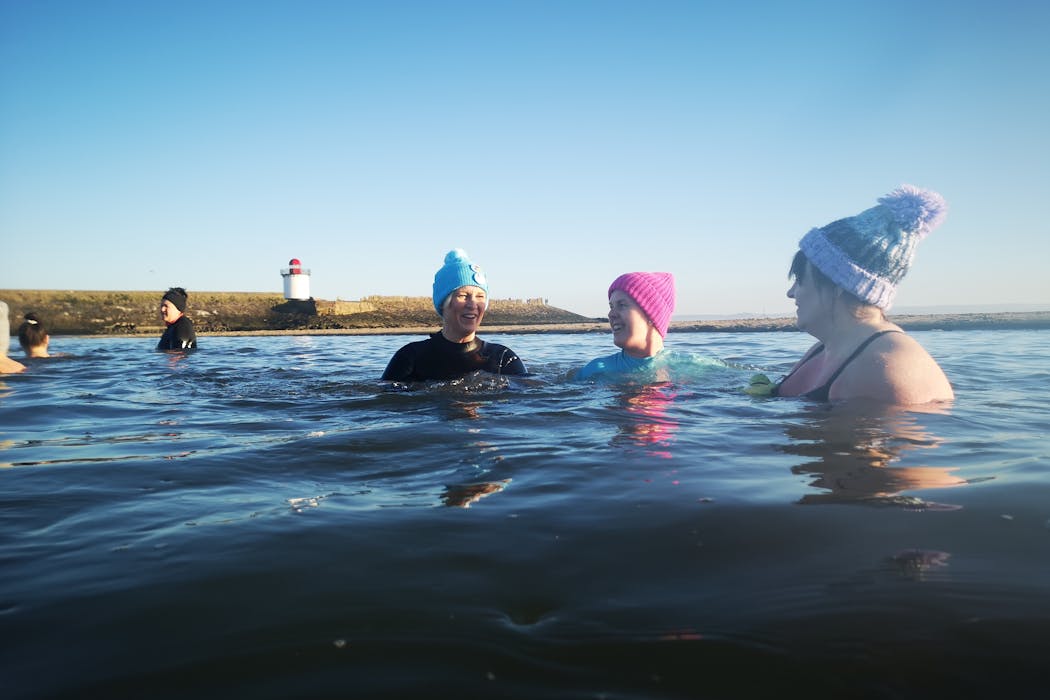
Across the UK and far beyond, a quiet shift in midlife exercise is underway. A decade ago, the cultural image of midlife fitness was the Lycra-clad cyclist speeding along suburban roads. Now, a different scene has emerged: women in hats and tow-floats stepping into freezing lakes at dawn – especially through the winter.

Outdoor swimming participation has risen sharply worldwide, and women make up a striking proportion of regular year-round swimmers. To many observers, this seems counterintuitive. Why would busy women in midlife choose cold water as their weekly reset?

A new qualitative study published in the European Journal of Ecopsychology set out to understand what this practice does for wellbeing – not just physically, but psychologically. Rather than simply asking swimmers how they feel, the research examined “flourishing”. This is a term from positive psychology that describes a sense of thriving. It includes positive relationships, confidence, vitality, emotional balance and coping with challenges.

Nine women aged 39 to 59 who swim year-round at a monitored lake in south London took part in in-depth interviews. These conversations were led by a female interviewer who became familiar with the swimming setting – someone who spent time at the lake, observed routines, and created a space where women felt comfortable talking about personal themes that are often hidden.

What emerged was a detailed picture of how nature based outdoor swimming becomes woven into identity, social life and emotional resources. Several women contrasted the lake with indoor pools – chlorine, noise and confinement made some feel uncomfortable, while the lake felt expansive and calming. They described the atmosphere as “low-key”, “homely” and grounded in quiet mutual support rather than competition.

Flourishing showed up in many ways. Women spoke of uplifting emotion after swimming and a calmer outlook that stayed with them long after leaving the water. Some felt better able to face demanding days. Strong social bonds formed too, with swimmers talking about a caring female community built around shared routines.

Nature played an important role. The lake environment – light on water, wildlife, weather and seasons – was part of the experience, not decoration. Immersion helped women feel like “physical, natural beings”, suggesting that being in nature helped them connect with themselves differently.

Safety mattered. Lifeguards, water-quality checks and visibility gear created conditions where women could come alone and still feel secure – enabling regular participation without fears that might deter them elsewhere.

One of the most surprising findings surfaced without prompting: menopause.

Participants repeatedly linked open-water swimming with easing symptoms or navigating emotional changes at midlife. This is the first scientific study to show women themselves spontaneously connecting cold lake swimming with relief during menopause – something not widely reported in wellbeing research.

Opportunity and equality

The sample – white, middle-class women – reflects a common pattern in outdoor swimming communities internationally. This highlights opportunity and inequality: access to safe places to swim, time and equipment often depend on geography and resources.

Later exploratory work from the same research group has begun examining how Black women experience outdoor exercise differently, where belonging, safety and visibility can be harder to achieve.

Taken together, these findings help explain why so many middle-aged women are flocking to cold lakes. Outdoor swimming offers challenge, community, soothing immersion, confidence, nature connection and, unexpectedly, support during menopause.

Instead of being defined by deficit or decline, the women in this study through open-water swimming framed midlife as a period of growth, connection and resilience.

As open-water swimming continues to rise, from New Zealand’s harbours to Scandinavian fjords, the stories emerging from this London lake shed light on why women keep stepping into icy water: not just to exercise, but to flourish.

The Conversation

This article draws on research conducted with co-researcher JJ Fisher, who led participant interviews. The author has also previously published research on wellbeing among middle-aged recreational cyclists, indirectly referenced here.

ref. How open-water swimming can transform midlife wellbeing – new research – https://theconversation.com/how-open-water-swimming-can-transform-midlife-wellbeing-new-research-271589

China and Mongolia are battling to control massive dust storms

Source: The Conversation – UK – By Thomas White, Lecturer in China and Sustainable Development, King’s College London

Dust storms regularly affect northern China, including its capital Beijing. In recent years, Chinese scientists and officials have traced the source of the dust storms to its neighbour Mongolia.

Much of the dust over Beijing in the spring of 2023, for example, originated from parts of Mongolia, seemingly driven by the warming and drying of the climate in the region.

Mongolia’s environment has come to be seen as China’s problem. Chinese netizens have blamed Mongolia’s herders and miners for the exploitation of natural resources and environmental destruction.

In pointing the finger at Mongolians, they ignore the role that Chinese demand for Mongolian resources plays in Mongolia’s environmental problems. In the south of Mongolia, it is dust churned up by mining trucks carrying coal to China on unpaved roads that locals are concerned about.

In August 2026, a major UN conference will be held in Ulaanbaatar, Mongolia’s capital, on the subject of tackling desertification. According to the Mongolian organisers of the conference, the country is one of the most severely affected by this process, whereby fertile land becomes like a desert and vegetation disappears, with almost 77% of its land now classified as degraded.

In recent years, China has sought to export its own expertise in preventing and tackling desertification to Mongolia, and this conference will provide a platform for China to showcase its global leadership on tackling this phenomenon.

Questions remain, however, about how Chinese anti-desertification measures might work within Mongolia. In China, for instance, these measures have often targeted herders, while in Mongolia, nomadic herding is central to ideas of national identity.

In the spring of 2023, China was hit by a series of unexpectedly severe dust storms. Vulnerable residents of Beijing were told to remain inside their homes as the sky turned an apocalyptic orange.

Dust storms like these originate from dry bare soil exposed to seasonal winds in semi-arid regions, often hundreds if not thousands of miles away.

Increasing dust emissions are linked to climate change, reducing rainfall and increasing temperature, and to desertification. Land degradation due to poor management practices exposes bare soil, as well as leading to the expansion of huge areas of “sand seas”, which kick up dust.

Massive dust storms hit Mongolia.

In recent decades, China has adopted a series of measures within its own borders in an attempt to prevent desertification. Notable among these has been the “great green wall”, initiated in 1978, which seeks to constrain the many deserts and sand seas in the north, north-east and north-west of the country by stabilising the shifting sand with extensive tree-planting. These also act as windbreaks.

Building a relationship?

In 2023, the China-Mongolia desertification prevention and control centre was established in Ulaanbaatar. At a meeting between China’s president Xi Jinping and his Mongolian counterpart Khürelsükh Ukhnaa, Xi pledged support for Mongolia’s “billion tree movement”. This initiative aims to plant that number of trees across the country by 2030.

Cooperation with Mongolia has also offered China an opportunity to demonstrate its expertise in desertification control techniques outside its borders.

Besides using traditional tree-planting and straw checkerboard sand barriers, Chinese engineers have developed techniques for immobilising sand dunes, as well as significant expertise in steel and concrete sand fence designs – and increasingly, in the installation of extensive solar panel farms, including novel vertical panels that also act as wind breaks. However, stopping sand dunes at the desert’s edge doesn’t necessarily prevent dust blowing off the soil in sparsely vegetated semi-arid land.

More broadly, China’s efforts to control desertification within its borders have targeted the livelihoods of herders, who are often from one of China’s ethnic minorities.

Official narratives have blamed herders for desertification, claiming they mismanage rangelands by accumulating excessive numbers of livestock. China’s top-down, state-led environmental plan has seen herders resettled away from the grasslands in a policy known as “ecological migration”. Those who remain have often been subjected to grazing bans or strict limits on the number of animals they can keep.

These policies are based on the privatisation of grassland use, often accompanied by the erection of fencing. This has severely reduced the mobility of herders. Some researchers suggest it is, in fact, this privatisation of land that is primarily responsible for the degradation of China’s grasslands.

It increases localised grazing pressure by preventing the herders and their livestock moving around. Enclosing large tracts of grassland to be turned into forests or solar farms further reduces the land available to herders.

So will China’s model of desertification prevention and control be exported to its neighbours? A recent headline in the South China Morning Post describes the possible expansion of China’s great green wall into Mongolia. Further afield, China has been a model for a similar project in Africa.

The idea of a Chinese great wall, however “green”, expanding into Mongolia would be unpalatable to many Mongolians, because of their deep anxieties over China’s territorial ambitions.

Official announcements from China talk instead of the joint construction of an “ecological security barrier” on the Mongolian plateau, which straddles the border between the two countries.

Unlike China, Mongolia’s grasslands remain largely unfenced. The country is proud of its nomadic heritage, and the kind of large-scale fencing of rangelands and livestock reduction programmes that have been seen in China would be highly contentious in democratic Mongolia.

For now, cooperation remains confined to small, isolated “demonstration zones”, scientific exchange, and support for Mongolia’s own billion-tree movement – which, not surprisingly perhaps, makes no reference to walls.

The upcoming UN conference in Mongolia will take place during the UN’s International Year of Rangelands and Pastoralists. It remains to be seen how China’s environmental diplomacy there engages with the growing international recognition of the positive role that herders can play in fostering biodiversity, and in helping prevent grasslands becoming deserts.

The Conversation

Thomas White receives funding from UKRI (ESRC) (ES/W005433/1).

Andreas Baas has held a 2025 President’s International Fellowship (PIFI) with the Chinese Academy of Sciences.

Han Cheng does not work for, consult, own shares in or receive funding from any company or organisation that would benefit from this article, and has disclosed no relevant affiliations beyond their academic appointment.

ref. China and Mongolia are battling to control massive dust storms – https://theconversation.com/china-and-mongolia-are-battling-to-control-massive-dust-storms-267585

How figures like Joey Barton could fuel a culture of online hostility toward female athletes – new research

Source: The Conversation – UK – By Wasim Ahmed, Senior Lecturer in Marketing, University of Hull

A criminal court recently pored over the social media posts of the ex-footballer Joey Barton and found them to be “grossly offensive”. So much so that he was handed a suspended prison sentence, ordered to do 200 hours of unpaid work in the community and pay more than £20,000 in costs.

We also examined Barton’s comments on female footballers and pundits as part of our research into harmful online rhetoric against women and girls in sport.

Our study found that his posts not only targeted individual women – including Mary Earps, Eni Aluko, Lucy Ward and Ava Easdon – but also alleged that it fuelled a wider culture of online hostility toward female athletes.

This is part of a digital culture which normalises misogyny, which then encourages online violence against women. They help to legitimise harmful narratives that might otherwise remain at the fringes of online discourse and extremes of society.

When people with significant reach engage in abusive or inflammatory commentary, their posts act as catalysts that shape polarised and hostile digital environments.

During our research we noticed that this can often occur with the symbolic use of emojis, using seemingly trivial icons as coded tools of intimidation and ridicule. In the extensive online abuse aimed at female athletes and pundits, we found combinations of weapon emojis such as 🗡️ (knife), 🔫 (gun), or 💣 (bomb) which were often paired with female-identifying emojis or gendered slurs to imply threats or intimidation.

We also found animal emojis like 🐷 (pig), 🐽 (pig snout), or 🐕 (dog) used to dehumanise women. There were sexualised emojis such as 🍑 (buttocks), 🍆 (phallic symbol), or 👅 (tongue) deployed alongside derogatory comments to humiliate or objectify them.

These emojis are often used to mask hostility as humour, making abusive remarks appear playful, despite inflicting real harm. They were also employed as a strategic tool for evading moderation systems, meaning that they can avoid having their comments and messages removed.

Misogyny influencers

Digital violence functions as a mechanism of professional exclusion and economic sabotage. When female pundits are bombarded with threats of rape and death simply for analysing a football match, the goal of the abuse is clear: to silence them and drive them out of the industry.

This creates a violent effect where aspiring female journalists may self-censor or abandon their careers to avoid becoming the next target of a misogynistic pile-on.

And while celebrities can themselves be the victims of online abuse, our research shows that they can also use their status to incite hate. Networked misogyny and the mass circulation of anti-women and anti-feminist sentiments online have been perpetuated by popular online figures such as Barton, creating a new form of influencer known as “misogyny influencers”.

These influencers wield disproportionate cultural power. And when they engage in misogynistic or aggressive rhetoric, they reinforce and embolden harmful norms in online communities. Their influence can mobilise thousands of users and create hostile environments that women in sport must navigate daily.

For our research shows that when public figures attack women online, their followers often replicate and escalate the abuse. This turns personal hostility into a much broader campaign of misogyny.

Barton’s conviction – which he is appealing – demonstrates that status or celebrity does not shield individuals from responsibility when their words could incite hate. It affirms that online violence carries consequences and that public figures who weaponise their influence to target women can no longer assume impunity.

However, we must also confront a paradoxical reality. For someone like Barton, a suspended sentence may not be a deterrent, but a marketing asset. In the “manosphere” economy, legal censure often validates the influencer’s status as an anti-establishment truth-teller being “silenced” by the state.

By avoiding immediate jail time, Barton could spin this verdict to his supporters as a battle scar in a “war on free speech”. This allows him to use the controversy to his advantage, framing himself as a martyr while facing minimal restrictions on his liberty.

It is evident that online abuse is a persistent and highly significant societal issue that requires attention. It should be recognised as a direct threat to the safety of recipients and those exposed to such violence through online platforms.

Protecting athletes will require stronger policies, clearer sanctions for repeat offender and support for those targeted. Addressing this growing threat is essential if women and girls are to participate safely and fearlessly in sport.

The Conversation

The authors do not work for, consult, own shares in or receive funding from any company or organisation that would benefit from this article, and have disclosed no relevant affiliations beyond their academic appointment.

ref. How figures like Joey Barton could fuel a culture of online hostility toward female athletes – new research – https://theconversation.com/how-figures-like-joey-barton-could-fuel-a-culture-of-online-hostility-toward-female-athletes-new-research-271878