When a doctor can’t find an interpreter, many now reach for Google Translate. It seems like a practical fix to a pressing problem. But a new study warns this quick solution may be putting refugee and migrant patients at serious risk – exposing them to translation errors that could lead to misdiagnosis, wrong treatment or worse.
The study, led by an interdisciplinary team of researchers at the University of Limerick – of which we were part – examined how artificial intelligence (AI) is being used to bridge language gaps between doctors and patients. The findings reveal a troubling pattern: AI translation tools are increasingly replacing human interpreters in GP surgeries, even though none of these apps have been tested for patient safety.
Anyone who has tried to explain themselves across a language barrier knows how easily meaning can slip away. In everyday situations – from the nail salon to the car mechanic – we often manage with gestures, guesses and good humour. But healthcare is different.
Clear communication between a patient and their doctor must be accurate and safe. It is the cornerstone of good medical care, especially when symptoms, risks or treatment decisions are involved, and it allows patients to feel heard and to participate meaningfully in decisions about their own health.
When a patient and doctor do not speak the same language and rely instead on an AI translation app such as Google Translate, communication becomes less certain and more problematic. What appears to be a convenient solution may obscure important details at precisely the moment when clarity matters most.
The recognised standard for cross-cultural communication in healthcare is access to a trained interpreter. The role of an interpreter is to provide impartial support to both the patient and the doctor. However, interpreters are often inaccessible in practice, due to availability, time pressures and limited resources in general practice.
Consequently, doctors report that they increasingly turn to the device in their pocket – their phone – as a quick, improvised solution to bridge communication gaps during consultations. Google Translate is now being used as an interpreter substitute, despite not being designed for medical communication.
My colleagues and I examined international studies from 2017 to 2024 and found no evidence that an AI-powered tool can safely support the live, back-and-forth medical conversations needed in clinical consultations.
In all the studies we reviewed, doctors relied on Google Translate, and they consistently raised concerns about its limitations. These included inaccurate translations, failure to recognise medical terminology and the inability to handle conversations that unfold over multiple turns.
The studies reported translation errors that risk misdiagnosis, inappropriate treatment and, in some cases, serious harm. Worryingly, the research found no evidence that Google Translate has ever been tested for patient safety in general practice.
In other studies, Google Translate was shown to misinterpret key medical words and phrases. Terms such as congestion, drinking, feeding, gestation, vagina and other reproductive organs were sometimes mistranslated in certain languages.
It also misinterpreted pronouns, numbers and gender, and struggled with dialects or accents, leading to confusing or inaccurate substitutions. Alarmingly, researchers also reported “hallucinations” – where the app produced fluent-sounding but entirely fabricated text.
Relying on Google Translate to support doctor-patient communication carries the risk of displacing human interpreters and creating an overdependence on AI tools that were not designed for medical interpretation. It also normalises the use of AI apps that have not undergone the safety testing expected of healthcare technologies.
It is difficult to imagine any other area of medical practice where such an untested approach would be considered acceptable.
The study found that refugee and migrant advocates prefer human interpreters, particularly in maternal healthcare and mental health. Patients also raised concerns about consenting to the use of AI and about where their personal information might be stored and how it might be used.
To deliver safe healthcare to refugees and migrants, doctors should ensure that patients have access to trained interpreters, whether in person, by video, or by phone. Clear instructions for accessing these interpreters must be available in every healthcare setting so that staff can arrange support quickly and confidently.
The evidence shows that AI tools not specifically designed and tested for medical interpreting should no longer be used, as they cannot yet provide safe or reliable communication in clinical situations.
The Conversation asked Google to comment on the issues raised by this article but received no reply.
Anthony Kelly receives funding from Innovation Fund Denmark.
Anne Cronin does not work for, consult, own shares in or receive funding from any company or organisation that would benefit from this article, and has disclosed no relevant affiliations beyond their academic appointment.
Great apes are humans’ closest relatives in the animal kingdom. As much as 98.8% of their DNA is shared, but while the number of humans living on the planet is increasing fast, other great apes are in decline. Five out of the seven species are now critically endangered.
The UN has estimated that about 22,000 great apes disappeared from their natural habitats between 2005 and 2011. Adults are mostly killed, their meat and body parts sold for bushmeat, traditional medicine or, in some cases, traditional ceremonies.
Babies and juvenile apes, on the other hand, command a much higher price alive. They are also easier to smuggle across borders. Seizures and confiscations of illegal animal trades are rare and often poorly documented.
Through the decades, great apes have remained an acquisition target for some zoos and animal attractions, sometimes by dodging the rules. The desire to keep “exotic” animals as pets also remains a key driver of the illegal global wildlife trade.
Social media has made the illegal trade in great apes much more efficient: sellers and buyers can use online platforms to exchange messages about prices and transport.
The convention was formed 50 years ago to create rules for a legal trade in wildlife and to stem the decline in wild animal populations. Under Cites, commercial trade in great apes is effectively banned. But it has been long known that the complex, paper-based permit system can be avoided or ignored.
Jane Goodall warned of the threats to great apes for years.
So why are governments not doing more? First, the organisation meant to provide oversight and monitoring of wildlife trade – the Cites secretariat – is underfunded. While the legal global wildlife trade market is valued at US$220 billion (£164 billion) a year, the secretariat has an annual budget of about US$20 million. And like most international treaties, it is reliant on the collaboration of its 185 state members, with all the complexities of international politics.
State governments also don’t treat the illegal wildlife trade as high a priority as illegal drugs, weapons or human trafficking – despite the well-known connections between these. And many still operate an outdated permit system developed in the 1970s, instead of the proposed electronic version which would provide much better protection against fraudulent permits, faster and transparent reporting, and increased collaboration with customs officials.
Moving apes around
There are, however, legitimate reasons to transfer great apes internationally. Moving second-generation, captive-bred animals from one registered zoo to another would be a typical example. Getting an export permit showing the animal as captive-born is one of the easiest ways to transport great apes internationally.
But this can also be used as a loophole. In the late 2000s, some 150 chimpanzees, bonobos and gorillas were reportedly exported from Guinea to China, although there is no known facility in Guinea breeding either species. In this case, high-level corruption was a key factor: in 2015, Ansoumane Doumbouya, then head of the Cites management authority in Guinea, was arrested and sentenced to 18 months in prison for selling fraudulent export permits. He was later pardoned by the president of Guinea.
In September 2025, Cites officials visited one of the largest private animal collections in the world. Vantara, India’s wildlife sanctuary turned mega-zoo, was hailed by some as an amazing story of love and care for wildlife. But the Wildlife Animal Protection Forum of South Africa, a national network of 30 South African organisations, has been increasingly concerned about the fast-paced imports of over 2,000 wild animal species from all over the world. Vantara now reportedly keeps close to 150,000 animals, more than any other well-known zoo.
In a recent investigation, the Indian Supreme Court absolved Vantara from any wrongdoing in relation to animal imports. But after this ruling, the Cites secretariat also visited the zoo. Its recent report raised significant concerns about several issues relating to animal transportation involving Vantara.
Vantara has claimed that Cites gave “a clean chit” to the facility, and that it had noted that all animal transfers to the facility were “fully legitimate and transparent, in accordance with Indian law”.
The Cites report said chimpanzees were imported from the Democratic Republic of Congo and also Middle Eastern countries (via the United Arab Emirates) as captive animals. As far as the author is aware, none of these countries are known to breed chimpanzees in zoos or other captive facilities.
Even more worryingly, a bonobo from Iraq, a mountain gorilla from Haiti, and a Tapanuli orangutan from Indonesia were also acquired. There are few recognised zoos globally which breed bonobos, and none breeding either mountain gorillas or Tapanuli orangutans. There is only a single male Tapanuli orangutan kept in an Indonesian zoo. Based on the Zoological Information Management System, the global zoo database, there is currently no mountain gorilla in zoos worldwide.
More generally, Cites has called on member countries affected by the great ape trade – both as a source and destination – to implement additional measures to prevent any illegal transfers. The International Union for Conservation of Nature, the world’s largest conservation alliance, has also called for “international action to protect wild great apes in their natural habitats, with a focus on addressing poaching and illegal trade”.
Introducing a modern electronic permit system and carrying out more enforcement would be important first steps to tackling these crimes. Otherwise, these species that are so close to humans will disappear in front of our eyes.
Prof Matyas Liptovszky is a director of Wilder International, and in a voluntary capacity affiliated with the European Association of Zoos and Aquariums.
Source: The Conversation – UK – By Sally Christine Reynolds, Associate Professor in Hominin Palaeoecology, Bournemouth University
Dinosaur tracks at the Carreras Pampas tracksite in Torotoro National Park.Plos One
Scientists have discovered the single largest dinosaur track site in the world in Carreras Pampa, Torotoro National Park, Bolivia. The tracks were made around 70 million years ago, in the late Cretaceous Period, by theropods – bipedal three-toed dinosaurs – with bird tracks also present in this ancient beach scene.
Over 16,600 footprints and swim traces cover the ancient trackway surface, all heading in the same direction. Swim traces form when floating or swimming animals briefly touch the bottom, often with just their toes making contact. The researchers suggest the traces were made parallel to an ancient shoreline, which preserves beautiful ripple marks.
Modern studies of animals at African water holes and lake margins suggest that herbivores tend to move perpendicular to a shore, moving quickly across the open areas close to a lake. In contrast, carnivores tend to travel parallel to the shore, since this gives them the best chance of intersecting prey.
There are no hard and fast rules here, just general principles, which may or may not apply in this case. Although it is likely that at least some of the traces were made by carnivorous dinosaurs.
Tricky identification
The research was announced in a Plos One paper, which documents 1,321 trackways plus 289 isolated tracks, totalling 16,600 theropod (three-toed) tracks.
They also record 280 “swim” trackways (1,378 swim tracks) and multiple tail traces, with some bird tracks occurring locally alongside the theropod tracks.
These traces can often resemble scratches and are different from the tracks the same animal might make on land. They tell a story of behaviour that is rich in detail.
The site preserves at least a dozen distinct track morphologies (shapes or forms), implying multiple kinds of animals, but the study doesn’t translate those into a specific number of species.
Identifying the species of the trackmakers is difficult for two reasons. First, a single animal can make footprints with different shapes and forms depending on the motion of the foot and the consistency of the underlying ground.
Second, fossil bones are not always found at footprint sites, because the conditions needed for fossil bones to be retained are often different from those needed to preserve footprints.
This makes it harder to identify specific groups or species of dinosaur. The researchers overcome this in the paper by defining “morphotypes”, or put another way, recurring footprints of different types, or forms.
When looking at a track site like this, the number of tracks – and there are lots at this site – does not necessarily equate to the number of animals. One animal moving back and forth across a surface can make lots of tracks. Equally, lots of animals moving once across a surface can leave the same number of tracks.
The find is significant because it captures a range of behaviour from a variety of species. This provides researchers with a window into ancient behaviour, like whether these dinosaurs moved in groups and, potentially, how they foraged and travelled along the stretch of beach.
For example, there is evidence of individual dinosaurs moving in the same direction, which can be due to dinosaurs moving in social groups, performing tasks such as hunting or migrating. However, this phenomenon can also arise because of other factors, such as geographical barriers.
Importantly, the study of the footprints allows researchers to document species that would have occurred together in the landscape during the short time interval when the tracks were forming. This makes the site an archive of an ancient ecosystem, rather than just a single species. Further analysis to yield fascinating insights into the daily lives of the creatures passing along this stretch of shore.
The longest prehistoric trackway made by people, in White Sands National Park (New Mexico), helped us appreciate that one trackmaker on a single journey can make a variety of different types of track based on what they were doing. There could be parallels here with the dinosaur trackway in Bolivia.
Something to ponder as you next walk on a well-trodden beach.
Sally Christine Reynolds does not work for, consult, own shares in or receive funding from any company or organisation that would benefit from this article, and has disclosed no relevant affiliations beyond their academic appointment.
Source: The Conversation – UK – By Tessa Whitehouse, Reader in 18th-century Literature and Director of Queen Mary Centre for Religion and Literature, Queen Mary University of London
Reading is very subjective, but one thing most book lovers can agree on is that 2025 was a notable year for fresh, inventive, affecting storytelling. Books translated from their original language are proving increasingly popular as readers seek out global perspectives beyond their own, as evidenced in this year’s International Booker win, Heart Lamp by Banu Mushtaq, which is included here.
We also bring you five other novels our academic experts have chosen as their favourites this year. From a Mrs Dalloway for the service economy, to a dreamlike encounter between people across time, place and mortality, do our academic picks chime with yours?
Pick A Colour by Souvankham Thammavongsa
This slender little novel is both a reverie and a dash of icy water to the face that will make you think twice about tuning out from your surroundings next time you get a mani-pedi. We follow the owner of a low-price nail bar through a workday from turning on the fluorescent lights to pulling down the metal shutter.
In this Mrs Dalloway for the service economy, the painful intersections of the personal and the political are inescapable for the “Susans” (the name each employee must adopt), but as invisible as the workers themselves to many of their customers.
Slight in length, light in touch, full of humour, and closely observed, Pick A Colour can be read in a single, intense afternoon. But the troubling thoughts it raises through its memorable characters linger long after your Christmas nail polish has all chipped away.
Tessa Whitehouse is reader in English and director of Queen Mary Centre for Religion and Literature
Perfection by Vincenzo Latronico
Perfection is a curious sort of novel. There is no dialogue and almost no conflict between the two central characters, Anna and Tom, digital nomads who spend their days in Berlin designing websites and always appear together, almost like a single entity.
In a sequence of beautifully written, perfectly observed chapters, Latronico itemises and describes their apartment, their social media habits, their limited perspective on Berlin, their sex life, their futile attempts at meaningful political activism, their growing disillusionment and desire for relocation – the repetitive consumption and socially structured habits of a globalised lifestyle built around image and taste.
The result is a remarkably astute and compelling novel – social realism at its sharpest – as Latronico nails the manners of the millennial generation and that brief period of optimism, from 2006 to 2016, when we felt digital media might make a positive difference and lifestyle choices seemed imbued with an optimistic ethical resonance – soon shown to be hollow.
James Miller is a senior lecturer in creative writing and English literature
Old Soul by Susan Barker
At first, Barker’s novel seems a gorgeously written adaptation of one of my favourite gothic tropes: the vampire. The story opens with two strangers, Jake and Mariko, who meet at Osaka airport. They have both lost loved ones in strange and brutal circumstances but in common, each of the deceased encountered a mysterious, dark-haired woman just before their deaths. A woman who came looking for Mariko, and then disappeared.
As the plot advances, Barker takes familiar tropes and themes in unexpected directions, turning this novel into an unforgettable tale of cosmic horror. There is the terrifying lore of “the Tyrant”, different timelines and settings from Wales to New Mexico, not to mention a cast of unreliable narrators who become more vibrant, twisted and compelling as the novel advances. Ultimately, this is a story about our societal obsession with becoming famous and being seen – Barker’s novel goes a step further and asks: who gets to witness? Who gets to record? And for what purpose?
Inés Gregori Labarta is a lecturer in creative writing
Big Kiss, Bye-Bye by Claire-Louise Bennett
There is no shortage of contemporary novels with first-person narrators who are women, often writers, struggling to keep themselves together in the face of late capitalism, the internet and the patriarchy. Claire-Louise Bennett’s Big Kiss, Bye-Bye is narrated by a woman, a writer, but beyond that, all similarities to other works in this category disappear.
The narrator’s interior world is made up of thoughts about and responses to others – her friend and ex-lover Xavier, her old schoolteacher with whom she had a relationship as a teenager, and another old schoolteacher who has recently emailed her.
It is a novel of extraordinary noticing, but it is a noticing that has such rhythm and intensity that it enters your very bones as you read. It is as unrepeatable as a dream, and like a dream stays with you way beyond the ability of words to account for it.
Leigh Wilson is a professor of English literature
We Do Not Part by Han Kang
The English translation of We Do Not Part followed Han Kang’s 2024 Nobel Prize in Literature. Her earlier Greek Lessons (2011, translated into English 2023) considered loss of sight and speech through the arresting metaphor of burial in snow.
We Do Not Part reconsiders this metaphor, employing the destructive and creative force of a snowstorm to convey the danger of lost histories. Kyungha reluctantly agrees to house sit and look after the much-loved pet bird of her sick friend, Inseon, and travels in snow and darkness to reach her rural cabin.
The novel is at once a dreamlike encounter between people across time, place, and mortality; a recollection of the women’s friendship and childhoods; a personal history of the impact of the 1948-49 Jeju massacre (an intense period of anti-communist violence and suppression that resulted in thousands of deaths); and a portrait of the rural South Korean landscape in bleak winter. The prose is crisp and poetic, the dialogue sparse, and the protagonist introspective and self-questioning. An intelligent, graceful, bruising novel and an encounter with the rural and the local.
Jenni Ramone is an associate professor of postcolonial and global literatures
Heart Lamp by Banu Mushtaq
Delicately woven over a period of 33 years, this collection of 12 short stories comes from the heart of the Muslim community in southern India. Rendered nearly invisible in the nation’s literary imagination despite its substantial presence, Heart Lamp offers a necessary intervention into the silences of Indian Muslim women’s interior lives.
It maps the emotional landscapes and the intricate layers of marginalisation through caste, class and gender expectations embracing the politics of location. Mushtaq, an activist, inevitably represents Karnataka’s “Bandaya Sahitya” (Rebel Literature) movement, rooted in anti-caste, feminist and secular traditions.
The stories juxtapose modern India’s patriarchal structures with the obscured lives of women through literal and metaphorical veils where pain, suffering, injustice are critiqued through razor sharp realism mingled with sentimentality and humour. Deepa Bhasthi’s translation performs its own quiet rebellion, refusing to italicise Kannada words or append footnotes.
Prathiksha Betala is a PhD researcher in contemporary feminist dystopian fiction
Looking for something good? Cut through the noise with a carefully curated selection of the latest releases, live events and exhibitions, straight to your inbox every fortnight, on Fridays. Sign up here.
The authors do not work for, consult, own shares in or receive funding from any company or organisation that would benefit from this article, and have disclosed no relevant affiliations beyond their academic appointment.
With Something Good, the arts and culture newsletter from The Conversation, we aim to cut through the noise and recommend the very best in new releases every fortnight. And what a soundtrack this year’s newsletters have had. From Lily Allen’s devastating breakup album West End Girl to Rosalía’s genre-defying LUX, these are the best albums of 2025 according to our academic experts.
1. Teal Dreams by Yazmin Lacey
Yazmin Lacey’s second album, Teal Dreams, builds on her well-received multi-genre debut, Voice Notes (2023). Featuring a more confident and developed sound, this album is a rich blending of roots and soul. The Londoner’s vocal delivery spans a range of emotional registers, exploring themes of growth and renewal throughout.
There are beautiful, melodic moments aplenty. From the slow-burn build of Grace to the sassy swagger of Crutch, all reward repeated listening.
Ain’t I Good For You by Yazmin Lacey.
On Ribbons, Lacey addresses personal loss, expressing feelings of change and longing, declaring she’s “not the same Yazmin”, “misses your big ideas” and wants “to talk about love and fear”.
Meanwhile her 2024 collaboration with Ezra Collective, God Gave Me Feet For Dancing, continues with the grooviness of Ain’t I Good For You. The song and album serve as an open invitation to dive in and enjoy the reflective beauty Lacey offers.
Hussein Boon is chair of the Black Music Research Unit
2. The Dreaming Prince in Ecstasy by Lamp of Murmuur
The Dreaming Prince in Ecstasy is one of 2025’s most striking extreme-metal releases. Not just because it blends black metal with psychedelic tones reminiscent of David Bowie, but because it plays with the genre’s emotional architecture in unusually vulnerable ways.
Under the swirling tremolo and gothic theatrics sits an affective register closer to yearning than nihilism. The album leans into a kind of decadent, romantic masculinity, accentuated by the complete anonymity of the band’s members, and refusal to confirm to normative maleness in the genre.
The Dreaming Prince in Ecstasy by Lamp of Murmuur.
For researchers like me who study men and masculinities, it’s a compelling artifact: a reminder that subcultural performance is never just noise, but a way of working through desire, fantasy and the uneasy labour of feeling.
In a music scene often caricatured as hostile or hypermasculine, The Dreaming Prince in Ecstasy offers a glimpse of what happens when intensity becomes a mode of introspection rather than domination.
Chris Waugh is a lecturer in Criminology & Sociology
3. LUX by Rosalía
For anyone unfamiliar with Rosalía’s journey from flamenco experimentalist to global pop innovator, LUX might seem like a bold leap – yet its seeds were always there. A heartfelt offering of avant-garde classical pop, sung across 13 languages, this record feels both operatic and immediate, expansive yet relatable.
Berghain by Rosalía.
What’s most impressive is the album’s sheer conceptual depth, weaving together romance, divinity and gender without ever feeling academic or inaccessible. Drawing on historic figures such as the German Benedictine abbess and philosopher Hildegard von Bingen (1089-1179) and Taoist master Sun Bu’er (1119-1182), the record situates contemporary pop within a lineage of female mysticism and intellectual devotion. Yet songs like La Perla bring the album back to earth with cutting lyricism that feels instantly resonant.
It’s rare to hear pop music this conceptually daring become such a commercial and critical force, but this success feels wholly earned.
Eva Dieteren is a PhD researcher in gender and popular music
From the dual tin whistle strains of Welcome To My Mountain, the opening song from Junior Brother’s startling third album The End, you quickly realise that this is a greeting of a different kind.
There are musical references; a touch of Richard Thompson here, a flash of Kate Bush there, but Kealy is more closely aligned with the singular songwriting styles of John Spillane, Jinx Lennon, Lisa O’ Neill and Seamus Fogarty.
This is an astonishing record. It demands the attention of the listener, and rewards with each repeated listen.
Stephen Ryan is course director for the MA in songwriting
5. Rainy Sunday Afternoon by The Divine Comedy
The Divine Comedy’s mastermind Neil Hannon brings his unique blend of upbeat poppy tunes and romantic melancholia to the band’s 13th studio album, Rainy Sunday Afternoon. And it reminds us that he really is one of the great songwriters, with a range so impressive that he can turn effortlessly from the achingly beautiful (Achilles and I Want You) to scathing, witty satire (Mar-a-Lago by the Sea) via the sparkling Christmas song All the Pretty Lights.
Achilles by The Divine Comedy.
No, Hannon may never again see the commercial heights of National Express, a song The Guardian describes as his “worst song and greatest hit”, and nor may he wish to. After three decades in the business, Hannon is doing something much more valuable: writing emotive, catchy songs which continue to connect with people.
Glenn Fosbraey is an associate dean of humanities and social sciences
6. You Are Safe From God Here by The Acacia Strain
With the 13th album of their career, The Acacia Strain have released one of their most dense and uncompromising records to date. You Are Safe From God Here combines riff and drum brutality and crushing lyrical passages.
Most of the tracks are around two minutes long, giving the album a relentless, all-killer-no-filler directness. This is then contrasted by the colossal closing song Eucharis II: Blood Loss, which spans 14 minutes. It’s a hypnotic and bleak descent and unforgettable album closer.
A Call Beyond by The Acacia Strain.
Lyrically, the album dives into themes of isolation, depression and a “dark fantasy” of visions of an uncaring and predatory god. The album performance feels venomous and emotionally exposed – channelling both rage and despair. The result is an album that is not only sonically devastating but also emotionally overwhelming.
While less accessible to its predecessors, You Are Safe From God Here is more atmospheric and brutal. A harrowing, standout chapter in The Acacia Strain’s evolution as a band and rightly a top contender for album of the year in the metal scene. Ultimately, the album lives up to its name: in the depths that The Acacia Strain explore on this record, you really are safe from god.
Douglas Schulz is a lecturer in sociology and criminology
7. West End Girl by Lily Allen
Lily Allen returned to making music after seven years in October – and redefined the breakup album in the process. Written and recorded over just ten days, West End Girl is a concept album that fictionalises Allen’s journey from her casting in the play 2:22 – A Ghost Story, through to her eventual break up with her ex-husband, American actor David Harbour.
West End Girl by Lily Allen.
Lyrical rawness is the essence of this album, with Allen refusing to hold anything back in articulating her feelings towards an ex and their alleged secret lover, referred to on the album as “Madeline”. In this fictionalisation of events Allen calls the ex a sex addict and shares her discomfort with his alleged request for an open relationship with brutal honesty.
Musically Allen reasserts herself, reminding us of her influence on younger artists such as PinkPantheress and Charli XCX through her vocal and musical delivery, and by packing her lyrics full of contemporary and relatable cultural references.
In the space of four years, PinkPantheress has gone from producing songs on GarageBand in her university halls of residence to an award-winning international artist. Not bad for a 24-year-old from Bath who became a viral TikTok sensation after posting faceless snippets of her songs.
Stateside by PinkPantheress.
Her latest album, Fancy That is ridiculously brief, but filled with bubble gum earworms and sweetly sung bops. PinkPantheress’s breathy falsetto combines with her lullaby lyrics about gen-Z life to showcase her as an extremely gifted songwriter and producer. More disco babe than Brat, Fancy That is the soundtrack to a party where everyone is invited.
Like Jim Legxacy’s mixtape Black British Music (also released this year), there is a sense of anemoia – a yearning for a time that you did not experience – that comes with Fancy That. The deep rolling 80s electronic bass of Stateside. The electronic chords of Illegal. The rave-like Girl Like Me. This trademark gen-Z hybridity should produce a sound that is cacophonic; however, the genres of drum and bass, house, garage, jungle and electronic pop coalesce to produce something that sounds fresh and new.
Julia Toppin is a senior lecturer in music enterprise and entrepreneurship
9. Let God Sort Em Out by Clipse (July)
Advances in music technology have allowed artists such as Billie Eilish and Lil Nas X to create huge hits outside of conventional studios, using DIY home recording set-ups. But Clipse’s new album — the first in 16 years from brothers Gene “Malice” and Terrence “Pusha T” Thornton — must be the first to be recorded within the headquarters of a fashion mega-brand.
Chains & Whips by Clipse and Kendrick Lamar.
Producer Pharrell Williams oversaw Let God Sort Em Out while serving as Louis Vuitton’s creative director, using a custom-built studio in their Paris headquarters. The luxurious setting seems to influence the sound: the hard-hitting percussive edge of earlier Clipse recordings gives way to woozier, synth-laden beats, exemplified by the hypnotically off-kilter P.O.V.
Clipse are pioneers of “coke rap”, and there are still plenty of bars here that engagingly recount their triumphs and near-misses in the drug trade. Now in their 50s, though, their lyrics also explore broader themes: The Birds Don’t Sing honours their recently deceased parents, while closing track By The Grace of God reflects on the improbable longevity of their careers.
Ellis Jones is a lecturer in music and management
10. Non Fiction: Piano Concerto in Four Movements by Hania Rani
Polish neo-minimalist composer and singer Hania Rani has collaborated with the Manchester Collective and improvisers Valentina Magaletti and Jack Wyllie to record her most ambitious work yet, Non Fiction.
IV. Semplice by Hania Rani, Manchester Collective, Jack Wyllie and Hugh Tieppo-Brunt.
The album was inspired by the work of Jewish child prodigy Josimah Feldschuh. Feldschuh made her concert debut in the Warsaw Ghetto just before the second world war at the age of 11. There, she also began to write her own music. She died of tuberculosis just outside of Warsaw at the age of 13, having fled the ghetto with her family. Only 17 of Feldschuh’s compositions survived.
Inspired, Rani set about writing and recording Non Fiction. However, the project’s focus was soon unsettled by more recent horrors: Russia’s full-scale invasion of Ukraine in 2022, and Israel’s invasion of Gaza after the October 7 attacks. Rani perceived similarities between images of Gaza’s destruction shared online, and photographs of Warsaw’s destruction during the second world war.
The result is an instrumental album of scope and depth. Non Fiction stands as a reflection on war and brutality that allows just enough grace, tenderness and humanity to keep us hopeful.
Andrew Green is a lecturer in the anthropology of music
What was your favourite album of 2025? Let us know in the comments below.
Looking for something good? Cut through the noise with a carefully curated selection of the latest releases, live events and exhibitions, straight to your inbox every fortnight, on Fridays. Sign up here.
Samuel Murray is affiliated with the Musicians’ Union and a writer member of PRS for Music.
Andrew J. Green, Chris Waugh, Douglas Schulz, Ellis Jones, Eva Dieteren, Glenn Fosbraey, Hussein Boon, Julia Toppin, and Stephen Ryan do not work for, consult, own shares in or receive funding from any company or organisation that would benefit from this article, and have disclosed no relevant affiliations beyond their academic appointment.
In no particular order, here are The Conversation’s top five films of 2025 as reviewed by our experts.
1. One Battle After Another
The latest film from director Paul Thomas Anderson follows Bob (Leonardo DiCaprio), an ageing hippie hero and a relic of a fictional noughties brigade, the French 75. Led by his lover Perfidia Beverley Hills (Teyana Taylor), they robbed banks, bombed buildings and liberated detention centres in the name of their ideology of “free borders, free choices, free from fear”.
Left to bring up their daughter, Willa (Chase Infiniti), Bob spends his days off-grid unshaven, smoking weed. All is (somewhat) well until the brutal army veteran, Colonel Lockjaw (Sean Penn), who believes himself to be Willa’s real father, barrels back into their lives in pursuit of his “daughter”.
It is at heart a family melodrama, drawing on the classic tropes of bad versus good father and conflicted mother, questioning the legitimacy of the family unit. On to these narratives bones, Anderson grafts a vision of a post-Obama America in thrall to shadowy corporate interests, a legacy of rounding up and deporting immigrants, and an old white male order hell-bent on its own agenda of personal revenge.
After the lights have gone up, it may well be that what stays with you most is its terrifying imagery of detention centres and the horror of immigrant round-ups. It is this certainly that led Steven Spielberg to acclaim “this insane movie” as more relevant than Anderson could ever have imagined.
Ruth Barton, Fellow Emeritus in Film Studies at Trinity College Dublin
2. Sinners
Sinners is set in Jim Crow-era Mississippi, a time of harsh segregation and racial injustice. It follows Sammie (Miles Caton), a young Black guitar player, who gets his big break when his cousins, the gangster twins Smoke and Stack (both played by Michael B. Jordan), return to open a juke joint in their hometown. This new venture brings money, music and a sort of freedom but also danger to their door.
On the juke joint’s opening night, Sammie’s blues music draws the Irishman Remmick (Jack O’Connell) to the bar. But Remmick is no average man, he’s a vampire.
Remmick uses his own song, The Rocky Road to Dublin to invite the Black patrons to join him and the others he has turned into vampires, offering them the chance to escape Jim Crow Mississippi. The song he chooses, although catchy, is a story of exchanging one form of suffering (life in Ireland during the height of English oppression) for another – life on the English mainland where the ballad tells of victimisation and violence. This is one of many moment where the real stories of Irish and Indigenous Choctaw oppression are used in the film to draw connection between oppressed people and the stories they tell and were told.
Such nuance within the film meant that I watched it several times and gained more insight and enjoyment with each viewing.
By Rachel Stuart, Senior Lecturer in Criminology and Deviant Identities at Brunel
3. A Real Pain
We are constantly confronted by history. The history of our cultures and traditions. Of our families. Of our own personal relationships. Can we – or should we seek to – ever escape the tightly woven net of our preoccupation with our past?
Jesse Eisenberg explores these questions with curiosity, humour and insight in the lightly plotted, semi-road movie, A Real Pain.
David (Eisenberg) and Benji (Kieran Culkin) are 40-something cousins, who are reunited for a trip to Poland in memory of their recently deceased grandmother, a Holocaust survivor with whom both, especially Benji, were very close.
The tourist group perform their Jewishness within unstated yet acknowledged limits to their engagement– with Poland, with Jewish history, with each other and indeed with themselves. Within this muted, routinised remembrance culture, Benji’s unpredictable behaviour starts to detonate small outbreaks of “real pain”, which are annoying and upsetting in equal measure.
What “pain” should take precedence? That of the violently amputated cultural history to which its inheritors feel a moral duty of remembrance? Or the ongoing needs and demands of the present, which cannot linger indefinitely in history’s dark shadow. The great strength of Eisenberg’s subtle, understated film is to pose such questions without suggesting, let alone imposing, facile answers.
By Barry Langford, Professor of Film Studies at Royal Holloway, University of London
4. Sorry, Baby
Sorry, Baby is the directorial debut of its writer and star, Eva Victor. The film follows Agnes (Victor), an English professor at a small American college, in the aftermath of a sexual assault by one of her teachers when she was a student there.
The story, based on Victor’s own experience of trauma, is structured in non-linear chapters encompassing the time after, before and during the assault. The result is a raw and unflinching, yet nuanced, depiction of trauma’s aftermath, which presents Agnes as a fully rounded and complex character.
Sorry, Baby resists the idea that trauma must define a character’s identity. Instead, the film explores how people live with, around and beyond painful experiences. Agnes carries trauma with her, but moves forward with hurt, joy, and desire – alive with humour and contradiction.
This debut marks Victor as a distinctive voice in contemporary cinema, one who trusts her characters and her audience alike. With Sorry, Baby, Victor shows us a new way to tell stories about trauma, healing, and the small, vital moments in between. This is a filmmaker to watch.
Laura O’Flanagan, PhD Candidate in the School of English at Dublin City University
5. Weapons
The film opens with the chilling premise of 17 children from the same classroom vanishing without a trace, leaving behind only grainy security footage of them running with their arms outstretched, like little planes. However, the true horror unfolds as the community of Maybrook – a small town in Pennsylvania – spirals into chaos instead of unity.
Parents accuse teachers, neighbours distrust one another and innocent lives are upended in the search for a culprit. This breakdown is grounded in psychological research, showcasing how human behaviour can deteriorate under pressure.
Social identity theory is a scientific concept that theorises that your brain is wired to compartmentalise the world into “us” (those we consider good) and “them” (those perceived as threats). This process intensifies when people face fear or stress.
In Weapons, we see this theory in action as the community dismantles itself. Teacher Justine Gandy (Julia Garner) becomes an easy target, not due to concrete evidence, but because she fits neatly into the role of the other – “them”. The parents of the missing children seek someone to vilify, and she becomes the scapegoat of their fears.
Weapons succeeds as horror because it doesn’t rely on supernatural monsters or gore. Instead, it shows us the real monsters – the ones we become when our psychology works exactly the way evolution has led it to.
Edward White, PhD Candidate in Psychology at Kingston University
Looking for something good? Cut through the noise with a carefully curated selection of the latest releases, live events and exhibitions, straight to your inbox every fortnight, on Fridays. Sign up here.
The authors do not work for, consult, own shares in or receive funding from any company or organisation that would benefit from this article, and have disclosed no relevant affiliations beyond their academic appointment.
Luxury pet pampering packages at hotels, menus with dog-friendly roast dinners and £6,000 animal-friendly charter flights. Pet travel isn’t just a trend, it’s something of a transformation. This is the “pawprint economy” – and it’s booming.
Globally, the pet industry is projected to reach US$500 billion (£375 billion) by 2030, with pet travel services alone expected to be valued at US$5.9 billion by 2034. In the UK, where 60% of households have pets – including roughly 13.5 million dogs – that’s a substantial market.
People travel with their pets for leisure, business, relocation and specialist care. And while some people even travel with horses, cats, birds or other small animals, it’s dogs that dominate the leisure travel surge. For people who enjoy travelling with their pets, the benefits are real for both parties: strengthened bonds, shared experiences and opportunities to build skills and confidence.
But there’s a growing gap between what the industry is offering and what people and pets need. As this market explodes, it’s a good time to ask whether the travel industry is genuinely adapting or just coming up with superficial offerings.
While humans and dogs have travelled together for millennia, today’s growth reflects something distinctly modern: pets are now family members. With 40% of people viewing their dog as their child and nearly half calling them their best friend, dogs occupy a central place in millions of UK homes.
During COVID restrictions, pet acquisition surged globally. Today nearly half of “pet parents” are first timers. The years since COVID emerged have seen an acceleration in the inclusion of pets in leisure life, from dog-friendly cafes to outdoor festivals, paddleboarding and holidays.
Even cost-of-living pressures haven’t dampened this enthusiasm. While 34% of people who have pets have altered their pet-related behaviour due to financial pressures (changing to a cheaper brand of pet food, for example), pet travel continues to grow. UK pet families take an average of two domestic holidays every year with their animals.
Here’s where the disconnect emerges. While providers advertise “pawsecco” and pet spas, research has shown that people prioritise practical care over “extras”.
Studies identify six key attributes that people are looking for: service design (pet-friendly room placement, shared dining), activity support (walking guides, bins), safety, pet-savvy staff, transparent policies with fair fees, and lastly, amenities. This is a low priority for travellers with pets, but often what providers focus on. Crucially, green spaces drive pet travel planning, boosting wellbeing for both human and animal. After all, this is the fundamental reason why people choose to travel with pets.
Love me, love my pet
Yet many people with pets say they don’t believe any accommodation is truly pet friendly, signalling a trust gap. Many properties advertise as “pet friendly” but impose restrictions, surprise fees or go no further than simply allowing pets to stay.
Part of the problem seems to be one-size-fits-all thinking. Research identifies three distinct segments of people travelling with dogs. There are those seeking basic, convenience-focused accommodation. Premium experience seekers are willing to pay for luxury. And activity-loving travellers prioritise outdoor adventures. A chihuahua on a city break has different needs to a labrador on a hiking trip, yet many providers offer generic packages that delight no one.
The evidence from both researchers and industry is clear: people will pay more to travel with their pets. For tourism providers, the opportunities are significant. For example, hotel pet fees in the UK can range from £15-40 daily or £20-75 per stay. Being viewed as pet friendly can drive repeat visits and brand loyalty for travel-related providers and dining outlets.
But there’s one area where UK travellers seem to be less enthusiastic. When it comes to overseas travel, 54% are “very unlikely” to go abroad with their pet (compared to 37% globally). Only 7% actually have plans to do so. This hesitancy is probably driven by complicated, costly regulations and rules.
Eurostar bans pets on its trains and UK aviation regulations effectively prohibit pets in the cabin on inbound flights, with few airlines offering cabin options outbound. Most pets must fly as cargo in the hold, which often causes worry for their humans.
Brexit also ended the UK’s access to the EU pet passport system, requiring expensive animal health certificates for each trip. A 2025 UK-EU agreement will eventually see the reinstatement of pet passports, however.
The UK dog travel market is heavily skewed towards domestic holidays, with travellers largely preferring coastal retreats and rural escapes, prioritising walks and eating out. This presents clear opportunities for domestic providers to capture demand, and for travellers to choose more environmentally friendly, sustainable destinations closer to home.
The travel industry in the UK and beyond faces a choice: continue offering superficial “pet-friendly” experiences or genuinely adapt and ease the stress for travellers and their pets.
The evidence shows that pet-centric facilities, support with activities, and attentive service outweigh add-ons. Delivering this means providing transparent online information so travellers can assess facilities and policies confidently, designing spaces that genuinely welcome pets, and training staff to deliver a knowledgeable service.
The appetite for pet travel is overwhelming and the pawprint economy represents a huge business opportunity, if accommodation, travel and leisure providers are willing to prioritise genuine pet friendliness. After all, if the hospitality industry makes pets and their people happy, they will come back for more – with smiles and tails wagging.
Lori Hoy does not work for, consult, own shares in or receive funding from any company or organisation that would benefit from this article, and has disclosed no relevant affiliations beyond their academic appointment.
Entre jeux, désobéissances et miracles, les textes apocryphes montrent un Christ enfant espiègle, mais déjà conscient de sa divinité.
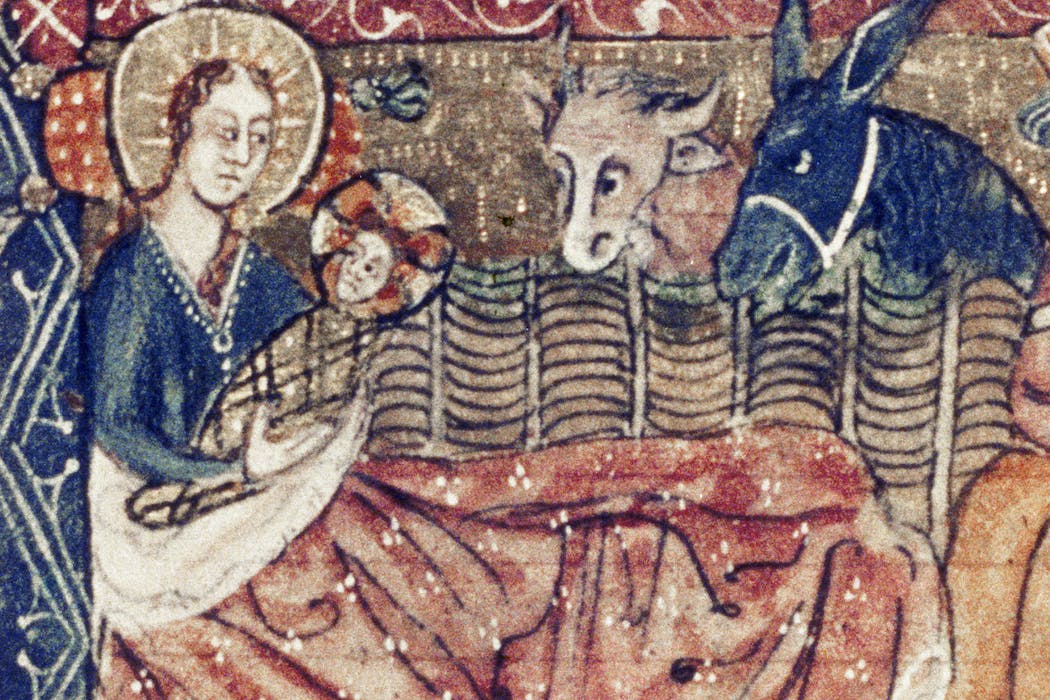
Les scènes de la Nativité présentées à l’époque de Noël montrent généralement un bœuf et un âne aux côtés de l’enfant Jésus. Selon l’Évangile de Luc, Marie plaça son enfant dans une crèche – une mangeoire destinée à nourrir les animaux – « parce qu’il n’y avait pas de place pour eux dans l’hôtellerie ».
Loin d’être de simples figurants, le bœuf et l’âne renvoient au Livre d’Isaïe 1 :3, un verset que les premiers chrétiens ont interprété comme une prophétie de la naissance du Christ. Dans certaines œuvres anciennes, ces bêtes de somme s’agenouillent pour manifester leur révérence, reconnaissant dans ce nouveau-né emmailloté, venu au monde dans l’humilité, une figure seigneuriale.
Les Évangiles canoniques, ces récits de la vie de Jésus inclus dans le Nouveau Testament, ne mentionnent à aucun moment la présence de ces animaux accueillant le nouveau-né. Pourtant, le motif apparaît déjà dans des œuvres d’art du IVᵉ siècle. Il a ensuite été largement diffusé par l’Évangile du Pseudo-Matthieu, un texte apocryphe – c’est-à-dire non retenu dans le canon des Écritures. Rédigé par un moine anonyme, probablement au VIIe siècle, le Pseudo-Matthieu rassemble de nombreux récits consacrés à l’enfance de Jésus.
Car après le récit de la naissance de Jésus, la Bible demeure presque totalement silencieuse sur son enfance. En revanche, des légendes sur ses jeunes années ont largement circulé au Moyen Âge – un phénomène au cœur de mon livre publié en 2017. Si la présence du bœuf et de l’âne est aujourd’hui familière à de nombreux chrétiens, rares sont ceux qui connaissent les autres récits saisissants transmis par les textes apocryphes.
La Bible ne rapporte qu’un seul épisode célèbre de la jeunesse de Jésus : celui où, à l’âge de 12 ans, il reste au Temple juif de Jérusalem sans que ses parents s’en aperçoivent. Après l’avoir cherché avec une vive angoisse, ils le retrouvent en pleine discussion avec des maîtres de la Loi, posant des questions et les stupéfiant par ses réponses. Au XIVe siècle, le peintre Simone Martini le représente dans « Le Christ retrouvé au Temple » debout face à ses parents, les bras croisés – un adolescent entêté, manifestement peu enclin à s’excuser de les avoir laissés dans l’inquiétude pendant plusieurs jours.
L’Évangile apocryphe du Pseudo-Matthieu – en particulier dans les versions qui intègrent des éléments d’un texte apocryphe encore plus ancien, l’Évangile de l’enfance selon Thomas – se concentre précisément sur l’enfance de Jésus. À l’image de l’épisode du Temple, ces récits décrivent un enfant parfois difficile, doté d’une sagesse hors du commun qui émerveille autant qu’elle déroute, voire choque, ses maîtres. Plus radicalement encore, les textes apocryphes le montrent exerçant un pouvoir divin dès son plus jeune âge.
À l’image du Jésus adulte du Nouveau Testament, cet enfant Christ des récits apocryphes accomplit souvent des prodiges pour venir en aide à ceux qui en ont besoin. Selon l’Évangile de Matthieu, Marie et Joseph emmènent l’enfant Jésus en Égypte après qu’un ange les a avertis en songe qu’Hérode, roi de Judée, cherchait à le faire mourir. Dans la version de cet épisode développée par le Pseudo-Matthieu, Jésus, âgé de moins de 2 ans, se dresse courageusement sur ses pieds face à des dragons surgissant d’une grotte où sa famille s’est arrêtée pour se reposer.
Ces dragons terrifiants se prosternent devant lui avant de s’éloigner, tandis que Jésus affirme avec assurance à ceux qui l’entourent qu’il est « l’homme parfait » et qu’il peut « dompter toute espèce de bête sauvage ». Plus tard, il ordonne à un palmier de se courber afin que Marie, épuisée, puisse en cueillir les fruits, et il abrège miraculeusement leur traversée du désert.
Par moments, le Jésus de ces légendes apparaît largement responsable des malheurs qui l’entourent. Les carreaux médiévaux de Tring datés du XIVe siècle, aujourd’hui conservés au British Museum, montrent l’un de ses amis emprisonné par son père dans une tour. Le Christ l’en extirpe par un minuscule trou, à la manière d’un chevalier courtois sauvant une demoiselle en détresse. Le père avait tenté de protéger son fils de l’influence de Jésus – une précaution compréhensible, tant de nombreuses légendes décrivent Jésus provoquant la mort de ses camarades de jeu ou d’autres garçons qui l’avaient, d’une façon ou d’une autre, contrarié.
Dans un récit qu’un chercheur a résumé par l’expression « la mort pour avoir bousculé Jésus », un garçon le heurte en courant. Celui-ci le maudit, et l’enfant s’effondre aussitôt, mort – avant que Jésus ne le ramène à la vie, après une brève remontrance de Joseph.
Dans un autre récit, transmis par une traduction anglo-normande consignée dans un manuscrit enluminé, Jésus enlève son manteau, le pose sur un rayon de soleil et s’assoit dessus. En voyant cela, les autres enfants « pensèrent qu’ils pourraient faire de même… Mais ils se montrèrent trop empressés et tombèrent tous en même temps. L’un après l’autre, ils sautèrent sur le rayon de soleil, mais l’expérience tourna mal, car chacun se brisa la nuque ». À la demande de ses parents, Jésus guérit ensuite les garçons.
Joseph reconnaît alors devant ses voisins que Jésus « est vraiment trop turbulent » et décide de l’envoyer ailleurs. Âgé de sept ans, Jésus est placé en apprentissage chez un teinturier, qui lui donne des consignes très précises pour teindre trois pièces de tissu dans trois cuves différentes. Sitôt son maître parti, Jésus désobéit et jette tous les tissus dans une seule cuve – obtenant pourtant le résultat attendu. Lorsque le teinturier revient, il croit d’abord avoir été « ruiné par ce petit garnement », avant de comprendre qu’un prodige vient de se produire.
Jésus assis sur un rayon de soleil, tandis que d’autres garçons tentent de l’imiter, dans une miniature du manuscrit Selden Supra 38, réalisée au début du XIVᵉ siècle. Bodleian Libraries, University of Oxford, CC BY-NC-SA
Lien avec les animaux
Ces légendes apocryphes montrent aussi l’enfant Jésus exerçant son pouvoirsur le monde animal. Lorsqu’il pénètre dans une caverne redoutée où vivent des lions, les lionceaux « courent autour de ses pieds, le caressant et jouant avec lui », tandis que « les lions adultes se tiennent à distance, l’adorent et agitent la queue devant lui ». Jésus explique alors aux témoins que les bêtes leur sont supérieures, car les animaux, eux, « reconnaissent et glorifient leur Seigneur ».
Ces récits dressent ainsi le portrait d’un Jésus parfois hautain, conscient de sa nature divine et peu disposé à accepter qu’on le traite comme un simple petit garçon. Mais ils le montrent aussi comme un véritable enfant, aimant jouer. Le jeune Jésus y apparaît enfantin dans sa manière d’agir souvent sur un coup de tête, sans prêter beaucoup d’attention aux remontrances de ses aînés.
Son lien avec les animaux contribue également à son image d’enfant. De manière frappante, dans les textes apocryphes, les bêtes – à commencer par le bœuf et l’âne – semblent souvent percevoir que Jésus n’est pas un enfant ordinaire avant même que les personnages humains ne s’en rendent compte.
L’insinuation subtile des légendes selon laquelle de nombreux Juifs entourant Jésus ne seraient pas aussi perspicaces que les animaux reflète l’antisémitisme répandu dans l’Europe médiévale. Dans un sermon du Vᵉ siècle, Quodvultdeus, évêque de Carthage, s’interroge sur le fait que la reconnaissance de Jésus dès la crèche par les animaux n’ait pas été un signe suffisant pour les Juifs.
Le Livre d’images de la Bible de Holkham montre Jésus accomplissant des tâches domestiques (Londres, British Library, Additional MS 47682, fol. 18). Courtesy British Library
Dans la Bible, Jésus accomplit son premier miracle à l’âge adulte, lors d’un festin de noces à Cana. Les récits apocryphes, en revanche, explorent l’idée que l’Homme-Dieu manifeste son pouvoir dès l’enfance. Selon ces légendes, le caractère enfantin du Christ distrayait souvent ceux qui l’entouraient, les empêchant de reconnaître qu’il était le Messie. Cela permet aux textes apocryphes de ne pas contredire la Bible, qui présente Jésus comme « simplement le fils du charpentier », loin de l’image d’un enfant prodige.
Chaque Noël, les chrétiens occidentaux modernes célèbrent principalement la naissance de Jésus, avant de laisser rapidement de côté la figure de l’Enfant-Christ. Les chrétiens du Moyen-Âge, en revanche, étaient fascinés par les récits de la jeunesse du Fils de Dieu. Malgré ses exploits de dompteur de dragons, de guérisseur ou de magicien, le jeune Jésus des textes apocryphes passe largement inaperçu, dissimulant sa divinité derrière son apparence de « petit garnement ».
Mary Dzon ne travaille pas, ne conseille pas, ne possède pas de parts, ne reçoit pas de fonds d’une organisation qui pourrait tirer profit de cet article, et n’a déclaré aucune autre affiliation que son organisme de recherche.
La première est un coup d’État militaire ou un changement violent d’un gouvernement (démocratiquement) élu. La deuxième est le refus d’un gouvernement en place de céder le pouvoir après avoir perdu une élection. Et enfin, la manipulation des Constitutions pour gagner ou prolonger le mandat d’un gouvernement en place.
Nous avons recensé 20 coups d’État, six cas de manipulation constitutionnelle et quatre tentatives de maintien au pouvoir par des dirigeants sortants après avoir perdu les élections.
Ces tendances persistent depuis la publication de notre étude. Le plus récent est le coup d’État militaire en Guinée-Bissau fin novembre 2025.
Face à la persistance des changements anticonstitutionnels de gouvernement, en particulier ce qui a été décrit comme une résurgence des coups d’État en Afrique, nous avons analysé la position de l’Union africaine sur ces trois formes de changement de régime.
Nous avons constaté que pour la majorité des coups d’État (17 sur 20 dans notre base de données), l’UA a appliqué strictement les sanctions prévues par la charte afin de rétablir l’ordre constitutionnel. En revanche, le bilan est mitigé lorsque les dirigeants sortants s’accrochent au pouvoir à la suite d’une défaite électorale ou tripatouillent les Constitutions pour prolonger leur mandat.
Ces conclusions nous ont amenés à examiner comment l’UA peut renforcer les mécanismes démocratiques continentaux afin d’empêcher que la « ceinture des coups d’État africains » ne s’étende davantage.
Nous concluons de nos résultats que l’UA doit prendre deux mesures.
Premièrement, éviter les changements anticonstitutionnels de gouvernement. Pour ce faire, il convient :
de favoriser une véritable culture démocratique dans les États africains
d’établir des règles claires sur des questions telles que les changements constitutionnels, qui sont souvent instrumentalisés par les dirigeants en place pour rester au pouvoir
d’appliquer ces règles sans crainte ni favoritisme.
Deuxièmement, l’UA, la Communauté économique des États de l’Afrique de l’Ouest (Cedeao) et d’autres organismes régionaux doivent appliquer des sanctions fermes non seulement aux auteurs de coups d’État militaires mais aussi aux dirigeants civils qui manipulent la loi pour rester au pouvoir.
Une histoire marquée par des coups d’État
L’euphorie des indépendances dans toute l’Afrique, après l’indépendance vis-à-vis de la domination coloniale européenne à la fin des années 1950 et dans les années 1960, a été de courte durée.
Sans véritables espaces de participation politique, les coups d’État et contre-coups d’État militaires, les mouvements rebelles et autres moyens violents d’accéder au pouvoir sont devenus la norme.
Entre 1956 et 2001, il y a eu 80 coups d’État réussis, 108 tentatives de coup d’État échouées et 139 complots de coup d’État en Afrique subsaharienne.
En 2000, les dirigeants africains ont décidé, lors d’un sommet au Togo, d’adopter la Déclaration de Lomé. Celle-ci condamnait les coups d’État et autres changements anticonstitutionnels de gouvernement. Il s’agissait du premier instrument continental à établir un cadre pour une réponse collective africaine aux changements anticonstitutionnels de gouvernement.
Ces trois instruments prévoient diverses sanctions à l’encontre des États africains et des individus complices de violations des principes démocratiques.
Malgré cela, plusieurs États africains ont encore enregistré des transitions de pouvoir anticonstitutionnelles. Et la réponse de l’UA a été mitigée.
La réponse mitigée de l’UA
Voici quelques exemples que nous avons identifiés.
En 2010, l’UA a soutenu une initiative internationale visant à destituer Laurent Gbagbo après son refus de céder le pouvoir malgré sa défaite à la présidentielle en Côte d’Ivoire.
Le refus de Yahya Jammeh de quitter le pouvoir après avoir perdu les élections de 2016 en Gambie a également suscité une réaction sévère de la part de l’UA. Celle-ci a déclaré qu’elle « ne reconnaîtrait pas » Jammeh. La Cedeao a envisagé de « le destituer par la force militaire » s’il refusait de céder le pouvoir pacifiquement.
Cela dit, il y a eu des manquements notoires, ce qui est regrettable.
Par exemple, la victoire électorale contestée d’Ali Bongo au Gabon en 2016 n’a pas donné lieu à des mesures concrètes de la part de l’UA. Aucune mesure n’a non plus été prise concernant le report des élections en République démocratique du Congo sous Joseph Kabila en 2018.
L’échec le plus flagrant dans la mise en place des principes démocratiques en Afrique a été l’absence de sanctions de la part de l’UA lorsque les dirigeants en place ont manipulé les Constitutions pour prolonger la durée de leur mandat.
Du Burundi à la Côte d’Ivoire, en passant par le Togo et le Zimbabwe, nous n’avons trouvé aucune preuve dans notre base de données que l’UA ait réagi directement à des cas de manipulations constitutionnelles.
Pourtant, dans l’histoire récente, les manipulations constitutionnelles ont été les principaux facteurs déclencheurs d’interventions militaires. Les récents coups d’État au Gabon, en Guinée, au Tchad et au Soudan ont tous été précédés par des manipulations constitutionnelles visant à prolonger ou à abolir la limitation du nombre de mandats.
Nous avons constaté que lorsque l’espace démocratique se réduit et que les citoyens ont le sentiment de ne plus pouvoir exprimer leur désaccord, le risque de soulèvements populaires augmente. L’armée profite souvent de ces moments pour intervenir.
Ce qu’il faut faire
Les traités continentaux sur la démocratie et la bonne gouvernance exigent le strict respect des principes démocratiques et des principes de transfert pacifique du pouvoir.
Pour qu’ils soient efficaces, les mesures suivantes doivent être prises.
Tout d’abord, les principes démocratiques doivent être clairement définis. Par exemple, le fait de modifier la constitution pour supprimer la limitation du nombre de mandats présidentiels au profit d’un président sortant viole-t-il ces principes ? Qu’en est-il de l’élimination des candidats de l’opposition par des manœuvres telles que des poursuites judiciaires motivées par des raisons politiques ?
Deuxièmement, des règles claires doivent être établies sur des questions telles que la limitation du nombre de mandats.
Troisièmement, l’UA, la Cedeao et d’autres organismes régionaux doivent cesser de ménager les pseudo-démocrates dont le comportement invite aux coups d’État. Ils doivent cesser de superviser et d’approuver les élections truquées qui maintiennent ces dirigeants au pouvoir.
Enfin, l’UA peut démontrer son engagement en faveur de la démocratie et de la bonne gouvernance en refusant de récompenser les autocrates. Cela pourrait se traduire par le refus de nommer des autocrates à des organismes importants, tels que le Conseil de paix et de sécurité de l’UA (chargé de surveiller la démocratie et la bonne gouvernance sur le continent), ou de leur attribuer des présidences tournantes.
Le Dr Christopher Nyinevi, qui travaille à la Cour de justice de la Cedeao à Abuja, au Nigeria, est coauteur de cet article.
Richard Fosu does not work for, consult, own shares in or receive funding from any company or organisation that would benefit from this article, and has disclosed no relevant affiliations beyond their academic appointment.
Las fiestas navideñas se acercan y con ellas llega un torbellino de luces, expectativas y emociones que no todas las personas viven del mismo modo. Mientras que para muchas personas suponen un momento de entrañables encuentros y celebraciones junto a sus seres más queridos, para otras puede resultar un periodo de tristeza y soledad no deseada.
En España, cerca de cinco millones de personas viven solas, lo que representa un 27 % del total de hogares del país. Aunque vivir sin compañía no significa necesariamente sentirse solo o sola.
Así, la soledad no deseada puede definirse como una experiencia desagradable que ocurre cuando alguien siente que sus relaciones sociales son insuficientes o inexistentes, o no tienen la suficiente calidad y calidez humana.
Por contra, la solitud es una experiencia voluntaria y agradable que las personas buscan activamente para disfrutar de su propio tiempo y espacio personal.
En 2024, el 20 % de la población española reportó sufrir de soledad no deseada, la cual se relaciona con una peor salud física y mental. De hecho, datos recientes concluyen que la percepción subjetiva de estar solos se asocia con una mayor mortalidad. Nos enfrentamos a un problema global que impacta negativamente a nuestro bienestar y que acarrea costes sociales y económicos.
Los principales factores asociados a la soledad no deseada son, además de vivir sin compañía, sufrir eventos vitales estresantes como divorcio, duelo, viudedad, etc. Además, son también condicionantes relevantes la edad –afecta especialmente a los más jóvenes y los mayores–, la renta y la presencia de discapacidad y/o problemas de salud, sobre todo si merman la autonomía y la salud mental.
Algunas iniciativas para estos días
Frente a este problema, las administraciones están poniendo en marcha diferentes opciones para mitigar la soledad no deseada que viven muchas personas y ofrecer soluciones durante las fechas señaladas.
Entre ellas, destaca la impulsada por la ONG “Grandes Amigos” que pretende llegar a miles de personas y promueve encuentros y acompañamiento para quienes más lo necesiten.
A un nivel regional y municipal también surgen propuestas como, por ejemplo, del Banco de Voluntarios en Valladolid, con un programa específico de acompañamiento de mayores en Navidad, o el programa “Navidades con corazón” en Telde, Gran Canaria, donde apuntan que “cada gesto cuenta. Una visita, una llamada o una carta pueden transformar la Navidad de alguien”.
Otras iniciativas son la convivencia de mayores en Almuñécar (Granada) o el taller navideño “Mayores en Navidad”, en la ciudad de Badajoz.
Sin embargo, estas iniciativas aisladas no siempre alcanzan a todas las personas que lo necesitan y, para la gran mayoría, simplemente son desconocidas. Por ello, si siente soledad no deseada es importante que explore las opciones que ofrecen los barrios, ayuntamientos, comunidades autónomas y entidades sociales que, como ve, pueden marcar una diferencia y ser una ayuda real y efectiva.
También podemos todos y todas acompañar a quienes conocemos o sospechamos que están en esta situación, ayudándoles a encontrar alternativas como estas, o las que podamos ofrecer.
Y es aquí dónde surge la cuestión central: ¿es tan duro pasar estas fechas en soledad o se intensifica la sensación por la atmosfera de expectativas idealizadas que rodean la Navidad?
Para abordar esta cuestión, resulta necesario reivindicar la libertad individual para decidir cómo vivir estas fechas. Las fiestas navideñas suelen concentrar numerosos compromisos sociales que pueden resultar abrumadores y superar las necesidades o deseos individuales.
Mientras que algunas personas encuentran la satisfacción en reuniones numerosas, otras prefieren espacios más reducidos, encuentros selectivos o incluso la tranquilidad de pasar estos días en solitud.
Diversos estudios señalan que el bienestar no depende de la cantidad de interacciones sociales, sino del equilibrio entre las necesidades individuales y las demandas del entorno social.
Desde esta perspectiva, la soledad elegida y placentera, o solitud, puede funcionar como una experiencia reparadora que ofrece introspección, descanso emocional y autonomía. Sin embargo, la libertad de elección solo es posible si existen alternativas reales: programas comunitarios, actividades culturales, iniciativas de voluntariado o espacios de acompañamiento para quienes buscan conexión social. De lo contrario, la soledad corre el riesgo de ser impuesta y, por tanto, fuente de sufrimiento, y una lacra social evitable.
Reconocer la diversidad de necesidades sociales permite replantear la Navidad más allá de la narrativa tradicional. Ofrecer espacios y recursos que brinden compañía y calidez humana a quien la desea y la necesita debe ser un objetivo institucional prioritario.
Por otro lado, respetar la decisión de quien no la necesita ayudaría sin duda a que cada persona viva estas fechas de la forma que le resulte natural y satisfactoria.
Juan Francisco Roy Delgado recibe fondos de investigación de la Universidad San Jorge, el Gobierno de Aragón, el Gobierno de España, y la Unión Europea.
Olatz Suárez Carballo y Pablo González-Sanz no reciben salarios, ni ejercen labores de consultoría, ni poseen acciones, ni reciben financiación de ninguna compañía u organización que pueda obtener beneficio de este artículo, y han declarado carecer de vínculos relevantes más allá del puesto académico citado.