Want to read more? Two experts give their tips on what you can do

Source: The Conversation – UK – By Paty Paliokosta, Associate Professor of Special and Inclusive Education, Kingston University

Makistock/Shutterstock

Reading promises so much: better mental health, a sense of wellbeing, cultural and educational enrichment, even greater confidence and eloquence.

It sounds irresistible; yet for many of us, the reality is very different. Half of the adults in the UK don’t read regularly for pleasure, and more than one in ten find reading difficult.

So why does something so rewarding feel so hard to do? For many adults, a disinterest in reading may well start in childhood. In 2025, only about one in three children and young people aged eight to 18 reported enjoying reading in their free time. And then if children do not see their own parents reading, they are unlikely to see being immersed in a book as a good use of leisure time.

The government’s Education Committee has recently launched an inquiry to explore how to keep the joy of reading alive.

In our research, we both (through different angles) explore ways to get people reading for joy.

Different ways of reading

Many people grow up feeling excluded from the joy of reading, and this may linger into adulthood. Research consistently shows that both children and adults with dyslexia or ADHD report lower levels of enjoyment and therefore tend to read less frequently.

This can be exacerbated by systemic school approaches and priorities that associate reading with national and international tests. Reading is reduced to a performance metric, rather than a source of pleasure.

Simple changes, such as altering the physical properties of the titles you read, or choosing graphic novels, can make a big difference. Neurodivergent readers can access books from publishers that specialise in using accessible fonts, layouts and language, for example.

Audiobooks offer another powerful alternative. Despite the relationship between brain representations of information perceived by listening versus reading is unclear, neuroscience research shows the way our brain represents meaning is nearly the same whether we are listening or reading.

Woman with headphones smiling while she washes dishes
Listening to an audiobook counts as reading!
Prostock-studio/Shutterstock

Audiobooks can transform stories from something squeezed in between deadlines into travel companions, kitchen buddies, or late-night unwinders. Accessible on phones, tablets, smart speakers and even through library loans, audiobooks fit seamlessly into busy lives. They can be a great way to get into books for those of us with low reading stamina who need frequent breaks.

For people with ADHD, audiobooks allow for physical movement while reading. They also engage young children effortlessly. Children, as young as three giggle through lively audio tales and tackle complex narratives with ease.

One of us (Paty) recalls her daughter proudly saying she could “see” the stories in her head – like her own private cinema – even preferring them to TV shows. What she didn’t know was that every laugh and every imagined scene was quietly building vocabulary and nurturing a love for books.

Read socially

The social dimensions and shared experiences of reading have been repeatedly highlighted. An example of tackling some of the systemic barriers around reading for pleasure in big scale is the KU Big Read project, launched by one of us (Alison Baverstock) in 2015 and which ran until 2024-25.

Before they started their undergraduate course, new students at Kingston University received a free book in the post – along with a letter from the author referring to their feelings just before starting university.

This gave everyone a shared experience, and a book to talk about, before the nerve-wracking first day. The transition to higher education is a momentous step, and the university saw a significant reduction in the dropout rate in its first year of the project.

The book consistently acted as a connector across the university, with staff and students helping to choose the book for the year ahead.

Men in book group
Look for a book group or online community to discuss what you read.
LightField Studios/Shutterstock

We invite you to put this into practice in your own lives. Look for an in-person or online book group or read-along, and make reading social. The book group that one of us (Paty) attends isn’t about pure literary critique, but about human connection.

Make reading a pleasure, not a chore

The charity Reading Force founded by one of us (Alison Baverstock), which promotes the use of shared reading to keep military families connected, has always encouraged making reading fun rather than a laboured and compulsory process. Families are given special scrapbooks to record their shared experience of reading together and the word “literacy” is never mentioned.

Reading is promoted as a fun activity for families, with colourful resources, free books and events with key authors such as charity patron Sir Michael Morpurgo. For families whose access to books may be limited, this can be a gentle, non-judgemental and exciting pathway. Feedback from this process has shown profound connection, wellbeing and emotional satisfaction.

This emotional satisfaction by reading things they would like to read as opposed to imposed ones is of utmost importance. Pick something that engages you, not the book you think you should be reading.

Representation and reading

Feeling represented in the stories you read – whether through your background, values, or identity – can be a powerful way to build a love for books.

Adults from diverse backgrounds have benefited from joining bilingual groups with their children, creating stories together and engaging with books. The gains are significant, not only in literacy and cultural belonging but also in stronger connections with their community.

When books showcase a variety of cultures and include characters of all abilities as central figures, they become more relatable and inviting for readers from all walks of life. And it is never too late.

The Conversation

Alison Baverstock is the founder and director of the charity Reading Force (1159890) which is funded by grants from organisations, charities and benevolent individuals/institutions.

Paty Paliokosta does not work for, consult, own shares in or receive funding from any company or organisation that would benefit from this article, and has disclosed no relevant affiliations beyond their academic appointment.

ref. Want to read more? Two experts give their tips on what you can do – https://theconversation.com/want-to-read-more-two-experts-give-their-tips-on-what-you-can-do-269450
A few reasons to feel hopeful about the climate in 2026

Source: The Conversation – UK – By Will de Freitas, Environment + Energy Editor, The Conversation

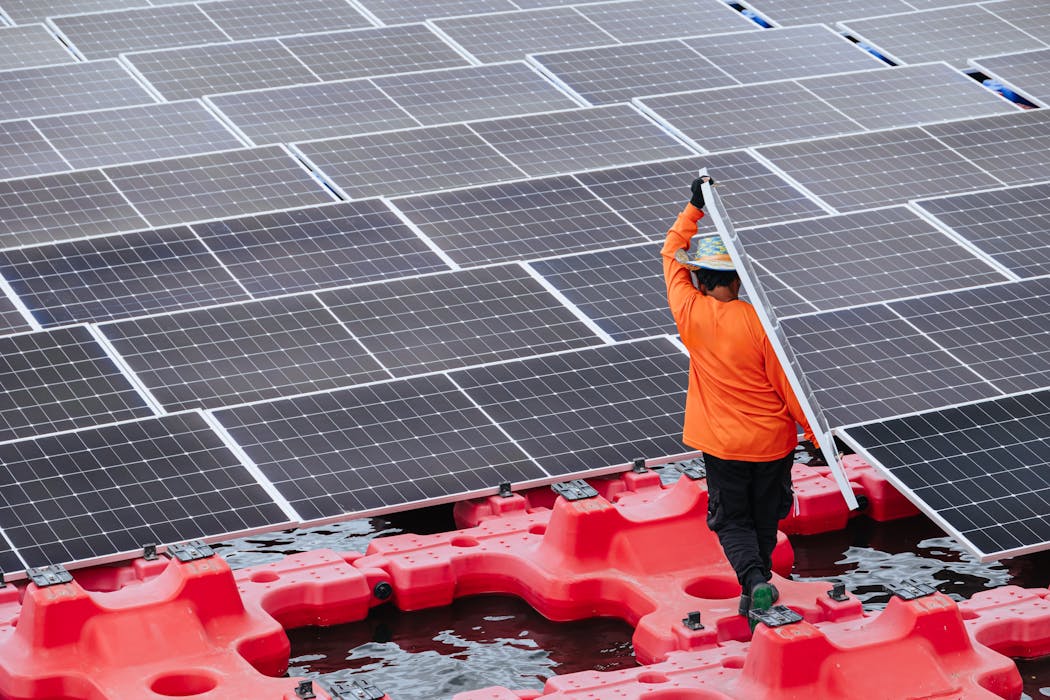
Renewables are becoming a logical economic choice across the world. Quality Stock Arts / shutterstock

This roundup of The Conversation’s climate coverage was first published in our award-winning weekly climate action newsletter, Imagine.

2025 was a brutal year for the climate: record temperatures, ever more extreme weather and so on. We rarely got a break from the bad news.

This week, rather than saying what’s going wrong, Imagine is looking at what’s starting to go right – and why it matters.

This isn’t blind faith. It’s what some academics call “grounded optimism”, based on data, momentum and the surprising resilience of people and ecosystems.

A positive tipping point?

We rightly spend a lot of time worrying about climate tipping points – the terrifying thresholds beyond which ecosystems collapse. Earlier this week we looked at the prospects of a sudden collapse in coral reefs, for instance.

But we rarely hear about “positive tipping points”. These are the moments when a sustainable technology or action becomes so affordable or popular that it kickstarts “irreversible, self-propelling change”.

The UK may have just passed one (tipping points, as the coral reefs author notes, are best noticed in hindsight). That’s according to Kai Greenlees and Steven R. Smith of the University of Exeter, who say the electric vehicle market is an example of a positive tipping point in action.

Despite misinformation campaigns, sales have surged in the UK, driven by a simple reality: they are getting cheaper and better.

“The more people buy them”, Greenlees and Smith write, “the cheaper and better they get, which makes even more people buy them – a self-propelling change towards a low-carbon road transport system.”

electric cars charging
Electric cars aren’t perfect, and many academics say we should move away from private car ownership. But for now, this is a welcome tipping point.
William Barton / shutterstock

At the time of writing, the authors only had access to 2024 data, when electric vehicles made up 19.6% of new cars in the UK.

That figure, they wrote, “puts this sector close to the critical 20-25% range for triggering the phase of self-propelling adoption, according to positive tipping points theory”.

Data for 2025 UK sales was released on Tuesday. The share of electric vehicles? 23.4%.


Read more:
UK may be on verge of triggering a ‘positive tipping point’ for tackling climate change


From crisis to innovation

In Pakistan, solar is booming – not because of climate pledges, or activist pressure, but because the grid has become expensive and unreliable. Something similar is playing out across south Asia, says Reihana Mohideen of the University of Melbourne.

Mohideen writes:

“Importantly, these moves often aren’t about climate change. Reasons range from cutting dependence on expensive fossil fuels and international market volatility to reducing reliance on unreliable power grids to finding ways to boost livelihoods.”

The world recently passed a massive milestone: renewables have finally overtaken coal to become the world’s leading source of electricity. And some of the most exciting developments are taking place in less wealthy economies.

Whether it’s Nepal moving to electric vehicles to stop relying on imported petrol or the Maldives installing solar because diesel is too expensive to ship to outer islands, Mohideen says the result is the same: clean energy is no longer just for rich nations. It is becoming a logical economic choice everywhere.


Read more:
Renewables have now passed coal globally – and growth is fastest in countries like Bhutan and Nepal


China doubles down

We can’t talk about global hope without considering the world’s largest emitter.

This newsletter has noted before the confusing paradox of China fast rolling out green technologies while still burning a colossal amount of coal to keep the lights on.

In an article on China’s five green economy challenges in 2026, Chee Meng Tan of the University of Nottingham notes the country’s grid can’t quite handle all the new solar power, while a cut-throat price war threatens progress on electric vehicles.

But Beijing is doubling down on greening its economy, he says, and still aims to achieve “‘carbon peaking’, where carbon dioxide emissions have reached a ceiling by 2030, and ‘carbon neutrality’, where net carbon dioxide emissions have been driven down to zero by 2060.”

The challenges Tan identifies will need to be overcome. But the sheer scale of investment suggests that in China the momentum is now undeniably pointed towards a low-carbon future.


Read more:
China’s five green economy challenges in 2026


Where the wild things thrive

Finally, some good news for climate-threatened ecosystems.

It’s easy to assume that global warming hits everywhere equally. But nature isn’t that simple. Researchers working in east Africa and California’s Sierra Nevada mountains have identified what they call “climate change refugia”.

These are specific pockets of resilience that remain buffered from the worst effects of warming. They can be quite small scale: a shaded meadow, a deep lake, or a valley that harbours cool air.

Toni Lyn Morelli of UMass Amherst and Diana Stralberg of the University of Alberta have written about their work identifying and mapping these safe havens. Their work means conservationists can prioritise protecting the specific meadows where ground squirrels can survive, or the corridors in Tanzania where elephants and lions can find enough water to endure a drought.

Morelli and Stralberg say that by “identifying and protecting the places where species can survive the longest, we can buy crucial decades for ecosystems”.


Read more:
Where the wild things thrive: Finding and protecting nature’s climate change safe havens


Don’t have time to read about climate change as much as you’d like?

Get a weekly roundup in your inbox instead. Every Wednesday, The Conversation’s environment editor writes Imagine, a short email that goes a little deeper into just one climate issue. Join the 45,000+ readers who’ve subscribed so far.


The Conversation

ref. A few reasons to feel hopeful about the climate in 2026 – https://theconversation.com/a-few-reasons-to-feel-hopeful-about-the-climate-in-2026-272930

The boarding of the Marinera and the rise of the shadow fleet in hybrid warfare

Source: The Conversation – UK – By Basil Germond, Professor of International Security, School of Global Affairs, Lancaster University

The Marinera, previously Bella 1, was sailing under a Russian flag. X

The dramatic seizure of the Russian-flagged tanker Marinera/Bella 1 in the north Atlantic, carried out by the US coastguard with British support, underscores the collision between maritime law and power politics.

Under the United Nations Convention on the Law of the Sea (Unclos), ships on the high seas enjoy freedom of navigation and fall under the exclusive jurisdiction of their flag state. (However, boarding a vessel without consent is lawful in exceptional cases such as piracy, statelessness, hot pursuit or under a UN mandate.)

The US has justified the operation through domestic sanctions law and a federal warrant. These sanctions were part of a broader US oil-export blockade targeting shipments of Venezuelan crude, specifically sanctioning tankers involved in transporting oil for the Venezuelan government and affiliated entities. They were not directed at Russia generally.

The US and the UK emphasised the vessel’s “statelessness”. Indeed, the tanker’s mid-voyage switch to a Russian flag raises questions about the regularity of its re-registration.

Under maritime law, fraudulent reflagging is a violation that can render a vessel stateless and open the door to enforcement. In this case, this position is obviously contested by Russia, which claims that a proper re-registration happened.

Moscow’s protest and reported naval shadowing – Russia reportedly dispatched a submarine and at least one surface vessel in proximity but did not engage – highlight the geopolitical stakes. When legal ambiguity meets strategic rivalry, the high seas become a stage for confrontation.

But the Marinera affair is more than a clash over a sanctioned vessel. It exposes the fragility of maritime law. Unclos was designed for a world of consensus, not for shadow fleets and geopolitical rivalries. Yet, from the Middle East to Venezuela to Ukraine, enforcement is moving from courtrooms to contested waters – and the risk of miscalculation and escalation is growing.

What is striking is how quickly “shadow fleets” – that is, clandestine vessels operating outside normal maritime governance to move sanctioned or high-risk commodities while concealing their true origin, ownership, or destination – have become central to global geopolitical tensions.

Their operations raise serious safety, insurance and accountability concerns. But for countries facing western sanctions, they are vital. Russia, for instance, is using its shadow fleet to generate revenue for its war effort by selling oil in defiance of international sanctions.

Russia and its war against Ukraine is one of two major flashpoints, the other being the various measures being taken by the US against Venezuela and Iran. In both cases, one side (Venezuela, Iran and Russia) uses shadow fleets to bypass American or western sanctions.

The other (US and Ukraine) meanwhile – each for their own reasons – aims to disrupt these operations. And they do so increasingly through the use of force.

For Ukraine, this is happening in the context of an open armed conflict (outside the remit of Unclos, a peacetime instrument). This arguably makes its attacks on commercial assets that aid Russia’s war machine legitimate under the logic of war.

For the US, enforcement stems from the sanctions regime and domestic law. So, the boarding of the Marinera signals Washington’s willingness to enforce sanctions outside its own territory, even at the risk of provoking Moscow. Although the re-registration might arguably be non-compliant with Unclos, the vessel was de facto sailing under the Russian flag.

US coastguard boards the Marinera (footage suppied).

Kremlin humiliated

In less than a week, the US has arrested Venezuelan president Nicolás Maduro
(a Kremlin ally), announced its withdrawal from numerous international organisations, boarded a vessel displaying the Russian flag, and issued bold statements of aggressive intent about other sovereign nations.

This suggests the Trump administration has entered a new phase of implementing the 2025 national security strategy. The strategy is to challenge the status quo through a calculated shift in risk management. It is clearly willing to accept short-term geopolitical uncertainty in exchange for what the administration frames as long-term national resilience.

The US decision to board a vessel sailing under a Russian flag is deeply embarrassing for the Kremlin. This humiliation comes just days after successful US strikes on Venezuela, an ally of Russia, underscoring Moscow’s inability to shield its partners. The episode follows similar failures with Assad in Syria and with Iran – the latter also exposing the ineffectiveness of Russian-supplied air defence systems.

The repercussions are global. Russia’s war in Ukraine now reaches beyond the Black Sea, extending into the Mediterranean – even possibly as far as west Africa – with strikes on suspected Russian sanctions‑evading vessels. The attack in the Mediterranean has been officially claimed by Ukraine, while the one off Senegal remains unacknowledged, though it appears to follow similar patterns.

The US–Venezuela crisis combines regime politics, narcotics and shadow fleet dynamics. And two of the world’s biggest economies, India and China, which are major consumers of Russian oil, are deeply entangled, giving these maritime developments a truly international scope.

The question remains as to whether the use of force will deter shadow fleet operations. These operate within a now well-established business model, with unscrupulous owners and captains willing to make easy money out of illegal and dodgy operations.

These are backed by Russia, Iran and, until now, Venezuela and enabled by willing buyers and open registries (national ship registries that allow foreign-owned vessels to register under their flag with minimal requirements, often for lower costs and fewer regulations).

That makes prospects for deterrence bleak. Yet the use of force against civilian shipping in neutral or international waters, almost unprecedented outside major wars, could mark a turning point.

On one hand, it demonstrates that Unclos cannot serve as a shield for sanctions evasion. On the other, it reinforces power politics at sea, opening the door to more hybrid warfare in the maritime domain. This dynamic could ultimately play into Moscow’s hands, given Russia’s proven expertise in hybrid and grey zone warfare.

The Conversation

Basil Germond does not work for, consult, own shares in or receive funding from any company or organisation that would benefit from this article, and has disclosed no relevant affiliations beyond their academic appointment.

ref. The boarding of the Marinera and the rise of the shadow fleet in hybrid warfare – https://theconversation.com/the-boarding-of-the-marinera-and-the-rise-of-the-shadow-fleet-in-hybrid-warfare-273024

All My Sons: director Ivo Van Hove powers up Arthur Miller’s post-war play with a Greek tragedy staging

Source: The Conversation – UK – By Will Shüler, Vice-Dean of Education and Senior Lecturer, School of Performing and Digital Arts, Royal Holloway, University of London

Belgian theatre director Ivo Van Hove is no stranger to American playwright Arthur Miller, directing acclaimed productions of A View From the Bridge at the Young Vic in 2014, with a transfer to London’s West End in 2015, and The Crucible on Broadway in 2016. Now he has another hit on his hands with his latest production of Miller’s All My Sons.

While Van Hove is known for using technology such as video screens on stage, this stripped-back production at the Wyndham Theatre allows the intensity of the play to reveal itself unfiltered.

Written in 1946, Miller’s play is set in a small nondescript post-war American town, and revolves around Joe Keller (Bryan Cranston), a former manufacturer of military aircraft parts, who has built a comfortable life and established himself as a respected figure in the community.

When only one of his sons, Chris (Paapa Esseidu), comes home from the war, it leaves their mother Kate (Marianne Jean-Baptiste) pining for news of her missing son, Larry. Four years later, Kate is forced to confront the possibility that Larry is never coming home when his former girlfriend Ann (Hayley Squires) gets engaged to Chris.

Ann is also the daughter of Joe’s former business partner, imprisoned during the war for selling faulty aircraft components that led to the deaths of American soldiers. Ann’s brother George arrives to stop her from marrying Chris and accuses Joe of being the one responsible for the defective parts – and by extension the reason Larry is missing. What unfolds is a relentless investigation of what we choose to believe and what we choose to take responsibility for within families and society.

The stripped-back nature of the production allows for the captivating performances to sing. Cranston, Esseidu, Jean-Baptiste and Squires all give faultless performances that keep audiences captivated throughout. The play’s climax, when Cranston utters the line the play is named for, is genuinely heartwrenching.

Power of the Greek tradition

In the programme notes, Van Hove articulates his distaste for Miller being performed “very realistically and very naturalistically”. Instead, he points to Miller’s works as “more akin to the emotional savagery of a Greek tragedy”. In many ways, this staging recalls strong Greek theatre roots and engages imaginatively with the ancient form.

The scenery and lighting design by Jan Versweyveld mirror the space in ancient Greek theatre, an area I explore in my work. Historically, Greek tragedies were mostly set outside of a house and the stage consisted of a facade structure with one central door.

In All My Sons, the main characters come from the house to have their familial and social discussions and disagreements in public. The only glimpses of indoors are through a large circle above the door – less a window and more a cutaway into the interior, echoing the way ancient Greek theatre would stage elements of plays on top of the central house structure.

Scenically, the play begins with a striking image of Kate outside at night, beneath an imposing tree that topples in a storm and comes crashing to the earth. The tree remains unrooted but fixed in the centre of the stage throughout the play, a silent tribute to the missing son, still at the centre of their lives.

This echoes the opening of Aeschylus’ Prometheus Bound, which begins with the protagonist being nailed to rock where he stays throughout the tragedy. These scenic choices pick up on the influence of ancient tragic structure on Miller’s piece.

All My Sons charts the downfall of Joe, a pillar of the community, who is brought low through his own hubris – reminiscent of Sophocles’ Oedipus, Aeschylus’ Agamemnon, and Euripides’ Bacchae.

The plot involves other classic Greek tragedy tropes, such as a long-lost figure returning with news about the past, and children being polluted by the sins of their parents. The denouement is precisely as Aristotle prescribes for a tragedy: a simultaneous discovery of information and a reversal of fortunes.

An essential component to Greek tragedy is the chorus. While we do not get a singing-dancing one in Miller’s play, the neighbour characters (Jim and Sue Bayliss, Lydia and Frank Lubey, and little Bert) function like a Greek chorus.

They observe and comment on the action, push the storyline forward and are there to listen to the characters articulate their thoughts. Importantly, their presence is felt when they are offstage, as Joe, Chris, and Ann are all consumed by how the neighbourhood perceives them.

Most striking is the play’s engagement with a mythic past. First staged in 1947, in All My Sons Miller was referencing the second world war. In this production, no specific war is mentioned, nor is a specific time period evoked by the scenery design or costumes. As such, the play feels set in a different and unspecified time, creating distance between the world of the play and the spectator.

This technique is employed by Miller in The Crucible, which critiques 1950s McCarthyism by setting a play during the Salem witch trials in late 17th-century Massachusetts.

This is precisely how Greek tragedies were set: in a distant, mythic past. This allowed spectators in ancient times to reflect on the themes and ideas of the play in relation to their own world, without the play coming across as too on the nose or moralising.

With All My Sons, what becomes striking is how apposite the play is in relation to our world: to what extent will we allow capitalism to go unchecked? How does the society work if people are not accountable for their actions? And to what extent can other people’s bad decisions be used to justify our own?

Like a Greek tragedy, this production picks at a societal scab and forces us to confront the raw wound beneath. All My Sons is an excellent example of contemporary theatre engaging with historic theatre traditions to mesmerising effect.

All My Sons is on at the Wyndham Theatre, London until March 7 2026.


Looking for something good? Cut through the noise with a carefully curated selection of the latest releases, live events and exhibitions, straight to your inbox every fortnight, on Fridays. Sign up here.


The Conversation

Will Shüler does not work for, consult, own shares in or receive funding from any company or organisation that would benefit from this article, and has disclosed no relevant affiliations beyond their academic appointment.

ref. All My Sons: director Ivo Van Hove powers up Arthur Miller’s post-war play with a Greek tragedy staging – https://theconversation.com/all-my-sons-director-ivo-van-hove-powers-up-arthur-millers-post-war-play-with-a-greek-tragedy-staging-272917

People as young as 50 can need a hip replacement – here’s everything you need to know about this common surgery

Source: The Conversation – UK – By Mark Wilkinson, Professor of Orthopaedics, University of Sheffield

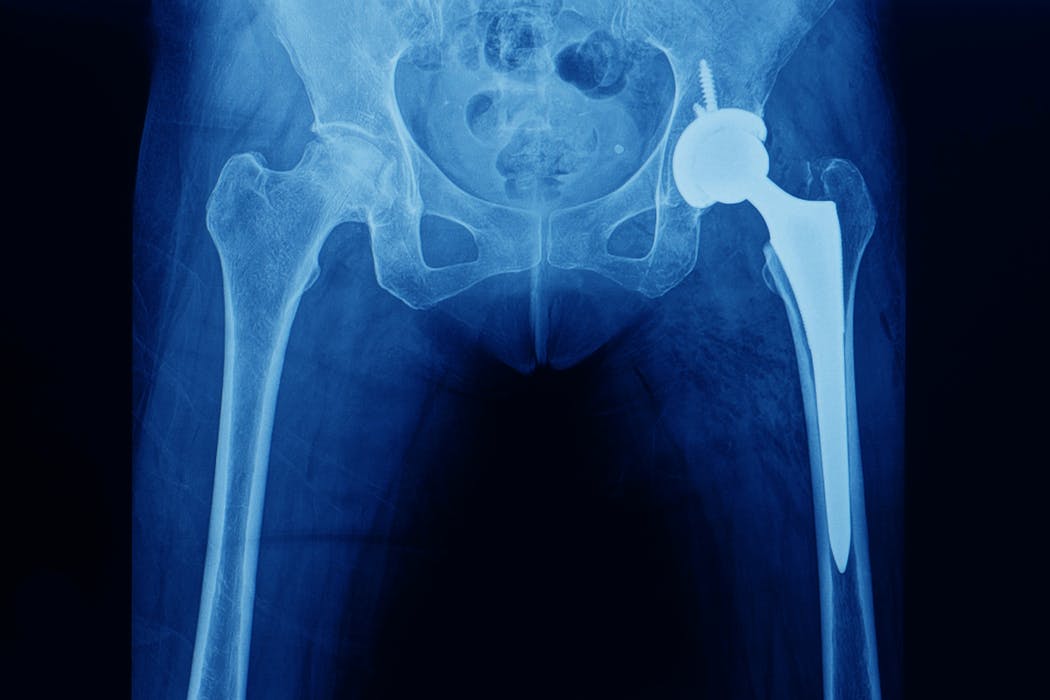
Modern hip replacements can last for 20 or 30 years. Yok_onepiece/ Shutterstock

Around 117,000 people living in England and Wales had a hip replacement in 2024. Although hip replacements are often thought of as a surgery that mainly older people need, reports from previous years show that around 43% of these operations are done in people aged 50 to 69 years old.

There are many reasons someone in their 50s might need to have a hip replacement. Having the operation done when necessary – regardless of how young you may be – can help you get back to a pain free, active lifestyle.

Why would someone in their 50s need a hip replacement?

The main reason a person in their 50s would need to have a hip replacement is due to arthritis. Although this condition is more common as people get older, it can still happen in younger people. Take Liam Gallagher, for instance. The 53-year-old underwent hip surgery in 2023 due to arthritis.

Arthritis occurs when the cartilage surrounding a joint begins wearing down over time – leading to pain, stiffness and reduced mobility.

Usually, arthritis of the hip is caused by a problem with the shape of the hip joint. For some this is due to hip dysplasia – a problem with the hip that can be evident at birth, where the joint hasn’t developed properly.

Problems with the hip joint can also emerge as young children grow – a condition known as Perthes’ disease.

The hip joint can become misshapen in teenage years as well, developing a bump where the joint meets the thigh bone. This is called a cam lesion and is a very common cause of early arthritis in men.

The other type of hip damage that can occur in younger people is joint inflammation caused by inflammatory arthritis – though this is less common. Inflammatory arthritis occurs when the body mistakenly attacks the hip joint, leading to symptoms such as pain, stiffness and weakness in the joint.

Although most people with inflammatory arthritis will be prescribed medication to treat it, sometimes symptoms can worsen. In such instances, a hip replacement may be performed to help reduce symptoms.

Are more young people having hip replacements?

Hip arthritis isn’t becoming more common in younger people. However, as hip replacements continue to improve and patient demand changes, surgeons are offering it to patients at a younger age.

The surgery is safe and reliable, so we can treat younger patients with greater confidence of long-term success.

Recent improvements in materials and surgical techniques also means a modern hip replacement can last for at least 20 to 30 years in patients – meaning many years of pain relief and mobility.

Is it better to have a hip replacement when you’re younger?

The right time to have surgery depends less on your age and more on your general health – considering the amount of pain and disability your hip is causing. You need to carefully weigh the benefits and risks of surgery against the problems arthritis causes for your life.

Younger patients don’t necessarily have a faster recovery or achieve better outcomes than older patients. It depends, in part, on why they needed surgery.

Younger patients can also have different expectations of what they’ll be able to do with their hip replacement. For example, some may want to get back to high levels of physical activity that just might not be possible. Although a hip replacement can improve mobility and reduce pain, it can’t give you back the joints you had when you were a teen.

A woman with short white hair holds her hip in pain.
A hip replacement can reduce pain and improve mobility.
Photoroyalty/ Shutterstock

It’s true as well that joint replacements don’t tend to last as long in younger patients compared to older patients. This is partly because young people are generally more active – and also because they simply have longer to live and more time to wear out the implant.

Does the surgery differ in younger patients?

In principle, hip replacement surgery is the same operation no matter your age. But there are some slight variations.

In patients aged 70 and older, the prosthesis components are usually glued to fix them to the bone, commonly called a cemented hip. The moving parts are typically made of metal and plastic.

But in younger people, the surgeon may use implants that rely on bone growing onto the surface to fix the replacement joint in place – commonly called a cementless (or uncemented) hip. The moving part of the joint will also be separate to the part that fixes onto the bone. This means they can easily be changed if they become very worn over the years without having to change the whole joint replacement.

In younger people, the moving parts may also be made of different materials – such as ceramic, as it’s more hard-wearing than metal.

How have hip replacements changed over the years?

The biggest advance in joint replacement materials came about with the development of very hard-wearing plastics and ceramics about 15 to 20 years ago.

These have transformed the life expectancy of a joint replacement which means that the majority of modern replacements now last decades. This is quite a different expectation to hip replacement surgery done in the 1980s or 1990s, which only lasted around ten years.

Could new therapies reduce the need for hip replacements someday?

New surgical techniques and therapies are being explored to see whether they may improve hip replacement outcomes.

For instance, a clinical trial is currently underway to understand whether robotic-assisted surgery leads to better hip replacement outcomes compared to conventional surgery techniques.

The use of 3D printing also appears to be promising. This technology allows for complicated implant shapes to be made. This would be beneficial in rare instances where a standard prosthesis wouldn’t fit properly.

Stem cell therapy may hold promise too. This therapy could reduce or eliminate the need for joint replacement entirely by treating arthritis itself. However, we don’t yet have clear clinical evidence showing this treatment works. It will still be years before researchers know if it’s a safe and reliable therapy for arthritis.

Hip replacement surgery is very safe and effective and current implants should last several decades. While new technologies and treatments are emerging, the bar is set very high to achieve better outcomes than conventional hip replacement surgery.

The Conversation

Mark Wilkinson receives funding from Arthritis UK, Medical Research Council, UKRI, and the Health Quality Improvement Partnership.

ref. People as young as 50 can need a hip replacement – here’s everything you need to know about this common surgery – https://theconversation.com/people-as-young-as-50-can-need-a-hip-replacement-heres-everything-you-need-to-know-about-this-common-surgery-269051

Why hedgehogs used to be hated

Source: The Conversation – UK – By Kate Davies, PhD candidate, Nottingham Trent University

Part of an illustration by an unknown artist from around 1250 showing a hedgehog stealing fruit. Getty Open Content., FAL

Hedgehogs have been part of human culture for thousands of years. Across different societies, they’ve been symbols of fertility, protection and healing, as well as fear, superstition and suspicion.

Today, 17 species of hedgehog are found across Europe, Africa and Asia, many of which live in close proximity to people, a closeness that has helped shape the stories told about them.

Long before written history, hedgehog-like imagery could be found in symbolic art linked to fertility and renewal, suggesting these animals mattered to people for far longer than written records can reveal.

In ancient Egypt, they were seen as guides and protectors, admired for their ability to survive winter through hibernation, a powerful symbol of rebirth. However, the Egyptians also hunted them for sport and used their spines in folk remedies, including those thought to cure baldness.

Hedgehogs also historically took on more unsettling roles. In parts of China, early stories described hedgehog spirits that could shapeshift into human form and bring misfortune. Later traditions, however, recast them as sacred household protectors and healers.

Hedgehogs playing as part of the illustrations for Alice in Wonderland
From the illustrated Alice in Wonderland.
From the British Library archive

Hedgehogs’ horrible history

In Britain, hedgehogs were viewed largely as negative until relatively recently. During the middle ages, they were closely associated with witchcraft. One widespread belief was that witches could transform into hedgehogs to cause harm and mischief. They were also thought to sneak into fields at night to steal milk directly from cows’ udders.

Another long standing belief was that hedgehogs carried stolen fruit on their spines. Medieval illustrations often showed them sneaking through orchards with apples skewered on their backs, an image that still appears in children’s books and birthday party treats today. Some long-standing myths also persist, with well meaning people offering them milk, despite hedgehogs being lactose intolerant.

Although some of these stories survive today as charming curiosities, others had more serious consequences. Hedgehogs were officially classed as “vermin” under the Preservation of Grain Act 1532, alongside a long list of other animals.

Parishes were required to kill them, with bounties of three pence paid for each hedgehog, a significant sum at the time. Communities that failed to meet their quotas could even be fined. Hedgehogs remained on these vermin lists for centuries.

It’s estimated that over the 140 years from 1660 to 1800, around half a million hedgehogs were destroyed in this way – a figure comparable to a substantial proportion of the UK’s current population. And they weren’t alone, wildcats, otters and pine marten (to name but a few) were all once persecuted in the same way, and are now among the UK’s most legally protected species, after suffering significant population declines.

Persecution and protection

Although this act was eventually repealed, the killing of hedgehogs continued well into the 19th and early 20th centuries, particularly on shooting estates. Records suggest that tens of thousands were destroyed each year during this period, with the numbers killed declining between the 1960s and early 1980s. This may reflect changing attitudes and the introduction of wildlife protection legislation, but it is also possible that hedgehogs were becoming scarcer.

An illustrated text page and an image of a hedgehog and a wolf.
A 15th century illustrated text about a hedgehog and a wolf.
Getty’s Open Content Program., FAL

Today, hedgehogs are seen very differently in the UK at least. In 2016 they were voted Britain’s favourite mammal, beating red foxes, which came in second place, by a considerable margin. Public affection for hedgehogs has fuelled garden conservation campaigns, dedicated charities and a growing network of rehabilitation centres, caring for sick and injured animals – often supported by members of the public who actively manage gardens with hedgehogs in mind.

While attitudes towards hedgehogs have improved dramatically in recent decades, this has not been enough to halt their decline, with the species recently reclassified as “near threatened” on the International Union for Conservation of Nature red list. Understanding our cultural journey and changing attitudes towards hedgehogs helps explain both our desire to protect them and some of the mistakes we still make.

It also offers a warning, other species once dismissed as pests only gained serious protection once their declines became impossible to ignore. Species such as badgers and foxes continue to provoke strong and divided public opinion, much as hedgehogs once did – a reminder of how strongly stories shape which animals we choose to protect.

The hedgehogs journey from feared pest to beloved garden icon shows how powerful human stories can be, both in harming wildlife and in motivating protection. But affection alone isn’t enough.

Myths that once justified persecution still linger in softer forms, shaping well-meaning but sometimes harmful behaviour. Right now hedgehogs need protection. Simple actions, such as offering a shallow dish of water, creating hedgehog-friendly gardens, providing escape routes from garden ponds and reducing pesticide use, will all help to save this now much-loved mammal.

The Conversation

Kate Davies does not work for, consult, own shares in or receive funding from any company or organisation that would benefit from this article, and has disclosed no relevant affiliations beyond their academic appointment.

ref. Why hedgehogs used to be hated – https://theconversation.com/why-hedgehogs-used-to-be-hated-272376

Syrie : comment les petites entreprises ont survécu à la guerre en bâtissant une économie parallèle

Source: The Conversation – in French – By Mohamad Fadl Harake, Docteur en Sciences de Gestion, Chercheur en Management Public Post-conflit, Université de Poitiers

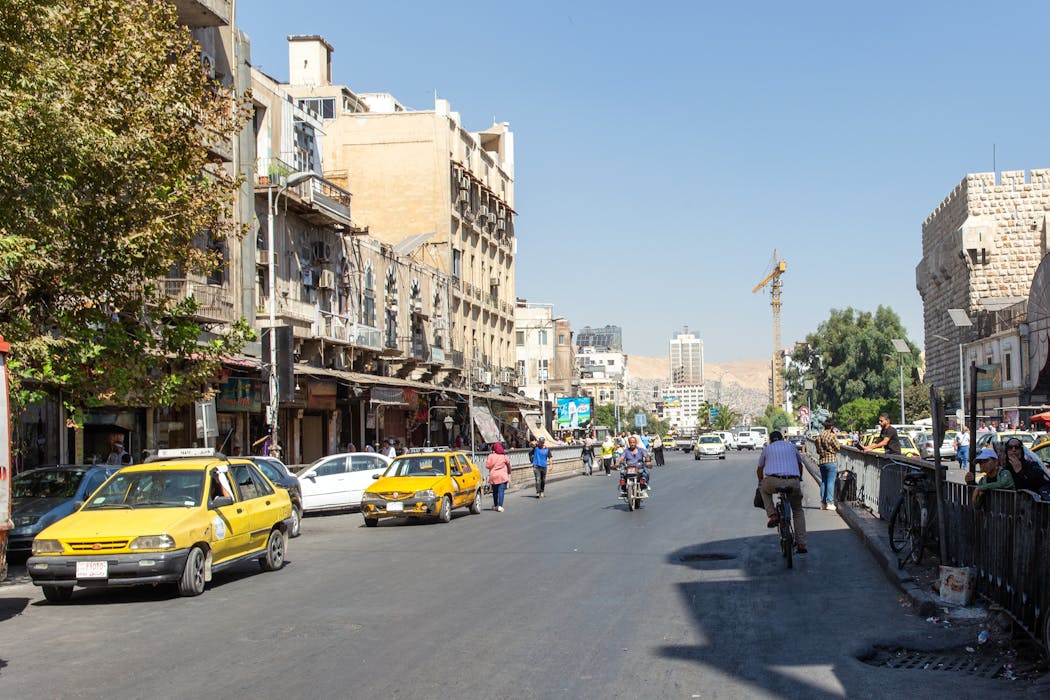
Pour survivre, les petites entreprises syriennes ont dû accepter de travailler avec toutes les autorités en place, que ce soit le régime de Bachar Al-Assad, l’État islamique ou les groupes d’opposition. Arteventet/Shutterstock

Même lorsqu’un pays est en guerre, que les institutions s’effondrent, que les groupes armés sèment la terreur, les entreprises de moins de 250 salariés jouent un rôle essentiel pour maintenir une activité économique minimale. Explication avec l’exemple syrien.


Pendant la guerre en Syrie, certaines petites entreprises ont dû payer des taxes au régime, négocier leur passage avec des groupes armés d’opposition, respecter les règles économiques de l’Organisation de l’État islamique, et s’appuyer sur des réseaux au Liban, en Irak ou en Jordanie.

Cette expérience met en lumière une réalité souvent négligée : lorsque l’État s’effondre, les acteurs économiques les plus modestes empêchent la société de s’arrêter complètement.

Contrairement à l’idée d’un pays économiquement à l’arrêt, la Syrie a vu émerger une économie parallèle, portée principalement par des petites et moyennes entreprises (PME) – de moins de 250 personnes et avec un chiffre d’affaires annuel n’excédant pas 50 millions de livres syriennes (SYP). Si cette économie n’était pas reconnue par les institutions officielles, elle était suffisamment organisée pour assurer la survie quotidienne de millions de Syriens et Syriennes.

Quand l’État disparaît, le marché se fragmente

À partir de 2012, la Syrie cesse de fonctionner comme un espace économique unifié. Le territoire se fragmente entre plusieurs autorités concurrentes : le régime syrien, différents groupes d’opposition armée, l’État islamique, les autorités kurdes et, en arrière-plan, les pays voisins. Dans ce contexte, le marché national se désagrège avec des routes coupées, des banques à l’arrêt et des contrats sans valeur juridique.

Selon la Banque mondiale, plus de la moitié des infrastructures économiques ont été détruites ou gravement endommagées.

Pourtant, les petites entreprises, comme les ateliers, les commerces, les transports ou les productions alimentaires, ont continué de fonctionner. Leur taille réduite et leur fort ancrage local leur ont permis de s’adapter à un environnement instable. Dans les contextes de conflit, ces entreprises jouent un rôle essentiel pour maintenir une activité économique minimale et aider les ménages à continuer de vivre.

Régime syrien, groupes d’opposition armés et État islamique

Pour survivre, ces petites et moyennes entreprises syriennes ont dû accepter une règle simple : travailler avec toutes les autorités en place, quelles qu’elles soient.

Avec le régime syrien

Dans les zones contrôlées alors par le régime de Bachar Al-Assad, les entreprises devaient obtenir des autorisations informelles, payer des taxes non officielles ou passer par des intermédiaires proches du pouvoir pour poursuivre leurs activités.

Ces pratiques, y compris des versements de pots-de-vin, symbolisent les défis auxquels font face ces petites et moyennes entreprises.


À lire aussi :
La Syrie en transition… mais quelle transition ?


Avec les groupes d’opposition

Dans d’autres régions, les entreprises devaient payer des rétributions pour sécuriser leurs convois, négocier l’accès aux routes ou accepter des contrôles locaux afin d’éviter pillages et blocages. Dans les zones tenues par des groupes rebelles, cela passait parfois par des interactions économiques directes avec ces forces armées.

Dans les zones non contrôlées par l’État central, ces arrangements deviennent des conditions de fait pour maintenir une activité commerciale. Les acteurs économiques doivent payer des frais de passage imposés par des groupes armés.

Avec l’État islamique

Dans les zones contrôlées par l’État islamique, les règles économiques étaient strictes. L’organisation imposait des taxes obligatoires aux commerces et aux activités de production, contrôlait la circulation des marchandises et appliquait des sanctions sévères en cas de non-respect. Refuser de coopérer signifiait le plus souvent la perte de l’activité, voire des représailles.

Des analyses montrent que ce système de taxation et de contrôle économique constituait l’un des piliers du mode de gouvernance mis en place par l’État islamique dans les territoires syriens qu’il contrôlait.

Les pays voisins, prolongement de l’économie syrienne

Privées d’un système bancaire fonctionnel, de nombreuses petites entreprises syriennes se sont tournées vers les pays voisins.

Le Liban est devenu un point central pour les transferts financiers informels, la Jordanie, un espace d’approvisionnement relativement stable, et l’Irak un corridor essentiel pour le transport de marchandises. Dans ce contexte, les frontières ont cessé d’être de simples lignes de séparation pour devenir des espaces clés de l’économie syrienne.

La diaspora syrienne a joué un rôle central dans ces échanges, en finançant des activités locales et en sécurisant les transactions lorsque les institutions officielles faisaient défaut.

Une économie parallèle fondée sur la confiance

Cette économie n’était pas légale au sens strict, mais elle reposait sur des règles claires.

Lorsque les institutions disparaissent, la confiance ne s’évanouit pas, elle se déplace. Elle s’ancre dans la famille, les réseaux locaux, la réputation et la parole donnée. Les accords se concluent alors sans contrat écrit et, paradoxalement, ils sont respectés, car la survie collective en dépend.

De nombreux travaux sur les économies de guerre et les contextes de fragilité montrent que ces systèmes informels peuvent, dans certaines situations, s’avérer plus fiables que des institutions affaiblies ou absentes.

S’adapter en permanence pour ne pas disparaître

Faute de pouvoir investir ou planifier à long terme, les petites entreprises syriennes ont privilégié la réparation plutôt que le remplacement, l’utilisation d’un même atelier pour produire différents biens, le changement de fournisseurs ou d’itinéraires du jour au lendemain et la limitation de leurs stocks pour réduire les pertes en cas de rupture.

Privées d’accès au crédit, aux marchés extérieurs et à des infrastructures fiables, les entreprises syriennes ont ajusté leurs activités pour continuer à fonctionner.

Chaque décision devenait un calcul permanent du risque : quel trajet est le moins dangereux ? Qui faut-il payer pour passer ? Quelle perte peut être absorbée sans mettre l’entreprise en faillite ?

Réduire la dépendance à l’aide humanitaire

Cette économie parallèle a permis l’accès à des biens essentiels, contribué à la survie de millions de familles et maintenu un minimum d’activité économique dans un pays en guerre. En limitant l’effondrement total des circuits d’échange, elle a réduit, dans certains territoires, la dépendance exclusive à l’aide humanitaire.

Les organisations humanitaires elles-mêmes ont dû composer avec ces réseaux informels pour atteindre les populations et acheminer biens et services de première nécessité.

Un héritage difficile à intégrer

Aujourd’hui, une question centrale se pose : comment reconstruire une économie officielle sans fragiliser les mécanismes qui ont permis à la société de tenir pendant la guerre ?

Car les petites et moyennes entreprises syriennes abordent les institutions avec prudence, tout en restant dépendantes de relations régionales construites pendant le conflit. Réintégrer ces entreprises dans un cadre légal sans rompre ces équilibres constitue l’un des défis majeurs de la reconstruction économique de la Syrie.

Ancrées dans les communautés locales, ces entreprises jouent un rôle social majeur. Elles maintiennent des formes de solidarité économique, offrent des opportunités d’emploi aux femmes et aux jeunes et contribuent, dans certains secteurs, à la préservation d’activités artisanales et agricoles.

Au-delà du cas syrien, cette trajectoire rappelle que, dans les crises extrêmes, la résilience des sociétés repose souvent sur des acteurs invisibles : les petites entreprises, capables de faire tenir l’économie quand tout le reste vacille.

The Conversation

Mohamad Fadl Harake ne travaille pas, ne conseille pas, ne possède pas de parts, ne reçoit pas de fonds d’une organisation qui pourrait tirer profit de cet article, et n’a déclaré aucune autre affiliation que son organisme de recherche.

ref. Syrie : comment les petites entreprises ont survécu à la guerre en bâtissant une économie parallèle – https://theconversation.com/syrie-comment-les-petites-entreprises-ont-survecu-a-la-guerre-en-batissant-une-economie-parallele-271042

Dermatose nodulaire contagieuse : les vétérinaires victimes d’une épidémie de désinformation

Source: The Conversation – in French – By Jeanne Brugère-Picoux, Professeur honoraire agrégée de pathologie du bétail à l’École nationale vétérinaire d’Alfort, Président honoraire de l’Académie vétérinaire de France (2012), Académie nationale de médecine, Académie vétérinaire de France

Arrivée en France en juin 2025, la dermatose nodulaire contagieuse (DNC) a rapidement fait l’objet de mesures sanitaires qui ont permis d’éradiquer le virus dans certaines régions. Mais la crise agricole qui a suivi a vu émerger une contestation inédite, nourrie par des fausses informations et des remises en cause du rôle des vétérinaires. Dans ce texte, la profession appelle à un « droit de véto » contre la désinformation.


La dermatose nodulaire contagieuse (DNC) a atteint la France en Savoie le 29 juin 2025 à la suite de l’introduction d’un bovin infecté venant d’Italie. La France métropolitaine étant alors indemne de la DNC, la réglementation européenne prévue (dépeuplement total, vaccination d’urgence au sein des zones réglementées (ZR) – instaurées par arrêté préfectoral, limitation des mouvements des bovins…] a été mise en place, ce qui a permis d’éliminer le virus dans la région dès le 21 août.

Les contaminations ultérieures qui ont suivi en France, notamment en Occitanie, sont en réalité le résultat de déplacements illicites de bovins contagieux à partir de la zone réglementée couvrant une partie de l’Ain, de la Savoie et de la Haute-Savoie (zone vaccinale II sur la carte ci-dessous).

Zones réglementées et vaccinales suite aux foyers de DNC en France au 31 décembre 2025.
Ministère de l’agriculture, de l’agro-alimentaire et de la souveraineté alimentaire

La forte médiatisation de la DNC associée aux dénonciations de « hold-up politique » par certains éleveurs rappelle de précédentes crises sanitaires (vache folle, grippe aviaire, Covid-19…). Mais à l’époque, la parole des « sachants » n’avait pas été remise en cause dans les mêmes proportions qu’aujourd’hui. Des membres de la profession vétérinaire font l’objet d’insultes, voire de menaces gravissimes, dans certains cas même de menaces de mort.

Cette situation est non seulement surprenante, mais également choquante. Les vétérinaires ont toujours été associés et solidaires avec les éleveurs. Dans le même temps, de fausses informations au sujet de la DNC se propagent dans l’espace médiatique.


À lire aussi :
Dermatose nodulaire : comprendre les raisons de la mobilisation agricole


Un déferlement inédit de « fake news »

Parmi les fausses informations que des experts autoproclamés (parmi lesquels on a pu retrouver tant des personnes ayant endossé une posture « antivax » lors de la pandémie de Covid-19 que des scientifiques ou cliniciens méconnaissant la DNC) ont diffusées, non seulement sur les réseaux sociaux mais également dans les médias :

  • « La maladie peut être traitée par des antibiotiques/par l’ivermectine. »

C’est faux. Les antibiotiques ou les antiparasitaires tels que l’ivermectine ne sont pas actifs sur une maladie virale comme la DNC, causée par un Capripoxvirus (Lumpy skin disease virus).

  • « L’Espagne et l’Italie n’ont pas appliqué le dépeuplement total. »

C’est faux. Les autres pays européens confrontés à la DNC, comme l’Espagne et l’Italie, appliquent eux aussi la stratégie d’abattage de tous les bovins présents dans un foyer confirmé de DNC, comme le confirme le ministère de l’agriculture.

  • « La Suisse pratique l’abattage partiel. »

Il n’y a pour l’instant pas eu de cas de DNC confirmé en Suisse, donc pas d’abattage.

  • « Il est inadmissible d’abattre tout un troupeau lorsqu’il y a seulement un animal malade. »

Si un seul animal présente des lésions cutanées, il y a de fortes chances qu’au moins 50 % des animaux soient infectés dans le troupeau. En effet, il est difficile de connaître précisément la date d’infection du bovin. Si celle-ci est antérieure à l’acquisition de la protection vaccinale, alors plusieurs animaux sont potentiellement infectés au sein du troupeau, ce que les tests sanguins ne permettent pas de détecter.

  • « Il faut avoir un troupeau témoin pour surveiller l’évolution de la maladie dans un foyer infecté. »

Ce troupeau « témoin » a existé dès le 6e foyer de DNC déclaré le 7 juillet en France, du fait du recours d’un jeune éleveur de Savoie refusant le dépeuplement de son troupeau. Treize jours plus tard, le recours a été refusé et d’autres cas de DNC se sont déclarés dans son élevage. La forte contagiosité de la DNC pourrait en partie expliquer le grand nombre de foyers de DNC déclarés deux semaines plus tard dans les élevages voisins.

  • La DNC relève de la catégorie A du droit européen, comme la fièvre aphteuse, or « pour la fièvre aphteuse, de nouveaux textes préconisent l’abattage partiel ».

C’est faux. La catégorie A correspond en médecine vétérinaire à une maladie soumise une réglementation sanitaire très stricte lorsqu’il s’agit d’une maladie hautement contagieuse émergent dans un pays indemne. Les conséquences économiques et sanitaires justifient une éradication immédiate dès son apparition.

  • « Le vaccin n’est pas efficace car certains bovins vaccinés ont présenté la maladie malgré tout »

La vaccination en urgence n’est pas une vaccinothérapie. Elle nécessite au moins trois semaines pour installer une protection immunitaire. Elle a pu être réalisée chez des animaux déjà infectés avant ou peu après l’injection vaccinale.

  • « La désinsectisation de l’élevage est la méthode la plus efficace pour éviter la contamination ».

Ce sont certes des insectes hématophages qui sont les vecteurs de la DNC, mais les traitements insecticides ne sont jamais efficaces à 100 %. Il n’existe pas de mesure parfaite permettant d’éradiquer tous les insectes d’un élevage.

  • « 70 vétérinaires ont été radiés de l’Ordre des vétérinaires pour avoir refusé l’abattage du troupeau de l’Ariège ».

C’est faux. Le conseil national de l’ordre des vétérinaires confirme qu’aucun vétérinaire n’a été radié pour avoir refusé un abattage.

  • « Le vaccin est dangereux pour les animaux et l’humain ».

C’est faux, le vaccin est un vaccin dit « vivant atténué » qui ne présente aucun danger ni pour les animaux ni pour l’humain. De plus, la DNC n’est pas une zoonose (maladie animale transmissible à l’humain et réciproquement), mais une épizootie.

  • « Il y a encore des cas de DNC en Savoie ».

Dans cette zone désormais considérée comme indemne de la DNC, il peut s’agir de la pseudo dermatose nodulaire contagieuse (PDNC), due à un herpèsvirus qui évolue très rapidement (en 3 semaines) vers la guérison.

  • « La fédération des vétérinaires européens (FVE) préconise plutôt la vaccination que l’abattage dans la DNC ».

C’est faux : la note de la FVE de novembre 2025 présente une revue générale sur le bénéfice des vaccinations en médecine vétérinaire sans remettre en cause la réglementation européenne concernant les maladies classées dans la catégorie A comme la DNC.

  • « L’EFSA (European Food Safety Autority) avait préconisé un abattage partiel en 2016 lors des premiers foyers de DNC en Europe ».

Cette recommandation de l’EFSA en 2016 correspondait à une évaluation mathématique des moyens à mettre en œuvre dans les pays où la DNC était déjà installée (virus endémique), en l’occurrence les Balkans. Elle ne s’applique pas pour les pays indemnes de DNC soumis à la réglementation européenne, comme c’est le cas en France.

  • « Lors de l’épizootie de DNC observée dans l’île de La Réunion en 1991-1992, il n’y a pas eu de dépeuplement total ».

La flambée de DNC sur l’île de la Réunion a été la conséquence de l’importation de zébus malgaches. Le contexte sur cette île qui n’exportait pas de bovins était toutefois différent de la situation actuelle de la DNC en France métropolitaine. Il y a d’abord eu un retard considérable de plusieurs mois pour identifier formellement la maladie. Le premier vaccin, qui était celui utilisé pour la variole ovine, était peu efficace pour les 18 000 bovins vaccinés (sur les 21 000 bovins recensés sur l’île). La vaccination avec le vaccin bovin sud-africain, bien plus efficace, a été réalisée avec un an de retard. Au total, 511 exploitations ont été atteintes avec 10 % de mortalité.

Les conditions de la sortie de crise

En France, la situation est actuellement sous contrôle dans le Sud-Est, mais elle est encore évolutive en Occitanie, où de rares cas peuvent encore apparaître à la fin de cette épizootie. Ce sera le cas de bovins en incubation, car voisins d’un foyer déclaré et dont l’immunité vaccinale n’est pas encore installée pour le protéger.

Deux autres risques ne peuvent pas être évalués pour prédire la fin de cette épizootie de DNC :

  • un déplacement illicite à partir des ZR actuelles d’animaux apparemment sains, mais qui sont de véritables « bombes virales » à retardement ;

  • la non-déclaration d’un cas de suspicion de DNC par un éleveur (comme un représentant syndical a osé le recommander), alors qu’il convient d’éviter la contamination des élevages voisins.

La principale revendication des agriculteurs, répétée inlassablement dans les médias, est un abattage partiel lors de DNC. Elle témoigne d’une méconnaissance de cette maladie. En effet, on l’a vu plus haut, ce serait mettre en danger les troupeaux indemnes et par-delà, tout le cheptel bovin français. Nous espérons qu’il n’y aura plus de foyers de DNC à partir de mi-janvier 2026, comme ce fut le cas dans les Savoie après la vaccination.

La profession vétérinaire a toujours été proche des agriculteurs. Rappelons que les premières écoles vétérinaires au monde ont été créées en France au XVIIIe siècle pour « lutter contre les maladies des bestiaux ». Ainsi, en unissant nos forces nous avons pu éradiquer de la surface de la Terre en 2001 une autre maladie virale : la peste bovine.

The Conversation

Jean-Yves Gauchot est docteur vétérinaire et président de la Féderation des syndicats vétérinaires de France

Jeanne Brugère-Picoux ne travaille pas, ne conseille pas, ne possède pas de parts, ne reçoit pas de fonds d’une organisation qui pourrait tirer profit de cet article, et n’a déclaré aucune autre affiliation que son organisme de recherche.

ref. Dermatose nodulaire contagieuse : les vétérinaires victimes d’une épidémie de désinformation – https://theconversation.com/dermatose-nodulaire-contagieuse-les-veterinaires-victimes-dune-epidemie-de-desinformation-273027

L’intervention des États-Unis au Venezuela au prisme du droit international

Source: The Conversation – in French – By Abdelwahab Biad, Enseignant chercheur en droit international, Université de Rouen Normandie

Bombarder un pays étranger sans mandat de l’ONU, capturer son dirigeant, quand bien même sa légitimité est douteuse, et proclamer qu’on va dorénavant diriger le pays en question : tout cela contrevient à de nombreuses normes du droit international détaillées dans la Charte de l’ONU et dans les Conventions de Genève.


L’Opération « Absolute Résolve » qui a impliqué le déploiement d’une force aéronavale sans précédent dans les Caraïbes depuis la crise des missiles de Cuba en 1962 illustre la détermination du président Trump à capturer le président Nicolas Maduro et son épouse, en exécution d’un mandat d’arrêt de la justice américaine pour « narco-terrorisme ». Au-delà de la méthode et des raisons invoquées pour la justifier, il s’agit d’une intervention armée sur le territoire d’un État étranger sans fondement juridique. C’est une nouvelle manifestation d’un interventionnisme décomplexé depuis l’adoption de la Doctrine Monroe il y a deux siècles.

Celle-ci, énoncée par le président James Monroe en 1823, visait à dissuader les puissances européennes d’intervenir dans l’hémisphère occidental, considéré comme chasse gardée des États-Unis. Elle s’est traduite notamment par le soutien aux républicains mexicains pour mettre fin à l’éphémère royaume de Maximilien voulu par Napoléon III (1861-1867), ainsi que l’appui aux indépendantistes cubains au prix d’une guerre hispano-américaine (1898) à l’issue de laquelle l’île de Porto Rico a été annexée par les États-Unis et Cuba est devenue formellement indépendante.

La Doctrine Monroe version Trump (« Trump Corollary » dans la Stratégie de sécurité nationale 2025) est désormais définie comme visant à restaurer la prééminence de Washington dans son arrière-cour en s’assurant qu’aucun rival extérieur ne soit en mesure d’y déployer des forces ou de contrôler des ressources vitales dans la région. Une allusion à peine voilée à la Chine dont l’activisme économique dans la région et singulièrement au Venezuela (qui intéresse avant tout Pékin pour son pétrole) est perçu comme une menace pour cette prééminence.

Un précédent : Panama, 1989

« Absolute Resolve » ressemble par son modus operandi à l’opération « Just Cause » décidée par le président George W. Bush en 1989 pour capturer et traduire devant un tribunal américain le dirigeant du Panama, Manuel Noriega, sous la même inculpation de trafic de drogue.

L’Assemblée générale des Nations unies avait qualifié cette intervention à Panama de « violation flagrante du droit international, de l’indépendance, de la souveraineté et de l’intégrité territoriale de Panama » (Résolution 44/240 du 29 décembre 1989).

Une différence réside dans le fait que le général Manuel Noriega – un dictateur responsable d’exécutions extrajudiciaires et de tortures – fut un allié de Washington, mais qui avait fini par s’avérer encombrant. A contrario, Nicolas Maduro – qui est également considéré par de nombreux États, ONG et observateurs comme un dictateur ayant mis en place une large répression et s’étant fait réélire en 2024 de façon totalement frauduleuse – incarne une gauche révolutionnaire que Washington n’a cessé de combattre depuis la guerre froide.


À lire aussi :
Des crimes contre l’humanité ont-ils été commis au Venezuela ces dernières années ? La Cour pénale internationale va (peut-être) trancher


Une violation manifeste de la Charte des Nations unies

L’intervention armée sur le territoire vénézuélien constitue sans discussion une violation de la Charte des Nations unies. Celle-ci dispose que « les membres de l’Organisation s’abstiennent, dans leurs relations internationales, de recourir à la menace ou à l’emploi de la force, soit contre l’intégrité territoriale ou l’indépendance politique de tout État, soit de toutes autres manières incompatibles avec les buts des Nations unies » (article 2, § 4).

Les exceptions compatibles avec un recours à la force se limitent à la légitime défense ou à une action conforme à une décision du Conseil de sécurité. Dans cette circonstance, les États-Unis ne peuvent se prévaloir ni d’une action en légitime défense ni d’un mandat du Conseil de sécurité.

La Cour internationale de Justice avait relevé que le non-recours à la force relevait d’un principe essentiel et fondamental du droit international (arrêt du 27 juin 1986, qui concernait déjà une confrontation entre les États-Unis et un pays des Amériques, en l’occurrence le Nicaragua).

L’interdiction de l’emploi de la force peut être déduite d’une autre disposition de la Charte (Article 2, § 7) invitant les États à recourir au règlement pacifique des différends (chapitre 6), ce qui manifestement n’a pas été mis en œuvre ici.

Ces principes ont pour finalité de préserver la stabilité de l’ordre international et de prévenir le règne de la loi de la jungle dans les relations internationales. Or, faut-il le rappeler, dans la mesure où ils ont adhéré à la Charte des Nations unies, dont ils furent les rédacteurs en 1945, les États-Unis sont tenus d’en respecter et appliquer les dispositions.

Le « régime change » n’a pas de fondement en droit international

Le président Trump a justifié son intervention armée contre un président qu’il considère comme « illégitime » par l’accusation selon lequel Nicolas Maduro se serait livré, des années durant, au « narco-terrorisme ». La méthode utilisée, l’enlèvement d’un chef d’État en exercice, est doublement contraire au droit international : d’une part, en raison de l’immunité attachée à la fonction présidentielle (ce que semble ignorer l’application extra-territoriale de la justice américaine) ; d’autre part parce que la Charte, dans son art. 2, § 7, stipule clairement la non-ingérence dans les affaires intérieures des États.

Le principe de souveraineté n’autorise pas un État à intervenir militairement sur le territoire d’un autre État en vue d’en changer le système politique, quand bien même le régime de Nicolas Maduro s’est rendu coupable de fraude électorale et de graves violations des droits humains à l’égard de l’opposition, qui font l’objet d’une enquête conduite par la Cour pénale internationale pour crimes contre l’humanité.

Il reste que l’emploi de la force armée n’est pas la méthode la plus appropriée pour promouvoir les droits de l’homme dans un autre pays. Il existe des mécanismes internationaux compétents dans ce domaine (ONU, CPI) qui devraient pouvoir poursuivre leurs missions d’enquête sur les crimes commis par le régime de Maduro.

Les Conventions de Genève régissant le droit des conflits armés

Le droit applicable à l’intervention armée à Caracas est le droit des conflits armés encadrant la conduite des opérations militaires et la protection des biens et des personnes, même si les États-Unis nient être en guerre contre le Venezuela.

Les Conventions de Genève et le Protocole 1 s’appliquent s’agissant d’un conflit armé international même si l’une des parties ne reconnaît pas l’état de guerre (art. 2 commun des Conventions), comme l’attestent les déclarations de Washington.

Dès son arrestation, Nicolas Maduro peut se prévaloir de la protection de la 3ᵉ Convention de Genève relative au traitement des prisonniers de guerre. En outre, la brièveté de l’opération militaire américaine n’exclut pas l’application de la 4ᵉ Convention de Genève si des victimes civiles sont à déplorer ou des biens civils ciblés.

D’autre part, Donald Trump a déclaré vouloir « diriger le pays jusqu’à ce que nous puissions assurer une transition sûre, appropriée et judicieuse ». Cela peut être un motif d’inquiétude si un projet d’occupation est envisagé (la Charte des Nations unies le proscrit si l’occupation découle d’un recours à la force illicite). Cela dit, un tel scénario semble improbable compte tenu de l’expérience des fiascos en Afghanistan et en Irak, des réactions internationales majoritairement hostiles à l’intervention militaire, ainsi que de la montée des critiques au sein même de sa base MAGA, à qui Trump avait promis avant son élection de mettre fin aux guerres extérieures.

L’intervention armée et l’arrestation d’un chef d’État étranger en vue de le juger par un tribunal états-unien sont un message sans ambiguïté adressé par le président Trump à la communauté internationale : son pays n’hésitera pas à faire prévaloir le droit de la force sur la force du droit. Le droit international doit impérativement prévaloir comme contrat social liant les nations pour prévenir le chaos ou « l’homme est un loup pour l’homme » pour reprendre la formule de Thomas Hobbes. s’est déclaré à Fuerte Tiuna, le plus grand complexe militaire du Venezuela, après les frappes de l’armée des États-Unis à Caracas le 3 janvier 2026.

The Conversation

Abdelwahab Biad ne travaille pas, ne conseille pas, ne possède pas de parts, ne reçoit pas de fonds d’une organisation qui pourrait tirer profit de cet article, et n’a déclaré aucune autre affiliation que son organisme de recherche.

ref. L’intervention des États-Unis au Venezuela au prisme du droit international – https://theconversation.com/lintervention-des-etats-unis-au-venezuela-au-prisme-du-droit-international-272929

Loi de finances spéciale : une entorse à la Constitution ?

Source: The Conversation – in French – By Jeremy Martinez, Maître de conférences, droit public, Université Paris Dauphine – PSL

Une nouvelle loi de finances spéciale a été adoptée par le Parlement, le 23 décembre 2025. Or ce choix politique est contestable d’un point de vue juridique. En cas de blocage dans l’examen du budget, la Constitution prévoit un recours à l’article 49-3 ou une mise en œuvre du budget par ordonnances. On ne peut appeler à la défense de l’État de droit face à des dérives autoritaires et contourner la Constitution quand il s’agit d’adopter le budget.


L’adoption du budget est un moment crucial, car elle conditionne le financement de l’action publique pour l’année suivante. Dans une démocratie représentative, il appartient en principe au Parlement d’adopter chaque année le budget, que le gouvernement est ensuite autorisé à exécuter.

En France, la Constitution encadre strictement cette procédure afin d’éviter toute paralysie de l’État. Les délais d’examen sont volontairement contraints (40 jours pour l’Assemblée nationale, 20 jours pour le Sénat) et, en cas de blocage, le gouvernement peut soit recourir à l’article 49 alinéa 3, soit mettre en œuvre le budget par ordonnances si le Parlement ne s’est pas prononcé dans un délai de 70 jours. Tout est donc fait pour éviter un « shutdown » à l’américaine, même si, formellement, ce dernier ne peut être catégoriquement exclu en cas de rejet définitif du Parlement d’une loi de finances, y compris spéciale.

Or, depuis la dissolution de 2024, une Assemblée nationale profondément divisée empêche l’adoption du budget avant le 31 décembre. Pour assurer la continuité de l’État, une loi de finances spéciale en 2024 avait déjà été adoptée, en attendant l’adoption tardive de la loi de finances en février 2025. Les mêmes causes produisant les mêmes effets, une nouvelle loi de finances spéciale a été adoptée pour 2025.

Cette solution est souvent présentée comme un mal nécessaire. La loi de finances spéciale a d’ailleurs été adoptée à l’unanimité (avec des abstentions) par l’Assemblée nationale en 2024 et en 2025. Pourtant, cette nécessité n’est pas juridique. Aucun texte juridique n’oblige le gouvernement à déposer une loi de finances spéciale. Au contraire, un respect scrupuleux de la Constitution plaiderait plutôt en faveur du recours aux ordonnances, expressément prévues pour ce type de situation. Si cette option est écartée, ce n’est donc pas pour des raisons juridiques mais pour des raisons politiques.

Derrière ce débat technique se cache une question simple : peut-on, au nom de la recherche d’un consensus politique au sein du Parlement, s’affranchir de la Constitution ?

Une loi de finances spéciale… spéciale

La Constitution prévoit qu’une loi spéciale n’est possible que si le projet de loi de finances n’a pas été déposé « en temps utile » (article 47 alinéa 4 de la Constitution).

Qu’est-ce qu’un dépôt en « temps utile » ? On peut raisonnablement avancer que le projet sera déposé en temps utile lorsqu’il laissera 70 jours au Parlement pour examiner le texte (et, éventuellement, 8 jours au juge constitutionnel pour rendre sa décision), soit le délai au bout duquel le gouvernement pourra mettre en vigueur le projet de loi de finances par ordonnances.

Depuis que le gouvernement a déposé le projet le 14 octobre 2025 à l’Assemblée, le délai de 70 jours court jusqu’au 23 décembre, auquel s’ajoutent 8 jours pour le Conseil constitutionnel, portant la date limite au 31 décembre. Ainsi, le gouvernement a déposé le projet de loi de finances en temps utile. Notons que, dans le cadre de l’examen du projet de loi de finances précédent, le délai de 70 jours avait même été atteint avant le 23 décembre.

Dès lors, les lois de finances spéciales depuis la dissolution de 2024 ne correspondent à aucune hypothèse prévue par la Constitution. Il s’agit de lois de finances sui generis, autrement dit de lois de finances spéciales… spéciales.

Un remède constitutionnel ou un pouvoir inconstitutionnel ?

Ni la Constitution ni les règles budgétaires ne prévoient formellement l’existence de ces lois de finances spéciales adoptées par le Parlement. La question est donc simple : sur quoi le gouvernement fonde-t-il sa compétence pour déposer ces textes ? L’enjeu est important : le principe même d’un État de droit repose sur la nécessité que les gouvernants exercent un pouvoir prévu par le droit, notamment par une Constitution.

La réponse tient à un précédent ancien, datant de 1979. Cette année-là, le Conseil constitutionnel avait admis, de manière exceptionnelle, une loi de finances sui generis après avoir censuré la loi de finances initiale, le 24 décembre, pour un vice de forme. L’État se retrouvait alors sans budget à quelques jours du 1er janvier. Face à cette urgence extrême, le Conseil constitutionnel avait validé une loi de finances spéciale, non prévue par les textes en vigueur, au nom d’un impératif supérieur : garantir la continuité de la vie nationale.

C’est ce précédent que le gouvernement invoque aujourd’hui, comme il l’avait déjà fait pour la loi de finances spéciale de 2024. Au regard des enjeux en présence (lever l’impôt et garantir le fonctionnement des services publics pour maintenir une vie nationale), le Conseil constitutionnel pourrait ne pas s’opposer au raisonnement du gouvernement en cas d’éventuelle saisine de l’opposition.

On notera que le précédent de 1979 était plus facilement transposable à la configuration de 2024 qu’à celle de 2025. En 2024, le renversement du gouvernement Barnier était une circonstance empêchant l’adoption du budget avant le 1er janvier.

En 2025, à la différence de 2024, il n’y a aucune circonstance exceptionnelle empêchant matériellement le Parlement de se prononcer sur le budget. La loi de finances spéciales 2025 était simplement justifiée par le probable rejet du projet de loi de finances. Le gouvernement adopte ainsi une lecture extensive du précédent jurisprudentiel de 1979 en affirmant dans l’exposé des motifs de la loi de finances spéciale 2025 qu’il lui appartient « de déposer un projet de loi spéciale lorsqu’il apparaît qu’une loi de finances ne pourra pas être promulguée avant le début du prochain exercice budgétaire »). Ce n’est pas ce que le Conseil constitutionnel a dit dans sa décision de 1979. D’un instrument exceptionnel, la loi de finances spéciale est transformée en pratique courante. Le gouvernement fragilise indiscutablement l’équilibre constitutionnel.

L’exclusion de l’ordonnance budgétaire : compromis politique et détournement de la Constitution

Cet équilibre est d’autant plus fragilisé que le gouvernement écarte une solution pourtant expressément prévue par la Constitution : le recours à l’ordonnance prévu à l’article 47 alinéa 3. Ce mécanisme, conçu dès 1958, permet au gouvernement de mettre en vigueur lui-même le projet de loi de finances si le Parlement ne s’est pas prononcé dans le délai de 70 jours. Cet outil s’inscrit pleinement dans la logique d’un parlementarisme rationalisé, qui garantit avant tout la continuité de l’action gouvernementale.

Certes, le recours à cette ordonnance est une faculté et non une obligation pour le gouvernement. En outre, la procédure est brutale à l’encontre d’un régime parlementaire dès lors qu’elle écarte le Parlement de l’adoption du budget. Pour autant, cette procédure a été prévue en 1958 précisément pour cela en présence d’un Parlement miné par des désaccords partisans. Si l’instabilité au Parlement était telle qu’elle entraînerait de manière certaine le rejet définitif de tout texte financier (y compris une loi de finances spéciale), l’ordonnance serait-elle toujours aussi décriée alors qu’elle serait le seul et unique moyen d’éviter un shutdown ?

En recourant à des lois de finances spéciales juridiquement fragiles et en écartant des ordonnances politiquement contestées mais juridiquement solides, le gouvernement fait primer le consensus politique sur l’autorité de la Constitution. Serait-ce la peur d’une crise politique en général ou celle plus particulière d’être renversé par l’Assemblée nationale en représailles d’un recours aux ordonnances ? On ne peut malheureusement exclure ces considérations opportunistes, qui contribuent à une défiance à l’égard de la vie publique.

Opportunisme ou pas, le débat sur la loi de finances spéciale ne se résume pas à une querelle de juristes. Il révèle une tension plus profonde entre les accommodements de la pratique des acteurs politiques et le respect de l’autorité de la Constitution.

Rappelons, de ce point de vue, que la Constitution est un tout. Elle garantit le respect des droits et libertés, mais encadre également le fonctionnement des pouvoirs publics et, par conséquent, les conditions d’adoption du budget. On ne peut appeler à la préservation, voire au renforcement, de l’autorité de la Constitution quand il s’agit de défendre l’État de droit face à des dérives autoritaires, et, en même temps, contourner la Constitution quand il s’agit d’adopter le budget. Derrière le vernis de la technique juridique se profile une conception alarmante que les gouvernants peuvent avoir de la Constitution.

Respecter le Parlement est une exigence démocratique. Mais affaiblir la Constitution au nom de cet objectif revient à fragiliser l’ensemble de l’édifice institutionnel. À vouloir trop éviter le choc politique, on pourrait provoquer une secousse constitutionnelle durable.

The Conversation

Jeremy Martinez ne travaille pas, ne conseille pas, ne possède pas de parts, ne reçoit pas de fonds d’une organisation qui pourrait tirer profit de cet article, et n’a déclaré aucune autre affiliation que son organisme de recherche.

ref. Loi de finances spéciale : une entorse à la Constitution ? – https://theconversation.com/loi-de-finances-speciale-une-entorse-a-la-constitution-272712