Mysterious fossil may rewrite story of skin and feather evolution in reptiles

Source: The Conversation – UK – By Valentina Rossi, Postdoctoral researcher, Palaeontology, University College Cork

A delicate, innocuous little fossil reptile known as Mirasaura grauvogeli – “Grauvogel’s wonder reptile” – is forcing a rethink about the evolution of skin and its appendages such as feathers and hair.

These newly discovered fossils, from the Middle Triassic (247 million years old)
Grès à Voltzia site in northeast France, preserve evidence of some of the most astonishing soft-tissue features described to date in ancient reptiles. We are two of the authors of a new paper on these finds, published in Nature.

These fossils show that the tree dwelling Mirasaura had a large and startling crest along its back. The crest is formed by elongated appendages that are neither scales, feathers nor hair.

Until now, complex skin outgrowths such as feathers were thought to have evolved only much later – in birds, dinosaurs and pterosaurs. This probably occurred through a single origin in the common ancestor of these animals. In all other types of reptile, the only skin outgrowths present are scales.

Mirasaura has overthrown this paradigm in sensational fashion. Compared with the size of its body, the long blades of its tall dorsal crest are enormous. Closer inspection reveals this crest comprised individual, overlapping appendages, each with a narrow central ridge and a lobed outline, similar to the shaft and form of feathers.

However, the fossil structures seem to lack the fine branching architecture that characterises most feathers in modern birds. What’s more, Mirasaura is not related to birds, dinosaurs or pterosaurs, but instead belongs to a very ancient group of reptiles, the drepanosauromorphs, that are known only from the Triassic.

A complete fossils specimen of Mirasaura
The holotype of Mirasaura (State Museum of Natural History Stuttgart, Germany) showing its bird-like skull and crest along its back.
Copyright: Stephan Spiekman, CC BY-NC-ND

The soft tissues of Mirasaura are preserved as a thin brown film, rich in fossil melanosomes – cell structures that contain the pigment melanin during life. Research by our team at University College Cork and others has revealed widespread preservation of fossilised melanosomes in ancient vertebrates. These pigment granules can actually be used to reconstruct melanin-based colour patterns in extinct animals.

Our team’s research has shown that fossil melanosomes can also help reconstruct the soft tissue anatomy of fossil animals, because melanosomes from different body tissues have different shapes and sizes. Our comprehensive examination of the fossilised soft tissues in Mirasaura, coupled with rigorous statistical analysis of the preserved melanosomes, reveals that their geometry is consistent with melanosomes in feathers, but not with melanosomes found in hair and in reptilian skin. This strongly suggests the Mirasaura skin appendages share common developmental features with feathers.

Were the Mirasaura structures feathers, then? The solid, continuous blade of soft tissues either side of the central shaft shows no evidence for branching, which is a defining characteristic of most feathers in birds, dinosaurs and pterosaurs. The water is muddied, however, by the simple unbranched structure of some peculiar feathers in birds – such as the bristles of the turkey’s “beard”. Similar unbranched filaments are known in many dinosaurs and pterosaurs, and are widely considered to represent simple feathers.

Certain dinosaur fossils even have flattened, strip-like feathers that lack branching but possess a central shaft, considered by some experts to be an unusual – extinct – feather type. Whether the resemblance between these fossil structures and the Mirasaura skin outgrowths is superficial or belies closer evolutionary ties remains to be seen.

Large isolated crest of Mirasaura
Fossil specimen of a large crest of Mirasaura, hosted by the State Museum of Natural History Stuttgart.
Copyright: Stephan Spiekman, CC BY-NC-ND

Intriguingly, research on the developing chick embryo shows that feathers can lose their branched structure when certain genes are manipulated. We are currently examining in greater detail the morphology and composition of the Mirasaura structures to help us interpret their anatomy more definitively.

Irrespective of what type of skin outgrowth they represent, our analyses of the anatomy of Mirasaura consistently position it, as well as other drepanosauromorph reptiles, at the base of the reptile tree. This supports data from developmental biology indicating that the genetic basis for the growth of complex skin appendages probably originated in the Carboniferous period, over 300 million years ago.

Mirasaura therefore provides the first direct evidence that complex skin appendages did appear early during reptile evolution, and are not unique to pterosaurs, birds and other dinosaurs.

We owe these new insights to painstaking conservation efforts, which serve as a reminder of the critical importance of natural history collections in conserving our natural heritage.

The earliest discoveries of Mirasaura remains were unearthed in the 1930s by fossil collector Louis Grauvogel. After decades in the Grauvogel family, these specimens were donated to the State Museum of Natural History Stuttgart in 2019, where careful preparation revealed their true significance.

Now, the Mirasaura specimens force us to accept that even before the age of dinosaurs, reptiles were evolving striking anatomical traits normally associated with much younger fossils. This adds an intriguing dimension to future research into the origins of feathers, prompting palaeontologists to consider fossils from more diverse reptile groups – and from time periods before the appearance of dinosaurs and their direct ancestors.


Get your news from actual experts, straight to your inbox. Sign up to our daily newsletter to receive all The Conversation UK’s latest coverage of news and research, from politics and business to the arts and sciences.

The Conversation

Valentina Rossi research is funded by the European Research Council. She is affiliated with University College Cork (UCC)

Maria McNamara receives funding from the European Research Council and Research Ireland.

ref. Mysterious fossil may rewrite story of skin and feather evolution in reptiles – https://theconversation.com/mysterious-fossil-may-rewrite-story-of-skin-and-feather-evolution-in-reptiles-261695

Trump takes lead role in Cold War Steve’s reimagining of Hogarth’s 18th-century satire, The Rake’s Progess

Source: The Conversation – UK – By Rebecca Anne Barr, Associate Professor in English Literature, University of Cambridge

A reimagining of the sixth cartoon in William Hogarth’s A Rake’s Progress depicting Trump pleading for divine assistance at a gambling den. Cold War Steve

British satirist Cold War Steve has published a series of images based on the British painter William Hogarth’s The Rake’s Progress (1733-35). Hogarth’s 18th-century original charts the catastrophic decline of an affluent young man, Tom Rakewell. Cold War Steve’s 2025 reimagining substitutes the foolish rake with the US president, Donald Trump.

Hogarth’s eight densely packed images are a forerunner of the modern comic script, a kind of condensed graphic novel. The works swarm with life and hidden meanings for viewers to decode.

Tom starts out in high life, flashing his cash and enjoying himself. But he is rapidly drawn into a vortex of late-night drinking, gambling and prostitution. Desperate to save himself from extreme poverty, he sells himself in marriage to an older woman (no cougar, alas, but a rather decrepit heiress).


Looking for something good? Cut through the noise with a carefully curated selection of the latest releases, live events and exhibitions, straight to your inbox every fortnight, on Fridays. Sign up here.


But he still cannot control his behaviour. Tom is eventually imprisoned for debt, loses his mind – either to syphilis or sorrow – and dies in Bedlam, the notorious 18th-century madhouse.

Hugely popular and culturally influential, A Rake’s Progress is a modern morality tale. It’s a warning against the perils of self-indulgence, and a devastating critique of those too wealthy and foolish to care about the damage they do.

drawing of men gambling.
The Gaming House, the sixth engraving in The Rake’s Progress, depicts the protagonist back to his profligate ways after marrying an older wealthy woman.
Wikimedia

Political satire as tragicomedy

Keeping close to the original narrative, Cold War Steve uses the 18th-century paintings as backdrops, while altering the object of the satire by making Trump the main target. Renamed Trump’s Progress, this is a pointed political satire, directed at those in power.

Steve’s is a 21st-century reimagining, not a pious homage. Instead, Trump’s Progress has an irreverent punk aesthetic: a horde of Trump-supporting celebrities (such as Don King, Hulk Hogan and Liberace) are photoshopped into his digital canvases, cavorting crazily alongside Trump as he moves from his immense wealth to political pre-eminence.

Cold War Steve's reimagining of A Rake's Progress with Trump as its protagonist.
Cold War Steve’s reimagining of A Rake’s Progress with Trump as its protagonist.
Cold War Steve

Both funny and dark, this is political satire as tragicomedy. The contemporary satirist takes Hogarth as precedent, suggesting a bad end lies in store for the president.

Just as the 18th-century rake ends up in the madhouse, Cold War Steve ends his sequence with an aged Trump lying in a prison cell. Trump is tended to by Israel’s prime minister, Benjamin Netanyahu, and his daughter Ivanka, while his other erstwhile friends look less than pleased to be incarcerated along with him.

Hogarth was a key figure in 18th-century culture. His images of late-night drunkenness , sleazy politicians, and the cheek-by-jowl of luxury living and extreme poverty encapsulated the irrepressible messiness of modern life.

Hogarth reflected Britain’s aspirations to liberty and progress, but also its ongoing struggles with consumerism, luxury, corruption, and greed. These are issues that dominate our present day too, and give Hogarth’s satires an urgent and unsettling relevance.

This is not the first time Cold War Steve has used historical images from the 18th century to indict the present. In a recent article, I explored how Hogarth became a powerful visual source for the satirist during the COVID-19 crisis.

Engravings of poor people drinking beer and gin.
Hogarth’s Beer Street and Gin Lane.
Wikimedia

In May 2020, Steve published an update of Hogarth’s famous print, Gin Lane. The original shows London as a drunken dystopia, as the poor turned to cheap imported gin to ease their daily grind.

But Cold War Steve’s version dramatically altered the image’s moral message. By populating the city street with members of the Tory party and Britain’s business elite, he accused the government of gross moral negligence in treating the pandemic as an opportunity to make money.

The choice of Hogarth is not accidental. Not merely familiar to students of art history, Hogarth has a cultural legibility that makes his work an influential satirical template for artists who want to comment on the social malaise of their times.

Being in conversation with Hogarth gives contemporary works added gravitas. The veteran cartoonist Steve Bell created numerous parodies of Hogarth throughout his time at the Guardian and other publications.

People in a prison
The penultimate scene in A Rake’s Progress, The Prison Scene, shows the vices of the protagonist having caught up with him.
Wikimedia

In 2016, English artist Thomas Moore created a version in which the 18th-century gin craze has been replaced by the obesity epidemic. Hogarth’s impoverished city street is now full of fast food shops, pubs and pawnbrokers. The manic energy and cultural anxiety of Hogarth’s satires resonates with our own accelerated culture and widespread sense of moral and social decline.

In his study of the cultural afterlives of the 18th century, scholar James Ward has shown that postmodern popular culture often invokes Hogarth to question the assumption that our distance from the past is the same as progress.

By splicing together images of the past with the present, Cold War Steve’s visual satires make the serious political point that society has failed to progress since the enlightenment. In his eyes, the vices that Hogarth showed ravaging his society are still part of a culture of political shamelessness, personified by Trump.

Steve’s energetically subversive reworking of 18th-century material shows how Hogarth’s satires continue to be understood and appreciated by diverse audiences.

Former prime minister Boris Johnson portrayed Hogarth as a patriotic British product. But by successfully translating Hogarth’s satires for a transatlantic audience, Cold War Steve shows that his appeal transcends both national and political divides. Current politics might be almost beyond parody on both sides of the pond, but Steve’s bleak humour shows us that satire is thriving.


Get your news from actual experts, straight to your inbox. Sign up to our daily newsletter to receive all The Conversation UK’s latest coverage of news and research, from politics and business to the arts and sciences.

The Conversation

Rebecca Anne Barr does not work for, consult, own shares in or receive funding from any company or organisation that would benefit from this article, and has disclosed no relevant affiliations beyond their academic appointment.

ref. Trump takes lead role in Cold War Steve’s reimagining of Hogarth’s 18th-century satire, The Rake’s Progess – https://theconversation.com/trump-takes-lead-role-in-cold-war-steves-reimagining-of-hogarths-18th-century-satire-the-rakes-progess-261701

Subsidising e-bikes instead of cars could really kick the electric vehicle transition into high gear

Source: The Conversation – UK – By Noel Flay Cass, Research Fellow in Energy Demand Behaviour, University of Leeds

If you’re thinking of buying a new electric car worth up to £37,000, the UK government has offered to knock up to £3,750 off the price. The measure adds up to £650 million in grants for people to buy EVs (electric vehicles), but as a researcher who studies transport policy and climate change, I think this money would be better spent subsidising e-bikes.

Numerous questions surround the new government policy. Might people who can afford a new car buy one anyway, without the 10% discount? Might car dealers simply reduce the discounts they offer by a similar amount? Given the 20% VAT on an EV, doesn’t a sale actually result in a 200% immediate return for the government? And isn’t this mainly a bung to car manufacturers and company fleets?

The grants come on top of financial assistance for replacing cars, vans, taxis and motorbikes with electric options, announced in February – £120 million in total, including £500 grants for e-motorbikes. But almost no subsidies are available for two-wheeled, pedal-assisted EVs: e-bikes and e-cargo bikes.

The main financial help for buying e-bikes is the cycle to work salary-sacrifice scheme. The employer buys the bike and then instalments are deducted from a participant’s pay before tax, but the scheme’s eligibility is limited to employees on standard payroll tax (PAYE workers) whose sacrifices don’t drop their pay below minimum wage.

This also excludes those who are out of work, the low-paid, the self-employed and retired, arguably people who might benefit most from an e-bike.

Benefits beyond carbon savings

We know that e-bike owners replace lots of trips and miles driven by cars. We also know the upfront cost of around £2,000-£3,000 is a barrier to more people owning one, despite e-bikes being much cheaper than cars.

Estimates of annual carbon savings from e-bikers avoiding car trips vary, from as little as 87kg CO₂ in a 2016 study to 394kg in research published the following year. Estimates published in 2020 and 2023 put the annual climate dividend at 225kg and 168kg of CO₂ respectively – roughly in line with emissions for one person making a return short-haul flight.

A senior woman on an e-bike surrounded in a park.
E-bikes provide extra propulsion to make long or arduous journeys easier for more riders.
Umomos/Shutterstock

These might seem small savings compared to the tonnes of CO₂ that an EV can save. However, e-bike incentives would have two big advantages.

First, policies that encourage active travel, including cycling, have been assessed by the government multiple times to determine the payoff from investment. It turns out that they have huge benefit to cost ratios – 9:1 on average (internationally it’s 6:1).

Conservatively, policies to encourage cycling pay back £5.50 in social benefits for every £1 invested. These benefits are largely savings for the healthcare system. In a project I worked on, in which we lent e-cargo bikes for free to 49 households in Leeds, Brighton and Oxford for several months, e-cargo bike users cycled up to three times more than non-users in our surveys.

E-cargo bike borrowers also reported mental-health benefits on top of satisfaction at being able to combine fitness with functional everyday trips, which were longer than they would attempt on a conventional bike. The cargo bikes especially helped with combining trips – commutes with shopping and school runs, for instance – meaning that more than 50% of trips and miles replaced car usage.

A woman riding a bike with a large cargo hold on the front which a child is sitting in.
Precious cargo.
R.Classen/Shutterstock

Second, e-bike incentives can be designed to appeal especially to the lower-paid, who have been found to use their e-bikes more than wealthier buyers, which would also replace more car trips. The highest of a sliding scale of means-tested incentives in a Canadian study attracted poorer first-time e-bike buyers with existing high car-use.

This reaped average annual carbon savings of 1,456kg for those in receipt of the maximum CAN$1,600 (£868). As the authors suggest, these incentives may have helped low-income households realise their preferences for less dependence on cars.

E-bike grants could get more people out of cars

But how many drivers want to drive less? According to research that groups people into camps based on travel preferences, up to 50% of travellers in the UK are “malcontented motorists” and “active aspirers” (to travel differently).

A man in a suit and helmet attending his e-bike.
Research has shown great potential for wider e-bike ridership.
Halfpoint/Shutterstock

Our research also found that guilt, or trying to minimise car use, was a major motivator for nearly all of our participants. While the government has funded free e-(cargo) bike trials like ours, the main cycling organisations we talked to pointed out that use would “fall off a cliff” when the trial ends because of the cost barrier. Those who would struggle to buy one were back in the same position as before.

A government evaluation of free e-bike loans concluded they were poor value for money, but it tracked purchases made soon after with a tiny response rate. Our project followed up after a year and found 20% of our borrowers had bought an e-cargo bike. Trial loans and grants together might achieve even more.

The new EV grant money could provide nearly 750,000 e-bike or e-cargo bike purchase-incentives the size of the Canadian ones, which could lead to annual carbon savings of 1.125 million tonnes of CO₂, according to the weekly average savings they found in that group.

Given the conservative benefit to cost ratio of 5.5:1 from such a UK scheme, this investment could also reap more than £3.6 billion in social benefits – especially from a fitter car-dependent population. There would potentially be a massive boost to the struggling UK e-bike and e-cargo bike market as well.


Don’t have time to read about climate change as much as you’d like?

Get a weekly roundup in your inbox instead. Every Wednesday, The Conversation’s environment editor writes Imagine, a short email that goes a little deeper into just one climate issue. Join the 45,000+ readers who’ve subscribed so far.


The Conversation

Noel Flay Cass receives funding from UK Research & Innovation grant EP/S030700/1 through the Elevate project: (Innovative Light ELEctric Vehicles for Active and Digital TravEl).

ref. Subsidising e-bikes instead of cars could really kick the electric vehicle transition into high gear – https://theconversation.com/subsidising-e-bikes-instead-of-cars-could-really-kick-the-electric-vehicle-transition-into-high-gear-261429

How the UK’s immigration system splits families apart – by design

Source: The Conversation – UK – By Nando Sigona, Professor of International Migration and Forced Displacement and Director of the Institute for Research into International Migration and Superdiversity, University of Birmingham

arda savasciogullari/Shutterstock

The letter that arrived for eleven-year-old Guilherme in June 2025 was addressed personally to him. The UK Home Office was informing him that he and his eight-year-old brother Luca must return to Brazil. Their parents, an academic and a senior NHS nurse, both long-term UK residents with valid visas were not included in the order.

“Whilst this may involve a degree of disruption in family life,” the letter stated, “this is considered to be proportionate to the legitimate aim of maintaining effective immigration control.”

The family’s difficulties with the Home Office began after the parents divorced a few years after arriving in the UK. Mother and children arrived in the UK as dependants on the father’s visa. After the divorce, the mother secured her own skilled worker visa, while the father was granted indefinite leave to remain in 2024.

Under current rules, skilled workers must wait five years before applying for settlement. For the children to qualify for settlement, both parents must be settled or one must have sole responsibility – neither condition applies here. Only after media attention did the Home Office reconsider the decision.

This case is just the latest example of how barriers to migrants’ family life are embedded in the UK’s immigration system – something I have been studying for years. The Labour government’s recently announced immigration plans extend and bolster these barriers.

Current rules require migrants to earn at least £29,000 to sponsor a spouse or child – a figure set to rise to £38,700 in early 2026 after changes introduced by the last government. The newest immigration plans propose doubling the path to settlement from five to ten years. And they restrict the rights to family reunion to only “nuclear” families: divorced parents, adult children and extended kin are left out.

These changes are aimed at reducing migration and restoring “public trust”. But in practice, they make family unity a luxury — harder to achieve for low-paid migrant workers and even for working-class British citizens with foreign partners.


Read more:
‘Just the rich can do it’: our research shows how immigration income requirements devastate families


The price of family life

Recent research my colleagues and I conducted — based on over 50 interviews with migrant domestic and food delivery workers and other experts — shows how the immigration system fractures families and puts children at risk.

Faith, a Zimbabwean domestic worker, explained how she was unable to bring her eldest daughter to the UK due to age restrictions on dependant visas. Her daughter was later trafficked into the UK and, though she eventually rejoined her mother, hasn’t recovered from the trauma of separation: “She’s struggling to sleep, can’t eat … always emotional, saying she feels dizzy, scared to be around people.”

Faith had been trapped in an abusive relationship for a long time because her visa was tied to her partner. When she eventually left her partner, her visa was withdrawn – leaving her in breach of immigration rules. Her younger child was placed in care while Faith was detained for breaching the terms of her visa.

Jamal, a food delivery rider from Eritrea, had a similar experience of legal dependency. He came to the UK on a dependant visa linked to his British wife. After their relationship deteriorated, his ability to remain in the country was threatened: “If we have problems, she can cancel my visa. This was her weapon.”

Susan, a Zimbabwean woman working in the care and cleaning sector, moved to the UK to look after her adult daughter who had cancer. When her six month visitor visa expired, she applied for asylum, but her application was refused and eventually she was detained for almost a month.

She faced deportation but was released after a legal aid lawyer helped her submit strong evidence of her daughter’s condition. Reflecting on her experience, she explained: “When it benefits them, they say I’ve had no contact [with my family in the UK]. When they want to deport me, they say I have family to return to [in Zimbabwe].”

Immigration status doesn’t just define one’s own legal position, it can determine who gets the right to have a family in the UK and who does not. While some of our interviewees secured status through a partner’s EU citizenship and reunited with family members already in the UK, others who rely on temporary visas are excluded.

Changes to the immigration in recent years have placed a higher value on how migrants can contribute or provide “value” – seeing them as workers (or students) first, not members of families. Many are allowed in the UK for a limited time and without the right to bring with them even the closest family members. The effect is particularly harsh on women in domestic work, whose visas are short-term and not renewable.

Many interviewees reported that immigration barriers delayed or obstructed their children’s education or healthcare. Samantha’s daughter waited over two months for a school placement because their legal status was still pending. Adriana was charged £8,000 for NHS maternity services because of her undocumented status, which restricts access to free healthcare to GP and emergency care.

Even in less extreme cases, legal insecurity takes a toll. Children grow up hearing their parents talk about “papers”, “Home Office letters” or the risk of being “sent back”.

That the Home Office sent a removal letter to an eleven-year-old is not a clerical error. It is the system working as designed. And even when public outrage forces a reversal — as in Guilherme’s case — the wider machinery of enforcement continues.


Get your news from actual experts, straight to your inbox. Sign up to our daily newsletter to receive all The Conversation UK’s latest coverage of news and research, from politics and business to the arts and sciences.

The Conversation

Nando Sigona is Scientific Coordinator of “Improving the Living and Working Conditions of Irregularised Migrant Households in Europe” (www.i-claim.eu), a three-year six-country research project, funded by the European Commission’s Horizon Europe and UKRI.

ref. How the UK’s immigration system splits families apart – by design – https://theconversation.com/how-the-uks-immigration-system-splits-families-apart-by-design-261134

Trump’s budget cuts could shut down local news outlets and reduce reporting on emergencies

Source: The Conversation – UK – By Colleen Murrell, Chair of the Editorial Board, and Full Professor in Journalism, Dublin City University

Donald Trump’s campaign against the “fake news” media continues largely unchecked, with a decision that is expected to reduce reporting and close down some local news stations around the US.

This follows a House of Representatives decision on July 18 to agree with the Senate and slash US$1.1 billion (£813 million) funding to the Corporation for Public Broadcasting (CPB), which manages the money for National Public Radio (NPR), the Public Broadcasting Service (PBS) and their member stations. These cuts will affect the next two years of their operations.

There are fears that some local and rural stations will be forced to lay off staff and may even have to close, if they haven’t amassed significant cash reserves or receive other funding. Don Dunlap, the president of KEDT-TV/FM in Texas, said in an interview: “There are ten public TV stations in Texas, and we’re thinking probably six of them will close down within a year.”

Experts are warning that in national emergencies such as wild fires and floods, local news media are “absolutely essential services” – and that they may not be able to help keep citizens well informed in future. “Nearly three-in-four Americans say they rely on their public radio stations for alerts and news for their public safety,” NPR’s CEO Katherine Maher said .

Trump has had these media outlets in his sights for a while, claiming they are a waste of taxpayers’ money and are ideologically biased against Republicans – a claim denied by NPR and PBS.


Read more:
PBS and NPR are generally unbiased, independent of government propaganda and provide key benefits to US democracy


Public broadcasting regularly sends out alerts related to extreme weather and emergency news. This appears particularly pertinent after the recent Texas floods which killed 135 people. Kate Riley, CEO of America’s Public Television Stations, said local news outlets provide “essential lifesaving public safety services, proven educational services and community connections to their communities every day for free”.

Republican senator from Alaska Lisa Murkowski said she recently received a tsunami warning from her local radio station after an earthquake. Murkowski has tried to introduce an amendment to reduce the cuts to local stations.

The more-than-1,000 NPR stations around the US are vulnerable precisely because significant funding comes from federal sources. According to figures from news organisation Politico: “Approximately 19% of NPR member stations count on CPB funding for at least 30% of their revenue.”

Ed Ulman, president and CEO of Alaska Public Media, told Politico that over a third of public media stations in his state will shut down “within three-to-six months”. He has begun a renewed public funding campaign on social media.

Small rural US radio stations are facing tough budget cuts.

Even at well-funded TV stations such as Arizona PBS, owned by Arizona State University and run by its Walter Cronkite School of Journalism and Mass Communications, some curtailing of plans is afoot. The station provides daily programming to the region, and has trained generations of journalism students to enter careers in TV and radio. Following the announcement of these federal cuts, I spoke to Scott Woelfel, the station’s general manager, who said:

Arizona PBS will lose about US$2.3 million per year over the next two years. That represents around 13% of our total budget. While that is a significant percentage, its loss will not prevent us from operating. In fact, we prepared a reduced budget in the likely event that the rescission would occur, and have been operating under it since July 1 … It contains cuts across the board in an equal amount to the lost revenue.

Following these federal cuts, 60% of the station’s funding will derive from charitable giving, 16% from corporate support and a further 24% from state grants for education services. Woelfel doesn’t plan on making any staff cuts, but said some unstaffed positions will remain open indefinitely – and that the station will be “delaying major new initiatives until new funding is found”.

What happens next?

Overall, these cuts are likely to create additional “news deserts” – regions of the US which don’t have access to important local news and information.

After President Lyndon B. Johnson signed the Public Broadcasting Act of 1967 into law to give funds to public broadcasting, he said: “While we work every day to produce new goods and to create new wealth, we want most of all to enrich man’s spirit. That is the purpose of this act.” But such touching sentiments now seem old-school in this era of Trump’s loud media wars.

In the past week, the US president has also announced he would sue “the ass off” Rupert Murdoch, founder of News Corp, and the Wall Street Journal, which News Corp owns. This follows the WSJ’s publication of a story concerning a 2003 birthday letter framed around the outline of a naked woman that Trump allegedly sent to sex offender Jeffrey Epstein. Trump said the letter was fake. His US$10 billion lawsuit also takes in the WSJ’s owner, Dow Jones, and two of its reporters.

As Trump pushes forward with significant changes to the media landscape, he is no doubt hoping that friendly television stations such as Fox News – also a part of Murdoch’s empire – as well as his influencer following will stay loyal to his brand.

His Maga followers will undoubtedly be supportive of budget cuts and his anti-PBS and NPR statements. But when it comes to reporting from a flood or fire, influencers tend not to be on the ground supplying local residents with up-to-date information. Voters may find those important, and sometimes life-saving, services hard to replace.


Get your news from actual experts, straight to your inbox. Sign up to our daily newsletter to receive all The Conversation UK’s latest coverage of news and research, from politics and business to the arts and sciences.

The Conversation

Colleen Murrell received funding from Irish regulator Coimisiún na Meán (2021-4) for research for the annual Reuters Digital News Report Ireland.

ref. Trump’s budget cuts could shut down local news outlets and reduce reporting on emergencies – https://theconversation.com/trumps-budget-cuts-could-shut-down-local-news-outlets-and-reduce-reporting-on-emergencies-261493

Five ways professional athletes are redefining the limits of age in sport

Source: The Conversation – UK – By Paul Hough, Lecturer Sport & Exercise Physiology , University of Westminster

Maciej Rogowski Photo/Shutterstock

In elite sport, the phrase “past your prime” is rapidly being redefined.

At 38, Jess Fishlock just became the oldest goalscorer in UEFA Women’s Euro history. At Euro 2024, Portuguese defender Pepe made headlines not for a red card or faking injury — but for simply stepping onto the pitch at age 41, becoming the oldest player to feature in a European Championship. Fellow veterans Cristiano Ronaldo (39), Luka Modrić (38), and Keylor Navas (38) also made appearances.

And it’s not just football. Serena Williams won the Australian Open at 35 (while pregnant). Roger Federer won a Grand Slam at 36. Rafael Nadal became the oldest French Open champion at 36. Novak Djokovic, now 38, won Olympic gold in 2024 and reached the semi-finals of all three Grand Slams this 2025.

In American sports, Tom Brady retired at 45 after 23 physically punishing NFL seasons. LeBron James, at 39, is still dominating in the NBA, having won the inaugural NBA Cup with the LA Lakers in 2023.

These aren’t just feel-good stories; they reflect a growing trend. Athletes are staying competitive for longer and pushing the boundaries of peak performance. But how?

Research backs the shift. A study on Olympic athletes found that between 1992 and 2021, the average age of male Olympians rose from 25 to 27, and female athletes from 24 to 26. In football, a study of UEFA Champions League players found the average player age rose by nearly two years between 1992 and 2018.

So how are older athletes continuing to thrive in elite sport? Here are some of the key factors.

1. Smarter training

Modern athletes benefit from personalised training programmes informed by cutting-edge sports science. Tools like GPS tracking, heart rate variability (HRV), and biomarker analysis help coaches monitor performance, recovery and injury risk.

Metrics such as HRV, for example, can indicate when an athlete might need more rest, which is crucial for older athletes who take longer to recover after intense competition.

Athletes are no longer reliant on a single coach. Today, they work with integrated teams – sports scientists, strength and conditioning coaches, and performance analysts – all dedicated to improving their fitness and performance.

2. Better injury prevention and medical support

Athletes now undergo regular fitness testing and musculoskeletal screening to identify potential weaknesses before they lead to injury. And when injuries do occur, recovery methods have vastly improved.

Anterior cruciate ligament (ACL) injuries were once considered career-ending for older athletes. But thanks to advanced surgical techniques and biological therapies, recovery is now faster, and athletes return to play much sooner.

Zlatan Ibrahimović, at age 35, returned to top-level football just seven months after an ACL tear – a feat nearly unthinkable a decade earlier.

3. Optimised recovery and nutrition

Ageing athletes have different recovery needs — and sports science has stepped up. Cryotherapy, compression therapy, and advanced sleep protocols all help reduce muscle soreness and accelerate repair.

Nutrition plays a key role too. Ageing bodies experience more inflammation and slower repair, so diets rich in polyphenols (found in berries, leafy greens, and dark chocolate) are used to support vascular health and recovery. Athletes may also take approved supplements such as glucosamine and chondroitin to support joint health and slow degeneration.

The result? Older athletes can train more consistently and recover faster between games.

4. Experience and tactical intelligence

Speed and strength decline with age, but tactical intelligence often improves. Older athletes can compensate for age-related declines in physical capacity with their advanced game-reading skills and spatial awareness. For instance, footballers like Paul Scholes and Andrés Iniesta adapted their playing styles with age, relying more on positioning and passing intelligence than physical capacity.

5. Financial and legacy incentives

Today’s stars aren’t just competing for medals – they’re building brands. With massive financial rewards on offer, there’s a clear incentive to prolong careers.

Cristiano Ronaldo, for example, recently signed a two-year contract extension with Al-Nassr that will see him play until age 42 — reportedly earning an estimated £492 million. For many athletes, the chance to leave a lasting legacy and secure generational wealth keeps them in the game.

While we can’t stop the biological effects of ageing, today’s athletes are proving we can delay their impact – and even thrive later in life.

With smarter training, better recovery strategies and cutting-edge medicine, the upper age limit for peak performance continues to stretch. These advances may allow more veteran athletes to defy expectations and continue competing at the highest level.


Get your news from actual experts, straight to your inbox. Sign up to our daily newsletter to receive all The Conversation UK’s latest coverage of news and research, from politics and business to the arts and sciences.

The Conversation

Paul Hough does not work for, consult, own shares in or receive funding from any company or organisation that would benefit from this article, and has disclosed no relevant affiliations beyond their academic appointment.

ref. Five ways professional athletes are redefining the limits of age in sport – https://theconversation.com/five-ways-professional-athletes-are-redefining-the-limits-of-age-in-sport-261028

Canadian wetlands are treasures that deserve protection

Source: The Conversation – Canada – By Maria Strack, Professor, Department of Geography and Environmental Management, University of Waterloo

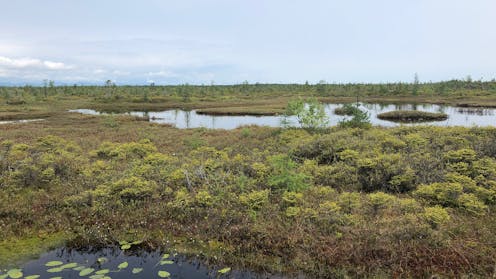
The Grande Plée Bleue bog, near Québec City in June 2023. This peatland with pools is one of the largest wetlands in eastern Québec. (Maria Strack)

Though Canada is often known as a land of lakes, it is also a country of wetlands. Stretching like a necklace of emeralds, sapphires and rubies across the Canadian landscape, wetlands cover 14 per cent of the Canadian land mass, accounting for almost twice as much area as lakes.

Canada is home to a quarter of the world’s remaining wetlands, yet they remain like hidden treasures that most Canadians rarely pay a second thought.

The importance of wetlands to a sustainable future has been recognized internationally. Signed in 1971 in the Iranian city of Ramsar, the Convention on Wetlands — often called the Ramsar Convention — supports international collaboration and national action for the conservation of wetlands.

This week, delegations from contracting parties to the convention, including Canada, have come together in Victoria Falls, Zimbabwe, for the 15th Conference of the Parties.

Despite decades of efforts, wetlands continue to be under threat around the world. Delegates will work this week to chart a path forward that further elevates wetlands in the global consciousness, highlighting the need to protect these ecosystems and meet international goals to safeguard biodiversity and slow climate warming.

Canada currently has 37 Wetlands of International Importance under the Ramsar Convention, covering more than 13 million hectares. Yet many of Canada’s wetlands remain unprotected.

Canada’s wetlands

The term “wetland” usually conjures an image of a shallow pond bordered by cattails. In fact, Canadian wetlands come in a range of shapes and sizes, all of which provide valuable services. Those reedy marshes provide critically important habitat and water storage, particularly in the Prairies, southern Ontario and Québec.

The vast majority of Canada’s wetlands are made up of swamps, fens and bogs, most of which also hold deep deposits of organic soils called peat. Bogs and fens can resemble vast mossy carpets. But they can also look a lot like forests, hiding their soggy soils beneath a canopy of trees.

This wetland diversity contributes to their value. At the interface of terrestrial and aquatic ecosystems, wetlands are often biodiversity hotspots.

They are home to weird and wonderful species, including carnivorous plants like sundews, pitcher plants and bladderworts. And if you’re hungry, peatlands are a great place for berry picking.

Interwoven in our boreal landscape, wetlands also support iconic Canadian species like beavers, moose and woodland caribou and are key habitats for waterfowl and other migratory birds.

Preserving wetlands is also a key flood mitigation strategy. Storm water can fill up pore spaces in mossy peat soils, or spread out across the flat expanse of swamps and marshes, reducing peak flows and helping to protect downstream infrastructure. As the water slows, water quality can also be improved. Sediments have time to settle, while plants and microbes can remove excess nutrients.

Carbon storage

In recent decades, wetlands have gained international attention for their role in carbon storage. Waterlogged sediment and soil lead to slow rates of decomposition. When plant litter falls in a wetland, it builds up over time, creating a bank of carbon that can be stored for millennia.

Peatlands are particularly good at accumulating carbon, as they are home to plants that inherently decompose slowly. Because of this, peatlands store twice the carbon of the world’s forests. Keeping this carbon stored in wetland soils, and out of the atmosphere, is important to climate change mitigation.

Yet, the buildup of carbon in wetlands is slow. Many of these ecosystems have been adding to this carbon bank since the last ice age; digging through metres of peat is like travelling back through time, with the deposits at the bottom often thousands of years old.

This means that the carbon stored in wetlands is irrecoverable within human lifetimes. Once lost, it will be many generations before the full value of this treasure can be returned.

The economic value of the water-filtering and carbon storage that Canadian wetlands provide has been estimated at $225 billion per year. It’s clear: healthy wetlands contribute to our society’s well-being.

But just as important, they are an integral component of the Canadian landscape. Wetlands are interwoven with our forests, fields, lakes and now even our cities. They link us to the land and water. They are places of wonder and spiritual connection.

Impact of climate change

Despite their value, wetlands in Canada face many threats. In southern regions of Canada, most wetlands have already been lost to drainage for agriculture and urban development. Further north, up to 98 per cent of Canadian peatlands remain intact.

However, climate change and resource development are already exacerbating wetland disturbance and loss. Warming temperatures have contributed to larger and more severe wildfire that also impact peatlands and lead to large carbon emissions.

Thawing permafrost is further changing wetland landscapes and how they function. Warming also allows for northward expansion of agriculture with the potential for loss of even more wetland area to drainage.

Natural resource extraction further contributes to wetland disturbance, often with unexpected consequences. Geologic exploration used to map oil and gas reserves has left a network of over one million kilometres of linear forest clearing across the boreal forest, much of which crosses peatlands.


Read more:
How climate change is impacting the Hudson Bay Lowlands — Canada’s largest wetland


This has contributed to declines in woodland caribou populations and led to increases in methane emissions from these ecosystems.

Mining often involves regional drainage or excavation of peatlands, resulting in the loss of their services. The recent push to fast-track production of critical minerals in Canada is putting vast areas of our wetlands at risk.

Wetland restoration research is ongoing, with some promising results. However, given the long time-scale of wetland development, avoiding disturbances in the first place is the best way to safeguard wetlands.

As stewards of a quarter of world’s wetland treasures, policymakers and everyday Canadians need to ensure wetlands are safeguarded and preserved for a prosperous future.

The Conversation

Maria Strack receives funding from the Natural Sciences and Engineering Research Council of Canada, Environment and Climate Change Canada, the Canadian Sphagnum Peat Moss Association, Ducks Unlimited Canada, Imperial Oil Ltd., Alberta Pacific Forest Industries Inc., Cenovus Energy, Canadian Natural Resources Limited, ConocoPhillips Canada, Natural Resources Canada, and the Alberta Biodiversity Monitoring Institute.

ref. Canadian wetlands are treasures that deserve protection – https://theconversation.com/canadian-wetlands-are-treasures-that-deserve-protection-261433

Ressources en tension : comment l’industrie rurale tente de s’adapter

Source: The Conversation – in French – By Magali Talandier, Professeure des universités en études urbaines, Université Grenoble Alpes (UGA)

La ruralité possède aussi des sites industriels. Souvent isolés, ils peuvent être particulièrement fragiles en cas de conflit pour les ressources locales, qu’il s’agisse d’eau, de foncier ou d’énergie… Des stratégies s’inventent pour les préserver malgré l’adversité.


Les territoires ruraux restent des bastions industriels. Souvent oubliés par les politiques de réindustrialisation, ils sont pourtant aux avant-postes pour relever un défi crucial : maintenir une activité productive dans un monde où les ressources se raréfient. Eau, foncier, énergie, main-d’œuvre deviennent des facteurs critiques. Une enquête de terrain lève le voile sur les fragilités et les stratégies d’adaptation des industriels ruraux.

Une présence historique

Les campagnes françaises sont bien plus industrielles qu’on ne l’imagine. En 2021, selon Eurostat, 33,4 % des emplois des territoires à dominante rurale en France sont industriels, contre une moyenne de 23,3 % en Europe. Et 36 % du total des emplois industriels se situent dans un établissement public de coopération intercommunale (EPCI) rural en 2022, pour 25 % des emplois (carte 1).

Cette configuration s’explique historiquement. Des vallées textiles des Vosges aux scieries du Morvan, en passant par les forges du Cantal, les implantations ont longtemps été déterminées par l’accès aux ressources à la fois abondantes et bon marché. Mais cet équilibre vacille.

Avec le changement climatique, les tensions géopolitiques et les normes environnementales, les « ressources naturelles » sur lesquelles les industries rurales pouvaient s’appuyer deviennent des « facteurs limitants ».

Trois territoires observés aux configurations contrastées

Notre enquête, menée dans le cadre de la Caravane des ruralités, a porté sur trois intercommunalités rurales et industrielles : Porte de Drôm’Ardèche, dans la vallée du Rhône ; Ballons des Hautes-Vosges ; Bocage Bressuirais, dans les Deux-Sèvres.

Ces trois territoires illustrent l’hétérogénéité des trajectoires des campagnes industrielles. Porte de Drôm’Ardèche est un territoire en croissance forte (+6 % d’emplois industriels entre 2016 et 2019). Il cumule attractivité résidentielle, touristique et activités productives (agriculture, logistique, industrie). D’où des tensions pour l’usage du foncier ou des ressources en eau.

À l’inverse, la communauté de communes Ballons des Hautes-Vosges a perdu près de 60 % de ses emplois industriels et exportateurs entre 2006 et 2021. Ce territoire connaît un déclin démographique. Isolement géographique, vieillissement de la population et spécialisation industrielle (textile, métallurgie, automobile) pénalisent le territoire.

Enfin, la trajectoire du Bocage Bressuirais combine tradition industrielle (meuble, métallurgie, agro-alimentaire) et nouvelles dynamiques (robotique, services à l’industrie). Ces éléments lui confèrent une certaine résilience face aux chocs économiques.

Moins de ressources pour l’industrie rurale

L’enjeu de l’adaptation aux dérèglements climatiques préoccupe tous les acteurs industriels interrogés. Un fabricant de textile des Vosges interrogé dans le cadre du programme de recherche « Les Caravanes de la ruralité », nous a expliqué : « il y a trois ans, je n’aurai pas imaginé que le prix de l’électricité nous obligerait à arrêter certaines chaînes de production pendant des semaines entières, ni qu’il pourrait y avoir des arrêtés sécheresse ici. »

Un élu local de Porte Drôm’Ardèche complète : « nous refusons désormais de nouvelles implantations d’entreprises jugées trop consommatrices de ressources en eau dans le schéma de cohérence territoriale (Scot), car les voyants sont au rouge. » Même si des différences sont repérables d’un territoire à l’autre, et selon la taille et les secteurs d’activités des entreprises, partout s’expriment des craintes en particulier vis-à-vis des tensions sur l’énergie, l’eau et le foncier.

Les industries rurales sont plus dépendantes aux ressources que les autres. Dans les EPCI ruraux, la consommation d’énergie représente, en moyenne, 31 % de la consommation locale (carte 2). L’industrie rurale prélève en moyenne, à l’échelle des EPCI, plus de 1 100 m3 par emploi industriel, à comparer à un taux de 721 dans les EPCI urbains.


À lire aussi :
La réindustrialisation ne peut pas profiter à tous les territoires


Des secteurs industriels surreprésentés

Ceci s’explique par les secteurs surreprésentés dans le rural, intenses en consommation de ressources : industries extractives, agro-alimentaires, papeteries, cimenteries, textile… De plus, ces activités rentrent souvent en concurrence avec d’autres secteurs, comme l’agriculture ou le tourisme, eux-mêmes dépendants des ressources.

Plus dépendantes donc, les industries rurales sont aussi plus vulnérables, parce que les acteurs industriels ruraux s’inscrivent dans des bassins d’emplois moins denses, ce qui les rend plus interdépendants. C’est toute la chaîne de production qui vacille quand un des maillons est mis en difficulté. « Un de nos prestataires a mis la clé sous la porte à cause de l’explosion des prix de l’énergie, cela a mis tous les acteurs de la filière présents dans la vallée en grande difficulté », explique un fabricant de textile des Hautes-Vosges.

« Lorsque les prix de l’essence augmentent, ça pèse aussi sur nos capacités de recrutement car les travailleurs ne peuvent plus se permettre de faire quarante kilomètres pour venir travailler chez nous. Or les tensions sur la main-d’œuvre c’est concret, ça nous oblige à arrêter des chaînes parfois. », souligne un fabricant de meubles de Bressuire.

Stratégies d’adaptation

Trois grandes stratégies d’adaptation peuvent alors être mises en œuvre – souvent simultanément – par les industriels et les acteurs publics locaux apparaissent.

La première consiste à organiser des renoncements. Certaines entreprises choisissent de geler leur activité, de reporter des investissements, d’activer le chômage partiel, voire de fermer des lignes de production. Certains territoires renoncent à accueillir de nouvelles implantations industrielles, faute de capacité à négocier sur les ressources disponibles. Ces « retraits discrets » interrogent sur les impacts socio-spatiaux d’une telle adaptation.

Innover vers des industries sèches

La deuxième cherche à innover dans les processus de production, avec le développement d’industries dites « sèches », la mise en place de boucles locales énergétiques ou encore de dispositifs de captation du carbone. Prometteuses, ces stratégies supposent des investissements importants, au risque d’accentuer les inégalités entre entreprises ou territoires selon leur capacité à innover.

La dernière repose sur l’activation des ressources disponibles, via la valorisation de la biomasse, la relance de micro-centrales hydrauliques, la récupération des eaux usées ou l’utilisation de bâtiments sous-occupés. Cela suppose une ingénierie locale forte, capable d’animer des réseaux, d’agréger les besoins, de capter des financements. Ces démarches, souvent ingénieuses, se heurtent néanmoins à un cadre réglementaire parfois inadapté ou trop rigide.

France 3, 2025.

Une industrie vulnérable et stratégique

Dans un monde de plus en plus contraint, l’industrie rurale est à la fois vulnérable et stratégique. Elle est vulnérable, car fortement exposée aux tensions sur les ressources et aux limites structurelles (isolement, vieillissement, fragilité des PME). Mais elle est aussi stratégique, car elle incarne une possibilité de ré-ancrage productif, de sobriété localisée, et de transition juste.

Ces résultats montrent que la résilience industrielle des territoires dépend étroitement de la capacité à articuler ressources disponibles, gouvernance locale et accompagnement public. Or, cette articulation est loin d’être homogène dans l’espace et les dispositifs nationaux sont parfois mal adaptés aux spécificités rurales. Cela suppose de soutenir les coopérations locales (logistique, énergie, formation, circulaire), de réduire la fracture d’ingénierie entre territoires, de miser sur les complémentarités villes-campagnes.

Les débats sur la réindustrialisation ne peuvent faire l’économie d’une réflexion sur la matérialité des activités, leurs ancrages territoriaux et les impacts des dérèglements climatiques à venir.

The Conversation

Magali Talandier et Manon Loisel ont reçu des financements de l’Institut Universitaire de France et du GIP EPAU (Groupement d’intérêt public à vocation interministérielle, l’Europe des projets architecturaux et urbains)

Manon Loisel a reçu des financements du GIP EPAU (Groupement d’intérêt public à vocation interministérielle, l’Europe des projets architecturaux et urbains)

ref. Ressources en tension : comment l’industrie rurale tente de s’adapter – https://theconversation.com/ressources-en-tension-comment-lindustrie-rurale-tente-de-sadapter-259746

Frais de scolarité, sélection, individualisation des parcours : en Europe, une variété d’expériences étudiantes

Source: The Conversation – in French – By Patricia Loncle-Moriceau, Professeure en sociologie, École des hautes études en santé publique (EHESP)

Alors que de plus en plus de jeunes Européens suivent des études supérieures, la manière de gérer cette massification varie beaucoup d’un pays à l’autre. Tom Chevalier, chercheur en science politique, et Patricia Loncle-Moriceau, professeure de sociologie, en dressent un état des lieux dans les Politiques de jeunesse, publiées en juin 2025 aux PUF (« Que sais-je ? »). En voici un extrait permettant de mieux situer la position de la France par rapport à ses voisins.


Une part de plus en plus importante des jeunes poursuit des études supérieures en Europe. Or, celles-ci peuvent prendre des formes différentes d’un pays à l’autre.

Le développement de l’université : pour qui ? Pour quoi ?

Historiquement, les systèmes universitaires étaient « élitistes » dans le sens où une petite partie des jeunes poursuivait des études supérieures. Toutefois, en raison de l’essor de l’économie de la connaissance, les systèmes universitaires se sont développés dans la plupart des pays européens, abandonnant progressivement ces systèmes « élitistes » à faible participation et approchant de l’objectif de 50 % d’une cohorte diplômée de l’enseignement supérieur. La première grande différenciation porte alors sur le mode de financement de cette massification de l’enseignement supérieur : d’un côté, ce financement peut être porté par le secteur public, comme cela a été le cas dans les pays nordiques tels que la Suède, tandis que, de l’autre côté, il peut passer plutôt par des financements privés, comme au Royaume-Uni.

Pour aider les personnes à financer leurs études, la deuxième dimension structurant les différences institutionnelles entre systèmes renvoie à l’ampleur des aides individuelles, d’un côté, et au niveau des frais de scolarité, de l’autre. En croisant ces deux caractéristiques, Garritzmann a montré qu’il existait « quatre mondes des finances étudiantes », avec des frais de scolarité élevés et des aides importantes (Royaume-Uni), des frais de scolarité élevés mais des aides peu développées (États-Unis), des frais de scolarité peu élevés et peu d’aides (Japon) et des frais de scolarité faibles mais des aides importantes (Suède).


À lire aussi :
Les allocations étudiantes au Danemark, un modèle à suivre ?


Enfin, si l’enseignement supérieur a historiquement promu des compétences dites « générales », c’est-à-dire transférables d’un emploi à un autre, certains pays ont développé des pans d’enseignement supérieur destinés à la production de compétences élevées mais « spécifiques », en fonction des besoins de leur économie. Durazzi a ainsi montré que, lorsqu’une économie était surtout structurée autour d’une industrie 2.0, la production de telles compétences, permettant de multiplier par exemple le nombre d’ingénieurs, était encouragée. C’est ce qui a, par exemple, abouti au développement en Allemagne des matières dites STEM (science, technologie, ingénierie, mathématiques) et des universités de sciences appliquées.

Des expériences étudiantes hétérogènes

L’enseignement supérieur ne se définit pas seulement par son fonctionnement interne en tant que service, c’est-à-dire à propos de la façon dont il délivre du savoir et des compétences à ses publics. Plus généralement, il s’inscrit dans un paysage de politiques publiques et d’institutions qui façonnent également les expériences étudiantes, c’est-à-dire la façon dont les jeunes vivent ces années de formation.

Dans une analyse comparée des systèmes universitaires français, anglais et suédois, Charles s’est également penché sur les formes que prenaient les expériences étudiantes, structurées par les conceptions de la justice sociale qui innervent ces systèmes. En France, le mérite est objectivé par les notes produites par le corps enseignant et par l’importance des concours : il s’agit d’une méritocratie scolaire où la place de l’État est centrale. Le parcours d’études renvoie à l’image du TGV : il faut bien choisir sa destination, car il n’y aura que très peu de possibilités de changement et tout ira très vite, de façon linéaire.

En Angleterre, le mérite est tout aussi important, mais sa conception est différente, dans le sens où il déborde le seul enjeu scolaire pour intégrer les motivations, la vie extrascolaire et les potentialités des jeunes. L’individualisation y est plus poussée puisqu’il s’agit d’essayer d’apprécier la « valeur personnelle » des jeunes dans leur globalité lors des procédures d’admission. Le parcours d’études ressemble davantage à la circulation automobile : tout le monde peut aller où il veut, mais chacun possède une voiture différente. Les parcours peuvent donc être très différents, individualisés, mais aussi très inégalitaires en raison de l’importance des dotations initiales et du coût des études.

En Suède, enfin, le mérite n’est qu’un mal nécessaire à l’orientation, face auquel l’idéal de la seconde chance est promu : les universités sont ainsi obligées de réserver un tiers de leur recrutement sur la base des notes obtenues dans le secondaire, un tiers sur la base d’un test d’aptitude que tout le monde peut passer (ce qui permet les retours en études et donc les deuxièmes chances), le tiers restant étant laissé à leur discrétion. Les études sont ainsi plutôt organisées comme le métro : il s’agit d’une infrastructure collective où chacun se déplace où et comme il veut, et où il est possible de revenir en arrière, mais aussi de changer de destination ou de wagon.

The Conversation

Les auteurs ne travaillent pas, ne conseillent pas, ne possèdent pas de parts, ne reçoivent pas de fonds d’une organisation qui pourrait tirer profit de cet article, et n’ont déclaré aucune autre affiliation que leur organisme de recherche.

ref. Frais de scolarité, sélection, individualisation des parcours : en Europe, une variété d’expériences étudiantes – https://theconversation.com/frais-de-scolarite-selection-individualisation-des-parcours-en-europe-une-variete-dexperiences-etudiantes-260974

Interdire les munitions au plomb pour sauver les oiseaux de l’empoisonnement ? L’exemple britannique

Source: The Conversation – in French – By Deborah Pain, Visiting Academic, University of Cambridge; Honorary Professor, University of East Anglia, University of Cambridge

La majorité des grenailles tirées ne touchent pas leur cible et des milliers de tonnes de plomb se retrouvent dispersées dans l’environnement. Chuyko Sergey/Shutterstock

La Commission européenne a proposé le 27 février 2025 d’interdire l’usage du plomb dans les munitions de chasse. Au Royaume-Uni, une pareille interdiction vient d’être annoncée. Ces mesures devraient permettre de sauver des milliers d’oiseaux mais également de protéger les humains qui consomment du gibier.


Au Royaume-Uni, la sous-secrétaire d’État à l’eau et aux inondations, Emma Hardy, a annoncé l’interdiction des munitions toxiques au plomb afin de protéger les campagnes du pays. Cette interdiction concerne la vente et l’usage, à des fins de chasse, aussi bien des cartouches de fusils chargées de plomb (comportant des centaines de petites billes appelées « grenailles ») et utilisées pour chasser le petit gibier, que des balles de gros calibre en plomb, destinées à la chasse au grand gibier, comme les cerfs.

C’est une excellente nouvelle pour les oiseaux britanniques : cette mesure devrait permettre d’épargner chaque année la vie de dizaines de milliers d’entre eux, actuellement victimes d’empoisonnements au plomb. La majorité des grenailles tirées ne touchent pas leur cible et des milliers de tonnes de plomb se retrouvent dispersées dans l’environnement chaque année. Or, les oiseaux aquatiques comme terrestres les confondent avec de la nourriture ou du gravier, qu’ils consomment pour broyer leurs aliments dans leur gésier. Les grenailles s’y désagrègent et le plomb est alors absorbé dans le sang.

On estime qu’entre 50 000 et 100 000 oiseaux d’eau meurent chaque année au Royaume-Uni des suites de cette intoxication, souvent après de longues souffrances. D’autres oiseaux subissent des effets dits « sublétaux » : leur système immunitaire et leur comportement sont altérés, ce qui augmente leur vulnérabilité face à d’autres menaces.

L’utilisation de grenailles de plomb pour la chasse aux oiseaux d’eau et au-dessus de certaines zones humides est déjà interdite en Angleterre et au Pays de Galles. En Écosse, cette interdiction s’applique à l’ensemble des zones humides, sans exception.

Cependant, le respect de la réglementation en Angleterre n’atteint qu’environ 30 %, et il est également faible en Écosse, tandis qu’aucune donnée n’est disponible pour le Pays de Galles. Cette nouvelle interdiction générale, plus étendue, devrait améliorer considérablement la situation dans tous les milieux naturels à travers la Grande-Bretagne.

Les rapaces comme les aigles, les buses variables ou les milans royaux sont également touchés : ils ingèrent des fragments de plomb en se nourrissant d’animaux tués ou blessés par des munitions en plomb. L’acidité dans leur estomac favorise l’absorption du métal. Nos recherches montrent que, bien que l’on estime que moins de rapaces que d’oiseaux d’eau meurent directement d’un empoisonnement au plomb, les conséquences sur leurs populations peuvent être bien plus graves. Cela concerne en particulier les espèces qui commencent à se reproduire tardivement, dont le taux de reproduction annuel est naturellement faible et qui, en temps normal, bénéficient d’un taux élevé de survie annuelle chez les adultes.

Ce bannissement bénéficiera aussi bien aux oiseaux résidents qu’aux migrateurs de passage au Royaume-Uni. Mais tant que d’autres pays continueront à autoriser ces munitions , les oiseaux migrateurs resteront exposés ailleurs, pendant leur trajet ou sur leurs lieux de reproduction ou d’hivernage.

Au-delà des frontières

Pour protéger toutes les espèces, les munitions au plomb doivent être remplacées partout par des alternatives sans plomb. L’usage de grenailles de plomb est déjà interdit dans de nombreuses zones humides à travers le monde. Dans l’Union européenne, (en France notamment, ndlr), une interdiction de l’utilisation de grenailles de plomb dans ou à proximité des zones humides est entrée en vigueur en février 2023 .

Le Danemark a été le premier pays à interdire les munitions au plomb dans tous les milieux. En 1996, il a interdit l’usage des grenailles de plomb et, en avril 2024, il a interdit les balles en plomb. Nos recherches montrent que l’interdiction des grenailles de plomb au Danemark a été très efficace, avec un bon niveau de conformité.

Le Royaume-Uni s’apprête maintenant à devenir le deuxième pays à interdire la plupart des usages des munitions au plomb. Cela a été rendu possible grâce à la disponibilité croissante d’alternatives sans plomb, sûres, efficaces et abordables, principalement les grenailles en acier et les balles en cuivre.

En février 2025, la Commission européenne a publié un projet de règlement interdisant la plupart des usages des munitions et des plombs de pêche en plomb. Ce projet attend encore l’approbation dans le cadre des procédures de l’UE. S’il est adopté, cela constituera une avancée majeure.

Au-delà des oiseaux

Les oiseaux sont particulièrement sensibles aux effets du plomb issu des munitions qu’ils ingèrent, en raison de leur gésier musculeux et de l’acidité de leur estomac. Mais ce plomb met aussi en danger la santé de nombreux autres animaux, y compris les animaux domestiques et les humains.

Au Royaume-Uni, nous avons trouvé dans des aliments crus pour chiens à base de faisan, provenant de trois fournisseurs, des concentrations moyennes de plomb plusieurs dizaines de fois supérieures à la limite maximale autorisée de résidus de plomb dans les aliments pour animaux.

Le gouvernement britannique a fondé sa décision d’interdire les munitions au plomb sur un rapport de l’agence REACH pour la Grande-Bretagne, ou Health and Safety Executive, qui soulignait les risques pour la santé des jeunes enfants et des femmes en âge de procréer, en cas de consommation fréquente de viande de gibier chassé avec des munitions au plomb. Le système nerveux en développement des enfants est particulièrement sensible aux effets du plomb.

Nous avons récemment appelé le comité des États appliquant la réglementation sur les produits chimiques (REACH), le Parlement européen et le Conseil à soutenir pleinement la proposition de la Commission européenne visant à restreindre les munitions au plomb.

Nous avons également encouragé l’Autorité européenne de sécurité des aliments (EFSA) à recommander à la Commission européenne de fixer une limite légale maximale de plomb dans la viande de gibier commercialisée pour la consommation humaine, similaire à celle déjà établie pour la viande issue de la plupart des animaux d’élevage.

Tant que cela n’aura pas été mis en place, et tant que davantage de pays n’auront pas interdit tous les usages de munitions au plomb pour la chasse, la santé de la faune sauvage, des animaux domestiques et des groupes humains les plus vulnérables continuera d’être menacée par les effets toxiques du plomb issu de ces balles.

The Conversation

Deborah Pain est professeure honoraire à l’Université d’East Anglia (sciences biologiques) et chercheuse invitée au département de zoologie de l’Université de Cambridge. Elle est scientifique indépendante depuis avril 2018. Depuis cette date, elle n’a perçu aucune rémunération pour ses recherches sur l’intoxication au plomb, mais, avec ses collègues, elle a reçu des financements pour couvrir les coûts de la recherche et des analyses chimiques de la part de plusieurs sources, comme indiqué dans les publications scientifiques. Elle a été membre du groupe d’experts scientifiques indépendants du Royaume-Uni pour la réglementation REACH (RISEP), et dans ce cadre, du groupe de travail sur le plomb dans les munitions, ce pour quoi elle a été rémunérée. Cependant, ses travaux publiés sur l’intoxication au plomb ont été réalisés indépendamment de ce processus.

Rhys Green a reçu des financements pour ses recherches de la part de plusieurs organisations, dont la RSPB (Royal Society for the Protection of Birds), au sein de laquelle il a occupé le poste de principal scientifique en conservation jusqu’en 2017. Il est désormais à la retraite. Il est chercheur bénévole non rémunéré à la RSPB et professeur honoraire émérite en sciences de la conservation au département de zoologie de l’Université de Cambridge. Il est membre du groupe d’experts scientifiques indépendants du Royaume-Uni pour la réglementation REACH (RISEP), un groupe mis en place par une agence gouvernementale britannique, la Health & Safety Executive. Il reçoit ponctuellement des paiements pour les travaux réalisés dans le cadre de RISEP. Il siège également au conseil d’administration du zoo de Chester.

Niels Kanstrup ne travaille pas, ne conseille pas, ne possède pas de parts, ne reçoit pas de fonds d’une organisation qui pourrait tirer profit de cet article, et n’a déclaré aucune autre affiliation que son organisme de recherche.

ref. Interdire les munitions au plomb pour sauver les oiseaux de l’empoisonnement ? L’exemple britannique – https://theconversation.com/interdire-les-munitions-au-plomb-pour-sauver-les-oiseaux-de-lempoisonnement-lexemple-britannique-261617