The dirty truth about what’s in your socks: bacteria, fungi and whatever lives between your toes

Source: The Conversation – UK – By Primrose Freestone, Senior Lecturer in Clinical Microbiology, University of Leicester

Marko Aliaksandr/Shutterstock

Your feet are microbial hotspots. The area between your toes is packed with sweat glands, and when we wrap our feet in socks and shoes, we trap that moisture in a warm, humid cocoon that’s ideal for microbial growth. In fact, your feet may be home to a miniature rainforest of bacteria and fungi, with anywhere from 100 to 10 million microbial cells per square centimetre of skin surface.

Not only do feet host a huge variety of microorganisms – up to 1,000 different species per person – but they also have a wider range of fungal species than any other part of the body. That means your feet aren’t just sweaty or smelly – they’re genuinely biodiverse.

Because your feet are microbe-rich, your socks become prime real estate for these same bacteria and fungi. Studies show that socks harbour both harmless skin residents, like coagulase-negative staphylococci, and potentially dangerous pathogens, including Aspergillus, Staphylococcus, Candida, Histoplasma and Cryptococcus. These microbes thrive in the warm, moist spaces between your toes, feeding on sweat and dead skin cells.

Their byproducts, such as volatile fatty acids and sulphur compounds, are what give sweaty feet, socks and shoes that notorious odour. It’s not the sweat itself that smells, but the microbial metabolism of that sweat. Perhaps unsurprisingly, smelly feet are so common the NHS has dedicated pages of advice on the issue.

The sock microbiome isn’t just influenced by your feet – it also reflects your environment. Socks pick up microbes from every surface you walk on, including household floors, gym mats, locker rooms and even your garden. They act as microbial sponges, collecting bacteria and fungi from soil, water, pet hair and dander, and the general dust of everyday life. In one study, socks worn for just 12 hours had the highest bacterial and fungal counts of any clothing item tested.

And those microbes don’t stay put. Anything living in your socks can transfer to your shoes, your floors, your bedding – and even your skin. In a hospital study, slipper socks worn by patients were found to carry floor microbes, including antibiotic-resistant pathogens, into hospital beds. It’s a reminder that foot hygiene isn’t just a personal issue – it can have broader implications for infection control and public health.

Super-spreaders

Socks can also play a key role in spreading fungal infections like Tinea pedis (better known as athlete’s foot), a highly contagious condition that primarily affects the toes but can spread to the heels, hands, or even the groin. The infection is caused by dermatophyte fungi, which love warm, damp environments – exactly the kind you find in sweaty socks and tight shoes.

To prevent this, experts recommend avoiding walking barefoot in shared spaces like gyms and pools, not sharing socks, towels, or shoes, and practising good foot hygiene, which includes washing and drying thoroughly between the toes. Topical antifungal treatments are usually effective, but prevention is key.

It’s also important to note that socks can retain fungal spores even after washing. So if you’ve had athlete’s foot, wearing the same pair again – even if it looks clean – could trigger reinfection.

The safest approach is to wear fresh socks daily and allow your shoes to dry out completely between wears. Choose breathable fabrics and avoid footwear that traps heat or causes excessive sweating.

How to wash your socks properly

Most laundry advice focuses on preserving fabric, colour and shape – but when it comes to socks, hygiene matters more. Studies show that washing at typical domestic temperatures (30–40°C) may not be sufficient to kill bacteria and fungi. In fact, under-cleaned socks can act as infection vectors, especially in households with vulnerable people.

To properly sanitise your socks:

  • turn them inside out before washing to expose the inner surface where most microbes accumulate

  • use an enzyme-based detergent, which helps break down sweat and skin debris

  • wash at 60°C when possible, as the higher temperature helps detach and kill microbes

  • steam iron your socks if you need to wash at lower temperatures – heat from ironing can destroy residual spores.

Cotton socks tend to tolerate higher temperatures better than synthetic blends, making them a better option for those prone to fungal infections. Drying socks in direct sunlight can also help: UV light has known antimicrobial effects.

The forensic power of sock microbiomes

Your socks might say more about you than you realise. In a US murder investigation, forensic scientists used soil bacteria found on a suspect’s socks to link them to the burial site of a victim.

The microbial profile of the socks closely matched that of the crime scene – suggesting the socks had picked up and preserved location-specific soil microbes. This emerging field of forensic microbiology shows how microbial signatures can offer valuable clues in legal contexts.

It’s a reminder that the ecosystems we carry on our bodies – and in our clothing – are not only complex and revealing but also surprisingly durable. Whether it’s helping to solve crimes or fuelling a fungal outbreak, your socks are far more biologically active than they appear.

So next time you peel off a sweaty pair at the end of the day, spare a thought for the microscopic universe you’ve been walking around in. And maybe, just maybe, opt for that 60-degree wash.

The Conversation

Primrose Freestone does not work for, consult, own shares in or receive funding from any company or organisation that would benefit from this article, and has disclosed no relevant affiliations beyond their academic appointment.

ref. The dirty truth about what’s in your socks: bacteria, fungi and whatever lives between your toes – https://theconversation.com/the-dirty-truth-about-whats-in-your-socks-bacteria-fungi-and-whatever-lives-between-your-toes-261580
Windrush scandal: those left to apply for compensation without legal help missed out on tens of thousands of pounds

Source: The Conversation – UK – By Jo Wilding, Lecturer in law, University of Sussex

The Windrush scandal has been one of the biggest miscarriages of justice in Britain, affecting tens of thousands of people. The government set up a scheme in 2019 to award compensation to those who had been wronged by racist immigration legislation over decades, left unable to prove their immigration status.

But in a new report, I have found that how much victims receive through the scheme has little to do with how they were wronged, and more to do with whether they can access a lawyer. Those who applied without legal support were offered tens of thousands of pounds less than when they appealed with legal representation.

The research, produced with law reform charity Justice and Dechert LLP’s pro bono team, provides empirical evidence of precisely what lawyers do that makes a difference.

Our research participants, who were claiming compensation over the Windrush scandal were offered, on average, £11,000 when applying to the scheme without a lawyer. But when applying for review with legal representation, the award was more than £83,000. One of our participants was refused any compensation when he applied alone, but eventually received £295,000 with the help of a lawyer.

Why lawyers are needed

We conducted an in-depth review of ten files where a claimant first applied for compensation without a lawyer, received a refusal or a low offer of compensation, and then applied with a lawyer for review of that decision.

We reviewed another seven files from people who could never have claimed alone, because of street homelessness, dementia or serious health conditions.

The team interviewed each lawyer and (where possible) the claimant, to identify exactly what a lawyer does that makes a difference.

The Home Office insists lawyers are unnecessary because the scheme’s own caseworkers will help find evidence. But our findings suggest serious failings in those efforts. One of the main contributions of lawyers was expertise in finding decades-old evidence and demonstrating how it meets the standard of proof for the Windrush compensation scheme.

One of our claimants applied for compensation for having been refused housing assistance (leaving her homeless) based on a misunderstanding of her immigration status. The Home Office caseworkers emailed her local council and asked whether there was a record of her being refused housing assistance 20 years earlier. The council replied that there was not. The caseworker treated that as evidence that she had never made an application.

When a lawyer got involved, he asked the council to confirm how long they kept housing application records. The answer was 12 years, so there was never any prospect of evidence existing from 20 years ago. The lawyer then managed to track down her housing file with the housing solicitors who represented her.

Lawyers knew how to request files from public bodies, understood the references to statutes in those files and, most importantly, were able to spot when key documents were missing.

The lawyers in the cases we reviewed took detailed witness statements from claimants. Those made by claimants alone averaged 1.5 pages, whereas those made by lawyers were at least 15 pages, containing far more relevant detail showing how the claimant met the scheme criteria.

Lawyers acted as a “buffer” between claimant and Home Office. Claimants told our research team that they felt the Home Office spoke to them with more respect once they had a lawyer. Often, claimants were ready to give up and accept the refusal because they were exhausted and frustrated with fighting the Home Office.

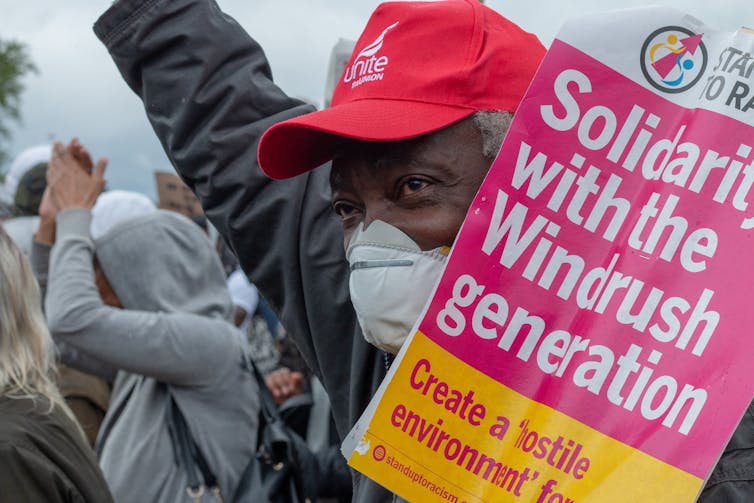
A man at a protest holding a sign that reads 'solidarity with the Windrush generation'
The Windrush scandal has affected tens of thousands of people.
James Ivor Wadlow/Shutterstock

The findings are consistent with other peer-reviewed research exploring what lawyers or representatives add to cases in the family courts and the tribunals: a 15%-18% “representation premium” in chances of success. In some cases, this can be achieved through pre-hearing advice.

All of our participants had a lawyer either through Law Centres funded by a charity, a university law clinic, or private law firms doing the work pro bono. Some firms also do the work on a no-win-no-fee basis, typically taking 25%-30% of the claimant’s damages but on occasion up to 67%. Given that it takes 32-103 hours to prepare the case, the lawyer’s fee may still underrepresent the work they did.

Compensation schemes and legal support

Recent reports have revealed serious problems with the compensation schemes for both the Post Office and the infected blood scandals. The chairs of the respective public inquiries, Sir Wyn Williams and Sir Brian Langstaff, criticised gaps in the provision of access to legal advice and recommended funded legal advice for all claimants.

The Post Office Horizon IT scandal has four compensation schemes for different categories of victim. In each, claimants can choose between a fixed payment (£75,000) or an individual assessment of loss. In three of those schemes, funded legal advice is available to help claimants choose between those options. In the Horizon Shortfall Scheme, though, it is not available unless and until they reject the fixed payment and opt for individual assessment.

The infected blood compensation scheme includes funded legal representation for “core” route claimants – those directly affected. But the inquiry report says it should also be available for claims by affected family members.

Only the Windrush scheme has no provision at all for funded legal representation at any stage. All representation is either a matter of charity, or paid for from the damages, which may leave very little for the claimant.

Yet the Windrush scheme is arguably the most complicated, with a 44-page claim form compared with just eight for the Horizon Shortfall Scheme. The infected blood claim form is largely completed by medical personnel. The Windrush scheme has complex eligibility requirements compared with the other schemes, and often demands an immigration lawyer’s expertise.

As our research found, lawyers were able to advise Windrush claimants on whether the offer of compensation was fair or whether they should apply for review. Our empirical evidence, along with the reports, suggest all compensation schemes involving state harm to citizens should include free legal representation for claimants.

In response to the report, a Home Office spokesperson told the Guardian: “Earlier this year, we launched a £1.5m advocacy support fund to provide dedicated help from trusted community organisations when victims are applying for compensation. However, we recognise there is more to be done, which is why ministers are continuing to engage with community groups on improvements to the compensation scheme, and will ask the new Windrush commissioner to recommend any further changes they believe are required.”


Get your news from actual experts, straight to your inbox. Sign up to our daily newsletter to receive all The Conversation UK’s latest coverage of news and research, from politics and business to the arts and sciences.

The Conversation

Jo Wilding does not work for, consult, own shares in or receive funding from any company or organisation that would benefit from this article, and has disclosed no relevant affiliations beyond their academic appointment.

ref. Windrush scandal: those left to apply for compensation without legal help missed out on tens of thousands of pounds – https://theconversation.com/windrush-scandal-those-left-to-apply-for-compensation-without-legal-help-missed-out-on-tens-of-thousands-of-pounds-261046

Ancient India, Living Traditions: an earnest effort to show how the art of Hinduism, Buddhism and Jainism is sacred and personal

Source: The Conversation – UK – By Ram Prasad, Fellow of the British Academy and Distinguished Professor in the Department Politics, Philosophy and Religion, University of Leicester

The British Museum’s Ancient India, Living Traditions exhibition brings together exhibits on the sacred art of Hinduism, Buddhism and Jainism. It also encompasses the spread of the devotional art of these traditions to other parts of Asia.

The exhibition speaks to religious identity and relationships. Buddhism and Jainism distinguish themselves from the vast surrounding traditions that together we call Hinduism; but they have close kinship with it in practices, beliefs and iconography. Museums that have presented sculptures in isolation have usually not attempted to narrate this complex history.

Not all the items displayed, some going back 2,000 years, are of purely historical interest. There are representations of traditions that are continuously living in a way the gods of ancient Egypt or classical Europe are not.

The most instantly recognisable example for visitors of such living ancient tradition is likely to be statues of the elephant-headed deity Ganesha. Visitors can see a rare and valuable 4th century sandstone Ganesha on show. They can also see a small bronze version of that ancient Ganesha that is like the kind you would find in people’s home and to which a quick prayer would be addressed every morning.

The question of how to respect that sense of the sacred while still mounting an exhibition is a moral and aesthetic challenge that few museums (including in India) have started to address. It’s not uncommon to see such pieces wrenched from the reality of their continued practice and presented in secular art displays. Here, however, the curators have tried to make connections between “statues” on display and “icons” in temples and homes.


Looking for something good? Cut through the noise with a carefully curated selection of the latest releases, live events and exhibitions, straight to your inbox every fortnight, on Fridays. Sign up here.


Finally, there’s the problematic history of the imperial museum and its need to reckon with its past. Most objects on display in this exhibition, and The British Museum more widely, have been presented with scarcely any acknowledgement of how they came to be acquired.

The exhibition makes an earnest effort to tackle most of these issues.

Ancient but not dead

The spaces of the exhibition are structured to be respectful of the historical and contemporary sensitivities of Buddhism and Jainism. This is signalled through subtle changes of colour and the placement of translucent drapery, allowing for transitions between distinct Jain, Buddhist and Hindu displays.

At the same time, conceptual and sensory commonalities are powerfully conveyed. The first space focuses on nature spirits and demi-deities that are shared across all the ancient traditions. The air is filled with the sound of south Asian birds and musical instruments. The explanatory labels draw attention to the percolation of iconographic features between traditions, for instance, those between the Buddha and the Jaina teachers, or the direct inclusion of the deity of learning (Sarasvati) in both Hindu and Jain worship.

Also well presented is a final space on the spread of south Asian iconography to central, east and southeast Asia. This is a long story that needs its own telling, but can only be hinted at through some beautifully chosen figures.

It’s the curators’ use of a community advisory panel of people who practice such traditions today that gives the information its sensitivity. Their inclusion in the exhibition’s production can be seen in a marked mindfulness that the content and symbols of these inert objects are alive and sacred to hundreds of millions.

For example, one Ganesha from Java in Indonesia draws attention to different elements of his iconography. There is the trans-continentally stable depiction of his having a broken tusk (which, as Hindus will know, he is said to have broken off to write down the epic Mahabharata). But this Ganesha also holds a skull, which is unique to the Javanese version. The label gently points out that “various communities understood and worshipped him differently”.

The combination of community engagement and creative presentation not only conveys a sense of respect for the traditions, but also elicits a respectful response from visitors. Those from within the tradition will note with satisfaction the description of a symbol or icon. Those from outside the traditions are invited to look at the exhibits with attention and care as they might in a cathedral.

I saw a pair of young Indian Americans looking at a fossilised ammonite from Nepal that is taken as a symbolic representation of god for worshippers of Vishnu. They animatedly compared it to the one in their own diasporic home.

Elsewhere in the exhibition, I caught an elderly English couple stood in wondering silence in front of a drum slab from the famous 1st century BC Amaravathi Buddhist site in south India. This slab was carved just before figural representations of the Buddha rapidly gained in popularity. Here, there are symbols associated with him, but the Buddha himself is represented by the empty seat from whence he has gone.

How did it all get here?

One potential interpretive danger lies in the emphasis on continuity between past objects and present realities. Hindus today from social backgrounds that did not have the privilege of reaching back to high sacred art might ask where they sit in the smoothed out historical narrative. More broadly, there is no acknowledgement of the complexity of Hindu identity and its formation across centuries, regions, social strata, languages and theologies.

The weakest part of this exhibition’s generally innovative retelling is the faint-hearted way in which it obliquely acknowledges the dubious acquisition process of the British Museum. To say something was “collected” by a major general “while serving in the East India Company army” is hardly facing up to the question with which the exhibition boldly begins: “How did it get here?”

This exhibition offers a powerful visual narrative of the multi-spiritual traditions of ancient India, mounted with sensitivity to their living communities today. Its immersive presentation is appealing, and the story it tells is respectful and innovative.

The task of honest self-representation and difficult conversations on reparation remain. Within that larger imperative, Ancient India, Living Traditions is a step in the right direction. It is a direction towards addressing context, responsiveness and engagement that museums can no longer ignore.

Ancient India, Living Traditions in on at The British Museum, London until October 19 2025


Get your news from actual experts, straight to your inbox. Sign up to our daily newsletter to receive all The Conversation UK’s latest coverage of news and research, from politics and business to the arts and sciences.

The Conversation

Ram Prasad does not work for, consult, own shares in or receive funding from any company or organisation that would benefit from this article, and has disclosed no relevant affiliations beyond their academic appointment.

ref. Ancient India, Living Traditions: an earnest effort to show how the art of Hinduism, Buddhism and Jainism is sacred and personal – https://theconversation.com/ancient-india-living-traditions-an-earnest-effort-to-show-how-the-art-of-hinduism-buddhism-and-jainism-is-sacred-and-personal-262163

As climate change hits, what might the British garden of the future look like?

Source: The Conversation – UK – By Adele Julier, Senior Lecturer in Ecology, University of Portsmouth

Maria Evseyeva/Shutterstock

Hosepipe bans in summer 2025 will mean many gardeners having to choose which of their plants to keep going with the watering can, and which to abandon. Are these temporary restrictions actually a sign we need to rethink British gardens altogether?

Climate change will bring the United Kingdom warmer, wetter winters and hotter, drier summers. Britain has seen warm periods before, such as in the last interglacial period 130,000 years ago, but the current speed of change is unprecedented. This will have many effects, but it will also change one of the core parts of British life: our gardens.

Rather than fighting the inevitable and trying to keep growing the same plants we have always grown, how might we adapt what we grow and how we grow it?

The first to go, tragically for some, may be the classic British lawn. Already this year across the country, large areas of grass are looking parched and brown in the face of a long drought. The traditional lawn has just a few species of grass and is unlikely to be very drought-resistant. You can maintain a grass lawn that is more tolerant of dry weather by using drought-resistant fescue species of grass, and keeping the lawn well aerated (that means putting small holes in it to allow air, water and nutrients to reach the grass roots). But it may still suffer periods in which it looks unhealthy.

Swapping a lawn for a meadow can increase drought tolerance and decrease maintenance such as regular mowing and watering, because meadows only need to be cut once a year and don’t need as much water. Perhaps instead of lawns we can embrace No Mow May all year round, creating a greater diversity of plant and animal life in gardens.

Wildflowers such as yarrow and common knapweed can be great for pollinators and the birds that feed on them. These plants are drought-tolerant too.

As well as challenges in the face of a changing climate, there will be opportunities. Grape vines were grown in Britain in Roman times, and British wine production is once again a growing industry. Regular British gardeners could also grow a wider variety of grape vines, and even make their own wine. Warmer, drier summers could make plants such as citrus and olive trees easier to grow, with fruits more likely to ripen and less likely to be lost to frost in winter. Sunflowers, while they already grow here, could also thrive in the new conditions.

There will be a shift in the best types of decorative plants for gardens, with those needing lots of water, such as hydrangeas, delphiniums and gentians, becoming difficult to grow. We could look to the Mediterranean for inspiration, and choose shrubs such as thyme and lavender, or climbers like passion flowers, that need less water. It is also possible to grow a drought-tolerant garden with plants that are native to Britain, such as species of Geranium and Sedum. Coastal plants such as sea kale and sea holly that grow in harsh, rocky conditions can also make great garden plants in a drier climate.

Blue thistles on long stems
Sea holly doesn’t mind our changing climate as much as other garden plants.
olko1975/Shutterstock

Finally, the way we garden will need to change. Setting up water storage systems, from simple water butts to larger, more complex systems that could include grey water harvesting (used but clean water from baths and washing up) or underground water storage, will help gardeners to make the most of storms by storing the rainwater for use during droughts. You can set up a dispersion system to recycle lightly used household water, such as from a dishwasher or shower.

Soil health is important too, as soils with more organic matter are better at holding water. Composting food waste to add to soil would be a great way of helping to increase the organic content and make watering more efficient. This has the added value of avoiding peat composts. Peat comes from wetlands and it will eventually run out. Peat harvesting also releases carbon dioxide into the atmosphere, contributing to climate change.

The next few decades will be challenging for gardeners. Britain will probably experience an increase in prolonged droughts and other extreme weather, as well as overall warming caused by climate change. Our gardens may cover a small proportion of land in the UK. But we can use them to experiment and develop sustainable ways of existing, growing not just new plants but also hope in the face of adversity.


Get your news from actual experts, straight to your inbox. Sign up to our daily newsletter to receive all The Conversation UK’s latest coverage of news and research, from politics and business to the arts and sciences.

The Conversation

Adele Julier does not work for, consult, own shares in or receive funding from any company or organisation that would benefit from this article, and has disclosed no relevant affiliations beyond their academic appointment.

ref. As climate change hits, what might the British garden of the future look like? – https://theconversation.com/as-climate-change-hits-what-might-the-british-garden-of-the-future-look-like-261608

Why the Pacific tsunami was smaller than expected – a geologist explains

Source: The Conversation – UK – By Alan Dykes, Associate Professor in Engineering Geology, Kingston University

The earthquake near the east coast of the Kamchatka peninsula in Russia on July 30 2025 generated tsunami waves that have reached Hawaii and coastal areas of the US mainland. The earthquake’s magnitude of 8.8 is significant, potentially making it one of the largest quakes ever recorded.

Countries around much of the Pacific, including in east Asia, North and South America, issued alerts and in some cases evacuation orders in anticipation of potentially devastating waves. Waves of up to four metres hit coastal towns in Kamchatka near where the earthquake struck, apparently causing severe damage in some areas.

But in other places waves have been smaller than expected, including in Japan, which is much closer to Kamchatka than most of the Pacific rim. Many warnings have now been downgraded or lifted with relatively little damage. It seems that for the size of the earthquake, the tsunami has been rather smaller than might have been the case. To understand why, we can look to geology.

The earthquake was associated with the Pacific tectonic plate, one of several major pieces of the Earth’s crust. This pushes north-west against the part of the North American plate that extends west into Russia, and is forced downwards beneath the Kamchatka peninsula in a process called subduction.

The United States Geological Survey (USGS) says the average rate of convergence – a measure of plate movement – is around 80mm per year. This is one of the highest rates of relative movement at a plate boundary.

But this movement tends to take place as an occasional sudden movement of several metres. In any earthquake of this type and size, the displacement may occur over a contact area between the two tectonic plates of slightly less than 400km by 150km, according to the USGS.

The Earth’s crust is made of rock that is very hard and brittle at the small scale and near the surface. But over very large areas and depths, it can deform with slightly elastic behaviour. As the subducting slab – the Pacific plate – pushes forward and descends, the depth of the ocean floor may suddenly change.

Nearer to the coastline, the crust of the overlying plate may be pushed upward as the other pushed underneath, or – as was the case off Sumatra in 2004 – the outer edge of the overlying plate may be dragged down somewhat before springing back a few metres.

It is these near-instantaneous movements of the seabed that generate tsunami waves by displacing huge volumes of ocean water. For example, if the seabed rose just one metre across an area of 200 by 100km where the water is 1km deep, then the volume of water displaced would fill Wembley stadium to the roof 17.5 million times.

A one-metre rise like this will then propagate away from the area of the uplift in all directions, interacting with normal wind-generated ocean waves, tides and the shape of the sea floor to produce a series of tsunami waves. In the open ocean, the tsunami wave would not be noticed by boats and ships, which is why a cruise ship in Hawaii was quickly moved out to sea.

Waves sculpted by the seabed

The tsunami waves travel across the deep ocean at up to 440 miles per hour, so they may be expected to reach any Pacific Ocean coastline within 24 hours. However, some of their energy will dissipate as they cross the ocean, so they will usually be less hazardous at the furthest coastlines away from the earthquake.

The hazard arises from how the waves are modified as the seabed rises towards a shoreline. They will slow and, as a result, grow in height, creating a surge of water towards and then beyond the normal coastline.

The Kamchatka earthquake was slightly deeper in the Earth’s crust (20.7km) than the Sumatran earthquake of 2004 and the Japanese earthquake of 2011. This will have resulted in somewhat less vertical displacement of the seabed, with the movement of that seabed being slightly less instantaneous. This is why we’ve seen tsunami warnings lifted some time before any tsunami waves would have arrived there.


Get your news from actual experts, straight to your inbox. Sign up to our daily newsletter to receive all The Conversation UK’s latest coverage of news and research, from politics and business to the arts and sciences.

The Conversation

Alan Dykes does not work for, consult, own shares in or receive funding from any company or organisation that would benefit from this article, and has disclosed no relevant affiliations beyond their academic appointment.

ref. Why the Pacific tsunami was smaller than expected – a geologist explains – https://theconversation.com/why-the-pacific-tsunami-was-smaller-than-expected-a-geologist-explains-262273

Starmer’s move on Palestinian statehood is clever politics

Source: The Conversation – UK – By Brian Brivati, Visiting Professor of Contemporary History and Human Rights, Kingston University

Keir Starmer has announced that the UK will recognise Palestinian statehood by September 2025 unless Israel meets certain conditions, marking a significant shift in UK policy.

For decades, successive UK governments withheld recognition, insisting it could only come as part of a negotiated settlement between Israel and Palestine. This position, rooted in the Oslo accords of the 1990s and aligned with US policy, effectively gave Israel a veto over Palestinian statehood. As long as Israel refused to engage seriously in peace talks, the UK refrained from acting.

Starmer has now broken with this precedent, potentially aligning the UK with 147 other countries. But the Israeli government must take what the UK calls “substantive steps” toward peace. These include agreeing to a ceasefire in Gaza, allowing full humanitarian access, explicitly rejecting any plans to annex West Bank territory, and returning to a credible peace process aimed at establishing a two-state solution.


Read more:
UK to recognise Palestinian statehood unless Israel agrees to ceasefire – here’s what that would mean


If Israel meets these conditions, the UK would presumably withhold recognition until the “peace process” has been completed. Starmer made clear that Britain will assess Israeli compliance in September and reserves the right to proceed with recognition regardless of Israel’s response. The message was unambiguous: no one side will have a veto.

This is more than just clever internal politics and party management. Anything that puts any pressure on Israel to move towards peace should be welcomed. But will it amount to much more than that?

Starmer has faced criticism over the last few years for resisting recognising Palestine as a state. While Labour’s frontbench held the line for much of the past year, rank-and-file discontent has grown – and with it, the political risks.

At the heart of Labour’s internal tensions lie two irreconcilable blocs. On one side are MPs and activists – both inside the party and expelled from it – who are vocally pro-Palestinian and have been outraged by the government’s failure to act. On the other side are members of the Labour right who continue to back Israel, oppose unilateral recognition of statehood and focus on the terrible crimes of Hamas but not the IDF campaign in Gaza.

Between them sits a soft-centre majority, for whom foreign policy is not a defining issue. They are not ideologically committed to either side but have become increasingly uneasy with the escalating violence and the UK’s diplomatic inertia.

As the humanitarian catastrophe in Gaza deepens, public outrage in the UK has grown. Mass protests have put mounting pressure on the government to act. Within parliament, over 200 MPs, including many from Labour, signed a letter demanding immediate recognition of Palestine. Senior cabinet ministers reportedly pushed hard for the shift on electoral grounds, as well as principle.

International dynamics have also played a crucial role. France’s announcement that it would recognise Palestine by September, becoming the first major western power to do so, created additional pressure. Spain, Ireland, Norway and several other European states have already taken the step. Britain chose to align itself with this emerging consensus.

These pressures combined created a sense of urgency and political opportunity. Starmer’s government appears to be using the threat of recognition as leverage –pressuring Israel to return to negotiations and halt annexation plans.

The calculation seems to be that Israel will either meet the UK’s conditions or face diplomatic consequences, including recognition of Palestine without its consent. There is also the possibility that Israel will simply ignore the UK and press on with its campaign for “Greater Israel”.

Challenges ahead

That is why, while this is a meaningful departure from the past, it is not without problems. Chief among them is the principle of conditionality itself. By making recognition contingent on Israeli behaviour, the UK risks reinforcing the very logic it claims to be rejecting – that Palestinian rights can be granted or withheld based on the actions of the occupying power.

Recognition of statehood should not be used as a diplomatic carrot or stick. It is a matter of justice, not reward. Palestinians are entitled to self-determination under international law.

There is also concern that the September deadline could become another missed opportunity. If Israel makes vague or symbolic gestures – such as issuing carefully worded statements or temporarily suspending one settlement expansion – will the UK delay recognition further, claiming that “progress” is being made?

Palestinians have seen such tactics before. Recognition has been delayed for decades in the name of preserving leverage. But leverage for what?

The Israeli government, dominated by ultra-nationalists and pro-annexation hardliners, is unlikely to satisfy the UK’s conditions in good faith. The risk is that the deadline becomes a mirage – always imminent, never reached.

Recognition also comes as part of a proposed new peace plan. This will be supported by the UK, France and Germany, and it allows the government to say it is being consist with its policy that recognition is part of a peace plan.

If, by some miracle, pressure works and Israel meets all the conditions, then the UK can claim that recognition has played a role in bringing Israel back to the negotiating table.

But if recognition is then withheld, there will not be two equal actors at that table. The State of Palestine will not have been recognised by key international players, and a new round of western-run peace processes will begin. These do not have a good track record.

If Israel fails to agree to a ceasefire and let aid into Gaza, then Starmer will be forced to go through with recognition.

For now, he has defused the internal division in his party. It is clever politics, good party management – it remains to be seen if it is also statesmanship.


Get your news from actual experts, straight to your inbox. Sign up to our daily newsletter to receive all The Conversation UK’s latest coverage of news and research, from politics and business to the arts and sciences.

The Conversation

Brian Brivati is affiliated with Britain Palestine Project, a Scottish Charity that campaigns for equal rights, justice and security for Israelis and Palestiniains

ref. Starmer’s move on Palestinian statehood is clever politics – https://theconversation.com/starmers-move-on-palestinian-statehood-is-clever-politics-262239

La selección: la tecnología no tiene boca, pero también se equivoca

Source: The Conversation – (in Spanish) – By Laura G. de Rivera, Ciencia + Tecnología, The Conversation

cat_theboss/Shutterstock

Quizá se haya preguntado alguna vez cómo puede una red social como LinkedIn recomendarle seguir a gente que, en realidad, sí conoce, pero no pertenece a su círculo profesional o laboral. Es porque se emplea una tecnología de inteligencia artificial (IA) conocida como redes neuronales gráficas, que funciona trazando y hallando conexiones –de todo tipo– entre distintos nodos. Esos nodos pueden ser personas, como ocurre en LinkedIn. Pero también pueden ser principios activos de medicamentos y enfermedades, con lo que esta clase de algoritmos resultan útiles para encontrar cierto vínculo entre una sustancia y el mecanismo de acción para tratar una dolencia y, así, sugerir nuevos usos para fármacos ya existentes.

Y todo ello, sin necesidad de andar probando uno por uno en el laboratorio durante largos y costosos procesos. Los investigadores no se pueden ahorrar, eso sí, el momento de comprobar si ese fármaco sugerido por la IA de verdad funciona en la realidad. Puede ser que sea un éxito. Pero también puede ser que no. Eso debemos recordarlo siempre.

Que las predicciones de un algoritmo no son fiables al cien por cien lo saben bien todos aquellos presos que han visto rechazada su petición de libertad condicional por la decisión de un programa de deep learning. De hecho, los estudios demuestran que la capacidad predictiva de los algoritmos en el ámbito penitenciario es muy limitada: en torno a la mitad de las veces fallan. Para más inri, fallan sobre todo con las personas más marginadas históricamente, entre ellas, los inmigrantes, a los que la Tabla de Valoración de Riesgo que se usa en cárceles españolas otorga automáticamente entre un 85 % y un 100 % de probabilidades de quebrantamiento de la ley.

Un ejemplo más de que la inteligencia artificial no está pensada para favorecer a minorías ni a grupos vulnerables es el caso de las personas con discapacidad, que son quienes más barreras encuentran para beneficiarse de las nuevas herramientas… y quienes más la necesitan. La solución, según los expertos, pasa por tenerles en cuenta desde el principio, en el diseño de esos programas informáticos. Porque de nada sirven las pomposas promesas de la tecnología si luego, en la práctica, no podemos aprovecharla todos por igual. La clave está no solo en el diseño atractivo, sino también en la utilidad del producto diseñado.

Nos corresponde, en última instancia, a los ciudadanos defender cómo queremos que sea esa tecnología que invade cada rincón de la sociedad. Aunque, para entrar en el debate público y poder saber lo que queremos, antes tenemos que saber también lo que tenemos, lo que nos ofrecen. Y la mejor forma de entenderlo es llamando a las cosas por su nombre, sin dejarnos confundir por métáforas que convierten a la IA en persona, presentándola como poseedora de inteligencia superior a la humana.

Así que aquí les dejamos algunos deberes para poner a trabajar eso que todos tenemos, que nos sale gratis y que no tiene impacto medioambiental: nuestro cerebro.

The Conversation

ref. La selección: la tecnología no tiene boca, pero también se equivoca – https://theconversation.com/la-seleccion-la-tecnologia-no-tiene-boca-pero-tambien-se-equivoca-261981

Plantes décoratives mais toxiques vendues à La Réunion : informer sur les risques

Source: The Conversation – in French – By Adrien Maillot, Epidémiologiste, spécialisé en toxicologie médicale, Agence nationale de sécurité sanitaire de l’alimentation, de l’environnement et du travail (Anses)

À La Réunion, des plantes décoratives sont vendues dans le commerce alors qu’elles sont potentiellement toxiques par contact cutané ou si des parties du végétal sont ingérées de manière accidentelle, par exemple par des enfants. La vigilance doit être de mise pour trois d’entre elles, en particulier, car elles sont très prisées alors qu’elles sont particulièrement à risque.


Située dans l’océan Indien, à l’est de Madagascar, La Réunion est un département français d’outre-mer à la géographie contrastée. Cette île volcanique d’environ 2 500 km2 – soit la taille du Luxembourg – se distingue par son relief accidenté et son climat tropical.

Comprendre la richesse des plantes de La Réunion

Elle présente, sur une surface restreinte, une étonnante diversité de paysages : forêts humides en altitude, savanes littorales semi-sèches, falaises abruptes ou encore cirques montagneux.

Grâce à la variété de ses microclimats, l’île offre des conditions idéales pour le développement d’une flore d’une richesse exceptionnelle, dont environ un tiers est endémique (c’est-à-dire des espèces végétales que l’on ne trouve qu’à La Réunion, ndlr).

Plantes ornementales en vente sous les tropiques : attention aux risques

À La Réunion, le commerce de végétaux à vocation ornementale occupe une place importante dans l’économie locale. Pépinières, marchés, grandes surfaces spécialisées : l’offre en végétaux exotiques y est abondante, portée par une forte demande de la population.

Cependant, certaines plantes commercialisées sur l’île présentent des risques pour la santé humaine. Leur toxicité naturelle peut entraîner divers effets indésirables : intoxications par ingestion (notamment chez l’enfant), réactions allergiques respiratoires, irritations ou brûlures cutanées en cas de contact, voire photosensibilisation (la photosensibilisation correspondant à une réaction anormale de la peau après exposition au soleil).

L’Agence nationale de sécurité sanitaire de l’alimentation, de l’environnement et du travail (Anses) a récemment alerté sur ce sujet. À la demande du ministère de la santé, elle a engagé un travail d’identification des plantes toxiques vendues dans les territoires ultra-marins, en vue de les intégrer à la liste des végétaux à risque établie, dans un premier temps, pour la France hexagonale.

À noter qu’en France, un arrêté impose depuis 2020 une information à l’acquéreur au moment de la vente de plantes commercialisées potentiellement dangereuses pour la santé (étiquette, pancarte, brochure…).

État des lieux de la situation

Une étude spécifique a été menée par le Dispositif de toxicovigilance de l’océan Indien (DTV-OI) à la demande des autorités sanitaires, avec un focus sur l’île de La Réunion et Mayotte. Ce travail d’expertise s’appuie sur une approche croisée mobilisant plusieurs sources : la littérature scientifique, les observations cliniques recueillies dans les établissements de santé réunionnais (via la base de données du DTV-OI), ainsi que les cas enregistrés dans la base nationale des centres antipoison.

Comme il n’a pas été possible de se procurer une liste officielle de végétaux commercialisés à Mayotte, le travail a dû être restreint à La Réunion mais s’appliquera tout de même à Mayotte.

Au total, 41 espèces végétales présentant un risque de toxicité pour la santé humaine ont été identifiées. Trois d’entre elles se distinguent par une dangerosité élevée qui peut entraîner de graves effets sur la santé, comme en témoignent les données du DTV-OI et/ou des publications scientifiques. Il s’agit de l’agave d’Amérique (Agave Americana), du pignon d’Inde (Jatropha curcas L.) et de la fleur de corail (Jatropha podagrica).

Les fiches d’information sur ces plantes peuvent être consultées sur Plantes-risques.info. Ce site, qui dépend du ministère de la santé, présente les espèces végétales classées par la réglementation comme présentant un risque pour la santé humaine, si on les ingère, si on respire leurs pollens ou en cas de contact avec la peau ou les yeux.

Focus sur les trois plantes potentiellement les plus dangereuses

Que faut-il retenir concernant ces trois plantes les plus à risque de toxicité pour la santé humaine à La Réunion et à Mayotte ?

  • L’agave d’Amérique dont le nom local à La Réunion est le choka bleu (Agave americana)

Très appréciée pour son esthétisme et sa résistance à la sécheresse, l’agave d’Amérique ou choka bleu est largement présente dans les jardins de l’île de La Réunion et en milieu naturel. Pourtant, ses feuilles et tiges contiennent des substances irritantes.

Un contact avec la peau peut entraîner, quelques heures après l’exposition, des rougeurs et une sensation de brûlure. En cas de piqûre par les épines situées à l’extrémité des feuilles, des lésions cutanées douloureuses peuvent apparaître, avec un risque de surinfection. Une atteinte traumatique de l’œil est également possible.

La projection de sève dans l’œil ou le contact indirect avec l’œil (par l’intermédiaire des mains) peut provoquer un gonflement des paupières, des douleurs intenses, une rougeur, voire une atteinte de la cornée.

En cas d’ingestion accidentelle, des douleurs buccales, une sensation de brûlure, une salivation excessive, des vomissements, des diarrhées et un gonflement de la gorge sont possibles.

  • Le pignon d’Inde (Jatropha curcas)

Utilisé comme plante ornementale, le pignon d’Inde est un petit arbuste qui contient des esters de phorbol dans ses graines, qui s’avèrent très toxiques. Leur ingestion entraîne, dans les heures qui suivent, des vomissements, douleurs abdominales et diarrhées parfois sanglantes, pouvant provoquer une déshydratation sévère.

Les feuilles et tiges renferment également un latex toxique, irritant pour la peau, les yeux et la bouche.

Feuilles et graines de pignon d’Inde
Les graines du pignon d’Inde sont très toxiques. De plus, les feuilles et tiges de ce petit arbuste renferment un latex irritant.
Vinayaraj, CC BY-SA 4.0, via Wikimedia, CC BY

En cas de contact cutané, des rougeurs, une sensation de brûlure et des cloques peuvent apparaître quelques heures après. En cas d’ingestion par accident, une sensation de brûlure, une salivation excessive et un gonflement de la gorge sont possibles. En cas de projection dans l’œil ou de contact avec les mains contaminées, des douleurs intenses, un gonflement des paupières, une rougeur, voire une atteinte plus grave peuvent survenir.

  • La fleur de corail ou baobab nain, dont le nom local à La Réunion est ti baobab (Jatropha podagrica)

Très répandue car très décorative, la fleur de corail ou ti baobab est une plante ornementale est intégralement toxique : feuilles, fleurs, graines et racines contiennent des substances irritantes.

Le contact cutané peut entraîner des rougeurs et une sensation de brûlure dans les heures suivant l’exposition. L’ingestion de parties de la plante peut provoquer une sensation de brûlure, une salivation excessive et un gonflement de la gorge.

En cas de projection dans l’œil, ou de contact indirect via les mains, peuvent apparaître un gonflement des paupières, des douleurs intenses, une rougeur, voire une atteinte plus sérieuse de l’œil.

Vers une meilleure prévention : des recommandations concrètes

Ces trois espèces ne figurent pas encore sur la liste officielle des plantes à risque encadrées par l’arrêté du 4 septembre 2020 qui impose une information au moment de la vente. L’Agence de sécurité sanitaire (Anses) a recommandé leur inscription à l’image de ce qui existe déjà dans l’Hexagone pour le laurier-rose, le datura ou la belladone par exemple.


À lire aussi :
Cet été, à quelles plantes faire attention pour éviter les intoxications ?


Certaines de ces espèces, déjà inscrites sur la liste de l’arrêté de 2020, sont également commercialisées à La Réunion ou à Mayotte. Le risque n’est donc pas limité aux plantes spécifiques à l’outre-mer.

Pour chaque plante concernée, l’Anses produit une information standardisée sur les risques sanitaires, les parties toxiques, les voies d’exposition, les gestes de prévention et la conduite à tenir en cas d’exposition.

Chacun peut également agir en adoptant les bons réflexes. De façon pragmatique, il est possible de réduire les risques au quotidien :

  • éviter de planter des espèces potentiellement dangereuses dans les zones fréquentées par des enfants ;

  • s’informer avant d’acheter une plante ornementale ;

  • demander conseil aux pépiniéristes ;

  • sensibiliser son entourage.

Au-delà du commerce : une vigilance élargie

Si ce travail s’est concentré sur les plantes commercialisées, les recommandations émises peuvent s’appliquer à l’ensemble des espèces présentes sur l’île, qu’elles soient vendues, introduites ou naturellement présentes.

Des travaux complémentaires ont d’ailleurs été réalisés pour actualiser la liste des plantes à risque pour la santé humaine, qu’elles soient commercialisées ou non. La liste des plantes à risque reste évolutive, et pourra être actualisée en fonction des signalements, des données toxicologiques et des connaissances scientifiques disponibles.

En cas d’intoxication : quelle conduite tenir ?

En cas de troubles sévères ou de signes de détresse vitale (difficultés pour respirer, perte de conscience…) après avoir été exposé par accident à une plante potentiellement toxique, voici la conduite à tenir :

  • appeler sans délai le 15 ou le 112, ou le 114 pour les personnes malentendantes

  • si un enfant a mis des feuilles ou des baies à la bouche, lui rincer l’intérieur de la bouche avec un linge humide, de lui laver les mains et appeler un centre antipoison, ou consulter un médecin en cas de symptôme ou au moindre doute sur l’identification de la plante

Comment contacter un centre antipoison ?

  • Le numéro téléphonique national des centres antipoison (ORFILA) 24h/24 et 7j/7 est le +33 (0)1 45 42 59 59.
  • ne pas attendre que des symptômes surviennent pour prendre l’avis d’un centre antipoison en cas d’ingestion d’une plante toxique.

À noter enfin que ces plantes sont également toxiques pour les animaux. En cas d’ingestion, contacter sans délai un centre antipoison vétérinaire.

The Conversation

Adrien Maillot est membre expert du groupe de travail « Vigilance des toxines naturelles » de l’Anses.

Sandra Sinno-Tellier ne travaille pas, ne conseille pas, ne possède pas de parts, ne reçoit pas de fonds d’une organisation qui pourrait tirer profit de cet article, et n’a déclaré aucune autre affiliation que son organisme de recherche.

ref. Plantes décoratives mais toxiques vendues à La Réunion : informer sur les risques – https://theconversation.com/plantes-decoratives-mais-toxiques-vendues-a-la-reunion-informer-sur-les-risques-261725

Les Néandertaliens auraient-ils accompagné leur viande d’une bonne quantité d’asticots ?

Source: The Conversation – in French – By Melanie Beasley, Assistant Professor of Anthropology, Purdue University

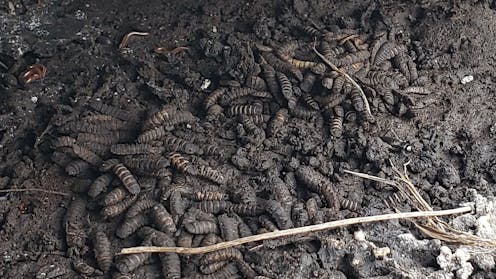
Les larves de mouches peuvent se nourrir d’animaux en décomposition. Melanie M. Beasley

Les asticots étaient-ils un mets de base du régime alimentaire des Néandertaliens ? Cela expliquerait pourquoi ces derniers présentent des taux d’azote-15 dignes d’hypercarnivores.


Pendant longtemps, les scientifiques ont pensé que les Néandertaliens étaient de grands consommateurs de viande. Des analyses chimiques de leurs restes semblaient indiquer qu’ils en mangeaient autant que des prédateurs de haut niveau comme les lions ou les hyènes. Mais en réalité, les Hominini – c’est-à-dire les Néandertaliens, notre espèce, et d’autres parents proches aujourd’hui éteints – ne sont pas des carnivores spécialisés. Ce sont plutôt des omnivores, qui consomment aussi de nombreux aliments d’origine végétale.

Il est possible pour les humains de survivre avec un régime très carnivore. De fait, plusieurs groupes de chasseurs-cueilleurs traditionnels du Nord, comme les Inuits, ont pu survivre principalement grâce aux aliments d’origine animale. Mais les Hominini ne peuvent tout simplement pas tolérer de grandes quantités de protéines comme les grands carnivores. Chez l’humain, un excès prolongé de protéines sans une quantité suffisante d’autres nutriments peut entraîner une intoxication protéique – un état débilitant, voire mortel, historiquement appelé « famine du lapin ».

Alors, comment expliquer les signatures chimiques retrouvées dans les os de Néandertaliens, qui suggèrent qu’ils mangeaient énormément de viande sans problème apparent ?

Je suis anthropologue et j’étudie l’alimentation de nos lointains ancêtres grâce à des éléments comme l’azote. De nouvelles recherches que mes collègues et moi avons menées suggèrent qu’un ingrédient secret dans le régime des Néandertaliens pourrait expliquer ces signatures chimiques : les asticots.

Les rapports isotopiques renseignent sur ce qu’un animal a mangé

Les proportions d’éléments spécifiques retrouvées dans les os d’un animal permettent d’avoir un aperçu de son alimentation. Les isotopes sont des formes alternatives d’un même élément, dont la masse diffère légèrement. L’azote possède deux isotopes stables : l’azote-14 (le plus courant) et l’azote-15 (plus lourd et plus rare). On note leur rapport sous la forme δ15N, mesuré en « pour mille ».

À mesure que l’on monte dans la chaîne alimentaire, les organismes ont relativement plus d’azote-15 en eux. L’herbe, par exemple, a une valeur de δ15N très faible. Un herbivore, lui, accumule l’azote-15 qu’il consomme en mangeant de l’herbe, de sorte que son propre corps a une valeur de δ15N légèrement plus élevée. Les animaux carnivores ont le ratio d’azote le plus élevé dans un réseau alimentaire ; l’azote-15 de leurs proies se concentre dans leur corps.

En analysant les rapports d’isotopes stables de l’azote, nous pouvons reconstruire les régimes alimentaires des Néandertaliens et des premiers Homo sapiens durant la fin du Pléistocène, qui s’étendait de 11 700 à 129 000 ans avant notre ère (av. n. è.). Les fossiles provenant de différents sites racontent la même histoire : ces Hominini ont des valeurs de δ15N élevées. Ces valeurs les placeraient typiquement au sommet de la chaîne alimentaire, aux côtés des hypercarnivores tels que les lions des cavernes et les hyènes, dont le régime alimentaire est composé à plus de 70 % de viande.

Mais peut-être y avait-il quelque chose d’autre dans leur alimentation qui gonfle ces valeurs ?

Découvrir le menu des Néandertaliens

Notre suspicion s’est portée sur les asticots, qui pouvaient être une source différente d’azote-15 enrichi dans le régime alimentaire des Néandertaliens. Les asticots, qui sont les larves de mouches, peuvent être une source de nourriture riche en graisses. Ils sont inévitables après avoir tué un autre animal, facilement collectables en grande quantité et bénéfiques sur le plan nutritionnel.

Pour explorer cette possibilité, nous avons utilisé un ensemble de données qui avait été initialement créé dans un but très différent : un projet d’anthropologie médico-légale axé sur la manière dont l’azote pourrait aider à estimer le temps écoulé depuis la mort.

J’avais initialement collecté des échantillons contemporains de tissu musculaire et des asticots associés au Centre d’anthropologie médico-légale de l’Université du Tennessee, à Knoxville, pour comprendre comment les valeurs d’azote évoluent pendant la décomposition après la mort.

Bien que ces données soient pensées pour aider dans des enquêtes actuelles sur des morts, nous les avons, nous, réutilisées pour tester une hypothèse très différente. Nous avons ainsi trouvé que les valeurs des isotopes stables de l’azote augmentent modestement à mesure que le tissu musculaire se décompose, allant de -0,6 permil à 7,7 permil.

Cette augmentation est plus marquée dans les asticots eux-mêmes, qui se nourrissent de ce tissu en décomposition : de 5,4 permil à 43,2 permil. Pour mettre ces valeurs en perspective, les scientifiques estiment que les valeurs de δ15N des herbivores du Pléistocène varient entre 0,9 permil et 11,2 permil. On enregistre pour les asticots des mesures pouvant être presque quatre fois plus hautes.

Notre recherche suggère que les valeurs élevées de δ15N observées chez les Hominini du Pléistocène tardif pourraient être gonflées par une consommation tout au long de l’année de mouches larvaires enrichies en 15N trouvées dans des aliments d’animaux séchés, congelés ou stockés.

Les pratiques culturelles influencent l’alimentation

En 2017, mon collègue John Speth a suggéré que les valeurs élevées de δ15N chez les Néandertaliens étaient dues à la consommation de viande putréfiée ou en décomposition, en se basant sur des preuves historiques et culturelles des régimes alimentaires chez les chasseurs-cueilleurs de l’Arctique.

Traditionnellement, les peuples autochtones considéraient presque universellement les aliments d’animaux entièrement putréfiés et infestés de mouches larvaires comme des mets très recherchés, et non comme des rations de survie. En fait, de nombreux peuples laissaient régulièrement et, souvent intentionnellement, les aliments d’origine animale se décomposer au point où ils grouillaient de mouches larvaires et, dans certains cas, commençaient même à se liquéfier.

Cette nourriture en décomposition émettait inévitablement une puanteur si intense que les premiers explorateurs européens, les trappeurs et les missionnaires en étaient dégoûtés. Pourtant, les peuples autochtones considéraient ces aliments comme bons à manger, voire comme une gourmandise. Lorsqu’on leur demandait comment ils pouvaient tolérer cette odeur nauséabonde, ils répondaient simplement : « Nous ne mangeons pas l’odeur. »

Des pratiques culturelles des Néandertaliens similaires pourraient bien être la clé de l’énigme de leurs valeurs élevées de δ15N. Les Hominini anciens coupaient, stockaient, conservaient, cuisaient et cultivaient une grande variété de produits. Toutes ces pratiques enrichissaient leur régime alimentaire paléolithique avec des aliments sous des formes que les carnivores non-Hominini ne consomment pas. Des recherches montrent que les valeurs de δ15N sont plus élevées pour les aliments cuits, pour les tissus musculaires putréfiés provenant de spécimens terrestres et aquatiques et, selon notre étude, pour les larves de mouches se nourrissant de tissus en décomposition.

Les valeurs élevées de δ15N des asticots associées aux aliments animaux putréfiés aident à expliquer comment les Néandertaliens ont pu inclure une grande variété d’autres aliments nutritifs au-delà de la simple viande, tout en affichant des valeurs de δ15N typiques de celles des hypercarnivores.

Nous suspectons que les valeurs élevées de δ15N observées chez les Néandertaliens reflètent la consommation régulière de tissus animaux gras et de contenus d’estomac fermentés, beaucoup étant à l’état semi-putride ou putride, ainsi que le bonus inévitable des mouches larvaires vivantes et mortes enrichies en 15N.

Ce qui reste encore inconnu

Les asticots sont une ressource riche en graisses, dense en nutriments, ubiquitaire et facilement disponible, et tant les Néandertaliens que les premiers Homo sapiens, tout comme les chasseurs-cueilleurs modernes, auraient tiré profit de leur pleine exploitation. Mais nous ne pouvons pas affirmer que les mouches larvaires seules expliquent pourquoi les Néandertaliens ont de telles valeurs élevées de δ15N dans leurs restes.

Plusieurs questions concernant ce régime alimentaire ancien restent sans réponse. Combien d’asticots une personne devait-elle consommer pour expliquer une augmentation des valeurs de δ15N au-delà des valeurs attendues dues à la consommation de viande seule ? Comment les bienfaits nutritionnels de la consommation de mouches larvaires changent-ils en fonction du temps de stockage des aliments ? Des études expérimentales supplémentaires sur les variations des valeurs de δ15N des aliments transformés, stockés et cuits selon les pratiques traditionnelles autochtones pourraient nous aider à mieux comprendre les pratiques alimentaires de nos ancêtres.

The Conversation

Melanie Beasley a reçu un financement de la Haslam Foundation pour cette recherche.

ref. Les Néandertaliens auraient-ils accompagné leur viande d’une bonne quantité d’asticots ? – https://theconversation.com/les-neandertaliens-auraient-ils-accompagne-leur-viande-dune-bonne-quantite-dasticots-262079

David Ricardo : premier théoricien de l’économie

Source: The Conversation – in French – By Éric Pichet, Professeur et directeur du Mastère Spécialisé Patrimoine et Immobilier, Kedge Business School

David Ricardo, économiste, philosophe et député, est considéré comme l’un des économistes libéraux les plus influents de l’école classique aux côtés d’Adam Smith. Store norske leksikon

Plus de deux siècles ans après la parution de ses Principes de l’économie politique et de l’impôt, le retour de Donald Trump à la Maison Blanche ramène au premier plan sa théorie sur l’équivalence budgétaire ou « neutralité ricardienne ». Une réponse à l’envolée des déficits publics ? Les politiques budgétaires actuelles sont-elles ricardiennes ?


Le Britannique David Ricardo (1772-1823) peut à bon droit revendiquer le titre de premier théoricien de l’économie. Dans la lignée d’Adam Smith, le fondateur de l’école classique, il a tellement influencé la politique économique du Royaume-Uni du XIXe siècle que John Maynard Keynes affirmait mi-ironique, mi-admiratif qu’il avait conquis l’Angleterre comme la Sainte Inquisition avait conquis l’Espagne. Karl Marx lui-même le considérait comme le premier économiste à faire de l’antagonisme des intérêts de classe, de l’opposition entre salaire et profit, profit et rente, le point de départ de ses recherches dans le Capital, en 1867.

Plus de deux siècles ans après la parution de ses Principes de l’économie politique et de l’impôt (1817), le retour de Donald Trump à la Maison Blanche ramène au premier plan deux de ses théories. En décidant de rompre brutalement avec soixante-dix-huit ans de réduction des barrières tarifaires dans le commerce international, le président états-unien s’oppose aujourd’hui frontalement à la théorie des avantages comparatifs.


À lire aussi :
Relire Adam Smith aujourd’hui : la « main invisible », une apologie du libéralisme ?


La promulgation, le 4 juillet 2025, jour de l’indépendance américaine, du Big Beautiful Bill décline la doctrine fiscale et budgétaire du second mandat Trump. Cette dernière est fondée sur des réductions d’impôts massives pour les plus riches, une flambée des dépenses militaires et de lutte contre l’immigration et des coupes drastiques dans les dépenses sociales, notamment de santé des plus pauvres.

Devant l’envolée prévisible d’un déficit public déjà record au sein des pays de l’OCDE, il est utile de revenir sur une autre théorie de Ricardo, l’équivalence budgétaire ou « neutralité ricardienne ».

Équivalence ricardienne

The Principles of Political Economy and Taxation (1817).
Wikimedia

L’équivalence ricardienne exposée dans Principes de l’économie politique et de l’impôt (1817), puis développée dans un article peu connu intitulé Funding System de l’Encyclopedia Britannica de 1820, est en réalité plus une simple expérience de pensée intuitive, une curiosité intellectuelle, qu’une véritable théorie.

Face à la dette publique anglaise colossale léguée par les guerres napoléoniennes – 250 % du PIB –, David Ricardo s’interroge sur la meilleure manière de la réduire. Il imagine alors un pays sans dette qui doit gérer le coût d’une guerre de 20 millions de livres, dans un contexte où le taux d’intérêt est de 5 %. Cette guerre peut être payée soit en une seule fois, soit par le biais d’un impôt perpétuel d’un million de livres, soit par le biais d’un impôt de 1,2 million de livres pendant quarante-cinq ans.

Sous certaines conditions très restrictives – que Joseph Schumpeter qualifiait de « vice ricardien » –, dont certaines utopiques comme la totale rationalité des citoyens, Ricardo conclut que toutes ces solutions sont équivalentes. Que les particuliers paient contraints et forcés un impôt ou qu’ils souscrivent volontairement un emprunt versant un intérêt garanti, ils transfèrent une partie de leurs ressources à l’État. Il n’y a donc pas de différence économique entre l’emprunt et l’impôt, seulement une différence comptable, par la hausse du taux d’épargne des ménages à hauteur de la dette, et… une différence sociale puisque les intérêts de cette nouvelle dette modifieront la répartition des revenus.

Les impôts levés pour payer les intérêts des emprunts s’analysent comme un transfert des mains du contribuable dans celles du créancier de l’État. Autrement dit, un mécanisme de redistribution des revenus en faveur des détenteurs d’obligations aux dépens de la population – et non pas, comme on le croit souvent, d’une génération à une autre. Quand les détenteurs de la dette publique sont des résidents du pays, comme c’était à peu près le cas à l’époque (mais plus maintenant, puisque les obligations de l’État français sont détenues à plus de 50 % par des non-résidents), que les intérêts de l’emprunt soient payés ou non, la nation ne s’en trouvera ni plus ni moins riche.

Dettes et impôts équivalents

Au moment de la crise de 1929, Keynes remet en cause un dogme budgétaire issu de la pensée de Smith et de Ricardo selon lequel les comptes publics devaient toujours rester équilibrés. Pour relancer l’économie, Keynes enseigne dans sa Théorie générale de l’emploi, de l’intérêt et de la monnaie de 1936, qu’un déficit budgétaire déclenché par une hausse des dépenses publiques est le seul moyen de sortir d’une grave dépression économique.

Cette vision du rôle de l’État éclipse les classiques. Elle constitue le nouveau dogme de la politique budgétaire des pays développés jusqu’aux années 1970, où le cumul du chômage et de l’inflation conduit certains économistes à rompre avec le keynésianisme pour réinventer la macroéconomie.

C’est ainsi qu’en 1974, Robert Barro, qui ignorait alors l’équivalence ricardienne, publie un article « Are Government Bonds Net Wealth ? » où il montre que, là encore sous certaines conditions très restrictives, les deux grands modes de financement modernes des dépenses publiques que sont la dette et l’impôt sont strictement équivalents. Par conséquent, une politique de relance budgétaire est « neutre » sur l’activité économique, ce qui implique qu’elle ne produit aucun effet « keynésien » comme le multiplicateur des dépenses, ou « néoclassique/antikeynésien » comme l’effet d’éviction.

Selon lui, les anticipations rationnelles des agents accroissent l’épargne privée à l’exact montant du déficit public lié à la relance budgétaire. En substituant la dette publique à l’impôt, le gouvernement ne modifie pas la valeur actuarielle des impôts futurs et, partant, le revenu permanent des ménages. C’est cette théorie qui sera rapidement qualifiée d’« effet Ricardo-Barro » notamment par Buchanan en 1976. Il soulignera que la contestation par Barro de l’efficacité des politiques budgétaires a un objet : montrer que le mode de financement des dépenses publiques – par impôt ou par emprunt – constitue un problème secondaire par rapport aux pertes d’efficience engendrées par un niveau excessif de dépenses publiques, financées par des impôts distordants.

Tests empiriques

Depuis, de nombreuses études empiriques ont analysé les effets de l’accroissement des déficits publics sur l’épargne des ménages. En France, une étude publiée par la Direction générale du Trésor et de la politique économique (DGTPE) en 2004 suggère que les ménages, de la zone euro et en France, suivent, mais en partie seulement, un comportement ricardien :

« Une hausse de 1 point de PIB du déficit public structurel serait compensée par une augmentation de ¾ de point de PIB de l’épargne privée, ce qui serait cohérent avec un comportement largement ricardien des ménages de la zone euro. »

Un document de l’OCDE de 2015 met en évidence une relation non linéaire entre la dette publique et le multiplicateur keynésien. Celui-ci serait positif lorsque l’endettement est limité, mais deviendrait négatif lorsque la dette dépasse un seuil compris selon les pays entre 65 et 75 % du PIB. Pour les auteurs, cela peut s’expliquer par deux cas de figure :

  • par la psychologie des agents économiques qui fixeraient un seuil psychologique au-delà duquel la charge de la dette est perçue comme insupportable,

  • par le fait que le service de la dette entraîne une éviction interne trop importante des ressources allouées aux autres postes du budget de l’État, ce qui ne permet plus d’assurer le financement des dépenses publiques productives (entendues comme permettant l’augmentation de la productivité marginale du capital privé).

En conclusion, on peut affirmer que l’équivalence ricardienne n’est globalement pas validée dans sa forme pure.

L’analyse de l’évolution des déficits publics et de l’épargne privée dans les pays de l’OCDE met toutefois en évidence une équivalence partielle entre eux, qui peut correspondre à l’existence de comportements ricardiens dans une partie de la population en particulier lorsque la dette publique est plus élevée.

Les politiques budgétaires actuelles sont-elles ricardiennes ?

David Ricardo.
Wikimediacommons

Pour éviter tout malentendu, Ricardo précisait bien, à l’opposé des politiques budgétaires actuelles, son hostilité de principe à la dette publique pour couvrir les dépenses extraordinaires de l’État, car ce moyen tend « à nous rendre moins industrieux et à nous aveugler sur notre situation ». Selon lui, le meilleur moyen d’éviter le recours à l’emprunt public et l’augmentation des impôts reste la gestion parcimonieuse des fonds publics. Elle est fondée sur le principe selon lequel l’État connaît moins bien que le marché les besoins des citoyens et qu’il doit donc s’en tenir à ses fonctions régaliennes.

En revanche, il est un aspect de la doctrine budgétaire de Donald Trump qui s’inscrit dans la droite ligne de la pensée de Ricardo : la volonté de réduire les dépenses sociales. Ricardo fustige les mesures de soutien matériel aux pauvres :

« La tendance manifeste et directe de la législation anglaise sur les indigents est diamétralement en opposition avec [mes] principes, qui sont de toute évidence. Ces lois, bien loin de répondre au vœu bienfaisant du législateur, qui ne voulait qu’améliorer la condition des pauvres, n’ont d’autre effet que d’empirer à la fois et celle du pauvre et celle du riche ; au lieu d’enrichir les pauvres, elles ne tendent qu’à appauvrir les riches. »

Peut-être la grande différence avec Donald Trump est que David Ricardo défendait une vision utilitariste du monde. Son non-interventionnisme était pragmatique et non doctrinaire. En faisant confiance au privé, c’était pour lui la meilleure manière d’atteindre le seul but légitime de tout gouvernement : le bonheur du peuple qui vit sous sa juridiction.

The Conversation

Éric Pichet ne travaille pas, ne conseille pas, ne possède pas de parts, ne reçoit pas de fonds d’une organisation qui pourrait tirer profit de cet article, et n’a déclaré aucune autre affiliation que son organisme de recherche.

ref. David Ricardo : premier théoricien de l’économie – https://theconversation.com/david-ricardo-premier-theoricien-de-leconomie-260608