‘Pay us what you owe us:’ What the WNBA’s collective bargaining talks reveal about negotiation psychology

Source: The Conversation – Canada – By Ryan Clutterbuck, Assistant Professor in Sport Management, Brock University

WNBA all-star players, led by Indiana Fever’s Caitlin Clark and the Minnesota Lynx’s Naphessa Collier, recently made headlines by wearing “Pay Us What You Owe Us” T-shirts during the pregame warm-up.

The T-shirts, which are now available for purchase, were a demonstration of players’ frustrations with the WNBA owners and the ongoing collective bargaining agreement negotiation. The collective agreement sets out the terms and conditions of employment (like salaries and benefits) between the league and its players, and is set to expire Oct. 31, 2025.

Reportedly, players are asking for increased revenue sharing (the current agreement stipulates WNBA players receive only nine per cent of league revenue, relative to their NBA peers who receive 50 per cent), increased compensation (the average WNBA salary is US$147,745) and other benefits.

Central to these demands is the perception that, despite a surge in popularity, media attention and viewership, WNBA players are still being underpaid and are undervalued.

Negotiations for a new collective agreement are ongoing. But as the T-shirts and subsequent public statements from the players and the WNBA show, there is increasing frustration with how the process is unfolding.

What is ‘owed’ to WNBA players?

Debate over what is “owed” to WNBA players has intensified recently. ESPN commentator Pat McAfee, for example, has suggested the league should simply increase players’ salaries by US$30,000 per player, saying that contracts like Clark’s are “an embarrassment.”

But others argue this discussion should go beyond players’ salaries. Syracuse University sport management professor Lindsey Darvin writes:

“The question isn’t whether the WNBA can afford to pay players what they’re worth; it’s whether the league can afford not to make the investments necessary to realize its full potential.”

According to Darvin, because the WNBA is an economically inefficient — and arguably exploitative — business, its focus should be on increasing revenue, and not simply on reducing its labour costs. For example, with the goal to satisfy increasing market demands for the WNBA, strategies to increase revenue could include expanding the league to new markets, scheduling more games at the 3 p.m. Eastern time slot and increasing the number of regular season games from 44 to 60 or more.

In sport management classrooms and negotiation workshops at Brock University, we call this “expanding the pie” — working collaboratively, as opposed to combatively, to grow the game and the business so that both players and owners benefit over the long term. But this is easier said than done.

Information shapes negotiation outcomes

While it’s still early in the negotiation process, there are lessons that can be learned from this round of collective bargaining. One of those lessons has to do with making and receiving first offers. In particular, two psychological concepts are at play: information asymmetry and the anchoring effect.

Information asymmetry occurs when one party holds more relevant knowledge than the other. For example, in a typical job negotiation, the employer knows the number of applicants for the position, how much the company is willing to pay and what compensation trends look like across the sector. The candidate, by contrast, lacks most if not all of this information and thus enters the negotiation at a distinct disadvantage.

The question is: who should make the first salary offer? The general rule is that when you lack critical information, it’s better to let the other side make the first move.

In the case of the WNBA’s negotiations, the information asymmetry problem is not so obvious. The owners likely have a certain perspective on what is acceptable in terms of sharing league revenue and improving working conditions. But the players possess their own kind of leverage, regarding their willingness to protest or walk out entirely.

The league made its initial proposal to the players in early July, but it was not well received.

The ‘anchoring effect’ can skew negotiations

Another problem influencing negotiations is the “anchoring effect.” This occurs when an initial offer influences subsequent offers and counteroffers, and ultimately has an impact on the final outcome.

Garage-sale aficionados may recognize this tendency, as buyers often negotiate with the seller’s sticker price in mind, haggling to earn a 25 or 50 per cent discount on an item without considering whether the item is actually worth the cost. Here, the sticker acts as the anchor.

While sticker prices and first offers are not inherently malicious, some sale prices and first offers are intended to manipulate buyers and negotiators representing the other side. Savvy negotiators deploy strategic anchors, but even they can sometimes miss.

In maritime terms, anchor scour occurs when a ship’s anchor fails to catch hold and instead drags across the seabed, destroying ecosystems caught in its path.

In negotiations, a similar process can unfold. When initial moves and first offers fail to catch hold because they are perceived to be unfair by the other side, it can damage relationships and can make subsequent negotiations even more difficult.

Now, the WNBA may face the consequences of a poorly received anchor. According to WNBA player representative, Satou Sabally, the WNBA’s initial offer was a “slap in the face”.

New York Liberty’s Breanna Stewart called the players’ meeting with the league on July 17 to discuss a new collective bargaining agreement a “wasted opportunity” while Chicago Sky player Angel Reese called the negotiations “disrespectful.”

It’s time to right the ship

Though it’s still early days, we expect negotiations to heat up in the coming weeks as the Halloween deadline to reach a deal approaches.

There is still time to right the ship, so to speak, but to do so, WNBA players and owners must internalize the potentially disastrous impacts that can come from negotiating over an imagined “fixed pie” instead of expanding it, and dropping anchors that fail to address the other sides’ key interests.

WNBA players and WNBA team owners now have, in front of them, a once-in-a-generation opportunity to transform professional women’s sport in North America, through creatively and collaboratively expanding the pie and paying the players what they’re owed.

The Conversation

Michele K. Donnelly has received funding from the Social Sciences and Humanities Research Council (SSHRC).

Michael Van Bussel and Ryan Clutterbuck do not work for, consult, own shares in or receive funding from any company or organisation that would benefit from this article, and have disclosed no relevant affiliations beyond their academic appointment.

ref. ‘Pay us what you owe us:’ What the WNBA’s collective bargaining talks reveal about negotiation psychology – https://theconversation.com/pay-us-what-you-owe-us-what-the-wnbas-collective-bargaining-talks-reveal-about-negotiation-psychology-261731

Israel’s attack on Syria: Protecting the Druze minority or a regional power play?

Source: The Conversation – Canada – By Spyros A. Sofos, Assistant Professor in Global Humanities, Simon Fraser University

A new round of violence recently erupted in southern Syria, where clashes between local Druze militias and Sunni fighters have left hundreds dead.

In response, Israel launched airstrikes in and around the province of Sweida on July 15, saying it was acting to protect the Druze minority and to deter attacks by Syrian government forces.

The strikes mark Israel’s most serious escalation in Syria since December 2024, and they underline a growing trend in its foreign policy: the use of minority protection as a tool of regional influence and power projection.

The Druze minority

The Druze, a small but strategically significant ethno-religious group, have historically occupied a precarious position in the politics of Syria, Israel and Lebanon.

With an estimated million members across the Levant — a sub-region of west Asia that forms the core of the Middle East — the Druze have often tried to preserve their autonomy amid broader sectarian and political upheavals. In Syria, they make up about three per cent of the population, concentrated largely in the southern province of Sweida.

Following the collapse of Bashar al-Assad’s regime in Syria in late 2024 and the rise of a new Islamist-led government under Ahmed al-Sharaa, the Druze in southern Syria have resisted central authority.

Though not united in their stance, many Druze militias have rejected integration into the new Syrian army, preferring to rely on local defence networks. The latest wave of violence, sparked by the abduction of a Druze merchant, has been met with both brutality from pro-government forces and military retaliation by Israel.

Truly protecting Syrian minorities?

Israeli officials says they intervened to protect the Druze, which is not unprecedented. Over the past year, Israel has increasingly portrayed itself as a defender of threatened minorities in Syria — rhetoric that echoes past efforts to align with non-Arab or marginalized groups, such as the Kurds and certain Christian communities.

This strategy may be less about humanitarian goals and, in fact, much more deeply political.

By positioning itself as a regional protector of minorities, Israel could be seeking to craft a narrative of moral authority, particularly as it faces growing international outrage over its policies in the West Bank and Gaza. This is an example of what scholars refer to as strategic or nation branding by states to cultivate legitimacy and influence through selective interventions and symbolic gestures.

But Israel’s actions may not just concern image. They could also be part of a broader geopolitical strategy of containment and fragmentation.

The new authorities in Syria are seen as a significant threat, particularly because of the presence of Islamist factions operating near the Israeli-occupied Golan Heights. By creating what is in effect a buffer zone in southern Syria, Israel’s goal may be to prevent the entrenchment of hostile entities along its northern border while also capitalizing on Syria’s internal fragilities.

Strategic risks

With sectarian tensions resurfacing in Syria, the Israeli government probably sees an opportunity to build informal alliances with disaffected groups like the Druze, who may be skeptical of the new Syrian government. This reflects a shift in Israel’s foreign policy from reactive deterrence to proactive strategic disruption.

This approach is not without risks. While some Druze leaders have welcomed Israeli support, others — particularly in Syria and Lebanon — have accused Israel of stoking sectarian tensions to justify military intervention and advance territorial or security aims.

Such accusations echo longstanding criticisms that Israel’s involvement in regional conflicts is often guided less by humanitarian concern and more by cold strategic calculation.

This new phase in Israeli foreign policy also fits into a broader pattern I’ve previously written about — the increasing revisionism of Israel’s regional strategy under Benjamin Netanyahu’s leadership. That strategy seemingly seeks to upend multilateral norms, bypass traditional diplomacy and pursue influence through direct engagement — often militarized — with non-state entities and marginalized communities.


Read more:
How Israel’s domestic crises and Netanyahu’s aim to project power are reshaping the Middle East


Israel’s July 15 strikes, and an attack on Syria’s Ministry of Defence in Damascus the following day, have drawn strong condemnation from Arab states, Turkey and the United Nations.

While Israeli officials have justified the attacks as defensive and humanitarian, the intensity and symbolic targets suggest a deeper intention: to demonstrate operational reach, and, more importantly, actively engage in a redesign of the region with fragmentation and state weakness as the main objective.

Fragmentation of the Middle East

The United States, while expressing concern over the violence, has largely remained silent on Israel’s expanding role in Syria. This could further embolden Israeli actions in a region where international norms are being increasingly upended and traditional great power engagement is waning.

Sectarian clashes are likely to continue in Sweida and beyond as Syria’s central government struggles to reassert control. That means that for Israel, the opportunity to deepen its footprint in southern Syria under the guise of minority protection remains.

But despite its effort to present itself as a stable, moral presence in an otherwise chaotic neighbourhood, Israel could be undermining the very stability it says it wants to protect as it militarizes humanitarianism.

The world is not not just witnessing a series of airstrikes or another episode of sectarian violence in the Middle East. It’s watching a profound transformation in the regional order — one in which traditional borders, alliances and identities are being reshaped.

Amid this environment, Israel’s role could evolve not just as a military power, but as a revisionist nation navigating, and helping to bring about, the fragmentation of the Middle East.

The Conversation

Spyros A. Sofos does not work for, consult, own shares in or receive funding from any company or organisation that would benefit from this article, and has disclosed no relevant affiliations beyond their academic appointment.

ref. Israel’s attack on Syria: Protecting the Druze minority or a regional power play? – https://theconversation.com/israels-attack-on-syria-protecting-the-druze-minority-or-a-regional-power-play-261648

8 policies that would help fight poverty in South Africa’s economic hub Gauteng

Source: The Conversation – Africa – By Adrino Mazenda, Senior Researcher, Associate Professor Economic Management Sciences, University of Pretoria

Poverty goes beyond income. It often arises when health, education and opportunities fall short of meeting people’s needs.

Individuals are classified as impoverished when they face deprivation in one-third or more of the indicators in a multidimensional poverty index. The index reflects the various influences on socioeconomic class. These include housing, sanitation, electricity, cooking fuel, nutrition and school attendance.

The index is one of the most comprehensive measures of poverty. The fact that the multidimentional index captures multiple dimensions enables it to reflect overlapping disadvantages. And provides a fuller picture of well-being. Other monetary measures such as income aren’t as comprehensive.

About 18% of the world’s population are poor by the definition of the multidimentional poverty index. Sub-Saharan Africa is especially affected, with a multidimensional poverty rate nearing 59%.

In South Africa, it is at around 40%. This means it experiences four in 10 of the dimensions of poverty.

The province of Gauteng is South Africa’s economic hub. Nevertheless it contains pockets of severe deprivation. About 4.6% of households are poor. In some wards up to 68% are severely deprived.

We are social scientists with research histories in food systems and livelihoods, public policy and economics of human capital. We recently conducted a study focused on Gauteng. We wanted to determine what could enable poor and vulnerable households to move out of those categories.

We used a modelling exercise that allowed us to isolate the most relevant factors for this transition.

The study found six factors: education, age, income, working time, medical aid and being a recipient of a low income municipal support grant. We concluded from this that attending to these six variables was the foundation for upward mobility.

Conversely, vulnerability to economic shocks, such as job loss or food insecurity, can trigger rapid downward mobility.

Based on our findings we make eight policy recommendations. These include boosting education and skills training, better healthcare and affordable, reliable transport.

Range of factors

Multidimensional poverty intersects with socioeconomic class structures. It reinforces inequality by placing individuals into hierarchical groups. These range from the affluent and middle class to the transient, vulnerable, and chronically poor.

These disparities shape access to resources, opportunities and upward mobility.

Lower-class households differ from middle-class and affluent (non-poor) households across multiple dimensions. These differences include income stability, consumption patterns, access to services, asset ownership, social capital and vulnerability to shocks.

In the light of this we adopted a multidimensional poverty approach to classify households. We used various dimensions and indicators of poverty to assess the extent of deprivation and associated poverty levels.

We calculated the deprivation score and classified households into three levels: not poor, moderate poverty (vulnerable), and severe poverty (chronically poor).

Working time had the strongest effect. Part- or full-time work greatly lowered odds of severe poverty (chronic poverty) and moderate poverty (transient poverty). Working time refers to the duration that a person is engaged in paid employment or work-related activities. This is usually between 35 and 45 hours per week for full-time employment. And fewer than 35 hours per week for part-time employment.

Some factors only influenced certain groups. For severe poverty, transport access, household health, food parcel reliance, household size, and skipping meals were significant. For moderate poverty, gender, food parcel reliance and skipping meals mattered. And for the vulnerable non-poor (middle class), distance from public transport was the only additional factor.

Social grants and being part of the black population group showed little influence. Transitions and the ability to transcend poverty classes were driven mainly by direct socio-economic factors.

These dynamics underscore the precariousness of low-income households. They also highlight the importance of targeted interventions to break cycles of poverty.

Higher education, stable income and access to full-time work, drastically reduce the odds of remaining in severe or moderate poverty or being vulnerable. Medical aid access and municipal assistance programmes that provide free or subsidised basic services, also serve as protective factors. These help households meet essential health and welfare needs.

However, several structural and socio-economic constraints hinder transitions out of poverty. For example, living a greater distance from public transport increases the likelihood of severe poverty and vulnerability.

Food insecurity, measured by skipping meals or dependence on food parcels, remains a persistent marker of entrenched deprivation.

Gender disparities suggest underlying labour market or social vulnerabilities that require targeted policy interventions. For example, male-headed households are more likely than female-headed households to be moderately poor.

What can be done

Escaping multidimensional poverty in Gauteng requires targeted, practical and complementary interventions. Examples include subsidised transport, decentralised clinics, or housing closer to jobs.

This will enable grants to be translated to improved well-being.

We suggest eight areas for improvement:

  • access to education, vocational training and digital skills. This will help to increase employment prospects

  • public works and youth entrepreneurship support. This will boost income generation

  • social protection like indigent benefits, food vouchers and subsidised medical aid

  • food security. This can be done through community gardens and nutrition programmes

  • support for female-headed households and young people

  • affordable, reliable public transport. Services also need to be decentralised

  • data-driven municipal planning to guide infrastructure and service investments

  • consistently tracking progress against defined objectives.

The province implements multiple poverty-reduction initiatives. These include expanded public works, township economy support, food gardens, free basic services, subsidised housing, and public transport projects.

These efforts address income, food security and mobility. But they have limited impact due to persistent barriers. This is because many, particularly young people, don’t have market-relevant skills. In addition, spatial inequality results in long, costly commutes. And housing shortages and rising food prices deepen vulnerability.

Fragmented funding, weak coordination and inadequate data tracking also undermine progress.

The Conversation

Massimiliano Tani receives funding from Australian Research Council (unrelated to this article).

Adrino Mazenda and Catherine Althaus do not work for, consult, own shares in or receive funding from any company or organisation that would benefit from this article, and have disclosed no relevant affiliations beyond their academic appointment.

ref. 8 policies that would help fight poverty in South Africa’s economic hub Gauteng – https://theconversation.com/8-policies-that-would-help-fight-poverty-in-south-africas-economic-hub-gauteng-261388

Modi’s visit to Ghana signals India’s broader Africa strategy. A researcher explains

Source: The Conversation – Africa (2) – By Veda Vaidyanathan, Associate, Harvard University Asia Center, Harvard Kennedy School

Ghana has historically been an anchor of Indian enterprise and diplomacy on the African continent.

New Delhi and Accra formalised ties in 1957. At the time, their partnership was grounded in shared anti-colonial ideals and a common vision for post-independence development. India offered counsel on building Ghana’s institutions, including its external intelligence agency. Meanwhile, Indian teachers, technicians, and traders regularly travelled to the west African country in search of opportunity.

The July 2025 visit of the Indian prime minister, Narendra Modi, to Ghana – the first by an Indian leader in over three decades – came at a critical moment for the continent. As the global order shifts towards multi-polarity, countries like Ghana are navigating a complex landscape, which includes western donors scaling back commitments. This has opened space to deepen cooperation through pragmatic, interest-driven collaborations with longstanding partners like India. Speaking at the Munich Security Conference, Ghana’s President John Mahama captured the spirit of this global realignment, noting that

as bridges are burning, new bridges are being formed.

Against this backdrop, Prime Minister Modi’s visit offered an opportunity to both revive and recalibrate bilateral ties. The visit carried a strong economic and strategic orientation. Ghana positioned itself as a partner in areas where India holds comparative advantage, such as pharmaceuticals. Over 26% of Africa’s generic medicines are sourced from India. The Food and Drugs Authority’s (Ghana’s regulator of pharmaceutical standards) listing of foreign pharmaceutical manufacturing facilities is dominated by Indian firms.

Defence cooperation was also on the agenda. Ghana is looking to India for training, equipment and broader security engagement in response to rising threats from the Sahel and coastal piracy.

This emphasis on shared security interests is underscored by Ghana’s alignment with India on counter-terrorism. President Mahama for instance has condemned the Pahalgam terrorist attacks that occurred in April, 2025.

Reviving economic ties

Economic ties are at the heart of this renewed engagement between the two countries. Bilateral trade currently stands at around US$3 billion. Both leaders aim to double it to US$6 billion over the next five years. Currently, Ghana enjoys a trade surplus with India. This is mainly due to gold exports, which account for over 70% of its shipments. Cocoa, cashew nuts, and timber are also key exports, while imports from India include pharmaceuticals, machinery, vehicles, and various industrial goods.

India has invested more than US$2 billion in Ghana. These investments span private capital, concessional finance and grants across 900 projects. India now ranks among Ghana’s top investors. Indian firms and state-backed institutions play a key role in critical infrastructure development. Landmark projects include the 97km standard gauge Tema-Mpakadan Railway Line and the Ghana-India Kofi Annan ICT Centre, a hub for innovation and research.

In an earlier study, I documented the perspectives of Indian entrepreneurs in Ghana. The findings underscored the country’s appeal as a land of economic opportunity. In interviews, Indian businesses highlighted Ghana’s stable political environment. An expanding consumer base, and relatively transparent regulatory framework were also mentioned. Together, these factors continue to attract investor interest.

This economic momentum likely paved the way to pursue a closer bilateral relationship, marked by the elevation to a ‘Comprehensive Partnership’.

While delegates in the July visit addressed issues such as financial inclusion, healthcare and agriculture, the tangible outcomes were limited. Four memoranda of understanding were signed. They cover cooperation on traditional medicine, regulatory standards and cultural exchange. The creation of a joint commission to structure and advance bilateral collaboration across priority sectors was also signed.

Moving forward, Ghana offers India an entry point into west Africa’s resource landscape. With reserves of gold, bauxite, manganese and lithium, Ghana is well positioned to contribute to India’s needs for critical minerals. President Mahama’s invitation for investment in mineral extraction and processing aligns with India’s National Critical Mineral Mission, New Delhi is looking for supply chains for its energy transition. It creates an opportunity for Indian mining companies to expand into African markets.


Read more:
The world is rushing to Africa to mine critical minerals like lithium – how the continent should deal with the demand


Pragmatic diplomacy

With nearly US$100 billion in trade, cumulative investments of nearly US$75 billion, and a 3.5 million strong diaspora, the broader contours of India’s Africa policy is increasingly pragmatic and issue based.

New Delhi’s evolving relations with Accra reflects this. It comes as Ghana is making sweeping economic reforms domestically, particularly in fiscal management and debt restructuring.

This ambitious “economic reboot” hinges on attracting private sector investment. In this context, the Indian diaspora, already deeply embedded in Ghana’s commercial networks, is well positioned to foster stronger economic ties.

In his address to Ghana’s Parliament, The Indian Prime Minister spoke of development cooperation that is demand driven and focused on building local capacity and creating local opportunities. This approach “to not just invest, but empower”, signals India’s growing intent to anchor relationships in mutual agency, rather than dependency.

The Conversation

Veda Vaidyanathan is Fellow, Foreign Policy and Security Studies, at a leading Indian think tank.

ref. Modi’s visit to Ghana signals India’s broader Africa strategy. A researcher explains – https://theconversation.com/modis-visit-to-ghana-signals-indias-broader-africa-strategy-a-researcher-explains-261187

Windrush scandal: those left to apply for compensation without legal help missed out on tens of thousands of pounds

Source: The Conversation – UK – By Jo Wilding, Lecturer in law, University of Sussex

The Windrush scandal has been one of the biggest miscarriages of justice in Britain, affecting tens of thousands of people. The government set up a scheme in 2019 to award compensation to those who had been wronged by racist immigration legislation over decades, left unable to prove their immigration status.

But in a new report, I have found that how much victims receive through the scheme has little to do with how they were wronged, and more to do with whether they can access a lawyer. Those who applied without legal support were offered tens of thousands of pounds less than when they appealed with legal representation.

The research, produced with law reform charity Justice and Dechert LLP’s pro bono team, provides empirical evidence of precisely what lawyers do that makes a difference.

Our research participants, who were claiming compensation over the Windrush scandal were offered, on average, £11,000 when applying to the scheme without a lawyer. But when applying for review with legal representation, the award was more than £83,000. One of our participants was refused any compensation when he applied alone, but eventually received £295,000 with the help of a lawyer.

Why lawyers are needed

We conducted an in-depth review of ten files where a claimant first applied for compensation without a lawyer, received a refusal or a low offer of compensation, and then applied with a lawyer for review of that decision.

We reviewed another seven files from people who could never have claimed alone, because of street homelessness, dementia or serious health conditions.

The team interviewed each lawyer and (where possible) the claimant, to identify exactly what a lawyer does that makes a difference.

The Home Office insists lawyers are unnecessary because the scheme’s own caseworkers will help find evidence. But our findings suggest serious failings in those efforts. One of the main contributions of lawyers was expertise in finding decades-old evidence and demonstrating how it meets the standard of proof for the Windrush compensation scheme.

One of our claimants applied for compensation for having been refused housing assistance (leaving her homeless) based on a misunderstanding of her immigration status. The Home Office caseworkers emailed her local council and asked whether there was a record of her being refused housing assistance 20 years earlier. The council replied that there was not. The caseworker treated that as evidence that she had never made an application.

When a lawyer got involved, he asked the council to confirm how long they kept housing application records. The answer was 12 years, so there was never any prospect of evidence existing from 20 years ago. The lawyer then managed to track down her housing file with the housing solicitors who represented her.

Lawyers knew how to request files from public bodies, understood the references to statutes in those files and, most importantly, were able to spot when key documents were missing.

The lawyers in the cases we reviewed took detailed witness statements from claimants. Those made by claimants alone averaged 1.5 pages, whereas those made by lawyers were at least 15 pages, containing far more relevant detail showing how the claimant met the scheme criteria.

Lawyers acted as a “buffer” between claimant and Home Office. Claimants told our research team that they felt the Home Office spoke to them with more respect once they had a lawyer. Often, claimants were ready to give up and accept the refusal because they were exhausted and frustrated with fighting the Home Office.

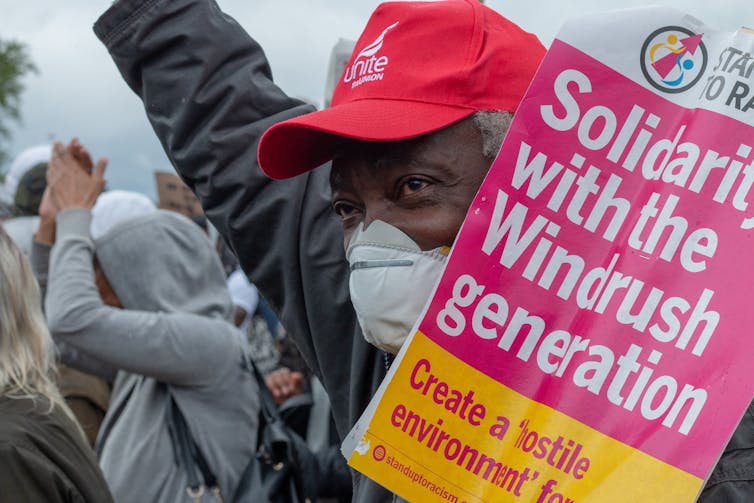
A man at a protest holding a sign that reads 'solidarity with the Windrush generation'
The Windrush scandal has affected tens of thousands of people.
James Ivor Wadlow/Shutterstock

The findings are consistent with other peer-reviewed research exploring what lawyers or representatives add to cases in the family courts and the tribunals: a 15%-18% “representation premium” in chances of success. In some cases, this can be achieved through pre-hearing advice.

All of our participants had a lawyer either through Law Centres funded by a charity, a university law clinic, or private law firms doing the work pro bono. Some firms also do the work on a no-win-no-fee basis, typically taking 25%-30% of the claimant’s damages but on occasion up to 67%. Given that it takes 32-103 hours to prepare the case, the lawyer’s fee may still underrepresent the work they did.

Compensation schemes and legal support

Recent reports have revealed serious problems with the compensation schemes for both the Post Office and the infected blood scandals. The chairs of the respective public inquiries, Sir Wyn Williams and Sir Brian Langstaff, criticised gaps in the provision of access to legal advice and recommended funded legal advice for all claimants.

The Post Office Horizon IT scandal has four compensation schemes for different categories of victim. In each, claimants can choose between a fixed payment (£75,000) or an individual assessment of loss. In three of those schemes, funded legal advice is available to help claimants choose between those options. In the Horizon Shortfall Scheme, though, it is not available unless and until they reject the fixed payment and opt for individual assessment.

The infected blood compensation scheme includes funded legal representation for “core” route claimants – those directly affected. But the inquiry report says it should also be available for claims by affected family members.

Only the Windrush scheme has no provision at all for funded legal representation at any stage. All representation is either a matter of charity, or paid for from the damages, which may leave very little for the claimant.

Yet the Windrush scheme is arguably the most complicated, with a 44-page claim form compared with just eight for the Horizon Shortfall Scheme. The infected blood claim form is largely completed by medical personnel. The Windrush scheme has complex eligibility requirements compared with the other schemes, and often demands an immigration lawyer’s expertise.

As our research found, lawyers were able to advise Windrush claimants on whether the offer of compensation was fair or whether they should apply for review. Our empirical evidence, along with the reports, suggest all compensation schemes involving state harm to citizens should include free legal representation for claimants.

In response to the report, a Home Office spokesperson told the Guardian: “Earlier this year, we launched a £1.5m advocacy support fund to provide dedicated help from trusted community organisations when victims are applying for compensation. However, we recognise there is more to be done, which is why ministers are continuing to engage with community groups on improvements to the compensation scheme, and will ask the new Windrush commissioner to recommend any further changes they believe are required.”


Get your news from actual experts, straight to your inbox. Sign up to our daily newsletter to receive all The Conversation UK’s latest coverage of news and research, from politics and business to the arts and sciences.

The Conversation

Jo Wilding does not work for, consult, own shares in or receive funding from any company or organisation that would benefit from this article, and has disclosed no relevant affiliations beyond their academic appointment.

ref. Windrush scandal: those left to apply for compensation without legal help missed out on tens of thousands of pounds – https://theconversation.com/windrush-scandal-those-left-to-apply-for-compensation-without-legal-help-missed-out-on-tens-of-thousands-of-pounds-261046

Ancient India, Living Traditions: an earnest effort to show how the art of Hinduism, Buddhism and Jainism is sacred and personal

Source: The Conversation – UK – By Ram Prasad, Fellow of the British Academy and Distinguished Professor in the Department Politics, Philosophy and Religion, University of Leicester

The British Museum’s Ancient India, Living Traditions exhibition brings together exhibits on the sacred art of Hinduism, Buddhism and Jainism. It also encompasses the spread of the devotional art of these traditions to other parts of Asia.

The exhibition speaks to religious identity and relationships. Buddhism and Jainism distinguish themselves from the vast surrounding traditions that together we call Hinduism; but they have close kinship with it in practices, beliefs and iconography. Museums that have presented sculptures in isolation have usually not attempted to narrate this complex history.

Not all the items displayed, some going back 2,000 years, are of purely historical interest. There are representations of traditions that are continuously living in a way the gods of ancient Egypt or classical Europe are not.

The most instantly recognisable example for visitors of such living ancient tradition is likely to be statues of the elephant-headed deity Ganesha. Visitors can see a rare and valuable 4th century sandstone Ganesha on show. They can also see a small bronze version of that ancient Ganesha that is like the kind you would find in people’s home and to which a quick prayer would be addressed every morning.

The question of how to respect that sense of the sacred while still mounting an exhibition is a moral and aesthetic challenge that few museums (including in India) have started to address. It’s not uncommon to see such pieces wrenched from the reality of their continued practice and presented in secular art displays. Here, however, the curators have tried to make connections between “statues” on display and “icons” in temples and homes.


Looking for something good? Cut through the noise with a carefully curated selection of the latest releases, live events and exhibitions, straight to your inbox every fortnight, on Fridays. Sign up here.


Finally, there’s the problematic history of the imperial museum and its need to reckon with its past. Most objects on display in this exhibition, and The British Museum more widely, have been presented with scarcely any acknowledgement of how they came to be acquired.

The exhibition makes an earnest effort to tackle most of these issues.

Ancient but not dead

The spaces of the exhibition are structured to be respectful of the historical and contemporary sensitivities of Buddhism and Jainism. This is signalled through subtle changes of colour and the placement of translucent drapery, allowing for transitions between distinct Jain, Buddhist and Hindu displays.

At the same time, conceptual and sensory commonalities are powerfully conveyed. The first space focuses on nature spirits and demi-deities that are shared across all the ancient traditions. The air is filled with the sound of south Asian birds and musical instruments. The explanatory labels draw attention to the percolation of iconographic features between traditions, for instance, those between the Buddha and the Jaina teachers, or the direct inclusion of the deity of learning (Sarasvati) in both Hindu and Jain worship.

Also well presented is a final space on the spread of south Asian iconography to central, east and southeast Asia. This is a long story that needs its own telling, but can only be hinted at through some beautifully chosen figures.

It’s the curators’ use of a community advisory panel of people who practice such traditions today that gives the information its sensitivity. Their inclusion in the exhibition’s production can be seen in a marked mindfulness that the content and symbols of these inert objects are alive and sacred to hundreds of millions.

For example, one Ganesha from Java in Indonesia draws attention to different elements of his iconography. There is the trans-continentally stable depiction of his having a broken tusk (which, as Hindus will know, he is said to have broken off to write down the epic Mahabharata). But this Ganesha also holds a skull, which is unique to the Javanese version. The label gently points out that “various communities understood and worshipped him differently”.

The combination of community engagement and creative presentation not only conveys a sense of respect for the traditions, but also elicits a respectful response from visitors. Those from within the tradition will note with satisfaction the description of a symbol or icon. Those from outside the traditions are invited to look at the exhibits with attention and care as they might in a cathedral.

I saw a pair of young Indian Americans looking at a fossilised ammonite from Nepal that is taken as a symbolic representation of god for worshippers of Vishnu. They animatedly compared it to the one in their own diasporic home.

Elsewhere in the exhibition, I caught an elderly English couple stood in wondering silence in front of a drum slab from the famous 1st century BC Amaravathi Buddhist site in south India. This slab was carved just before figural representations of the Buddha rapidly gained in popularity. Here, there are symbols associated with him, but the Buddha himself is represented by the empty seat from whence he has gone.

How did it all get here?

One potential interpretive danger lies in the emphasis on continuity between past objects and present realities. Hindus today from social backgrounds that did not have the privilege of reaching back to high sacred art might ask where they sit in the smoothed out historical narrative. More broadly, there is no acknowledgement of the complexity of Hindu identity and its formation across centuries, regions, social strata, languages and theologies.

The weakest part of this exhibition’s generally innovative retelling is the faint-hearted way in which it obliquely acknowledges the dubious acquisition process of the British Museum. To say something was “collected” by a major general “while serving in the East India Company army” is hardly facing up to the question with which the exhibition boldly begins: “How did it get here?”

This exhibition offers a powerful visual narrative of the multi-spiritual traditions of ancient India, mounted with sensitivity to their living communities today. Its immersive presentation is appealing, and the story it tells is respectful and innovative.

The task of honest self-representation and difficult conversations on reparation remain. Within that larger imperative, Ancient India, Living Traditions is a step in the right direction. It is a direction towards addressing context, responsiveness and engagement that museums can no longer ignore.

Ancient India, Living Traditions in on at The British Museum, London until October 19 2025


Get your news from actual experts, straight to your inbox. Sign up to our daily newsletter to receive all The Conversation UK’s latest coverage of news and research, from politics and business to the arts and sciences.

The Conversation

Ram Prasad does not work for, consult, own shares in or receive funding from any company or organisation that would benefit from this article, and has disclosed no relevant affiliations beyond their academic appointment.

ref. Ancient India, Living Traditions: an earnest effort to show how the art of Hinduism, Buddhism and Jainism is sacred and personal – https://theconversation.com/ancient-india-living-traditions-an-earnest-effort-to-show-how-the-art-of-hinduism-buddhism-and-jainism-is-sacred-and-personal-262163

Kemi Badenoch says she wants to be Britain’s Javier Milei – but is the Argentinian president a model to follow?

Source: The Conversation – UK – By Sam Halvorsen, Reader in Human Geography, Queen Mary University of London

When UK Conservative party head Kemi Badenoch recently declared that she aspires to be Britain’s Milei, she aligned herself with one of the world’s most radical and controversial leaders.

Javier Milei, Argentina’s self-styled “anarcho-capitalist” president, has gained global notoriety since his election in December 2023 for wielding a chainsaw at rallies, promising to destroy the so-called “political caste” and launching a scorched-earth economic reform programme.

But what has Milei actually achieved since entering office? And should Britain really be looking to his administration for inspiration?

Milei swept to power on a wave of anti-establishment anger. Styling himself as an outsider economist rallying against the ruling caste, he promised to slash state spending and replace Argentina’s peso with the more stable US dollar. He also pledged to eliminate entire government ministries, including health, education and culture.

His now-famous “chainsaw plan” proposed a dramatic restructuring of Argentina’s political and economic institutions, which he blamed for decades of stagnation and corruption. Backed by business elites and libertarian ideologues, Milei offered a vision of Argentina remade through radical individualism and state retrenchment.

His campaign, which contained some clear populist tendencies, was built as much on spectacle as substance. It contained daily media outbursts, personal attacks and an anti-caste rhetoric designed to turn governance into performance.

Inflation was central to Milei’s campaign. When he took office, annual inflation in Argentina stood at over 130%, one of the highest rates in the world. Milei promised to bring it under control by slashing the fiscal deficit and enforcing monetary discipline.

Monthly inflation doubled in the first months of his administration, forcing millions of Argentinians further into poverty. But it has fallen below 50% since the middle of 2025, which has been held by the government as a success.

However, the decrease in the inflation rate is the result of economic recession. While international markets have praised Milei’s fiscal orthodoxy, there is little sign of a growth rebound. Investment has stalled, consumption has plummeted and local industries are struggling amid cuts to public procurement.

Consumption has shown signs of recovery in the last few months, but only in the high-income segment. This has deepened a dual reality where middle-class and working sectors cannot make ends meet. Instead of helping the Argentinian economy recover, high-income consumption also pushes the trade balance to deteriorate.

Milei’s government has endeavoured to keep the Argentine peso strong. A strong currency has seen foreign investments paused and, despite ongoing capital controls, millions of US dollars leave the country with a surge in Argentinian tourism abroad. This trend is exactly the opposite of the most controversial of Milei’s promises: to adopt the dollar in Argentina.

Given the critical level of the central bank’s foreign reserves, the International Monetary Fund (IMF) approved the release of a US$4.7 billion (£3.5 billion) loan tranche in April 2024. It is expected to loan an extra US$2 billion before the 2025 mid-term elections in October.

Squeezing Argentinian society

Job losses have been extensive. Tens of thousands of public sector workers have been laid off, and many more have seen their salaries decimated by inflation. Entire agencies have been shut, from science and housing to the post office.

Milei’s framing of public employees as part of a parasitic caste has helped him politically. It has reinforced his anti-establishment credentials and mobilised resentment among private sector workers and the self-employed. But it has further polarised an already fragmented Argentinian society.

Unions and civil society organisations have mobilised in response, organising strikes and mass protests. These have been met in turn with crackdowns, the criminalisation of dissent and expanded police powers.

Meanwhile, Congress has been sidelined. Milei’s critics warn of creeping authoritarianism as the president governs increasingly by decree, perhaps most notably by attempting to fill two vacancies of the Supreme Court in February.

Environmental protection and foreign policy have also been reshaped by Milei’s radical agenda. The ministry of environment was among the agencies targeted for elimination. And Milei’s sweeping law of bases bill, which became law in 2024, included provisions to weaken environmental regulations and accelerate extractive industries such as lithium and oil.

Milei dismisses environmental concerns as leftist distractions from economic freedom. This is a stance echoed in his foreign policy, which has seen Argentina pivot away from regional cooperation. He has snubbed neighbours like Brazil, withdrawn from the accession process to the Brics group of nations and has aligned himself more closely with the US, Israel and the global far right.

He frequently rails against “global socialism”, and presents himself as a figurehead of a new anti-globalist movement. This posture appeals to his domestic base and international allies, but has further isolated Argentina diplomatically and eroded longstanding regional ties.

If Badenoch wants to emulate Milei, it raises serious questions about the political and economic future she envisions for Britain. Argentina is currently living through a radical experiment in state destruction. Despite circumstantially winning praise from bond markets and libertarian circles, it has brought pain, polarisation and increasing levels of repression.

For those looking beyond spectacle, Milei’s presidency offers not a blueprint for bold reform, but a cautionary tale about the dangers of governing by chainsaw.


Get your news from actual experts, straight to your inbox. Sign up to our daily newsletter to receive all The Conversation UK’s latest coverage of news and research, from politics and business to the arts and sciences.

The Conversation

The authors do not work for, consult, own shares in or receive funding from any company or organisation that would benefit from this article, and have disclosed no relevant affiliations beyond their academic appointment.

ref. Kemi Badenoch says she wants to be Britain’s Javier Milei – but is the Argentinian president a model to follow? – https://theconversation.com/kemi-badenoch-says-she-wants-to-be-britains-javier-milei-but-is-the-argentinian-president-a-model-to-follow-261915

Hormone-free male contraceptive pill passes first safety test

Source: The Conversation – UK – By Susan Walker, Associate Professor in Contraception, Reproductive and Sexual Health, Anglia Ruskin University

The male contraceptive pill just completed phase 1 trials. Pixel-Shot/ Shutterstock

A potential new male contraceptive drug has just undergone its first tests in human volunteers. The results give the first indication that the drug, which does not use artificial hormones or affect testosterone production by the testes, may be safe in humans.

While previous attempts have been made to develop a male contraceptive in the past, these largely failed to pass clinical trials due to their unacceptable side-effects. But this newest contraceptive works differently from past attempts, which means it doesn’t require surgery and is much less likely to cause hormonal side-effects – problems that have helped stop previous attempts from reaching the market.

The study showed the drug was well tolerated in a small group of healthy young men and did not appear to cause any serious side-effects at the doses used. Further research will be needed to demonstrate precisely how effective it is as a contraceptive.

The new method uses a specially-designed chemical known as YCT-529 to target a specific cell receptor in the testes called retinoic acid receptor–alpha.

Similar, but less specific compounds, had been shown to reduce sperm production in humans previously. But these compounds also had unwanted side-effects – such as feeling ill when drinking alcohol, altering salt levels in the bloodstream and not being fully reversible in all men. This made them unsuitable for contraceptive use.

But in animal studies, YCT-529 was shown to produce fully reversible, temporary infertility without any significant side-effects. A study in mice also found that those who went on to father babies after stopping the drug produce normal, healthy offspring.

Based on these results, the drug then entered into phase one trials in humans. This is the first stage of human testing, where a small group of healthy volunteers are recruited to test safety, tolerability and possible side-effects.

This small trial involved 16 male volunteers who took the drug twice at increasing doses – either 10mg to 30mg or 90mg to 180mg. Some men took placebo pills for comparison.

The participants were monitored for 15 days for any effects on normal hormone levels, inflammation (signs of cell damage), kidney and liver function, abnormal heart rhythms, sexual desire and mood.

No changes were detected in the natural hormones in the body. There were also no lasting effects on liver and kidney function and no signs of cell damage. No dangerous abnormalities of heart rhythm were detected, and the participants reported no changes in mood or sexual desire.

However, participants only took two doses of the drug and were only followed up for 15 days. The authors say in the paper that a larger phase two trial is underway which will test the drug in a greater number of men.

This will then be followed by phase three trials in hundreds of men where the effectiveness, reversibility and side-effects of longer term use of the drug will be assessed. These are the hurdles which have prevented other approaches from being made widely available.

Why past male contraceptives have failed

At present there are no commercially available contraceptive methods for men that are not only safe and effective at preventing pregnancy, but which also allow sperm production to be turned off and on again at will.

While condoms have few side-effects and are used at will, they have a relatively high failure rate (resulting in pregnancy around 12%-18% of the time with typical use).

A vasectomy, which severs the tube connecting the sperm-producing testes to the rest of the male reproductive organs, is very effective (more than 99%) and safe – but it’s not easily reversible and requires a minor operation.

There have been previous attempts (and some ongoing) at producing a reversible method of contraception for men. Some have proven to be effective at stopping sperm production or preventing sperm from exiting the male reproductive tract. However, they haven’t moved to the stage of commercial production, often because of unwanted side-effects.

A man holds a condom in one hand and a blister pack of birth control pills in the other.
If the pill proves to be effective in phase 3 trials, it would give men another contraceptive option.
TanyaJoy/ Shutterstock

Most of these attempts used one of two main approaches to prevent pregnancy.

One method involves injecting a substance into the vas deferens (a tube leading from the testes to the urethra). This substance filters out and damages sperm during ejaculation. This substance can be flushed out through a minor procedure if the man wishes to become fertile again.

The drawback of this method is that it requires a minor surgical procedure (an injection into the scrotum) and that the man has to have a further procedure to reverse its effects.

The second route involves stopping sperm production altogether by lowering the hormones that cause sperm to be made in the testes.

The most successful of these trials used an injectable progestogen (a synthetic version of the sex hormone progesterone). This injectable signalled the brain to stop producing follicular stimulating hormone (FSH) and lutenising hormone (LH), which normally signal the testes to produce sperm and testosterone.

However, suppressing LH also turned off the testosterone in the testes that is needed for normal, healthy function in men. To counteract the loss of testosterone, this contraceptive approach required men to take an “add back” testosterone – either as a tablet or a gel applied to the skin.

But a major trial testing this method was stopped early because of the hormonal side-effects participants experienced, including mood swings, acne and changes to sex drive.

There’s a long way to go before the new drug can be considered suitable for use as a male contraceptive. But this new approach shows a lot of promise because it avoids upsetting hormonal balance and can be taken orally – rather than requiring an invasive procedure.


Get your news from actual experts, straight to your inbox. Sign up to our daily newsletter to receive all The Conversation UK’s latest coverage of news and research, from politics and business to the arts and sciences.

The Conversation

Susan Walker has previously received funding from Bayer PLC who manufacture contraceptive devices.

ref. Hormone-free male contraceptive pill passes first safety test – https://theconversation.com/hormone-free-male-contraceptive-pill-passes-first-safety-test-262083

Many tongues, one people: the debate over linguistic diversity in India

Source: The Conversation – UK – By Sudhansu Bala Das, Postdoctoral researcher in Linguistics, University of Galway

India is a home to numerous ancient and linguistically rich languages across its many regions. In a single home, a young person may speak, for example, Odia (the language spoken in the eastern state of Odisha) with their grandparents, switch to English for homework, and enjoy listening to Hindi songs on YouTube.

Far from being confusing, this coexistence is necessary and natural. It’s a hallmark of a nation where language diversity is embraced as a strength rather than being a barrier to be overcome.

India’s prime minister, Narendra Modi, reflected this attitude in February this year when he remarked that there had “never been any animosity among Indian languages”. He was speaking at a major literary conference in the state of Maharashtra, where the vast majority of people, 84 million out of a population of 112 million, speak Marathi as a first language with Hindi a distant second.

“[Indian languages] have always influenced and enriched each other, he said. “It is our social responsibility to distance ourselves from such misconceptions and embrace and enrich all languages.” His remarks reinforced a broader message: that linguistic diversity is not a barrier, but a shared cultural strength that binds India together.

But language can also be a politically divisive issue in such a diverse country. And Modi and members of his government have been criticised for words and actions seen as trying to shape the use of Hindi, English and other languages within India. Because of the country’s linguistic complexity, the situation is always more complicated to navigate than it might first appear.

India has a total of around 19,500 languages or dialects that are spoken as mother tongues, according to the 2011 census. Of those, 22 languages are recognised as official under the Indian constitution.

The 2011 census found that 44% of Indians, about 528 million people, speak Hindi as their first language (meaning what is spoken at home). Similarly, around 57% of people use it as a second or third language.

That means Hindi has a broad presence across regions, but it exists alongside many other languages with equal value, including Marathi, Bengali (97 million), Telugu (81 million), Tamil (69 million) and Meitei (1.8 million).

Table showing first, second and third language speakers in India, according to the 2011 census.
First, second and third language speakers in India, according to the 2011 census.
2011 Indian census, CC BY-NC-SA

At the national level, India has two official languages: Hindi and English. Hindi is used for communication within the central government, while English is widely used in legal, administrative and international affairs. Each state can choose its own official language(s) for state-level governance. For example, Tamil Nadu uses Tamil, Maharashtra uses Marathi, and so on.

But in daily life, people often switch between languages depending on where they are and who they are speaking to, at home, at work, or in public spaces. According to the 2011 census, nearly one in four Indians said they could speak at least two languages, and over 7% said they could speak three.

India introduced a three-language formula in education the 1960s. This policy guideline encouraged students to learn three languages: their regional mother tongue, Hindi (if it is not already their first language) and English. This was intended to produce a flexible and inclusive approach across different states.

In 2020, the Modi government introduced a new national education policy that gave states more flexibility to pick which two Indian languages should be taught alongside English, but made the recommendation compulsory in all states. This has led to a backlash in several states because some fear it effectively introduces Hindi teaching by the backdoor and will dilute the use of other languages.

There is also considerable debate in India about the role of English, which about 10.6% of Indians speak to some degree but some believe is a relic of colonial rule. Modi himself has suggested this is the case and has taken action to reduce the official use of English, for example in medical schools.

However, he has also acknowledged the importance of English, particularly in global communication, and spoken of the value all Indian languages bring to the country’s unity and progress. “It is our duty to embrace all languages,” he told the audience in Maharashtra, adding that Indian languages, including English, “have always enriched each other and formed the foundation of our unity”.

Many see the language as a link between the many linguistic communities of India. Others see it is a tool for social mobility, especially for lower castes. Some have even accused the government of wanting to discourage English in order to maintain social privileges and promote the dominance of Hindi.

On the other hand, the 2020 national education policy mandates the teaching of English. It recommends bilingual textbooks in English and local languages, and that English should be taught “wherever possible” alongside mother tongues in primary education.

The government is also taking steps to make the digital world more inclusive to people, whatever their language. Launched by Modi in 2022, the Bhashini project is a national AI initiative supporting speech-to-text, real-time translation and digital accessibility in all 22 official languages. This aims to make digital platforms and public services more inclusive, especially for rural and remote communities.

As poet and Nobel laureate Rabindranath Tagore once wrote: “If God had so wished, he would have made all Indians speak with one language … the unity of India has been and shall always be a unity in diversity.”

In India, children today grow up speaking their mother tongue, with many learning Hindi to communicate across regions, and gaining English skills for global connections. India’s future does not depend on choosing one language over another, but on enabling them to flourish side by side.

There’s a Chinese proverb: “To learn a language is to have one more window from which to look at the world.” With thousands of such windows, India’s future is rooted in both unity and diversity.


Get your news from actual experts, straight to your inbox. Sign up to our daily newsletter to receive all The Conversation UK’s latest coverage of news and research, from politics and business to the arts and sciences.

The Conversation

Sudhansu Bala Das does not work for, consult, own shares in or receive funding from any company or organisation that would benefit from this article, and has disclosed no relevant affiliations beyond their academic appointment.

ref. Many tongues, one people: the debate over linguistic diversity in India – https://theconversation.com/many-tongues-one-people-the-debate-over-linguistic-diversity-in-india-261308

How the UK’s cold weather payments need to change to help prevent people freezing in winter

Source: The Conversation – UK – By Thomas Longden, Senior Researcher, Urban Transformations Research Centre, Western Sydney University

DimaBerlin/Shutterstock

The UK government recently expanded the warm home discount by removing restrictions that had previously excluded many people who can’t always afford to heat their homes. Now, the payment of £150 will be received by 2.7 million more households than last winter.

The UK government has also reversed its decision to limit winter fuel payments to only the poorest pensioners. This could benefit up to 9 million people.

The UK government has two other mechanisms for reducing heating costs over winter. The warm home discount and winter fuel payment are both one-off payments that help people pay their heating bills. The cold weather payment aims to support people during spells of very cold weather.

Recipients of specific means-tested benefits in England, Wales and Northern Ireland automatically receive £25 after cold weather occurs in their region. Another policy applies in Scotland, where some people get a single winter heating payment.

While these changes to the winter fuel payment and warm home discount are welcome, the cold weather payment has long been seen as an outdated, old-fashioned scheme in need of change. For example, it is paid after cold weather happens. Our research indicates that it can be improved by changing this.

The wide use of smart meters means that researchers like us can now produce data-driven studies that improve our understanding of energy use and expenditure during cold weather. Our recent studies of prepayment meter customers’ energy use indicate ways to improve the cold weather payments.

Analysis of electricity and gas smart-meter data from 11,500 Utilita Energy prepayment customers showed that 63% of households self-disconnected from energy supply at least once a year. In this study, published in Energy Research & Social Science, we found that more homes self-disconnected from gas during cold periods than at other times. There was no evidence to show that the cold weather payment as presently designed reduced this risk.

Also using smart meter data from energy company Utilita Energy, a recent study published in the journal Energy Economics shows that prepayment gas customers in regions with high fuel poverty tend to struggle at temperatures below −4°C. Below this temperature, prepayment gas customers need to top up more often and with higher amounts. People using prepayment tend to top-up their credit in advance of cold weather.

smart meter, woman boiling kettle in background
Cold weather payments could be sent directly to customers with smart meters.
Daisy Daisy/Shutterstock

In colder weather, more people use emergency credit and disconnect from power more often. Emergency credit is provided by the utility as a short-term loan. Self-disconnections occur when the household has no credit left and they have no energy supply.

The government’s payment is triggered when the average temperature falls below 0°C for seven consecutive days. As this metric is not reported by news media or meteorology services, it’s hard to know when the cold weather payment will be received. The easiest way to find out if a payment will be made, after cold weather, requires people to enter their postcode at a Department for Work and Pensions website.

If people are unsure if severe weather is forecast, they may not increase their top-up in advance. They may, however, self-ration or limit energy use to save money.

The cold weather payment is only paid once even when there are multiple periods of cold. This “overlap penalty” severely affects those living in northern England and particularly Yorkshire, which is a colder region where cold weather spells are more common.

Cause for reform

The payment should be made in advance of cold weather, and utility companies could pay it directly to customers who have smart meters. Credits could be applied for those using other types of meters. This is likely to reduce self-disconnections and self-rationing during very cold nights.

Payments should be triggered by the minimum night-time temperature. The temperature measure used at present is confusing and the money is not paid until up to two weeks after extremely cold weather, which is problematic for those on tight budgets.

To better match the support needed during cold weather, the amount paid should be increased to £10 a day for every day that minimum temperatures are forecast to be below −4°C. This would improve energy security for people in England, Wales and Northern Ireland.

A policy will only be effective when it is clearly communicated and understood by those it applies to. To prevent self-rationing, people need to know that payment support has arrived, otherwise they may hesitate to turn up the heating on the coldest days of winter, with all the risks that involves.


Don’t have time to read about climate change as much as you’d like?

Get a weekly roundup in your inbox instead. Every Wednesday, The Conversation’s environment editor writes Imagine, a short email that goes a little deeper into just one climate issue. Join the 45,000+ readers who’ve subscribed so far.


The Conversation

Thomas Longden has recently received funding from Energy Consumers Australia and Original Power – a community-focused, Aboriginal organisation. He is a member of the ACT Climate Change Council and the NSW branch of the Economic Society of Australia.

Brenda Boardman is affiliated in the UK with the End Fuel Poverty Coalition and the Labour Party. Her research on pre-payment meter households was co-funded by Utilita Giving.

Tina Fawcett currently receives funding from UKRI. Her research on pre-payment meter households was co-funded by Utilita Giving.

ref. How the UK’s cold weather payments need to change to help prevent people freezing in winter – https://theconversation.com/how-the-uks-cold-weather-payments-need-to-change-to-help-prevent-people-freezing-in-winter-259339