How cutting waiting lists for mental healthcare would save money – and people’s jobs

Source: The Conversation – UK – By Roger Prudon, Lecturer in Economics, Lancaster University

There are more than 1 million people on NHS waiting lists for mental healthcare in the UK. Many of them have to wait weeks or months before treatment can begin for conditions such as depression and anxiety.

And according to recent figures from the BBC, there are 12 times more patients waiting longer than 18 months for mental health treatment compared to those with physical conditions.

My research suggests that being on these waiting lists can have a detrimental impact not just on a person’s mental health, but also on their employment prospects and financial security.

This is because every extra month that a patient has to wait for treatment significantly increases the total amount of care they will need. And it also increases the likelihood that they will end up losing their job because of their condition.

The majority of those who lose their job after languishing on a waiting list remain unemployed for years. Many never return to work.

Among those who become unemployed, I found that approximately half end up receiving disability benefits. The other half will rely on different kinds of state benefits such as income support or depend financially on family members.

So providing speedier access to mental healthcare could have a significant economic impact, personally, and for the state. In the Netherlands where I collected my data (it’s not openly available in the UK), I calculated that a one-month reduction in average waiting time would save that country more than €300 million (£261 milllion) each year in unemployment related costs, such as benefits payments and income taxes.

For the UK, with its larger population, this would translate into an annual saving of more than £1 billion.

Recruitment savings

My calculations also show that approximately 3,000 additional full-time psychiatrists and psychologists would be needed to reduce the NHS mental healthcare waiting list by one month. With annual salaries coming to less than £300 million, this would leave £700 million to spend on recruitment and training.

The NHS knows it needs to do something about these waiting lists. Health minister Stephen Kinnock has commented: “For far too long people have been let down by the mental health system and that has led to big backlogs.”

And there is a plan to hire more mental healthcare professionals and increase training opportunities, which could substantially shorten waiting times for mental healthcare in the long run.

Door open to waiting room.
Wait and see.
Nick Beer/Shutterstock

In May 2025, the government said it would be opening specialist mental health crisis centres. Starting off with six pilots centres throughout the UK, these are meant to alleviate pressure from A&E departments and treat individuals in acute mental distress.

But while ensuring timely access to care for those with the most severe and acute mental health problems, these plans are unlikely to reduce waiting times for those waiting for non-emergency pre-planned care. Total funding for the new crisis centres is budgeted at £26 million, thereby increasing the NHS mental healthcare budget of around £18 billion by less than 0.2%.

Concerns have also been raised by the Royal College of Psychiatrists, which has stated that the new plans are unlikely to benefit the majority of patients as many of them also suffer from physical health problems. These people require fully integrated services, rather than separate mental health crisis centres.

Reducing the waiting lists for mental healthcare will not be easy and will come at a considerable financial cost. But my study shows that an economic case can be made for the increased investment.

Shorter waiting lists will speed up care and help more people to remain in work. The potential benefits, in terms of both health and economics would be substantial, helping patients, the healthcare system and society as a whole.

The Conversation

Roger Prudon receives funding from the Dutch Research Council
(NWO).

ref. How cutting waiting lists for mental healthcare would save money – and people’s jobs – https://theconversation.com/how-cutting-waiting-lists-for-mental-healthcare-would-save-money-and-peoples-jobs-258352

Premier League: from red success to grey failure – how kit colours appears to impact performance

Source: The Conversation – UK – By Zoe Wimshurst, Senior Lecturer of Sport Psychology, Health Sciences University

As the Premier League season kicks off, fans will debate their new kits almost as much as new signings. But could shirt colour actually give teams a performance edge? Science suggests they can.

One of the most studied colour effects in sport is that of red kits leading to greater success. In the Premier League era, more than half of all champions have worn red home kits, and a study looking at the 2004 Olympic Games found that in combat sports, where the colours of red and blue are randomly assigned, athletes wearing red were more likely to win.

These effects have also been shown in Rugby League and esports (video game competitions).

But why is this? It has been suggested that from both a cultural and biological perspective, red is associated with dominance and aggression. Wearing red has been shown to boost players feelings of dominance whereas an opponent who is wearing red is perceived as more threatening.

Research has also shown that taekwondo referees award more points to fighters in red than blue – even when digital manipulation allows them to view exactly the same fight with just the colours reversed. Studies on football players have also found that strikers score fewer goals when facing a goalkeeper wearing red.

There are other useful colours, too. The gold selected by Crystal Palace is a strong contender as it offers high visibility under both daylight and flood lights. Lighter colours which will offer a high contrast against the pitch, such as the whites chosen by Chelsea and Nottingham Forest, will also stand out.

Psychologists call these “colour singletons”, hues that are unique in the visual scene. Studies show that our attention is automatically drawn to them. Unusual colours that are unlikely to match those found on the pitch or advertising boarding will make players easier to detect at a glance.

Tottenham Hotspurs players of the 2016–17 season wearing white.
Tottenham spurs players of the 2016–17 season wearing white.
wikipedia, CC BY-SA

Patterns matter too. High-contrast blocking or stripes can help separate a moving object from its background. Bournemouth’s striped away kit should be more visible than a plain mid-tone shirt. The contrast between the luminous top half of Fulham’s away shirt and the relatively dark shorts should also enhance detection.

Camouflage effect

Despite this evidence, not a single Premier League club has chosen red for an away kit this season. Instead, there are some novel choices such as lilac, cream and turquoise. A previous example of a novel kit choice not working so well was in 1996 when Manchester United’s infamous grey away kit was scrapped mid-game after gong 3-0 down to Southampton.

The manager, Alex Ferguson, claimed players couldn’t see each other clearly. It wasn’t just an excuse, the grey was a near perfect match for the concrete of the stadium and blended into the blur of the crowd.

Camouflage effects like this are well documented in biology. Indeed, animals depend on them to make detection by predators harder. In a stadium, muted greys or browns can do the same. Brentford’s new brown away kit risks a similar problem, especially in overcast conditions or with concrete-backed stands. Black kits can also fade into the background, particularly in low light conditions where there is reduced contrast.

This season, Tottenham Hotspur*, Manchester City and Aston Villa have all selected black away shirts which could lead to lower visibility of teammates.

Camouflage is not limited to dull colours. Newcastle’s green away kit, while bright, is likely to merge with the turf, particularly in players peripheral awareness where the human visual system is not designed to see colours clearly.

Another subtle visual trap is “countershading”, a gradient that goes from dark to light found in many animals to make them less detectable. In football, a dark shirt with pale shorts could break up a players outline in bright sunlight. This is great for a deer-avoiding predators, less helpful if you are trying to spot your striker in space.

So why don’t clubs use this science to select kits? The answer is most likely commercial. Away kits are as much about selling shirts as improving performance. Novelty colours create buzz, drive sales and help clubs stand out on the high street, even if they blend in on the pitch.

Colour is not just fashion. It is also linked to psychology, perception and physics. The right shade can make you unmissable, the wrong one can make you disappear. In elite sport, with such fine margins between success and failure, kit colour is an area which should not be overlooked.

The Conversation

Zoe Wimshurst is the owner of Performance Vision Ltd, a company specialising in visual training and consultancy services.

ref. Premier League: from red success to grey failure – how kit colours appears to impact performance – https://theconversation.com/premier-league-from-red-success-to-grey-failure-how-kit-colours-appears-to-impact-performance-263062

Heinrich von Stackelberg : on ne peut séparer l’économiste du nazi

Source: The Conversation – France (in French) – By Damien Bazin, Maître de Conférences HDR en Sciences Economiques, Université Côte d’Azur

Le point d’aboutissement de l’attraction qu’exerce sur Stackelberg le nationalisme allemand est son adhésion au Parti national-socialiste (Nationalsozialistische Deutsche Arbeiterpartei, NSDAP) en 1931, puis à la Schutzstaffel (SS) en 1933. JasonLincolnLester/Shutterstock

Économiste de génie et… membre de la Schutzstaffel (SS). Comment séparer la biographie un des auteurs majeurs de la théorie des jeux et du duopole, de ses convictions politiques ? Dans la période de l’entre-deux-guerres et de l’après-guerre, Heinrich Von Stackelberg entendait peser sur le cours du monde. À base de compétition, de corporatisme fasciste et d’ordolibéralisme.


Heinrich von Stackelberg est à la fois un économiste méconnu et un théoricien de réputation internationale. Il a laissé son nom à la postérité en proposant une typologie des marchés qui fait encore l’objet de recherches aujourd’hui, en développant la théorie des jeux et en questionnant l’idée d’« équilibre économique ». Il ne fut pourtant pas que cela. Son itinéraire de théoricien de l’économie renferme une face sombre, très sombre même, puisqu’il adhéra au Parti national-socialiste allemand en 1931, soit deux ans avant l’accession de Hitler à la Chancellerie.

L’actualité de la politique commerciale de Donald Trump pose un problème bien connu des économistes. Faut-il rétorquer par des sanctions similaires, et s’engager dans l’escalade tarifaire, ou bien négocier pour alléger les droits de douane additionnels du pays qui les a établis ? Doit-on participer à un jeu coopératif ou bien à un jeu non coopératif ? En lien direct avec cette actualité commerciale, c’est la figure de l’économiste et mathématicien Heinrich Freiherr Von Stackelberg qui se dessine en toile de fond. Un économiste dont la réputation tient essentiellement à son approche des coûts, de la concurrence et des formes de marché.

La figure de Stackelberg dans le champ de la science économique conduit à penser qu’un discours théorique n’est que rarement, voire jamais, séparé d’une vision du monde (Weltanschaung), d’un engagement politique. L’entre-deux-guerres en constitue une période hautement symbolique. Les théoriciens de l’économie, au sein desquels il prit place, entendaient peser sur le cours du monde, ce qui explique l’âpreté des conceptions des uns et des autres.

Équilibre et déséquilibre

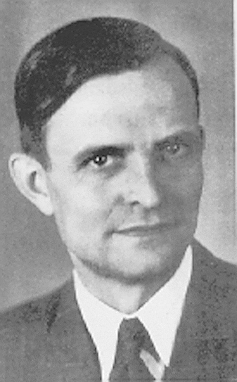
Heinrich von Stackelberg
L’économiste Heinrich von Stackelberg, né en 1905 à Moscou et décédé en 1946 à Madrid, a développé dès son arrivée en Allemagne, à 18 ans, une attirance pour le nationalisme conservateur.
Wikimediacommons

Nul doute que cet économiste, baron de son état, né en Russie en 1905, devenu allemand par la suite et mort en Espagne en 1946, aura marqué la théorie économique. Il analyse tout particulièrement les comportements des acteurs, ces entreprises dans la sphère marchande, pouvant être à l’origine de rapports économiques asymétriques. Ces comportements participent in fine à l’émergence d’un acteur leader. Ce leader est en mesure d’empêcher, par le pouvoir dont il est doté sur le marché, la formation d’un équilibre économique. C’est lui qui fixe les règles de fonctionnement du marché, l’autre acteur étant considéré comme un suiveur. Stackelberg en déduit que l’équilibre sur les marchés est une conception très éloignée de la réalité économique.

Stackelberg s’éloigne en cela de ses prédécesseurs français, Antoine Cournot ou Joseph Bertrand, qui, pour leur part, avaient axé leur réflexion sur des jeux coopératifs. Ils aboutissaient à des marchés considérés comme équilibrés.

Structure du marché et équilibre

L’extrême rigueur de la démonstration de Stackelberg tient à la dotation élevée en capital mathématique qui caractérisait cet économiste. Elle lui vaut une insertion rapide dans les grands débats qui animent la science économique durant les années 1920-1930, années souvent qualifiées de « haute théorie », et ce, en dépit de la barrière de la langue allemande. Sa vision de l’instabilité des marchés fait qu’il n’est pas un économiste isolé puisque, la Grande Dépression aidant, d’autres économistes développent des travaux similaires comme ceux de Nicholas Kaldor en Grande-Bretagne.

Couverture du livre Market Structure and Equilibrium
Marktform und Gleichgewicht (1934), ou Market Structure and Equilibrium (2011) en anglais, est l’ouvrage phare de Stackelberg.
Springer, FAL

Avec de telles avancées théoriques, Stackelberg s’installe durablement dans le paysage éditorial économique, et en particulier dans les ouvrages d’économie industrielle et, plus largement, dans les manuels contemporains de science économique couvrant les trois premières années d’économie dans les universités.

C’est en 1934 qu’il publie son ouvrage phare, en langue allemande, et longtemps resté sans traduction ni anglaise ni encore moins française, Marktform und Gleichgewicht. Il faudra attendre 2011 pour avoir une traduction anglaise complète de ce livre Market Structure and Equilibrium. La théorie du duopole de Stackelberg, que l’on peut trouver dans cet ouvrage, lui a valu une notoriété mondiale. Un ouvrage publié en 1934 qui suscita d’emblée des commentaires et des recensions dans les revues d’économie les plus prestigieuses, et signés par les grands noms de la discipline, à l’image de Wassily Leontief aux États-Unis, de Nicholas Kaldor et de John Hicks en Grande-Bretagne, ou encore de Walter Eucken en Allemagne.

Économiste nazi

Mathématicien, statisticien, économiste, Stackelberg est un intellectuel brillant. Ses travaux sur les coûts et les formes de marché l’attestent. La science, celle de l’économie en particulier, n’est toutefois pas idéologiquement neutre. Dans le cas de Stackelberg, l’homme de connaissances développe une conscience nationaliste, une attirance pour les mouvements paramilitaires dès qu’il foule le sol allemand à l’âge de 18 ans, après avoir fui sa Russie natale avec ses parents et ses trois frères.

Le point d’aboutissement de l’attraction qu’exerce sur lui le nationalisme allemand, est l’adhésion au Parti national-socialiste (Nationalsozialistische Deutsche Arbeiterpartei, NSDAP) en 1931, puis à la Schutzstaffel (SS) en 1933. Si ses recherches sur les formes de marché sont finalisées dans la publication de l’ouvrage de 1934, Stackelberg publie plusieurs articles dans des revues comme Jungnationale Stimmen (Voies des jeunesses nationalistes. Lire James Konow).

On pourrait considérer qu’une ligne de démarcation sépare les travaux théoriques de l’engagement politique de Stackelberg, et affirmer ainsi que la science ne se mélange pas à la politique. L’argument principal qui plaide en faveur de cette étanchéité entre les deux champs tient à l’antériorité de l’adhésion au NSDAP sur les recherches académiques qui vont faire de lui un économiste de réputation internationale.

En réalité, Stackelberg prend des positions politiques qui transpirent dans ses analyses scientifiques.

Corporatisme d’obédience fasciste

Un premier indice réside dans sa vision de la politique monétaire. Lors d’une conférence (« Die deutsche Geldpolitik seit 1870 »), prononcée en 1942 à Bonn, dont le thème est la politique monétaire allemande, Stackelberg s’attache à retracer l’évolution des réformes monétaires de l’Allemagne depuis 1870. L’ambition de cette conférence est d’identifier les fondements d’une souveraineté monétaire de l’Allemagne en phase avec ses ambitions hégémoniques dans une Europe en voie de renouveau. La publication des inaugural lectures (Antrittsvorlesung) de l’Université de Bonn est placée sous la responsabilité de Karl Franz Johann Chudoba (1898-1976), qui enseigne la minéralogie à Bonn, mais qui est, par ailleurs, un membre actif du Parti national-socialiste des travailleurs allemands (Nationalsozialistische Deutsche Arbeiterpartei, NSDAP).

Le second indice est beaucoup révélateur de l’articulation qu’il peut y avoir entre démarche scientifique et engagement politique. Il tient fondamentalement à la période historique dans laquelle évolue Stackelberg. Cette période, c’est celle de la défaite de 1918 et celle de la République de Weimar. Comme bon nombre d’économistes, dont le français François Perroux, Stackelberg s’emploie, dans son livre de 1934 (Marktform und Gleichgewicht), à cherche une troisième voie entre, d’une part, le bolchévisme et le nivellement social qu’il lui semble incarner et, d’autre part, le capitalisme et son individualisme exacerbé qui a mis à l’épreuve les valeurs de l’Allemagne.

C’est pourquoi, dans un court chapitre (trois pages seulement), il prône l’adhésion au corporatisme. En cela, il rejoint une frange des économistes qui, comme lui, ont la certitude que le capitalisme est instable, et qui sont en quête d’une troisième voie, celle du corporatisme d’obédience fasciste.

Ordolibéralisme

Stackelberg n’est donc pas qu’un théoricien, il définit des leviers de politique économique, admet l’importance de l’interventionnisme de l’État, dans la perspective d’une réconciliation des acteurs d’une même filière économique, participant ainsi d’une unité nationale. Cette conception, il en échange les principes fondamentaux avec son collègue et ami, l’économiste Luigi Amoroso, auteur en 1938 d’un article publié par la prestigieuse revue Econometrica, dédié à Vilfredo Pareto, et dans lequel il rend un vibrant hommage à Benito Mussolini.

Stackelberg participe pleinement à la bataille des idées économiques de l’entre-deux-guerres. S’éloignant du nazisme à partir de 1943, il rejoint le groupe de Fribourg, autour d’économistes comme Eucken Walter ou Röpke Wilhelm ou encore Böhm Franz. Un groupe qui fera date, puisque les économistes qui le composent forment l’ordolibéralisme, incarnation allemande d’une voie médiane entre le laissez-faire intégral et le socialisme. Ce courant de pensée libéral conceptualise que la mission économique de l’État est de créer et de maintenir un cadre normatif permettant la « concurrence libre et non faussée » entre les entreprises.

Des économistes qui entendent préparer le lendemain de la guerre en proposant de nouveaux principes organisationnels de l’économie allemande.

Invité par l’Université de Madrid comme visiting professor, Stackelberg profite de cette opportunité en 1944 pour fuir l’Allemagne nazie. Il échappe au sort qui fut réservé à tous les opposants au régime dont il fait partie. En effet, après son adhésion sans ambiguïté au nazisme, Stackelberg s’était rangé dans le camp des opposants à Hitler. Ses enseignements en Espagne font de Stackelberg un diffuseur de l’ordolibéralisme, dans un régime politique autoritaire, attestant une fois de plus de l’attirance de cet économiste pour le fascisme et le nationalisme.

Il va laisser une forte empreinte chez ses collègues espagnols, empreinte que l’on peut mesurer dans les recherches menées sur lui en Espagne, jusqu’à très récemment. Cette empreinte aura été réalisée dans un laps de temps très court, puisque Stackelberg mourut en 1946. Durant ces deux années, il publiera un ouvrage en langue espagnole : Principios de Téoria Economica.

The Conversation

Les auteurs ne travaillent pas, ne conseillent pas, ne possèdent pas de parts, ne reçoivent pas de fonds d’une organisation qui pourrait tirer profit de cet article, et n’ont déclaré aucune autre affiliation que leur organisme de recherche.

ref. Heinrich von Stackelberg : on ne peut séparer l’économiste du nazi – https://theconversation.com/heinrich-von-stackelberg-on-ne-peut-separer-leconomiste-du-nazi-257405

Premier League: from red success to grey failure – can kit colours really impact performance?

Source: The Conversation – UK – By Zoe Wimshurst, Senior Lecturer of Sport Psychology, Health Sciences University

As the Premier League season kicks off, fans will debate their new kits almost as much as new signings. But could shirt colour actually give teams a performance edge? Science suggests they can.

One of the most studied colour effects in sport is that of red kits leading to greater success. In the Premier League era, more than half of all champions have worn red home kits, and a study looking at the 2004 Olympic Games found that in combat sports, where the colours of red and blue are randomly assigned, athletes wearing red were more likely to win.

These effects have also been shown in Rugby League and esports (video game competitions).

But why is this? It has been suggested that from both a cultural and biological perspective, red is associated with dominance and aggression. Wearing red has been shown to boost players feelings of dominance whereas an opponent who is wearing red is perceived as more threatening.

Research has also shown that taekwondo referees award more points to fighters in red than blue – even when digital manipulation allows them to view exactly the same fight with just the colours reversed. Studies on football players have also found that strikers score fewer goals when facing a goalkeeper wearing red.

There are other useful colours, too. The gold selected by Crystal Palace is a strong contender as it offers high visibility under both daylight and flood lights. Lighter colours which will offer a high contrast against the pitch, such as the whites chosen by Chelsea and Nottingham Forest, will also stand out.

Psychologists call these “colour singletons”, hues that are unique in the visual scene. Studies show that our attention is automatically drawn to them. Unusual colours that are unlikely to match those found on the pitch or advertising boarding will make players easier to detect at a glance.

Tottenham Hotspurs players of the 2016–17 season wearing white.
Tottenham spurs players of the 2016–17 season wearing white.
wikipedia, CC BY-SA

Patterns matter too. High-contrast blocking or stripes can help separate a moving object from its background. Bournemouth’s striped away kit should be more visible than a plain mid-tone shirt. The contrast between the luminous top half of Fulham’s away shirt and the relatively dark shorts should also enhance detection.

Camouflage effect

Despite this evidence, not a single Premier League club has chosen red for an away kit this season. Instead, there are some novel choices such as lilac, cream and turquoise. A previous example of a novel kit choice not working so well was in 1996 when Manchester United’s infamous grey away kit was scrapped mid-game after gong 3-0 down to Southampton.

The manager, Alex Ferguson, claimed players couldn’t see each other clearly. It wasn’t just an excuse, the grey was a near perfect match for the concrete of the stadium and blended into the blur of the crowd.

Camouflage effects like this are well documented in biology. Indeed, animals depend on them to make detection by predators harder. In a stadium, muted greys or browns can do the same. Brentford’s new brown away kit risks a similar problem, especially in overcast conditions or with concrete-backed stands. Black kits can also fade into the background, particularly in low light conditions where there is reduced contrast.

This season, Tottenham Hotspur*, Manchester City and Aston Villa have all selected black away shirts which could lead to lower visibility of teammates.

Camouflage is not limited to dull colours. Newcastle’s green away kit, while bright, is likely to merge with the turf, particularly in players peripheral awareness where the human visual system is not designed to see colours clearly.

Another subtle visual trap is “countershading”, a gradient that goes from dark to light found in many animals to make them less detectable. In football, a dark shirt with pale shorts could break up a players outline in bright sunlight. This is great for a deer-avoiding predators, less helpful if you are trying to spot your striker in space.

So why don’t clubs use this science to select kits? The answer is most likely commercial. Away kits are as much about selling shirts as improving performance. Novelty colours create buzz, drive sales and help clubs stand out on the high street, even if they blend in on the pitch.

Colour is not just fashion. It is also linked to psychology, perception and physics. The right shade can make you unmissable, the wrong one can make you disappear. In elite sport, with such fine margins between success and failure, kit colour is an area which should not be overlooked.

The Conversation

Zoe Wimshurst is the owner of Performance Vision Ltd, a company specialising in visual training and consultancy services.

ref. Premier League: from red success to grey failure – can kit colours really impact performance? – https://theconversation.com/premier-league-from-red-success-to-grey-failure-can-kit-colours-really-impact-performance-263062

Climate models reveal how human activity may be locking the Southwest into permanent drought

Source: The Conversation – USA (2) – By Pedro DiNezio, Associate Professor of Atmospheric and Ocean Sciences, University of Colorado Boulder

A worker moves irrigation tubes on a farm in Pinal County, Ariz. A two-decade drought has made water supplies harder to secure. Carolyn Cole/Los Angeles Times via Getty Images

A new wave of climate research is sounding a stark warning: Human activity may be driving drought more intensely – and more directly – than previously understood.

The southwestern United States has been in a historic megadrought for much of the past two decades, with its reservoirs including lakes Mead and Powell dipping to record lows and legal disputes erupting over rights to use water from the Colorado River.

This drought has been linked to the Pacific Decadal Oscillation, a climate pattern that swings between wet and dry phases every few decades. Since a phase change in the early 2000s, the region has endured a dry spell of epic proportions.

The PDO was thought to be a natural phenomenon, governed by unpredictable natural ocean and atmosphere fluctuations. But new research published in the journal Nature suggests that’s no longer the case.

Working with hundreds of climate model simulations, our team of atmosphere, earth and ocean scientists found that the PDO is now being strongly influenced by human factors and has been since the 1950s. It should have oscillated to a wetter phase by now, but instead it has been stuck. Our results suggest that drought could become the new normal for the region unless human-driven warming is halted.

The science of a drying world

For decades, scientists have relied on a basic physical principle to predict rainfall trends: Warmer air holds more moisture. In a warming world, this means wet areas are likely to get wetter, while dry regions become drier. In dry areas, as temperatures rise, more moisture is pulled from soils and transported away from these arid regions, intensifying droughts.

While most climate models simulate this general pattern, they often underestimate its full extent, particularly over land areas.

Two men stand beside a cement box. The landscape is dry around them.
Arizona Game and Fish Department workers pump water into a wildlife water catchment south of Tucson in July 2023. In normal years, the catchment receives enough rainwater, but years of drought have changed that.
Andrew Caballero-Reynolds/AFP via Getty Images

Yet countries are already experiencing drought emerging as one of the most immediate and severe consequences of climate change. Understanding what’s ahead is essential, to know how long these droughts will last and because severe droughts can have sweeping affects on ecosystems, economies and global food security.

Human fingerprints on megadroughts

Simulating rainfall is one of the greatest challenges in climate science. It depends on a complex interplay between large-scale wind patterns and small-scale processes such as cloud formation.

Until recently, climate models have not offered a clear picture of how rainfall patterns are likely to change in the near future as greenhouse gas emissions from vehicles, power plants and industries continue to heat up the planet. The models can diverge sharply in where, when and how precipitation will change. Even forecasts that average the results of several models differ when it comes to changes in rainfall patterns.

The techniques we deployed are helping to sharpen that picture for North America and across the tropics.

We looked back at the pattern of PDO phase changes over the past century using an exceptionally large ensemble of climate simulations. The massive number of simulations, more than 500, allowed us to isolate the human influences. This showed that the shifts in the PDO were driven by an interplay of increasing warming from greenhouse gas emissions and cooling from sun-blocking particles called aerosols that are associated with industrial pollution.

From the 1950s through the 1980s, we found that increasing aerosol emissions from rapid industrialization following World War II drove a positive trend in the PDO, making the Southwest rainier and less parched.

After the 1980s, we found that the combination of a sharp rise in greenhouse gas emissions from industries, power plants and vehicles and a reduction in aerosols as countries cleaned up their air pollution shifted the PDO into the negative, drought-generating trend that continues today.

This finding represents a paradigm shift in our scientific understanding of the PDO and a warning for the future. The current negative phase can no longer be seen as just a roll of the climate dice – it has been loaded by humans.

Our conclusion that global warming can drive the PDO into its negative, drought-inducing phase is also supported by geological records of past megadroughts. Around 6,000 years ago, during a period of high temperatures, evidence shows the emergence of a similar temperature pattern in the North Pacific and widespread drought across the Southwest.

Tropical drought risks underestimated

The past is also providing clues to future rainfall changes in the tropics and the risk of droughts in locations such as the Amazon.

One particularly instructive example comes from approximately 17,000 years ago. Geological evidence shows that there was a period of widespread rainfall shifts across the tropics coinciding with a major slowdown of ocean currents in the Atlantic.

These ocean currents, which play a crucial role in regulating global climate, naturally weakened or partially collapsed then, and they are expected to slow further this century at the current pace of global warming.

A recent study of that period, using computer models to analyze geologic evidence of earth’s climate history, found much stronger drying in the Amazon basin than previously understood. It also shows similar patterns of aridification in Central America, West Africa and Indonesia.

The results suggest that rainfall could decline precipitously again. Even a modest slowdown of a major Atlantic Ocean current could dry out rainforests, threaten vulnerable ecosystems and upend livelihoods across the tropics.

What comes next

Drought is a growing problem, increasingly driven by human influence. Confronting it will require rethinking water management, agricultural policy and adaptation strategies. Doing that well depends on predicting drought with far greater confidence.

Climate research shows that better predictions are possible by using computer models in new ways and rigorously validating their performance against evidence from past climate shifts. The picture that emerges is sobering, revealing a much higher risk of drought across the world.

The Conversation

Pedro DiNezio receives funding from the U.S. National Science Foundation, National Oceanic and Atmospheric Administration, and WTW Research Network.

Timothy Shanahan does not work for, consult, own shares in or receive funding from any company or organization that would benefit from this article, and has disclosed no relevant affiliations beyond their academic appointment.

ref. Climate models reveal how human activity may be locking the Southwest into permanent drought – https://theconversation.com/climate-models-reveal-how-human-activity-may-be-locking-the-southwest-into-permanent-drought-262837

Jane Austen fight club: experts go head-to-head arguing for her best leading man

Source: The Conversation – UK – By James Vigus, Senior Lecturer in English, Queen Mary University of London

To mark the 250th anniversary of her birth, we’re pitting Jane Austen’s much-loved novels against each other in a battle of wit, charm and romance. Seven leading Austen experts have made their case for her ultimate leading man, but the winner is down to you. Cast your vote in the poll at the end of the article, and let us know the reason for your choice in the comments. It’s breeches at dawn.

Edward Ferrars, Sense and Sensibility

Championed by James Vigus, senior lecturer in English, Queen Mary University of London

Edward Ferrars, supposedly “idle and depressed”, gets a bad press. Even Elinor, who loves him, struggles to decipher his reserve. The explanation – his secret engagement to scheming Lucy Steele – seems discreditable. Yet among Sense and Sensibility’s showy, inadequate men, reticent Edward (alongside Colonel Brandon) is a hero.

Unlike Willoughby, who jilts Marianne to marry for money, Edward dutifully sticks with Lucy, wanting her to avoid penury. Significantly, Elinor approves. Edward has an “open affectionate heart”, this inwardness contrasting Willoughby’s more superficial “open affectionate manners”. And his “saucy” teasing of Marianne’s fashionable love of picturesque landscapes elicits her first-name-terms affection for him.

Edward, though, is serious – a Christian stoic like Elinor. Resistant to family pressure, he “always preferred” the church, an understated vocation. No orator, Edward speaks plainly: “I am grown neither humble nor penitent by what has passed. – I am grown very happy.” This happiness, the moral luck of gaining Elinor and a clergyman’s living, is credible because it’s deserved.

Henry Tilney, Northanger Abbey

Championed by Sarah Annes Brown, professor of English literature, Anglia Ruskin University

There are many reasons why I love Jane Austen, but the charm of her leading men isn’t high on the list. In Austen’s novels, a witty and charming male should be approached with extreme caution. He is likely to prove an unsuitable suitor who must be rejected in favour of someone worthier – and duller.

But Northanger Abbey’s Henry Tilney is the exception. This is particularly true of the earlier part of the novel. There, he teases Catherine by imagining how she’ll describe her first meeting with him at the Lower Rooms in Bath in her diary.

He then goes on to gossip about ladies’ fashions with chaperone Mrs Allen. She asks for his opinion on Catherine’s own gown: “It is very pretty, madam,” said he, gravely examining it; “but I do not think it will wash well; I am afraid it will fray.”

It is very difficult to imagine Mr Darcy concerning himself with such trifles.
Admittedly Henry becomes a bit more finger-wagging in the second half of the novel – but then, he has been saddled with Austen’s silliest heroine.


This article is part of a series commemorating the 250th anniversary of Jane Austen’s birth. Despite having published only six books, she is one of the best-known authors in history. These articles explore the legacy and life of this incredible writer.


Colonel Brandon, Sense and Sensibility

Championed by Michael Meeuwis, associate professor of literature, University of Warwick

Austen wrote Colonel Brandon’s background to reflect the violence and seductions of the 18th-century novel. He nearly elopes with his brother’s wife Eliza, then he rescues Eliza and her daughter (also named Eliza) after seduction by someone else. Finally, he fights a duel with Willoughby over Eliza junior.

Here, Austen suggests that women in the 18th-century novel were generally so interchangeable they didn’t even need separate names. Sense and Sensibility’s heroine, Elinor, is magnificently unimpressed by his story. She “sighed over the fancied necessity of this; but to a man and a soldier she presumed not to censure it.”

Such wry commentary is only possible in a novel where quieter life prevails – and Brandon becomes a romantic hero of that world too. In marrying him, Marianne gains access to his library, where she may read – and perhaps even write – the kinds of books where women have names.

Edmund Bertram, Mansfield Park

Championed by Jane E. Wright, senior lecturer in English literature, University of Bristol

Edmund Bertram, the older cousin of Austen’s heroine, Fanny Price, in Mansfield Park, isn’t as dashing, wildly rich, or immediately appealing as some of Austen’s other leading men. A second son with a compromised inheritance, he is a matter-of-fact character training to be clergyman. He also exhibits misjudgment in falling in love (or infatuation) with the unsuitable Mary Crawford.

However, in addition to his seriousness about the church and responsibility in managing his father’s estate, he is the only one of Austen’s leading men who – against his family’s unkindness – is not only consistently caring towards the leading lady, but both notices her intelligence and takes trouble to support it.

In the fluctuations of the novel’s plot, he and Fanny offer care, caution, and comfort to each other, so that, in some respects, they might be said to come to their eventual marriage on slightly more equal terms.

Fitzwilliam Darcy, Pride and Prejudice

Championed by Penny Bradshaw, associate professor of English literature, University of Cumbria

On one level, Mr Darcy needs no championing. Cultural evidence (from branded tea-towels and other merchandise, to multiple portrayals on screen) suggests that he remains the most popular of Austen’s heroes.

His “fine, tall person” and “handsome features” are clearly important factors here, but his chilly reserve and initial dismissal of Elizabeth Bennet as merely “tolerable” do not immediately endear him to the reader.

The source of Darcy’s very great appeal lies partly in the fact that he begins to love her in spite of his own prejudices and because, while Darcy does undoubtedly admire Lizzie’s appearance (including her “fine eyes”), his admiration extends to qualities which, at this point in time, were hardly typical of the fictional heroines of romance.

Lizzie bears little resemblance to the usually rather passive and often victimised heroines encountered in countless popular novels of the late-18th and early-19th century. Crucially, Darcy is drawn to the “liveliness” of Lizzie’s mind and as a hero he therefore validates a new kind of heroine: a woman whose wit and intelligence is as much a part of her attraction as physical appearance.

Captain Wentworth, Persuasion

Championed by Emrys D. Jones, senior lecturer in 18th-century literature and culture, King’s College London

Frederick Wentworth isn’t meant to be admired from a distance like certain other Austen love interests. At various points in Persuasion, his thoughts are relayed to us through the free indirect discourse that more usually channels the inner lives of Austen’s heroines. And then, in the extraordinary penultimate chapter of the novel, we get his longing and his frustration straight from the source, in probably the most beautiful love letter in the history of literary fiction.

“Tell me not that I am too late,” he implores Anne Elliot. Notwithstanding his illustrious naval career, Wentworth is more vulnerable in that moment than any of the leading men before him. He writes of his soul being pierced, of his feelings overpowering him, using language that would, anywhere else in Austen, be mocked as excessive or indulgent. Wentworth carries it off, and in doing so proves that he’s a different kind of hero.

George Knightley, Emma

Championed by Christine Hawkins, teaching associate in school of the arts, Queen Mary University of London

George Knightley is underappreciated. “A sensible man about seven or eight and thirty” of a “cheerful manner” he is often undemonstrative, unshowy and cool. Not the classic dreamboat. But Knightley shows his worth through his honesty, trustworthiness and reliability.

Unlike the ostentatious Darcy, Knightley doesn’t offend and alienate everyone he meets. He is thoughtful and kind to others, championing the derided farmer Mr Martin, covering Harriet’s social embarrassment, and soothing the wounded feelings of Miss Bates. Knightley shows his sense of social responsibility. He is intelligent, practical and grounded.

Knightley is also Emma’s devoted lover: “I have not a fault to find with her … I love to look at her”. He sees her best qualities. But crucially, he questions her behaviour when he must (“I will tell you truths”) offering guidance and support when she acts wrongfully. Knightley is a secure, confident man, and his happy union with Emma is based on what every woman surely wants – equality and respect.

Now the experts have made their case, it’s your turn to decide which of Austen’s seven leading men is her best. Click the image below to vote in our poll, and see if other readers agree with you.

This article features references to books that have been included for editorial reasons, and may contain links to bookshop.org. If you click on one of the links and go on to buy something from bookshop.org The Conversation UK may earn a commission.

The Conversation

The authors do not work for, consult, own shares in or receive funding from any company or organisation that would benefit from this article, and have disclosed no relevant affiliations beyond their academic appointment.

ref. Jane Austen fight club: experts go head-to-head arguing for her best leading man – https://theconversation.com/jane-austen-fight-club-experts-go-head-to-head-arguing-for-her-best-leading-man-252756


Skin cancer: is HPV also a potential cause?

Source: The Conversation – UK – By Sarah Allinson, Professor, Department of Biomedical and Life Sciences, Lancaster University

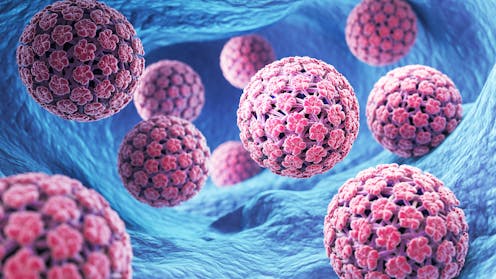
HPV are a common group of viruses which can infect skin and other parts of the body. Anusorn Nakdee/ Shutterstock

Skin cancer is typically caused by damage to the skin’s cells from ultraviolet radiation. But a recent case study has just shed light on another potential cause: human papillomavirus.

The report, which was published in the New England Journal of Medicine, focused on the case of a 34-year-old woman who had been diagnosed with over 40 squamous cell carcinomas (SCC). This is the second most common type of skin cancer.

The woman also had many wart-like growths in her mouth and on her skin. These were attributed to a human papillomavirus (HPV) infection.

Human papillomavirus is a common group of viruses that can infect skin and other parts of the body. While HPV often does not cause any problems or symptoms in most people, in some cases it can cause warts and is even linked to certain types of cancer – such as cervical cancer.

The woman in the latest report was referred by her doctor to the team of researchers who conducted the case study. She had already undergone multiple surgeries and rounds of immunotherapy to remove a large squamous cell carcinoma that repeatedly grew back on her forehead. The patient’s doctor believed this might be due to a condition that made it more difficult for her immune cells to fight off the tumours.

The researchers performed a genetic analysis on this recurrent tumour to understand why it continued to grow back. Under normal circumstances, SCC tumours have a genetic signature that shows their mutations were caused by ultraviolet radiation. These mutations usually drive their growth.

However, this patient’s cancer didn’t have these signature mutations. Instead, the researchers found that the HPV infection living on her skin had integrated itself into the DNA of the tumour on her forehead. It seemed that it was the virus that was actually driving the cancerous growth.

There are more than 200 different types of HPV viruses, only a few of which have been associated with cancers. HPV19, which infects skin, had not previously been linked to cancer. But in this case, it had gone rogue and caused the carcinoma.

Unique case

This recent case study is unique, it should be said. There were many factors that made it possible for the HPV infection to drive the recurrent growth of skin cancer.

The patient had a long history of health problems beginning in early childhood. This had brought her to the attention of researchers who were studying people who had problems with their immune system. A 2017 case report on her revealed that she had inherited mutations in two genes that play a role in immune function.

One of the mutated genes was ZAP70, which is involved in the normal function of a type of immune cell called a T-cell. This cell plays an essential role in helping the body successfully fight infections.

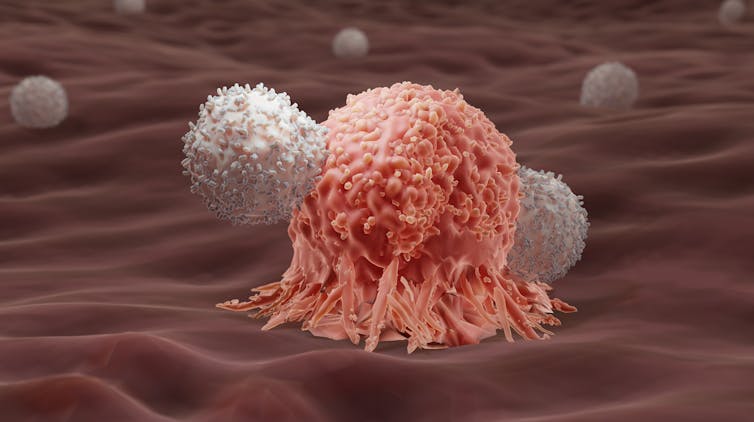
A digital depiction of T-cells attacking a cancer cell.
T-cells play a role in protecting the body against cancer and other pathogens.
ART-ur/ Shutterstock

Inherited changes in ZAP70 that prevent it from working were previously known to cause a condition called severe combined immunodeficiency. This condition is usually diagnosed in infancy and, if not treated with a stem cell transplant, leads to death within the first couple of years of life. Being in her late 20s at that time, the woman became the oldest patient ever to be diagnosed with a ZAP70 immune condition.

The second mutated gene, RNF168, is involved in repairing damage to DNA.

The new team decided to investigate whether it was the unique combination of mutations in both genes that was allowing the HPV infection to cause cancer. However they concluded that the mutated RNF168 gene was a red herring.

The research team found that the patient’s RNF168 mutation was relatively common in the wider American population and wasn’t linked to any health issues. Further investigation of her cells also revealed that her DNA repair processes were functioning normally.

They then moved on to the ZAP70 gene. Here they found that although the patient’s ZAP70 gene was mutated, it still partly worked. This explained why she hadn’t succumbed to severe combined immunodeficiency in childhood. However, the mutation still made her immune system less effective. So because her T-cell response wasn’t fully functional, her body was unable to recognise and eliminate HPV-infected cells.

After receiving a stem cell transplant that replaced her immune cells with fully functioning ones from a donor, the woman made a complete recovery. The new T-cells were able to recognise and destroy the HPV-infected cells, including the skin cancer. Hopefully she will now remain cancer-free for years to come.

Immune health and cancer

This story highlights how important our immune system is in protecting us against cancer. Without it, even innocuous viruses that usually harmlessly co-exist on our skin can drive the formation of aggressive cancers.

It also demonstrates how modern genomic technology is transforming our understanding of disease. Without genetic sequencing, doctors would still be none the wiser about why this unfortunate woman had so many aggressive skin tumours.

But this study also raises questions about whether HPV-driven skin cancer could be a wider, previously unrecognised problem. The authors suggest that in the future, patients with aggressive and recurrent squamous cell carcinomas should be profiled for T-cell function and the presence of HPV infections. Like the woman in this story, they too might benefit from immune boosting therapies to treat their cancers.

The Conversation

Sarah Allinson does not work for, consult, own shares in or receive funding from any company or organisation that would benefit from this article, and has disclosed no relevant affiliations beyond their academic appointment.

ref. Skin cancer: is HPV also a potential cause? – https://theconversation.com/skin-cancer-is-hpv-also-a-potential-cause-262450

Premier League: from red success to grey failure – how kit colours impact performance

Source: The Conversation – UK – By Zoe Wimshurst, Senior Lecturer of Sport Psychology, Health Sciences University

As the Premier League season kicks off, fans will debate their new kits almost as much as new signings. But could shirt colour actually give teams a performance edge? Science suggests they can.

One of the most studied colour effects in sport is that of red kits leading to greater success. In the Premier League era, more than half of all champions have worn red home kits, and a study looking at the 2004 Olympic Games found that in combat sports, where the colours of red and blue are randomly assigned, athletes wearing red were more likely to win.

These effects have also been shown in Rugby League and esports (video game competitions).

But why is this? It has been suggested that from both a cultural and biological perspective, red is associated with dominance and aggression. Wearing red has been shown to boost players feelings of dominance whereas an opponent who is wearing red is perceived as more threatening.

Research has also shown that taekwondo referees award more points to fighters in red than blue – even when digital manipulation allows them to view exactly the same fight with just the colours reversed. Studies on football players have also found that strikers score fewer goals when facing a goalkeeper wearing red.

There are other useful colours, too. The gold selected by Crystal Palace is a strong contender as it offers high visibility under both daylight and flood lights. Lighter colours which will offer a high contrast against the pitch, such as the whites chosen by Chelsea and Nottingham Forest, will also stand out.

Psychologists call these “colour singletons”, hues that are unique in the visual scene. Studies show that our attention is automatically drawn to them. Unusual colours that are unlikely to match those found on the pitch or advertising boarding will make players easier to detect at a glance.

Tottenham Hotspurs players of the 2016–17 season wearing white.
Tottenham spurs players of the 2016–17 season wearing white.
wikipedia, CC BY-SA

Patterns matter too. High-contrast blocking or stripes can help separate a moving object from its background. Bournemouth’s striped away kit should be more visible than a plain mid-tone shirt. The contrast between the luminous top half of Fulham’s away shirt and the relatively dark shorts should also enhance detection.

Camouflage effect

Despite this evidence, not a single Premier League club has chosen red for an away kit this season. Instead, there are some novel choices such as lilac, cream and turquoise. A previous example of a novel kit choice not working so well was in 1996 when Manchester United’s infamous grey away kit was scrapped mid-game after gong 3-0 down to Southampton.

The manager, Alex Ferguson, claimed players couldn’t see each other clearly. It wasn’t just an excuse, the grey was a near perfect match for the concrete of the stadium and blended into the blur of the crowd.

Camouflage effects like this are well documented in biology. Indeed, animals depend on them to make detection by predators harder. In a stadium, muted greys or browns can do the same. Brentford’s new brown away kit risks a similar problem, especially in overcast conditions or with concrete-backed stands. Black kits can also fade into the background, particularly in low light conditions where there is reduced contrast.

This season, Tottenham Hotspur*, Manchester City and Aston Villa have all selected black away shirts which could lead to lower visibility of teammates.

Camouflage is not limited to dull colours. Newcastle’s green away kit, while bright, is likely to merge with the turf, particularly in players peripheral awareness where the human visual system is not designed to see colours clearly.

Another subtle visual trap is “countershading”, a gradient that goes from dark to light found in many animals to make them less detectable. In football, a dark shirt with pale shorts could break up a players outline in bright sunlight. This is great for a deer-avoiding predators, less helpful if you are trying to spot your striker in space.

So why don’t clubs use this science to select kits? The answer is most likely commercial. Away kits are as much about selling shirts as improving performance. Novelty colours create buzz, drive sales and help clubs stand out on the high street, even if they blend in on the pitch.

Colour is not just fashion. It is also linked to psychology, perception and physics. The right shade can make you unmissable, the wrong one can make you disappear. In elite sport, with such fine margins between success and failure, kit colour is an area which should not be overlooked.

The Conversation

Zoe Wimshurst is the owner of Performance Vision Ltd, a company specialising in visual training and consultancy services.

ref. Premier League: from red success to grey failure – how kit colours impact performance – https://theconversation.com/premier-league-from-red-success-to-grey-failure-how-kit-colours-impact-performance-263062

What does pocket money teach children? It can offer social as well as financial education

Source: The Conversation – UK – By Gaby Harris, Lecturer, Manchester Metropolitan University

A3pfamily/Shutterstock

If you’re a parent, the summer holidays and approaching new school year might have you questioning your children’s access to pocket money – how much they get, how much they’re spending and what they’re spending money on.

How pocket money is provided varies. So be reassured there is no right, wrong or normal way to give your kids money. For some households, it will be weekly small amounts simply for kids to use at their leisure. For others, it will include forms of payment for work done around the house.

According to recent data from NatWest, children get an average of £3.85 a week, and £9.13 if you factor in income for chores.

While around one in three households give regular allowances, many households give pocket money flexibly. Much of this flexibility depends on how much children contribute to the household.

The language used in recent years in reports from banks such as NatWest and GoHenry on pocket money describe “entrepreneurial”, “determined” and “industrious” children who are earning more and spending responsibly. NatWest claims children are learning “great money management” and “positive behaviours”.

This positions pocket money as more than just disposable income – as a learning opportunity. But it’s worth looking closely at what money teaches children, and what it is we want them to learn.

On the face of it, teaching children to be hardworking, and rewarding that hard work, sounds alright. But we need to consider this carefully in a time of work precarity, debt and declining welfare.

This kind of financial literacy encourages an individualised idea of what money is and how it is valued. The consequence of this is that inequalities in income and finances become linked with personal failures of “not working hard enough”, rather than systemic problems.

In reality, a lack of access to money is not often a reflection of how hard someone works, but based on background, race, gender or disability.

Banks’ advice for parents also suggest that pocket money can be used to reward good behaviour. But what good behaviour means is up for debate. For one thing, it likely varies between parents and children, so becomes a tool for what parents think good behaviour is.

Money has a social power that children understand. My research demonstrates how they can use this to negotiate with each other, interpret parent rules and most importantly rework for their own purposes. I document the example of the teenage girl who knew her parents would give her more money if she went out with people they approved of. While the girl saw this as something she could negotiate for her own benefit, we must also ask what this teaches kids about coercion and control.

The risk is that parents will inadvertently encourage their children to associate money with control and a need to conform to access money. The effect of this can be far reaching.

Forthcoming research by my colleague at the London School of Economics, Liz Mann, explores how witnessing controlling behaviour over money in childhood may increase women’s desires for independence in adulthood, even if this leaves them economically disadvantaged in their relationships.

Building a better future

If we are going to make connections between money and behaviour, it would be far better to think about traits such as kindness, generosity, inclusivity. The evidence is there to suggest this is much more in line with how children think about and use money.

Children's hands holding coins
Children know the social power of money.
A3pfamily/Shutterstock

Children are very aware of their families’ financial situations and often adjust their spending around this. They are also savvy and communal with how they think about money. They create their own little economies based on sharing, borrowing and bartering with each other. These are much better skills of responsibility centred around sharing and caring.

NatWest’s recent report also suggests that, while kids might be feeling the cost-of-living squeeze every bit as much as adults, they remain steadfast in their generosity. They donate to causes important to them, including social, medical and environmental issues. Given the inclination for donations, there is scope to encourage a new generation of socially minded spenders.

This can include conversations with children on where their money comes from and where goes when they spend it. Think about how their money can support local, small businesses which sustain and develop local communities, rather than big business. Think too, about their awareness of differences in household income, and use this as a tool to discuss inequality in income and wealth and the benefits of redistribution.

Rather than focusing on ideas of “good” behaviour, or that their own industriousness is all they need to sustain them, we should be taking the lead from kids and encouraging discussions of money in ways which can include topics of fairness, redistribution and ethical spending. That is the kind of social power pocket money should encourage.

The Conversation

Gaby Harris has received funding from the Economic and Social Research Council.

ref. What does pocket money teach children? It can offer social as well as financial education – https://theconversation.com/what-does-pocket-money-teach-children-it-can-offer-social-as-well-as-financial-education-262377

Sommet Trump-Poutine en Alaska : « Ce n’est pas ainsi que l’on met fin à une guerre »

Source: The Conversation – in French – By Donald Heflin, Executive Director of the Edward R. Murrow Center and Senior Fellow of Diplomatic Practice, The Fletcher School, Tufts University

Le président états-unien Donald Trump et le président russe Vladimir Poutine se rencontreront en Alaska, le 15 août 2025. Ici, ils arrivent ensemble pour la photo de groupe lors du sommet du G20 à Osaka, le 28 juin 2019. Brendan Smialowski/AFP/Getty Images

Un sommet organisé à la hâte entre les présidents Donald Trump et Vladimir Poutine est prévu le 15 août 2025 en Alaska, où les deux dirigeants discuteront d’un accord de paix entre la Russie et l’Ukraine. Le chef de l’État ukrainien Volodymyr Zelensky ne sera pas présent, sauf changement de dernière minute. « The Conversation » s’est entretenu avec le diplomate chevronné Donald Heflin, qui enseigne aujourd’hui à la Fletcher School de l’Université Tufts, près de Boston, afin de connaître son point de vue sur cette rencontre inhabituelle et sur les raisons pour lesquelles elle aboutira, selon lui, probablement à une photo et à une déclaration, mais pas à un accord de paix.

The Conversation : Comment les guerres prennent-elles fin ?

Donald Heflin : Les guerres prennent fin pour trois raisons. La première est que les deux camps s’épuisent et décident de faire la paix. La deuxième, plus courante, est qu’un camp s’épuise, lève la main et dit : « Oui, nous sommes prêts à nous asseoir à la table des négociations. »

Et puis la troisième raison, que nous avons vue au Moyen-Orient, c’est que des forces extérieures, comme les États-Unis ou l’Europe, interviennent et disent : « Ça suffit. Nous imposons notre volonté de l’extérieur. Arrêtez ça. »

Ce que nous voyons dans la situation entre la Russie et l’Ukraine, c’est qu’aucune des deux parties ne montre une réelle volonté de s’asseoir à la table des négociations et de céder du territoire.

Les combats se poursuivent donc. Et le rôle que jouent actuellement Trump et son administration correspond à la troisième possibilité, celle d’une puissance extérieure qui intervient et dit « Ça suffit ».

Regardons la Russie. Elle n’est peut-être plus la superpuissance qu’elle a été, mais c’est une puissance qui dispose d’armes nucléaires et d’une armée importante. Ce n’est pas un petit pays du Moyen-Orient que les États-Unis peuvent dominer complètement. C’est presque un égal. Alors, peut-on vraiment lui imposer sa volonté et le faire venir sérieusement à la table des négociations s’il ne le veut pas ? J’en doute fort.

Deux personnes debout sur des décombres à côté d’immeubles de plusieurs étages bombardés
Des habitants de Kramatorsk (Ukraine) sortent de leur voiture au milieu d’immeubles résidentiels bombardés par les forces russes, le 10 août 2025.
Pierre Crom/Getty Images

De quelle manière cette rencontre entre Trump et Poutine en Alaska s’inscrit-elle dans l’histoire des négociations de paix ?

D. H. : Beaucoup de gens font l’analogie avec la conférence de Munich de 1938, où la Grande-Bretagne et la France ont rencontré l’Allemagne hitlérienne. Je n’aime pas faire de comparaison avec le nazisme ou avec l’Allemagne hitlérienne. Ces gens ont déclenché la Seconde Guerre mondiale, perpétré l’Holocauste et tué de 30 millions à 40 millions de personnes. Il est difficile de comparer quoi que ce soit à cela.

Mais sur le plan diplomatique, ce qui s’est passé en 1938 peut éclairer la situation actuelle. L’Allemagne a dit : « Écoutez, nous avons tous ces citoyens allemands qui vivent dans ce nouveau pays qu’est la Tchécoslovaquie. Ils ne sont pas traités correctement. Nous voulons qu’ils fassent partie de l’Allemagne. » Et ils étaient prêts à envahir le pays.

L’Europe est alors en pleine crise des Sudètes : la situation est explosive. Pour éviter la guerre, le premier ministre britannique Neville Chamberlain décide de mener seul des négociations avec le chancelier Hitler. Il fait trois fois le voyage en Allemagne en quinze jours et ces rencontres mèneront aux accords de Munich, qui actent la cession par la Tchécoslovaquie des Sudètes au profit du IIIe Reich, avec des garanties françaises et anglaises sur l’intégrité du reste du pays. Et cela devait s’arrêter là. L’Allemagne ne devait avoir aucune autre exigence.

La Tchécoslovaquie n’était pas présente en 1938. C’est une paix qui lui a été imposée.

Et, bien sûr, il n’a pas fallu attendre plus d’un an ou deux ans avant que l’Allemagne déclare : « Non, nous voulons toute la Tchécoslovaquie. Et, d’ailleurs, nous voulons aussi la Pologne. » C’est ainsi que la Seconde Guerre mondiale a commencé.

Deux hommes se serrant la main ; l’un porte un uniforme militaire avec une croix gammée sur un brassard
Le dictateur allemand Adolf Hitler, à droite, serre la main du premier ministre britannique Neville Chamberlain, lors de leur rencontre à Godesberg, en Allemagne, le 23 septembre 1938.
New York Times Co./Getty Images

Pourriez-vous préciser davantage ces comparaisons ?

D. H. : La Tchécoslovaquie n’était pas à la table des négociations. L’Ukraine n’est pas à la table des négociations.

Encore une fois, je ne suis pas sûr de vouloir comparer Poutine à Hitler, mais c’est un homme fort autoritaire à la tête d’une armée importante.

Des garanties de sécurité ont été données à la Tchécoslovaquie et n’ont pas été respectées. L’Occident a donné des garanties de sécurité à l’Ukraine lorsque ce pays a renoncé à ses armes nucléaires en 1994. Nous leur avons dit : « Si vous faites preuve de courage et renoncez à vos armes nucléaires, nous veillerons à ce que vous ne soyez jamais envahis. » Et ils ont été envahis deux fois depuis, en 2014 et en 2022. L’Occident n’a pas réagi.

L’histoire nous enseigne donc que les chances que ce sommet débouche sur une paix durable sont assez faibles.

Quel type d’expertise est nécessaire pour négocier un accord de paix ?

D. H. : Voici comment cela se passe généralement dans la plupart des pays qui ont une politique étrangère d’envergure ou un appareil de sécurité nationale important, et même dans certains petits pays.

D’abord, les dirigeants politiques définissent leur objectif politique, ce qu’ils veulent atteindre.

Ils communiquent ensuite leurs objectifs aux agents de l’État, des services diplomatiques et aux militaires en leur disant : « Voici ce que nous voulons obtenir à la table des négociations. Comment y parvenir ? »

Alors ces experts leur font des propositions : « Nous allons faire ceci et cela, et nous affecterons du personnel à cette tâche. Nous travaillerons avec nos homologues russes pour tenter de réduire le nombre de points litigieux, puis nous proposerons des chiffres et des cartes. »

Or, il y a eu beaucoup de turnover au département d’État depuis l’investiture en janvier. L’équipe est nouvelle, et si certains, comme Marco Rubio, savent généralement ce qu’ils font en matière de sécurité nationale, d’autres moins. De nombreux hauts fonctionnaires et personnels du département d’État ont été licenciés, et beaucoup de cadres intermédiaires partent, et avec eux, c’est l’expertise qui s’en va.

C’est un vrai problème. L’appareil de sécurité nationale américain est de plus en plus dirigé par une équipe B, dans le meilleur des cas.

Pourquoi cela posera-t-il un problème quand Trump rencontrera Poutine ?

D. H. : Une rencontre entre deux dirigeants de deux grands pays comme ceux-ci ne s’organise pas à la hâte, à moins qu’il s’agisse d’une situation de crise.

C’est-à-dire que cette rencontre pourrait avoir lieu dans deux ou trois semaines, aussi bien que cette semaine.

En disposant de plus de temps, on peut mieux se préparer. On peut transmettre toutes sortes de documents et d’informations aux agents diplomatiques américains qui vont participer au sommet. Ceux-ci auraient le temps de rencontrer leurs homologues russes, ainsi que leurs homologues ukrainiens, voire des agents d’autres pays d’Europe occidentale. Et lorsque les deux parties finiraient par s’asseoir à la table des négociations, cela se passerait de manière très professionnelle.

Les négociateurs auraient des documents de travail similaires. Chacun aurait à peu près le même niveau d’information. Les questions seraient ciblées.

Ce n’est pas du tout le cas avec ce sommet en Alaska. Ici, il s’agit de deux dirigeants politiques qui vont se rencontrer et prendre des décisions – souvent motivées par des considérations purement politiques –, mais sans aucune idée réelle de leur faisabilité ou de la manière dont elles vont pouvoir être mises en œuvre.

Un accord de paix pourrait-il être appliqué ?

D. H. : Une fois encore, la situation est, en quelque sorte, hantée par le fait que l’Occident n’a jamais appliqué les garanties de sécurité promises en 1994.

Historiquement, la Russie et l’Ukraine ont toujours été liées, et c’est là le problème. Quelle est la ligne rouge de Poutine ? Renoncerait-il à la Crimée ? Non. Renoncerait-il à la partie de l’est de l’Ukraine qui a été prise de facto par la Russie avant même le début de la guerre ? Probablement pas. Renoncerait-il à ce qu’ils ont gagné depuis lors ? Peut-être.

Mettons-nous ensuite à la place de l’Ukraine. Veut-elle renoncer à la Crimée ? Elle répond « Non ». Veut-elle renoncer à une partie de l’est du pays ? Encore « Non ».

Je suis curieux de savoir ce que vos collègues du monde diplomatique pensent de cette réunion à venir.

D. H. : Les personnes qui comprennent le processus diplomatique pensent que cette initiative est de l’amateurisme et qu’elle a peu de chances d’aboutir à des résultats concrets et applicables. Elle donnera lieu à une déclaration et à une photo de Trump et de Poutine se serrant la main. Certains croiront que cela résoudra le problème. Ce ne sera pas le cas.

The Conversation

Donald Heflin ne travaille pas, ne conseille pas, ne possède pas de parts, ne reçoit pas de fonds d’une organisation qui pourrait tirer profit de cet article, et n’a déclaré aucune autre affiliation que son organisme de recherche.

ref. Sommet Trump-Poutine en Alaska : « Ce n’est pas ainsi que l’on met fin à une guerre » – https://theconversation.com/sommet-trump-poutine-en-alaska-ce-nest-pas-ainsi-que-lon-met-fin-a-une-guerre-263122