You’ve probably encountered images in your social media feeds that look like a cross between photographs and computer-generated graphics. Some are fantastical – think Shrimp Jesus – and some are believable at a quick glance – remember the little girl clutching a puppy in a boat during a flood?
These are examples of AI slop, low- to mid-quality content – video, images, audio, text or a mix – created with AI tools, often with little regard for accuracy. It’s fast, easy and inexpensive to make this content. AI slop producers typically place it on social media to exploit the economics of attention on the internet, displacing higher-quality material that could be more helpful.
AI slop has beenincreasing over the past few years. As the term “slop” indicates, that’s generally not good for people using the internet.
AI slop’s many forms
The Guardian published an analysis in July 2025 examining how AI slop is taking over YouTube’s fastest-growing channels. The journalists found that nine out of the top 100 fastest-growing channels feature AI-generated content like zombie football and cat soap operas.
This song, allegedly recorded by a band called The Velvet Sundown, was AI-generated.
Listening to Spotify? Be skeptical of that new band, The Velvet Sundown, that appeared on the streaming service with a creative backstory and derivative tracks. It’s AI-generated.
In many cases, people submit AI slop that’s just good enough to attract and keep users’ attention, allowing the submitter to profit from platforms that monetize streaming and view-based content.
The ease of generating content with AI enables people to submit low-quality articles to publications. Clarkesworld, an online science fiction magazine that accepts user submissions and pays contributors, stopped taking new submissions in 2024 because of the flood of AI-generated writing it was getting.
These aren’t the only places where this happens — even Wikipedia is dealing with AI-generated low-quality content that strains its entire community moderation system. If the organization is not successful in removing it, a key information resource people depend on is at risk.
This episode of ‘Last Week Tonight with John Oliver’ delves into AI slop. (NSFW)
Harms of AI slop
AI-driven slop is making its way upstream into people’s media diets as well. During Hurricane Helene, opponents of President Joe Biden cited AI-generated images of a displaced child clutching a puppy as evidence of the administration’s purported mishandling of the disaster response. Even when it’s apparent that content is AI-generated, it can still be used to spread misinformation by fooling some people who briefly glance at it.
AI slop also harms artists by causing job and financial losses and crowding out content made by real creators. The placement of this lower-quality AI-generated content is often not distinguished by the algorithms that drive social media consumption, and it displace entire classes of creators who previously made their livelihood from online content.
Wherever it’s enabled, you can flag content that’s harmful or problematic. On some platforms, you can add community notes to the content to provide context. For harmful content, you can try to report it.
Along with forcing us to be on guard for deepfakes and “inauthentic” social media accounts, AI is now leading to piles of dreck degrading our media environment. At least there’s a catchy name for it.
Adam Nemeroff does not work for, consult, own shares in or receive funding from any company or organization that would benefit from this article, and has disclosed no relevant affiliations beyond their academic appointment.
As a teen growing up in an abusive household, Morgan coped daily with physical and emotional harm from her mother. However, she felt safe and supported when she posted about her experiences on a fake Instagram account – widely referred to as a Finsta – which disguised her true identity.
Morgan (no relation to the co-author of this article) used her Finsta to tell peers what she was going through, and to send and receive encouraging words. Without that lifeline, she told us in an interview at age 21, “I probably would not have made it out.”
We are social work and public health researchers who study how people use digital technologies to seek help after they experience violence. We’ve found that social media has become a crucial outlet for young people to disclose abuse, connect with peers who’ve had similar experiences, and learn about safety strategies.
Every year in the United States, it’s estimated that more than 1 in 7 children face violence or neglect in their home. These experiences often go unreported. Some children don’t recognize their experiences as abuse. Others are ashamed. Many fear what will happen next if they speak out.
Child abuse and neglect can include acts of commission, such as physical violence, or omission, such as neglecting a child’s safety or health.
When young people reveal neglect or abuse, they are more likely to turn to informal support systems, such as friends, rather than authorities. In today’s digital world, those disclosures are increasingly happening online. In the midst of growing concerns about social media harming young people, its platforms offer important benefits for some vulnerable youth.
They wrote about people in their households withholding food from them, sexually abusing them or physically harming them, leaving them with bruises or dislocated limbs. Usually these harms were inflicted by a caregiver – a parent, stepparent, grandparent or other guardian. The young people who shared these experiences typically were venting their feelings, asking questions or seeking support.
We also analyzed over 1,000 responses to these posts. Peers were overwhelmingly sympathetic, offering emotional support and advice, or commiserating about their own abuse or neglect. Responses that joked about and minimized the posters’ experiences, or were unsupportive in other ways, were comparatively rare.
To understand these dynamics more deeply, we next surveyed 18– to 21-year-olds across the U.S. Among 641 respondents, about one-third reported experiencing abuse or neglect during their childhoods. Of this group, more than half – 56% – had talked about their maltreatment on social media.
We interviewed a subsample of these participants to learn what motivated them to share their experiences on social media, and how these interactions affected them. Eva, age 21, said:
“…(it’s) a place where other people like me, who wanted attention and wanted to feel validated and wanted to talk about it in sort of a low stake situation, they’d come to that place. So, all of us together, we’re sort of supporting each other and saying like, hey, what you feel is valid.”
Why seek help online?
Most young people use social media to interact, express themselves and learn new things. Some users are exposed to new information that helps them identify their experiences as abuse or neglect.
One 20-year-old participant who posted about their experiences in a Reddit forum dedicated to support for mental health issues said: “I was born into (the abuse), right? So this was my normal, this was my everyday … the more that I started to get older, the more that I started to hear other people’s experiences. I went ‘ohh, something about this that I grew up with, I don’t think that’s normal.’”
Maltreated young people also turn to social media because they lack other options. Minors don’t typically have the legal or financial power to move out of an abusive home or start seeing a therapist without parental involvement.
“When you’re a kid, you don’t really have a lot of agency over things in your life … if all you have access to is social media and people online to talk to, that’s really the only way you can vent and express that you’re fed up and that you need help,” Kara, age 20, told us.
Even when resources such as school counselors are available, many young people avoid them because those people or agencies are subject to mandatory reporting requirements. Posting on social media allows youth to talk about their experiences, often anonymously, without fearing that the situation will escalate out of their control.
“It’s a very dangerous position to ask children to put themselves in to report their abuse, especially knowing the flaws in our (child protective services) system,” Dos, age 21, told us.
Participants in our study described supportive online relationships between individual users, as well as within broader social media communities. Eva, age 21, found that when she posted about her experiences, people online were “more willing to discuss it and have empathy for you than you would see in the average person on the street.”
But turning to social media also can have serious downsides for young people struggling with abuse or neglect. Lacking offline support systems, these users are highly vulnerable to online harm. Social media can expose them to misinformation, traumatic content or predatory behavior disguised as support.
Without safe adults to help them navigate these spaces, young abuse victims face a paradox: The internet may be their only option for connection, but it is not always safe or reliable.
The role of adults
Drawing from our interviews, we see three key takeaways for educators, policymakers and technology platforms:
– Young people need better access to safe, reliable information and resources about dealing with abuse and neglect that offer anonymity and do not trigger mandatory reporting. While reporting laws are designed to protect children, they can discourage disclosure if young people fear that seeking help will trigger an immediate and unwanted intervention.
In our view, creating resources that balance safety with autonomy is critical. Confidential hotlines, like the National Child Abuse Hotline, are among the only places where children can talk with an adult anonymously.
– Policies that ban social media or require parental permission for minors may unintentionally increase risks for maltreated youth. Creating safer pathways for internet use is a more effective way to protect young people online.
– Since caregivers and other adults aren’t always available or willing to protect children online, we believe that platforms should be held accountable for design features, such as algorithms, privacy controls and moderation strategies, that can make sites unsafe for vulnerable youth seeking support.
Social media can’t replace offline resources for children who are being maltreated. But for many young people, these platforms have become a first step toward recognition, connection and survival. By learning how and why abused youth share their experiences digitally, adults can better understand their needs and build systems that meet them where they are.
Editor’s note: All names quoted in this article are pseudonyms that were chosen by the research participants.
Morgan E. PettyJohn receives funding from the Kalman & Ida Wolens Foundation. She is a member of the Society for Social Work and Research, the American Association for Marriage and Family Therapy, and the Society for the Scientific Study of Sexuality. She also serves on the editorial board for the American Psychological Association journal, Psychology of Men and Masculinities.
Laura Schwab Reese receives funding from the Centers for Disease Control and Prevention, Eunice Kennedy Shriver National Institute of Child Health and Human Development, North Central Health Services, Childhelp Inc, Administration on Children, Youth and Families, and Robert Wood Johnson Foundation. She is a member of the American Public Health Association, Society for Advancement of Violence and Injury Research, International Society for the Prevention of Child Abuse & Neglect, Association for Computing Machinery, Association of Internet Researchers, and American Communication Association. She serves as Associate Editor for Journal of Family Violence and Journal of Multidisciplinary Healthcare, and on the editorial boards of Child Abuse & Neglect and the American Journal of Public Health.
Source: The Conversation – USA (2) – By Paul Mwebaze, Research Economist at the Institute for Sustainability, Energy and Environment, University of Illinois at Urbana-Champaign
If your morning can’t begin without coffee, you’re in good company. The world drinks about 2 billion cups of coffee a day. However, a European Union law might soon affect your favorite coffee beans – and the farmers who grow them.
Starting in 2026, companies selling coffee on the European Union market will have to prove that their product is “deforestation-free.” That means every bag of beans, every jar of ground coffee and every espresso capsule must trace back to coffee plants on land that hasn’t been cleared of forest since Dec. 31, 2020.
The new rules, found in what’s known as the EU Deforestation Regulation, are part of a wider effort to ensure European consumption doesn’t drive global deforestation.
However, on the ground – from the coffee hills of Ethiopia to the plantations of Brazil – the rule change could transform how coffee is grown, traded and sold.
Why the EU is targeting deforestation
Deforestation is a major driver of biodiversity loss and accounts for about 10% of global greenhouse gas emissions. And coffee plantations, along with cocoa, soy and palm oil production, which are also covered by the new regulations, are known sources of forest loss in some countries.
Under the new EU Deforestation Regulation, companies will be required to trace their coffee to its exact origin – down to the farm plot where the beans were grown – and provide geolocation data and documentation of supply chain custody to EU authorities.
They will also have to show proof, often through satellite imagery, that any open land where coffee is grown was forest-free before the 2020 cutoff date.
The rules were initially set to go into effect in early 2025 but were pushed back after complaints from many countries. Governments and industry groups in Latin America, Africa and Southeast Asia warned of trade friction for small farms, and the World Trade Organization has received complaints about the regulations.
Most companies must now comply by Dec. 30, 2025. Small enterprises get until June 30, 2026.
Potential winners and losers
The coffee supply chain is complex. Beans are grown by millions of farmers, sold to collectors, then move through processors, exporters, importers and roasters before reaching grocery shelves. Adding the EU rules means more checkpoints, more paperwork and possibly new strategies for sourcing coffee beans.
Small farms in particular could be vulnerable to losing business when the new rules go into effect. They could lose contracts or market access if they can’t provide the plot-level GPS coordinates and nondeforestation documentation buyers will require. That could prompt buyers to shift toward larger estates or organized co-ops that can provide the documentation.
If a farm can’t provide precise plot coordinates or pay for mapping services, it could end up being excluded from the world’s largest coffee market.
Larger coffee growers already using systems that can trace beans back to specific farm plots could gain a competitive edge.
Global forest area by type and distribution in 2020, according to a U.N. Food and Agriculture Organization assessment. FAO
The new regulations also include stricter oversight for countries considered most likely to allow deforestation, which could slow trade from those regions. As a result, buyers may shift to regions with lower deforestation risk.
Even outside Europe, big buyers are likely to prioritize beans they can trace to nondeforested plots, potentially dropping small farms that can’t provide plot-level proof. That could reduce availability and raise the price of some coffee types and put farms out of business. In some cases, the EU regulations could reroute undocumented coffee beans into markets such as the U.S.
Helping small farms succeed
For small farms, succeeding under the new EU rules will depend on access to technical support and low-cost tools for tracing their crop’s origin. Some countries are developing national systems to track deforestation, and they are pushing the EU to invest more in helping them.
Those small farms that can comply with the rules, often through co-ops, could become attractive low-risk suppliers for large buyers seeking compliant crops.
The change could also boost demand for sustainability certifications, such as Rainforest Alliance, 4C Common Code or Fairtrade, which certify only products that don’t contribute to deforestation. But even certified farms will still need to provide precise location data.
Agroforestry’s potential
Arabica coffee, the most common variety sold globally, naturally evolved as an understory shrub, performing best in cooler tropical uplands with good drainage and often partial shade. That points to a way farmers can reduce deforestation risk while still growing coffee: agroforestry.
Agroforestry is common in Ethiopia, where Arabica originated, and in parts of Central America, thanks to long traditions of growing coffee in shade and specialty demand for the products.
Under the new EU rules, however, even these farms must prove that no forest was cleared after 2020.
Why this matters to coffee drinkers
For European coffee drinkers, the new EU rules promise more sustainable coffee. But they may also mean higher prices if compliance costs are passed down the supply chain to consumers.
For coffee lovers elsewhere, changes in global trade flows could shift where beans are sold and at what price. As EU buyers bid up beans that can be traced to nondeforested plots, more of those “fully verified” coffees will flow to Europe. U.S. roasters may then face higher prices or tighter supply for traceable lots, while unverified beans are discounted or simply avoided by brands that choose to follow EU standards.
Paul Mwebaze does not work for, consult, own shares in or receive funding from any company or organization that would benefit from this article, and has disclosed no relevant affiliations beyond their academic appointment.
Source: The Conversation – USA (3) – By William D. Spangler, Associate Professor Emeritus of Management, Binghamton University, State University of New York
Niccolò Machiavelli, the infamous author of “The Prince,” wrote in the 1500s that the ideal leader makes and breaks solemn agreements. He creates alliances with weak allies to defeat a powerful enemy and then eliminates them one by one. He blames his next-in-charge for his own mistakes, and he executes opponents in public.
St. Francis of Assisi was the antithesis of a Machiavellian leader. Born in 1181, the future saint renounced his father’s wealth, then spent the remainder of his life wandering around northern Italy as a beggar and preacher. Francis gained a reputation for extreme humility – but certainly he was not weak. He dealt with popes, nobles and even an Egyptian sultan. He founded a religious order, the Franciscans, that survives today.
In modern times, Machiavellian leaders abound in the corporate world. Perhaps more surprisingly, many other business leaders resemble Francis: humble and self-effacing, but by no means weak. In our research, we argue that two types of motivation help to explain these vast and enduring differences in leadership.
‘Two faces of power’
Psychologists have long been fascinated by people’s nonconscious motives – and how to measure them. One influential assessment, developed in the 1930s, is the Thematic Apperception Test, or TAT. People write short stories about ambiguous pictures, and researchers then analyze the stories to see which themes emerge: what the writer cares or worries about, and how they see the world.
In 1970, psychologist David McClelland coined the phrase “the two faces of power” to describe two different types of power that motivate people, based on his TAT analyses: personal power and socialized power. Personal power is the motivation to dominate others. McClelland noted that people with a desire for personal power tend to use imagery that evokes “the ‘law of the jungle’ in which the strongest survive by destroying their adversaries.” Socialized power, on the other hand, aims to benefit others.
McClelland noted that personal power was associated with behavior like heavy drinking, gambling, aggressive impulses and collecting “prestige supplies,” like convertibles. People concerned with the more socialized aspect of power, meanwhile, join more organizations and are more apt to become officers in them, including sports teams.
A few years later, McClelland and consultant David Burnham published an article titled “Power is the Great Motivator,” elaborating on this basic link between power motivation and leader effectiveness. Through a series of biographical vignettes and an analysis of a large company, they showed that managers exhibiting a high degree of socialized power were more effective than managers motivated by personal power.
Measuring motivation
It seemed to us that personal power, the “law of the jungle,” motivates the kinds of behavior approvingly described by Machiavelli. Likewise, socialized power seemed to underlie the forceful but altruistic behavior of St. Francis and modern so-called humble leaders.
But we faced a problem: how to measure motivation. Powerful people such as world-class CEOs have little inclination to take TATs or answer questionnaires for admittedly humble scholars.
In the 1990s, psychologist David Winter showed that speeches, interviews and diplomatic texts reveal nonconscious motivation in the same way as the Thematic Apperception Test – demonstrating a way to study leaders’ views of power. For example, someone driven by a desire for personal power often tries to control or regulate people around them; attempts to persuade and convince; and is concerned with fame, status and reputation.
However, Winters’ procedures for analyzing texts are manual and complex; it is difficult to process a large number of documents. Also, he focused on personal power; socialized power was not included in his coding procedures.
Words and action
In order to overcome these limitations, we used computer-aided text analysis to analyze the language of CEOs in interviews and conference calls.
In a series of 2019 studies, which were peer-reviewed and summarized in the Academy of Management Proceedings, our team identified 40 Machiavellian and 40 humble CEOs. First, we took a close look at the types of words and phrases that distinguished the two groups, shedding light on the kind of power that motivates each one.
Using these patterns, we created two “dictionaries” of words and phrases that expressed personal power and socialized power. Language about strong, forceful actions, control, managing impressions, punishment and fear of failure, to name a few themes, constituted the personal power dictionary. “Defeat,” “overrun” and “strafe,” for example, appeared among the words on the personal power list. Themes such as rewards, mentoring and positive relationships characterized the socialized power dictionary.
Then, we used a computer program to scan hundreds of interviews and quarterly conference calls. The computer program calculated personal and socialized power scores for each of the CEOs.
Our team also developed indexes of Machiavellian and humble leader behavior – such as smearing competitors and backing out of agreements, or making significant donations to charity, respectively – and measured all 80 CEOs.
We found very high correlations between power motivation and CEO behavior. CEOs with high personal power scores, based on our analysis of their interviews and conference calls, also tended to show Machiavellian behavior. CEO humble behavior was positively related to socialized power.
Berkshire Hathaway CEO Warren Buffet, shown here at the White House in 2011, is known for his frugality and philanthropy. AP Photo/Pablo Martinez Monsivais
People and profits
Do these abstract statistical results really mean anything? Evidently.
Numerous CEOs from our list of humble executives have founded or managed exceptionally successful and people-oriented companies, including Warren Buffet of Berkshire Hathaway, Danny Wegman of Wegmans, and James Goodnight of the SAS Institute. Several of the “humble” CEOs have appeared multiple times on Fortune’s annual Best Companies to Work For list.
The Machiavellian CEO list included Kenneth Lay of Enron fame and John Rigas, one of the founders of Adelphia Communications Corporation, who was convicted of fraud. Mark Hurd, one-time CEO of Hewlett Packard, appeared on Complex’s list of the worst chief executive officers in tech history. In general, criticisms of “profits over people,” poor treatment of employees, scandals, lavish spending, lawsuits and accusations or convictions of fraud characterize many of our Machiavellian CEOs.
McClelland and Burnham were right. Power really is the “great motivator,” but it’s the type of power that makes the difference.
The authors do not work for, consult, own shares in or receive funding from any company or organization that would benefit from this article, and have disclosed no relevant affiliations beyond their academic appointment.
Source: The Conversation – Canada – By Jason Wang, Postdoctoral Fellow, Modern Literature and Culture Research Centre, Toronto Metropolitan University
As American journalist E. Jean Carroll walked into a Manhattan courtroom for her civil trial against Donald Trump on April 25, 2023, she was dressed for a specific audience: the jury.
As detailed in her newly published memoir, Not My Type: One Woman vs. a President, her wardrobe was an intentional recreation of her mid-1990s style — right down to a bob haircut. Her outfits were a time capsule, embodying the woman she was when Trump sexually assaulted her.
This was a calculated legal tactic. Her goal, in her own blunt words in an interview with journalist Katie Couric, was to make herself more “fuckable” in the jury’s eyes. This was a direct rebuttal to Trump’s infamous dismissal of her initial accusation: “She’s not my type.”
Carroll’s stark admission highlights a judicial truth that extends far beyond her case. In high-profile trials, the courtroom is as much a stage as a forum of law. Every garment becomes evidence in the trial of public perception.
Perception and credibility
This battle over perception can be understood through French philosopher Jacques Rancière’s concept of the “distribution of the sensible,” the implicit system that determines what counts as visible or audible, who gets to speak, and whose words carry weight. In a courtroom, these very rules create a hierarchy of credibility — shaping not only what is said, but whose version of events is believed.
Despite instructions to focus solely on facts, jurors are inevitably influenced by a cascade of non-verbal cues. Every suit, dress and accessory is freighted with semiotic meaning, signalling authority, vulnerability, power — or even innocence or guilt.
Carroll understood this intimately. Where reporters framed the courtroom as a legal battleground, she referred to it as “the runway” in her memoir. She catalogues her choices with precision: “navy-blue Zara suit with ballet skirt,” “Jimmy Choo navy-blue pumps,” “chocolate-brown silk Oscar [de la Renta] dress.”
Appearance was not peripheral for Carroll, it was paramount to her testimony. “How I look is the very centre of the case,” she asserted. By embodying her past self, she made the alleged victim viscerally present, a silent yet powerful appeal to the jury’s empathy.
Performance of conformity
A sartorial, or outfit-driven, strategy also played out at the trial of five former Canadian junior hockey players in London, Ont. During the trial from April 22 to June 13, 2025, the five defendants presented a unified front through their co-ordinated grammar of slim suits and narrow ties.
The details mattered. Slim tailoring narrowed the torso and thin ties drew tidy vertical lines, muting athletic bulk to produce a controlled, less imposing silhouette.
Likely guided by their legal team, this esthetic borrowed from earlier fashion registers. The suits recall the mod style of the 1960s — a subculture popularized by The Beatles that, as British media theorist Dick Hebdige argued, used style to communicate an anti-establishment identity.
But oppositional styles rarely remain oppositional. As British fashion scholar Elizabeth Wilson pointed out, radical looks are often commodified, stripped of subversive meaning and absorbed into mainstream fashion.
In that London courtroom, the language of rebellion was repurposed as a tool for assimilation. Sharp cuts and uniform knots worked to erase hockey-rink masculinity, recoding the body as orderly, institutional and non-threatening.
Order and the yuppie
This strategy fits a long tradition: fashion conformity signals credibility and social alignment.
Its modern model is the 1980s yuppie effect: Through discreet branding, muted palettes and immaculate tailoring, the yuppie “power suit” produced authority through sameness.
Where sporting masculinity might advertise physical force, this yuppie esthetic signals status via cultural capital and managerial poise. The co-ordinated suits thus functioned as a collective cultural alibi — conformity presented as credibility.
This was not merely a plea for respectability, but a calibrated performance of what Australian sociologist R.W. Connell termed “hegemonic masculinity” — a legitimized, elite form of male power that derives its authority from status and control rather than physical aggression.
The goal was to construct an appearance of order, making allegations of violent transgression seem incongruent with the persona on display.
Inherited privilege
This strategy of wardrobe conformity stands in sharp contrast to the fashion approach taken by Luigi Mangione, accused of killing Brian Thompson, the CEO of UnitedHealthcare.
This is the esthetic of what American economist Thorstein Veblen termed “conspicuous leisure.” The sprezzatura (studied carelessness) serves as sartorial proof of a body so exempt from drudgery that it need not concern itself with mere comforts. Its elegance appears innate and effortless.
His preppy esthetic — with its old-money Ivy League polish — projected an elite status that commands automatic respect. It suggested his privilege was a guarantee of character.
The hockey players’ suits were a plea for entry. Mangione’s ensemble was a claim of birthright. One is earned; the other, inherited.
Dressing for culture wars
Mangione’s fashion narrative surged from the courtroom into America’s culture wars, turning him into a polarizing “folk hero.” This is the ultimate manifestation of Rancière’s “distribution of the sensible” in the wild: a fierce public battle over who gets to define what his image means.
The internet’s fascination with Mangione, dubbing the suspect a “hot assassin” or an online sex symbol, reveals just how his perceived credibility was deeply intertwined with desirability and rooted in class performance.
For his supporters, Mangione’s preppy elegance did not signal guilt, but became a show of esthetic resistance. He was recast not as a privileged defendant, but as a glamorous avenger taking on a reviled health insurance system.
In this final, chaotic stage of the courtroom’s visual economy, his fashion was politicized. The esthetic became an empty vessel to be filled with the public’s own fears, frustrations and ideological fantasies.
The sartorial brief
In our hyper-visual age, case after case, the courtroom is a stage where clothing does the arguing. Fashion assigns credibility, stirs sympathy and tilts the scale of belief.
Consider the outcomes: Carroll walked away with US$88.3 million; the five hockey players walked free. Mangione, draped in country-club casuals, hangs in the balance, his fate buoyed by a public captivated by his fashion spectacle.
Each in their way, through their outfits, presented silent testimony to the watching world. Riveted, the world could not look away.
Jason Wang does not work for, consult, own shares in or receive funding from any company or organisation that would benefit from this article, and has disclosed no relevant affiliations beyond their academic appointment.
Stress on college students can be palpable, and it hits them from every direction: academic challenges, social pressures and financial burdens, all intermingled with their first taste of independence. It’s part of the reason why anxiety and depression are common among the 19 million students now enrolled in U.S. colleges and universities, and why incidents of suicide and suicidal ideation are rising.
In the 2024 National College Health Assessment Report, 30% of the 30,000 students surveyed said anxiety negatively affected their academic performance, with 20% at risk for symptoms that suggest severe psychological distress, such as feelings of sadness, nervousness and hopelessness. No wonder the demand for mental health services has been increasing for about a decade.
Many schools have rightfully responded to this demand by offering students more counseling. That is important, of course, but there’s another approach that could help alleviate the need for counseling: Creating a campus environment that promotes health. Simply put, add more green space.
We are scholarswho studythe impact that the natural environment has on students, particularly in the place where they spend much of their time – the college campus. Decades of research show that access to green spaces can lower stress and foster a stronger sense of belonging – benefits that are particularly critical for students navigating the pressures of higher education.
Making campuses green
In 2020, our research team at Texas A&M University launched a Green Campus Initiative to promote a healthier campus environment. Our goal was to find ways to design, plan and manage such an environment by developing evidence-based strategies.
Our survey of more than 400 Texas A&M students showed that abundant greenery, nature views and quality walking paths can help with mental health issues.
More than 80% of the students we surveyed said they already have their favorite outdoor places on campus. One of them is Aggie Park, 20 acres of green space with exercise trails, walking and bike paths and rocking chairs by a lake. Many students noted that such green spaces are a break from daily routines, a positive distraction from negative thoughts and a place to exercise.
Outdoor seating, whether rocking chairs or park benches, also has numerous benefits. More time spent talking to others is one of them, but what might be surprising is that enhanced reading performance is another. More trees and plants mean more shaded areas, particularly during hot summers, and that too encourages students to spend more time outside and be active.
Aggie Park, a designated green space on the campus of Texas A&M University, opened in September 2022. Texas A&M University
Less anxiety, better academic performance
In short, the surrounding environment matters, but not just for college students or those living or working on a campus. Across different groups and settings, research shows that being near green spaces reduces stress, anxiety and depression.
Even a garden or tree-lined street helps.
In Philadelphia, researchers transformed 110 vacant lot clusters into green spaces. That led to improvements in mental health for residents living nearby. Those using the green spaces reported lower levels of stress and anxiety, but just viewing nature from a window was helpful too.
Our colleagues discovered similar findings when conducting a randomized trial with high school students who took a test before and after break periods in classrooms with different window views: no window, a window facing a building or parking lot, or a window overlooking green landscapes. Students with views of greenery recovered faster from mental fatigue and performed significantly better on attention tasks.
It’s still unclear exactly why green spaces are good places to go when experiencing stress and anxiety; nevertheless, it is clear that spending time in nature is beneficial for mental well-being.
Small can be better
It’s critical to note that enhancing your surroundings isn’t just about green space. Other factors play a role. After analyzing data from 13 U.S. universities, our research shows that school size, locale, region and religious affiliation all make a difference and are significant predictors of mental health.
Specifically, we found that students at schools with smaller populations, schools in smaller communities, schools in the southern U.S. or schools with religious affiliations generally had better mental health than students at other schools. Those students had less stress, anxiety and depression, and a lower risk of suicide when compared with peers at larger universities with more than 5,000 students, schools in urban areas, institutions in the Midwest and West or those without religious ties.
No one can change their genes or demographics, but an environment can always be modified – and for the better. For a relatively cheap investment, more green space at a school offers long-term benefits to generations of students. After all, a campus is more than just buildings. No doubt, the learning that takes place inside them educates the mind. But what’s on the outside, research shows, nurtures the soul.
The authors do not work for, consult, own shares in or receive funding from any company or organization that would benefit from this article, and have disclosed no relevant affiliations beyond their academic appointment.
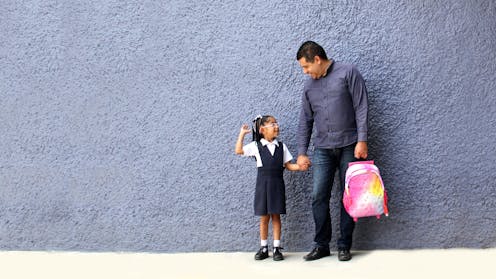
If your child is putting on their school uniform for the first few times, and learning their way from the school gate into their reception class, they’re going through what education researchers like me call a transition.
As we move through life, we undergo several key changes like this, both in education and in our adult lives. Key transitions in childhood include starting nursery, beginning school, and moving from primary to secondary school. As an adult, you may have been through many further transitions, such as starting a new job or moving into a new home.
But thinking of the start of school as one single event – one transition – doesn’t really capture the enormity of this new stage in your child’s life. A better perspective would be to expand the single word “transition” into the recognition of a number of multi-dimensional transitions, or changes, for both your child and for you. And thinking in this way may be helpful for both of you in coping with this change.
For children starting primary school, these multiple transitions may involve things such as a change in routine and their understanding of the world as they have to leave the house and travel to an unfamiliar place.
Their experience of food will be changing as they try new foods in their school, and perhaps have to eat with different rules than they have at home. Clothing changes, too. They may need to wear a uniform made of materials they haven’t felt before and that don’t feel comfortable or familiar.
Perhaps the biggest transition is being away from you for hours at a time. This is especially the case for those children who may not have attended a pre-school setting, or went to nursery part time. It is paramount, therefore, that transitions maximise the involvement of parents and carers.
Research has shown that transitional experienceshave an effect on children’s attainment and wellbeing. Having a positive transitional experience can result in children developing positive attitudes, and they may learn valuable skills for embracing future change.
If we accept that transitions are multiple and have a ripple effect on a child’s life, we can take care to support all areas that will be affected. These include the child’s relationships, culture, routines, environment, perceptions and aspirations. This holistic understanding emphasises the importance of adopting collaborative approaches with children and families during transitional planning.
Fostering a purposeful partnership
The key to positive transitions is a strong partnership between home and school. Teacher-child and teacher-family relationships should be prioritised and nurtured. Having trust, respect and open channels of communication are the building blocks for future success.
It can be helpful to see the transitional period as your child begins school as the start of a purposeful partnership between you and your child’s teacher. You can meet as equal experts in your child’s welfare and support.
Teachers and support staff should welcome children in with the message: “We want you here; you belong here.” Teachers must be trusted for their professional knowledge, and well supported by their school to be lifelong learners where regular training is provided. Through mutual respect, teachers can offer care and the love of learning to help children develop both academically and socially.
It is perfectly normal if you feel nervous about your child starting a new school. Trust your judgment and knowledge of your child, and feel free to speak up when things do not seem to be going well, or if your child’s needs could be better met.
Parents need to be their child’s advocate, ready to communicate and share on the child’s behalf – especially as they may not fully be able to explain their own needs.
You could consider helping your child create a poster about themselves to give to their teacher. What do they love to do? Is it playing outdoors, or building with blocks? Do they have a favourite book or toy? Are there any things that scare your child or make them nervous? What are some things that make them feel better if they are upset?
Prioritising your child’s voice is crucial, and this could help their new teacher gain a quicker insight into who they are.
Poppy Gibson does not work for, consult, own shares in or receive funding from any company or organisation that would benefit from this article, and has disclosed no relevant affiliations beyond their academic appointment.
Source: The Conversation – UK – By Barbara Jacquelyn Sahakian, Professor of Clinical Neuropsychology, University of Cambridge
We are regularly bombarded with information about a steep drop in attention spans. Based on its own data in 2015, Microsoft reported that the average attention span had dropped from about 12 seconds for millennials to eight seconds for gen Z.
And as the new Premier League season kicked off, UEFA introduced a new “eight seconds rule” stating a goalkeeper cannot hold the ball for more than eight seconds or the opposing team wins a corner kick. Coincidence? The rule was introduced to avoid time wasting. It may be that the mean length of attention needed to kick the ball is on average eight seconds. And perhaps this is also how long viewers can pay attention when nothing’s happening.
But how does attention really work? How can we improve it?
Attention is crucial. Who hasn’t experienced getting distracted in the middle of a conversation and suddenly forgot what they were saying. However, what is sometimes missed is that there are many forms of attention, and not all of them are necessarily diminishing.
The football rule is more closely related to a type of attention called visual scanning. For a goalkeeper, this can be scanning the field to work out who to pass the ball to. There are many studies on visual scanning in football, though not so much on goalkeepers.
One paper studied scanning and performance in English Premier League football players. They found using a ten-second scan time gave players a small but positive performance advantage.
Other studies have shown that within elite football players, the best players, spend more time scanning than others, unless there is an opponent player in close proximity.
Scanning is a form of attention that allows the footballer to take advantage of a time-limited opportunity, where decisions of who to pass to or where to run to on the field have to be made very rapidly.
This is a type of “hot cognition” – a social and emotional way of thinking, a bit like a gut instinct. It is very different to the “cold” or “rational” cognition involved in the decision making that footballers do with their managers and coaches off the field, where videos of plays are analysed.
In such situations, we are more likely to use “sustained attention”, which is paying attention to something for a sustained period of time. This ultimately requires mental concentration.
Similarly there are other forms of attention, for example “divided attention” or “alternating attention” which involve shifting attention between different things over a sustained period of time. These are typically also used for more cold decisions.
Different parts of the brain are at work when we use different kinds of attention. Hot decisions involve a brain network that includes the ventromedial prefrontal or orbitofrontal cortex, which support emotional regulation and decision making. Cold decisions, on the other hand, involves a different neural network that includes dorsolateral prefrontal cortex, supporting executive functions such as controlling or inhibitions or short-term memory.
Another time we make hot, rapid decisions is with first impressions. Again, the attention used is a type of immediate gut instinct. Unsurprisingly therefore, the dorsomedial prefrontal cortex is an important brain region associated with first impressions.
When we see or meet someone for the first time, we implicitly form an impression of their attractiveness and possibly other traits as well. We may adjust that initial immediate impression later, using more sustained or divided types of attention, as we learn more about the person.
A great example of this is given by Mr Darcy and Elizabeth Bennet in Jane Austen’s Pride and Prejudice, where negative first impressions form immediately. Only later are they corrected to positive impressions as more knowledge is gained about the two protagonists.
All this means there isn’t a single brain region involved in “attention” in general. It is possible to get better at one form of attention and worse at another.
For example, Gen Z has the highest daily screen time with many spending 2.5 hours per day on social media – which does require some sustained attention. The eight seconds is therefore more likely to be visual scanning or surfing for something interesting. Young people also spend long periods of time listening to podcasts and are increasingly consuming audiobooks, suggesting they can focus for long periods of time, but may prefer outlets that allow them to multitask. So, if the content is interesting, motivation can improve sustained attention.
I have been told several times by mothers of children and adolescents with attention deficit hyperactivity disorder (ADHD) that they don’t understand why their kids cannot concentrate on their schoolwork when they can spend hours playing computer games. The answer is motivation. When enjoying yourself, time goes by quickly and it is easy to sustain your attention over a long period of time.
This also suggests a solution to improving attention spans. We have to make tasks that require attention more motivating or fun.
Sustained attention
That said, it isn’t just scanning attention that appears to be reducing. There have been a number of studies on how sustained attention is decreasing too. Some psychologists therefore argue that lectures to students should be shorter.
However, a study of medical students found that information presented between 15 and 30 minutes was recalled best, whereas material presented during the first 15 min had the worst retention. So it is possible to hack people’s attention and design lectures in a way that makes them remember the content better?
Interestingly, where the student sat in the lecture hall also had impact on retention. Tests were given immediately following the lecture to students sitting at the front, middle, and back of the lecture hall. They remembered 80%, 71.6%, and 68.1%, respectively. However, where you chose to sit could also reflect your natural motivation for the lecture topic.
Biophysics researcher Neil Bradbury makes a compelling case that students’ motivation and teacher enthusiasm and passion, combined with good quality content and illustrations, are key factors in determining how long a lecturer is able to hold the audience’s attention. Perhaps allowing students to shift attention between listening, viewing and writing could also be useful.
Selecting the content should not be all about cold decision making, you also need to consider hot cognition in putting yourself in the minds of the audience and considering what might interest them the most.
Barbara Jacquelyn Sahakian receives funding from the Wellcome Trust. Her research work is conducted within the NIHR Cambridge Biomedical Research Centre (BRC) Mental Health and Neurodegeneration Themes.
Source: The Conversation – UK – By Ian Mell, Professor in Environmental & Landscape Planning, University of Manchester
Tens of thousands of fans streamed into Manchester’s Heaton Park this summer to see Oasis return home. Over 400,000 people attended across five nights of the much-hyped reunion tour.
But the joy came at a price. For more than eight weeks, large parts of Heaton Park were fenced off and heavily secured, restricting everyday use. Families, dog-walkers and runners were displaced, and the effects rippled far beyond the park gates.
The park regularly hosts food festivals and the music festival Park Life, but Oasis was of a different scale. The concerts effectively turned much of the park into a private venue, accessible only to ticket holders and staff. Residents complained of overcrowded trams, gridlocked roads and children struggling to get home from school. What is usually Manchester’s largest green space became, in some people’s minds, a no-go zone for two months.
Local governments insist such events bring much-needed revenue. Manchester City Council has not reported a specific fee for Oasis to use Heaton Park, although it has been said that around £25,000 has been allocated to fund local projects. (At time of publication, the council had not replied to our request for clarification about the fee.)
Pubs and restaurants thrived on concertgoers, and taxi drivers got a ready-made source of customers who would pay whatever it took. The city itself basked in the global spotlight of a high-profile homecoming.
Yet the downsides for locals were obvious: noise, antisocial behaviour, litter and congestion, as well as the general fatigue of not being able to go about their daily business. Afterwards, many felt the grass and grounds had been left in a poor state, raising questions of how much – if any – of the fee would be reinvested in the park itself.
This fuels scepticism: a multi-million pound tour gives the council a relatively small fee, while thousands of locals absorb the inconvenience. In my view, people are right to wonder whether public parks should be used to support these enterprises.
The Oasis shows tap into a wider debate about the use of public parks for festivals and events. Why is a space designed for community relaxation doubling up as a mega-venue? Why not use a stadium or arena purpose-built for huge crowds? And why don’t local councils charge far greater fees to permit such events, and properly enforce penalties for any damage?
Heaton Park is not unique. Sefton Park in Liverpool and Finsbury Park in London have hosted major festivals including Africa Oye and Wireless for over a decade respectively, provoking annual complaints about noise and disruption. Each time, local councils stress the economic upside, while residents question whether public green spaces are being commercialised at their expense.
Why councils say yes
In my experience, many local authorities simply feel they cannot afford to say no. Years of budget cuts mean councils must “sweat” every asset they own. Large parks, especially those with capacity for mass gatherings, are among the few resources left to monetise.
Cultural prestige also matters. Hosting a band like Oasis in their hometown generates pride and attention that no council will want to turn away.
But if parks are to be used in this way, the terms should be stronger. The reported £25,000 fee is minimal when set against the profits of a five-night run: 80,000 people paying £100 or more each over five nights adds up to around £40 million in revenue. (In fact, many people paid hundreds and even thousands of pounds to attend the Oasis gigs.)
Councils could charge significantly more, with some of the revenue ring-fenced to fund park management and improvements, and contracts that cover damage to the park.
So, did Oasis ruin Heaton Park? Not exactly. The concerts were a cultural phenomenon for Manchester and a source of joy for thousands of fans. But they also highlighted how public parks are being commercialised to plug council finances, often with limited benefit to those who most need them.
If local authorities continue to hire out green spaces to private promoters, they should rethink the terms. At the very least, residents deserve more input, and a fairer share of the rewards.
Ian Mell does not work for, consult, own shares in or receive funding from any company or organisation that would benefit from this article, and has disclosed no relevant affiliations beyond their academic appointment.
The US is ramping up its fight against Latin America’s drug cartels. Washington has deployed several naval warships into southern Caribbean waters, alongside over 2,000 marines. A guided missile cruiser, the USS Erie, and a nuclear-powered fast attack submarine, the USS Newport News, are also reportedly due to arrive in the region soon.
These moves take place as the Trump administration escalates pressure on the Venezuelan president, Nicolás Maduro, who has now accused the US of plotting to oust him from power.
Donald Trump has long called Maduro “one of the largest narcotics traffickers in the world”, saying he heads the Venezuelan Cartel of the Suns. The US recently doubled the reward for Maduro’s arrest to US$50 million (£37.1 million).
When asked about the possibility of direct military action in Venezuela, White House press secretary Karoline Leavitt remarked: “President Trump has been very clear and consistent. He’s prepared to use every element of American power to stop drugs from flooding into our country and to bring those responsible to justice.”
Latin America is no stranger to US military interventions and regime changes. Washington sponsored covert and overt military operations in the region, from Chile to Brazil and Guatemala to Grenada, that led to regime changes in the second half of the 20th century.
So the presence of a US military submarine and guided missile cruiser close to its territorial waters has justifiably rattled Venezuela’s leadership. Maduro has called on his countrymen and women to join nationalist militias, declaring: “no empire will touch the sacred soil of Venezuela”. And Venezuela’s navy has deployed warships and drones to patrol the coastline.
The Trump administration has said little about its intentions. But most analysts agree the US is not preparing to invade Venezuela. The naval build-up is much more likely to be an attempt to get Latin American governments to take stronger action against drug traffickers.
Falling in line
Cracking down on transnational drug cartels has become a defining theme of Trump’s second presidency. Shortly after returning to office in January, he issued an executive order formally designating eight of them “foreign terrorist organisations”.
This included six organisations based in Mexico: the Cartel del Golfo, Sinaloa Cartel, Cartel de Jalisco Nueva Generacion, Carteles Unidos, La Nueva Familia Michoacana and Cartel del Noreste. It also included the Mara Salvatrucha (more commonly known as MS-13), which originated in California, and the Venezuela-based Tren de Aragua.
A White House statement at the time said: “The Cartels have engaged in a campaign of violence and terror throughout the Western Hemisphere that has not only destabilized countries with significant importance for our national interests but also flooded the United States with deadly drugs, violent criminals, and vicious gangs.”
In August, Trump then signed a secret directive ordering the Pentagon to use military force against these cartels. The US secretary of state, Marco Rubio, has gone on record defending this directive. He said on August 7 that it allows the US to “use other elements of American power, intelligence agencies, the Department of Defense, whatever … to target these groups if we have an opportunity to do it.”
There are several legal issues associated with direct US military action in Latin America, which reduce the prospect of any such assault taking place. It would violate the sovereignty of countries there, while launching strikes without congressional approval or a UN mandate would risk breaching domestic prohibitions.
For instance, there are debates over whether murder charges could be brought against US service members acting outside of a congressionally authorised armed conflict if they were to kill civilians or criminal suspects who pose no imminent threat.
Whether or not the US military is brought directly into the fight against the cartels will become clearer in the weeks and months ahead. However, there is some evidence that the mere threat of US military intervention is hardening the stance of some countries in the region towards criminal groups.
The Mexican president, Claudia Sheinbaum, for instance, has said “her government will cooperate with the US to fight drug trafficking”. To avoid any unilateral military strike against cartels that might undermine Mexican sovereignty, Sheinbaum has deployed tens of thousands of national guard troops across the country to stem the flow of drugs towards the US.
Maduro has more recently also pledged to send 15,000 Venezuelan troops to the border with Colombia. And he thanked Colombia for sending 25,000 military personnel to the border to tackle “narco-terrorist gangs”. The Colombia-Venezuela border is porous and has long been a key transit point for drug traffickers and smugglers.
Further south, in Paraguay, there is official support for Trump’s anti-cartel policies. Taking a leaf from Washington’s rule book, the Paraguayan president, Santiago Peña Palacios, has designated the Cartel of the Suns a foreign terrorist organisation.
Elsewhere in Latin America, El Salvador’s leader, Nayib Bukele, has been a trusted ally of the US in its battle against drug cartels. Bukele has been successful in curbing the power and influence of MS-13, putting most of its members behind bars in the country’s high-security prison.
El Salvador is also incarcerating kingpins and criminals deported from the US. If the increasingly focused US pressure is successful, it may be just a matter of time before all countries in Latin America fall in line with Trump’s war on drug cartels.
Amalendu Misra is a recipient of British Academy and Nuffield Foundation Fellowships.