Malgré les plans loup successifs, une cohabitation toujours délicate dans les Alpes du Sud

Source: The Conversation – France (in French) – By Nathalie Couix, Chercheure en Sciences des Organisations, Inrae

Le dernier « plan loup » 2024-2029 entre en vigueur en France alors que le statut d’espèce strictement protégée du prédateur a été affaibli au sein de la convention de Berne. Nos recherches sur le terrain montrent que les mesures mises en place aggravent les conflits d’usage sur le territoire. Au-delà de la question emblématique des tirs létaux sur l’animal, celle des chiens de protection des troupeaux est centrale.


Que ce soit à travers leurs paysages, leur culture ou leur économie, les Alpes du Sud sont marquées par les activités pastorales, c’est-à-dire l’élevage basé sur un pâturage extensif. Véritable patrimoine culturel ou élément du folklore vendu aux touristes, le pastoralisme est omniprésent dans les images de ces montagnes du sud de la France. Depuis les années 1990, elles sont aussi devenues un territoire recolonisé par le loup gris (Canis lupus italicus).

Jusqu’à très récemment, l’espèce placée sur la liste rouge mondiale des espèces menacées de l’Union internationale pour la conservation de la nature (UICN) était strictement protégée au niveau européen. Elle a récemment perdu le statut d’espèce strictement protégée au sein de la convention de Berne, malgré les protestations des naturalistes et de nombreux scientifiques.

Aujourd’hui, son aire de répartition s’étend au-delà des seules Alpes du Sud. Cette région reste toutefois le secteur en France qui connaît le plus de prédation sur les troupeaux. Ainsi, des mesures de protection des troupeaux ont été mises en place dans le cadre de plans nationaux d’action loup successifs depuis les années 1990. Une nouvelle version de ce « plan loup » portant sur la période 2024-2029 a récemment été publiée par le gouvernement.

Ces mesures facilitent-elles la cohabitation ? Les travaux que nous menons dans une vallée des Alpes de Haute-Provence ont révélé une nette dégradation du climat social. En particulier, entre les éleveurs et bergers d’une part et les autres acteurs du territoire d’autre part.

Aujourd’hui, ce n’est plus seulement le loup qui cristallise les tensions, mais les chiens de protection des troupeaux (par exemple patou, kangal…) mis en place dans le cadre du plan loup pour protéger les troupeaux. Les éleveurs et bergers en sont le plus souvent tenus pour responsables.

Deux éléments sont centraux pour bien comprendre la situation : d’abord, le moment particulier où survient le retour du loup, dans un contexte où l’activité pastorale traditionnelle peine à redéfinir son rôle dans la société. Mais aussi certaines mesures du « plan loup » en elles-mêmes, qui peuvent contribuer à un climat social de plus en plus délétère, car elles ne tiennent pas compte de leurs propres conséquences. Par exemple, celles liées à la mise en place de chiens de protection des troupeaux, qui doivent partager les mêmes espaces que les promeneurs et les touristes.


À lire aussi :
Comprendre la diversité des émotions suscitées par le loup en France


Le pastoralisme, une pratique aujourd’hui questionnée

Les conséquences du retour du loup sur l’élevage ovin pastoral sont connues et étudiées depuis le retour du loup sur le sol français dans les années 1990. Il en découle un certain nombre de conflits entre le monde du pastoralisme, qui voit le loup comme une menace pour les troupeaux et le monde de l’environnement, qui voit le grand prédateur comme une espèce menacée à protéger.

Nos travaux ont permis de mettre en évidence (au cours d’entretiens, d’ateliers participatifs avec les acteurs du territoire et de débats publics) des tensions qui semblent avoir gagné du terrain. D’un côté, les autres acteurs que les éleveurs et bergers du territoire (riverains, promeneurs…) reconnaissent des dimensions patrimoniale et économique au pastoralisme, qui a un rôle positif pour les paysages et la biodiversité. Souvent, il leur apparaît même comme indispensable.

Pour autant, le pastoralisme leur semble trop développé. Le temps de présence des troupeaux en estive (période de l’année où les troupeaux paissent sur les pâturages de montagne) est par exemple perçu comme trop long et vu comme à l’origine de dégradation (sentiers, végétation, etc.). Tous les acteurs du territoire s’accordent à dire que leurs relations se sont progressivement dégradées, du fait en particulier de la présence des chiens de protection, de plus en plus nombreux.


Visuel d'illustration de la newsletter Ici la Terre représentant la planète Terre sur un fond bleu.

Abonnez-vous dès aujourd’hui.

Pour suivre au plus près les questions environnementales, retrouvez chaque jeudi notre newsletter thématique « Ici la Terre ».


La peur des chiens contribue ainsi à transformer les pratiques et les usages (loisirs, tourisme…) que ces acteurs pouvaient avoir des espaces pastoraux ou forestiers. Les élus redoutent la survenue d’un accident grave, tandis que les éleveurs et les bergers expriment leurs craintes de la marginalisation et que leurs activités soient remises en cause. Face à des injonctions multiples au changement, ces derniers peinent à redonner un sens à leur métier.

Le divorce entre défenseurs du pastoralisme et de l’environnement

Ces conflits autour du loup se matérialisent à un moment charnière où l’activité pastorale doit redéfinir sa place dans la société. Pour comprendre ce qui se joue, il faut revenir sur l’histoire récente du pastoralisme.

La modernisation agricole d’après-guerre a permis une nette augmentation de la productivité des terres, mais de fortes disparités ont persisté entre plaines et montagnes. Les secteurs de montagne se sont alors repliés sur les activités pastorales, les seules en mesure de valoriser les vastes étendues d’un territoire aux conditions difficiles (pentes, végétation, climat, etc.).

Ce (re)développement des activités pastorales est apparu d’autant plus pertinent, au début des années 1990, que montaient alors de nouvelles préoccupations en termes d’entretien des paysages et de protection de l’environnement. Celles-ci ont donné lieu à des aides au pastoralisme via les mesures dites agri-environnementales de la politique agricole commune européenne (PAC). Ainsi promus « jardiniers de l’espace », les éleveurs, bon gré mal gré, ont peu à peu acquis une certaine légitimité. Celle-ci a participé à transformer le regard porté sur leurs activités et, pour certains, l’image qu’ils avaient de leur propre métier.

Mais le début des années 90 a également marqué le retour du loup, d’abord discret, puis massif. Les éleveurs les bergers ont alors été confrontés à des attaques de troupeaux de plus en plus fréquentes et à des dégâts de plus en plus importants. Alors qu’elles tendaient peu à peu à se consolider, les alliances entre acteurs des activités pastorales et ceux de l’environnement se sont alors fortement dégradées.

Cette fracture s’est d’autant plus marquée depuis une réforme de la PAC en 2012. Les outils d’incitation économiques ont alors été revus de sorte à limiter les pratiques agricoles néfastes à l’environnement plutôt qu’à encourager les pratiques les plus vertueuses.

Les « impensés » du plan national loup

Enfin, certaines mesures du « Plan loup » peuvent contribuer à un climat social de plus en plus délétère faute de tenir compte de leurs conséquences concrètes. En effet, celui-ci contient notamment des préconisations sur les moyens de protection à mettre en œuvre par les éleveurs dans les zones où le loup est présent. Celles-ci sont codifiées et donnent droit à des soutiens publics.

Les trois mesures phares portent :

  • sur une présence humaine accrue auprès du troupeau au pâturage,

  • le regroupement nocturne des animaux dans des parcs de nuit

  • et enfin la présence de chiens de protection évoluant en permanence avec le troupeau.

Les mesures de protection et de gestion des attaques prévoient aussi, dans le cas d’attaques répétées malgré la mise en place des mesures précédentes, des autorisations de tirs létaux – autorisations qui pourraient devenir plus nombreuses en raison du changement de statut de l’espèce.

L’autorisation de tir létal est la mesure emblématique qui suscite les réactions les plus vives de la profession agricole et des associations environnementales. Par contre, l’utilisation des chiens de protection est sans doute celle qui, à bas bruit, cristallise le plus de problèmes dans les interactions entre monde de l’élevage et société locale.

Les frayeurs engendrées par la présence de ces chiens, avec quelquefois des incidents pouvant être sérieux sans parler des dégâts faits par ces chiens sur la faune sauvage, sont à l’origine de nombreuses récriminations – voire de plaintes – de la part des usagers de la montagne autres que les éleveurs.

À ces récriminations, les éleveurs et bergers opposent souvent que la présence des chiens leur est imposée par le plan loup pour bénéficier de soutiens publics en cas d’attaque et que les incidents sont essentiellement causés par un comportement inapproprié des plaignants. Ils arguent aussi que les estives sont leur lieu de travail, qu’ils sont donc prioritaires sur l’usage de ces espaces et qu’ils se doivent de protéger leur troupeau, autant pour leur revenu que parce qu’ils y sont fortement attachés.

De plus en plus de moyens sont dédiés à la sensibilisation du public au pastoralisme et à la conduite à tenir face à des chiens de protection. Des stratégies d’évitement se développent.. A la fois de la part des usagers de la montagne, qui s’informent sur les endroits à éviter en fonction des périodes, et de la part des bergers, dont certains vont préférer éviter certains secteurs. Mais de telles stratégies d’évitement questionnent le vivre-ensemble au sein du territoire.

Les mesures prises pour maintenir les activités pastorales là où la présence du loup est forte tendent ainsi à ignorer que ces activités – tout comme le loup lui-même – s’inscrivent non seulement dans des écosystèmes biologiques, mais également dans des socioécosystèmes. Les définitions précises de ce concept varient en fonction des approches utilisées, mais on peut dire en première approximation que les socio-écosystèmes sont ce qui résulte des interactions complexes entre dynamiques écologiques et dynamiques sociales.

Or, concrètement, le plan loup repose surtout sur la prise en charge de la valeur économique des animaux tués. Les conséquences écologiques des pratiques d’élevage que ces mesures suscitent, ou encore leur impact sur les interactions entre les différentes activités, ne sont quant à elles jamais considérées.

Ces conséquences peuvent pourtant être à l’origine de conditions difficiles d’exercice des métiers d’éleveurs et de bergers (conflits, mise en cause permanente, dégradation de la végétation sur certains secteurs, etc.), ce qui paraît contradictoire avec la volonté de soutien de ces activités. Elles sont également à l’origine de frustrations et de mécontentements de la part des différents usagers des espaces pastoraux et des habitants. Elles peuvent même, à terme, nuire au développement d’un certain tourisme dont ces territoires dépendent au plan économique.

Ainsi, selon nous, le plan national d’action loup ne favorise pas le développement de formes de cohabitation apaisées entre loups et activités pastorales. Trop souvent circonscrite aux relations entre le monde du pastoralisme et celui de l’environnement, la question de la présence du loup en territoire pastoral mérite d’être abordée à l’aune des socio-écosystèmes.

The Conversation

Jacques Lasseur a reçu des financements de Agropolis Fondation ainsi que des soutiens interne a INRAE (metaprogramme biosefair).

Nathalie Couix ne travaille pas, ne conseille pas, ne possède pas de parts, ne reçoit pas de fonds d’une organisation qui pourrait tirer profit de cet article, et n’a déclaré aucune autre affiliation que son organisme de recherche.

ref. Malgré les plans loup successifs, une cohabitation toujours délicate dans les Alpes du Sud – https://theconversation.com/malgre-les-plans-loup-successifs-une-cohabitation-toujours-delicate-dans-les-alpes-du-sud-259728

How far is your closest hospital or clinic? Public health researchers explain why Africa needs up-to-date health facility databases

Source: The Conversation – Africa (2) – By Peter M Macharia, Senior postdoctoral research fellow, Institute of Tropical Medicine Antwerp

The lack of reliable information about health facilities across sub-Saharan Africa became very clear during the COVID-19 pandemic. Amid a surge in emergency care needs, information was lacking about the location of facilities, bed capacity and oxygen availability, and even where to find medical specialists. This data could have enabled precise assessments of hospital surge capacity and geographic access to critical care. Peter Macharia and Emelda Okiro, whose research focuses on public health and equity of health service access in low resource settings, share the findings of their recent study, co-authored with colleagues.

What are open health facility databases?

A health facility is a service delivery point where healthcare services are provided. The facilities can range from small clinics and doctor’s offices to large teaching and referral hospitals.

A health facility database is a list of all health facilities in a country or geographic area, such as a district. A typical database should assign each health facility a unique code, name, size, type (from primary to tertiary), ownership (public or private), operational status (working or closed), location and subnational unit (county or district). It should also record services (emergency obstetric care, for example), capacity (number of beds, for example), infrastructure (electricity availability, for example), contact information (address and email), and when this information was last updated.

The ideal method of compiling this list is to conduct a census, as Kenya did in 2023. But this takes resources. Some countries have compiled lists from existing incomplete ones. Senegal did this and so did Kenya in 2003 and 2008.

This list should be open to stakeholders, including government agencies, development partners and researchers. Health facility lists must be shared through a governance framework that balances data sharing with protections for data subjects and creators. In some countries, such as Kenya and Malawi, these listings are accessible through web portals without additional permission. In others, such facility lists do not exist or require extra permission.

Why are they useful to have?

Facility listings can serve the needs of individuals and communities. They also serve sub-national, national and continental health objectives.

At the individual level, a facility list offers a choice of alternatives to health seekers. At the community level, the data can guide decisions like where to place community health workers, as seen in Mali and Sierra Leone.

Health lists are useful when distributing commodities such as bed nets and allocating resources based on the health needs of the areas they serve. They help in planning for vaccination campaigns by creating detailed immunisation microplans.

By taking account of the disease burden, social dynamics and environmental factors, health services can be tailored to specific needs.

Detailed maps of healthcare resources enable quicker emergency responses by pinpointing facilities equipped for specific crises. Disease surveillance systems depend on continuously collecting data from healthcare facilities.

At the continental level, lists are crucial for a coordinated health system response during pandemics and outbreaks. They can facilitate cross-border planning, pandemic preparedness and collaboration.

During the COVID-19 pandemic, these lists informed where to put additional resources such as makeshift hospitals or transport programmes for adults over  60 years of age.

The lists are used to identify vulnerable populations at risk of emerging pathogens and populations that can benefit from new health facilities.

They are important when it comes to making emergency obstetric and newborn care accessible.

What goes wrong if you don’t have them?

Many problems arise if we don’t know where health facilities are or what they offer. Healthcare planning becomes inefficient. This can result in duplicate facility lists and the misallocation of resources, which leads to waste and inequities.

We can’t identify populations that lack services. Emergency responses weaken due to uncertainty about where best to move patients with specific conditions.

Resources are wasted when there are duplicate facility lists. For example, between 2010 and 2016, six government departments partnered with development organisations, resulting in ten lists of health facilities in Nigeria.

In Tanzania, over 10 different health facility lists existed in 2009. Maintained by donors and government agencies, the function-specific lists didn’t work together to share information easily and accurately. This prompted the need for a national master facility list.

What needs to happen to build one?

A comprehensive list of health facilities can be compiled through mapping exercises or from existing lists. The health ministry should take responsibility for setting up, developing and updating this list.

Partnerships are crucial for developing facility lists. Stakeholders include donors, implementing and humanitarian partners, technical advisors and research institutions. Many of these have their own project-based lists, which should integrate into a centralised facility list managed by the ministry. The health ministry must foster a transparent environment, encouraging citizens and stakeholders to contribute to enhancing health facility data.

Political and financial commitment from governments is essential. Creating and maintaining a proper list requires significant investment. Expertise and resources are necessary to keep it updated.

A commitment to open data is a necessary step. Open access to these lists makes them more complete, reliable and useful.

The Conversation

Peter Macharia is funded by Fonds voor Wetenschappelijk Onderzoek- Belgium (FWO, number 1201925N) for his Senior Postdoctoral Fellowship.

Emelda Okiro receives funding for her research from the Wellcome Trust through a Wellcome Trust Senior Fellowship (#224272).

ref. How far is your closest hospital or clinic? Public health researchers explain why Africa needs up-to-date health facility databases – https://theconversation.com/how-far-is-your-closest-hospital-or-clinic-public-health-researchers-explain-why-africa-needs-up-to-date-health-facility-databases-259190

Moon mining is getting closer to reality: Why we need global rules for extracting space resources

Source: The Conversation – Canada – By Martina Elia Vitoloni, DCL Candidate Air and Space Law, McGill University

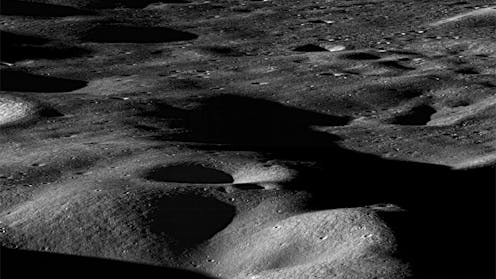
Mountains on the moon as seen by NASA Lunar Reconnaissance Orbiter. (NASA/GSFC/Arizona State University)

In science-fiction stories, companies often mine the moon or asteroids. While this may seem far-fetched, this idea is edging closer to becoming reality.

Celestial bodies like the moon contain valuable resources, such as lunar regolith — also known as moon dust — and helium-3. These resources could serve a range of applications, including making rocket propellant and generating energy to sustaining long missions, bringing benefits in space and on Earth.

The first objective on this journey is being able to collect lunar regolith. One company taking up this challenge is ispace, a Japanese space exploration company ispace that signed a contract with NASA in 2020 for the collection and transfer of ownership of lunar regolith.

The company recently attempted to land its RESILIENCE lunar lander, but the mission was ultimately unsuccessful. Still, this endeavour marked a significant move toward the commercialization of space resources.

These circumstances give rise to a fundamental question: what are the legal rules governing the exploitation of space resources? The answer is both simple and complex, as there is a mix of international agreements and evolving regulations to consider.

What does the international legal system say?

The cornerstone legal instrument for space activity is the Treaty on Principles Governing the Activities of States in the Exploration and Use of Outer Space, including the Moon and Other Celestial Bodies, more commonly referred to as the Outer Space Treaty.

While space law is often considered a novel legal field, the Outer Space Treaty dates back to 1967, making it more than half a century old.


Read more:
Space exploration should aim for peace, collaboration and co-operation, not war and competition


Space activities have exponentially evolved since the treaty’s adoption. In the 60 years following the launch of Sputnik 1 — the first satellite placed in orbit — less than 500 space objects were launched annually. But since 2018, this number has risen into the thousands, with nearly 3,000 launched in 2024.

Because of this, the treaty is often judged as inadequate to address the current complexities of space activities, particularly resource exploitation.

A longstanding debate centres on whether Article II of the treaty, which prohibits the appropriation of outer space — including the moon and other celestial bodies — also prohibits space mining.

The prevailing position is that Article II solely bans the appropriation of territory, not the extraction of resources themselves.

We are now at a crucial moment in the development of space law. Arguing over whether extraction is legal serves no purpose. Instead, the focus must shift to ensuring resource extraction is carried out in accordance with principles that ensure the safe and responsible use of outer space.

International and national space laws

A significant development in the governance of space resources has been the adoption Artemis Accords, which — as of June 2025 — has 55 signatory nations. The accords reflect a growing international consensus concerning the exploitation of space resources.

Notably, Section 10 of the accords indicates that the exploitation of space resources does not constitute appropriation, and therefore doesn’t violate the Outer Space Treaty.

Considering the typically slow pace of multilateral negotiations, a handful of nations introduced national legislation. These laws govern the legality of space resource exploitation, allowing private companies to request licenses to conduct this type of activity.

To date, six nations have enacted this type of legislation: the United States in 2015, Luxembourg in 2017, the United Arab Emirates in 2019, Japan in 2021, Brazil in 2024 and most recently, Italy, which passed its law on June 11, 2025.

Among these, Luxembourg’s legal framework is the most complete. It provides a series of requirements to provide authorization for the exploitation of space resources. In fact, ispace’s licence to collect lunar regolith was obtained under this regime.

Earth in outer space with part of a spacecraft seen off to the side
This first high-resolution image taken on the first day of the Artemis I mission by a camera on the tip of one of Orion’s solar arrays. The spacecraft was 57,000 miles from Earth when the image was captured.
(NASA)

The rest of the regulations usually tend to limit themselves to proclaiming the legality of this activity without entering into too much detail and deferring the specifics of implementation to future regulations.

While these initiatives served to put space resources at the forefront of international forums, they also risk regulatory fragmentation, as different countries adopt varying standards and approaches.

What does the future hold?

Recognizing the need for a co-ordinated global approach, the United Nations Committee on Peaceful Uses of Outer Space created a Working Group on Legal Aspects of Space Resource Activities. Its mandate is to develop a set of general principles to guide the development of the activity.

In May 2025, the chair of the working group, Steven Freeland, presented a draft of recommended principles based on input from member states.

These principles reaffirm the freedom of use and exploration of outer space for peaceful purposes, while introducing rules pertaining to the safety of the activities and their sustainability, as well as the protection of the environment, both of Earth and outer space.

The development of a legal framework for space resources is still in its early stages. The working group is expected to submit its final report by 2027, but the non-binding nature of the principles raises concerns about their enforcement and application.

As humanity moves closer to extracting and using space resources, the need for a cohesive and responsible governance system has never been greater.

The Conversation

Martina Elia Vitoloni does not work for, consult, own shares in or receive funding from any company or organisation that would benefit from this article, and has disclosed no relevant affiliations beyond their academic appointment.

ref. Moon mining is getting closer to reality: Why we need global rules for extracting space resources – https://theconversation.com/moon-mining-is-getting-closer-to-reality-why-we-need-global-rules-for-extracting-space-resources-259343

Does eating cheese before bed really give you nightmares? Here’s what the science says

Source: The Conversation – Global Perspectives – By Charlotte Gupta, Senior Postdoctoral Research Fellow, Appleton Institute, HealthWise Research Group, CQUniversity Australia

Phoenixns/Shutterstock, The Conversation, CC BY

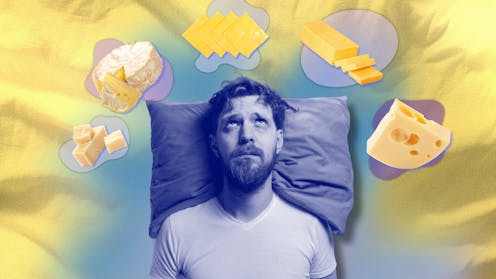
Have you heard people say eating cheese before bed will cause you to have vivid dreams or nightmares?

It’s a relatively common idea. And this week, a new study has landed this suggestion back in the spotlight.

But is it true? Let’s unpack the evidence.

A gouda night’s sleep?

Canadian researchers recently investigated this idea in a sample of 1,082 undergraduate psychology students. The students completed a survey, which included questions about how they perceived their diet influenced their sleep and dreams.

Some 40% of participants reported certain foods impacted their sleep, with 25% of the whole sample claiming certain foods worsened their sleep, and 20% reporting certain foods improved their sleep.

Only 5.5% of respondents believed what they ate affected the nature of their dreams. But many of these people thought sweets or dairy products (such as cheese) made their dreams more strange or disturbing and worsened their sleep.

In contrast, participants reported fruits, vegetables and herbal teas led to better sleep.

This study used self-reporting, meaning the results rely on the participants recalling and reporting information about their sleep and dreams accurately. This could have affected the results.

It’s also possible participants were already familiar with the notion that cheese causes nightmares, especially given they were psychology students, many of whom may have studied sleep and dreaming.

This awareness could have made them more likely to notice or perceive their sleep was disrupted after eating dairy. In other words, the idea cheese leads to nightmares may have acted like a self-fulfilling prophecy and results may overestimate the actual likelihood of strange dreams.

Nonetheless, these findings show some people perceive a connection between what they eat and how they dream.

While there’s no evidence to prove cheese causes nightmares, there is evidence that does explain a link.

The science behind cheese and nightmares

Humans are diurnal creatures, meaning our body is primed to be asleep at night and awake during the day. Eating cheese before bed means we’re challenging the body with food at a time when it really doesn’t want to be eating.

At night, our physiological systems are not primed to digest food. For example, it takes longer for food to move through our digestive tract at night compared with during the day.

If we eat close to going to sleep, our body has to process and digest the food while we’re sleeping. This is a bit like running through mud – we can do it, but it’s slow and inefficient.

Cheese can be particularly challenging to digest at night because of high concentrations of fat and protein, which slows down our digestion.

If your body is processing and digesting food instead of focusing all its resources on sleep, this can affect your shut-eye. Research has shown eating close to bedtime reduces our sleep quality, particularly our time spent in rapid eye movement (REM) sleep, which is the stage of sleep associated with vivid dreams.

People will have an even harder time digesting cheese at night if they’re lactose intolerant, which might mean they experience even greater impacts on their sleep. This follows what the Canadian researchers found in their study, with lactose intolerant participants reporting poorer sleep quality and more nightmares.

It’s important to note we might actually have vivid dreams or nightmares every night – what could change is whether we’re aware of the dreams and can remember them when we wake up.

Poor sleep quality often means we wake up more during the night. If we wake up during REM sleep, research shows we’re more likely to report vivid dreams or nightmares that we mightn’t even remember if we hadn’t woken up during them.

This is very relevant for the cheese and nightmares question. Put simply, eating before bed impacts our sleep quality, so we’re more likely to wake up during our nightmares and remember them.

A woman sleeping.
What we eat, particularly just before bed, can affect our sleep.
Ivan Oboleninov/Pexels

Can I still have brie before bedtime?

Don’t panic – I’m not here to tell you to give up your cheesy evenings. But what we eat before bed can make a real difference to how well we sleep, so timing matters.

General sleep hygiene guidelines suggest avoiding meals at least two hours before bed. So even if you’re eating a very cheese-heavy meal, you have a window of time before bed to digest the meal and drift off to a nice peaceful sleep.

How about other dairy products?

Cheese isn’t the only dairy product which may influence our sleep. Most of us have heard about the benefits of having a warm glass of milk before bed.

Milk can be easier to digest than cheese. In fact, milk is a good choice in the evening, as it contains tryptophan, an amino acid that helps promote sleep.

Nonetheless, we still don’t want to be challenging our body with too much dairy before bed. Participants in the Canadian study did report nightmares after dairy, and milk close to bed might have contributed to this.

While it’s wise to steer clear of food (especially cheese) in the two hours before lights out, there’s no need to avoid cheese altogether. Enjoy that cheesy pasta or cheese board, just give your body time to digest before heading off to sleep. If you’re having a late night cheese craving, opt for something small. Your sleep (and your dreams) will thank you.

The Conversation

Charlotte Gupta does not work for, consult, own shares in or receive funding from any company or organisation that would benefit from this article, and has disclosed no relevant affiliations beyond their academic appointment.

ref. Does eating cheese before bed really give you nightmares? Here’s what the science says – https://theconversation.com/does-eating-cheese-before-bed-really-give-you-nightmares-heres-what-the-science-says-260205

Comment le tourisme et les loisirs de plein air ont modifié notre rapport aux animaux sauvages

Source: The Conversation – France (in French) – By Antoine Doré, Sociologue des sciences, techniques et politiques environnementales et agricoles., Inrae

Le développement des pratiques récréatives en pleine nature (loisirs, sport…) est-il compatible avec le maintien de conditions de vie et de conservation convenables pour la faune sauvage ? Cela nécessite en tout cas de s’interroger sur la façon dont ces nouveaux usages intermédient nos relations à la nature.


Alors que les vacances d’été approchent, nombreux sont ceux qui rêvent d’évasion en pleine nature. Et, peut-être, de pouvoir admirer la faune sauvage : rapaces, marmottes, chamois, lynx… Ce qui pose la question de notre rapport au « sauvage ». La transformation de nos pratiques récréatives (notamment en matière de sport et de loisirs de pleine nature) est-elle compatible avec le maintien de conditions de vie et de conservation appropriées pour la faune sauvage ?

Loin d’être anodines, nos activités de loisirs de plein air façonnent nos représentations et notre capacité à cohabiter avec les autres êtres vivants. L’histoire et la sociologie des pratiques récréatives montrent que la nature est souvent perçue comme un décor à admirer plutôt qu’un espace partagé avec des animaux sauvages. C’est ce que j’explore également dans le chapitre d’un ouvrage à paraître courant 2025 aux éditions Quae.

La nature comme décor de nos loisirs

Dans nos sociétés dites « modernes », les relations avec la nature se déroulent principalement en dehors du travail. Pour la plupart des gens, cela se fait à travers les loisirs : la part des personnes qui travaillent à son contact est désormais très minoritaire.

Parallèlement, plusieurs enquêtes montrent que la nature prend une place croissante dans les activités récréatives. Alors que les milieux naturels sont envisagés comme des lieux pour se ressourcer, la manière dont nous les investissons détermine aussi leur pérennité. Les espaces sauvages deviennent des territoires aménagés pour répondre aux attentes des visiteurs. Pour ces derniers, la nature n’est plus perçue comme un milieu habité ou exploité, mais comme un cadre récréatif destiné à l’évasion.


Visuel d’illustration de la newsletter Ici la Terre représentant la planète Terre sur un fond bleu

Abonnez-vous dès aujourd’hui.

Pour suivre au plus près les questions environnementales, retrouvez chaque jeudi notre newsletter thématique « Ici la Terre ».


On comprend l’importance colossale des loisirs dans l’évolution de nos relations contemporaines à la nature : l’« écologisation » des pratiques récréatives de plein air devient est devenu un enjeu crucial, qui ne peut être bien compris sans un détour par l’histoire, la sociologie et l’économie politique et morale du « temps libre ».

Une nature mise en scène par la « classe de loisirs »

L’histoire de la protection de la nature est indissociable de celle de la « classe de loisir ». Dès le XIXe siècle, une élite sociale urbanisée promeut l’idée de « nature sauvage » et initie la création de réserves et de parcs pour protéger les paysages… et leur propre expérience du sauvage. En France, les premiers appels à la création de parcs nationaux sont portés par le Touring Club de France et le Club alpin français, soucieux de préserver leur terrain de jeu.

À cette époque, la valorisation du sauvage repose avant tout sur des critères esthétiques. On protège d’abord les paysages et non les espèces. La forêt de Fontainebleau est ainsi classée en 1861 pour ses qualités picturales.

La création des parcs nationaux dans les années 1960 prolonge cette logique :

« protéger des paysages exceptionnels […] favoriser et réglementer leur fréquentation touristique. »

Or, cette mise en scène de la nature se fait souvent au détriment des usages ruraux de ces espaces. Entre nature sauvage et paysages champêtres, « l’environnement » se constitue comme un milieu temporaire de distraction, voire de consommation, pour des sociétés de plus en plus urbaines qui ne font qu’y passer et qui valorisent des rapports contemplatifs à la nature, au détriment de rapports plus directement utilitaristes – vivriers ou productifs – tels que l’agriculture, la chasse, la pêche ou la cueillette.

Une faune sauvage entre protection et spectacle

Si la protection de la nature s’est renforcée avec le temps, elle s’est aussi accompagnée d’un paradoxe : les espèces emblématiques (tels que les grands prédateurs : loup, panthère des neiges, orques…) sont davantage préservées, mais elles sont souvent réduites à des images spectaculaires dans les médias et les documentaires animaliers.

Dès les années 1970, l’essor du cinéma de nature et des productions télévisées consacrées au vivant transforme les animaux sauvages en icônes esthétiques. « Les gens protègent et respectent ce qu’ils aiment, et pour leur faire aimer la mer il faut les émerveiller autant que les informer », déclarait ainsi Jacques-Yves Cousteau.

Le développement de l’industrie audiovisuelle va ainsi contribuer à sensibiliser le grand public à la protection des animaux sauvages en instaurant, par le truchement des écrans, un sentiment de familiarité à leur égard.

Tout cela participe au succès de l’idée moderne de « nature sauvage » qui tend, paradoxalement, à court-circuiter – ou du moins altérer – toutes possibilités de cohabitation avec les animaux, au profit d’un rapport scopophile à ces derniers, c’est-à-dire un rapport centré sur le plaisir de les regarder, souvent de manière distanciée et esthétisante ; ils sont alors vus comme des objets d’admiration, davantage que des êtres avec lesquels peuvent se nouer des rapports de cohabitation ; ils sont envisagés comme une source d’excitation visuelle, des personnages d’un décor d’autant plus authentique qu’il est spectaculaire.

Vers une écologie de l’attention

L’essor des activités de plein air, amplifié par la crise sanitaire du Covid depuis 2020, témoigne d’un désir croissant de « retour à la nature ». Mais celui-ci s’accompagne d’une pression accrue sur la nature, en particulier sur la faune.

Il est donc capital de revoir en profondeur les manières de cohabiter avec les animaux sauvages dans nos sociétés de loisir. L’histoire de la protection de la nature est solidaire d’une histoire sociale du temps libre. Tout ceci a concouru à l’instauration d’une nature « récréative » conçue principalement comme support de projection émotionnelle.

On touche ici du doigt un rapport problématique à l’environnement, vu comme un décor peuplé de figurants humains et non-humains, qui se rapproche du voyeurisme. Dans ces conditions, l’écologisation des pratiques récréatives ne peut se résumer à simplement convenir de nouvelles « règles du jeu » avec la nature. Il s’agit aussi de parvenir à instaurer de nouveaux styles d’attention aux vivants et, en particulier, à la faune sauvage.

Par exemple, quels sont les régimes d’attention propres à telle ou telle activité récréative de nature ? Qu’est-ce qui est valorisé ou dévalorisé par telle manière de pratiquer la randonnée ou la pêche à la mouche et quelles places y tiennent les vivants ? Au-delà des interactions « ici et maintenant » entre faune et usagers des espaces naturels, par l’intermédiaire de quels genres de médiateurs nos rapports aux animaux sauvages sont-ils organisés, à travers quels médiateurs humains (un guide, un enfant), techniques (montre connectée, jumelles) ou non-humains (chien de chasse, cheval) ?

Reconsidérer nos rapports à la nature dans la société de loisir suppose de déplier tout l’« échosystème » au sein duquel résonnent – ou non – les coprésences directes et indirectes entre humains et animaux sauvages

Alors que les plus privilégiés d’entre nous s’apprêtent à partir en montagne ou en forêt pour quelques jours de vacances, nous pouvons nous interroger sur la manière dont nos pratiques récréatives façonnent nos rapports à la nature. Voulons-nous continuer à la considérer comme un décor, ou sommes-nous prêts à repenser nos interactions avec elle ? Peut-être est-il temps de ne plus seulement chercher à voir les animaux sauvages, mais à véritablement apprendre à cohabiter avec eux.

The Conversation

Antoine Doré ne travaille pas, ne conseille pas, ne possède pas de parts, ne reçoit pas de fonds d’une organisation qui pourrait tirer profit de cet article, et n’a déclaré aucune autre affiliation que son organisme de recherche.

ref. Comment le tourisme et les loisirs de plein air ont modifié notre rapport aux animaux sauvages – https://theconversation.com/comment-le-tourisme-et-les-loisirs-de-plein-air-ont-modifie-notre-rapport-aux-animaux-sauvages-259196

AI-powered assistive technologies are changing how we experience and imagine public space

Source: The Conversation – Canada – By Ron Buliung, Professor, Geography and Planning, University of Toronto

AI-powered assistive devices, like hearing aids, are changing how the people who use them experience public space. (Shutterstock)

New applications and the integration of artificial intelligence (AI) with wearable devices are changing the way users interact with their environments and each other. The impacts and reach of these new technologies have yet to be fully understood.

Connections between technologies and bodies is not a new thing for many disabled persons. Assistive technologies — tools and products designed to support people with disabilities — have played a part in mitigating built and institutional barriers experienced by disabled persons for decades.

While not strictly considered assistive, immersive and wearable technologies have the potential to change the relationship between disabled users and their experience of place.

For example, Ray-Ban’s Meta glasses use AI to describe what the cameras are capturing using the Be My Eyes app. Using OpenAI’s large language model, ChatGPT, this effectively turns a user’s smart phone into a vision assistant.

Beyond wearables, some technologies are more closely tied to or integrated with the body. Examples include brain-computer interfaces, AI-enabled prosthetics and bone-anchored hearing aids.

The availability and production of environmental data from these technologies may impact how we relate to each other, how we move through and understand space, and how we engage with the physical environment around us at any given moment.

Sam Seavey, founder of TheBlindLife.com, reviews the possibilities and limitations of Apple’s VisionPro. (The Blind Life)

We’re at a critical juncture where AI-enabled technologies used by individuals may profoundly impact our urban futures.

What happens, for example, when wearables make any “place” a digital work or play place? What does a largely private-sector, consumer-driven, AI-enabled digital intervention into a city’s spaces mean for planning, zoning and taxation? What are the environmental costs of the global AI project?

And crucially, who gets to participate in this digital reimagining?

AI and the city

While access can be challenging — wearables are often costly — ableist thinking regarding the use of technology to render invisible Blind and/or Deaf people and culture is also a problem. Some people might naively assume that all Blind and Deaf people are universally seeking a bio-technological “miracle.”

There are also other challenges: how a technology captures or describes its data may not match up to a user’s pre-existing sense of place. Moreover, access to tech can produce some unintended consequences, including the erosion of in-person community building among disabled people.

Hearing loss of some kind affects around 1.5 billion people: I am one of those people. I am a disability studies scholar who wears behind-the-ear hearing aids to augment my hearing experience.

My hearing aids use AI and machine learning to sense and adjust my sound environment. They help me cope with the ways in which the places of my everyday life — such as my home or the lecture hall — are generally configured for people without hearing loss.

When I use my hearing aids, I find that the city has never sounded so wonderful, and yet sometimes irritatingly loud. The sound of birds is one thing; the grinding sound of a breaking subway is another entirely.

Cumulative exposure to noisy indoor and outdoor places of the city poses auditory health risks, such as noise-induced hearing loss or tinnitus, and can contribute to poor health more broadly. I have to be careful about ongoing noise exposure, and by adjusting the volume of my hearing aids, I can turn down the city when I want to.

Future bodies and urban futures

AI-powered technologies can exacerbate issues of access, privilege and freedom of movement. This happens both through who is able to purchase and use devices, as well as through data and their applications. Data may be biased in terms of race, gender, sexuality and disability.

Scientific research and media representations tend to highlight the benevolent possibilities of technologies for “repairing” bodies conceived as being functionally medically deficient.

Much less is said about disabled persons controlling the narrative, taking up key roles in the messy terrain of AI, machine learning and data governance, and in the planning and design of future cities.

Digital modelling

We are also witnessing growing interest in the digital twinning — creating highly accurate digital models — of everything from human hearts to entire cities.

Whether rendered at the scale of the body or city, the motivation for twinning appears centred on planning and performance optimization — a quest for perfection. Like any model, we are dealing with an abstraction from reality. City twins seem to fail to capture many of the fine grain environmental barriers experienced by disabled persons.


Read more:
What are digital twins? A pair of computer modeling experts explain


Ownership limits

Not everyone can, should or wishes to be technologically “assisted” or augmented. There are medical, identity and culture, affordability, legal, moral and ethical concerns.


Read more:
Super-intelligence and eternal life: transhumanism’s faithful follow it blindly into a future for the elite


Other issues raised by brain-computer interface research, for example, include concerns about legal capacity and ownership of the self, including ownership of device-generated data.

In a study on the impact of neural technologies, researchers shared the legal repercussions relating to two disabled people deprived of voting rights in Spain. The person who recovered the ability to communicate autonomously using their finger and a computer had their rights restored, while the other, who used a human intermediary, did not.

Legal questions also arise regarding how liability is assigned when augmented bodies are injured or cause injuries to others.

Where does the person end and the technology begin, and vice versa? Who gets to decide?

Future technologies

As the use of AI and assistive technologies increases in everyday urban life, we will need to address these questions sooner rather than later.

And if disabled persons are not adequately involved in these discussions and decisions, then cities will be less — rather than more — accessible.

The Conversation

Ron Buliung does not work for, consult, own shares in or receive funding from any company or organisation that would benefit from this article, and has disclosed no relevant affiliations beyond their academic appointment.

ref. AI-powered assistive technologies are changing how we experience and imagine public space – https://theconversation.com/ai-powered-assistive-technologies-are-changing-how-we-experience-and-imagine-public-space-229836

Experiencing extreme weather and disasters is not enough to change views on climate action, study shows

Source: The Conversation – Global Perspectives – By Omid Ghasemi, Research Associate in Behavioural Science at the Institute for Climate Risk & Response, UNSW Sydney

STR / AFP via Getty Images

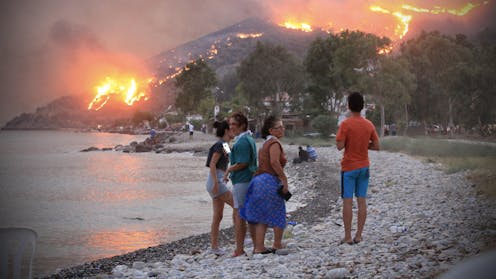
Climate change has made extreme weather events such as bushfires and floods more frequent and more likely in recent years, and the trend is expected to continue. These events have led to human and animal deaths, harmed physical and mental health, and damaged properties and infrastructure.

Will firsthand experience of these events change how people think and act about climate change, making it seem immediate and local rather than a distant or future problem?

Research so far has offered a mixed picture. Some studies suggest going through extreme weather can make people more likely to believe in climate change, worry about it, support climate policies, and vote for Green parties. But other studies have found no such effects on people’s beliefs, concern, or behaviour.

New research led by Viktoria Cologna at ETH Zurich in Switzerland may help to explain what’s going on. Using data from around the world, the study suggests simple exposure to extreme weather events does not affect people’s view of climate action – but linking those events to climate change can make a big difference.

Global opinion, global weather

The new study, published in Nature Climate Change, looked at the question of extreme weather and climate opinion using two global datasets.

The first is the Trust in Science and Science-related Populism (TISP) survey, which includes responses from more than 70,000 people in 68 countries. It measures public support for climate policies and the extent that people think climate change is behind increases in extreme weather.

The second dataset estimates how much of each country’s population has been affected each year by events such as droughts, floods, heatwaves and storms. These estimates are based on detailed models and historical climate records.

Public support for climate policies

The survey measured public support for climate policy by asking people how much they supported five specific actions to cut carbon emissions. These included raising carbon taxes, improving public transport, using more renewable energy, protecting forests and land, and taxing carbon-heavy foods.

Responses ranged from 1 (not at all) to 3 (very much). On average, support was fairly strong, with an average rating of 2.37 across the five policies. Support was especially high in parts of South Asia, Africa, the Americas and Oceania, but lower in countries such as Russia, Czechia and Ethiopia.

Exposure to extreme weather events

The study found most people around the world have experienced heatwaves and heavy rainfall in recent decades. Wildfires affected fewer people in many European and North American countries, but were more common in parts of Asia, Africa and Latin America.

Cyclones mostly impacted North America and Asia, while droughts affected large populations in Asia, Latin America and Africa. River flooding was widespread across most regions, except Oceania.

Do people in countries with higher exposure to extreme weather events show greater support for climate policies? This study found they don’t.

In most cases, living in a country where more people are exposed to disasters was not reflected in stronger support for climate action.

Wildfires were the only exception. Countries with more wildfire exposure showed slightly higher support, but this link disappeared once factors such as land size and overall climate belief were considered.

In short, just experiencing more disasters does not seem to translate into increased support for mitigation efforts.

Seeing the link between weather and climate change

In the global survey, people were asked how much they think climate change has increased the impact of extreme weather over recent decades. On average, responses were moderately high (3.8 out of 5) suggesting that many people do link recent weather events to climate change.

Such an attribution was especially strong in Latin America, but lower in parts of Africa (such as Congo and Ethiopia) and Northern Europe (such as Finland and Norway).

Crucially, people who more strongly believed climate change had worsened these events were also more likely to support climate policies. In fact, this belief mattered more for policy support than whether they had actually experienced the events firsthand.

What does this study tell us?

While public support for climate policies is relatively high around the world, even more support is needed to introduce stronger, more ambitious measures. It might seem reasonable to expect that feeling the effects of climate change would push people to act, but this study suggests that doesn’t always happen.

Prior research shows less dramatic and chronic events like rainfall or temperature anomalies have less influence on public views than more acute hazards like floods or bushfires. Even then, the influence on beliefs and behaviour tends to be slow and limited.

This study shows climate impacts alone may not change minds. However, it also highlights what may affect public thinking: helping people recognise the link between climate change and extreme weather events.

In countries such as Australia, climate change makes up only about 1% of media coverage. What’s more, most of the coverage focuses on social or political aspects rather than scientific, ecological, or economic impacts.

Many stories about disasters linked to climate change also fail to mention the link, or indeed mention climate change at all. Making these connections clearer may encourage stronger public support for climate action.

The Conversation

Omid Ghasemi receives funding from the Australian Academy of Science. He was a member of the TISP consortium and a co-author of the dataset used in this study.

ref. Experiencing extreme weather and disasters is not enough to change views on climate action, study shows – https://theconversation.com/experiencing-extreme-weather-and-disasters-is-not-enough-to-change-views-on-climate-action-study-shows-260308

État du climat en 2024 : les voyants toujours au rouge malgré le ralentissement des émissions mondiales

Source: The Conversation – France (in French) – By Christian de Perthuis, Professeur d’économie, fondateur de la chaire « Économie du climat », Université Paris Dauphine – PSL

Malgré le ralentissement des émissions globales de gaz à effet de serre (GES), les voyants du climat restent dans le rouge, nous rappelle le rapport Indicators of Global Climate Change 2024 récemment publié. Ce rapport permet également d’identifier trois leviers d’action à mettre en œuvre pour stabiliser le stock atmosphérique de GES à l’origine du réchauffement global.


L’univers virtuel des réseaux sociaux est celui de l’immédiateté. Un utilisateur de TikTok y navigue en moyenne 95 minutes chaque jour, avec à la clé plusieurs centaines de clics. En politique, la vague populiste surfe sur ce courant d’informations en continu qui submerge notre quotidien.

Dans ces mondes virtuels, on prend les décisions en fonction des aléas du moment, quitte à revenir rapidement en arrière en cas de réactions inattendues. Une telle soumission aux humeurs du court terme n’est pas compatible avec l’action face au réchauffement planétaire et à la dégradation de la biodiversité.

Le premier antidote à la tyrannie de l’immédiat doit être la science. C’est pourquoi le Groupe intergouvernemental d’experts sur l’évolution du climat (GIEC) joue un rôle si structurant en matière d’action climatique. Depuis 1990, le GIEC a publié six rapports d’évaluation. Ces rapports fournissent des balises précieuses, documentant l’état des connaissances scientifiques sur le système climatique, les impacts et les adaptations possibles face au réchauffement, les leviers d’atténuation pour le stabiliser.

Chiffres-clés du changement climatique en 2024.
Indicators of Global Climate Change 2024, Fourni par l’auteur

Le temps de navigation entre deux balises tend cependant à augmenter. De cinq ans entre le premier et le second rapport du GIEC, il est passé à neuf ans entre les deux derniers rapports. Pour éviter que les décideurs ne se perdent en route, un collectif de chercheurs publie chaque année un tableau de bord annuel, reprenant les méthodologies utilisées par le GIEC.

J’ai lu leur rapport sur l’année 2024, rendu public le 17 juin 2025. Voici ce que j’en ai retenu.

Les voyants au rouge, malgré le ralentissement des émissions

Le tableau de bord annuel actualise en premier lieu les informations sur les émissions de CO₂ jusqu’en 2024 (et jusqu’à 2023 pour les autres gaz à effet de serre, GES). Sans surprise, cette actualisation confirme le ralentissement de l’augmentation des émissions mondiales observé depuis 15 ans, principalement provoqué par celles de CO2.

Ralentissement de la hausse des émissions sur les quinze dernières années.
Fourni par l’auteur

Ce ralentissement est toutefois insuffisant pour stabiliser ou même freiner l’accumulation du stock de GES dans l’atmosphère. Le rythme de croissance de ce stock se maintient, et s’est même accéléré pour le méthane depuis le début des années 2020.

Or c’est ce stock qui est le moteur anthropique du réchauffement climatique. Il joue d’autant plus fortement que les rejets d’aérosols (principalement le dioxyde de soufre), à l’effet refroidissant à court terme pour la planète, se réduisent du fait du resserrement des contraintes sur les polluants locaux, en particulier dans le transport maritime international et en Chine.


Du lundi au vendredi + le dimanche, recevez gratuitement les analyses et décryptages de nos experts pour un autre regard sur l’actualité. Abonnez-vous dès aujourd’hui !


De ce fait, le réchauffement ne connaît pas de répit. Il a franchi pour la première fois la ligne de +1,5 °C en 2024. Les facteurs anthropiques en ont expliqué 1,36 °C, le reste étant attribué à la variabilité naturelle du climat, en particulier l’épisode El Niño de 2024.

Réchauffement des 10 dernières années.
Indicators of Global Climate Change 2024, juin 2025, Fourni par l’auteur

Sur les dix dernières années connues, le réchauffement global a atteint +1,24 °C par rapport à l’ère préindustrielle. Sur l’océan, il dépasse désormais 1 °C. Sur terre, il se situe à 1,79 °C, pratiquement à équidistance entre 1,5 et 2 °C.

Sans surprise la poursuite du réchauffement alimente la montée du niveau de la mer, sous l’effet de la dilatation thermique de l’eau et de la fonte des glaces continentales. La hausse du niveau moyen de l’océan est estimée à 22,8 cm depuis le début du siècle dernier. Entre 2019 et 2024, elle a été de 4,3 mm/an, bien au-dessus de la tendance historique (1,8 mm/an).

Quels leviers d’action ?

Pour stabiliser le réchauffement, il faut en premier lieu drastiquement réduire les émissions de carbone fossile. Comme le notait déjà le Global Carbon Budget à l’automne 2024, le budget carbone résiduel pour avoir une chance sur deux de limiter le réchauffement à 2 °C ne représente plus que 28 années des émissions actuelles. Pour viser 1,5 °C, c’est désormais moins de cinq années !

Le tableau de bord montre également l’impact de la réduction des rejets d’aérosols, qui contribue significativement au réchauffement. Moins d’aérosols dans l’atmosphère, c’est certes moins de problèmes sanitaires à terre, mais aussi plus de réchauffement car les aérosols voilent le rayonnement solaire et agissent sur la formation des nuages. Or, comme les aérosols ne séjournent pas longtemps dans l’atmosphère, une réduction de leurs émissions se répercute rapidement sur le volume de leur stock dans l’atmosphère.

Que faire ? Pour contrarier cet impact, la meilleure voie est de réduire les émissions de méthane. Le méthane ayant une durée de séjour dans l’atmosphère plus courte que celle des autres gaz à effet de serre, sa réduction agit nettement plus rapidement sur le réchauffement qu’une réduction équivalente de CO2 ou de protoxyde d’azote, qui séjourne en moyenne 120 ans dans l’atmosphère.

Le tableau de bord met enfin en avant l’apparition de « rétroactions » climatiques dont les effets s’ajoutent à l’impact direct des émissions anthropiques sur la température. Ainsi, le réchauffement global stimule les émissions de méthane dans les zones humides tropicales et risque, demain, d’accentuer celles résultant de la fonte du permafrost. Conjugué aux épisodes de sécheresses, il accentue également les émissions générées par les mégafeux de forêt et altère la capacité de croissance des arbres et les rend plus vulnérables face aux ravageurs.

Dans les deux cas, ces rétroactions amplifient le réchauffement. Agir contre ces rétroactions, par exemple en adaptant les stratégies de gestion forestière, répond donc à une double logique d’adaptation et d’atténuation du changement climatique.


À lire aussi :
Changement climatique : les forêts ont-elles besoin de nous pour s’adapter ?


Feux de forêt, carbonatation du ciment et gaz fluorés

Si le tableau de bord se fixe comme règle de correspondre au plus près aux méthodes des rapports d’évaluation du GIEC, il apporte également des compléments utiles. J’ai particulièrement apprécié ceux concernant les émissions provoquées par les mégafeux, les gaz fluorés et l’absorption du CO2 atmosphérique par le ciment.

Trois mesures des émissions mondiales de gaz à effet de serre (GES).
Indicators of Global Climate Change 2024, Fourni par l’auteur

Dans la figure ci-dessus apparaissent trois façons de comptabiliser les émissions mondiales de GES.

  • À 55,4 milliards de tonnes (Gt) équivalent CO2, le premier bâtonnet visualise les émissions de l’année 2023 et la marge d’incertitude associée, calculées suivant les normes retenues par le GIEC.

  • L’agrégation des données d’inventaires nationaux recueillies sur le site des Nations unies donne des émissions de seulement 47,1 Gt pour la même année. L’écart entre les deux grandeurs est principalement lié à la façon de comptabiliser les émissions liées aux changements d’usage des terres, en particulier à la frontière retenue entre les émissions-absorptions d’origine anthropique et celles d’origine naturelle. Par exemple, le carbone stocké grâce à la replantation d’arbre est clairement d’origine anthropique, mais faut-il également comptabiliser celui résultant de la repousse naturelle d’arbre après des incendies ?

  • La figure du milieu est une innovation du tableau de bord, qui a élargi les sources et les absorptions de CO2 prises en compte, pour aboutir à un total d’émissions de 56,9 Gt d’équivalent CO2 (+1,5 Gt relativement à l’évaluation standard). La prise en compte de la séquestration du carbone par les ouvrages en ciment ( « carbonatation » du ciment) représente un puits de carbone de 0,8 Gt de CO2. Mais elle est plus que compensée par les émissions de méthane et de protoxyde d’azote par les feux de forêt et la combustion de biomasse (1 Gt d’équivalent-CO2) et celles provenant des CFC et autres gaz fluorés non couverts par la convention climat (UNFCCC), à hauteur de 1,3 Gt d’équivalent CO2 en 2023.

L’inertie des stocks de gaz à effet de serre

Sur la période récente, les émissions de gaz fluorés (F-gaz) répertoriées dans le cadre de l’UNFCC, dépassent celles des gaz fluorés dont la régulation a été mise en place par le protocole de Montréal (1987) destiné à protéger la couche d’ozone. Mais cette situation est relativement récente. Quand la lutte pour la protection de la couche d’ozone a démarré, les émissions de CFC et des autres gaz fluorés détruisant cette couche exerçaient un réchauffement équivalent à pratiquement 12 Gt de CO2, soit la moitié des émissions de carbone fossile de l’époque (22 Gt d’équivalent CO2).

Evolution des émissions de gaz fluorés.
Indicators of Global Climate Change 2024, Fourni par l’auteur

La diminution spectaculaire des émissions de gaz fluorés réalisée pour protéger la couche d’ozone a ainsi eu un impact majeur sur l’action climatique, malgré le développement de substituts à ces gaz – comme les HFC – pour couvrir les besoins de climatisation et réfrigération. Ce résultat s’observe aujourd’hui dans la diminution de la concentration atmosphérique des CFC, qui contribue à atténuer le réchauffement climatique.

Compte tenu de la durée de séjour des gaz CFC dans l’atmosphère, de l’ordre du demi-siècle, cet effet d’atténuation devrait se prolonger pendant quelques décennies. Une bonne illustration de l’inertie du stock par rapport au flux, qui joue désormais de façon bénéfique pour l’action climatique dans le cas des gaz fluorés.

A l’inverse, cette inertie joue encore à la hausse du thermomètre pour le CO2 et le méthane, malgré le ralentissement des émissions. D’où les voyants au rouge du tableau de bord. Demain, si on parvient à durablement inverser leur trajectoire d’émission, cette inertie pourra également jouer à sa baisse. Mais pour cela, il faut accélérer la transition bas carbone et ne pas succomber aux sirènes de ceux qui voudraient rétrograder.

The Conversation

Christian de Perthuis ne travaille pas, ne conseille pas, ne possède pas de parts, ne reçoit pas de fonds d’une organisation qui pourrait tirer profit de cet article, et n’a déclaré aucune autre affiliation que son organisme de recherche.

ref. État du climat en 2024 : les voyants toujours au rouge malgré le ralentissement des émissions mondiales – https://theconversation.com/etat-du-climat-en-2024-les-voyants-toujours-au-rouge-malgre-le-ralentissement-des-emissions-mondiales-260126

How do we define Canadian content? Debates will shape how creatives make a living

Source: The Conversation – Canada – By Daphne Rena Idiz, Postdoctoral fellow, Department of Arts, Culture and Media, University of Toronto

What should count as Canadian content (CanCon) in the era of streaming and generative AI (GenAI)?

That’s the biggest unknown at the heart of the Canadian Radio-television and Telecommunications Commission’s recent (CRTC) public hearing, held in Gatineau, Que., from May 14 to 27.

The debate is about how Canada’s current points-based CanCon system remains effective in the context of global streaming giants and generative AI. Shows qualify as CanCon by assigning value to roles like director, screenwriter and lead actors being Canadian.

The outcome will shape who gets to tell Canadian stories and what those stories are, and also which ones count as Canadian under the law. This, in turn, will determine who in the film and television industries can access funding, tax credits and visibility on streaming services.

It will also determine which Canadian productions big streamers like Netflix will invest in under their Online Streaming Act obligations.

The federal government’s recent announcement that it’s rescinding the Digital Services Tax reveals the limits of Canada’s leverage over Big Tech, underscoring the significance of CanCon rules as parameters around how streaming giants contribute meaningfully to the country’s creative industries.

CanCon: Who gets to decide?

The CRTC’s existing approach to defining CanCon relies on the citizenship of key creative personnel.

The National Film Board argued that this misses the “cultural elements” of Canadian storytelling. These include cultural expression, narrative themes and connection to Canadian audiences. That is, a production might technically count as CanCon by hiring Canadians, without feeling particularly “Canadian.”

It’s worth noting there are varied global regulatory frameworks for defining film nationality. The Writers Guild of Canada supports the CRTC’s view that cultural elements shouldn’t be part of CanCon certification, and argues that attempting to further codify cultural criteria risks reducing Canadian identity to superficial symbols like maple leaves or hockey sticks, and could exclude entire genres like sci-fi or fantasy.

‘Canadianness’ too broad to regulate?

The Writers Guild of Canada argues that while Canadians should expect to see cultural elements in programming, the concept of “Canadianness” is too broad and subjective to be effectively regulated.

Cultural elements are regulated by the 1991 Broadcasting Act as amended by the 2023 Online Streaming Act. Broadcasters and streamers must reflect Canadian stories, identities and cultural expressions.


Read more:
How the Online Streaming Act will support Canadian content


The acts empower broadcasters and streamers to decide which Canadian stories and content will be developed, produced and distributed through commissioning and licensing powers. This implicitly limits the CRTC’s role to setting rules about which creatives are at the table.

The Writer’s Guild advocates broadening the pool of Canadian key creatives to modernize the CanCon system. It trusts the combined perspectives of a broader pool to make creative decisions about Canadian identity in meaningful ways. Accordingly, it supports the CRTC’s intent to add the showrunner role to the point system since showrunners are the “the chief custodian of the creative vision of a series.

Battle over Canadian IP

Streaming introduces more players with financial stakes, complicating who controls content and who profits from it. A seismic shift is happening in how intellectual property (IP) is handled.

CRTC has proposed that the updated CanCon definition include Canadian IP ownership as a mandatory element to enable Canadian companies and workers to retain some control over their own IP, and thereby earn sustainable income. For example, in a streaming drama, Canadian screenwriters who retain ownership of the IP could earn ongoing revenue through licensing deals, international sales and royalties each time the series is distributed.

However, the Motion Picture Association-Canada (MPA-Canada), representing industry titans like Netflix, Amazon and Disney, is pushing back against requirements that mandate the sharing of territory or IP.

Without IP rights, Canadian talent and the industry as a whole may be reduced to becoming service providers for global companies.

Fair remuneration, IP rights needed

Our own research highlights how this type of contractual arrangement increases the power asymmetries between producers, distributors and streaming services. We emphasize the critical importance of fair remuneration and IP rights for creators.

Intervenors shared a range of preferences from 100 per cent Canadian IP ownership to none at all. One hundred per cent Canadian IP ownership means Canadian creators like a producer of a streaming series would control the rights to the content. They would receive the majority of profits from licensing, distribution and future adaptations.

Even 51 per cent ownership could give them a controlling stake, but would likely require sharing revenue and decision-making with the streaming service.

AI and CanCon

And then, of course, there’s the question of how generative AI should be considered within the updated CanCon definition. The Writers Guild of Canada has drawn a firm line in the sand: AI-generated material should not qualify as Canadian content.

The guild argues that since current AI tools don’t possess identity, nationality or cultural context, their output cannot advance the goals of the Broadcasting Act, centred on promoting Canadian voices and stories.

The Alliance of Canadian Cinema, Television and Radio Artists (ACTRA) raised a different concern around AI. AI, ACTRA argued, “should not take over the jobs of the creators in the ecosystem that we’re in and we should not treat AI-generated performers as if they are a Canadian actor.”

Depending on how the CRTC addresses AI, this could mean that streaming content featuring AI-generated scripts, characters, or performances — even if developed by a Canadian creator or set in Canada — would not qualify as CanCon.

The WGC notes that it has already negotiated restrictions on AI use in screenwriting through its agreement with the Canadian Media Producers Association. These guardrails are being held up as the “emerging industry standard.”

Follow the money

Another contested point is how streamers should pay into CanCon: through direct investment or through more traditional modes of financing. Under the Online Streaming Act, streamers are required to pay five per cent of their annual revenues to certain Canadian funds.

This model echoes previous requirements used to manage decision-making at media broadcasters, some at the much more substantial level of 30 per cent.

But no payments have been made yet, and streamers are appealing this requirement. Streamers prefer investing directly into Canadian content, taking a risk on its commercial potential to benefit from resulting successes.

Research in the European Union and Canada highlight how different stakeholders benefit from different forms of financial obligations, suggesting the industry may be best served by a policy mix.

As Canada rewrites its broadcasting rules, defining Canadian content is a courtroom drama unfolding in real time — and the verdict will have serious ramifications.

The Conversation

MaryElizabeth Luka receives research project funding from peer-adjudicated grants from the Social Sciences and Humanities Research Council and internal grants at University of Toronto, such as the Creative Labour Critical Futures Cluster of Scholarly Prominence.

Daphne Rena Idiz does not work for, consult, own shares in or receive funding from any company or organisation that would benefit from this article, and has disclosed no relevant affiliations beyond their academic appointment.

ref. How do we define Canadian content? Debates will shape how creatives make a living – https://theconversation.com/how-do-we-define-canadian-content-debates-will-shape-how-creatives-make-a-living-258013

Antarctic research is in decline, and the timing couldn’t be worse

Source: The Conversation – Global Perspectives – By Elizabeth Leane, Professor of Antarctic Studies, School of Humanities, University of Tasmania

Oleksandr Matsibura/Shutterstock

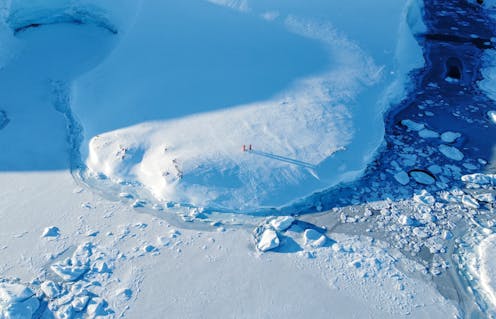
Ice loss in Antarctica and its impact on the planet – sea level rise, changes to ocean currents and disturbance of wildlife and food webs – has been in the news a lot lately. All of these threats were likely on the minds of the delegates to the annual Antarctic Treaty Consultative Meeting, which finishes up today in Milan, Italy.

This meeting is where decisions are made about the continent’s future. These decisions rely on evidence from scientific research. Moreover, only countries that produce significant Antarctic research – as well as being parties to the treaty – get to have a final say in these decisions.

Our new report – published as a preprint through the University of the Arctic – shows the rate of research on the Antarctic and Southern Ocean is falling at exactly the time when it should be increasing. Moreover, research leadership is changing, with China taking the lead for the first time.

This points to a dangerous disinvestment in Antarctic research just when it is needed, alongside a changing of the guard in national influence. Antarctica and the research done there are key to everyone’s future, so it’s vital to understand what this change might lead to.

Why is Antarctic research so important?

With the Antarctic region rapidly warming, its ice shelves destabilising and sea ice shrinking, understanding the South Polar environment is more crucial than ever.

Ice loss in Antarctica not only contributes to sea level rise, but impacts wildlife habitats and local food chains. It also changes the dynamics of ocean currents, which could interfere with global food webs, including international fisheries that supply a growing amount of food.

Research to understand these impacts is vital. First, knowing the impact of our actions – particularly carbon emissions – gives us an increased drive to make changes and lobby governments to do so.

Second, even when changes are already locked in, to prepare ourselves we need to know what these changes will look like.

And third, we need to understand the threats to the Antarctic and Southern Ocean environment to govern it properly. This is where the treaty comes in.

What is the Antarctic Treaty?

The region below 60 degrees south is governed by the 1959 Antarctic Treaty, along with subsequent agreements. Together they are known as the Antarctic Treaty System.

Fifty-eight countries are parties to the treaty, but only 29 of them – called consultative parties – can make binding decisions about the region. They comprise the 12 original signatories from 1959, along with 17 more recent signatory nations that produce substantial scientific research relating to Antarctica.

This makes research a key part of a nation’s influence over what happens in Antarctica.

For most of its history, the Antarctic Treaty System has functioned remarkably well. It maintained peace in the region during the Cold War, facilitated scientific cooperation, and put arguments about territorial claims on indefinite hold. It indefinitely forbade mining, and managed fisheries.

Lately, however, there has been growing dysfunction in the treaty system.

Environmental protections that might seem obvious – such as marine protected areas and special protections for threatened emperor penguins – have stalled.

Because decisions are made by consensus, any country can effectively block progress. Russia and China – both long-term actors in the system – have been at the centre of the impasse.


Read more:
Antarctic summer sea ice is at record lows. Here’s how it will harm the planet – and us


What did our report find?

Tracking the amount of Antarctic research being done tells us whether nations as a whole are investing enough in understanding the region and its global impact.

It also tells us which nations are investing the most and are therefore likely to have substantial influence.

Our new report examined the number of papers published on Antarctic and Southern Ocean topics from 2016 to 2024, using the Scopus database. We also looked at other factors, such as the countries affiliated with each paper.

The results show five significant changes are happening in the world of Antarctic research.

  • The number of Antarctic and Southern Ocean publications peaked in 2021 and then fell slightly yearly through to 2024.
  • While the United States has for decades been the leader in Antarctic research, China overtook them in 2022.
  • If we look only at the high-quality publications (those published in the best 25% of journals) China still took over the US, in 2024.
  • Of the top six countries in overall publications (China, the US, the United Kingdom, Australia, Germany and Russia) all except China have declined in publication numbers since 2016.
  • Although collaboration in publications is higher for Antarctic research than in non-Antarctic fields, Russia, India and China have anomalously low rates of co-authorship compared with many other signatory countries.

Why is this research decline a problem?

A recent parliamentary inquiry in Australia emphasised the need for funding certainty. In the UK, a House of Commons committee report considered it “imperative for the UK to significantly expand its research efforts in Antarctica”, in particular in relation to sea level rise.

US commentators have pointed to the inadequacy of the country’s icebreaker infrastructure. The Trump administration’s recent cuts to Antarctic funding are only likely to exacerbate the situation. Meanwhile China has built a fifth station in Antarctica and announced plans for a sixth.

Given the nation’s population and global influence, China’s leadership in Antarctic research is not surprising. If China were to take a lead in Antarctic environmental protection that matched its scientific heft, its move to lead position in the research ranks could be positive. Stronger multi-country collaboration in research could also strengthen overall cooperation.

But the overall drop in global Antarctic research investment is a problem however you look at it. We ignore it at our peril.

The Conversation

Elizabeth Leane receives funding from the Australian Research Council, the Dutch Research Council, the Council on Australian and Latin American Relations DFAT and HX (Hurtigruten Expeditions). She has received in-kind support from Hurtigruten Expeditions in the recent past. The University of Tasmania is a member of the UArctic, which has provided support for this project.

Keith Larson is affiliated with the UArctic and European Polar Board. The UArctic paid for the development and publication of this report. The UArctic Thematic Network on Research Analytics and Bibliometrics conducted the analysis and developed the report. The Arctic Centre at Umeå University provided in-kind support for staff time on the report.

ref. Antarctic research is in decline, and the timing couldn’t be worse – https://theconversation.com/antarctic-research-is-in-decline-and-the-timing-couldnt-be-worse-260197