Why journalists are reluctant to call Trump an authoritarian – and why that matters for democracy

Source: The Conversation – USA – By Karrin Vasby Anderson, Professor of Communication Studies, Colorado State University

A free election can still result in authoritarian rule. Photo illustration: Douglas Rissing, iStock/Getty Images Plus

In an authoritarian state, the leader engages in unconstitutional or undemocratic practices for the purpose of consolidating power.

Key components of authoritarianism include rejecting democratic rules; denying the legitimacy of opponents; tolerating or encouraging political violence; and curtailing the civil liberties of opponents.

Since he took office for a second time, President Donald Trump has sent National Guard troops to Los Angeles and Washington, named other cities run by Democrats as targets for military intervention, deployed masked and unidentifiable agents in immigration raids, explicitly threatened the city of Chicago with a military invasion and used government power to persecute his perceived political enemies.

But many journalistic outlets have yet to call him what he is – an authoritarian.

As a political communication scholar, I study how media framing shapes people’s understanding of the world.

Because authoritarianism is most visible in hindsight, people often don’t recognize it until it’s too late. Erica Chenoweth, a Harvard political scientist, notes that when it comes to democratic backsliding, “there are no bright lines … people often find out the world they’re in after the fact.”

That’s why it’s particularly important for journalists to label authoritarians as such when the evidence warrants. In Trump’s case, I believe the U.S. is well past that point.

A group of armed soldiers walk in front of a building on which hangs a large banner of Donald Trump.
Armed National Guard soldiers patrol near the Labor Department in Washington, where a banner of President Donald Trump is displayed, Aug. 26, 2025.
AP Photo/J. Scott Applewhite

Trump’s authoritarianism

Scholars with expertise in authoritarianism have been sounding the alarm about Trump for years.

Steven Levitsky and Daniel Ziblatt’s book “How Democracies Die” describes how, during the 2016 campaign and his first presidential term, Trump exhibited the key indicators of authoritarian behavior. He undermined the legitimacy of elections Republicans lost, baselessly described his rivals as criminals, refused to unambiguously condemn violence committed by his supporters, and threatened to punish critics and members of the media.

Levitsky and Ziblatt argue that “no other major presidential candidate in modern U.S. history, including Richard Nixon, has demonstrated such a weak public commitment to constitutional rights and democratic norms.”

That intensified when Trump returned to office in 2025.

Levitsky and Lucan A. Way documented Trump’s “path to American authoritarianism” for the journal Foreign Affairs in early 2025. In March, Levitsky told New York magazine that things were going worse than even he expected, asserting, “We’re pretty screwed.”

Levitsky is not alone in that view. In a February 2025 survey of political scientists conducted by Bright Line Watch – an academic organization that researches democratic health – the percentage of scholars plummeted who said that the U.S. “mostly or fully” meets the standard for democratic health.

That was before Trump, via social media, promised to go to war in Chicago. When asked about his post, Trump said, “We’re not going to war. We’re going to clean up our cities,” but he did not back away from the intent to deploy troops against the wishes of Illinois Governor JB Pritzker.

Pritzker responded to Trump’s post by noting, “This is not a joke. This is not normal.”

On Sept. 7, 2025, New York Times opinion columnist Ezra Klein itemized some of Trump’s authoritarian actions, concluding, “This is not just how authoritarianism happens. This is authoritarianism happening.”

A social media post with President Trump dressed as a character from Apocalypse Now.
President Donald Trump’s Sept. 7 post threatening the city of Chicago with federal intervention.
Truth Social Donald Trump account

What journalists have been saying

Although other opinion journalists like Jamelle Bouie, M. Gessen, Jonathan Chait and nearly every MSNBC anchor have been labeling Trump an authoritarian for some time, much hard news coverage of the Trump administration has not.

When Trump deployed troops to Washington, The Atlantic’s Quinta Jurecic dismissed it as “farcical” and “not a likely prelude to full authoritarian takeover.”

A CNN analysis similarly minimized the action as a “gambit,” a “distraction” and a “neat political trick.” CNN characterized concerns about authoritarianism as “hyperbolic warnings of looming tyranny that circulate all day on liberal media programs — whatever Trump does” and asserted that such reports “don’t really help voters understand what is going on.”

The New York Times’ Aug. 3 story by Peter Baker on Trump’s “tendency to suppress facts he doesn’t like and promote his own version of reality” bore a headline that read “Trump’s Efforts to Control Information Echo an Authoritarian Playbook,” suggesting that his actions were authoritarian without applying the label to Trump directly.

During the April 14, 2025, broadcast of CNN News Central, anchor Jessica Dean spoke with Nikolas Bowie, a Harvard Law School professor participating in a lawsuit against the Trump administration.

Bowie repeatedly called Trump an authoritarian for illegally freezing federal research funding awarded to Harvard.

When Dean noted that the “Trump administration says it’s doing all of this in an effort to combat antisemitism on campus,” Bowie responded that “antisemitism is really just a pretext for what is really an authoritarian attack on higher education.” Federal Judge Allison Burroughs later agreed with that interpretation in her ruling against the Trump administration.

Dean, however, sidestepped that interpretation, saying, “What I’m hearing is you think that enough was done to combat antisemitism, that this is about something else.”

A screenshot of a headline that reads 'Do Trump's D.C. moves echo an authoritarian playbook?'
The headline on a recent NPR story, echoing other journalism outlets’ use of the terms ‘echo’ and ‘authoritarian playbook.’
NPR

Competitive authoritarianism

There are reasons why journalistic outlets may hesitate to identify the “something else” as authoritarianism, or portray it as a looming threat rather than a current danger.

Trump’s propensity to sue journalists, and large media corporations’ decisions to settle even when the law was on their side, have likely made journalists and editors hesitant to describe Trump as an authoritarian.

And the imperative for balance sometimes results in a “both sides-ism” that misrepresents what authoritarianism actually looks like.

When California Gov. Gavin Newsom gave a speech asserting Trump’s military response to immigration protests in California was an assault on democracy, the New York Times covered it, quoting Newsom at length about the danger Trump presented. The article also quoted Republicans who alleged that Newsom’s public health directives during the COVID-19 pandemic made him “the ultimate authoritarian.”

But the particular nature of the authoritarianism the U.S is facing in the 21st century also plays a role.

Levitsky and Way have written about “competitive authoritarianism,” a new version of authoritarianism that doesn’t look like 20th-century fascism.

Many laypeople associate the word authoritarianism with military dictatorships and totalitarian rule. In competitive authoritarian regimes, however, there’s a constant push and pull between democratic and autocratic impulses. Levitsky and Way write that elections are held, but they may not be fair. The authoritarian regime uses power gained democratically to break democratic norms, undermine democratic institutions and tilt the playing field in its own favor.

Constraining free speech

Journalistic norms of independence can pressure even ethical journalists into acquiescence to competitive authoritarianism because they want to avoid looking partisan when all coverage that falls outside the authoritarian’s approved message gets characterized as resistance.

Paramount settled what one free speech advocate described as a “widely derided lawsuit brought by Donald Trump against ’60 Minutes,’” and CBS recently pledged to stop editing recorded interviews on “Face the Nation” after complaints lodged by Homeland Security Secretary Kristi Noem.

The Paramount and CBS cases suggest that, left unchallenged, a competitive authoritarian leader will use their leverage to influence what should be independent journalism.

Words matter. And how a democratic society responds to its leaders can make the difference between a free society and one in which a leader increasingly suppresses the voices, rights and will of the governed.

The Conversation

Karrin Vasby Anderson does not work for, consult, own shares in or receive funding from any company or organization that would benefit from this article, and has disclosed no relevant affiliations beyond their academic appointment.

ref. Why journalists are reluctant to call Trump an authoritarian – and why that matters for democracy – https://theconversation.com/why-journalists-are-reluctant-to-call-trump-an-authoritarian-and-why-that-matters-for-democracy-263778

Bail reforms across the US have shown that releasing people pretrial doesn’t harm public safety

Source: The Conversation – USA – By Henry F. Fradella, Professor of Criminology and Criminal Justice, Arizona State University

Nine of every 10 detained defendants in the U.S. remain in jail awaiting trial because they cannot pay bail money. AP Photo/Rich Pedroncelli, File

President Donald Trump recently signed two executive orders targeting “cashless bail,” the policies that permit the release of people arrested for crimes pending trial without requiring them to pay money.

One executive order directs arrestees in Washington, D.C. to be “held in Federal custody to the fullest extent permissible under applicable law.” The other order calls for the withholding of federal funds to states that “substantially eliminated cash bail as a potential condition of pretrial release from custody” for many offenses.

Cashless bail does not mean that everyone is simply released unconditionally to await trial. Instead, judges have the ability to detain people who pose a specific threat to another person or the community. And they can impose conditions on those who are released, including stringent measures like electronic monitoring.

Trump has criticized cashless bail policies for threatening public safety because they can release dangerous people from detention.

As legal and criminal justice scholars, we have studied bail reforms across the United States.

We have found that jurisdictions that reduce reliance on cash bail can maintain public safety. And they can also curtail mass pretrial incarceration that overwhelmingly locks up people who are too poor to afford bail. That includes three jurisdictions that we examine in detail below: Washington, D.C., New Jersey and Illinois.

The rise of bail bonds

Bail is a promise by an accused person to show up at court hearings in exchange for being released from custody pending the resolution of criminal charges.

In many U.S. jurisdictions, however, people pledge money or property as collateral for their pretrial release. But some people are released unconditionally, referred to as release on their own recognizance. Others are denied pretrial release altogether because they pose a risk of flight, a risk of failing to appear, or pose a danger to the community.

Historically, the bail system worked on promises and one’s reputation, not money. Money bail became more common around the turn of the 20th century with the rise of commercial bail bonds, in which a bail bond business would front the bail money, charging the arrestee a portion of the bail amount as a fee.

This created a system in which people with money could buy their pretrial freedom for many crimes – even serious felonies. Conversely, between 60% and 90% of people remained jailed despite the availability of bail bonds. This was not because they were dangerous, but because they lacked the financial resources to come up with the 10% of their bail amount to purchase their pretrial freedom.

The problems with cash bail

On any given day, approximately 664,000 people are locked up in jails in the United States. Only about 30% of these people are serving sentences following criminal convictions. The remaining 70% in jail are awaiting trial.

Typically, this is not because a court has judged them a risk to public safety. And usually it’s not because a judge decided they are unlikely to appear at scheduled court hearings.

Instead, they remain in jail because they cannot pay the money bail that has been set in their cases. This can have serious or even tragic consequences, such as lost homes and jobs, and even suicides. Indeed, suicide is the leading cause of death in jails, and pretrial detainees are six times more likely to die by suicide than those serving jail time after convictions.

A fluorescent sign reads 'bail bonds.'
In 2017, the jailing of people who could not afford bail cost U.S. taxpayers $38 million daily.
AP Photo/Kathy Willens, File

A 2012 study in New York City found that “even when bail is set comparatively low – at $500 or less, as it is in one-third of nonfelony cases – only 15% of defendants are able to come up with the money to avoid jail.” In 2017, the jailing of people who could not afford bail cost taxpayers US$38 million each day – an amount that exceeds $50 million today, adjusted for inflation.

And it has allowed commercial bail businesses – and the nine insurance companies that back the roughly 30 corporations that underwrite more than $14 billion in bail bonds issued each year – to earn profits in excess of $2.4 billion annually.

Conversely, money bail systems allow people with financial means, even those who might be dangerous or pose a genuine risk of flight, to be released because they can afford to post bail.

Bail reform in Washington

Washington abolished cash bail in the early 1990s. The city replaced it with a system that overwhelmingly pairs pretrial release with levels of supervision tied to the risk that a court determines a defendant might pose. As a result, roughly 87% of all people arrested in Washington are released pending trial without needing to pay or pledge any money.

Despite the lack of money bail, the city has experienced high court appearance rates and low reoffending rates. Between 2019 and 2024, 89% of defendants awaiting trial in the city showed up to their scheduled court appearances – and 90% remained arrest-free. Even among those accused of violent offenses, 98% were not rearrested for violent crimes while on pretrial release.

Washington shows that when people are given the tools and reminders they need, they are overwhelmingly likely to comply with court obligations. That includes phone calls, text messages and email reminders about court dates or access to pretrial services. Moreover, these results illustrate that alternatives to cash bail can function effectively, without compromising public safety.

The Illinois and New Jersey experiences

New Jersey overhauled its bail system
in 2017 by virtually eliminating cash bail. The state replaced it with a framework that relies on judicial assessments and pretrial monitoring to decide whether defendants should be detained or released.

Within two years of New Jersey’s bail reforms, the state’s pretrial jail population decreased by roughly 44%. Most notably, the state did this by reducing the number of defendants held in jail for more than a day or two.

This reduction was not accompanied by an increase in failures to appear in court or in new criminal charges.

A recent Drexel University–Boston University study echoed those findings, confirming that the decline in incarceration came without increases in gun violence. The study also found that the number of people held on low bail amounts – $2,500 or less – fell sharply, from more than 12% of the jail population in 2012 to just 0.4% by 2021.

Early data analyses after Illinois eliminated cash bail in September 2023 show that jail populations declined with no uptick in failure-to-appear rates.

Further, violent crime and property crime rates in Cook County have decreased since the law took effect, including a 15% reduction in Chicago.

Broader considerations

In 2024, the Brennan Center for Justice, a public policy institute, analyzed data from 33 cities, comparing 22 that had enacted bail reforms with 11 that had not. The researchers found that there was no relationship between bail reform and crime rates. When combined with the data from Washington, New Jersey and Illinois, it seems clear that jurisdictions can protect public safety while also reducing unnecessary and harmful pretrial detention.

In New Jersey, for example, thousands of people – many from communities of color – were able to remain employed and housed while awaiting trial. Rather than destabilizing people’s lives by unnecessary incarceration, the state contributed to greater stability for them, their families and communities.

The question moving forward is how to build on these successes.

As policymakers consider next steps, these empirically supported results can provide guidance. They provide evidence that cashless bail is not a threat but an opportunity for fairer, smarter justice.

The Conversation

The authors do not work for, consult, own shares in or receive funding from any company or organization that would benefit from this article, and have disclosed no relevant affiliations beyond their academic appointment.

ref. Bail reforms across the US have shown that releasing people pretrial doesn’t harm public safety – https://theconversation.com/bail-reforms-across-the-us-have-shown-that-releasing-people-pretrial-doesnt-harm-public-safety-264448

Social media is teaching children how to use AI. How can teachers keep up?

Source: The Conversation – Canada – By Johanathan Woodworth, Assistant Professor, Education, Mount Saint Vincent University

Artificial intelligence (AI) is reshaping how students write essays, practise languages and complete assignments. Teachers are also experimenting with AI for lesson planning, grading and feedback. The pace is so fast that schools, universities and policymakers are struggling to keep up.

What often gets overlooked in this rush is a basic question: how are students and teachers actually learning to use AI?


Read more:
AI in schools — here’s what we need to consider


Right now, most of this learning happens informally. Students trade advice on TikTok or Discord, or even ask ChatGPT for instructions. Teachers swap tips in staff rooms or glean information from LinkedIn discussions.

These networks spread knowledge quickly but unevenly, and they rarely encourage reflection on deeper issues such as bias, surveillance or equity. That is where formal teacher education could make a difference.

Vox looks at how AI is impacting education.

Beyond curiosity

Research shows that educators are under-prepared for AI. A recent study found many lack skills to assess the reliability and ethics of AI tools. Professional development often stops at technical training and neglects wider implications. Meanwhile, uncritical use of AI risks amplifying bias and inequity.

In response, I designed a professional development module within a graduate-level course at Mount Saint Vincent University. Teacher candidates engaged in:

  • Hands-on exploration of AI for feedback and plagiarism detection;
  • Collaborative design of assessments that integrated AI tools;
  • Case analysis of ethical dilemmas in multilingual classrooms.

The goal was not simply to learn how to use AI, but to move from casual experimentation to critical engagement.

Critical thinking for future teachers

During the sessions, patterns quickly emerged. Teacher candidates were enthusiastic about AI to begin with, and remained so. Participants reported a stronger ability to evaluate tools, recognize bias and apply AI thoughtfully.

I also noticed that the language around AI shifted. Initially, teacher candidates were unsure about where to start, but by the end of the sessions, they were confidently using terms like “algorithmic bias” and “informed consent” with confidence.

Teacher candidates increasingly framed AI literacy as professional judgment, connected to pedagogy, cultural responsiveness and their own teacher identity. They saw literacy not only as understanding algorithms but also as making ethical classroom decisions.

The pilot suggests enthusiasm is not the missing ingredient. Structured education gave teacher candidates the tools and vocabulary to think critically about AI.

Inconsistent approaches

These classroom findings mirror broader institutional challenges. Universities worldwide have adopted fragmented policies: some ban AI, others cautiously endorse it and many remain vague. This inconsistency leads to confusion and mistrust.

Alongside my colleague Emily Ballantyne, we examined how AI policy frameworks can be adapted for Canadian higher education. Faculty recognized AI’s potential but voiced concerns about equity, academic integrity and workload.

We proposed a model that introduced a “relational and affective” dimension, emphasizing that AI affects trust and the dynamics of teaching relationships, not only efficiency. In practice, this means that AI not only changes how assignments are completed, but also reshapes the ways students and instructors relate to one another in class and beyond.

Put differently, integrating AI in classrooms reshapes how students and teachers relate, and how educators perceive their own professional roles.

When institutions avoid setting clear policies, individual instructors are left to act as ad hoc ethicists without institutional backing.

Embedding AI literacy

Clear policies alone are not enough. For AI to genuinely support teaching and learning, institutions must also invest in building the knowledge and habits that sustain critical use. Policy frameworks provide direction, but their value depends on how they shape daily practice in classrooms.

  1. Teacher education must lead on AI literacy. If AI reshapes reading, writing and assessment, it cannot remain an optional workshop. Programs must integrate AI literacy into curricula and outcomes.

  2. Policies must be clear and practical. Teacher candidates repeatedly asked: “What does the university expect?” Institutions should distinguish between misuse (ghostwriting) and valid uses (feedback support), as recent research recommends.

  3. Learning communities matter. AI knowledge is not mastered once and forgotten; it evolves as tools and norms change. Faculty circles, curated repositories and interdisciplinary hubs can help teachers share strategies and debate ethical dilemmas.

  4. Equity must be central. AI tools embed biases from their training data and often disadvantage multilingual learners. Institutions should conduct equity audits and align adoption with accessibility standards.

Supporting students and teachers

Public debates about AI in classrooms often swing between two extremes: excitement about innovation or fear of cheating. Neither captures the complexity of how students and teachers are actually learning AI.

Informal learning networks are powerful but incomplete. They spread quick tips, but rarely cultivate ethical reasoning. Formal teacher education can step in to guide, deepen and equalize these skills.

When teachers gain structured opportunities to explore AI, they shift from passive adopters to active shapers of technology. This shift matters because it ensures educators are not merely responding to technological change, but actively directing how AI is used to support equity, pedagogy and student learning.

That is the kind of agency education systems must nurture if AI is to serve, rather than undermine, learning.

The Conversation

Johanathan Woodworth does not work for, consult, own shares in or receive funding from any company or organisation that would benefit from this article, and has disclosed no relevant affiliations beyond their academic appointment.

ref. Social media is teaching children how to use AI. How can teachers keep up? – https://theconversation.com/social-media-is-teaching-children-how-to-use-ai-how-can-teachers-keep-up-264727

Where does your glass come from?

Source: The Conversation – USA (2) – By Aki Ishida, Professor and Director, College of Architecture and Graduate School of Architecture and Urban Design, Washington University in St. Louis

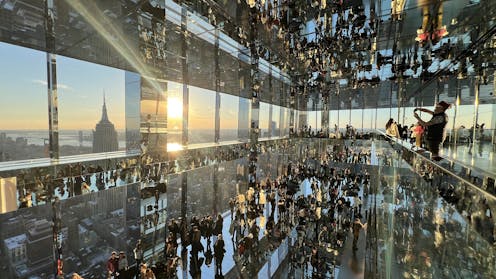
Visitors get the sensation of floating above Manhattan at the Summit at One Vanderbilt. These rooms are built with low-iron glass, made with ultrapure silica sand. Benno Schwinghammer/picture alliance via Getty Images

The word “local” has become synonymous with sustainability, whether it’s food, clothes or the materials used to construct buildings. But while consumers can probably go to a local lumberyard to buy lumber from sustainably grown trees cut at nearby sawmills, no one asks for local glass.

If they did, it would be hard to give an answer.

The raw materials that go into glass – silica sand, soda ash and limestone – are natural, but the sources of those materials are rarely known to the buyer.

The process by which sand becomes sheets of glass is often far from transparent. The sand, which makes up over 70% of glass, could come from a faraway riverbed, lakeshore or inland limestone outcrop. Sand with at least 95% silica content is called silica sand, and only the purest is suitable for architectural glass production. Such sand is found in limited areas.

Rock formations stick up from sandy ground next to a lake
Klondike Park, outside St. Louis, was once a mine for St. Peter sandstone, used in glass production. This is one of the few U.S. locations with 99% pure silica.
Aki Ishida

If the glass is colorless, its potential sources are even more limited, because colorless low-iron glass – popularized by Apple’s flagship stores and luxury towers around the world – requires 99% pure silica sand.

Glass production in Venice

The mysteries of glass production have historic precedent that can be traced back to trade secrets of the Venetian Empire.

Venice, particularly the island of Murano, became the center for glass production largely due to its strategic location for importing raw materials and production know-how and exporting coveted glass objects.

From the 11th to the 16th centuries, the secrets of glassmaking were protected by the Venetians until three glassmakers were smuggled out by King Louis XIV of France, who applied the technology to create the Palace of Versailles’ Hall of Mirrors.

A large hall lined with mirrors, with a painted ceiling, statutes and large chandeliers.
The Palace of Versailles’ famed Hall of Mirrors was made by glass artisans trained by the Venetians.
Myrabella/Wikimedia Commons, CC BY-SA

Venice was an otherwise unlikely location for glassmaking.

Neither the primary materials of sand and soda ash (sodium carbonate) nor the firewood for the medieval Venetian glassmakers were found in the city’s immediate vicinity. They were transported from the riverbeds of the Ticino River in Switzerland and the Agide River, which flows from the Austria-Switzerland border to the Adriatic Sea south of Venice. Soda ash, which is needed to lower the melting point of silica sand, was brought from Syria and Egypt.

So Venetian glass production was not local; it was dependent on precious resources imported from afar on ships.

An engraving of people working on glass factory, with a large furnace in the center
Glassmaking has been a labor- and fuel-intensive process. This engraving from 1877 shows the production of glass cylinders, which are cut and unrolled to make glass sheets.
L’Illustrazione Italiana, No 51/De Agostini via Getty Images

Rising demand for low-iron, seamless glass

In the past few decades, low-iron glass, known for its colorlessness, has become the contemporary symbol of high-end architecture. The glass appears to disappear.

Low-iron glass is made from ultrapure sand that is low in iron oxide. Iron causes the green tint seen in ordinary glass. In architecture, low-iron glass doesn’t affect the performance – only the appearance. But it is prized.

Two men wearing gloves roll large sheets of clear glass, taller than themselves, on a cart.
Most glass has a greenish tint, caused by iron oxide in the sand. Low-iron glass is more clear, but the ingredients come from exclusive sand mines, which can mean more transportation emissions, particularly for large panels produced in a limited number of factories.
Bluecinema/E+ via Getty Images

In the U.S., this type of sand is found in a few locations, primarily in Minnesota, Wisconsin, Illinois and Missouri, where sand as white and fine as sugar – thus called saccharoidal – is mined from St. Peter sandstone. Other locations where it can be found around the world include Queensland in Australia and parts of China. Less pure sand can be purified by methods such as acid washing or magnetic separation.

Perhaps no corporation has popularized low-iron and seamless glass in architecture more than the technology giant Apple.

Glass has become fundamentally linked with Apple’s products and architecture, including its flagship stores’ expensive and daring experiments in architectural uses of glass.

Apple’s first showroom, completed in Soho in New York in 2002, showcased all-glass stairs that were strengthened with hurricane- and bullet-resistant plastic interlayers sandwiched between five sheets of glass. The treads attach to all glass walls with a hockey puck-size titanium hardware, making both the glass stairs and the shoppers appear to float.

A large glass cube lit up at night with glowing Apple logos on the sides and stairs leading down to the store below.
Apple’s New York flagship store, dubbed the Cube, was built in 2006 with 90 panels of low-iron glass, then rebuilt in 2011 with 15 panels.
Ben Hider/Getty Images

The company’s iconic flagship store near New York’s Central Park is an all-glass cube measuring 32½ feet (10 meters) on each side and serving as a vestibule to the store below. The first version was completed in 2006 using 90 panels, which was a technical feat. Then, in 2011, Apple reconstructed the cube in the same location, same size, but with only 15 panels, minimizing the number of seams and hardware while maximizing transparency.

Today, low-iron glass has become the standard for high-profile architecture and those who can afford it, including the “pencil towers” in Manhattan’s Billionaires’ Row.

A view of part of the NYC skyline across Central Park, with several skinny towers sticking up on their own.
New high-rises like the supertall towers in New York’s Billionaire’s Row are largely clad floor to ceiling in glass.
Aerial_Views/E+ via Getty Images

Glass’s climate impact

Glass walls common in high-rise buildings today have other drawbacks. They help to heat up the room during increasingly hot summers and contribute to heat loss in winter, increasing dependence on artificial cooling and heating.

The glassmaking process is energy intensive and relies on nonrenewable resources.

To bring sand to its molten state, the furnace must be heated to over 2,700 degrees Fahrenheit (1,500 degrees Celisus) for as long as 50 hours, which requires burning fossil fuels such as natural gas, releasing greenhouse gases. Once heated to that temperature, the furnace runs 24/7 and is rarely shut down.

Glass manufacturer Pilkington shows how glass is made.

The soda ash and limestone also release carbon dioxide during melting. Moreover, glass production requires mining or producing nonrenewable natural resources such as sand, soda ash, lime and fuel. Transporting them further increases emissions.

Production and fabrication of extra-large glass panels rely on specialized equipment and occur only at a limited number of plants in the world, meaning transportation increases the carbon footprint.

Architectural glass is also difficult to recycle, largely due to the labor involved in separating glass from the building assembly.

Although glass is touted as infinitely recyclable, only 6% of architectural glass is downcycled into glass products that require less purity and precision, and almost none is recycled into architectural glass. The rest ends up in landfills.

The increasing demand for glass that is colorless, extra large and seamless contributes to glass’s sustainability problem.

Sand pours through a person's fingers
This 99% pure silica, a sugarlike sand, comes from a St. Peter sandstone mine once used for glassmaking. It’s now Klondike Park in St. Charles County, Mo.
Aki Ishida

How can we make glass more sustainable?

There are ways to reduce glass’s environmental footprint.

Researchers and companies are working on new types of glass that could lower its climate impact, such as using materials that lower the amount of heat necessary to make glass. Replacing natural gas, typically used in glassmaking, with less-polluting power sources can also reduce emissions.

Low-e coatings, a thin coat of silver sprayed onto a glass surface, can help reduce the amount of heat that reaches a building’s interior by reflecting both the visible light and heat, but the coating can’t fully eliminate solar heat gain.

People can also alter their standards and accept smaller and less ultraclear panels. Think of the green tint not as impure but natural.

The Conversation

Aki Ishida does not work for, consult, own shares in or receive funding from any company or organization that would benefit from this article, and has disclosed no relevant affiliations beyond their academic appointment.

ref. Where does your glass come from? – https://theconversation.com/where-does-your-glass-come-from-263421

How does AI affect how we learn? A cognitive psychologist explains why you learn when the work is hard

Source: The Conversation – USA (2) – By Brian W. Stone, Associate Professor of Cognitive Psychology, Boise State University

When OpenAI released “study mode” in July 2025, the company touted ChatGPT’s educational benefits. “When ChatGPT is prompted to teach or tutor, it can significantly improve academic performance,” the company’s vice president of education told reporters at the product’s launch. But any dedicated teacher would be right to wonder: Is this just marketing, or does scholarly research really support such claims?

While generative AI tools are moving into classrooms at lightning speed, robust research on the question at hand hasn’t moved nearly as fast. Some early studies have shown benefits for certain groups such as computer programming students and English language learners. And there have been a number of other optimistic studies on AI in education, such as one published in the journal Nature in May 2025 suggesting that chatbots may aid learning and higher-order thinking. But scholars in the field have pointed to significant methodological weaknesses in many of these research papers.

Other studies have painted a grimmer picture, suggesting that AI may impair performance or cognitive abilities such as critical thinking skills. One paper showed that the more a student used ChatGPT while learning, the worse they did later on similar tasks when ChatGPT wasn’t available.

In other words, early research is only beginning to scratch the surface of how this technology will truly affect learning and cognition in the long run. Where else can we look for clues? As a cognitive psychologist who has studied how college students are using AI, I have found that my field offers valuable guidance for identifying when AI can be a brain booster and when it risks becoming a brain drain.

Skill comes from effort

Cognitive psychologists have argued that our thoughts and decisions are the result of two processing modes, commonly denoted as System 1 and System 2.

The former is a system of pattern matching, intuition and habit. It is fast and automatic, requiring little conscious attention or cognitive effort. Many of our routine daily activities – getting dressed, making coffee and riding a bike to work or school – fall into this category. System 2, on the other hand, is generally slow and deliberate, requiring more conscious attention and sometimes painful cognitive effort, but often yields more robust outputs.

We need both of these systems, but gaining knowledge and mastering new skills depend heavily on System 2. Struggle, friction and mental effort are crucial to the cognitive work of learning, remembering and strengthening connections in the brain. Every time a confident cyclist gets on a bike, they rely on the hard-won pattern recognition in their System 1 that they previously built up through many hours of effortful System 2 work spent learning to ride. You don’t get mastery and you can’t chunk information efficiently for higher-level processing without first putting in the cognitive effort and strain.

I tell my students the brain is a lot like a muscle: It takes genuine hard work to see gains. Without challenging that muscle, it won’t grow bigger.

What if a machine does the work for you?

Now imagine a robot that accompanies you to the gym and lifts the weights for you, no strain needed on your part. Before long, your own muscles will have atrophied and you’ll become reliant on the robot at home even for simple tasks like moving a heavy box.

AI, used poorly – to complete a quiz or write an essay, say – lets students bypass the very thing they need to develop knowledge and skills. It takes away the mental workout.

Using technology to effectively offload cognitive workouts can have a detrimental effect on learning and memory and can cause people to misread their own understanding or abilities, leading to what psychologists call metacognitive errors. Research has shown that habitually offloading car navigation to GPS may impair spatial memory and that using an external source like Google to answer questions makes people overconfident in their own personal knowledge and memory.

Girl doing school with phone and notebook.
Learning and mastery come from effort, whether that’s done with a powerful chatbot or AI tutor or not, but educators and students need to resist outsourcing that work.
Francesco Carta fotografo via Getty Images

Are there similar risks when students hand off cognitive tasks to AI? One study found that students researching a topic using ChatGPT instead of a traditional web search had lower cognitive load during the task – they didn’t have to think as hard – and produced worse reasoning about the topic they had researched. Surface-level use of AI may mean less cognitive burden in the moment, but this is akin to letting a robot do your gym workout for you. It ultimately leads to poorer thinking skills.

In another study, students using AI to revise their essays scored higher than those revising without AI, often by simply copying and pasting sentences from ChatGPT. But these students showed no more actual knowledge gain or knowledge transfer than their peers who worked without it. The AI group also engaged in fewer rigorous System 2 thinking processes. The authors warn that such “metacognitive laziness” may prompt short-term performance improvements but also lead to the stagnation of long-term skills.

Offloading can be useful once foundations are in place. But those foundations can’t be formed unless your brain does the initial work necessary to encode, connect and understand the issues you’re trying to master.

Using AI to support learning

Returning to the gym metaphor, it may be useful for students to think of AI as a personal trainer who can keep them on task by tracking and scaffolding learning and pushing them to work harder. AI has great potential as a scalable learning tool, an individualized tutor with a vast knowledge base that never sleeps.

AI technology companies are seeking to design just that: the ultimate tutor. In addition to OpenAI’s entry into education, in April 2025 Anthropic released its learning mode for Claude. These models are supposed to engage in Socratic dialogue, to pose questions and provide hints, rather than just giving the answers.

Early research indicates AI tutors can be beneficial but introduce problems as well. For example, one study found high school students reviewing math with ChatGPT performed worse than students who didn’t use AI. Some students used the base version and others a customized tutor version that gave hints without revealing answers. When students took an exam later without AI access, those who’d used base ChatGPT did much worse than a group who’d studied without AI, yet they didn’t realize their performance was worse. Those who’d studied with the tutor bot did no better than students who’d reviewed without AI, but they mistakenly thought they had done better. So AI didn’t help, and it introduced metacognitive errors.

Even as tutor modes are refined and improved, students have to actively select that mode and, for now, also have to play along, deftly providing context and guiding the chatbot away from worthless, low-level questions or sycophancy.

The latter issues may be fixed with better design, system prompts and custom interfaces. But the temptation of using default-mode AI to avoid hard work will continue to be a more fundamental and classic problem of teaching, course design and motivating students to avoid shortcuts that undermine their cognitive workout.

As with other complex technologies such as smartphones, the internet or even writing itself, it will take more time for researchers to fully understand the true range of AI’s effects on cognition and learning. In the end, the picture will likely be a nuanced one that depends heavily on context and use case.

But what we know about learning tells us that deep knowledge and mastery of a skill will always require a genuine cognitive workout – with or without AI.

The Conversation

Brian W. Stone does not work for, consult, own shares in or receive funding from any company or organization that would benefit from this article, and has disclosed no relevant affiliations beyond their academic appointment.

ref. How does AI affect how we learn? A cognitive psychologist explains why you learn when the work is hard – https://theconversation.com/how-does-ai-affect-how-we-learn-a-cognitive-psychologist-explains-why-you-learn-when-the-work-is-hard-262863

40 years ago, the first AIDS movies forced Americans to confront a disease they didn’t want to see

Source: The Conversation – USA (2) – By Scott Malia, Associate Professor of Theatre, College of the Holy Cross

‘Buddies,’ which premiered on Sept. 17, 1985, cost just $27,000 to make. Vinegar Syndrome/Roe Bressan/Frameline Distribution

First it was referred to as a “mysterious illness.” Later it was called “gay cancer,” “gay plague” and “GRID,” an acronym for gay-related immune deficiency. Most egregiously, some called it “4H disease” – shorthand for “homosexuals, heroin addicts, hemophiliacs and Haitians,” the populations most afflicted in the early days.

While these names were ultimately replaced by AIDS – and later, after the virus was identified, by HIV – they reflected two key realities about AIDS at the time: a lack of understanding about the disease and its strong association with gay men.

Although the first report in the mainstream press about AIDS appeared in 1981, the first movies to explore the disease wouldn’t come for four more years.

When the feature film “Buddies” and the television film “An Early Frost” premiered 40 years ago, in the fall of 1985, AIDS had belatedly been breaking into the public consciousness.

Earlier that year, the first off-Broadway plays about AIDS opened: “As Is” by William Hoffman and “The Normal Heart” by writer and activist Larry Kramer. That summer, actor Rock Hudson disclosed that he had AIDS, becoming the first major celebrity to do so. Hudson, who died in October 1985, was a friend of President Ronald Reagan and Nancy Reagan. Reagan, who had been noticeably silent on the subject of the disease, would go on to make his first – albeit brief – public remarks about AIDS in September 1985.

Five days before Reagan’s speech, “Buddies,” an independent film made for US$27,000 and shot in nine days, premiered at the Castro Theatre in San Francisco on Sept. 12, 1985.

A film on the front lines

If you haven’t heard of “Buddies,” that’s not surprising; the film mostly played art houses and festivals before disappearing.

Its filmmaker, Arthur J. Bressan Jr., was best known for his gay pornographic films, although he’d also made documentaries such as “Gay USA.” “Buddies” would go on to reach a wider audience thanks to a 2018 video release by Vinegar Syndrome, a distribution company that focuses on restoring cult cinema, exploitation films and other obscure titles.

It was inspired by the real-life buddies program at the Gay Men’s Health Crisis, an organization Kramer co-founded. At the time, many people dying of the disease had been rejected by family and friends, so a buddy might be the only person who visited a terminal AIDS patient.

The film feels like a play, in that most of the movie takes place in a single room and features just two characters: a naive young gay man named David and a young AIDS patient named Robert. Over the course of the film, the characters open up about their lives and their fears about the growing epidemic. It also includes a sex scene – something other early AIDS films completely avoided – in which David and Robert engage in safer sex.

AIDS packaged for the masses

The remarkably frank and intimate approach to the epidemic in “Buddies” contrasts sharply to the television film “An Early Frost,” which premiered on NBC on Nov. 11, 1985.

The film’s protagonist is a successful Chicago lawyer named Michael who hasn’t come out to his family, much to the distress of his long-term partner, Peter. When Michael finds out he has AIDS, he’s forced to come out to his parents, both as gay and as having AIDS.

Much of the film deals with Michael’s self-acceptance and his attempts to mend his relationships. Yet the production of “An Early Frost” was fraught with concerns about depicting both homosexuality and AIDS. Unlike David and Robert, Michael and Peter show no physical affection – they barely touch each other.

A promotional clip for ‘An Early Frost,’ which drew 34 million viewers when it premiered on NBC.

Knowledge of AIDS was still evolving – a test for HIV was approved in March 1985 – so screenwriters and life partners Daniel Lipman and Ron Cowen went through 13 revisions of the script. The real-life fears and misconceptions about how AIDS could and could not be transmitted were central to the storyline, adding extra pressure to be accurate in the face of evolving understanding of the virus.

Despite losing NBC $500,000 in advertisers, “An Early Frost” drew 34 million viewers and was showered with Emmy nominations the following year.

A quilt of stories emerges

“Buddies” and “An Early Frost” opened up AIDS and HIV as subject matters for film and television.

They begat two lanes of HIV storytelling that continue to this day.

The first is an approach geared to mainstream audiences that tends to avoid controversial issues such as sex or religion and instead focuses on characters who grapple with both the illness and the stigma of the virus.

The second is an indie approach that’s often more confrontational, irreverent and angry at the injustice and indifference AIDS patients faced.

The former approach is seen in 1993’s “Philadelphia,” which earned Tom Hanks his first Oscar. The critically and commercially successful film shares a number of story points with “An Early Frost”: Hanks’ character, a big-city lawyer, finds out he is HIV positive and must confront bias head-on. HIV also features prominently in later films such as “Precious” (2009) and “Dallas Buyers Club” (2013), both of which, like “Philadelphia,” became awards darlings.

The edgier, more critical approach can be seen in the New Queer Cinema movement of the 1990s, a film movement that developed as a response to the epidemic. Gregg Araki’s “The Living End” (1992) is a key film in the movment: It tells the story of two HIV-positive men who become pseudo-vigilantes in the wake of their diagnoses.

In ‘The Living End,’ the HIV-positive protagonists go on a hedonistic rampage to take out their anger at the world.

Somewhere in between is “Longtime Companion” (1990), which was the first film about AIDS to receive a wide release and tracks the impact of the epidemic on a fictional group of gay men throughout the 1980s. The film was written by gay playwright and screenwriter Craig Lucas and directed by Norman Rene, who died of AIDS six years after the film’s release.

Studios still leery

In many ways, television is where the real breakthroughs have happened and continue to happen.

The first television episode to deal with AIDS appeared on the medical drama “St. Elsewhere” in 1983; AIDS was also the subject of episodes in the sitcoms “Mr. Belvedere,” “The Golden Girls” and “Designing Women.” “Killing All the Right People” was the title of the latter’s special episode – a phrase the show’s writer and co-creator Linda Bloodworth-Thomason heard while her mother was being treated for AIDS.

More recently, producer Ryan Murphy has made a cottage industry of representations of queer people, particularly those with HIV. His stage revivals of “The Normal Heart” and Mart Crowley’s 1968 play “The Boys in the Band” were later adapted into films for television and streaming. He also produced “Pose,” a three-season series about drag ball culture in the 1980s that stars queer characters of color, several of whom are HIV positive.

Yet for all of these strides, representations of HIV in film are still hard to come by. In fact, out of the 256 films released by major distributors in 2024, the number of HIV-postive characters amounted to … zero.

Perhaps movie studios are less willing to risk even a character with HIV given the drop in movie theater attendance in the age of streaming.

If you think it’s an exaggeration to suggest that people might not want to be seen going to the theater to watch a film about characters with HIV, the results of a 2021 GLAAD survey may surprise you.

It found that the stigma around HIV is still very high, particularly for HIV-positive people working in schools and hospitals. One-third of respondents were unaware that medication is available to prevent the transmission of HIV. More than half didn’t know that HIV-positive people can reach undetectable status and not transmit the virus to others.

Another important finding from the survey: Only about half of the nonqueer respondents had seen a TV show or film about someone with HIV.

This reflects both the progress made since “Buddies” and “An Early Frost” and also why these films still matter today. They were released at a time when there was almost no cultural representation of HIV, and misinformation and disinformation were rampant. There have been so many advances, in both the treatment of HIV and its visibility in popular culture. That visibility still matters, because there’s still much more than can be done to end the stigma.

The Conversation

Scott Malia does not work for, consult, own shares in or receive funding from any company or organization that would benefit from this article, and has disclosed no relevant affiliations beyond their academic appointment.

ref. 40 years ago, the first AIDS movies forced Americans to confront a disease they didn’t want to see – https://theconversation.com/40-years-ago-the-first-aids-movies-forced-americans-to-confront-a-disease-they-didnt-want-to-see-262421

Doctors are joining unions in a bid to improve working conditions and raise wages in a stressful health care system

Source: The Conversation – USA (3) – By Patrick Aguilar, Managing Director of Health, Washington University in St. Louis

Dr. Maryssa Miller speaks to fellow union members outside George Washington University Hospital in Washington, D.C., in 2024. Maansi Srivastava/The Washington Post via Getty Images

The share of doctors who belong to unions is rising quickly at a time when organized labor is losing ground with other professions. The Conversation U.S. asked Patrick Aguilar, a Washington University in St. Louis pulmonologist and management professor, to explain why the number of physicians joining unions is growing – a trend that appears likely to continue.

How long have there been health care unions?

U.S. nurses first joined labor unions in 1896. Today, about 1 in 5 registered nurses are union members, twice the rate of unionization in all professions.

The first physicians’ union formed in 1934, when hospital residents – doctors in training who tended then, as now, to be paid relatively little and forced to work long hours – organized to demand higher pay and shorter shifts. For the next eight decades, those unions grew slowly.

But the pace has picked up. The share of doctors who belong to unions rose from 5.7% in 2014 to 7.2% in 2019. By 2024, an estimated 8% of physicians were union members.

This swift growth contrasts with declining union membership overall. The share of American workers in unions fell by more than half, from 20.1% to 9.9%, between 1983 and 2024.

Residents and interns are particularly interested in joining unions. Nearly 2 in 3 have said they might want to join one. Membership in the Committee of Interns and Residents, a chapter of Service Employees International Union, rose by nearly 14% to 37,000 between late 2024 and early 2025. By September 2025, the union was saying that its ranks had grown to more than 40,000.

Several other U.S. unions also represent physicians. Doctors Council, which is also affiliated with Service Employees International Union, represents physicians, dentists, optometrists, podiatrists and veterinarians. The Union of American Physicians and Dentists, part of the American Federation of State, County and Municipal Employees, says it has at least 7,000 members.

Aren’t doctors too rich for labor organizing?

Just like labor unions that represent electricians or teachers, unions that represent doctors seek better working conditions, higher pay and better benefits for their members. While the typical U.S. doctor earns nearly US$240,000 a year, about four times what the typical American worker makes, their compensation varies widely depending on their medical specialty. A pediatric surgeon, for example, can earn twice as much as a pediatrician.

Despite their high wages, according to a poll of over 1,000 physicians, as many as 15% of physicians said they had cut back on their personal expenses, and 40% expected to delay retirement for financial reasons. The education and training required to become a doctor is lengthy and expensive, often leading to large amounts of student debt.

Additionally, many physicians are compensated for patient visits and not for work done outside of the exam room. The extra hours needed to document work, address patient concerns and maintain continuing education are often uncompensated, significantly reducing physicians’ effective hourly earnings.

Other unions advocate for higher wages and better conditions in well-compensated professions.

The National Football League Players Association is an example of a union with highly paid members that still advocates for their increased compensation. NFL players now earn a median salary of $860,000.

Baseball players earn even more. They have a median salary of $1.35 million, and all of the players are represented by the Major League Baseball Players Association, a union.

A medical worker looks dejected.
Many doctors are experiencing more stress due to relatively recent workplace changes.
Juanmoni/E+ via GettyImages

Why would doctors join unions?

An American Medical Association survey conducted in 1983 found that 75.8% of physicians were owners of their primary clinical practice. Four decades later, nearly 80% of physicians are employed by health care systems or other corporations.

As employees, physicians are now eligible to unionize and may have an interest in doing so to bargain with employers who set working conditions and compensation.

Residents and fellows, on the other hand, have been employees for much longer because of the structure of their training programs. Residents work longer hours, are paid significantly less and are obligated to complete their training programs in order to attain specialty certification.

These differences help explain the longer history of labor organizing for physician trainees.

Surveys point to several other possible causes besides concerns about employers.

An American Medical Association survey of 13,000 physicians, nurse practitioners and physician assistants in 2022 reflected rates of burnout exceeding 50% in several key specialties. More than half of those responding said they felt undervalued by their employer.

In 2023, the University of Michigan’s Center for Health and Research Transformation surveyed over 29,000 Michigan physicians. About 85% of them said administrative and regulatory requirements were a significant source of workplace stress.

The widespread adoption of electronic health records over the past 25 years, which has improved some aspects of medical diagnosis and treatment, has also given doctors more administrative responsibilities. Doctors spend nearly two additional hours updating electronic health records or doing related administrative tasks for every hour they spend with patients, according to one estimate.

Keeping the records up to date can contribute to burnout.

A doctor is flanked by computer screens and working on a laptop.
Many doctors say that they spend twice as much time dealing with electronic health records as they do with their own patients.
Ariel Skelley/DigitalVision via Getty Images

Are doctors worried about job security?

In recent years, nurse practitioners and physician assistants have taken on responsibilities previously reserved for doctors. Nurse practitioners or physician assistants saw patients for about 1 in 4 medical appointments, according to a 2023 study, up from around 1 in 5 a decade earlier.

Given significant differences in compensation between physicians and other kinds of health care providers, this trend raises concerns about the potential for health care employers to employ fewer doctors to save money on staff salaries.

Separately, there are growing concerns about the potential for the use of artificial intelligence and automation to replace some of the tasks that doctors do today.

Can labor organizing harm patients?

In April 2025, the American College of Physicians, which has 160,000 members, released a position paper with recommendations for responsible collective bargaining for doctors.

This group felt compelled to encourage the ethical engagement of its members in the midst of labor organizing because their work is often lifesaving and can be dangerous to disrupt due to strikes or other labor actions.

No study has empirically evaluated whether a doctor’s union membership affects their patients’ health. However, a 2022 meta-analysis of 17 studies found no significant impact on death rates when health care workers go on strike.

Despite the potential benefits, some doctors remain concerned that unionization may create divides among physicians, interfere with their ability in some cases to negotiate directly with their employers, and add layers of bureaucracy that don’t do patients or medical professionals any good.

Do doctors ever go on strike?

It’s historically been rare in the U.S., but that could be changing.

In January 2025, 70 doctors who belong to the Pacific Northwest Hospital Medicine Association joined thousands of nurses in a strike against Portland, Oregon-based Providence Health after more than a year of failed contract negotiations.

The strike lasted 27 days, delaying some elective procedures and making some emergency room wait times longer. Some patients had to go to other hospitals. The agreement the hospital ultimately reached with physicians boosted pay, expanded sick leave and included a commitment to change staffing models.

In June 2025, picket lines formed outside of four Minnesota health clinics for the first time in the state’s history. Members of the Doctors Council SEIU union were protesting after more than 18 months of failed negotiations for a new contract. The doctors, who all work for the Allina Health chain of hospitals, health clinics and urgent care sites, are seeking higher compensation, smaller workloads and more support staff.

Although no timeline has been announced, union members have authorized a strike if negotiations continue to fail. As of early September 2025, those negotiations were ongoing.

The Conversation

Patrick Aguilar does not work for, consult, own shares in or receive funding from any company or organization that would benefit from this article, and has disclosed no relevant affiliations beyond their academic appointment.

ref. Doctors are joining unions in a bid to improve working conditions and raise wages in a stressful health care system – https://theconversation.com/doctors-are-joining-unions-in-a-bid-to-improve-working-conditions-and-raise-wages-in-a-stressful-health-care-system-259232

Sacred texts and ‘little bells’: The building blocks of Arvo Pärt’s musical masterpieces

Source: The Conversation – USA (3) – By Jeffers Engelhardt, Professor of Music, Amherst College

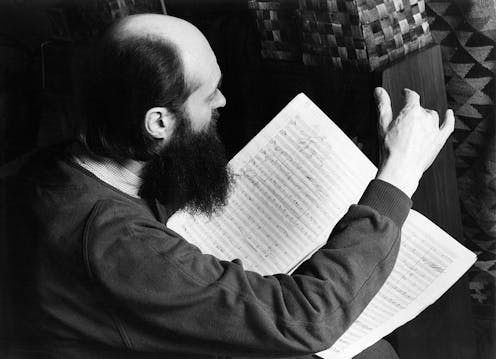
For years, Arvo Pärt has been one of the most performed contemporary classical composers in the world. Calle Hesslefors/ullstein bild via Getty Images

The Estonian composer Arvo Pärt, who turns 90 on Sept. 11, 2025, is one of the most frequently performed contemporary classical composers in the world. Beyond the concert stage and cathedral choir, Pärt’s music features heavily in film and television soundtracks: “There Will Be Blood,” “Thin Red Line” or “Wit,” for instance. It is often used to evoke profound emotions and transcendent spirituality.

Many Estonians grew up hearing the music Pärt wrote for children’s films and Estonian cinema classics in the 1960s and ‘70s. Popes and Orthodox patriarchs honor him, and Pärt’s music has received the highest levels of recognition, including Grammy Awards. In 2025, Pärt is being celebrated in Estonia, at Carnegie Hall and around the world.

Behind much of Pärt’s popularity – and his listeners’ devotion – is his engagement with sacred Christian texts and Orthodox Christian spirituality. Yet his music has inspired a broad range of artists and thinkers: Icelandic singer Björk, who admires its beauty and discipline; the theater artist Robert Wilson, who was drawn to its quality of time; and Christian theologians, who appreciate its “bright sadness.”

As a music scholar with expertise in Estonian music and Orthodox Christianity, and a longtime Pärt fan, I am fascinated by how Pärt’s exploration of Christian traditions – at once subtle and fervent – appeals to so many. How does this happen musically?

A large, airy and modern-looking sanctuary with a few dozen people in the pews as performers sit behind the altar.
A rehearsal of Arvo Pärt’s ‘Fratres’ in St. Martin Church in Idstein, Germany, in 2023.
Gerda Arendt via Wikimedia Commons

Tintinnabuli

Pärt emerged from a period of personal artistic crisis in 1976. In a now-legendary concert, he introduced the world to new music composed using a technique he invented called “tintinnabuli,” an onomatopoeic Latin word meaning “little bells.”

Tintinnabuli is music reduced to its elemental components: simple melodic lines derived from sacred Christian texts or mathematical designs and married to basic harmonies. As Pärt describes it, tintinnabuli is the benefit of reduction rather than complexity – freeing the elemental beauty of his music and the message of his texts.

This was a departure from Pärt’s earlier modernist and experimental music, and expressed a yearslong struggle to reconcile his newfound commitment to Orthodox Christianity and his rigorous artistic ideals. Pärt’s journey is documented in the dozens of notebooks he kept, beginning in the 1970s: religious texts, diary entries, drawings and ideas for musical compositions – a documentary trove of Christian musical creativity.

Tintinnabuli was inspired, in part, by Pärt’s interest in much earlier styles of Christian music, including Gregorian chant – the single-voice singing of Roman Catholicism – and Renaissance polyphony, which weaves together multiple melodic lines. Because of its associations with the church, this music was ideologically fraught in an anti-religious Soviet Estonia.

In Pärt’s notebooks from the 1970s, there are pages and pages of musical sketches where he works out early music-inspired approaches to texts and prayers – the seeds of tintinnabuli. The technique became his answer to existential creative questions: How can music reconcile human subjectivity and divine truths? How can a composer get out of the way, so to speak, to let the sounds of sacred texts resonate? How can artists and audiences approach music so that, to use Pärt’s famous expression, “every blade of grass has the status of a flower”?

In a 2003 conversation with the Italian musicologist Enzo Restagno, Pärt’s wife, Nora, offered an equation to understand how tintinnabuli works: 1+1 = 1.

The first element – the first “1” – is melody, as singer and conductor Paul Hillier lays out in his 1997 book on Pärt. Melody expresses a subjective experience of moving through the world. It centers around a given musical note: the “A” key on the piano, for instance.

The second element – the “+1” – is tintinnabuli itself: the presence of three pitches, sounding together as a bell-like halo: A, C, E.

Finally, the third element – the “= 1” – is the unity of melodic and tintinnabuli voices in a single sound, oriented around a central musical note.

Formulas

Here’s the crux of Arvo Pärt’s work: the relationship of 1+1, melody and harmony, is ordered not by moment-to-moment choices, but by formulas meant to magnify the sound and structure of sacred texts.

A simple tintinnabuli formula might go like this: If the melody rises four notes with four syllables of text, the notes of the tintinnabuli triad will follow beneath that line without overlapping. It supports and steers. Or if the melody falls five notes with five syllables of text, the notes of the tintinnabuli triad will alternate above and below that line to create a different musical texture – all organized around symmetry.

‘Spiegel im Spiegel,’ or ‘Mirror in the Mirror,’ is a classic example of Arvo Pärt’s tintinnabuli style.

Pärt often lets the number of syllables in a word, the length of a phrase or verse, and the sound of a language shape his formulas. That is why Pärt’s music in English, with its many single-syllable words, consonant clusters and diphthongs, sounds one way. And that is why his music in Church Slavonic, the liturgical language for many Orthodox Christians, sounds another way.

Tintinnabuli is about simplicity and beauty. The genius of Pärt’s work is how his formulas feel like the musical expression of timeless truths. In a 1978 interview with the journalist Ivalo Randalu, Nora Pärt recalled what her husband once said about tintinnabuli’s formulas: “I know a great secret, but I know it only through music, and I can only express it through music.”

Silence

If this all seems coldly formulaic, it isn’t. There is a sensuousness to Arvo Pärt’s tintinnabuli music that connects with listeners’ bodily experience. Pärt’s formulas, born out of long, prayerful periods with sacred texts, offer beauty in the warmth and friction of relationships: melody and tintinnabuli, word and the limits of language, sounds and silence.

“For me, ‘silent’ means the ‘nothing’ from which God created the world,” Pärt told the Estonian musicologist Leo Normet in 1988. “Ideally, a silent pause is something sacred.”

‘Tabula rasa’ was written in 1977, just after Arvo Pärt had introduced the world to his ‘tintinnabuli’ technique.

Silence is a common trope in Pärt’s music – indeed, the second movement of his tintinnabuli masterpiece “Tabula rasa,” the title work on the 1984 ECM Records release that brought him to global attention, is “Silentium.”

Any sounding music is not silent, of course – and, in human terms, silence is largely metaphorical, since we cannot escape sound into the silence of absolute zero or a vacuum.

But Pärt’s silence is different. It is spiritual stillness communicated through his musical formulas but made sensible through the action of human performers. It is a composer’s silence as he gets out of the way of a sacred text’s musicality to communicate its truth. Without paradox, Pärt’s popularity today may well arise from the silence of his music.

The Conversation

Jeffers Engelhardt does not work for, consult, own shares in or receive funding from any company or organization that would benefit from this article, and has disclosed no relevant affiliations beyond their academic appointment.

ref. Sacred texts and ‘little bells’: The building blocks of Arvo Pärt’s musical masterpieces – https://theconversation.com/sacred-texts-and-little-bells-the-building-blocks-of-arvo-parts-musical-masterpieces-261519

Une villa sur les rives du Tigre : Agatha Christie en Irak

Source: The Conversation – France in French (3) – By Myriam Benraad, Chercheure spécialiste de l’Irak, professeure en relations internationales, enseignante sur le Moyen-Orient, Institut catholique de Paris (ICP)

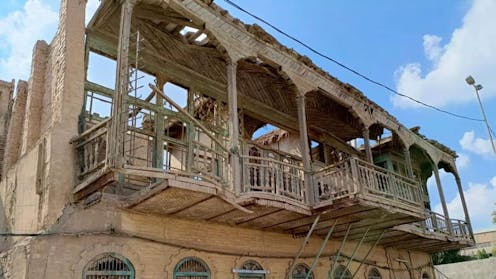
La maison où vécut Agatha Christie à Bagdad est dans un piètre état. Iraq Projects/X

La maison où la grande romancière britannique a vécu à Bagdad risque de s’effondrer. L’occasion de revenir sur une période où, aux côtés de son époux archéologue, l’écrivaine la plus lue au monde parcourait l’Irak et d’autres pays du Moyen-Orient.


« Combien j’ai aimé cette partie du monde », avait confié Agatha Christie de son vivant, dans une remémoration émue au Moyen-Orient. Née en 1890 au Royaume-Uni d’un père américain et d’une mère anglaise, c’est en 1928 que la célèbre écrivaine avait pleinement fait son entrée dans la région, au lendemain d’un divorce douloureux d’avec son premier mari, Archibald Christie, homme d’affaires et colonel dans l’armée britannique, et peu de temps après le décès de sa mère Clarissa. À bord du légendaire Orient Express, qui connectait Paris à Istanbul et lui inspirera le fameux Crime de l’Orient-Express (1934), elle voyage la même année avec pour destination finale l’Irak, alors jeune État en cours d’édification. Avant ce périple, elle avait découvert l’Égypte dès 1907.

C’est dans un Moyen-Orient profondément bouleversé que le nom de la romancière a ressurgi au cœur de l’été 2025 : son ancienne demeure à Bagdad, où elle vécut treize ans entre les décennies 1930 et 1950, serait sur le point de s’effondrer. Plusieurs sources rapportent en effet que l’édifice, situé sur les rives du Tigre dans le vibrant quartier de Karadat Maryam, a cruellement besoin d’être rénové. Une situation d’autant plus critique, à en croire les passants, qu’un panneau d’avertissement « Attention ! Risque d’effondrement ! » aurait été placé sur son enceinte pour éviter que les plus curieux n’y pénètrent, et que des graffitis auraient été taggués sur ses murs extérieurs.

Une jeune aventurière en Mésopotamie

Agatha Christie n’a pas seulement vécu en Irak mais aussi parcouru un vaste territoire – de Beyrouth à Damas, d’Ankara à Téhéran –, alors que peu de femmes occidentales auraient osé y poser seules le pied à cette époque. Peu après son arrivée, elle se rend en 1930 sur un champ de fouilles archéologiques sur le site d’Ur, dans l’actuel gouvernorat de Dhi Qar, où elle fait la connaissance de celui qui deviendra son second mari, Max Mallowan, de quatorze ans son cadet.

Avec lui, elle parcourt la Mésopotamie, développant un authentique attachement au lieu et à ses habitants. Elle dira d’eux, dans son autobiographie publiée en 1946, Come, tell me how you live (en français, Dis-moi comment tu vis), qu’ils « étaient courtois, dignes et d’une gentillesse infinie. Je me sentais chez moi parmi eux comme jamais auparavant. Leur hospitalité était empreinte d’une telle grâce que chaque rencontre était comme un cadeau. »

Alors que l’Irak, qui avait été placé sous mandat britannique en 1920 par le traité de Sèvres, obtient son indépendance en 1932, l’exploratrice en herbe se rend également dans la province de Ninive. Elle mène des excavations à Nimroud, cité néo-assyrienne où elle photographie bas-reliefs et artefacts.

Agatha Christie est déjà un témoin privilégié des cycles d’une histoire qui semble se répéter, tisée d’incursions, de pillages et de violences fulgurantes. Des armées d’envahisseurs, de l’Antiquité à l’État islamique, s’y sont succédé pour profaner ses trésors, souvent dans une vertigineuse débauche de brutalité et de barbarie.

Quand la mémoire réémerge des ruines

On rapporte qu’outre sa somptueuse villa à Bagdad, l’écrivaine possédait dans ce sanctuaire du nord une autre maison en briques de terre, qui aurait été détruite quelques années avant l’assaut des djihadistes, dont les bulldozers et marteaux-piqueurs ont durablement défiguré Mossoul et ses environs en 2014.

Ceux qui la fréquentaient ont depuis disparu et les habitants locaux ne conservent d’elle qu’un vague souvenir, qui n’est d’ailleurs pas nécessairement lié à son œuvre littéraire. En 2017, Abou Ammar, un villageois vivant à proximité des ruines archéologiques, déclarait ainsi à Reuters ne connaître d’elle que sa nationalité…

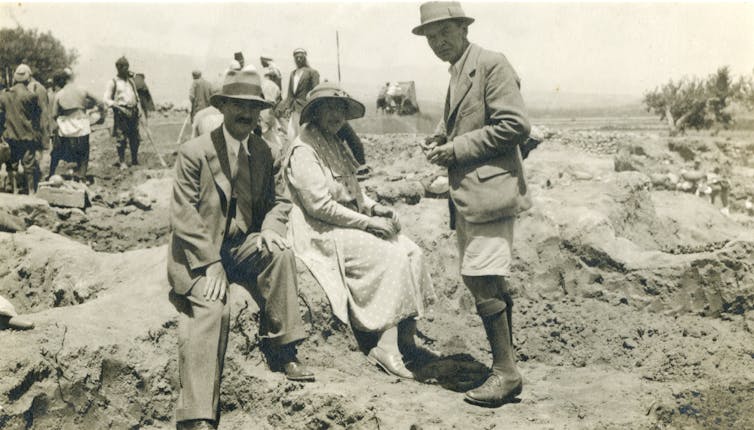
Max Mallowan, Agatha Christie et l’archéologue Leonard Woolley à Ur in 1931.
The Christie Archive Trust

Il faut bien admettre que le temps s’est écoulé depuis la période mandataire et que cet Irak tant chéri a traversé maintes turpitudes dont il ne s’est pas encore tout à fait relevé. « Quel endroit magnifique c’était ! », avait pourtant écrit Agatha Christie, ajoutant que « le Tigre n’était qu’à un kilomètre et demi, et sur le grand monticule de l’Acropole, de grosses têtes assyriennes en pierre dépassaient du sol. C’était une région spectaculaire, paisible, romantique et imprégnée du passé. » Ces impressions ont été longuement relatées dans ses mémoires.

Une passion ambivalente pour Bagdad

Au-delà de sa situation personnelle, quelles raisons poussèrent donc Agatha Christie à visiter l’Irak pour y poursuivre, initialement, une épopée solitaire ? Il est question, dans l’historiographie disponible, d’un dîner en Angleterre qui l’aurait marquée car des convives y avaient décrit la grandeur de Bagdad ainsi que ses bazars pittoresques. On suppose que ces histoires, celles d’un Orient lointain et fantasmé, avaient attisé sa curiosité.

Dans ce qui deviendra son refuge, l’autrice réfléchit et écrit, rendant hommage à Bagdad mais n’hésitant pas à pointer ses travers, sans jamais succomber à un exotisme facile. Son roman Meurtre en Mésopotamie (Murder in Mesopotamia), paru en 1936, qui met en scène l’inénarrable détective belge Hercule Poirot, s’ouvre ainsi par l’évocation de « l’aspect sale et répugnant de Bagdad », ville qualifiée d’« horrible » et « loin de la féerie des_ Mille et Une Nuits_ ». Dans une narration postérieure, Rendez-vous à Bagdad (They Came to Baghdad, 1951), Christie rend en revanche un hommage appuyé à la métropole plurimillénaire.

Propriété privée ou patrimoine public ?

On comprend mieux, dès lors, les appels lancés aux autorités irakiennes pour sauver cette villa d’une fin dramatique. En mai 2025, la presse dépeignait l’impressionnante structure ottomane du bâtiment pour tenter de sensibiliser le public. De son côté, le directeur général du Conseil national des antiquités et du patrimoine, Iyad Kazem, indiquait que la demeure, bien qu’inscrite au patrimoine, était privée. Or une législation nationale de 2002 encore en vigueur dispose que des fonds publics ne peuvent être alloués à la restauration de propriétés qui n’appartiennent pas à l’État, jusqu’à ce qu’elles soient acquises par lui. Autrement dit, la maison d’Agatha Christie, connue pour son balcon plongeant sur le Tigre, ne bénéficie d’aucune réelle mesure de protection.

On rapporte qu’y a vécu de manière éphémère Ali, frère du souverain hachémite Fayçal Iᵉʳ, que les Irakiens avaient baptisé le « roi sans royaume ». Le lieu a en outre abrité l’École britannique d’archéologie, où Max Mallowan avait été nommé directeur aux côtés d’une secrétaire, de six étudiants et bien entendu de son épouse, Agatha.

La romancière adorait faire ses achats dans les souks et décorait son intérieur de tapis, d’objets en cuivre et d’antiquités. Avant que l’alerte ne soit lancée, sa maison avait été mise en vente, beaucoup craignant que des investisseurs ne finissent tout simplement par la démolir.

Un pays à la recherche du temps perdu

Comme Agatha Christie s’était rendue en Irak sur la trace d’un passé fabuleux, l’Irak continue lui-même de fouiller dans ses décombres pour en extirper une mémoire déchirée, fragmentaire, et essayer de se reconstruire. Il existe indiscutablement, derrière l’urgence du sauvetage de l’ancienne résidence de l’écrivaine, un enjeu patrimonial et mémoriel qui nous replonge dans les premières décennies de l’Irak contemporain, entre réminiscence ottomane et formation d’un État moderne et souverain.

Agatha Christie écrivit abondamment à son sujet, par touches ou de manière plus directe, et autant dire que l’Irak le lui a bien rendu. Dans La Harpe d’Agatha Christie (2016), le romancier Ibrahim Ahmad, exilé depuis la fin des années 1970, se plaît à imaginer, en langue arabe et dans une optique à la fois postcoloniale, postmoderne et biographique, la disparition de la romancière à Bagdad en 1949. En l’espèce, la fiction n’est ici qu’un prétexte à la mise en exergue de la trajectoire tourmentée de l’Irak – de sa fondation en 1921 à la séquence post-baassiste – et à l’enchevêtrement de l’existence d’Agatha Christie avec le paysage sociopolitique et culturel local.

The Conversation

Myriam Benraad ne travaille pas, ne conseille pas, ne possède pas de parts, ne reçoit pas de fonds d’une organisation qui pourrait tirer profit de cet article, et n’a déclaré aucune autre affiliation que son organisme de recherche.

ref. Une villa sur les rives du Tigre : Agatha Christie en Irak – https://theconversation.com/une-villa-sur-les-rives-du-tigre-agatha-christie-en-irak-263786

Nintendo : « Super Mario », quarante ans de jeunesse éternelle

Source: The Conversation – in French – By Arnault Djaoui, Doctorant en Science de l’Information et Communication – Laboratoire LIRCES, Université Côte d’Azur

L’iconique plombier à moustaches, mascotte de la firme Nintendo, célèbre, le 13 septembre, le quarantième anniversaire de sa première aventure vidéoludique. Cet emblème intergénérationnel n’en finit pas de séduire de nouveaux adeptes en réussissant à se renouveler constamment. Alors, d’où ce sympathique personnage puise-t-il son secret de jouvence ?


Avant qu’il ne soit Mario, le personnage est d’abord introduit sous le sobriquet de Jumpman dans le jeu d’arcade Donkey Kong, en 1981. La figure mythique du petit plombier espiègle – à cette époque charpentier et aujourd’hui sans profession attitrée – montrait déjà la volonté du fabricant Nintendo d’installer une mécanique de jeu simple et audacieuse. Le joueur incarne, dans cette première mouture, un personnage haut en couleur évoluant sur des plateaux urbains ascensionnels. Le but du jeu est de déjouer les assauts du gorille Donkey Kong au moyen de sauts allègres, exécutables à l’aide d’une simple pression sur une touche jusqu’à atteindre le vil primate et libérer une demoiselle en détresse.

La fantaisie de l’action et des éléments narratifs affiche d’emblée une forte envie de proposer un univers durable, amusant et identifiable. Plus encore, la volonté initiale du concepteur, Shigeru Miyamoto, est de conférer à son personnage une stature marquée et une vraie personnalité. Ainsi, cette vedette en devenir synthétise dès sa première apparition les attributs d’une entité originale et attractive, qui se démarque de ses prédécesseurs, Pacman ou les space invaders. C’est donc après une seconde incursion dans les salles d’arcade que l’élu de Nintendo va réellement marquer le début de sa légende, durant l’année 1985.

Le raz-de-marée « Super Mario Bros. »

L’arrivée de son propre jeu attitré marque un tournant dans le jeu de plateformes et plus globalement dans l’industrie du jeu vidéo. Désormais baptisé Mario, cet attachant héros dispose alors de tout un « lore » (l’ensemble des éléments relatifs à l’univers d’un jeu) qui lui est propre, jonché de créatures alliées (la princesse Peach, Toad le champignon, etc.) ou ennemies (Bowser, les Koopas, etc.) qui définissent également le caractère incontournable de cette mythologie.

En plus de parcourir des dizaines de niveaux, tous plus colorés, riches en animation et périlleux dans les dangers dont ils sont parsemés, le joueur découvre au cours des péripéties du plombier une approche bien plus enchanteresse du challenge dans le jeu vidéo. Le médium, qui reposait jusqu’ici sur des principes réitératifs et contenus dans des parties courtes, trouve avec Super Mario Bros. la possibilité de combiner le sens de l’amusement machinal et le sentiment pur de voyage immersif. Les effets de jouabilité, simples d’utilisation mais extrêmement exigeants dans ce qu’ils invoquent de dextérité et d’attention, inaugurent également une nouvelle manière de ressentir la difficulté graduelle des épreuves au fil de cette odyssée d’un genre nouveau.

Un univers qui inspire et qui s’exporte

Très rapidement, le modèle instauré par cet opus fondateur cristallise une nouvelle ère vidéoludique, qui se caractérise par une réutilisation appuyée du système simple et efficace des fondements de Mario. Outre les innombrables créations qui s’inspirent directement de cette œuvre instauratrice (Castle of Illusion, Disney’s Duck Tales, Castlevania II: Simon’s Quest, etc.), de nouveaux volets de la saga Mario vont être logiquement mis en chantier. Le personnage évolue continuellement au gré de nombreuses modifications de modélisation (character design), de nouveaux pouvoirs à sa disposition (feu, glace, agilité féline, etc.) et de nouvelles rencontres de personnages en tout genre, en même temps que le public grandit aussi de son côté.

Cette proximité entretenue entre les joueurs et le personnage de fiction marque une permanence de cet espace de dérivation, d’époque en époque. Telle une saga cinématographique ou une série télé, l’univers de Mario se décline en plusieurs épisodes (Super Mario Land, en 1989, Super Mario World, en 1990, etc.) qui apportent tous leurs lots de nouveautés tant sur la technique que sur l’agrandissement du lore.

Ainsi, de nouvelles figures incontournables de l’estampille Nintendo sont introduites pour la première fois dans les jeux Mario. C’est le cas de l’attendrissant dinosaure Yoshi, dans la série Super Mario World, ou du patibulaire double maléfique Wario, dans Super Mario Land 2 en 1992, qui bénéficieront par la suite de leurs propres jeux à succès.

De son côté, Mario ne va cesser d’asseoir son hégémonie et d’étendre sa galaxie. Au cinéma, avec une première adaptation en prises de vue réelles en 1993, à la télévision, avec une série animée datant de 1989, en jeux de société ou en produits dérivés, la machine tentaculaire de Nintendo entend bien investir tous les secteurs du divertissement. L’amélioration substantielle des graphismes au gré de chaque génération de consoles va ensuite permettre la réalisation des ambitions les plus folles des concepteurs.

L’avènement de nouveaux enjeux

L’exploitation du monde de Mario se ressent donc avant tout dans la sphère vidéoludique. Chacune de ses nouvelles apparitions est synonyme d’une version soit alternative, soit sublimée de sa dialectique. Les séries secondaires, telles que le jeu de course Mario Kart 64 (1996) ou le jeu de plateau et minijeu Mario Party (1998), deviennent par conséquent des ouvrages aussi appréciés que les opus de la série mère.

Par la suite, le plombier et sa myriade de compagnons s’inviteront dans toutes sortes de genres vidéoludiques (football, basketball, jeux olympiques, jeux de réflexion, jeux de rôle, jeux de modélisation, etc.) pour définir une mosaïque où l’universalité est au centre du propos. C’est pourtant bel et bien avec son arrivée dans la sphère du jeu de plateformes en 3D que l’égérie de Nintendo marque une nouvelle révolution à l’aube du XIXe siècle.

Jouissant désormais d’une technique graphique permettant de profiter des environnements de façon totale avec une profondeur de champ à 360°, Mario s’illustre dans Super Mario 64 (1996) de façon homérique.

La 3D polygonale, qui était jusqu’à présent l’adage de créations globalement plus sérieuses, atteint avec ce titre des sommets de liberté, de dépaysement et d’enivrement pour l’époque. Les contrées visitées par le plombier (déserts, volcans, plaines enneigées, îles tropicales, etc.), dans ses anciennes aventures, sont remises au goût du jour pour permettre au joueur de redécouvrir leur exotisme à travers un prisme complètement remanié. Le fait de pouvoir aborder ces surfaces en profitant des nouvelles aptitudes du héros, désormais fort de 28 mouvements distincts, configure une ergonomie de l’exploration encore jamais atteinte dans un jeu de ce type.

Cette étape d’innovation marque un tournant dans l’approche du jeu de plateformes et d’aventure dans le secteur du jeu vidéo, qui deviennent des références en matière de prouesses interactives.

Un personnage qui mute dans le sens du perfectionnement

Chaque nouvelle sortie devient ainsi l’occasion de faire évoluer cette formule dans le sens de la modernité, en capitalisant toujours sur l’effet d’originalité et d’amélioration. Les différents gameplay (jouabilité) mis en œuvre participent à cet état de réinvention puisqu’ils mettent à l’honneur une thématique différente à chaque aventure. Super Mario Sunshine (2002) fait la part belle au maniement d’un jetpack (réacteur dorsal) aquatique, qui propulse le personnage pour parcourir les environnements tropicaux de l’île Delfino, pendant que Super Mario Galaxy (2007) mise sur la découverte de plusieurs planètes en mettant au centre du gameplay la gravitation.

Des tonalités atypiques qui composent l’effet de dérivation – un concept qui désigne l’agentivité des règles de fonctionnement et de participation du jeu – et qui créent par conséquent des attentes fortes dans le public quant aux prochaines trouvailles. En 2017, un nouveau cap d’immersion et d’ambition artistique est franchi pour la franchise. Mario s’essaye au genre révolutionnaire de l’open-world (jeu en monde complètement ouvert) avec Super Mario Odyssey, qui propose d’arpenter différentes époques et différents pays (Égypte ancienne, Japon féodal, mégapole américaine, etc.) à la façon des voyages dans le temps. Cette vision de l’épopée spatio-temporelle résonne comme l’aboutissement suprême des prédispositions originelles de la formule Mario.

Le personnage s’est développé au fil du temps, il a éveillé de nouvelles capacités, il a rencontré de nouveaux compagnons puis quitté son royaume Champignon natal pour découvrir le reste du monde jusqu’aux tréfonds de l’espace.

Cette empreinte impérissable démontre la virtuosité de la série à garder constamment en vue les changements de la modernité pour se les approprier sans pour autant perdre l’essence traditionnelle qui a construit la légende de ses premiers triomphes.

La postérité toujours en ligne de mire

Dans son sillage, il laisse une multitude d’influences conceptuelles qui se ressentent jusque dans l’actualité la plus récente. Kirby et le monde oublié (2022) et le tout nouveau Donkey Kong Bananza (2025), des studios Nintendo, réutilisent clairement le système de jeu libre instauré dans Super Mario Odyssey.

Les chiffres parlent d’eux-mêmes. En 2025, la saga Mario Bros. (sans les séries secondaires) a franchi le seuil des 400 millions d’exemplaires vendus depuis ses débuts en 1985. Plus encore, le blockbuster cinématographique de 2023 produit par le studio américain Illumination enregistre la même année plus de 1,3 milliard de dollars de recette, devenant le second long-métrage d’animation le plus rentable au monde.

Aujourd’hui plus que jamais, Super Mario montre son statut d’œuvre indéfectible du jeu vidéo et de la pop culture mondiale, avec ce que cela implique d’adaptation permanente au public et aux transformations sociales. Comme Mickey Mouse en son temps, Mario a littéralement ouvert des portes à tout un espace de création et de rêverie aux yeux du monde. Il est devenu l’ambassadeur légitime de ces contrées virtuelles où s’animent l’ivresse d’un instant stimulant, la féerie d’un univers facétieux, la joie d’un défi relevé.

The Conversation

Arnault Djaoui ne travaille pas, ne conseille pas, ne possède pas de parts, ne reçoit pas de fonds d’une organisation qui pourrait tirer profit de cet article, et n’a déclaré aucune autre affiliation que son organisme de recherche.

ref. Nintendo : « Super Mario », quarante ans de jeunesse éternelle – https://theconversation.com/nintendo-super-mario-quarante-ans-de-jeunesse-eternelle-264230