Observar y comprender el comportamiento de las personas ayuda a transformar los negocios

Source: The Conversation – (in Spanish) – By Guillermo José Navarro del Toro, Profesor Investigador, Universidad de Guadalajara

Yossakorn Kaewwannarat/Shutterstock

En un mercado saturado de productos y servicios que compiten por la atención del consumidor, las empresas más exitosas no son necesariamente aquellas que tienen un mejor producto, sino las que comprenden mejor a los usuarios.

Para alcanzar este conocimiento, la etnografía se incorpora al mundo empresarial convertida en un recurso esencial para la innovación.

¿Qué es la etnografía y por qué usarla en los negocios?

Tradicionalmente asociada a la antropología, la etnografía es la observación de las personas en su entorno cotidiano para entender sus comportamientos, valores, creencias y emociones.

En lugar de estudiar comunidades remotas, ahora los etnógrafos investigan en supermercados, cafeterías, oficinas, redes sociales e incluso sesiones de videojuegos. Esta mirada profunda permite descubrir patrones que se hacen invisibles a los métodos cuantitativos de investigación.

Por ejemplo, mientras una encuesta puede determinar que a los consumidores les gusta el café artesanal, la etnografía revela por qué: ¿por el ritual?, ¿por la sensación de comunidad?, ¿por una búsqueda de autenticidad? Esa diferencia es clave para diseñar experiencias y estrategias centradas en el cliente.

Etnografía e ideas de negocio

Cuando hablamos de empresas solemos pensar en modelos de negocio, validación de ideas y tecnología. Sin embargo, la comprensión etnográfica puede ser el primer paso para detectar necesidades reales y resolver problemas que aún no han sido abordados por el mercado. Es decir, la etnografía no solo ayuda a vender mejor, sino a emprender mejor.

Un buen ejemplo es la reinvención de los cepillos de dientes infantiles. En 1996, una consultora de innovación llevó a cabo investigaciones de campo para la compañía de cuidado bucal Oral-B. El objetivo era determinar por qué a los niños no les gustaba cepillarse los dientes. La observación in situ les permitió ver que, debido a su escasa destreza manual, los niños sostenían el cepillo con el puño y no entre los dedos, por lo que los mangos delgados eran incómodos de agarrar para sus pequeñas manos, algo que ninguna encuesta había identificado.

Gracias a este hallazgo la empresa desarrolló el Squish Gripper, un cepillo infantil con un mango ancho y de textura blanda. El producto fue un éxito de ventas durante 18 meses y transformó el estándar de los cepillos infantiles

El consumidor como sujeto, no como objeto

Uno de los errores más comunes en el diseño de productos es tratar a los consumidores como estadísticas. La etnografía propone lo contrario: convertirlos en protagonistas. Esta perspectiva permite cocrear soluciones junto con los usuarios, no solo para ellos. De ahí su enorme potencial para el marketing y el desarrollo de productos.

Estas son algunas formas prácticas de llevar la etnografía al terreno emprendedor:

  • Observación participante: pasar tiempo en el entorno de los usuarios, sin intervenir, solo observando cómo interactúan con un determinado producto o servicio.

  • Diarios de usuario: pedir a las personas que registren durante unos días sus experiencias, frustraciones o emociones respecto a una necesidad específica.

  • Entrevistas etnográficas: conversaciones abiertas en espacios cotidianos, sin guiones rígidos, para permitir que surjan necesidades o deseos inesperados.

  • Mapeo de experiencias: crear recorridos visuales del cliente desde que detecta una necesidad hasta que interactúa con el producto.

Etnografía digital

Los estudios etnográficos en el espacio digital permiten analizar cómo son las relaciones en línea. Por ejemplo, el área de marketing de una empresa puede analizar cómo los consumidores utilizan las plataformas digitales para compartir experiencias y expresar inquietudes. A través de la etnografía digital (o netnografía) se pueden observar las conversaciones, los hashtag y los memes que circulan en las redes para identificar temas recurrentes y tendencias de mercado.

Esta metodología permite captar no solo lo que los usuarios dicen explícitamente, sino también los significados implícitos y las dinámicas sociales que influyen en su comportamiento. Con esta información, las empresas pueden diseñar programas de apoyo más adecuados y promover una comunicación más efectiva con su comunidad.


Leer más:
Las redes sociales mejoran la comunicación con el cliente y pueden hacer que la empresa ingrese más


La empatía como motor de innovación

En un mundo obsesionado con la disrupción tecnológica, la etnografía nos recuerda que la disrupción más poderosa puede venir de algo profundamente humano: comprender al otro.

En lugar de adivinar qué necesita el cliente, la etnografía invita, primero, a escuchar y observar, para luego desarrollar propuestas innovadoras desde la empatía y la comprensión.

The Conversation

Guillermo José Navarro del Toro no recibe salario, ni ejerce labores de consultoría, ni posee acciones, ni recibe financiación de ninguna compañía u organización que pueda obtener beneficio de este artículo, y ha declarado carecer de vínculos relevantes más allá del cargo académico citado.

ref. Observar y comprender el comportamiento de las personas ayuda a transformar los negocios – https://theconversation.com/observar-y-comprender-el-comportamiento-de-las-personas-ayuda-a-transformar-los-negocios-262086

La geometría oculta en el cerebro: así construimos mapas mentales para orientarnos en el mundo

Source: The Conversation – (in Spanish) – By Liset Menéndez de la Prida, Directora del Laboratorio de Circuitos Neuronales, Instituto Cajal – CSIC

LariBat/Shutterstock

Cuando entramos por primera vez en una habitación, nuestra mente pone en marcha todos sus trucos. De manera totalmente subconsciente, se activa un sistema de representación que no solo nos permite ubicarnos en el espacio, sino también poner en relación todo lo que acontece en ese instante y la memoria de las cosas que pasaron. Las ventanas, las puertas, la orientación de los muebles, la disposición de los libros sobre una mesa… todo queda registrado de golpe en nuestro cerebro.

Pongamos que salimos de la habitación por un pasillo. Mientras nos alejamos, un mapa mental tejido por la actividad eléctrica de cientos de neuronas emerge en nuestra consciencia.

Como Alicia en la madriguera del conejo, el pasillo se alarga. Lo recorremos tocando las paredes, sintiendo los cambios de rugosidad, captando pequeñas señales que nos dan pistas sobre dónde estamos. Al fondo hay una puerta; la cruzamos, pero sorprendentemente, desemboca en la misma habitación por el lado contrario. Entonces lo entendemos todo: el pasillo es circular. En ese momento, nuestro cerebro ha cerrado un bucle: ha tejido un mapa mental que conecta las representaciones mentales del inicio y el fin del recorrido.

Neuronas que se activan en anillos

En un reciente estudio, publicado en Neuron, hemos demostrado por primera vez que la información de nuestro entorno se organiza en el cerebro de forma geométrica. Lo hemos conseguido analizando los registros de la actividad de cientos de neuronas en el hipocampo, una región del cerebro clave para la memoria y la navegación. En el caso de la habitación y el pasillo, esta representación adopta la configuración de anillos tridimensionales.

En el laboratorio, hemos podido observar que cada vez que un ratoncito va y viene por los pasillos de un laberinto, sus neuronas se activan siguiendo una trayectoria que da una vuelta completa en un espacio abstracto: un anillo que representa la experiencia completa del recorrido.

Lo más fascinante es que no todas las neuronas participan igual. Algunas codifican información sensorial muy concreta, como la textura del suelo, la presencia de una recompensa o la dirección de los giros en el laberinto. Otras, en cambio, registran y utilizan información externa al laberinto para organizar la representación, es decir, se apoyan en señales del entorno más amplio, como la localización respecto a la habitación donde se encontraba o la posición de un objeto de referencia, para mantener la orientación estable.

Estas diferentes poblaciones neuronales forman anillos paralelos en el espacio de la actividad neuronal, pero tienen una función distinta. Cuando todo va bien, trabajan coordinadas para dar estabilidad a la experiencia. Pero si algo nos desorienta (por ejemplo, si alguien nos diera vueltas o nos cubriera los ojos mientras nos guía hacia otro punto), entonces se despliegan otros mecanismos.

En ese caso, una de estas representaciones se mantiene fija, como una brújula interna, y ayuda a mantener la percepción del entorno. Otras neuronas se reorientan buscando representar el cambio. De ese reajuste mental nos llega la certeza de que estamos orientados.


Leer más:
La complejidad de mover un dedo


La geometría de la actividad cerebral

El espacio es el contenedor habitual de nuestras vivencias. Saber que el cerebro codifica su estructura con formas geométricas precisas abre nuevas puertas para entender cómo pensamos, recordamos y nos orientamos en el mundo.

El estudio de la geometría y la topología de la actividad cerebral es un campo emergente que aúna matemáticas y ciencia de datos con las más sofisticadas herramientas de bioingeniería aplicadas al estudio del cerebro. Hoy podemos identificar subtipos de neuronas en base a su perfil genético –por ejemplo, las neuronas excitadoras, las inhibidoras y las que producen dopamina son genéticamente diferentes– y modificarlo para expresar proteínas fluorescentes que nos permitan ver su actividad y controlarla en tiempo real.

Estos abordajes están permitiendo avanzar en una comprensión mucho más profunda de cómo el cerebro construye sus mapas internos. Cada descubrimiento no solo nos ayuda a descifrar los fundamentos biológicos de la memoria y la orientación, sino que también abre el camino a nuevas aplicaciones en neurotecnología, inteligencia artificial y, algún día, quizá, en el tratamiento de trastornos neurológicos donde estos mapas se deterioran, como el alzhéimer.

The Conversation

Liset Menéndez de la Prida recibe actualmente fondos de la Fundación La Caixa y la Agencia Estatal de Investigación para el estudio del cerebro.

ref. La geometría oculta en el cerebro: así construimos mapas mentales para orientarnos en el mundo – https://theconversation.com/la-geometria-oculta-en-el-cerebro-asi-construimos-mapas-mentales-para-orientarnos-en-el-mundo-264286

Charlie Kirk shooting: another grim milestone in America’s long and increasingly dangerous story of political violence

Source: The Conversation – UK – By Katie Pruszynski, PhD Candidate, Department of Politics and International Relations, University of Sheffield

Charlie Kirk, figurehead of the American far right, took a question at a 2023 event in Salt Lake City about the second amendment to the US constitution and gun-related deaths. He answered: “I think it’s worth to have a cost of, unfortunately, some gun deaths every single year, so that we can have the second amendment to protect our other God-given rights.”

Two years later, once again in Utah, Kirk was killed with a gun. His death comes against a backdrop of increased political violence in the US, driven by a new set of political, societal and technological factors, and its future trajectory will determine the health of American democracy.

Political violence is differentiated from other crimes and it is helpful to have clarity about its particular meaning. It is defined specifically as acts intended to achieve political goals or intimidate opponents through the use of physical force or threats to influence a political outcome or silence dissent. While most of these incidents come from the far right, violence is used by extremists on both sides.

Over the past decade there has been a dangerous escalation in political violence driven by rage and resentment without clearly defined goals by self-radicalised individuals rather than organised extremist groups. High profile incidents have dominated headlines. These include the insurrection of January 6 2021, the shooting at a baseball practice session of Republican members of Congress in 2018, the plot to kidnap Michigan governor, Gretchen Whitmer in 2020, the vicious attack on Paul Pelosi – the husband of the speaker of the House of Representatives – in 2022, the torching of Pennsylvania governor Josh Shapiro’s family home in April this year. And, of course, the assassination attempts on Donald Trump on the campaign trail in 2024.

But the threat has spread beyond the very visible faces of US democracy to targets such as judges, election officials, journalists and even private citizens based upon their perceived political affiliation.

It is shocking yet unsurprising, given the new factors fuelling rage in an already deeply divided society. These can be broadly summarised by three characteristics.

Hyper-partisanship at boiling point

The way politics is discussed today shows that division can’t be seen in merely partisan terms. Opponents have become enemies and those with different worldviews have become traitors. In many examples, pundits, politicians and their mouthpieces indulge in dehumanising rhetoric. Research has consistently found that dehumanisation contributes to a more ready justification of violence.

Indeed, Trump and other high-profile figures have incited violence, even when not actually issuing direct calls to action. This was most notably evident on January 6 2021, when Trump goaded supporters in Washington to march on the Capitol, telling them: “And we fight. We fight like hell. And if you don’t fight like hell, you’re not going to have a country anymore.”

Fight like hell: Donald Trump’s ‘Save America’ rally.

Digital echo chambers

These pressure cooker arguments play out on social media and online forums that help spread conspiracy theories, disinformation and violent content. Highly influential creators are able to conjure up “bespoke realities” for their followers, generating huge personal wealth from the fomenting of rage and hate. Citizens are consuming deeply flawed, incendiary political content in isolation. This fuels self-radicalisation when people become detached from reality of the world outside their bubble.

Indeed, immediately following the Kirk shooting, social media was already awash with disinformation about liberals celebrating his death and the motivations of the killer before the shooter had been found.

Erosion of trust in democracy

When faith in government, the justice system, and the electoral process erodes, citizens may come to believe that the established systems are rigged, unresponsive, or illegitimate. This makes traditional avenues for change seem futile. In this environment, violence can be rationalised as the only effective means to “correct” the broken system. The American right has long railed against a corrupt and malevolent “deep state” convincing some citizens that democratic norms no longer apply.

What next? There are three possible scenarios. The worst case is an escalation of violence in both its frequency and its organisation.

The far right has been pushing for strict limits on civil liberties, and the most extreme members may use Kirk’s assassination as an excuse for violent retaliation. Widespread civil unrest is a persistent threat, particularly approaching the 2026 midterm elections. Many fear that if Trump’s allies sense they can use escalating disorder to declare an emergency suspension of democratic processes, they will push him to do so.

More likely, but no less unsettling, is a stagnation in which political violence becomes a normalised feature of American political life without escalating to an existential crisis. This has potentially far-reaching consequences as more moderate politicians on both sides perceive the risks of being in public life to be too high and vacate their offices. This paves the way for more extreme candidates to fill the gaps. With the more moderate voices gone, it’s less likely the conversation will cool down.

But things could improve. It will require bipartisan condemnation of political violence and a reconnecting of politicians to their constituents. Both sides need to work together to drag a bigger portion of the political debate back into the real world. Meanwhile social media platforms and the legacy media alike must be held accountable for the tenor and veracity of the content they feed to the public.

And efforts must be made by political elites, the media and the public to rebuild civic trust. As the foundation stone of a healthy democracy, citizens’ trust in their government and in each other must be carefully pieced back together.

America does not need to accept violence as the norm, in fact, it must collectively and consistently reject it. The future of its democracy may depend on it.

The Conversation

Katie Pruszynski does not work for, consult, own shares in or receive funding from any company or organisation that would benefit from this article, and has disclosed no relevant affiliations beyond their academic appointment.

ref. Charlie Kirk shooting: another grim milestone in America’s long and increasingly dangerous story of political violence – https://theconversation.com/charlie-kirk-shooting-another-grim-milestone-in-americas-long-and-increasingly-dangerous-story-of-political-violence-265115

Charlie Kirk: why the battle over his legacy will divide even his most ardent admirers

Source: The Conversation – UK – By Gordon Lynch, Professor of Religion, Society and Ethics, University of Edinburgh

Wherever you stand on his political views, Charlie Kirk’s murder is a tragedy on a personal level. He was just 31 and a husband and father of young children. But as a public figure his death represents a dangerous moment, as it threatens to deepen divides between conservatives and liberals in America and beyond.

Many commentaries on Kirk’s life will focus on his significance as a political activist and the important – some would say decisive – role he played in turning out the youth vote for Trump’s presidential election victory in 2024. But it is important to recognise how significant he had become as a public leader for what a growing number of scholars have referred to as white Christian nationalism.

While there is some variation in political views and theological beliefs among white Christian nationalists, a central, shared conviction is that the US was originally established as a Christian nation. For Christian nationalists, the idea of the separation of church and state is taken to refer only to not having an official state church. The complete separation of Christianity from public institutions is anathema and secular institutions such as public schools and universities are often regarded as hostile ground.

Given their view of America’s original religious calling, many Christian nationalists therefore believe that secular, liberal society is in terminal crisis. So America will only be put right when it returns to Christian laws or principles. This view of political disagreement is inherently binary. There are those who trust in God and support God’s work to transform society. Then there are those who oppose it. These people are mired in spiritual darkness.

Kirk’s Christian nationalist views and activism were not always comfortable watching. For example, along with others on the Christian right, Kirk publicly and vehemently challenged the place and legacy of Martin Luther King Jr, a hugely honoured figure in the US. In 2024, he chose the week in which the US celebrates a national holiday in honour of the murdered civil rights leader to label King “a serial adulterer, an alleged rapist, a reparations proponent, and a race Marxist”.

His organisation, Turning Point USA, also created Professor Watchlist. This online resource encouraged conservative students to name and shame college professors who had what were judged to be problematic views or activism linked to categories including “antifa”, “socialism” and “feminism”.

But while there is an element to white Christian nationalism which risks overturning basic democratic principles (as shown by the insurrection of January 6 2021), Kirk also had a better legacy. He became widely known on social media for his roadshows on college campuses which invited students to debate with him. He would put forward his views robustly, but also listened to his opponents.

These roadshows could be challenging for more liberally inclined students unused to having to defend their views. But at their best they provided surprising opportunities to find common ground. In one filmed discussion, for example, a feminist student had an engaged and respectful discussion with Kirk about his views about essential differences between men and women. They also agreed about the harmful effects of some forms of masculinity and the normalisation of pornography in youth culture. He maintained this commitment to these open public events despite the risks involved. It ultimately cost him his life.

Charlie Kirk debates a student.

Debate over Kirk’s legacy

This ambivalence between conflict and democratic engagement in Kirk’s work and the wider Christian nationalist movement is now finding expression in responses to his murder. On Fox News, as news of his death broke, shocked and distressed reaction nonetheless highlighted an interesting divide in the commentary. There were those who wanted to see this a turning point in the battle against the side of evil, the people who opposed his Christian mission. But others saw in his legacy a commitment to engagement and debate with those whom he disagreed with.

It remains to be seen which side of this legacy wins out. It should be observed, however, that much of Kirk’s following takes its cues from the current incumbent of the White House, whose instinct is usually to lean into division. And it was not different when the US president expressed his grief and anger at Kirk’s assassination, blaming the “radical left” for rising political violence in the US.

Most of the American people are neither ardent liberals nor committed Christian nationalists. But there is an ever-deepening political divide between those on the political left and right who no longer see each other as decent, trustworthy fellow citizens. As the political scientists Steven Levitsky and Daniel Ziblatt have argued, such polarisation is often a route to the death of true democracy.

At this moment of crisis, America – and the watching world – need to hope and work hard to ensure that Kirk’s legacy of democratic engagement and debate wins out. If this does not happen, the future for America is looking bleaker today.

The Conversation

Gordon Lynch does not work for, consult, own shares in or receive funding from any company or organisation that would benefit from this article, and has disclosed no relevant affiliations beyond their academic appointment.

ref. Charlie Kirk: why the battle over his legacy will divide even his most ardent admirers – https://theconversation.com/charlie-kirk-why-the-battle-over-his-legacy-will-divide-even-his-most-ardent-admirers-265116

Charlie Kirk was emblematic of a country polarised and imploding

Source: The Conversation – UK – By Melissa Butcher, Professor Emeritus, Social and Cultural Geography, Royal Holloway University of London

In December 2021, I was in an exhibition hall in Phoenix, Arizona, with 10,000 young people who had come to hear a lineup of “America first” speakers, from Tucker Carlson to Ted Cruz. This was AmericaFest, an annual rally led by Turning Point USA, a conservative youth organisation whose founder and CEO, Charlie Kirk, was murdered on September 10.

I have spent the past four years listening most days to Kirk’s view of the world while carrying out research for my upcoming book, The Trouble With Freedom. He was charismatic, combative and at times inflammatory. But he was also strategic and clever.

He loved the US, freedom, family and football, and possessed an immense drive to “save America” from what he felt was its decline from greatness. With a national radio show and speaking tours focused on university campuses, his platform reached millions. There were times when he disseminated disinformation, but there were also times when I found myself agreeing with him.

Kirk was emblematic of a country polarised and imploding. At AmericaFest, and across a constellation of organisations and commentators working to “save freedom, save America”, the US is divided into those who are “loved” and those who are “hated”. This division is mirrored in progressive or liberal spheres.

Retribution is threatened and others are blamed. Opposing sides, each struggling for “the soul of the nation”, define the other by emotional indicators such as “angry”, “bitter”, “miserable”, “destroying”, “vicious”, “menacing”, “thugs”, “extremists”, “resentful”, “weak” or “unhinged”.

These sentiments serve a purpose. As cultural theorist Sara Ahmed argued in her 2004 book, The Cultural Politics of Emotion, it is through intensifying emotions that an “other” takes shape.

But while sharing emotions – rage as well as love – creates bonds, it also drives us away from others. This was something I experienced at AmericaFest as presenters repeatedly told the 10,000 young people present that people like me – childless, unmarried, atheist academics – hated them for being conservatives.

As people arrange themselves – where they live and who they socialise with – on the basis of how they feel, the end result can be a form of “partisan segregation”. Democrats and Republicans now appear increasingly unlikely to live with those who hold different political views.

Faced with rapid and profound changes, the idea of America and what it represents – freedom and prosperity – is slipping out of reach for some. This is creating feelings of loss and anger. In discussions I held with people from across the political spectrum, in social clubs, shooting ranges, workplaces and homes, people named points of cultural rupture.

Conversations were haunted by a feeling that community is breaking down. The promise of an affluent future is disappearing in the face of environmental collapse and successive financial crises. Deindustrialisation and the shift to a digital economy brings with it precarity. And fractious governance oversees divisions along generational, gendered, class, racial, religious, and rural and urban lines.

How people live together, and how they remember, has changed. The result is an anxiety-inducing realisation that safety can be contingent, random, luck of birth or where you happen to sit on a bus. Cultural breakdown can be watched incessantly, on repeat and archived for future reference as we doom scroll on our phones.

Responses to this rupturing and reshaping of life that was once taken for granted can range from psychological discomfort to murderous rage, as the world has just seen with Kirk’s assassination.

The US president, Donald Trump, understands this response and exacerbates it. He focuses on law and order, dystopian cities and out of control borders. He talks of a third world war not being far away, increasing anxiety and the subsequent desire for firmer ground, or a strong leader, to hang on to.

“Liberal” criticism of nationalist or populist responses neglects the pain some feel in managing change and the fears of being unsafe that go with it. This entrenches divisions further. More than just “angry Trump supporters” suffering from the loss of conservative leadership, the 2024 US election results suggest there is a broad spectrum of people who felt uncomfortable with a changing America that Democrats were held responsible for.

This is what Kirk tapped into and is encapsulated by Ines, one of the gen Z participants in my research. She said “generations that are growing up now don’t know a world where there wasn’t a school shooting every week … we were born into disaster and like our world is literally dying. So it’s like our generation doesn’t know a time when things were safe and comfortable.”

These divisions – alongside increasing inequalities, the misinformation and disinformation spread on social media and paralysed political systems – appear to be sending us collectively backwards into violent autocracy.

Even if it doesn’t feel like it right now, we can find ways to handle change and the emotions that come with it. In every conversation I’ve had across the political spectrum in the US, people talk about wanting to be part of something bigger – to care about more than just themselves, or to feel safe again through community. There’s a longing to bring back a sense of connection and care.

Even at their most angry, conversations indicated a desire to live in meaningful, caring relationships. Without a doubt, too much love and the boundaries of community become hard and less adaptable to change. But connection can also hold the potential to work against feelings of loss, ambivalence, hate and subsequent violence.

The Conversation

Melissa Butcher has received funding from UKRI and the ECR. She is affiliated with Cumberland Lodge.

ref. Charlie Kirk was emblematic of a country polarised and imploding – https://theconversation.com/charlie-kirk-was-emblematic-of-a-country-polarised-and-imploding-265094

Beyond lavender marriages: What queer unions and relationships can teach us about love and safety

Source: The Conversation – Canada – By Gio Dolcecore, Assistant Professor, Social Work, Mount Royal University

Lavender marriages, traditionally entered into by LGBT+ individuals to conceal their sexual orientation, are on the rise, according to several news sources, with some even calling them a “trend.”

Historically, lavender marriages refer to unions — often between two consenting LGBT+ individuals — formed as a way of concealing same-sex attraction in a society where being openly queer could mean social ostracism, career ruin or even criminalization.

Crucially, they were not loveless. On the contrary, they were bonds of protection and safety between two people navigating the reality of bias, prejudice and discrimination of society and politics.

Lavender marriages can be confused with mixed orientation marriages, but there is a difference: in mixed-orientation marriages, partners have different sexual orientations from one another. That doesn’t mean these relationships don’t make sense — plenty of couples do well without sharing the same orientation.

But are lavender marriages actually making a comeback? The answer is complicated. While social progress has made queer lives more visible, many still fear coming out because of social, religious, cultural and political pressures.


Dating today can feel like a mix of endless swipes, red flags and shifting expectations. From decoding mixed signals to balancing independence with intimacy, relationships in your 20s and 30s come with unique challenges. Love IRL is the latest series from Quarter Life that explores it all.

These research-backed articles break down the complexities of modern love to help you build meaningful connections, no matter your relationship status.


The roots of lavender marriages

Nowhere were lavender marriages more visible than during Hollywood’s Golden Age (1930-60s), when the Motion Picture Production Code — known as the Hays Code after the president of the Motion Picture Producers and Distributors of America from 1922 to 1945 — imposed restrictions on “immorality” and demanded that stars maintain a carefully constructed image.

For example, the 1933 film Queen Christina portrayed an androgynous queen who shared a kiss with another woman. If the film were released a year later than it was, the androgynous image and kiss would have had to be removed to comply with Hays Code.

Notable examples in Hollywood include actor Rock Hudson, whose studio reportedly orchestrated a marriage to shield his private life from public scrutiny, and stage actress Katharine Cornell, whose marriage to director Guthrie McClintic was widely regarded as a partnership of convenience that allowed both to live more authentically in private.

Earlier still, silent film idol Rudolph Valentino faced speculation about his sexuality, and was rumoured to have entered into marriages that offered him protection amid tabloid attacks.

For these celebrities, lavender marriages were not only about survival in a hostile era, but also a way of retaining access to their careers, audiences and cultural influence.

Queer censorship today

It is unsurprising that lavender marriages have returned to public discussion, given that similar concerns of queer censorship are currently happening.

Inside Out 2 (2024) was rumoured to remove a transgender character to avoid international backlash, while Elio (2025) was also rumoured to erase queer subtext from the movie’s final cut.

Censorship of queer culture is on the rise as political and social movements directly attack the LGBTQ+ community. Examples include book censorship policies, exclusion of queer art and rising violence against drag performances.


Read more:
We must all speak out to stop anti-LGBTQ legislation


These realities were poignantly illustrated in the 2022 Pakistani film Joyland, which captures the grief and danger of living inauthentically when family bonds, social safety and political punishment are at stake.

Trailer for the 2022 film ‘Joyland.’

Similar stories are surfacing in real life. In 2024, People profiled a 90-year-old grandmother who came out as bisexual after her husband’s death, revealing their 63-year union had been a lavender marriage of mutual protection.

Another People story followed a woman raised in a conservative Mormon community who married a man to conform, only to come out at 35 and reconnect with her first love.

Even today, couples negotiate these dynamics in new ways — Business Insider recently highlighted a gay man and straight woman who married not to hide but to redefine love on their own terms, while rejecting the label of “lavender marriage.”

The pressure to pass as heterosexual — whether by marrying, dating or travelling with opposite-sex friends — remains a strategy of safety for many queer people around the world.

Lavender and lesbians

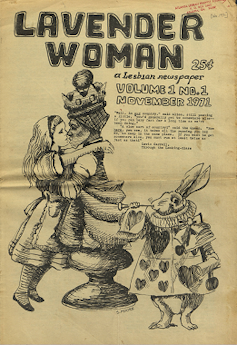
Cover image of a magazine titled 'Lavender woman' with an image of Alice from Alice in Wonderland kissing a chess piece with the head of a woman
November 1971 issue of Lavender Woman, a lesbian periodical produced in Chicago, Illinois, from 1971 to 1976. The title comes from lavender’s association with lesbianism dating back to the 1950s and 60s.
(Women’s Caucus of Chicago Gay Alliance)

The symbolism of lavender itself has particular resonance in lesbian culture. Throughout the 20th century, the colour became a coded reference to women who loved women, at once stigmatizing and unifying.

During the “Lavender Scare” of the 1950s, the U.S. government dismissed and persecuted lesbians and gay men in federal employment under the guise of “security risks.”

Yet lavender was also reclaimed as a badge of solidarity and resistance. Early lesbian feminists incorporated lavender into marches, protest sashes and art, using it as a way of asserting presence and pride in a culture that demanded invisibility.

The impact of concealment

Academic research consistently shows that concealment of sexual orientation remains widespread. A 2019 global public health study from estimated that 83 per cent of lesbian, gay and bisexual people worldwide hide their orientation from most people in their lives.

Research in Hong Kong found that concealment increases loneliness and diminishes feelings of authenticity, directly impacting well-being.

In Canada, a 2022 study of LGBTQ+ health professionals revealed how concealing one’s identity shapes daily decisions about disclosure, often producing stress and internal conflict in professional settings. Bisexual individuals frequently report concealing their orientation to avoid stigma from both heterosexual and queer communities.


Read more:
Queerphobic hate is on the rise, and LGBTQ+ communities in Canada need more support


“Passing” as straight is often a survival strategy shaped by stigma, with lasting consequences for identity, relationships and health. Lavender marriages remind us that queer lives have always been shaped by the tension between resistance and survival. Visibility itself can be an act of defiance, whether on a movie screen, in a march or in daily life.

However, visibility carries real risks: estrangement from family, discrimination or social backlash, political punishment or threats to personal safety. At the same time, concealment has often been a pragmatic choice to preserve dignity, livelihood and community.

Redefining marriage and partnership

These histories and contemporary examples reveal that marriage and partnership have never been one-size-fits-all.

For queer people, unions can be built around protection, friendship, parenting, finances or chosen kinship, just as much as romance or desire. To call them all “lavender marriages” risks oversimplifying the complex ways people craft love and survival.

Modern marriage is not bound by tradition alone; it is defined by the people who build it and by the choices they make to balance safety, authenticity and resistance in a world still learning to accept them.

This dual significance — lavender as both concealment and resistance — helps explain why the term continues to resonate today, as scholars, activists and communities revisit these marriages not simply as personal compromises, but as reflections of broader homophobia and gendered policing that continue to share queer history.

The Conversation

Gio Dolcecore does not work for, consult, own shares in or receive funding from any company or organisation that would benefit from this article, and has disclosed no relevant affiliations beyond their academic appointment.

ref. Beyond lavender marriages: What queer unions and relationships can teach us about love and safety – https://theconversation.com/beyond-lavender-marriages-what-queer-unions-and-relationships-can-teach-us-about-love-and-safety-264179

L’assassinat de Charlie Kirk, le dernier acte de violence politique dans un pays sous tension

Source: The Conversation – in French – By Jared Mondschein, Director of Research, US Studies Centre, University of Sydney

Dans un nouvel acte choquant de violence politique aux États-Unis, Charlie Kirk a été abattu alors qu’il débattait avec des étudiants dans une université de l’Utah. Il s’était fait connaître en tant qu’influenceur conservateur et partisan de Donald Trump,

Âgé de 31 ans, il était devenu célèbre en confrontant ses idées avec tous ceux qui souhaitaient s’engager avec lui. Il était indéniablement la figure conservatrice la plus influente chez les jeunes.

L’annonce de son assassinat a immédiatement enflammé les réseaux sociaux, où les camps politiques opposés se sont mutuellement accusés d’alimenter le climat de tension actuel aux États-Unis. Elle a aussi ravivé les craintes d’une nouvelle escalade de violence.

Qui était Charlie Kirk ?

La modeste tente où Kirk s’installait sur les campus universitaires américains pour débattre avec les étudiants ne doit pas faire oublier l’ampleur de son influence.

Son organisation politique, Turning Point USA (TPUSA), avait un chiffre d’affaires de 78 000 dollars lorsqu’il l’a fondée en 2012. L’année dernière, ses revenus annuels avaient atteint 85 millions de dollars américains.

Son podcast, The Charlie Kirk Show, attirait entre 500 000 et 750 000 téléchargements par épisode, le plaçant parmi les 25 podcasts les plus populaires au monde. Le compte X de Kirk, avec ses sept millions d’abonnés, dépasse celui de MSNBC (cinq millions).

En dehors du monde virtuel, TPUSA est aujourd’hui présent dans plus de 3 500 écoles et campus universitaires, regroupant plus de 250 000 étudiants membres et plus de 450 employés à temps plein et à temps partiel. Mais le chiffre le plus révélateur est celui d’une enquête TikTok menée auprès de jeunes de moins de 30 ans : parmi les électeurs pro-Trump, Kirk jouissait d’une confiance supérieure à celle de toute autre personnalité.

Bien que Kirk ait suscité de nombreuses critiques, notamment pour ses positions sur les Noirs, les Juifs, les personnes transgenres et les immigrants, ainsi que pour sa lutte contre ce qu’il qualifiait de « propagande gauchiste » chez les professeurs, il restait prêt à débattre avec presque n’importe qui.

Que ce soit dans les amphithéâtres renommés d’Oxford ou sur des campus progressistes américains, Kirk participait à des débats politiques avec quiconque voulait s’exprimer, invitant souvent les étudiants à « prouver qu’il avait tort ». Les vidéos de ces échanges — souvent un étudiant progressiste posant une question à Kirk, qui lui répondait avec une argumentation vive — ont cumulé des centaines de millions de vues sur les réseaux sociaux.

Soutien à Trump

Kirk s’est d’abord fait connaître en défendant des politiciens républicains plus conventionnels, notamment le sénateur du Texas Ted Cruz et l’ancien gouverneur du Wisconsin Scott Walker. Mais il a fini par soutenir Trump en 2016, et il lui est resté fidèle depuis.

En effet, alors que beaucoup — en particulier au sein du parti républicain — cherchaient à se distancier de Trump après des incidents tels que les violences au Capitole américain, le 6 janvier 2021, Kirk a maintenu le cap.

Sa loyauté indéfectible envers Trump et sa popularité grandissante chez les jeunes électeurs lui ont permis de gagner en influence dans les cercles conservateurs. Grâce à ce pouvoir, son organisation a financé à hauteur de plusieurs millions de dollars différentes campagnes pro-Trump. TPUSA a aussi renforcé son soutien à Pete Hegseth, candidat controversé au poste de secrétaire à la Défense, et lancé des actions pour évincer Ronna McDaniel, ancienne présidente du Comité national républicain.

La victoire politique la plus marquante de Kirk reste peut-être d’avoir mobilisé un nombre record de jeunes électeurs pour Trump en 2024. Il était alors la plus jeune personne à avoir dirigé une campagne présidentielle républicaine.

Violence politique aux États-Unis

Certains pourraient voir dans cet épisode meurtrier de violence politique aux États-Unis un événement ponctuel et se demander s’il aura un impact durable. Pourtant, la naissance du pays même résulte d’un acte de violence politique — la guerre d’indépendance. Depuis, d’autres périodes marquées par des violences politiques ont jalonné son histoire, comme la guerre civile, la reconstruction et le mouvement des droits civiques, entre autres.

Cependant, même si l’histoire des États-Unis est truffée de tels incidents, on ne peut nier que la situation s’est aggravée, en particulier au cours des dernières années.

Plusieurs études ont montré que le nombre d’attaques et de complots visant élus, candidats, responsables de partis et militants politiques a considérablement augmenté ces dernières années. En examinant les données des trois dernières décennies, le Center for Strategic and International Studies (CSIS) a constaté que le nombre d’attaques et de complots au cours des cinq dernières années est près de trois fois supérieur à celui des 25 années précédentes combinées.


Déjà des milliers d’abonnés à l’infolettre de La Conversation. Et vous ? Abonnez-vous aujourd’hui à notre infolettre pour mieux comprendre les grands enjeux contemporains.


Mais au-delà des chiffres, de plus en plus de politiciens américains évoquent la menace de la violence comme l’une des raisons de leur retrait de la vie politique ou, plus inquiétant, comme un facteur ayant influencé leurs choix de vote.

Il ne fait guère de doute que les États-Unis continueront à souffrir de la violence politique. La question est plutôt de savoir dans quelle mesure et à quel prix.

La mort de Kirk aura des répercussions bien au-delà de ses proches, notamment sa veuve et ses deux jeunes enfants. Aujourd’hui, le mouvement conservateur américain perd l’une de ses voix les plus influentes.

La Conversation Canada

Jared Mondschein ne travaille pas, ne conseille pas, ne possède pas de parts, ne reçoit pas de fonds d’une organisation qui pourrait tirer profit de cet article, et n’a déclaré aucune autre affiliation que son organisme de recherche.

ref. L’assassinat de Charlie Kirk, le dernier acte de violence politique dans un pays sous tension – https://theconversation.com/lassassinat-de-charlie-kirk-le-dernier-acte-de-violence-politique-dans-un-pays-sous-tension-265135

Cuándo podremos decir un “sí” rotundo a “hemos encontrado vida en Marte”

Source: The Conversation – (in Spanish) – By José Ygnacio Pastor Caño, Catedrático de Universidad en Ciencia e Ingeniería de los Materiales, Universidad Politécnica de Madrid (UPM)

Las manchas de leopardo encontradas en el crater Jerezo de Marte podrían indicar que, hace miles de millones de años, las reacciones químicas en esta roca podrían haber sustentado vida microbiana NASA/JPL-Caltech/MSSS, CC BY

Una roca moteada, bautizada como “Cheyava Falls” y situada en un antiguo cauce fluvial del cráter Jezero, ha encendido de nuevo una pregunta antigua con traje moderno: ¿hay o hubo vida en Marte?

Entre minerales rojos y firmas orgánicas, la NASA acaba de anunciar el hallazgo de posibles biofirmas en un roca marciana. El comunicado ha desatado el frenesí, pero en ciencia es un frenesí cauto.

Este es un análisis –con los pies en los datos– sobre pistas, escalas de certeza y lo que significaría oír, por fin, un “sí, esto es vida extraterrestre”. Pero aún no ha llegado el momento.

Los indicios de vida que han visto las sondas de la NASA

Desde hace años, la NASA ha ido informando de hallazgos que se acercan a lo que podría parecerse a una huella de vida.

En 1976, las sondas Viking realizaron los primeros experimentos biológicos en Marte. Sus resultados fueron intrigantes, pero también muy polémicos, y no se consideraron una prueba concluyente de vida. Desde entonces, ninguna misión ha vuelto a llevar experimentos tan directos. La lección de Viking es clara: en la exploración del planeta rojo, conviene mantener la curiosidad… pero también la cautela en las expectativas.

En 2018, la NASA informó de indicios de vida orgánica en barro antiguo de Marte. Entonces el rover Curiosity detectó en el cráter Gale moléculas orgánicas preservadas en lutitas lacustres (un tipo de roca sedimentaria, compuesta por partículas muy finas de arcilla y limo que se depositaron en el fondo de los lagos) de aproximadamente 3500 millones de años y una variación estacional del metano de fondo. Son ingredientes y pistas, pero no es propiamente vida.

En el estudio reciente, la NASA informa que en la zona conocida como Bright Angel, el instrumento SHERLOC del rover Perseverance también identificó la presencia de moléculas orgánicas, mientras que el instrumento PIXL mapeó minerales como vivianita y greigita en un lodo rico en hierro, fósforo y azufre.

Pero este tipo de mezcla puede formarse tanto por la acción de microorganismos como por procesos puramente químicos. Así que puede ser un indicio de vida, o no.

Esa ambigüedad es justo lo que resalta la síntesis publicada en Nature, que subraya cómo estos hallazgos mantienen abierto el debate sobre si Marte albergó vida o no.

Las muestras de metano

Anteriormente, el Curiosity detectó variaciones locales y estacionales en la presencia de metano en el planeta vecino, algo que también podría asociarse con una biofirma. Sin embargo, el orbitador europeo TGO (de la misión ExoMars) no ha encontrado prácticamente nada: sus mediciones ponen un límite global muy estricto, menos de 0,05 partes por mil millones.

El reto ahora es conciliar ambos resultados: ¿se trata de pequeñas emisiones superficiales que la atmósfera elimina rápidamente, o de mediciones que están sesgadas por factores aún desconocidos? La ciencia sigue en curso y la respuesta todavía no está cerrada.

¿Qué sería una prueba irrefutable?

Tras varias decepciones, la comunidad científica ha elaborado una “escala de confianza” para detectar vida, llamada Confidence of Life Detection (CoLD).. Es como una escalera de siete peldaños: primero se detecta una posible señal y después hay que descartar contaminación; demostrar que la biología sería viable en ese entorno; excluir explicaciones no biológicas; encontrar otra señal independiente; derrotar hipótesis alternativas… y, por último, conseguir confirmación por distintos equipos. ¿Cómo se sube esa escalera? No con un único hallazgo espectacular, sino con varias pruebas que, juntas, formen un caso sólido.

Una química orgánica compleja con homoquiralidad (se refiere a moléculas que tienen una estructura no superponible con su imagen especular, similar a la de nuestras manos) sería un buen indicio, porque es extremadamente difícil de generar sin vida.

Otro rastro lo darían los isótopos: variaciones en elementos como el carbono o el azufre que, dentro de su contexto geológico, se ajusten a lo que esperaríamos de procesos biológicos. Sin ese contexto, el isótopo puede engañar.

También podrían encontrarse texturas microscópicas que recuerden a células o biofilms, siempre asociadas a moléculas orgánicas e isótopos de “firma biológica”.

Una sola pista nunca basta: se necesitan varias, y que se repitan de manera independiente, con instrumentos distintos.

Lo ideal sería confirmar en la Tierra, con muestras traídas de Marte bajo protocolos estrictos para evitar contaminación. Al final, no se trata de obtener una foto espectacular, sino un expediente coherente y abrumador.

De Europa a Venus

¿Y en qué otros mundos podría asomarse la vida? Estos son los candidatos:

  • Europa (Júpiter). Es el favorito: oculta un océano salado bajo el hielo. la misión Europa Clipper, que llegará hacia 2030, hará casi 50 sobrevuelos para estudiar si allí existen condiciones habitables. No busca vida directamente, pero sí comprobar si podría haberla.

  • Encélado (luna de Saturno). Sus espectaculares géiseres conectan el océano interno con el espacio. Allí se ha detectado fósforo en abundancia, un nutriente esencial para la vida. Es, literalmente, un laboratorio natural abierto.

  • Titán (luna de Saturno). Con su atmósfera densa y rica en compuestos orgánicos, es un lugar único para explorar química prebiótica. La misión Dragonfly despegará a finales de esta década (si no entra en el grupo de recortes de Donald Trump) y aterrizará hacia mediados de los 30, para estudiar si podrían darse formas de bioquímica distintas a las terrestres.

  • Venus. En sus nubes se han detectado posibles rastros de fosfina, aunque el debate sigue abierto. Para unos es una señal sugerente; para otros, un artefacto de las observaciones. El debate es un buen antídoto contra el autoengaño.

¿Y si se encuentra vida?

En ciencia y tecnología, aceleraríamos las misiones de retorno de muestras y desarrollaríamos sistemas de contención de máximo nivel, además de nuevas herramientas para detectar formas de vida “no terráqueas”; en filosofía, nos obligaría a dejar de confundir singularidad con privilegio; en religión, probablemente inspiraría lecturas más inclusivas de la creación, más que crisis de fe; en política y ética, reforzaría la necesidad de no contaminar otros mundos ni traer riesgos a la Tierra.

Y en lo cotidiano, se abriría la puerta a nuevos materiales, sensores y biotecnologías

Pero más allá de lo práctico, nos brindaría una cura contra el provincianismo: nos recordaría que no somos el centro del universo.

¿Cuándo podríamos afirmarlo rotundamente?

Hay dos ventanas realistas. En primer lugar, hacia la década de 2030. El rover europeo Rosalind Franklin, cuyo lanzamiento está previsto para 2028, llegará a Marte en unos cinco años. Está diseñado para perforar hasta dos metros bajo la superficie, donde la radiación no ha destruido los compuestos más delicados. Con su instrumento MOMA podría encontrar moléculas orgánicas complejas, señales de quiralidad (esa preferencia por una “mano” molecular que suele asociarse a la vida) y posibles texturas biológicas. No será fácil, pero las posibilidades están ahí.

La segunda ventana sería el retorno de muestras. La misión conjunta de NASA y ESA, que busca traer rocas marcianas a la Tierra, se ha encarecido y retrasado, por lo que lo más probable es que su “veredicto de laboratorio” no llegue antes de la década de 2040.

Eso sí, incluso si la roca Cheyava Falls ofrece biofirmas tentadoras, la confirmación no llegará con un único indicio. Habrá que recorrer toda la “escalera CoLD”: descartar explicaciones no biológicas y repetir pruebas de forma independiente, idealmente en laboratorios terrestres. El calendario es incierto. Mientras tanto, el escepticismo no supone un freno: es la dirección en la que vamos.

Si la vida marciana existe o existió, nos esperará, no tiene nuestras prisas. Y si no existió nunca, el hallazgo más grande será comprender por qué aquí sí. Esa respuesta también nos pertenece y entusiasma.

The Conversation

José Ygnacio Pastor Caño no recibe salario, ni ejerce labores de consultoría, ni posee acciones, ni recibe financiación de ninguna compañía u organización que pueda obtener beneficio de este artículo, y ha declarado carecer de vínculos relevantes más allá del cargo académico citado.

ref. Cuándo podremos decir un “sí” rotundo a “hemos encontrado vida en Marte” – https://theconversation.com/cuando-podremos-decir-un-si-rotundo-a-hemos-encontrado-vida-en-marte-265117

Russian drones over Poland is a serious escalation – here’s why the west’s response won’t worry Putin

Source: The Conversation – UK – By Stefan Wolff, Professor of International Security, University of Birmingham

On the morning of September 10, Nato jets were scrambled over eastern Poland to defend the airspace of an alliance member against an incursion by Russian drones. It was the first time that the west fired shots in the Kremlin’s war against Ukraine.

This incursion marks a serious escalation by Moscow. But it also highlights yet again that the west has no clear red lines and is unprepared to respond decisively if red lines that were taken for granted in the past – like the territorial integrity of Nato members – are crossed.

This latest Russian escalation isn’t the usual war of words. It was only last week that Russia’s president, Vladimir Putin, warned that foreign troops in Ukraine would be legitimate targets for his invasion force.

He slightly qualified his comments by noting that this would be the case “especially now, while the fighting is ongoing”. But the message was nevertheless clear. Russia will oppose any international security guarantees that involve western troops in Ukraine. This has been a long-standing and frequently articulated position by Russia. Yet, Putin’s rhetoric threatening to target western troops clearly ups the ante.

But these are not the only ways in which the Kremlin has markedly turned up the pressure over the past few weeks and months. Russia has also retained some momentum in its military campaign in Ukraine and has been further empowered by several successes on the diplomatic front.

On the battlefield, Russia has continued to demonstrate significant advantages in manpower and military hardware.

Where the entire Nato alliance struggled to cope with the incursion of just 19 drones, Ukraine has been subject to an intense air campaign with hundreds of drones and often dozens of missiles every night for months.

The attacks have become more brazen – recently targeting Ukraine’s government building in Kyiv. They have also become more deadly, leading to increasing loss of civilian lives. As in past years, Russia has also targeted Ukrainian energy infrastructure, which bodes ill for another grim winter for the country.

On the ground, Russian gains have been small and Ukraine has regained strategically important territory around the key city of Pokrovsk in the Donetsk region. Nonetheless, and this is what matters for Putin’s messaging, Russia is advancing, however incrementally and costly it might be.

ISW map showing the state of the conflict in Ukraine,September, 2025.
The state of the conflict in Ukraine, September 10 2025.
Institute for the Study of War

Putin’s aggressive moves

Diplomatically, Putin received an important boost from the annual summit of the Shanghai Cooperation Organisation in Tianjin and subsequent bilateral deals agreed with China. He will have been cheered by the cordial relations on display between Russian, Chinese and North Korean leaders at the September 3 military parade to mark China’s victory over Japan in the second world war.

The Russian president can now be more assured than ever that his partners will have his back – economically in the case of China and India, and militarily in the case of North Korea.

Buoyed by such “successes” that his war machine will not suddenly grind to a halt, the Russian president felt confident enough to demand that Ukraine negotiate an end to the war with him or face the consequences of him ending the war by force.

Putin’s idea of a negotiated end to the war, however, is anything but that. What he has in mind is that Ukraine and its western allies should simply accept his longstanding demands: territorial losses, no Nato membership and no western forces to secure any peace deal.

This multi-layered Russian pressure campaign is not merely an accidental confluence of unrelated forces somehow magically lining up in Putin’s favour. It is part of a carefully crafted campaign for Russia to retain relevance in what will probably shape up as a future bipolar US and Chinese-dominated international order. If Putin has accepted Chinese dominance in Asia, he still sees opportunities for Russia to be the dominant power in Europe – and restore at least part of its Soviet-era zone of influence.

For that to be achieved, the Kremlin needs to demonstrate that Ukraine’s western partners are feckless in the face of Russian determination. So far, Putin is doing well. All of the deadlines and ultimatums set by the US president, Donald Trump, have been ignored by Russia – at zero cost.

Trump’s response to Russian drones in Polish airspace was a short post on his Truth Social network that indicated surprise more than an actual response to what could quickly develop into a serious crisis. Meanwhile, Trump has yet to offer his support for a bipartisan bill in the US senate to put more sanctions pressure on Russia.

Western response

Similarly, while European leaders have been quick and forceful in their condemnations of this latest Russian provocation, their reactions have, as usual, been at the rhetorical level.

Poland merely invoked Nato’s Article 4 procedure for formal consultations among allies in the North Atlantic Council. But the outcome of this consultation was little more than a meek statement by Mark Rutte, Nato’s secretary general, that “a full assessment of the incident is ongoing” and that the alliance “will closely monitor the situation along our eastern flank, our air defences continually at the ready”.

ISW map showing where the debris from Russia's drones was found in Poland.
Where the debris from Russia’s drones was found in Poland.
Institute for the Study of War

The statement by the EU’s foreign affairs chief, Kaja Kallas, offered solidarity with Poland and promised to “raise the cost for Moscow further by ramping up sanctions significantly on Russia and its enablers”. Given that the EU is on its 18th sanctions package and the war in Ukraine continues unabated, it’s hard to see a gamechanger here. Delivered the morning after the Russian drone incursions into Poland, the annual state of the union address by Ursula von der Leyen offered little more than confirmation of EU aspirations “to be able to take care of our own defence and security”.

None of this will have Putin worried. It should, however, worry Ukrainians and the rest of Europe.

The Conversation

Stefan Wolff is a past recipient of grant funding from the Natural Environment Research Council of the UK, the United States Institute of Peace, the Economic and Social Research Council of the UK, the British Academy, the NATO Science for Peace Programme, the EU Framework Programmes 6 and 7 and Horizon 2020, as well as the EU’s Jean Monnet Programme. He is a Trustee and Honorary Treasurer of the Political Studies Association of the UK and a Senior Research Fellow at the Foreign Policy Centre in London.

ref. Russian drones over Poland is a serious escalation – here’s why the west’s response won’t worry Putin – https://theconversation.com/russian-drones-over-poland-is-a-serious-escalation-heres-why-the-wests-response-wont-worry-putin-265001

S’indigner des dépassements de coûts des projets publics ? Certainement, mais pas toujours !

Source: The Conversation – in French – By Pierre-André Hudon, Professeur agrégé | Associate Professor, Université Laval

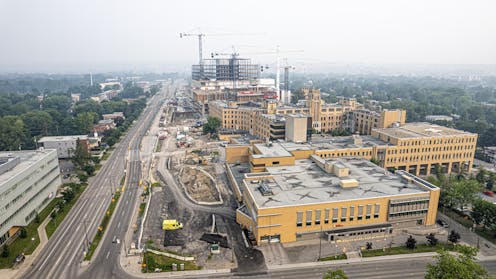
Le gouvernement a récemment annoncé que le coût du nouveau complexe hospitalier de Québec augmentera de 418 M$, pour atteindre près de 2,66 G$, soit une augmentation de plus de 18%. Gabriel Picard, CC BY-SA

Les dépassements de coûts des projets publics font régulièrement la une… et aboutissent parfois en commission d’enquête, comme c’est le cas actuellement avec la commission Galant sur le scandale SAAQClic.

Difficile de s’en étonner : voir s’ajouter des millions de dollars aux frais des contribuables a de quoi indigner. Mais l’expression « dépassements de coûts » cache une réalité plus complexe. On doit notamment se demander par rapport à quoi, exactement, les dépassements sont mesurés.

Le sens du mot peut varier énormément.

Compare-t-on les coûts réels des projets aux toutes premières estimations, souvent imprécises et réalisées avant même que les détails ne soient connus ? À des estimations solides, mais rapidement rendues obsolètes par l’inflation et l’évolution des conditions de marché, surtout si le lancement du projet a tardé ? À un design initial qui, fût-il pertinent, ne correspond plus au projet final puisque celui-ci a évolué en raison de changements légitimes ou de nouvelles contraintes techniques découvertes en cours de route ? Ou même à des coûts volontairement sous-estimés pour faciliter l’acceptation des projets ?

Même lorsque des surcoûts surviennent alors que les estimations initiales sont bonnes, cela ne veut pas nécessairement dire que l’on s’est « fait avoir » et que la gestion des équipes de projet et des sous-traitants n’était pas assez diligente.

Des conditions structurelles, comme des contrats inflexibles, des exigences de réponses aux appels d’offres trop contraignantes, ou des mécanismes de planification budgétaire mésadaptés pourraient expliquer des coûts systématiquement plus élevés dans les projets publics. Dans d’autres occasions, les gestionnaires peuvent, au contraire, avoir réagi avec diligence en réalisant les changements nécessaires, quitte à payer un peu plus cher.

La négligence, l’incompétence, voire la corruption peuvent peut-être expliquer certains dépassements, mais d’autres raisons le peuvent également. Il importe à cet égard de ne pas systématiquement interpréter les dépassements de coûts comme relevant de la première catégorie. Bien souvent, seule une analyse détaillée peut discriminer entre dépassements de coûts justifiés et injustifiés.

En tant que professeur de gestion de projets à l’Université Laval, je m’intéresse depuis longtemps aux questions de gouvernance des projets publics et d’octroi des contrats publics, deux activités qui sont au cœur de la mission de l’État.

Une analyse minutieuse pour bien comprendre

Plutôt que de dépassements de coûts, il serait donc plus exact de parler d’écarts entre les coûts estimés et réels. Et pour évaluer ces coûts, autant estimés que réels, et les écarts qui en découlent, il faut bien comprendre les variables de base.

  1. La portée du projet, qui détermine ce qui est inclus ou non dans l’évaluation.

  2. Le moment où la portée et les coûts sont évalués.

  3. Les quantités et l’effort, soit les volumes de biens et services et le nombre d’heures de travail nécessaires à la réalisation du projet.

  4. Les coûts unitaires, qu’il s’agisse des taux horaires pour la main-d’œuvre ou de prix pour les biens et services.


À lire aussi :
Explosion des coûts dans les mégaprojets : pire au Québec, vraiment ?


L’analyse des écarts exige donc un portrait complet, ventilé par catégories détaillées, tant des estimations que des coûts réels. Ce n’est que dans ces conditions, grâce à un exercice de comparaison systématique, que l’on peut identifier précisément la nature des anomalies : taux horaires excessifs imposés par des sous-traitants, comme dans le scandale SAAQClic ; coûts moyens par pied carré hors normes, comme avec cette école secondaire à un demi-milliard de dollars ; volumes d’heures exagérés pour des tâches simples ; prix excessifs pour certains équipements ou matériaux, comme ceux pour remplacer les feux de circulation à Longueuil, dénoncés par la mairesse Catherine Fournier ; « extras » douteux, comme ceux maintes fois dénoncés durant les audiences de la commission Charbonneau, notamment dans le domaine du génie civil, etc.

Sans ce travail minutieux, toute discussion sur ce qu’on qualifie de dépassements reste largement spéculative.

Transparence et changement

La tâche se complique toutefois dans la pratique, car une grande part des travaux est souvent confiée à des sous-traitants rémunérés à forfait, souvent peu enclins à dévoiler le détail de leurs heures et de leurs taux horaires.

Il faut aussi rappeler que les coûts unitaires peuvent fluctuer considérablement dans le temps et selon l’état du marché, par exemple en période de forte demande, en fonction du niveau de risque perçu du projet, ou lorsqu’un fournisseur est en situation de monopole.

Quant aux variations dans les quantités et l’effort requis, elles traduisent le plus souvent une définition initiale insuffisante des besoins et de la portée, une gestion trop permissive, ou encore des changements introduits en cours de route, qu’ils soient légitimes ou non.

Des données, de la transparence et de l’expertise pour alimenter l’analyse

Tout ce travail d’analyse requiert l’accès à des données fiables, permettant de suivre l’évolution des prix sur de longues périodes, ainsi que des estimations détaillées précisant la portée et le niveau d’effort prévus des projets.


Déjà des milliers d’abonnés à l’infolettre de La Conversation. Et vous ? Abonnez-vous gratuitement à notre infolettre pour mieux comprendre les grands enjeux contemporains.


Le développement d’une véritable infrastructure de données et d’intelligence d’affaires apparaît indispensable. Au Québec, les données ouvertes sur les marchés publics sont un bon début, mais les informations disponibles demeurent trop partielles pour permettre une analyse rigoureuse.

À cela s’ajoute la nécessité de disposer d’une expertise publique solide, capable de produire des estimés indépendants, plutôt que de dépendre des mêmes firmes privées qui décrochent ensuite trop souvent les contrats.

Des pratiques d’approvisionnement qui doivent évoluer

Sur le plan des pratiques, la tendance à privilégier les contrats à prix fixe, censés limiter les « extras », a parfois un effet paradoxal : elle incite les sous-traitants à gonfler leurs prix lorsqu’ils perçoivent un projet comme risqué.

Des approches permettant un meilleur partage des risques pourraient atténuer ce phénomène, d’autant plus que la Loi sur les contrats des organismes publics a récemment été réformée pour permettre les approches collaboratives et faciliter les évaluations des soumissions basées sur la qualité – plutôt que sur le prix le plus bas –, lesquelles reflètent souvent une réflexion en profondeur sur les besoins et une planification plus soignée.

Aussi, des équipes d’approvisionnement dédiées, capables de suivre de près l’état du marché, de comprendre et de traduire les besoins techniques des professionnels variés en devis clairs et flexibles semblent nécessaires.

Au Québec, des équipes spécialisées comme celles du Centre d’acquisitions gouvernementales, de la Société québécoise des infrastructures ou de la division des approvisionnements stratégiques d’Hydro-Québec offrent déjà un début de solution, mais les ressources manquent dans bien d’autres secteurs.

Une autre solution consisterait à chercher à accélérer l’autorisation des projets publics. Éviter que de longues périodes ne s’écoulent entre la planification et l’exécution permettrait au minimum de limiter l’effet de l’inflation et des changements de conditions de marché qui contribuent souvent à gonfler les coûts.

La Conversation Canada

Pierre-André Hudon possède le titre de professionnel en gestion de projet (PMP). Il reçoit actuellement du financement de recherche du Conseil de recherches en sciences humaines du Canada (CRSH) et collabore à des projets de recherche commandités par l’Ordre des ingénieurs du Québec (OIQ) et de l’Autorité des marchés publics du Québec (AMP).

ref. S’indigner des dépassements de coûts des projets publics ? Certainement, mais pas toujours ! – https://theconversation.com/sindigner-des-depassements-de-couts-des-projets-publics-certainement-mais-pas-toujours-264430