Glacial lake flood hits Juneau, Alaska, reflecting a growing risk as mountain glaciers melt around the world

Source: The Conversation – USA (2) – By Alton C. Byers, Faculty Research Scientist, Institute of Arctic and Alpine Research, University of Colorado Boulder
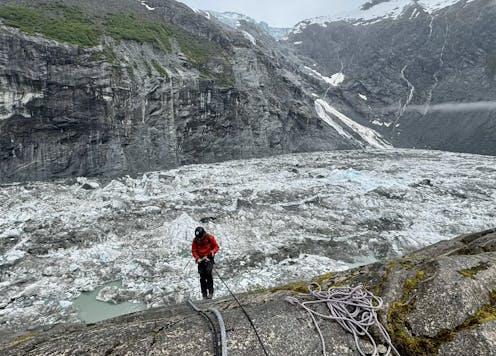
U.S. Geological Survey staff check monitoring equipment in Suicide Basin in June 2025. By August, the basin had filled with meltwater. Jeff Conaway/U.S. Geological Survey

Each summer in the mountains above Juneau, Alaska, meltwater from the massive Mendenhall Glacier flows into mountain lakes and into the Mendenhall River, which runs through town.

Since 2011, scientists and local officials have kept a close eye on one lake in particular: Suicide Basin, an ice-dammed bowl on an arm of the glacier. The glacier once covered this area, but as the ice retreated in recent decades, it left behind a large, deep depression.

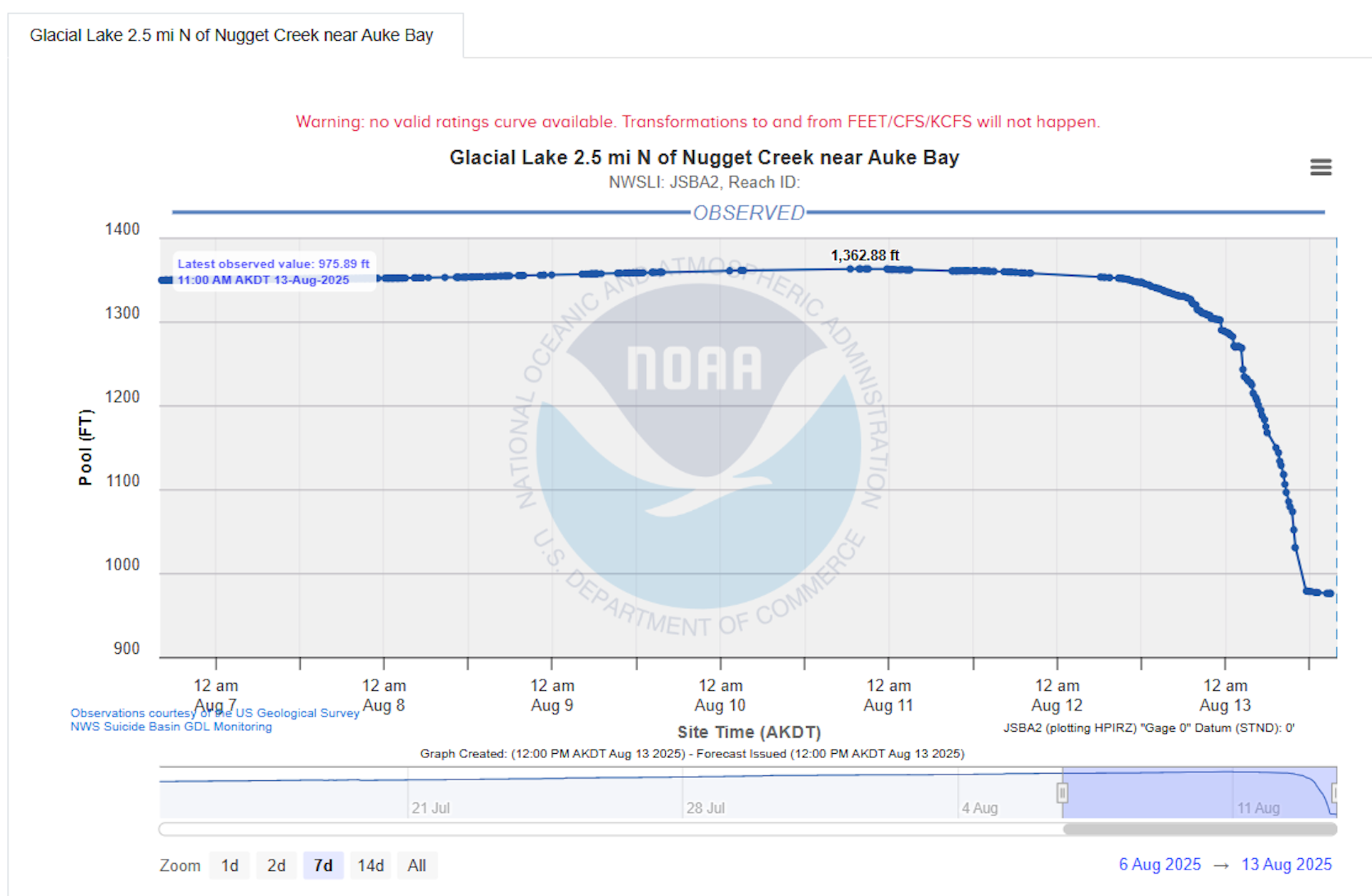
In the summers of 2023 and 2024, meltwater filled Suicide Basin, overflowed its rim and escaped through tunnels in the ice, sending surges of water downstream that flooded neighborhoods along the river.

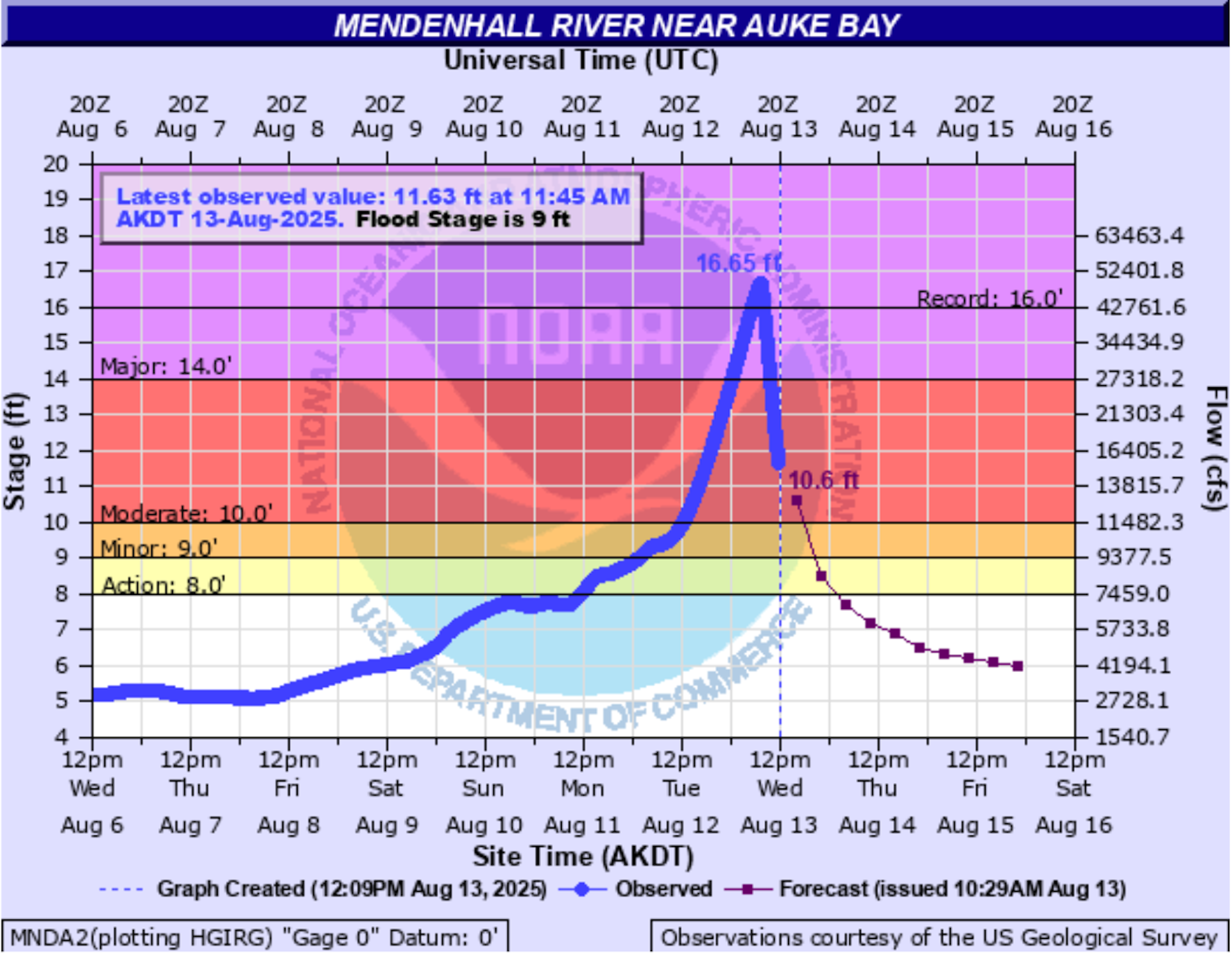
On Aug. 12-13, 2025, Suicide Basin flooded again.

The surge of water from Suicide Basin reached record levels at Mendenhall Lake on Aug. 13 on its way toward Juneau. Officials urged some neighborhoods to evacuate. As the water rose, new emergency flood barriers appeared to have limited the damage.

The glacial flood risks that Juneau is now experiencing each summer are becoming a growing problem in communities around the world. As an Earth scientist and a mountain geographer, we study the impact that ice loss can have on the stability of the surrounding mountain slopes and glacial lakes, and we see several reasons for increasing concern.
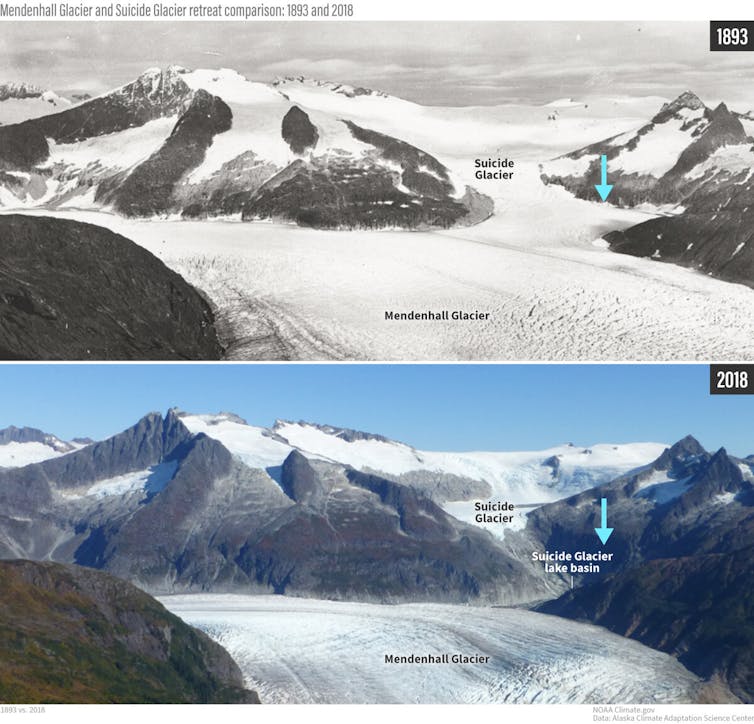
Two photo shows the same scene 125 years apart. The glacier loss is evident, and the lake between Suicide Glacier and Mendenhall Glacier didn't exist in 1983
Two photo shows the same scene 125 years apart. The glacier loss is evident, and the lake between Suicide Glacier and Mendenhall Glacier didn’t exist in 1893.
NOAA/Alaska Climate Adaptation Science Center

The growing risk of glacial floods

In many mountain ranges, glaciers are melting as global temperatures rise. Europe’s Alps and Pyrenees lost 40% of their glacier volume from 2000 to 2023.

These and other icy regions have provided freshwater for people living downstream for centuries – almost 2 billion people rely on glaciers today. But as glaciers melt faster, they also pose potentially lethal risks.

Water from the melting ice often drains into depressions once occupied by the glacier, creating large lakes. Many of these expanding lakes are held in place by precarious ice dams or rock moraines deposited by the glacier over centuries.

A glacial lake with high peaks behind it shows how dams build up from the glacier's movement
Imja Lake, a glacial lake in the Mount Everest region of Nepal, began as meltwater ponds in 1962 and now contains 90 million cubic meters of water. Its water level was lowered to protect downstream communities.
Alton Byers

Too much water behind these dams or a landslide or large ice discharge into the lake can break the dam, sending huge volumes of water and debris sweeping down the mountain valleys, wiping out everything in the way.

The Mendenhall Glacier floods, where glacial ice holds back the water, are classic jökulhlaup, or “glacier leap” floods, first described in Iceland and now characteristic of Alaska and other northern latitude regions.

Erupting ice dams and landslides

Most glacial lakes began forming over a century ago as a result of warming trends since the 1860s, but their abundance and rates of growth have risen rapidly since the 1960s.

Many people living in the Himalayas, Andes, Alps, Rocky Mountains, Iceland and Alaska have experienced glacial lake outburst floods of one type or another.

A glacial lake outburst flood in the Sikkim Himalayas in October 2023 damaged more than 30 bridges and destroyed a 200-foot-high (60 meters) hydropower plant. Residents had little warning. By the time the disaster was over, more than 50 people had died.

Scientists investigate flooding from Mendenhall Glacier’s Suicide Basin.

Avalanches, rockfalls and slope failures can also trigger glacial lake outburst floods.

These are growing more common as frozen ground known as permafrost thaws, robbing mountain landscapes of the cryospheric glue that formerly held them together. These slides can create massive waves when they plummet into a lake. The waves can then rupture the ice dam or moraine, unleashing a flood of water, sediment and debris.

That dangerous mix can rush downstream at speeds of 20-60 mph (30-100 kph), destroying homes and anything else in its path.

The casualties of such an event can be staggering. In 1941, a huge wave caused by a snow and ice avalanche that fell into Laguna Palcacocha, a glacial lake in the Peruvian Andes, overtopped the moraine dam that had contained the lake for decades. The resulting flood destroyed one-third of the downstream city of Huaraz and killed between 1,800 and 5,000 people.
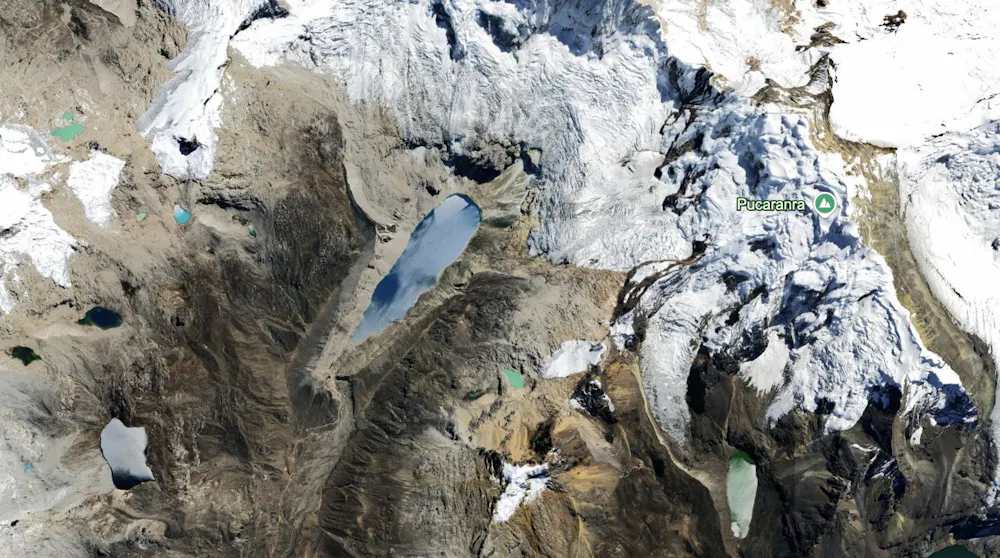
A satellite view of a large glacial lake at the edge of a deep valley.
Teardrop-shaped Lake Palcacocha, shown in this satellite view, has expanded in recent decades. The city of Huaraz, Peru, is just down the valley to the right of the lake.
Google Earth, data from Airbus Data SIO, NOAA, U.S. Navy, NGA, GEBCO

In the years since, the danger there has only increased. Laguna Palcacocha has grown to more than 14 times its size in 1941. At the same time, the population of Huaraz has risen to over 120,000 inhabitants. A glacial lake outburst flood today could threaten the lives of an estimated 35,000 people living in the water’s path.

Governments have responded to this widespread and growing threat by developing early warning systems and programs to identify potentially dangerous glacial lakes. In Juneau, the U.S. Geological Survey starts monitoring Suicide Basin closely when it begins to fill.

Some governments have taken steps to lower water levels in the lakes or built flood-diversion structures, such as walls of rock-filled wire cages, known as gabions, that divert floodwaters from villages, infrastructure or agricultural fields.

Where the risks can’t be managed, communities have been encouraged to use zoning that prohibits building in flood-prone areas. Public education has helped build awareness of the flood risk, but the disasters continue.

Flooding from inside and thawing permafrost

The dramatic nature of glacial lake outburst floods captures headlines, but those aren’t the only risks.

Englacial conduit floods originate inside of glaciers, commonly on steep slopes. Meltwater can collect inside massive systems of ice caves, or conduits. A sudden surge of water from one cave to another, perhaps triggered by the rapid drainage of a surface pond, can set off a chain reaction that bursts out of the ice as a full-fledged flood.

An englacial conduit flood begins in the Himalayas. Elizabeth Byers.

Thawing mountain permafrost can also trigger floods. This permanently frozen mass of rock, ice and soil has been a fixture at altitudes above 19,685 feet (6,000 meters) for millennia.

As permafrost thaws, even solid rock becomes less stable and is more prone to breaking, while ice and debris are more likely to become detached and turn into destructive and dangerous debris flows. Thawing permafrost has been increasingly implicated in glacial lake outburst floods because of these new sources of potential triggers.

A glacial outburst flood in Barun Valley started when nearly one-third of the face of Saldim Peak in Nepal fell onto Langmale Glacier and slid into a lake. The top image shows the mountain in 2016. The lower shows the same view in 2017.
Elizabeth Byers (2016), Alton Byers (2017)

How mountain regions can reduce the risk

A study published in 2024 counted more than 110,000 glacial lakes around the world and determined 10 million people’s lives and homes are at risk from glacial lake outburst floods.

To help prepare and protect communities, our research points to some key lessons:

  1. Some of the most effective early warning systems have proven to be cellphone alerts. If combined with apps showing real-time water levels at a dangerous glacial lake, residents could more easily assess the danger.

  2. Projects to lower glacier lakes aren’t always effective. In the past, at least two glacial lakes in the Himalayas have been lowered by about 10 feet (3 meters) when studies indicated that closer to 65 feet (20 meters) was needed. In some cases, draining small, emerging lakes before they develop could be more cost effective than waiting until a large and dangerous lake threatens downstream communities.

  3. People living in remote mountain regions threatened by glacial lakes need a reliable source of information that can provide regular updates with monitoring technology.

  4. Recently it has become clear that even tiny glacial lakes can be dangerous given the right combination of cascading events. These need to be included in any list of potentially dangerous glacial lakes to warn communities downstream.

The U.N. declared 2025 the International Year of Glaciers’ Preservation and 2025-2034 the decade of action in cryospheric sciences. Scientists on several continents will be working to understand the risks and find ways to help communities respond to and mitigate the dangers.

This is an update to an article originally published March 19, 2025, to include the latest Alaska flooding.

The Conversation

Suzanne OConnell receives funding from The National Science Foundation

Alton C. Byers does not work for, consult, own shares in or receive funding from any company or organization that would benefit from this article, and has disclosed no relevant affiliations beyond their academic appointment.

ref. Glacial lake flood hits Juneau, Alaska, reflecting a growing risk as mountain glaciers melt around the world – https://theconversation.com/glacial-lake-flood-hits-juneau-alaska-reflecting-a-growing-risk-as-mountain-glaciers-melt-around-the-world-263109


How Shakespeare can help us overcome loneliness in the digital age

Source: The Conversation – Canada – By Marie Trotter, PhD Candidate, Department of English, McGill University

Are you addicted to endless scrolling? Trapped by the algorithms on your smartphone? Theatre might just be the antidote.

“Denmark’s a prison,” says Hamlet, Prince of Denmark, in one of Shakespeare’s most famous dramas. In this scene, he is speaking to his friends Rosencrantz and Guildenstern, who have been recruited to spy on him by his mother and uncle.

Hamlet isn’t literally imprisoned, but he does feel trapped by his circumstances. He comes to realize that his uncle murdered his father, married his mother and then seized the kingship. He is being watched. He wants to escape the surveillance of the Danish court.

More than 400 years after Hamlet’s first performance, experts have warned that we are trapped and manipulated by the surveillance of our smartphones. Our online behaviour has transformed us into marketable data, and addictive algorithms have bound us to an endless recycling of what we have “liked.”

Digital tribalism threatens democracy

This digital herding also affects who we interact with online. We often find ourselves gathering with others who like the same people and share the same politics, seeking both protection and alleviation from loneliness.

This new form of digital entrapment has given birth to a kind of tribalism — a strong sense of loyalty to a group or community — that political and social researchers warn may threaten a foundational practice of democracy: the possibility of authentic conversation among people.

The technologies of surveillance have drastically changed since Shakespeare’s time. Today, our habits are transformed into data by a virtual panopticon of devices.

The loneliness that many of us, especially young people, are suffering echoes Hamlet’s sense of isolation and inability to voice his true feelings.

While our culture is very different from Shakespeare’s London, his plays — and those by others — still have the potential to bring people together and help us think deeply about our shared experience.

Shakespeare’s playhouse conversations

In Hamlet, the prince knows something is rotten in Denmark, but he finds that he cannot speak publicly about it. All alone on stage, he says: “But break, my heart, for I must hold my tongue.”

Today, it seems, he could just as easily be speaking about how we curate ourselves online in our unquenchable desire to be seen and heard by others. But it doesn’t have to be this way.

Consider Shakespeare’s playhouse, an extraordinary gathering place for thousands of people. It was a space where all kinds of people could have conversations with the actors and each other about all kinds of themes, like the justice of “taming” an unruly woman (The Taming of the Shrew), how to push back against the power of a tyrant (Richard III) or how Christians might think differently about Jews (The Merchant of Venice).

Shakespeare opened established ways of thinking to questioning, inviting audiences to see the world and each other in new ways.

And audiences in Shakespeare’s time didn’t just sit quietly and listen. They interacted actively and loudly with the actors and the stories they saw on stage.

Historical research suggests theatre helped change early modern society by making it possible for commoners to have a public voice. In this way, Shakespeare contributed to the emergence of modern democratic culture.

Conversation pieces

Hamlet is one of Shakespeare’s most frequently performed tragedies, and his anguish under a surveillance state speaks to our own struggles for freedom and belonging.

In his soliloquies, he questions his own indecisiveness, but he prompts the audience, too, searching for their support: “Am I a coward?” he asks. His questions break the fourth wall, looking for answers in the audience.

Sometimes they talk back: from an intoxicated spectator at the Royal Shakespeare Company in the 1960s who shouted “yes!” to a teenager at the Stratford Festival in 2022 who whispered “no,” audiences want to speak with Hamlet, responding to his self-doubt with their own perspectives.

Hamlet knew about the theatre’s liberating power, too. In his search for a public voice, he chose to stage a play to expose corruption in Denmark. “The play’s the thing,” he said, “wherein I’ll catch the conscience of the king.”

Psychology researchers agree. Attending a play is proven to provoke the awakening of conscience, helping audiences empathize with political views that differ from their own. This understanding leads to pro-social behaviour outside the theatre.

Empathy, insight and social engagement

After watching a play by American playwright Dominique Morisseau about the impacts of the 2008 auto plant closures in Detroit, audiences were more likely to donate to and volunteer with charities supporting the homeless.

Seeing the vulnerability of fellow human beings onstage helps audience members become more empathetic towards each others’ experiences.

Theatre also helps the artists who make it rediscover their humanity. In the 2013 book Shakespeare Saved My Life, English professor Laura Bates writes about her experience teaching “the bard” to men in solitary confinement who could only speak to each other through slots in their cell doors.

One incarcerated person found a kindred spirit in Richard II, who is imprisoned at the end of his play. Reading Macbeth helped him understand the mistakes he made in his search for power.

A woman in a similar program in Michigan saw herself in Lady Anne’s grief in Richard III. Beyond empathizing with the characters, prisoners also felt empowered to confront the roles they had played in their past and to imagine new roles for the future.

Building community

The path towards empowerment or freedom through theatre is not limited to incarcerated spaces or grand professional stages.

Liberating theatre can take place wherever people gather: in living rooms and community centres; in parks and church basements; in a drama classroom or even on Zoom, where people can read plays aloud, improvise scenes from their own lives and create new stories together.

These modest theatrical gatherings offer something our devices cannot: the experience of being present with others in shared creative work.

When we step into the roles of characters, we step outside the algorithmic predictions that have come to direct or define us online.

When we collaborate to tell a story, we build the kind of community that allows us to bear witness for each other. Hamlet ends with the Danish prince asking his friend, Horatio, to tell the truth about what has happened: “In this harsh world draw thy breath in pain to tell my story.”

The theatre’s liberating power belongs to anyone willing to gather with others, turn off their phones and tell stories.

Each small theatrical gathering becomes an act of resistance — a reclaiming of our capacity for connection and conversation.

The Conversation

Marie Trotter receives funding from the Social Sciences and Humanities Research Council of Canada.

Paul Yachnin receives funding from the Social Sciences and Humanities Research Council of Canada.

ref. How Shakespeare can help us overcome loneliness in the digital age – https://theconversation.com/how-shakespeare-can-help-us-overcome-loneliness-in-the-digital-age-259628

Censoring video games with sexual content suppresses the diversity of human desire

Source: The Conversation – Canada – By Jean Ketterling, Assistant Professor, Political Studies – Women’s and Gender Studies Program, University of Saskatchewan

The battle over adult content is provoking concern about censorship and threatening game makers’ livelihoods. (Pexels/John Petalcurin)

Following a campaign by Australian anti-porn organization Collective Shout, the video game distribution platforms Steam and itch.io recently made changes to their policies about hosting games with adult themes.

While Steam removed many games, the campaign has had a particularly strong effect on itch.io because it is a smaller company with low barriers for creators who want to publish their games. The changes meant all content deemed adult NSFW (not suitable for work) on itch.io was unsearchable.

The campaign has also involved pressuring payment processing companies to “cease processing payments” to platforms hosting games that Collective Shout views as objectionable.

Itch.io has since announced it will be re-indexing free adult NSFW content, making it searchable again, and is “actively reaching out to other payment processors that are more willing to work with this kind of content.”

The battle over NSFW content is provoking concern about censorship and threatening game makers’ livelihoods. As game studies scholars who focus on sex, sexuality, gender and sexual violence, we are concerned about censorship campaigns that target pornography, and the knock-on effects on queer creators and sexual education content.


Read more:
Thousands of games have been censored from major platforms, with LGBTQIA+ creators caught in the crossfire


What happened to NSFW content on itch.io and Steam?

According to a timeline published by Collective Shout, the campaign began in March 2025 as an effort to have the controversial game No Mercy removed from Steam. While the developer removed the game in April, Collective Shout then called on payment processors to stop processing payments for similar content.

The campaign is less interested in the content or context of these games than achieving the organization’s broader anti-pornography goals.

As journalist Emanuel Maiberg writes, while No Mercy may aim to shock, it retreads many commonplace pornographic tropes, and Steam offers users tools to filter out adult content.

Nonetheless, bringing such games to payment processors’ attention set off a chain reaction and provoked heightened scrutiny on a wide range of sexual content.

On July 16, the third-party data website Steam DB posted that Steam had updated its content policy and removed many games that appeared to have incest themes.

On July 24, itch.io released a statement explaining that it had de-indexed all adult NSFW content while it conducted a “comprehensive audit of content” to ensure that the platform “can meet the requirements of our payment processors.”

De-indexing content makes it impossible to find via a browser search (although it remains available through a direct link), provoking concern about censorship and loss of livelihood.

A counter-campaign to protest censorship also emerged and various industry groups responded.

Platform policies and pornography

Feminist movements have a long history of debating pornography, and nuanced research is readily available that carefully analyzes pornography, including in a dedicated academic journal. Similarly, there is a growing body of research on sex and sexuality in video games.

Anti-pornography movements, however, do not seem to be informed by these discussions and debates. Rather, campaigns like Collective Shout’s rely on feelings of discomfort, disgust and shock to bring about broad censorship.

This can undermine the diversity of sexual expression, punishes non-normative and kinky content and disproportionately affects LGBTQ+ creators.

Steam’s updated policy states that developers should not use their platform to publish content that violates payment processor or card network policy, “in particular, certain kinds of adult only content.”

Itch.io clarified its existing policy by providing a list of content prohibited by payment processors, including real or implied non-consensual content, underage or “barely legal” themes, incest or pseudo-incest content, bestiality or animal-related content and fetish content involving bodily waste or extreme harm, among others.

Such prohibitions may feel like common sense. However, there is a danger these provisions could be used to de-platform broad swaths of content. This could include games made by survivors of sexual violence or child abuse reflecting on their experiences, or consent education games such as Hurt Me Plenty.

Research has shown similar policies on porn platforms are interpreted so broadly that they de-platform otherwise legal content. When implemented, these policies impact creators’ abilities to earn a living.

An animated man on his hands an knees. He is wearing white underwear. A pink outline of a hand is slapping his butt. Blue and green emojis indicate the man's feelings.
A screenshot from ‘Hurt Me Plenty,’ developer Robert Yang’s educational game about BDSM and consent.
(Robert Yang)

De-platforming sex in games

Video game censorship is not new. American game developer Brenda Romero describes the creation of the Entertainment Software Rating Board (ESRB) in 1994 as the industry’s attempt to self-regulate after several controversies regarding violent and sexual content.

The ESRB was created by the Entertainment Software Association to assign age ratings to games in North America. While creating the ESRB helped stave off governmental regulation, it did so by curtailing the space for sexual expression in games.

Video games with explicit sexual content are likely to receive an adults only rating and large box chain retailers may refuse to stock them.

To be economically viable, game developers are forced to remove references to sexual activity from their games, as was the case with the infamous “hot coffee” modification in Grand Theft Auto: San Andreas.

This type of self-censorship is a problem that extends beyond games. According to feminist media scholar Susanna Paasonen, platforms often conceptualize sex as risky, objectionable and lacking expressive value, imposing their subjective understanding of obscenity and risk on culturally diverse audiences.

Many arguments for censorship rely on an assumption that games predominately have an audience of children. However, the average American gamer is 36 years old, and removing access to diverse sexual content for adults is to deny an entire realm of human experience.

Thus, the “de-sexing” of platforms is a problem in and of itself.

Payment processors dictating content

Collective Shout’s appeal to payment processors is a strategy that exploits the power these companies have, because payment processors and credit card networks have significant influence on the sex industry. By refusing to process payments for certain products or services, they have the power to effectively censor anything they deem unnacceptable.

The process leaves little room for transparency around what qualifies as unacceptable, and can leave those impacted by such bans with limited ability to challenge them.

Given that payment processors focus more on protecting their brand reputation than promoting a diversity of sexual expression, they are vulnerable to the agendas of outspoken organizations that use them as a backdoor to police sexual expression.

As researchers, we are equally concerned with the ways these policies threaten the preservation of video games. Despite their long history, sex and pornography games are a neglected archive.

It is imperative to build and sustain public game archives that can withstand such targeted attacks and preserve the record of human desire from multiple perspectives.

The Conversation

Jean Ketterling is the principal investigator of The Pornography, Platforms & Play Project, which is supported in part by funding from the Social Sciences and Humanities Research Council of Canada. She is the vice-president of the Canadian Game Studies Association.

Ashley ML Guajardo is president of the Digital Games Research Association.

Carl Therrien and Kenzie Gordon do not work for, consult, own shares in or receive funding from any company or organisation that would benefit from this article, and have disclosed no relevant affiliations beyond their academic appointment.

ref. Censoring video games with sexual content suppresses the diversity of human desire – https://theconversation.com/censoring-video-games-with-sexual-content-suppresses-the-diversity-of-human-desire-262436

Les professionnels de la santé ne sont pas à l’abri des préjugés envers les personnes handicapées

Source: The Conversation – in French – By Matthieu P. Boisgontier, Professor, Faculty of Health Sciences, L’Université d’Ottawa/University of Ottawa

Puisque les attitudes des praticiens de santé peuvent influencer les soins prodigués aux personnes en situation de handicap, intensifier les efforts pour améliorer ces attitudes devrait être une priorité des institutions de formation et des politiques de santé. (Shutterstock)

Nous avons tous des biais, qu’ils soient positifs ou négatifs, lorsque nous analysons les situations et les personnes qui nous entourent.

Par exemple, on peut spontanément penser, à tort, qu’une personne qui parle avec un accent est moins compétente, que les garçons sont naturellement meilleurs en mathématiques, ou encore qu’une personne avec un handicap physique a forcément des difficultés intellectuelles et qu’elle ne peut donc pas occuper un poste à responsabilités.

Qu’on le veuille ou non, ces biais psychologiques, aussi appelés attitudes, sont incrustés dans notre cerveau et influencent tant nos décisions que nos comportements au quotidien.

Les cliniciens ne sont pas à l’abri d’attitudes défavorables, notamment à l’égard de leurs patients.

Chercheur en neuropsychologie de la santé à l’Université d’Ottawa, je propose d’apporter un éclairage sur deux études que j’ai menées sur les attitudes envers les personnes en situation de handicap.

Testez vos propres biais en quelques clics !

Mes deux études se basent sur les données de participants répartis en trois grands groupes professionnels : les cliniciens (médecins, physiothérapeutes, ergothérapeutes, infirmiers), les assistants en réadaptation (notamment les aides-ergothérapeutes et aides-physiothérapeutes) et les personnes exerçant d’autres professions, pas forcément en relation avec la santé.

Ces données ont été recueillies pendant 19 ans sur le site Implicit Project, qui offre à n’importe qui, n’importe où dans le monde, la possibilité de tester gratuitement et anonymement ses attitudes dans différents domaines, tels que l’origine ethnique, la religion, le poids, la sexualité et le handicap.

Personnes handicapées ou personnes en situation de handicap ?

Avant de présenter mes deux études plus en détail, je dois préciser que mon choix de mots pour parler du handicap n’est pas dû au hasard.

L’expression « personne en situation de handicap » est parfois privilégiée, car elle met l’accent sur la personne plutôt que sur le handicap. À l’inverse, l’expression « personne handicapée » peut être perçue comme une réduction de la personne à son handicap.

Cependant, des recherches récentes montrent que l’utilisation du terme « personne en situation de handicap » ne réduit pas toujours les préjugés, et pourrait même renforcer la distance ou la condescendance.

De plus, imposer un seul type de langage pourrait occulter les préférences de chacun.

L’Association américaine de psychologie conclut que les deux formulations sont légitimes, tant qu’elles sont utilisées avec bienveillance et qu’elles respectent les préférences des personnes concernées.

Attitudes implicites et attitudes explicites

La première étude, publiée dans Physiotherapy Canada, se base sur les données de plus de 660 000 participants.

Elle a permis de caractériser l’évolution des attitudes envers deux types de handicaps : le handicap général, incluant la cécité par exemple (données récoltées de 2006 à 2021), et le handicap physique (données récoltées de 2022 à 2024).

L’étude teste aussi deux types d’attitudes : les attitudes explicites, qui peuvent être formulées consciemment en répondant à des questionnaires (par exemple : « je préfère les personnes qui ne sont pas en situation de handicap aux personnes handicapées »), et les attitudes implicites (ou automatiques), qui sont souvent inconscientes.

Le test d’association implicite, qui est notamment utilisé sur le site Implicit Project, permet d’évaluer ces attitudes implicites. Son fonctionnement est simple. Les participants doivent classer le plus rapidement possible et sans se tromper des mots et des images en associant, par exemple, des concepts de « bon » ou « mauvais » à des images illustrant le handicap ou l’absence de handicap.

Il importe cependant de noter que ce test n’est pas sans limites. En effet, son association avec les comportements réels est faible, ce qui pousse certains chercheurs à recommander l’ajout de mesures physiologiques des attitudes, comme l’activité cérébrale, ainsi que d’entretiens qui permettent de mieux comprendre les perceptions et les expériences des individus.

Un discours qui évolue, des automatismes qui persistent

Les résultats montrent que les attitudes explicites – soit celles qui sont déclarées par les participants – à l’égard des personnes handicapées sont devenues moins défavorables au fil des années.

Cependant, les attitudes implicites (inconscientes) sont restées relativement stables et défavorables.

En effet, pendant la période de l’étude, la population générale, incluant les cliniciens, semble avoir plus de difficulté à associer des images illustrant le handicap à des mots positifs qu’à des mots négatifs, en comparaison à des images illustrant l’absence de handicap.

Ces attitudes défavorables sont particulièrement marquées lorsqu’il s’agit de handicap physique, tel que représenté par des personnes en fauteuil roulant ou des personnes qui utilisent des béquilles ou une canne.

En comparaison, les attitudes semblaient légèrement moins négatives envers des formes de handicap plus générales, incluant par exemple des personnes aveugles et malvoyantes.

Les professionnels de la santé pas épargnés

La seconde étude, publiée dans European Rehabilitation Journal, s’est concentrée sur les données des années 2022 à 2024 portant uniquement sur le handicap physique et incluant plus de 210 000 personnes.

Les résultats renforcent l’idée d’une préférence implicite et explicite de l’ensemble de la population pour les personnes sans handicap, tout en montrant que les cliniciens ne sont pas mieux prédisposés que les autres professions.

Il semble donc que la profession ait peu d’effets sur les attitudes envers les personnes handicapées.

Cependant, d’autres facteurs ont émergé des analyses. D’une part, les hommes ont des attitudes plus défavorables envers les personnes handicapées que les femmes. D’autre part, les participants ayant une expérience personnelle du handicap, comme avoir des amis, des connaissances ou des membres de la famille handicapés, ou qui sont eux-mêmes handicapés, ont des attitudes plus favorables envers les personnes handicapées.

Un impact sur les soins de santé ?

La présence et la stabilité d’attitudes implicites défavorables chez les cliniciens soulèvent des questions quant à leur possible impact sur les soins prodigués aux patients.

En particulier, la première étude a montré que les attitudes étaient plus défavorables envers les personnes en situation de handicap physique qu’envers les personnes ayant d’autres types de handicaps, comme la cécité, potentiellement parce que ces derniers sont moins évidents.

Est-ce que cette différence d’attitudes pourrait rendre leur prise en charge moins équitable ? Ce n’est pas impossible. En effet, les attitudes, en plus de prédire les comportements futurs, influencent la prise de décision dans des contextes professionnels.

Par exemple, un clinicien ayant un biais implicite défavorable pourrait, sans s’en rendre compte, consacrer moins de temps à un patient en fauteuil roulant, douter de sa capacité à suivre un traitement, ou encore orienter ce patient vers des options moins ambitieuses de réadaptation.

De même, il pourrait accorder plus de crédibilité aux plaintes ou objectifs de santé d’un patient non handicapé qu’à ceux d’un patient ayant une limitation physique visible. Ces décisions, bien qu’anodines en apparence, peuvent en s’accumulant aboutir à des inégalités d’accès, de qualité ou d’expérience des soins.

professionnelle de la santé avec un patient en chaise roulante dans un corridor d’hôpital
Un clinicien ayant un biais implicite défavorable pourrait par exemple, sans s’en rendre compte, consacrer moins de temps à un patient en fauteuil roulant, douter de sa capacité à suivre un traitement, ou encore orienter ce patient vers des options moins ambitieuses de réadaptation.
(Shutterstock)

Le poids du capacitisme

Ces résultats illustrent la tendance de nos sociétés à considérer une personne handicapée comme intrinsèquement moins capable ou moins importante que les personnes qui ne sont pas en situation de handicap.

Cette dévalorisation des personnes en situation de handicap s’appelle le « capacitisme ». Tout comme le racisme, le sexisme et l’âgisme, le capacitisme ostracise une partie de la société en réduisant, consciemment ou inconsciemment, leurs opportunités de participer à la vie de leurs collectivités.

Historiquement, le handicap a longtemps été perçu comme une anomalie à corriger pour correspondre aux normes de la société.

Si de nos jours, les modèles de référence ont dépassé cette vision réductrice du handicap, mes résultats suggèrent que le capacitisme continue d’imprégner notre société, de façon systémique et culturelle, influençant jusqu’à nos professionnels de la santé.

Comment réduire ces biais ?

Même si nos attitudes déclarées envers les personnes en situation de handicap se sont améliorées au fil des années, nos préjugés inconscients persistent.

Ce constat souligne l’importance de mettre en place des stratégies éducatives plus efficaces.

Les interventions les plus prometteuses sont celles qui vont au-delà de la simple transmission d’informations en ajoutant des rencontres et des expériences, directes ou indirectes, avec des personnes handicapées. Cette exposition favorise l’empathie.

Pour déconstruire les stéréotypes de façon durable, il faut multiplier ces occasions de côtoyer des personnes handicapées.

Puisque les attitudes des praticiens de santé peuvent influencer les soins prodigués aux personnes en situation de handicap, intensifier les efforts pour améliorer ces attitudes devrait être une priorité des institutions de formation et des politiques de santé.

À une époque où les idéaux d’équité sont à la fois en progrès et en danger, la lutte contre ces tendances psychologiques défavorables aux personnes handicapées est non seulement essentielle pour améliorer leurs soins, mais aussi une priorité éthique pour la société que nous voulons construire pour notre futur.

La Conversation Canada

Dr. Matthieu P. Boisgontier est professeur à la Faculté des sciences de la santé et directeur de l’Ecole des sciences de la réadaptation de l’Université d’Ottawa, au Canada. Il est chercheur senior à l’Institut du Savoir Monfort et au Bruyère Health Research Institute d’Ottawa. Il est le manager principal de Peer Community In (PCI) Health & Movement Sciences. Il est également rédacteur en chef du journal Communications in Kinesiology et membre de la Society for Transparency, Openness, and Replication in Kinesiology (STORK).

ref. Les professionnels de la santé ne sont pas à l’abri des préjugés envers les personnes handicapées – https://theconversation.com/les-professionnels-de-la-sante-ne-sont-pas-a-labri-des-prejuges-envers-les-personnes-handicapees-252847

Seguimos sin invertir lo suficiente en prevención de incendios

Source: The Conversation – (in Spanish) – By Víctor Resco de Dios, Catedrático de Ingeniería Forestal y Cambio Global, Universitat de Lleida

Los incendios forestales han vuelto, un estío más, a copar los titulares informativos en España con un importante número de focos en las comunidades de Galicia, Castilla y León y Extremadura.

Tal vez el fuego pueda parecer la consecuencia inexorable de vivir en entornos mediterráneos o atlánticos, que son zonas con mucha vegetación y una larga sequía estival. Pero ¿es esto realmente así? ¿Podríamos haber evitado por lo menos parte del daño que están infligiendo las llamas?

Extinción vs. prevención

La respuesta al problema de los incendios forestales se ha centrado en fortalecer la extinción, pero responder a un problema no es lo mismo que solucionarlo. Responder es hacer algo, cualquier cosa, independientemente de su efectividad o eficacia. Solucionar un problema, sin embargo, implica abordar las causas estructurales con el fin de evitar aquellos daños que sean evitables y de aprovechar las oportunidades que nos pueda brindar la eventualidad.

Aumentar los recursos para la extinción es una medida populista, que goza de aceptación popular, pero que no soluciona el problema. Algunas estimaciones indican que el 75 % de las descargas aéreas, por poner un ejemplo, son inútiles.

¿Cómo solucionamos el problema, entonces? La clave yace en pasar de apagar incendios a gestionar el fuego.

¿En qué consiste gestionar el fuego?

Para entender cómo gestionar el fuego, debemos antes comprender su papel ecológico y social. El fuego, junto con los herbívoros y algunos microbios, se encarga de reciclar la biomasa en los ecosistemas. Esto es, las plantas crecen continuamente, pero la biomasa no se acumula indefinidamente porque los incendios la queman, las herbívoros la comen y los microbios la descomponen.

Muchos de nuestros ecosistemas tienen ahora una carga de biomasa que ya no es natural. Tras el abandono rural, la actividad de los herbívoros ha pasado a ser anecdótica, dejando a los incendios como el principal encargado de reciclar ese exceso de biomasa. Los incendios actuales son particularmente voraces porque se encuentran con unas acumulaciones de combustible exageradas.


Leer más:
Más herbívoros salvajes para prevenir los incendios


Gestionar el fuego, por tanto, no quiere decir únicamente apagar las llamas tan pronto como salta la primera chispa. Gestionar el fuego consiste, ante todo, en gestionar ese exceso de biomasa, de manera que entendamos el papel ecosistémico del fuego y que lo aprovechemos a nuestro favor.

En algunos casos, la gestión del fuego implicará que podamos dejar que algunos incendios ardan, siempre que se pueda garantizar la seguridad. También debemos introducir el fuego a través de quemas prescritas, que consumen la biomasa de forma segura para la población, a la par que contribuyen al reciclaje de nutrientes.

Otras medidas incluyen favorecer la ganadería extensiva, que disminuya el combustible, reducir la espesura de los bosques, que se encuentran en los niveles más altos de los últimos 100 000 años, y fortalecer la actividad agrícola.

Los incendios como problema político

Aunque actualmente se llevan a cabo algunas estrategias para la prevención de incendios en España, estas son escasas y no de la magnitud necesaria. Las competencias están actualmente transferidas a las comunidades autónomas.

En contra de lo que se considera tradicionalmente, la principal limitación a la gestión del fuego y a la prevención no es pecuniaria. Desde el Grupo de Refuerzo de Actuaciones Forestales de Bombers de Catalunya han estimado que la extinción cuesta unas 19 000 €/ha, mientras que la prevención se sitúa en los 3 000 €/ha cuando hablamos de claras (cortar árboles) o desbroces, o en los 300 €/ha en el caso de las quemas prescritas.

Tampoco se trata de una limitación científica, ya que los estudios existentes apuntan a cómo abordar el problema. Y desde el punto de vista técnico, ingenieril, también sabemos qué debemos hacer. Se trata, principalmente, de un problema político. Porque para abordar plenamente la gestión del fuego y de los ecosistemas se necesitan políticos valientes.

En la cabeza de muchos legisladores planean ideas románticas sobre la naturaleza, que confunden ecologismo con edenismo. Esto es, se pretende proteger a la naturaleza anulando la intervención humana, o llevándola a su mínima expresión. El caso más acusado lo encontramos en las áreas protegidas, que actualmente se queman de forma desproporcionada.

El fuego en las áreas protegidas

Los incendios en Las Médulas (León) o Tres Cantos (Madrid), por ejemplo, ocurrieron en zonas protegidas. Las estadísticas revelan que estas áreas pueden llegar a arder hasta 17 puntos por encima de lo que les correspondería. Además, la severidad del incendio, o su intensidad, es un 20 % mayor que en los bosques no protegidos y la exposición de la población que vive en estos espacios, o en su periferia, es un 900 % mayor.

Las causas las encontramos en las grandes acumulaciones de biomasa resultantes de la escasa actividad forestal, junto con el bajo número de accesos y factores topográficos y meteorológicos.

Fuera de las áreas protegidas también nos encontramos con problemas serios. El agricultor que pretenda recuperar tierras abandonadas hace unas décadas para su cultivo, por poner un ejemplo, se topará con una legislación que le obligará a realizar una evaluación de impacto ambiental incluso si solo pretende recuperar una hectárea de terreno. Esto supone un coste muy elevado y desincentivará la inversión, y la ley de deforestación que está preparando la Comisión Europea podría agravar aún más la situación.

Recordemos que llamamos hogar a nuestra casa. Hogar viene de hoguera, de estar cerca del fuego, socializando y cocinando. Debemos recuperar la gestión del fuego para vivir tranquilos en nuestros hogares.

The Conversation

Víctor Resco de Dios recibe fondos de de MICINN y la Comisión Europea.

ref. Seguimos sin invertir lo suficiente en prevención de incendios – https://theconversation.com/seguimos-sin-invertir-lo-suficiente-en-prevencion-de-incendios-263155

La adaptación de las ciudades al calor está funcionando, pero puede mejorar con más vegetación

Source: The Conversation – (in Spanish) – By Julián Briz Escribano, Catedrático emérito, Universidad Politécnica de Madrid (UPM)

Calles de la ciudad de Barcelona. FranciscoMarques/Shutterstock

El cambio climático y la creciente urbanización generan problemas que afectan seriamente a los ciudadanos en múltiples dimensiones. En época veraniega inciden de forma especial las olas de calor, con impactos nocivos en la salud, la situación socioeconómica y el medio ambiente. Son fenómenos meteorológicos que implican periodos prolongados de temperaturas anómalamente altas con impactos múltiples y con causas diversas, lo que obliga a adoptar diferentes medidas para su abordaje.

Entre sus impactos socioeconómicos figura la reducción de la productividad laboral, especialmente en sectores como la agricultura y la construcción, que se desarrollan mayormente al aire libre. Además, la disminuición de la producción agraria pueden afectar a la seguridad alimentaria. En el aspecto sanitario, las elevadas temperaturas provocan deshidratación y agudizan enfermedades crónicas, especialmente en grupos vulnerables, como los ancianos. Repercute también negativamente en la salud mental, por el estrés.

En España las olas de calor son un evento extremo demoledor. En 2023, se produjeron más de 8 000 muertes atribuibles al calor saturado, con más de 200 fallecimientos por millón de habitantes y concentrados sobre todo en las regiones de Barcelona (839), Madrid (830) y Valencia (561).

Las olas de calor en España suelen ocurrir especialmente en julio y agosto y su frecuencia e intensidad se ha incrementado especialmente en las últimas décadas. Con ello, aumenta el riesgo de incendios forestales y la agricultura afronta el reto de adaptarse a la situación con cultivos más viables.

El calor en las ciudades

La mayor frecuencia de este fenómeno en la cuenca mediterránea obliga a implantar políticas y estrategias, tanto a nivel público como privado, en el terreno económico, social y medio ambiental.

Los modelos sobre el clima exponen las proyecciones sobre las temperaturas con escenarios diferentes sobre emisión de carbono. Las proyecciones más pesimistas muestran para finales del siglo XXI varias regiones donde se combinarán elevadas temperaturas y baja humedad, lo que impone límites de supervivencia a los seres vivos.

El impacto en la salud y mortalidad es especialmente intenso en áreas densamente pobladas, donde el tráfico, la concentración de actividades económicas y los materiales de las calles y los edificios hacen que el calor se concentre. En estas zonas se recomiendan acciones como las restricciones al tráfico y el fomento de infraestructuras verdes.

La diferencia de temperatura entre zonas con y sin infraestructuras verdes puede llegar a 20 grados. Como ejemplo, en la Puerta del Sol de Madrid, donde no existe vegetación, la temperatura ha llegado a superar los 54 °C.


Leer más:
¿Qué es el fenómeno de la isla de calor urbana y cómo puede afectar a la salud?


Los beneficios de la naturación urbana

El carácter multifuncional de las infraestructuras verdes las hace especialmente recomendables para combatir el calor en ambientes urbanos. Contribuyen a amortiguar la temperatura, aportar humedad, reducir la contaminación de partículas en suspensión, impulsar la biodiversidad con plantas nativas y facilitar hábitos saludables de recreo y ejercicio. Y a todo lo anterior se une su carácter sostenible como solución basada en la naturaleza.

La sociedad viene desarrollando medidas contra las olas de calor que han tenido un impacto favorable. Las estrategias de adaptación han supuesto una reducción de hasta un 80 % en la mortalidad ocurrida sin ellas, lo que indica que hay margen para seguir impulsando acciones en este campo.

Los planes de prevención del calor y comportamiento de las personas están reduciendo la vulnerabilidad al calor extremo. Entre los años 2000-2014, la temperatura mínima de mortalidad –es decir, con menor riesgo– era de 15 ºC, mientras que entre 2016-2019 subió a 17,7 ºC, lo que muestra la capacidad de resiliencia del cuerpo humano.

Recomendaciones ante las olas de calor

No obstante, todavía hay margen de mejora. A continuación exponemos algunas medidas indispensables para reducir el impacto de las olas de calor:

  • Fomentar las infraestructuras verdes, por su carácter multifuncional y sostenible, al disminuir la temperatura, mejorar la humedad, reducir la contaminación y aumentar el bienestar medioambiental con espacios de recreo.

  • Promover las energías renovables, limpias y sostenibles, que sustituyan a los combustibles fósiles, cuya quema incrementa el calentamiento global.

  • Establecer planes de emergencia para ayudar a la población vulnerable a encontrar refugios y lugares adecuados mientras duran las temperaturas extremas.


Leer más:
Por qué las ciudades necesitan refugios climáticos pensados para los turistas


  • Regular los horarios de trabajo en aquellas profesiones expuestas al aire libre con riesgo de insolaciones, especialmente en agricultura y construcción.

A la hora de plantear el “enverdecimiento” de la ciudad, es decir, el aumento de la vegetación, el objetivo es lograr que los urbanitas tengan acceso a zonas verdes en un entorno próximo, lo que puede lograse, además de con grandes parques y jardines, a través de cubiertas, paredes verdes, zonas interiores o árboles en las calles. La idea es, como asegura el lema de la ciudad de Singapur, que las ciudades se sitúen en un jardín y no al revés.

Lograr ciudades más verdes es una estrategia imprescindible para que sus habitantes puedan sobrellevar un mundo cada vez más cálido.

The Conversation

Julián Briz Escribano es presidente y fundador de PRONATUR, miembro de la Academia Francesa de Agricultura,
miembro de las Juntas directivas de la World Green Infrastructure Network y la Federacion Europea de Infraestructuras Verdes EFB.

Isabel de Felipe Boente pertenece a la Junta Directiva de PRONATUR.

ref. La adaptación de las ciudades al calor está funcionando, pero puede mejorar con más vegetación – https://theconversation.com/la-adaptacion-de-las-ciudades-al-calor-esta-funcionando-pero-puede-mejorar-con-mas-vegetacion-263000

Fossils are scientific evidence, and shouldn’t be auctioned for millions to private buyers

Source: The Conversation – Canada – By Jessica M. Theodor, Professor of Biological Sciences, University of Calgary

Last year, a Stegosaurus nicknamed “Apex” sold at auction for US$40.5 million. A juvenile Ceratosaurus fetched US$30.5 million just last month.

Supporters of these sales argue that they’re harmless, or even good for science. Others compare fossils to art objects, praising their beauty or historical charm.

As paleontologists, we say plainly: these views could not be more misguided.

Fossils are neither art objects nor trophies. They are scientific data that provide a tangible record of Earth’s deep history. Fossils are essential tools for understanding evolution, extinction, climate change and the origins and disappearances of ecosystems.

Their true value lies not in their price tags, but in what they teach. Of course, some fossils are beautiful. So are endangered white rhinoceros, but no one argues that rhinos should be auctioned off to the highest bidder. A fossil’s worth isn’t defined by it’s beauty, but by its permanent scientific accessibility.

Science versus ownership

Paleontologists are historians of deep time, studying life through millions of years. Our field is a science built upon the same fundamental principles as any other scientific disciplines. Data must be transparent, accessible, replicable and verifiable. For that to happen in paleontology, fossil specimens must be housed in public institutions with permanent collections.

Paleontological research is only scientific if the specimens under study are catalogued in public institutions that ensure access in perpetuity, so that other researchers can examine and continually assess and reassess the data fossils preserve.

That’s what makes the 1997 auction of the Tyrannosaurus rex specimen known as Sue different from today’s fossil auctions. Though it was a private sale, Sue was purchased by a public-private consortium, which included the Field Museum of Natural History (FMNH) in Chicago, the Walt Disney Company, McDonald’s Corporation and private donors. Sue’s skeleton was immediately placed in the public trust at the FMNH, an accredited museum, and formally catalogued.

Sue didn’t vanish into the private collection of an anonymous buyer. Instead, the T. rex became an accessible scientific resource for scientists and the public. This is exactly what should happen with all scientifically significant fossils.

Increasingly, some of the most remarkable fossils unearthed have gone into the vaults of private collectors. Even when buyers temporarily loan specimens to museums, as with Apex the Stegosaurus, these fossils remain off limits to meaningful scientific study.

Perpetual access

Leading scientific journals won’t publish research based on them for a simple reason: science demands permanent access.

Paleontological science depends on transparency, reproducibility and data reproducibility. A privately held fossil, no matter how spectacular, can disappear at any time on the whim of an owner. That uncertainty makes it impossible to guarantee that we can verify findings, repeat analyses, or use new technologies or methods on original material in the future.

Contrast that with fossils that are held in the public trust, like Sue the T. rex. Sue’s skeleton has been on display for nearly 20 years, and has been studied again and again. And as technology evolves, we address new scientific questions about ancient remains and deepen our understanding of the distant past, one study at a time.

Professional standards matter

It may be tempting to justify the commercial fossil trade by pointing to dinosaur-themed movies and toys, as if pop culture is a stand-in for real science. That is akin to arguing that paint-by-numbers kits are a good substitute for the art held in the Louvre. High-profile sales mislead the public by promoting the idea that completeness or large size are the only things that make a fossil significant.

The Society of Vertebrate Paleontology, the world’s largest organization of professional paleontologists, has created ethical guidelines to reflect professional research standards. Critics have called them too strict, saying the rules should be “loosened.” But loosening our ethical standards would mean abandoning the very core of the scientific method in favour of convenience and profit.


Read more:
Thirty years after Jurassic Park hit movie screens, its impact on science and culture remains as strong as ever – podcast


It is unethical to sell human fossils or cultural artifacts to private collectors. The same standard should apply to dinosaurs and other fossil vertebrates. Fossils, whether common or spectacular and rare, are an irreplaceable record of our planet’s history.

Funding the future

Science should not be for sale. We suggest that fossil-loving millionaires and billionaires put their money where it can make a transformative difference. Instead of buying one skeleton, we encourage these fans to support the research, museums, students and scientific societies that breathe new life into ancient bones.

One single fossil’s price tag could fund years of groundbreaking discoveries, education and exhibitions. That’s a legacy worth leaving, especially at a time when funding for science is dwindling.

The Conversation

Jessica M. Theodor receives funding from the Natural Sciences and Engineering Research Council of Canada. She is a former president of the Society of Vertebrate Paleontology.

Kenshu Shimada is chair of Society of Vertebrate Paleontology’s Government Affairs Committee.

Kristi Curry Rogers is Vice President of the Society of Vertebrate Paleontology.

Stuart Sumida is president of the Society of Vertebrate Paleontology

ref. Fossils are scientific evidence, and shouldn’t be auctioned for millions to private buyers – https://theconversation.com/fossils-are-scientific-evidence-and-shouldnt-be-auctioned-for-millions-to-private-buyers-262777

Alzheimer : la réalité virtuelle, dernière bouée pour les proches aidants ?

Source: The Conversation – in French – By Sivime El Tayeb El Rafei, Étudiante candidate au doctorat en technologie éducative, Université Laval

Dans l’ombre des soins, des milliers de personnes proches aidantes (PPA) vivent fatigue, isolement et détresse, souvent ignorées par le système de santé. Pourtant, une solution prometteuse émerge : une formation humaine et novatrice, rendue possible grâce à la réalité virtuelle.

Derrière chaque statistique, il y a des histoires poignantes : un octogénaire seul avec sa conjointe atteinte d’Alzheimer, une jeune mère aidant à la fois son mari malade et son enfant handicapé, ou ce vieil homme de 81 ans qui a mis fin à la souffrance de sa conjointe par désespoir.

En 2050, près de 211 600 personnes au Québec endosseraient ce rôle, prodiguant plus de cinq millions d’heures de soins par semaine. En 2021, le Québec adoptait une politique nationale, à la suite de la loi 56 ou LPPA qui reconnaît les personnes proches aidantes comme des acteurs essentiels du soin.

Pourtant, sur le terrain, l’offre de formation reste limitée : horaires rigides, contenus trop théoriques, peu adaptés aux réalités rurales ou multiculturelles. Résultat : ces partenaires de soins peinent à endosser la responsabilité de prestation de soins. Elles ont souvent besoin d’information et de formation pour comprendre la maladie d’Alzheimer.

Titulaire d’un doctorat en technologie éducative à l’Université Laval, j’ai cumulé plus de 20 ans d’expérience en enseignement et en conseil pédagogique au Liban et au Québec. J’ai notamment accompagné des enseignants dans l’intégration des technologies numériques et la conception de formations présentielles et distantielles.

La réalité virtuelle à la rescousse

Et si on pouvait apprendre à être proche aidant autrement ? C’est déjà le cas dans plusieurs pays. En France, la Maison des Aidants en Normandie et l’entreprise SocialDream utilisent des casques de RV pour simuler des situations du quotidien : refus de soins, agitation, confusion. Aux États-Unis, Embodied Labs offre des formations en RV aux PPA et au personnel de la santé pour mieux comprendre la maladie d’Alzheimer. D’ailleurs, le Department of Veterans Affairs rapporte une augmentation de 34 % de la confiance des aidants après des formations en RV.

En Australie, le programme D-Esc est conçu pour former les travailleurs sociaux à gérer les comportements des personnes vivant avec la maladie d’Alzheimer. Au Canada, VRx@Home permet à des aidants d’utiliser la RV à domicile pour soulager leurs proches atteints d’Alzheimer.


Déjà des milliers d’abonnés à l’infolettre de La Conversation. Et vous ? Abonnez-vous gratuitement à notre infolettre pour mieux comprendre les grands enjeux contemporains.


Pourquoi miser sur la réalité virtuelle ?

Utilisée de plus en plus en santé mentale, la réalité virtuelle fait ses preuves dans les traitements psychothérapeutiques des personnes âgées en institution qui souffrent de problèmes psychiques liés à la perte de mémoire et à la douleur somatique.

Mais son potentiel ne s’arrête pas la. Grâce à l’automatisation des thérapies immersives, ce service deviendrait plus accessible et abordable et réduirait la demande de thérapeutes qualifiés.

À la croisée de l’immersion, de l’interaction et de l’imagination, la réalité virtuelle s’impose aujourd’hui comme un outil pédagogique polyvalent. Qualifiée d’« accélérateur » ou d’« amplificateur de formation », elle est capable de rendre les apprentissages plus concrets et engageants.

Prenons par exemple une femme de 50 ans qui travaille à temps plein et s’occupe de sa mère atteinte d’Alzheimer. Elle a peu de temps pour suivre des formations en personne. Grâce à un programme de formation en RV, elle peut, depuis chez elle, vivre des scènes réalistes, comme une crise d’agitation en pleine nuit, et apprendre comment réagir avec calme et efficacité. En quelques sessions, elle se sent mieux outillée, moins seule, et surtout, comprise.

Plus qu’un outil technologique

La force de la réalité virtuelle, c’est son pouvoir d’immersion. Elle ne se contente pas de montrer : elle fait ressentir. L’aidant ne regarde pas passivement une vidéo, il devient acteur. Il voit le monde à travers les yeux d’une personne malade, ressent ses frustrations, ses angoisses. Cette immersion change la perspective et, souvent, les comportements.

Des études montrent que la RV peut aussi réduire l’isolement des aidants et améliorer leur bien-être psychologique. C’est une façon concrète d’allier formation, soutien émotionnel et accessibilité. La RV peut aussi être une valeur ajoutée aux services classiques de la télésanté et un complément aux formations traditionnelles.

Un virage possible pour le Québec

Le Québec dispose déjà d’expertises locales, comme le programme MEMO, conçu en collaboration avec le Conseil national de recherches du Canada (CNRC), qui utilise déjà la RV pour stimuler les capacités cognitives des personnes vivant avec des troubles neurocognitifs. Il est temps de faire un pas de plus, en s’adressant à celles et ceux qui les soutiennent chaque jour.

Imaginez : une femme en région éloignée pourrait suivre une formation de qualité sans devoir se déplacer. Un homme peu à l’aise avec les formations en ligne classiques pourrait, avec un casque, expérimenter une situation et apprendre « sur le terrain », de façon interactive et engageante.

Pour que cela devienne réalité, il faut investir dans des projets pilotes, co-construits en collaboration avec les milieux communautaires, les universités, les PME innovantes et, surtout, avec les personnes concernées : les PPA elles-mêmes. Il faut créer des formations adaptées et flexibles, en français, et ancrées dans les réalités culturelles du Québec.

En janvier dernier, le gouvernement du Québec a lancé une nouvelle politique sur la maladie d’Alzheimer, qui évoque déjà l’importance de l’innovation.

Oser le changement

Les initiatives internationales démontrent qu’il est possible – et souhaitable – d’utiliser la réalité virtuelle pour soutenir les personnes proches aidantes. Sans ignorer les aspects éthiques de leur usage, ces outils sont des solutions concrètes, accessibles, humaines. Il est temps que le Québec franchisse ce cap.

Soutenir les PPA, c’est défendre des valeurs fondamentales : équité, dignité, inclusion. À l’heure où l’on parle d’innovation et de transformation sociale, il faut mettre la technologie au service de l’humain. La RV peut être une lumière d’espoir pour celles et ceux qui, comme le disait l’infirmière et autrice suisse Rosette Poletti, apprennent à danser sous la pluie, plutôt que d’attendre la fin de l’orage.

Le Québec ne manque ni de compétences, ni de ressources. Ce qu’il nous faut maintenant, c’est une véritable volonté politique, un brin d’audace, et surtout, beaucoup d’écoute.

La Conversation Canada

Sivime El Tayeb El Rafei fait en temps en temps du bénévolat dans la société d’Alzheimer de Québec pour animer un atelier pour les proches aidants et aidantes. Elle était proche aidante de son père atteint de la maladie d’Alzheimer qui est décédé en novembre 2023. C’est la raison pour laquelle elle s’intéresse à la cause des personnes proches aidantes, fait du bénévolat pour apporter de l’appui à cette population vulnérable et veut contribuer, par sa recherche, aux avancées scientifiques. Donc il n’existe aucun conflit d’intérêt.

ref. Alzheimer : la réalité virtuelle, dernière bouée pour les proches aidants ? – https://theconversation.com/alzheimer-la-realite-virtuelle-derniere-bouee-pour-les-proches-aidants-257681

25 años del hundimiento del submarino Kursk: lo que revela sobre la personalidad de Putin

Source: The Conversation – (in Spanish) – By Adeliya Bissenbayeva, Doctoranda (Historia y Lingüística), Universidad de Navarra

Modelo del submarino nuclear Kursk en el Museo Marítimo Lennusadam, en Tallinn (Estonia). Pjotr Mahhonin/Wikimedia Commons, CC BY

Durante su primer mandato, Vladímir Putin afrontó varios retos políticos y económicos: las guerras de Chechenia, el conflicto en Irak, el poder ilimitado de los oligarcas… Pero también una tragedia que abordó de manera desastrosa y que afectó a su imagen de líder fuerte y competente: el hundimiento del submarino nuclear Kursk.

Una carta estremecedora

El 12 de agosto del año 2000, el Kursk se hundió durante unos ejercicios en el mar de Barents. Los 118 marineros a bordo enviaron señales de vida al centro de mando, pero no recibieron respuesta. Permanecieron en completa oscuridad, con oxígeno para apenas unas horas. Reino Unido y Noruega ofrecieron su ayuda el mismo día, pero Rusia no respondió. Las labores de rescate no comenzaron hasta ocho días después.

Cuando finalmente se recuperó el submarino, se halló una carta estremecedora:

“Está muy oscuro para escribir, pero voy a intentarlo [a ciegas]. Parece que no tenemos posibilidades de salvarnos. Tan solo un 10–20 %. Vamos a esperar a que, al menos, alguien lea esto… Saludos a todos, no desesperéis. —Kolesnikov”.

Mientras los marineros aguardaban con mínimas posibilidades de sobrevivir, el recién estrenado presidente se encontraba de vacaciones en la ciudad de Sochi. No regresó hasta el día 17, cuando en Vidyayevo lo esperaban madres y esposas de los marineros, indignadas y dispuestas a exigir responsabilidades.

Críticas a la gestión del desastre

La tragedia fue ampliamente cubierta por la televisión nacional ORT, propiedad de Boris Berezovsky, uno de los oligarcas más poderosos del momento. El periodista Serguéi Dorenko criticó duramente la negligencia militar y gubernamental: el deficiente mantenimiento de los submarinos, las pésimas condiciones de vida de los marineros, las jornadas abusivas y los sueldos miserables.

También refutó la versión de Putin, quien afirmó que el rescate era imposible debido a las tormentas. “Me da mucha pena tener que contradecir al presidente… pero el miércoles 17 de agosto ya no había tormenta. Además, a 100 metros de profundidad, donde estaba el submarino, la tormenta no se siente”, afirmó.

Con el tiempo, se demostró que el Kursk no había sido atacado por un misil estadounidense, como sugirió el Kremlin, sino que se hundió por la explosión de un torpedo interno, que provocó un incendio y la detonación en cadena de otros torpedos. Las explosiones fueron tan potentes que las detectaron varios buques en la zona.

Una “manguera de falsedades”

Putin, al reunirse con las familias, mostró frialdad y ausencia de empatía. Ante las críticas, insistió en que eran “maniobras de la televisión para desacreditar al Gobierno” y destruir el sector militar.

Este patrón de actuación –omisión de la verdad y atribución de la culpa a enemigos externos– ha sido recurrente en su carrera. Durante la anexión de Crimea (2014), culpó a “nazis” y a Estados Unidos de provocar la revolución en Ucrania, ocultando que fuerzas rusas ya ocupaban edificios administrativos en la península. En la invasión de Ucrania (2022), insistió en la presencia de “nazis” en el país y en la supuesta amenaza de la OTAN para legitimar la “operación especial”.

Muchas de estas afirmaciones carecen de lógica interna y se apoyan más en suposiciones que en hechos. Sin embargo, gran parte de la población rusa las ha creído, del mismo modo que creyó que el Kursk fue atacado por misiles estadounidenses. Este fenómeno fue descrito por Christopher Paul y Miriam Matthews como la “manguera de falsedades”: una estrategia de propaganda basada en producir una avalancha de mentiras sin fundamento que, repetidas con suficiente frecuencia, acaban pareciendo verdad.

La verdad, en nuestros tiempos, suele pertenecer a quienes detentan el poder. ORT, junto a Berezovsky, terminó bajo control del Estado. El oligarca fue perseguido y, en 2013, apareció muerto en circunstancias extrañas. La verdad completa sobre el Kursk no fue revelada hasta mucho más tarde.

Por eso, la tarea de cualquier ciudadano es cuestionar las versiones oficiales, examinar críticamente las narrativas de los líderes y no dejarse arrastrar por la “manguera de falsedades”, por muy lógicas o atractivas que parezcan.

The Conversation

Las personas firmantes no son asalariadas, ni consultoras, ni poseen acciones, ni reciben financiación de ninguna compañía u organización que pueda obtener beneficio de este artículo, y han declarado carecer de vínculos relevantes más allá del cargo académico citado anteriormente.

ref. 25 años del hundimiento del submarino Kursk: lo que revela sobre la personalidad de Putin – https://theconversation.com/25-anos-del-hundimiento-del-submarino-kursk-lo-que-revela-sobre-la-personalidad-de-putin-263143

¿Y si la IA fuera capaz de ayudarnos a la desconexión y el bienestar digital?

Source: The Conversation – (in Spanish) – By Iván Fernández Suárez, Profesor en el máster en Prevención de Riesgos Laborales. Consultor PRL para Fraternidad Muprespa. Grupo de investigación TR3S-i, Trabajo Líquido y Riesgos Emergentes en las Sociedad de la Información., UNIR – Universidad Internacional de La Rioja

Inkoly/Shutterstock

En 2022, casi dos tercios de la población mundial era usuaria de internet. En términos absolutos, eso son 5 280 millones de personas que, además, pasan de media casi siete horas diarias frente a una pantalla.

Vivimos, pues, en un mundo hiperconectado en el que el entorno laboral se ha vuelto flexible. Pero esa flexibilidad, que tiene un lado positivo en aspectos como la conciliación y la igualdad de oportunidades, también ha generado amenazas. Ahora que podemos trabajar en cualquier lugar y en cualquier momento, separar la vida profesional de la vida privada se ha vuelto cada vez más complicado.


Leer más:
Tecnoestrés, fatiga informática y el derecho a la desconexión digital en el ámbito laboral


Este cambio ha hecho que cada vez más países incorporen en su normativa el derecho a la desconexión digital de los trabajadores. Pese a que este es un paso necesario para el bienestar digital de las personas, estas normas solo establecen los límites legales y deben ser mejoradas.

España dispone desde 2018 de una Ley de Protección de Datos Personales y garantía de derechos digitales. Sin embargo, las legislaciones establecen mínimos, las empresas deben ser más ambiciosas. No sirve con evitar situaciones que generen daño, hay que buscar bienestar digital y salud. Por ello debemos avanzar más allá de lo legalmente exigido. Implementando estrategias que fomenten un uso adecuado de las tecnologías.

¿Cómo hacer un uso más racional de las tecnologías y optimizar el binomio productividad y salud? El reto que supone la desconexión digital en un mundo hiperconectado puede tener su respuesta en la inteligencia artificial, que ofrece opciones en diferentes categorías.

Autoconciencia y monitoreo

Más allá del mero conteo del tiempo de uso, se pueden integrar sistemas inteligentes en los dispositivos para detectar patrones de utilización y obtener información sobre qué usos, y en qué momentos, generan más estrés o ansiedad.

Luego, los datos obtenidos a través del monitoreo de uso se correlacionan con los datos sobre patrones de sueño, actividad física y constantes vitales que proporcionan dispositivos como los relojes, las pulseras y los anillos inteligentes. Así, se obtiene una visión integral del impacto de la conexión digital en las personas y emitir alertas a nivel individual.

Desconexión consciente

Ya en 2021, investigadores de la Universidad de Stanford advertían que los estadounidenses miraban su móvil entre 50 y 80 veces al día para revisar sus notificaciones. La IA puede definir los horarios y momentos con mayor tráfico para filtrar esos avisos y reducir el tiempo de conexión. También puede crear modos de desconexión inteligente en los que filtra la información no relevante.

Para fomentar una desconexión digital más efectiva, la IA puede detectar los momentos óptimos para sugerir actividades offline (actividad física, meditación, atención plena o desconexión digital).

Uso intencional

Los modelos de inteligencia artificial pueden obtener los patrones de productividad de los trabajadores y, a partir de allí, sugerir tiempos de pausa y actividad en función de las características del individuo. Un ejemplo es la monitorización de la fatiga mediante herramientas que sean capaces de medir el ritmo de trabajo a través de indicadores como el parpadeo, el movimiento, la tasa de acierto o incluso la sudoración.

Muchos relojes y pulseras de actividad ya presentan funciones similares para activar nuestra movilidad y vencer el sedentarismo. Hemos pasado de sistemas que detectan la somnolencia en un conductor a sistemas de conducción asistida por inteligencia artificial.

La IA también puede filtrar información para optimizar la comunicación online y offline, reducir el ruido y evitar el exceso de información y el tecnoestrés.

El desarrollo de la inteligencia artificial permite analizar grandes cantidades de datos y determinar cómo las interfaces y algoritmos afectan a nuestra atención y generan comportamientos adictivos. Esta información podría ayudar a llevar a cabo intervenciones individuales, ajustadas a las necesidades de cada quien.

Aprovechar los datos

Donde surge una amenaza también surge una oportunidad. La aparición de estas herramientas pueden permitir avances en dos aspectos fundamentales:

  1. La optimización de los recursos para disminuir el tiempo dedicado a tareas tediosas y aumentar la eficacia de los trabajadores.

  2. La autoconciencia, el poder de atracción de las nuevas tecnologías es tan alto que se pierde la noción del tiempo. En un mundo en el que todo se mide, no se han incorporado herramientas efectivas que controlen los tiempos de exposición a este riesgo emergente.

Es el momento de ser reflexivos en el uso de las tecnologías de la información y las comunicaciones para que su uso aumente la eficiencia y el bienestar en el trabajo. Quizás el primer paso sea tomar conciencia del tiempo que se pasa frente a las pantallas.

The Conversation

Iván Fernández Suárez no recibe salario, ni ejerce labores de consultoría, ni posee acciones, ni recibe financiación de ninguna compañía u organización que pueda obtener beneficio de este artículo, y ha declarado carecer de vínculos relevantes más allá del cargo académico citado.

ref. ¿Y si la IA fuera capaz de ayudarnos a la desconexión y el bienestar digital? – https://theconversation.com/y-si-la-ia-fuera-capaz-de-ayudarnos-a-la-desconexion-y-el-bienestar-digital-254549