Vente par la Russie d’hydrocarbures à la Chine en yuan : fin du dollar, opportunité pour l’euro ?

Source: The Conversation – in French – By Suwan Long, Assistant Professor, LEM-CNRS 9221, IÉSEG School of Management
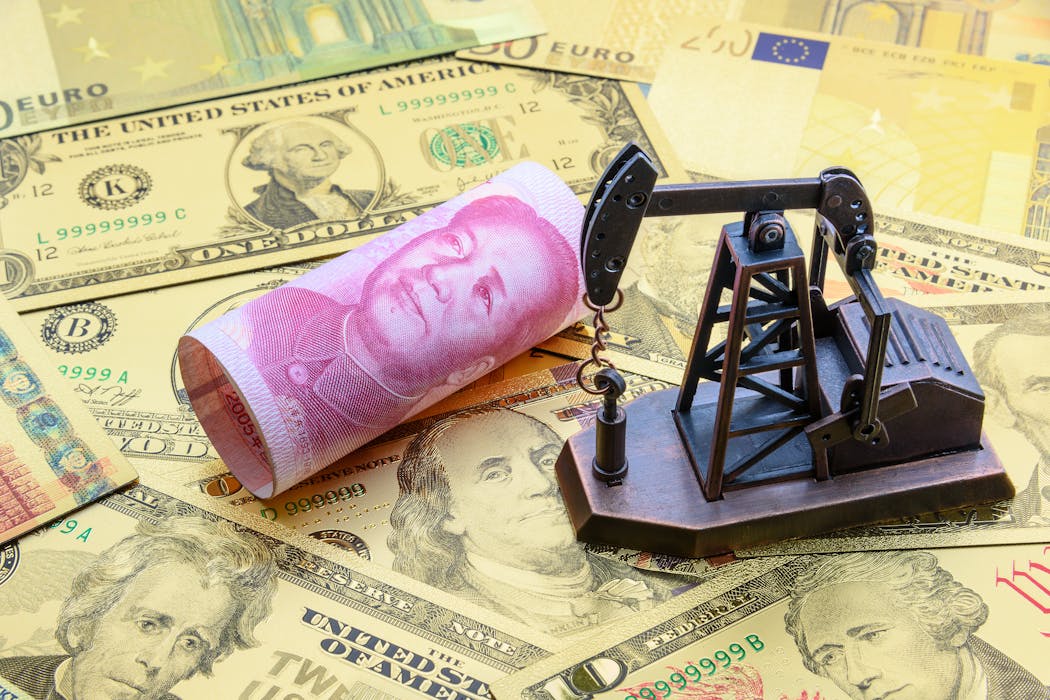
De 80 % à 85 % du pétrole de l’Union européenne étant encore facturé en dollar états-unien (USD), le paiement du pétrole russe en yuan par la Chine pourrait marquer un tournant monétaire historique. William Potter/Shutterstock

Le yuan (monnaie chinoise, officiellement appelée renminbi) s’impose dans le commerce du pétrole et du gaz entre la Russie et la Chine. Cette évolution présente des risques pour l’Union européenne, mais aussi une opportunité pour l’euro dans le contexte énergétique.


Lors du 25ᵉ Sommet de l’Organisation de coopération de Shanghai (OCS) tenu à Tianjin, en septembre 2025, les dirigeants chinois et russes ont ouvertement défendu un commerce de l’énergie en dehors du dollar états-unien. Cette poussée vers la dédollarisation, illustrée par l’augmentation des ventes de pétrole et de gaz de la Russie à la Chine en yuan (monnaie chinoise, officiellement renminbi), marque un bouleversement dans le commerce de l’énergie.

Pour l’Union européenne, et plus précisément pour les entreprises de la zone euro, où les importations de pétrole sont encore très largement facturées en dollars, cette évolution agit comme une arme à double tranchant.

Le yuan, central dans les accords énergétiques Russie–Chine

En quelques années, le yuan s’est affirmé comme monnaie de réglage importante dans les échanges énergétiques russo-chinois. En 2022, les entreprises Gazprom et China National Petroleum Corporation (CNPC) commencent à réduire leurs paiements en dollar pour certains contrats, en favorisant l’usage du rouble et du yuan. En 2023, le commerce bilatéral a atteint un record de 240 milliards de dollars (+ 26 %), avec la moitié du pétrole russe exporté vers la Chine.

En 2024, le commerce bilatéral Chine-Russie atteint 244,81 milliards de dollars états-uniens, en hausse de 1,9 % par rapport à 2023, selon les douanes chinoises. Ce chiffre s’explique par la montée des échanges sur la paire CNY/RUB, c’est-à-dire le taux de change entre le yuan chinois et le rouble russe. Autrement dit, de plus en plus d’entreprises russes achètent ou vendent directement des yuans contre des roubles, alors qu’auparavant, elles passaient presque toujours par le USD/RUB, le taux entre dollar des États-Unis et rouble.

Ce glissement reflète un transfert progressif du commerce de l’énergie russe, autrefois dominé par le dollar, vers la monnaie chinoise.

Ce basculement s’est confirmé à Tianjin, où Xi Jinping, Vladimir Poutine et Narendra Modi ont soutenu l’usage accru des monnaies nationales. Le président de la République populaire de Chine a même proposé la création d’une banque de développement destinée à contourner le dollar et à limiter l’impact des sanctions.

Plus de 80 % du pétrole de l’UE facturé en dollar

L’OCS réunit dix membres : la Chine, la Russie, l’Inde, le Pakistan, l’Iran, le Kazakhstan, le Kirghizstan, le Tadjikistan, l’Ouzbékistan et le Bélarus. Ils représentent près de la moitié de la population mondiale et un quart du PIB. Le commerce de la Chine avec ses partenaires a atteint 3,65 trillions de yuans (500 milliards de dollars états-uniens) en 2024.

Le commerce de la Chine avec ses partenaires est de plus en plus souvent réglé en yuan, transformant progressivement la monnaie chinoise en instrument international de facturation et d’échange, au-delà de son usage domestique. Le dollar conserve toutefois son statut dominant, représentant encore 58 % des réserves mondiales en 2024.

L’Union européenne (UE) reste largement dépendante du dollar pour ses importations d’énergie. Entre 80 et 85 % du pétrole de l’Union européenne est facturé en dollar états-unien (USD), alors qu’une part infime provient des États-Unis. Ce choix s’explique par le rôle du dollar comme monnaie commune de transaction sur les marchés mondiaux. Il sert d’intermédiaire entre producteurs et acheteurs, quelle que soit leur nationalité. L’UE se rend de facto vulnérable aux variations du dollar et aux décisions de la Réserve fédérale des États-Unis.

Nouvelle complexité pour les entreprises européennes

Si le commerce mondial du pétrole et du gaz cessait d’être dominé par le dollar pour se répartir entre plusieurs monnaies comme le yuan ou la roupie, les entreprises européennes, surtout celles de la zone euro, devraient s’adapter à un environnement financier plus complexe.

Aujourd’hui, la plupart d’entre elles achètent leur énergie en dollars. Elles peuvent se protéger contre les variations du taux de change grâce à des « marchés de couverture » très développés. Ces marchés permettent de conclure des contrats financiers à l’avance pour bloquer un taux et éviter des pertes si la valeur du dollar change.

Avec le yuan, la situation serait plus difficile. Les outils financiers permettant de se couvrir sont encore limités, car la Chine contrôle les mouvements de capitaux et restreint la circulation de sa monnaie à l’étranger. Autrement dit, le yuan ne circule pas librement dans le monde. Cela réduit la liquidité, c’est-à-dire la capacité d’une entreprise à acheter ou vendre rapidement des yuans quand elle en a besoin. Moins la monnaie circule, moins il y a d’échanges possibles, et plus les transactions deviennent lentes et coûteuses. Pour les entreprises, cela signifie des paiements plus complexes et des coûts financiers plus élevés.

Des signes concrets montrent que ce scénario commence à se concrétiser. En mars 2023, la China National Offshore Oil Corporation et TotalEnergies ont conclu la première transaction de gaz naturel liquéfié (GNL) libellée en yuan via une bourse de Shanghai. Quelques mois après, l’entreprise pétrolière publique de la République populaire de Chine a réalisé une autre transaction en yuan avec Engie. Ces accords illustrent la montée en puissance du yuan dans les échanges énergétiques et annoncent un nouvel équilibre où les entreprises européennes devront composer avec une plus grande diversité de devises.

Rôle accru de l’euro dans la facturation énergétique

L’évolution du commerce mondial de l’énergie ouvre une opportunité stratégique pour l’Union européenne : renforcer le rôle de l’euro dans la tarification du pétrole et du gaz, et réduire sa dépendance vis-à-vis du dollar – ou, demain, du yuan.

L’euro est déjà la deuxième monnaie mondiale, représentant 20 % des réserves. Elle sert de référence pour plus de la moitié des exportations européennes. Dans le commerce de l’énergie, son rôle demeure limité. Dès 2018, la Commission européenne avait d’ailleurs recommandé d’accroître son usage dans la tarification énergétique, afin de consolider la souveraineté économique du continent.

Les progrès les plus visibles concernent le gaz. Selon la Banque centrale européenne, la réduction des approvisionnements russes a poussé l’Union européenne à s’intégrer davantage aux marchés mondiaux du gaz naturel liquéfié (GNL). Les prix européens sont désormais étroitement liés aux marchés asiatiques, ce qui rend l’UE plus sensible aux variations de la demande mondiale. Cette interdépendance renforce l’intérêt de développer des contrats de gaz libellés en euros.

La même logique pourrait s’appliquer au pétrole. l’Union européenne importe plus de 300 milliards d’euros d’énergie chaque année. Elle dispose d’un poids suffisant pour négocier avec ses partenaires commerciaux, notamment les producteurs du Golfe cherchant à diversifier leurs devises.

Vers une monnaie énergétique européenne ?

Faire de l’euro une monnaie de référence dans les échanges énergétiques ne se décrète pas, mais cela pourrait devenir un levier essentiel de la politique monétaire et énergétique européenne.

L’euro dispose d’atouts : il est relativement stable, pleinement convertible, et soutenu par la Banque centrale européenne. Si des cargaisons de pétrole ou de gaz étaient facturées en euros, cela réduire la dépendance au dollar, simplifierait la couverture monétaire pour les entreprises européennes, et renforcerait l’indépendance financière de l’Union.

Ce virage monétaire implique des défis concrets. Le marché de l’énergie en euros reste peu développé, et certains pays ou entreprises pourraient craindre des sanctions états-uniennes s’ils s’éloignent du dollar. Surmonter ces freins nécessite de renforcer les marchés de capitaux européens, de créer des produits de couverture expressément en euros pour l’énergie, et d’assurer une politique économique stable à l’échelle de la zone euro.

Cette démarche ne vise pas à remplacer le yuan, mais à établir une alternative équilibrée, où l’euro pèse dans la facturation, dans les réserves stratégiques et dans le paysage monétaire mondial.

The Conversation

Suwan Long ne travaille pas, ne conseille pas, ne possède pas de parts, ne reçoit pas de fonds d’une organisation qui pourrait tirer profit de cet article, et n’a déclaré aucune autre affiliation que son organisme de recherche.

ref. Vente par la Russie d’hydrocarbures à la Chine en yuan : fin du dollar, opportunité pour l’euro ? – https://theconversation.com/vente-par-la-russie-dhydrocarbures-a-la-chine-en-yuan-fin-du-dollar-opportunite-pour-leuro-265602

Pumpkins’ journey from ancient food staple to spicy fall obsession spans thousands of years

Source: The Conversation – USA – By Shelley Mitchell, Senior Extension Specialist, Horticulture and Landscape Architecture, Oklahoma State University

Pumpkin patch excursions have become a fall staple in many U.S. households. Creative Touch Imaging Ltd./NurPhoto via Getty Images

October in much of the U.S. brings cooler weather, vibrant fall colors and, of course, pumpkin-spiced everything. This is peak pumpkin season, with most of the American pumpkin crop harvested in October.

With the pumpkin spice craze fully underway, I find myself thinking more about pumpkins. As an extension specialist working at Oklahoma State University’s botanic garden, I educate the people pouring in to buy pumpkins at our annual sale about the plant’s storied history and its prominence today.

While people often picture pumpkins as bright orange, they actually come in a wide range of colors, including red, yellow, white, blue and even green. They vary in size and texture too: Some are smooth, others warty. They can even be miniature or giant.

The word “pumpkin” comes from the Greek word “peopon,” meaning “large melon.” Botanically, pumpkins are fruits because they contain seeds, and they belong to the squash family, Cucurbitaceae. This family also includes cucumbers, zucchini and gourds. Pumpkins are grown for many purposes: food, seasonal decorating, carving for Halloween and even giant pumpkin contests.

A crowd of people look at five large pumpkins lined up on small platforms
Some pumpkins can be over 1,000 pounds. Pumpkin-growing contests are common at county and state fairs.
Joseph Prezioso/AFP via Getty Images

All 50 states produce some pumpkins, with Illinois harvesting the most. In 2023, Illinois grew 15,400 acres of pumpkins. The next largest amount was grown in Indiana, with about 6,500 acres.

Pumpkin yields vary each year, depending on the varieties grown and the growing conditions in each area. The top six pumpkin-producing states are California, Illinois, Indiana, Michigan, Pennsylvania and Washington.

Early pumpkin history

Pumpkins originated in Central and South America, ending up in North America as Native Americans migrated north and carried the seeds with them. The oldest pumpkin seeds discovered were found in Mexico and date back about 9,000 years.

Pumpkins were grown as a crop even before corn or beans, the other two sisters in a traditional Native American “three sisters” garden. The three sister crops – corn, beans and squash – are planted together, and each has a role in helping the others grow.

Native Americans planted corn in the spring, and once the plants were a few inches tall, they planted beans. The beans vine around the corn as it grows, giving them a natural trellis. Beans also have the ability to take nitrogen from the atmosphere, and with the help of bacteria they convert it into forms that plants can use, such as ammonia, for fertilizer.

After the beans started growing, it was time to plant squash, such as pumpkin. Squash leaves covered the ground, shading the soil and helping keep it moist. The giant leaves also helped reduce the number of weeds that would compete with the corn, bean and squash growth.

Every part of the pumpkin plant is edible, even the flowers. Some Native American groups would dry pumpkins’ tough outer shells, cut them into strips and weave them into mats.

Pumpkins were introduced to Europe from North America through the Columbian Exchange. Europeans found that the pumpkins grown in the New World were easier to grow and sweeter than the ones in 1600s England or France, likely due to the weather and soil conditions in the Americas.

A black and white illustration of a group of people loading pumpkins in a cart.
People have been harvesting pumpkin for centuries. This historical illustration from around 1893 shows the pumpkin harvest in Hungary.
bildagentur-online/uig via Getty Images

Baking American pumpkins

Native Americans introduced early settlers to pumpkins, and the colonists eagerly incorporated them into their diet, even making pies with them.

Early settlers’ pumpkin pies were hollowed-out pumpkins filled with milk, honey and spices, cooked over an open fire or in hot ashes. Others followed English traditions, combining pumpkin and apple with sugar and spices between two crusts.

The custard-style pumpkin pie we know today first appeared in 1796 as part of the first cookbook written and published in the United States, “American Cookery,” by Amelia Simmons. There were actually two pumpkin pie recipes: one used mace, nutmeg and ginger, the other just allspice and ginger.

The pumpkin spice craze

Pumpkin spice as one mixed ingredient was sold beginning in the early 1930s for convenience. The spice mix typically includes a blend of cinnamon, nutmeg, ginger, allspice and cloves.

Pumpkins and pumpkin spice are now synonymous with fall in America. Pumpkin spice flavoring is used in candles, marshmallows, coffees, lotions, yogurts, pretzels, cookies, milk and many other products.

A white mug with a Starbucks logo, filled with foamy coffee and powdered cinnamon on top.
Starbucks’ pumpkin spice latte kicked off the craze thath put this seasonal flavor in high demand.
Beata Zawrzel/NurPhoto via Getty Images

While pumpkin spice is available in one form or another all year long, sales of pumpkin-spiced products increase exponentially in the fall. The pumpkin spice craze is so popular that the start of the pumpkin spice season is a couple of months before the pumpkins themselves are even ready to harvest in October.

Pumpkin excursions

Americans continue to wholeheartedly embrace pumpkins today. Pumpkins in production are typically hand-harvested as soon as they mature, when the skins are hard enough to not be dented when you press it with your thumb.

Children often take field trips to pumpkin patches to pick their own. With the growing popularity of agritourism, many farmers are letting the customers go into the field and pick their own, getting more dollars per pumpkin than farmers could get by selling through the markets. Customer harvesting also reduces labor costs, produces immediate profits and builds community relationships.

In addition, farmers often combine the you-pick experience with other sources of income: corn mazes, hay rides, petting zoos and more. The customers get fresher fruit, enjoy a fun and educational activity and support the local economy.

This year you could get pumpkin spice flavors across the United States by late August, and the industry started promoting pumpkin spice season in July. Because fall has the right conditions for pumpkin picking, the season will keep its hold on pumpkin spice flavor, and consumers will continue to eagerly await its return each year.

The Conversation

Shelley Mitchell does not work for, consult, own shares in or receive funding from any company or organization that would benefit from this article, and has disclosed no relevant affiliations beyond their academic appointment.

ref. Pumpkins’ journey from ancient food staple to spicy fall obsession spans thousands of years – https://theconversation.com/pumpkins-journey-from-ancient-food-staple-to-spicy-fall-obsession-spans-thousands-of-years-268260

Petróleo en la desembocadura del Amazonas: Brasil continúa con la expansión silenciosa de sus fronteras fósiles

Source: The Conversation – (in Spanish) – By Urias de Moura Bueno Neto, Especialista em Transição Energética (PUCPR) e Mestrando em Engenharia Ambiental, Universidade Federal do Paraná (UFPR)

La desembocadura del río Amazonas, en una imagen de satélite. European Space Agency, CC BY

Mientras el mundo debate formas de contener el calentamiento global, Brasil sigue ampliando sus fronteras de exploración de petróleo y gas. El pasado miércoles 22 de octubre, la Agencia Nacional de Petróleo, Gas Natural y Biocombustibles (ANP) llevó a cabo una subasta del 3º Ciclo de la Oferta Permanente de Participación (OPP), que concedió cinco bloques de exploración en el llamado polígono del presal –la mayor reserva petrolera del país– a empresas nacionales y extranjeras.

El resultado, que amplió en un 50 % el área de exploración bajo el régimen de reparto, se produjo solo un día después de que el Instituto Brasileño del Medio Ambiente y de los Recursos Naturales Renovables (Ibama) autorizara la perforación en el bloque FZA-M-59, en la cuenca marina de Foz do Amazonas, frente a la desembocadura de este río, y refuerza la contradicción entre el discurso climático del Gobierno y la continuidad de la expansión fósil.

Este modelo de oferta continua de bloques exploratorios en el polígono del presal y áreas estratégicas, creado en 2017 bajo el Gobierno de Michel Temer, transformó el territorio brasileño en un gran tablero de licitaciones permanentes. Los bloques no adjudicados en subastas anteriores siguen disponibles indefinidamente, y el resultado es una expansión silenciosa de las fronteras fósiles, sin el mismo nivel de debate público que las megalicitaciones del pasado.

Compromiso con un modelo obsoleto

La justificación del Gobierno es la de siempre: generar ingresos y puestos de trabajo. Pero detrás de la recaudación inmediata con los bonos de suscripción, el país renueva su compromiso con un modelo energético obsoleto. Hoy en día, Brasil es el sexto mayor emisor de gases de efecto invernadero del planeta, y las emisiones relacionadas con la explotación y la quema de petróleo y gas, por sí solas, superan los objetivos de reducción previstos por la Contribución Determinada a Nivel Nacional (NDC) para 2033.

Desde el inicio de la explotación del presal en 2010, la producción de petróleo prácticamente se ha duplicado, pasando de 856 millones a 1 550 millones de barriles equivalente de petróleo –una unidad de medida que equivale a la energía liberada al quemar un barril de petróleo crudo– al año en 2024. Este crecimiento contrasta con la promesa de una transición energética justa y sitúa al país en una posición de liderazgo entre los que más expanden el uso de combustibles fósiles.

Según el informe The Money Trail Behind Fossil Fuel Expansion in Latin America and the Caribbean, elaborado por el Instituto Internacional ARAYARA y la ONG Urgewald, Brasil representa el 45 % de la nueva expansión del petróleo y el gas en toda América Latina, con 11 000 millones de barriles equivalente de petróleo previstos. El país también lidera la expansión de gasoductos, con más de 3 000 kilómetros previstos, parte de los cuales conectarán el presal y la Amazonia con nuevos polos industriales y portuarios.

La 3ª OPP se celebró en un contexto aún más controvertido: el Ibama autorizó la perforación en el bloque FZA-M-59, en la cuenca de Foz do Amazonas, abriendo la primera frontera de exploración petrolera en la costa amazónica. La decisión, tomada menos de un mes antes de la COP30, que se celebrará en Brasil (en la ciudad de Belém), pone de manifiesto la contradicción entre el discurso climático del Gobierno y su práctica energética.

Licencias contrarias a los dictámenes técnicos

La concesión de licencias a la empresa petrolera brasileña Petrobras –que ya representa el 29 % de la expansión de los combustibles fósiles en América Latina– se autorizó a pesar de los dictámenes técnicos contrarios de los propios funcionarios del Ibama y sin consultar previamente a las comunidades pesqueras y los pueblos indígenas, como exige el Convenio 169 de la Organización Internacional del Trabajo.

Se trata de un precedente peligroso. El bloque FZA-M-59 es solo el primero de decenas que pueden ser liberados en el Margen Ecuatorial brasileño, una franja que se extiende desde el estado de Amapá hasta Río Grande do Norte y alberga uno de los ecosistemas marinos más sensibles del planeta.

La región se ha convertido en escenario de una disputa cada vez más encarnizada por nuevas áreas de exploración. En el [5º ciclo de la Oferta Permanente de Concesión](https://docs.google.com/document/d/1H7aleLcJgrIKiRg9eu180Vsf1tJlbJ_i7dlqk86pM7w/edit?tab=t.0 “), por ejemplo, de los siete bloques disputados entre los consorcios Chevron/CNPC y Petrobras/ExxonMobil, la asociación entre China y Estados Unidos salió victoriosa en la zona del cono del Amazonas, estimada por la Agencia de Investigación Energética ([EPE]) en 4 200 millones de barriles de petróleo equivalente.

Esta carrera por el petróleo en plena costa amazónica, sumada al riesgo de derrames, la contaminación acústica de las plataformas, la restricción de la pesca y la amenaza a la biodiversidad, desmonta el argumento de una supuesta “explotación responsable”.

Una decisión política, no energética

Mientras el Gobierno busca proyectar al país como líder internacional en materia climática, sus decisiones indican lo contrario. Brasil sigue abriendo nuevas áreas de exploración y fortaleciendo la presencia de gigantes extranjeros como Shell, Chevron, Total, CNPC y Qatar Energy, todos aptos para participar en la OPP.

La justificación de que el presal entrará en declive después de 2030 choca con el hecho de que el 70 % de las áreas bajo el régimen de reparto aún no han sido explotadas, lo que revela una vez más una elección política más que una necesidad energética.

En vísperas de la COP30, la pregunta es inevitable: ¿cómo puede el país que acogerá la principal conferencia sobre el clima abrir al mismo tiempo la explotación petrolera en el corazón de la Amazonia? La concesión de licencias en Foz y la nueva subasta de bloques exponen la misma lógica: posponer la transición energética en nombre de una falsa seguridad económica.

El avance silencioso de las fronteras fósiles no es solo una cuestión medioambiental: es una decisión sobre el tipo de futuro que elige Brasil. Un futuro de dependencia, emisiones y vulnerabilidad, o uno de innovación, justicia climática y soberanía energética. Lo que está en juego, más que barriles de petróleo, es la coherencia de un país que dice querer liderar al mundo hacia un planeta sostenible.

The Conversation

Urias de Moura Bueno Neto es coordinador de Medio Ambiente e Ingeniería del Instituto Internacional ARAYARA.

ref. Petróleo en la desembocadura del Amazonas: Brasil continúa con la expansión silenciosa de sus fronteras fósiles – https://theconversation.com/petroleo-en-la-desembocadura-del-amazonas-brasil-continua-con-la-expansion-silenciosa-de-sus-fronteras-fosiles-268317

Dinosaur ‘mummies’ help scientists visualize the fleshy details of these ancient animals

Source: The Conversation – USA – By Paul C. Sereno, Professor of Paleontology, University of Chicago

A mummy of a juvenile duck-billed dinosaur, _Edmontosaurus annectens_, preserved as a dried carcass. Tyler Keillor/Fossil Lab

Dinosaur “mummies” couldn’t have been further from my mind as I trudged up a grassy knoll on the Zerbst Ranch in east-central Wyoming, followed by University of Chicago undergraduates on a field trip linked to my “Dinosaur Science” course.

As a university professor, I realized early that to understand paleontology, students would need to see first-hand where fossils are born. And that field experience had to be real, a place I wanted to be – somewhere where we had a shot at discovery.

I chose outcrops of the Lance Formation, a rock formation composed largely of sandstones laid down during last few million years of the dinosaur era. These rocks are well exposed in the parched badlands of Wyoming, crisscrossed for more than a century by dinosaur hunters. Yet, perhaps they missed something.

Then I saw it.

At the top of the hill lay a massive concretion – a hardened, iron-stained rock the size of a compact car – surrounded by some fossil bone fragments. Poking from its side were a series of small rod-shaped bones I recognized as the stomach ribs of the giant predator Tyrannosaurus rex.

Mummies nearby

But T. rex wasn’t alone among the amazing finds that field season. That same field trip, colleagues working nearby uncovered two fossilized duckbills – a plant-eating dinosaur that roamed in herds and grew to the length of T. rex. They showed signs of extraordinary preservation.

Poking out of the vertical wall of a cutbank in a seasonally dry river was a vertebra – part of the backbone – and some ossified tendons.

“What do you think?” asked my colleague Marcus Eriksen, who counts paleoartistry, science education and environmentalism as his other mainstays alongside paleontology. “You’ve got the back half of a duckbill,” I said, referring to Edmontosaurus annectens, the formal name for the dinosaur most likely to be on T. rex’s dinner menu.

It would take Marcus two field seasons to remove 15 feet of rock overlying the skeleton. To his surprise, the tail bones were covered with large areas of scaly skin and topped by a row of spikes. When I visited the exposed skeleton and took a look at its feet, I saw a hairline around the final toe bone. “Pull back, take more,” I said, wide-eyed at what I saw. “I think it has the hooves.”

A rock showing the outline of several bones and a hoof.
A juvenile duckbill dinosaur’s hoof preserved as a thin layer of clay.
Tyler Keillor/Fossil Lab

Yet another group of bone hunters in the area found a Triceratops skeleton next to a large slab of its scaly skin. Finding even a patch of skin on a skeleton merits celebration in paleontological circles. Discovering large areas of the outer fleshy surface of a dinosaur is the find of a lifetime.

Mummification mystery

How is the skin of a dinosaur “mummy” preserved? What composes the “skin impressions”?

Are these dinosaur “mummies” preserved like the human mummies from Egypt, where salt and oils applied after someone died were used to desiccate and then preserve skin, hair, internal organs and, as recently shown, their genomes?

No. Dinosaur “mummies” don’t preserve dehydrated skin. But many researchers thought that, just maybe, traces of tissue structure or even original organic materials might remain.

A hand touching a beige rock with a lined, crest pattern and dimpled texture.
A fossil preserves the scaly skin of a crest over the back of a juvenile duck-billed dinosaur.
Tyler Keillor/Fossil Lab

To lift the veil on dinosaur mummification, I needed expertise and digital savvy beyond my own. I recruited Evan Saitta to rigorously determine the composition of the ancient scaly skin, after learning he was cooking reptile skin to mimic fossilization.

I brought others on board: Dan Vidal, a Spanish paleontologist able to digitally capture surface detail in 3D; Nathan Myhrvold, a polyglot scientist fresh off studying the chemistry of barbecue; Stephanie Baumgart, a paleontologist steeped in the CT scans of living vertebrates; María Ciudad Real and Lauren Bop, the first skilled at analyzing CT scans and the latter at combining them into composite figures; Tyler Keillor, who would invent new methods to clean ancient skin tissue; and Dani Navarro, a superb Spanish paleoartist who reimagines prehistoric scenes.

Clay mask, crests, hooves and scales

We used a diamond blade to section the skin, spikes and hooves, and found that all were made of a very thin bounding layer of clay – a clay mask or template – one-hundredth of an inch (less than 1 millimeter) thick. The sand on both sides of the clay layer was indistinguishable, suggesting that when the carcass was buried, the same sand that pressed against the outside also entered the dried, hollowed carcass through many cracks and holes, filling all of the internal spaces. Even the spaces inside the spikes and hooves were sand-filled.

We found no evidence of tissue structures inside the clay layer, whether looking at scaly skin, a spike or a hoof. And we could not find any trace of original organic materials. In other words, the original skin inside the clay layer must have decayed and washed away, while the same groundwater saturated the bones en route to their fossilization.

The very real-looking skin, spikes and hooves of our duckbill are actually a mask of clay, a thin layer applied to the outside that captured all of the original form and texture of the fleshy body surface.

To test out the digital rendering we’d created, we compared the digital version of the duckbill’s hoofed foot with a fossilized duckbill footprint on a museum shelf in Canada, discovered in beds of the same age as those of the Lance Formation. We adjusted our foot up slightly in size, to see it was a snug fit. Together, the foot and footprint generated the first complete view of a duckbill’s fleshy foot.

The only duckbill alive at this time was Edmontosaurus annectens, the likely track-maker. The footprint was preserved so perfectly that it showed the scales on the sole of the foot.

The ‘mummy’ zone

The Lance Formation’s unique geology allowed many of these dinosaur mummies to be preserved under clay, in a small area.

Drilling in pursuit of natural gas and oil in Wyoming has shown that the sandstone rock composing the Lance Formation is very deep beneath the mummies, measuring more than 1,000 meters (over 3,200 feet). This is five times thicker than anywhere else in the West, suggesting that the formation subsided more quickly in the mummy zone, with periodic floods covering up dried dinosaur carcasses.

In this last epoch of the dinosur era in western North America, a monsoonal climate took hold. Severe droughts brought death to vast herds of duck-billed dinosaurs – for some, right as they looked for the last bit of water in a dry riverbed before succumbing. Flash floods followed, bringing tons of sandy sediment that would cover a sun-dried dinosaur carcass in an instant.

Only rarely do scientists have the chance to accurately visualize what any large dinosaur looked like when alive, because all we normally have are bones to reconstruct beasts with no close living analog. Dinosaur “mummies” give us that extraordinary opportunity through a fluke of preservation.

The dream research team I assembled was able to clean, scan, resize, combine and otherwise restore the life appearance of a duck-billed dinosaur from rare dinosaur mummies – breathing life back into the fossils, and allowing all to appreciate the grandeur of past life.

The Conversation

Paul C. Sereno is President of the Scitopia Foundation, a 501c3 organization dedicated to science education in out-of-school time, with operations and a founding facility in planning in Chicago (Scitopia Chicago).

ref. Dinosaur ‘mummies’ help scientists visualize the fleshy details of these ancient animals – https://theconversation.com/dinosaur-mummies-help-scientists-visualize-the-fleshy-details-of-these-ancient-animals-267619

Grok, est-ce que c’est vrai ? Quand l’IA oriente notre compréhension du monde

Source: The Conversation – in French – By Nadia Seraiocco, Professeure associée, École des médias, Université du Québec à Montréal (UQAM)

Des millions de personnes participent quotidiennement à des débats politiques sur la plate-forme numérique X. À l’ère de l’intelligence artificielle, les usagers peuvent compter sur l’IA Grok, intégrée à la plate-forme. On peut ainsi lui demander d’analyser une publication en quelques clics à peine.

Le hic : Grok admet sans détour, si on lui pose la question, que ses réponses peuvent varier selon le contexte de la requête et l’information disponible.

Pour réduire la désinformation, le propriétaire de la plate-forme, le milliardaire Elon Musk, a mis en place les Notes de la communauté. Mais ce système n’a plus la cote. L’usage des Notes a en effet considérablement diminué en 2025 : les soumissions de billets auraient chuté d’environ 50 % de janvier à mai, passant de près de 120 000 à moins de 60 000.

Professeure associée à l’UQAM en communication numérique, je constate avec préoccupation que Grok devient progressivement sur X le seul outil de vérification permettant aux usagers de vérifier de l’information : en un mot l’autorité et le fardeau de la vérité sont délégués à une IA.


À lire aussi :
Les utilisateurs de X doivent lutter seuls contre la désinformation qui y sévit


La philosophie de Musk

Il aura fallu de nombreuses études sur la dissémination des fausses nouvelles sur Twitter-X, puis l’élection américaine de 2020, qui a mené à la suspension du compte de Donald Trump, pour que le site, alors sous la gouverne de Jack Dorsay, s’attaque plus fermement à la désinformation.

Ainsi, en janvier 2021, Le projet « Birdwatch » est déployé auprès d’un groupe limité d’usagers. Cette initiative, sous l’impulsion du nouveau propriétaire du réseau, Elon Musk, se transforme pour devenir les « Notes de la communauté ». Ce concept inspirait confiance, car il s’appuyait sur la « sagesse des foules » et l’esprit collaboratif, deux valeurs aux racines des communautés en ligne.

Déléguer à l’IA la vérification des faits

En novembre 2023, Grok, l’intelligence artificielle générative de xAI, compagnie d’Elon Musk, est déployé sur X et offert gratuitement à tous les usagers. À chaque déploiement d’une nouvelle version de son IA, X communique que Grok est gratuit, mais en fait plusieurs conditions régissent l’accès sans frais, dont la date de création du compte et le nombre d’utilisations quotidiennes.

Contrairement à d’autres IA commerciales, Grok se présente ouvertement avec un positionnement idéologique aligné sur celui de Musk et sa vision de la liberté d’expression, comme le constate aussi la doctorante et enseignante française spécialisée en IA générative et pratiques informationnelles Amélie Raoul.

Très vite, plusieurs usagers du réseau prennent l’habitude d’interpeller @Grok dans les conversations.

Alors que les Notes de la communauté sont de moins en moins utilisées au profit du nombre de requêtes faites à Grok, Ars Technica rapporte en juillet 2025 les préoccupations soulevées par un groupe de chercheurs des universités Stanford, Washington et MIT, ainsi que de l’équipe de X. L’étude en question aborde l’utilisation de Grok, devenu le principal rédacteur de ce qui reste des Notes de la communauté.

Dans un monde idéal, humain et IA travailleraient ensemble, disent les chercheurs, l’un complétant les compétences de l’autre. Ainsi se dégagerait une cartographie pour une contribution au développement des connaissances augmentée par l’IA. C’est l’idéal, mais bien évidemment, il y a un mais.


À lire aussi :
Grok, l’IA de Musk, est-elle au service du techno-fascisme ?


L’os dans la moulinette

Ce qui limite la collaboration idéale entre l’humain et la machine, les chercheurs l’admettent, est cette assurance, ce ton poli, mais persuasif, qu’emploie un robot comme Grok.

Dans le Guardian, Samuel Stockwell, chercheur britannique associé au Centre pour les technologies émergentes et la sécurité du Alan Turing Institute, s’est montré méfiant, puisque sans remparts solides pour encadrer l’IA, il pressent que les notes ainsi rédigées pourraient amplifier la désinformation. Sotckwell constate bien entendu que Grok peut, comme les autres IA générative, halluciner, mais également que ses réponses, pourtant pleines d’assurance, manquent souvent de nuance et de contextualisation.


Déjà des milliers d’abonnés à l’infolettre de La Conversation. Et vous ? Abonnez-vous gratuitement à notre infolettre pour mieux comprendre les grands enjeux contemporains.


En dépit de ces mises en garde, un nombre croissant d’usagers se tournent vers Grok pour avoir le fin mot et comprendre le contexte des actualités récentes. Grok répond immédiatement, au contraire des notes rédigées par des usagers qui demandent les étapes de validation par la communauté et qui nécessairement prennent plus de temps.

Le journaliste indien de TechCrunch Jagmeet Singh] a souligné que Grok, lorsqu’on le questionne sur ses propres biais, avoue volontiers qu’il peut contribuer à la désinformation, une mise en garde peu utile pour qui connaît bien le fonctionnement des IA, mais qui devrait alerter les usagers.

L’évaluation des sources immédiates par Grok

À titre d’exemple, lors de l’assassinat du populaire créateur de contenu et débatteur de la droite, Charlie Kirk, Grok s’est souvent retrouvé confronté à ses lacunes en ce qui a trait à la prudence et à la vérification des faits.

Alors que plusieurs journalistes reprenaient les propos du gouverneur Cox appuyés sur des sources non divulguées – selon lesquelles le suspect Tyler Robinson aurait été radicalisé par la gauche –, le 14 septembre 2025, Grok affirmait sans précaution que le suspect était de gauche. Pourtant, lorsque l’autrice du présent article transmet à Grok un lien vers l’article du Vanity Fair du 12 septembre qui expose les origines des messages gravés sur les projectiles tirés par Robinson, Grok répond ceci :

Mes réponses sont générées dynamiquement selon le contexte de la requête, les connaissances disponibles et l’analyse en temps réel de sources comme l’article de Vanity Fair que vous avez lié. Si vous m’avez vu (ou un autre exemple de moi) le décrire ainsi dans des interactions passées, c’était probablement une interprétation tirée du contenu de ces gravures et de leurs références culturelles, qui comportent des éléments qui peuvent raisonnablement être perçus comme antagonistes envers les idéologies de droite ou fascistes.

Fil de discussion sur la plate-forme X
Grok, le gouverneur Cox et le FBI.
(Capture d’écran/Xcom), CC BY-NC-SA


À lire aussi :
J’ai testé l’abonnement Premium de X et Meta Verified sur Instagram : voici mes constats sur les crochets d’authentification


Un support publicitaire

Dans une entrevue récente sur cette pratique émergente, le professeur français de sociologie à Sciences Po, Dominique Boullier, qualifiait cet appel à l’autorité d’une intelligence artificielle générative de « solution de la facilité ».

Cela, parce que cette délégation totale de la vérification des faits à Grok met en relief les problèmes de fiabilité des agents conversationnels privés et l’opacité de leurs systèmes génératifs.

La confusion risque d’ailleurs d’augmenter avec l’ajout de fonctions commerciales venant repousser d’autant plus les limites de l’information et de la publicité : Depuis le 7 août, des publicités sont ajoutées aux contenus générés par Grok.

En outre, Grok et les principaux agents conversationnels d’IA générative, dont ChatGPT, ont en commun d’adopter une attitude que l’on pourrait dire flagorneuse, c’est-à-dire d’une servilité intéressée. C’est souvent ainsi que ces agents conversationnels arrivent à créer une apparence d’intimité, qui peut pour l’usager s’apparenter à une relation interpersonnelle, voire à de l’amour.

C’est ce que la journaliste américaine Remay M. Campbell exposait dans un article de la revue Scientific American. Elle y expliquait que cette empathie feinte pouvait même menacer la sécurité nationale, la bulle conversationnelle étant propice à révéler des informations sensibles en toute confiance. Or, la stratégie pot-de-miel est aussi utilisée en marketing à des fins de captation de l’attention.

Vers une autorité diffuse et complaisante

À l’ère de la postvérité, la communication rapide privilégiée par les réseaux favorise la prise de position forte sans nuance avec « une prime au choquant », dit Boullier dans son ouvrage de 2023 Propagations. Dans ce contexte, les IA commerciales s’insèrent dans le débat sans que ceux qui basent leur perception de ce qui est juste ou vrai soient pleinement conscients de leurs biais et leurs zones aveugles.

De ce fait, dans les discussions en ligne, il s’opère une délégation de l’autorité à des IA, changeantes, flagorneuses, et dont le maintient en opération dépend d’impératifs capitalistes et du bon vouloir des milliardaires des technologies.

Il est donc pertinent de demander : à l’image de quoi ces IA élaboreront-elles le monde ?

La Conversation Canada

Nadia Seraiocco ne travaille pas, ne conseille pas, ne possède pas de parts, ne reçoit pas de fonds d’une organisation qui pourrait tirer profit de cet article, et n’a déclaré aucune autre affiliation que son organisme de recherche.

ref. Grok, est-ce que c’est vrai ? Quand l’IA oriente notre compréhension du monde – https://theconversation.com/grok-est-ce-que-cest-vrai-quand-lia-oriente-notre-comprehension-du-monde-262775

Pourquoi devriez-vous sérieusement arrêter d’essayer d’être drôle au travail

Source: The Conversation – France (in French) – By Peter McGraw, Professor of Marketing and Psychology, University of Colorado Boulder

Les gens rient lorsque les règles sont transgressées sans heurter les sensibilités. Un art d’équilibriste. Milan Markovic/E+ via Getty Images

Plutôt que de chercher à faire rire à tout prix, mieux vaut adopter la façon de penser des humoristes pour stimuler la créativité, renforcer l’esprit d’équipe et se démarquer sans déraper.


Comment progresser dans sa carrière sans trop s’ennuyer ? Une solution souvent évoquée dans les livres de management, sur LinkedIn
ou dans les manuels de team building, consiste à manier l’humour. Partager des blagues, des remarques sarcastiques, des mèmes ironiques ou des anecdotes spirituelles, dit-on, vous rendra plus sympathique, réduira le stress, renforcera les équipes, stimulera la créativité et pourra même révéler votre potentiel de leader.

Nous sommes professeurs de marketing et de management spécialisés dans l’étude de l’humour et des dynamiques de travail. Nos propres recherches – ainsi qu’un nombre croissant de travaux menés par d’autres chercheurs – montrent qu’il est plus difficile d’être drôle qu’on ne le croit. Les conséquences d’une mauvaise blague sont souvent plus lourdes que les bénéfices d’une bonne. Heureusement, il n’est pas nécessaire de faire hurler de rire son entourage pour que l’humour vous soit utile. Il suffit d’apprendre à penser comme un humoriste.

L’humour, un exercice risqué

La comédie repose sur le fait de tordre et de transgresser les normes – et lorsque ces règles ne sont pas brisées de la bonne manière, cela nuit plus souvent à votre réputation que cela n’aide votre équipe. Nous avons développé la « théorie de la violation bénigne »
pour expliquer ce qui rend une situation drôle – et pourquoi tant de tentatives d’humour tournent mal, notamment au travail. En résumé, le rire naît lorsque quelque chose est à la fois « mal » et « acceptable ».

Les gens rient lorsque les règles sont transgressées sans danger. Si l’un des deux éléments manque, la blague tombe à plat. Quand tout est bénin et qu’il n’y a aucune transgression, on s’ennuie. Quand il n’y a que transgression sans bénignité, on provoque l’indignation.

Il est déjà difficile de faire rire dans la pénombre d’un comedy club. Sous les néons d’un bureau, la ligne devient encore plus mince. Ce qui paraît « mal mais acceptable » à un collègue peut sembler simplement inacceptable à un autre, selon la hiérarchie, la culture, le genre ou même l’humeur du moment.

La série « The Office » excelle dans l’art d’exposer les conséquences d’une transgression ratée.

Une étude publicitaire

Dans nos expériences, lorsque des personnes ordinaires sont invitées à « être drôles », la plupart de leurs tentatives tombent à plat ou franchissent des limites. Lors d’un concours de légendes humoristiques avec des étudiants en école de commerce – décrit dans le livre de Peter McGraw sur l’humour à travers le monde, The Humor Code, les propositions n’étaient pas particulièrement drôles au départ. Pourtant, celles jugées les plus amusantes étaient aussi considérées comme les plus déplacées.

Être drôle sans être offensant est donc essentiel. C’est particulièrement vrai pour les femmes : de nombreuses études montrent qu’elles subissent des réactions plus négatives que les hommes lorsqu’elles adoptent des comportements perçus comme offensants ou transgressifs, tels que l’expression de la colère, l’affirmation de dominance ou même les demandes de négociation.

Risquer de perdre tout respect

Les recherches menées par d’autres spécialistes du comportement des leaders et managers racontent la même histoire. Dans une étude, les managers qui utilisaient l’humour efficacement étaient perçus comme plus compétents et plus sûrs d’eux, ce qui renforçait leur statut. Mais lorsque leurs tentatives échouaient, ils perdaient aussitôt crédibilité et autorité. D’autres chercheurs ont montré qu’un humour raté ne nuisait pas seulement au statut d’un manager, mais réduisait aussi le respect, la confiance et la volonté des employés de solliciter ses conseils.

Même lorsqu’une blague fait mouche, l’humour peut se retourner contre son auteur. Dans une étude, des étudiants en marketing chargés d’écrire des publicités « drôles » ont produit des annonces plus amusantes, mais moins efficaces, que ceux invités à rédiger des textes « créatifs » ou « persuasifs ».

Une autre étude a révélé que les patrons qui plaisantent trop souvent poussent leurs employés à feindre l’amusement, ce qui épuise leur énergie, réduit leur satisfaction et augmente le risque d’épuisement professionnel. Et les risques sont encore plus élevés pour les femmes en raison d’un double standard : lorsqu’elles utilisent l’humour dans une présentation, elles sont souvent jugées moins compétentes et de plus faible statut que les hommes.

En résumé, une bonne blague ne vous vaudra presque jamais une promotion. Mais une mauvaise peut mettre votre poste en danger – même si vous n’êtes pas un animateur de talk-show payé pour faire rire.

Inverser la perspective

Plutôt que d’essayer d’être drôle au travail, nous recommandons de vous concentrer sur ce que nous appelons « penser drôle » – comme le décrit un autre livre de McGraw, “Shtick to Business.

« Les meilleures idées naissent comme des blagues », disait le légendaire publicitaire David Ogilvy. « Essayez de rendre votre manière de penser aussi drôle que possible. » Mais Ogilvy ne conseillait pas aux dirigeants de lancer des blagues en réunion. Il les encourageait à penser comme des humoristes : renverser les attentes, s’appuyer sur leurs réseaux et trouver leur propre registre.

Les humoristes ont souvent pour habitude de vous emmener dans une direction avant de renverser la situation. Le comédien Henny Youngman, maître des répliques percutantes, a ainsi lancé cette célèbre boutade : « Quand j’ai lu les dangers de l’alcool, j’ai arrêté… de lire. »
La version professionnelle de cette approche consiste à remettre en cause une évidence.

Par exemple, la campagne « Don’t Buy This Jacket » de Patagonia, publiée en pleine journée du Black Friday 2011 sous forme de page entière dans le New York Times, a paradoxalement fait grimper les ventes en dénonçant la surconsommation.

Pour appliquer cette méthode, identifiez une idée reçue au sein de votre équipe – par exemple, que l’ajout de nouvelles fonctionnalités améliore toujours un produit, ou que multiplier les réunions favorise une meilleure coordination – et demandez-vous : « Et si c’était l’inverse ? » Vous découvrirez alors des pistes que les séances de brainstorming classiques laissent souvent passer.

Créer un fossé

Quand l’humoriste Bill Burr fait hurler de rire son public, il sait que certaines personnes ne trouveront pas ses blagues drôles – et il ne cherche pas à les convaincre. Nous avons observé que beaucoup des meilleurs comiques ne cherchent pas à plaire à tout le monde. Leur succès repose justement sur le fait de restreindre délibérément leur audience. Et nous constatons que les entreprises qui adoptent la même stratégie bâtissent souvent des marques plus fortes.

Par exemple, lorsque l’office du tourisme du Nebraska a choisi le slogan « Honnêtement, ce n’est pas pour tout le monde » dans une campagne de 2019 visant les visiteurs hors de l’État, le trafic du site web a bondi de 43 %. Certaines personnes aiment le thé chaud, d’autres le thé glacé. Servir du thé tiède ne satisfait personne. De la même manière, on peut réussir en affaires en décidant à qui une idée s’adresse – et à qui elle ne s’adresse pas – puis en adaptant son produit, sa politique ou sa présentation en conséquence.

Coopérer pour innover

Le stand-up peut sembler un exercice solitaire. Pourtant, les humoristes dépendent du retour des autres – les suggestions de leurs pairs et les réactions du public – et peaufinent leurs blagues comme une start-up agile améliore un produit.

Construire des équipes performantes au travail suppose d’écouter avant de parler, de valoriser ses partenaires et de trouver le bon équilibre entre les rôles. Le professeur d’improvisation Billy Merritt décrit trois types d’improvisateurs : les pirates, qui prennent des risques ; les robots, qui bâtissent des structures ; et les ninjas, capables de faire les deux à la fois – oser et organiser.

Une équipe qui conçoit une nouvelle application, par exemple, a besoin des trois : des pirates pour proposer des fonctionnalités audacieuses, des robots pour simplifier l’interface, et des ninjas pour relier le tout. Donner à chacun la possibilité de jouer pleinement son rôle permet de générer des idées plus courageuses, avec moins d’angles morts.

Les dons ne sont pas universels

Dire à quelqu’un « sois drôle » revient à lui dire « sois musical ». Beaucoup d’entre nous savent garder le rythme, mais peu ont le talent nécessaire pour devenir des rock stars.C’est pourquoi nous pensons qu’il est plus judicieux de penser comme un humoriste que d’essayer d’en imiter un.

En renversant les évidences, en coopérant pour innover et en assumant des choix clivants, les professionnels peuvent trouver des solutions originales et se démarquer — sans devenir la risée du bureau.

The Conversation

Les auteurs ne travaillent pas, ne conseillent pas, ne possèdent pas de parts, ne reçoivent pas de fonds d’une organisation qui pourrait tirer profit de cet article, et n’ont déclaré aucune autre affiliation que leur organisme de recherche.

ref. Pourquoi devriez-vous sérieusement arrêter d’essayer d’être drôle au travail – https://theconversation.com/pourquoi-devriez-vous-serieusement-arreter-dessayer-detre-drole-au-travail-268320

Navigating mental illness in the workplace can be tricky, but employees are entitled to accommodations

Source: The Conversation – USA (3) – By Julie Wolfe, Assistant Professor of Psychiatry, University of Colorado Anschutz Medical Campus

Coping with mental illness can make starting and completing simple tasks at work more difficult. Fiordaliso/Moment via Getty Images

Mental health challenges can affect anyone, regardless of background or circumstance, and they are becoming more common across the United States.

In 2022, a national survey found that about 60 million American adults – approximately 23% of the U.S. adult population – were living with a mental illness, defined as a diagnosable mental, emotional or behavioral disorder.

This translates to a nearly 37% increase over the past decade.

These conditions can have a profound and lasting effect on patients’ lives, including their ability to engage meaningfully and sustainably in the workforce.

Globally, depression and anxiety are estimated to lead to 12 billion lost working days annually, costing an estimated US$1 trillion per year in lost productivity worldwide and $47 billion in the United States.

I am a medical director and practicing psychiatrist. I work with graduate students, residents, faculty and staff on a health science campus, supporting their mental health – including when it intersects with challenges in the workplace.

I often meet with patients who feel unsure about how to approach conversations with their schools, programs or employers regarding their mental health, especially when it involves taking time off for care. This uncertainty can lead to delays in treatment, even when it’s truly needed.

Mental health by the numbers

Anxiety and depression are the most common mental health conditions in the U.S.. Nineteen percent of American adults suffer from an anxiety disorder, and more than 15% have depression.

Meanwhile, about 11% of Americans experience other conditions such as post-traumatic stress disorder, commonly known as PTSD, bipolar disorder, borderline personality disorder or obsessive-compulsive disorder.

Rates of anxiety and depression increased worldwide during the COVID-19 pandemic. But one positive consequence of the pandemic is that talking about mental health has become more normalized and less stigmatized, including in the workplace.

Struggling at work

For those with mental illness, the traditional expectation of maintaining a strict separation between personal and professional life is not only unrealistic, it may even be detrimental. The effect of mental illness on a person’s work varies depending on the type, severity and duration of their symptoms.

For instance, severe depression can affect basic self-care, making it difficult to complete tasks such as bathing, eating or even getting out of bed. Severe anxiety can also be profoundly debilitating and limit a person’s ability to leave the house due to intense fear or panic. The symptoms of such severe mental illness may make it difficult even to show up to work.

On the other hand, someone struggling with mild depression or anxiety may have a hard time initiating or completing tasks that they would typically manage with ease and find it difficult to interact with colleagues. Both depression and anxiety may affect sleep, which can contribute to cognitive lapses and increased fatigue during the work day.

Someone with PTSD may find that certain environments remind them of traumatic experiences, making it difficult to fully engage in their work. And a person experiencing a manic episode related to bipolar disorder might need to take time away from work entirely to focus on their stabilization and recovery.

Knowing when to ask for help

Identifying a trusted colleague, supervisor or human resources representative can be an important first step in managing your mental health at work. While selecting the right person to confide in may be challenging, especially given the vulnerability associated with disclosing mental health concerns, doing so can open pathways to appropriate resources and tailored support services.

For instance, it might encourage an employer to consider offering access to free or low-cost mental health care if it’s not already available, or to provide flexible scheduling that makes it easier for employees to get mental health treatment.

It’s also important to be aware of changes in your mental health. The earlier you can recognize signs of decline, the sooner you can get the support that you need, which might prevent symptoms from worsening.

On the other hand, sharing sensitive information with someone who is not equipped to respond appropriately could lead to unintended consequences, such as workplace gossip, unmet expectations and increased frustration due to perceived lack of support. However, even if your supervisor or manager is not understanding, that doesn’t change the fact that you have rights in the workplace.

In 2022, U.S. Surgeon General Vivek Murthy warned that American workplaces needed to change to better support employees’ well-being.

Consider exploring accommodations

The Americans with Disabilities Act provides critical protections for individuals with disabilities in the workplace. Under the act, it is unlawful for employers to discriminate against qualified individuals based on a disability.

The law also requires employers to provide reasonable accommodations so that people who qualify are able to participate fully in the workplace provided that they do not impose undue burden on the place of employment.

There are many reasonable accommodations for workers with mental illness. These can include protected time to attend mental health appointments and flexibility in work schedules and workplace.

For instance, if your job allows for it, working from home can be helpful. If your job requires being on site, a private work space is another reasonable accommodation. Someone with anxiety might find that working in a quiet, private space helps reduce distractions that trigger their symptoms, making it easier for them to stay focused and get things done.

Other possible accommodations include providing sick leave or flexible vacation time to use for mental health days or appointments, or allowing an employee to take breaks according to their individual needs rather than a fixed schedule. Employers can also provide support by offering equipment or technology such as white noise machines or dictation software.

The role of the workplace

An organization’s commitment to supporting employee mental health can play a large role in shaping how well employees perform at work – and, ultimately, the organization’s success.

Relying on individual employees to manage their mental health is not a sustainable long-term strategy for employers and may lead to significant workplace disruptions, such as more missed work days and lower productivity.

Studies show that when employers lead targeted initiatives promoting mental health, overall workplace functioning and resilience improve. These initiatives might include educating employees on mental health, providing accessible care, helping employees have better work-life balance and designing supportive workplace policies for those who are struggling. These steps help reduce stigma and signal to employees that it’s safe to seek support.

The Conversation

Julie Wolfe does not work for, consult, own shares in or receive funding from any company or organization that would benefit from this article, and has disclosed no relevant affiliations beyond their academic appointment.

ref. Navigating mental illness in the workplace can be tricky, but employees are entitled to accommodations – https://theconversation.com/navigating-mental-illness-in-the-workplace-can-be-tricky-but-employees-are-entitled-to-accommodations-259802

Demolishing the White House East Wing to build a ballroom embodies Trump’s heritage politics

Source: The Conversation – USA – By R. Grant Gilmore III, Director, Historic Preservation and Community Planning Program, College of Charleston

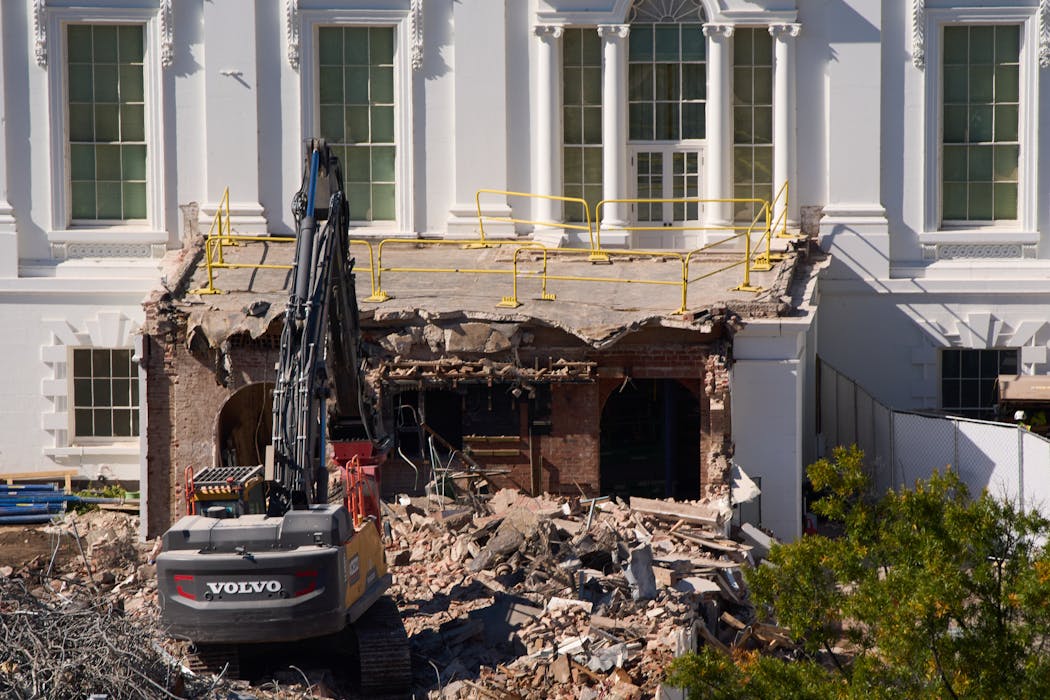
Demolition in process on the East Wing of the White House, Oct. 23, 2025. AP Photo/Jacquelyn Martin

From ancient Egypt to Washington, D.C., rulers have long used architecture and associated stories to project power, control memory and shape national identity. As 17th-century French statesman Jean-Baptiste Colbert observed:

“In the absence of brilliant deeds of war, nothing proclaims the greatness and spirit of princes more than building works.”

Today, the Trump administration is mobilizing heritage and architecture as tools of ideology and control. In U.S. historic preservation, “heritage” is the shared, living inheritance of places, objects, practices and stories – often plural and contested – that communities value and preserve. America’s architectural heritage is as diverse as the people who created, inhabited and continue to care for it.

As an archaeologist with three decades of practice, I read environments designed by humans. Enduring modifications to these places, especially to buildings and monuments, carry power and speak across generations.

In his first term as president, and even more so today, Donald Trump has pushed to an extreme legacy-building through architecture and heritage policy. He is remaking the White House physically and metaphorically in his image, consistent with his long record of putting his name on buildings as a developer.

In December 2020, Trump issued an executive order declaring classical and traditional architectural styles the “preferred” design for new federal buildings. The order derided Brutalist and modernist structures as inconsistent with national values.

Now, Trump is seeking to roll back inclusive historical narratives at U.S. parks and monuments. And he is reviving sanitized myths about America’s history of slavery, misogyny and Manifest Destiny, for use in museums, textbooks and public schools.

Yet artifacts don’t lie. And it is the archaeologist’s task to recover these legacies as truthfully as possible, since how the past is remembered shapes the choices a nation makes about its future.

The Trump administration tore down much of the White House East Wing without either consulting historians and preservation experts or opening the project to public comment.

Architecture as political power and legacy

Dictators, tyrants and kings build monumental architecture to buttress their own egos, which is called authoritarian monumentalism. They also seek to build the national ego – another word for nationalism.

Social psychologists have found that the awe we experience when we encounter something vast diminishes the “individual self,” making viewers feel respect and attachment to creators of awesome architecture. Authoritarian monumentalism often exploits this phenomenon. For example, in France, King Louis XIV expanded the Palace of Versailles and renovated its gardens in the mid-1600s to evoke perceptions of royal grandeur and territorial power in visitors.

Many leaders throughout history have built “temples to power” while erasing or overshadowing the memory of their predecessors – a practice known as damnatio memoriae, or condemnation to oblivion.

In the ancient world, the Sumerians, Babylonians, Egyptians, Romans, Chinese dynasties, Mayans and Incas all left behind architecture that still commands awe in the form of monuments to gods, rulers and communities. These monuments conveyed power and often served as instruments of physical and psychological control.

In the 19th century, Napoleon fused conquest with heritage. Expeditions to Egypt and Rome, and the building of Parisian monuments – the Arc de Triomphe and the Vendôme Column, both modeled on Roman precedents – reinforced his legitimacy.

Albert Speer’s and Hermann Giesler’s monumental neoclassical designs in Nazi Germany, such as the party rally grounds in Nuremberg, were intended to overwhelm the individual and glorify the regime. And Josef Stalin’s Soviet Union suppressed avant-garde experimentation in favor of monumental “socialist realist” architecture, projecting permanence and centralized power.

Now, Trump has proposed building his own triumphal arch in Arlington, Virginia, just across the Potomac River from the Lincoln Memorial, as a symbol to mark the 250th anniversary of the Declaration of Independence.

Four men in military uniforms with swastika arm bands inspect a large model of a stadium.
German Chancellor Adolf Hitler and architect Albert Speer in 1932, inspecting Speer’s model for a huge stadium to be built at Nuremberg.
Corbis via Getty Images

An American alternative

Born of Enlightenment ideals of John Locke, Voltaire and Adam Smith, the American Revolution rejected the European idea of monarchs as semidivine rulers. Instead, leaders were expected to serve the citizenry.

That philosophy took architectural form in the Federal style, which was dominant from about 1785 to 1830. This clear, democratic architectural language was distinct from Europe’s ornate traditions, and recognizably American.

Its key features were Palladian proportions – measurements rooted in classical Roman architecture – and an emphasis on balance, simplicity and patriotic motifs.

James Hoban’s White House and Thomas Jefferson’s Monticello embodied this style. Interiors featured lighter construction, symmetrical lines, and motifs such as eagles, urns and bellflowers. They rejected the opulent rococo styles associated with monarchy.

Americans also recognized preservation’s political force. In 1816, the city of Philadelphia bought Independence Hall, which was constructed in 1753 and was where the Declaration of Independence and the Constitution were debated and signed, to keep it from being demolished. Today the building is a U.S. National Park and a UNESCO World Heritage Site.

Early preservationists saved George Washington’s home, Mount Vernon, Jefferson’s Monticello, and other landmarks, tying democracy’s endurance to the built environment.

Architecture, memory and Trump

In remaking the White House and prescribing the style and content of many federal sites, Trump is targeting not just buildings but the stories they tell.

By challenging narratives that depart from white, Anglo-Saxon origin myths, Trump is using his power to roll back decades of work toward creating a more inclusive national history.

These actions ignore the fact that America’s strength lies in its identity as a nation of immigrants. The Trump administration has singled out the Smithsonian Institution – the world’s largest museum, founded “for the increase and diffusion of knowledge – for ideological reshaping. Trump also is pushing to restore recently removed Confederate monuments, helping to revive “Lost Cause” mythology about the Civil War.

Trump’s 2020 order declaring classical and traditional architectural styles the preferred design for government buildings echoed authoritarian leaders like Adolf Hitler and Stalin, whose governments sought to dictate aesthetics as expressions of ideology. The American Institute of Architects publicly opposed the order, warning that it imposed ideological restrictions on design.

Trump’s second administration has advanced this agenda by adopting many recommendations in the Heritage Foundation’s Project 2025 blueprint. Notably, Project 2025 calls for repealing the 1906 Antiquities Act – which empowers presidents to quickly designate national monuments on federal land – and for shrinking many existing monuments. Such rollbacks would undercut the framework that has safeguarded places like Devils Tower in Wyoming and Muir Woods in California for over a century.

Trump’s new ballroom is a distinct departure from the core values embodied in the White House’s Federal style. Although many commentators have described it as rococo, it is more aligned with the overwrought and opulent styles of the Gilded Age – a time in American history, from about 1875 through 1895, with many parallels to the present.

In ordering its construction, Trump has ignored long-standing consultation and review procedures that are central to historic preservation. The demolition of the East Wing may have ignored processes required by law at one of the most important U.S. historic sites. It’s the latest illustration of his unilateral and unaccountable methods for getting what he wants.

A man in a suit at a podium holds out a model of a white arch topped with a gilded statue.
At a press conference on Oct. 15, 2025, President Donald Trump holds a model of a proposed arch to be built across the Potomac River from the Lincoln Memorial.
Kevin Dietsch/Getty Images

Instruments of memory and identity

When leaders push selective histories and undercut inclusive ones, they turn heritage into a tool for controlling public memory. This collective understanding and interpretation of the past underpins a healthy democracy. It sustains a shared civic identity, ensures accountability for past wrongs and supports rights and participation.

Heritage politics in the Trump era seeks to redefine America’s story and determine who gets to speak. Attacks on so-called “woke” history seek to erase complex truths about slavery, inequality and exclusion that are essential to democratic accountability.

Architecture and heritage are never just bricks and mortar. They are instruments of memory, identity and power.

The Conversation

R. Grant Gilmore III does not work for, consult, own shares in or receive funding from any company or organization that would benefit from this article, and has disclosed no relevant affiliations beyond their academic appointment.

ref. Demolishing the White House East Wing to build a ballroom embodies Trump’s heritage politics – https://theconversation.com/demolishing-the-white-house-east-wing-to-build-a-ballroom-embodies-trumps-heritage-politics-264947

Influencers could learn a thing or two from traditional journalism about disclosing who’s funding their political coverage

Source: The Conversation – USA – By Edward Wasserman, Professor of Journalism, University of California, Berkeley

When influencers accept money and don’t disclose it, then they’re being influenced. Bambu Productions, Getty Images

Online influencers, through their postings on Instagram, Threads, TikTok and elsewhere, have created an exuberant universe of news and commentary that often outruns mainstream media in reach and even impact. They work the same waterfront as journalism and public relations, but their relationship with those mainstay practices built around fact and advocacy is an uneasy one.

And when it comes to the rules that are supposed to keep communicators honest, they have been slow to step up, as a raging controversy over undisclosed payments to freelance influencers shows.

For the past month, social media has been ablaze with postings about a provocative story alleging improper political influence among left-leaning online commentators. Headlined “A Dark Money Group is Secretly Funding High-Profile Democratic Influencers,” it ran in Wired, the San Francisco-based magazine that specializes in tech, and was written by Taylor Lorenz, a high-profile reporter who has built a stormy career of tech coverage for outlets including The Washington Post, The New York Times and The Atlantic.

The 3,600-word article focused on Chorus, described as a secretive arm of the Sixteen Thirty Fund, whose wide-ranging support for progressive causes totals more than US$100 million a year. Starting in spring 2025, Lorenz reported, Chorus quietly recruited and supported a coterie of liberal political influencers, with monthly stipends of anywhere from $250 to $8,000.

Just how tightly Chorus sought to control what the 90-some freelancers actually produce is somewhat unclear, and was sharply disputed in the reaction to the article.

But what is clear to me, as a journalist and student of media ethics, is that any creators who conceal financial support while weighing in on matters of interest to their funders are, by implication, falsely presenting themselves as independent voices. They are no less deceitful than the business journalist who covers a company they secretly invest in.

Furious response misses the point

The Wired story declared that the program supporting influencers, called the Chorus Creator Incubator Program, “was aimed at bolstering Democratic messaging on the internet.” Funded commentators got regular briefings with lawmakers and others, organized by Chorus, on newsworthy issues.

The paid influencers also allegedly agreed to forewarn Chorus about interviews with prominent sources, Lorenz wrote, saying “creators in the program must funnel all bookings with lawmakers and political leaders through Chorus. Creators also have to loop Chorus in on any independently organized engagements with government officials or political leaders.”

And, a big red flag for anyone concerned with ethical communications practices: Participating influencers were also prohibited from telling anybody about the money they were getting.

The Wired story plainly hit a nerve and triggered a spasm of angry postings on Instagram, TikTok, Bluesky, YouTube, X, Facebook and other social media sites. But for all their passion, the comments brought to light the disheveled state of online ethics.

Ad hominem attacks predominated. Posts denounced Lorenz as a liar and a hypocrite who had no business exposing the program because she herself admittedly receives similar funding. Some said her real motive was sabotaging the left. Others praised the Chorus program as a valuable attempt to sharpen the skills of participants and enrich their reporting. Still others asserted that Chorus is not hands-on, never assigns or edits anybody’s stories and is an overdue corrective that gives left-leaning influencers just the kind of support the political right has had for years.

Only rarely did the commentary touch on what should have been the white-hot core of the problem: The absence of a shared understanding of the basic responsibilities that online influencers have to the people they serve. Those responsibilities are no different from those of journalists or professional advocates – to come clean.

As Don Heider, head of the Markkula Center for Applied Ethics at Santa Clara University, told Lorenz with admirable clarity: “If the contract for getting money from a particular interest group says you can’t disclose it, then it’s pretty simple, you can’t take the money.” Or, said the influencer Overopinionatedbrit3 on TikTok: “If you are getting paid disclose or you are an influencer being influenced.”

An obligation to disclose

The principle of disclosure is one that is widely accepted by professional communicators.

From their earliest iterations a century ago, journalism codes have recognized that conflict of interest is perhaps the most toxic threat to the credibility of reporters and the trust they seek from audiences.

The Public Relations Society of America has based its efforts to professionalize advocacy in part on an insistence that practitioners not conceal support or withhold information about whose message they are conveying – prohibitions that, sadly, are not universally observed. One notorious breach was the use of on-air “military analysts” by CNN and other networks during the Iraqi invasion. They were typically former high-ranking officers now employed by arms contractors whose paychecks depended on cordial relations with the Pentagon, but who nevertheless proffered supposedly independent expert appraisals of the U.S. military campaign to CNN viewers. None of that was disclosed to the public.

Femi Redwood, who chairs the National Association of Black Journalists LGBTQ+ task force, was one of the few respondents among the flood of comments on the Wired story who zeroed in on the absence of online standards. Redwood defined the problem as “the intersection of news and influencing without the ethics of journalism,” and called for a code that would make the ethical obligations of influencers explicit.

The world of influencers is, admittedly, a bit of a Wild West. How universally ethical guidelines would be embraced and whether platforms might find the stomach to consider enforcement remain open – but pivotal – questions.

The lure of the high road

But the social media commentariat may be receptive.

Online practitioners have long claimed greater intellectual independence and cleaner hands than the legacy newspeople they challenge, who they say are trapped in the cobwebs of institutional bias and material thralldom. Much of their claim to the high road has rested on their greater candor – renamed transparency and hailed as the “new objectivity” – which calls for influencers to fess up about their predispositions and biases rather than go the traditional mainstream route and imply they have none. Secrecy over funding, plainly, is incompatible with such transparency.

Indeed, in the current moment, when colossal news organizations have been brought to heel by an administration in Washington that uses their owners’ financial ambitions to enforce ideological discipline, the influencers’ potential ability to claim moral superiority seems even stronger.

But the freelance model doesn’t ensure independence. It may only create a shifting roster of dependencies and allegiances that are wholly invisible to the audience being served and a potent source of corruption.

Disclosure is an imperfect remedy. But failing to adopt it as a minimum expectation leaves the robust online universe with a moral taint that is lethal to trust.

The Conversation

Edward Wasserman does not work for, consult, own shares in or receive funding from any company or organization that would benefit from this article, and has disclosed no relevant affiliations beyond their academic appointment.

ref. Influencers could learn a thing or two from traditional journalism about disclosing who’s funding their political coverage – https://theconversation.com/influencers-could-learn-a-thing-or-two-from-traditional-journalism-about-disclosing-whos-funding-their-political-coverage-267905

You’ve just stolen a priceless artifact – what happens next?

Source: The Conversation – USA (2) – By Leila Amineddoleh, Adjunct Professor of Law, New York University

The tiara of Empress Eugénie was one of eight priceless pieces of jewelry stolen from the Louvre in Paris on Oct. 19, 2025. Zhang Mingming/VCG via Getty Images

The high-profile heist at the Louvre in Paris on Oct 19, 2025, played out like a scene from a Hollywood movie: a gang of thieves steal an assortment of dazzling royal jewels on display at one of the world’s most famous museums.

But with the authorities hot in pursuit, the robbers still have more work to do: How can they capitalize on their haul?

Most stolen works are never found. In the art crime courses I teach, I often point out that the recovery rate is below 10%. This is particularly disturbing when you consider that between 50,000 and 100,000 artworks are stolen each year globally – the actual number may be higher due to underreporting – with the majority stolen from Europe.

That said, it’s quite difficult to actually make money off stolen works of art. Yet the types of objects stolen from the Louvre – eight pieces of priceless jewelry – could give these thieves an upper hand.

A visual of a museum in the middle of a city with text describing the seven-minute chain of events for the heist that took place on Oct. 17.
At 9:30 a.m. local time on Oct. 19, 2025, four thieves reportedly used a lift mounted on a vehicle to enter the Louvre’s Apollo Gallery.
Murat Usubali/Anadolu via Getty Images

A narrow market of buyers

Pilfered paintings can’t be sold on the art market because thieves can’t convey what’s known as “good title,” the ownership rights that belong to a legal owner. Furthermore, no reputable auction house or dealer would knowingly sell stolen art, nor would responsible collectors purchase stolen property.

But that doesn’t mean stolen paintings don’t have value.

In 2002, thieves broke into Amsterdam’s Van Gogh Museum through the roof and departed with “View of the Sea at Scheveningen” and “Congregation Leaving the Reformed Church in Nuenen” in tow. In 2016, Italian police recovered the relatively unscathed artworks from a Mafia safehouse in Naples. It isn’t clear whether the Mafia actually purchased the works, but it’s common for criminal syndicates to hold onto valuable assets as collateral of some sort.

Oil painting of a group of people with a church in the background.
Van Gogh’s 1884-85 oil on canvas painting ‘Congregation Leaving the Reformed Church in Nuenen’ was one of two of the artist’s works stolen from Amsterdam’s Van Gogh Museum in 2002.
Van Gogh Museum

Other times, stolen works do unwittingly end up in the hands of collectors.

In the 1960s in New York City, an employee of the Guggenheim Museum stole a Marc Chagall painting from storage. But the crime wasn’t even discovered until an inventory was taken years later. Unable to locate the work, the museum simply removed it from its records.

In the meantime, collectors Jules and Rachel Lubell bought the piece for US$17,000 from a gallery. When the couple requested that an auction house review the work for an estimate, a former Guggenheim employee at Sotheby’s recognized it as the missing painting.

Guggenheim demanded that the painting be returned, and a contentious court battle ensued. In the end, the parties settled the case, and the painting was returned to the museum after an undisclosed sum was paid to the collectors.

Some people do knowingly buy stolen art. After World War II, stolen works circulated on the market, with buyers fully aware of the widespread plunder that had just taken place across Europe.

Eventually, international laws were developed that gave the original owners the opportunity to recover looted property, even decades after the fact. In the U.S., for example, the law even allows descendants of the original owners to regain ownership of stolen works, provided they can offer enough evidence to prove their claims.

Jewels and gold easier to monetize

The Louvre theft didn’t involve paintings, though. The thieves came away with bejeweled property: a sapphire diadem; a necklace and single earring from a matching set linked to 19th-century French queens Marie-Amélie and Hortense; an opulent matching set of earrings and a necklace that belonged to Empress Marie-Louise, Napoleon Bonaparte’s second wife; a diamond brooch; and Empress Eugénie’s diadem and her corsage-bow brooch.

These centuries-old, exquisitely crafted works have unique historic and cultural value. But even if each one were broken to bits and sold for parts, they would still be worth a lot of money. Thieves can peddle the precious gemstones and metals to unscrupulous dealers and jewelers, who could reshape and sell them. Even at a fraction of their value – the price received for looted art is always far lower than that received for legitimately sourced art – the gems are worth millions of dollars.

A display case featuring an emerald-and-diamond necklace and a pair of emerald-and-diamond earrings.
An emerald-and-diamond necklace that belonged to Napoleon’s second wife, Empress Marie Louise, was among the items stolen from the Louvre on Oct. 19, 2025.
Maeva Destombes/Hans Lucas/AFP via Getty Images

While difficult to sell stolen goods on the legitimate market, there is an underground market for looted artworks. The pieces may be sold in backrooms, in private meetings or even on the dark web, where participants cannot be identified. Studies have also revealed that stolen – and sometimes forged – art and antiquities often appear on mainstream e-commerce sites like Facebook and eBay. After making a sale, the vendor may delete his or her online store and disappear.

A heist’s sensational allure

While films like “The Thomas Crown Affair” feature dramatic heists pulled off by impossibly attractive bandits, most art crimes are far more mundane.

Art theft is usually a crime of opportunity, and it tends to take place not in the heavily guarded halls of cultural institutions, but in storage units or while works are in transit.

Most large museums and cultural institutions do not display all the objects within their care. Instead, they sit in storage. Less than 10% of the Louvre’s collection is ever on display at one time – only about 35,000 of the museum’s 600,000 objects. The rest can remain unseen for years, even decades.

Works in storage can be unintentionally misplaced – like Andy Warhol’s rare silkscreen “Princess Beatrix,” which was likely accidentally discarded, along with 45 other works, during the renovation of a Dutch town hall – or simply pilfered by employees. According to the FBI, around 90% of museum heists are inside jobs.

In fact, days before the Louvre crime, a Picasso work valued at $650,000, “Still Life with Guitar,” went missing during its journey from Madrid to Granada. The painting was part of a shipment including other works by the Spanish master, but when the shipping packages were opened, the piece was missing. The incident received much less public attention.

To me, the biggest mistake the thieves made wasn’t abandoning the crown they dropped or the vest they discarded, essentially leaving clues for the authorities.

Rather, it was the brazen nature of the heist itself – one that captured the world’s attention, all but ensuring that French detectives, independent sleuths and international law enforcement will be on the lookout for new pieces of gold, gems and royal bling being offered up for sale in the years to come.

The Conversation

Leila Amineddoleh does not work for, consult, own shares in or receive funding from any company or organization that would benefit from this article, and has disclosed no relevant affiliations beyond their academic appointment.

ref. You’ve just stolen a priceless artifact – what happens next? – https://theconversation.com/youve-just-stolen-a-priceless-artifact-what-happens-next-267947