La restriction de la vente d’alcool à Damas, illustration du durcissement du régime syrien

Source: The Conversation – in French – By Imad Khillo, Maître de conférences de droit public à Sciences Po Grenoble / Université Grenoble Alpes. Chercheur au Centre d’études et de recherche sur la diplomatie, l’administration publique et le politique (CERDAP²). Codirecteur du séminaire de recherche « Construction nationale et religions en Méditerranée » au Collège des Bernardins., Sciences Po Grenoble – Université Grenoble Alpes

Les autorités de Damas ont interdit la consommation d’alcool dans les espaces publics, au nom d’une vision très conservatrice de l’islam. La mesure autorise toutefois la vente dans trois quartiers où vivent les chrétiens, ce qui tend à encore davantage pointer du doigt cette minorité. Au-delà, l’objectif du gouvernement Al-Charaa est d’imprimer un tour de vis supplémentaire au contrôle de l’espace public.


Depuis l’instauration du nouveau régime d’Ahmad Al-Charaa à Damas le 8 décembre 2024, on observe en Syrie une volonté croissante des autorités d’encadrer les comportements dans l’espace public.

Dans ce contexte, la question de la consommation d’alcool, loin d’être anecdotique, apparaît comme un indicateur révélateur des transformations en cours. Elle s’insère dans une dynamique plus large marquée par un renforcement du contrôle social, une mobilisation accrue du registre religieux et une recomposition des rapports entre communautés, notamment à l’égard des populations chrétiennes.

Une politique de restriction de l’alcool mise en place dès mars 2026

Le 16 mars 2026, le gouvernorat de Damas a promulgué la réglementation n° 311/MT, qui interdit la consommation d’alcool dans l’ensemble des bars, restaurants et espaces publics de ce gouvernorat, qui est composé uniquement de la capitale du pays (il n’y a pas d’autres réglementations similaires dans d’autres villes pour le moment). Présentée comme une réponse aux attentes locales (notamment à la suite de plaintes répétées des habitants relatives à la vente aux mineurs) et comme un moyen de préserver les « bonnes mœurs », cette mesure a été justifiée par les autorités, dans une argumentation reprise et diffusée par l’agence officielle SANA (Syrian Arab News Agency), comme un renforcement du décret législatif n° 180 du 23 mars 1952, qui interdisait déjà la vente et la consommation d’alcool dans les zones musulmanes.

Désormais, la vente d’alcool est limitée à trois quartiers précis : Bab Sharki, Bab Touma et Qassa, et uniquement sous forme de bouteilles fermées, sans possibilité de consommation sur place. En outre, les établissements autorisés doivent respecter des règles de localisation strictes : ils doivent être situés à au moins 75 mètres des lieux de culte, des écoles et des cimetières, et à une distance minimale de 20 mètres des postes de police et des bâtiments administratifs. Cette mesure est également présentée comme une simple réactivation d’un décret de 2010 du même gouvernorat, signé par le maire de Damas de l’époque, Bichr Al-Saban.

Cette politique s’accompagne d’un renforcement du contrôle administratif. Le directeur de la Direction des professions et des licences au gouvernorat de Damas, Hussein Hammoud, a en partie justifié la mesure par le fait que la moitié des bars et des restaurants ne disposent pas d’autorisations complètes. Un délai de trois mois a été accordé aux établissements concernés pour adapter leur activité, en particulier les bars, qui doivent se transformer en « cafés » sans alcool. Des contrôles réguliers et inopinés sont prévus en cas de non-conformité, pouvant conduire, après avertissement, à une fermeture administrative.

Cette décision, prise sans concertation avec les ministères compétents ni information préalable des acteurs concernés, émane directement de la municipalité de Damas et porte la signature du maire Maher Marwan Idlibi, renforçant un sentiment d’arbitraire lié à la centralisation et au manque de transparence. Au-delà de la seule dimension morale, elle s’inscrit dans une dynamique plus large de restructuration économique qui affecte particulièrement les secteurs liés à la vie nocturne, fragilise des catégories professionnelles entières et plonge de nombreux gérants d’établissements dans une incertitude économique durable, faute de visibilité sur l’avenir de leur activité.

Une moralisation de l’espace public et un contrôle accru des comportements

Les inquiétudes actuelles s’inscrivent dans une continuité historique. Dès l’arrivée du nouveau régime au pouvoir, en décembre 2024, certains responsables chrétiens recommandaient déjà de limiter les célébrations de Noël, par crainte de provoquer des tensions avec les nouvelles autorités d’obédience salafiste, malgré les assurances officielles de tolérance. Plusieurs incidents visant cette communauté ont toutefois été signalés. Bien que ces actes aient été officiellement condamnés, ils témoignaient d’un changement d’atmosphère : la garantie des libertés dépendait moins des déclarations publiques que des pratiques effectives des forces locales et des groupes liés aux mouvances islamistes, à savoir de réseaux sunnites informels issus d’anciens groupes rebelles, partiellement réintégrés après la reconquête de Damas.

Dès mars 2025, plusieurs établissements servant de l’alcool, en particulier dans des quartiers à forte population chrétienne du centre de Damas, avaient été contraints de fermer à la suite d’arrêtés administratifs, avant que certaines de ces décisions ne soient partiellement annulées sous la pression de l’opinion publique. À l’époque, le retrait de certains de ces arrêtés avait été interprété par de nombreux observateurs comme le signe que les autorités restaient attentives à leur image et aux sensibilités des minorités. Avec le recul, cet épisode apparaît surtout comme une phase transitoire : loin de renoncer à ces orientations, le pouvoir semble avoir opté pour une mise en œuvre plus graduelle.

En réalité, les mesures adoptées depuis l’arrivée d’Ahmad Al-Charaa dépassent largement la seule question de l’alcool et s’inscrivent dans une dynamique plus large de redéfinition des normes sociales, marquée par un encadrement croissant des comportements individuels et collectifs. Cette orientation se retrouve ainsi dans d’autres domaines. Le 10 juin 2025, les autorités ont ainsi demandé aux femmes de porter sur les plages publiques des tenues de bain couvrantes, de type burkini, tout en exemptant de cette obligation les établissements privés considérés comme haut de gamme. Cette décision, prise par le ministère du tourisme, illustre l’extension progressive de la logique normative à l’ensemble de l’espace social.

Ce processus s’inscrit dans un contexte marqué par la multiplication d’initiatives locales, souvent prises sans cadre clairement défini, donnant l’impression d’une politique menée par ajustements successifs. Derrière ces mesures se profile toutefois une transformation plus profonde, certains discours officiels évoquant l’émergence d’une « nouvelle Damas » fondée sur des normes sociales et religieuses plus strictes, sans que ses contours soient véritablement précisés.

Dans ce cadre, la contrainte apparaît de plus en plus comme un outil central de régulation, avec une approche graduelle allant de l’avertissement à la fermeture des établissements, notamment dans le cadre des restrictions liées à l’alcool. Cette évolution alimente les inquiétudes quant à un encadrement accru des libertés individuelles et à l’installation durable de mécanismes de contrôle social.

Stigmatisation des minorités chrétiennes et recompositions communautaires

Les effets de la décision du 16 mars se font particulièrement sentir dans certains quartiers de Damas, désormais associés, parfois de manière réductrice, à des espaces de consommation d’alcool. Cette évolution est vivement contestée par de nombreux habitants chrétiens, qui refusent de voir ces zones, historiquement mixtes et ouvertes, devenir les seuls lieux autorisés pour ces pratiques, au risque d’y concentrer l’ensemble des usages et des populations concernés. Là où ces activités étaient auparavant réparties dans la ville, leur regroupement actuel contribue à transformer l’image de ces quartiers et à les enfermer dans une fonction spécifique.

Ce découpage géographique n’est pas neutre. En limitant la vente d’alcool aux quartiers de Bab Touma, Bab Sharqi et Qassa, les autorités participent, même indirectement, à renforcer l’association entre appartenance chrétienne et consommation d’alcool, tandis que l’expression « lieux de débauche » s’est déjà diffusée auprès d’une partie de la population damascène. Ce phénomène favorise une lecture confessionnelle de l’espace urbain et contribue à fragmenter davantage la ville selon des lignes communautaires. Cette décision ne fait qu’accentuer les tensions existantes : dès le début de l’année 2026, plusieurs témoignages signalent la circulation de messages religieux dans certains quartiers ou l’apparition d’affiches appelant à un « retour au vrai islam » à proximité de lieux de culte chrétiens. Même présentées comme des initiatives isolées, ces pratiques participent à l’instauration d’un climat de suspicion et de stigmatisation.

Face à ces inquiétudes, certains responsables politiques tentent de réaffirmer une vision inclusive. La ministre des affaires sociales et du travail, Hind Kabawat – seule femme ministre du gouvernement Al-Charaa et seule de confession chrétienne – a ainsi rappelé à plusieurs reprises la place des chrétiens dans l’histoire et la société syriennes, soulignant leur rôle dans les domaines de l’éducation, de la santé et de l’action associative, ainsi que leur engagement en faveur de l’ensemble de la population, y compris durant les années de conflit. Elle a également insisté sur la dimension historique et culturelle de quartiers tels que Bab Touma et Bab Sharqi, présentés comme des espaces de coexistence, tout en mettant en garde contre les dangers que représentent les discours extrémistes pour la cohésion nationale.

La décision de la municipalité a été vivement critiquée par le « Comité du quartier de Bab Touma » à Damas, qui a déclaré à Syria TV que cette mesure avait été prise sans consultation du « tissu social local » et l’a qualifiée de « discriminatoire », en contradiction avec les principes de la déclaration constitutionnelle. Dans un communiqué, le diocèse de Bosra, du Hauran et du Jabal al-Arab a exprimé sa profonde inquiétude, estimant que la décision favorisait une division géographique et démographique contraire à l’histoire unifiée de Damas. Il a ajouté que, si le souci des autorités de répondre aux plaintes des citoyens concernant des comportements individuels irresponsables est compréhensible, la solution consiste à renforcer le rôle de la police judiciaire et à appliquer la loi aux seuls contrevenants, plutôt qu’à généraliser les restrictions à des quartiers entiers.

Pour le pouvoir central, le double discours se poursuit : à l’international, les autorités peuvent afficher une position mesurée, soulignant qu’il n’existe ni interdiction totale de l’alcool ni application stricte d’un modèle religieux uniforme, et que les minorités bénéficient d’une attention particulière. En interne, le message adressé à une partie de la population est plus clair : l’espace public doit progressivement se conformer à des normes morales inspirées d’un référentiel islamique, et les pratiques considérées comme déviantes sont appelées à se cantonner à des espaces tolérés, mais de plus en plus restreints.

Le resserrement progressif des libertés individuelles

Un rassemblement de protestation sous forme de « sit-in silencieux » a eu lieu le dimanche 22 mars sur la place de Bab Touma, témoignant que ces mesures suscitent déjà des réactions sur le terrain. Cette mobilisation dans le centre de Damas dépasse d’ailleurs la seule question de la consommation d’alcool : elle traduit une volonté plus générale de défendre les libertés individuelles, garanties par les articles 7, 12 et 13 de la Déclaration constitutionnelle signée par Ahmad Al-Charaa, lui-même, le 13 mars 2025.

Ce qui peut, à première vue, apparaître comme une série de décisions ponctuelles révèle en réalité des évolutions plus profondes. On observe un resserrement progressif des libertés individuelles et une transformation des équilibres entre les différentes composantes de la société. Dans ce contexte, les dynamiques de pluralisme et de coexistence confessionnelle semblent de plus en plus mises à l’épreuve.

Après treize ans de guerre pour la liberté, Damas, sous le lourd voile de l’autoritarisme, voit-elle aujourd’hui s’éteindre l’espoir de ses enfants ?

The Conversation

Imad Khillo ne travaille pas, ne conseille pas, ne possède pas de parts, ne reçoit pas de fonds d’une organisation qui pourrait tirer profit de cet article, et n’a déclaré aucune autre affiliation que son organisme de recherche.

– ref. La restriction de la vente d’alcool à Damas, illustration du durcissement du régime syrien – https://theconversation.com/la-restriction-de-la-vente-dalcool-a-damas-illustration-du-durcissement-du-regime-syrien-279022
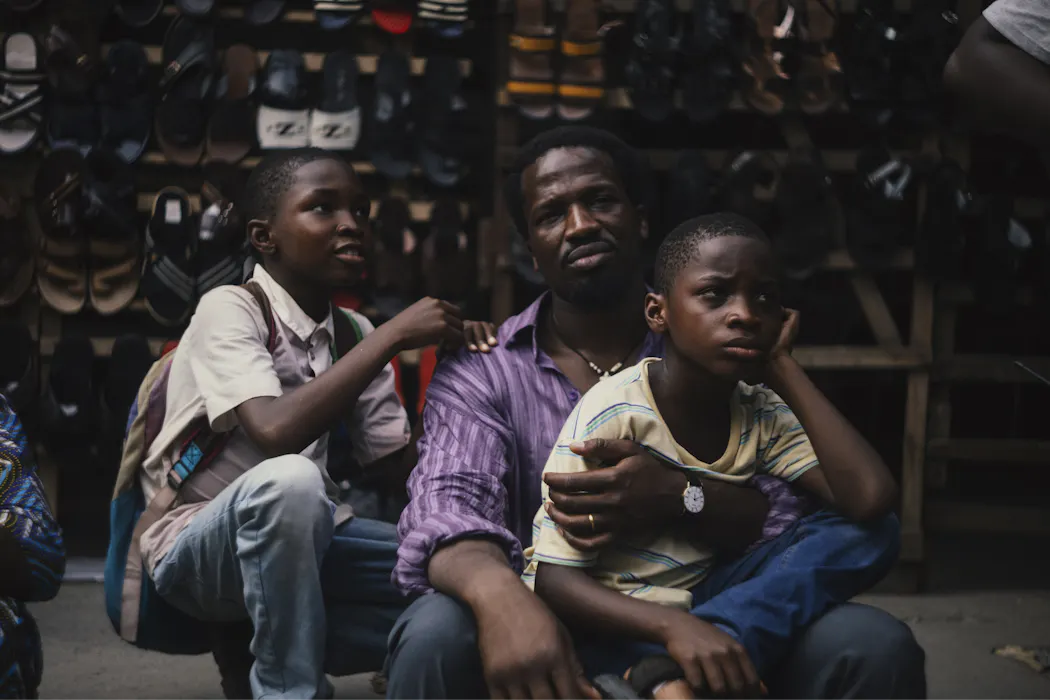
« Un jour avec mon père », d’Akinola Davies Jr, chanson douce sur une enfance nigériane

Source: The Conversation – in French – By Émilie Guitard, Chargée de recherche en anthropologie au CNRS, Centre national de la recherche scientifique (CNRS); Université de Bordeaux

Le Nigeria des années 1990 à hauteur d’enfants, interprétés par Chibuike Marvellous Egbo et Godwin Egbo (ici, dans les bras de Sope Dirisu, qui joue le rôle de leur père). Lakin Ogunbanwo/Le Pacte

Le premier film du réalisateur britannico-nigérian Akinola Davies Jr réussit à entremêler la petite et la grande histoire du Nigeria dans un récit simple mais puissant, capté à hauteur d’enfant.


Soir d’avant-première au Cin’Hoche de Bagnolet (Seine-Saint-Denis) : Ciné Wax et le Decolonial Film Festival présentent Un jour avec mon père (My Father’s Shadow), premier film d’Akinola Davies Jr. Le public, majoritairement jeune et afro-descendant, est venu en nombre y chercher une autre représentation de lui-même et du continent africain, encore trop rare sur les écrans français.

Auréolé de nombreux prix, dont la mention spéciale de la Caméra d’or à Cannes et le BAFTA du meilleur premier film, Un jour avec mon père ne déçoit pas ces attentes. Le réalisateur, né à Londres et élevé entre l’Angleterre et Lagos, dont sa famille est originaire, dira lors du débat suivant la projection avoir fait ce film pour proposer une autre image du Nigeria et de celles et ceux qui y vivent, dans toute leur complexité et leurs contradictions, mais aussi leur beauté, leur fierté et leur dignité.

Ce pari est magistralement relevé par ce premier film ciselé comme un joyau, profondément poétique et politique. L’enjeu était d’autant plus important que le Nigeria souffre, particulièrement en France, d’une représentation caricaturale entre violence, misérabilisme et excès ostentatoires des grandes fortunes du pays, quand il n’est pas tout simplement absent des imaginaires de la plupart d’entre nous.

La « crise du 12-Juin » : un moment clé de l’histoire nigériane à hauteur d’enfant

La première scène du film, qualifiée de « semi-autobiographique » par Akinola Davies Jr, s’inspire d’un souvenir d’enfance partagé avec son frère aîné et co-scénariste Wale Davies.

Devant une maison modeste à la périphérie de la ville d’Ìbàdàn, deux frères de 8 et 11 ans, Akinọlá et Rẹ̀mí, tuent le temps pendant que leur mère est « au village ». L’apparition soudaine de leur père Fọlárìn, qui décide sur un coup de tête de les embarquer à Lagos où il travaille à l’usine, fait entrer les enfants dans le monde des adultes et par là permet l’irruption du politique. Dès leur montée dans le minibus en route pour la capitale économique du pays, l’anticipation et la tension sont palpables : le journal d’un des passagers est daté du 24 juin 1993, soit douze jours après les premières élections démocratiques tenues au Nigeria depuis le coup d’État militaire du général Babangida en 1985 (et plus largement, depuis 1966 et le premier de quatre coups d’État militaires). Les résultats sont donc ardemment attendus, notamment par les supporters de Moshood Káṣìmawòó Ọláwálé Abíọ́lá dit MKO Abíọ́lá, homme d’affaires et politicien yorùbá et candidat favori. En fin de journée, Babangida annoncera au journal télévisé l’annulation des élections, volant la victoire à MKO Abíọ́lá et déclenchant une crise politique et économique dont les Nigérianes et les Nigérians se souviennent encore sous le nom de « crise du 12-Juin ».


À lire aussi :
June 12 is now Democracy Day in Nigeria. Why it matters


Celle-ci se soldera par un cinquième coup d’État militaire en novembre 1993, portant au pouvoir le général Sani Abacha. Il faudra attendre 1999 pour voir le premier président démocratiquement élu, Olúṣẹ́gun Ọbásanjọ́, exercer enfin le pouvoir.

Le tour de force du film est d’appréhender cette crise « par le bas » et la grande histoire par la petite, voire même la toute petite, puisqu’Akinola Davies Jr place sa caméra à hauteur d’enfants. Ce n’est au demeurant pas un procédé nouveau dans la production fictionnelle nigériane très riche, comme en témoigne par exemple les Pêcheurs (2015), de Chigozie Obioma, qui évoque aussi le souvenir des évènements de 1993 à Akuré, ville d’origine de MKO Abíọ́lá, par la voix d’un enfant.

Le film laisse en outre percevoir, à travers le point de vue des enfants entendant leur père et d’autres adultes faire les éloges à diverses reprises de MKO Abíọ́lá, l’héroïsation de certaines figures politiques symboles d’indépendance et de démocratie, comme dans d’autres contextes africains Patrice Lumumba ou Thomas Sankara. Le court-métrage Twaaga (2013), de Cédric Ido, prend cette idée au pied de la lettre, en mettant en scène dans les années 1980 un petit garçon burkinabé fan de comics imaginant Thomas Sankara en superhéros :

Le co-scénariste du film, Wale Davies, mentionne pour sa part l’influence de la Route de la faim (1991), de Ben Okri. Celui-ci y décrit la trajectoire, dans le Nigeria nouvellement indépendant, d’un enfant-esprit, abíkú, qui choisit de naître dans une famille très modeste. À travers ce regard d’enfant toujours entre deux mondes sur les tumultes politiques que traverse alors le pays et la dureté du quotidien, l’auteur va même jusqu’à comparer le Nigeria à un enfant-esprit, caractérisé par sa versatilité :

« [O]ur country is an “abíkú” country. Like the spirit-child, it keeps coming and going. One day it will decide to remain. It will become strong. » (« Notre pays est un pays “abíkú”. Tout comme l’enfant-esprit, il ne cesse d’aller et venir. Un jour, il décidera de rester. Il deviendra fort. ») (1991 : 478).

À côté de ce point de vue enfantin, Akinola Davies Jr filme aussi la tension montante et les impacts concrets de la crise en cours au plus près des citoyennes et des citoyens : débattant ardemment dans les transports en commun ou dans les bars de quartier, devant débarquer du minibus les conduisant à Lagos faute de carburant ou encore se ruant sur une baleine échouée sur une plage de Lagos pour en découper la chair. Une scène à laquelle Wale Davies a réellement assisté dans son enfance et qui fait écho aux récits, nombreux à Ìbàdàn, de la déforestation de plusieurs espaces boisés de la ville durant la « crise du 12-Juin » par des citadins en quête de combustible pour alimenter le foyer domestique.

Quant au père, il incarne les aspirations démocratiques d’alors, mais aussi la peur des militaires, qui ne cessent d’apparaître dans le film pour lui adresser un regard accusateur. Une peur qui dure jusqu’aujourd’hui au Nigeria, après des décennies de dictatures militaires, étayée de fait par l’un des plus fort taux au monde de meurtres extrajudiciaires.

De la figure du militaire à celui du père : une vision onirique de l’autorité masculine en crise

Akinola Davies Jr a néanmoins la grande finesse de ne pas enfermer le Nigeria dans une violence politique qui définirait le pays. Il s’attache, certes, à dépeindre la figure tutélaire du père, associée dans sa toute-puissance à celle du militaire, autant de symboles d’autorité dans une société patriarcale très hiérarchisée, qui trouve ses origines au sud-ouest du Nigeria aussi bien dans une organisation sociopolitique yorùbá très centralisée que dans l’empreinte laissée sur les institutions, depuis la famille jusqu’à l’État, par la colonisation britannique.

Toutefois, l’autorité paternelle exercée d’abord par Fọlárìn, notamment aux yeux de ses enfants qui le côtoient rarement, se fissure progressivement à mesure que le trio déambule dans Lagos dans l’attente d’un salaire dû au père depuis des mois. Akinola Davies Jr questionne ainsi la masculinité et ses tendances toxiques, qui font souffrir les femmes et les enfants mais aussi les hommes eux-mêmes, comme finit par l’évoquer Fọlárìn, avouant à son fils aîné son désespoir de devoir travailler loin de ses enfants pour les nourrir sans pour autant les voir grandir.

Il s’agit là d’une représentation toute en finesse d’un père « cassé », par le système comme par d’autres hommes qui le dominent (son patron, les militaires au pouvoir), englué dans son statut de « cadet social ». Akinola Davies Jr réussit ici pleinement à montrer un autre modèle de paternité et de masculinité noires, aimantes et sensibles.

La douceur de ce portrait de paternité « en crise » est aussi appuyée par la dimension onirique du film, qui contribue à atténuer la violence de son propos tout en donnant une coloration passée aux images, évocatrice des souvenirs d’enfance comme autant de vieilles photos jaunies. Ce sentiment est particulièrement fort dans la scène d’ouverture du film où le réalisateur nous laisse le temps d’observer les deux enfants combattre l’ennui assis sur un banc de bois ou jouant au catch sur le sol de terre battue avec des figurines de papier.

Ce moment suspendu permet, par ailleurs, de s’attarder sur des détails matériels comme ceux de l’intérieur modeste typique des foyers de classe moyenne nigérians dans les années 1990.

Extrait d’Un jour avec mon père, d’Akinola Davies Jr (2026).

La nature, de même, paraît omniprésente, du frissonnement des frondes d’un palmier au vol de vautours suivant le père tout au long du film. Elle contribue à son atmosphère poétique mais paraît aussi être porteuse de nombreux signes, notamment funestes.

Le film fait ainsi écho à un motif récurrent de la littérature nigériane, celui de la forêt, mobilisé comme un espace imaginaire investi de savoirs, de magie mais aussi de politique. Dans le contexte yorùbá, les éléments naturels sont aussi intimement associés au (magico-)religieux. Ceci est évoqué dans le film à plusieurs moments de façon subtile, comme le vent fort se levant soudainement pour annoncer l’apparition du père.

Le motif de la nature et de ses éléments permet enfin d’introduire le thème central du rêve, associé à ceux de la mort et du deuil, tous trois intimement lié dans une certaine conception yorùbá du monde : le rêve y est en effet considéré comme l’un des canaux de communication entre le monde tangible et celui invisible des esprits, des òrìṣà (entités du panthéon yorùbá) et des défunts. Ces derniers peuvent ainsi se manifester auprès des vivants durant leurs rêves pour leur offrir des messages d’importance. Il s’agit d’une clé de compréhension centrale de l’intrigue du film, mais à laquelle le réalisateur ne donne pas d’accès évident, réussissant le coup de maître de faire d’une conception profondément yorùbá de la porosité du monde et de la cyclicité du temps une proposition universelle, comme avait pu le faire en 2022 dans le domaine de la danse le chorégraphe lagosien Qudus Onikeku avec son spectacle Re:Incarnation :

« Dans les coulisses avec Qudus Onikeku », Spectacles vivants, Centre Pompidou.

« Une lettre d’amour à Lagos »

Akinola Davies Jr dit avoir fait avec son film « une lettre d’amour à Lagos ». Celui-ci abandonne en effet rapidement Ìbàdàn pour suivre ses protagonistes jusqu’à la mégapole voisine. Il s’agit là encore d’un motif classique de la littérature nigériane – dès les années 1960 avec les Interprètes (1965), de Wolé Soyinka, jusqu’au récent Welcome to Lagos (2018), de Chibundu Onuzo, ou le très beau livre pour enfants En route (2024) de l’autrice britannico-nigériane Atinuke et l’illustratrice britannique Angela Brooksbank.

Nollywood, l’énorme industrie nigériane du cinéma basée à Lagos, a pu également s’emparer de ce thème, comme dans Taxi Driver (Oko Ashewo, 2015), de Daniel Oriahi, narrant les mésaventures d’un originaire d’Ìbàdàn fraîchement débarqué à Lagos pour y faire le taxi de nuit.

Mais ici encore, là où la plupart de ces œuvres passées insistaient sur l’immensité et le caractère élusif de la ville pour exprimer une forme de « désillusion urbaine », Akinola Davies Jr choisit plutôt de dénicher la beauté de Lagos dans les détails du paysage urbain et les scènes du quotidien. Dès lors, même le sentiment de décrépitude qui exsude de certaines images de la mégapole appuie le regard poétique et nostalgique du réalisateur, à l’instar de cette scène dans un parc d’attractions vide qui n’est pas sans rappeler le récit de voyage de Noo Saro-Wiwa, Looking for Transwonderland (2012) décrivant le parc d’attraction décati du même nom à Ìbàdàn, présenté à son ouverture comme le « Disneyland du Nigeria ». Ces images évoquent aussi le cinéma documentaire, tel que celui d’Alain Kassanda dans son moyen-métrage Trouble Sleep (2020), révélant le quotidien des citadins d’Ìbàdàn à travers leurs activités le long de ses axes routiers.

À ce titre, Akinola Davies Jr se revendique d’un Nollywood alternatif et arthouse, qui se détache des canons classiques de cette industrie montrant plutôt Lagos à travers ses symboles les plus clinquants et ses quartiers les plus huppés. En réaction, un collectif de cinéastes nigérians alternatifs, le Surreal16, a même publié un manifeste résolument anti-Nollywood dont le 14e commandement est « Pas de plan d’ensemble du Lekki Bridge », un pont emblématique relayant l’ancien quartier colonial d’Ikoyi, sur Lagos Island, à celui plus récent mais tout aussi aisé de Lekki Phase 1. Certains de ses membres ont de fait produit des films marquants et novateurs ces derniers années, tel que l’étonnant The Lost Okoroshi (2019) d’Abba T. Makama, contant les déboires d’un jeune Lagosien « pris » par un masque igbo sans s’être vu enseigné les codes pour accueillir cette possession :

Akinola Davies Jr préfère aussi au Lekki Bridge d’autres monuments emblématiques mais moins « bling » de Lagos, comme le long Third Mainland Bridge ou le National Theater. Il associe ces plans à ceux d’espaces publics fréquentés par le commun des citadins, comme les grands marchés de la ville ou encore sa plage, peut-être la célèbre Bar Beach, aujourd’hui disparue sous le béton d’un grand estate de luxe, l’Eko Atlantic.

La texture de l’image enfin, tournée en 16 millimètres, évoque bien plus les clips musicaux et de mode avec lesquels Akinola Davies Jr a appris son art que l’esthétique digitale des films populaires de Nollywood. Le réalisateur fait d’ailleurs de ce choix un argument politique :

« Je veux que les Nigérianes et les Nigérians puissent se voir dans le plus beau format. »

Tuer le père

Un jour avec mon père, d’Akinola Davies Jr, est donc un film riche, rare et précieux. Sous l’apparence d’une chanson douce, il offre une réflexion contemplative sur l’exercice de l’autorité au Nigeria et la possibilité d’autres formes de masculinités noires, tout en donnant à voir le quotidien des citadins d’Ìbàdàn et de Lagos dans toute leur banalité et leur beauté.

Bien qu’ancré dans le contexte politique particulier de 1993, il se révèle en outre – malheureusement – très contemporain, notamment dans l’incarnation, par le père, Fọlárìn, des aspirations démocratiques déçues des citoyennes et des citoyens du pays. Il fait ainsi directement écho, depuis le passé, aux jeunes générations descendues dans les rues des grandes villes du pays en 2020 durant le mouvement #EndSARS contre les violences policières et pour une meilleure gouvernance du pays, portées à l’écran par Alain Kassanda dans Coconut Head Generation (2023). Au prix de la vie de beaucoup, puisque cela semble être encore au Nigeria la seule issue des rêves de liberté et de démocratie.

The Conversation

Émilie Guitard ne travaille pas, ne conseille pas, ne possède pas de parts, ne reçoit pas de fonds d’une organisation qui pourrait tirer profit de cet article, et n’a déclaré aucune autre affiliation que son organisme de recherche.

– ref. « Un jour avec mon père », d’Akinola Davies Jr, chanson douce sur une enfance nigériane – https://theconversation.com/un-jour-avec-mon-pere-dakinola-davies-jr-chanson-douce-sur-une-enfance-nigeriane-279246

L’identité de Banksy a peut-être été révélée, mais était-ce bien nécessaire ?

Source: The Conversation – in French – By Peter Bengtsen, Associate Professor in Art History and Visual Studies, Lund University

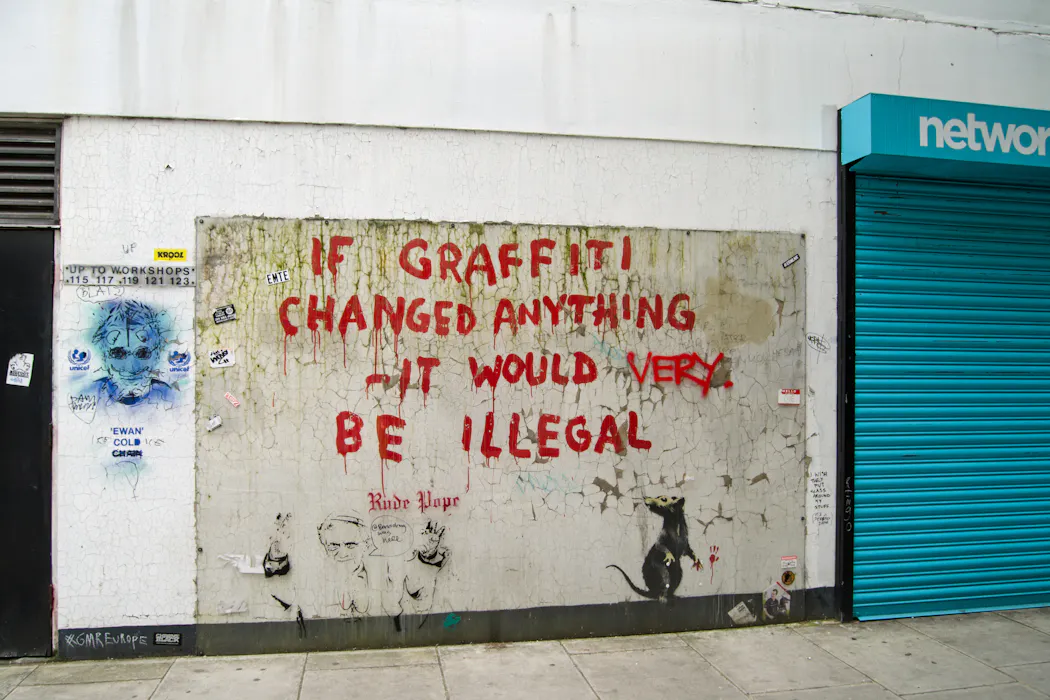
Dans cette œuvre de 2011, Banksy affirme avec ironie en lettres rouges : « Si les graffitis changeaient vraiment quelque chose, ils seraient illégaux. » BasPhoto/Shutterstock

Une enquête de Reuters affirme avoir enfin percé le mystère de l’identité de Banksy. Mais révéler le nom de l’artiste sert-il réellement l’intérêt public, ou risque-t-on au contraire de détruire une part essentielle du mythe qui fait la force de son œuvre ?


L’artiste britannique Banksy, célèbre notamment pour son anonymat, aurait – une nouvelle fois – été démasqué. Le 13 mars, Reuters a publié une enquête affirmant avoir « révélé, sans l’ombre d’un doute, la véritable identité de Banksy ».

Ce n’est pas la première fois que l’identité de Banksy est supposément rendue publique. Outre plusieurs enquêtes journalistiques antérieures également citées par Reuters, un article académique intitulé Tagging Banksy : Using Geographic Profiling to Investigate a Modern Art Mystery (« Taguer » Banksy : le profilage géographique pour enquêter sur une énigme de l’art contemporain) a été publié dans la revue Journal of Spatial Science presque exactement dix ans avant la parution de l’enquête de Reuters.

L’article utilisait une méthode mathématique analysant les lieux où apparaissaient les graffitis de Banksy afin de déterminer où l’artiste pourrait vivre et travailler. Les résultats pointaient vers une personne précise comme étant probablement l’artiste. J’ai soutenu à l’époque que la décision des auteurs de publier le nom de la personne qu’ils pensaient être Banksy posait un problème éthique. Elle ne semblait servir aucun objectif scientifique et paraissait surtout destinée à attirer l’attention des médias sur une étude académique par ailleurs très spécialisée.

L’enquête de Reuters apparaît comme un travail journalistique minutieusement documenté. Mais le récit détaillé de la manière dont Banksy aurait été identifié laisse une autre question en suspens : en quoi révéler l’identité de Banksy sert-il l’intérêt du public ?

Le pouvoir de l’anonymat

L’enquête de Reuters affirme qu’il existe « pour le public un intérêt légitime à connaître l’identité et le parcours d’une figure dont l’influence durable sur la culture, le marché de l’art et le débat politique international est considérable ». Je ne partage pas cette analyse.

La carrière et l’influence culturelle de Banksy sont déjà bien connues. On voit mal en quoi révéler le nom de la personne derrière le masque apporterait des éléments vraiment nouveaux pour comprendre son œuvre ou son impact.

Le mystère qui entoure depuis longtemps l’identité de Banksy a largement contribué à forger le mythe d’une figure presque légendaire, dont les œuvres peuvent surgir n’importe où, à tout moment. Le travail de Banksy est abouti sur le plan conceptuel, technique et contextuel – et souvent socialement engagé. Mais c’est le mythe qui entoure l’artiste qui continue d’alimenter une fascination dépassant largement chacune de ses œuvres. L’anonymat et le secret sont au cœur même de sa démarche artistique.

L’enquête de Reuters affirme que Banksy est une figure publique et qu’à ce titre il est « soumis à l’examen, à la responsabilité et, parfois, au dévoilement ». Pourtant, comme l’a fait remarquer un internaute dans une discussion sur Reddit lancée par l’un des journalistes de Reuters, on ne voit pas bien « en quoi révéler son nom augmenterait réellement sa responsabilité ».

Sur un plan très concret, l’anonymat a permis à Banksy de créer des œuvres dans le monde entier avec relativement peu d’interférences de la part des autorités – ou même de ses admirateurs. L’attention portée à un maçon londonien précédemment « identifié » comme étant Banksy (avant que cette hypothèse ne soit finalement démentie) montre que ces derniers pourraient compliquer la vie de l’artiste, mais aussi celle de toute personne portant le nom légal désormais attribué à Banksy par Reuters.

Mais l’essentiel est peut-être ailleurs : l’anonymat permet au public de projeter ses propres idées à la fois sur l’artiste et sur ses œuvres. Ainsi, certains ont par exemple suggéré que Banksy pourrait être une femme.

Comme l’a souligné la chercheuse en études culturelles Sofia Pinto, cette idée repose peut-être sur des conceptions stéréotypées de ce qui serait perçu comme des traits féminins dans la culture et l’art. On cite par exemple l’attention portée par l’artiste aux questions de justice sociale ou sa « capacité à se mettre à la place des autres ». Mais l’essentiel n’est pas le véritable genre de Banksy. Ce qui compte, c’est que son anonymat permet au public de spéculer et de combler les zones d’ombre.

L’idée que Banksy pourrait être n’importe qui a sans doute élargi l’attrait de l’artiste. Elle a peut-être aussi encouragé des personnes qui ne ressemblent pas à Banksy – ou qui ne partagent pas son origine sociale – à se lancer dans le street art ou dans d’autres formes de création.

Les journalistes de Reuters citent l’historien de l’art allemand Ulrich Blanché, qui compare la quête de l’identité de Banksy à une chasse au trésor. La métaphore peut sembler pertinente, mais une chasse au trésor ne consiste pas forcément à s’approprier tout le butin – surtout si cela gâche le plaisir de tous les autres.

À une époque troublée de l’histoire, où il devient parfois difficile de regarder le monde avec émerveillement plutôt qu’avec cynisme, pourquoi priver le public de l’énigme qui fait partie intégrante de l’œuvre de Banksy ? L’idée un peu vague selon laquelle révéler l’identité de la personne derrière Banksy servirait l’intérêt public méconnaît profondément la fonction et l’importance de l’anonymat de l’artiste.

The Conversation

Peter Bengtsen ne travaille pas, ne conseille pas, ne possède pas de parts, ne reçoit pas de fonds d’une organisation qui pourrait tirer profit de cet article, et n’a déclaré aucune autre affiliation que son organisme de recherche.

– ref. L’identité de Banksy a peut-être été révélée, mais était-ce bien nécessaire ? – https://theconversation.com/lidentite-de-banksy-a-peut-etre-ete-revelee-mais-etait-ce-bien-necessaire-279615

Iran war: what African countries can do to get through the crisis and emerge in a better place

Source: The Conversation – Africa – By Danny Bradlow, Professor/Senior Research Fellow, Centre for Advancement of Scholarship, University of Pretoria

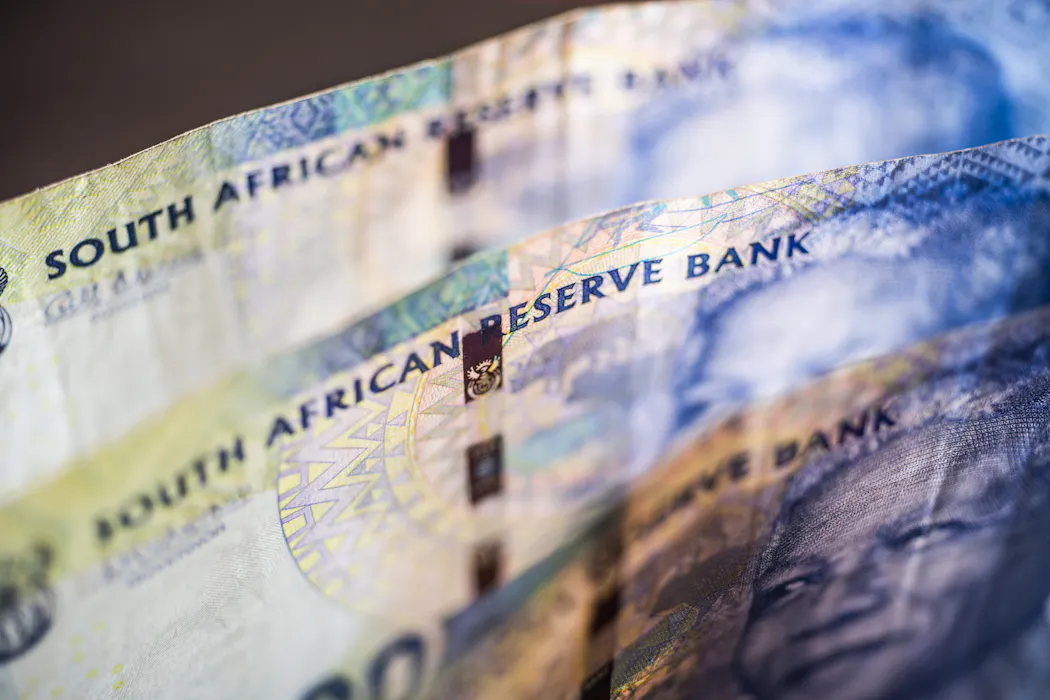
The South African rand is one of many currencies in Africa to have lost value against the dollar in the wake of the US/Israeli war against Iran. Waldo Swiegers/Bloomberg via Gettyimages

By Easter 2026 it was still not clear when – or how – the war initiated by Israel and the US against Iran would end. But what was already clear was that it would harm Africa in a number of ways.

Firstly, it would adversely affect the global supply and prices of oil and gas, fertilisers and food. Secondly, local currencies would be affected. More than a month after the war had started a number of African currencies had begun to lose value against the US dollar.

Thirdly, interest rates stopped falling and further rate increases were highly likely. Fourth, there will be a decline in access to affordable foreign financing.

How should Africa respond?

African countries cannot avoid being harmed by the current Gulf war. Nevertheless, based on my work in international economic law and global economic governance, I think there are two lessons that, if followed, can help the continent emerge from the crisis in a better place.

First, governments and societies need to be pragmatic. Their first priority must be to do whatever they can to mitigate the impact of the war, particularly on their most vulnerable citizens. This will require governments to make trade-offs.

They will have to reallocate budgets to at least maintain the level of imports necessary to meet the society’s basic needs. They will need to convince their creditors to help finance their necessary imports. They will also need to persuade them to be flexible enough that they leave governments with at least some policy space.

Second, states and societies need to identify opportunities within the crisis for actions that over the medium term can help them meet their financing, economic, environmental and social challenges. This requires collaboration between the state and its non-state stakeholders. Business, labour, religious groups, civil society organisations and international organisations all have something to contribute.


Read more:
Oil price surge is hurting African economies: scholars in Ethiopia, Kenya, Nigeria, Senegal and South Africa take stock


Action in the short run

The focus of Africa’s efforts in the short term must be on minimising the negative effects of the war and on managing the state’s external debts in the most sustainable and effective way.

This is easy to state, but hard to implement. This is particularly the case in the current international environment, in which it is not realistic to expect donor countries and other international sources of finance to be particularly generous.

African countries will need to convince their creditors to acknowledge that this crisis is beyond Africa’s control and that they should not compound the pain that’s being experienced. This will require, at a minimum, that the creditors agree to suspend debt payments for the next year.

Creditors have already accepted the principle that debt payments can be suspended when debt challenges arise from sources beyond the debtor’s control. Many of them have accepted clauses requiring such action under specific conditions in their most recent debt contracts. They also did this during COVID.

Second, African countries, which are already heavily indebted, should challenge their multilateral creditors to accept the consequences of being among the biggest creditors for the continent. This includes the World Bank, the International Monetary Fund and the African Development Bank. By custom these institutions are treated as preferred creditors. This means that they get paid before all other creditors. Instead of participating in any debt restructurings, they also make new loans to the debtor in crisis. This shifts the debt restructuring burden onto the debtor’s other creditors. It also increases the total amount owed to the multilaterals.

This cannot continue. These institutions need to be more creative in providing Africa to financing. This should include:

Third, governments should work with the Alliance of African Multilateral Financial Institutions to use these institutions more effectively to finance African development. For example:

  • They should require the institutions to only undertake transactions that are consistent with their development mandates. This means no more opaque transactions like the recent one that the African Finance Corporation concluded with Senegal.

  • African governments should take the necessary action to activate the African Financial Stability Mechanism that they agreed to establish last year. This would create a useful financial safety net for the continent.

Fourth, African governments must build on the efforts they began last year to become a more effective advocate for African development financing interests at the international level. Among these efforts was the initiative by African ministers of finance to develop common African positions on sovereign debt restructurings. Another was South Africa’s launch of the African Expert Panel that proposed a number of initiatives on African debt and development financing.

In the medium term

African countries should advocate for the IMF to review its governance arrangements so that it becomes more accountable and responsive to developing countries, including African states and societies.

They should also advocate for the IMF to more use its existing resources, including its gold reserves, more creatively to support Africa.

Second, Africa should call for a debate on the preferred creditor status of multilateral financial institutions. This has become particularly relevant because the members of the Alliance of African Multilateral Financial Institutions are claiming that, like all other multilateral financial institutions, they are entitled to this status.

It is not clear that there are good arguments for excluding these institutions from preferred creditor status while protecting the position of the legacy institutions. This suggests that there is a need for some general principles that help determine which institutions should be treated as preferred creditors. These should be acceptable to all multilateral financial institutions and other market participants.

Third, African societies must make every effort to demonstrate that they are taking control of their own development. They should demand that their governments and all other actors in African development finance behave responsibly in regard to the financial, economic, environmental and social aspects of these transactions.

Another medium term objective should be to limit the illicit financial flows that are so often associated with international trade and investment. This goal would be advanced by the successful conclusion of the current efforts to agree on a UN Framework Convention on International Tax Cooperation.

The Conversation

Danny Bradlow is s Senior Non-Resident Fellow, Global Development Policy Center, Boston University and a Senior Fellow, South African Institute of International Affairs

– ref. Iran war: what African countries can do to get through the crisis and emerge in a better place – https://theconversation.com/iran-war-what-african-countries-can-do-to-get-through-the-crisis-and-emerge-in-a-better-place-279689

Counting trans people: Why better data collection is essential for better policy

Source: The Conversation – Canada – By Elizabeth Baisley, Assistant Professor, political studies, Queen’s University, Ontario

In the wake of Trans Day of Visibility, the risks of being seen are clearer than ever, from rising hate crimes and online harassment to the spread of anti-trans legislation.

But visibility alone is not enough. Trans people are still systematically under-counted or obscured in the data that shapes policy.

In an era when policy and even advocacy are increasingly data-driven, counting trans people properly in data remains essential — without it, inequality cannot be adequately addressed.

To do so, we need to improve data collection, analysis and sharing practices.

Current data collection methods fall short

Although governments and organizations are increasingly collecting data on trans people, current methods can lead to under-counting.

When Canada became the first country in the world to publish census data on trans and non-binary people, it collected that information using a household questionnaire. Parents of trans youth might have been the ones filling out the answers for their children.

This likely contributes to under-counting because younger people are typically more likely to identify as trans — except 15- to 19-year-olds, who often still live with their parents.

The drop-off is lower in countries like Scotland, which use private, individual questionnaires, offering a potential model for others.

But even when trans people are included in data sets, they can disappear during analysis.

Grouping LGBTQ2S+ data can be misleading

Trans people can disappear during analysis when grouped with other LGBTQ2S+ people, a pattern seen across both academia and community-based research.

For example, studies on political candidates that treat LGBTQ2S+ people as a single group often find little evidence of discrimination, yet studies examining trans candidates separately show that they face voter bias.

Similarly, while LGBTQ2S+ candidates overall raise less money than straight, cisgender candidates, the causes differ. For many sexual minority candidates, funding gaps stem from structural inequalities in incumbency, past political experience and district competitiveness, while trans candidates would still raise less money even if those inequalities disappeared.

Disaggregated analyses therefore show that targeted interventions — such as bias-reduction efforts and dedicated funds — remain necessary for trans candidates.

Some organizations have recognized the perils of aggregation and worked to produce research that makes trans people and their experiences visible. The Community-Based Research Centre (CBRC), Canada’s leading data collector on queer and trans health, offers a compelling example.

Initially focused on cisgender gay, bisexual and queer men, CBRC later expanded to include trans men, non-binary and Two-Spirit people. However, as samples broadened further to include all queer and trans identities, subgroup-specific findings risked being overshadowed unless data were disaggregated in reporting. In response, the organization began producing research that specifically examines trans experiences.

But even when data are collected and analyzed appropriately, access remains an obstacle.

Barriers to accessing trans-specific data

Sharing data can also pose barriers to trans-specific advocacy and policymaking when that data is inaccessible or only released in aggregate forms.

The 2021 census highlights this issue. Apart from Statistics Canada’s original release and a report showing poorer socioeconomic outcomes, we still know very little about trans people.

Statistics Canada usually only makes gender-based data from the 2021 census publicly available under the categories “Men+” and “Women+,” randomly assigning non-binary people to either group and not indicating whether anyone is trans.

If researchers want information about trans people, they must request access to a Research Data Centre through a lengthy process involving security clearance, fingerprinting, a credit check and long wait times, making it difficult to study these communities.

Steps to improve trans visibility

A few practical and co-ordinated changes in how data are collected, analyzed and shared would improve trans visibility. Here are four ways to start:

  1. Involve trans people in data collection, analysis and publishing decisions. Inclusion may strengthen both legitimacy and data quality, as trans people may propose questions that elicit better responses from their communities. Lived knowledge can therefore inform analysis and decisions about sharing results.

  2. Build disaggregation into reporting requirements for governments and organizations. If we care about gender-based inequalities, data must be disaggregated to identify distinct barriers and design targeted responses. Without it, policy and advocacy will miss those most affected.

  3. Design data collection procedures to include trans people. Gender or sex questions are widespread. The question is not whether we collect data on trans people — we already do — but whether we design collection procedures with everyone in mind, allowing accurate counting and disaggregated analyses.

  4. Look for opportunities to analyze and share data on trans people. Organizations often have statistical and ethical concerns around data on trans people. Although statistical analyses usually require large groups, it is still possible to analyze data on small groups when their patterns differ clearly from others. Alternatively, data can also be examined qualitatively.

Although we share ethical concerns around trans people’s privacy, there is often a way to share data without making individuals identifiable.

Visibility is complicated, but being counted in data is essential.

While better practices won’t fix everything, they are a good place to start. Because without better data, we cannot design effective policy or advocate for meaningful change. Let’s ensure trans people are counted, too.

The Conversation

Elizabeth Baisley has received funding from the Social Sciences and Humanities Research Council of Canada.

Francesco MacAllister-Caruso previously worked for the Community-Based Research Centre (CBRC) from 2020 to 2025.

Quinn M. Albaugh has received funding from the Social Sciences and Humanities Research Council of Canada.

– ref. Counting trans people: Why better data collection is essential for better policy – https://theconversation.com/counting-trans-people-why-better-data-collection-is-essential-for-better-policy-278957

A global butterfly index could advance insect conservation worldwide

Source: The Conversation – Canada – By Federico Riva, Assistant Professor, Department of Biology, Carleton University

About 70 per cent of the species on Earth are insects. They are fundamental components of most ecosystems: they comprise half of the biomass on the planet, pollinate flowers, decompose dead organic matter and play multiple roles in food webs. They are quite literally everywhere, including in and around our homes, but they have also been declining at alarming rates in many places.

The societal implications of this potential “insectageddon” could be catastrophic, including losses in human food production. However, confirming suspicions of global declines is difficult because we lack reliable data on insect populations in many parts of the world.

We simply don’t have the infrastructure around the planet that would allow us to track insect populations altogether. That means we don’t know how insect populations are responding to different global changes, and we might be failing to design effective conservation policies and track whether current actions are working.

Efforts to rapidly generate global indicators of insect population trends are therefore crucial. In our recently published paper, colleagues and I explain how a global butterfly index could help track butterfly populations worldwide — and how we can reach this important objective.

Butterflies: The poster child of insects

a brownish beige butterfly on a while flower
Efforts to rapidly generate global indicators of insect population trends are crucial.
(Federico Riva)

One reason why insects have been neglected in conservation is that they are often ignored — if not feared — by many people. Many of us have been brought up to be cautious around insects, whether they’re bees, spiders or other critters.

There is, on the other hand, broad interest in vertebrate species. Bird-watching has been part of human societies for hundreds of years. The fact that larger animals capture public interest has arguably stimulated global efforts to calculate indicators of trends in their populations, like the Living Planet Index by the World Wildlife Fund and other organizations.


Read more:
What’s the difference between moths and butterflies? Look at their antennae


While insects have generally not benefited from the attention that other animals have received, butterflies are one exception to this rule. These insects, with their captivating patterns and colours, have long fascinated people and have been represented in many traditions across cultures.

Our love for butterflies is reflected in a substantial history of monitoring. In the 1970s, the British entomologist Ernest Pollard initiated the practice of recording butterfly populations on his butterfly walks in England. Fifty years later, hundreds of “Pollard walks” are done across Europe and in many other regions of the world.

Recording the presence of a species in an area is important work. However, equally fundamental are efforts that capture changes in insect populations over time. Nonetheless, a global synthesis of butterfly population monitoring programs has, to date, been missing.

A global butterfly index

Our recent paper fills that gap. We co-ordinated an international consortium with the goal of better understanding opportunities and challenges for calculating a global butterfly index that captures trends across butterfly populations worldwide.

Bringing together scientists from all continents except Antarctica, we were able to collate an incredible dataset including more than 45,000 population trends for over 1,000 butterfly species. We used this data set to:

a butterfly with blac and yellow wings and red, yellow and black body on a reddish pink flower.
Recording the presence of a species in an area is important work. However, equally fundamental are efforts that capture changes in insect populations over time.
(Unsplash/David Clode)
  1. Identify where current efforts stand in terms of taxonomic and spatial coverage of the global butterfly fauna.

  2. Calculate the first version of a global butterfly index.

  3. Evaluate gaps and limitations to address before moving forward.

Despite an unprecedented effort, we found that only populations of around five per cent of species worldwide have been monitored.

It’s important to note that the data set is mostly concentrated in Europe and North America and biased in favour of generalist species (those able to survive in diverse environments) as well as species easier to detect.

Nonetheless, we found that species are on average declining, and sensitive butterflies expected to suffer from global change tended to decline more steeply than the rest of our sample. Populations outside of Europe and North America were too sparse to support robust inferences.


Read more:
Butterflies declined by 22% in just 2 decades across the US – there are ways you can help save them


Global Butterfly Week

Developing this study left us with a few lessons learned. There is substantial work to do if we aim to calculate a truly global indicator of butterfly population trends.

For instance, many parts of the Global South will need support to swiftly develop national monitoring programs, and research in the tropics is needed to better understand what monitoring methods would work best in hyper-diverse regions.

The good news is that butterflies are already one of the most visible and monitored insect groups, which will ameliorate the challenges associated with developing indicators of insect populations. Existing monitoring schemes can provide a template upon which new initiatives can be developed.

Ultimately, developing a global butterfly index will be key to providing long-overdue tracking of insect population changes. Crucially, it could also act as a flagship for broader insect conservation.

Governments are expected to set measurable biodiversity targets in line with their commitments under international agreements such as the Kunming-Montreal Global Biodiversity Framework. However, insects remain largely overlooked in these targets, and it’s impossible to set meaningful targets without robust indicators.

Developing a robust butterfly index is therefore fundamental to help guide conservation and to better understand the scale of the biodiversity crisis, as well as to communicate it to the public.

Butterflies carry a strong emotional value. That can help build support for conservation in a way that less appreciated insects cannot achieve.

Our consortium is helping to create such momentum: this year, members of our team are kick-starting a Global Butterfly Week and conversations around formalizing an international organization are under way.

We are hoping that colleagues interested will join us for the next iterations of these projects. Please reach out.

The Conversation

Federico Riva has received funding from the Horizon program.

– ref. A global butterfly index could advance insect conservation worldwide – https://theconversation.com/a-global-butterfly-index-could-advance-insect-conservation-worldwide-279408

Queen bumblebees can breathe underwater — for days. We discovered how

Source: The Conversation – Canada – By Sabrina Rondeau, Postdoctoral Researcher in Pollinator Ecology, L’Université d’Ottawa/University of Ottawa

A queen bumble bee builds up nutrition reserves in preparation for overwintering. (Lucas Borg-Darveau)

In most bumblebee species, the queens spend their winters buried underground in a tiny cavity the size of a grape. For six to nine months, they enter a deep sleep-like state called diapause, waiting for spring.

As climate change brings more intense rainfall in many regions, these overwintering queens face increasing risks of unstable underground conditions, including flooding.

It’s a good thing, then, that these insects can survive days underwater without drowning. Remarkably, our new research reveals they achieve this through a process of continually breathing while submerged for up to eight days.

It began with a lab accident

We initially discovered that overwintering bumblebee queens can survive submersion due to an accident.

During an experiment at the University of Guelph, some of the tubes in which queens were overwintering in the lab refrigerator inadvertently filled with water.

Initially, we assumed the queens had died. But after emptying out the water, they began to move and soon recovered. This suggested that bumblebee queens might be able to survive submersion.

A bumblebee submerged in a test tube.
A queen bumblebee breathing underwater.
(Charles-Antoine Darveau)

So, we designed a follow-up experiment involving 143 common eastern bumblebee queens (Bombus impatiens).

This confirmed it was no fluke: the queens withstood complete submersion for up to a week.

This raised an intriguing question: how can this terrestrial insect pollinator survive underwater? Answering it required a different approach — we needed to study their physiology.

The heart of the colony

The queen is the heart of a bumblebee colony and its only chance of producing the next generation. While we often hear the buzz of workers visiting flowers during the summer, queens are rarely seen. They spend much of the season inside the nest, laying eggs that will become workers and, later in the summer, males and new queens.

When winter comes, most members of the colony die and only the newly produced queens survive. After mating, these new queens disperse and burrow underground, each settling into a tiny cavity where they enter diapause.

When spring finally returns, the queens that survived their long underground sleep emerge from their burrows and begin the important task of founding a new colony.


Read more:
Worker honey bees can sense infections in their queen, leading to revolt


Breathing underwater

To understand how these queens can survive submersion, we studied their breathing and metabolism in our lab at the University of Ottawa.

During diapause, queens are already in extreme energy-saving mode. The energy they need to stay alive (known as their metabolic rate) drops by more than 99 per cent. When submerged, energy needs drop even further. With such tiny oxygen demands, underwater breathing becomes possible.

But how did we determine whether queens are actually breathing underwater? One way is by measuring the gases exchanged with the surrounding water. We did this and the results were striking: queens continuously consumed oxygen and released carbon dioxide underwater throughout an eight-day period of submersion.

A bumblebee queen hibernating in mud.
A bumblebee queen in her hibernaculum (underground burrow).
(Sabrina Rondeau)

Many aquatic insects use a simple trick to breathe underwater. A thin layer of air clings to their body, allowing them to use their normal air-breathing system — the tracheal system. Oxygen from the surrounding water slowly diffuses into this air layer. Bumblebee queens likely rely on the same mechanism.

Still, underwater respiration alone does not fully meet the queen’s energy needs. To bridge the gap, queens also produce some energy through anaerobic metabolism — a process that does not require oxygen. This pathway produces lactic acid, which we detected in queens during submersion.

These physiological tricks allow queens to survive underwater, but come at a cost. After resurfacing, queens spend several days recovering, using far more energy than they would have if they had never taken the plunge.


Read more:
Below freezing but still moving: How salamanders stay active in winter


An unexpected resilience

Bumblebee queens spend the winters alone, buried underground and relying on stored energy to survive until spring. Their ability to tolerate days of submersion — and even breathe underwater — reveals an unexpected resilience to one of the hazards of life below ground.

This matters because bumblebee colonies depend entirely on the survival of overwintering queens. If a queen dies during winter, the colony she would have founded the following spring will never exist.

This ability to survive submersion could play an important — and previously overlooked — role in the resilience of threatened bumblebee populations.

Even in terms of familiar and comparatively well-studied insects like bumblebees, there is still so much to learn about the surprising ways they cope with environmental challenges.

The Conversation

Sabrina Rondeau received funding from the Natural Sciences and Engineering Research Council of Canada, the Fonds de recherche du Québec—Nature et technologies and the Weston Family Foundation.

Charles-Antoine Darveau receives funding from the Natural Sciences and Engineering Research Council Discovery Grants program.

Nigel Raine receives funding from the Natural Sciences and Engineering Research Council, the Horizon Europe ProPollSoil project, the Canada Foundation for Innovation Innovation Fund, the Ontario Ministry of Agriculture, Food and Agribusiness, the Canadian Wildlife Federation and the Weston Family Foundation.

– ref. Queen bumblebees can breathe underwater — for days. We discovered how – https://theconversation.com/queen-bumblebees-can-breathe-underwater-for-days-we-discovered-how-278175

Why Donald Trump will try to declare victory in Iran well before November

Source: The Conversation – Canada – By John Duncan, Director of the Ethics, Society and Law Program; Academic Director of the Ideas for the World Program, University of Toronto

The Iranian regime is certainly brutal. But it’s also powerful as it continues to project its might after a month of illegal air strikes by the United States and Israel.


Read more:
Iran’s attacks drone on, with the U.S. at risk of losing the war


Iran is in the top 10 per cent of countries by size and population, has the third largest proven petroleum reserves and controls strategically crucial geography.

Furthermore, both the regime and many ordinary Iranians are prepared to defend the country. Since 1953, when the U.S. helped orchestrate a coup to overthrow Iran’s democratically elected Prime Minister Mohammad Mosaddegh, Iranians have understood they’re in America’s crosshairs.

This was especially true after the 1979 Islamic Revolution that overthrew the shah and during the U.S.-backed Iraq war against Iran that killed a million Iranians in the 1980s. As a result, Iran has spent decades beefing up and decentralizing its military capability.

In contrast, Dan Caine, chairman of the Joint Chiefs of Staff, warned U.S. President Donald Trump in February that the U.S. was short on both munitions and allied support for a war against Iran. Israel, America’s partner in war, is also short, especially in interceptor munitions. Trump and Israeli leader Benjamin Netanyahu dismissed the concerns, which suggests they planned a short war.

What are Trump’s options?

Critics have accused Trump of dragging the U.S. — or allowing it to be dragged — into a “forever war.” Those critics include those in his MAGA base, a problem for Trump as he anticipates November’s mid-term elections.

One unconventional option that might expedite victory, discussed during Trump’s first term, is to use nuclear weapons against Iran. Trump has said nukes won’t be used, but he’s well-known for erratic reversals.

A nuclear strike might expedite surrender, but it took two strikes on Japan in 1945 before the Japanese surrendered, and, failing an Iranian surrender, several strikes might be required to destroy the military capability distributed across Iran’s 31 provinces. Because many Americans would be appalled by a nuclear attack, putting the mid-terms at risk, the nuclear option is unlikely.

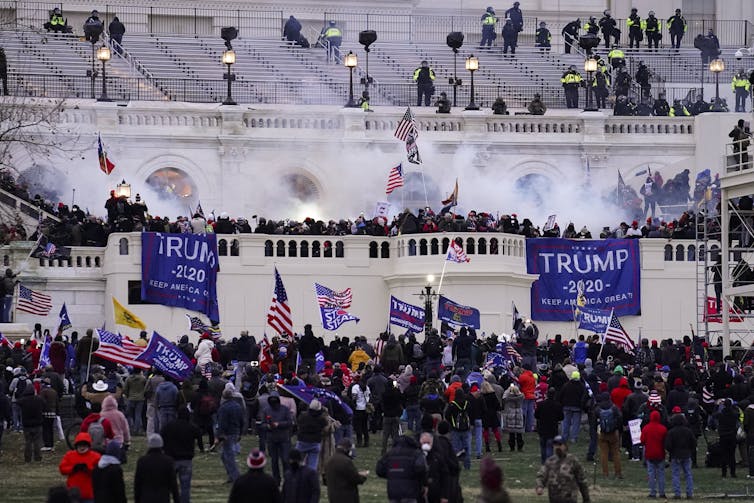
Much of the concern about Trump’s election machinations heading into the mid-terms is focused on the manipulation of procedures and officials. The legacy of the Jan. 6, 2021 attacks on the U.S. Capitol is one extreme possibility, as is manipulating the Iran war to achieve electoral gains.

Trump 2020 signs hang in front of the Capitol Building amid a riot.
Violent protesters, loyal to Donald Trump, storm the U.S. Capitol on Jan. 6, 2021.
(AP Photo/John Minchillo)

Trump will probably lean into his rhetorical strengths and try to convince Americans the U.S. has won when it hasn’t. Claiming victory in the face of its absence is not new to him. Even in his second term, Trump continues to push the false claim that he won the 2020 election.

Consider the bizarre drama that started on March 21 when Trump and Iran exchanged dire threats. Then, out of the blue, Trump declared the existence of peace talks, which Iran denied. Perhaps they are imaginary talks on the way to an imaginary victory for Trump.


Read more:
Why Donald Trump is such a relentless bullshitter


Mission accomplished?

It seems clear Trump is planning to declare victory well ahead of the mid-terms — and in part because of them. Such a strategy would involve baiting opponents into “forever war” criticisms, only to ridicule them in stump speeches, generating the image of a president who finishes his wars.

A declared victory in Iran and a timely exit, in addition to the liberation of Venezuela and a possible Cuban coup, might all coalesce into potent election messaging for the Republicans.

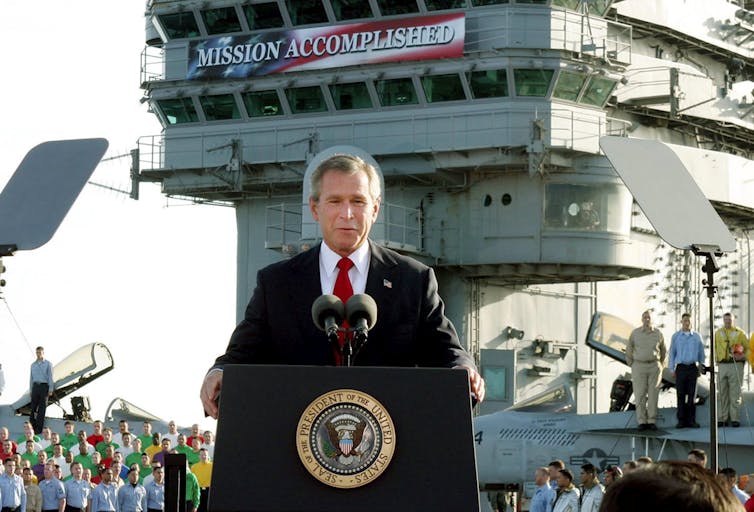
Soon enough, Trump may announce something akin to former president George W. Bush’s premature proclamations about the Iraq War in 2003 by saying something like this:

“Major combat operations in Iran have ended. The United States and Israel have prevailed. We do not know the day of final victory, but we have seen the turning of the tide.”

If successful, he will secure two more years “like nobody’s ever seen before” of Republican congressional dominance.

A grey-haired man stands a podium with the U.S. presidential insignia. Behind him a sign reads Mission Accomplished.
In this May 2003 photo, U.S. President George W. Bush declares the end of major combat in Iraq as he speaks aboard the aircraft carrier USS Abraham Lincoln off the California coast. The war dragged on for many years after that.
(AP Photo/J. Scott Applewhite)

Major obstacles

The battle for November will feature a few competing narratives in the U.S. But there are four major hurdles for Trump in particular.

  • Information: For voters to be convinced that Trump is a decisive crusader against evil rather than another “forever war” president, right-wing media must sell yet another big lie, mainstream media must continue to pull its punches and the Democrats must continue to flounder.
  • Affordability crisis: Trump also has to ensure he doesn’t “win” in Iran while losing on affordability at home. Most American oil comes from the U.S., Canada and Mexico, so the U.S. is protected from global supply disruptions, but global markets push up prices everywhere. Trump’s mere declaration of talks recently brought oil prices down, but only temporarily.
  • Allies needed: Because voters will want to see a significant military withdrawal, Trump needs other countries to manage the chaos he’s created. But after disrespecting allies for months, he is struggling to establish a “coalition of the willing” on which to offload the conflict.
  • Iranians must co-operate: But because the U.S. and Israel have twice attacked Iran during diplomatic negotiations, Iran needs other stakeholders in the process. Without them, Iran will not be incentivized to stop fighting and nothing will belie an imaginary Trump victory more than ongoing Iranian attacks.

Democracy waning

Whichever scenario prevails, Americans will likely lose. Their complete war costs could include repercussions from the unprecedented illegal bombing of Iran, as well as from unnecessarily turning regional allies into targets.

All of this is tied to what many Americans regard as increasing Israeli aggression, including the killing of 70,000 people in Gaza, which the U.S. has facilitated with funding, political cover and its widely mocked Board of Peace.

America’s democracy, economy and credibility are waning as Trump shamelessly pursues self-aggrandizement and self-enrichment.

“That makes me smart,” he might say, but only a failed leader serves his own interests at the expense of his country.

The Conversation

John Duncan is affiliated with Science for Peace, a charitable organization dedicated to popular education and research on the intersections of demilitarization, decarbonization and social justice.

– ref. Why Donald Trump will try to declare victory in Iran well before November – https://theconversation.com/why-donald-trump-will-try-to-declare-victory-in-iran-well-before-november-279059

Bobi Wine’s decision to flee Uganda points to a shrinking landscape for opposition politics

Source: The Conversation – Africa (2) – By Kristof Titeca, Professor in International Development, University of Antwerp

Bobi Wine’s escape from Uganda is not just a striking episode in itself, it also offers insight into the current state of the opposition – particularly his National Unity Platform party – and into the divergences within the Yoweri Museveni regime.

The Ugandan opposition leader had been in hiding for almost two months after the January 2026 presidential election, which Museveni won by 72%. Wine came second with 25% of the vote. Museveni, 81, has been in power since 1986.

Wine, born Robert Kyagulanyi, entered formal politics in 2017 when he won a parliamentary by-election.

He soon emerged as one of the leaders of the People Power movement, a loose, generationally charged mobilisation built around the slogan “People Power, Our Power”. It took shape in the aftermath of protests against the removal of presidential age limits in 2018. At the time, the opposition appeared largely exhausted and unlikely to unseat the regime. Bobi Wine and People Power therefore brought a new energy to Uganda’s opposition.

People Power later formalised into the National Unity Platform party, which Wine used to vie for the presidency in 2021. He secured about 35% of the presidential vote against Museveni’s 59%. National Unity Platform became the largest opposition force in parliament with 57 seats.

These results also highlighted the constraints of electoral politics in the face of extensive repression.

This is a pattern that would again become apparent in the 2026 elections.

As several human rights organisations noted, the 2026 elections took place in an environment marked by widespread repression and intimidation.

After the vote, Wine went into hiding. He posted photos and videos seemingly from Kampala, triggering roadblocks and searches across the capital city. On 18 March 2026, he resurfaced in the United States.

I have researched Ugandan politics for over 20 years, and recently published an article analysing the structural challenges Wine’s political party faces in Uganda’s authoritarian context.

Drawing on this work, my reading is that Wine’s escape reveals controlled tensions within Museveni’s regime, where different factions appear to disagree on how to handle the opposition – without signalling a full split. At the same time, it exposes a deeper dilemma for Wine and his party: how to balance international advocacy with maintaining grassroots legitimacy at home.

This moment matters because it highlights the structural constraints facing opposition politics in Uganda, and raises questions about whether meaningful political change can occur within the current system.

Frictions within the regime

The contrasting approaches within the Museveni regime are illustrated by events that followed the 2026 election. In the weeks following the vote, defence force chief Muhoozi Kainerugaba (Museveni’s son) issued a series of unusually explicit statements about Wine.

In a now-deleted tweet, he claimed that 22 members of the National Unity Platform – whom he labelled “terrorists” – had been killed. He added that he was praying that the next death would be Wine’s.

On 26 January, the defence chief escalated this rhetoric, stating that he wanted Wine “dead or alive”. These statements built on earlier threats, including about beheading Wine.

Taken together, they amount to sustained violent threats directed at the main opposition leader.


Read more:
Uganda’s autocratic political system is failing its people – and threatens the region


Set against this, however, is the fact that Wine was able to evade capture for nearly two months and ultimately leave the country.

It emerged that he did so with assistance from high-level state and security officials.

The same sources and regime insiders reported that intelligence services had informed Museveni about Wine’s whereabouts. The president chose not to act upon this information.

Taken together, these events suggest differences within the regime between factions in the security services, or more broadly between Muhoozi and other centres of power. Potentially even within the first family itself.

But these differences should not be overstated.

The episode does not indicate an open or consolidated split. Criticism of Muhoozi within the regime remains tightly constrained.

What this suggests is a regime where disagreements are contained within narrow limits. Wine’s escape, therefore, points less to a rupture than to an ongoing negotiation over power and strategy within the ruling elite.

And this is becoming increasingly important in light of the anticipated transition beyond Museveni.

Tensions within Wine’s party

Wine’s political strength has always come from where he came from.

He was rooted in the ghetto, and more broadly among urban youth who had long been mobilised by opposition politics but rarely felt represented by it.

Earlier figures like Kizza Besigye could appeal to this group, but Wine embodied it. He spoke the same language and made politics feel accessible to people often treated as outsiders.

That sense of authenticity was central to the early momentum of People Power. It also mattered that Wine broke with a long-standing pattern in Ugandan politics: he did not come from the western region, the core of the ruling elite.

But this “outsider” appeal has become harder to sustain over time. As People Power turned into a political party, and as Wine himself became more embedded in formal politics and international networks, parts of that original base began to feel that something had shifted.

What once felt like a movement of “one of us” increasingly risks being seen as something closer to the political establishment it set out to challenge.

As my research shows, this is not unusual. It is a core dilemma when protest movements turn into parties, especially under repression.

The social media backlash to Wine’s appearance in the United States needs to be read through that lens.

It not only echoes criticism from Museveni that Wine is an “agent of foreign interests”, but also from within the opposition where some radical voices argue that he should have stayed and faced the regime, even if that meant prison. Besigye, for instance, is facing treason charges after he was abducted and extradited from Kenya in 2024.

This criticism echoes a longstanding divide within opposition politics in Uganda: should opposition leaders embody defiance on the ground, or navigate politics through institutional spaces?


Read more:
The making and breaking of Uganda: an interview with scholar Mahmood Mamdani


Being in the US reinforces a growing perception that Wine is becoming more distant from the people who carried the risks on the ground.

If the party cannot connect its international advocacy and diaspora support back to the everyday struggles of its supporters in Uganda, this episode will likely deepen the feeling that the party has become more of the same.

What role remains for Wine?

There is an uncomfortable reality here. Wine serves a function for the regime. His presence helps maintain the appearance of political competition, particularly within the international community.

Wine now faces a choice. Engaging in electoral politics risks reinforcing the system he seeks to challenge. Stepping outside it risks isolation, repression or loss of political relevance.

How he navigates this tension will shape not only his political trajectory, but also that of his party.

The Conversation

Kristof Titeca does not work for, consult, own shares in or receive funding from any company or organisation that would benefit from this article, and has disclosed no relevant affiliations beyond their academic appointment.

– ref. Bobi Wine’s decision to flee Uganda points to a shrinking landscape for opposition politics – https://theconversation.com/bobi-wines-decision-to-flee-uganda-points-to-a-shrinking-landscape-for-opposition-politics-279475

Brutal Mau Mau camps in Kenya were an extension of Britain’s colonial prison system – historian traces their roots

Source: The Conversation – Africa (2) – By Ian Caistor-Parker, PhD student, University of Warwick

During the Mau Mau uprising between 1952 and 1960, the British colonial government confined an estimated 150,000 Kenyans in a sprawling network of “emergency” detention camps.

None of those held in the camps had been found guilty in a court of law. Instead, they were detained on suspicion of supporting the uprising.

British control over Kenya was effectively declared in 1895. A distinctive feature of colonial rule was the decision to encourage white settlement. These settlers were granted vast tracts of Kenya’s most fertile land and pushed policy in an increasingly harsh and unequal direction.

By the early 1950s, many African Kenyans were facing severe land shortages in the countryside and desperate living conditions in urban areas.

In 1952, this situation erupted into the Mau Mau uprising, a broadly anti-colonial rebellion.

The British government responded with overwhelming force. It declared a state of emergency and suppressed the uprising militarily.

Revelations about the extreme violence employed in some emergency detention camps made the continuation of British rule untenable. Particularly key was the Hola massacre of 1959. Guards beat 11 detainees to death and the colonial government attempted to cover up the crime.

Outrage at these events shattered Britain’s grip on the colony, and Kenya achieved independence in 1963 under the leadership of Jomo Kenyatta.

A great deal is known about these detention camps. They were sites of neglect and brutal violence. Detainees were forced to go through a so-called rehabilitation system designed to make them renounce their support for Mau Mau.

In practice, they were subjected to brutal compulsory labour, were at risk of assault and lived in unhygienic conditions. Some of those who refused to cooperate ultimately faced systematic, state-sanctioned torture.

I am a historian researching punishment in Kenya, and I have been investigating the deeper history of detention camps. My research shows that this emergency detention system was shaped by an earlier network of “ordinary” detention camps. These were established in 1926 and processed more than 400,000 people before the uprising.

These camps, intended as a milder alternative to prison, evolved into a poorly regulated system characterised by exploitation, overcrowding and weak accountability.

These findings challenge the idea that the detention system of the 1950s was exceptional. Instead, it was rooted in long-standing colonial practices, shaped by economic incentives, administrative gaps and coercive labour systems.

Understanding this deeper history matters because it changes how we view the Mau Mau emergency. It proves that the brutal 1950s detention system didn’t just emerge from nowhere – it was built on a foundation of state violence and disorder that had been normalised for decades.

The roots

Influenced by a draconian-minded European settler minority, the Kenyan colonial government adopted a harsh approach to punishing the local population. Judges frequently imprisoned Africans for “technical” offences lacking criminal intent. These included failing to pay tax and minor violations of coercive labour laws.

By the 1920s, Kenya’s prisons were overcrowded and “technical” offenders inevitably mixed with hardened criminals.

In response, the colonial government introduced detention in 1926 as a supposedly milder alternative for technical offenders who had simply broken administrative rules. In theory, prisons were to be reserved for those who had committed crimes involving moral violation. In practice, however, these distinctions didn’t (or couldn’t) hold.

To visibly separate detention from imprisonment, the colonial government gave day-to-day control of detention camps to district commissioners (the powerful heads of local governments), not the prison department.

However, this separation was incomplete. Detainees were legally classified as prisoners (though they were not informed of this). The prison department retained ultimate authority over the camps.

This overlapping authority produced a gap in accountability, which ultimately proved disastrous.

In 1930, seeking to divert more people from formal prisons, government officials removed almost all sentencing restrictions on detention. Subsequently, the only limitations were that sentences had to be under six months and that those with more than one prior prison conviction were ineligible.

Numbers surged immediately, with more convicted offenders sent to detention than formal prisons almost every year until 1952.

Judges increasingly used detention for serious offences, including manslaughter. A limited criminal records system meant that individuals with prior convictions – sometimes as many as 16 – ended up in detention.

Conversely, the amendment did not stop harsh magistrates from continuing to send significant numbers of minor offenders to prisons.

This blurring of populations, combined with a lack of structural and legal separation, meant detention camps mutated into a parallel prison system, serving a different colonial master, district commissioners, but lacking fundamental distinction.

Detention camp living conditions were atrocious. Most district commissioners delegated almost all duties to Kenyan African “overseers”. Overseers were under-trained. Yet they were expected to be on duty constantly and often had to guard more than 60 detainees, making meaningful supervision impossible.

Camps were generally collections of temporary wattle-and-daub huts. Over time, these decayed but were not replaced, resulting in squalid conditions.

Furthermore, overcrowding was endemic. Food rations were poor and basic facilities were often absent. Sickness rates were significant. Detainees responded by escaping at a rate of more than one a day.

Failed reform

In 1937, a high-level committee condemned the system as dangerous and inefficient. Calls for reform from London also grew.

But nothing changed.

Why?

The primary reason was economic. Detainees were a vital reservoir of free labour for cash-strapped district commissioners. When camps were introduced, local governments’ labour budgets were cut. This made detainee labour crucial for maintaining government stations.

In the late 1930s, penal officials sought to reintroduce stricter eligibility criteria for detention. However, they abandoned this idea as it would add to overcrowding in the prison system.

Trapped by bureaucratic gridlock, underfunding and economic dependency, Kenya’s detention system limped into the 1952 emergency – unreformed.

Ultimately, “ordinary” detention camps persisted until the 1980s, far outliving their emergency counterparts.

The consequences

This history exposes stark continuities between the pre-emergency and Mau Mau penal systems. Furthermore, as they were under the control of district officials and lacked standard prison regulations, existing detention camps could, and did, easily become dumping grounds for Mau Mau suspects in the early months of the emergency. Ordinary detention was both a model and enabling mechanism for emergency detention.

The Conversation

Ian Caistor-Parker receives funding from the UK Economic & Social Research Council

– ref. Brutal Mau Mau camps in Kenya were an extension of Britain’s colonial prison system – historian traces their roots – https://theconversation.com/brutal-mau-mau-camps-in-kenya-were-an-extension-of-britains-colonial-prison-system-historian-traces-their-roots-277856