Crise dans le camp Trump : Et si le dossier Epstein faisait exploser la base MAGA ?

Source: The Conversation – in French – By Robert Dover, Professor of Intelligence and National Security & Dean of Faculty, University of Hull

Le rejet brutal par Donald Trump des théories du complot autour de Jeffrey Epstein provoque une onde de choc chez ses partisans les plus fidèles, qu’il n’hésite plus à traiter de « stupides » ou de « crédules ». Un tournant risqué à quelques mois de la présidentielle.


Pendant sa campagne pour l’élection présidentielle américaine de 2024, Donald Trump a déclaré à plusieurs reprises qu’il allait déclassifier et rendre publics les dossiers liés à Jeffrey Epstein, le financier déchu mort en prison en 2019 alors qu’il attendait son procès pour trafic sexuel.

Les soi-disant dossiers Epstein contiendraient, pense-t-on, des contacts, des communications, et – peut-être plus crucial encore – les registres de vol. L’avion privé d’Epstein étaient en effet le moyen de transport utilisé pour se rendre sur ce qui a ensuite été surnommé « l’île pédophile », où lui-même et ses associés auraient fait venir et abusé des mineurs.

Les partisans de Trump les plus enclins aux théories du complot – dont beaucoup pensent qu’Epstein a été assassiné par de puissantes figures pour dissimuler leur implication dans ses crimes sexuels – espèrent que ces dossiers révéleront l’identité de l’élite présumée impliquée dans l’exploitation sexuelle d’enfants.


Abonnez-vous dès aujourd’hui !

Chaque lundi, recevez gratuitement des informations utiles pour votre carrière et tout ce qui concerne la vie de l’entreprise (stratégie, RH marketing, finance…).


Pendant sa campagne, Trump a laissé entendre que les dossiers Epstein mettraient en cause des personnes puissantes – suggérant qu’il connaissait leur identité et leurs actes. Cela constituait à la fois un avertissement lancé à ces individus et un moyen de galvaniser sa base « Make America Great Again » (MAGA). Cela validait également une partie de la théorie du complot QAnon, selon laquelle un « État profond » couvrirait un réseau élitiste d’abus sexuels sur enfants.

Mais le ministère de la Justice a récemment annoncé que l’examen des documents n’avait révélé aucune liste de clients politiquement influents et a confirmé qu’Epstein était mort par suicide. Cela réfute deux croyances centrales pour la base électorale de Trump. Pour une large partie du mouvement MAGA, ces conclusions banales ont été vécues comme une trahison.

Musk flaire l’opportunité

L’ancien allié proche de Trump — son bailleur de fonds et conseiller — Elon Musk, a profité de l’affaire des dossiers Epstein pour contre-attaquer sur les réseaux sociaux. Sans apporter de preuves, Musk a insinué à plusieurs reprises que le nom de Trump figurait dans les documents. Trump a répliqué en accusant Musk d’« avoir perdu la tête », en s’appuyant sur des éléments fournis par l’ancien avocat d’Epstein, David Schoen, pour rejeter les accusations de Musk.

Les accusations de Musk pourraient être toxiques pour Trump. Une bonne partie du mouvement Maga croit en la théorie QAnon. Être potentiellement lié à un réseau d’exploitation sexuelle d’enfants nuirait donc gravement à la réputation de Trump auprès de cette base, pour qui il s’agit d’un sujet extrêmement sensible. Musk a semé le doute chez certains activistes, qui se demandent désormais si Trump ne serait pas impliqué dans une dissimulation.

La base MAGA reste en grande partie fidèle à Trump. Mais cette loyauté a déjà nécessité beaucoup de pragmatisme depuis sa réélection. Une position clé soutenue par ces électeurs – l’opposition de Trump aux interventions militaires étrangères – a été contredite par les effets lorsque le président états-unien a lancé son attaque contre des sites militaires iraniens en juin.

Les porte-parole MAGA ont justifié ces actions en disant qu’elles étaient limitées et répondaient à une provocation exceptionnelle. Elles sont présentées comme un contre-exemple aux engagements militaires prolongés du président George Bush en Afghanistan et en Irak dans les années 2000.

Un autre effort de pragmatisme a été exigé sur le « Big Beautiful Bill Act », qui va creuser la dette nationale de plusieurs milliers de milliards de dollars, tout en réduisant les financements de la santé et de l’aide alimentaire. Ces mesures ont retiré des prestations à une bonne partie des électeurs Maga.

Malgré cette souffrance financière personnelle, les fidèles Maga ont défendu ces décisions comme un moyen de réduire les gaspillages et de mettre l’État au régime. Ils font confiance à Trump, qui affirme qu’ils ne seront pas désavantagés à long terme — bien que les conséquences de l’application de la réforme restent inconnues.

Du sucre de canne dans le Coca

Trump a aussi mis à mal la patience des producteurs de maïs du Midwest, pourtant un de ses bastions électoraux. Il a exigé que Coca-Cola remplace le sirop de maïs par du sucre de canne dans sa version sucrée de la boisson. Trump, avec son ministre de la Santé controversé Robert F. Kennedy Jr., a en effet affirmé que le sucre de canne est plus sain — une affirmation contestée — et qu’il permettrait de « rendre l’Amérique saine à nouveau ».

Même si la question du sucre dans le Coca-Cola peut sembler anecdotique, soutenir une mesure qui nuit aux agriculteurs du Midwest passe mal pour les fidèles MAGA. En devant composer avec ces tensions, certains pourraient commencer à douter de la sagesse de Trump.

Le dossier Epstein, danger politique majeur

Les débats autour des dossiers Epstein pourraient être autrement plus dangereux pour Trump et sa relation avec la base Maga. L’existence d’un réseau pédophile élitiste est centrale dans la théorie conspirationniste QAnon et Trump était censé être celui qui allait révéler la vérité. Mais le ministère de la Justice a désormais rejeté cette vision du monde. Et certains en viennent à se demander si Trump ne fait pas lui-même partie de la dissimulation.

Pire encore, Trump a contre-attaqué. Il a déclaré que la conspiration autour d’Epstein n’avait jamais existé et a qualifié certains de ses partisans de « crétins crédules » pour continuer à y croire. Pour certains fidèles, cela va trop loin. Ils ont exprimé leur frustration sur Truth Social, le réseau de Trump, ainsi que sur des blogs et podcasts de droite.

Démonstration de « whataboutisme »

Trump a depuis tenté d’adoucir ses critiques contre ceux qui croient encore à la théorie Epstein, déclarant qu’il souhaiterait publier toute information crédible. Il est aussi revenu à une tactique de campagne classique : le « whataboutisme », qui souligne le traitement injuste qu’il subirait en comparaison avec ses prédécesseurs Barack Obama et Joe Biden.

L’épisode des dossiers Epstein pourrait passer. Mais la question de savoir si le mouvement Maga est désormais plus grand que Trump restera. Pour un président qui plaisantait autrefois en disant qu’il pourrait « tirer sur quelqu’un sur la Cinquième Avenue sans perdre de soutien », la loyauté et la flexibilité de ses partisans sont capitales.

Le mouvement Maga n’est pas monolithique dans ses croyances ou ses actions. Mais si Trump perd la loyauté d’une partie de ses troupes, ou si ces dernières refusent de s’adapter comme elles l’ont fait jusqu’ici, cela pourrait lui coûter cher politiquement. Depuis la tombe, Epstein pourrait bien avoir amorcé une nouvelle ère dans la politique américaine.

The Conversation

Robert Dover ne travaille pas, ne conseille pas, ne possède pas de parts, ne reçoit pas de fonds d’une organisation qui pourrait tirer profit de cet article, et n’a déclaré aucune autre affiliation que son organisme de recherche.

ref. Crise dans le camp Trump : Et si le dossier Epstein faisait exploser la base MAGA ? – https://theconversation.com/crise-dans-le-camp-trump-et-si-le-dossier-epstein-faisait-exploser-la-base-maga-261537

How the QAnon movement entered mainstream politics – and why the silence on Epstein files matters

Source: The Conversation – USA (3) – By Art Jipson, Associate Professor of Sociology, University of Dayton

QAnon supporters wait for Donald Trump to speak at a campaign rally at Atlantic Aviation on September 22, 2020, in Moon Township, Pennsylvania. eff Swensen/Getty Images

The Justice Department asked a federal court on July 18, 2025, to unseal grand jury transcripts in Jeffrey Epstein’s case. The direction from President Donald Trump came after weeks of frustration among some far-right groups over his administration’s refusal to release the complete and unredacted “Epstein files.”

Epstein, a wealthy financier with high-profile connections, was arrested in 2019 on sex trafficking charges and later died by suicide in a Manhattan jail awaiting trial.

In early 2025, a federal court unsealed portions of the court documents. While names of some of the alleged clients and victims were released, many were redacted or withheld.

Epstein’s arrest and death became a central focus for QAnon followers, who saw them as proof of a hidden global elite engaged in child trafficking and protected by powerful institutions. The release – or withholding – of the Epstein files is often cited within QAnon movement circles as evidence of a broader cover-up by the so-called “deep state.”

Some followers of the MAGA – Make America Great Again – movement and the Republican Party believe in the false claim that the United States is secretly controlled by a cabal of elites who are pedophiles, sex traffickers and satanists.

Over time, what started as a baseless conspiracy on obscure platforms has migrated into the mainstream. It has influenced rhetoric and policy debates, and even reshaped the American political landscape. The foundational belief of many of the QAnon followers is that Trump is a heroic figure fighting the elite pedophile ring.

Trump’s attempts at downplaying or obstructing the very disclosures they believe would validate their worldview has led to confusion. To some, the delay in the release of the files feels like a betrayal, or even the possibility of his wrongdoing. Others are trying to reinterpret Trump’s actions through increasingly baseless conspiracy logic.

Trump has publicly dismissed demands for the full release of the Epstein Files as a “hoax.” He has also made false claims. On July 15, 2025, Trump said: “And I would say that, you know, these files were made up by Comey. They were made up by Obama.”

As a scholar who studies extremism, I know that the movement views Trump as a mythological figure and it interprets Trump’s actions to fit this overarching narrative – an elasticity which makes the movement both durable and dangerous.

From Pizzagate to QAnon

The QAnon movement began with the Pizzagate conspiracy theory in 2016, which falsely claimed that high-ranking Democrats were operating a child sex trafficking ring out of a Washington, D.C., pizzeria. The baseless theory gained enough online momentum that a man armed with an assault rifle stormed the restaurant, seeking to “free the children.”

In 2017, an anonymous figure called “Q” began posting cryptic messages on message boards like 4chan and 8kun. The baseless accusations of a global network of elites involved in controlling global institutions, including governments, businesses, and the media, as well as operating a child trafficking and ritual abuse, were central to the QAnon movement’s narrative.

Two people holding up cellphones with messages 'Ask the Q' and 'We are the Q.'
Supporters of President Donald Trump with messages referring to the QAnon conspiracy theory at a campaign rally at Las Vegas Convention Center on February 21, 2020.
Mario Tama/Getty Images

The movement has recruited followers through language like “Save the Children,” to mobilize around issues of child trafficking.

A poster with the slogan 'Stop Child Trafficking' in big letters, with smaller ones saying 'pizzagate' and other phrases.
The QAnon movement recruits new followers through appeals to stop child trafficking.
Hollie Adams/Getty Images

Many QAnon adherents, particularly women, were drawn to the movement through such appeals to child protection. According to psychologists Sophia Moskalenko and Mia Bloom, this type of appeal taps into powerful emotional instincts, making conspiracy theories like QAnon more persuasive and harder to dislodge, even in the face of contradictory evidence.

QAnon movement’s rise

QAnon followers perceived Trump as a messianic figure working to expose this cabal in a climactic reckoning known as “The Storm” – a moment when mass arrests would finally bring justice.

They claimed that this moment would eventually bring about a “Great Awakening,” a reference to the religious revivalist movements of the 18th and 19th centuries. In this context the phrase described the supposed political and spiritual enlightenment that would follow “The Storm” – a moment of mass realization when people would “wake up” to the truth about the “deep state.”

A mobile device with an image of Donald Trump alongside a QAnon sticker using an American flag.
Trump reposted an image of himself wearing a Q lapel pin overlaid with the words ‘The Storm is Coming.’
Olivier Douliery/AFP via Getty Images

In 2019, the FBI identified QAnon as a domestic terrorism threat, and major social media platforms began banning related content, but by then, QAnon had bled into mainstream conservative politics. Q-endorsing candidates, such as Marjorie Taylor Greene, ran for and won elected office a year later.

Trump and QAnon

During Trump’s first administration – from 2017 to 2021 – the QAnon movement flourished. The posts from Q claimed to reveal insider knowledge of a secret war being waged by the president, often in coordination with the military, against the powerful elite.

Trump never explicitly endorsed the movement, but he did little to distance himself from it.

His administration also included figures, like former National Security Adviser Michael Flynn, who openly interacted with Q content online.

Trump’s rhetoric, especially during the COVID-19 pandemic and the 2020 election, gave new life to QAnon narratives. When he questioned the integrity of the electoral process, QAnon followers interpreted it as confirmation of the deep state’s meddling.

However, after Trump’s loss to Joe Biden in the 2020 presidential race, QAnon followers revised their original prophecy to maintain belief in “The Storm” and “The Great Awakening.” Some claimed the defeat was part of a larger secret plan, with Biden’s presidency serving as a cover for exposing the deep state. Some believed Trump remained the true president behind the scenes, while others reframed the awakening as a spiritual rather than political event.

Indeed, by 2020, several congressional candidates openly embraced or showed sympathy for the QAnon movement.

At various campaign rallies in 2022 and after Trump used the movement’s symbolism. On Truth Social, his social media platform, he retweeted Q-affiliated accounts, and praised QAnon supporters as “people who love our country.” That same year he reposted an image of himself wearing a Q lapel pin overlaid with the words “The Storm is Coming.”

After the 2020 elections

Trump’s departure from the White House in January 2021 created an existential crisis for the QAnon movement. Predictions that he would declare martial law or arrest Joe Biden and other Democrats on Inauguration Day failed to materialize. Q’s posts also stopped, leaving many followers adrift.

Some abandoned the theory. Others rationalized the failed predictions or embraced new conspiracy narratives, such as the belief that Trump was still secretly in charge or that the military would soon act to reinstate him.

Some QAnon communities merged with or were absorbed into broader anti-vaccine, anti-globalist, and Christian nationalist movements.

How big is the movement?

Estimating the number of QAnon believers is difficult because many individuals do not openly identify with the movement, and those who do often hold a range of loosely connected or partial beliefs rather than adhering to a consistent or uniform ideology. Not everyone who shares a Q meme or echoes a Q talking point identifies as being part of the movement.

That said, surveys by groups like the 2024 Public Religion Research Institute and the Associated Press have found that 15–20% of Americans believe in some of QAnon’s core claims, such as the existence of a secret group of Satan-worshipping elites controlling the government.

Among Republican voters, the number is often higher.

This does not mean all these people are hardcore QAnon adherents, but it does show how far the narrative, or parts of it, has seeped into mainstream thinking.

Epstein as evidence of ‘the cabal’

The Trump administration’s failure to disclose the information in Epstein files has fueled internal confusion, disillusionment and even radicalization within the movement.

For some QAnon believers, this failure was a turning point: if Trump – once seen as the hero in the conspiracy narrative – would not or could not reveal the truth, then the “deep state” must be more entrenched than imagined.

At the same time, frustrations have grown within MAGA and the QAnon movement’s spaces. Some see it as a failure to fulfill one of his most important promises: exposing elite pedophiles. Others believe the delay is strategic, another example of “the plan” requiring more patience.

The QAnon movement continues to evolve, even as its central figure hedges and hesitates, showing how potent myths can be in times of uncertainty. In my view, understanding why this belief continues to gain traction is essential for understanding the current state of American democracy.

The Conversation

Art Jipson does not work for, consult, own shares in or receive funding from any company or organization that would benefit from this article, and has disclosed no relevant affiliations beyond their academic appointment.

ref. How the QAnon movement entered mainstream politics – and why the silence on Epstein files matters – https://theconversation.com/how-the-qanon-movement-entered-mainstream-politics-and-why-the-silence-on-epstein-files-matters-261316

How the ‘big, beautiful bill’ will deepen the racial wealth gap – a law scholar explains how it reduces poor families’ ability to afford food and health care

Source: The Conversation – USA – By Beverly Moran, Professor Emerita of Law, Vanderbilt University

President Donald Trump and Secretary of State Marco Rubio watch Speaker of the House Mike Johnson on television after the House passed the bill on July 3, 2025. Joyce N. Boghosian/White House via AP

President Donald Trump has said the “big, beautiful bill” he signed into law on July 4, 2025, will stimulate the economy and foster financial security.

But a close look at the legislation reveals a different story, particularly for low-income people and racial and ethnic minorities.

As a legal scholar who studies how taxes increase the gap in wealth and income between Black and white Americans, I believe the law’s provisions make existing wealth inequalities worse through broad tax cuts that disproportionately favor wealthy families while forcing its costs on low- and middle-income Americans.

The widening chasm

The U.S. racial wealth gap is stark. White families’ median wealth between 2019 and 2022 grew to more than $250,000 higher than Black families’ median wealth.

This disparity is the result of decades of discriminatory policies in housing, banking, health care, taxes, education and employment.

The new legislation will widen these chasms through its permanent extension of individual tax cuts in Trump’s 2017 tax reform package. Americans have eight years of experience with those changes and how they hurt low-income families.

The nonpartisan Congressional Budget Office, for example, predicted that low-income taxpayers would gain US$70 a year from the 2017 tax cuts. But that figure did not include the results of eliminating the individual mandate that encouraged uninsured people to get health insurance through the federal marketplace. That insurance was heavily subsidized by the federal government.

The Republican majority in Congress predicted that the loss of the mandate would decrease federal spending on health care subsidies. That decrease cost low-income taxpayers over $4,000 per person in lost subsidies.

The Congressional Budget Office examined the net effect of the 2025 bill by combining the tax changes with cuts to programs like Medicaid and food assistance. It found that the bill will reduce poor families’ ability to obtain food and health care.

A woman speaks outdoors in front of a microphone as several peopple holding a banner stand behind her.
Rep. Melanie Stansbury of New Mexico speaks during a news conference at the Capitol focused on the One Big Beautiful Bill Act, on June 3, 2025.
AP Photo/Rod Lamkey Jr.

Wealth-building for whom?

Perhaps the most revealing part of the bill is how it turns ideas for helping low-income families on their head. They are touted as helping the poor – but they help the wealthy instead.

A much publicized feature of the bill is the creation of “Trump Accounts,” a pilot program providing a one-time $1,000 government contribution to a tax-advantaged investment account for children born between 2025 and 2028.

While framed as a “baby bonus” to build wealth, the program’s structure is deeply flawed and regressive. Although the first $1,000 into the accounts comes from the federal government, the real tax benefits go to wealthy families who can avoid paying taxes by contributing up to $5,000 per year to their children’s accounts.

As analysts from the Roosevelt Institute, a progressive economic and social policy think tank, have pointed out, this design primarily benefits affluent families who already have the disposable income to save and can take full advantage of the tax benefits.

For low-income families struggling with daily expenses, making additional contributions is not a realistic option. These accounts do not address the fundamental barrier to saving for low-income families – a lack of income – and are more likely to widen the wealth gap than to close it.

This regressive approach – regressive because the wealthy get larger benefits – to wealth-building is mirrored in the bill’s renewal and enhancement of the New Markets Tax Credit program. Although extended by the “big, beautiful bill” to drive investment into low-income communities by offering capital gains tax breaks to investors, the program subsidizes luxury real estate projects that do little to benefit existing low-income residents and accelerate gentrification and displacement. Studies show that there is very little increase in salaries or education in areas with these benefits.

A harsh new rule

The child tax credit is another part of the bill that purports to help the poor and working classes while, in fact, giving the wealthy more money.

A family can earn up to $400,000 and still get the full $2,200 tax credit per child, which reduces their tax liability dollar for dollar. In contrast, a family making $31,500 or less cannot receive a tax credit of more than $1,750 per child. And approximately 17 million children – disproportionately Black and Latino – will not receive anything at all.

More significantly, the law tightens eligibility by requiring not only the child but also the taxpayer claiming the credit to have a Social Security number. This requirement will strip the credit from approximately 4.5 million U.S. citizen children in mixed-status families – families where some people are citizens, legal residents and people living in the country without legal permission – where parents may file taxes with an Individual Taxpayer Identification Number but lack a Social Security number, according to an April 2025 study.

A man in suit and tie sits outdoor at a table holding a gavel as dozens of people stand behind him and clap.
President Donald Trump, joined by Republican lawmakers, holds a gavel after signing the One, Big Beautiful Bill Act into law, on July 4, 2025 in Washington, DC.
Eric Lee/Getty Images

A burden on the poor

Perhaps most striking is the law’s “pay-fors” – the provisions designed to offset the cost of the tax cuts.

The legislation makes significant changes to Medicaid and the Supplemental Nutrition Assistance Program, lifelines for millions of low-income families.

The law imposes new monthly “community engagement” requirements, a form of work requirement, for able-bodied adults to maintain Medicaid coverage. The majority of such adults enrolled in Medicaid already work. And many people who do not work are caring full time for young children or are too disabled to work. The law also requires states to conduct eligibility redeterminations twice a year.

Redeterminations and work requirements have historically led to eligible people losing coverage. For SNAP, the bill expands work requirements to some Americans who are up to 64 years old and the parents of older children and revises benefit calculations in ways that will reduce benefits.

By funding tax cuts for the wealthy while making cuts to essential services for the poor, the bill codifies a transfer of resources up the economic ladder.

In my view, the “big, beautiful bill” represents a missed opportunity to leverage fiscal policy to address the American wealth and income gap. Instead of investing in programs to lift up low- and middle-income Americans, the bill emphasizes a regressive approach that will further enrich the wealthy and deepen existing inequalities.

The Conversation

Beverly Moran does not work for, consult, own shares in or receive funding from any company or organization that would benefit from this article, and has disclosed no relevant affiliations beyond their academic appointment.

ref. How the ‘big, beautiful bill’ will deepen the racial wealth gap – a law scholar explains how it reduces poor families’ ability to afford food and health care – https://theconversation.com/how-the-big-beautiful-bill-will-deepen-the-racial-wealth-gap-a-law-scholar-explains-how-it-reduces-poor-families-ability-to-afford-food-and-health-care-260680

Florida plan to deputize National Guard officers as immigration judges at Alligator Alcatraz would likely violate constitutional rights

Source: The Conversation – USA – By Raquel Aldana, Professor of Law, University of California, Davis

President Donald Trump visits Alligator Alcatraz in Ochopee, Florida on July 1, 2025. Andrew Caballero-Reynolds/AFP via Getty Images

Seeking to expand Florida’s role in federal immigration enforcement, Florida Gov. Ron DeSantis in May 2025 submitted the state’s Immigration Enforcement Operations Plan to the Trump administration.

The plan, endorsed by President Donald Trump, says all of Florida’s roughly 47,000 law enforcement officers have received, or soon will receive, training to act as immigration officers. It’s part of an effort to, as the plan notes, “maintain state-led border security operations in the absence of federal support.”

The DeSantis plan includes a proposal to deputize Florida’s nine National Guard Judge Advocate General’s Corps officers to serve as immigration judges. JAG officers are attorneys who serve as legal advisers, prosecutors, defense counsel and military judges in a wide range of matters specific to the armed forces. That includes courts-martial and civil matters involving the military.

DeSantis has said the move is necessary to create a fast-track deportation system at Florida’s new immigration detention facility in the Everglades, Alligator Alcatraz.

He has dismissed due process concerns – such as a lack of training and independence – from legal experts, pointing to the backlog in immigration courts. Immigration judges in Florida’s immigration courts have one of the largest backlogs in the country, with over half a million cases.

Congress establishes immigration policy

The Constitution grants Congress, not the president or state governments, the power to establish immigration laws.

Under the Immigration and Nationality Act of 1952, also known as the McCarran-Walter Act, Congress created a clear process for immigration removal cases.

In general, a U.S. noncitizen may face removal from the country based on violations to the immigration laws. Those range from unauthorized entry to committing or being convicted of certain crimes.

Congress designated the Executive Office for Immigration Review, an agency within the Department of Justice that houses the immigration courts and the Board of Immigration Appeals, as the body exclusively responsible for deciding immigration removal cases. The office also details the authority and standards for how immigration judges conduct deportation hearings.

Immigration judges undergo rigorous vetting and training. And their decisions are subject to appeal to the Board of Immigration Appeals, the administrative appellate body for decisions made by immigration judges.

The McCarran-Walter Act also contains several provisions that subject most immigration court decisions such as removal or asylum to judicial review in federal courts. That can happen on direct appeal or as part of habeas corpus petitions that challenge the legality of detention or removal.

The system is far from perfect. But Congress designed it to ensure legal expertise and due process guarantees.

As an immigration scholar, I believe that allowing Florida JAG officers to serve as immigration judges bypasses this framework that is set in law, and violates the constitutionally mandated separation of powers.

JAG officers, including those in Florida’s National Guard, are not governed by the McCarran-Walter Act. They are military lawyers in an entirely separate system, overseen by the Uniform Code of Military Justice, which defines the role of military judges. The code retains a unique military character that is substantially different from the judicial appellate system that governs immigration administrative rulings.

Simply put, neither Trump nor DeSantis can create an entirely new system of immigration judges outside of the one already established by Congress.

Federal agencies cannot deputize JAGs

A current immigration provision, known as the 287(g) program, authorizes U.S. Immigration and Customs Enforcement to collaborate with local law enforcement to enforce federal immigration laws.

But this provision only authorizes deputizing local law enforcement to assist “in relation to the investigation, apprehension, or detention” of immigrants – not the arbitration of deportation cases.

In the nearly three decades since 287(g) was enacted, no state or local officials – let alone military officers – have been permitted to act as immigration judges.

DeSantis’ plan seeks to convert Florida’s JAG officers from state to federal officials to function as immigration judges. Trump’s approval of this plan would also exceed the scope of his statutory authority.

Federal statutes allow the president to federalize the National Guard in limited instances: during times of war or national emergency.

But neither DeSantis’ rhetoric nor Trump’s framing of undocumented immigration as an “invasion” meet these legal thresholds.

A detention center is seen from a helicopter.
An aerial view of the migrant detention center in Ochopee, Florida on July 4, 2025.
Alon Skuy/Getty Images

JAGs cannot engage in domestic law enforcement

Even if Florida’s National Guard were federalized, JAG officers still could not legally serve as immigration judges.

The Posse Comitatus Act, enacted in 1878, restricts the use of federal military personal in civilian law enforcement. It reflects a longstanding American principle: The military should not police civilians.

Immigration enforcement – including deciding whether someone is deported – is fundamentally a civilian enforcement function.

The only narrow exceptions to the Posse Comitatus Act’s restrictions require a clear statutory basis, such as Trump invoking the Insurrection Act of 1807, a law that would allow the president to rely on the military for domestic enforcement to quell a rebellion or widespread violence.

Due process concerns

The DeSantis plan also compromises constitutionally guaranteed rights to a fair process for immigrants facing removal.

Immigration law is notoriously complex. Even experienced immigration lawyers struggle to keep up with its constant changes.

JAG officers, trained primarily in military law, would face immense challenges interpreting and applying immigration statutes. That’s especially true with only weeks of preparation, as DeSantis proposes.

But due process isn’t only about knowledge of legal technicalities. The Fifth Amendment guarantees due process rights to all persons on U.S. soil, regardless of immigration status.

For decades, courts have interpreted these protections to include fair hearings before qualified immigration judges – and, in most instances, judicial review.

By circumventing established procedures, DeSantis’ plan risks creating a system where expedited deportations come at the expense of accuracy and constitutional rights.

The Conversation

Raquel Aldana does not work for, consult, own shares in or receive funding from any company or organization that would benefit from this article, and has disclosed no relevant affiliations beyond their academic appointment.

ref. Florida plan to deputize National Guard officers as immigration judges at Alligator Alcatraz would likely violate constitutional rights – https://theconversation.com/florida-plan-to-deputize-national-guard-officers-as-immigration-judges-at-alligator-alcatraz-would-likely-violate-constitutional-rights-260677

Adaptation au changement climatique en Afrique pendant 10 000 ans : une étude offre des enseignements pour notre époque

Source: The Conversation – in French – By Leanne N. Phelps, Associate research scientist, Columbia University

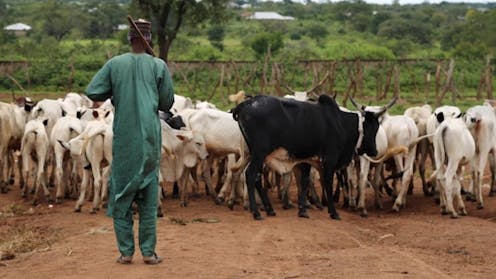
Un éleveur guide son troupeau de bœufs à travers les paysages du sud-ouest nigérian. Leanne Phelps, Fourni par l’auteur

Imaginez que vous vivez dans un endroit où une seule sécheresse, un seul ouragan ou une seule coulée de boue peut anéantir votre approvisionnement alimentaire. C’est exactement le cas de nombreuses communautés à travers l’Afrique, qui doivent faire face à des chocs climatiques tels que des inondations, des vagues de chaleur et à de mauvaises récoltes.

Les politiques de développement visant à lutter contre ces menaces négligent souvent une source d’information précieuse : l’histoire même de l’Afrique.

Il y a environ 14 700 à 5 500 ans, une grande partie de l’Afrique a connu des conditions plus humides, une période appelée « période humide africaine ». Puis, vers 5 500 ans (avant notre ère), le climat est devenu plus sec. Cela a entraîné de grands changements sociaux, culturels et environnementaux sur le continent.

Nous faisons partie d’une équipe de chercheurs en sciences sociales, naturelles et environnementales. Nous avons récemment publié une étude sur la façon dont les communautés africaines ont réagi aux changements climatiques au cours des 10 000 dernières années. C’est la première recherche à utiliser des données isotopiques pour retracer l’évolution des modes de vie sur l’ensemble du continent africain.

Cette approche à l’échelle du continent offre un nouvel éclairage sur la formation et l’évolution des moyens de subsistance dans l’espace et dans le temps.

Les théories précédentes partaient souvent du principe que les sociétés et leurs systèmes alimentaires évoluaient de manière linéaire. En d’autres termes, elles passaient de communautés de chasseurs-cueilleurs à des sociétés socialement et politiquement complexes pratiquant l’agriculture.

Mais notre étude montre une réalité plus riche. Pendant 10 000 ans, les communautés africaines se sont adaptées en combinant l’élevage, l’agriculture, la pêche et la cueillette. Elles ont mélangé différentes pratiques en fonction de ce qui fonctionnait à différents moments dans leur environnement spécifique. Cette diversité entre les communautés et les régions a été essentielle à la survie de l’humanité.

Cela nous enseigne des leçons concrètes pour repenser les systèmes alimentaires actuels.

Notre recherche montre que les politiques rigides venues d’en haut ont peu de chances de réussir. C’est notamment le cas des programmes qui misent tout sur l’agriculture intensive au détriment de la diversification des économies. Bon nombre de politiques actuelles adoptent une vision étroite, en privilégiant uniquement les cultures commerciales.

L’histoire nous apprend autre chose : pour être résilient face aux chocs, il ne faut pas tout miser sur une seule méthode. Il faut rester souple, combiner plusieurs approches et s’adapter aux réalités locales.

Les indices laissés par le passé

Nous avons pu tirer nos conclusions en examinant les indices laissés par l’alimentation des populations et leur environnement. Pour ce faire, nous avons analysé les traces chimiques (isotopes) présentes dans les ossements humains et animaux domestiques anciens provenant de 187 sites archéologiques à travers le continent africain.

Nous avons classé les résultats en groupes présentant des caractéristiques similaires, ou « niches isotopiques ». Nous avons ensuite décrit les moyens de subsistance et les caractéristiques écologiques de ces niches à l’aide d’informations archéologiques et environnementales.

Nos analyses ont révélé une grande diversité de systèmes de subsistance.
Par exemple, dans les régions correspondant aujourd’hui au Botswana et au Zimbabwe, certains groupes combinaient l’agriculture à petite échelle avec la cueillette de plantes sauvages et l’élevage de bétail après la période humide africaine. En Égypte et au Soudan, les communautés combinaient l’agriculture – axée sur le blé, l’orge et les légumineuses – avec la pêche, la production laitière et le brassage de la bière.

Les éleveurs, en particulier, ont développé des stratégies très souples. Ils se sont adaptés aussi bien aux plaines chaudes qu’aux montagnes sèches, et à toutes sortes d’environnements intermédiaires. Les systèmes pastoraux (agriculture avec des animaux de pâturage) sont plus nombreux que tout autre système alimentaire sur les sites archéologiques. Ils présentent également la plus grande variété de signatures chimiques, preuve de leur adaptabilité à des environnements changeants.

Notre étude s’est également penchée sur la manière dont les gens utilisaient le bétail. Dans la plupart des cas, les troupeaux se nourrissaient de cultures locales (comme le mil ou les pâturages tropicaux) et s’adaptaient à différents milieux écologiques. Certains systèmes étaient très spécialisés, adaptés aux zones semi-arides ou montagneuses. D’autres rassemblaient des troupeaux mixtes, mieux adaptés aux zones plus humides ou situées à basse altitude. Parfois, les animaux étaient élevés en petit nombre pour compléter d’autres activités. Ils fournissaient du lait, de la bouse pour les cultures ou le feu, et servaient de sécurité en cas de mauvaise récolte.

Cette capacité d’adaptation explique pourquoi, au cours du dernier millénaire, les systèmes pastoraux sont restés si importants, en particulier dans les zones de plus en plus arides.

Stratégies de subsistance mixtes

L’étude apporte également des preuves solides d’interactions entre la production alimentaire et la cueillette, que ce soit au niveau communautaire ou régional.

Des stratégies de subsistance mixtes et dynamiques, comprenant des interactions telles que le commerce au sein et entre les communautés proches et lointaines, étaient particulièrement visibles pendant les périodes de stress climatique. C’est notamment le cas à la fin de la période humide africaine, il y a environ 5 500 ans, quand le climat est devenu plus sec et plus difficile.

Dans le sud-est de l’Afrique, il y a environ 2 000 ans, on voit apparaître des modes de vie très diversifiés. Ils mêlaient élevage, agriculture et cueillette de manière complexe. Ces systèmes ont sans doute émergé en réponse à des changements environnementaux et sociaux complexes.

Des changements complexes dans les interactions sociales – notamment en matière de partage des terres, des ressources et des connaissances – ont probablement favorisé cette capacité d’adaptation.

Comment le passé peut éclairer l’avenir

Les stratégies anciennes de subsistance peuvent servir de guide pour faire face aux changements climatiques d’aujourd’hui.

Notre analyse montre qu’au fil des siècles, les communautés ont combiné élevage, agriculture, pêche et cueillette en tenant compte des réalités locales. Ces choix leur ont permis de mieux résister à des conditions imprévisibles.

Elles ont mis en place des systèmes alimentaires qui fonctionnaient en harmonie avec la terre et la mer, et non contre elles. Elles s’appuyaient également sur des réseaux sociaux solides, fondés sur le partage des ressources, des connaissances et du travail.

Les réponses du passé face aux changements climatiques peuvent inspirer les stratégies actuelles et futures visant à renforcer la résilience des régions confrontées à des pressions sociales et environnementales.

The Conversation

Leanne N. Phelps est affiliée à la Columbia Climate School de l’université Columbia, au Jardin botanique royal d’Édimbourg, au Royaume-Uni, et à l’ONG Vaevae basée à Andavadoake, Toliara, Madagascar.

Kristina Guild Douglass bénéficie d’un financement de la Fondation nationale pour la science des États-Unis. Elle est affiliée à l’ONG Vae Vae.

ref. Adaptation au changement climatique en Afrique pendant 10 000 ans : une étude offre des enseignements pour notre époque – https://theconversation.com/adaptation-au-changement-climatique-en-afrique-pendant-10-000-ans-une-etude-offre-des-enseignements-pour-notre-epoque-261282

Leaders in India, Hungary and the US are using appeals to nostalgia and nationalism to attack higher education

Source: The Conversation – USA (2) – By Riyad A. Shahjahan, Professor of Higher, Adult and Life Long Education, Michigan State University

Two scholars argue that nostalgia and resentment fuel government attacks on universities. Rick Friedman/AFP

Harvard University is under siege by the Trump administration – and the world is watching. But this case isn’t just an American issue.

It’s part of a global trend: universities cast as enemies and institutions in need of reform. Populist, right-wing governments are blaming universities for tearing at the fabric of nations.

These attacks are part of a broader strategy known as affective nationalism. It occurs when leaders use emotions, not just ideas, to build national identity. Feelings such as fear, pride, nostalgia and resentment are deployed to create a story about who belongs, who doesn’t and who’s to blame.

As scholars who study nationalism, emotion and higher education, we explore the emotional politics behind these attacks.

Prime Minister of Hungary Viktor Orbán addresses a crowd.
Prime Minister Viktor Orbán of Hungary has been hostile to academic freedom.
Pierre Crom/Getty Images News

Global backlash

Much of President Donald Trump’s vision and rhetoric is inspired by Hungary, where Prime Minister Viktor Orbán has waged a culture war on higher education for over a decade, banning gender studies and reshaping university governance. Orbán’s attacks on Central European University expose his hostility to academic freedom, critical thinking and diversity. All are viewed as threats to his nationalist “illiberal democracy.”

Trump followed Orbán’s playbook. On May 22, 2025, his administration declared that Harvard could no longer enroll foreign students. A U.S. Department of Homeland Security statement claimed that university leaders “created an unsafe campus environment by permitting anti-American, pro-terrorist agitators.” The statement suggested that many of the so-called agitators were foreign students.

Similarly, in India, students at Jawaharlal Nehru University were labeled “anti-national” for protesting the Citizenship Amendment Act, which provides fast-track citizenship to non-Muslim refugees. The students argued that it marginalizes Muslims. Since 2016, the Modi government has increasingly used “anti-national” and sedition charges to silence student and academic dissent.

These labels – “elite,” “foreign” or “anti-national” – are not neutral. They fuel fear, resentment and powerful narratives that frame universities as threats. Harvard, Central European University and Jawaharlal Nehru University have become symbols of broader national anxieties around identity and belonging.

British-Australian feminist scholar Sara Ahmed’s work on the sticky nature of emotions helps reveal the two emotions that often appear in attacks on universities: nostalgia and resentment.

U.S. President Donald Trump signs an executive order with a 'Make America Great Again' hat near the document.
The Trump administration has used nostalgia as a tool in its attacks on Harvard University.
Chip Somodevilla/Getty Images News

Glorifying the nation’s past

Nostalgia is a longing for a better past.

Consider Trump’s “Make American Great Again” slogan. It implies the nation was once great, has declined and must reclaim its former glory. That’s a powerful emotional story. Nationalism often works this way – by telling a tale of a lost golden age and a future that must be saved.

For that reason, nostalgia is central to populist attacks on universities and institutional reform. U.S. Secretary of Education Linda McMahon, for example, evoked Harvard’s symbolic past as part of the American Dream, arguing it has lost its way and “put its reputation in serious jeopardy.”

In India, Modi’s government rejects Western influence, while using nostalgia to revive a Hindu past in higher education. The Modi government promotes national pride on campuses by glorifying military heroes and installing symbolic figures – such as the statue of Swami Vivekananda, a Hindu monk and philosopher, at Jawaharlal Nehru University – to shape student identity and loyalty.

In Hungary, Orbán mobilizes a glorified Christian past to challenge discourses on diversity, inclusion, critical inquiry and academic freedom in higher education. A 2021 bill tasks universities with defending the nation and preserving its intellectual and cultural heritage.

Prime Minister of India Narendra Modi arrives at an event.
In India, the Modi government has increasingly framed public universities as institutions corrupted by Western ideas.
Tomas Cuesta/Getty Images News

Enemies of the nation

Resentment is a powerful emotion often used by states that see themselves as defenders of national unity and values. When Harvard resisted Trump’s reforms, the president framed the university’s stance in a Truth Social post as a betrayal to the nation, denouncing it as “terrorist inspired/supporting ‘sickness.’” Meanwhile, the Department of Education issued a statement that accused the university of a “troubling entitlement mindset.”

Similarly, in India, the Modi government has increasingly framed public universities – especially those with critical voices – as “anti-national” spaces. By casting critical voices as enemies within, the state turns resentment into a political weapon to justify the erosion of academic freedom.

In Hungary, the Orbán government mobilized resentment to portray universities and academics as disloyal elites working against the nation. One example of Hungary’s war on universities is the 2018 ban on gender studies, justified by the Orbán government as rejecting “socially constructed genders” in favor of “biological sexes.” This move reflects how the government uses resentment to assert ideological control over academic institutions.

Jawaharlal Nehru University students show their degrees during a convocation ceremony
Universities are under attack for what they represent.
Hindustan Times

Emotional battlegrounds?

Universities, especially elite ones such as Harvard and Jawaharlal Nehru University, carry deep symbolic weight. People care because of what the institutions represent.

Harvard, with its elite status, has long been a symbol of academic authority. But more recently, it has been cast as a defender of liberal higher education – making it a Trump administration target.

Jawaharlal Nehru University in India holds similar symbolic weight. It’s historically associated with producing the country’s social elites and is seen, especially in mainstream media, as left-leaning, making it a lightning rod in India’s polarized political landscape.

In Hungary, the Orbán government viewed Central European University as a danger because it threatened the government’s Christian-nationalist vision of the nation-state.

Universities are under attack not just for what they teach and research, but for what – and who – they represent. These are not just ideological disputes; they are emotional struggles over identity, belonging and public trust.

The Conversation

The authors do not work for, consult, own shares in or receive funding from any company or organization that would benefit from this article, and have disclosed no relevant affiliations beyond their academic appointment.

ref. Leaders in India, Hungary and the US are using appeals to nostalgia and nationalism to attack higher education – https://theconversation.com/leaders-in-india-hungary-and-the-us-are-using-appeals-to-nostalgia-and-nationalism-to-attack-higher-education-258975

About a third of pregnant women in the US lack sufficient vitamin D to support healthy pregnancies − new research

Source: The Conversation – USA (3) – By Melissa Melough, Assistant Professor of Nutrition Science, University of Delaware

Higher vitamin D levels in a mother’s blood during pregnancy have been linked to higher IQ scores in early childhood and reduced behavioral problems.
gpointstudio/iStock via Getty Images

Children whose mothers had higher vitamin D levels during pregnancy scored better on tests of memory, attention and problem-solving skills at ages 7 to 12 compared with those whose mothers had lower levels. That is a key finding of a new peer-reviewed study that my colleagues and I published in The American Journal of Clinical Nutrition.

While vitamin D has long been known for its role in maintaining bone health, scientists have since uncovered its importance in regulating immune function, reducing inflammation and protecting the nervous system. Now, growing evidence – including our new findings – suggest it may also support brain development beginning in the womb.

My team and I found that the link between prenatal vitamin D levels and childhood cognition was strongest among Black families, who also face higher rates of vitamin D deficiency.

This suggests that vitamin D supplementation may be a promising, low-cost strategy to support brain development while reducing racial disparities. Our study also suggested that vitamin D levels early in pregnancy may be most important for childhood cognitive development, highlighting the importance of early action by health care providers.

We analyzed more than 900 mother-child pairs across the U.S. who participated in a large national study called ECHO, short for Environmental influences on Child Health Outcomes. We measured vitamin D in the mothers’ blood during pregnancy and assessed children’s cognitive abilities using a standardized test battery. We also accounted for other important factors that shape childhood development such as the mother’s education, neighborhood conditions and the child’s age and sex.

This new study builds on our earlier findings that higher vitamin D levels during pregnancy are linked to higher IQ in early childhood and with reduced behavioral problems in middle childhood.

Collectively, these studies suggest that vitamin D plays a crucial role in brain development during pregnancy, with lasting benefits for children’s cognitive and behavioral outcomes.

A female doctor holding a clipboard and pen watches a young child play with blocks.
The children of mothers who had higher vitamin D levels during pregnancy scored better on tests of memory, attention and problem-solving skills at ages 7 to 12.
Prostock-Studio/iStock via Getty Images Plus

Why it matters

Vitamin D deficiency is a common global problem.

In the U.S., about 42% of adults have vitamin D levels below 20 nanograms per milliliter, or ng/ml, a commonly used cutoff for deficiency. About a third of U.S. pregnant women are deficient, and the rates are even higher among Black pregnant women, with 80% found to be deficient. This racial difference is partly due to differences in skin pigmentation, as melanin pigment reduces the skin’s ability to produce vitamin D from sunlight.

Although we can get vitamin D both from sun exposure and our diets, deficiency is common because these sources don’t meet everyone’s needs. Sunlight isn’t always a reliable source, especially for people with darker skin, those living in northern climates or those who often wear sunscreen or sun-protective clothing. Natural food sources such as fatty fish, egg yolks and certain mushrooms contain some vitamin D, and fortified products such as milk and breakfast cereals help, but not everyone eats enough of these foods to maintain healthy vitamin D levels.

That’s why supplements are often necessary and are recommended in many cases by the Dietary Guidelines for Americans.

Although current guidelines recommend that pregnant women consume 600 international units, or IUs, of vitamin D daily, higher doses of at least 1,000 to 2,000 IU are often needed to correct deficiency. On average, U.S. women consume only 168 IU from food and beverages, and many prenatal vitamins provide just 400 IU. This highlights an important opportunity for clinicians to improve screening and support around vitamin D supplementation both before and during pregnancy.

If a simple, low-cost strategy such as prenatal vitamin D supplementation can help support brain development, it may yield lasting benefits for children. Long-term studies have shown that higher cognitive scores in childhood are linked to better memory and reasoning in older age, as well as longer lifespan.

What still isn’t known

While our studies have linked higher vitamin D levels in pregnancy to improved cognitive and behavioral development in children, we cannot yet prove that vitamin D is the direct cause.

Therefore, studies called randomized controlled trials – the gold standard of research – are needed to confirm these findings and determine how best to translate them into clinical practice. These studies will be essential for determining the optimal target levels for vitamin D to support brain development in pregnancy.

The Research Brief is a short take on interesting academic work.

The Conversation

Melissa Melough receives funding from the National Institutes of Health (NIH).

ref. About a third of pregnant women in the US lack sufficient vitamin D to support healthy pregnancies − new research – https://theconversation.com/about-a-third-of-pregnant-women-in-the-us-lack-sufficient-vitamin-d-to-support-healthy-pregnancies-new-research-259433

‘I just couldn’t stop crying’: How prison affects Black men’s mental health long after they’ve been released

Source: The Conversation – USA (3) – By Helena Addison, Postdoctoral fellow, Yale University

Black men who have been incarcerated have elevated rates of PTSD, depression and psychological distress. da-kuk/E+ Collection via Getty Images

Mike returned home to Philadelphia after a 15-year prison sentence and suffered an emotional breakdown.

“I just couldn’t stop crying … I don’t know. It was the anxiety. It was just a lot,” he said. “I was under a lot of pressure and it just came crashing down.”

Mike, who was in his late 40s when we spoke, told me about his childhood filled with abuse, his first arrest at age 14, and the over 20 years of his life that he spent behind bars.

As a registered nurse and nurse scientist who studies how incarceration affects mental health, I know Mike’s experience after release from prison is not uncommon. Studies show that Black men who have experienced incarceration have higher rates of PTSD, depression and psychological distress compared with Black men who have never been incarcerated.

Working in psychiatric hospitals in Philadelphia, I met many patients in crisis who had been incarcerated at some point in their lives. As a part of my doctoral research, funded by the National Institute of Nursing Research, I interviewed 29 formerly incarcerated Black men to understand how incarceration has affected their mental health.

My peer-reviewed findings were published in the journal Social Science & Medicine. All quotes shared here use pseudonyms to protect the men’s privacy.

Trauma of incarceration

Mass incarceration in the U.S. has serious health consequences for individuals, families and communities. In Philadelphia alone, over 20,000 people return home from incarceration each year.

While incarceration rates are declining in Philadelphia, the needs of those coming home remain significant.

Many formerly incarcerated men described experiencing or witnessing violence, including being beaten by correctional officers and witnessing close friends get assaulted or killed.

“You know you are not regular because you come from a traumatic situation, right?” said Thomas, 44, who spent 18 years incarcerated.

The participants expressed that racism was common, especially while incarcerated in facilities located in the rural central and northern regions of Pennsylvania.

“I ain’t gonna sugar coat it – Black people going up into them white people mountains, they call you [n-word] all day long and you basically there to accept it,” Antonio told me.

Incarceration was especially difficult for those who were held for months pretrial without ever being convicted and those incarcerated during COVID restrictions who spent more than 23 hours a day in their cells.

‘Even though I’m free, I ain’t free’

Participants described life on parole or probation, or in transitional housing, as another form of confinement.

Ken, 56, has been out of prison for over a decade but said, “I’m still locked up, even though I’m free, I ain’t free. You just get a whole new set of rules and regulations.”

Men described significant anxiety related to community supervision requirements, including difficulty sleeping the night before a probation appointment.

Participants also described distress caused by “no association” restrictions. These are common parole and probation requirements that prohibit people under supervision from interacting with others who have criminal records, are also under supervision or are currently incarcerated. Violating this requirement can lead to a technical violation and reincarceration.

While these requirements are meant to reduce the risk of reoffending, they often isolate people from supportive relationships and resources, including housing and employment.

“[There are] a lot of smart brothers in there. And it hurts my heart. And that’s where the depression coming in too,” said Reese, who spent six years incarcerated. “I can’t contact them in jail. … That’s just how it is in the system.”

Philadelphia has the highest rate of community supervision – including probation and parole – among the largest U.S. cities, according to a 2019 analysis by The Philadelphia Inquirer.

At that time, the Inquirer reports, 1 in 23 adults in Philadelphia were under community supervision – and 1 in 14 Black adults in Philadelphia.

The men I interviewed said they felt like parts of them never left jail or prison, while others felt that they brought prison or jail home with them.

Tyrese, 34, said he stays home as often as he can.

“I’ve been out of the joint for seven years now and feel like I’m still institutionalized, I guess,” he said. “I know people that don’t even come outside,” referring to other formerly incarcerated men.

Others had dreams that they were back in a cell, or at home still wearing jail clothing. Long after release, many described constant hypervigilance and anxiety.

“I can be walking to the bus station and there be people walking around me, I’m constantly watching them,” said Anthony, who was first incarcerated at age 18 and served 16 years. “I’m watching every movement they’re doing. That’s a habit I had from jail.”

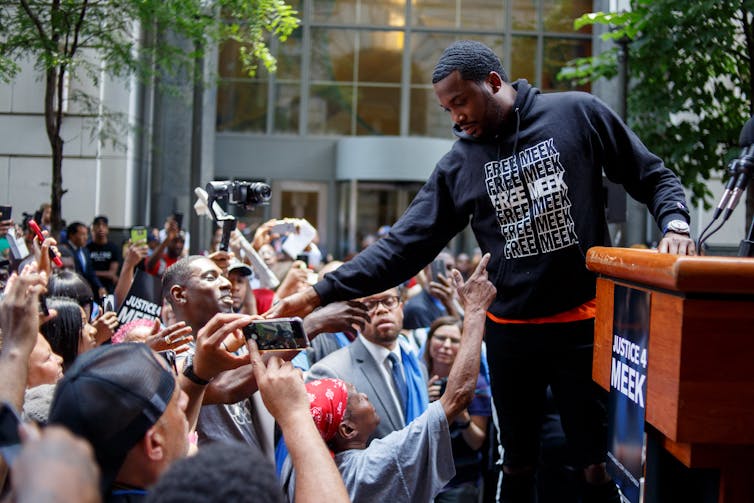
Man in black hoodie that says 'Free Meek' interacts with crowd of supporters in street
Philly rapper Meek Mill, shown here at a 2018 rally outside a Center City courthouse, was sentenced to probation for 10 years after a conviction on drug and gun charges. He became an advocate of criminal justice reform.
Michael Candelori/Pacific Press/LightRocket via Getty Images

Finding work

People who have been incarcerated often struggle to find employment after release, as many employers are unwilling to hire a person with a criminal record.

This leaves about 35% of formerly incarcerated Black men unemployed.

At the time of our interview, Tay, 31, was working part-time in carpentry. “Because I had felonies on my record a lot of places won’t hire me,” he said. “And a couple of places that I was working with, they ended up firing me once they did the background check.”

These frustrations can easily spill over into family life.

Mark, 30, also works part-time and said he found himself frequently becoming agitated and snapping at his kids, other family members and his girlfriend. “I can’t get the job I want or the job that I need to do what I need to do for my family and I’ll be frustrated,” he shared.

Participants struggled with having to depend on others for basic needs upon release. Kenny, who is now self-employed as a caterer, recalled his experience a few years earlier. “I was crying. I was a grown man, almost 40 years old, and my mother had to buy me underwear, socks,” he said.

The importance of fatherhood

Despite their many hardships, some of the men spoke with joy about reconnecting with their children.

“I think the most positive thing that happened since I’ve been out of prison is I got custody of my sons,” said Ken, a father of two. “Them kids saved me.”

Like many of the other participants with children, however, he was frustrated about being unable to provide for them and worried about repeating harmful cycles.

“You want to do good, but it makes you think bad stuff when you don’t have the right resources,” he continued. “You don’t want [your kids] to do the same things you did.”

Others struggled to bond with their children after years of separation.

John, 29, explained, “The bonding is kind of awkward, because you wasn’t there, especially during the pandemic when there was no visits allowed.”

Returning to disadvantaged neighborhoods

Most people released from incarceration return to neighborhoods with high rates of poverty, violence and other disadvantages.

Shawn, who lives in pubic housing, showed me abandoned buildings and boarded storefronts in his neighborhood and described how the environment made rebuilding his life harder.

For many participants, returning to divested communities brought stress. They experienced frequent exposure to substance use, violence and negative police encounters, and they had limited access to basic resources and job opportunities needed to support recovery and stability.

“This is my real life. It’s not fake. It’s not no, ‘Well, why did he go back and do this or that?’” he said. “I live in an underserved, impoverished, danger zone – period.”

Moving forward

The experiences these men shared with me demonstrate how traumatic incarceration is, even many years after release.

Supporting the mental health of formerly incarcerated Black men requires trauma-informed services, such as culturally responsive counseling, peer support and care that acknowledges the lasting effects of incarceration.

It also means helping them build or rebuild their financial resources, reconnect with their children and loved ones, and supporting the broader communities they return to through investment in housing, employment and accessible health and social services.

The Conversation

Helena Addison received funding from National Institute of Nursing Research of the National Institutes of Health under Award Number F31NR020434, the Substance Abuse and Mental Health Administration and American Nurses Association Minority Fellowship Program, the University of Pennsylvania’s Presidential PhD Fellowship, and Jonas Philanthropies to support this study and/or her PhD training. The content is solely the responsibility of the authors and does not necessarily represent the official views of the National Institutes of Health, or any other funding organizations or institutions. The views expressed in written training materials or publications and by speakers and moderators do not necessarily reflect the official policies of the Department and Human Services; nor does mention of trade names, commercial practices, or organizations imply endorsement by the U.S. Government.

ref. ‘I just couldn’t stop crying’: How prison affects Black men’s mental health long after they’ve been released – https://theconversation.com/i-just-couldnt-stop-crying-how-prison-affects-black-mens-mental-health-long-after-theyve-been-released-259975

Can AI think – and should it? What it means to think, from Plato to ChatGPT

Source: The Conversation – USA (3) – By Ryan Leack, Assistant Professor of Writing, USC Dornsife College of Letters, Arts and Sciences

Ancient Greek concepts about intelligence can shed light on 21st-century tech they never knew. agsandrew/iStock via Getty Images Plus

In my writing and rhetoric courses, students have plenty of opinions on whether AI is intelligent: how well it can assess, analyze, evaluate and communicate information.

When I ask whether artificial intelligence can “think,” however, I often look upon a sea of blank faces. What is “thinking,” and how is it the same or different from “intelligence”?

We might treat the two as more or less synonymous, but philosophers have marked nuances for millennia. Greek philosophers may not have known about 21st-century technology, but their ideas about intellect and thinking can help us understand what’s at stake with AI today.

The divided line

Although the English words “intellect” and “thinking” do not have direct counterparts in the ancient Greek, looking at ancient texts offers useful comparisons.

In “Republic,” for example, Plato uses the analogy of a “divided line” separating higher and lower forms of understanding.

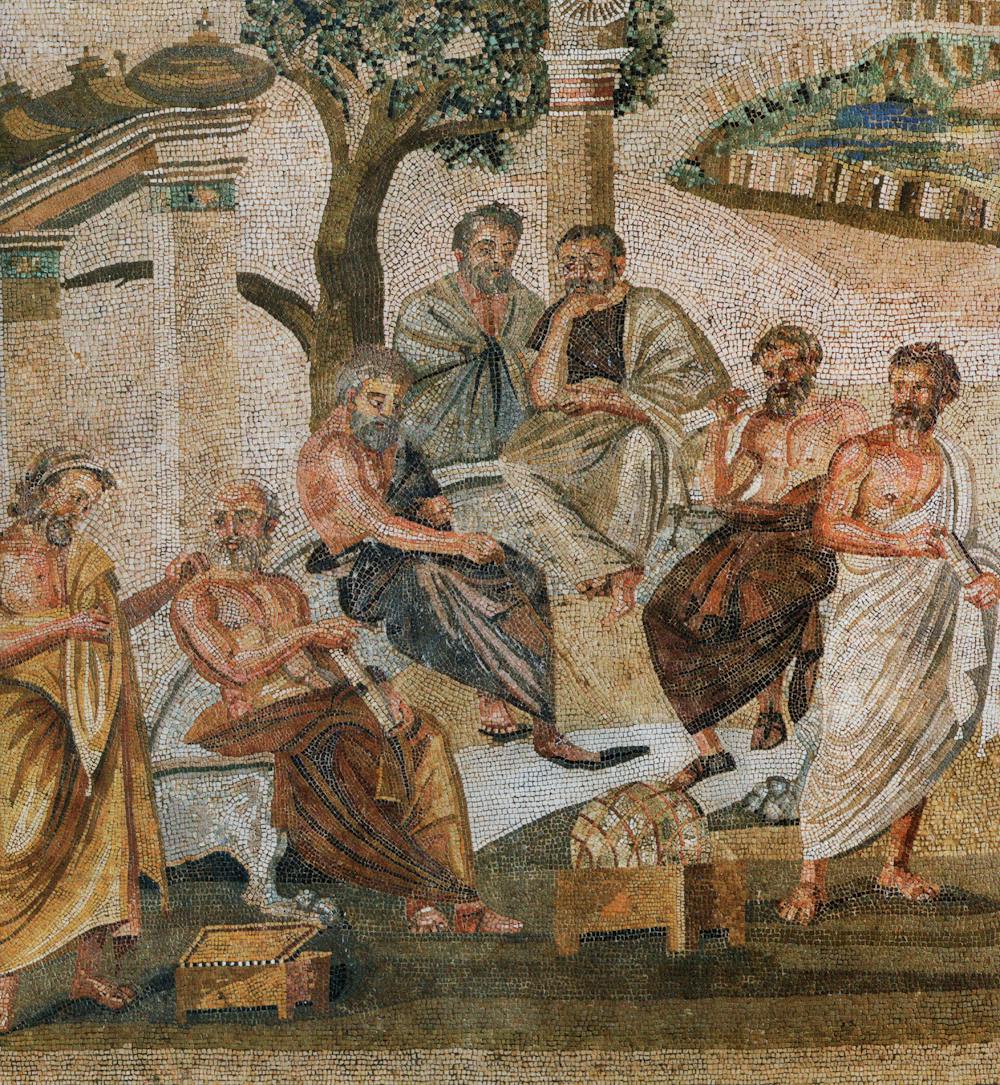
A close-up of a mosaic shows several men talking and sitting in a semicircle outside, wearing robes.
A Roman mosaic from Pompeii depicts Plato’s academy in Greece.
Wikimedia Commons

Plato, who taught in the fourth century BCE, argued that each person has an intuitive capacity to recognize the truth. He called this the highest form of understanding: “noesis.” Noesis enables apprehension beyond reason, belief or sensory perception. It’s one form of “knowing” something – but in Plato’s view, it’s also a property of the soul.

Lower down, but still above his “dividing line,” is “dianoia,” or reason, which relies on argumentation. Below the line, his lower forms of understanding are “pistis,” or belief, and “eikasia,” imagination.

Pistis is belief influenced by experience and sensory perception: input that someone can critically examine and reason about. Plato defines eikasia, meanwhile, as baseless opinion rooted in false perception.

In Plato’s hierarchy of mental capacities, direct, intuitive understanding is at the top, and moment-to-moment physical input toward the bottom. The top of the hierarchy leads to true and absolute knowledge, while the bottom lends itself to false impressions and beliefs. But intuition, according to Plato, is part of the soul, and embodied in human form. Perceiving reality transcends the body – but still needs one.

So, while Plato does not differentiate “intelligence” and “thinking,” I would argue that his distinctions can help us think about AI. Without being embodied, AI may not “think” or “understand” the way humans do. Eikasia – the lowest form of comprehension, based on false perceptions – may be similar to AI’s frequent “hallucinations,” when it makes up information that seems plausible but is actually inaccurate.

Embodied thinking

Aristotle, Plato’s student, sheds more light on intelligence and thinking.

A small relief depicts two men in robes gesturing while they speak animatedly with each other.
A 15th-century relief of Aristotle and Plato by Luca della Robbia in the Florence Cathedral in Italy.
sailko/Wikimedia Commons, CC BY-SA

In “On the Soul,” Aristotle distinguishes “active” from “passive” intellect. Active intellect, which he called “nous,” is immaterial. It makes meaning from experience, but transcends bodily perception. Passive intellect is bodily, receiving sensory impressions without reasoning.

We could say that these active and passive processes, put together, constitute “thinking.” Today, the word “intelligence” holds a logical quality that AI’s calculations may conceivably replicate. Aristotle, however, like Plato, suggests that to “think” requires an embodied form and goes beyond reason alone.

Aristotle’s views on rhetoric also show that deliberation and judgment require a body, feeling and experience. We might think of rhetoric as persuasion, but it is actually more about observation: observing and evaluating how evidence, emotion and character shape people’s thinking and decisions. Facts matter, but emotions and people move us – and it seems questionable whether AI utilizes rhetoric in this way.

Finally, Aristotle’s concept of “phronesis” sheds further light on AI’s capacity to think. In “Nicomachean Ethics,” he defines phronesis as “practical wisdom” or “prudence.” “Phronesis” involves lived experience that determines not only right thought, but also how to apply those thoughts to “good ends,” or virtuous actions. AI may analyze large datasets to reach its conclusions, but “phronesis” goes beyond information to consult wisdom and moral insight.

‘Thinking’ robots?

Today, AI takes on many physical forms, from autonomous vehicles and humanoid robots to health care robots and drones. If intelligence requires embodiment, as Plato and Aristotle believed, it might seem as if AI is coming closer than ever to human thinking.

AI does take on many forms, but they’re still not bodies; they run on code, algorithms and datasets. Intuitive understanding, emotion, integrity and practical wisdom seem to require an embodied, perishable form that is moved by experience.

Perhaps we should ask AI itself – so I did. When I prompted ChatGPT with the simple question, “Can you think?” it responded: “I can process information, analyze patterns, and generate responses based on data. So in some ways, it might ‘seem’ like I’m thinking. But it’s not thinking like a human does. I don’t have consciousness, emotions, intentions, or awareness. Everything I ‘do’ is based on patterns learned from huge amounts of text and a set of rules and probabilities. I can ‘simulate’ certain aspects of thinking, but I don’t truly think or understand in the human sense.”

That response aligns with Plato and Aristotle’s views. For now.

The Conversation

Ryan Leack does not work for, consult, own shares in or receive funding from any company or organization that would benefit from this article, and has disclosed no relevant affiliations beyond their academic appointment.

ref. Can AI think – and should it? What it means to think, from Plato to ChatGPT – https://theconversation.com/can-ai-think-and-should-it-what-it-means-to-think-from-plato-to-chatgpt-256648

EU efforts to measure companies’ environmental impacts have global effects. Here’s how to make them more just

Source: The Conversation – France – By Mira Manini Tiwari, Research Associate at the Robert Schuman Centre for Advanced Studies, European University Institute

If you choose to buy a sustainable product at the supermarket, or invest in a sustainable portfolio at your bank, how far does that sustainability reach? Does the product’s “sustainable” label account for the environmental and labour costs where the raw materials were extracted? Does the portfolio include renewable energy in countries where the investment is needed most?

In the EU, whether you are an individual or represent a company or financial institution, these questions are governed by the bloc’s non-financial reporting (NFR) regulations. The latest ones include the European Sustainable Reporting Standards (ESRS), which are gradually coming into force through 2029. The ESRS set out reporting standards and requirements, while the Corporate Sustainability Reporting Directive (CSRD) determines which companies these standards apply to, to what extent, and when.

These EU regulations also have strong implications for the Majority World, the countries and territories outside Europe and North America where most people live, at a time when global, systemic policy effects are more important than ever. As supply chains become longer and more interconnected, and as communities involved in them confront the fragilities of economic, political and climate shifts, the regulations that govern the sustainability of these chains and that enable or prohibit participation in them must be crafted and implemented to minimise harm to the most vulnerable.

In an article in Environment and Development Economics, my co-authors and I developed a set of proposals to improve the global sustainability of the NFR regulations. These call for collaborative development of regulations across the value chain, better data accessibility, measuring of and accounting for cross-border environmental damage, and greater integrity and engagement from financial actors.


A weekly e-mail in English featuring expertise from scholars and researchers. It provides an introduction to the diversity of research coming out of the continent and considers some of the key issues facing European countries. Get the newsletter!


Cooperation, not compliance

As the ESRS come into force, reporting requirements are being applied to companies’ full value chains. This means that Majority World actors, such as those that extract raw materials for European products, may be indirectly subjected to the NFR regulations. This is important, as it holds companies and consumers, EU and non, accountable for the ethics of the goods and services they rely on. However, when regulations are built without directly involving those they will affect, they risk causing collateral, longer-term damage. For example, reporting requirements that feel inaccessible to smaller organisations can foster distrust and backlash, or cause companies to withdraw from contexts where data are less accessible, taking away key sources of income for communities.

While global climate negotiations have come under public scrutiny for their Minority World dominance, there has been relatively less scrutiny of global organisations governing financial and corporate sustainability standards. On their boards, the Majority World is conspicuous by its absence, demonstrating the dearth of attention to its agency in enabling greater sustainability, both locally and globally. European investors and policymakers are already shifting capital from the Majority World back to the EU in response to the NFR regulations, citing the difficulty of accounting for activities along the length of value chains. The damage falls on livelihoods, industries and essential investments, such as in renewable energy, which can suddenly disappear.

Developing NFR regulations in collaboration with all stakeholders, rather than only at the top, can provide a regulatory landscape that is, from the outset, more implementable, accessible and effective in the long run.

Democratic data and digitalisation

Efficacy in global NFR regulations relies on global data cooperation, which could lower the administrative burden on those reporting and enable greater accountability. The increasing number of EU NFR regulations do not exist in a vacuum: they have been accompanied by shifts in global regulations and a proliferation of national regulations. With regulations expanding to cover the full value chain, actors are increasingly likely to be subjected to multiple regulatory bodies, or have to provide data to reporting entities upstream. The time, financial resources and practical challenges involved in identifying, collecting, processing and sharing data are considerable, both for those submitting data and those receiving and verifying them. This makes divestment or significant losses more likely. Furthermore, the expansion of regulations can result in isolated streams of data and closed-circuit processes, which, in turn, cut out civil society organisations and individuals who use data to help hold firms to account for their social and environmental responsibilities.

Aside from EU calls for a European Single Access Point for corporate data, Majority World contexts offer particularly fertile ground for reimagining and building data infrastructures. Digitalisation in low- and middle-income countries is growing rapidly, and demonstrates the ability to make digital financial and business instruments democratic and accessible to those with the fewest resources. Such efforts should involve statisticians and local data experts from the outset to determine and harmonise appropriate data, along with transnational entities with the mandate of establishing links across data systems.

Support for international emissions accounting

Corporate reporting on environmental impacts must be accompanied by their reduction. Indeed, the work and transparency required to identify impacts in the first place, let alone mitigate them, underpins decisions to simply detach from the system, moving economic activity to local contexts where impacts are more traceable.

Firms that cannot afford to bring their activities onshore must account for emissions that occur from assets not directly under their ownership or control, which are known as Scope 3 emissions. In some cases, these emissions constitute well over half of a firm’s total value chain emissions. However, the implementation of the ESRS has designated the reporting of Scope 3 emissions, and climate impacts in general, to be largely discretionary, under the condition that firms provide evaluations of the economic and material implications of a given activity in their value chains.

The glaring gaps between some firms’ targets, actions and declarations are in part enabled by reporting systems that allow the omission of more distant climate risks and impacts, maintaining the misalignment between climate pledges and actions aimed at achieving them. While the number of firms showing readiness to comply with Scope 3 accounting is increasing, data on global investor preferences suggests that investors do not necessarily prioritise companies’ performance on these emissions when making investment decisions. For ethics to exist on the ground, they must be prioritised in financial flows.

Investment with integrity

In light of the above, financial institutions have a core responsibility to engage with NFR. These institutions’ economic leverage and centrality in the value chains and activities of several sectors give them incentivising power to catalyse a shift from the submission of reports to the building of living data systems and the achievement of fuller value chain accountability. Currently, many investors are not willing to accept reductions in their returns in exchange for the pursuit of social or environmental goals. Surveys suggest this is in part due to perceptions of low quality of environmental information, limited ability to assess the data received, and the difficulty of making investment decisions accordingly. In the current landscape of Minority World-led reporting, such mistrust is likely to be greater with respect to Majority World data, reiterating the need for data systems and reporting mechanisms built on equal footing.

Financial institutions can operate proactively, using their privileged access to data to bridge Minority and Majority World actors engaging in sustainable practices, such as microfinance bodies, local communities and relevant investors. Doing so could plug, at least in part, an information and trust gap that can hinder Minority World firms’ investment in unfamiliar contexts.

Regulating for whom?

The research underpinning our article initially involved a recommendation on streamlining and supporting reporting by small and medium enterprises (SMEs), which account for more than 60% of the EU’s corporate emissions. For these firms, especially, regulators face a critical balance between lowering the entry barrier of the reporting ecosystem and setting robust environmental targets. The nature, data points and timelines of reporting under the CSRD are currently under review following calls for simplification and greater support, and decision-makers are wrestling with the tension between accessibility and integrity.

Our work also included a recommendation that turns from the supply side, the focus of the preceding proposals, to the demand side: the data and sustainability literacy of the individual who walks into the supermarket to buy that sustainable product, or wants family investments to do more good than harm. Across sectors – public policy, investment and citizen engagement – resources must be dedicated to these literacies, so that actors are better placed to hold each other to account. Regulation becomes easily abstracted, reduced to figures and PDFs, databases and scores. Beneath each regulation is a world of citizens whose homes, livelihoods and health depend on them.

The Conversation

The author was affiliated with the University of Siena during the period in which she and her colleagues did the original work for the scholarly article that is mentioned in this piece. The author’s affiliation came via a project that, overall, was financed by the Italian National Recovery and Resilience Plan (PNRR). The scholarly article and the present article were not outputs for the project.

ref. EU efforts to measure companies’ environmental impacts have global effects. Here’s how to make them more just – https://theconversation.com/eu-efforts-to-measure-companies-environmental-impacts-have-global-effects-heres-how-to-make-them-more-just-261226