HIV rates are highest in the American South, despite effective treatments – a clash between culture and public health

Source: The Conversation – USA (3) – By Brandon Nabors, Postdoctoral Research Associate in Public Health, University of Mississippi

Information about PrEP in the clinic can go only so far without community support. Jahi Chikwendiu/The Washington Post via Getty Images

The American South has the highest HIV rates in the country, accounting for more than half of new HIV diagnoses nationwide in 2023. This is despite growing availability of a highly effective HIV prevention medication that has made it possible to live a long, healthy life with this once fatal disease.

This medication – called preexposure prophylaxis, or PrEP – reduces the risk of HIV transmission by over 99% when taken as prescribed. Yet, in Southern cities such as Jackson, Mississippi, and Memphis, Tennessee, one of the most vulnerable populations – Black men who have sex with men – are rarely using it, with fewer than 1 in 5 who are eligible taking the drug.

The Trump administration has previously frozen and proposed more cuts to HIV prevention programs in the U.S. And although the administration has restored some of the federal webpages and datasets it took down in January 2025, it is unclear what information remains missing or has changed. Communities in the South that already face the highest burden of infection will feel the greatest effects of changing public health priorities.

In my work as a public health researcher, I have spent years studying HIV prevention and the social determinants of health in the Deep South. Through interviews with health care providers and Black patients in major Southern cities, what I learned was that a powerful clash between culture and public health plays a significant role in why effective medical treatments are still failing to reach those who need it most. I call this tension the Southern paradox – where medical solutions exist but systemic forces block access.

The stories of these clinicians and patients in the South weren’t simply about a pill: They were about trust, identity, family and faith. And their words highlighted a complex web of emotions and experiences that often go unaddressed in standard health messaging.

Southern culture and sexual health

In my recent study, I interviewed 12 people in Jackson, Memphis, New Orleans and Atlanta: eight Black men who have sex with men, along with four health care providers. Three of these providers also identified as men who have sex with men.

Many participants reported that physical access to PrEP wasn’t the issue. Instead, what stood in the way was far more personal and deeply embedded in their environment.

“In church, you’re taught to love your neighbor, but there’s always an asterisk when it comes to who you love,” one participant from Jackson told me. “If you’re gay, you’re either ignored or silently judged.”

Nearly all participants described the South as a place deeply shaped by conservative values, especially those rooted in religion and traditional family structures. The Black church emerged as both a protective factor and a challenge. While offering vital community support, it also often reinforced stigma around homosexuality and discouraged open conversations about sexual health.

Tackling HIV in the South takes a village.

One participant from New Orleans shared that he heard about PrEP from his health care provider and his friends, while another from Atlanta recalled learning about PrEP during his annual physical. Despite repeatedly being exposed to information about PrEP, both described hesitation about starting treatment. One worried about potential stigma if others discovered he was taking it, while the other questioned whether he “really needed” it. Ultimately, neither had started PrEP.

In many of these communities, sex education in schools is still focused on abstinence and often excludes LGBTQ+ topics entirely. “You grow up not hearing anything about gay sex or HIV,” one man from Memphis said. “So, when you get older, it’s like starting from scratch.”

Even decisions around condom use were heavily shaped by cultural norms. Men described relying on partner trust, age or perceived cleanliness rather than research-based ways to reduce the risk of HIV.

This absence of comprehensive, inclusive sex education leaves many vulnerable to misinformation and, ultimately, to preventable infections.

Trust is the real barrier

One of the most striking findings from these conversations was the deep mistrust that many Black men who have sex with men feel toward the health care system.

“It’s hard to find affirming care for people in the queer community,” said one Memphis-based health provider. Others talked about fears of being “outed” through their insurance, especially if they were still on a family health plan.

A Jackson-based participant confided, “Some people avoid taking [PrEP] because for each prescription you are required to be evaluated. Some people don’t want the follow-up or the screening.” Another noted how fear of both outright and subtle judgment during medical appointments made it easier to avoid health care altogether.

Patient greeting a person working at a clinic with open arms
A welcoming health care environment can make all the difference.
Jahi Chikwendiu/The Washington Post via Getty Images

Systemic racism compounds these concerns. For many Black men, historical and ongoing experiences of discrimination, including rushed visits, lack of empathy, misdiagnoses and even being denied care altogether have built a lasting sense of caution.

Even when resources like PrEP are available, these treatments often feel inaccessible to Black men because they do not trust the system offering them.

Social networks step in

Thankfully, these conversations also uncovered moments of hope.

Many participants learned about PrEP from peers. “We talk about it regularly,” said one participant in Jackson. “I have friends who work in public health, along with friends who are taking the medication.”

In the South, where community ties often serve as critical safety nets, these social networks can sometimes provide more trusted health information than clinics or campaigns. Informal conversations in group chats, at house parties or during community gatherings often serve as powerful platforms for health promotion.

One provider in Atlanta said he intentionally shared his own experiences with PrEP to reduce stigma. “I have a little soreness,” he said with a smile, referring to a recent injection. “Then I tell everyone, ‘Yup, I just got mine.’ The casualness of that comment made a difference: It made PrEP feel normal, relatable, something for ‘us,’ not something done to ‘them.’”

These social exchanges, rooted in trust and shared experience, frequently did more to shift attitudes than traditional public health campaigns. As one participant put it, “I trust my friends more than those ads. If they’re taking it and it works for them, that means something to me.”

Making PrEP culturally relevant

What these conversations show is that for PrEP to work in the South, access to treatment is only part of the equation. Building trust, cultural affirmation and community-led education are equally critical.

Public health messages that go beyond medical facts and address the emotional, spiritual and social dimensions of health are more likely to build lasting engagement with HIV prevention. This includes investing in Black, LGBTQ+-affirming health care providers who reflect the communities they serve. It also means integrating discussions of sexual health into everyday conversations at barbershops, churches and community centers, not just in clinics.

Public health officials and clinicians can explore alternative treatment delivery methods that address privacy concerns, such as telehealth PrEP programs, discreet mail-order services and community-based distribution points. These can make PrEP easier to access and reduce the stigma associated with clinic visits.

Most importantly, valuing the knowledge already circulating within communities and supporting peer educators as legitimate public health messengers can strengthen credibility, normalize PrEP and empower people to take charge of their health.

In the battle against HIV in the South, culture is not just a barrier. It can also be the solution. I believe that when care is offered in a way that honors people’s identities, experiences and values, it becomes not just accessible but empowering.

The Conversation

Brandon Nabors does not work for, consult, own shares in or receive funding from any company or organization that would benefit from this article, and has disclosed no relevant affiliations beyond their academic appointment.

ref. HIV rates are highest in the American South, despite effective treatments – a clash between culture and public health – https://theconversation.com/hiv-rates-are-highest-in-the-american-south-despite-effective-treatments-a-clash-between-culture-and-public-health-257434

Entre la Chine et les Etats-Unis, l’Afrique doit s’imposer comme l’arbitre des minéraux critiques

Source: The Conversation – in French – By James Boafo, Lecturer in Sustainability and Fellow of Indo Pacific Research Centre, Murdoch University

Les minéraux critiques tels que le lithium, le cobalt, le nickel, le cuivre, les terres rares et les métaux du groupe du platine sont essentiels aux technologies modernes, notamment à des secteurs comme l’électronique, les télécommunications, les énergies renouvelables, la défense et les systèmes aérospatiaux.

La demande mondiale pour ces minéraux ne cesse de croître, tout comme la concurrence pour s’en procurer.

L’approvisionnement et la production de ces minéraux sont largement concentrés dans les pays du Sud. La majeure partie du cobalt mondial est ainsi produite en République démocratique du Congo (RDC). Ce pays fournit près des trois quarts de la production mondiale de cobalt. L’Australie produit quant à elle près de la moitié du lithium mondial. Le Chili représente un autre quart de la production mondiale de lithium, suivi par la Chine avec 18 %.

La Chine, de son côté, domine la chaîne d’approvisionnement grâce à des investissements massifs dans les opérations minières, en particulier en Afrique. Elle est responsable du raffinage de 90 % des éléments de terres rares et du graphite, et de 60 à 70 % du lithium et du cobalt. Les États-Unis et l’Union européenne, partenaires commerciaux de longue date des pays africains, ont également adopté des politiques visant à garantir l’accès aux ressources africaines.

La question est de savoir ce que font les pays africains pour tirer parti de cette demande en minéraux essentiels, en particulier pour stimuler leur propre développement.

En tant que chercheurs spécialisés dans le développement, nous abordons cette question dans une publication consacrée à l’importance croissante des minéraux critiques en Afrique, éditée par le Indian Council of World Affairs. Dans une autre publication, nous examinons comment la nouvelle diplomatie des ressources risque de maintenir l’Afrique dans un rôle simple de fournisseur de matières premières de l’économie mondiale.

Nous recommandons aux pays africains de déterminer eux-mêmes comment tirer profit de cette concurrence mondiale. Cela passe notamment par l’élaboration de stratégies nationales qui mettent l’accent sur la valeur ajoutée et les avantages locaux. Ces stratégies nationales devraient commencer par mettre en position les pays africains de manière à ce qu’ils tirent profit de leurs ressources au-delà de la valeur ajoutée.

Cette compétition autour des minéraux essentiels de l’Afrique souligne ainsi l’urgence des réformes de gouvernance et de la coopération régionale afin de transformer la richesse minérale en prospérité durable, en évitant ainsi une nouvelle « malédiction des ressources ».

Le « nouvel ordre mondial » émergent

Un « nouvel ordre mondial » dirigé par la Chine est en train d’émerger pour contrer l’influence occidentale menée par les États-Unis. Les pays de l’Est et du Sud illustrent ce changement à travers des regroupements tels que les BRICS et la coopération Sud-Sud dans les domaines de la technologie et du développement. La Chine a également renforcé son influence dans le Sud grâce à des initiatives telles que la nouvelle route de la soie (Belt and Road Initiative).

Lancée en 2013, l’initiative « Nouvelle route de la soie» est un projet d’infrastructures ambitieux qui relie les continents par voie terrestre et maritime. Depuis lors, plus de 200 accords ont été signés avec plus de 150 pays et 30 organisations internationales. Cette initiative a augmenté l’accès de la Chine aux ressources. Cela se fait souvent en échange du développement d’infrastructures qui relient les régions minières aux ports.

En Afrique, la Chine a investi massivement dans l’exploitation minière et les infrastructures dans les pays riches en ressources tels que la RDC, le Zimbabwe, la Zambie, l’Afrique du Sud et le Ghana. Ses entreprises ont notamment dépensé environ 4,5 milliards de dollars américains dans des projets liés au lithium au Zimbabwe, en RDC, au Mali et en Namibie.

Pékin a récemment célébré le 80e anniversaire de la fin de la Seconde Guerre mondiale par un défilé militaire qui a permis de mettre en avant la puissance militaire de la Chine. Le président Xi a affirmé à cette occasion que la Chine était désormais une puissance « inarrêtable ».

Forte de son influence et de son accès privilégié aux minéraux critiques, ce pays a consolidé sa capacité à acquérir du matériel militaire et des technologies de pointe.

La concurrence pour les minéraux essentiels de l’Afrique

L’Afrique détient environ 30 % des gisements mondiaux de minéraux critiques, ce qui en fait un enjeu géopolitique majeur. Les États-Unis et l’UE cherchent à conclure des accords afin de sécuriser leur approvisionnement et de réduire leur dépendance vis-à-vis de la Chine.

L’UE a ainsi conclu des partenariats stratégiques sur les minéraux avec la RDC, le Rwanda, la Namibie et la Zambie. La Chine a pour sa part conclu des accords bilatéraux avec onze pays africains dans le secteur minier. Les États-Unis ont également signé un accord trilatéral avec la RDC et la Zambie. Son objectif est de soutenir une chaîne de valeur intégrée pour les batteries des véhicules électriques (VE). Elle a également signé récemment un accord « Minerais pour la paix » avec la RDC et le Rwanda afin de tenter de mettre fin à des décennies de conflit dans l’est du Congo.

Bien que les pays africains aient besoin d’aide pour transformer leurs ressources en prospérité, nos recherches ont montré que ces partenariats risquent d’accentuer la position marginale de l’Afrique dans la chaîne de valeur mondiale. En effet, ils reproduisent souvent des conditions qui rappellent le colonialisme : dépendance, extraction des ressources et déséquilibres de pouvoir.

La voie à suivre

Nos recherches montrent que la rivalité entre l’ordre mondial échaffaudé par les États-Unis et celui impulsé par la Chine dépendra de plusieurs facteurs. Il s’agit notamment du contrôle des technologies émergentes: les énergies renouvelables, la défense, l’aérospatiale et l’IA. Or toutes ces industries dépendent des minéraux critiques. L’accès élargi à ces minéraux et à leurs chaînes d’approvisionnement, ainsi que leur contrôle, seront donc des facteurs déterminants de la puissance mondiale.

La compétition entre les États-Unis et la Chine pour les minéraux essentiels va s’intensifier. Dans cette bataille, il est crucial que les pays africains restent neutres. Ces derniers doivent s’engager uniquement dans des partenariats significatifs et mutuellement bénéfiques qui font véritablement progresser leurs pays et leurs économies.

A cet égard, les pays africains doivent définir explicitement leurs priorités dans le secteur extractif. Sans stratégie claire, l’Afrique continuera de se voir imposer l’avenir par les puissances extérieures. Le continent restera prisonnier de sa dépendance au lieu de pouvoir tirer pleinement parti de la valeur réelle de ses richesses minérales.

Enfin, plutôt que de se contenter de se disputer les minéraux critiques de l’Afrique, la Chine, les États-Unis et l’UE devraient s’engager de manière équitable avec les pays africains dans le secteur extractif afin de garantir un développement équitable sur tout le continent.

The Conversation

The authors do not work for, consult, own shares in or receive funding from any company or organisation that would benefit from this article, and have disclosed no relevant affiliations beyond their academic appointment.

ref. Entre la Chine et les Etats-Unis, l’Afrique doit s’imposer comme l’arbitre des minéraux critiques – https://theconversation.com/entre-la-chine-et-les-etats-unis-lafrique-doit-simposer-comme-larbitre-des-mineraux-critiques-267351

Warmer weather is leading to vanishing winters in North America’s Great Lakes

Source: The Conversation – Canada – By Marguerite Xenopoulos, Professor and Canada Research Chair in Global Change of Freshwater Ecosystems, Trent University

Fifty years ago, winter didn’t just visit the Great Lakes — it took up residence. If you blinked too slowly, your eyelashes froze together. Standing on the ice at the edge of Lake Superior, just after an early January snowstorm, everything was white and still, except for the lake. The wind had swept across it revealing ice cracked along thunderous fractures.

Usually by Christmas, Lake Huron’s Saginaw Bay would be locked in — thick enough for trucks, ice shanties dotting the horizon like little wooden cities. People hauled augers and bait out before dawn, thermoses of black coffee steaming in the cold.

But in 2019-20, the ice never came.

The air, wet and gray, hovered above freezing. The ground was muddy. Kids tried sledding on dead grass. Businesses that rented shanties stayed shuttered and people wondered if this is how winters would be going forward.

The environmental and social consequences of warming winters are impacting lakes globally. Despite these clear signs, most Great Lakes monitoring occurs during warmer, calmer weather.

As professors researching winter and members of the International Joint Commission Great Lakes Science Advisory Board, we’ve developed evidence-based advice for policymakers in Canada and the United States on water quality priorities and co-ordination. To strengthen international monitoring co-operation, we recommend adding winter monitoring to fully understand what ails the lakes.

Warming winter syndrome

Diagnosed with “warming winter syndrome,” the Great Lakes’ surface water temperatures are increasing, especially during the cold season.

Winters in the Great Lakes region are trending warmer and wetter, and annual maximum ice cover is significantly declining. Winter conditions are getting much shorter — by about two weeks fewer each decade since 1995.

In the Great Lakes region, businesses, visitors and more than 35 million residents see winter warming symptoms year-round. Shifting seasons increase nutrient runoff, fuelling algal blooms that foul summer beach days.

Changing food webs affect commercially and culturally important species like lake whitefish. Shrinking ice cover makes recreation and transportation less safe, altering the region’s identity and culture.

Winter is changing the most, but studied the least

We are losing winter on the Great Lakes before fully understanding how the season affects the ecosystem and communities. Our review of recent literature shows winter is understudied.

Researchers have limited understanding of the physical, biological and biogeochemical processes at play. Changes to these processes can affect water quality, ecosystem and human health, and the region’s social, cultural and economic well-being, yet understanding them is difficult without the necessary background.

Under the Great Lakes Water Quality Agreement, Canadian and American agencies monitor and report water quality and health indicators. The agreement establishes objectives for Great Lakes water quality, including keeping them safe for drinking, recreation and consumption of fish and wildlife. However, current efforts focus on warm months.

Expanding to winter would address key data gaps. Ad-hoc studies already show winter warrants systematic monitoring. In 2022, a dozen Canadian and U.S. universities and agencies collected under-ice samples across the basin in the Great Lakes Winter Grab.

Teams travelled by foot or snowmobiles and drilled through the ice to collaboratively gather a snapshot of lake life and water quality conditions across all five Great Lakes.

What followed was a grassroots Great Lakes Winter Network of academics and government researchers to better understand how rapidly winter conditions are changing, with the aim to improve data sharing, resource co-ordination and knowledge exchange.

A series of images showing the extent of winter ice cover in the Great Lakes.
Annual maximum ice coverage on the Great Lakes from 1973 to 2025. Despite significant variance year to year, ice coverage on the lakes has declined by roughly 0.5 per cent annually since 1973.
(NOAA Great Lakes Environmental Research Laboratory)

Impacts on communities

Warmer winters are linked to increased drownings from unstable ice. Greater nutrient runoff fuels harmful algal blooms and complicates drinking water treatment.

Reduced ice cover may extend the shipping season but can harm the US$5.1 billion fishery sector by altering habitats, increasing invasive species pressures and degrading water quality.

Winter also shapes cultural identity and recreation. From snowshoeing to skating on frozen lake waters, residents and visitors to the Great Lakes region can share happy memories of wintertime activities. Its loss can erode community ties, traditions and livelihoods.

Changing winter conditions also present threats to the traditions and cultural practices of Indigenous Peoples in the region. Many Indigenous Peoples express their cultural relationships to their ancestral lands through hunting, fishing, gathering and farming.

For example, lower total snowfall and more frequent freeze-thaw events remove nutrients from soil and may result in changes in the seasonal timing and availability of culturally important plant species. Unstable ice limits fishing and reduces opportunities to pass on skills, language and cultural practices to future generations.

a man in winter clothing standing on a frozen lake with instruments for taking samples.
Collecting samples on Lake Erie to study wintertime conditions in the lake. This research was conducted as part of the 2022 Great Lakes Winter Grab.
(Paul Glyshaw/NOAA)

Strengthening Great Lakes winter science

Data collection in cold-weather conditions poses logistical challenges. Researchers need specialized equipment, trained personnel and co-ordinated approaches for safe, efficient observations. Expanding Great Lakes winter science requires more resources.

Our new report highlights knowledge gaps in winter processes, socioeconomic and cultural impacts of changing conditions, and how to strengthen Great Lakes winter science.

The report also cites infrastructure limits, calling for more training so scientists can work safely in cold conditions, such as the 2024 Winter Limnology Network training workshop. Better data management and sharing are also needed to maximize the value of collected information.

Great Lakes winter science is growing, but improved capacity and co-ordination are essential to keep pace with changing conditions. These changes affect not only ecosystems but also communities. Strengthening winter science will help safeguard the health and well-being of those who live, work and play across the Great Lakes basin.

The Conversation

Marguerite Xenopoulos receives funding from Canada Research Chairs and the Natural Sciences and Engineering Research Council.

Michael R. Twiss is affiliated with the International Association for Great Lakes Research.

ref. Warmer weather is leading to vanishing winters in North America’s Great Lakes – https://theconversation.com/warmer-weather-is-leading-to-vanishing-winters-in-north-americas-great-lakes-263108

Écouter un livre aide-t-il à mieux apprendre ?

Source: The Conversation – France (in French) – By Frédéric Bernard, Maître de conférences en neuropsychologie, Université de Strasbourg

La lecture d’un texte à voix haute l’enrichit d’une interprétation et d’une dimension émotionnelle. Mais dans quelle mesure l’écoute d’un livre en format audio aide-t-elle à mieux comprendre un texte ? Peut-elle concurrencer des pratiques de lecture classiques dans un cadre scolaire ?


Qu’il s’agisse de documents présents dans les manuels scolaires ou de fictions narratives étudiées en cours de lettres, la lecture de textes reste un pilier des apprentissages. Mais l’essor du livre audio ouvre de nouvelles possibilités d’approches.

Peut-on envisager d’écouter des œuvres littéraires au programme plutôt que de les lire de manière classique ? Et, en ce cas, l’écoute d’un texte permet-elle la même compréhension que sa lecture ?

Lire ou écouter : des différences limitées en apparence

Dans une méta-analyse publiée dans la Review of Educational Research et prenant en compte les résultats de 46 études menées entre 1955 et 2020, incluant au total 4 687 participants enfants et adultes, Virginia Clinton-Lisell, enseignante-chercheuse en psychologie de l’éducation à l’Université du Dakota du Nord, constate que les niveaux de compréhension ne diffèrent pas significativement lorsque les mêmes textes sont lus ou écoutés.

Ce résultat peut être rapproché d’une étude de Madison Berl et de ses collègues, publiée en 2010 dans le journal Brain and Language, montrant que des enfants âgés de 7 ans à 12 ans activent des régions cérébrales communes lors de l’écoute et de la lecture d’histoires. Ces régions comprennent notamment un réseau fronto-temporal impliqué dans des traitements sémantiques et syntaxiques partagés entre les deux modalités d’exploration, que les auteurs qualifient de « cortex de la compréhension ».

Un réseau comparable, auquel s’ajoutait la région pariétale, était également activé par des adultes qui écoutaient ou lisaient la même histoire dans l’étude de Fatma Deniz et de ses collègues, publiée en 2019 dans The Journal of Neuroscience.

Adapter son rythme avec la lecture classique

Cependant, la méta-analyse de Clinton-Lisell souligne aussi que la compréhension devient meilleure en lecture qu’en écoute lorsque les participants peuvent lire à leur propre rythme. La lecture offre en effet la possibilité d’ajuster librement sa vitesse : ralentir face à une difficulté, revenir en arrière ou vérifier une information. Ce contrôle cognitif n’est pas possible lors de l’écoute d’un texte dont le rythme est fixé, sans possibilité de retour en arrière aussi naturelle.

De plus, la lecture s’avère plus efficace que l’écoute lorsque la compréhension générale et inférentielle est évaluée, alors que cette différence ne se retrouve pas pour la compréhension littérale.

L’écoute, qui impose un rythme et une structure sonore, rend plus difficiles la mise en œuvre de stratégies de compréhension et la génération d’inférences – c’est-à-dire de liens entre les idées issues du texte et les connaissances et souvenirs dont dispose chacun. La lecture, au contraire, offre une plus grande liberté d’organisation mentale et favorise une créativité interprétative, soutenue par des processus de régulation attentionnelle et de contrôle cognitif.

Lorsqu’il s’agit d’amener les élèves à développer une réflexion plus approfondie, la lecture demeure la modalité la plus efficace. Elle stimule la création d’inférences, essentielles pour établir la cohérence du texte – gage d’une compréhension fine et profonde.

Avec l’écoute, une dimension émotionnelle

L’écoute d’un texte présente toutefois certains avantages, notamment sur le plan de l’expérience vécue.

Elle implique la perception de voix, d’intonations et de prosodies qui, pour les personnes qui y sont sensibles, apportent une dimension affective et émotionnelle plus directe que la lecture silencieuse. Elle peut également faciliter l’accès au texte pour des élèves en difficulté de lecture, en réduisant la charge visuelle et en soutenant la continuité de l’attention.

Cependant, l’écoute sollicite aussi l’attention auditive, qui constitue en soi une compétence spécifique, mobilisant à la fois la mémoire de travail et l’attention soutenue. Elle demande de maintenir une vigilance soutenue face à un flux verbal continu, ce qui peut représenter un défi pour certains élèves, notamment ceux ayant des difficultés de concentration ou de traitement auditif. L’écoute favorise alors une immersion auditive susceptible d’améliorer la compréhension globale du récit, même si elle n’offre pas toujours le même degré de contrôle sur les détails du texte.

Cette mise en voix peut renforcer l’engagement de l’auditeur et enrichir la réception d’un texte narratif, en accentuant la présence des personnages et le rythme du récit. La lecture, de son côté, permet une forme de dialogue intérieur et une suspension du temps propice à la réflexion.

L’anthropologue Michèle Petit décrit très subtilement, dans son ouvrage Lire le monde (2014), la force de l’expérience de la lecture à tout âge. Dans le chapitre intitulé « À quoi ça sert de lire ? », elle évoque plusieurs vertus de la lecture, parmi lesquelles la capacité à se retirer du tumulte, à s’ouvrir à d’autres mondes et à se construire soi-même. La section « Lever les yeux de son livre » illustre particulièrement bien cette expérience singulière : celle d’une lecture qui permet de suspendre le fil du texte pour laisser naître une pensée, une image ou un souvenir – ce que l’écoute, plus linéaire, favorise moins.

Former un assemblage cognitif vertueux

La professeure de littérature Katherine Hayles propose dans plusieurs de ses ouvrages – le plus récent étant Bacteria to AI: Human Futures with Our Nonhuman Symbionts (2025) – le concept d’« assemblage cognitif » pour désigner les systèmes hybrides dans lesquels les humains interagissent avec des technologies qui prolongent leurs capacités mentales. Si ce cadre concerne d’abord la relation entre humains et ordinateurs, il peut être élargi à la manière dont nous faisons corps avec les supports de la lecture et de l’écoute.

Lire un texte ou l’écouter relève de formes distinctes d’assemblages cognitifs, chacun mobilisant différemment nos sens, notre attention, notre mémoire et nos émotions. Apprendre à reconnaître ces différences – et à choisir la modalité la plus adaptée selon le but visé (lecture approfondie ou écoute immersive) et selon nos préférences (exploration plutôt visuelle et tactile, voire olfactive, ou auditive) – revient à former un assemblage cognitif vertueux, capable de tirer parti de la richesse de chaque mode d’interaction avec le langage et la culture.

Pour l’école, l’enjeu n’est donc pas de choisir entre lecture et écoute, mais d’apprendre aux élèves à reconnaître la valeur propre de chaque mode et à les combiner de manière réfléchie.

Cette prise de conscience des modalités d’exploration des textes participe d’une pédagogie différenciée, attentive aux styles d’apprentissage. Elle invite à développer une véritable éducation à la métacognition : apprendre à observer sa manière d’apprendre, à ajuster son rythme et à choisir le support le plus adapté selon le contexte.

Savoir quand lire, quand écouter et comment passer de l’un à l’autre – voire combiner les deux modes –, c’est apprendre à ajuster sa manière d’apprendre, et, plus largement, à penser par soi-même.

The Conversation

Frédéric Bernard ne travaille pas, ne conseille pas, ne possède pas de parts, ne reçoit pas de fonds d’une organisation qui pourrait tirer profit de cet article, et n’a déclaré aucune autre affiliation que son organisme de recherche.

ref. Écouter un livre aide-t-il à mieux apprendre ? – https://theconversation.com/ecouter-un-livre-aide-t-il-a-mieux-apprendre-266699

« Project 2025 » : le manuel secret de Trump prend vie

Source: The Conversation – France in French (3) – By Elizabeth Sheppard Sellam, Responsable du programme « Politiques et relations internationales » à la faculté de langues étrangères, Université de Tours

Recours aux forces fédérales sur le territoire des États-Unis, désignation de l’opposition politique comme « ennemi intérieur », démantèlement de nombreuses agences, remise en cause de nombreux droits sociétaux… Depuis son arrivée au pouvoir en janvier, l’administration Trump met en œuvre un programme d’une grande dureté, qui correspond largement aux préconisations du « Project 2025 », document publié en 2023 par le groupe de réflexion de droite ultraconservatrice l’Heritage Foundation.


Fin septembre, l’Illinois a porté plainte contre l’administration Trump, qu’il accuse d’avoir ordonné un « déploiement illégal et anticonstitutionnel » de troupes fédérales sur son territoire. Le gouverneur démocrate J. B. Pritzker a qualifié le déploiement dans son État de la garde nationale, annoncé par l’administration Trump, d’« instrument politique ». Le bras de fer juridique bat son plein.

La controverse survient quelques jours seulement après un discours prononcé par Donald Trump à Quantico (Virginie) devant un immense parterre de hauts gradés de l’armée. Le président y a déclaré, à propos de plusieurs grandes cités dont les maires sont issus du Parti démocrate, citant San Francisco, Chicago, New York ou encore Los Angeles :

« Nous devrions utiliser certaines de ces villes dangereuses comme terrains d’entraînement pour notre armée. »

Et d’ajouter :

« Nous subissons une invasion de l’intérieur. Ce n’est pas différent d’un ennemi étranger, mais c’est à bien des égards plus difficile, car ils ne portent pas d’uniformes. »

Or, le recours à l’armée pour des missions de maintien de l’ordre est en principe très encadré par la loi aux États-Unis. Depuis le Posse Comitatus Act de 1878, l’usage des forces fédérales à des fins civiles est strictement limité, sauf exceptions prévues par la loi (notamment l’Insurrection Act). C’est précisément ce verrou que l’administration Trump cherche aujourd’hui à contourner.


À lire aussi :
Trump face à la Californie : affrontement à haute tension


Ces initiatives n’ont rien d’improvisé : elles reprennent les orientations du « Project 2025 », le manuel de gouvernement conçu par le think tank Heritage Foundation, qui préconise un renforcement de l’autorité présidentielle et une redéfinition des menaces intérieures.

Le Project 2025, de manifeste à manuel de gouvernement

Lorsque l’Heritage Foundation – traditionnellement considérée comme un groupe de réflexion conservateur mais qui, ces dernières années, a pris un tournant de plus en plus radical – a présenté, en 2023, son Project 2025, le document a suscité un mélange de curiosité et d’inquiétude. Il consiste en près de 900 pages de recommandations visant à renforcer le pouvoir présidentiel et à réduire l’autonomie des contre-pouvoirs institutionnels – notamment le Congrès, la « bureaucratie » fédérale et certaines instances judiciaires.

La plupart des observateurs l’avaient lu comme une déclaration d’intentions, une sorte de catalogue des rêves de l’aile la plus extrême des conservateurs. Peu imaginaient qu’il puisse devenir un véritable plan d’action gouvernementale.

En France comme en Europe, le Project 2025 reste presque inconnu. Le débat public retient davantage les outrances de Donald Trump que les textes programmatiques qui structurent son action. Or, depuis le début du second mandat de ce dernier, ce document s’impose en coulisses comme une feuille de route opérationnelle. Il ne s’agit plus d’un manifeste théorique, mais d’un manuel de gouvernement, conçu par l’un des think tanks les plus influents de Washington, déjà célèbre pour avoir fourni à Ronald Reagan une grande partie de son programme économique et sécuritaire, dans les années 1980.

Du texte à la pratique : des décisions qui ne doivent rien au hasard

Le bras de fer entre Donald Trump et plusieurs gouverneurs démocrates, de la Californie à l’Illinois, a déjà montré que la Maison Blanche est prête à employer la force fédérale à l’intérieur du pays. Mais ce n’est qu’un aspect d’un mouvement plus vaste.

Ainsi, l’administration a récemment qualifié Tren de Aragua, une organisation criminelle vénézuélienne, de « combattants illégaux ». En invoquant le Alien Enemies Act de 1798, rarement mobilisé, Donald Trump a transformé une organisation criminelle transnationale en adversaire militaire à traiter non plus comme un réseau mafieux, mais comme une force armée hostile. Ce glissement conceptuel, déjà prévu par le Project 2025, brouille volontairement la frontière entre sécurité intérieure et guerre extérieure.

Cette orientation trouve également son incarnation dans une figure clé du trumpisme : Stephen Miller. Chef de cabinet adjoint chargé de la politique à la Maison Blanche, celui-ci pilote les orientations actuelles en matière d’immigration. Dans ses discours, il n’hésite pas à qualifier le Parti démocrate d’« organisation extrémiste », désignant ainsi l’opposition politique comme une « menace intérieure ». Cette rhétorique illustre les principes du Project 2025 : un exécutif tout-puissant et une présidence qui assimile ses opposants à des ennemis.

Au-delà des axes déjà évoqués, l’administration Trump a engagé une multitude d’autres efforts inspirés du Project 2025, trop nombreux pour qu’il soit possible ici d’en rendre compte de manière exhaustive. Citons-en toutefois certains, qui illustrent la diversité des chantiers ouverts.

Dans le domaine éducatif, l’Executive Order 14191 a redéfini l’usage de plusieurs programmes fédéraux afin d’orienter une partie des financements vers l’école privée, confessionnelle ou « à charte ». En parallèle, l’Executive Order 14190 a imposé un réexamen des contenus jugés « radicaux » ou « idéologiques ». Ces mesures s’inscrivent dans une perspective plus large explicitement évoquée dans Project 2025 : la réduction drastique du rôle fédéral en matière d’éducation, jusqu’à l’élimination pure et simple, à terme, du Department of Education.

Dans le champ des politiques de santé reproductive, l’Executive Order 14182 est venu renforcer l’application de l’amendement Hyde, en interdisant explicitement toute utilisation de fonds fédéraux pour financer l’avortement, tandis que la réintroduction de la Mexico City Policy a coupé le financement d’organisations non gouvernementales étrangères facilitant ou promouvant l’avortement.

L’administration a également ordonné à la Food and Drug Administration (FDA, l’administration chargée de la surveillance des produits alimentaires et des médicaments) de réévaluer l’encadrement de la pilule abortive et a révoqué les lignes directrices de l’Emergency Medical Treatment and Labor Act (EMTALA) qui protégeaient l’accès à l’avortement d’urgence dans les hôpitaux.

Par ailleurs, plusieurs décrets présidentiels – tels que l’Executive Order 14168 proclamant le « retour à la vérité biologique » dans l’administration fédérale, ou l’Executive Order 14187 qui interdit le financement fédéral des transitions de genre pour les mineurs – témoignent d’une volonté de redéfinir en profondeur les normes juridiques et administratives autour du genre et de la sexualité.

Enfin, au plan institutionnel, la Maison Blanche a imposé des gels budgétaires et des réductions de programmes qui s’inscrivent dans une stratégie de recentralisation du pouvoir exécutif et de mise au pas de la bureaucratie fédérale.

Des relais stratégiques et une duplicité assumée

Derrière Donald Trump, plusieurs figures issues des cercles conservateurs les plus structurés œuvrent à traduire Project 2025 en pratique. Le plus emblématique est Russ Vought, directeur de l’Office of Management and Budget lors du premier mandat de Donald Trump, poste qu’il a retrouvé lors du second mandat, et l’un des principaux architectes du document.

Lors de son audition de confirmation, plusieurs sénateurs l’ont présenté comme le stratège du projet et l’ont pressé de dire s’il comptait appliquer ce programme au gouvernement fédéral. Vought a soigneusement évité de s’y engager, affirmant qu’il suivrait la loi et les priorités présidentielles. Pourtant, ses initiatives depuis son retour à la Maison Blanche – notamment en matière de réorganisation administrative – reprennent directement les recommandations du manuel.

Capture d’écran d’une vidéo générée par IA, postée par Donald Trump sur son compte Truth Social, où Russ Vought est présenté comme « The Reaper » (« le Faucheur », en référence à la Grande Faucheuse, c’est-à-dire une allégorie de la Mort) qui détruit impitoyablement l’administration fédérale.
Compte de Donald Trump sur Truth Social

Un scénario similaire s’est joué avec d’autres nominations. Paul Atkins, nommé à la tête de la Securities and Exchange Commission (SEC, l’organisme fédéral de réglementation et de contrôle des marchés financiers), a été interrogé en mars 2025 sur sa participation au chapitre du projet appelant à la suppression d’une agence de supervision comptable créée après le scandale Enron (la Public Company Accounting Oversight Board, PCAOB). Devant les sénateurs, Atkins a botté en touche, affirmant qu’il respecterait la décision du Congrès. Mais une fois en poste, il a engagé une révision conforme aux orientations du texte.

Cette duplicité illustre une méthode désormais systématique : nier tout lien pour franchir l’étape de la confirmation puis, une fois aux affaires, appliquer les prescriptions idéologiques préparées en amont.

Un modèle pour les populistes européens ?

Le Project 2025 n’est plus un manifeste idéologique mais une feuille de route appliquée par l’équipe au pouvoir. Porté par l’Heritage Foundation et incarné par Vought et Miller, il structure désormais la pratique présidentielle : renforcement sans précédent de l’exécutif, militarisation de la sécurité intérieure, délégitimation de l’opposition. Cette orientation réduit l’emprise des contre-pouvoirs et accélère le basculement autoritaire des États-Unis.

Ce qui se joue à Washington dépasse les frontières états-uniennes. Car ce modèle assumant la confrontation avec ses opposants constitue un précédent séduisant pour les populistes européens. Ceux-ci disposent désormais d’une vitrine : la démonstration qu’une démocratie peut être reconfigurée par un projet idéologique préparé de longue date, puis appliqué une fois au pouvoir. La question demeure : combien de temps les contre-pouvoirs, aux États-Unis comme en Europe, pourront-ils résister à cette tentation autoritaire ?

The Conversation

Elizabeth Sheppard Sellam ne travaille pas, ne conseille pas, ne possède pas de parts, ne reçoit pas de fonds d’une organisation qui pourrait tirer profit de cet article, et n’a déclaré aucune autre affiliation que son organisme de recherche.

ref. « Project 2025 » : le manuel secret de Trump prend vie – https://theconversation.com/project-2025-le-manuel-secret-de-trump-prend-vie-267186

FEMA buyouts vs. risky real estate: New maps reveal post-flood migration patterns across the US

Source: The Conversation – USA (2) – By James R. Elliott, Professor of Sociology, Rice University

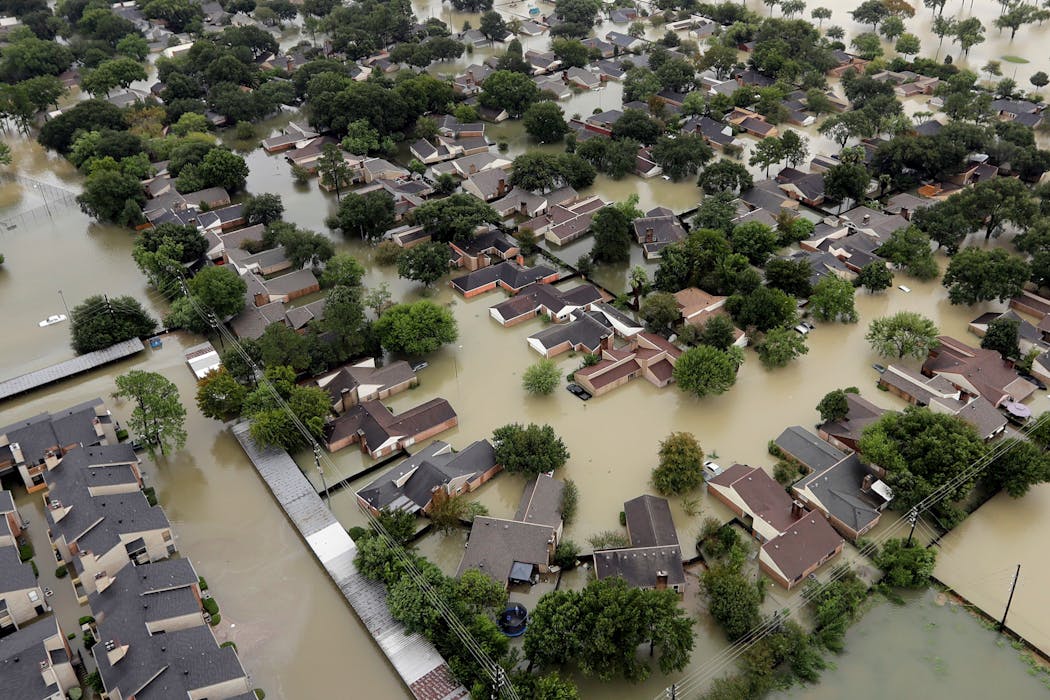
FEMA’s buyout program helped homeowners in Houston after Hurricane Harvey’s widespread flooding in 2017. AP Photo/David J. Phillip

Dangerous flooding has damaged neighborhoods in almost every state in 2025, leaving homes a muddy mess. In several hard-hit areas, it wasn’t the first time homeowners found themselves tearing out wet wallboard and piling waterlogged carpet by the curb.

Wanting to rebuild after flooding is a common response. But for some people, the best way to stay in their community, adapt to the changing climate and recover from disasters is to do what humans have done for millennia: move.

Researchers expect millions of Americans to relocate from properties facing increasing risks of flood, fire and other kinds of disasters in the years ahead.

What people do with those high-risk properties can make their community more resilient or leave it vulnerable to more damage in future storms.

A home with series of signs reading: 'Houses below this sign subject to flooding at any time. 9 times in 6 years.'
Signs warn potential homebuyers about flooding problems in a neighborhood of Myrtle Beach, S.C., in 2022.
Madeline Gray/The Washington Post via Getty Images

We study flood resilience and have been mapping the results of government buyout programs across the U.S. that purchase damaged homes after disasters to turn them into open space.

Our new national maps of who relocates and where they go after a flood shows that most Americans who move from buyout areas stay local. However, we also found that the majority of them give up their home to someone else, either selling it or leaving a rental home, rather than taking a government buyout offer. That transfers the risk to a new resident, leaving the community still facing future costly risks.

FEMA’s buyout program at risk

Government buyout programs can help communities recover after disasters by purchasing high-risk homes and demolishing them. The parcel is then converted to a natural flood plain, park or site for new infrastructure to mitigate future flood damage for nearby areas.

FEMA has been funding such efforts for decades through its property buyout program. It has invested nearly US$4 billion to purchase and raze approximately 45,000 flood-prone homes nationwide, most of them since 2001.

Those investments pay off: Research shows the program avoids an estimated $4 to $6 in future disaster recovery spending for every $1 invested. In return, homeowners receive a predisaster price for their home, minus any money they might receive from a related flood insurance payout on the property.

Flooding surrounds homes across a large area
Young trees along Briar Creek in Charlotte, N.C., are part of a successful local flood plain buyout program to purchase property in flood-prone areas and return it to nature.
Eamon Queeney/The Washington Post via Getty Images

But this assistance is now in jeopardy as the Trump administration cuts FEMA staff and funding and the president talks about dismantling the agency. From March to September, governors submitted 42 applications for funding from FEMA’s Hazard Mitigation Grant Program, which includes buyouts – all were denied or left pending as of mid-September.

Our recommendation after studying this program is to mend it, not end it. If done right, buyouts can help maintain local ties and help communities build more sustainable futures together.

Buyouts vs. selling homes in damaged areas

Our team at Rice University’s Center for Coastal Futures and Adaptive Resilience developed an interactive mapping tool to show where buyout participants and neighbors living within a half-mile of them moved after FEMA initiates a buyout program in their area.

The maps were created using individual data, down to the address level, from 2007 to 2017, across more than 550 counties where FEMA’s buyout program operated nationally.

Zoomed out, they show just how many places the program has helped across the U.S., from coastal cities to inland towns. And, when zoomed in, they reveal the buyout locations and destinations of more than 70,000 residents who moved following FEMA-funded buyouts in their area.

A map shows buyouts in cities scattered across the country.
FEMA’s buyout programs have helped homeowners and communities across the U.S., in almost every state.
James R. Elliott, CC BY

The maps also show which people relocated by accepting a federal buyout and which ones relocated on their own. Nationwide, we see the vast majority of movers, about 14 out of every 15, are not participants in the federal buyout program. They are neighbors who relocated through conventional real estate transactions.

This distinction matters, because it implies that most Americans are retreating from climate-stressed areas by transferring their home’s risk to someone else, not by accepting buyouts that would take the property out of circulation.

Selling may be good for homeowners who can find buyers, but it doesn’t make the community more resilient.

A map show lines from red dots to locations where people moved.
A map of buyouts in Sayreville, N.J., shows most people didn’t move far away.
James R. Elliott, CC BY

Lessons for future buyout programs

Our interactive map offers some good news and insights for buyout programs going forward.

Regardless of how they occur, we find that moves from buyout areas average just 5 to 10 miles from old to new home. This means most people are maintaining local ties, even as they relocate to adapt to rising climate risks.

Nearly all of the moves also end in safer homes with minimal to minor risk of future flooding. We checked using address-level flood factors from the First Street Foundation, a nonprofit source of flood risk ratings that are now integrated into some online real estate websites.

But many homes in risky areas are still being resold or rented to new residents, leaving communities facing a game of climate roulette.

How long that can continue will vary by neighborhood. Rising insurance costs, intensifying storms and growing awareness of flood risks are already dampening home sales in some communities − and thus opportunities to simply hand over one’s risk to someone else and move on.

The U.S. can create safer communities by expanding federal, state and local voluntary buyout programs. These programs allow communities to reduce future flood damage and collectively plan for safer uses of the vacated lands that emerge.

Giving residents longer periods of time to participate after the damage could also help make the programs more attractive. This would provide property owners more flexibility in deciding when to sell and demolish their property, while still taking risky property off the market rather than handing the risk to new residents.

The Conversation

James R. Elliott has received funding from the National Science Foundation.

Debolina Banerjee does not work for, consult, own shares in or receive funding from any company or organization that would benefit from this article, and has disclosed no relevant affiliations beyond their academic appointment.

ref. FEMA buyouts vs. risky real estate: New maps reveal post-flood migration patterns across the US – https://theconversation.com/fema-buyouts-vs-risky-real-estate-new-maps-reveal-post-flood-migration-patterns-across-the-us-262211

Zombies, jiangshi, draugrs, revenants − monster lore is filled with metaphors for public health

Source: The Conversation – USA (2) – By Tom Duszynski, Clinical Assistant Professor of Epidemiology, Indiana University

Key elements of a zombie apocalypse echo the stages of an infectious disease outbreak. GoToVan via Wikimedia Commons, CC BY

Imagine a city street at dusk, silent save for the rising sound of a collective guttural moan. Suddenly, a horde of ragged, bloodied creatures appear, their feet shuffling along the pavement, their hollow eyes locked on fleeing figures ahead.

A classic movie monster, the zombie surged in popularity in the 21st century during a time of global anxiety – the Great Recession, the specter of climate change, the lingering trauma of the 9/11 terrorist attacks and the COVID-19 pandemic.

The zombie apocalypse became a way for people to explore the terrifying concept of societal collapse, a step removed from real threats such as nuclear war or global financial disaster.

As a public health epidemiologist and an amateur zombie historian, I couldn’t help but notice the striking parallels between what epidemiologists do to stop infectious disease outbreaks and what horror movie heroes do to stop zombies. The key questions posed in any zombie narrative – how did this start, how many are infected, how to contain it – are the identical questions that epidemiologists ask during a real infectious disease outbreak or pandemic.

In 2011, in fact, the Centers for Disease Control and Prevention published a zombie apocalypse preparedness guide that explained how readying oneself for a zombie apocalypse can prepare people for any large-scale disaster. The zombie is more than just a monster; it is a powerful, public health teaching tool.

Zombies in ancient history

The idea of the reanimated dead has been part of human history for millennia, showing up across cultures and long before modern germ theory or epidemiology existed. These creatures were often a way for societies to understand and explain the natural world and disease transmission in the absence of scientific knowledge.

The oldest written reference to creatures similar to modern zombies is found in “The Epic of Gilgamesh,” which was etched on stone tablets sometime between 2000 and 1100 B.C.E. Enraged after Gilgamesh rejects her marriage proposal, the goddess Ishtar tells him, “I shall bring up the dead to consume the living, I shall the make the dead outnumber the living.” This ancient terror – the dead overwhelming the living – has a direct parallel to the concept of an out-of-control epidemic in which the sick quickly overwhelm the healthy. Hollywood has readily adopted this concept in many zombie movies.

A screenshot for the trailer of Night of the Living Dead
The creatures in George Romero’s 1968 classic ‘The Night of the Living Dead’ were the first flesh-eating zombies in Hollywood.
Wikimedia Commons

The origins of the flesh-eating corpse on screen date back to George Romero’s 1968 classic “The Night of the Living Dead.” You won’t hear the word “zombie” in Romero’s film, however – in the script, he called the creatures “flesh eaters.” Similarly, in Danny Boyle’s 2002 film “28 Days Later,” the terrifying creatures were called the “infected.” Both these terms, “flesh eaters” and “infected,” directly echo public health concerns – specifically, the spread of disease via a bacteria or virus and the need for quarantine to contain the afflicted.

The roots of the word zombie arefor the Haitian variety. thought to stretch back to West Africa and to words such as “nzambi,” which means “creator” in African Kongo, or “ndzumbi,” which means “corpse” in the Mitsogo language of Gabon. However, it was in Haitian Vodou, a religion that draws from the West African spiritual traditions among people who were enslaved on Haiti’s plantations, that the concept took its most terrifying form.

According to Vodou, when a person experiences an unnatural, early death, priests can capture and co-opt their soul. Slave owners capitalized on this belief to prevent suicide among the enslaved. To become a zombie – dead yet still a slave – was the ultimate nightmare. This cultural concept speaks not just to disease but to societal trauma and the public health crisis of forced labor.

Zombie-like creatures around the world

Across the globe, other reanimated corpses crop up in local folklore, often reflecting fears of improper burial, violent death or moral wickedness. Many tales about these eerie creatures don’t just convey how to avoid becoming one of them, but also detail how to stop or prevent them from taking over. This focus on prevention and control is at the heart of public health.

A white-faced big-toothed monster wearing a long black robe and holding up its hands
Jiangshi, or hopping zombies, were corpses reanimated when a soul couldn’t leave after a violent death.
Ed5005000 via Sleeping Dogs Wiki, CC BY-SA

During the expansion of China’s Qing dynasty, which took place between 1644 and 1911, a creature known as the jiangshi, or “hopping zombie,” emerged amid widespread unrest and integration of non-Chinese minorities. The jiangshi were corpses suffering from rigor mortis and decomposition, reanimated when a soul couldn’t leave after a violent death. Instead of staggering, these mythological creatures would hop, and their method of attack was to steal a person’s lifeforce, or qi.

Fear of a lonely, restless afterlife led families who lost a loved one far from home to hire a Taoist priest to retrieve the body for proper burial with ancestors.

In Scandinavia, the draugr – meaning “again walker” or “ghost” – was a creature bent on revenge. According to lore, draugrs typically emerged from mean-spirited people or improperly buried corpses. Like zombies, they could turn regular people into draugrs by infecting them. They would attack their victims by devouring flesh, drinking blood or driving victims insane. Draugrs’ contagious nature is a model for disease transmission. What’s more, their seasonal activity – they most often appear at night in winter months – is similar to seasonal trends in infectious disease transmission.

A black and white drawing of a giant monster hovering over a house at night
The draugr’s ability to ‘infect’ people can be seen as an example of disease transmission.
Kim Diaz Holm, CC BY-SA

In medieval times, meanwhile, legend had it that creatures called revenants – corpses that came out of their graves – stalked northern and western Europe. According to 12th-century English historian William of Newburgh, these creatures emerged from the lingering life force of people who had committed evil deeds during their lives or who experienced a sudden death. Clerics fueled people’s fears of becoming a revenant by claiming these creatures were created by Satan. The recommended but gruesome prevention method for this fate was to capture and dismember these creatures and to burn the body parts, especially the head.

Archaeological evidence from a medieval village in England suggests that communities heeded this advice. Archaeologists excavated the village’s burial grounds, and among human remains from the 11th to 13th centuries they found broken and burned bones with knife marks. They show how a community may have taken extreme measures to control a perceived contagion or threat to public safety, mirroring a modern-day quarantine or eradication protocols.

Perhaps the most striking similarity between these historical monsters and Hollywood zombies is that so many of them are created by an infectious agent of some kind. After an outbreak occurs, control is difficult to regain, underscoring the necessity of a rapid public health response.

The Conversation

Tom Duszynski does not work for, consult, own shares in or receive funding from any company or organization that would benefit from this article, and has disclosed no relevant affiliations beyond their academic appointment.

ref. Zombies, jiangshi, draugrs, revenants − monster lore is filled with metaphors for public health – https://theconversation.com/zombies-jiangshi-draugrs-revenants-monster-lore-is-filled-with-metaphors-for-public-health-261448

High food prices in east and southern Africa: four steps to boost production and make markets work better

Source: The Conversation – Africa – By Grace Nsomba, Researcher at Centre for Competition, Regulation and Economic Development, University of Johannesburg

Countries in east and southern Africa have continued to experience high and volatile food prices despite good harvests in 2025. This is especially alarming as climate-related weather shocks will be deeper and more frequent.

Yet the region does not lack the potential to expand agriculture. Parts of the region have abundant arable land and water resources.

The G20 Food Security Task Force convened by South Africa as part of its G20 presidency has recognised the wide and persistent extent of hunger and malnutrition in most sub-regions of Africa. The task force highlighted excessive price volatility and food inflation despite sufficient global food production.

It affirmed:

the commitment to facilitate open, fair, predictable, and rules-based agriculture, food and fertiliser trade and reduce market distortions.

Evidence from the African Market Observatory, however, points to action – not words – being required. The prices for food products such as maize meal, rice and vegetable oil are very high across the region. So are those of inputs such as fertilizer.

The African Market Observatory provides market information, including prices, for key food products at the wholesale and producer levels in east and southern Africa. This data is essential in evaluating whether prices are fair and markets are working well for smaller producers and other market participants.

Countries in east and southern Africa have a combined population of over 600 million. As a whole the region is a substantial net importer of staples such as wheat, rice and vegetable oil. This despite the potential for the region to expand production.

But to expand production, countries would need to develop sustainable agro-industrial strategies. Such strategies include initiatives to improve yields, value-adding and the creation of fair regional markets. Improved water management and farming methods are essential along with investing in storage, logistics and processing.

Countries would also need to address the issue of agricultural commodity markets in the region. The variance in commodity prices across the region are evidence that markets are working very badly.

Prices vary across countries

Maize prices vary tremendously across the region, with extremely high prices in Kenya and Malawi. This should not be the case. When production from other parts of the region is taken into account, the region has more than enough maize to meet demand. There have been good rains this year after El Nino affected countries like Malawi and Zambia in 2024.

Prices in Kenya have been above US$450/tonne while prices in Zambia from April to June 2025 after the harvest were around US$200/tonne. Tanzania and Uganda have also had good harvests with prices under US$300/tonne in producing areas. Transport costs can account for around US$80/tonne of the difference, at most (less from Uganda and Tanzania).

Zambia maintained export restrictions until August, which meant farmers received low prices and the traders who bought up the harvest made windfall profits when the restrictions were lifted.

There have been similar differences in soybeans between what farmers receive and prices paid by customers. Soymeal from beans is essential for animal feed to expand poultry and fish farming to improve nutrition of low-income households.

An inquiry in 2024 by the Competition Authority of Kenya into animal feed identified obstacles in cross-border markets. The government opened up to soymeal imports from India to provide an alternative source and prices fell 20% in early 2025. Kenya is surrounded by countries that could and should be ramping up their own soybean production for expanded regional trade.

Solutions

It bears repeating, east and southern Africa is the best area in the world to expand production of crops such as maize and soybean. The expansion would mean some of the lowest instead of the highest prices internationally and lay the foundation for downstream food processing.

The G20 ministers adopted the African philosophy of ubuntu, “I am because you are”, to envision food systems which recognise interdependence across communities, borders and generations.

It means a complete change from the current situation where countries practise “beggar thy neighbour” policies such as restricting trade when a neighbour is facing drought.

Market monitoring is a crucial part of rebuilding cooperation instead of division. The G20 points to the Agricultural Market Information System, an inter-agency platform to enhance food market transparency and policy response for food security launched in 2011 by G20 Ministers of Agriculture. The platform provides data on global food supply and prices. But the platform has no data on markets in sub-Saharan African countries except South Africa and Nigeria.

Without data, countries can’t address hunger and food insecurity. As shocks become more frequent and severe, this work needs to massively accelerate.

Our analysis of market outcomes and factors influencing prices points to a straightforward set of measures.

First, regional monitoring of food markets is essential to guard against market manipulation. Monitoring needs to cover pricing, trade flows and associated barriers, and changes in market structure for a more robust understanding of markets. It is especially important in light of climate-related shocks.

Second, improved governance of food value chains to address food security and supply needs to be accompanied by enforcement of clear rules against abuse of company power that transcends national borders. Competition authorities need to be effective referees.

Third, investments in infrastructure such as storage facilities and appropriate irrigation are essential to adapt to the effects of climate change, improve resilience and yields, and safeguard against volatile markets.

Fourth, financing should be mobilised for small and medium scale producers who form the backbone of agricultural production across the region.

A critical question, of course, is about the political will to take these measures forward.

The Conversation

Grace Nsomba acknowledges funding from the Shamba Centre for Food and Climate, Open Society Foundation, COMESA Competition Commission and Competition Commission South Africa for research on food and agriculture markets.

Simon Roberts acknowedges funding from the Shamba Centre for Food and Climate, Open Society Foundation, COMESA Competition Commission and Competition Commission South Africa for research on food and agriculture markets.

ref. High food prices in east and southern Africa: four steps to boost production and make markets work better – https://theconversation.com/high-food-prices-in-east-and-southern-africa-four-steps-to-boost-production-and-make-markets-work-better-266498

With delay of pension reform, Prime Minister Sébastien Lecornu puts France’s Socialist Party back in the spotlight

Source: The Conversation – France in French (3) – By Benjamin Morel, Maître de conférences en droit public à Paris 2 Panthéon-Assas, chercheur au CERSA et chercheur associé à l’Institut des sciences sociales du politique (ISP), Université Paris-Panthéon-Assas

In his policy speech to lawmakers in the National Assembly on Tuesday, Prime Minister Sébastien Lecornu – who was reappointed by President Emmanuel Macron on Friday after submitting his resignation just days before – announced the suspension of pension reform, which a previous government forced into law without a vote in 2023. The reform raised the retirement age from 62 to 64, and also raised, depending on one’s year of birth, the number of working years required to 43. It had sparked mass protests even before it became law.

Lecornu’s announcement was key to obtaining an agreement from France’s once-mighty Socialist Party, which has 69 members and affiliated members in the 577-member Assembly, that it would not support a potential vote of no-confidence. How will the Socialists position themselves as the government’s finance bill comes up for debate? Is a parliamentary logic of consensus gaining ground? An interview with political scientist and French constitutional expert Benjamin Morel.


The Socialist Party (PS) has agreed not to back a no-confidence vote. Is Lecornu’s government guaranteed to remain in power?

Benjamin Morel: It takes 289 MPs not to vote in favour of the motion of no-confidence for the government to remain in power. At this stage, a motion of no-confidence is unlikely due to the number of political groups that have given instructions not to vote in favour of it. However, some groups, notably LR (Les Républicains, a right-wing party) and PS, are prone to dissent, and there are unknowns on the side of the non-attached members of LIOT (Libertés, indépendants, Outre-mer et territoires, a centrist group). Will there be more than 20 dissidents, which would allow the government to be censured? It’s not impossible, but it is unlikely.

Is a dissolution of parliament, which would be effected by President Emmanuel Macron, also unlikely?

B.M.: If the Lecornu government does not immediately lose a confidence vote, dissolution is probably out of the question. Indeed, if dissolution were to take place in November or early December, there would no longer be any MPs in the National Assembly to vote on the budget or pass a special law allowing revenue to be collected: this would then be a major institutional problem. If dissolution were to occur later – in the spring – it would take place at the same time as municipal elections, which PS and LR mayors would oppose because they could suffer from a “nationalisation” of local contests. Dissolution after the municipal elections? We would be less than a year away from the presidential election, and dissolution would be a considerable hindrance to Macron’s successor. For all these reasons, it is quite likely that dissolution will be ruled out.

If Lecornu’s government does not immediately lose a confidence vote, the next step will be a vote on the budget. What are the different scenarios for the budget’s adoption? What position will the PS take?

B.M.: Lecornu has announced that he will not invoke Article 49.3 (the constitutional rule that allows the government to pass a law without a vote) for the budget: this means that the budget can only be adopted after a positive vote by a majority of MPs, including the Socialist Party’s. However, we can expect the Senate, which has a right-wing majority, to push for a more austere budget before it goes to a joint committee and back to the Assembly. For the budget to be adopted, the Socialists would therefore have to vote in favour of a text that they do not really agree with, under pressure from the rest of the left, just a few months before the municipal elections. Lecornu’s general policy speech was considered a triumph for Socialist Party leader Olivier Faure and the PS. This is true, but the PS is now in a very complicated political situation.

The second scenario is that of a rejected budget and a government resorting to special laws. The problem is that these laws do not allow for all public investments to be made, which would have real economic consequences. In this case, a budget would have to be voted on at the beginning of 2026 with an identical political configuration (in the Assembly) and municipal elections approaching, which will further exacerbate the situation.

The final scenario is that after 70 days, Article 47 of the Constitution, noting that parliament has not taken a decision, allows the government to execute the budget by decree. There is uncertainty regarding Article 47 and the decrees, as they have never been used. Legal experts think that it is the last budget adopted that is submitted by decree – so, in principle, it would be the Senate’s budget, probably a very tough one – with the possible exclusion of funds earmarked for the suspension of pension reform.

Ultimately, the Socialists could face a real strategic dilemma: adopt a budget they will find difficult to support, bear the cost of special laws, or accept the implementation by decree of a budget drafted by the Senate’s right wing. All of this will likely lead to further crises.

How can we understand the change of direction by the Lecornu government, which is moving from an alliance with LR to an agreement with the PS?

B.M.: The PS became vital because the Rassemblement National (the far-right National Rally, or RN) entered into a logic where it wanted a dissolution in the hope of obtaining an absolute majority in the Assembly. As a result, the PS became the only force that allowed Lecornu to remain in place. The PS was able to take full advantage of this situation. Another factor in the PS’s favour is recent polls showing that, in the event of a dissolution, the Socialists would do well while the centre bloc would be left in tatters. This fundamentally changes the balance of power. To avoid losing a confidence vote and then facing dissolution, the government had to offer a big concession: the suspension of the pension reform.

How should we interpret this agreement between the central bloc and the PS? Is the parliamentary logic of consensus finally gaining ground?

B.M.: This political development is not based on parliamentary logic but on a balance of power. In a parliamentary system, the president does not pull a prime minister out of a hat, saying ‘it’s him and no one else’. He looks within parliament for someone capable of forming a majority. Once this majority has been found, a programme is drawn up and finally a government is appointed. The logic of consensus would have required a comprehensive agreement, a joint government programme between LR and PS. This is not the case at all.

Macron is not really asking Lecornu to find a majority; he is asking him to try not to lose a confidence vote, even though this PM is supported by only a minority of MPs – just under 100, from (central bloc parties) Renaissance and MoDem – which is unheard of in any parliamentary democracy. The result is that the balance of power is extraordinarily fragile and crises are recurrent. However, these obstacles will have to be overcome, and we will have to get used to relative majorities, because the polls do not necessarily suggest that a new majority would emerge in the event of a dissolution of parliament or even a new presidential election.

Interview conducted by David Bornstein.


A weekly e-mail in English featuring expertise from scholars and researchers. It provides an introduction to the diversity of research coming out of the continent and considers some of the key issues facing European countries. Get the newsletter!


The Conversation

Benjamin Morel ne travaille pas, ne conseille pas, ne possède pas de parts, ne reçoit pas de fonds d’une organisation qui pourrait tirer profit de cet article, et n’a déclaré aucune autre affiliation que son organisme de recherche.

ref. With delay of pension reform, Prime Minister Sébastien Lecornu puts France’s Socialist Party back in the spotlight – https://theconversation.com/with-delay-of-pension-reform-prime-minister-sebastien-lecornu-puts-frances-socialist-party-back-in-the-spotlight-267593

Pourquoi les labels « bio » ne se valent pas d’un pays à l’autre

Source: The Conversation – in French – By Marie Asma Ben-Othmen, Enseignante-chercheuse en Economie de l’environnement & Agroéconomie, Responsable du Master of Science Urban Agriculture & Green Cities, UniLaSalle

Le « bio » : une étiquette clairement identifiable et souvent rassurante. Pourtant, les réalités derrière ce label mondial divergent. Alors que les normes en Europe sont plutôt strictes, elles sont bien plus souples en Amérique du Nord. Dans les pays émergents, ce sont les contrôles qui sont inégaux. Autant d’éléments à même d’affecter la confiance accordée au bio par les consommateurs. Comment s’y retrouver ? L’idéal serait d’harmoniser les règles d’un pays à l’autre. Petit tour d’horizon.


Le « bio » est un label mondial qui peut s’appliquer à des produits venus d’Europe, de Chine ou d’Amérique du Sud. Il n’a pourtant rien d’universel. Derrière l’étiquette rassurante, on ne retrouvera pas les mêmes normes en fonction des pays de production.

Par exemple, alors que l’Europe impose des règles plutôt strictes, les États-Unis se montrent beaucoup plus souples. Dans certains pays émergents, comme le Brésil, ce sont les contrôles qui sont souvent moins sévères. Nous vous proposons ici un bref tour d’horizon, qui vous permettra, nous l’espérons, de mieux orienter vos choix de consommation.


À lire aussi :
Une agriculture 100% bio en France est-elle possible ?


L’absence de pesticides derrière le succès du bio français

En France, la consommation de produits biologiques a connu une croissance fulgurante. En 2023, après vingt années de progression continue, ce marché a été multiplié par 13 par rapport à son niveau initial.

Cette tendance s’explique par le fait que les consommateurs perçoivent le bio comme un produit plus naturel, notamment en raison de l’absence de traitements pesticides autorisés. La production bio doit respecter un cahier des charges plus attentif à l’environnement, ce qui favorise la confiance des consommateurs dans un contexte de plus en plus marqué par la défiance alimentaire.

Ce label demeure toutefois une construction réglementaire qui dépend fortement du contexte national. Cette dynamique positive se heurte aujourd’hui à des évolutions législatives à même de la fragiliser. La loi Duplomb, adoptée le 8 juillet 2025, illustre combien les choix politiques peuvent ébranler la confiance accordée à l’agriculture en réintroduisant la question des pesticides au cœur du débat. Cette loi propose en effet des dérogations à l’interdiction d’utiliser des produits phytopharmaceutiques contenant des néonicotinoïdes.

Même si elle loi ne concerne pas directement les producteurs biologiques, elle risque d’avoir des effets indirects sur le secteur. En réintroduisant des dérogations à l’usage de substances controversées, elle ravive la défiance du public envers l’agriculture conventionnelle. Dans ce contexte, les filières bio pourraient apparaître comme une valeur refuge pour les consommateurs, renforçant leur rôle de repère de confiance dans un paysage agricole fragilisé.

Dans l’Union européenne, un label bio garanti sans OGM

L’Union européenne (UE) a établi une réglementation stricte pour l’agriculture biologique dès 1991. Au-delà de la question des pesticides, qui se pose, comme on l’a vu plus haut, plus intensément en France, celle des organismes génétiquement modifiés (OGM) offre également une clé de lecture intéressante à l’échelle européenne.

En effet, le label bio européen interdit totalement le recours à OGM dans les produits labélisés bio, à toutes les étapes de sa chaîne de production. Cela signifie qu’il est interdit d’utiliser des semences OGM pour les cultures bio, pas d’alimentation animale issue des OGM pour l’élevage bio et pas d’ingrédients issus des OGM pour les produits transformés bio.

En outre, le cahier des charges européen du bio impose des pratiques agricoles strictes en limitant le recours aux intrants de synthèse. Ceci inclut les engrais azotés, les pesticides, les herbicides et les fongicides de synthèse. Seuls certains intrants naturels ou minéraux sont autorisés, à l’instar du fumier, compost et engrais verts. Ceci reflète la philosophie du bio, basée sur la prévention des maladies et des déséquilibres agronomiques, par le maintien de la fertilité des sols, la biodiversité et les équilibres écologiques.

Logos français et européen relatifs à l’agriculture biologique.
JJ Georges, CC BY-SA

En France, le label français AB s’appuie ainsi sur le règlement européen, tout en ajoutant quelques exigences propres, comme un contrôle plus rigoureux de la traçabilité et du lien au sol.

Si les deux labels restent alignés sur les grands principes, le bio français se distingue par une mise en œuvre généralement plus stricte, héritée d’une longue tradition d’agriculture biologique militante.

Le bio en Europe se heurte aussi à un certain nombre d’enjeux actuels, notamment agronomiques. Il s’agit par exemple du besoin de renforcer la recherche sur les alternatives aux pesticides et autres intrants de synthèse, comme le biocontrôle, une sélection variétale adaptée et la gestion écologique des sols.

Enfin, force est de constater que l’UE a fait du bio un pilier de sa stratégie « de la ferme à la table » (« From Farm to Fork »). Celle-ci a pour objectif d’atteindre 25 % de la surface agricole utile (SAU) européenne en bio d’ici 2030.

Afin de garantir la fiabilité du label, l’UE a mis en place un système de contrôle centralisé et harmonisé de supervision des chaînes de valeur alimentaires. Celles-ci englobent les producteurs, les transformateurs, jusqu’aux distributeurs. Ces contrôles reposent sur des règles précises définies par le règlement européen 2018/848.

De son côté, le consommateur retrouvera les différents labels de certification bio, tels que le label européen EU Organic, le label national AB en France ou encore le Bio-Siegel en Allemagne. Même si tous ces labels reposent sur la même base réglementaire européenne, leurs modalités d’application (par exemple, le type de suivi) peuvent varier légèrement d’un pays à un autre. Chaque pays peut en outre y ajouter des exigences supplémentaires. Par exemple, la France impose une fréquence de contrôle plus élevée, tandis que l’Allemagne insiste sur la transparence des filières.

Une labélisation plus souple en Amérique du Nord

En Amérique du Nord, l’approche du bio est plus souple que celle de l’Union européenne. Aux États-Unis, le label USDA Organic, créé en 2002, définit les standards nationaux de la production biologique. Il se caractérise par une certaine souplesse par rapport aux standards européens, notamment en ce qui concerne l’usage des intrants, puisque certains produits chimiques d’origine synthétique sont tolérés s’ils sont jugés nécessaires et sans alternatives viables. Ceux-ci incluent, par exemple, certains désinfectants pour bâtiments d’élevage et traitements antiparasitaires dans la conduite de l’élevage.

Le Canada, de son côté, a mis en place sa réglementation nationale des produits biologiques – le Canada Organic Regime – plus tardivement que les États-Unis. Ce système est équivalent à celui des États-Unis, dans la mesure où un accord bilatéral de reconnaissance mutuelle permet la vente des produits bio canadiens aux États-Unis et vice versa.

Les deux systèmes présentent ainsi de nombreuses similitudes, notamment en ce qui concerne la liste des substances autorisées et leur flexibilité d’usage. Cependant, ils divergent du modèle européen sur plusieurs points.

Tout d’abord, alors que l’UE applique une tolérance quasi nulle vis-à-vis des OGM, les États-Unis et le Canada tolèrent, de façon implicite, la présence accidentelle de traces d’OGM dans les produits bio. En effet, selon le règlement de l’USDA Organic, l’utilisation volontaire d’OGM est strictement interdite, mais une contamination involontaire n’entraîne pas automatiquement la perte de la certification si elle est jugée indépendante du producteur. Le Canada adopte une position légèrement plus stricte, imposant des contrôles renforcés et une tolérance plus faible.

Cette différence a suscité des controverses au moment de l’accord de reconnaissance mutuelle, certains consommateurs et producteurs canadiens craignant de voir arriver sur leur marché des produits bio américains jugés moins exigeants sur la question des OGM. Celles-ci concernaient également les conditions d’élevage. En effet, alors qu’en Europe les densités animales sont strictement limitées et que les sorties en plein air sont très encadrées, en Amérique du Nord, certains systèmes de production biologique peuvent être beaucoup plus intensifs, menant à de véritables fermes industrielles biologiques, ce qui entraîne une perte de proximité avec l’idéal originel du bio.

Enfin, un autre contraste concerne les productions hors sol. Aux États-Unis, les fermes hydroponiques – qui cultivent les plantes hors sol – peuvent être certifiées USDA Organic, à condition que les intrants utilisés figurent sur la liste autorisée. En revanche, en Europe, l’hydroponie est exclue car elle ne respecte pas le lien au sol, considéré au cœur de la philosophie agroécologique.


À lire aussi :
« Les mots de la science » : A comme agroécologie


Dans les pays émergents, du bio mais selon quels critères ?

Dans les pays émergents, la question du bio se pose différemment. En effet, celle-ci dépend fortement des dispositifs et des critères mis en place par ces pays pour en garantir la crédibilité. À titre d’exemple, en Inde, au Brésil ou en Chine, les labels bio nationaux sont assez récents (la plupart ont été mis en place entre 2000 et 2010) et moins contraignants que leurs équivalents européens.

Alors que, dans l’UE, les contrôles sont effectués par des organismes certificateurs tiers accrédités et indépendants, au Brésil, les producteurs peuvent être certifiés via un système participatif de garantie (SPG), qui repose sur l’auto-évaluation collective des agriculteurs. En conséquence, ces labels peinent à construire une véritable confiance auprès des consommateurs.

Par ailleurs, dans de nombreux cas, les certifications biologiques sont avant tout conçues pour répondre aux standards des marchés internationaux afin de faciliter l’exportation vers l’UE ou l’Amérique du Nord, plutôt que pour structurer un marché intérieur. C’est, par exemple, le cas en Inde.

Cette situation laisse souvent les consommateurs locaux avec une offre limitée et parfois peu fiable. Dans ce contexte, les organismes privés de certification internationaux, comme Ecocert, Control Union ou BioInspecta occupent une place croissante. Ils améliorent la reconnaissance de ces produits, mais renforcent une forme de dépendance vis-à-vis de standards extérieurs, ce qui soulève des enjeux de souveraineté alimentaire mais aussi de justice sociale dans ces pays.

Le bio, un label global… mais éclaté

L’absence de reconnaissance universelle mutuelle entre les différents systèmes de certification biologique engendre de la confusion chez les consommateurs. Il crée également de fortes contraintes pour les producteurs.

En pratique, un agriculteur qui souhaiterait exporter une partie de sa production doit souvent obtenir plusieurs certifications distinctes. Par exemple, un producteur mexicain doit ainsi être certifié à la fois USDA Organic pour accéder au marché américain et EU Organic pour pénétrer le marché européen.

Cette multiplication des démarches alourdit les coûts et la complexité administrative pour les producteurs, tout en renforçant les inégalités d’accès aux marchés internationaux.

Du côté des consommateurs, l’usage généralisé du terme « bio » peut donner l’illusion d’une norme universelle, alors qu’il recouvre en réalité des cahiers des charges très différents selon les pays. Cette situation entretient une certaine ambiguïté et peut induire en erreur, en masquant les disparités de pratiques agricoles et de niveaux d’exigence derrière un label apparemment commun.

Comment s’y retrouver en tant que consommateur ?

Pour s’y retrouver dans la jungle du « bio », il faut donc aller au-delà du simple logo affiché sur l’emballage et s’informer sur la provenance réelle du produit et sur le cahier des charges du label précis qui le certifie.

Il est aussi essentiel de garder à l’esprit que bio ne signifie pas automatiquement « local » ni « petit producteur ». Certains produits certifiés biologiques proviennent de filières industrielles mondialisées.

Enfin, le consommateur peut jouer un rôle actif de « citoyen alimentaire », pour encourager davantage de transparence et de traçabilité, s’il favorise les circuits de distribution qui donnent accès à une information claire et détaillée sur l’origine et les modes de production. Il soutient alors une alimentation plus démocratique et responsable. C’est précisément cette implication citoyenne dans le système alimentaire qui peut favoriser l’essor d’une culture de l’alimentation locale et durable, fondée sur la confiance, l’attachement au territoire et la coopération entre producteurs et consommateurs.

Pour que le bio livre son plein potentiel en termes de transformation agroécologique des systèmes alimentaires mondiaux, peut-être faudrait-il, demain, envisager une harmonisation internationale du bio. C’est à cette condition qu’on pourra en faire un véritable langage commun pour les consommateurs, qui signifie réellement la même chose d’un pays à l’autre.

The Conversation

Marie Asma Ben-Othmen ne travaille pas, ne conseille pas, ne possède pas de parts, ne reçoit pas de fonds d’une organisation qui pourrait tirer profit de cet article, et n’a déclaré aucune autre affiliation que son organisme de recherche.

ref. Pourquoi les labels « bio » ne se valent pas d’un pays à l’autre – https://theconversation.com/pourquoi-les-labels-bio-ne-se-valent-pas-dun-pays-a-lautre-267037