10 effective things citizens can do to make change in addition to attending a protest

Source: The Conversation – USA – By Shelley Inglis, Senior Visiting Scholar with the Center for the Study of Genocide and Human Rights, Rutgers University

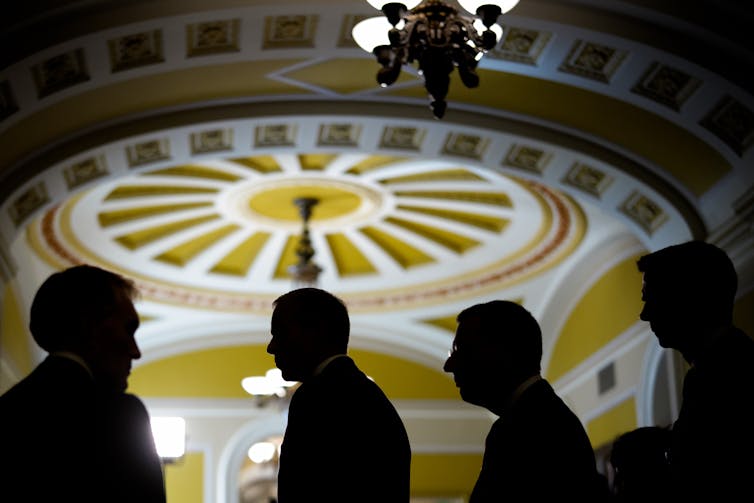
A crowd gathered for a “No Kings” protest on October 18, 2025 in Anchorage, Alaska. Hasan Akbas/Anadolu via Getty Images

What happens now?

That may well be the question being asked by “No Kings” protesters, who marched, rallied and danced all over the nation on Saturday, Oct. 18, 2025.

Pro-democracy groups had aimed to encourage large numbers of Americans to demonstrate that “together we are choosing democracy.” They were successful, with crowds turning out for demonstrations in thousands of cities and towns from Anchorage to Miami.

And while multiple GOP leaders had attacked the planned demonstrations, describing them as “hate America” rallies, political science scholars and national security experts agree that the current U.S. administration’s actions are indeed placing the world’s oldest continuous constitutional republic in jeopardy.

Once a democracy starts to erode, it can be difficult to reverse the trend. Only 42% of democracies affected by autocratization – a transformation in governance that erodes democratic safeguards – since 1994 have rebounded after a democratic breakdown, according to Swedish research institute V-Dem.

Often termed “democratic backsliding,” such periods involve government-led changes to rules and norms to weaken individual freedoms and undermine or eliminate checks on power exercised by independent institutions, both governmental and non-governmental.

Democracies that have suffered setbacks vary widely, from Hungary to Brazil. As a longterm practitioner of democracy-building overseas, I know that none of these countries rival the United States’ constitutional traditions, federalist system, economic wealth, military discipline, and vibrant independent media, academia and nonprofit organizations.

Even so, practices used globally to fight democratic backsliding or topple autocracies can be instructive.

In a nutshell: Nonviolent resistance is based on noncooperation with autocratic actions. It has proven more effective in toppling autocracies than violent, armed struggle.

But it requires more than street demonstrations.

One pro-democracy organization helps train people to use video to document abuses by government.

Tactics used by pro-democracy movements

So, what does it take for democracies to bounce back from periods of autocratic rule?

Broad-scale, coordinated mobilization of a sufficient percentage of the population against autocratic takeover and for a renewed democratic future is necessary for success.

That momentum can be challenging to generate. Would-be autocrats create environments of fear and powerlessness, using intimidation, overwhelming force or political and legal attacks, and other coercive tactics to force acquiescence and chill democratic pushback.

Autocrats can’t succeed alone. They rely on what scholars call “pillars of support” – a range of government institutions, security forces, business and other sectors in society to obey their will and even bolster their power grabs.

However, everyone in society has power to erode autocratic support in various ways. While individual efforts are important, collective action increases impact and mitigates the risks of reprisals for standing up to individuals or organizations.

Here are some of the tactics used by those movements across the world:

1. Refuse unlawful, corrupt demands

When enough individuals in critical roles and institutions – the military, civil servants, corporate leaders, state government and judges – refuse to implement autocratic orders, it can slow or even stop an autocratic takeover. In South Korea, parts of the civil service, legislature and military declined to support President Yoon Suk Yeol’s imposition of martial law in 2024, foiling his autocratic move.

2. Visibly bolster the rule of law

Where would-be autocrats disregard legal restraints and install their supporters in the highest courts, individual challenges to overreach, even if successful, can be insufficient. In Poland, legal challenges in courts combined with public education by the judiciary, lawyers’ associations initiatives and street protests like the “March of a Thousand Robes” in 2020 to signal widespread repudiation of the autocratic government’s attacks on the rule of law.

3. Unite in opposition

This year’s Nobel Peace Prize winner, Maria Corina Machado from Venezuela, is an example of how political parties and leaders who cooperate across differences can offer an alternative vision.

Novel candidates can undermine the ability of autocrats to sow division and demonize major opponents. However, coalitions can be difficult to form and sustain to win. Based on experiences overseas, historian Anne Applebaum, author of “Autocracy Inc.,” has called for a pro-democracy coalition in the U.S. that could unite independents, Libertarians, the Green Party, dissident Republicans and the Democratic Party.

4. Harness economic power

Everyday consumers can pressure wealthy elites and corporations that acquiesce to, or prop up, would-be autocrats through boycotts and other methods, like the “Tesla Takedown” in the U.S. that preceded a drop in Tesla share value and owner Elon Musk’s departure from his government role. General strikes, led by labor unions and professional associations, as in Sudan or Myanmar, can be particularly effective.

5. Preempt electoral manipulation

Voting autocrats out of office remains the best way to restore democracy, demonstrated recently by the u-turn in Brazil, where a pro-democracy candidate defeated the hard-right incumbent. But this requires strategic action to keep elections truly free and fair well in advance of election day.

6. Organize your community

As in campaigns in India starting in 2020 and Chile in 2019, participating in community or private conversation forums, local town halls or councils, and nonpartisan student, veterans, farmers, women’s and religious groups provides the space to share concerns, exchange ideas and create avenues to take action. Often starting with trusted networks, local initiatives can tap into broader statewide or national efforts to defend democracy.

7. Shape the story

Driving public opinion and communicating effectively is critical to pro-democracy efforts. Serbian students created one of the largest protest movements in decades starting in 2024 using creative resistance – artistic expression, such as visual mediums, satire and social media – to expose an autocrat’s weaknesses, reduce fear and hopelessness and build collective symbolism and resilience.

8. Build bridges and democratic alternatives

Bringing together people across ideological and other divides can increase understanding and counter political polarization, particularly when religious leaders are involved. Even in autocratic countries like Turkey or during wartime as in Ukraine, deepening democratic practices at state and local levels, like citizen assemblies and the use of technologies that improve the quality of public decision-making, can demonstrate ways to govern differently.

Parallel institutions, such as schools and tax systems operating outside the formal repressive system, like during Slobodan Milosevic’s decade-long crackdown in Kosovo, have sustained non-cooperation and shaped a future vision.

9. Document abuses, protect people, reinforce truth

With today’s technologies, every citizen can record repressive incidents, track corruption and archive historical evidence such as preserving proof of slavery at danger of being removed in public museums in the U.S., or collecting documentation of human rights violations in Syria. This can also entail bearing witness, including by accompanying those most targeted with abusive government tactics. These techniques can bolster the survival of independent and evidence-based media, science and collective memory.

10. Mitigate risk, learn and innovate

The success rate of nonviolent civil resistance is declining while repressive tactics by autocrats are evolving. Democracy defenders are forced to rapidly adjust, consistently train, prepare for diverse scenarios, try new techniques and strategically support each other.

International solidarity from global institutions, like European Union support for democrats in Belarus or Georgia, or online movements, like the Milk Tea Alliance across Southeast Asia, can bolster efforts.

Democracy’s future?

The end of American democracy is not a foregone conclusion, despite the unprecedented rate of its decline. It will depend, in part, on the choices made by every American.

With autocracies outnumbering democracies for the first time in 20 years, and only 12% of the world’s population now living in a liberal democracy, the future of the global democratic experiment may well depend on the people of the United States.

The Conversation

Until July 1, 2025, Shelley Inglis served as a Senior Policy Advisor in the Bureau for Democracy, Human Rights and Governance of the United States Agency for International Development (USAID).

ref. 10 effective things citizens can do to make change in addition to attending a protest – https://theconversation.com/10-effective-things-citizens-can-do-to-make-change-in-addition-to-attending-a-protest-266432
How alternative teaching models can foster inclusive classrooms

Source: The Conversation – Canada – By Cornelia Schneider, Professor, Education, Mount Saint Vincent University

The education of children with disabilities is a complex issue more than 30 years after “inclusive education” appeared for the first time in an important 1994 United Nations statement.

Children with disabilities too often face varied forms of exclusion with minimal interaction with their non-disabled peers — as well as disrupted or curtailed classroom time with their peers because of delayed hiring practices for support staff or urgently needed supports that never arrive.

Teachers often struggle to keep up with the challenges.

They learn during teacher education how to adapt learning content and outcomes to the diverse learners in their classrooms. But in practice, approaches such as Universal Design for Learning often do not radically change the reality for children with disabilities.

Part of my recent research has examined classroom approaches that can disrupt teaching catered to an imagined average group of learners to better foster the meaningful participation of a broader ranger of students in regular classroom routines, including disabled students.

‘Alternative pedagogies’

Alternative approaches to modern western classroom teaching — “alternative pedagogies” — can be traced to 20th century educators like Maria Montessori in Italy, Célestin Freinet in France, Peter Petersen in Germany or Helen Parkhurst in the United States.


Read more:
How one small school in B.C. became a public elementary Montessori school


While the movements associated with these educators didn’t have the same roots, they had a common theme: seeking to address traditional forms of classroom learning that either didn’t engage students or foster their learning — and excluded some students. All these movements recognized children’s agency and gave children more control of their learning.

Recognizing student agency

“Week plan work” is a method that developed out of these movements, and is a mode of learning that recognizes student agency and independence. Students autonomously work on curricular content within a particular time frame — most often for one week. Educators (sometimes in collaboration with children) set a plan in which learning outcomes and steps to reach those outcomes are laid out.

This method is very common in countries like Germany and the Netherlands. It’s much less common in Canada, although there are some schools that use self-directed learning, corresponding to the same ideas and principles as the week plan work. A high school in Bedford, N.S., opened its doors a couple of years ago based on self-directed learning.

As a researcher with expertise in inclusive education and practices, I collaborated with a teacher, Harriet Johnston, in the Halifax Regional Education Centre school district in Nova Scotia to test if this method would work well in Canada. We implemented the “week plan work” method in her rural high school classroom in Grade 9 and 11 English language arts. Another goal was to contribute to a culture where experimenting with alternative teaching methods is normalized.

Week plan work method

The week plan in its current iterations goes mostly back to the French reformer Célestin Freinet. Practitioners have since adapted the method to their own context.

With this approach, each week, students receive an individualized folder with a plan of tasks and activities. They have to complete this plan by the end of the week, but they can prioritize and organize tasks in the order they wish. There are materials and activities for individual or collaborative work.


Read more:
Achieving full inclusion in schools: Lessons from New Brunswick


The teacher monitors and mentors students. At the end of the week, there is a debriefing session and folders are collected to assess the accomplished work.

Week plans can be adapted to each student’s learning level. In a class with a rather homogeneous group of learners, the week plan might look the same for every student. In classes with heterogeneous groups of learners, week plans can be differentiated. It can vary based on outcomes, or by interests, strengths and weaknesses of particular learners.

In German elementary classes I observed in the early 2000s, teachers assigned blocks of time for students’ week plan work. As I documented in this earlier study, students learned to become more autonomous and increasingly plan and organize independently.

Week plans and staff

Teaching with week plans inverts the regular teacher-centred model, where the educator teaches and supports each student — and it can become complicated and potentially overwhelming when there is “too much” diversity.

With week plans, the teacher has to “frontload” their preparation of students’ plans, with preparation being about creating the plans. Teacher-led instruction remains a part of the class, but isn’t the predominant strategy.

The teacher is a coach or mentor. Students can solicit help, or continue to progress individually and autonomously. This frees up the teacher to focus on one-on-one work with those who require it.

Week plan and students

For our week plan project in Nova Scotia, we invited Grade 9 and 11 students to participate in focus groups and reflect on their learning.

We have not yet published the outcomes of the study — only about the approach — but our preliminary findings suggest some of the ways that changing the approach to learning positively changes the experience for all students, not only students with disabilities.

What we heard was that many appreciated the approach, as it gave them more control over their learning. It activated engagement and curiosity, while students were still achieving the Nova Scotia curriculum outcomes. Some commented on how this prepared them for the requirements of university.

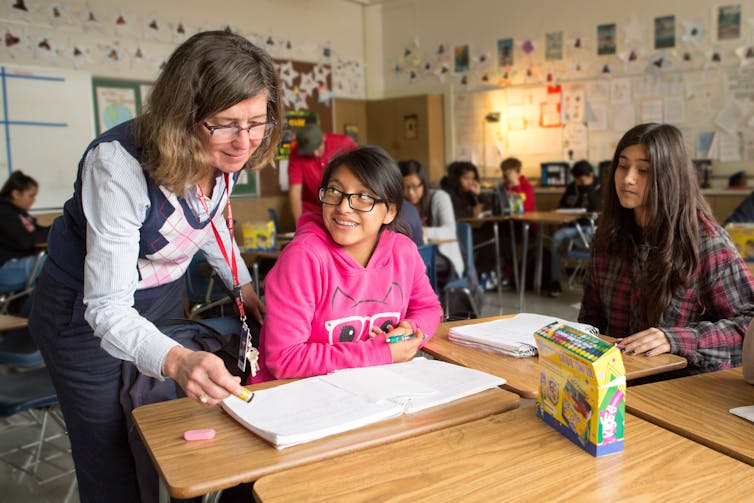
Students working at desks and a teacher is looking at one of their books.
With the week plan system, students can solicit help, or continue to progress autonomously.
(Allison Shelley/The Verbatim Agency/EDUimages), CC BY-NC

Our project was also positively received by an education assistant (EA) supporting a student with a disability in the classroom. The project gave the EA explicit direction on what the student had to work on, the time frame and the resources. This shows how the week plan method structures classroom life for the support staff.

On the other hand, there were students who didn’t like the approach, as they preferred the teacher to tell them what to do and when. This was useful knowledge for us, as many students are accustomed to direct instruction. The teacher was consequently able to do more “scaffolding” — breaking down instruction into smaller chunks or systems for tackling a project.

For example, she would go over the plan with a student and discuss which task could be first and how to order the rest. She checked in more often. Students could increasingly gain more comfort and autonomy with this approach.

Self-directed learning

How might such approaches grow? The pillars of inclusion in a school are often the principal and the special education teacher, or learning support teachers.

Optimally, effective leadership and support from educational leaders — in concert with learning opportunities and resourcing for teachers — encourages them to challenge the often-difficult reality of children with disabilities in the regular classroom and respect their right to participation and belonging.

The Conversation

Cornelia Schneider does not work for, consult, own shares in or receive funding from any company or organisation that would benefit from this article, and has disclosed no relevant affiliations beyond their academic appointment.

ref. How alternative teaching models can foster inclusive classrooms – https://theconversation.com/how-alternative-teaching-models-can-foster-inclusive-classrooms-264938

11 years after the Parliament Hill shooting, is Canada doing enough to tackle political violence?

Source: The Conversation – Canada – By Kevin Budning, Postdoctoral Research Fellow, National Security, Carleton University

Wednesday marks the 11th anniversary of the Parliament Hill shooting, when an Islamist-inspired extremist, Michael Zehaf-Bibeau, stormed Canada’s War Memorial and Parliament Hill, killing one soldier and injuring three other people.

The shooting — the worst attack on Parliament Hill since a failed bomb attempt in 1996 — sent shock waves throughout Canada, as well as internationally. It not only exposed the glaring security vulnerabilities on Parliament Hill but also marked a new reality for Canadians: political violence, long considered a distant threat, had arrived at home.

Eleven years later, many of the lessons Canada should have learned have not yet been put into action. With a marked rise in political polarization and violent attacks, it’s past due for Canada to strengthen its efforts to protect elected officials.

Extremism in Canada

The Canadian Security Intelligence Service (CSIS) classifies three distinct types of extremism: religious, ideological and political. While faith and grievance-based violence continue to make up the lion’s share of incidents in Canada, the threat of politically motivated violent extremism has steadily increased in recent years.

CSIS defines such extremism as “the use of violence to establish new political systems or new structures or norms within existing systems.” This definition, however, is murky in practice, since many attacks target political institutions but are motivated by either an ideological or religious grievance rather than explicit political goals.

In the case of the Parliament Hill shooting, the perpetrator committed the attack in part due to his discontent with Canada’s foreign policy in the Middle East. Though religiously motivated, his actions had political intent.

Likewise, the 2014 shooting in Moncton, N.B. that left three officers killed and two others injured, along with the 2020 vehicle ramming at the gates of the prime minister’s residence in Ottawa, were both committed by far-right extremists. While CSIS correctly classified the attacks as ideologically motivated, they too were, at their core, political.

Regardless of an attacker’s motive — ideological, religious or political — elected officials are increasingly in the line of fire.

According to the Privy Council Office, former prime minister Justin Trudeau and his cabinet faced 337 threats in 2024 alone, up from just three five years earlier.

The same report showed the number of death threats rose from zero in 2019 to 56 in 2022, and 26 in the first half of 2024. When including incidents directed at MPs across party lines, the true scale of the problem is likely much greater.

The global threat

Rising political violence is a global trend. In 2024, more than 2,600 acts of violence targeted local officials across 96 countries, according to the Armed Conflict Location & Event Data Project.

Similarly, Freedom House, a non-profit organization aimed at strengthening democracy and protecting human rights, reported that nearly 40 per cent of countries experienced election-related violence in 2024. Politicians were attacked in at least 20 nations.

The motives behind these attacks were not monolithic; they ranged from a long list of grievances rooted in xenophobia, gender-based hostility, conspiracy theories, anti-authoritarianism, religious extremism and other perceived social or political injustices.

In the past several years, two British MPs, Jo Cox and David Amess, were killed; former Japanese Prime Minister Shinzo Abe was assassinated; South Korean opposition leader Lee Jae-Myung was stabbed; Slovakian President Robert Fico was seriously wounded in a shooting; and former Ukrainian parliament speaker Andriy Parubiy was shot dead.

The United States has been particularly affected by political violence, with at least 300 cases recorded since the Jan. 6, 2021, storming of the U.S. Capitol. According to the Centre for Strategic and International Studies, plots against government targets in the past five years are nearly triple what they’ve been in the past 25 years combined.

The most notable include two failed assassination attempts on U.S. President Donald Trump in 2024, and the killing of Minnesota state representative Melissa Hortman and fatal shooting of right-wing commentator and political activist Charlie Kirk this year.


Read more:
How Charlie Kirk became a pioneering MAGA political organizer on campuses


A call to action

The Parliament Hill shooting anniversary reminds us that the threat of political violence has not diminished over the past decade — it’s grown.

Despite the implementation of some security measures — such as combining three disparate security services into the Parliamentary Protective Service, expanding the armed security presence on Parliament Hill and offering the installation of security systems and mobile panic buttons for elected officials — MPs still lack sufficient protection.

Instead of being reactive in the aftermath of any future tragedies, Canada must make proactive investments to safeguard people and institutions likely to be targeted.

That means enhancing screenings before meetings, increasing access to safe rooms, bolstering security at public events, improving emergency response planning and using protective details and physical security judiciously — that is, erring on the side of caution rather than waiting for threats to escalate.

Canada should also strengthen its intelligence and law enforcement communities to counter the evolving threat. This includes:

  • Expanding open-source intelligence capabilities to better execute the goals laid out in Canada’s national strategy on countering radicalization to violence;
  • Enhancing co-ordination with municipal police forces and hate-crime units;
  • Ensuring the legal consequences for political violence and intimidation serve as genuine deterrents;
  • And learning best practices from countries like Iceland, Ireland, New Zealand and Australia, which ranked highest on the 2024 Peace Index.

Protecting Canada’s elected officials from political violence is essential, but it must never compromise a fundamental tenet of democracy: the public’s access to their leaders. Striking this balance will likely remain the greatest challenge for decision-makers, and one they simply cannot afford to get wrong.

The Conversation

Kevin Budning does not work for, consult, own shares in or receive funding from any company or organisation that would benefit from this article, and has disclosed no relevant affiliations beyond their academic appointment.

ref. 11 years after the Parliament Hill shooting, is Canada doing enough to tackle political violence? – https://theconversation.com/11-years-after-the-parliament-hill-shooting-is-canada-doing-enough-to-tackle-political-violence-265932

Do dogs behave differently during an owner’s pregnancy? Many dog owners think so

Source: The Conversation – Canada – By Catherine Reeve, Post doctoral fellow, Mount Saint Vincent University

From getting extra cuddles to vigilant protection, many expectant parents claim their dogs behave differently during pregnancy — sometimes even before the person knew they were pregnant themselves.

Dogs have shared our lives for around 35,000 years, and in that time, they’ve become remarkably attuned to us, picking up on our behaviour, communication, emotions and even our mental and physical health.

Pregnancy, meanwhile, brings about all sorts of physical, emotional and lifestyle changes. For dogs, that might mean fewer walks or play sessions, shifts in their owner’s mood or scent and even changes to the home environment. It’s no wonder, then, that dogs might respond to a pregnancy with changes in their own behaviour.

But how common are these reports? And what kinds of behaviour changes do owners actually notice? Are there any factors that seem to be related to whether dog owners report that their dogs’ behaviour changed when the owner became pregnant?

As a researcher in the field of dog behaviour and human-animal interactions, I wanted to explore this phenomenon further to help us understand how attuned dogs may be to the people they live with, and the depth of the human-animal bond. So my research team and I were the first to systematically document this phenomenon.

Surveying dog owners

We surveyed 130 people who owned a dog while pregnant with questions about their pregnancy, their dogs’ behaviour and their relationship with their dog.

More specifically, we first asked participants about their dogs’ behaviour before they became pregnant. We presented them with five behaviour categories: attention seeking, guarding with familiar people, guarding with unfamiliar people, fear/anxiety towards the owner and fear/anxiety towards other dogs.

Each category contained a list of behaviours that characterized that category, and we asked participants to select any behaviours their dog typically displayed within that category. For example, the attention seeking category contained behaviours like “”cuddling you” and “sniffing you,” whereas the guarding around familiar people category contained behaviours like “moving between you and a familiar person” and “growling at a familiar person.”

Then, we asked participants if they believed that their dogs’ behaviour changed during their pregnancy. If they answered yes, we asked them if they believed their dogs’ behaviour changed before they were aware they were pregnant. We then presented them with the same five categories of behaviours described above and asked them to select those behaviours they believe their dog displayed during their pregnancy.

What we found

Nearly two-thirds (64.5 per cent) of our participants reported that their dogs’ behaviour changed when they became pregnant. A further 26.9 per cent of participants reported that they believed their dogs’ behaviour changed before they were aware that they were pregnant.

When we compared owners’ reports of their dogs behaviour during pregnancy compared to before pregnancy, four out of the five categories of behaviours showed significant increases during pregnancy: attention seeking, guarding with familiar people, guarding with unfamiliar people and fear/anxiety towards other dogs.

Attention seeking had the greatest increase, with 67.1 per cent of participants reporting more attention-seeking behaviours during pregnancy compared to before pregnancy.

When we analyzed whether pregnancy variables or dogs’ behaviour before pregnancy could help predict which dogs’ behaviour would change later, we found that owners who described their dogs as more protective around unfamiliar people before pregnancy were also more likely to report changes in their dogs’ behaviour during pregnancy.

Conversely, participants who reported that their dogs showed more fear/anxiety towards other dogs were less likely to report that their dogs’ behaviour changed during pregnancy.

Why it matters

This study was the first to systematically show that many dog owners believe their dogs’ behaviour changes during pregnancy. While our findings rely on owners’ perceptions, and we know people aren’t always spot-on when interpreting their dogs’ behaviour, these insights are still valuable. They help reveal whether this is a common enough experience to explore further, and they remind us that what owners believe about their dogs can shape how they care for them.

Understanding which behaviours are most often reported can also help expectant owners better prepare both themselves and their dogs for the transition ahead. That might mean keeping to a predictable walk schedule (with a little help from friends or family), setting up calm retreat spaces and rewarding relaxed behaviour.

Pregnancy dramatically changes the lives of expectant parents, and many dog owners see their dogs change with it. Understanding what dog owners notice about their dogs’ behaviour can help families support themselves and their dogs through this transition, strengthening the bond that has evolved over thousands of years.

The Conversation

Catherine Reeve receives funding from the Social Science and Humanities Research Council.

ref. Do dogs behave differently during an owner’s pregnancy? Many dog owners think so – https://theconversation.com/do-dogs-behave-differently-during-an-owners-pregnancy-many-dog-owners-think-so-266552

Marineland’s decline raises questions about the future of zoo tourism

Source: The Conversation – Canada – By Ann-Kathrin McLean, Assistant Professor, School of Tourism and Hospitality Management, Royal Roads University

Thirty beluga whales are at the risk of being euthanized at the now-shuttered Marineland zoo and amusement park in Niagara Falls. Marineland said in a letter to Canada’s Fisheries Minister Joanne Thompson it will have to euthanize the whales if it doesn’t receive the necessary financial support to relocate them.

The park has come under intense scrutiny recently due to the ongoing struggle to relocate its remaining whales amid financial struggles, a lack of resources and crumbling infrastructure.

Canada passed the Ending the Captivity of Whales and Dolphins Act in 2019 that prohibits whales, dolphins and porpoises from being taken into captivity. However, the law does not apply retroactively, meaning whales already held in facilities such as Marineland were allowed to remain there.

Marineland, which opened in 1961 in Canada, was once a massive tourism attraction that drew up to 1.2 million visitors annually to see its choreographed aquatic shows. But the park has been closed to the public since the end of summer 2024 after years of controversy and lawsuits.

The park’s reputation has unravelled over the years following a string of beluga whale deaths and other allegations of animal mistreatment.

Marineland’s decline is emblematic of the broader debate over zoo tourism and the ethics of keeping animals in captivity for entertainment.

Understanding zoo tourism

There are 23 accredited zoos in Canada. Accreditation is assigned through Canada’s Accredited Zoos and Aquariums (CAZA), a not-for-profit organization that ensures the health and welfare of captive wildlife with a mission of “inspiring a future where wildlife and people thrive together.”

Zoo tourism is an industry that is both economic and culturally significant in Canada. Roughly 1,520 people are employed in zoos across Canada, which attracted nearly four million visitors in 2020.

But even accredited facilities are not immune to ethical and welfare concerns. In 2022, the B.C. SPCA opened an investigation into the Vancouver Aquarium and Greater Vancouver Zoo following allegations of animal cruelty. Marineland, another accredited zoo, has also appeared to struggle with providing adequate care for its animals in recent years.

The ethics of zoo tourism have come under increasing scrutiny as a result of incidents like these. Critics argue animals and marine life in zoos and parks should not be viewed solely as sources of human entertainment, but as beings that deserve ethical stewardship.

Conservation, education-focused facilities

Zoo tourism must shift to providing educational and research opportunities to shape the way people think about zoo tourism. Across Canada, several facilities are redefining what ethical captivity can look like.

Ecological reserves and conservation parks such as the BC Wildlife Park and the Raptors Centre are examples of educational conservatories for animals.

The BC Wildlife Park in Kamloops was recently biosphere-certified, a designation that recognizes its commitment to sustainability, wildlife conservation and alignment with the 17 United Nations sustainable development goals.

Further north, the ethos of the Yukon Wildlife Preserve is firmly rooted in the principles of animal welfare and ecological conservation. Established in 2003 on the site of a former game farm, the preserve focuses on the rehabilitation and preservation of animals that are native to the region. Its mission includes cultivating “reciprocal, respectful relationships between people and the natural world.”

Reciprocity between species is a concept that most people are not thinking about when visiting a zoo or aquarium. The relationship between visitors and animals is starting to get re-examined in the public consciousness.

As this concept gains traction, institutions like the Yukon Wildlife Preserve are working to ensure encounters between visitors and wildlife contribute to animal welfare, education and ecological understanding.

Toward a more ethical future for zoo tourism

We cannot undo the past but we can influence the future of animal welfare and conservation. Efforts are already underway to redefine how wildlife is experienced and protected.

In British Columbia, the Fish & Wildlife Compensation Program recently acquired a 274-acre property dedicated to creating a humane habitat for rescued grizzly bears. In Victoria, the Parkside Hotel & Spa is part of an initiative to raise funds to support dolphin rescue and rehabilitation work worldwide.

Innovations like hologram zoos being piloted in Ontario, Australia and China demonstrate how technology could replace live animal performances.

Public attitudes are shifting as people become more aware of ecological protection and animal welfare. What has clearly fallen out of public favour are animals trained to perform in captivity for their food and our entertainment.

The transformation of aquariums and zoos will not happen overnight. But continued investment in ecological education and public involvement can help create a more balanced relationship between humans and wildlife. A balanced approach to zoo tourism will require conservation efforts by experts in the field of research, education and animal well-being.

The Conversation

Ann-Kathrin McLean is affiliated with Tourism and Travel Research Association Canada (TTRA).

Moira A. McDonald is affiliated with Tourism and Travel Research Association Canada (TTRA).

Carina Yao and Thomas Worry do not work for, consult, own shares in or receive funding from any company or organisation that would benefit from this article, and have disclosed no relevant affiliations beyond their academic appointment.

ref. Marineland’s decline raises questions about the future of zoo tourism – https://theconversation.com/marinelands-decline-raises-questions-about-the-future-of-zoo-tourism-266672

Opa BBVA-Banco Sabadell: ¿un fracaso anunciado?

Source: The Conversation – (in Spanish) – By Josep Burgaya, Decano de la Facultat de Empresa y Comunicación, Universitat de Vic – Universitat Central de Catalunya

A menudo, lo que mal comienza mal acaba. Diecisiete meses después de su lanzamiento, y tras un sinfín de campañas publicitarias nunca vistas, la opa hostil del BBVA al Banco de Sabadell ha terminado en fracaso tras haber tenido en vilo al sistema financiero español y, de manera especial, a los mercados.

Con la adquisición de un saneado banco mediano, el banco vasco pretendía adquirir una dimensión que le pudiera afrontar una competencia directa con CaixaBank y el Banco Santander. Su fracaso tiene efectos de prestigio más allá de los financieros. Pierde reputación, al salirle mal una apuesta tan arriesgada, y refuerza a sus contrincantes, especialmente al Santander, como referencia sólida para los inversores internacionales.


Leer más:
La OPA del BBVA sobre el Sabadell y el sistema bancario español


Errores estratégicos

La estrategia y la promoción de la opa se centró únicamente en poner en valor la dimensión que se adquiriría, sin entender que tanto para los accionistas como para los inversores, no es fundamental el tamaño del banco o que encabece los ránquines sino que sea eficiente, esté saneado y además reparta buenos dividendos. Esas son sus expectativas y el Banco de Sabadell las cumplía con creces. Además, la defensa del banco catalán consistió en compromisos de reparto de beneficios muy atractivos.

La opa quedó cuestionada de entrada no solamente por su carácter hostil y sus formas agresivas, sino por intentar crecer con un buen banco sin pagar un precio atractivo, como una suerte de ganga ante las expectativas de revalorización bursátil que este tenía.

Los accionistas esperaban una segunda vuelta de la oferta, con un precio mucho más atractivo, que ya no ha sido posible al no haber convencido ni siquiera al 30 % del accionariado. El mercado no vislumbró los teóricos beneficios de las sinergias ofrecidas por el BBVA, más allá de una evidente disminución de plantillas con cierre de oficinas y despidos.


Leer más:
Ocho mil despidos y 1 500 oficinas menos: un resultado previsible de la fusión de CaixaBank y Bankia


Tras el anuncio de la opa fallida, la reacción positiva de la bolsa con relación al BBVA tiene que ver con el compromiso inmediato de repartir dividendos pero también con que los inversores no estaban convencidos ni compartían los hipotéticos beneficios que iba a conllevar toda la operación. Muy especialmente los accionistas extranjeros vieron en este intento de fagocitación una batalla sin mucho sentido económico y financiero.

En busca de gigantes bancarios

Quizás el peor error estratégico fue no considerar los aspectos geopolíticos y sociales de la operación, así como su inconveniente ubicación en el tiempo.

Aunque la UE plantea que Europa necesita gigantes bancarios que puedan competir con los grandes bancos estadounidenses, su enfoque no está dirigido a crear grandes bancos nacionales sino a impulsar fusiones de carácter transnacional dentro del continente. De haber triunfado la fusión entre BBVA y Sabadell la competencia bancaria en España se habría devaluado aún más de lo que ya está.


Leer más:
Los porqués de la concentración bancaria de CaixaBank y Bankia


Razón social, razón política

Pero, además, las fusiones bancarias afectan al tejido social: se pierde la calidad de servicio, disminuye el crédito a las pequeñas empresas y se encarece el dinero.

Cuanto más se ha insistido en la competitividad resultante de la concentración más se ha evidenciado una falta de empatía con los usuarios que ya hemos visto anteriormente en la banca (vale recordar la campaña ciudadana promovida por el médico jubilado valenciano Carlos San Juan para mantener la atención presencial a las personas mayores en las sucursales bancarias) y que afecta a su imagen de marca y su reputación.


Leer más:
Cómo deben gestionar los bancos (y cualquier empresa) su comunicación con la gente mayor


Tampoco resultó muy recomendable plantear la opa a tres días de las elecciones autonómicas catalanas. Tras la crisis de 2008 que provocó la pérdida de muchas cajas de ahorro regionales (entre ellas catalanas), la sensación era que el Banco Sabadell era la última entidad financiera ubicada plenamente en este territorio, teniendo en cuenta que CaixaBank juega en otra liga.

Ningún partido político ni organización patronal autonómica iban a dar el visto bueno a la operación. Ni el gobierno central, dada su poca sintonía con la propuesta del BBVA.

De cara al futuro

Jamás una operación de posible compra bancaria había tenido en España la repercusión que ha tenido esta. Fue como si a partir de los mensajes publicitarios, todos, ciudadanos y accionistas, tuviesen que tomar partido. Esta vez el dinero, tan dado al sigilo, también sucumbió al espectáculo.


Leer más:
Comunicación de la opa del BBVA sobre el Banco Sabadell: las emociones ganan a las razones… de momento


El fracaso de la operación no implica para las entidades involucradas volver, como si tal cosa, a la casilla de salida.

Más allá de contener el malestar con buenos dividendos, la dirección del BBVA tiene que plantear una estrategia de futuro que le permita recuperar su reputación. No es probable que se salga de la estrategia de crecimiento, pero seguramente ahora tendrá que plantearlo hacia afuera.

Para el Banco Sabadell, los efectos a corto y medio plazo de la opa fallida también serán significativos. Ha comprometido unas remuneraciones insólitas a los accionistas a cambio de descapitalizarse vendiendo el TSB británico al Banco Santander.

El banco vallesano necesita un refuerzo que, por dimensión, lo haga menos opable. Otras instituciones bancarias españolas de menor envergadura –Abanca, Unicaja, Ibercaja– quedan ahora en el punto de mira.

The Conversation

Josep Burgaya no recibe salario, ni ejerce labores de consultoría, ni posee acciones, ni recibe financiación de ninguna compañía u organización que pueda obtener beneficio de este artículo, y ha declarado carecer de vínculos relevantes más allá del cargo académico citado.

ref. Opa BBVA-Banco Sabadell: ¿un fracaso anunciado? – https://theconversation.com/opa-bbva-banco-sabadell-un-fracaso-anunciado-267768

Should Boko Haram fighters be given a second chance in society? We asked 2,000 young Nigerians

Source: The Conversation – Africa (2) – By Amélie Godefroidt, Assistant Professor in Conflict Management, IÉSEG School of Management; KU Leuven

Across the world, the question of how to deal with former fighters remains urgent. From Nigeria and Iraq to Syria and the Sahel, governments are wrestling with how to bring people who once fought for violent groups back into society. Reintegrating ex-fighters – after appropriate punishment – is unavoidable. This is because alternatives such as indefinite detention, capital punishment or abandonment are unsustainable and risk fuelling future cycles of violence.

Yet local communities often seem to resist welcoming ex-combatants back.

How, then, can societies balance the need for reintegration with local resistance?

As scholars of public opinion during and after episodes of political violence, we set out to better understand these tensions. We have years of fieldwork experience in Nigeria and other conflict-affected settings and, together with our local team, we conducted a study to assess citizens’ views on reintegration. How risky would it be to take a certain person back? And does this person deserve a second chance?

Our research was conduced in Nigeria, where Boko Haram’s insurgency has devastated communities for more than two decades. As the group has weakened and thousands of fighters have surrendered, the government has launched programmes to reintegrate them into civilian life. These initiatives have achieved limited success so far, as many citizens remain wary and resistant to their return.

We surveyed around 2,000 young Nigerians and asked them to evaluate different hypothetical profiles of former Boko Haram fighters. This allowed us to see how different characteristics shaped public preferences.

We found that respondents were more forgiving towards former fighters who were forced to join the insurgency and expressed remorse afterwards. They were less willing to reintegrate more militant and less repentant offenders.

Our findings speak to several high-level policy debates today. Nigeria continues to run reintegration programmes. While some returnees have successfully rejoined their communities, others have faced suspicion, threats, and even renewed displacement.

What we found

Three patterns stood out:

Why they joined matters.
People were far more open to reintegrating fighters who were forcibly recruited or joined as children than those who joined voluntarily – especially for ideological reasons. As one respondent put it:

Young fighters had little guidance or knowledge of what trouble they were going into.

What they do after leaving matters even more.
Former fighters who left voluntarily and took part in reconciliation efforts, especially cooperating with the police or army in their fight against Boko Haram, enjoyed much stronger public support. One respondent even went a step further, suggesting that

instead of a prison sentence, former militias should serve a period of compulsory community service rebuilding the states they have destroyed.

Some atrocities were harder to forgive.
As one participant put it:

The only precondition is that they have never taken a life. No killer deserves to be free, let alone get amnesty.

Still, our experimental results show this mattered less than one might expect: while people were reluctant to accept those who committed severe violence, the circumstances of joining and leaving weighed more heavily.

These same patterns also influenced whether people believed reintegration would succeed, and what punishments they thought appropriate. Fighters who were forced to join and left voluntarily were expected to reintegrate successfully and were more likely to be granted amnesty. Fighters seen as willing culprits who refused reconciliation were more often judged to deserve the death penalty.

Importantly, these patterns held broadly across different groups – whether respondents were Christian or Muslim, from the north or south, victims or non-victims of Boko Haram violence.

In short: willingness to forgive depended less on the violence of the past than on whether ex-fighters signalled remorse and a genuine commitment to peace today.

Why this matters

Our research suggests that reintegration and reconciliation is more likely to succeed when:

(1) Clear conditions are set. Linking reintegration to reconciliatory behaviour can reassure communities.

(2) Citizens are informed. Communication campaigns that explain how some fighters were coerced, or highlight the risks taken by those who defected, can reduce public resistance.

(3) Reconciliation is made visible. Publicising ex-fighters’ efforts to cooperate with authorities or support victims helps rebuild trust.

The lesson is simple but often overlooked: preparing societies for the return of ex-fighters is as important as preparing the fighters themselves. Without community buy-in, reintegration risks deepening divides instead of healing them.

The Conversation

Amélie Godefroidt received funding from the Research Foundation Flanders–FWO for this study.

ref. Should Boko Haram fighters be given a second chance in society? We asked 2,000 young Nigerians – https://theconversation.com/should-boko-haram-fighters-be-given-a-second-chance-in-society-we-asked-2-000-young-nigerians-266289

Pennsylvania’s budget crisis drags on as fed shutdown adds to residents’ hardships — a political scientist explains

Source: The Conversation – USA – By Daniel J. Mallinson, Associate Professor of Public Policy and Administration, Penn State

Pennsylvania Gov. Josh Shapiro’s first budget, in 2023, was not fully passed until mid-December. AP Photo/Daniel Shanken

While Americans across the country deal with the consequences of the federal government shutdown, residents of Pennsylvania are being hit with a double blow.

Pennsylvania has been without a state budget for over 100 days – and remains the only state currently operating without a budget.

As a political scientist at Penn State who studies state politics and policy, I see how Pennsylvania’s budget impasse has ripple effects that are compounded by the current budget problems in Washington.

Let’s look at the present budget problems in Pennsylvania and what we can learn from past battles over the state budget.

A double crisis

Double government budget crises, like the one Pennsylvania faces now, are rare. One reason is that 46 states, including Pennsylvania, begin their new fiscal year on July 1. The federal government’s fiscal year begins on Oct. 1. Even a state like Pennsylvania, that has had late budgets for eight of the last 10 years, would have to be very late in passing a budget for it to potentially coincide with a federal budget impasse. And, of course, federal government shutdowns do not happen all the time.

Men in suits shown in shadow underneath elaborate ceiling with arches
A group of Republican senators talk at the U.S. Capitol Building on Oct. 15, 2025, during a government shutdown that began Oct. 1.
Andrew Harnik via Getty Images

Pennsylvania’s Democratic Gov. Josh Shapiro faces a delicate political environment in Harrisburg – as he has since his first budget in 2023. The Democrats control the state House by a single seat, whereas the Republicans have a comfortable majority in the Senate.

The parties have been debating over the last several budget cycles how to handle funding surpluses – much of which came from Biden-era legislation like the Infrastructure Investment and Jobs Act – and when and how to deal with the inevitable end to those surpluses.

This year, the two sides are far apart on their views of the proper spending level.

The Democrats in the House passed a US$50.3 billion spending plan, but Senate Republicans want to keep state spending flat at $47.6 billion. The two sides have clashed over proposals surrounding school vouchers, marijuana legalization and more.

As for the federal government, Republicans have a trifecta – control of the White House, Senate and House of Representatives – but do not have the 60 votes in the Senate required to overcome a filibuster. Democrats have dug in over reversing cuts to health care from the earlier passed “one big beautiful bill” and expiring Obamacare subsidies.

There is little sign of an immediate end to either impasse.

In Pennsylvania, there is growing frustration on both sides about an inability to compromise. Nationally, House Speaker Mike Johnson has speculated that this may end up being the longest federal government shutdown in history. In neither case, though, does there seem to be a great deal of urgency in coming to a compromise.

Effects on Pennsylvania

These dual crises are affecting Pennsylvanians in many ways. The state government continues to function even without a budget, but counties, school districts and nonprofit organizations that rely on state funding are being forced to make difficult operating choices.

Some counties like Westmoreland and Northampton are beginning the process of furloughing employees. School districts are taking out loans, freezing hiring and deferring spending. The state already owes school districts more than $3 billion in missed payments for the past three months.

Woman reaches for loaf of bread on shelf that contains food products
Cozy Wilkins, 66, stocks the shelves at New Bethany, a nonprofit that provides food access, housing and social services, in Bethlehem, Pa., on July, 22, 2024.
Ryan Collerd/AFP via Getty Images

The social safety net is also fraying as social service organizations, like rape crisis centers and mental health providers, are also expending reserves, taking out loans and furloughing employees.

Then comes the federal shutdown.

Military families nationwide have been hit particularly hard, with many turning to food pantries to help meet their needs. The recent money maneuvers at the Department of Defense to pay active-duty and activated National Guard and Reserves personnel is temporary. The commonwealth also has the eighth-highest population of federal civilian employees, at over 66,000 who are not being paid.

Services like food banks are especially vulnerable in this situation, as they are seeing greater demand – which may increase due to federal workers going unpaid – but rely on both the state and federal governments for subsidies. Just this week, it was announced that Pennsylvanians buying health care through the state’s Affordable Care Act marketplace for 2026 should expect a 22% increase in premiums, on average. Part of that increase is due to expectations around the expiring Obamacare subsidies at the center of the Democrats’ demands in this shutdown.

All of these forces are coming together to pinch Pennsylvania residents.

Echoes of the past

While the compounding pain of the federal shutdown is unique, long budget delays in Pennsylvania are not.

In 2023, Gov. Shapiro’s first budget was not fully passed until Dec. 14. That budget was fundamentally delayed by the acrimonious implosion of a deal on school voucher spending between the governor and Senate Republicans. The budget negotiations ended after some horse-trading on specific programs, like removing the popular Whole-Home Repairs Program started during the COVID-19 pandemic but adding funding for lead and asbestos abatement in schools.

The difference between then and now, however, is that back then the governor and General Assembly agreed on the overall budget, but typical bargaining was needed to get the votes needed to pass the spending bills after the voucher blow-up. This time, the parties are almost $3 billion apart in what should even be spent.

In the end, however, both Pennsylvania and the federal government will pass budgets, and I expect that each will be the result of protracted negotiations over multiple spending items, as Americans have seen in the past. The question is: How much pain will citizens, nonprofits and local governments face in the interim?

Read more of our stories about Philadelphia and Pennsylvania, or sign up for our Philadelphia newsletter on Substack.

The Conversation

Daniel J. Mallinson does not work for, consult, own shares in or receive funding from any company or organization that would benefit from this article, and has disclosed no relevant affiliations beyond their academic appointment.

ref. Pennsylvania’s budget crisis drags on as fed shutdown adds to residents’ hardships — a political scientist explains – https://theconversation.com/pennsylvanias-budget-crisis-drags-on-as-fed-shutdown-adds-to-residents-hardships-a-political-scientist-explains-267382

Comment les trafiquants de cocaïne blanchissent l’argent des cartels

Source: The Conversation – France in French (3) – By Pierre-Charles Pradier, Maître de conférences en Sciences économiques, LabEx RéFi, Université Paris 1 Panthéon-Sorbonne

Le 4 mai 2016, la Banque centrale européenne (BCE) décide de cesser l’émission des billets de 500 euros. Le nombre de ces billets en circulation passe de 614 millions, fin 2015, à un peu moins de 220 millions, au milieu de l’année 2025. DerkachevArtem/Shutterstock

Pour blanchir l’argent tiré de la vente de cocaïne, les trafiquants ont longtemps convoyé leurs recettes en utilisant des billets de 500 euros confiés à des « mules ». La surveillance accrue et la raréfaction des grosses coupures ont conduit les réseaux de blanchiment à payer les trafiquants de drogue en cryptomonnaies et à expédier les espèces sur des routes plus tranquilles, comme celles menant à Dubaï (Émirats arabes unis).


Le marché de la cocaïne a explosé entre 2014 et 2023. La production en Colombie a été multipliée par plus de sept pour atteindre, selon l’Organisation des Nations unies contre la drogue et le crime (ONUDC), près de 2 700 tonnes.

En coulisse, les trafiquants de drogue trouvent des moyens tout aussi illicites pour payer leurs fournisseurs, leurs petites mains ou pour dépenser le fruit de leur commerce criminel. La solution utilisée : le blanchiment d’argent. On estime que 25 % des montants collectés doivent être blanchis.

Trois phases sont généralement nécessaires dans le blanchiment : le placement dans le système financier, l’empilement (ou layering) avec le but de perdre la trace de l’origine des fonds et, enfin, l’intégration, où l’argent apparaît désormais légitime. Cette typologie ne permet pas de comprendre que le blanchiment est parfois partiel, c’est-à-dire qu’on s’arrête à la première étape. Considérons un exemple.

Prenons l’argent tiré de la cocaïne en provenance du principal exportateur de la coca : la Colombie. Une partie est intégralement blanchie sur place, en réinjectant l’argent liquide dans des commerces légitimes – restaurants, salons de coiffure, etc. –, tandis qu’une autre partie sert à payer la marchandise. Pour ce faire, il a longtemps suffi de fournir des espèces – en billets de banque –, dont le blanchiment s’achevait en Colombie.

Contrebande d’espèces

En Europe, elles sont changées en billets de 500 euros par des complices travaillant dans des banques puis confiées à des mules d’argent. Ces dernières prennent l’avion avec des sommes de 200 000 à 500 000 euros. Cette contrebande d’espèces en vrac (bulk cash smuggling) est le maillon de la chaîne du trafic de drogue ayant bénéficié à l’apparition des cryptomonnaies dans le trafic de drogue.

Pour bien comprendre l’emploi des cryptomonnaies dans le blanchiment de l’argent de la drogue, il faut expliciter les modalités de la contrebande d’espèces en vrac. Un article de Peter Reute et Melvin Soudijn (le premier est criminologue et le second officier de renseignement dans la police néerlandaise) a permis de mesurer précisément les coûts de cette opération. Ils ont accédé aux documents comptables des trafiquants dans six affaires jugées pour des faits qui se sont déroulés entre 2003 et 2008. Ils totalisent 800 millions d’euros transportés entre les Pays-Bas et la Colombie.

Les coûts représentaient environ 3 % pour le changement des petites coupures en billets de 500 euros, autant pour rémunérer la mule, un peu moins pour son voyage. La surveillance importante de l’aéroport d’Amsterdam-Schiphol obligeait à prendre l’avion ailleurs en Europe. Si on tient compte des frais annexes, le seul transport de fonds à destination de la Colombie coûtait entre 10 % et 15 %, voire jusqu’à 17 % des montants déplacés.

Concrètement :

  1. La cocaïne part de Colombie.

  2. Elle est vendue par des intermédiaires en Europe.

  3. L’argent collecté de cette vente est changé en billets de 500 euros, moyennant 3 % de frais.

  4. Les billets de 500 euros sont confiés à des mules, moyennant 3 % de frais.

  5. Les mules voyagent vers la Colombie, moyennant 3 % de frais.

  6. L’argent liquide arrive en Colombie pour payer la drogue, puis est blanchi sur place, avec encore des frais.

Pour les auteurs, la réglementation anti-blanchiment réussit à augmenter significativement les coûts de la contrebande, notamment le transport, mais pas le prix de vente, puisque le marché de la cocaïne augmente chaque année en France. En France, les prévalences de consommation ont été multipliées par neuf depuis 2000. Pour pallier ces réglementations, les trafiquants misent sur le billet de 500 euros.

Fin des billets de 500 euros

Rebondissement le 4 mai 2016 : la Banque centrale européenne (BCE) décide de cesser l’émission des billets de 500 euros. Le nombre de ces billets en circulation passe de 614 millions, fin 2015, à un peu moins de 220 millions au milieu de l’année 2025).

« Il a été décidé de mettre fin de façon permanente à la production du billet de 500 euros et de le retirer de la série “Europe”, tenant compte des préoccupations selon lesquelles cette coupure pourrait faciliter les activités illicites », souligne la Banque centrale européenne.

Cette même année, un nouvel actif financier entre en trombe : le bitcoin.

Apparition des cryptomonnaies

À partir de 2016, face à la raréfaction des billets de 500 euros, le bitcoin va contribuer à reconfigurer les routes du trafic d’espèces.

Au lieu d’une filière intégrée où les espèces reviennent à la source de la drogue pour payer les livraisons, on assiste à une spécialisation. D’un côté, les trafiquants de drogue échangent leurs espèces contre des cryptomonnaies qu’ils utilisent pour payer leur approvisionnement en Colombie. De l’autre, une filière de blanchiment récupère les billets et les fait voyager sur des routes plus faciles, comme celles menant à Dubaï (Émirats arabes unis).

Comment sait-on cela ? Par exemple, grâce à l’opération Destabilize de la National Crime Agency britannique. Le dossier de presse décrit un réseau international de blanchiment, contrôlé par des Russes. Ils utilisaient une plateforme d’échange n’exerçant pas son obligation de vigilance, Garantex, pour les opérations en cryptomonnaies, et Dubaï pour les opérations en espèces.

Le réseau de blanchiment récoltait les espèces des trafiquants de drogue et les payait en cryptojetons (notamment en USDT-Tether), moyennant 3 % de frais seulement. Par comparaison avec les 10 % à 15 % que coûtait le transport en Colombie avant la mise en extinction des billets de 500 euros, c’est une économie de 70 % à 80 %.

Cadre de déclaration des cryptoactifs

Les cryptomonnaies – d’abord le bitcoin et, désormais, les stablecoins comme l’USDT-Tether – ont permis aux trafiquants de drogue d’économiser leur marge sur l’envoi d’espèces en choisissant les routes les plus sûres. Il est trop tôt pour savoir si l’augmentation considérable du trafic de drogue transatlantique, attestée par une enquête récente du Financial Times, est liée à cette innovation technique.

Concrètement, la nouvelle méthode suit cette nouvelle route entre les trafiquants de drogue et les réseaux de blanchiment :

  1. La cocaïne part de Colombie.

  2. Elle est vendue par des intermédiaires en Europe.

  3. L’argent collecté de cette vente est changé contre des cryptomonnaies USDT- Tether, moyennant 3 % de frais.

  4. Les cryptomonnaies USDT-Tether sont envoyées en Colombie pour payer la drogue.

  5. Pour le réseau de blanchiment, les espèces sont confiées à des mules, qui voyagent à Dubaï, moyennant 1 % de frais.

  6. À Dubaï, les espèces sont blanchies, moyennant 1 % de frais.

Législation contre le blanchiment par cryptoactif

On peut penser que l’application des règles antiblanchiment aux prestataires de services liés aux cryptoactifs, dans les pays signataires du Crypto-Asset Reporting Framework_, va compliquer le jeu des organisations criminelles… qui sauront pourtant trouver les moindres failles et les exploiter.

L’invention des cryptomonnaies a fait perdre des années dans la lutte contre la criminalité organisée, mais la « coalition des volontaires », comme la Suisse, les Bahamas, Malte ou la France s’organise enfin.

En France, la lutte contre le blanchiment d’argent est renforcée par une loi « visant à sortir la France du piège du narcotrafic », promulguée en juin 2025. Un parquet national spécialisé est créé. Des mesures sont mises en place, de la fermeture administrative des commerces de façade (par les préfets plutôt que les maires trop exposés), le gel des avoirs des narcotrafiquants ou contre le mix de cryptoactifs.

Mais les trafiquants s’adaptent pour éviter d’être pris, c’est ce que nous verrons dans un second article.

The Conversation

A travaillé pour la Direction de la Surveillance du Territoire dans les années 1990.

ref. Comment les trafiquants de cocaïne blanchissent l’argent des cartels – https://theconversation.com/comment-les-trafiquants-de-coca-ne-blanchissent-largent-des-cartels-265140

Cómo ver el cometa Lemmon, ya distinguible a simple vista

Source: The Conversation – (in Spanish) – By Josep M. Trigo Rodríguez, Investigador Principal del Grupo de Meteoritos, Cuerpos Menores y Ciencias Planetarias, Instituto de Ciencias del Espacio (ICE – CSIC)

En las próximas semanas podremos disfrutar de la contemplación –y, a la vez, tomar fotografías– de un brillante cometa visible al anochecer. Se trata del cometa C/2025 A6 Lemmon, descubierto el 3 de enero de 2025 por el astrónomo Carson Fuls en el marco del programa de seguimiento de cuerpos menores del Observatorio Mount Lemmon.

Para completar una órbita muy excéntrica, en la que puede llegar a distanciarse 36 000 millones de kilómetros del Sol, este cometa invierte unos 1 350 años. Por eso debemos espabilar e intentar verlo durante el próximo mes, antes de que se vuelva diminuto y se adentre de nuevo en el espacio profundo.

Pistas para encontrar el cometa Lemmon en el firmamento

Si nunca hasta ahora ha contemplado un cometa con sus propios ojos y, pese a no saber mucho de estrellas, desea intentar esa hazaña, ¡no desespere! Es posible verlo siguiendo algunas pistas.

La primera recomendación es buscar un entorno oscuro, alejado de las grandes urbes, en el que el cielo sea lo suficientemente oscuro. Elija, a ser posible, una noche despejada con el horizonte oeste libre de obstáculos, alejado de farolas y luminarias.

Lo ideal es empezar la contemplación del cielo justo al anochecer. Cuando comience a ver las primeras estrellas, localice sobre el horizonte noroeste la silueta de la Osa Mayor. Se trata de una agrupación de siete estrellas también conocidas como El Carro, por su forma. Las dos más brillantes las tendremos más al norte y, trazando una linea que las una hacia arriba, nos ayudará a situar ese astro tan famoso conocido como la estrella Polar.

Recorrido del cometa entre las constelaciones visibles al atardecer entre mediados de octubre y noviembre de 2025. Debe interpolarse la posición del cometa con las marcas para las fechas indicadas. La Imagen adaptada por el autor a partir de una carta realizada con el programa Stellarium.
Observatorio Astronómico Nacional-IGN

Pues bien, una vez ubicada la Osa Mayor en el firmamento, trace una línea curva a partir de su cola (cuya “última estrella” se denomina Alkaid) hacia la estrella más brillante de esa región celeste: Arturo. Nos va a resultar muy útil encontrarla porque el próximo martes 21 de octubre, coincidiendo con su mayor proximidad a la Tierra (101 millones de kilómetros), el cometa se nos presentará en la constelación de Boyero, cercano a Arturo.

A simple vista o con prismáticos

El cometa Lemmon es perfectamente visible a simple vista en entornos oscuros, sobre todo desde España, México y centroamérica, dado que se desplaza por el hemisferio norte celeste. Alcanzará una magnitud estelar entre la más luminosa estrella Alkaid, en la cola de la Osa Mayor, y la más débil estrella Korneforos, en la constelación de Hércules, aunque podría ser incluso más brillante.

Si nuestro entorno está contaminado lumínicamente, podremos ver el cometa empleando unos prismáticos astronómicos, preferentemente de 7 a 12 aumentos. Lo ideal es apuntarlos sobre la estrella Arturo y desplazarlos hacia Alkaid hasta encontrar el cometa. Podemos repetir ese recorrido con los prismáticos lentamente tantas veces como sea necesario hasta que topemos con una estrella nebulosa dotada de una cola en dirección contraria al Sol.

El cometa y su colorida cola

En las últimas semanas ha crecido exponencialmente el número de imágenes espectaculares del cometa que circulan por las redes. Muchos astrofotógrafos se apasionan por estos objetos, particularmente cuando son astros tan cambiantes.

En el caso del cometa Lemmon, lo más llamativo es que se acerca al Sol y comienza a sublimar sus hielos conforme se calienta su superficie, por lo que en las fotografías vemos que posee una cola azulada llamada iónica, ondulante y capaz de distorsionarse bajo el influjo del viento solar.

El cometa 2025 A6 Lemmon desde la ermita de Santa Bàrbara, Sant Feliu de Buixalleu, Girona. Telescopio Askar FRA400 a 280 mm con un cámera Player One Ares-C PRO. Imagen reproducida con permiso del autor:
Pau Montplet i Sanz (ACDAM/AstroMontseny)

La cola se extiende muchos grados desde la envoltura difusa del cometa, llamada coma. Además, es de esperar que el cometa Lemmon desarrolle una cola de polvo producida por las partículas micrométricas contenidas en los hielos que se subliman. Las diminutas motas de polvo reflejan la luz del Sol por lo que, a mayor número de partículas, más luminosa será esa otra cola, más amarillenta y difusa, fácil de distinguir.

En ese mapa celeste del Observatorio Astronómico Nacional (OAN-IGN) comprobamos que el cometa se va desplazando noche tras noche hacia el oeste. A finales de octubre el cometa pasará entre las estrellas Korneforos, segunda estrella más luminosa de la constelación de Hércules, y la estrella Unukalhai, la más destacada de Serpens.

A mediados de noviembre el cometa se irá acercando a Antares, la estrella más luminosa del Escorpión (Scorpius).

En un cielo muy iluminado, los cometas pierden contraste. Por eso, estos días tenemos la excusa perfecta para alejarnos de las grandes ciudades y sumergirnos por unos minutos en la contemplación del cielo y de un cometa único.

The Conversation

Josep M. Trigo Rodríguez recibe fondos del proyecto del Plan Nacional de Astronomía y Astrofísica PID2021-128062NB-I00 financiado por el MICINN y la Agencia Estatal de Investigación.

ref. Cómo ver el cometa Lemmon, ya distinguible a simple vista – https://theconversation.com/como-ver-el-cometa-lemmon-ya-distinguible-a-simple-vista-267552