Peace in Sudan? 3 reasons why mediation hasn’t worked so far

Source: The Conversation – Africa (2) – By Samir Ramzy, Researcher, Helwan University

Sudan has been embroiled in a civil war between the army and the paramilitary Rapid Support Forces since April 2023, sparked by a power struggle between the two parties. The war has displaced more than 14 million people. Over half the population of about 50 million is facing acute levels of hunger.

Several mediation initiatives have been launched since the start of the war, with limited success. The African Union has also been unable to get the main warring parties to agree to a permanent ceasefire.

The four countries leading the main peace mediation effort (known as the Quad) are the US, Egypt, Saudi Arabia and the United Arab Emirates. They issued a joint statement in September 2025, calling for a ceasefire in Sudan and offering a roadmap to end the internal conflict.

I’ve been researching Sudan for over a decade, and in my view, these countries’ capacity to deliver a final political settlement for Sudan is severely constrained.

The prospects for peace rest on the resolution of three factors:

  • the sharp differences between the Sudanese army and the Quad over who should participate in post-war politics

  • a widening rift between the main protagonists in the war on the terms of ending it

  • internal divisions within the Quad – particularly between Egypt, the UAE and Saudi Arabia – over how to balance support for the army, curb Islamist influence and manage competing regional interests.

The Quad’s plan called for an immediate ceasefire, a three-month humanitarian truce and an inclusive political process to resolve disputes within nine months.

The statement was initially welcomed by the Rapid Support Forces and Sudan’s army leaders.

However, follow-up meetings between the Quad and representatives of the warring parties have failed to translate any of these proposals into action.


Read more:
Sudan’s rebel force has declared a parallel government: what this means for the war


Meanwhile, the paramilitary troops and their allies captured the city of El-Fasher in North Darfur after a bloody 500-day siege. This was the army’s last major stronghold in Darfur.

Darfur encompasses nearly 20% of Sudan’s territory. It borders Libya, Chad and the Central African Republic. The capture has fuelled concerns of a de facto partition of the country in the western region.

Against this backdrop, the Quad’s latest initiative seems unlikely to achieve more than a fragile ceasefire.

The obstacles

Efforts to broker peace in Sudan are hindered by three key challenges.

1. Diverging agendas between the Quad and the Sudanese army

Despite broad similarities between the Quad’s roadmap and a proposal the army submitted in March 2025 to the United Nations, key differences remain.

The core disagreement lies in the design of the political process to follow the ceasefire. The Quad insists that Islamist factions should be excluded from consultations over fears that these factions have close ties to terrorist groups and Iran. The army’s proposal, by contrast, opposes the exclusion of any party.

The military leadership has alliances with elements of the former Islamic Movement. Its fighters still help stabilise the army’s frontlines.

2. A widening gap between the army and Rapid Support Forces on the terms of ending the war

The army’s roadmap implicitly allows the paramilitary troops to remain in parts of Darfur for up to nine months, provided that local authorities consent. However, it also requires the withdrawal of the group from El-Fasher and North Kordofan.

The Rapid Support Forces’ behaviour on the ground reveals a very different mindset. Rather than preparing to withdraw, the group has expanded militarily in North Kordofan and intensified its drone attacks on Khartoum and other regions.

At its core, the dispute reflects conflicting end goals. The paramilitary group seeks to enter negotiations as an equal to the army. It wants a comprehensive restructuring of the armed forces. The army insists that it should be the only unit that supervises any reform of Sudan’s military institutions – the very issue that triggered the outbreak of war in 2023.

3. Internal divisions within the Quad

The Quad’s own cohesion has been undermined by internal rifts that have derailed several meetings. The most visible divide lies between Egypt and the UAE.

Cairo leans towards the army, seeing it as the guarantor of Sudan’s state institutions against collapse. Abu Dhabi prioritises dismantling the influence of Islamist leaders as the main precondition for peace.

Saudi Arabia is wary of Emirati involvement, especially since the Sudanese army has repeatedly rejected UAE mediation and the Rapid Support Forces has attacked Egyptian policy towards Sudan.

Washington has tried to manage these tensions by limiting direct mediation roles for Egypt, Saudi Arabia and the UAE while keeping them within the broader negotiation framework. These nations have significant leverage over the warring factions.

How Sudan got here

Sudan’s fragile transition began after the ousting of long-time ruler Omar al-Bashir in 2019.

An uneasy power-sharing arrangement between the army and civilian leaders collapsed in 2021 when army chief Abdel Fattah al-Burhan and Rapid Support Forces leader Mohamed Hamdan Dagalo, known as Hemedti, jointly seized control in a coup. Their alliance fractured two years later and sparked the 2023 civil war.

Despite international pressure, neither side has given in or gained a decisive advantage since.

The conflict has been devastating for Sudan’s population of 50 million. Death toll reports since the start of the war have varied between 20,000 and 150,000 people. The country is facing the world’s worst displacement crisis, and health and education systems have collapsed. Further, more than 12 million girls and women, and an increasing number of men, are at risk of sexual violence.

Is breakthrough still possible?

Despite existing divisions, shifting dynamics on the ground could still produce a limited breakthrough.

The worst scenario for the military would be the paramilitary group’s renewed advance into territories it had been pushed out of.

That prospect might push army leaders to accept a preliminary ceasefire. This would allow the army to regroup and consolidate existing positions without conceding ground politically.

For the Rapid Support Forces, the calculation is different. After spending more than 18 months battling to capture El-Fasher, the group recognises that advancing further towards the capital would come at a high human and political cost. A temporary truce, therefore, could allow it to entrench its governance structures in Darfur and strengthen its military presence there.

In this sense, a short-term ceasefire remains the most practical outcome for both sides. Washington’s eagerness to secure conflict-ending deals is likely to push the Quad towards this scenario.

But a final political settlement in Sudan remains distant.

For now, the most any diplomatic initiative can achieve is to pause the fighting, not to end the war, as it remains difficult to bridge the political gaps between Sudanese powers.

The Conversation

Samir Ramzy does not work for, consult, own shares in or receive funding from any company or organisation that would benefit from this article, and has disclosed no relevant affiliations beyond their academic appointment.

ref. Peace in Sudan? 3 reasons why mediation hasn’t worked so far – https://theconversation.com/peace-in-sudan-3-reasons-why-mediation-hasnt-worked-so-far-268541


Lutte contre le paludisme : les scientifiques découvrent une faille cachée dans le système de défense du parasite

Source: The Conversation – in French – By Tawanda Zininga, Lecturer and Researcher, Stellenbosch University

Le paludisme reste l’une des maladies infectieuses les plus dévastatrices au monde, causant plus d’un demi-million de décès chaque année. En Afrique, la maladie est principalement causée par un parasite transmis par les moustiques, le Plasmodium falciparum.

Lorsque le parasite envahit le corps humain, il se retrouve dans un environnement hostile : forte fièvre, attaques du système immunitaire et stress causé par les médicaments antipaludiques. Il parvient néanmoins à survivre grâce à un système de défense interne composé de molécules « auxiliaires » appelées protéines de choc thermique.

Parmi celles-ci, un groupe puissant appelé petites protéines de choc thermique agit comme la dernière ligne de défense du parasite. Ces molécules se comportent comme de minuscules gardes du corps, protégeant les autres protéines à l’intérieur du parasite contre les dommages lorsque les conditions deviennent extrêmes. Elles constituent l’équipe de secours d’urgence du parasite lorsque ses réserves d’énergie sont dangereusement faibles, par exemple en cas de forte fièvre ou d’exposition à des médicaments.

Dans mon laboratoire de biochimie, nous cherchons des moyens de perturber ces gardes du corps.

Francisca Magum Timothy, étudiante en master, et moi-même utilisons des outils avancés de chimie des protéines pour examiner trois petites protéines de choc thermique présentes dans le parasite. Celles-ci partagent une structure centrale commune, mais se comportent différemment.

Nous avons découvert qu’elles peuvent être perturbées chimiquement. C’est une piste prometteuse pour la recherche sur le paludisme. Au lieu de tuer directement le parasite, cette approche vise à désarmer ses défenses, permettant ainsi à d’autres traitements ou au système immunitaire de l’organisme de faire le reste.

L’étape suivante consiste à trouver de petites molécules de type médicamenteux qui peuvent cibler et désactiver spécifiquement ces protéines parasitaires sans nuire aux cellules humaines. Cela nécessitera une modélisation informatique avancée, des tests en laboratoire et, à terme, des études sur des modèles animaux afin de s’assurer que cette approche soit à la fois efficace et sûre. En cas de succès, cela pourrait déboucher sur une nouvelle classe de médicaments antipaludiques qui agissent d’une manière complètement différente des traitements actuels. Il s’agit d’un objectif particulièrement important, car la résistance aux médicaments existants continue de croître.


Read more:
Lutte contre le paludisme : des victoires, des avancées et des combats à remporter encore


Entre les premiers travaux en laboratoire et le développement d’un médicament pouvant être testé sur des humains, il faudra probablement compter entre huit et dix ans, en fonction des performances des candidats à chaque étape de la recherche. Néanmoins, la découverte de ces cibles protéiques de choc thermique représente un grand pas en avant et offre un réel espoir pour lutter efficacement et durablement contre le paludisme à l’avenir.

Percer les mystères de trois protéines

Nous avons constaté des différences nettes entre les trois protéines que nous avons testées en laboratoire.

L’une était la plus puissante et la plus stable des trois. Une autre était plus flexible mais moins stable, tandis que la dernière était la moins protectrice.

Lorsqu’elles ont été testées dans des conditions de stress, les trois protéines ont agi comme des « éponges moléculaires », empêchant les autres protéines de s’agglutiner. Il s’agit d’une étape cruciale pour la survie du parasite pendant la fièvre. Mais leur pouvoir protecteur variait : l’une offrait la défense la plus constante, tandis que l’autre perdait plus facilement sa structure.

Ces résultats laissent penser que le parasite s’appuie sur une sorte de travail d’équipe entre ces trois protéines, chacune jouant un rôle légèrement différent en situation de stress.

Nous nous sommes donc demandé si des composés naturels présents dans les plantes pouvaient perturber ces gardes du corps. Notre équipe s’est concentrée sur la quercétine, un flavonoïde d’origine végétale. Les flavonoïdes font partie des composés qui donnent aux plantes leurs couleurs vives, comme le rouge des pommes, le violet des baies ou le jaune des citrons. Ils aident à protéger les plantes du soleil, des parasites et des maladies. Ils sont présents en abondance dans les pommes, les oignons et les baies. La quercétine est déjà connue pour ses propriétés antioxydantes et anti-inflammatoires. Certaines études ont déjà suggéré qu’elle pourrait ralentir la progression des parasites du paludisme.

Lorsque nous avons exposé les protéines du parasite à la quercétine, nous avons observé des effets remarquables. Le composé a déstabilisé les petites protéines de choc thermique, modifiant leur forme et réduisant leur capacité à protéger d’autres protéines. En termes simples, la quercétine semblait perturber ou affaiblir les gardes du corps du parasite.

D’autres tests ont confirmé que la quercétine ralentissait également la croissance des parasites du paludisme dans des cultures de laboratoire. Lorsque les parasites du paludisme ont été cultivés dans des conditions de laboratoire contrôlées et exposés à la quercétine, ils se sont multipliés plus lentement que d’habitude, y compris les souches résistantes aux médicaments standard. Ce résultat est encourageant, car il suggère que la quercétine elle-même, ou de nouveaux médicaments conçus pour agir comme elle mais de manière encore plus efficace, pourraient devenir le point de départ du développement d’un nouveau type de médicament antipaludique à l’avenir.


Read more:
Paludisme : les scientifiques étudient comment utiliser les bactéries intestinales pour éradiquer la maladie


Par ailleurs, les petites protéines de choc thermique entrent en action lorsque les réserves d’énergie du parasite – appelées ATP, son « carburant » principal – sont presque épuisées. Autrement dit, lorsque le parasite est sur le point d’épuiser son énergie et fait face à un danger, ces protéines agissent comme sa dernière ligne de défense.

Prochaines étapes

Nos résultats ouvrent la voie à la conception de médicaments capables de bloquer ces protéines indépendantes de l’ATP, pour frapper le parasite précisément au moment où il est le plus vulnérable.

Bien que la quercétine elle-même soit un composé naturel présent dans de nombreux aliments, sa puissance et sa stabilité ne sont pas encore suffisantes pour un usage médical. L’équipe envisage donc de modifier chimiquement sa structure afin de créer des dérivés plus actifs et dotés de meilleures propriétés thérapeutiques.


Read more:
Le premier traitement contre le paludisme pour les bébés est une étape majeure vers l’éradication de la maladie en Afrique


Alors que les efforts mondiaux pour éliminer le paludisme sont confrontés à des défis croissants liés à la résistance aux médicaments, des innovations comme celle-ci redonnent espoir. En retournant le mécanisme de survie du parasite contre lui-même, les scientifiques ont peut-être trouvé un moyen subtil mais puissant de vaincre l’un des plus anciens ennemis de l’humanité.

The Conversation

Tawanda Zininga reçoit un financement de la Fondation nationale pour la recherche et du Conseil de la recherche médicale, qui ne jouent aucun rôle dans le projet et ses résultats.

ref. Lutte contre le paludisme : les scientifiques découvrent une faille cachée dans le système de défense du parasite – https://theconversation.com/lutte-contre-le-paludisme-les-scientifiques-decouvrent-une-faille-cachee-dans-le-systeme-de-defense-du-parasite-268452

25 Years of the International Space Station: What archaeology tells us about living and working in space

Source: The Conversation – USA – By Justin St. P. Walsh, Professor of Art History, Archaeology and Space Studies, Chapman University

The International Space Station has housed visitors continuously for roughly 25 years. NASA

The International Space Station is one of the most remarkable achievements of the modern age. It is the largest, most complex, most expensive and most durable spacecraft ever built.

Its first modules were launched in 1998. The first crew to live on the International Space Station – an American and two Russians – entered it in 2000. Nov. 2, 2025, marks 25 years of continuous habitation by at least two people, and as many as 13 at one time. It is a singular example of international cooperation that has stood the test of time.

Two hundred and ninety people from 26 countries have now visited the space station, several of them staying for a year or more. More than 40% of all the humans who have ever been to space have been International Space Station visitors.

The station has been the locus of thousands of scientific and engineering studies using almost 200 distinct scientific facilities, investigating everything from astronomical phenomena and basic physics to crew health and plant growth. The phenomenon of space tourism was born on the space station. Altogether, astronauts have accumulated almost 127 person-years of experience on the station, and a deep understanding of what it takes to live in low Earth orbit.

A module of a space station. It has white plastic walls, but the light is pinkish-purple from a plant habitat on one side. The space is cluttered with cables and equipment. Other modules are visible through the hatch at the far end.
A view of the European Space Agency’s Columbus laboratory module on the International Space Station.
Paolo Nespoli and Roland Miller, courtesy of NASA and ASI.

If you’ve ever seen photos of the inside of the International Space Station, you’ve probably noticed the clutter. There are cables everywhere. Equipment sticks out into corridors. It doesn’t look like Star Trek’s Enterprise or other science fiction spacecraft. There’s no shower for the crew, or a kitchen for cooking a meal from scratch. It doesn’t have an area designed for the crew to gather in their downtime. But even without those niceties, it clearly represents a vision of the future from the past, one where humanity would live permanently in space for the first time.

Space archaeology

November 2025, by coincidence, also marks the 10th anniversary of my team’s research on the space station, the International Space Station Archaeological Project. The long history of habitation on the space station makes it perfect for the kind of studies that archaeologists like my colleagues and me carry out.

We recognized that there had been hardly any research on the social and cultural aspects of life in space. We wanted to show space agencies that were already planning three-year missions to Mars what they were overlooking.

We wanted to go beyond just talking to the crew about their experiences, though we have also done that. But as previous studies of contemporary societies have shown, people often don’t want to discuss all their lives with researchers, or they’re unable to articulate all their experiences.

Astronauts on Earth are usually trying to get their next ride back to space, and they understandably don’t want to rock the boat. Our research provides an additional window onto life on a space station by using archaeological evidence: the traces of human interactions with the objects and built spaces of the site.

The problem, of course, is that we can’t go to the station and observe it directly. So we had to come up with other ways to capture data. In November 2015, I realized that we could use the thousands of photos taken by the crew and published by NASA as a starting point. These would allow us to track the movement of people and things around the site over time, and to map the behaviors and associations between them.

In 2022, the International Space Station Archaeological Project also carried out the first archaeological fieldwork off the Earth, an experiment designed by my collaborator, Alice Gorman. We asked the crew to document six sample locations in different modules by taking photos of each one every day for two months.

A view from one module of a space station into the airlock. In the airlock are two spacesuits facing each other. At the threshold, there is a hatch door at the top with pictures of people and other items on it. Below is a salmon-colored bulkhead with stickers of mission patches on it.
A view of the hatch from the Node 1 (Unity) module of the International Space Station into the U.S. airlock displays a crew-created memorial to deceased colleagues on the hatch door at the top.
Paolo Nespoli and Roland Miller, courtesy of NASA and ASI.

Lessons from photos

We learned that the crew of the International Space Station is a lot like those of us on Earth – perhaps unsurprising, since they live 95% or more of their lives here with the rest of us. They decorate the walls of the station with pictures, memorabilia and, on the Russian side, religious items, the way you might put photos and souvenirs on your refrigerator door to say something about yourself and your family. They make birthday cakes for their colleagues. They love to snack on candy or other special foods that they selected to be sent.

Unlike the rest of us, however, they live without much freedom to make choices about their lives. Their days are governed by lengthy procedures overseen by Mission Control, and by lists of items and their locations.

Crew members do show some signs of autonomy, though. They sometimes create new uses for different areas. They used a maintenance work station for the storage of all kinds of unrelated things, just because it has a lot of Velcro for holding items in place. They have to come up with solutions for storing their toiletry kits because that kind of affordance wasn’t considered necessary by the station’s designers 30 or 40 years ago.

The wall of a space station module. In the center is a blue metal panel with 40 pieces of Velcro arranged in a grid. More Velcro is visible on the wall. Many different items are stuck to the wall. A yellow square is superimposed on the central part of the image.
One of the sample locations for the International Space Station Archaeological Project’s archaeological experiment on the space station was the maintenance work area in the Node 2 (Harmony) module. On the wall, many different kinds of items are stored, mostly attached to patches of Velcro. The yellow dotted line shows the boundary of the sample area.
NASA/ISSAP

We discovered that despite the international nature of the station, most areas of it are highly nationalized, with each space agency controlling its own modules and, often, the activities going on in each one. This makes sense, since each agency is responsible to their own taxpayers and needs to show how their money is being spent. But it probably isn’t the most efficient way to run what is the most expensive building project in the history of humanity.

In our latest research, we tracked changes in scientific activity, which we found has become increasingly diverse, by documenting the use of specialized experimental equipment. This work was the result of questions from one of the companies competing to build a commercial successor to the International Space Station in low Earth orbit.

The company wanted to know if we could tell them what facilities their customers were likely going to need. Of course, understanding how people have used different parts of a site over time is a typical archaeological problem. They are using our results to improve the experiences of their crews.

The archaeology of the contemporary world

Similar archaeological studies of contemporary issues here on Earth can also make future lives better, whether by studying phenomena such as migration, ethnonationalism or ecological issues.

In this way, we and other contemporary archaeologists are charting a new future for studying the past, a path for our discipline that lies alongside our traditional work of investigating ancient societies and managing heritage resources. Our International Space Station work also demonstrates the relevance of social science research for solving all kinds of problems – even ones that seem to be purely technical, like living in space.

The Conversation

ISSAP received funding from the Australian Research Council. Justin Walsh’s co-PI on ISSAP is Dr. Alice Gorman (Flinders University). Walsh co-owns Brick Moon, a space habitat consultancy.

ref. 25 Years of the International Space Station: What archaeology tells us about living and working in space – https://theconversation.com/25-years-of-the-international-space-station-what-archaeology-tells-us-about-living-and-working-in-space-268549

What is DNS? A computer engineer explains this foundational piece of the web – and why it’s the internet’s Achilles’ heel

Source: The Conversation – USA – By Doug Jacobson, University Professor of Electrical and Computer Engineering, Iowa State University

Amazon Web Services, hosted in data centers like this one in Virginia, supports thousands of websites, apps and online services – but not during its recent DNS outage. Nathan Howard/Getty Images

When millions of people suddenly couldn’t load familiar websites and apps during the Amazon Web Services, or AWS, outage on Oct. 20, 2025, the affected servers weren’t actually down. The problem was more fundamental – their names couldn’t be found.

The culprit was DNS, the Domain Name System, which is the internet’s phone book. Every device on the internet has a numerical IP address, but people use names like amazon.com or maps.google.com. DNS acts as the translator, turning those names into the correct IP addresses so your device knows where to send the request. It works every time you click on a link, open an app or tap “log in.” Even when you don’t type a name yourself, such as in a mobile app, one is still being used in the background.

To understand why DNS failures can be so disruptive, it’s helpful to know how the Domain Name System is constructed. The internet contains over 378 million registered domain names, far too many for a single global phone book. Imagine a single book containing every American’s name and phone number. So DNS was intentionally designed to be decentralized.

Each organization that owns a domain, such as google.com, is responsible for maintaining its own DNS entries in its own DNS server. When your device needs to find an IP address, it asks a DNS server, which may ask others, until it finds the server that knows the answer. No single system has to hold everything. That’s what makes DNS resilient.

Here’s how DNS works behind the scenes.

Centralization equals vulnerability

So why did AWS, the largest cloud provider in the world, still manage to break the internet for so many, from Zoom to Venmo and smart beds?

Cloud providers host web servers but also critical infrastructure services, including DNS. When a company rents cloud servers, it often allows the cloud provider to manage its DNS as well. That’s efficient – until the cloud provider’s DNS itself has a problem.

Amazon disclosed that the specific cause of the recent disruption was a timing bug in the software that manages the AWS DNS management system. Whatever the cause, the effect was clear: Any website or service relying on AWS-managed DNS could not be reached, even if its server was perfectly healthy. In this way, the cloud concentrates risk.

This wasn’t the first time DNS became a point of failure. In 2002, attackers attempted to disable the entire DNS system by launching a denial-of-service attack against the root DNS servers, the systems that store the locations of all other DNS servers. In a denial-of-service attack, an attacker sends a flood of traffic to overwhelm a server. Five of the 13 root servers were knocked offline, but the system survived.

In 2016, a major DNS provider called Dyn, which companies paid to run DNS on their behalf, was hit with a massive distributed-denial-of-service attack. In a distributed-denial-of-service attack, the attacker hijacks many computers and uses them to send the flood of traffic to the target. In the Dyn attack, tens of thousands of compromised devices flooded its servers, overwhelming them. For hours, major sites like Twitter, PayPal, Netflix and Reddit were functionally offline even though their servers were fully operational. Yet again, the issue wasn’t the websites; it was the inability to find them.

The lesson is not that DNS is weak, but that reliance on a small number of providers creates invisible single points of failure. DNS was initially designed for decentralization. Yet, economic convenience, cloud services and DNS as a service are quietly steering the internet toward centralization.

Convenience over resilience

These failures matter far beyond shopping or streaming. DNS is also how people reach banks, election reporting systems, emergency alert platforms and the artificial intelligence tools now powering critical decision-making. It doesn’t even need to fully go down to be dangerous. Simply delaying or misdirecting DNS can break authentication between users and services, block transactions or erode public trust at sensitive moments.

The uncomfortable reality is that convenience is quietly winning over resilience. As organizations increasingly outsource DNS and hosting to the same handful of cloud providers, they accumulate what could be called resilience debt – invisible until the moment it comes due. The internet was engineered to survive partial failure, but modern economics is concentrating risk in ways its original designers explicitly tried to avoid.

The lesson from the AWS outage isn’t just about fixing one software bug. It’s a reminder that DNS is critical infrastructure. That means technology companies can’t afford to treat DNS as background plumbing, and resilience needs to be designed intentionally.

Individual DNS failures inconvenience people, but the reliability of DNS on the whole defines whether the internet still works at all.

The Conversation

Doug Jacobson does not work for, consult, own shares in or receive funding from any company or organization that would benefit from this article, and has disclosed no relevant affiliations beyond their academic appointment.

ref. What is DNS? A computer engineer explains this foundational piece of the web – and why it’s the internet’s Achilles’ heel – https://theconversation.com/what-is-dns-a-computer-engineer-explains-this-foundational-piece-of-the-web-and-why-its-the-internets-achilles-heel-268336

Symbolism of cemetery plants: How flowers, trees and other botanical motifs honor those buried beneath

Source: The Conversation – USA – By Shelley Mitchell, Senior Extension Specialist in Horticulture and Landscape Architecture, Oklahoma State University

The popularity of rural cemeteries spurred the development of the first city parks. Heritage Art/Heritage Images via Getty Images

If you visit a cemetery, look closely and you’ll likely notice many flowering plants – adorning the graves, or maybe even carved into headstones.

As a horticulture Extension specialist and frequent geocacher, I often visit cemeteries in urban and rural areas across the country. The plants seen in cemeteries vary by climate as well as local history and culture. They are planted with purpose, often serving as symbols for the physical and spiritual realms.

Early rural cemeteries

In the early 1800s, cemeteries in the United States started separating from churchyards and common grounds of large cities, such as Boston Common. The population growth of cities quickly boxed in burial grounds, and they became overcrowded. The solution was rural cemeteries outside the city limits.

A black-and-white image of a cemetery on a hill, with a tower atop the hill and trees scattered throughout.
Mount Auburn Cemetery in Cambridge, Mass., between 1890 and 1901.
Heritage Art/Heritage Images via Getty Images

Mount Auburn, the first rural cemetery, was opened in 1831 in Cambridge, Massachusetts, in conjunction with the Massachusetts Horticultural Society. The developers kept the natural state in mind and drew inspiration from English landscape gardens and from a large cemetery in Paris: Père Lachaise – Napoleon’s solution for running out of space for burials in Paris.

Early rural cemeteries were closely linked with horticulture societies, and they became popular green spaces to visit to escape the pollution and crowds of the cities. The founder of one early rural cemetery, Laurel Hill outside Philadelphia, recorded all its plantings, representing over 175 different species, and created a guidebook.

Plants grown in cemeteries were selected not only based on whether they could grow in the climate, but also for the symbolism of their shapes and historical associations of their species. Plants frequently represented death and mourning, hope and immortality.

Weeping willow trees with their long, dangling branches were popular in cemeteries due to their dramatic emotional and visual effects. Evergreens symbolized eternal life. Deciduous trees represented the cycle of life because they lose their leaves in the winter, and flowers are comforting. Plants like iris and rose, which return every year, symbolized immortality.

Death in the Victorian era

Within a few decades of the beginning of the rural cemetery movement, the Victorian era began. Because of large numbers of dead from plagues and wars, death was a big part of Victorian life.

The Victorians were interested in floriography – “flower language” – and attached a symbolic meaning to almost every flower known. Consequently, flowers and other plants became commonplace on headstones.

This emphasis on botanical motifs on headstones contrasted the symbols that had been common on early gravestones in New England during colonial days. Many gravestones from those days had images such as winged skulls and crossed bones, representing the orthodox Puritan view that all humans were sinners. Mortal symbols on headstones were a reminder of death.

A stone carved with six symbols, including a skull and two bones crossed in an x.
Some 18th-century gravestones had skulls and crossed bones, which were meant to remind the viewer of their mortality.
Martyn Gorman, CC BY-SA

Horticultural symbols

Each symbol’s meaning may vary with time and place. Some plants may represent a person’s ancestry or birthplace. A thistle on a headstone could represent someone of Scottish descent, while an Irishman might have a shamrock. Willow is a common symbol on Iroquois graves.

A stone carving of a weeping willow tree.
A willow tree inscribed on a 19th-century tombstone in a cemetery in Savannah, Ga.
Pam Susemiehl/Moment via Getty Images

Yuccas, which can live for hundreds of years, can serve as headstones by themselves. African American or cemeteries for enslaved people sometimes used them as grave markers.

Statues of trees can also be gravestones, shaped as trunks, stumps or logs. The stump represents a life cut short. Branches can represent how many children the deceased had, or how many family members are in the plot. Trees can symbolize eternal life or the importance of family – as in a family tree.

These tree stones became popular in the Victorian era, reflecting common rustic design styles in Europe that included home decor featuring twigs, leaves, branches and bark. During this time of increasing urbanization, many people were nostalgic for simpler rural lives and nature.

Plants as religious symbols

Many religions have plants that are sacred and may appear on graves. In Buddhism and Hinduism, the lotus is a sacred symbol associated with spiritual enlightenment, purity and compassion.

Different facets of Christianity are represented in various ways: Grapes may represent the Sacraments, the palm Christ’s victory over death, the rose the Virgin Mary, and wheat the body of Christ.

On the Day of the Dead, people of Mexican descent use marigolds to decorate graves and form trails that lead to a home altar with the deceased’s favorite things.

A grave with orange flowers, a cross and a skull on it.
In Mexico, people decorate graves with marigolds on Day of the Dead.
Patricia Marroquin/Moment via Getty Images

Victorians used dandelions to symbolize love and grief and that life is not permanent: Its blowing seeds represent the soul’s journey upward.

Some plants represent careers or interests. Adolphus Busch, co-founder of the Anheuser-Busch brewery, has bronze hop flowers decorating his mausoleum. Corn or wheat could represent a farmer.

Flower symbolism

Some flowers traditionally represent particular values of the deceased or messages sent or received from beyond the grave. Daisies can stand for innocence and purity and are often found on children’s graves. Magnolias represent the deceased’s strength of character and leave a legacy of resilience.

Carnations represent affection, health and energy, while crocuses evoke cheerfulness. Oak trees symbolize strength, endurance, power and victory. Laurel, especially in the form of a wreath, has meanings that go all the way back to ancient Greece and is associated with someone of distinction in athletics, the military, or art or literature. Red poppies are associated with remembrance, particularly of World War I.

Red poppies in the foreground with a large tombstone in the background.
Red poppies act as a symbol representing the memory of those lost in World War I.
AP Photo/Virginia Mayo, FILE)

Herbs fall right in there with flowers in their meanings: Fennel means worthy of praise; garlic, courage and strength; mint, protection from illness; oleander, caution; and thyme ensures restful sleep.

The future of cemeteries

With more people choosing cremation and green burials, cemeteries aren’t selling as many plots. Cemetery horticulture may save the economic day for the cemetery business.

Some cemeteries are now offering gardening classes. A few urban beekeepers like to keep their bees in cemeteries where there are a lot of flowering plants. Cemeteries are becoming certified arboretums, a tourist draw. Citizen science projects have discovered insect and fungi species in cemeteries that are new to the scientific community or rarely seen in the area, or even the world. Rose enthusiasts come to cemeteries to harvest some heirloom varieties, and there is talk of growing edible crops in cemeteries in food desert areas of New York City.

Cemeteries may conjure images of death and decay, but the future for cemeteries is full of life.

The Conversation

Shelley Mitchell does not work for, consult, own shares in or receive funding from any company or organization that would benefit from this article, and has disclosed no relevant affiliations beyond their academic appointment.

ref. Symbolism of cemetery plants: How flowers, trees and other botanical motifs honor those buried beneath – https://theconversation.com/symbolism-of-cemetery-plants-how-flowers-trees-and-other-botanical-motifs-honor-those-buried-beneath-268660

It’s always been hard to make it as an artist in America – and it’s becoming only harder

Source: The Conversation – USA (2) – By Joanna Woronkowicz, Associate Professor of Public and Environmental Affairs, Indiana University

About 2.4 million Americans are artists, or 1% of the workforce. Ian Forsyth/Getty Images

“Being an artist is not viewed as a real job.”

It’s a sentiment I’ve heard time and again, one that echoes across studios, rehearsal halls and kitchen tables – a quiet frustration that the labor of making art rarely earns the legitimacy or security afforded to other kinds of work.

I study how artists work and earn a living in the United States. In a country that valorizes creativity yet neglects the people who produce it, I’ve seen how artists are left to navigate a system that treats their calling as a personal gamble rather than a profession worth supporting.

“I wish this country supported artists,” one artist told me. “Look how good it could be if culture was celebrated.”

The reality is that for many artists, the dream of sustaining a creative career now comes with steep odds: volatile income, limited benefits and few protections against technological or market shocks.

Some countries have begun to recognize this and act accordingly. South Korea, for instance, introduced its Artist Welfare Act in 2011 and expanded it in 2022, creating mechanisms for income stabilization, insurance coverage and protection against unfair contracts.

Such examples show that insecurity is not an inevitable feature of artistic life – it’s a symptom of policy choices.

My new book, “Artists at Work: Rethinking Policy for Artistic Careers,” uses U.S. labor force data to show how building a creative career has become an increasingly risky pursuit – and how smarter policies could make it less so.

A fragile profession

About 2.4 million Americans are artists, or roughly 1% of the workforce in 2019. This figure includes individuals whose primary occupation falls within an artistic field – such as musicians, designers, writers, actors, architects or visual artists – according to the U.S. Bureau of Labor Statistics. It’s likely an undercount, since many artists hold jobs outside of the arts to support their creative work.

But even before the COVID-19 pandemic, the number of working artists was already falling. Between 2017 and 2019, formal employment in these fields dropped from 2.48 million to 2.4 million, a quiet contraction that reflected shrinking opportunities and growing instability across creative fields.

When COVID-19 hit, that slow decline turned into a collapse. The arts economy shrank by 6.4% in 2020 – nearly twice the overall U.S. rate of decline – and more than 600,000 jobs disappeared. For artists, the pandemic didn’t create new problems so much as reveal how little of the safety net reached them in the first place.

Health insurance is one example.

Most artists are insured, but roughly 20% buy coverage on their own, compared with about 10% of all U.S. workers. When the Affordable Care Act expanded access to individual plans, artists’ coverage rates improved significantly – a reminder that good policy can make a real difference for this workforce.

Even this modest progress is now under threat: With enhanced marketplace subsidies set to expire and the current government funding impasse looming, individual premiums under the ACA could more than double for many enrollees next year.

Education doesn’t provide much protection either. Artists are among the most educated groups in the labor market – about two-thirds hold at least a bachelor’s degree – but their earnings don’t rise as much with each level of education as those of other professionals. Research shows that even artists with graduate degrees earn lower pay and face sharper income swings than workers with similar schooling in other fields.

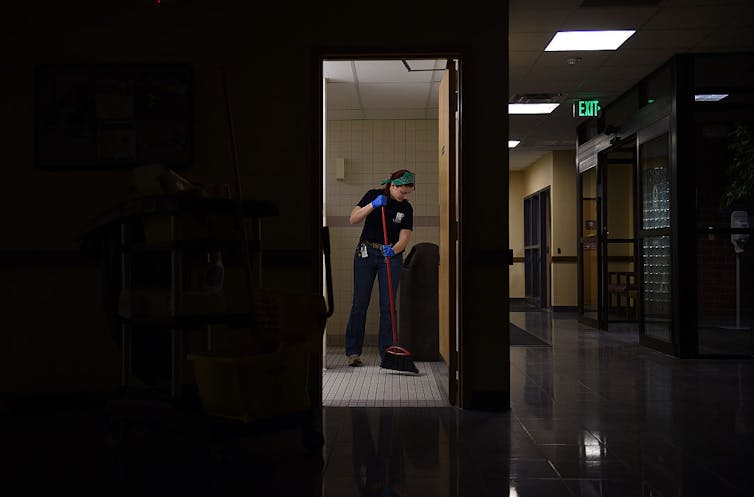
Artists almost by definition juggle multiple roles. In 2019, about 8% held more than one job – compared with 5% of all workers – and roughly 30% worked part time in different types of jobs. Many combined teaching, freelance projects and contract gigs to piece together something close to full-time work.

A dark hallway in a hospital with a young woman mopping the floor.
A freelance artist who works as a custodian by night cleans the bathrooms at a Maryland hospital in 2016.
Astrid Riecken/The Washington Post via Getty Images

My research shows that self-employment is far more common among artists than among other workers. Yet many go independent not because they crave entrepreneurship but because it’s the only option available. The top industries employing artists include professional and technical services, arts and entertainment, information and retail.

In other words, artists often move between arts and non-arts jobs, teaching by day or working service shifts at night, just to keep their creative practice alive.

Existing labor laws assume a steady paycheck

Most U.S. labor protections – health insurance, paid leave, workers’ compensation and retirement benefits – are tied to full-time, W-2 employment. But few artists work that way. They rely on gigs that don’t fit neatly into existing systems: short-term contracts, productions with limited runs such as musicals or film shoots, and one-off project fees.

Existing rules simply do not support professional artists.

Because employers don’t pay into unemployment funds for contractors or freelancers, most artists are ineligible for unemployment insurance.

Copyright law was originally written with publishers and record labels in mind, leaving visual artists without royalties when their work is resold. Existing copyright law is being challenged by artists and record labels, who are claiming their work was used to train AI models without permission, favoring tech companies that say these tools will “democratize” artmaking.

The tax code, meanwhile, lets collectors deduct the full value of artwork they donate, but limits artists themselves to deducting only the cost of materials.

Public funding of the arts, from the New Deal’s Federal Art Project to the creation of the National Endowment for the Arts, has come in brief bursts – but is often first on the chopping block during economic downturns.

Together, these examples reveal a century-long pattern: The U.S. celebrates art but neglects artists. Instead of treating creative work as legitimate labor, the country’s policies fail to offer artists stability or protection.

Labor policy that values artists

If labor policies have largely ignored artists, it’s because policymakers start from the wrong place. Too often, artists are asked to justify their worth by proving that they drive tourism, raise property values or fuel innovation. That logic turns creative work into a tool for someone else’s goals.

In my view, a better starting point is the right to choose creative work. The ability to select one’s occupation freely – and to make a living doing meaningful work – is, to many Americans, as fundamental as freedom of speech. Yet the structure of U.S. workforce policy makes that choice nearly impossible for many artists.

A more coherent approach would treat the arts as part of the nation’s labor system, not an afterthought. One policy change could require benefits such as health care, unemployment insurance and retirement savings to be portable – following the worker, not the employer. Laws could protect freelancers from late or missing payments, such as New York’s Freelance Isn’t Free Act. And tax and copyright policies could give artists the same chance to profit from their work that investors and corporations already enjoy. Many European countries already do this through “droit de suite” laws, which grant visual artists a small royalty each time their work is resold – ensuring that creators, not just collectors, can reap the rewards of the long-term value of their art.

Designing policies around how many artists actually work – project by project, contract by contract – would make it possible for more people to build sustainable careers in the arts. It would also make the sector more inclusive, drawing talent from across social classes rather than only from those that can afford to take the risk.

But I think policy change also requires a shift in mindset.

Viewing artists not as special cases or economic tools, but as workers exercising a basic human right – the right to choose their work – strengthens both culture and democracy. To me, the central question is not whether artists deserve help because their work enriches others, but whether every individual should have the freedom to make a living through work that gives life meaning.

The Conversation

Joanna Woronkowicz does not work for, consult, own shares in or receive funding from any company or organization that would benefit from this article, and has disclosed no relevant affiliations beyond their academic appointment.

ref. It’s always been hard to make it as an artist in America – and it’s becoming only harder – https://theconversation.com/its-always-been-hard-to-make-it-as-an-artist-in-america-and-its-becoming-only-harder-266138

Wildlife recovery means more than just survival of a species

Source: The Conversation – USA (2) – By Benjamin Larue, Faculty Affiliate in Wildlife Biology, University of Montana

What counts as success in species recovery? U.S. Forest Service via AP

For decades, wildlife conservation policy has aimed to protect endangered species until there are enough individual animals alive that the species won’t go extinct. Then the policymakers declare victory.

That principle is enshrined in laws such as the U.S. Endangered Species Act and Canada’s Species at Risk Act. It shapes how governments manage wildlife and their habitat, how politicians weigh trade-offs between species protection and human development goals, and how the public understands conservation.

But often, those minimalist population numbers – enough to avoid extinction – aren’t enough to restore ecosystems or cultural connections between people and those animals.

There’s another way of thinking about species recovery: emphasizing not just avoiding extinction but instead enabling species to truly thrive. A shift from conserving minimum populations to restoring thriving populations involves recovering the species’ ecological role, including large parts of its geographic range and genetic diversity, as well as its relationships with people.

The difference between recovering thriving populations instead of traditional minimalist approaches becomes clear when looking at three iconic North American species: gray wolves, grizzly bears and bison.

A group of wolves gather in a snow-covered clearing.
The return of wolves to Yellowstone National Park was touted as a massive success – but was its goal too limited?
National Park Service via AP

Gray wolves: More than a number

After decades of federal protection, gray wolves were taken off the list of species protected by the Endangered Species Act in parts of the U.S. in January 2021.

The Trump administration is considering removing federal protections for gray wolves nationwide.

But in the wake of the regional protection removal, states such as Montana and Idaho expanded hunting and trapping seasons for wolves, and some organizations added bounties for killing them.

Officials justified their actions by pointing to the fact that gray wolves had surpassed a minimum population threshold for species survival, and saying that intensive predator control would not jeopardize the species’ long-term viability.

The states’ current population goals would reduce wolf populations to about one-third of current numbers: from 1,235 to 500 in Idaho and from 1,134 to 450 in Montana.

For contrast, there are 3,300 wolves in Italy. That country has an area about 80% of the size of Montana and is home to less prey, less open land and more than 50 times as many people, all of which significantly raise the potential for human-wolf conflict.

So far in Idaho and Montana, gray wolf numbers have stopped increasing and may still satisfy requirements under federal laws protecting the species. But the wolf population there is not robust and thriving – it’s just surviving.

Wolves remain absent from large areas that provide suitable habitat for them. Reducing wolf numbers further, as the states want to do, would limit their ability to reoccupy these areas, where they could restore ecosystems by helping to manage often overabundant prey populations and also inspire millions of people with their wildness.

Grizzly bears: Viable yet vulnerable

Grizzly bear populations in the Greater Yellowstone and northern Continental Divide ecosystems have exceeded the federal recovery targets set decades ago under the Endangered Species Act to prevent the bears’ extinction.

In July 2025, a U.S. House of Representatives committee agreed to remove the species’ protection under the law, which would allow states to permit people to hunt the bears for the first time in decades. But it was overhunting that, in part, drove them to near extinction in the first place.

Government agencies often say that hunting and trapping reduce human conflicts with bears. But scientific and public opinion on that point is far from a consensus. There are effective, nonlethal methods for keeping bears away from humans, such as public education, electric fencing, bear-resistant garbage containers and removal of roadkill and dead livestock.

Once numbering more than 50,000 across at least 18 states in the 48 contiguous United States, grizzlies now number just over 2,000 and occupy less than 5% of their original habitat area. They can be found in only four states.

Current grizzly populations are also not interconnected, despite the availability of suitable habitat for them. That risks genetic isolation of subpopulations, which decreases genetic diversity and their prospects for adaptation and survival. Disconnection of populations also reduces their ability to disperse seeds, improve soil health and prey on other species. Grizzly bears are also an umbrella species, meaning they share habitat with a disproportionate number of other species, so recovering grizzlies benefits the entire food web.

One day, hunting might offer a new way for humans to reconnect with thriving grizzlies. But right now, with populations isolated and vulnerable, opening a hunting season would risk cutting off their chance to thrive in large, unoccupied ranges.

A group of very large animals stand in a grassy area surrounded by tree trunks.
Bison are common in Yellowstone National Park – but not nearly as common as they once were.
Jon G. Fuller/VWPics/Universal Images Group via Getty Images

Bison: The illusion of return

Perhaps no species better captures the failure of existing recovery models to move beyond survival toward thriving populations than the bison. Tens of millions of them used to roam North America, shaping grassland ecosystems and playing significant material, spiritual and communal roles in Indigenous cultures.

Hunting for bison hides and tongues reduced their numbers to fewer than 1,000 at the cusp of the 20th century. Today, most bison live on ranches in small, fenced herds. Only 31,000 bison in North America are managed for conservation, and most are in isolated pockets of habitat at the fringe of their historic range. Even in Yellowstone National Park, which supports thousands of bison and provides a glimpse into how bison historically shaped North American ecosystems, the animals are barred from expanding to other parts of their historic range due to concerns about disease transfer to domestic livestock.

Thinking about the bison’s recovery in different terms does not mean tens of millions of them need to be stampeding across the continent. But it could mean large, free-ranging, genetically diverse herds that are integrated into a variety of ecosystems, where they also have a role in cultural revitalization.

A thriving view of species recovery is central to Indigenous-led initiatives, such as those guided by the 2014 Buffalo Treaty, which has been signed by more than 40 Indigenous nations. The treaty helped drive bison reintroduction to Banff National Park in Canada and is currently inspiring the recovery of free-roaming bison on Indigenous reservations across the U.S. and Canada, including the Blackfeet Reservation in Montana and Wind River Reservation in Wyoming.

A broader vision of recovery

Shifting away from the long-standing goal of a minimum viable population would require changes to how recovery targets are set, how success is measured, and how decisions are made when populations reach those minimum thresholds.

While national laws in the U.S. and Canada provide valuable starting points, focusing on species not just surviving but thriving would involve more ambitious goals, longer timelines and stronger human-wildlife coexistence measures. It would also require shifting public expectations away from the idea that recovery ends when minimal legal obligations are met.

Doing so could help combat climate change by restoring the role of large, wild animals in nutrient cycling, as well as reverse ecosystem degradation and help people of all backgrounds reconnect with nature.

As wildlife biologists, we aim to provide the best available science and recommendations to inform the conservation of North America’s wildlife. Yet under the current management paradigm, where recovery often equates to mere survival, we are compelled to ask whether this is enough. Should wildlife conservation aim merely to prevent extinction or to foster populations that thrive? How each and every one of us answers this question will shape not only the future of wolves, grizzly bears and bison, but also the legacy of wildlife recovery across North America.

The Conversation

Mark Hebblewhite receives funding from National Science Foundation.

Benjamin Larue and Jonathan Farr do not work for, consult, own shares in or receive funding from any company or organization that would benefit from this article, and have disclosed no relevant affiliations beyond their academic appointment.

ref. Wildlife recovery means more than just survival of a species – https://theconversation.com/wildlife-recovery-means-more-than-just-survival-of-a-species-263898

Back pain during pregnancy is often dismissed as a passing discomfort − a nurse explains why it should be taken seriously and treated

Source: The Conversation – USA (3) – By Julie Vignato, Assistant Professor of Nursing, University of Iowa

Serious and even debilitating back pain during pregnancy is extremely common. Jose Luis Pelaez Inc/DigitalVision via Getty Images

About half to three-quarters of expectant mothers experience pain during pregnancy that is largely untreated, contributing to preventable suffering and harm. Many mothers avoid medications and treatments during pregnancy for fear that they may cause harm to their unborn baby. Yet, most are unaware of the harms that untreated pain in pregnancy may cause.

Like many women, I experienced severe pain in pregnancy. As a nurse researcher, I listen to women’s stories and analyze data from across the United States. I share these findings through publications, presentations and the media to raise awareness and reduce the suffering of untreated pregnancy pain.

Not just minor ‘discomfort’

Mothers are often told that the pain that comes with pregnancy is a temporary discomfort that comes with the territory – and ends as soon as the baby is born.

But when pain and discomfort persist to the point that mothers cannot sleep, work and care for their other children, mothers are experiencing pain that needs to be addressed. And for some mothers, the pain does not just eventually fade. Back pain and headaches, for example, can last longer than three months, becoming a chronic condition that affects overall health.

Normal changes that occur during pregnancy often lead to pain. Pregnancy pain normally occurs from hormonal changes that can cause headaches and loosening of pelvic joints. The loosening of joints and the weight of the unborn baby contribute to back pelvic pain. The weight of the developing baby also causes the spine to abnormally curve, a condition called lordosis.

Back and pelvic pain increase in the third trimester of pregnancy when the weight of the baby is at its greatest. This is why it’s incredibly important for doctors and loved ones to believe mothers when they report pain. However, one meta-analysis, meaning an in-depth review of existing research, found that more than 50% of mothers who reported their pain received little to no treatment from their doctors.

Inadequacy of current treatments

Current treatments for pain during pregnancy are highly limited.

Tylenol, though safe – despite the current controversy – treats only mild pain and is ineffective for moderate to severe muscle pain.

Alternative treatments that are also recommended and can be effective, such as heat or cold applications, massage, chiropractic adjustments, exercise and physical therapy, may need to be used in unison and on an ongoing basis. These treatments are not always covered by insurance.

The most effective approach combines several treatments, including exercise that may be provided through physical therapy. Unfortunately, this care may be costly for mothers without adequate insurance, and awareness of these options varies among providers.

Mid-section view of a pregnant person wearing a back support strap around their belly.
A supportive belt or band can sometimes help with back pain.
Anna Reshetnikova/iStock via Getty Images Plus

The harms of untreated pregnancy pain

My team’s research reveals that when mothers report pain during pregnancy to their health care providers and loved ones, mothers are typically instructed to go home, rest, take Tylenol, go on maternity leave or a combination of these. However, this does not meet the needs of mothers who must work or care for other children. In addition, going on leave early is not an option for many mothers who desire to save their limited maternity leave for after the baby is born.

Mothers will almost always continue to take care of their children or work at the expense of their health if they feel there are no other choices. However, when expectations from their work, family or themselves are not met, mothers may feel guilty about not being a good enough mother or employee. This cycle can contribute to mental health challenges.

When pain is left untreated, mothers may feel minimized, unheard and overwhelmed. In turn, they can start to feel helpless and hopeless, which are symptoms of depression. My colleagues and I found that approximately 44% of women with severe pain report moderate to severe depressive symptoms during the third trimester of pregnancy.

Untreated depression can also lead to suicide, which is responsible for 5% to 20% of maternal deaths in the U.S.

Equally important, opioid or narcotic pain relievers may be prescribed for pregnant mothers experiencing severe pain. Yet, 1 in 5 women with pain report misusing these prescribed medications during pregnancy to relieve pain. In turn, this increases the risk of newborns experiencing withdrawal from these medications after birth, causing significant suffering. Sadly, neonatal opioid withdrawal syndrome is becoming more common, costing the country over US$462 million annually.

With suicide and drug overdoses now the leading causes of death in the year after childbirth, effective pain management in pregnancy is urgently needed.

Pregnant mom squats near toddler in kitchen.
Pregnant mothers who have younger children may often push through pain and discomfort, which can contribute to greater distress.
Stephen Simpson/Stone via Getty Images

Being assertive about pregnancy pain

Managing pregnancy pain starts with open communication between the mother and their health care provider. Our studies reveal that by gently adjusting expectations, sharing how they feel and asking about available treatments, mothers can take an active role in ensuring their pain is understood and addressed.

Pregnant mothers are strong, but it’s natural to slow down. Pregnancy is a time to listen to your body and adjust expectations. I believe that balance matters. If pain prevents you from lifting your toddler, that’s OK. What your child will remember the most are the moments you snuggled with them on the couch.

My team’s studies reveal that talking to loved ones about pain may be a challenge. So choose a calm, quiet time without distractions – when everyone can listen and respond thoughtfully. Be open about how you feel and clear about the help you need. Using “I” statements such as “I feel …” also helps. Allow for questions.

Share reliable articles or invite loved ones to a medical appointment so they can better understand what you are experiencing. If someone dismisses your pain, reach out to others who are more supportive.

It is also important to start the conversation with your doctor, midwife or nurse practitioner. Before your appointment, jot down your main concerns and any questions you would like to ask.

Be honest about your pain, especially if it is preventing you from sleeping or doing your usual activities. Tell your provider whether the pain is constant or comes and goes, and describe what it feels like – achy, throbbing, sharp or dull. Even mild ongoing pain that disrupts rest or daily life is important.

Share what you’ve already tried and how well those treatments have worked. If your pain is not improving, reach out to discuss other options, such as prescription medications or a referral to physical therapy. Sometimes, it takes more than one conversation to find relief.

If your pain continues, ask about consulting with a specialist or another health care provider for a different perspective. If your pain improves with treatment but your insurance requests you stop, ask your provider to help appeal the decision. Ongoing treatment throughout pregnancy may be necessary to control your pain.

Relief is possible when pain is taken seriously, not dismissed as an unavoidable harm of pregnancy.

The Conversation

Julie Vignato received funding from the National Institutes of Health. She is a member and Leadership Scholar with the United States Association for the Study of Pain.

ref. Back pain during pregnancy is often dismissed as a passing discomfort − a nurse explains why it should be taken seriously and treated – https://theconversation.com/back-pain-during-pregnancy-is-often-dismissed-as-a-passing-discomfort-a-nurse-explains-why-it-should-be-taken-seriously-and-treated-268264

Health headlines can be confusing – these 3 questions can help you evaluate them

Source: The Conversation – USA (3) – By Kimberly Johnson, Professor of Public Health, Washington University in St. Louis

Health-related studies often yield conflicting results, and making sense of them can be challenging. Jose Luis Pelaez/Stone via Getty Images

Every week of 2025 seems to bring a new health headline, whether it’s about climbing autism rates, changing vaccination recommendations or unexpected cancer risks.

For people trying to make informed choices about their own health and that of their families, it can be tough to make sense of it all. The science can feel contradictory and confusing. Human data is messy, and studies often yield conflicting results.

Sparring between government officials and scientists can muddy the picture further.

As professors who teach epidemiology and research methods to public health students, we start our students off with a few key questions that can help make sense of the evidence. We’ve come to realize that these lessons aren’t just for public health experts – they are tools that anyone can use to cut through bias, evaluate health claims and better understand health-related policy debates.

So next time you read a news article making a claim about a particular health condition, ask yourself these three questions.

No. 1: Are people getting this illness more often?

Media reports often highlight changes in how frequently a condition is diagnosed. Take, for example, “Autism rates in US rise again to 1 in 31 kids, CDC says,” and “CDC finds nearly 1 in 3 US youth have prediabetes, but experts question scant data.”

Before raising the alarm about an unfolding epidemic, it’s important to consider whether the changes in rates are due to what public health researchers call artifactual changes or if they are true changes.

A woman measures blood pressure at her home.
When the American Heart Association lowered the cutoff for diagnosing high blood pressure, more people were suddenly deemed to have the condition.
J_art/Moment via Getty Images

Artifactual changes can occur even when the rate of a disease or condition in the population has not actually changed. When researchers revise how they define a particular condition, the number of people counted as having it can change over time. Autism rates, for example, have increased at least partially due to an expanded definition of autism.

Another example is a change in what classifies someone as having high blood pressure. In 2017, the American Heart Association lowered the cutoff for diagnosing hypertension from 140/90 to 130/80. As a result, almost overnight, more people were considered to have the condition.

A condition’s rate can also appear to increase when doctors become better at detecting it. The widespread adoption of the PSA test, short for prostate-specific antigen test, a blood test for prostate cancer detection, in the early 1990s resulted in a surge in prostate cancer diagnoses. Some fraction of these cases were detected at such an early stage that they may never have progressed to cause illness or death during the patient’s lifetime.

Increased awareness of a condition due to media reports or public discussion can also result in more diagnoses. That’s especially true when diagnosis is not based on a definitive medical test but instead on clinical observations or reports. For example, increases in ADHD cases over time may partly reflect increased recognition and diagnosis as awareness grows.

True changes in the rates of a disease or health condition reflect real shifts in the factors that cause a condition to become more or less common in a population.

A classic example of a true change in a disease rate is smoking and lung cancer. Early in the 1900s, lung cancer was a rare disease in the United States. By the 1930s, doctors were noticing more cases in men, leading to studies investigating its potential causes, including smoking.

Based on the results of numerous studies reviewed by the U.S. surgeon general’s Advisory Committee on Smoking and Health in the early 1960s, the committee concluded that smoking was a primary cause of lung cancer. In the surgeon general’s landmark report published in 1964, which drew upon evidence from over 7,000 scientific and technical articles, the committee concluded that “cigarette smoking contributes substantially to mortality from certain specific diseases and the overall death rate.”

No. 2: What kind of study led to this claim?

The strongest studies compare a control group, which does not receive the intervention being tested, and an experimental group, which does. Study participants are randomly assigned to one of these groups. This type of study design, called a randomized controlled trial, is considered the gold standard for proving when a treatment or other factor truly causes or prevents a disease.

A pharmacologist talking to a patient in a research laboratory.
Some studies evaluating a health condition can test an intervention directly, while others observe something that a patient is already experiencing.
Dragos Condrea/iStock via Getty Images

However, a randomized controlled trial cannot be used to study potentially harmful factors such as pesticides or other chemicals found in our everyday environments. Exposing people to potentially harmful exposures would not be ethical. Instead, researchers need to rely on observational studies, which identify people who are already exposed to some factor in their daily lives – for example, those who work with pesticides – and compare their health outcomes to people who are not exposed to pesticides.

The challenge with observational studies is that the two groups of people often differ in unpredictable ways – and these differences might partly explain why one group has a higher rate of a certain disease or health condition. This is known as confounding. Statistical methods used to control for these differences between the groups are often imperfect. This is why it’s risky to draw conclusions from a single study.

No. 3: What other evidence is there?

Because a single study cannot prove cause and effect, experts review the total body of research on a topic, like a jury weighing all the testimony before rendering a verdict. Evidence often includes a combination of study types, including randomized clinical trials, observational studies and laboratory research. Randomized clinical trials test whether an intervention actually changes outcomes under controlled conditions, while observational studies look for patterns and associations in real-world populations. Laboratory research aims to uncover biological mechanisms linking a potential cause to a disease, and it is usually conducted under artificial circumstances.

For example, many studies have investigated the effects of chemicals in cigarette smoke. On balance, they have found that such chemicals cause cancer by damaging genetic material in lung cells. When this damage affects key genes, it can trigger the cells to divide uncontrollably and lead to the development of cancer.

Once scientists rule out explanations based in artifacts such as more people being classified with a condition due to changing definitions, they can combine evidence from a range of studies on a topic to build a convincing case for whether the factor they are investigating truly causes or prevents a disease or other condition. They weigh all the evidence because no single study settles the question, but together the pieces form a clearer picture.

The bottom line? If you see a health claim that seems too good – or too bad – to be true, take a moment to mentally run the evidence through these three questions before deciding what to believe.

The Conversation

The authors do not work for, consult, own shares in or receive funding from any company or organization that would benefit from this article, and have disclosed no relevant affiliations beyond their academic appointment.

ref. Health headlines can be confusing – these 3 questions can help you evaluate them – https://theconversation.com/health-headlines-can-be-confusing-these-3-questions-can-help-you-evaluate-them-266472

People abused by intimate partners have worse asthma – but researchers are still untangling the reasons behind this surprising link

Source: The Conversation – USA (3) – By Anne P. DePrince, Professor of Psychology, University of Denver

Most drug treatments on the market today target inflammation, but a new approach may be needed. aquaArts studio/E+ via Getty Images

Asthma is a common, serious and difficult-to-manage chronic health condition. In the U.S., 1 in 7 people are diagnosed with asthma, and that number is rising.

Over the years, researchers have identified a mix of individual and environmental factors that play a role in asthma. For instance, obesity and alcohol use increase a person’s risk for asthma. And more extreme weather is linked to worse asthma symptoms.

In that mix of research, a new pattern has emerged pointing to links between asthma and abuse by a current or former romantic partner. As surprising as that might sound, these links are important because intimate partner abuse is common in the U.S. An estimated 47% of women and 44% of men are physically or sexually victimized or stalked by intimate partners at some point in their lives.

As a psychologist and an asthma specialist, we have teamed up to learn more about asthma and intimate partner abuse.

And what we’re seeing has important implications for treatment.

The role of inflammation

To understand how factors such as obesity or extreme weather can result in asthma, researchers have focused on inflammation. Inflammation plays a key role in keeping humans and other animals healthy.

When pathogens such as viruses attack the body, or the body suffers an injury, the immune system responds with inflammation. This immediate, short-term response helps the body minimize damage to cells and fight infection. It’s also what causes the red hotness that surrounds a skin injury or bothersome symptoms when fighting a cold.

While short-term inflammation is critical to good health, the inflammation system can go awry. Chronic inflammation contributes to many kinds of diseases, including asthma.

Uncontrolled inflammation drives asthma development and symptoms. Over the years, a better understanding of different types of inflammation that can worsen asthma has led to the identification of critical targets for asthma medications and important advances in care.

Because of this inflammation-asthma connection, most drug treatments for asthma today target overactive inflammation in the airways.

Illustration showing normal and asthmatic lungs next to a drawing of a human body.
People with asthma experience excess mucus, muscle tightness in the chest and difficult breathing, largely due to inflamed airways.
blueringmedia/iStock via Getty Images Plus

Looking for other explanations

Despite significant advances in drug treatments for asthma, a majority of adults with the condition have uncontrolled asthma, which means more flare-ups and an increased chance of dying from the disease.

As researchers and medical providers have figured out that not everyone responds to common medications, they’ve turned to more personalized approaches to understanding asthma predictors.

That more personalized approach led one of us, Dr. Wang, to wonder whether intimate partner abuse might play a role in asthma for some of her patients. After all, intimate partner abuse is linked with a host of health problems and health care costs.

Using a large database that was representative of the U.S. population, one of us (Dr. Wang) led a team in 2021 that discovered intimate partner abuse was associated with worsened asthma attacks and symptoms. That study included over 2,600 adults and found that having asthma along with a history of intimate partner abuse meant significantly greater odds of asthma attacks, more frequent symptoms and greater impact of symptoms on daily life.

This pattern was true even for adults who were out of the abusive relationships for a year or more, suggesting a persistent effect of intimate partner abuse on asthma.

Over time, other research teams also found links between intimate partner abuse and increased rates of having or developing asthma for adults.

In addition, research showed that intimate partner abuse also affects the next generation. Multiple studies have shown increased rates of asthma in children of women who were abused by their intimate partners.

A new view of inflammation

So, does this mean that intimate partner abuse leads to chronic overinflammation, which in turn causes asthma? Not necessarily, according to another study we did.

We worked with a team of researchers to recruit 60 adults with uncontrolled asthma into our study and examined many different markers of inflammation in the blood. Importantly, about half of those adults told us they had been abused by an intimate partner at some time in their lives. And about half said they had not.

First, we looked at the traditional types of inflammation studied in prior asthma research, including those targeted by currently available treatments. On measure after measure, our team found that patients with histories of intimate partner abuse had lower inflammation than those without histories of abuse, despite having uncontrolled asthma.

Surprised by this finding, we tested whether other factors that have been linked with asthma could better explain what we found. However, the pattern was still there – even when we took into account factors such as gender, obesity, anxiety and depression.

Next, we looked closely at the histories of abuse that patients reported. Most were out of the abusive relationship for more than a year. Therefore, these new findings offer additional evidence that intimate partner abuse can affect people’s health long after the trauma has ended.

Ultimately, these findings have important implications for public health and the treatment of asthma. Current asthma treatments target specific types of overinflammation. However, survivors of intimate partner abuse had lower levels of the types of inflammation that medications target. That could be key to understanding why survivors are more likely than other patients to have uncontrolled asthma even with treatment.

Our recent findings suggest that intimate partner abuse may be linked to asthma through other biological mechanisms, such as alternative or nontraditional types of inflammation. More research is needed to identify what drives asthma among survivors so more effective treatments can be developed.

The Conversation

Anne P. DePrince has received funding from the Department of Justice, National Institutes of Health, State of Colorado, and University of Denver. She has received honoraria for giving presentations and has been paid as a consultant. She has a book with Oxford University Press. She is an Advisory Group Member of the National Crime Victim Law Institute and a Senior Advisor to the Center for Institutional Courage.

Eileen Wang receives funding through her institution from the American College of Allergy, Asthma, and Immunology; Colorado Clinical and Translational Sciences Institute; Optimum Patient Care; GSK; Genentech; and Mount Sinai.

ref. People abused by intimate partners have worse asthma – but researchers are still untangling the reasons behind this surprising link – https://theconversation.com/people-abused-by-intimate-partners-have-worse-asthma-but-researchers-are-still-untangling-the-reasons-behind-this-surprising-link-263508